Image: WikiArt (as stated on Commons) · Public domain · via Wikimedia Commons
Haystacks at Sunset, Frosty Weather
Claude Monet, 1891
Haystacks at Sunset, Frosty Weather is an 1891 painting by Claude Monet of a single wheat stack at Giverny in a frost-covered field glowing pink and lilac at sunset. It is in a private collection.
- Artist
- Claude Monet
- Date
- 1891
- Medium
- Oil on canvas
- Dimensions
- 65 × 92 cm
- Collection
- Private collection
- Movement
- Impressionism
- Catalogue
- Wildenstein 1282
- Nature & Landscape
Haystacks at Sunset, Frosty Weather is a painting by Claude Monet, signed at lower right and dated 1891 in the catalogue. It shows a single stack of wheat in the field beside his house at Giverny, at sunset on a day of hard frost. The canvas measures 65 by 92 centimeters. Wildenstein lists it as number 1282, and it is in a private collection; it passed through the hands of Monet's dealer Durand-Ruel.
What you're looking at
The stack stands left of center, a broad, rounded cone of brick red and rust, its top merging with a dark band of distant trees. It is backlit, but less dramatically than in the summer sunsets: its edges are soft, its body warm and dim.
The sky occupies the top quarter of the canvas. Above the horizon a band of pale yellow and gold glows where the sun has just gone down, rising into pink and salmon strokes that fill the upper corners. Below the horizon, the dark tree line is a strip of olive and green.
The middle of the canvas is a wide band of blue-violet, the far field and the hillside in shadow, painted in rough, vertical strokes. At right, a long, low farm building in rust-orange catches the last light.
The foreground is the frost. Monet paints it in pink, lilac, pale gold and white, in short horizontal strokes that seem to glitter. A broad pink sheen spreads to the right of the stack, the reflection of the sunset sky on the frozen ground, while the shadow side at left is cooler, in blue and violet.
Sunset and frost: what makes this version distinct
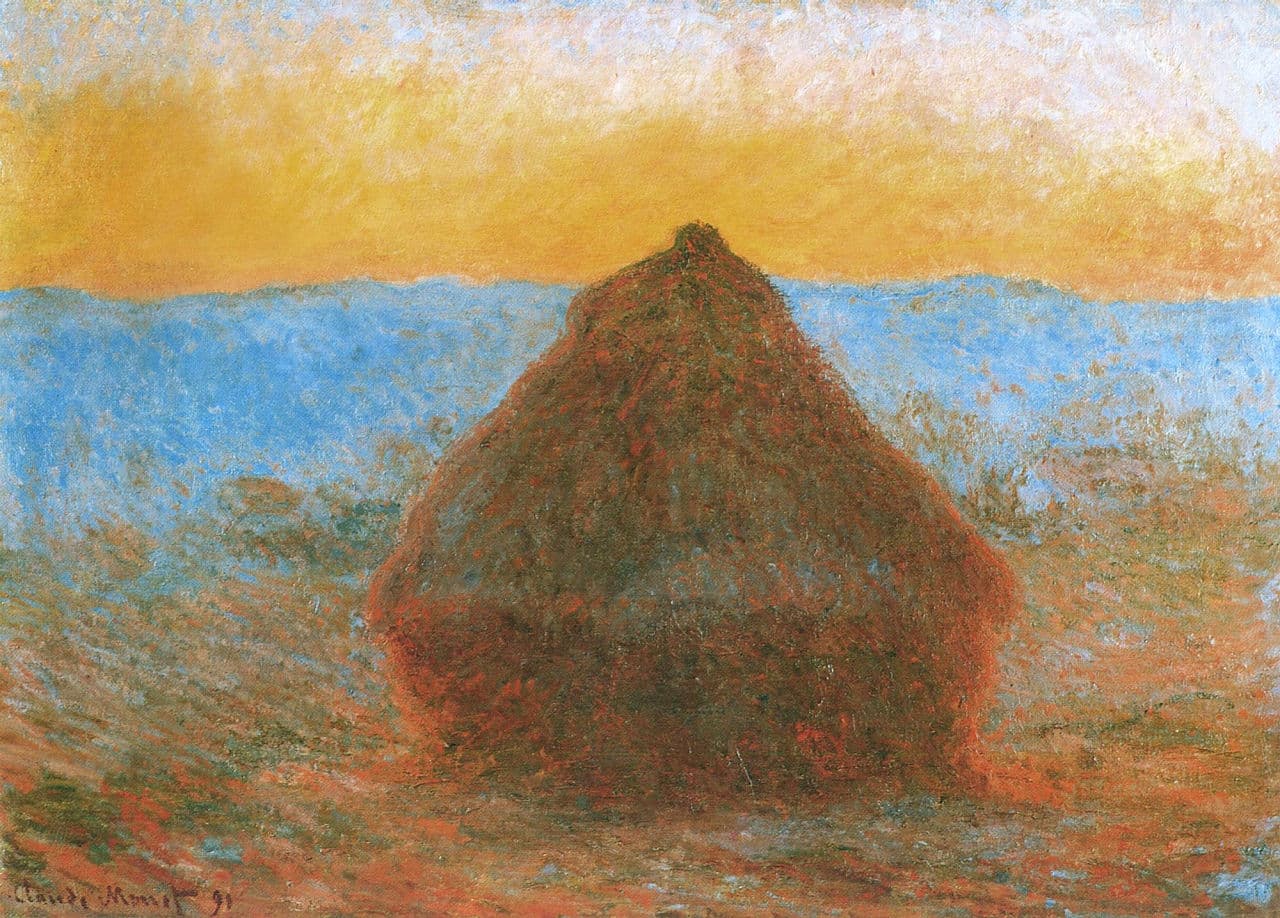
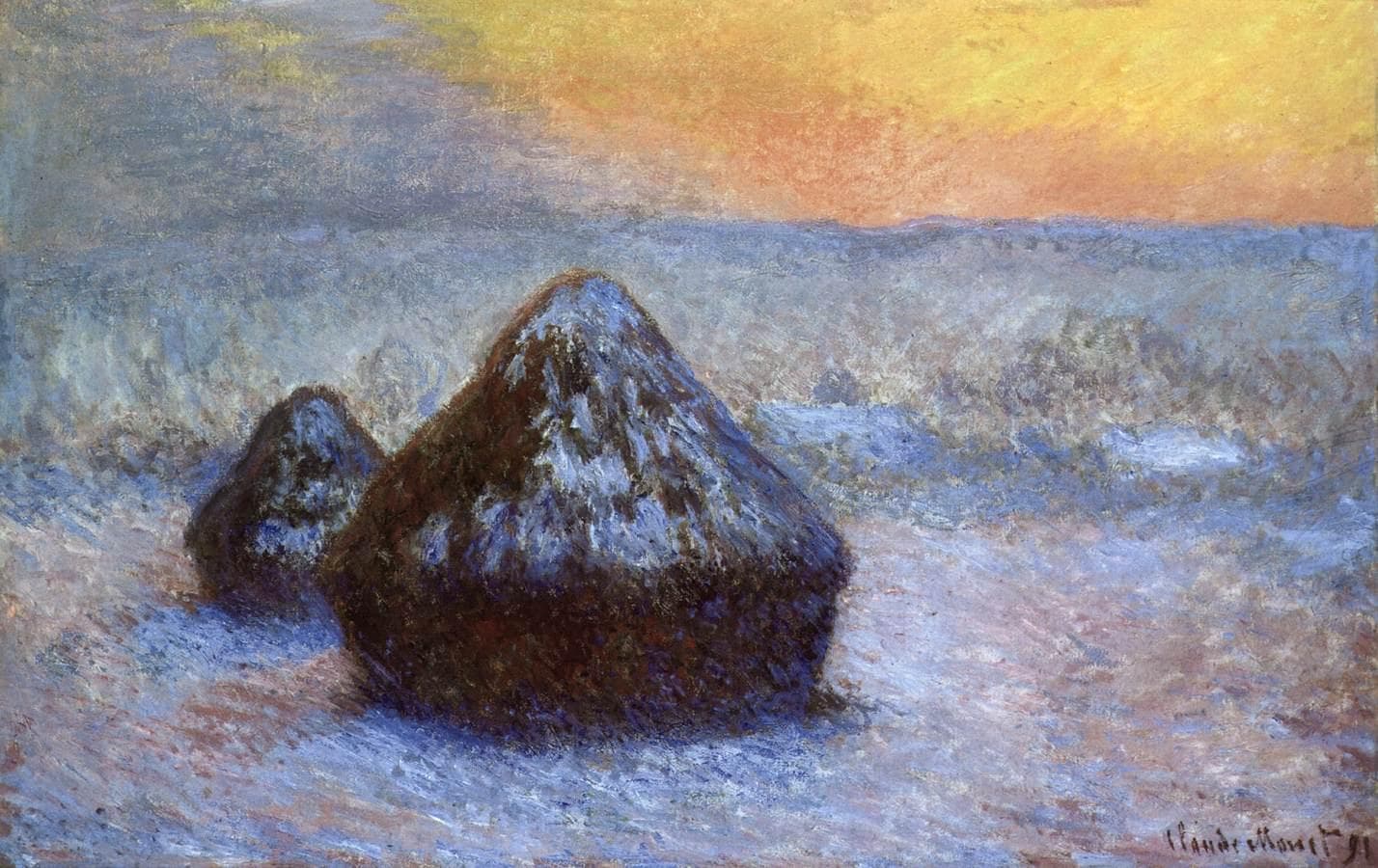
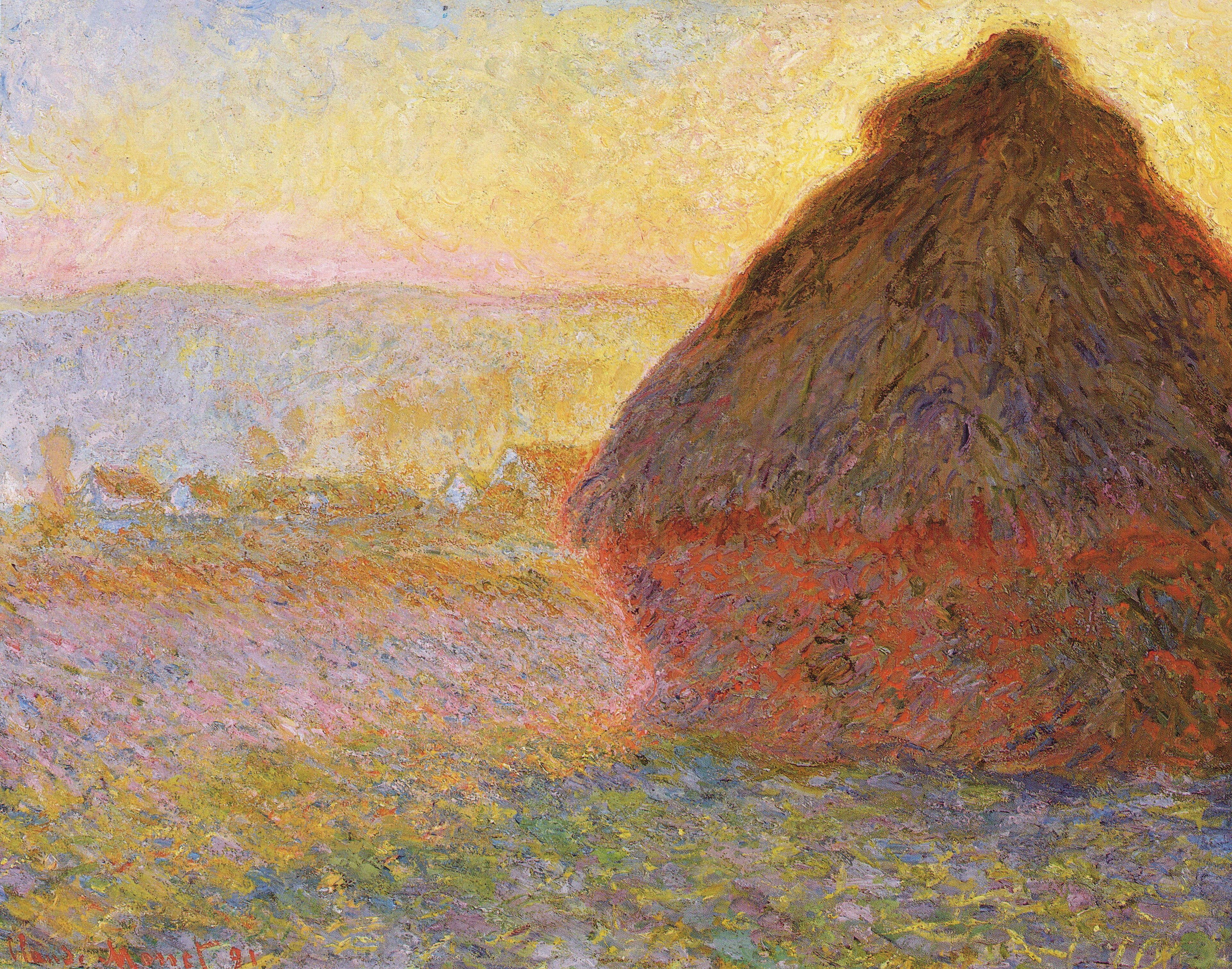
Frost was one of the effects Monet most wanted from the winter of 1890–91, and he caught it in several canvases. This one combines it with sunset, the two warmest and coldest things in the series at once. The result is a picture dominated by pink: the frost takes on the color of the sky, and the whole field glows. Compare the hot oranges and blues of La Meule, another backlit stack at sunset, or the snowy version in Chicago, Stacks of Wheat (Sunset, Snow Effect), where snow rather than frost holds the color. The Edinburgh Haystacks, Snow Effect sets dark stacks against a glaring winter sky instead.
The placement of the stack at left, with the farm building balancing it at right, is also unusual. It opens the right half of the picture to the frosty field and its pink reflection, which becomes a second subject.
How it was painted
Monet worked on the stacks outdoors in all weathers that winter, keeping several canvases going and turning to each one only when its light returned. Sunset effects lasted minutes, so these canvases were built up over many sessions and completed in the studio. The surface here is thick and dry, with strokes laid in different directions for each zone: vertical in the shadowed hillside, horizontal in the frost, curved on the stack.
Ownership
Public records place the canvas with Durand-Ruel, Monet's main dealer, who handled most of the series after the May 1891 exhibition. It is now in a private collection, and its later history is not well documented in public sources.
Where to see it
The painting is not on public view. For museum versions, see our Haystacks series hub and Where to See Monet. The field is described in Giverny, and the artist in Claude Monet.
Questions & answers
Where is Monet's Haystacks at Sunset, Frosty Weather?
It is in a private collection and not on public view. Catalogued by Wildenstein as number 1282, it was handled by Monet's dealer Durand-Ruel. Comparable winter sunsets from the series can be seen at the Art Institute of Chicago and the Museum of Fine Arts, Boston.
When and where was it painted?
Monet painted it in the field next to his house at Giverny during the cold winter of 1890–91, when frost and snow lasted for weeks. It is dated 1891.
What does the painting show?
A single brick-red wheat stack at sunset in a frosty field. A band of gold and pink sky glows above a dark tree line, a farm building catches the last light at right, and the frost reflects the sky in pink and lilac.
Why is the ground pink in this painting?
Frost reflects the color of the sky. At sunset the sky is pink and gold, so the frozen field takes on the same color, while the shadowed parts stay blue and violet. Monet painted those colors rather than a uniform white.
More by the artist
Claude Monet
Wind Effect, Series of The Poplars
Claude Monet · 1891
Grainstack in the Sunlight
Claude Monet · 1891
Haystacks, Snow Effect
Claude Monet · 1891
La Meule
Claude Monet · 1891
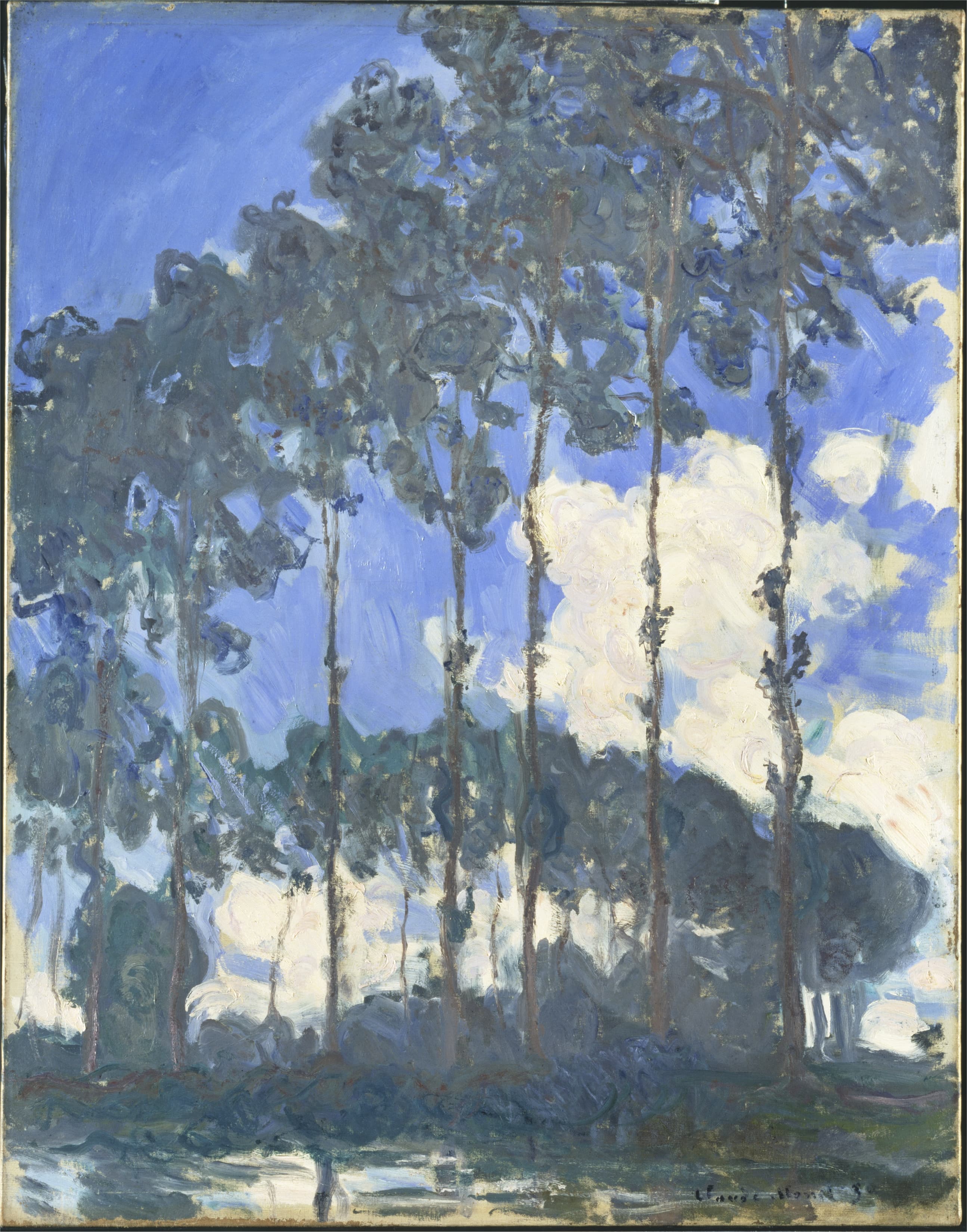
Poplars on the Epte (London)
Claude Monet · 1891
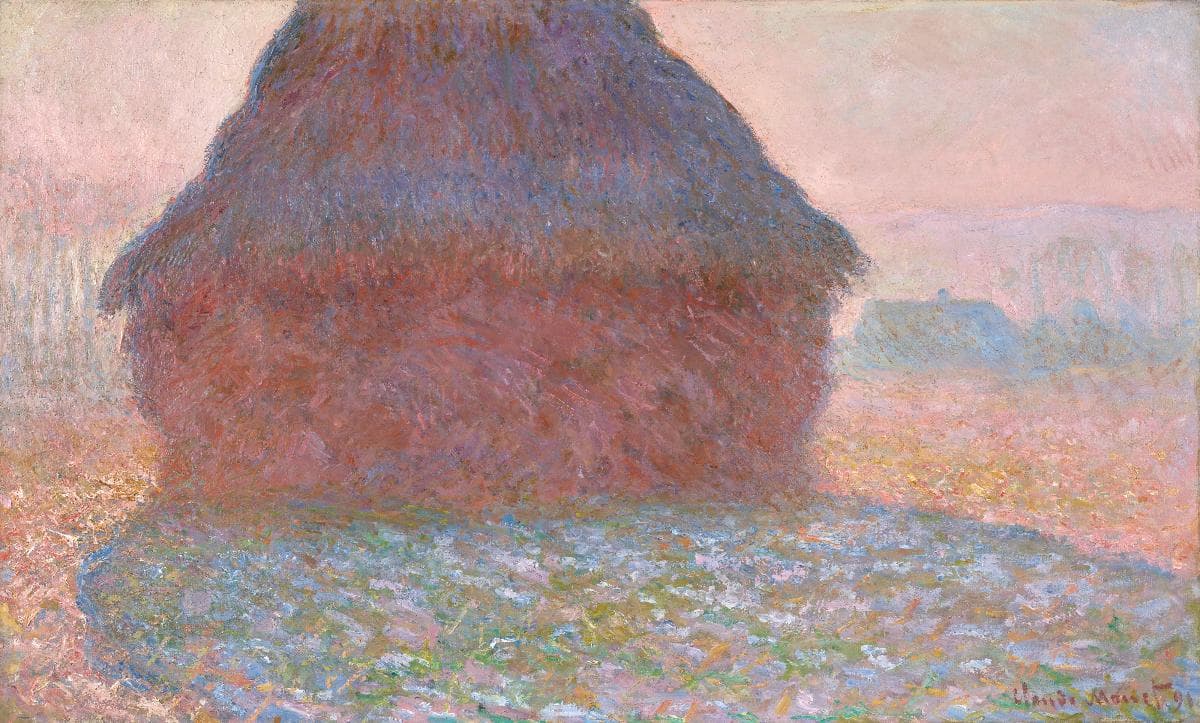
Grainstack in Sunlight
Claude Monet · 1891
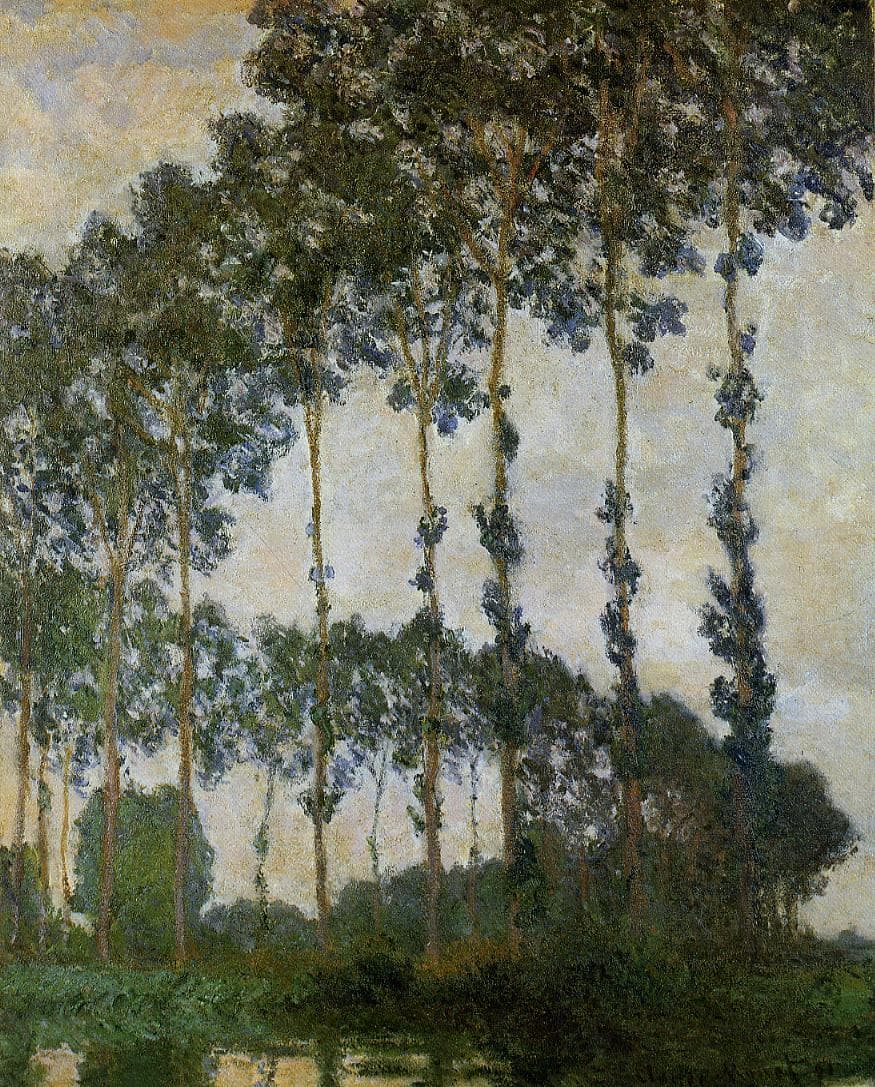
Poplars near Giverny, Overcast Weather
Claude Monet · 1891
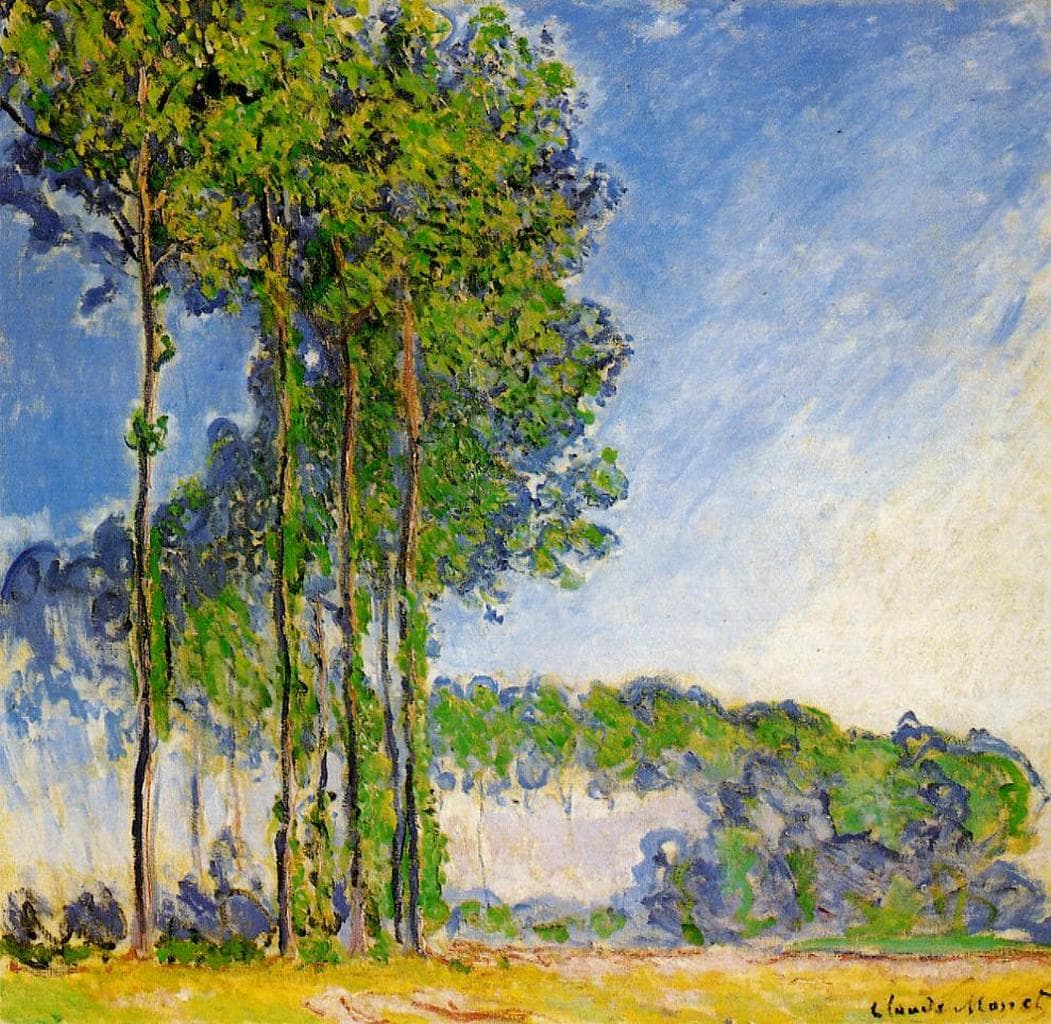
Les Peupliers
Claude Monet · 1891
Also painted in 1891
The same year
Poplars on the Epte (Edinburgh)
Claude Monet · 1891
Grainstack, Sun in the Mist
Claude Monet · 1891
Haystacks, End of Summer
Claude Monet · 1891
Haystacks (Effect of Snow and Sun)
Claude Monet · 1891
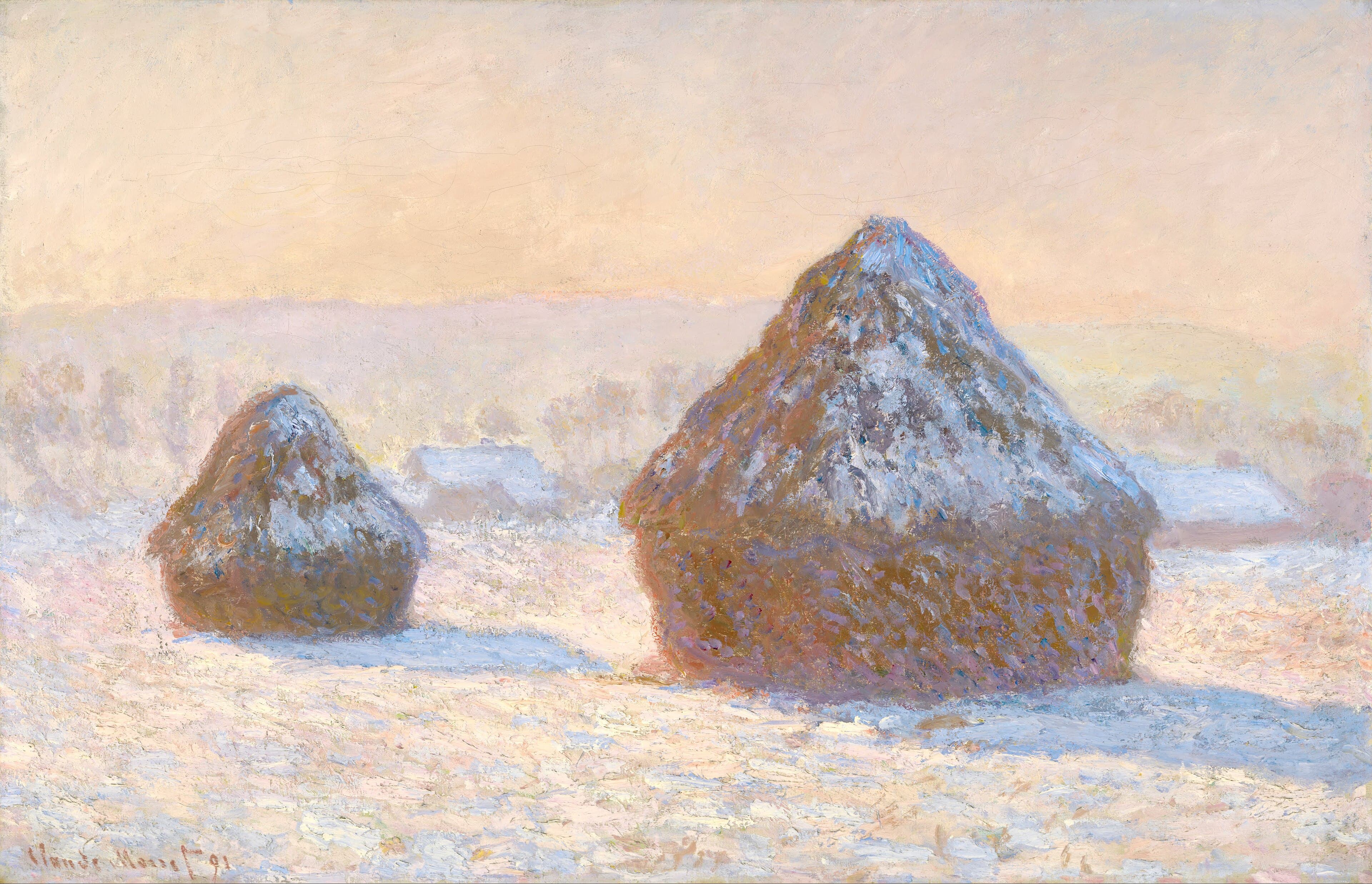
Wheatstacks, Snow Effect, Morning
Claude Monet · 1891
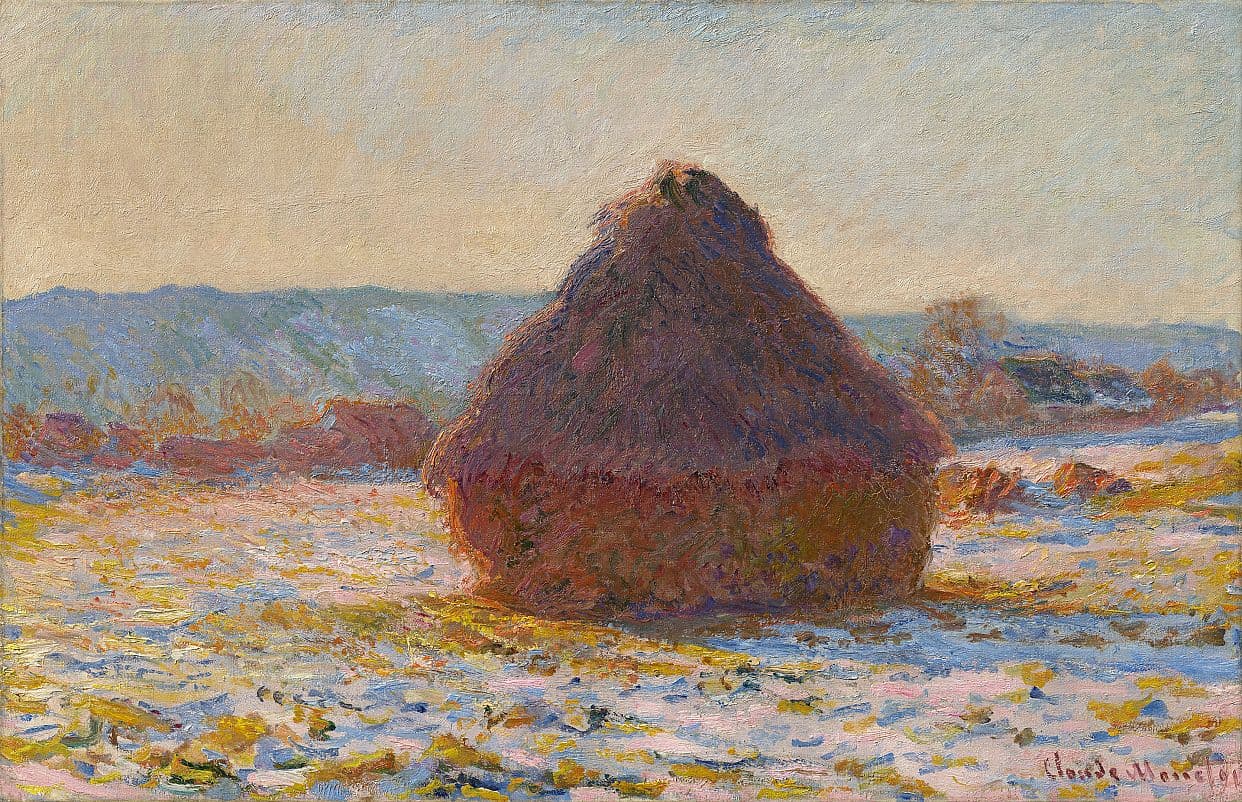
Grainstack in the Sunlight, Snow Effect
Claude Monet · 1891
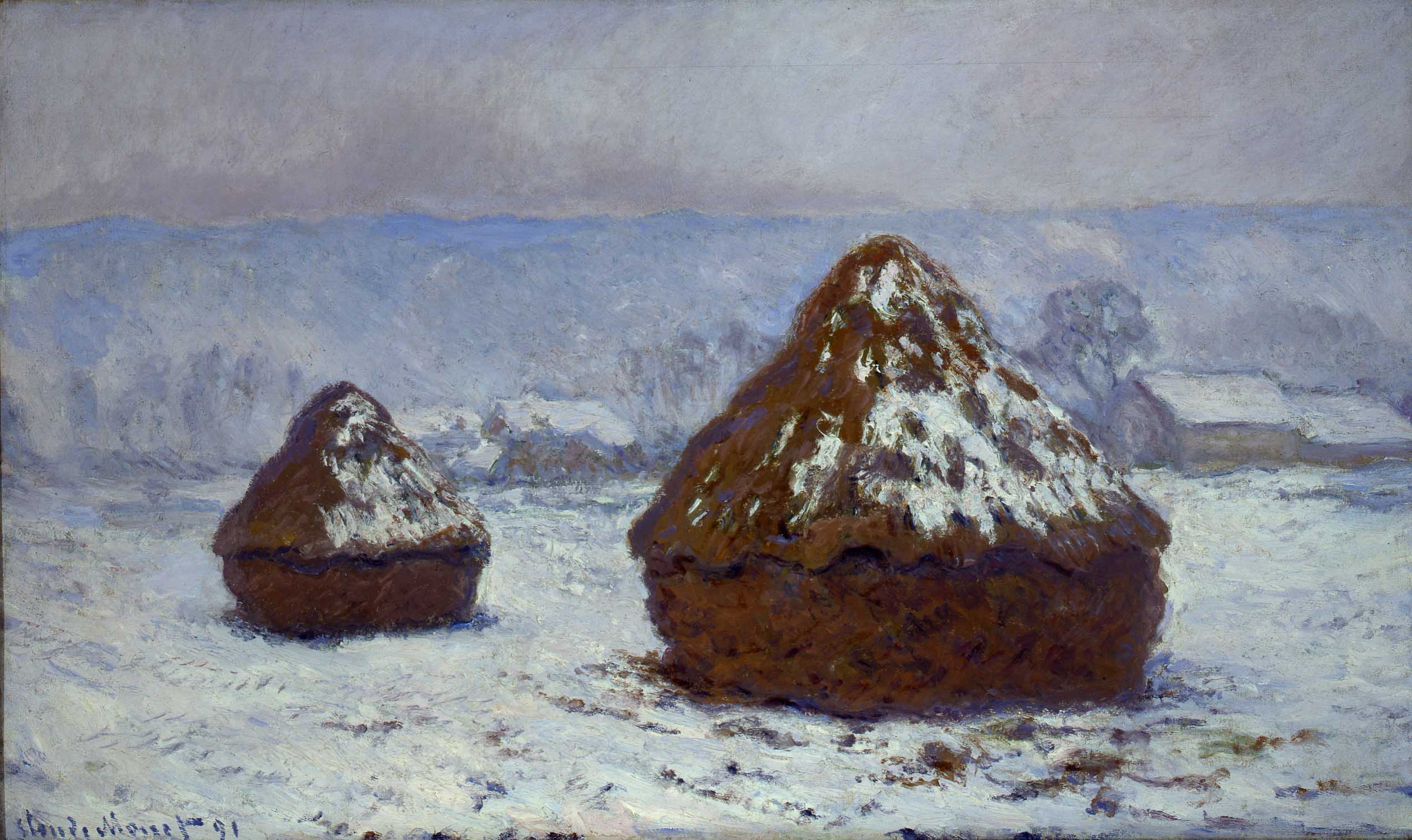
Grainstacks, Snow Effect
Claude Monet · 1891
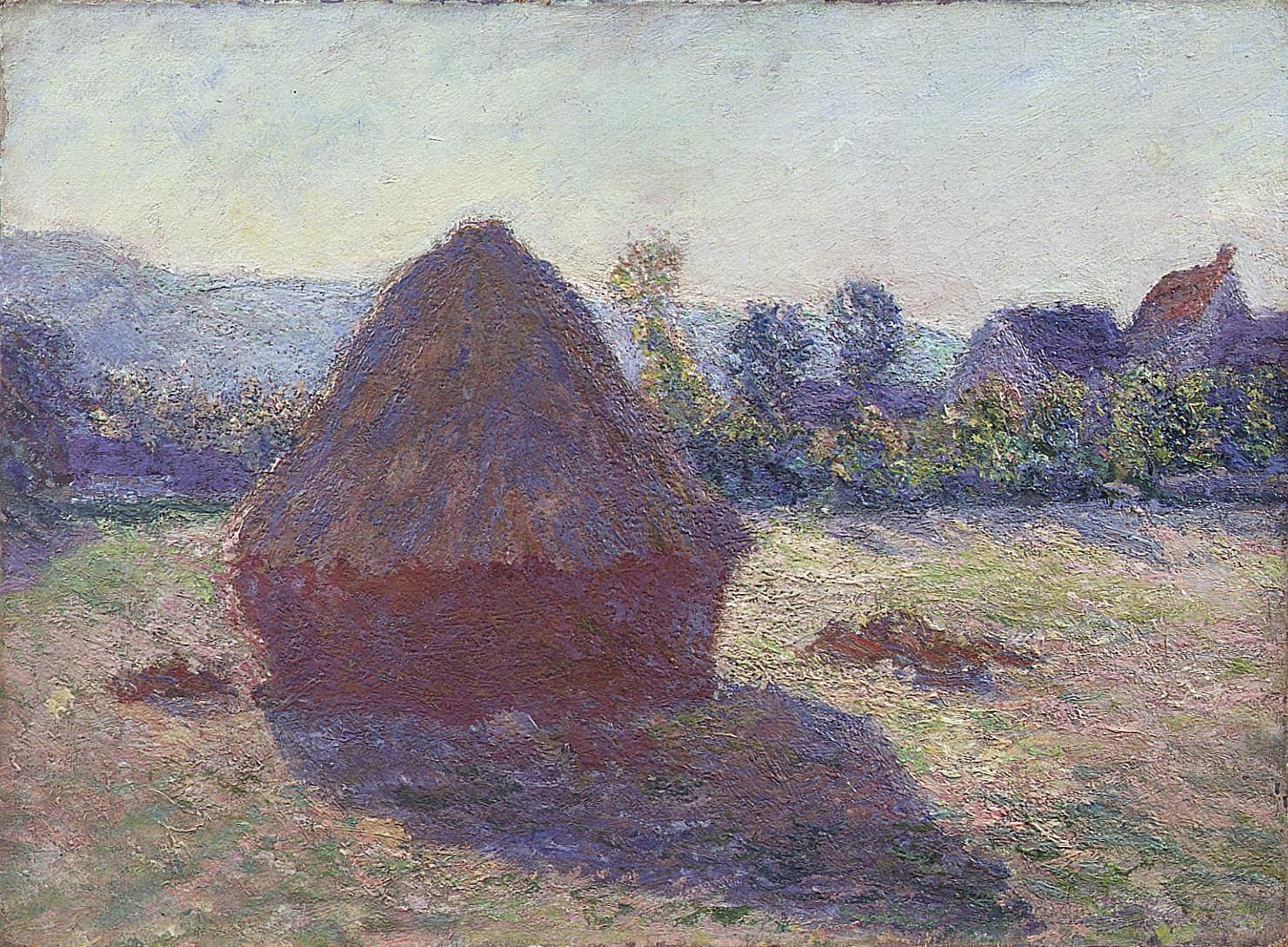
Haystack in the Evening Sun
Claude Monet · 1891
Kindred works
You may also study
Stacks of Wheat, Sunset, Snow Effect
Claude Monet · 1890–91
Grainstack (Sunset)
Claude Monet · 1891
Grainstack at Giverny
Claude Monet · 1889
Morning on the Seine
Claude Monet · 1898
Camille Monet on a Garden Bench
Claude Monet · 1873
Vétheuil Church
Claude Monet · 1879
Cliffs East of Pourville
Claude Monet · 1896
The Tuileries
Claude Monet · 1876