Image: Tel Aviv Museum of Art (photograph: Anagoria) · Public domain · via Wikimedia Commons
Grainstack at Giverny
Claude Monet, 1889
Grainstack at Giverny (1889) is Claude Monet's view of a single pale grainstack in an autumn field, with bare poplars and red-brown hills behind. Signed and dated '89', it is in the Tel Aviv Museum of Art.
- Artist
- Claude Monet
- Date
- 1889
- Medium
- Oil on canvas
- Dimensions
- 65 × 81.5 cm
- Collection
- Tel Aviv Museum of Art, Tel Aviv, Israel
- Movement
- Impressionism
- Catalogue
- Wildenstein 1216
- Nature & Landscape
Grainstack at Giverny (La Meule à Giverny) is a canvas Claude Monet painted in 1889, a year before his famous series, and it is one of the first in which a single stack fills the picture. A large, pale straw-colored stack stands at center on a mound of darker straw, behind it a screen of thin, leafless poplars, and beyond them the hills of the Seine valley in rust, brown and violet under a gray-blue sky. Signed and dated 89 Claude Monet, it belongs to the Tel Aviv Museum of Art, the anonymous gift of 1973.
What you are looking at
The stack is unlike the tidy, cone-roofed stacks of the later series. Its upper part is a rounded heap of cream and pale gold, built from swirling, looping strokes that suggest loose, freshly piled straw. Its lower part is a ragged band of brown, rust and dark orange, as if older or damp straw had been packed around the base. It sits slightly left of center and fills nearly half the height of the canvas.
Behind it, a row of slender trees, almost bare, runs across the picture, painted with thin vertical strokes of gray, green and brown. Beyond, the hills are surprisingly strong in color: bands of plum, brick red and dark violet, with a hint of a road or stream in pale blue curling down at right. The foreground is a mix of yellow stubble, green grass and rust-colored earth, laid in broad, rough strokes. The sky is a cloudy blue-gray, worked in curving strokes. The date and signature are at lower right.
Where and when it was painted
Monet painted in the fields near his Giverny house throughout the late 1880s. In 1888–89 he made a small group of grainstack pictures, including the three views of two stacks now in Saitama, at the Hill-Stead Museum and in a private collection. The Tel Aviv canvas is different in format, squarer than their wide 65 × 92 cm canvases, and in mood: a single stack in late autumn, with bare trees and the colors of turned earth. See our Giverny hub.
How it was painted
The handling is vigorous and loose, closer to a sketch than the carefully harmonized surfaces of 1890–91. Monet varied his strokes for each material: looping curves for the straw, short verticals for the trees, horizontal bands for the hills, rough scumbles for the stubble. The palette is earthy and warm, with rust and plum dominating, set against the pale stack and the cool sky. It records an overcast autumn day rather than a dramatic effect of sun.
How this version differs
Most of Monet's 1888–89 stack pictures pair two stacks against open hills. This canvas isolates a single stack and keeps the screen of trees from the mid-1880s meadow pictures such as the Pola Museum's Haystacks at Giverny. In that sense it bridges the earlier summer landscapes and the single-stack canvases of the Haystacks series, such as the Art Institute of Chicago's Stack of Wheat (Thaw, Sunset) or Kunsthaus Zürich's Grainstack in Sunlight.
Straw, grain and the farming year
The stacks Monet painted were not hay but sheaves of grain, wheat or perhaps oats, stacked after the July harvest and thatched with straw to keep them dry until the threshing machine came round, which could take until the following spring. That is why they stand in the fields through autumn and winter in his pictures. The loose, untidy straw of this stack, with its darker base, may show one partly built or partly dismantled, a glimpse of the agricultural work that the later, more monumental series largely leaves out.
Where to see it
The painting is in the Tel Aviv Museum of Art, which received it as an anonymous gift in 1973. In 2024 it anchored the museum's Impressionism exhibition To Catch a Fleeting Moment, together with the museum's Apple Trees in Bloom (1900) and Water Lily Pond (1919) by Monet. See also where to see Monet's paintings.
Questions & answers
Where is Monet's Grainstack at Giverny?
In the Tel Aviv Museum of Art in Israel, an anonymous gift in 1973. In 2024 it was shown there alongside the museum's other Monets, Apple Trees in Bloom (1900) and Water Lily Pond (1919).
When was it painted?
In 1889 at Giverny, a year before Monet began his Haystacks series. It is signed and dated '89 Claude Monet' at lower right.
What does the painting show?
A single large grainstack of pale straw on a darker base, standing in an autumn field before a row of bare poplars, with rust and violet hills of the Seine valley behind under a cloudy sky.
Why does this stack look different from those in the Haystacks series?
Its straw is loose and freshly piled rather than neatly thatched, and Monet painted it in a quick, sketch-like manner. The later series shows tall, round stacks with pointed thatched roofs, painted in carefully harmonized color.
More by the artist
Claude Monet
Grainstacks at Giverny, Morning Effect
Claude Monet · 1889
The Creuse, Sunset
Claude Monet · 1889
Stack of Wheat, Snow Effect, Overcast Day
Claude Monet · 1890–91
Mill at Limetz
Claude Monet · 1888
Gardener's House at Antibes
Claude Monet · 1888
Meules (Grainstacks), 1890
Claude Monet · 1890
Wheatstacks, Snow Effect, Morning
Claude Monet · 1891
Grainstack (Snow Effect)
Claude Monet · 1891
Also painted in 1889
The same year
Kindred works
You may also study
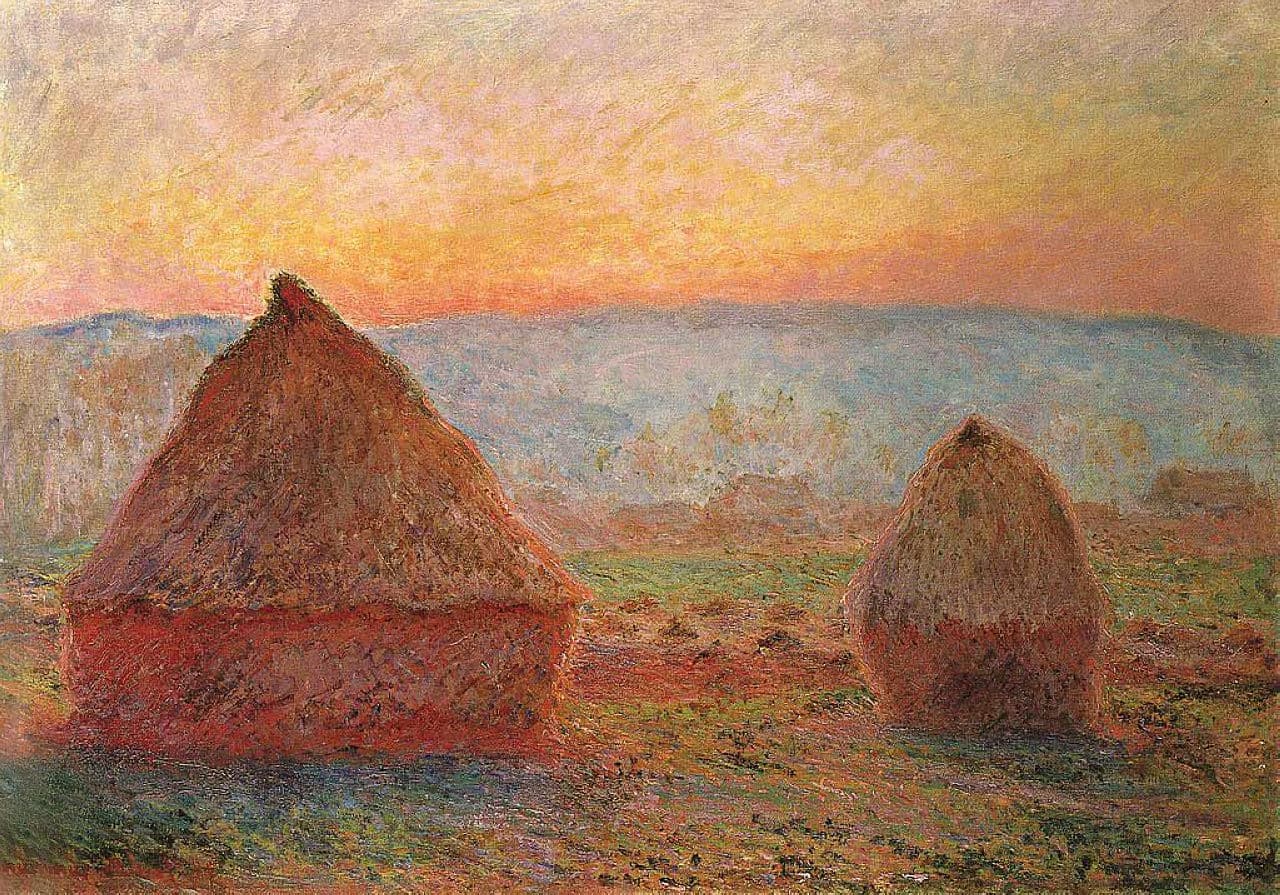
Grainstacks at Giverny, the Evening Sun
Claude Monet · 1888–89
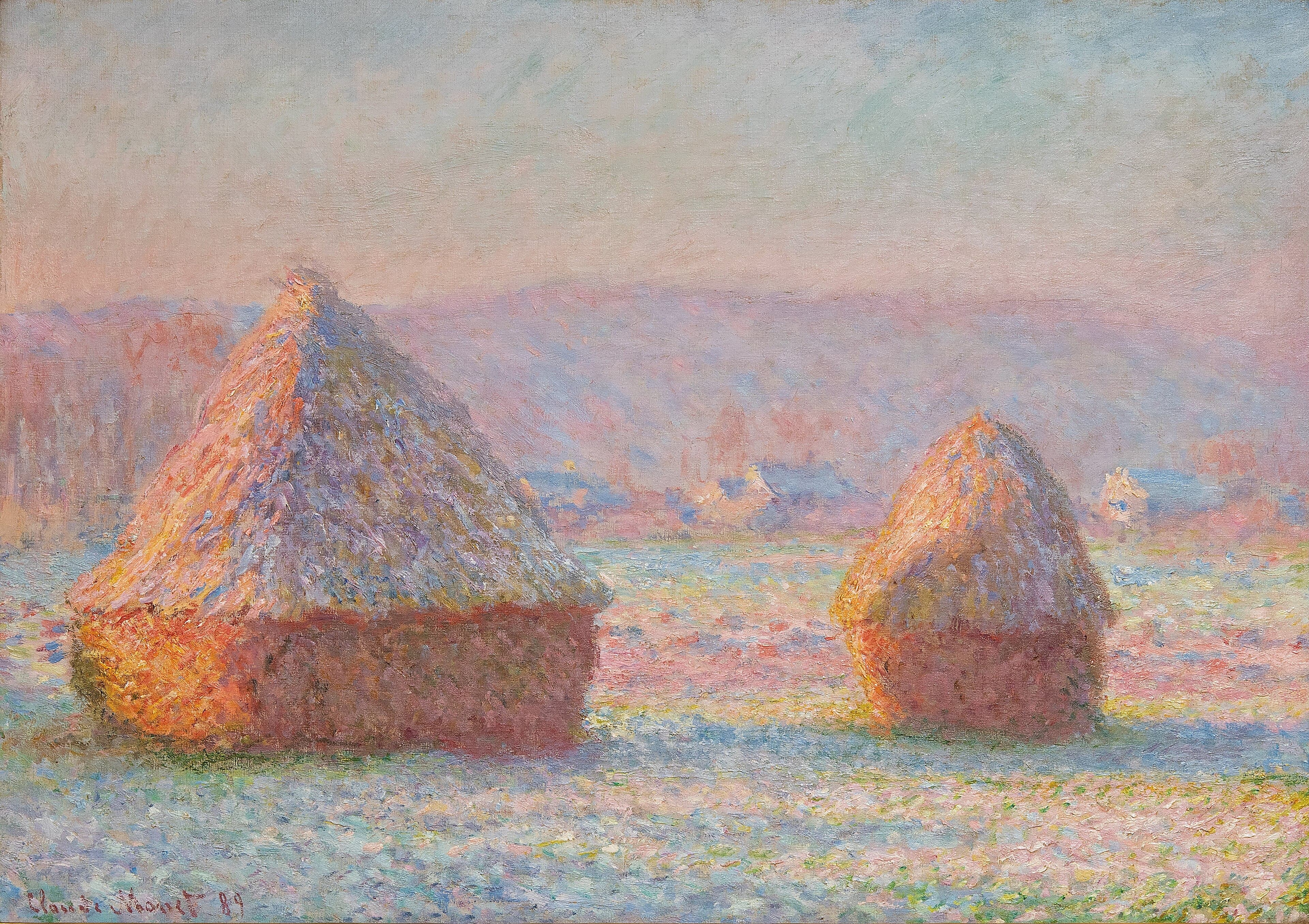
Grainstacks, White Frost Effect
Claude Monet · 1888–89
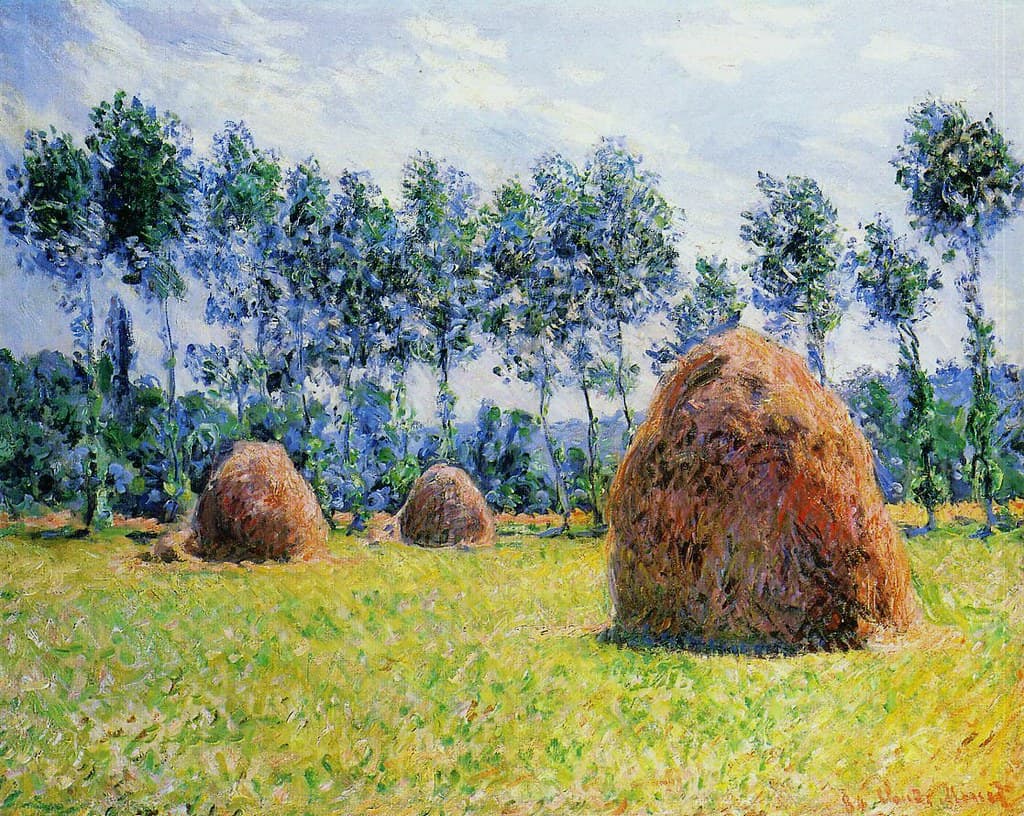
Haystacks at Giverny (1884)
Claude Monet · 1884
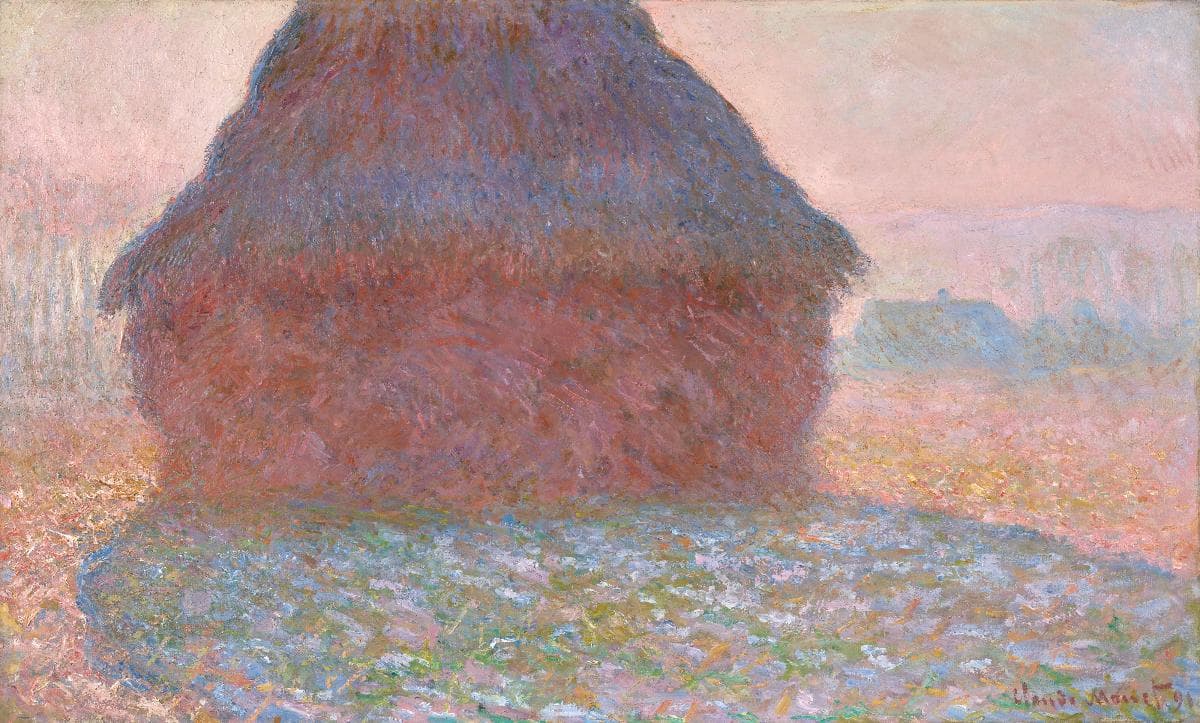
Grainstack in Sunlight
Claude Monet · 1891
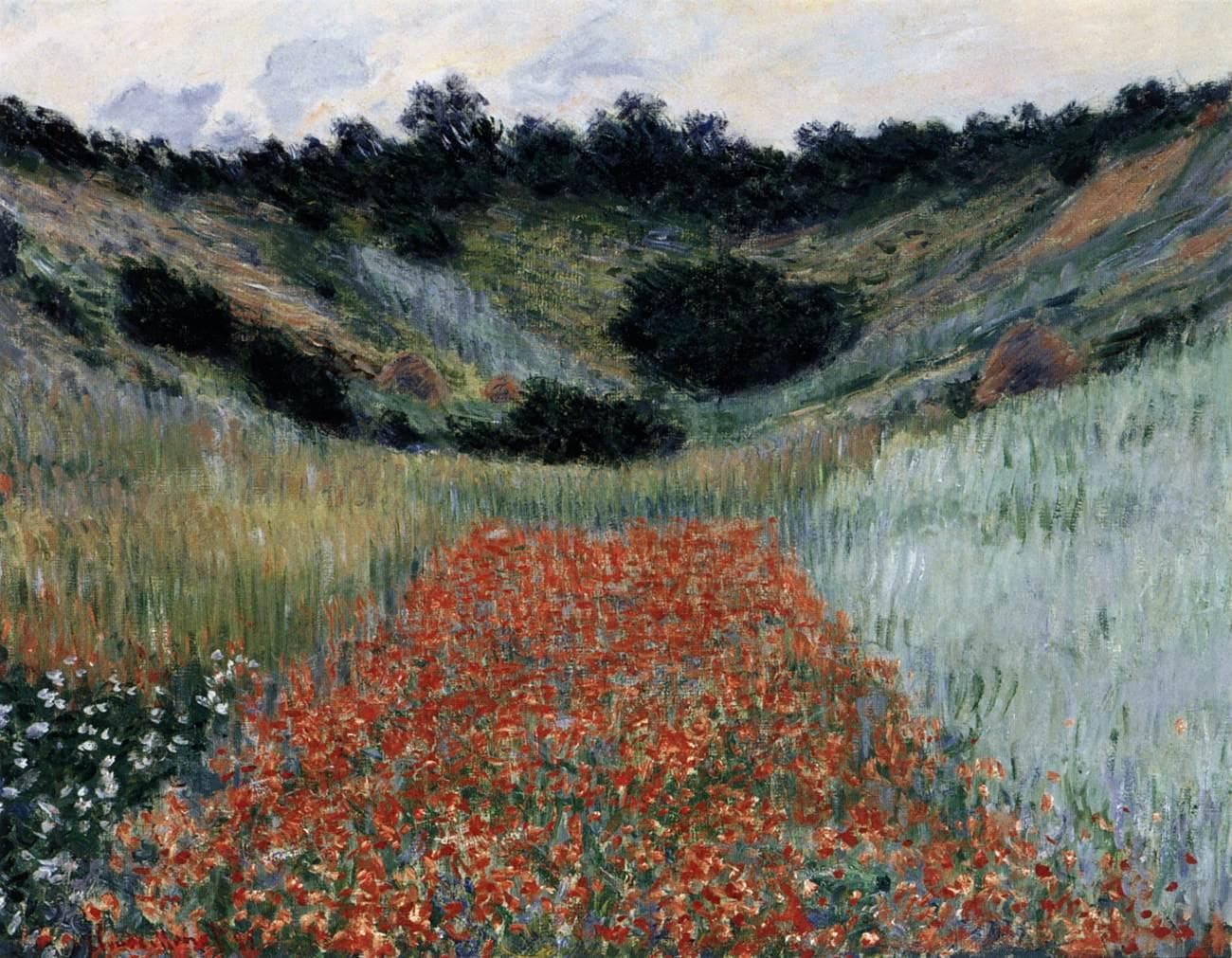
Poppy Field in a Hollow near Giverny
Claude Monet · 1885
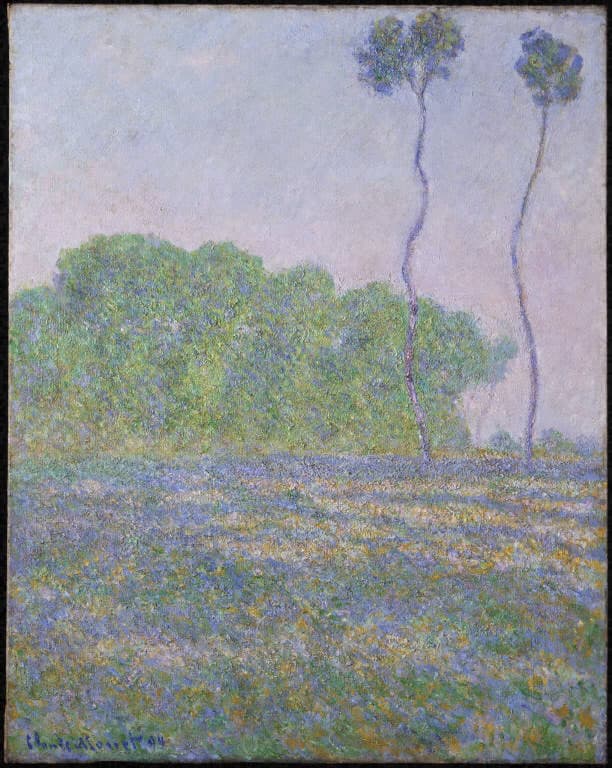
Meadow at Giverny
Claude Monet · 1894
Les barques. Régates à Argenteuil
Claude Monet · 1874
The Garden of the Infanta
Claude Monet · 1867