Image: Museus Castro Maya (scan from 1996 museum catalogue) · Public domain · via Wikimedia Commons
Cliffs East of Pourville
Claude Monet, 1896
Cliffs East of Pourville is an 1896 painting by Claude Monet of pink-gold clifftops above a deep blue Channel near Dieppe. Known in Brazil as Marine, it was stolen from Rio de Janeiro's Museu da Chácara do Céu during Carnival in 2006 and has never been recovered.
- Artist
- Claude Monet
- Date
- 1896
- Medium
- Oil on canvas
- Dimensions
- 65 × 91 cm
- Collection
- Stolen from the Museu da Chácara do Céu in 2006; whereabouts unknown, Rio de Janeiro, Brazil
- Movement
- Impressionism
- Catalogue
- Wildenstein 1431
- Water & Sea
- Nature & Landscape
Claude Monet's Cliffs East of Pourville (Falaises à l'est de Pourville) was painted in 1896 on the Channel coast near Dieppe, when Monet returned to the cliffs he had first painted in 1882. It shows a high, rolling clifftop in pink, ocher and gold above a curving bay of deep blue sea. The canvas, about 65 by 91 centimeters (Wildenstein 1431), belonged to the Brazilian collector Raymundo Ottoni de Castro Maya and then to his museum in Rio de Janeiro, the Museu da Chácara do Céu, where it was known simply as Marine. On February 24, 2006, during Carnival, it was stolen in an armed robbery, and it is still missing.
What you are looking at
The image survives in photographs. The foreground and the whole right side are clifftop: undulating, grassy slopes painted in warm pinks, apricot, ocher and pale yellow, crossed by thin, winding lines of green and blue that may be paths or shadows in the folds of the ground. The land curves around to the right and drops out of sight, so you sense the height without seeing the cliff face.
To the left, the sea fills the upper half of the canvas, a broad, saturated field of ultramarine and violet-blue. It is calm, and a couple of tiny white sails float near the middle. Along the far shore, at the top of the picture, the coast curves away in a pale band of cream and white chalk, merging into a hazy, pale green sky.
The effect is of bright, clear weather on a high place: warm land, cool sea, a sweep of coastline. The contrast between the rosy, sunlit ground and the deep blue water is the heart of the picture.
Where and when
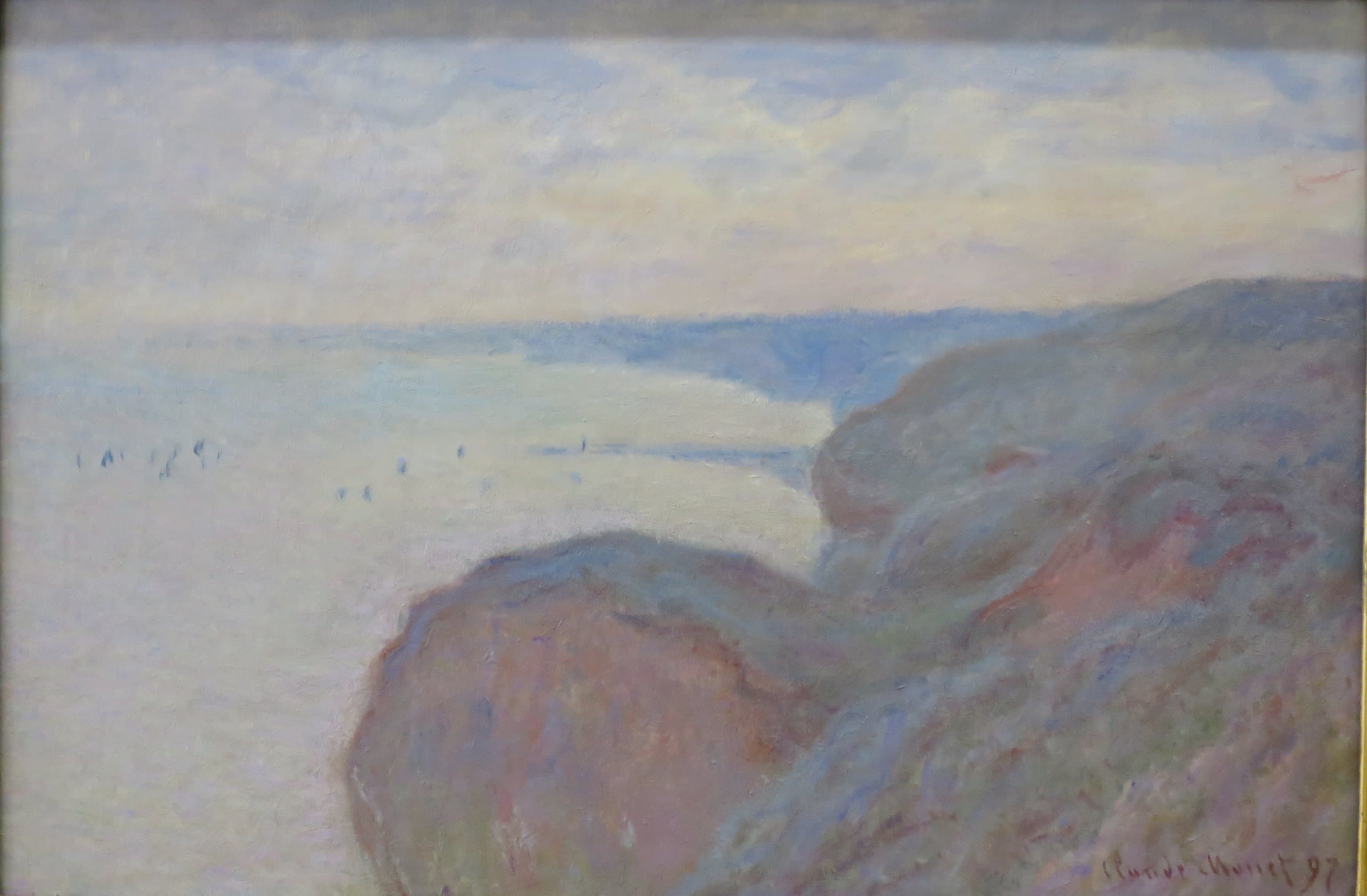
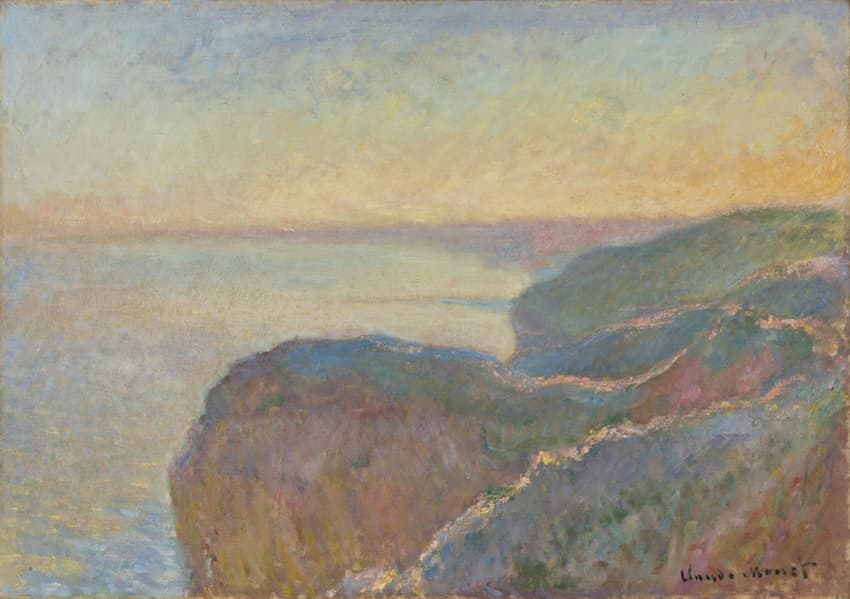
Monet first painted the cliffs around Pourville, Varengeville and Dieppe in 1882. In February 1896 he returned, and again in 1897, now working as a series painter. He painted the clifftops, the gorges and the little customs house again and again, in morning mist and evening light. This canvas belongs to that late campaign, which also produced Val-Saint-Nicolas, near Dieppe (Morning) in the Phillips Collection, Steep Cliffs near Dieppe in the Hermitage and On the Cliff at Dieppe in the Musée d'Orsay.
How this version differs
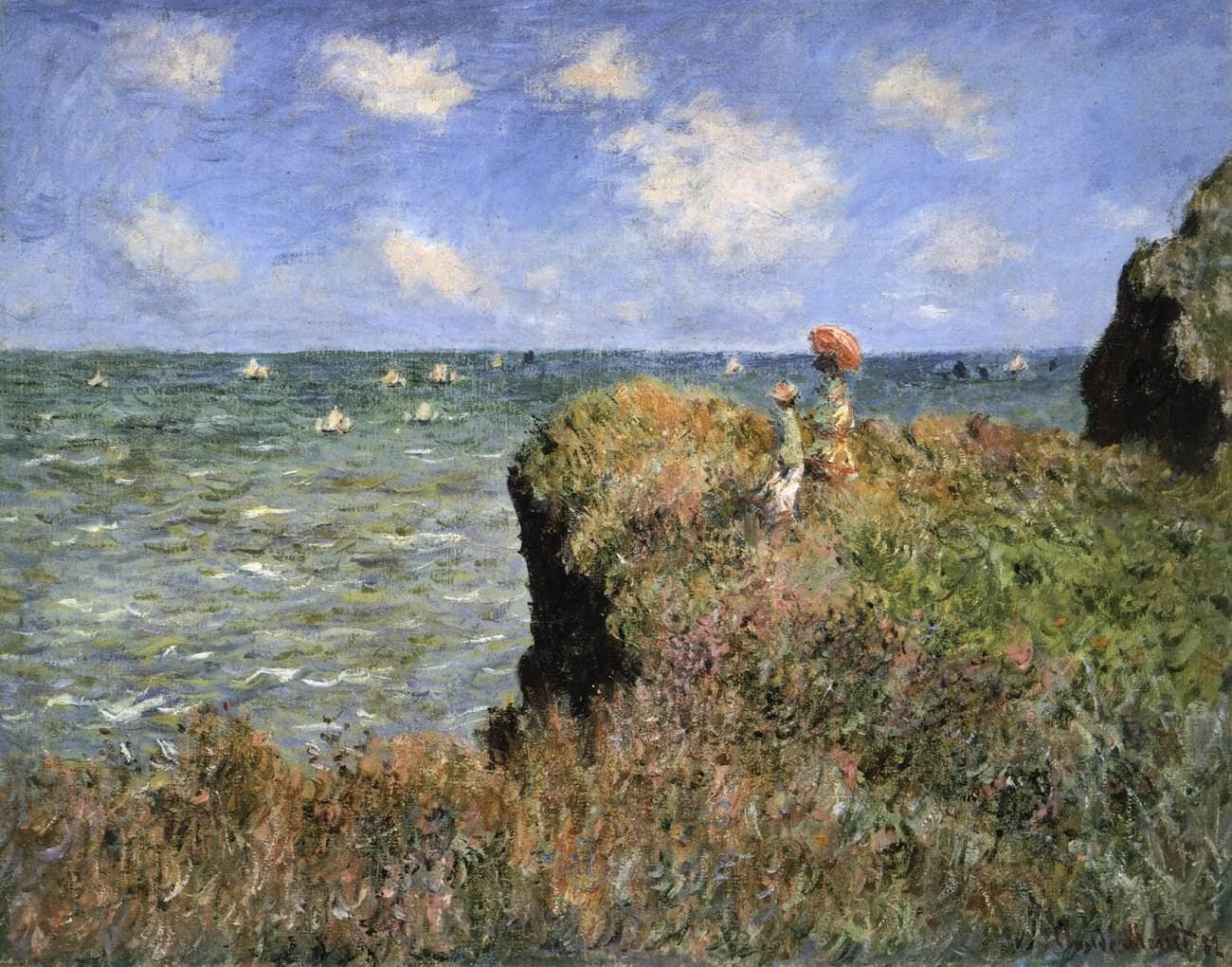
Many of the 1896–97 cliff pictures are veiled in pale morning mist, their colors dissolved into pinks and mauves. This view is clearer and more saturated. The sea is an intense, almost solid blue, and the land a warm pink-gold, so that the picture has a stronger color contrast than most of the series. It is closer in feeling to the sunlit 1882 views like Clifftop Walk at Pourville, though without their figures, and its rolling, curving ground looks ahead to the flowing compositions of his late work.
How it was painted
In reproductions, the land appears to be painted in long, curving strokes that follow the shape of the slopes, with lines of darker color laid over a warm, pale base. The sea is more smoothly brushed, in broad horizontal sweeps. The sky is thin and light. The signature is at lower right.
For Monet's paintings of this coast across four decades, see Étretat and the Normandy Coast.
The 2006 theft
Castro Maya, a Rio industrialist and collector, acquired the painting in the mid-twentieth century, and it passed with his house and collection to the Museu da Chácara do Céu in Santa Teresa. On February 24, 2006, while Carnival processions filled the streets outside, armed men entered the museum, forced staff to switch off the alarms and cameras, and took four paintings: Monet's Marine, Picasso's The Dance, Matisse's Luxembourg Gardens and Dalí's The Two Balconies, along with a book of Picasso prints. The thieves escaped into the Carnival crowd. None of the works has been recovered, and they remain on Interpol's database of stolen art. For Monet paintings you can actually visit, see Where to See Monet's Paintings; for the artist, Claude Monet.
Questions & answers
Where is Monet's Cliffs East of Pourville today?
Nobody knows. The painting, called Marine at the Museu da Chácara do Céu in Rio de Janeiro, was stolen in an armed robbery during Carnival on February 24, 2006, together with works by Picasso, Matisse and Dalí. It has never been recovered and is listed in Interpol's stolen art database.
When and where was Cliffs East of Pourville painted?
Monet painted it in 1896 on the Channel coast near Dieppe in Normandy, during his return to the cliffs of Pourville and Varengeville, which he had first painted in 1882. He worked there again in 1897.
What does Cliffs East of Pourville show?
It shows a high, rolling clifftop in warm pink, ocher and gold curving above a bay of deep blue sea, with a couple of small white sails and a pale chalk coastline stretching away under a hazy sky.
What was stolen from the Chácara do Céu museum in 2006?
Four paintings were taken: Claude Monet's Marine (Cliffs East of Pourville), Pablo Picasso's The Dance, Henri Matisse's Luxembourg Gardens and Salvador Dalí's The Two Balconies, plus a book of Picasso prints. None has been found.
More by the artist
Claude Monet
The Seine at Giverny
Claude Monet · 1897
Matinée sur la Seine
Claude Monet · 1897
Nymphéas (Water Lilies), c. 1897–98
Claude Monet · c. 1897–98
Morning on the Seine
Claude Monet · 1897
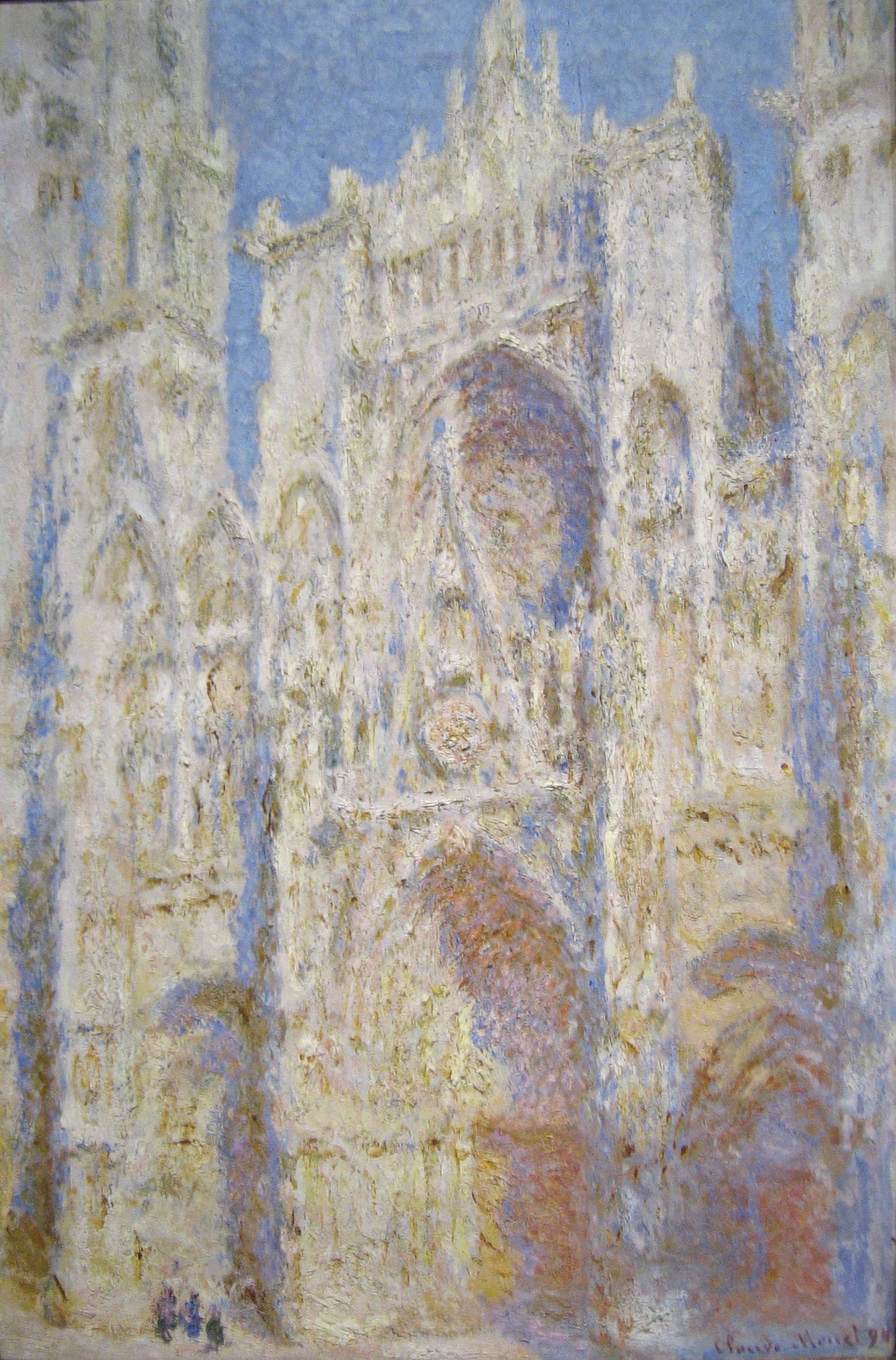
Rouen Cathedral, West Façade, Sunlight
Claude Monet · 1892–94
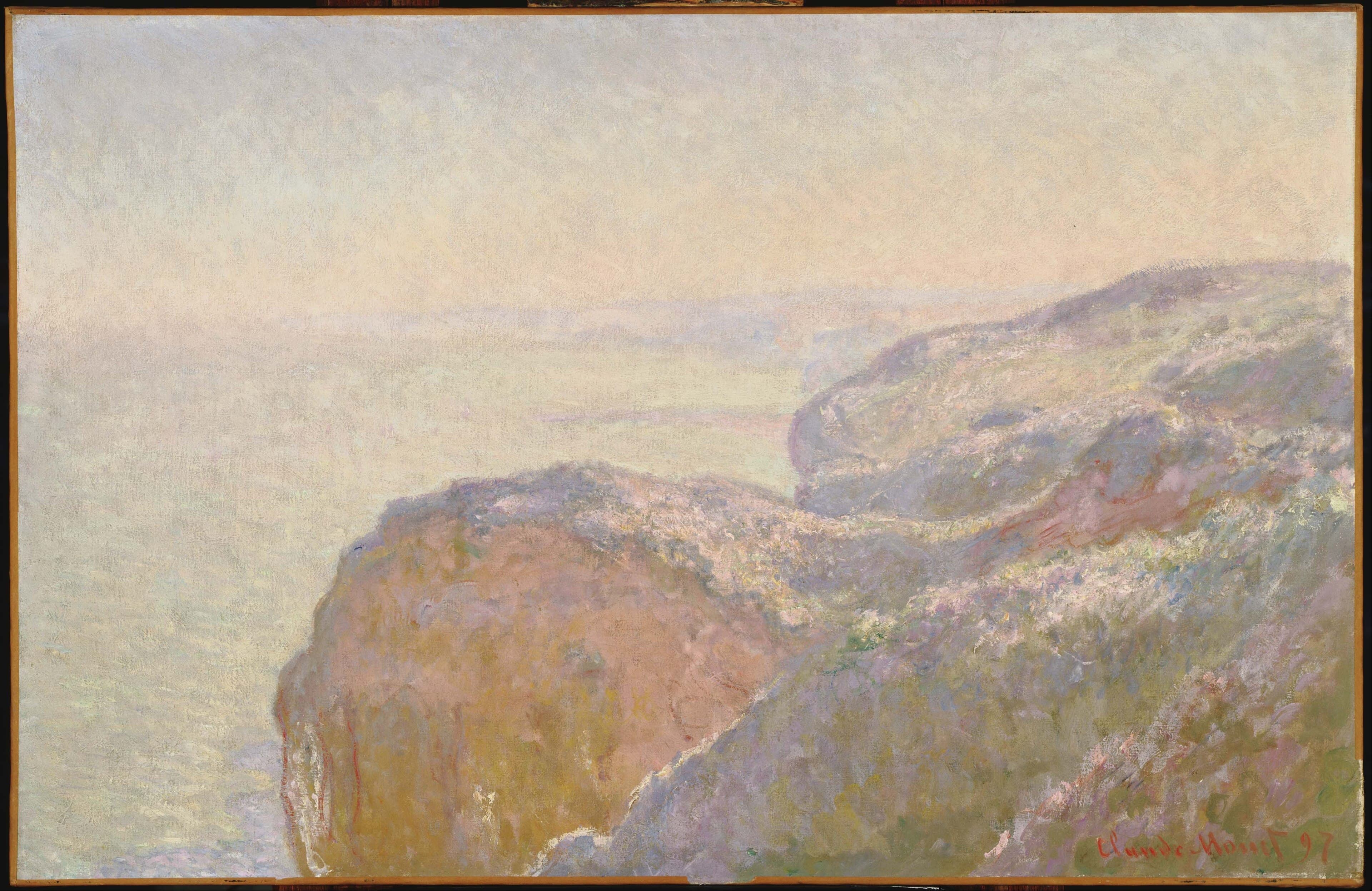
Val-Saint-Nicolas, near Dieppe (Morning)
Claude Monet · 1897
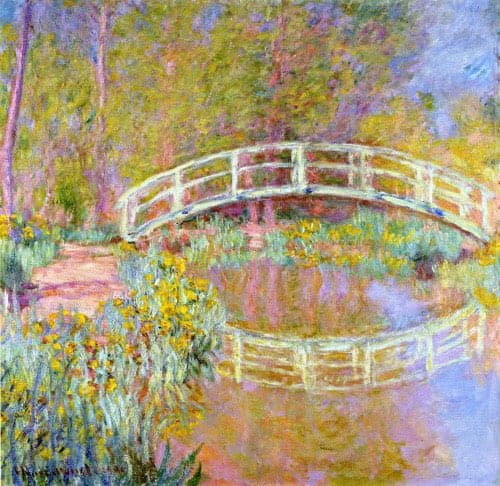
The Bridge in Monet's Garden
Claude Monet · c. 1895–96
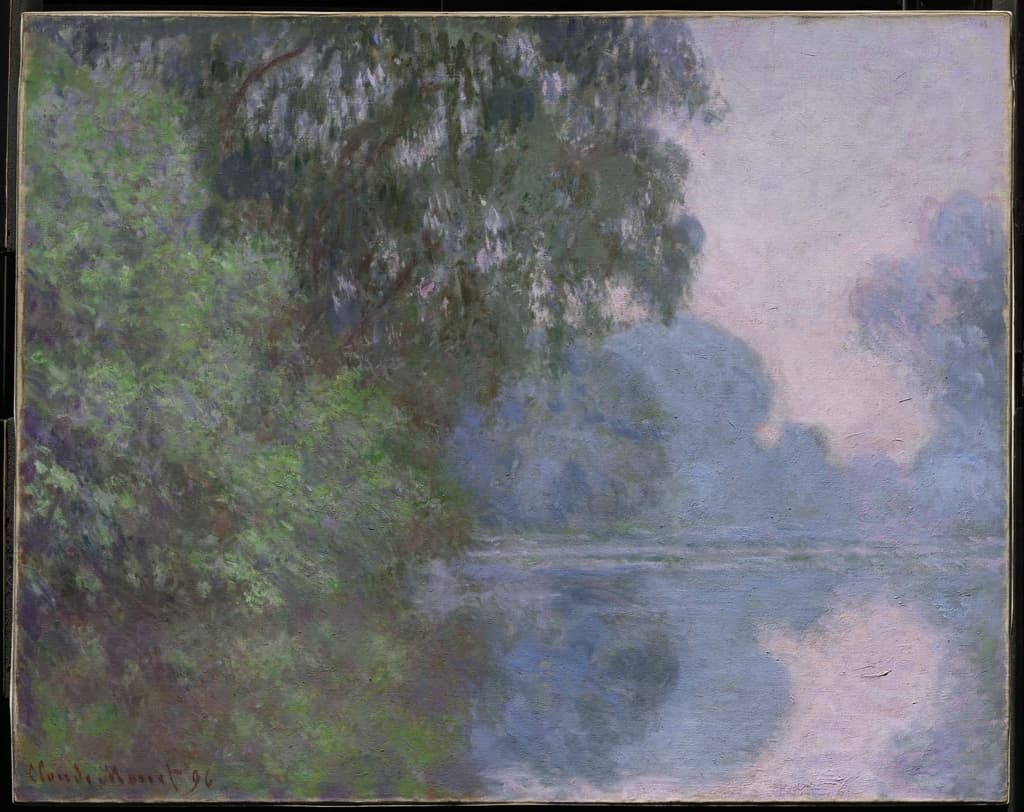
Morning on the Seine, near Giverny (1896)
Claude Monet · 1896
Also painted in 1896
The same year
Kindred works
You may also study
Steep Cliffs near Dieppe
Claude Monet · 1897
Sur la falaise de Dieppe
Claude Monet · 1897
Cliff Walk at Pourville
Claude Monet · 1882
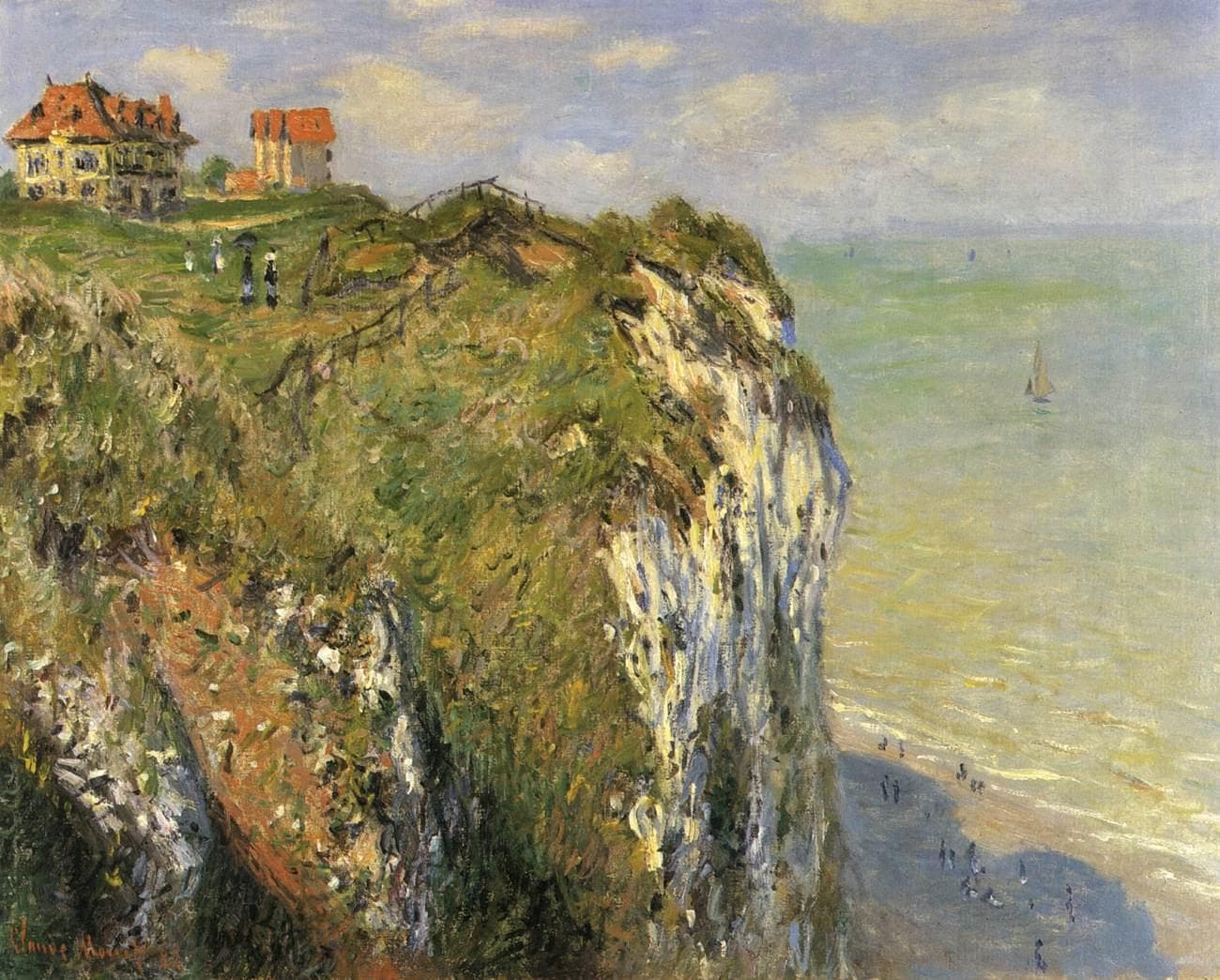
Cliffs near Dieppe
Claude Monet · 1882
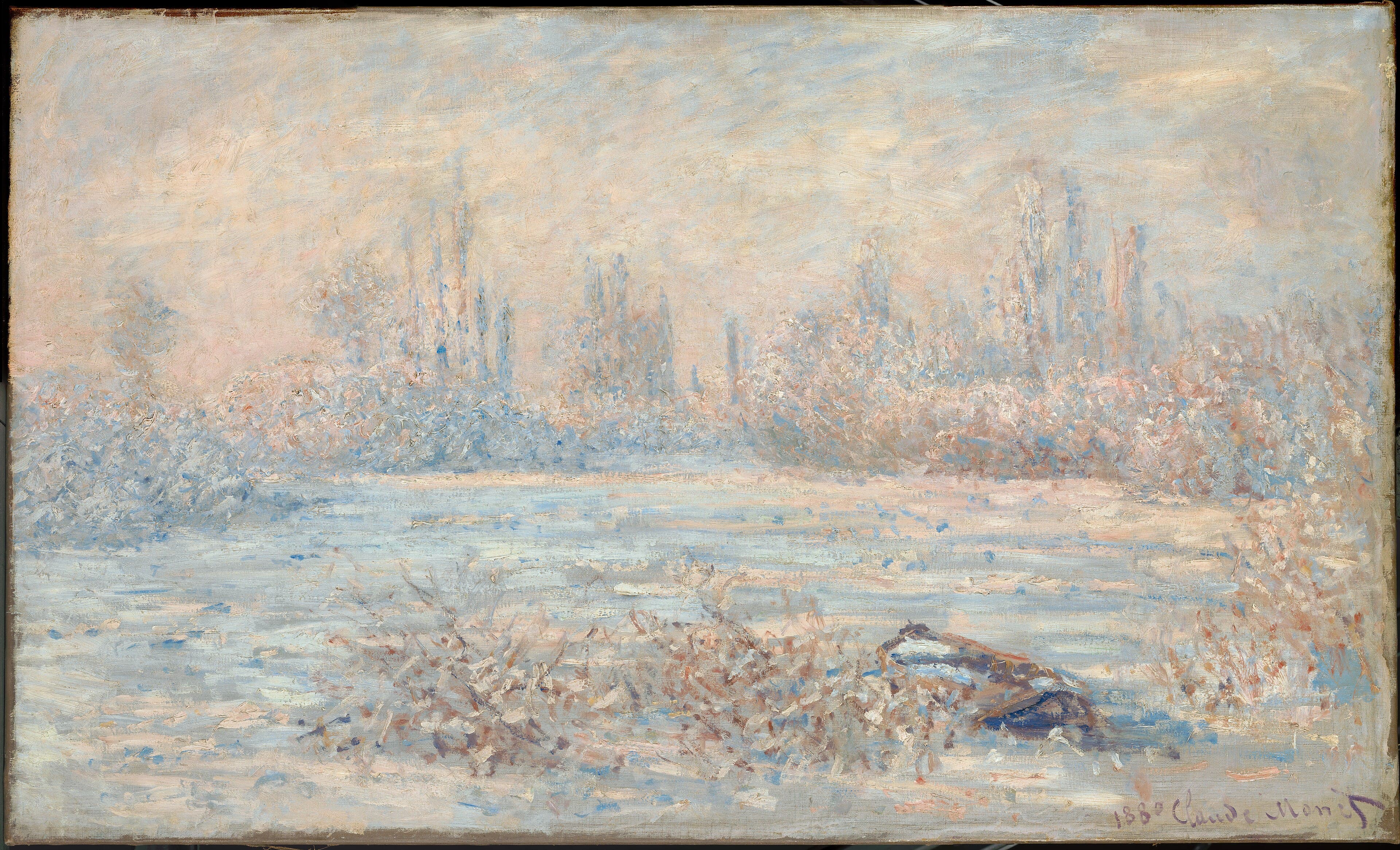
Frost (Le Givre)
Claude Monet · 1880
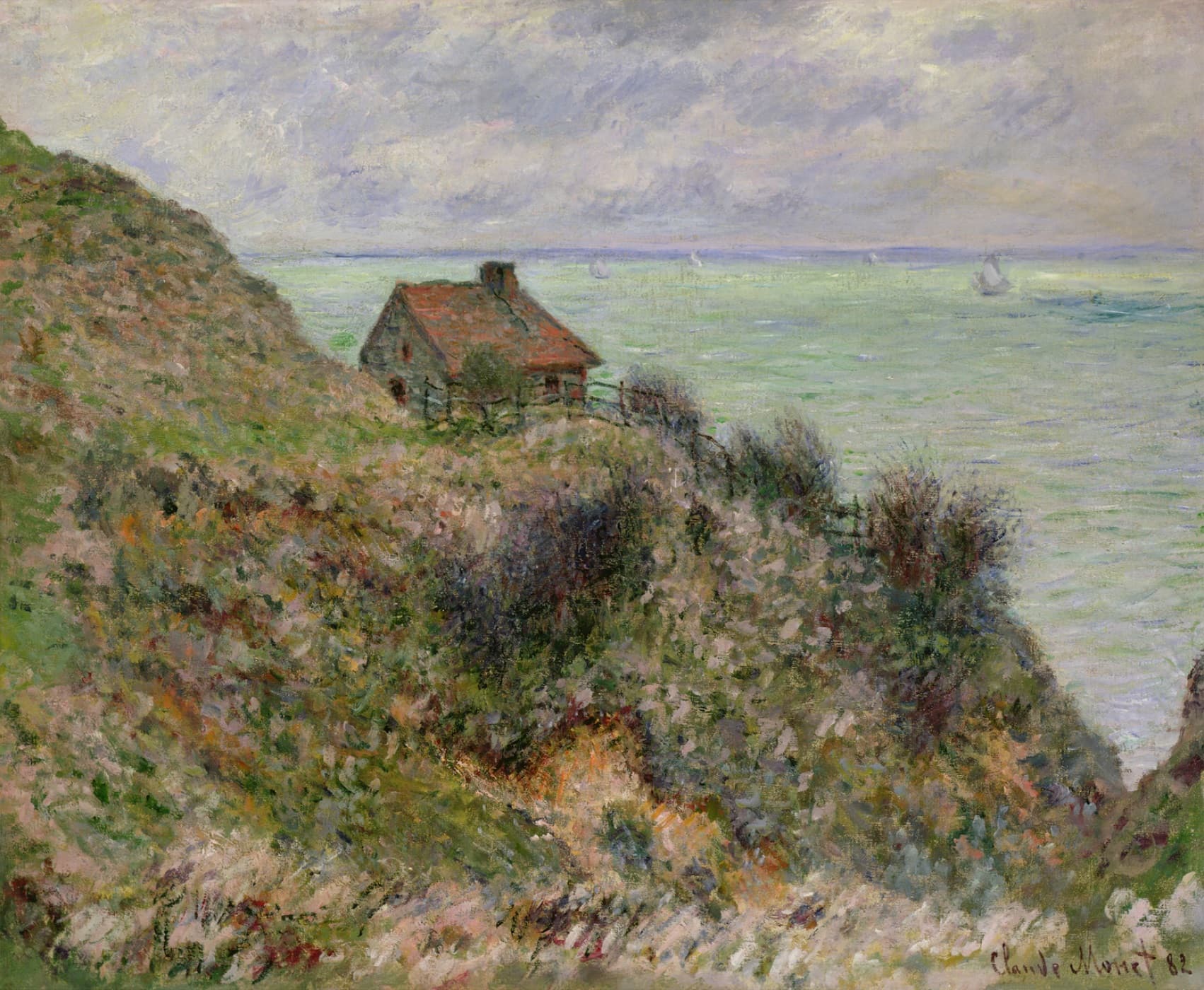
The Fisherman's House, Overcast Weather
Claude Monet · 1882
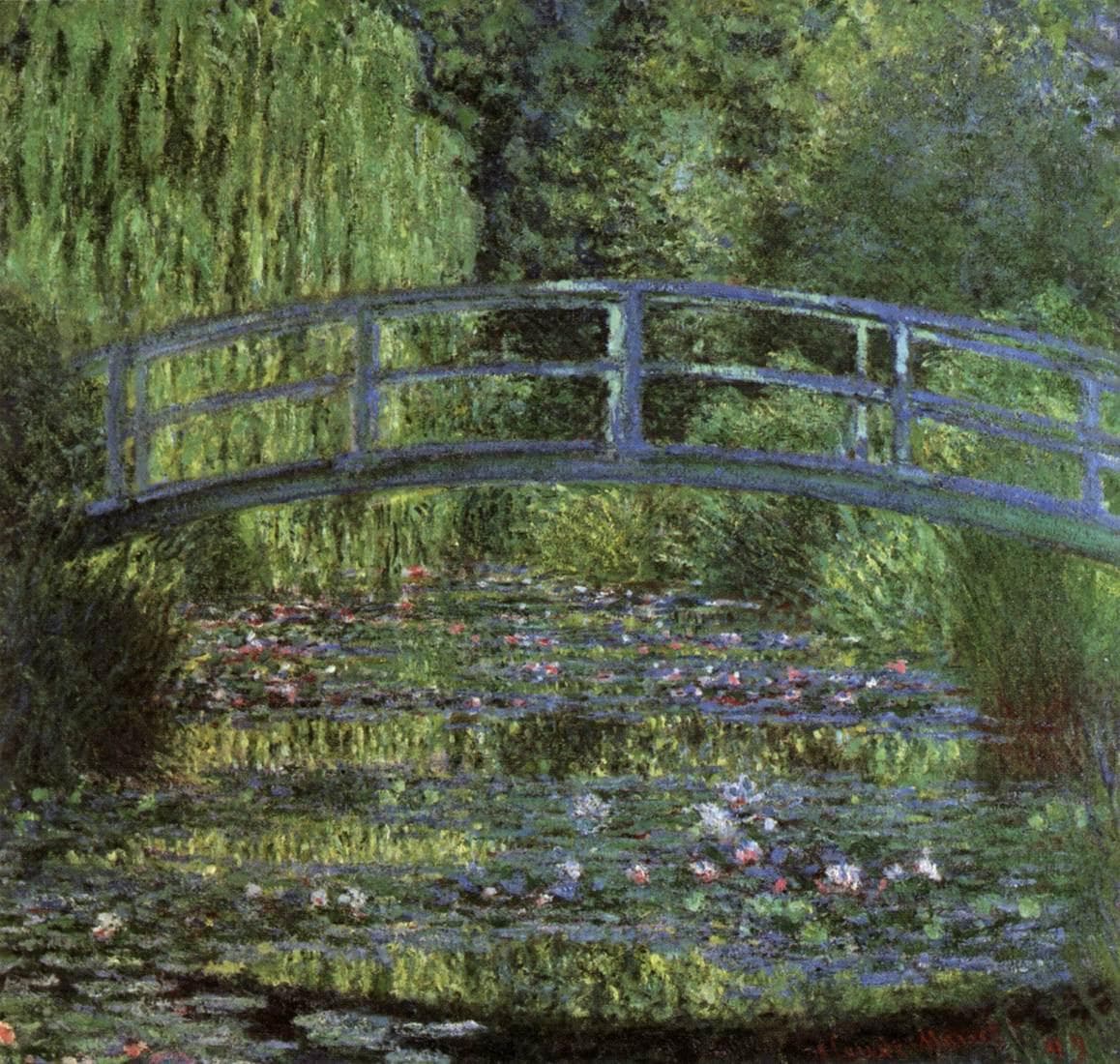
Water Lily Pond, Green Harmony
Claude Monet · 1899
The Beach at Honfleur
Claude Monet · 1864–66