Image: Museum of Fine Arts, Boston · Public domain · via Wikimedia Commons
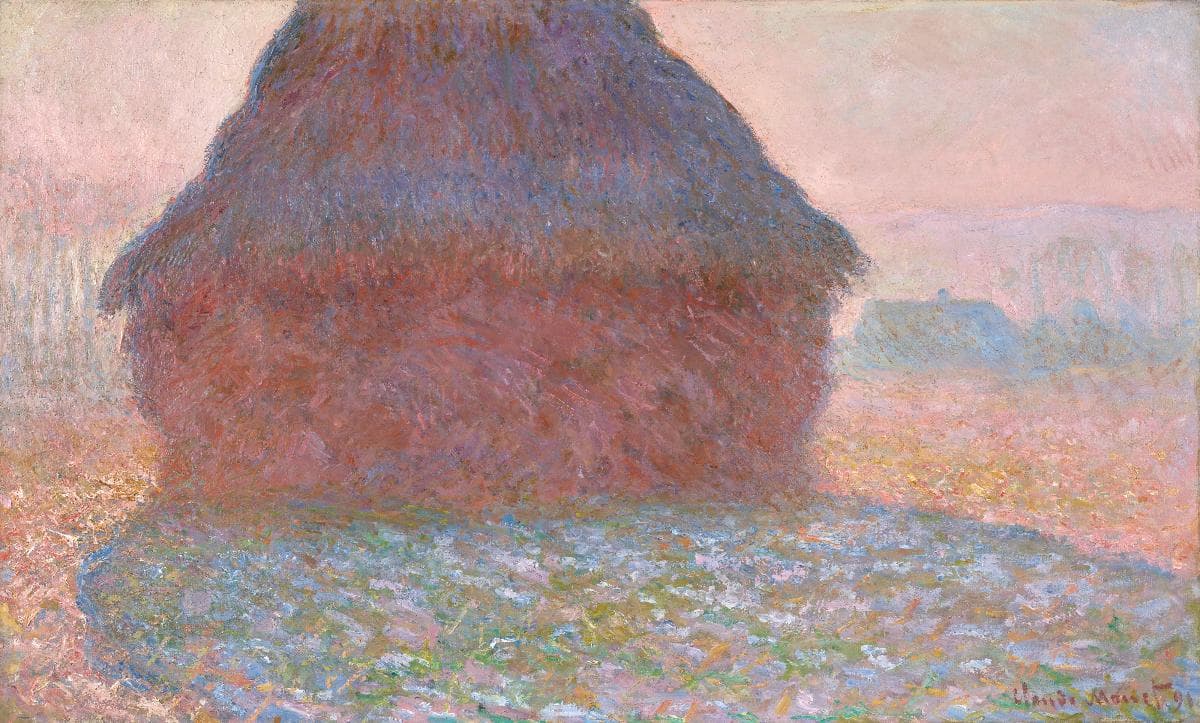
Grainstack (Sunset)
Claude Monet, 1891
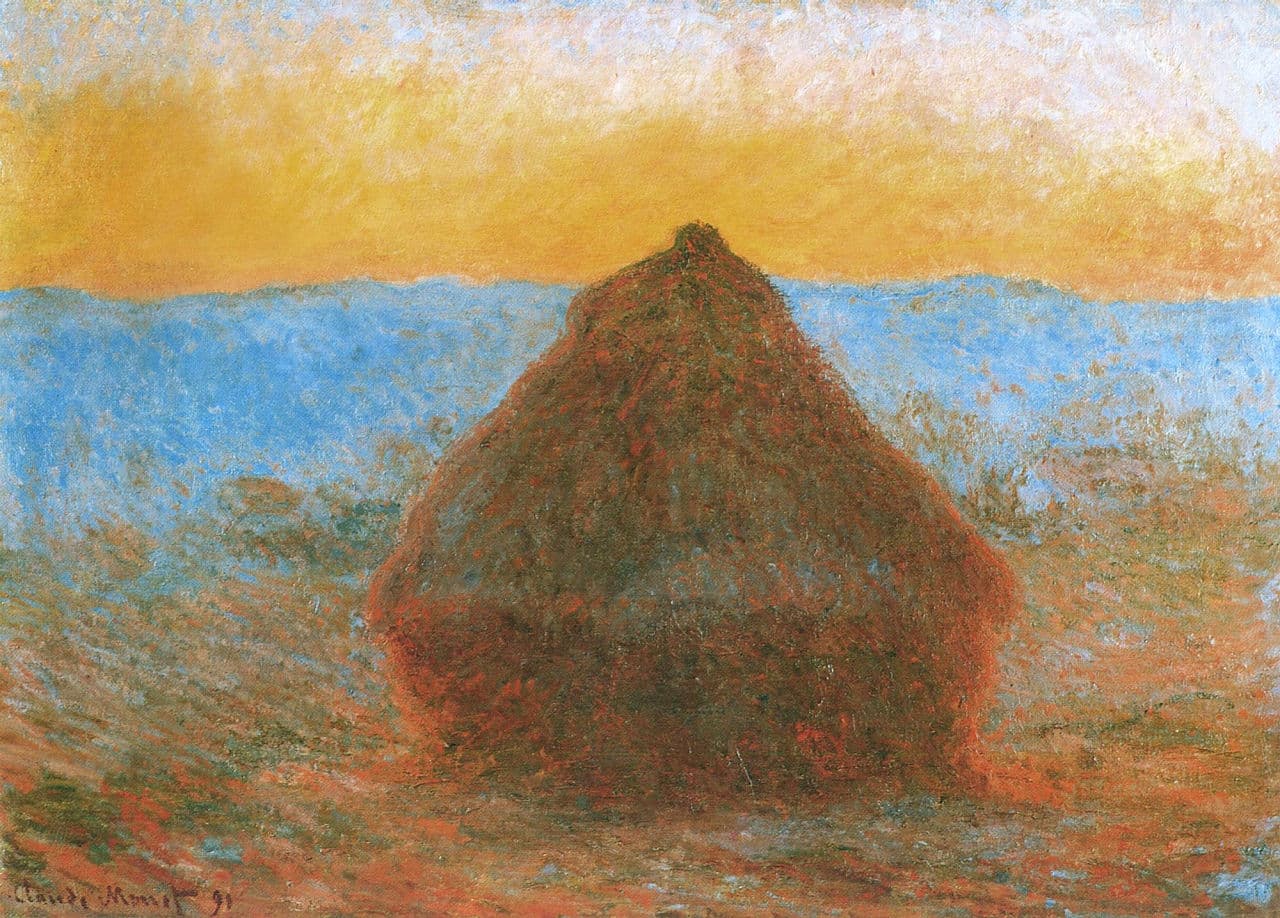
Grainstack (Sunset) is an 1891 painting by Claude Monet of a single huge wheat stack at Giverny, backlit by a blazing yellow sunset. It is in the Museum of Fine Arts, Boston, from the Juliana Cheney Edwards Collection.
- Artist
- Claude Monet
- Date
- 1891
- Medium
- Oil on canvas
- Dimensions
- 73.3 × 92.7 cm
- Collection
- Museum of Fine Arts, Boston, Boston, United States
- Movement
- Impressionism
- Catalogue
- Wildenstein 1289
- Nature & Landscape
Grainstack (Sunset) is a painting by Claude Monet, signed and dated "Claude Monet 91" at lower left. It shows one huge stack of wheat at the right of the canvas, its body almost black against a sky of molten yellow as the sun sets over the field beside his house at Giverny. The canvas measures 73.3 by 92.7 centimeters and has been in the Museum of Fine Arts, Boston, since 1925 (accession 25.112), part of the Juliana Cheney Edwards Collection. Wildenstein lists it as number 1289.
What you're looking at
The stack is enormous and pushed to the right, its peak near the top edge and its right side cut off by the frame. The sun is low and directly behind it, so we see only its shaded side: a dark mass of olive, brown and violet, laid on in long, swirling strokes. At its base, Monet lays a band of fierce orange and vermilion, and around its outline a thin halo of red shows where light glows through the straw.
On the left, the land opens out. A pink and violet field rolls back to a cluster of farm roofs at the horizon, small and half-dissolved in gold light. A low, smoky blue band of hills lies behind them.
The sky is the picture's other great mass. It is painted in thick, curling strokes of yellow, cream and gold, with a band of pink just above the horizon and touches of lilac at the top left. Below, the foreground field breaks into a carpet of short dabs: green, yellow, orange and blue.
Sunset: what makes this version distinct
This is one of the most dramatic canvases in the series, and one of the most often reproduced. The close, cropped view of a single stack against the sun was a radical choice: the stack becomes a dark, looming shape, almost a mountain, rather than an object in a landscape. The privately owned Grainstack in the Sunlight, which set a Monet auction record in 2016, uses nearly the same format, and the two canvases are close companions.
Elsewhere in the series the sunset is treated very differently: in Chicago's Stacks of Wheat (End of Day, Autumn) it is a soft coral glow on two stacks seen from a distance; in Haystacks at Sunset, Frosty Weather it turns a frozen field pink. Boston's picture is the most intense of them, a direct confrontation with the light.
How it was painted
Monet painted sunsets on the spot, though the effect lasted only minutes a day, and returned to each canvas when the same light came back. He finished the series in the studio. Here the paint is heavy and energetic. The sky's curling strokes, the stack's long diagonals and the foreground's short dabs give each zone its own rhythm. Complementary colors do much of the work: orange against blue in the stack's base, yellow against violet between sky and field.
Boston and Monet
Boston collectors were among the first in America to buy Monet, and the Museum of Fine Arts now holds one of the largest groups of his paintings outside France. This canvas came to the museum in 1925 with the Juliana Cheney Edwards Collection, a bequest that also brought other Impressionist works. The MFA also owns the winter Grainstack (Snow Effect) from the same series, so the two can be compared in the same galleries.
Details to look for
Look at the little houses at far left. Their roofs are a few touches of red and white, but they are glowing: the sun behind them lights their edges, just as it lights the stack. The foreground is worth close attention too. Short strokes of green, yellow and blue are laid down in rows, so the field seems to roll toward you under the light.
Where to see it
The painting is in the Museum of Fine Arts, Boston, in the museum's Impressionist galleries when on view. See Monet at the MFA Boston, our Haystacks series hub, Giverny and Claude Monet.
Questions & answers
Where is Monet's Grainstack (Sunset)?
It is in the Museum of Fine Arts, Boston, accession number 25.112, part of the Juliana Cheney Edwards Collection, which came to the museum in 1925. The MFA also owns the winter Grainstack (Snow Effect) from the same series.
When and where was it painted?
Monet painted it at Giverny, in the field next to his house, and dated it 1891. It belongs to the series of stacks he painted outdoors from late summer 1890 through the winter and completed in the studio.
What does Grainstack (Sunset) show?
A single huge wheat stack, cropped at the right edge, seen against a low setting sun. Its body is dark olive and violet with a fiery orange base, while a yellow and pink sky burns above a violet field and distant farm roofs.
How is it different from other haystack sunsets?
It is the most intense. Most sunset versions show stacks at a distance in soft coral or pink light; here one stack fills half the canvas as a dark mass against a molten yellow sky, close to the privately owned Meule sold in 2016.
More by the artist
Claude Monet
La Meule
Claude Monet · 1891
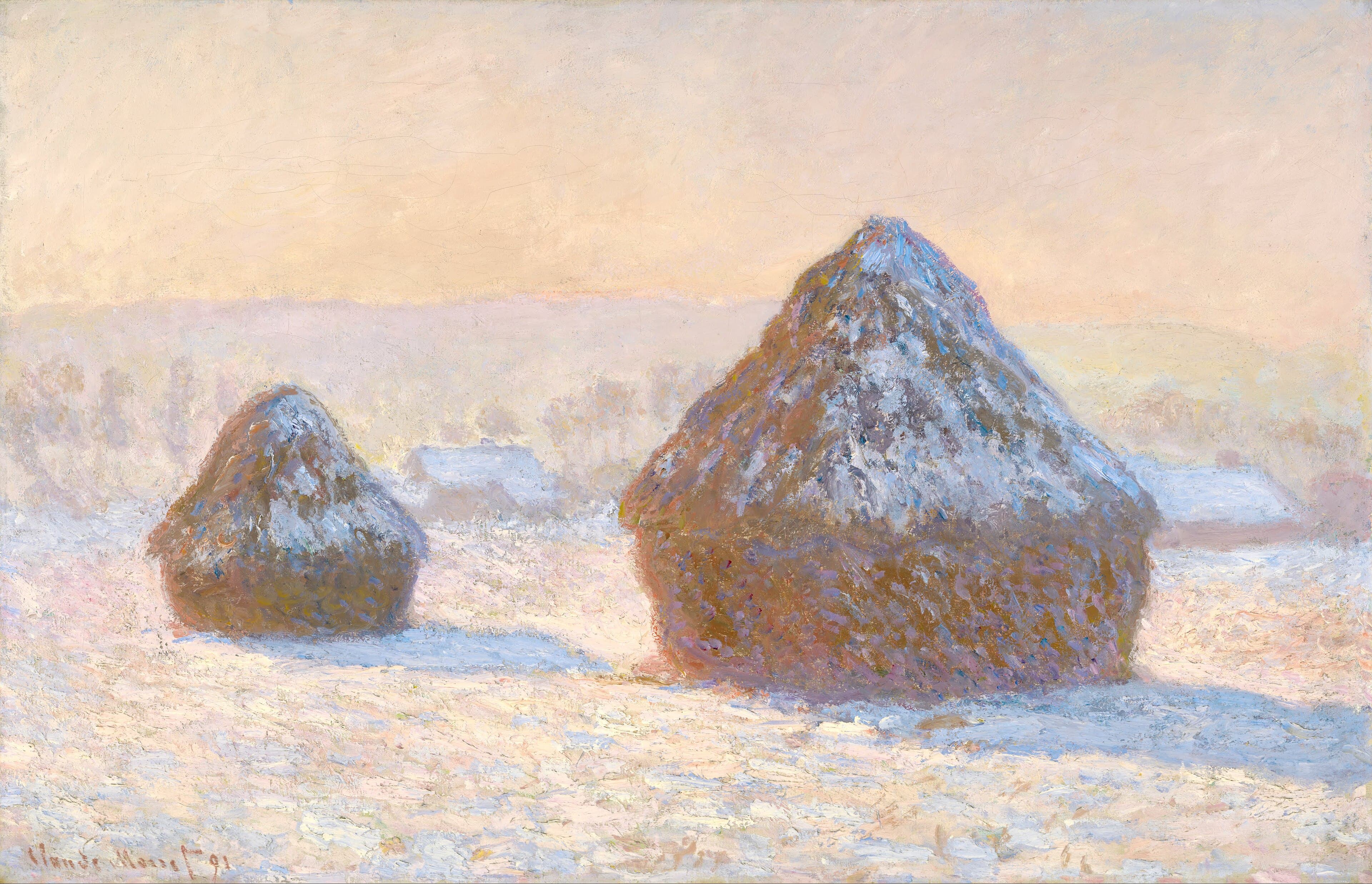
Wheatstacks, Snow Effect, Morning
Claude Monet · 1891
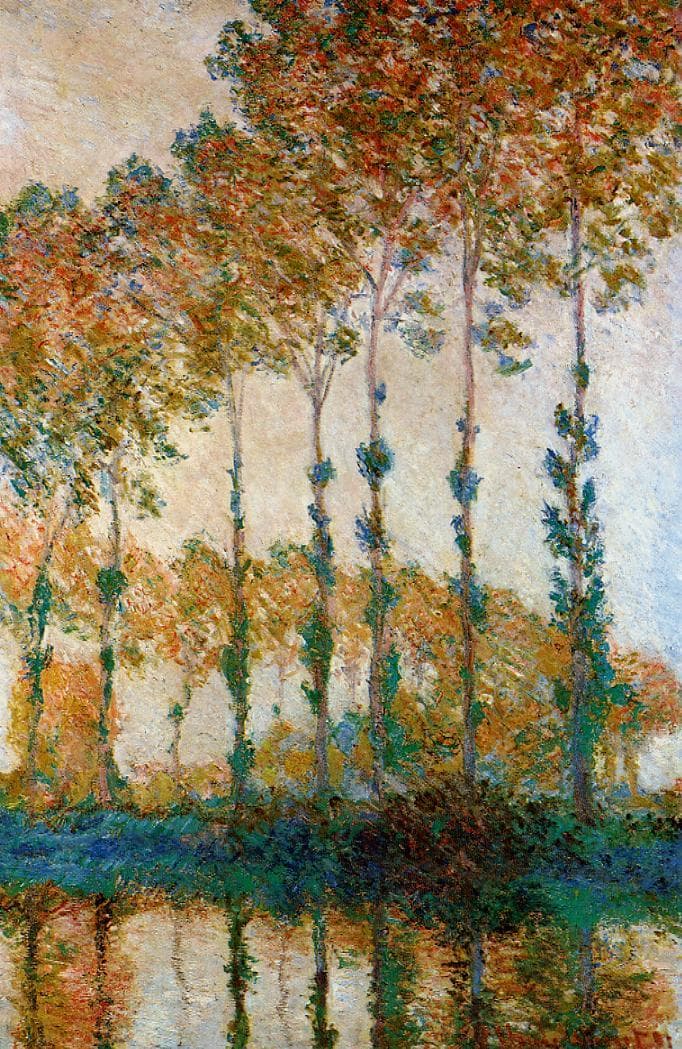
Poplars on the Banks of the Epte, Autumn
Claude Monet · 1891
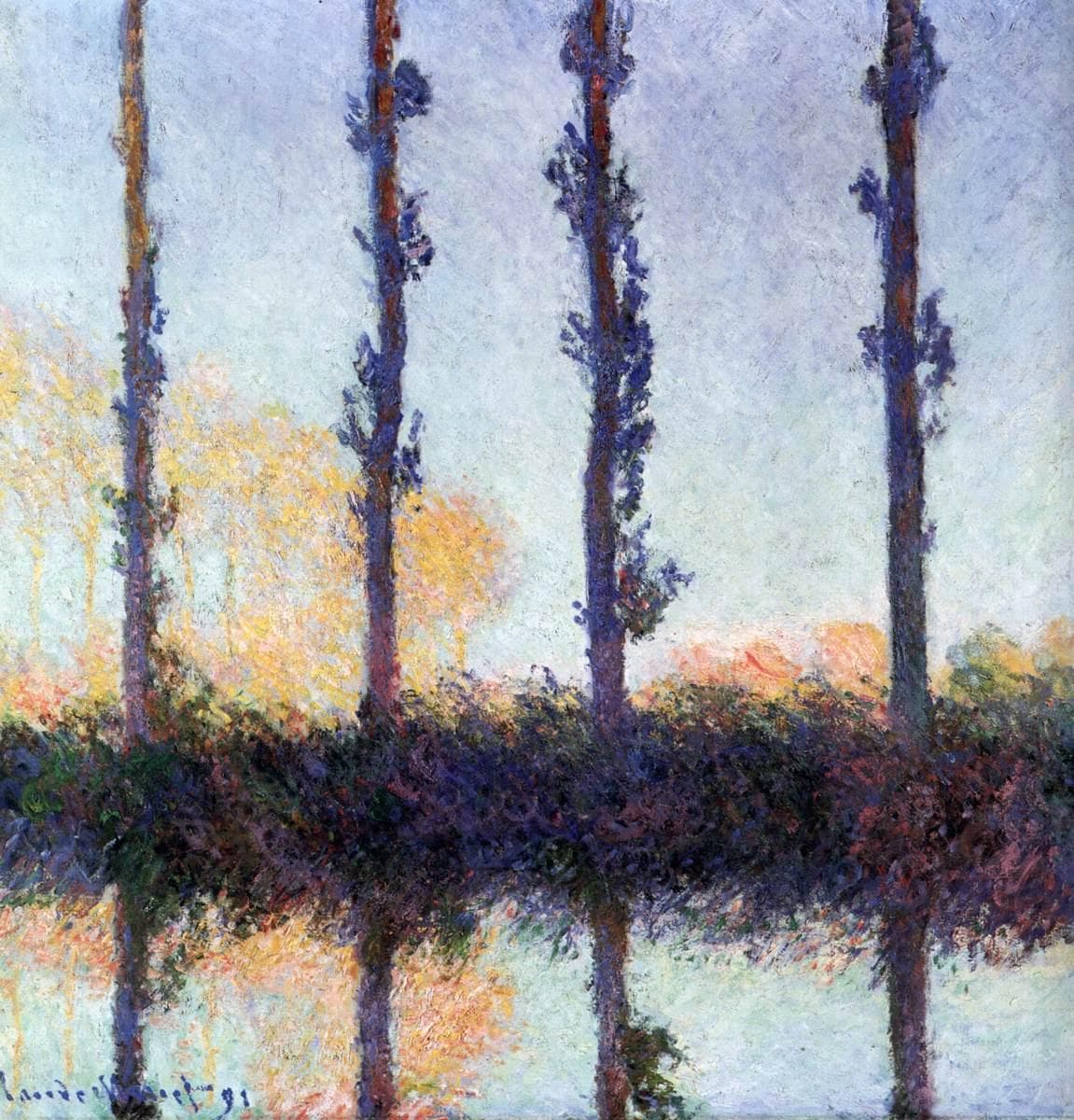
The Four Trees
Claude Monet · 1891
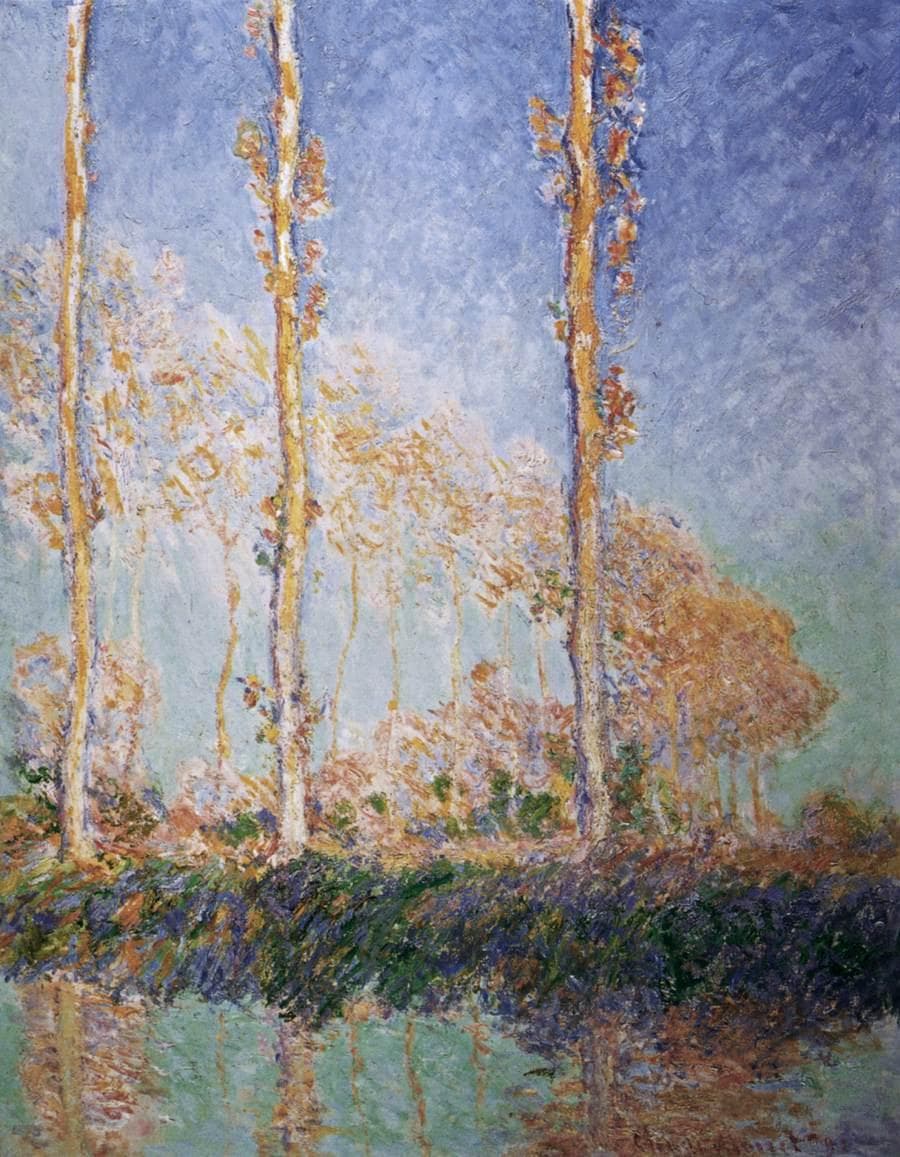
Poplars, Three Pink Trees, Autumn
Claude Monet · 1891
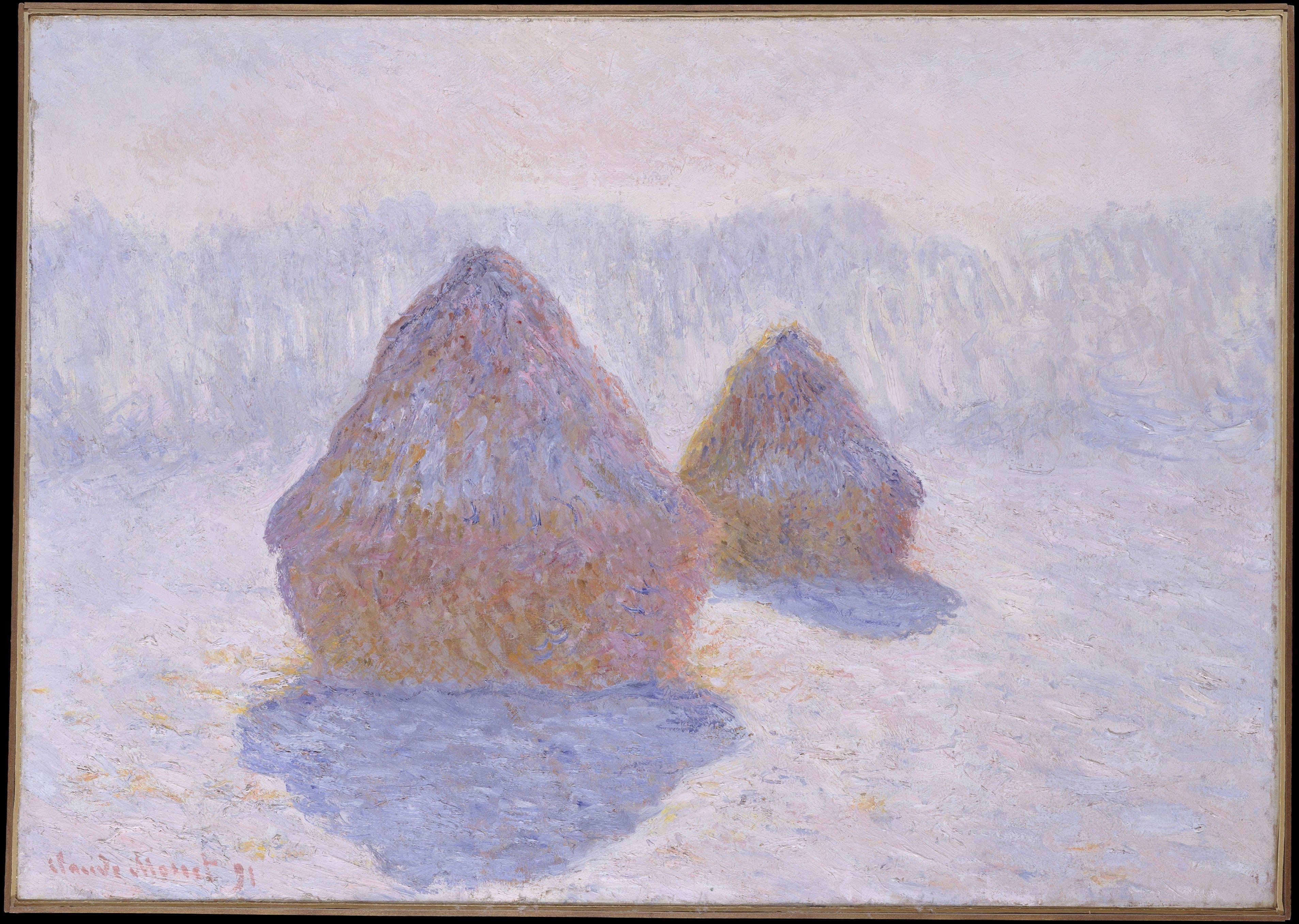
Haystacks (Effect of Snow and Sun)
Claude Monet · 1891
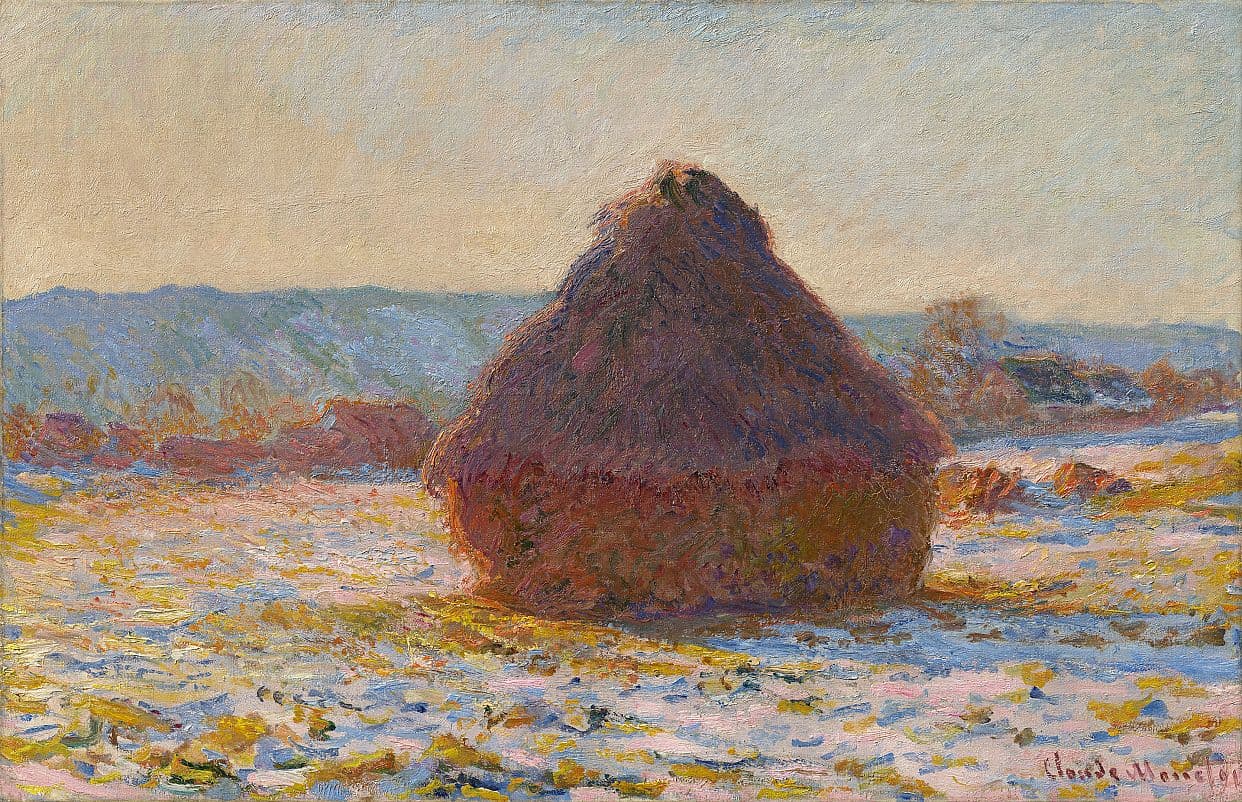
Grainstack in the Sunlight, Snow Effect
Claude Monet · 1891
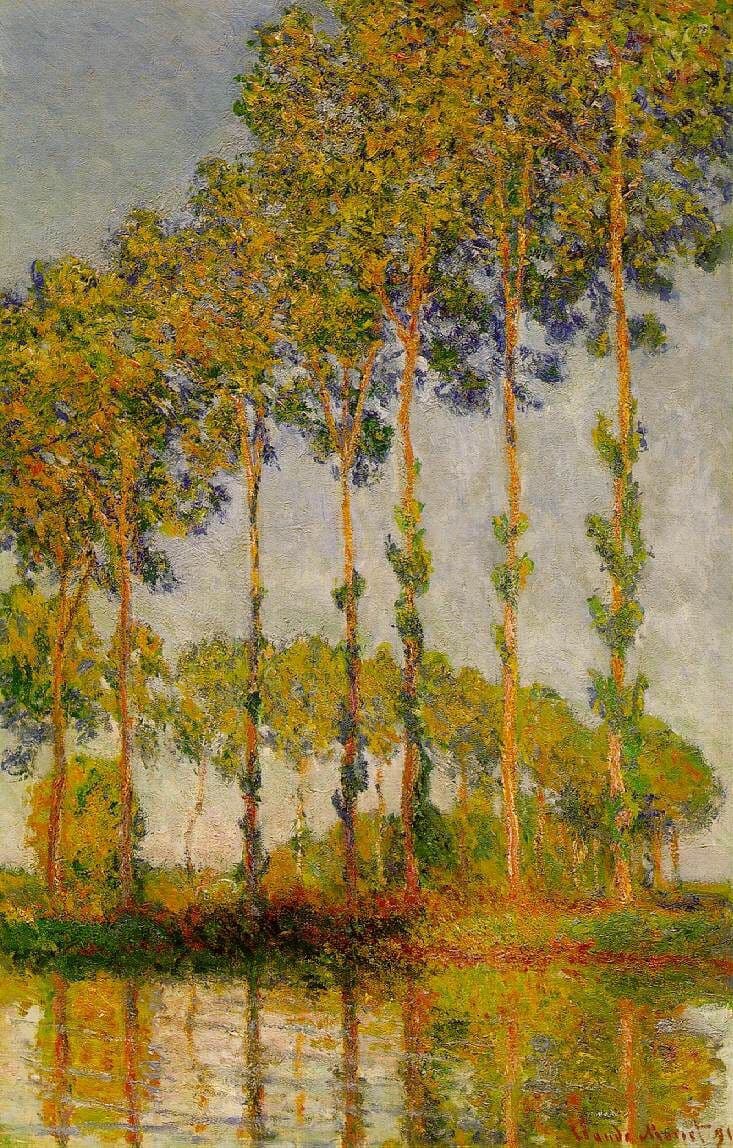
Row of Poplars in Autumn
Claude Monet · 1891
Also painted in 1891
The same year
Grainstack in Sunlight
Claude Monet · 1891
Poplars on the Epte (Edinburgh)
Claude Monet · 1891
Poplars on the Epte (London)
Claude Monet · 1891
Grainstack, Sun in the Mist
Claude Monet · 1891
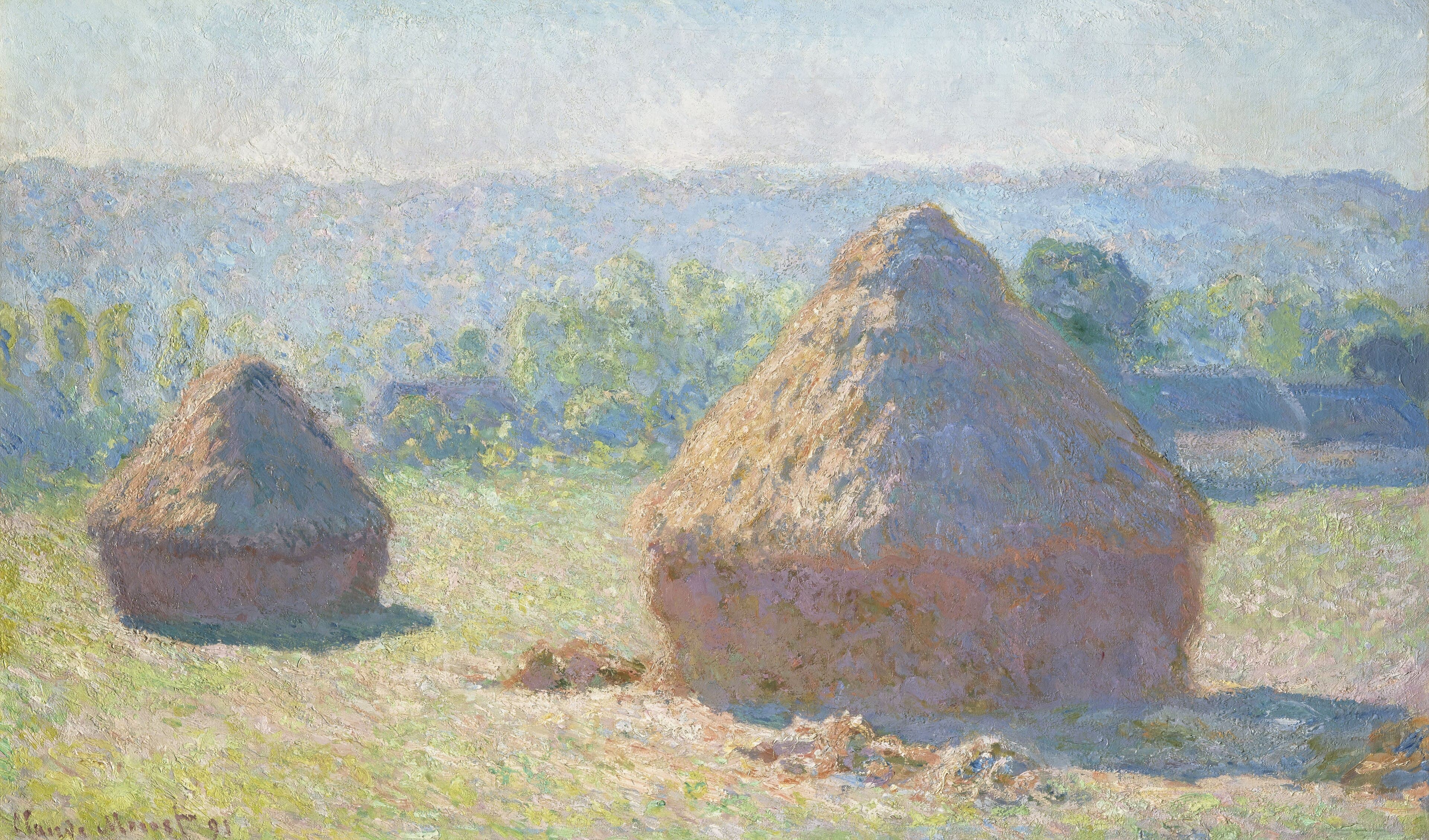
Haystacks, End of Summer
Claude Monet · 1891
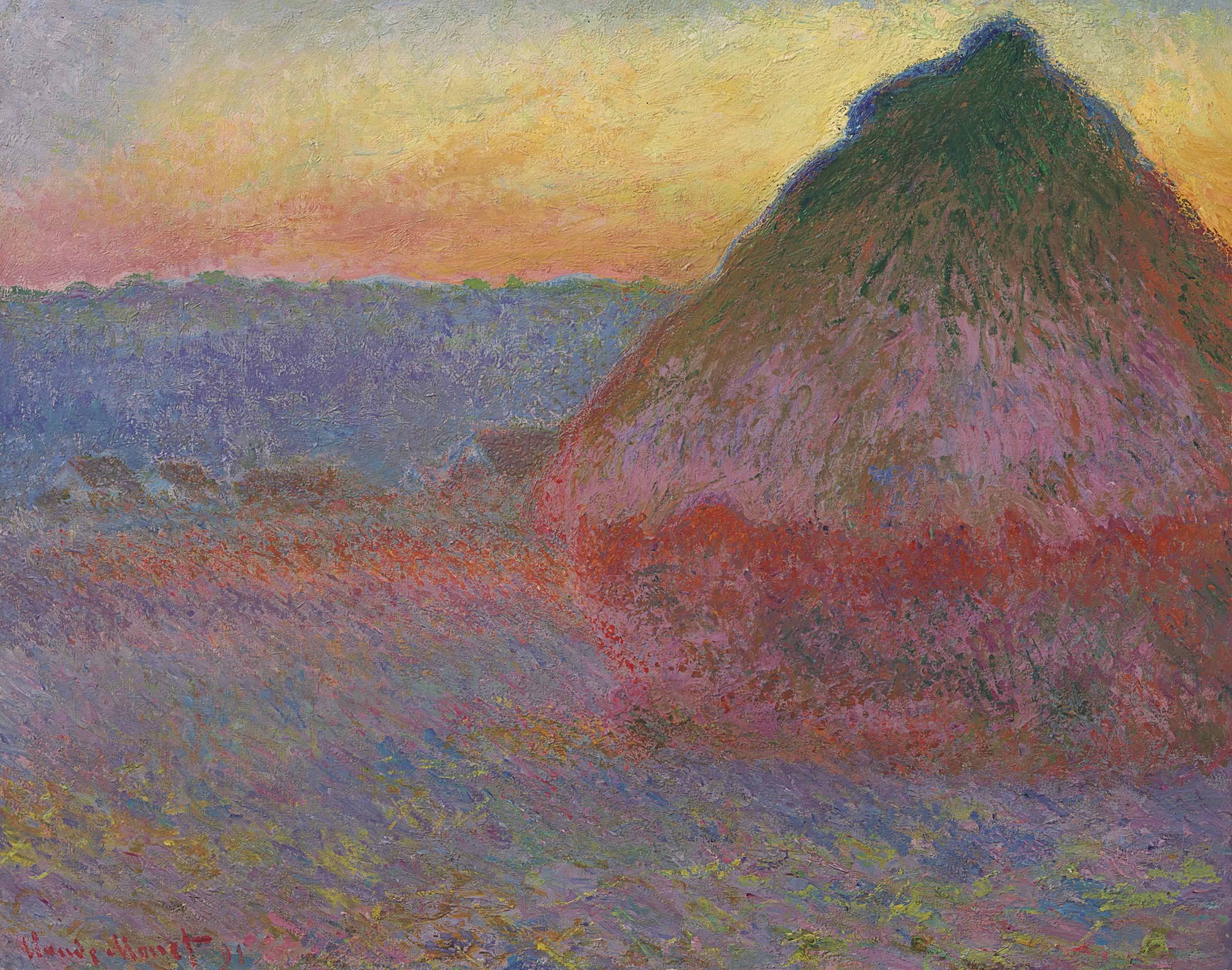
Grainstack in the Sunlight
Claude Monet · 1891
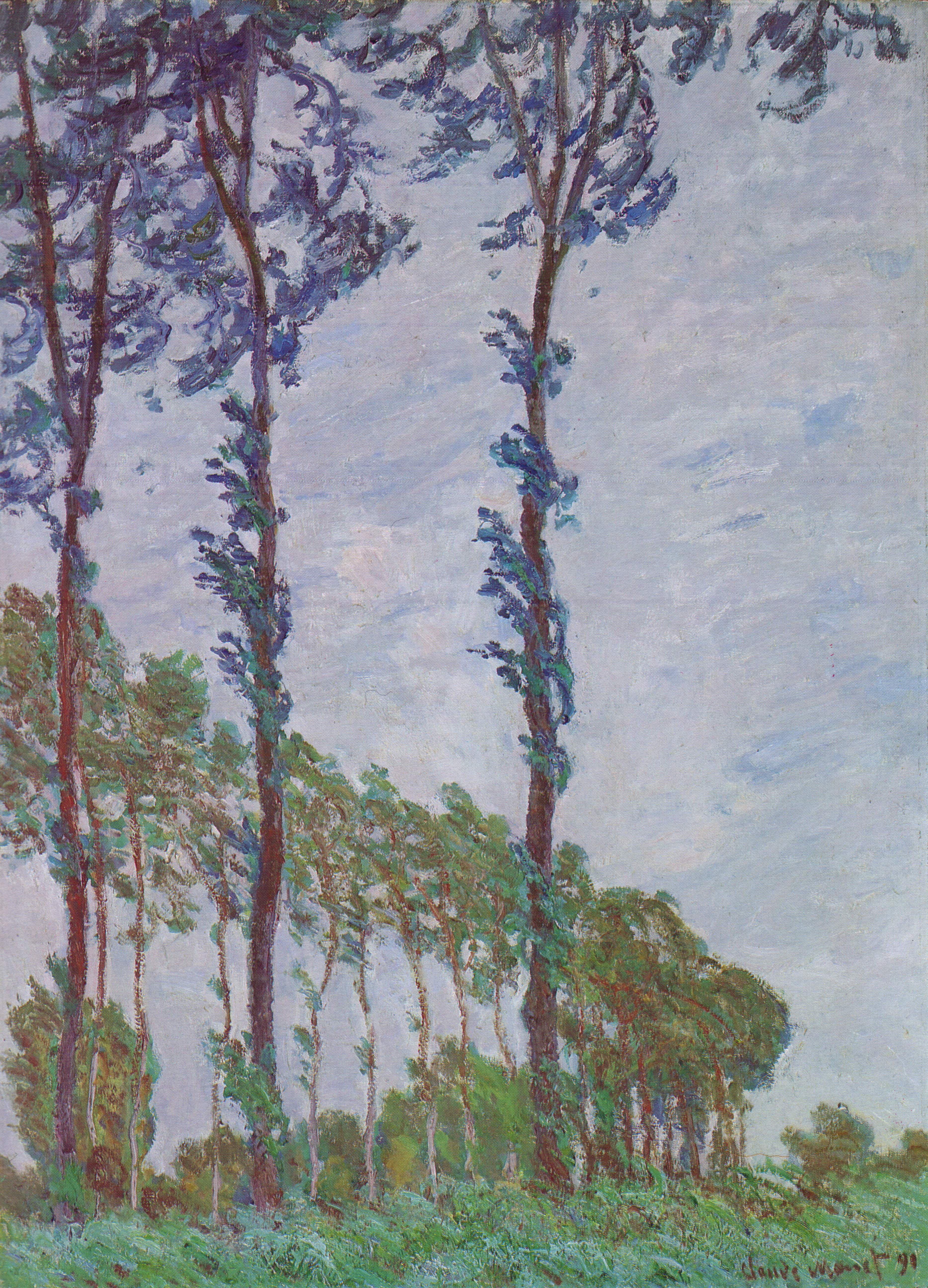
Wind Effect, Series of The Poplars
Claude Monet · 1891
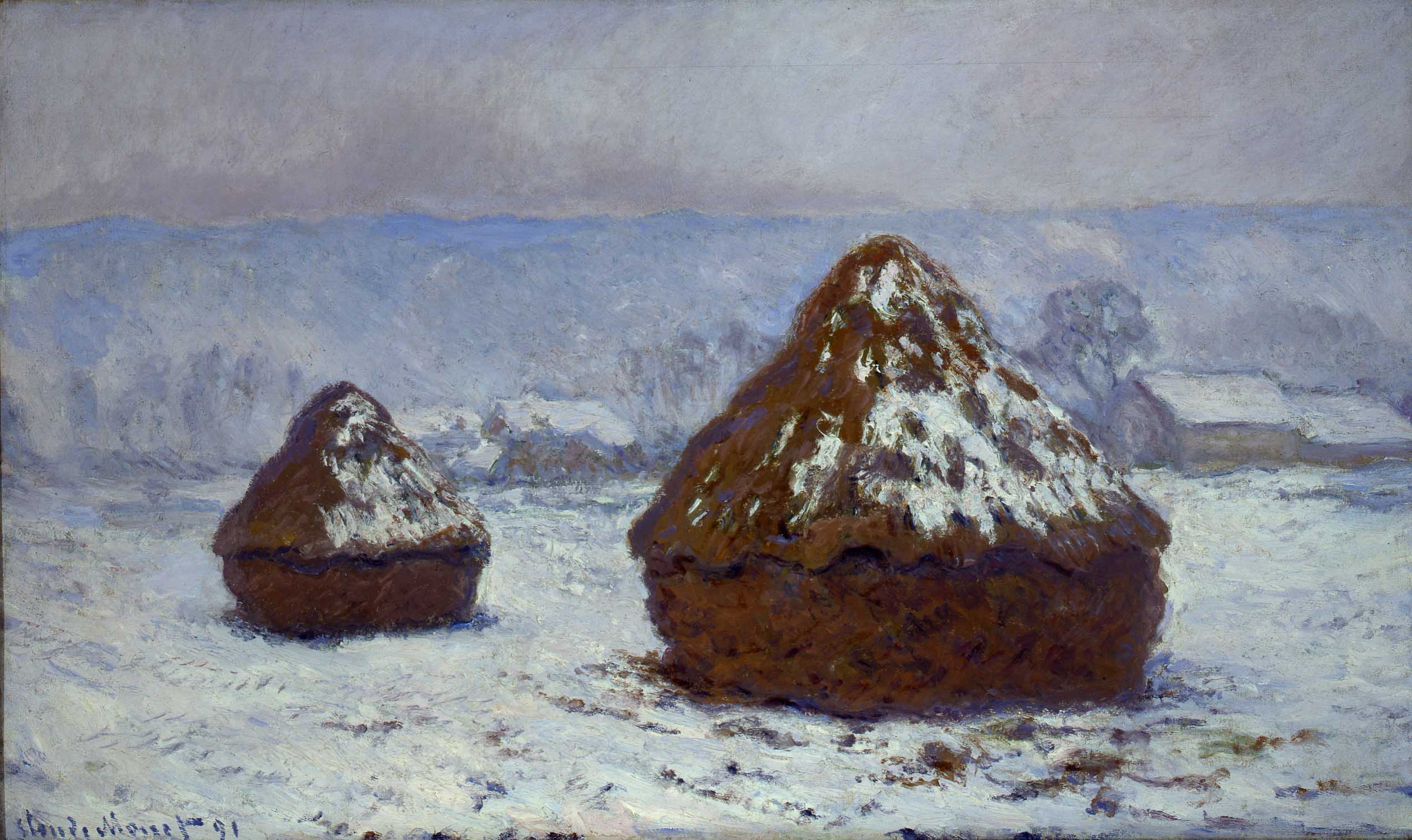
Grainstacks, Snow Effect
Claude Monet · 1891
Kindred works
You may also study
Grainstack in the Sunlight
Claude Monet · 1891
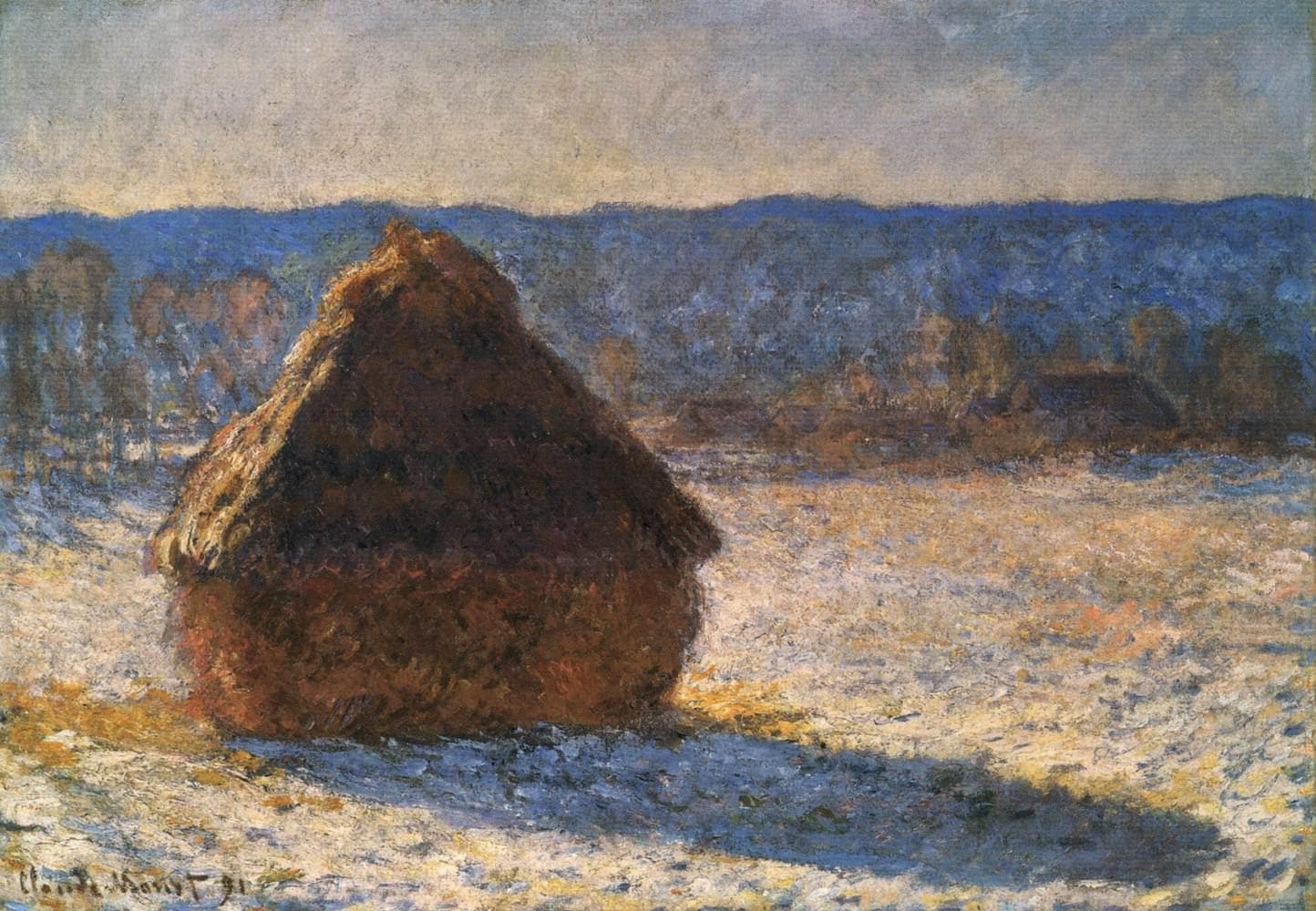
Grainstack (Snow Effect)
Claude Monet · 1891
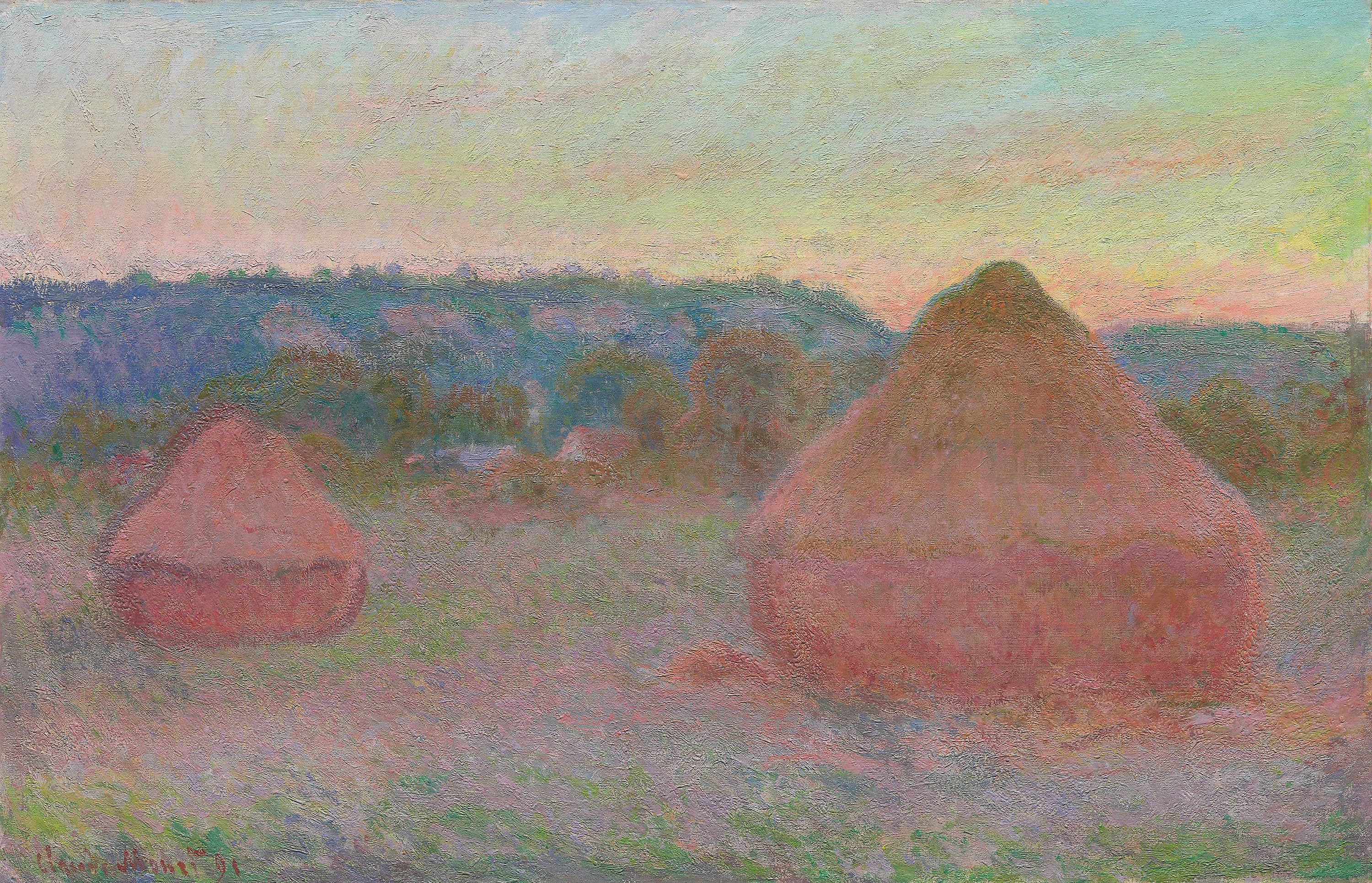
Stacks of Wheat (End of Day, Autumn)
Claude Monet · 1890–91
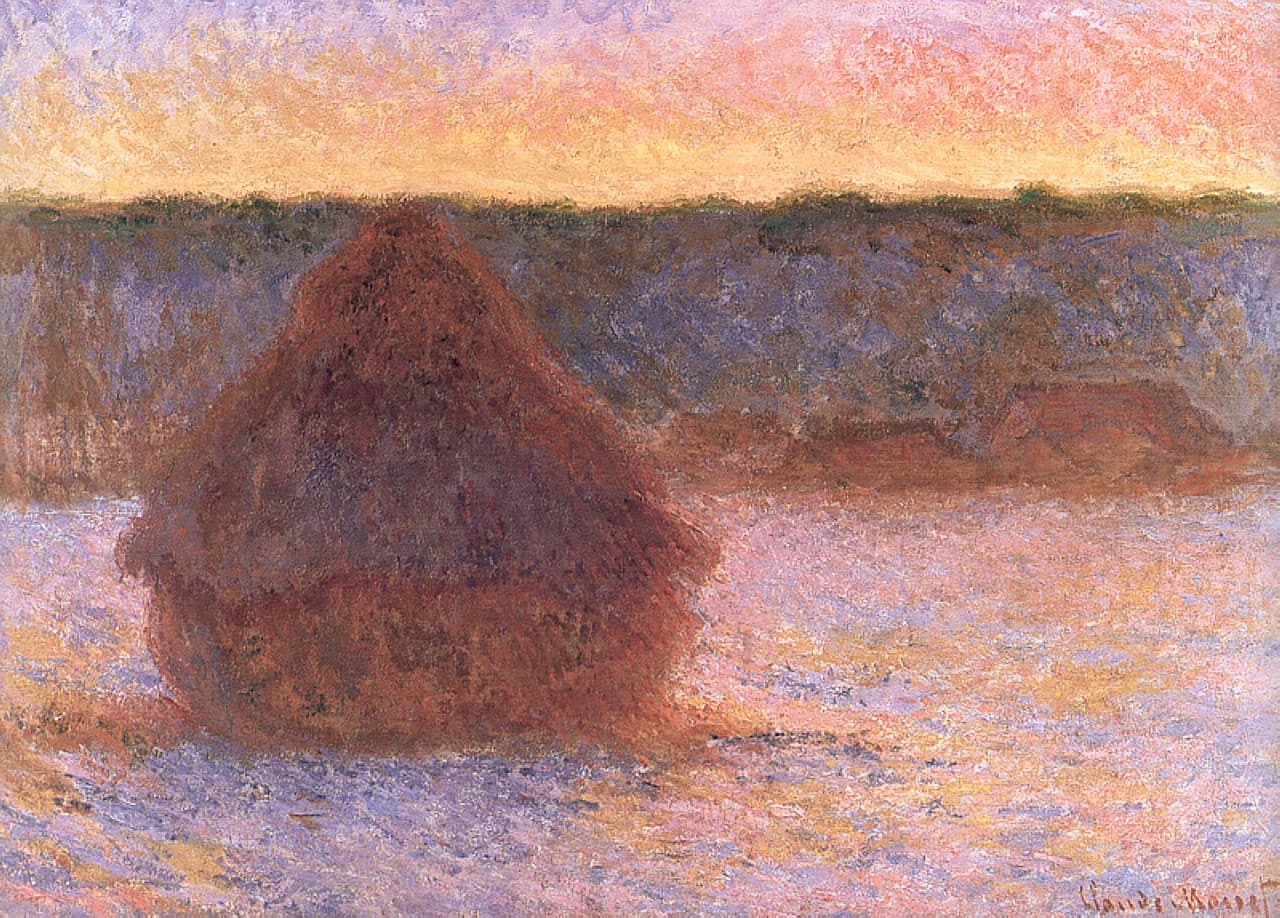
Haystacks at Sunset, Frosty Weather
Claude Monet · 1891
The Pond at Montgeron
Claude Monet · 1876–77
The Plain of Sannois at Argenteuil
Claude Monet · 1872
The Cliff of Aval, Étretat
Claude Monet · 1885
The Creuse, Sunset
Claude Monet · 1889