Image: Shelburne Museum, Vermont · Public domain · via Wikimedia Commons
Grainstacks, Snow Effect
Claude Monet, 1891
Grainstacks, Snow Effect (Meules, effet de neige) is an 1891 painting by Claude Monet of two snow-capped wheat stacks at Giverny under a gray winter sky. It is in the Shelburne Museum, Vermont.
- Artist
- Claude Monet
- Date
- 1891
- Medium
- Oil on canvas
- Dimensions
- 58.4 × 99.1 cm (23 × 39 in.)
- Collection
- Shelburne Museum, Shelburne, Vermont, United States
- Movement
- Impressionism
- Catalogue
- Wildenstein 1274
- Nature & Landscape
Grainstacks, Snow Effect (Meules, effet de neige) is a painting by Claude Monet, signed and dated "Claude Monet 91" at lower left. It shows two stacks of wheat, their tops streaked with snow, standing in a white field near his house at Giverny on a cold, overcast day. The canvas is in the Shelburne Museum in Shelburne, Vermont (inventory 27.1.2.106); museum data record it as 23 by 39 inches. Wildenstein lists it as number 1274.
What you're looking at
The arrangement is the familiar one: a smaller stack at left, a large one right of center. But the light is entirely different from the sunny canvases. There is no sun, no glow at the edges and almost no cast shadow. The stacks are dark, chocolate-brown masses, painted in deep red-brown with touches of violet and orange, and snow lies on their caps in thick, irregular streaks of white and blue-white, like icing that has started to slide.
Under the caps Monet marks the eaves with a dark line, and the drum of each stack is a solid, rounded block. Around the base of the large stack, a few patches of brown earth or straw show through the snow.
The rest of the canvas is a study in cold. The snow in the foreground is painted in white, gray, lilac and blue, flat and dull, with only faint pink in the distance. Behind the stacks, farm buildings with snow-covered roofs sit in a blur of gray-blue, and at right a bare tree rises as a smoky shape. A band of pale blue hills runs under a sky of heavy gray-mauve cloud, painted in broad horizontal strokes.
Overcast snow: what makes this version distinct
This is the cold twin of the Getty's Wheatstacks, Snow Effect, Morning. The two canvases show the same two snow-capped stacks from nearly the same viewpoint, but the Getty picture is lit by a peach sunrise and this one by flat, gray daylight. Set side by side, they make Monet's point about the series as clearly as any pair: the stacks are the same, the weather changes everything.
The overcast light also gives the stacks a weight they lack in the sunlit pictures. With no glow to dissolve their edges, they sit in the field like solid objects, dark against white. A similar mood appears in Chicago's single-stack Stack of Wheat (Snow Effect, Overcast Day).
How it was painted
The winter of 1890–91 brought weeks of snow to Giverny, and Monet painted the stacks outdoors through it, working on several canvases at once and finishing them in the studio. Here the palette is restricted to browns, grays, blues and white, with the warm color concentrated in the stacks. The snow on the caps is laid on thickly with a loaded brush, so it stands up from the surface; the sky is dragged across in thinner, horizontal strokes.
The Havemeyers and Shelburne
The Shelburne Museum was founded in 1947 by Electra Havemeyer Webb, daughter of Louisine and Henry Osborne Havemeyer, the New York collectors whose great bequest of Impressionist paintings went to the Metropolitan Museum. Electra inherited a group of pictures from her parents, including works by Monet, Manet, Degas and Mary Cassatt, and they are shown at Shelburne in rooms recreated from her Park Avenue apartment. This canvas is therefore a sibling, by family descent, of the Met's Haystacks (Effect of Snow and Sun), another snowy stacks picture from the Havemeyer collection.
Details to look for
The dark eave line under each snow cap is drawn with a single stroke of deep brown, which makes the stacks look carefully built. Look at the snowy roofs of the farm behind, painted in the same white and blue as the stacks' caps, linking near and far.
Where to see it
The painting is in the Shelburne Museum, near Burlington, Vermont, in the building devoted to Electra Havemeyer Webb's collection; the museum is open seasonally, so check before visiting. See our Haystacks series hub, Where to See Monet, Giverny and Claude Monet.
Questions & answers
Where is Monet's Grainstacks, Snow Effect?
It is in the Shelburne Museum in Shelburne, Vermont, inventory number 27.1.2.106. The museum was founded by Electra Havemeyer Webb, who inherited Impressionist paintings from her parents, the collectors Louisine and H. O. Havemeyer.
When and where was it painted?
Monet painted it at Giverny, in the field next to his house, during the snowy winter of 1890–91, and dated it 1891. It belongs to the core group of winter canvases in his stacks series.
What does Grainstacks, Snow Effect show?
Two dark brown wheat stacks with snow on their caps, standing in a white field on a gray, overcast day. Snowy farm roofs, a bare tree and blue hills sit behind them under a heavy mauve-gray sky.
How is it different from the Getty's snowy haystacks?
Both show the same two snow-capped stacks from almost the same spot. The Getty canvas is lit by a warm peach sunrise; the Shelburne one is painted under flat gray light, so the stacks look darker and heavier and the snow colder.
More by the artist
Claude Monet
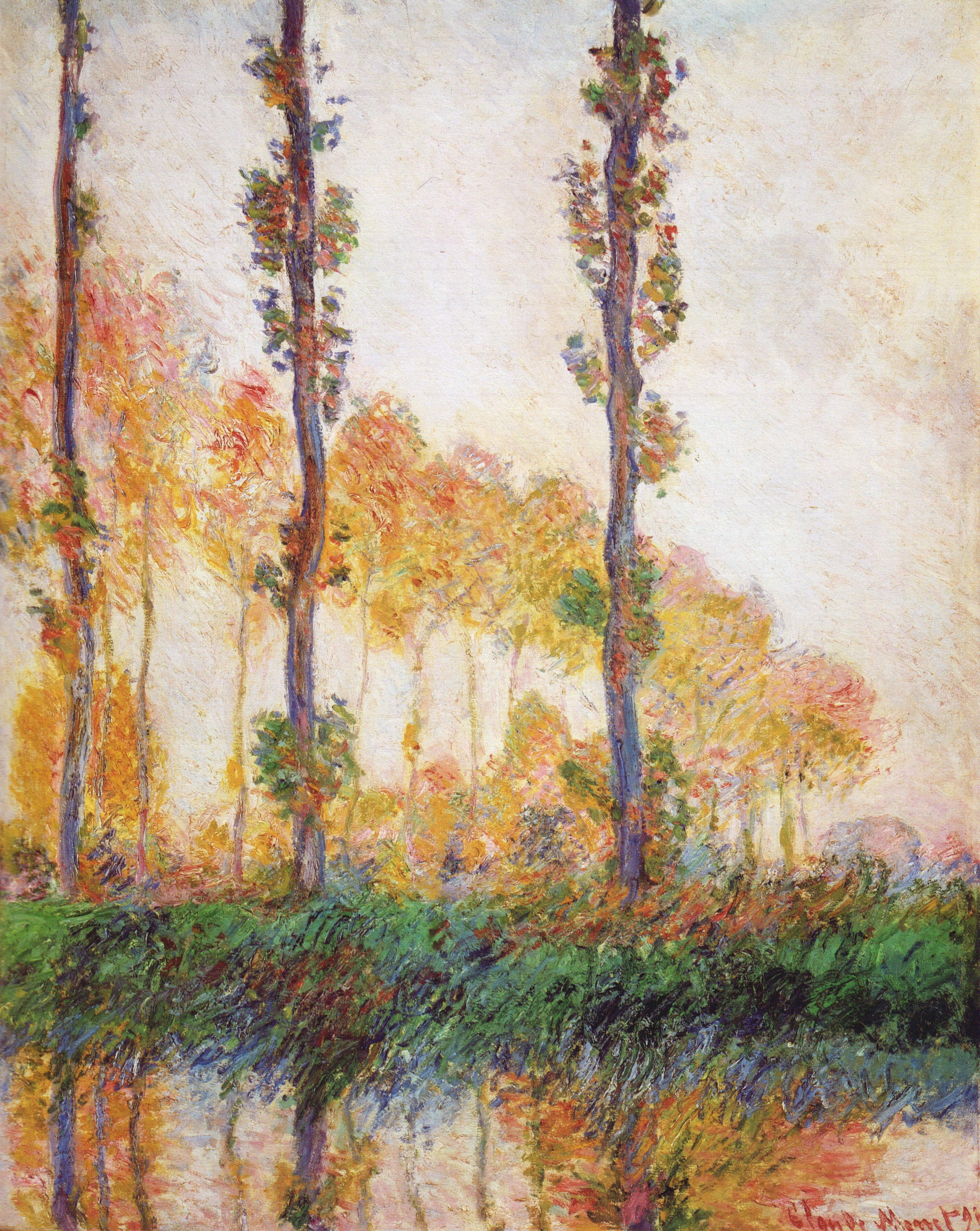
Poplars (Autumn)
Claude Monet · 1891
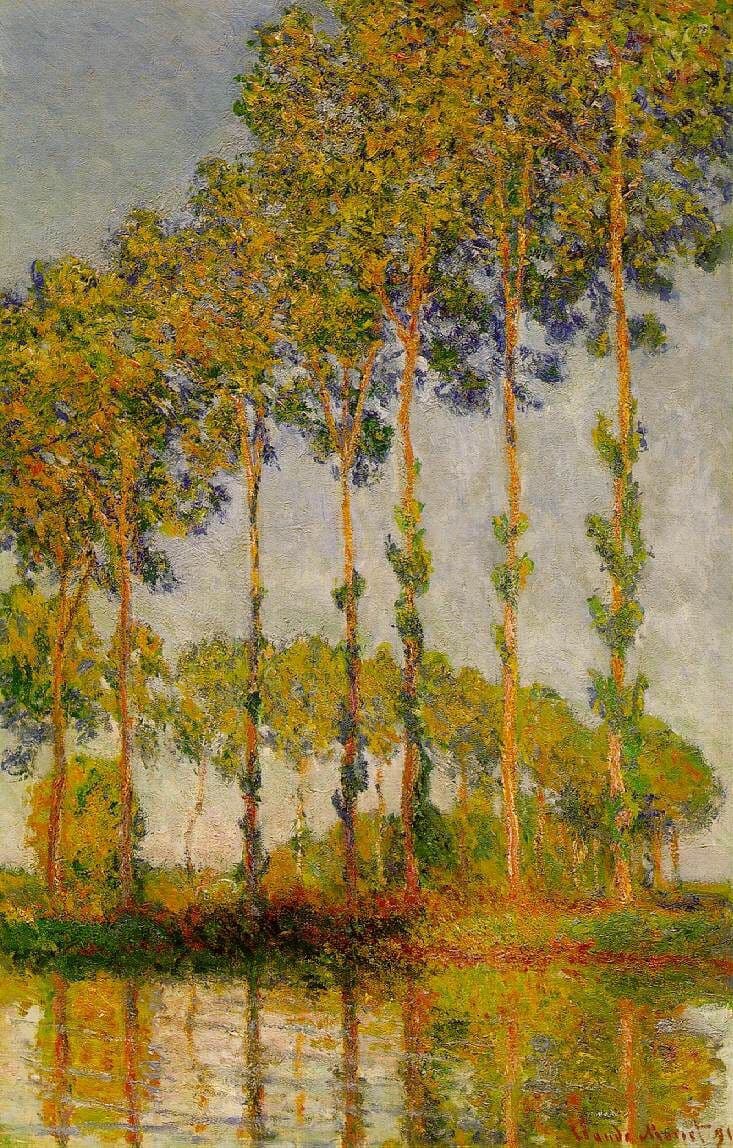
Row of Poplars in Autumn
Claude Monet · 1891
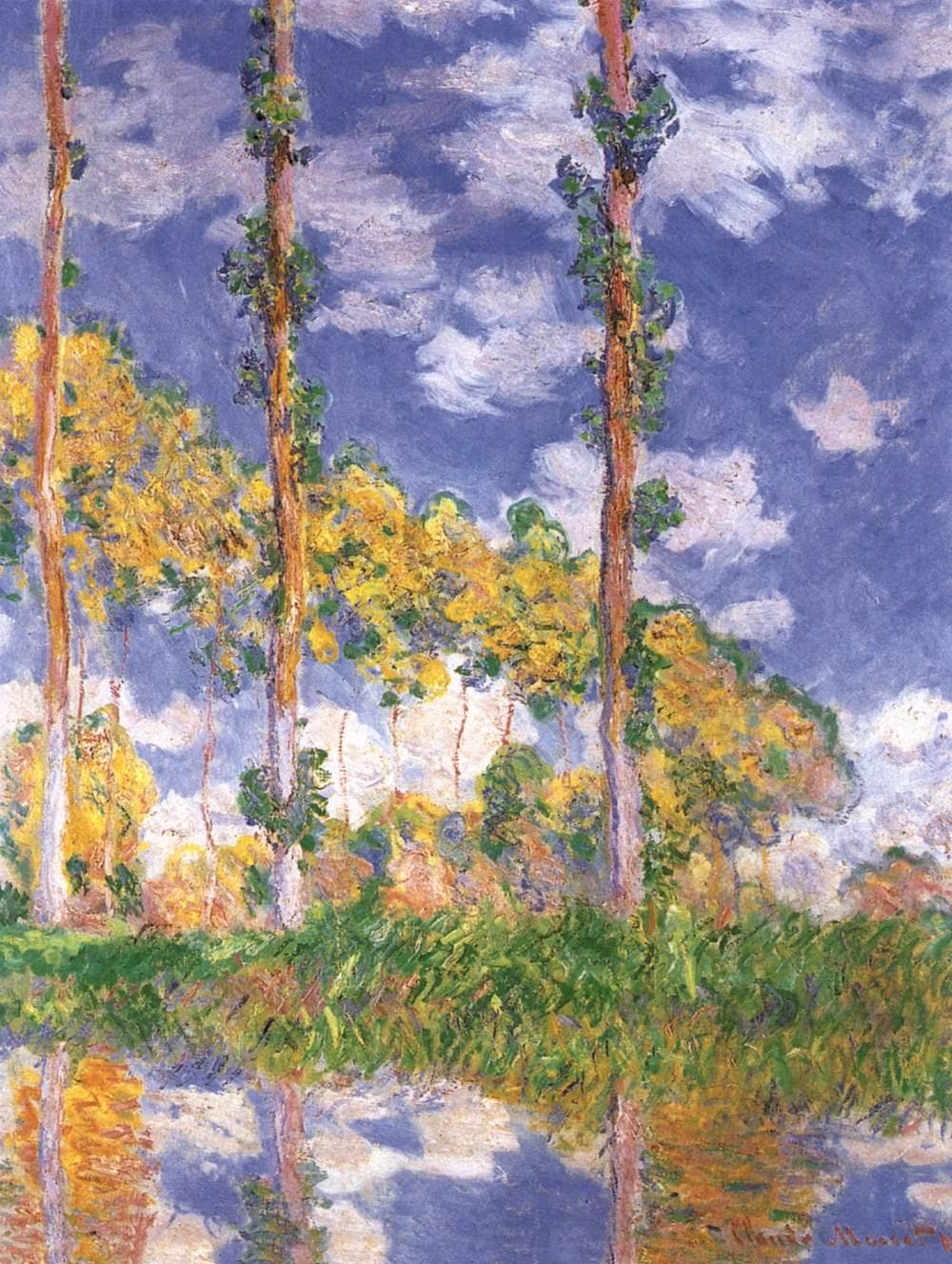
Three Poplars, Summer
Claude Monet · 1891
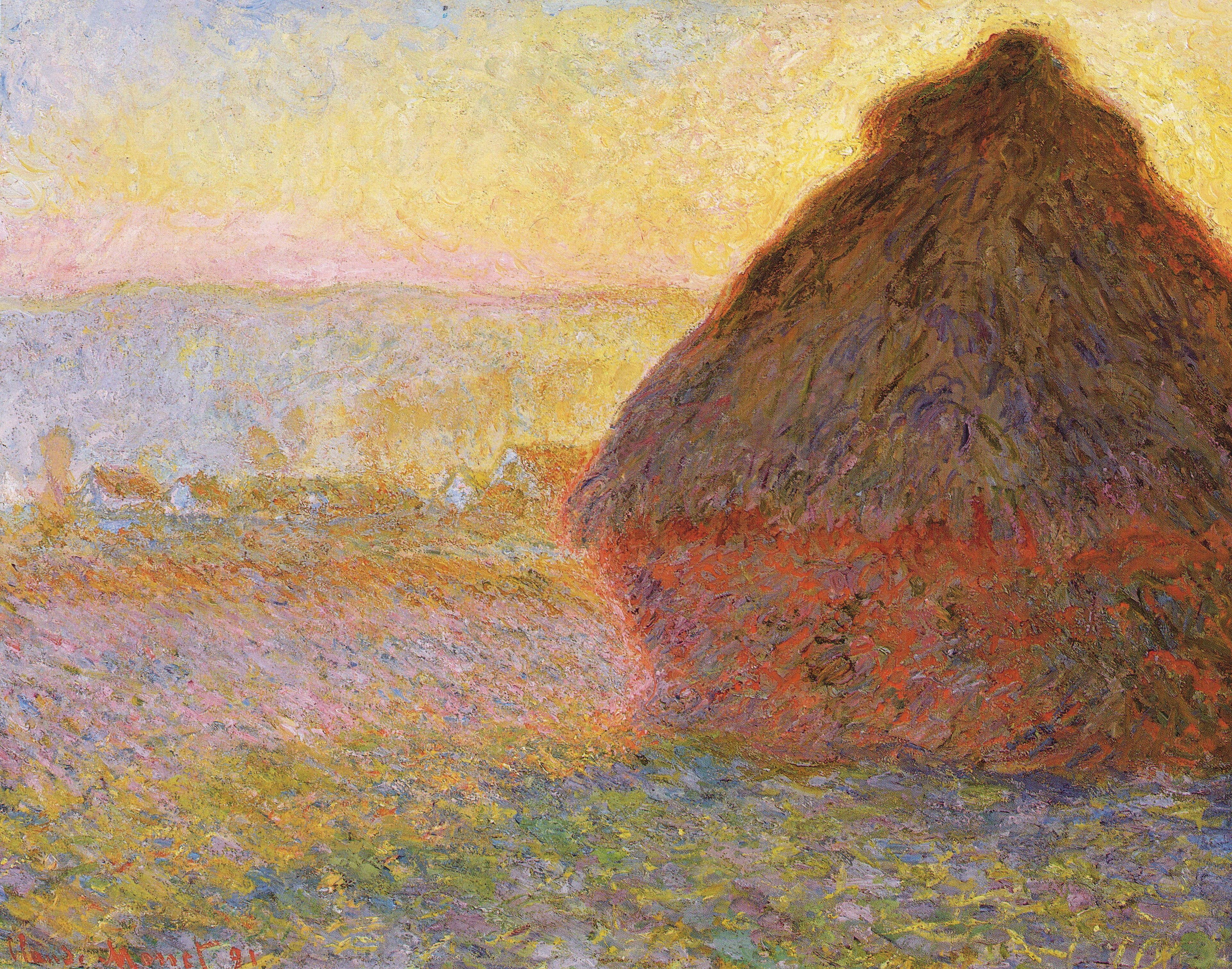
Grainstack (Sunset)
Claude Monet · 1891
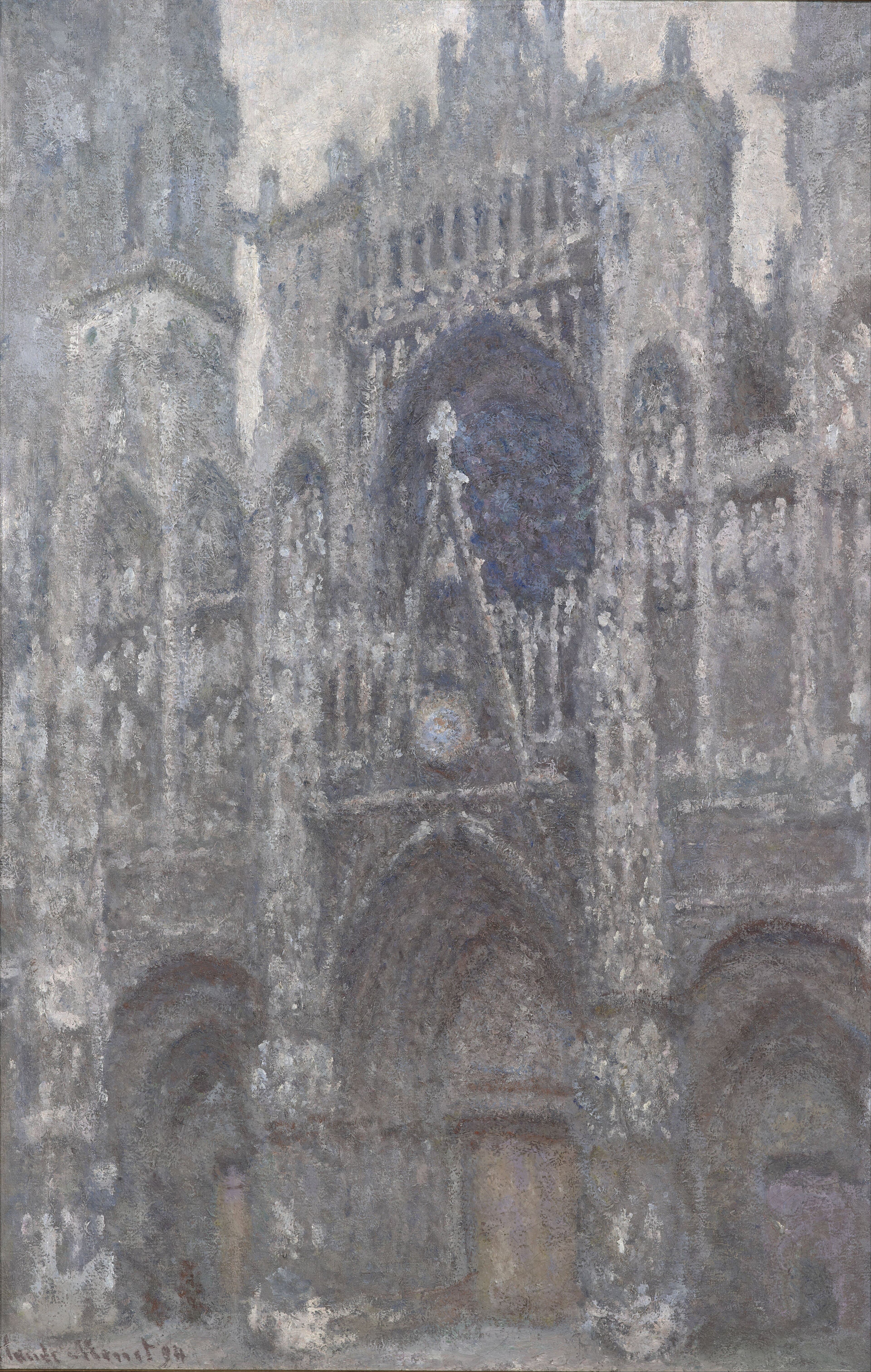
Rouen Cathedral, the Portal, Grey Weather
Claude Monet · 1892–94
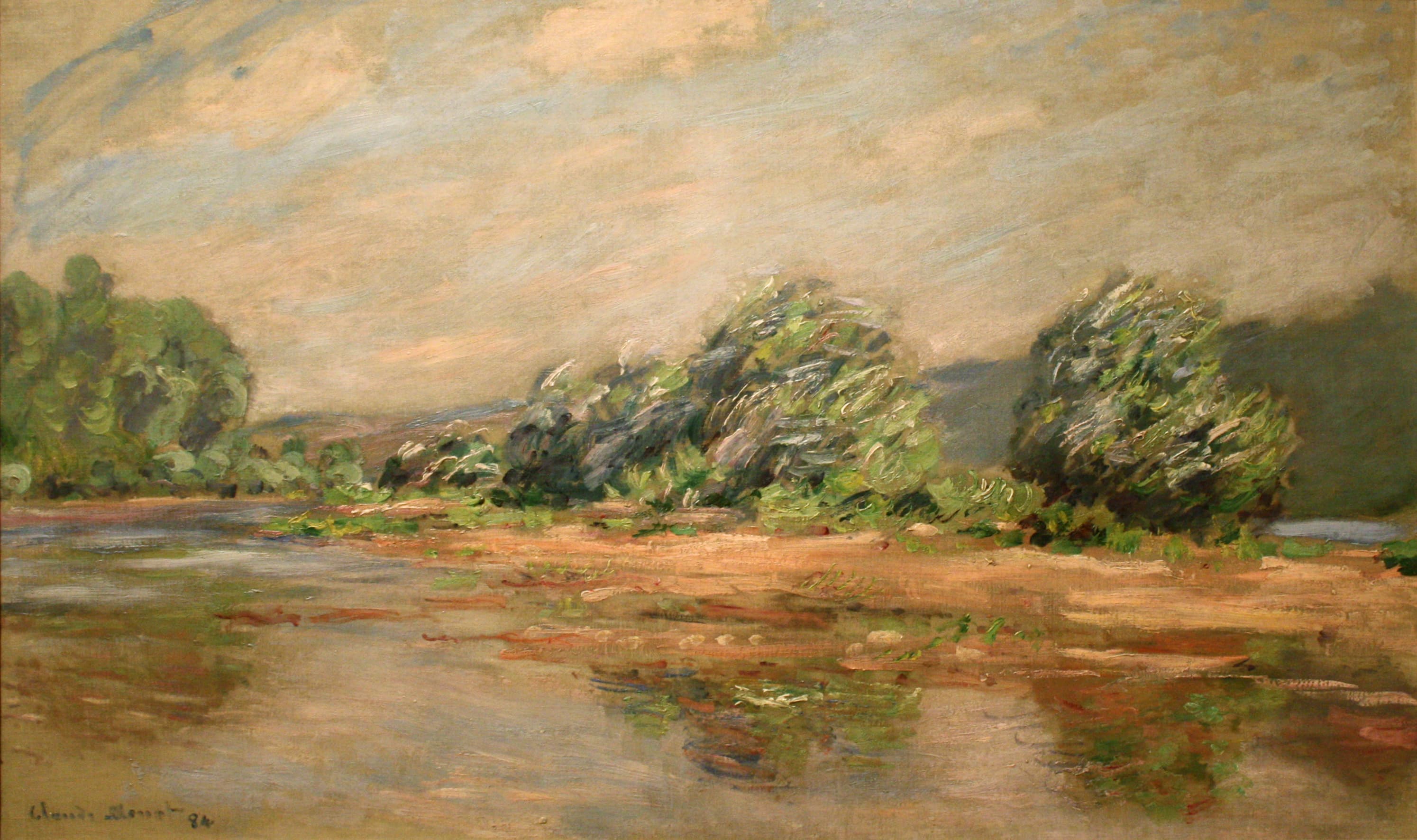
The Seine at Port-Villez (A Gust of Wind)
Claude Monet · c. 1883–90
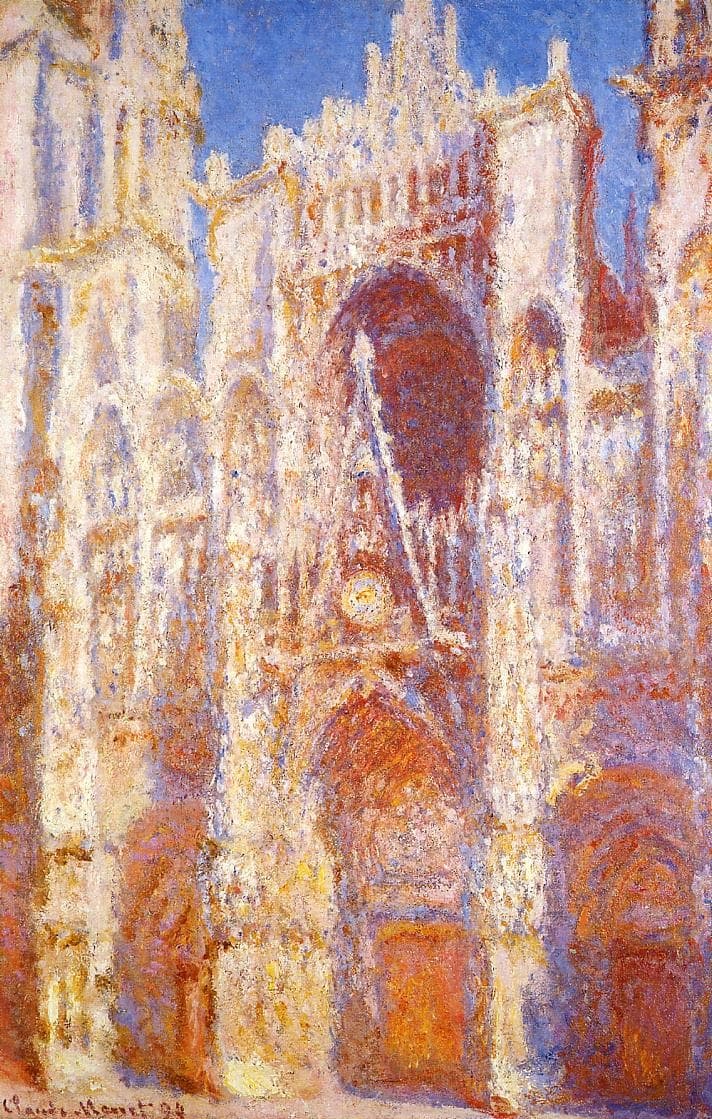
Rouen Cathedral, Portal, Sunlight (W 1322)
Claude Monet · 1892–94
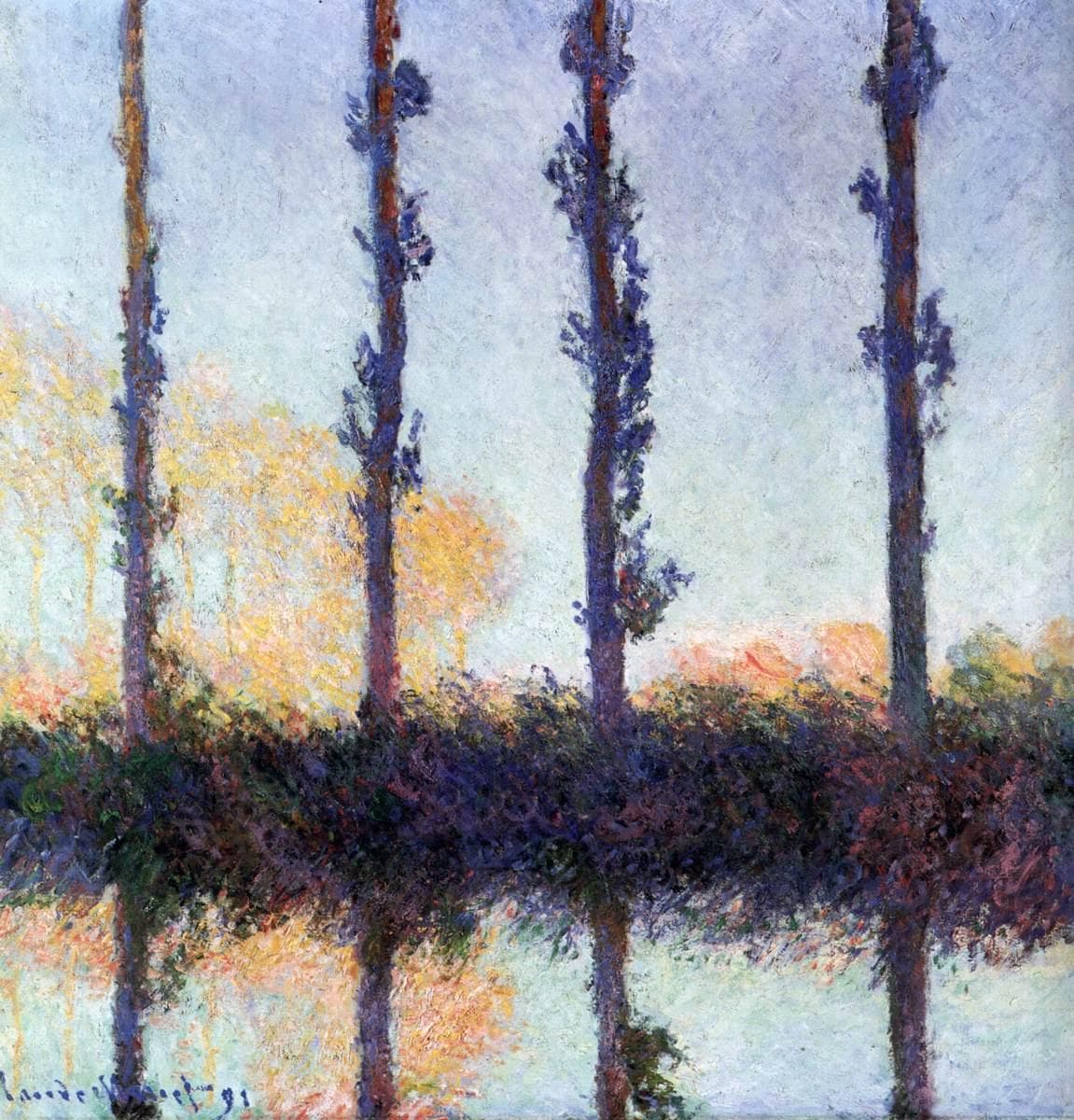
The Four Trees
Claude Monet · 1891
Also painted in 1891
The same year
Grainstack in Sunlight
Claude Monet · 1891
Poplars on the Epte (Edinburgh)
Claude Monet · 1891
Poplars on the Epte (London)
Claude Monet · 1891
Grainstack, Sun in the Mist
Claude Monet · 1891
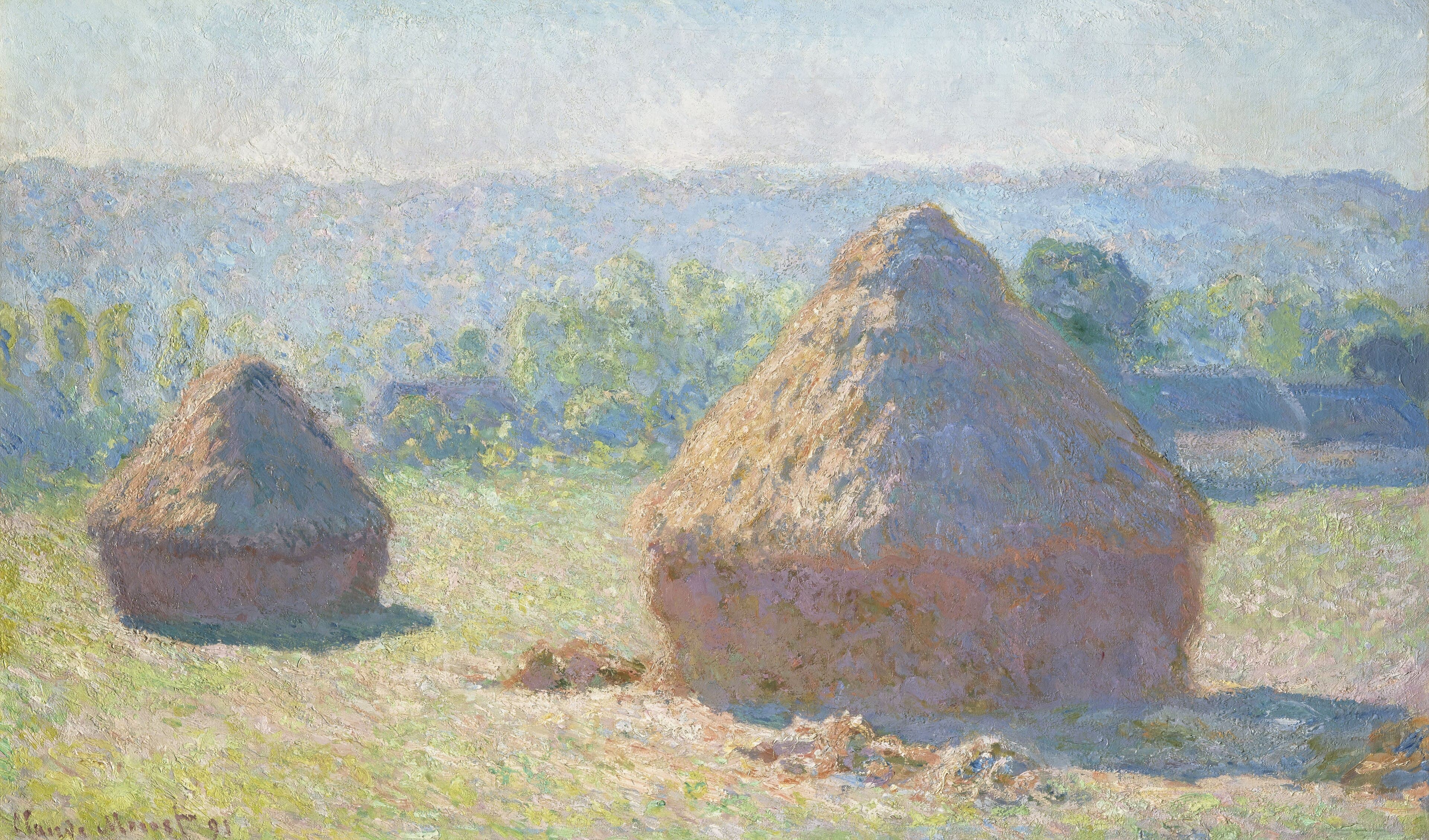
Haystacks, End of Summer
Claude Monet · 1891
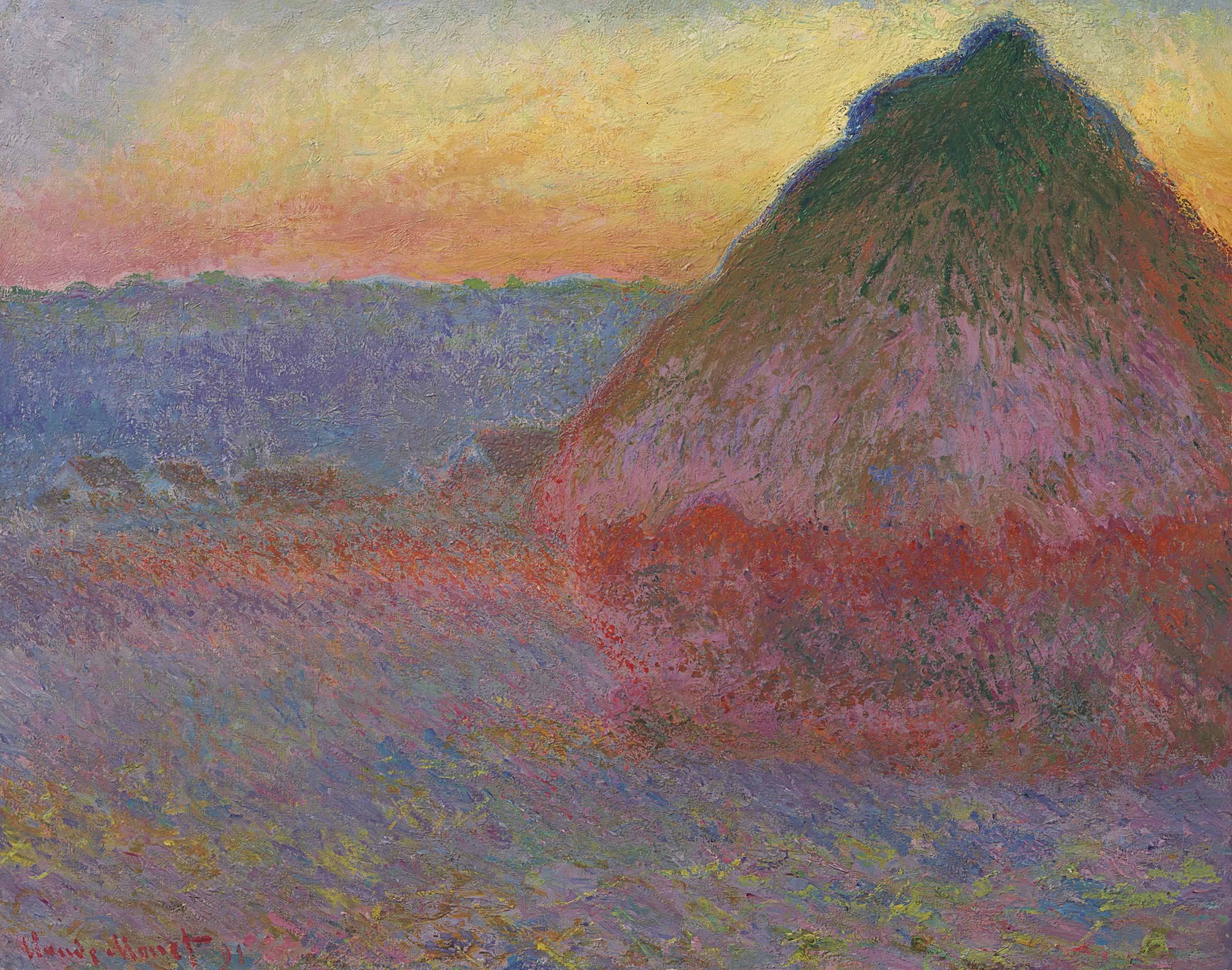
Grainstack in the Sunlight
Claude Monet · 1891
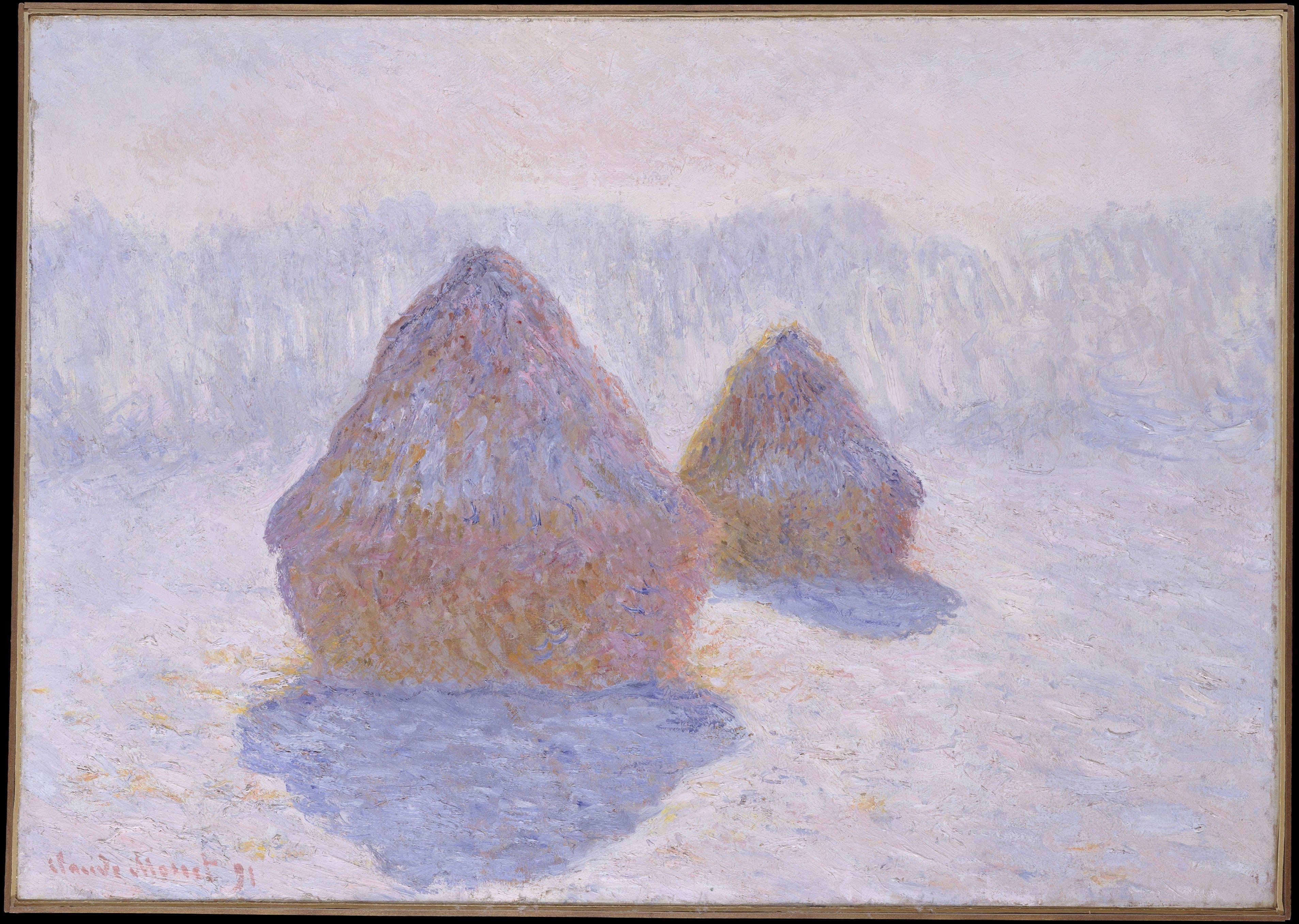
Haystacks (Effect of Snow and Sun)
Claude Monet · 1891
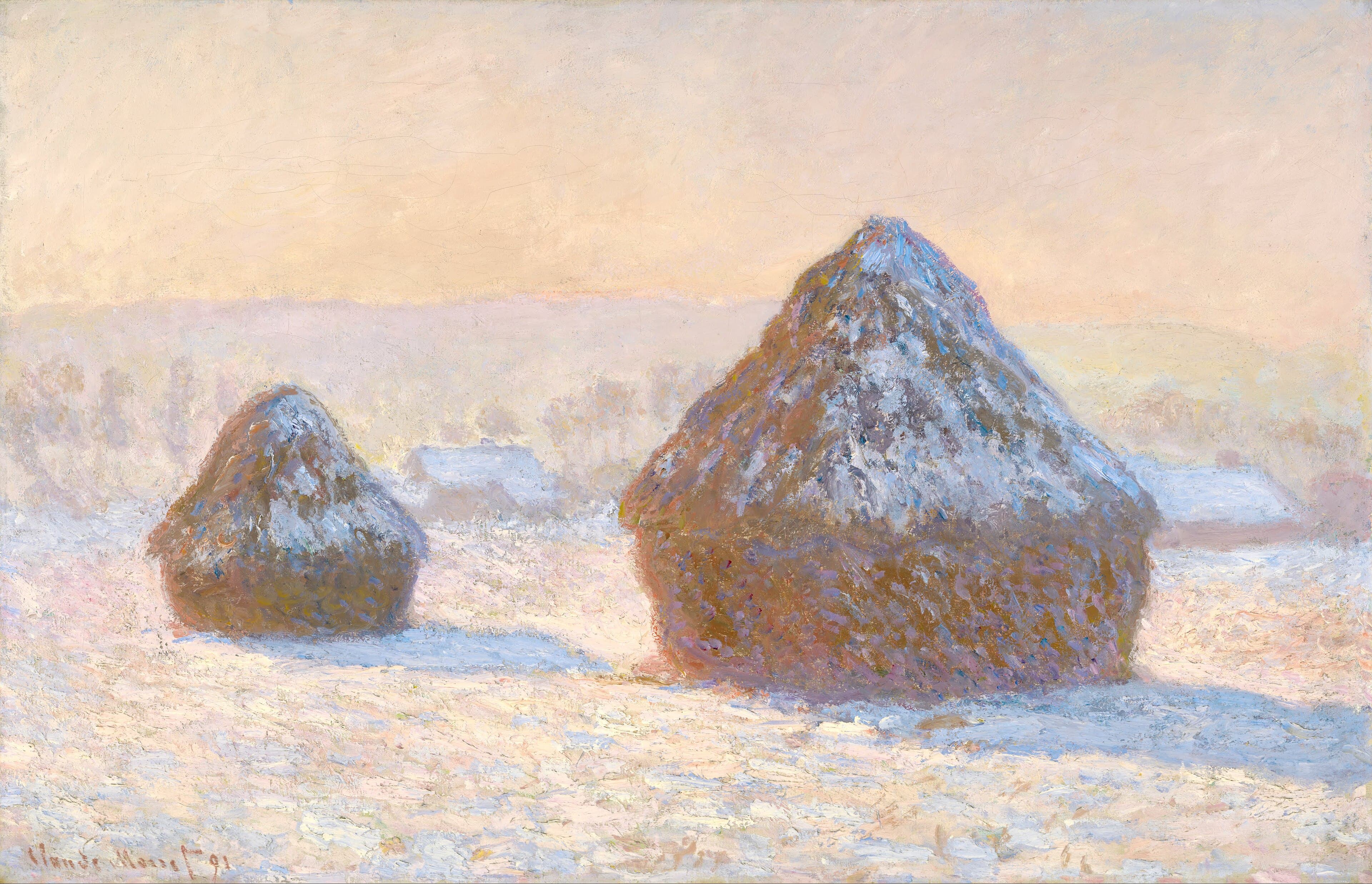
Wheatstacks, Snow Effect, Morning
Claude Monet · 1891
Kindred works
You may also study
Wheatstacks, Snow Effect, Morning
Claude Monet · 1891
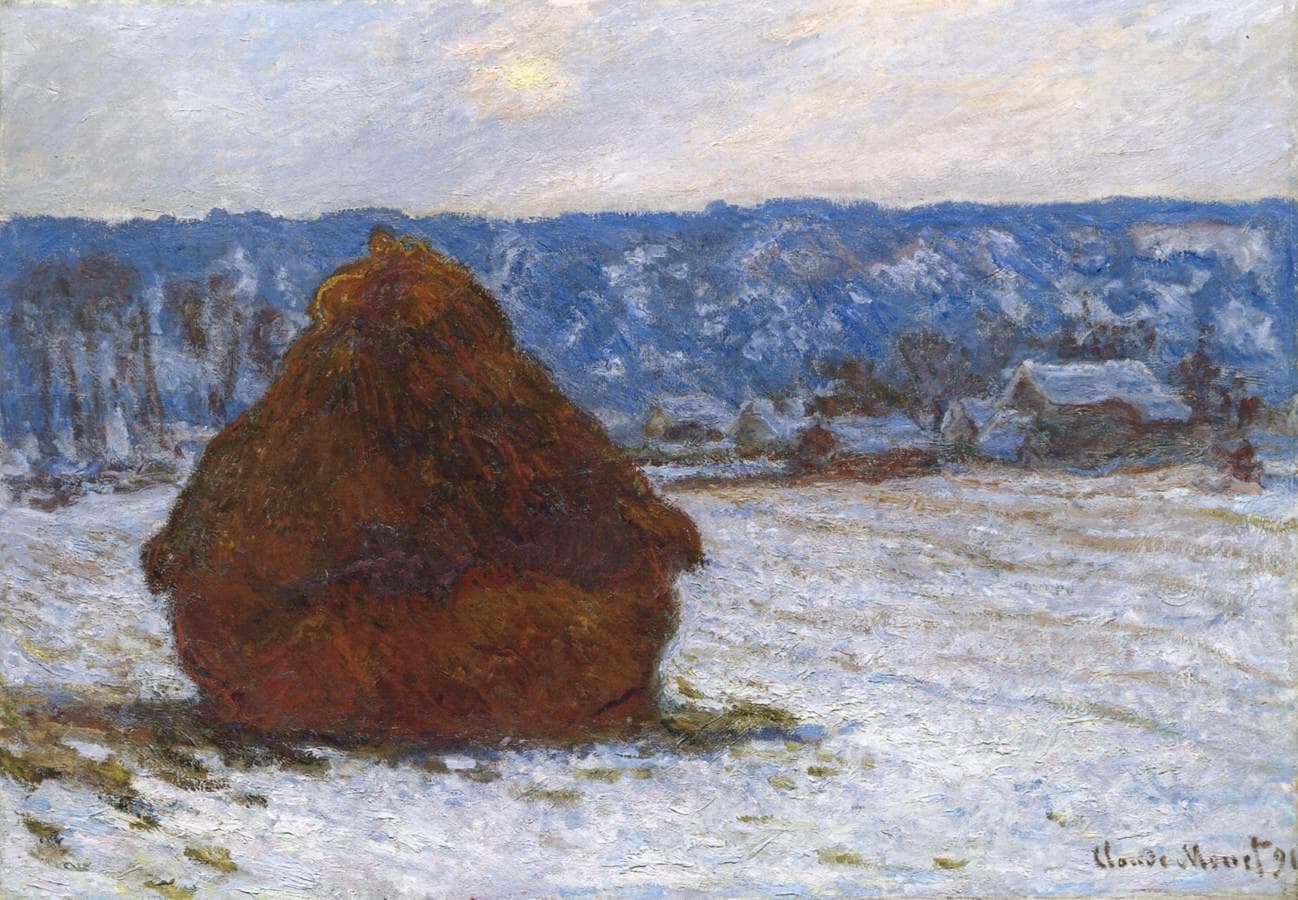
Stack of Wheat, Snow Effect, Overcast Day
Claude Monet · 1890–91
Haystacks (Effect of Snow and Sun)
Claude Monet · 1891
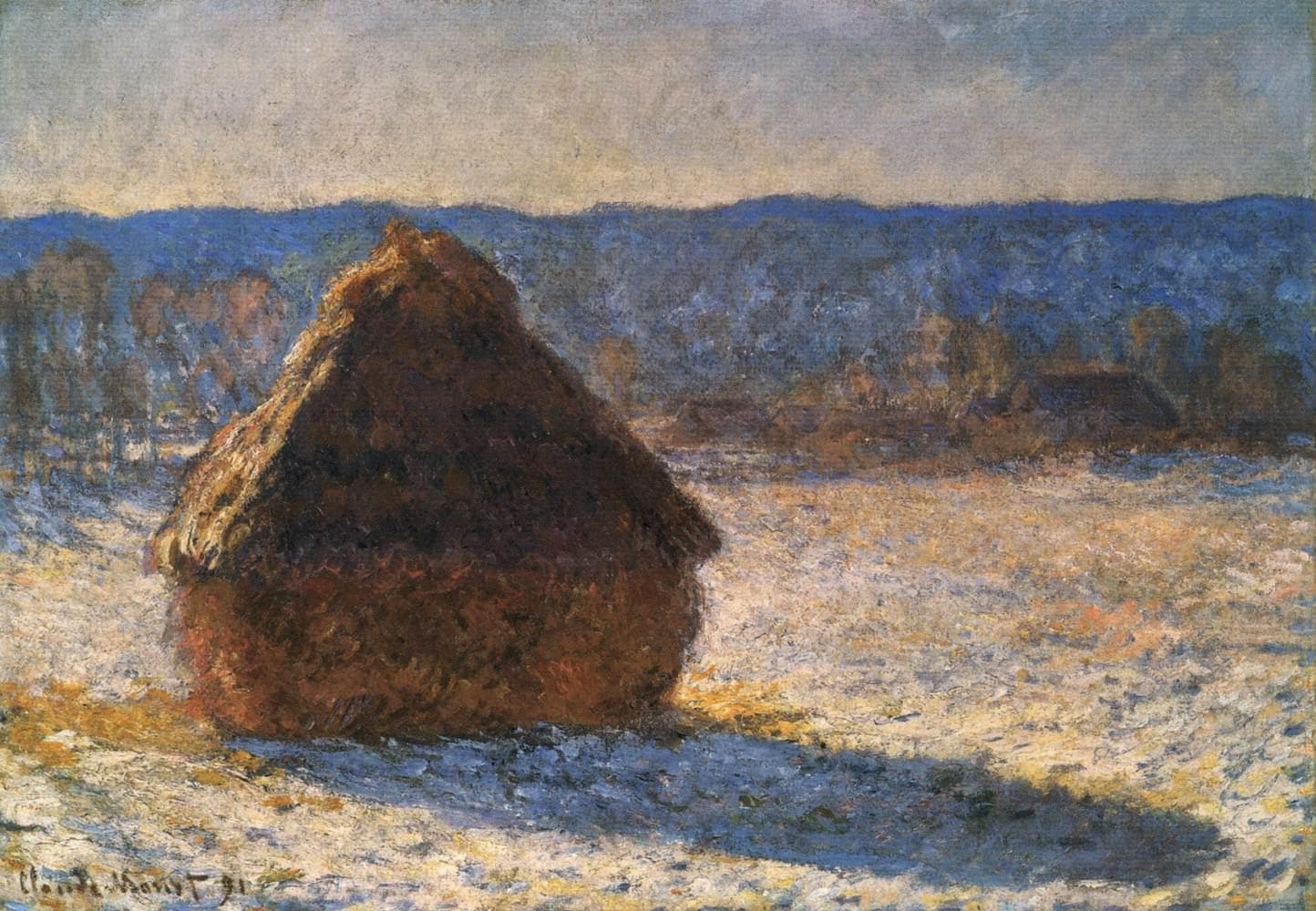
Grainstack (Snow Effect)
Claude Monet · 1891
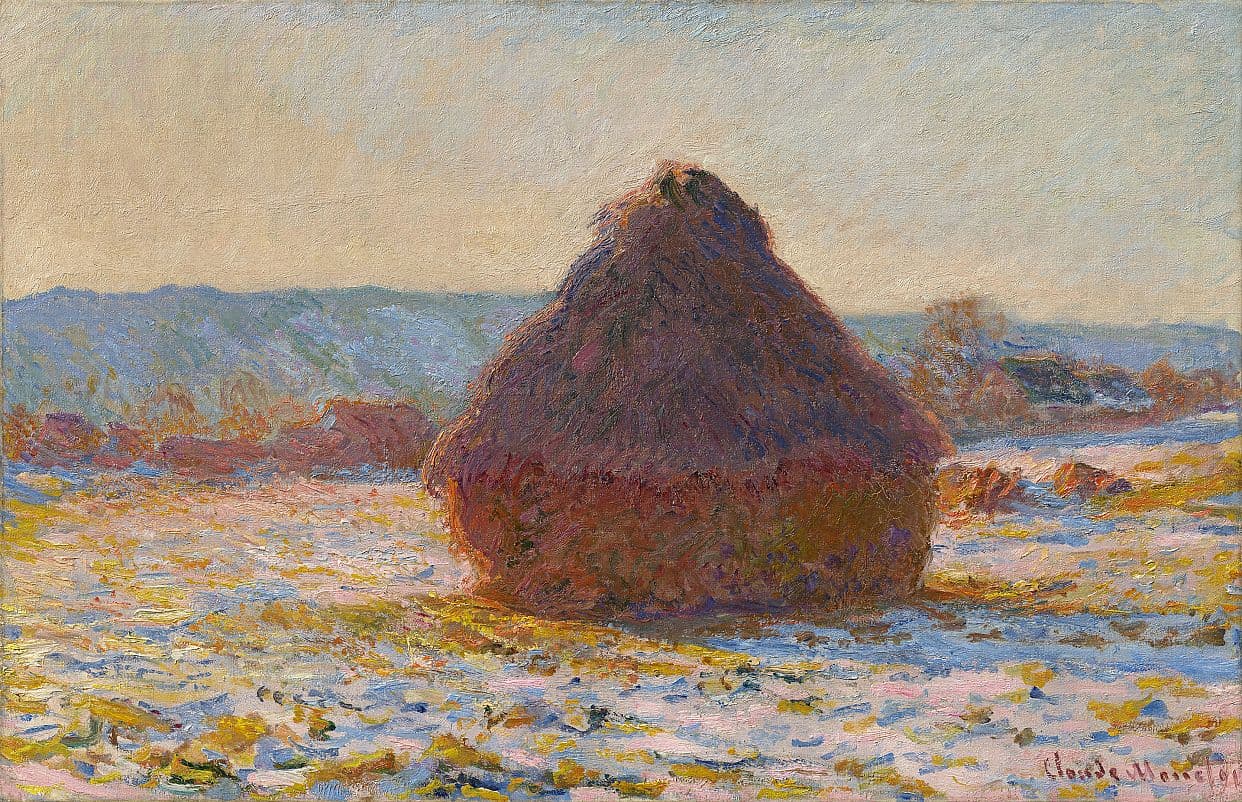
Grainstack in the Sunlight, Snow Effect
Claude Monet · 1891
In the Meadow (Dans la prairie)
Claude Monet · 1876
The Tuileries
Claude Monet · 1876
The Church at Varengeville, Grey Weather
Claude Monet · 1882