Image: MOA Museum of Art, Atami · Public domain · via Wikimedia Commons
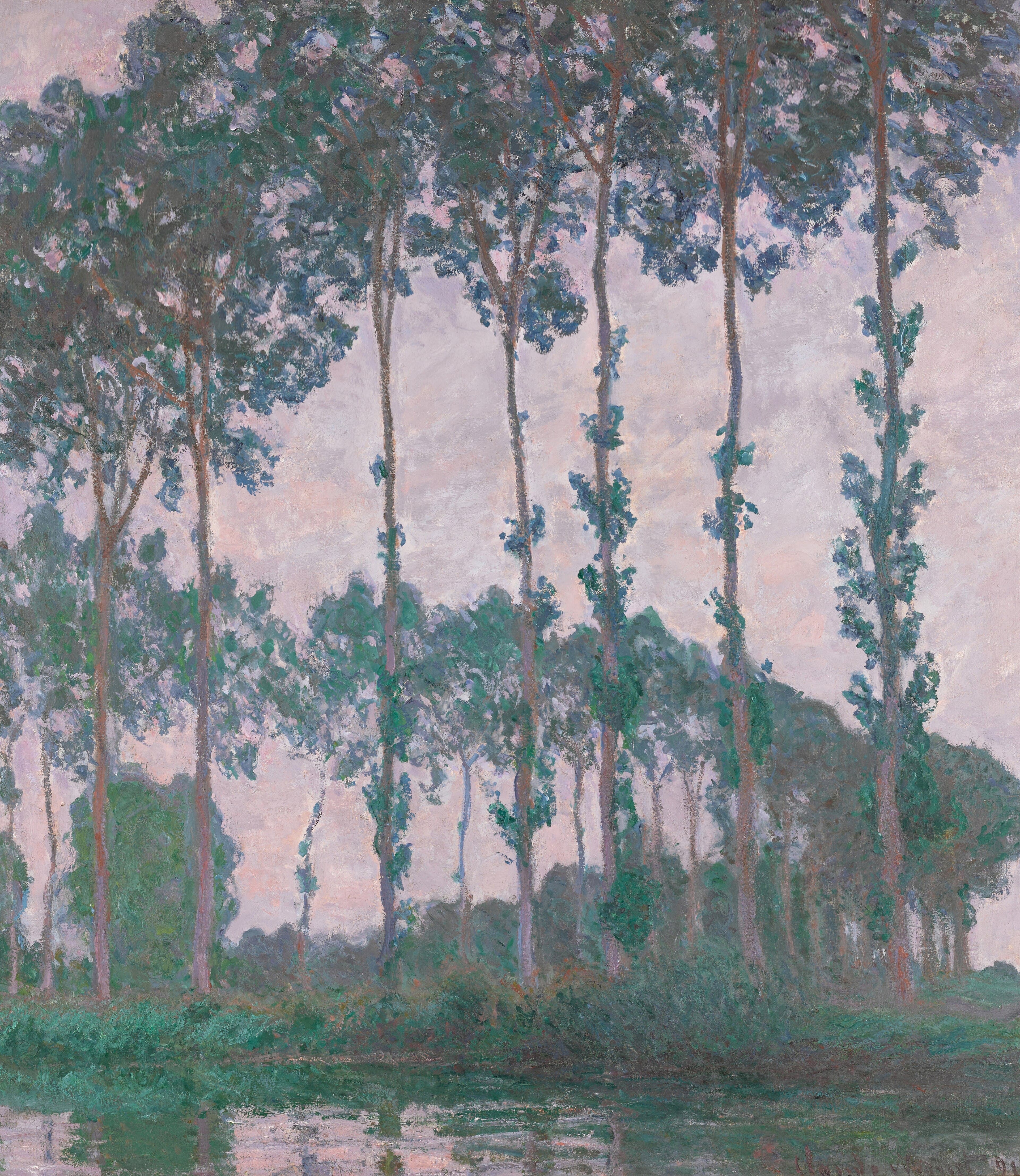
Poplars near Giverny, Overcast Weather
Claude Monet, 1891
Poplars near Giverny, Overcast Weather is an 1891 Claude Monet painting from his Poplars series: a tall row of trees in dark olive and blue-green against a gray, cloudy sky above the Epte. It is in the MOA Museum of Art, Atami, Japan.
- Artist
- Claude Monet
- Date
- 1891
- Medium
- Oil on canvas
- Dimensions
- 92 × 73 cm
- Collection
- MOA Museum of Art, Atami, Japan
- Movement
- Impressionism
- Catalogue
- Wildenstein 1291
- Nature & Landscape
- Water & Sea
Peupliers près de Giverny, temps couvert (Poplars near Giverny, Overcast Weather) is a painting from Claude Monet's 1891 series of poplars on the river Epte, catalogued by Wildenstein as no. 1291. The upright canvas measures 92 by 73 centimeters. It belongs to the MOA Museum of Art in Atami, Shizuoka Prefecture, Japan.
What you're looking at
This is the series under a gray sky. A row of tall poplars runs across the canvas from left to right, rising toward the upper right, where their crowns are cut off by the top edge. The trunks are long and thin, painted in olive, ochre and gray, with dark clumps of leaves climbing them in blue-green and slate. The crowns are dense masses of dark green, olive and blue, with lighter gray-green touches where the dull light catches them.
The sky behind is the main source of light: an overcast gray-cream, streaked with pale yellow and blue-gray clouds, brushed in loose horizontal strokes. At the upper left, a patch of warmer ochre suggests the sun behind cloud. Through the gaps between the trunks, the sky shows as pale vertical slots.
Lower down, behind the main row, a band of rounded bushes and smaller trees in dark green and blue-black stretches across the canvas. At the bottom, a strip of deep green grass and the dark water of the Epte close the picture, with a few pale reflections of the sky in the water. The whole palette is muted and cool: greens, grays and blues, with almost no red or yellow.
The Poplars series
Monet painted the line of poplars on the Epte near Limetz in 1891 from his boat. When the commune sold the trees for timber, he paid to keep them standing until he had finished. He followed them through the summer and autumn, in sun, wind, cloud and dusk. This canvas records a gray, overcast day before the leaves had turned; a related canvas, Poplars on the Banks of the Epte, Overcast Weather, shows another view under similar skies.
How it was painted
The trunks are drawn in long vertical strokes, the foliage in thick, clotted touches, the sky in broad, thin strokes over a light ground. With the colors held so close in value, Monet relies on the pattern of trunks and gaps for the structure of the picture. The effect is somber and heavy, the opposite of the bright autumn canvases.
How this version differs
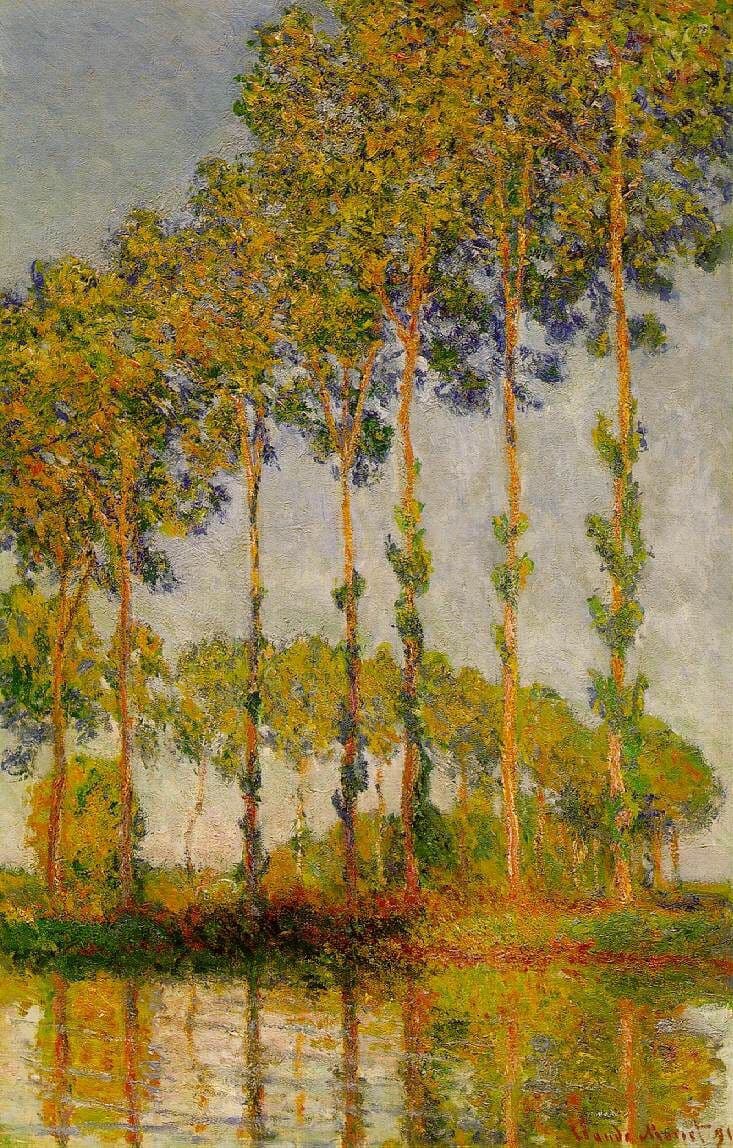
Set beside Row of Poplars in Autumn, which shows a similar close row in gold and orange against gray, this canvas keeps the summer greens and darkens them under cloud. It is a long way from the sunny Three Poplars, Autumn Effect or the wind-tossed Wind Effect, Series of The Poplars at the Orsay. See the whole series in the Poplars series and the countryside in Monet's Giverny.
Where to see it
The MOA Museum of Art in Atami, on a hillside overlooking Sagami Bay, was founded by the Mokichi Okada Association and is best known for its Japanese and East Asian art, including several National Treasures. It also holds a group of Western paintings, including this Monet. Japan has many Monet paintings in public collections; for others, see where to see Monet's paintings.
Questions & answers
Where is Monet's Poplars near Giverny, Overcast Weather?
It is in the MOA Museum of Art in Atami, Shizuoka Prefecture, Japan, a museum best known for its Japanese and East Asian art that also holds a group of Western paintings.
When and where was it painted?
In 1891, on the banks of the Epte near Limetz, a few kilometers upstream from Monet's home at Giverny (Wildenstein 1291).
What does it show?
It shows a tall row of poplars in dark olive and blue-green against a gray, cloudy sky, with dark bushes behind them and the river Epte at the bottom.
How does it differ from the other Poplars paintings?
It is one of the darkest and most muted: an overcast summer day, with green foliage and gray sky, rather than the sunlit blues or autumn golds and pinks of many other canvases in the series.
More by the artist
Claude Monet
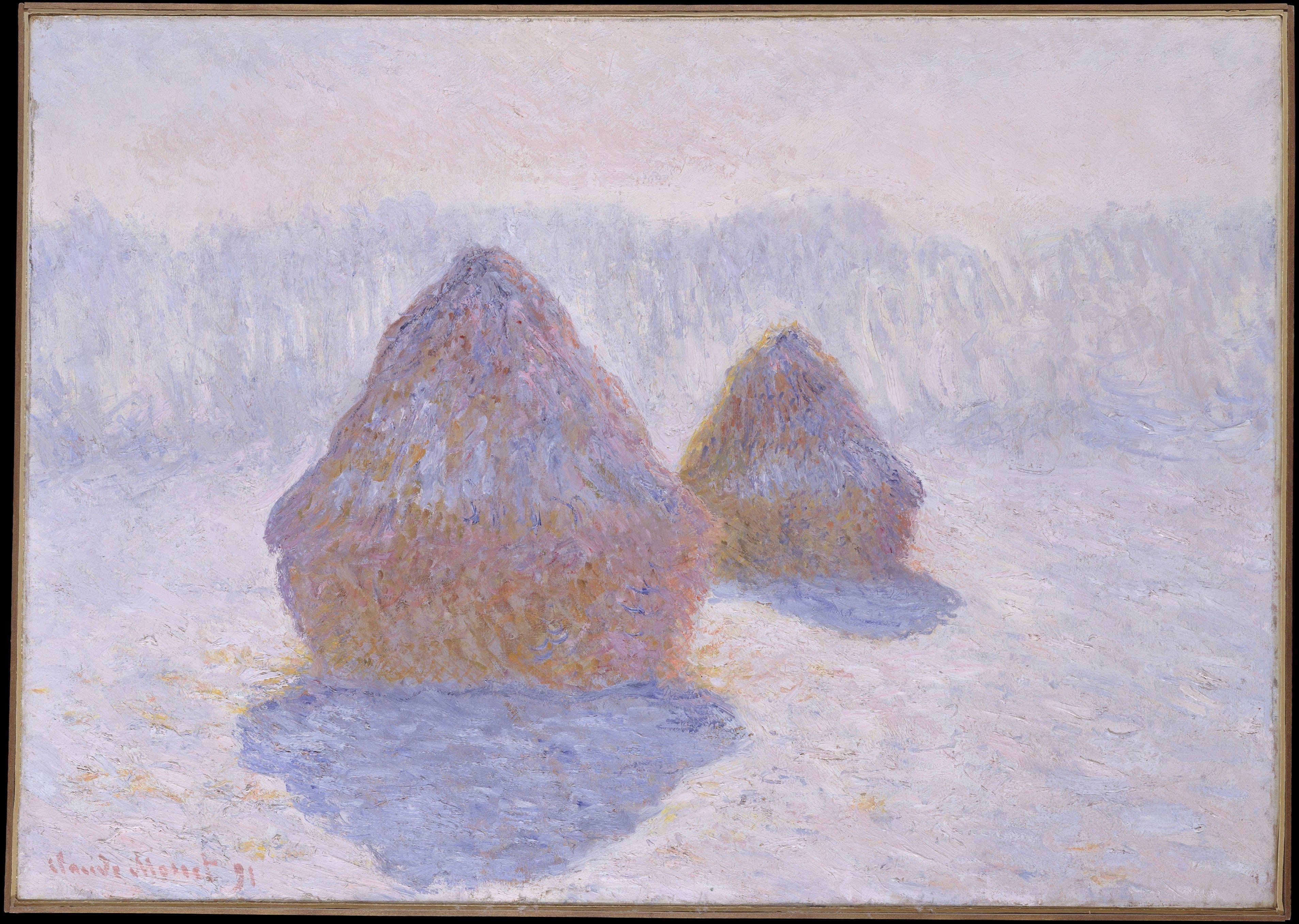
Haystacks (Effect of Snow and Sun)
Claude Monet · 1891
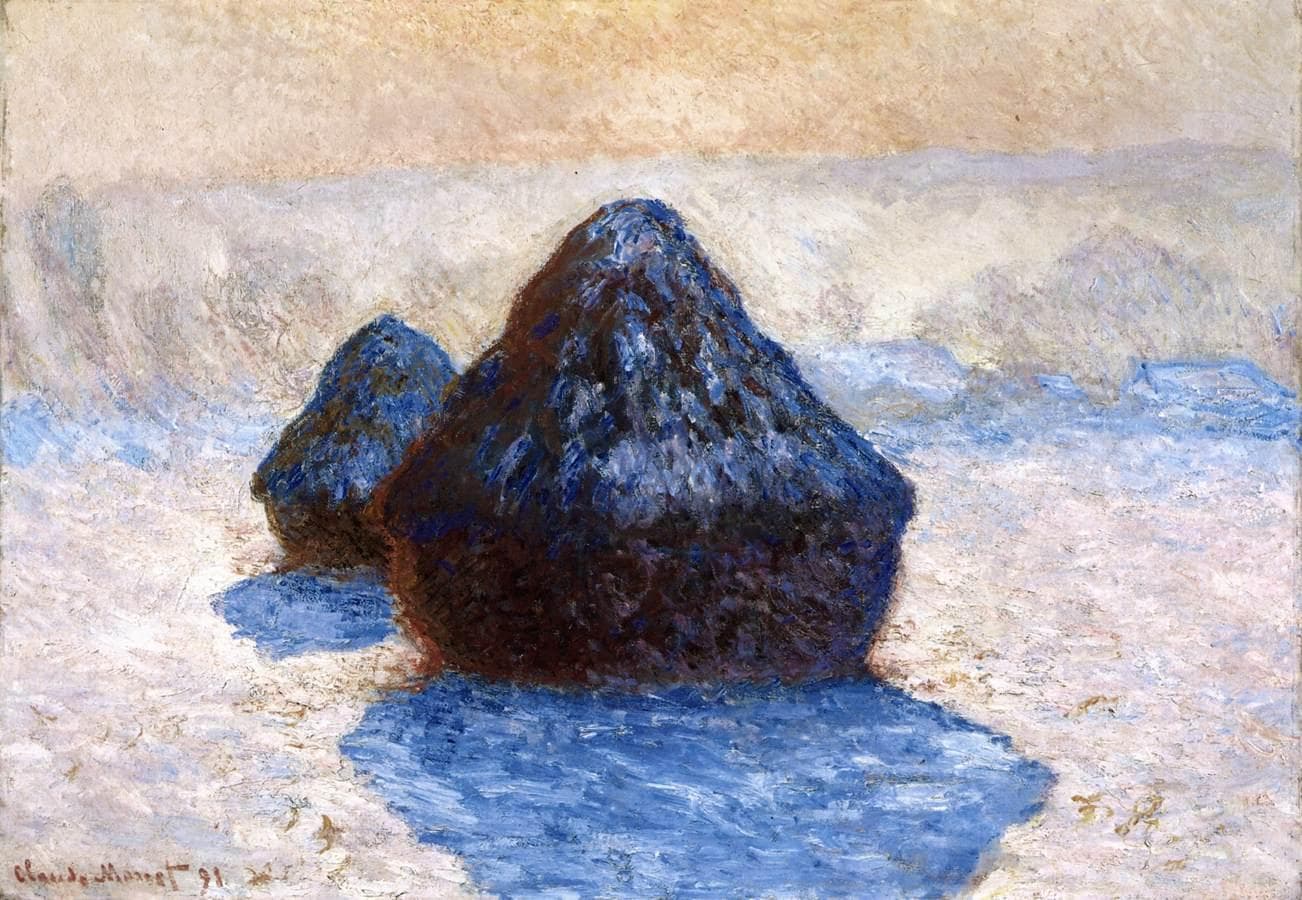
Haystacks, Snow Effect
Claude Monet · 1891
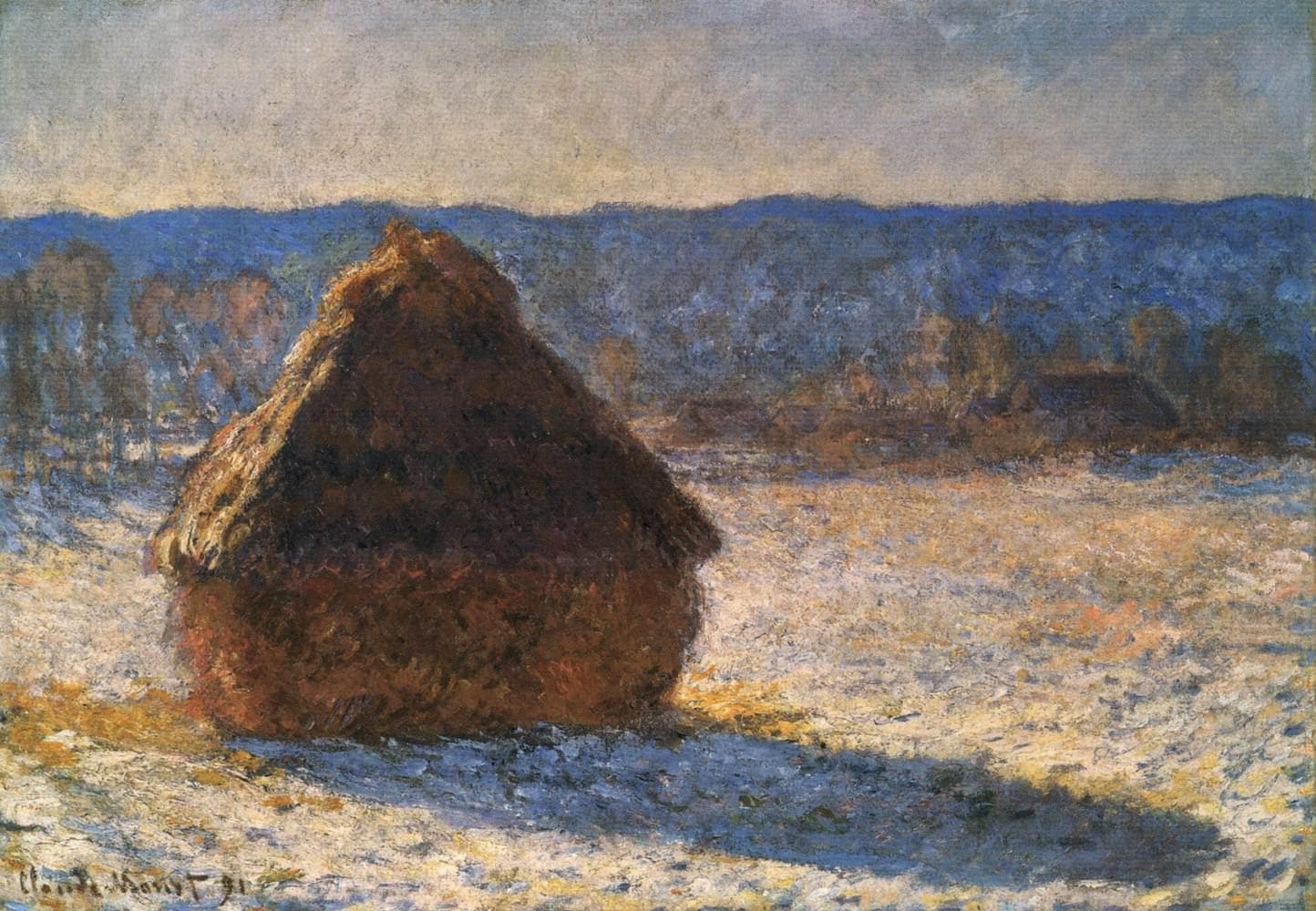
Grainstack (Snow Effect)
Claude Monet · 1891
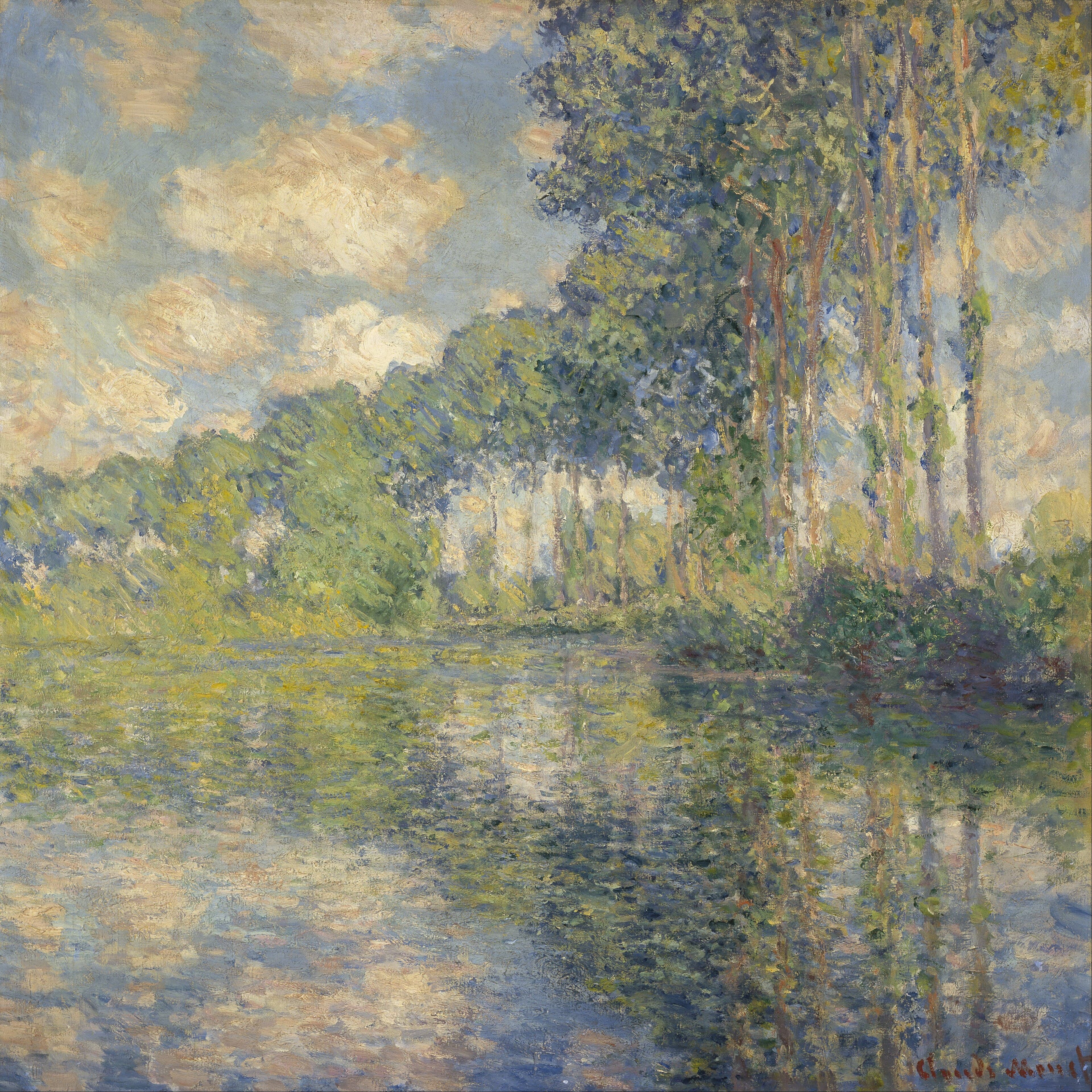
Poplars on the Epte (Edinburgh)
Claude Monet · 1891
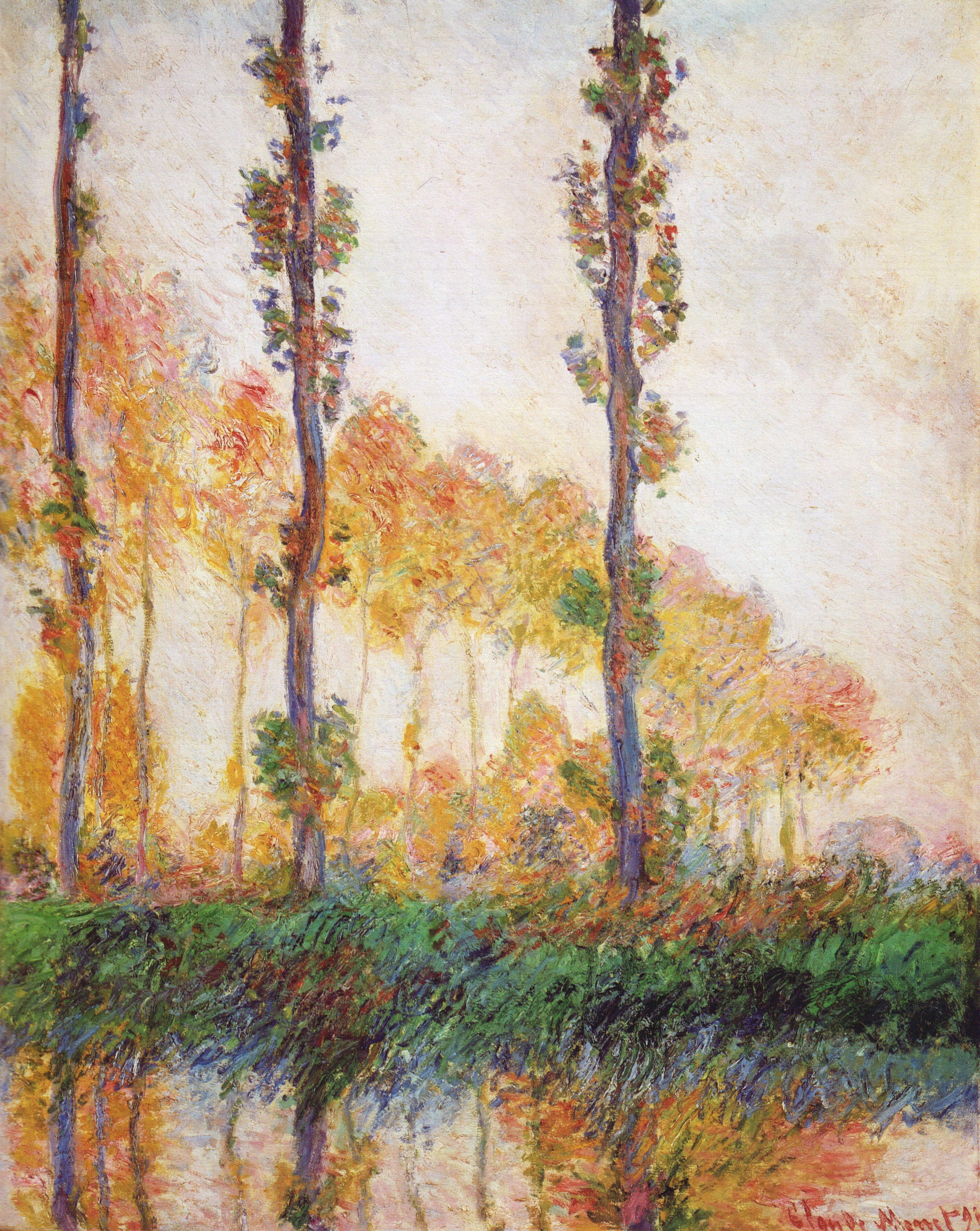
Poplars (Autumn)
Claude Monet · 1891
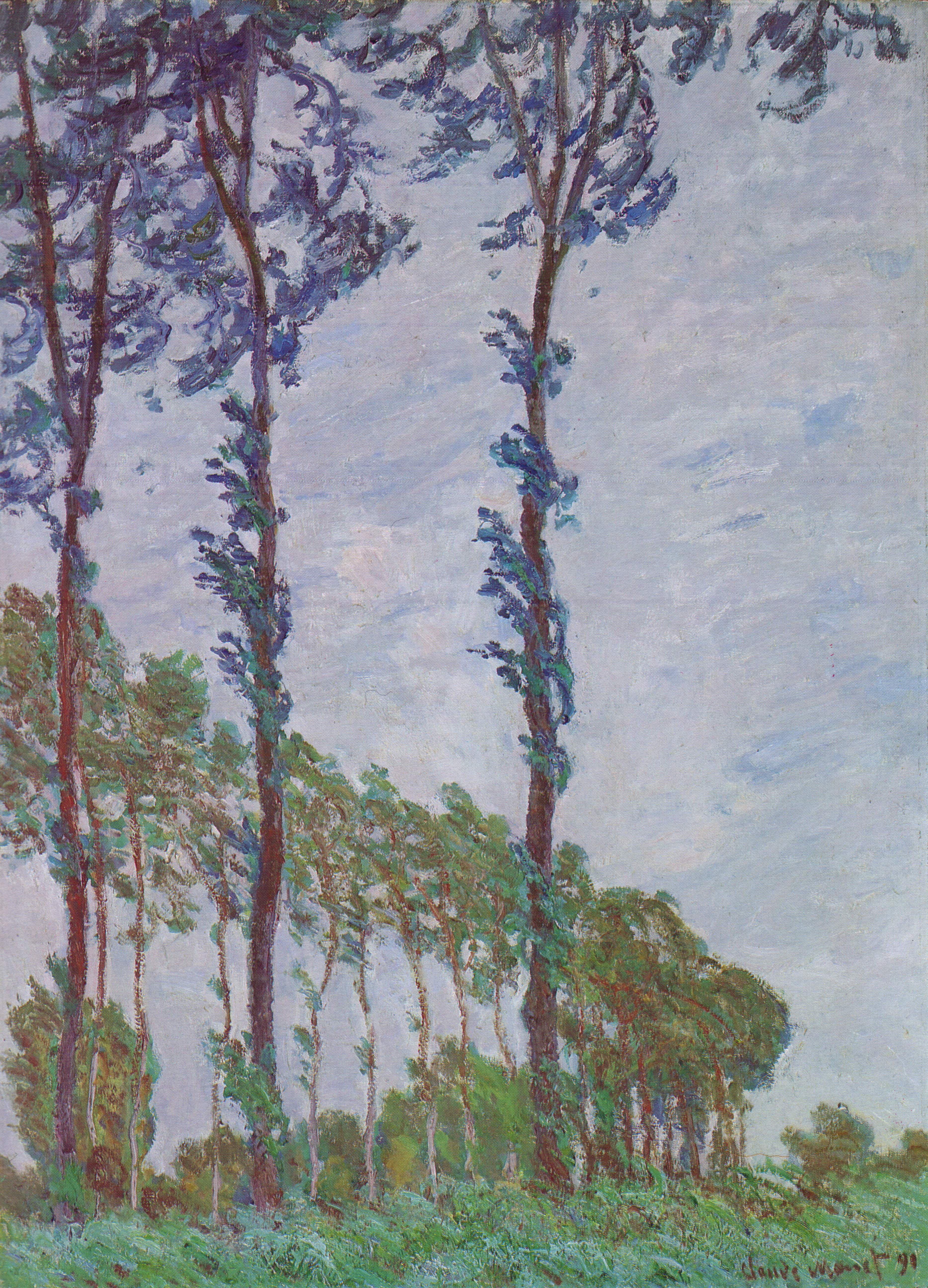
Wind Effect, Series of The Poplars
Claude Monet · 1891
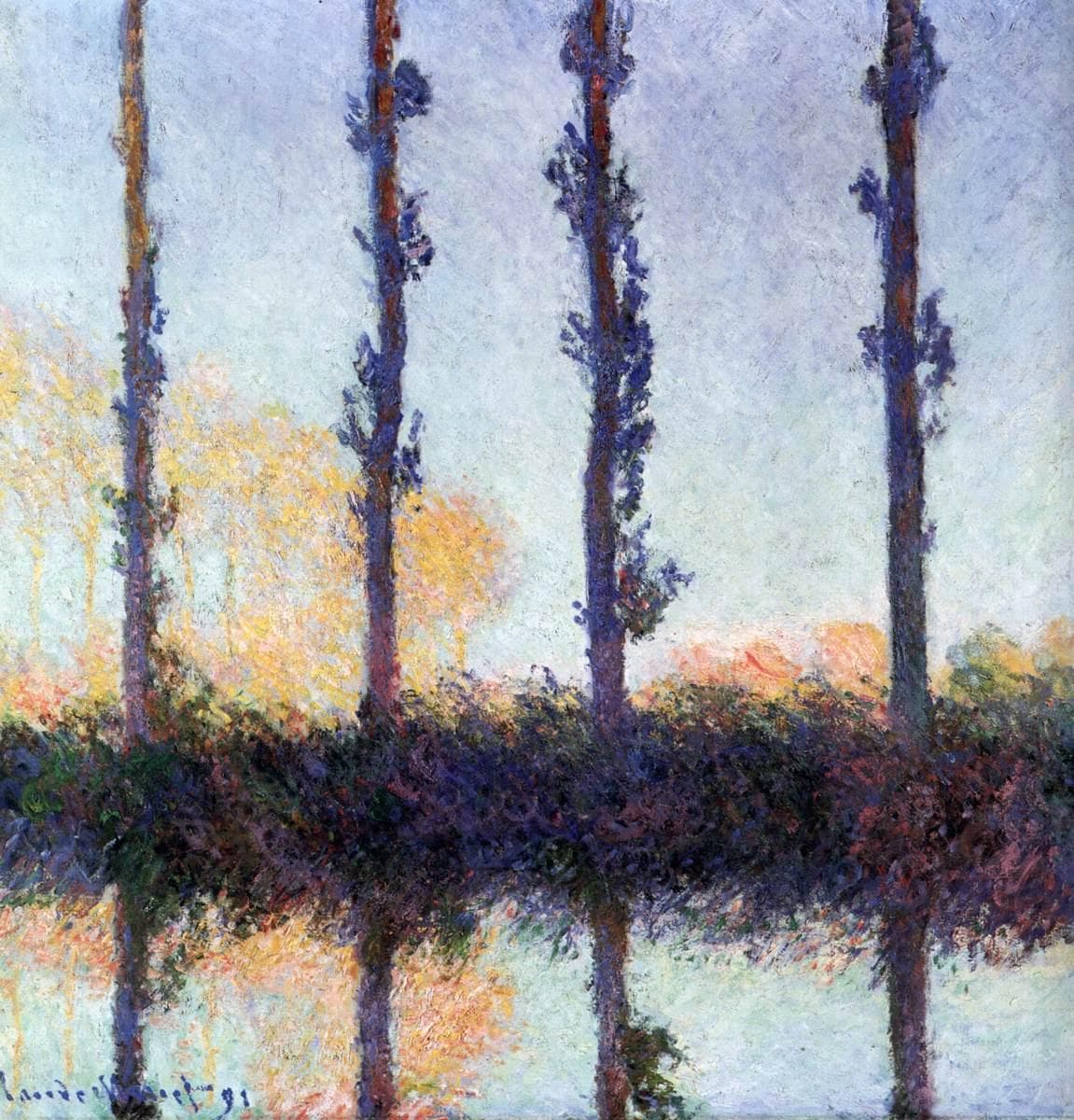
The Four Trees
Claude Monet · 1891
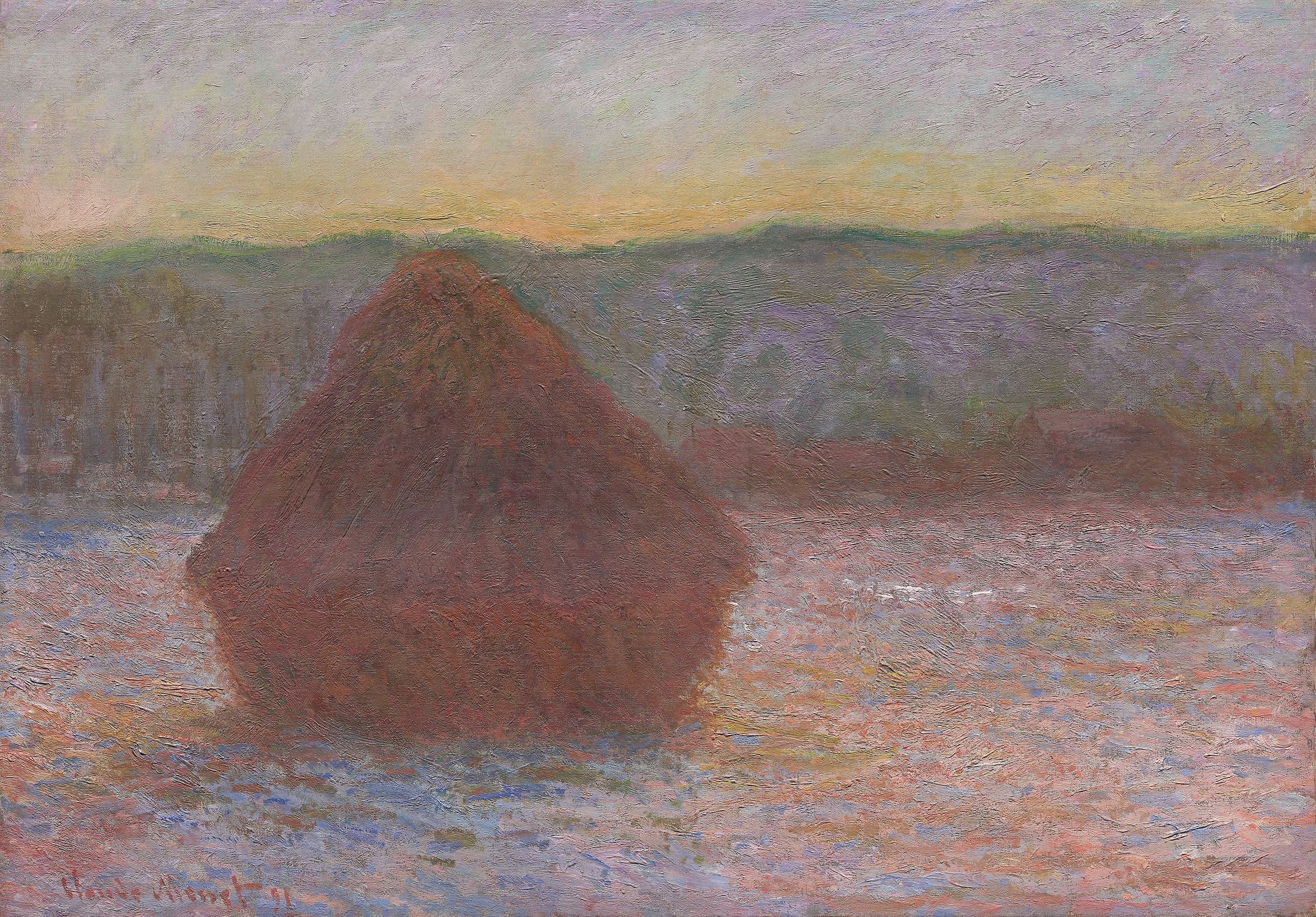
Stack of Wheat (Thaw, Sunset)
Claude Monet · 1890–91
Also painted in 1891
The same year
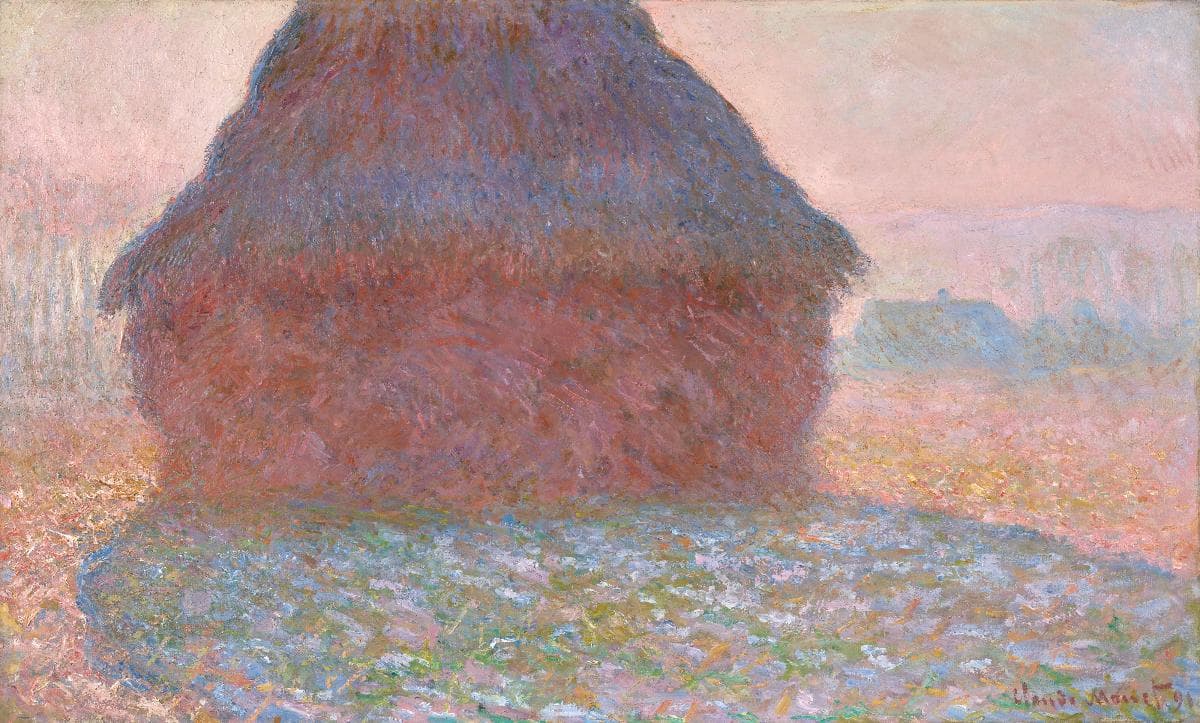
Grainstack in Sunlight
Claude Monet · 1891
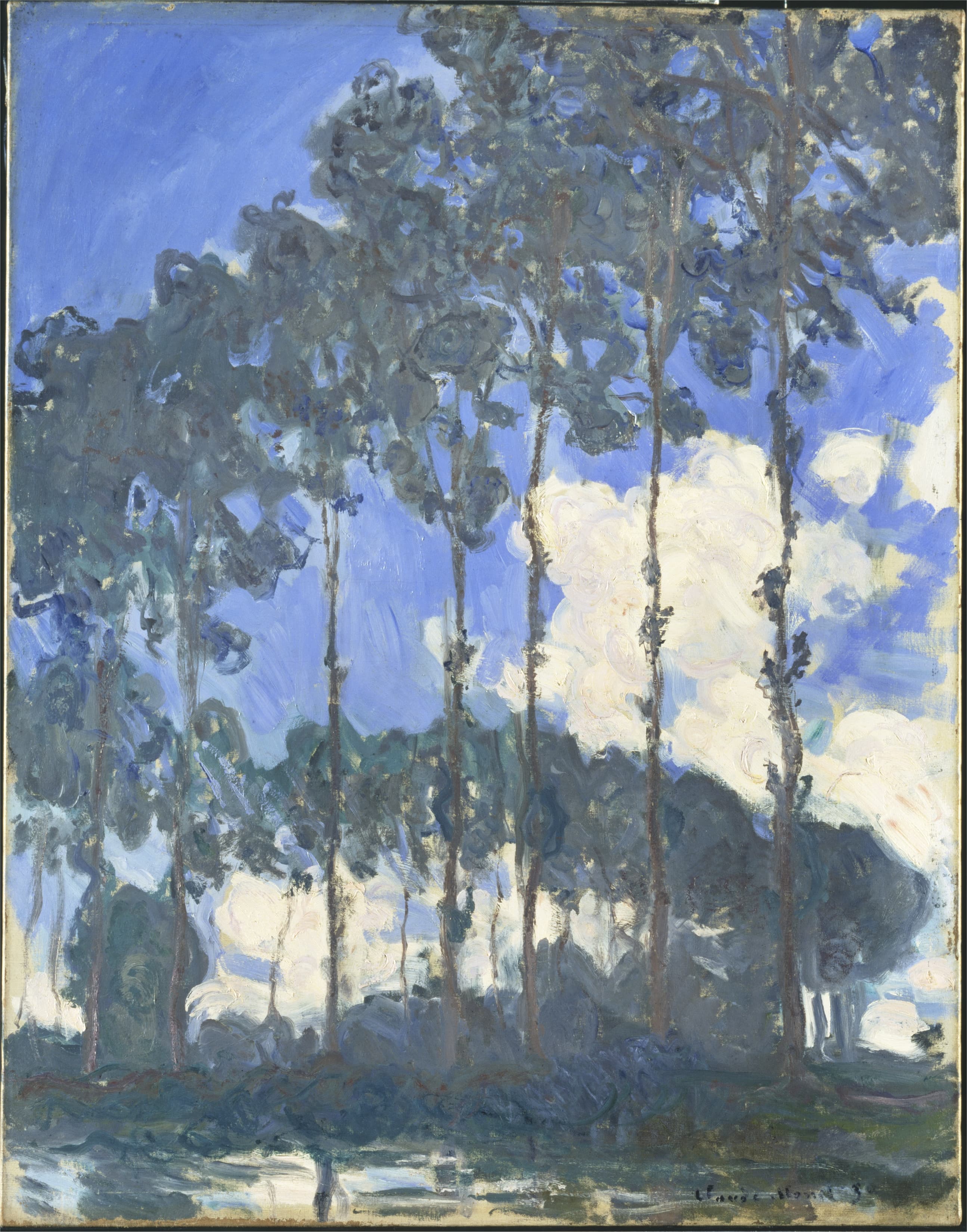
Poplars on the Epte (London)
Claude Monet · 1891
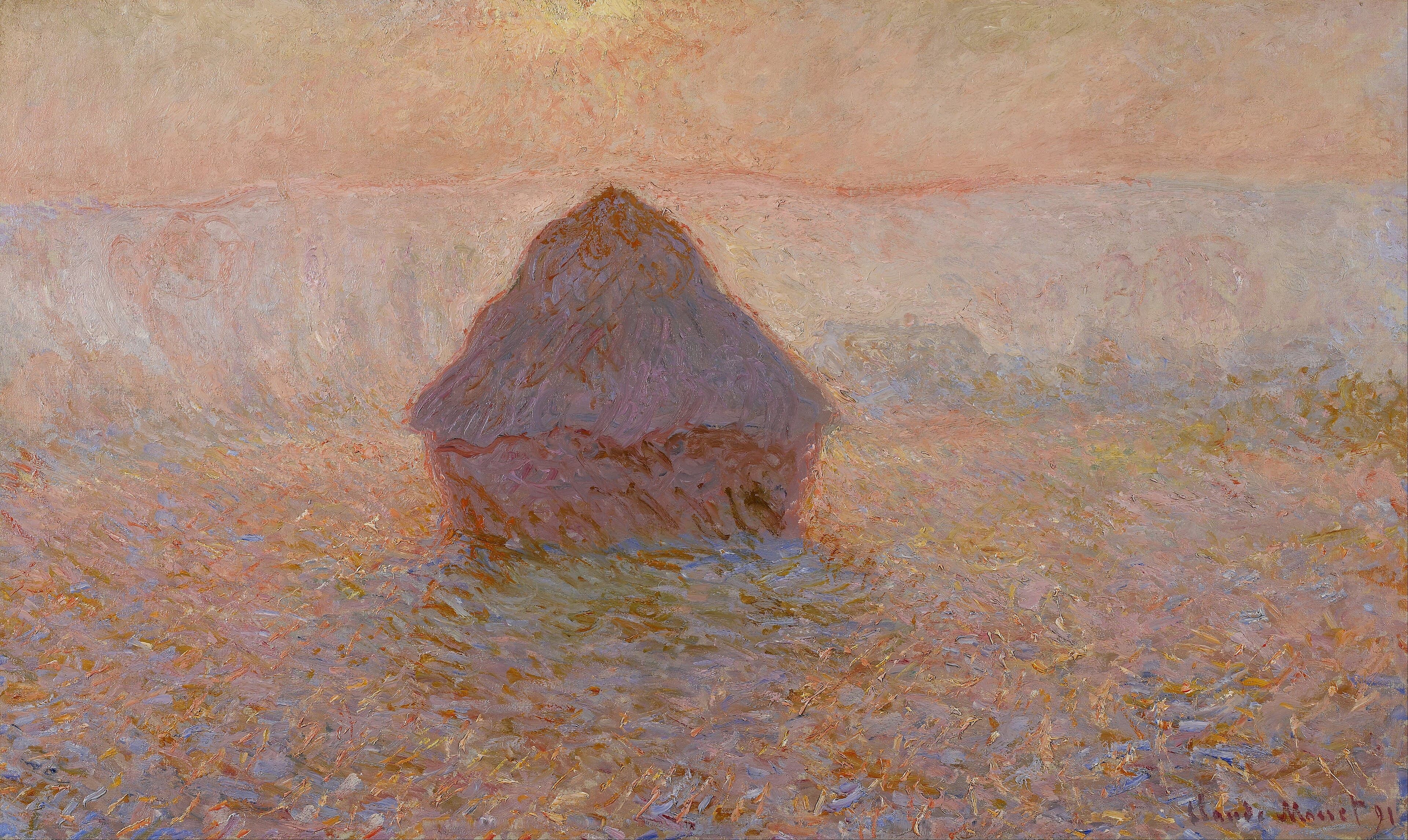
Grainstack, Sun in the Mist
Claude Monet · 1891
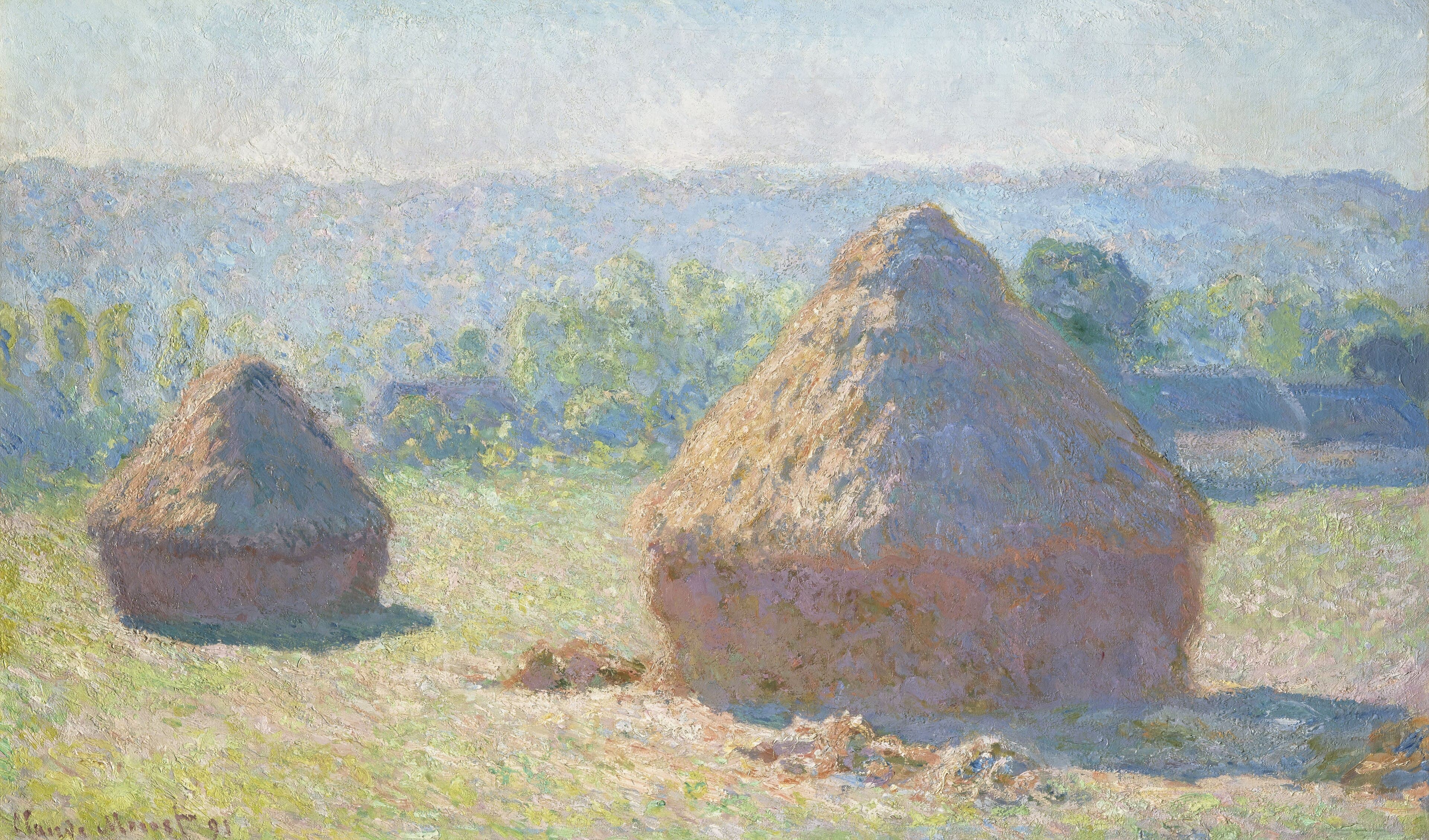
Haystacks, End of Summer
Claude Monet · 1891
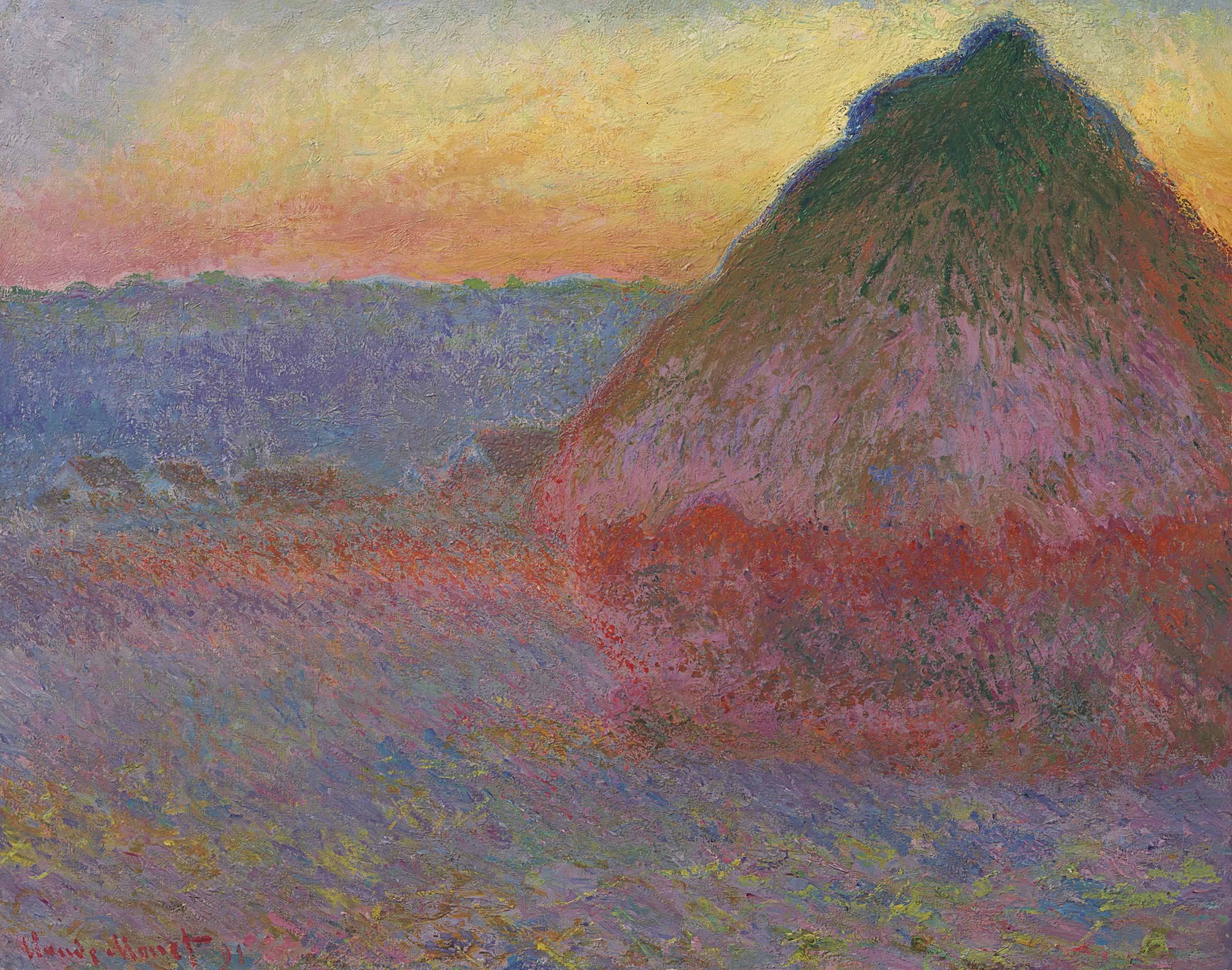
Grainstack in the Sunlight
Claude Monet · 1891
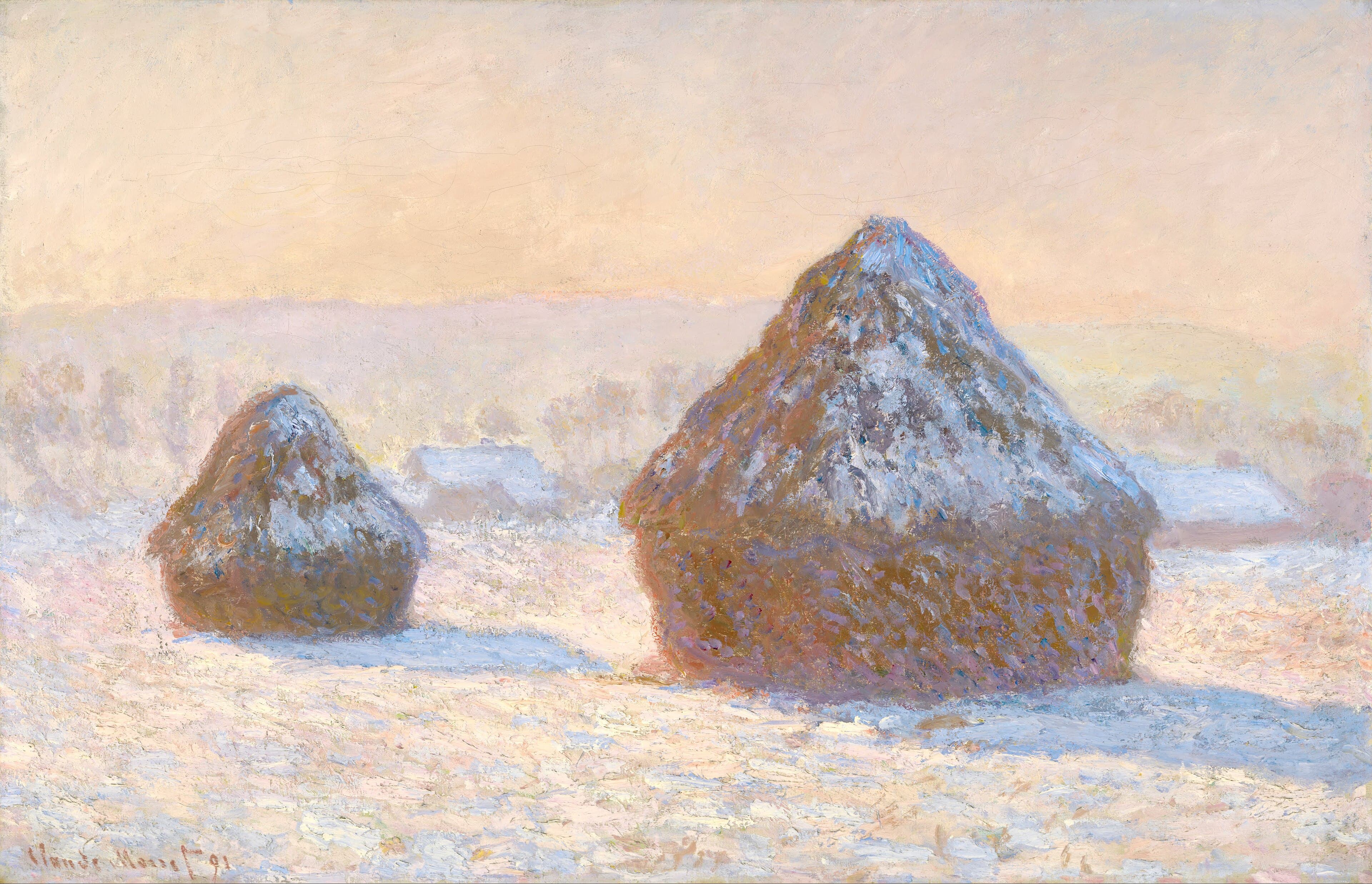
Wheatstacks, Snow Effect, Morning
Claude Monet · 1891
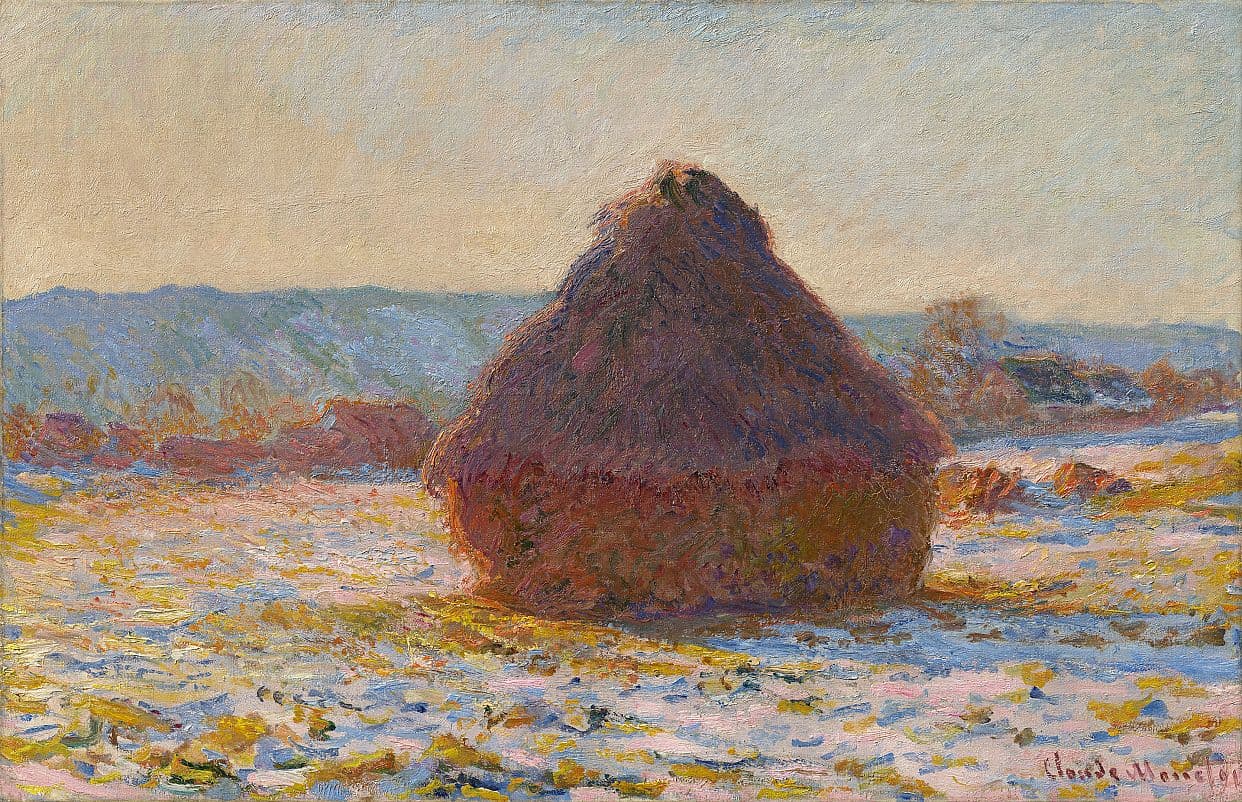
Grainstack in the Sunlight, Snow Effect
Claude Monet · 1891
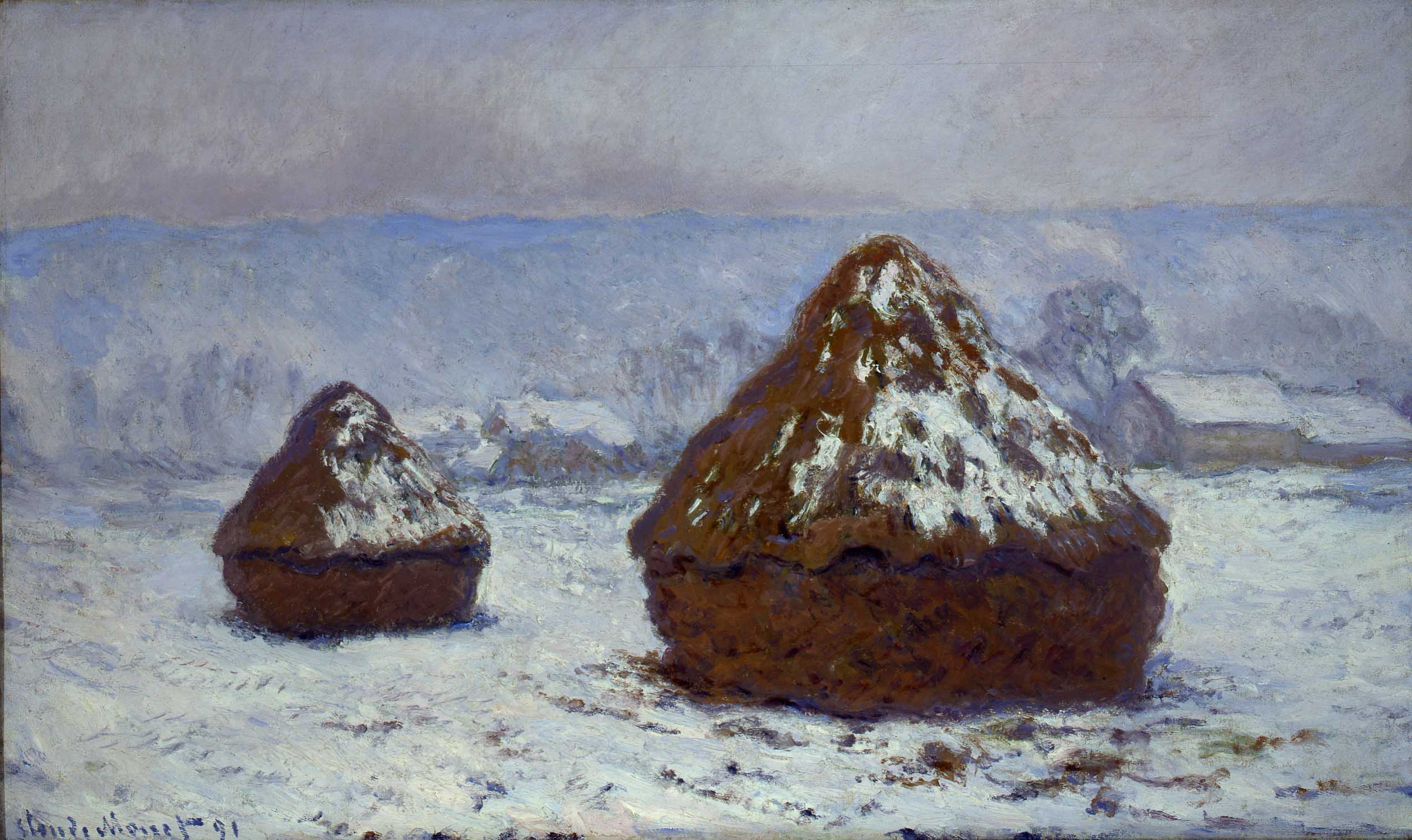
Grainstacks, Snow Effect
Claude Monet · 1891
Kindred works
You may also study
Peupliers au bord de l'Epte, temps couvert
Claude Monet · 1891
Row of Poplars in Autumn
Claude Monet · 1891
Poplars on the Epte (London)
Claude Monet · 1891
The Cliff of Aval, Étretat
Claude Monet · 1885
The Petit Bras of the Seine at Argenteuil
Claude Monet · 1872
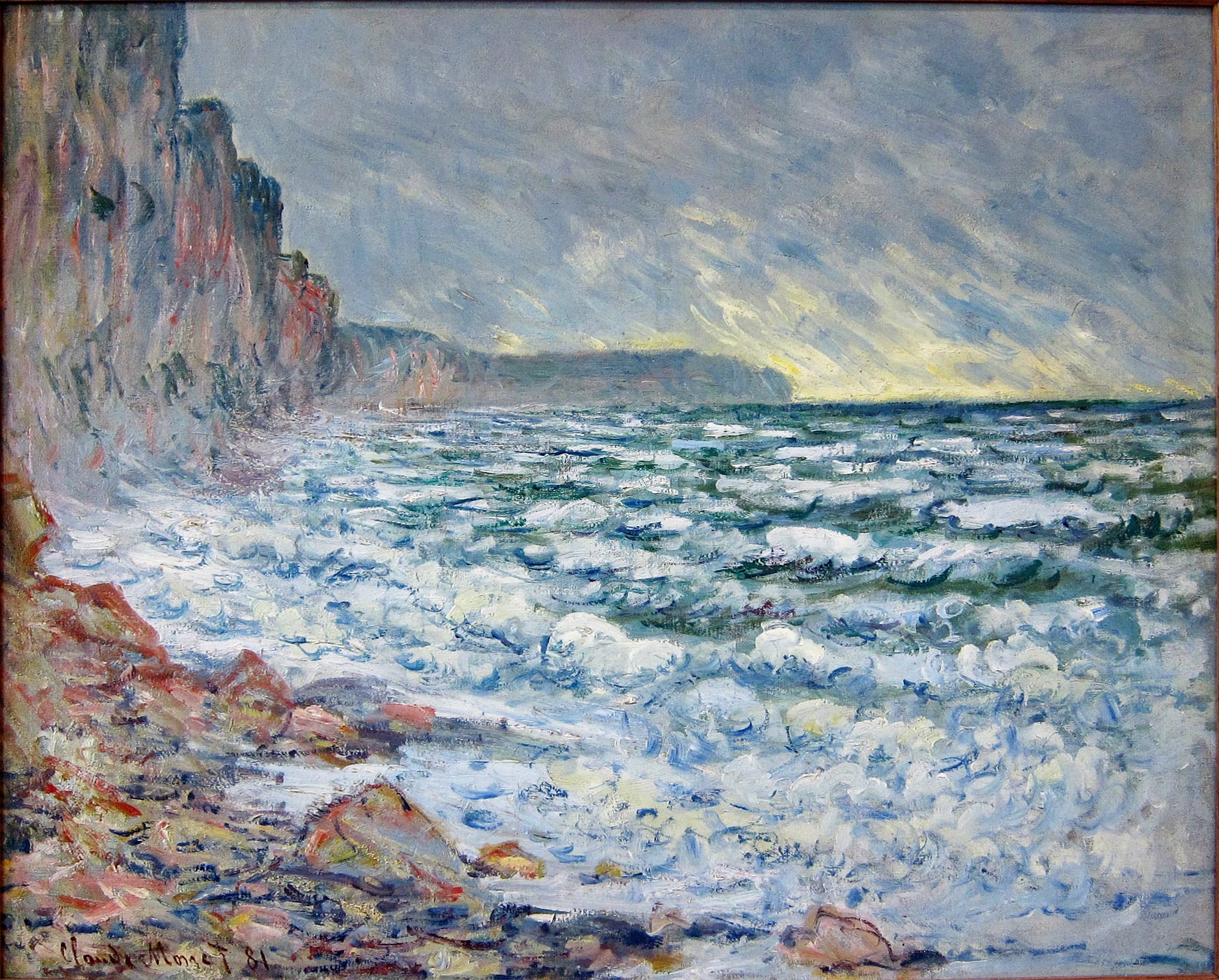
Fécamp, by the Sea
Claude Monet · 1881
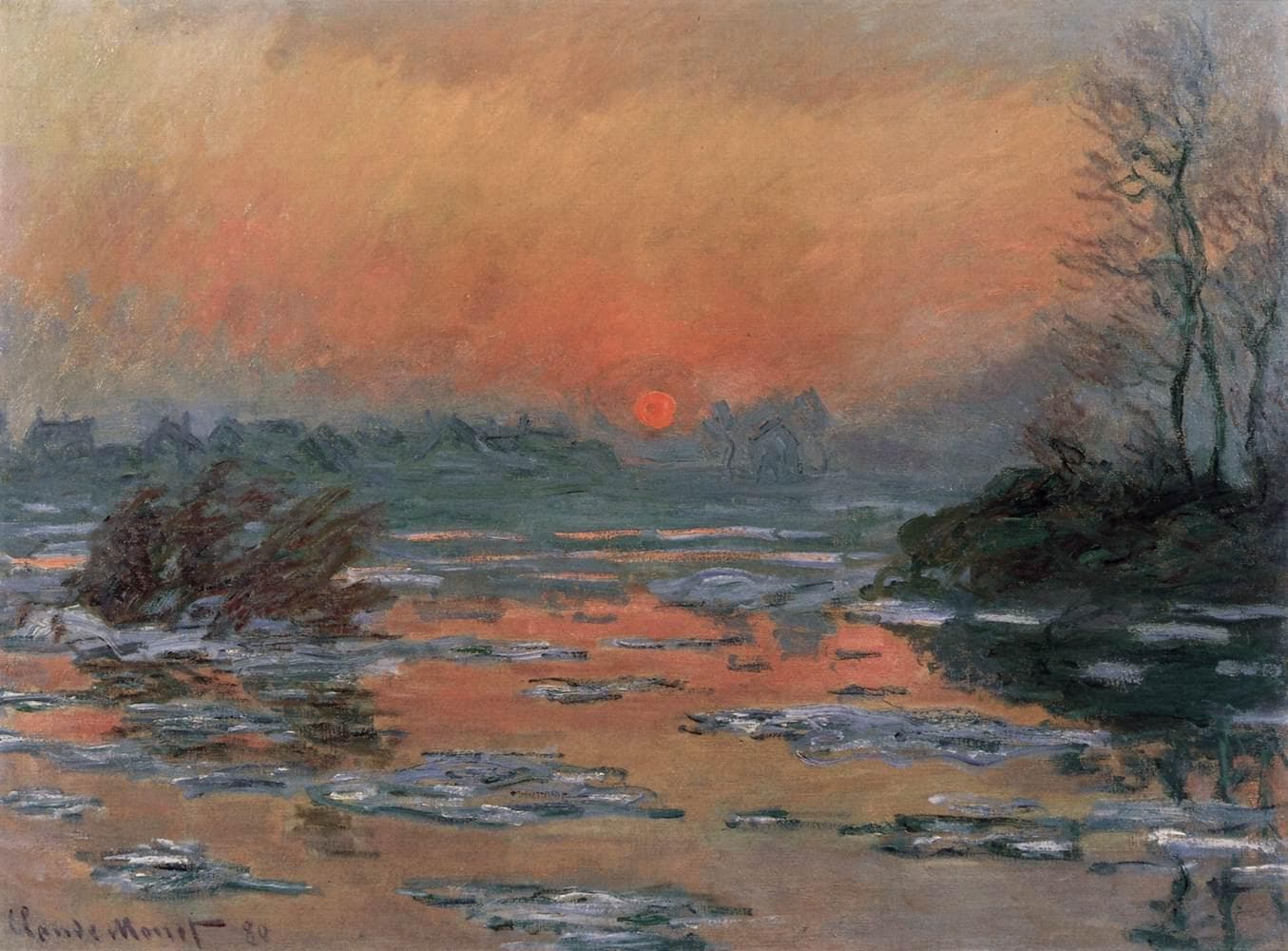
Sunset on the Seine in Winter
Claude Monet · 1880
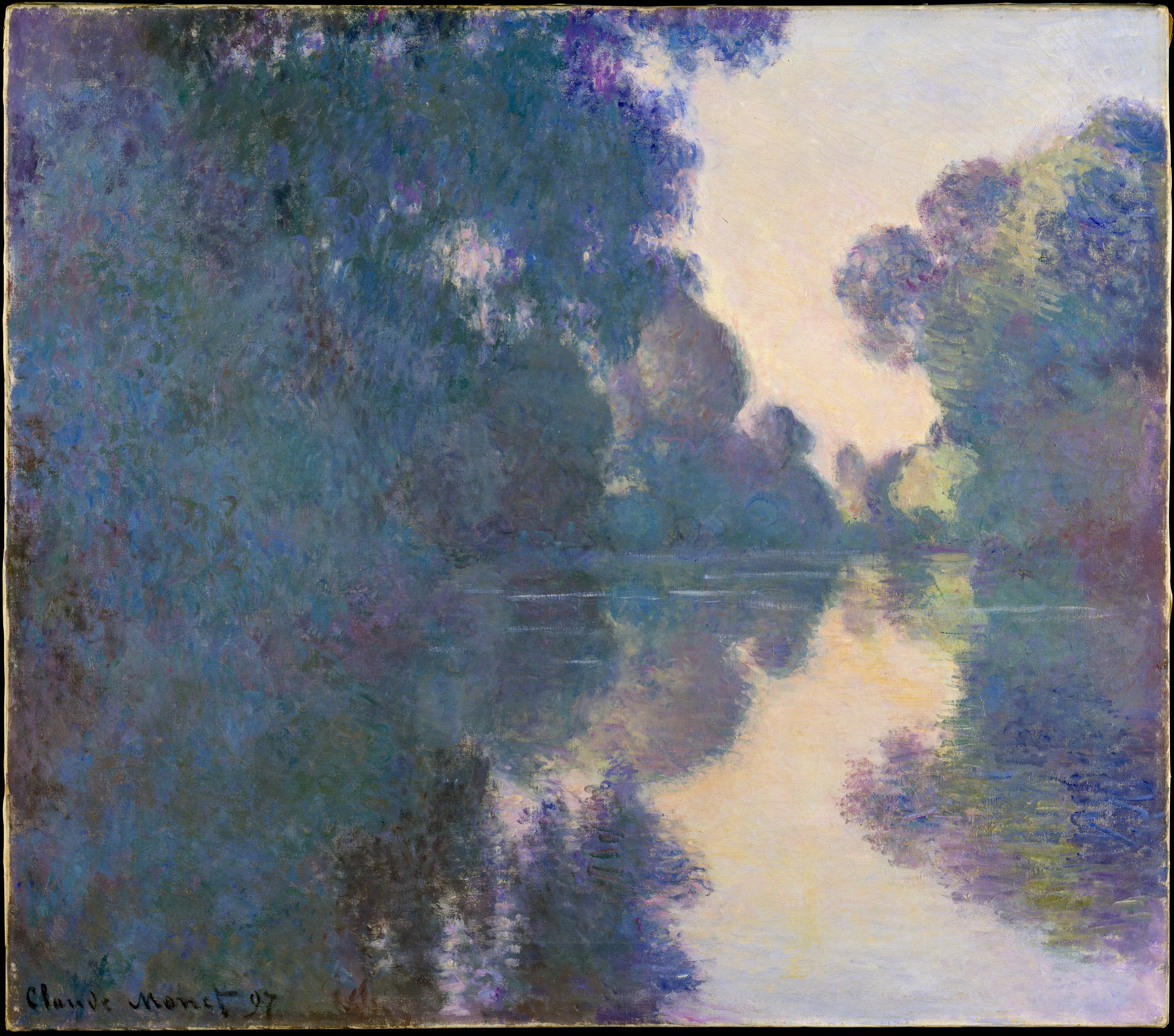
Morning on the Seine near Giverny
Claude Monet · 1897