Image: Claude Monet; Fitzwilliam Museum (source: wikipaintings) · Public domain · via Wikimedia Commons
Les Peupliers
Claude Monet, 1891
Les Peupliers (Poplars) is a Claude Monet painting from his 1891 Poplars series, in the Fitzwilliam Museum, Cambridge. Unusually, it shows the trees from the marsh rather than the river: a cluster of tall poplars against a windswept blue sky.
- Artist
- Claude Monet
- Date
- 1891
- Medium
- Oil on canvas
- Dimensions
- 89 × 92 cm
- Collection
- Fitzwilliam Museum, Cambridge, United Kingdom
- Movement
- Impressionism
- Catalogue
- Wildenstein 1313
- Nature & Landscape
What you are looking at
A tight group of poplars stands on the left side of an almost square canvas. Their trunks are thin, dark and wavering, five or six of them close together, and their foliage forms one tall column of bright yellow-green, flecked with blue where it turns into shadow. The right half of the picture is sky: a strong blue at the top, crossed by long diagonal streaks of white cloud that sweep down to the right and pale to cream near the horizon. Low across the middle runs a distant line of trees in blue and green, and at the bottom a band of yellow and ocher meadow fills the foreground.
There is no river here. That is the first thing to notice. Almost every other canvas in the series looks across the Epte from water level; this one stands on the boggy ground beside it, and the trees are seen against open sky with grass at their feet. The diagonal brushwork in the clouds gives the picture a sense of wind and movement that the more static river views lack.
The signature, Claude Monet, is at lower right.
The poplars of 1891
Between spring and autumn 1891 Claude Monet worked on some two dozen canvases of a line of poplars beside the river Epte, about two kilometers upstream from his home at Giverny. Most were painted from his rowing boat or studio boat on the river. Fifteen were shown together at Paul Durand-Ruel's gallery in Paris early the following year and were a commercial success.
The Fitzwilliam describes this as one of only two canvases in the Poplars series seen from the marsh. That changes everything about the composition: without the water there are no reflections and no horizontal axis at mid-height, and the trees become a single tall mass set off-center against a large field of sky.
How it was painted
The canvas measures 89 by 92 centimeters. Monet painted it with vigorous, open strokes. The foliage is built from short, curling touches of yellow-green, emerald and ultramarine, laid wet into wet; the trunks are drawn over them in long, slightly broken lines of dark green, brown and blue. The sky is the most energetic passage: broad diagonal swipes of white and pale blue dragged over a deeper blue, so that the cloud seems to be blowing across the picture.
The palette is the bright, sunlit one of the summer canvases, with yellows and greens at full strength and blue reserved for shadow and distance. The foreground meadow is handled loosely, a few horizontal sweeps of yellow ocher with touches of pink and green.
How this version differs
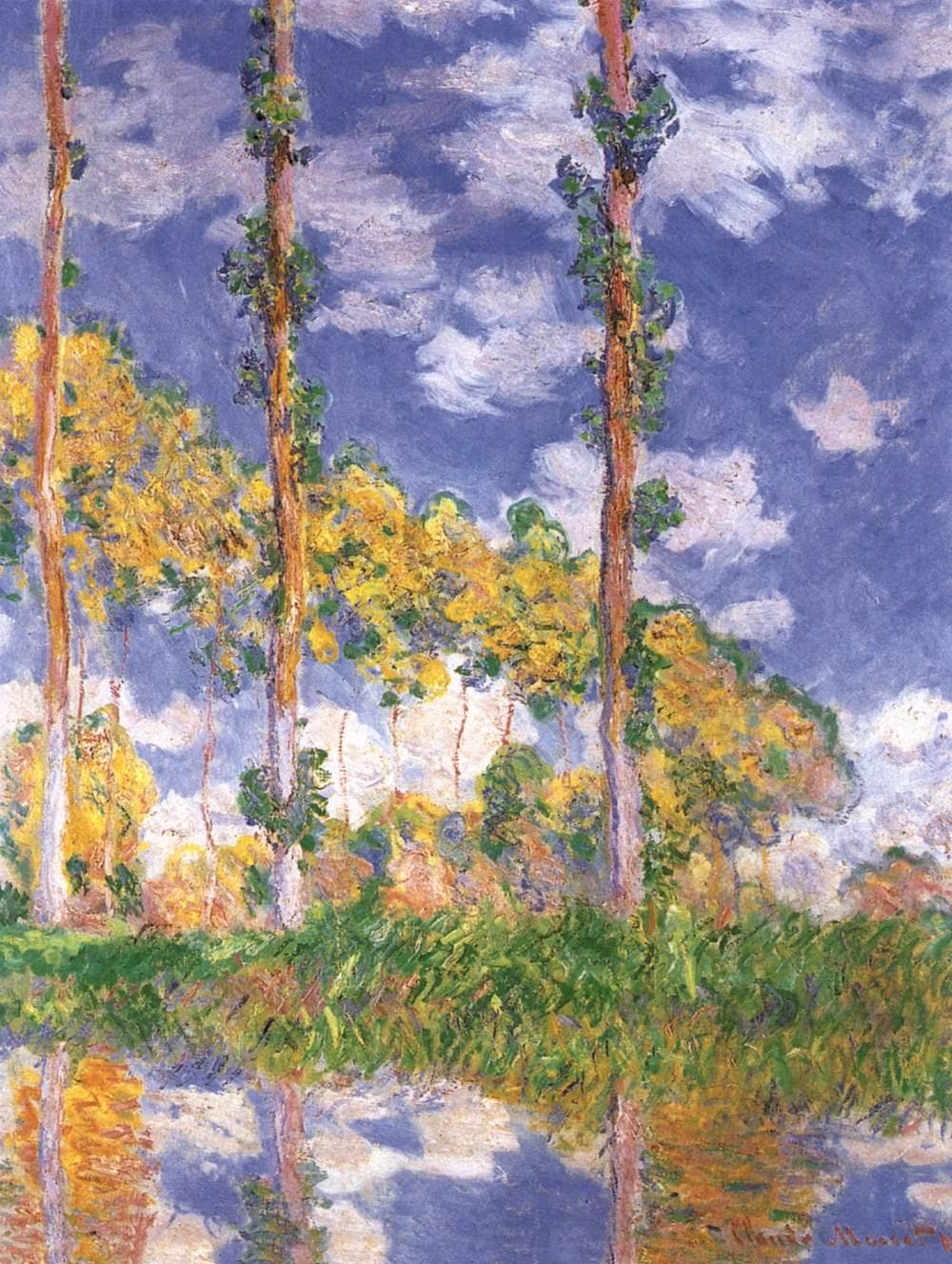
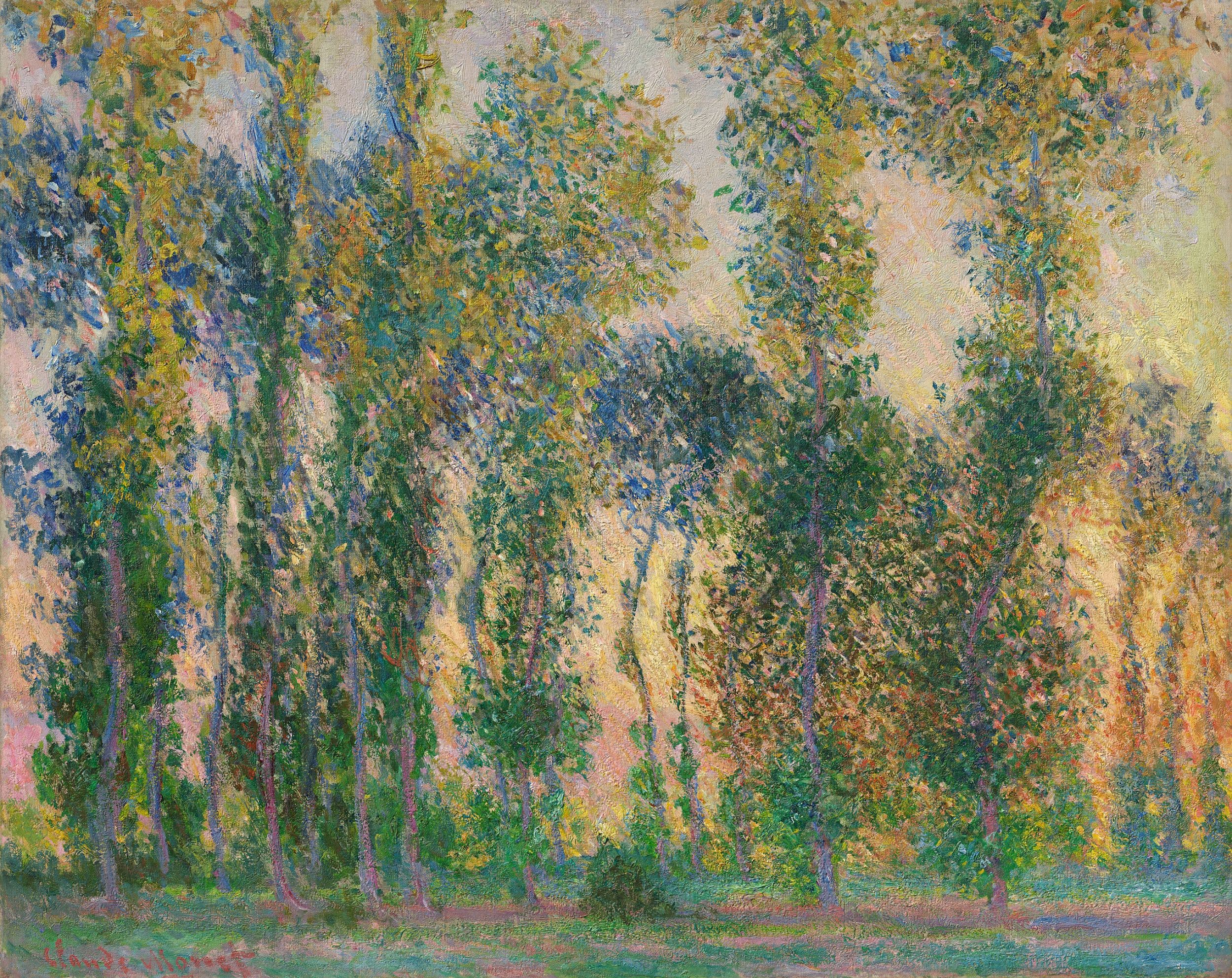
Set it beside Three Poplars, Summer or the Tate's Poplars on the Epte and the difference is immediate. Those pictures are organized as grids of verticals and their reflections. This one is asymmetrical and open, closer in spirit to Monet's earlier poplar pictures around Giverny, such as Poplars at Giverny, than to the strict decorative scheme of the 1891 river views. It is a summer picture, under a high, moving sky, and has none of the screen-like flatness of the overcast or autumn canvases.
The poplars and the Haystacks
The poplars followed directly on the Grainstacks, which Monet had shown at Durand-Ruel's in May 1891 to great success. The Fitzwilliam canvas, with its open meadow and big sky, is the one that most recalls the fields of the Grainstacks, painted only a short walk away. But where the stacks are squat, solid shapes sitting on the ground, the poplars are tall and weightless, and Monet sets them against moving air rather than still light. Seen together, the two series show him testing how far a single, ordinary rural motif could carry a whole body of work.
Ownership and where to see it
The museum traces the painting back to the artist's studio. It later passed through the London dealer Gimpel Fils, from whom Captain S. W. Sykes bought it in 1950, and Sykes bequeathed it to the Fitzwilliam Museum in 1966 (accession PD.9-1966). The Fitzwilliam dates it 1891; some catalogues give 1891–92. It hangs with the museum's French Impressionist paintings in Cambridge. For other public collections, see our guide to where to see Monet's paintings.
Questions & answers
Where is Monet's Les Peupliers in Cambridge?
It is in the Fitzwilliam Museum, University of Cambridge, accession PD.9-1966. It was bequeathed by Captain S. W. Sykes in 1966, who had bought it from the London dealers Gimpel Fils in 1950. It measures 89 by 92 centimeters and is catalogued as Wildenstein 1313.
When and where was it painted?
Monet painted it in 1891, during his campaign on the poplars beside the river Epte, about two kilometers upstream from his home at Giverny. Some catalogues date it 1891–92. Unlike most of the series, it was painted from the marsh beside the river rather than from his boat.
What does the painting show?
A cluster of tall poplars on the left, their foliage bright yellow-green, set against a blue sky streaked with windblown white cloud, with a distant line of trees and a yellow meadow below. There is no river or reflection in the picture.
How is it different from Monet's other Poplars?
According to the Fitzwilliam it is one of only two canvases in the series seen from the marsh. Without the river there are no reflections, and the trees form a single off-center mass against open sky instead of the grid of trunks and reflections in the river views.
More by the artist
Claude Monet
La Meule
Claude Monet · 1891
Grainstack in the Sunlight, Snow Effect
Claude Monet · 1891
Grainstack, Sun in the Mist
Claude Monet · 1891
The Four Trees
Claude Monet · 1891
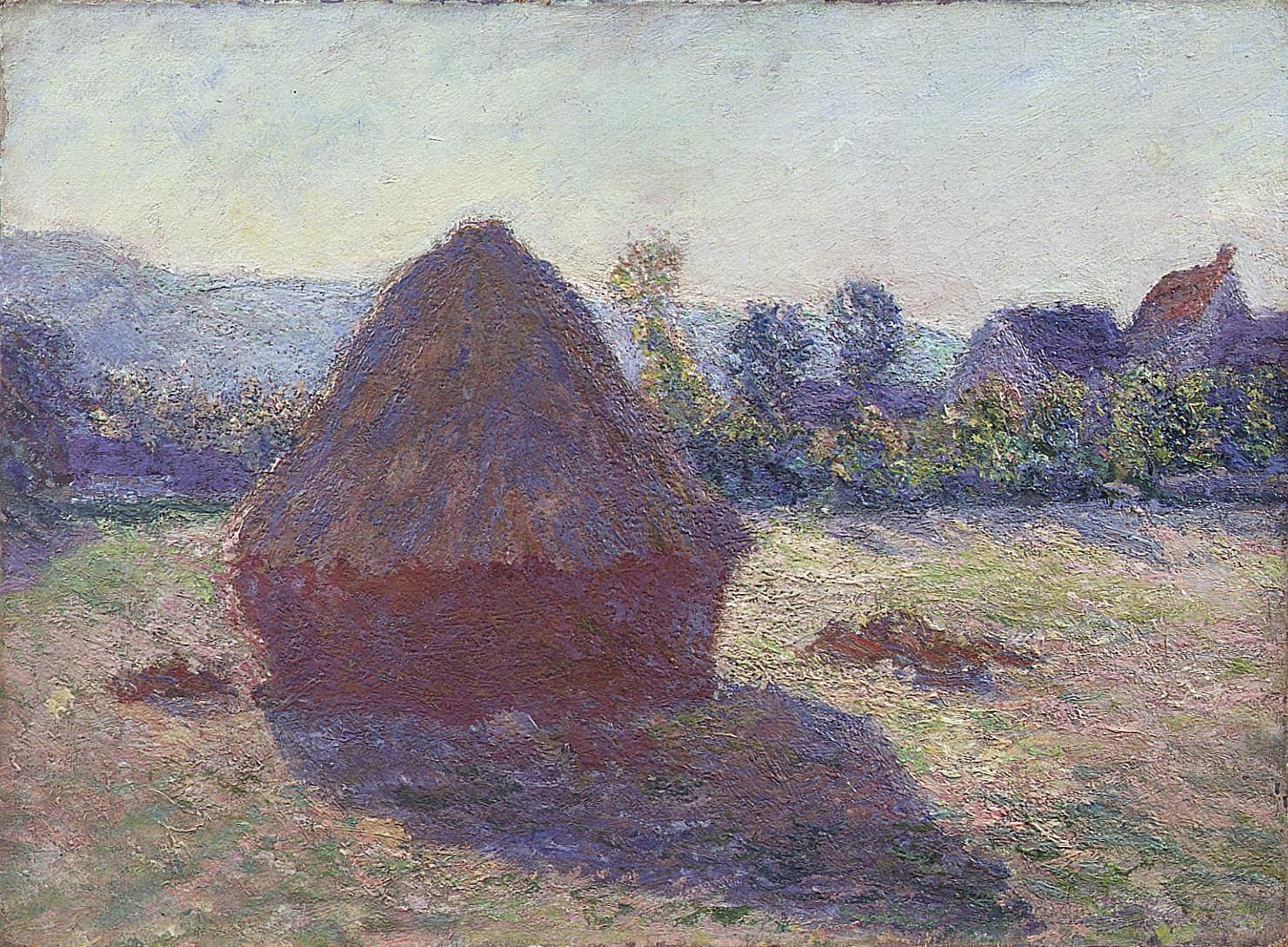
Haystack in the Evening Sun
Claude Monet · 1891
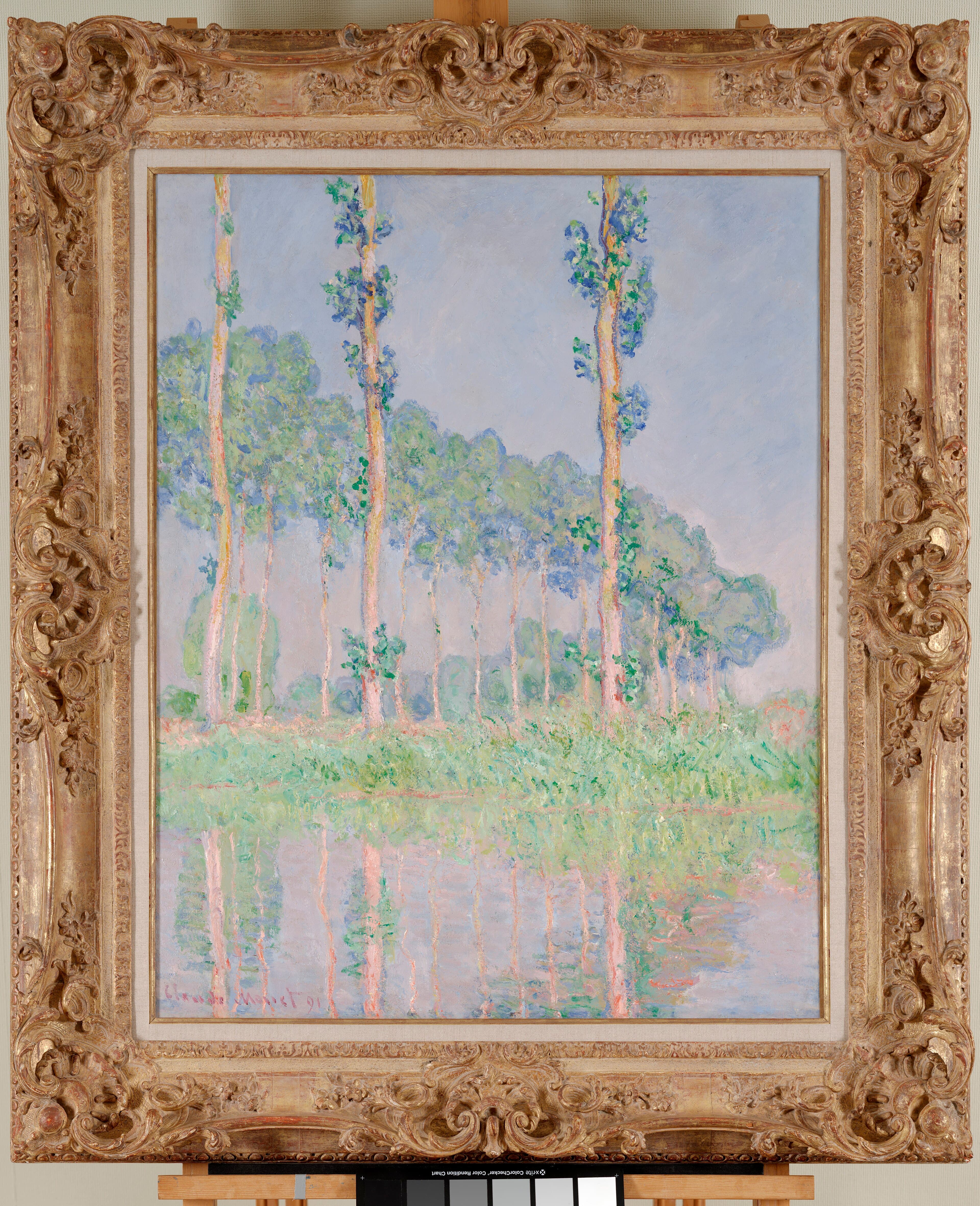
Poplars, Pink Effect
Claude Monet · 1891
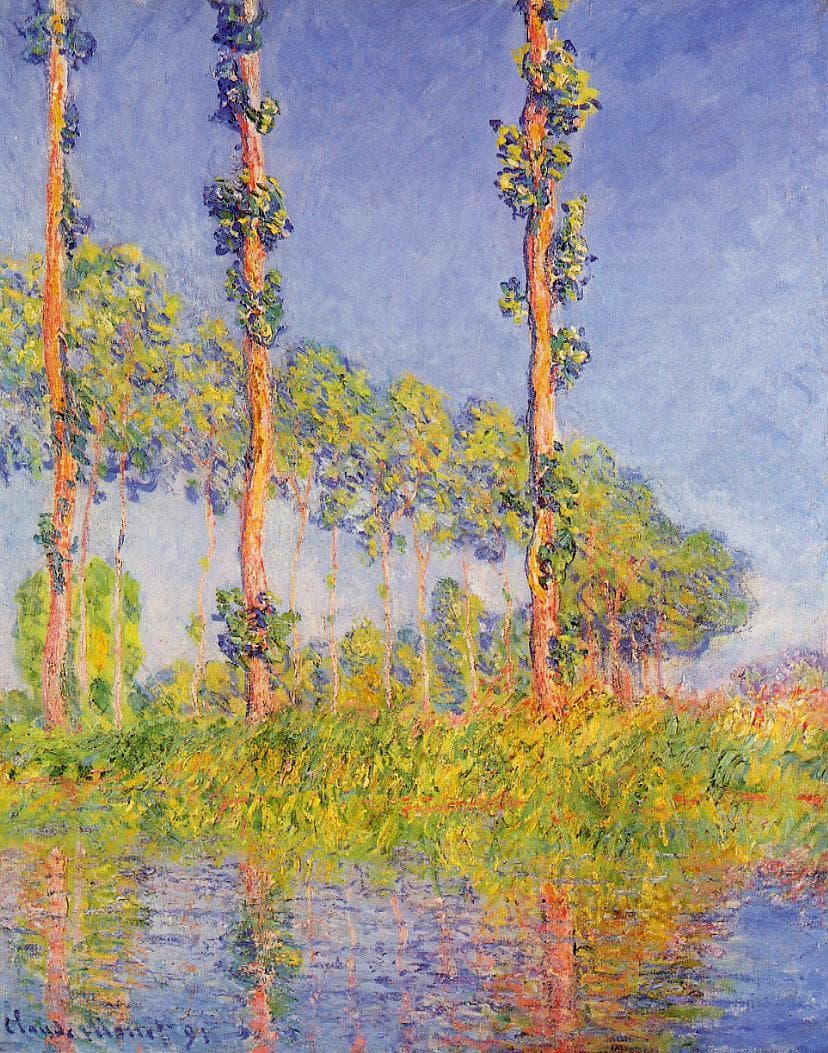
Three Poplars, Autumn Effect
Claude Monet · 1891
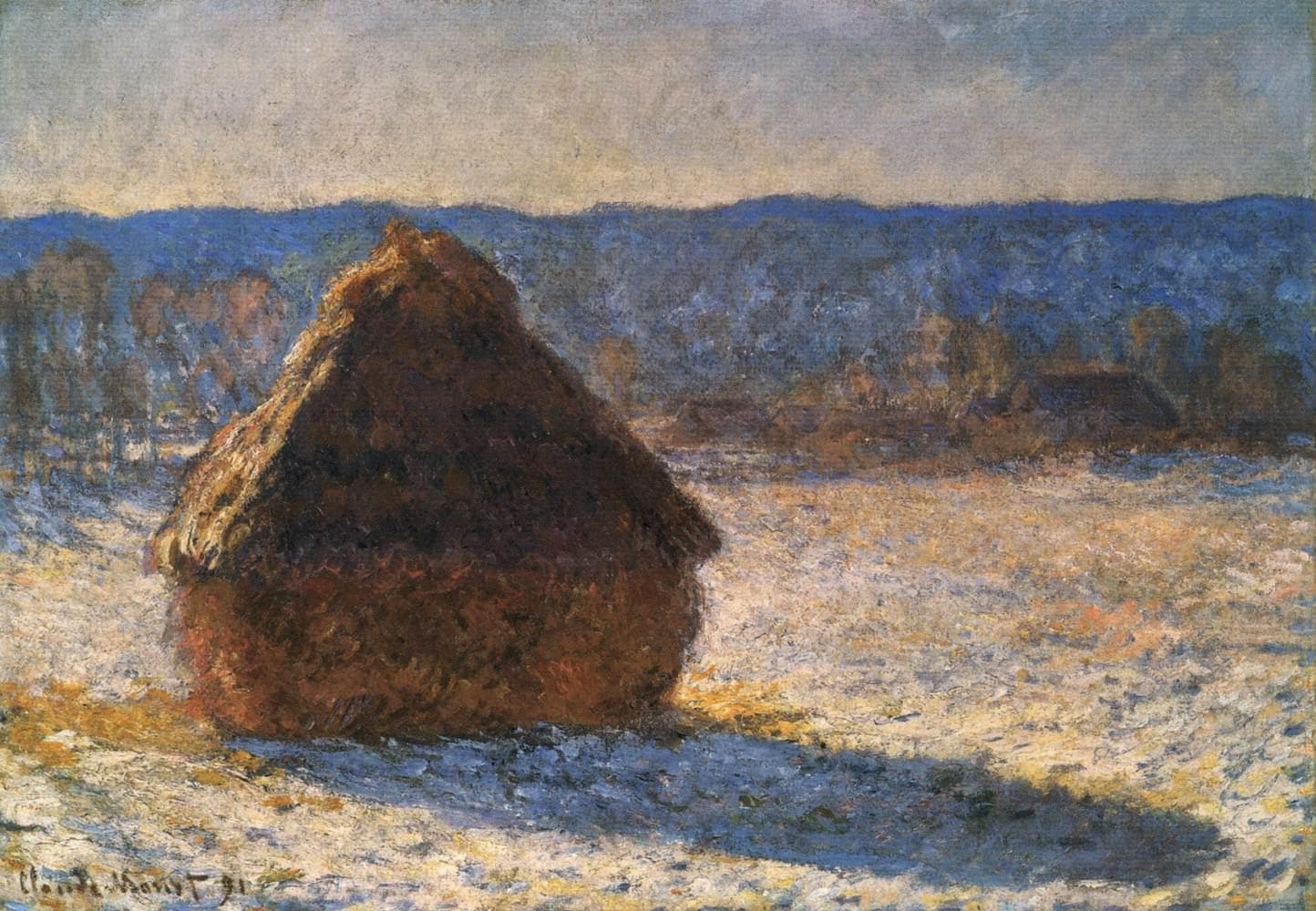
Grainstack (Snow Effect)
Claude Monet · 1891
Also painted in 1891
The same year
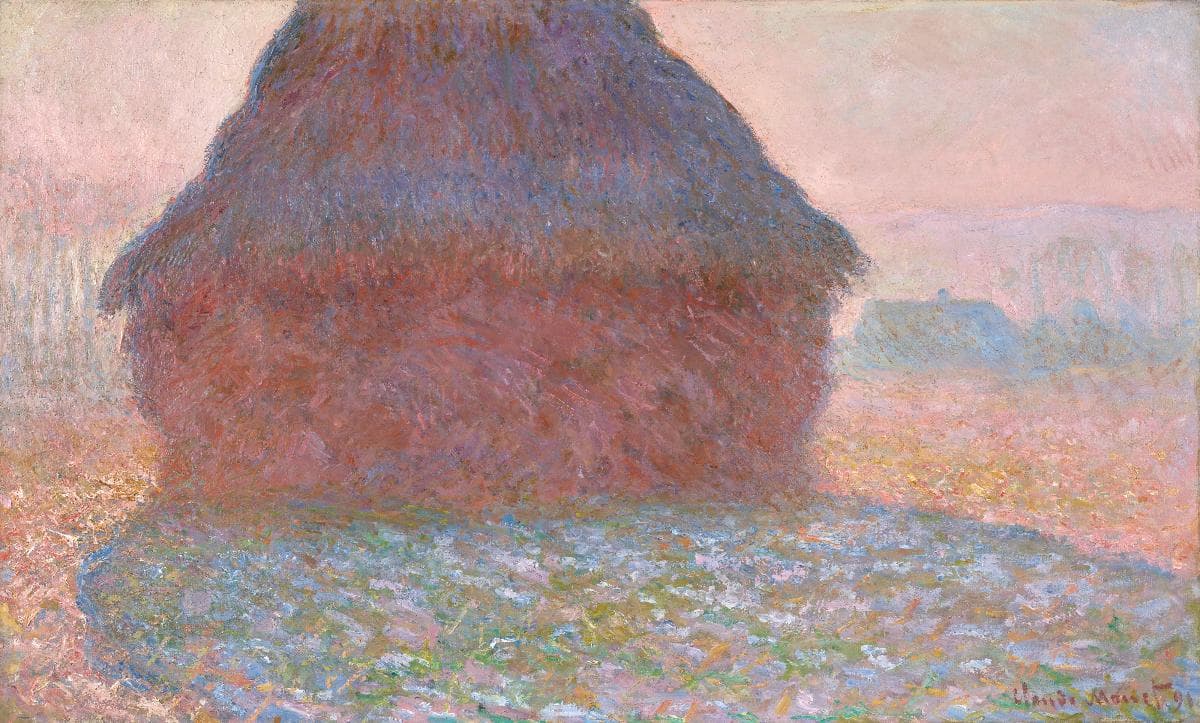
Grainstack in Sunlight
Claude Monet · 1891
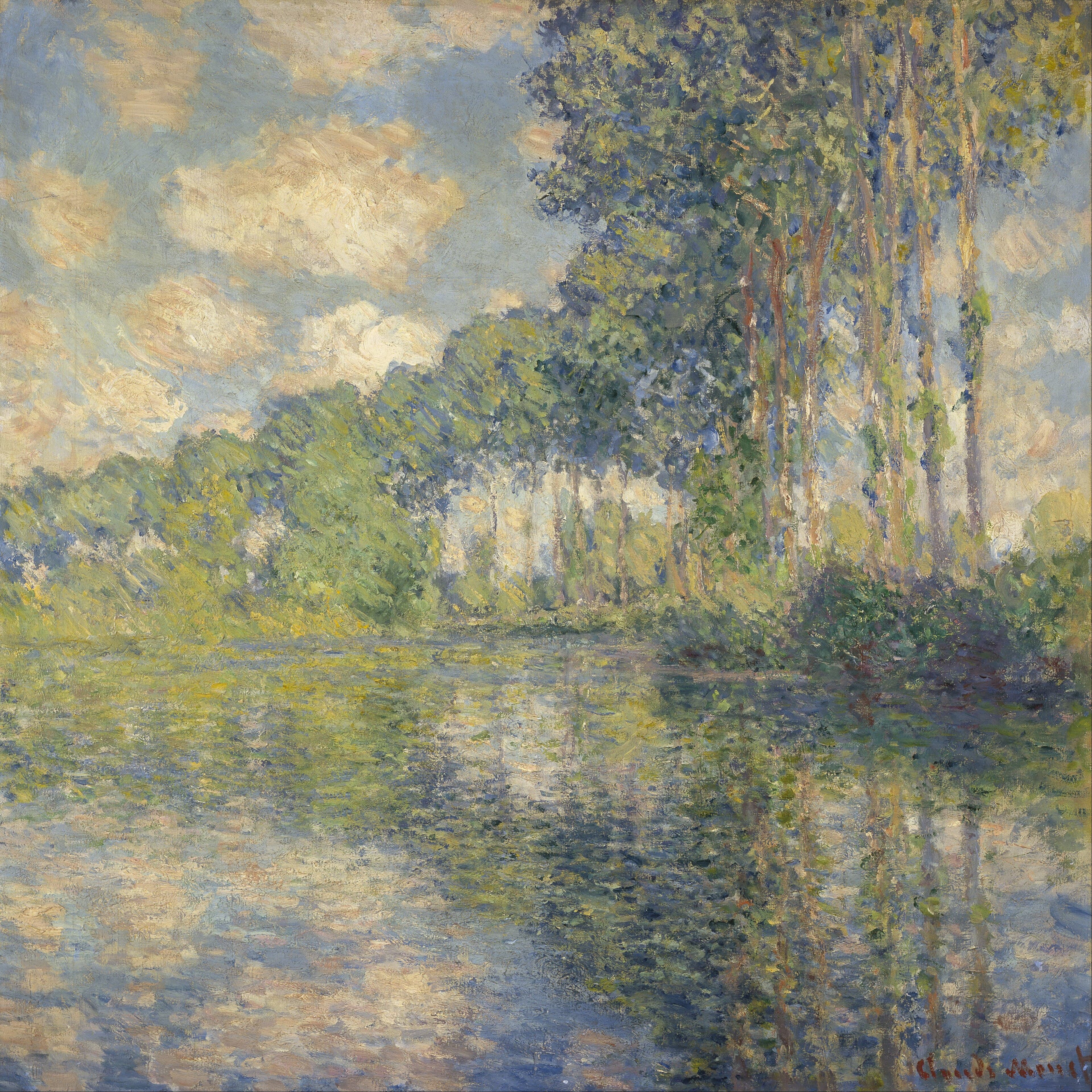
Poplars on the Epte (Edinburgh)
Claude Monet · 1891
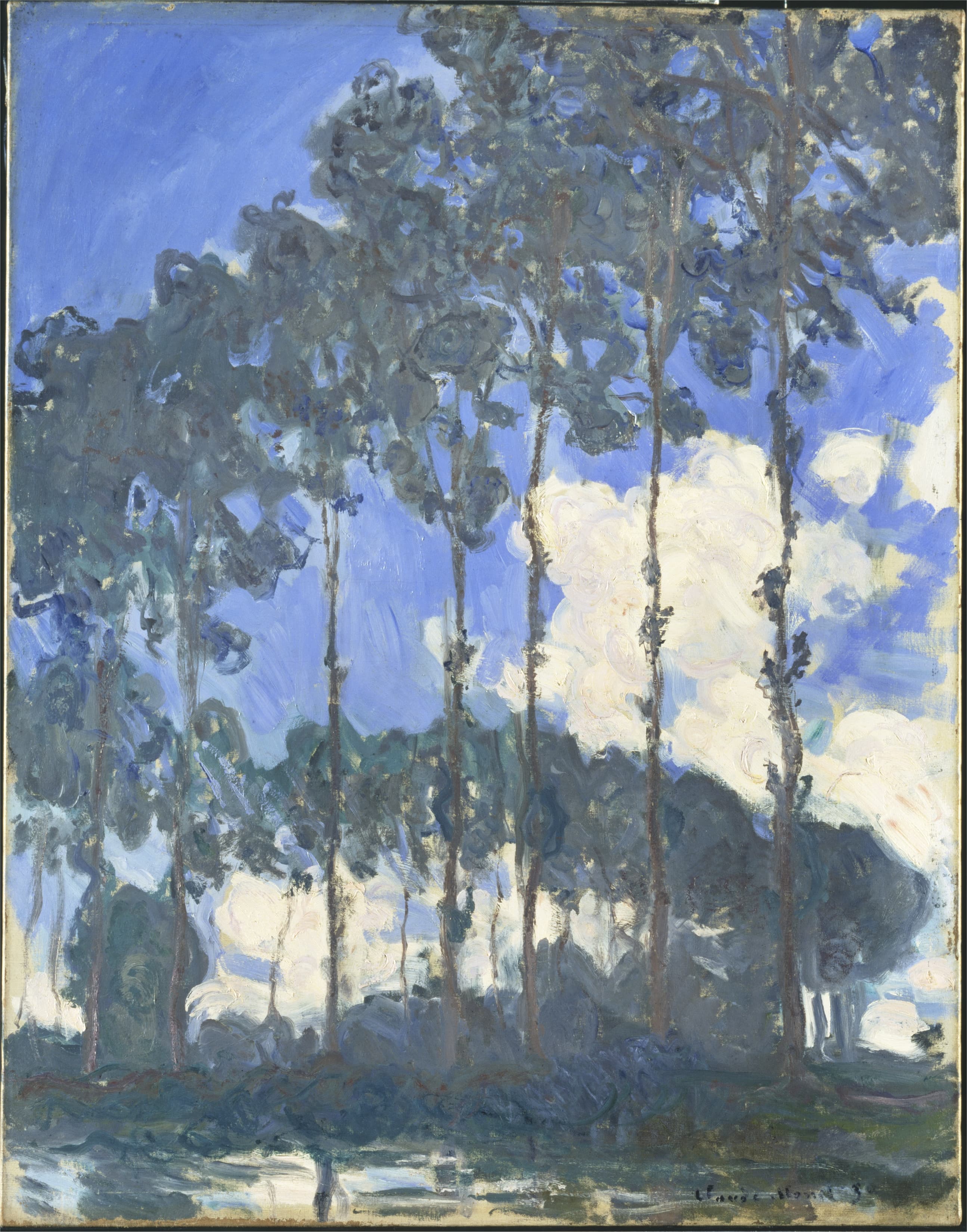
Poplars on the Epte (London)
Claude Monet · 1891
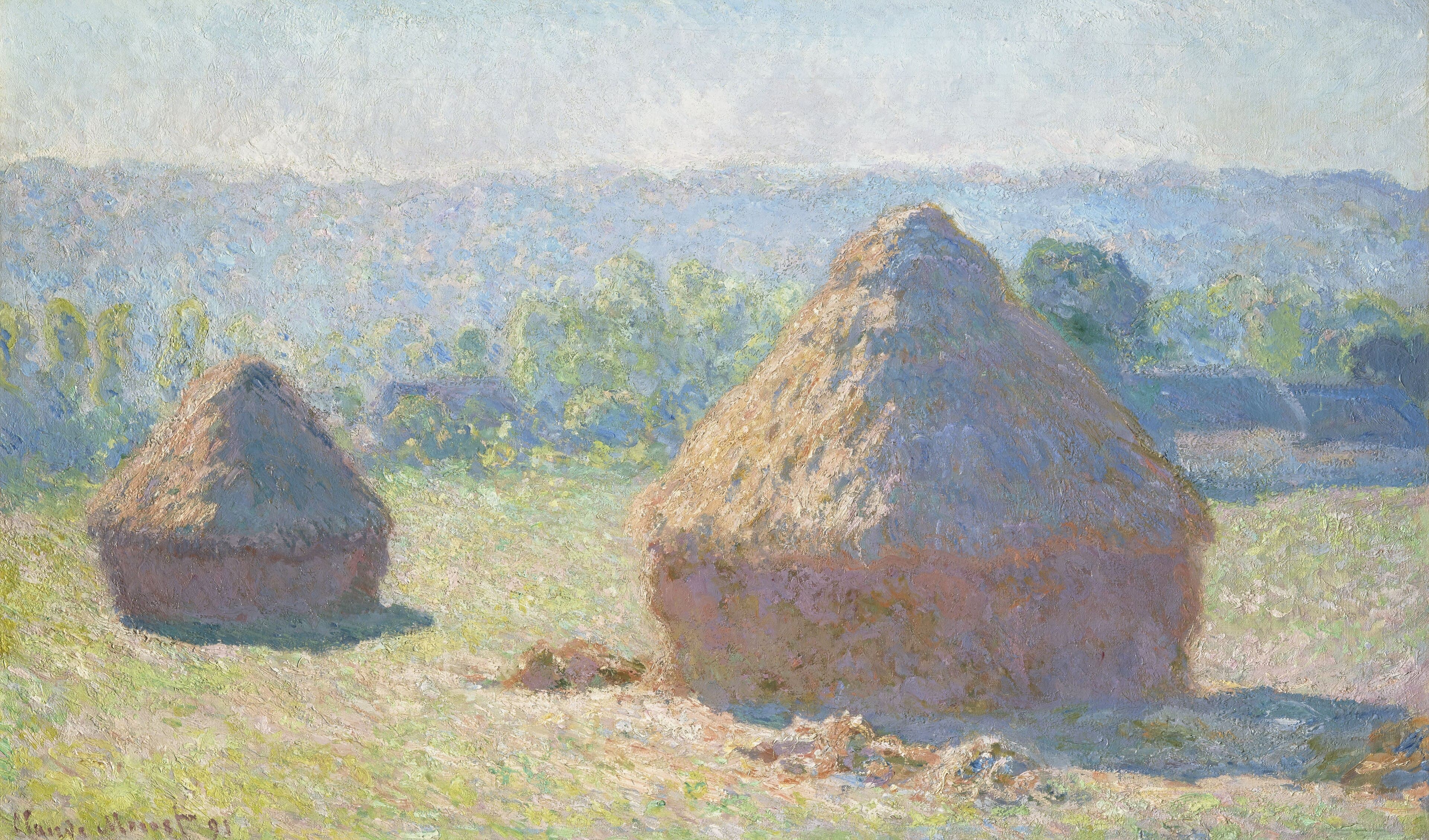
Haystacks, End of Summer
Claude Monet · 1891
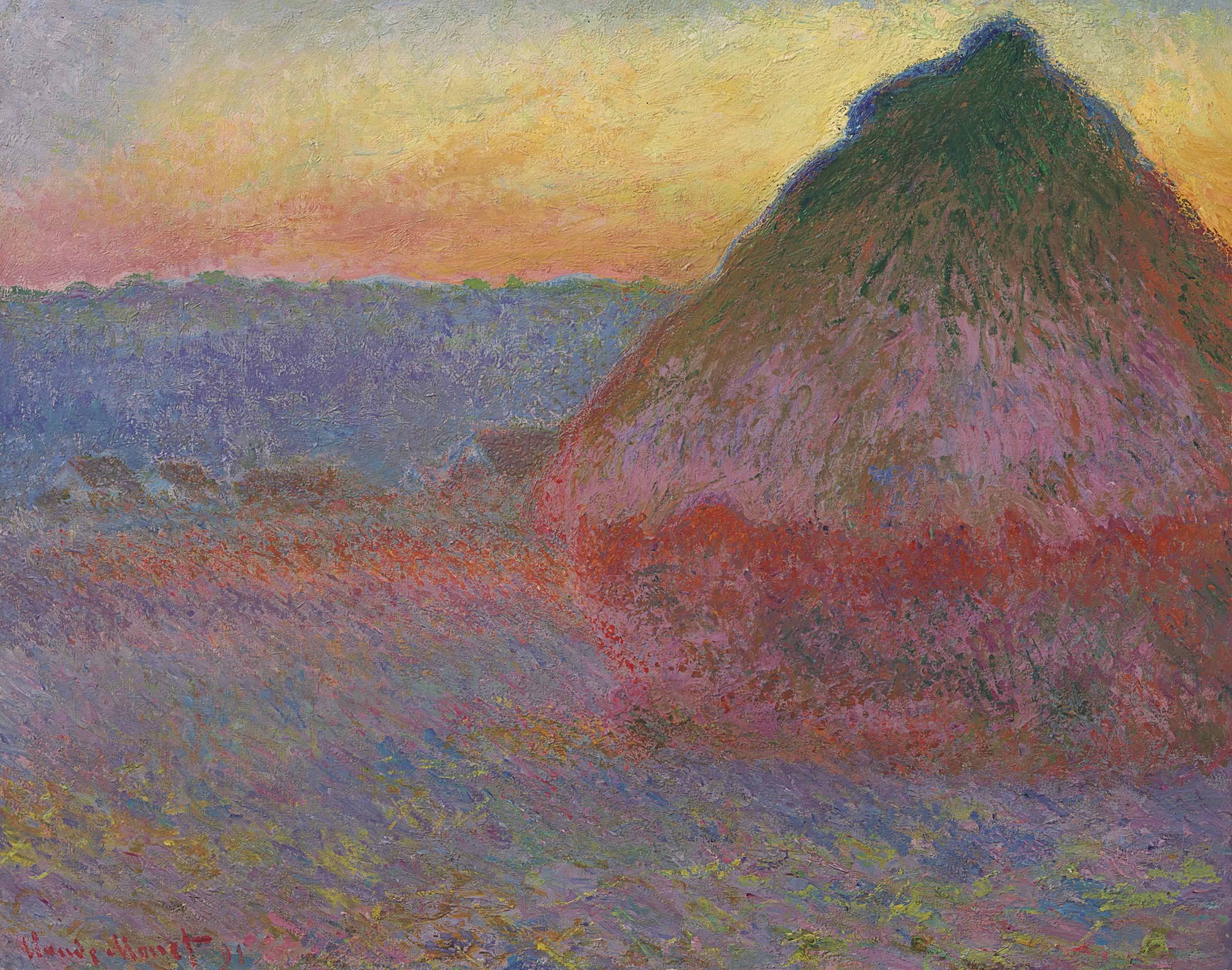
Grainstack in the Sunlight
Claude Monet · 1891
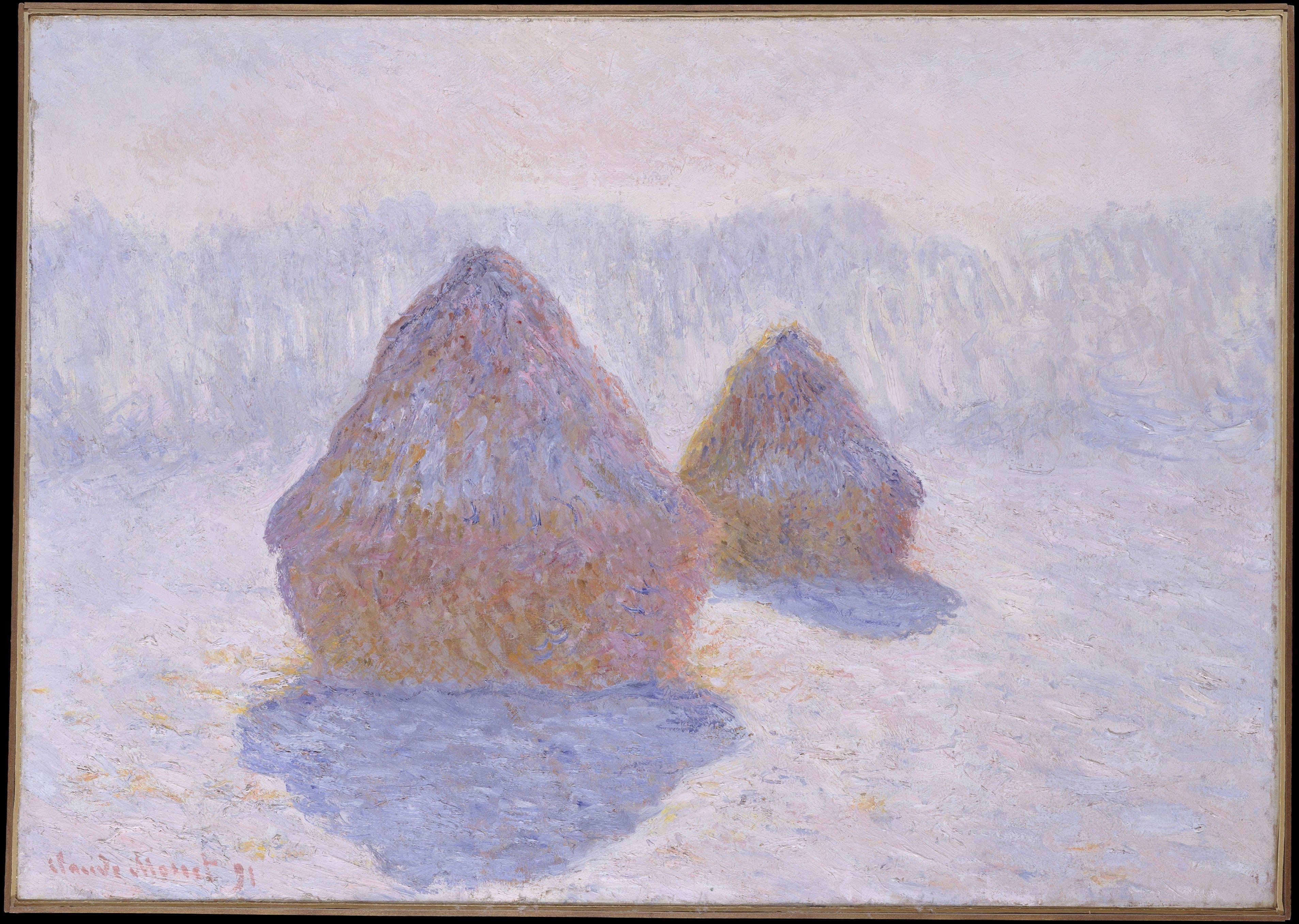
Haystacks (Effect of Snow and Sun)
Claude Monet · 1891
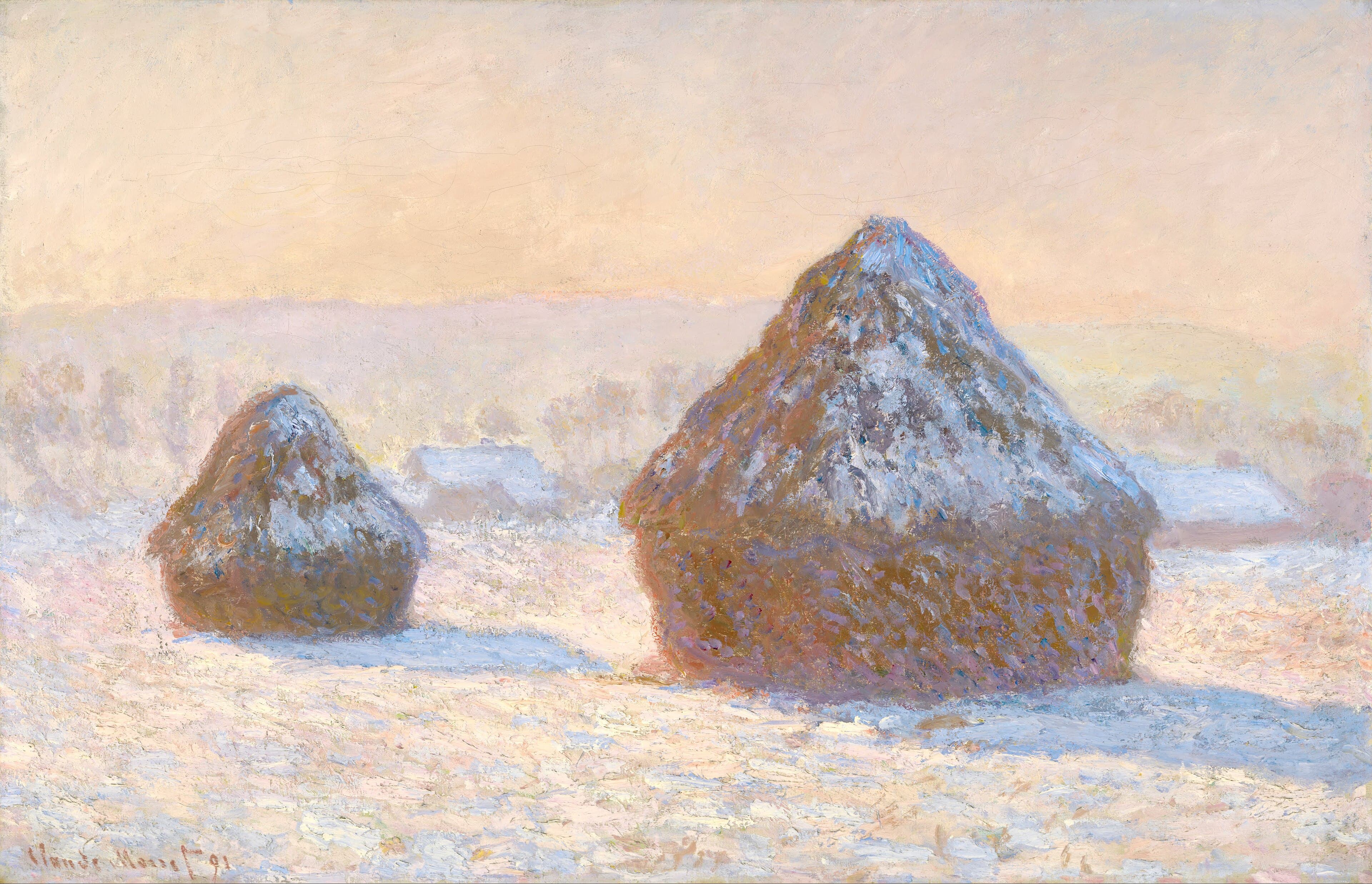
Wheatstacks, Snow Effect, Morning
Claude Monet · 1891
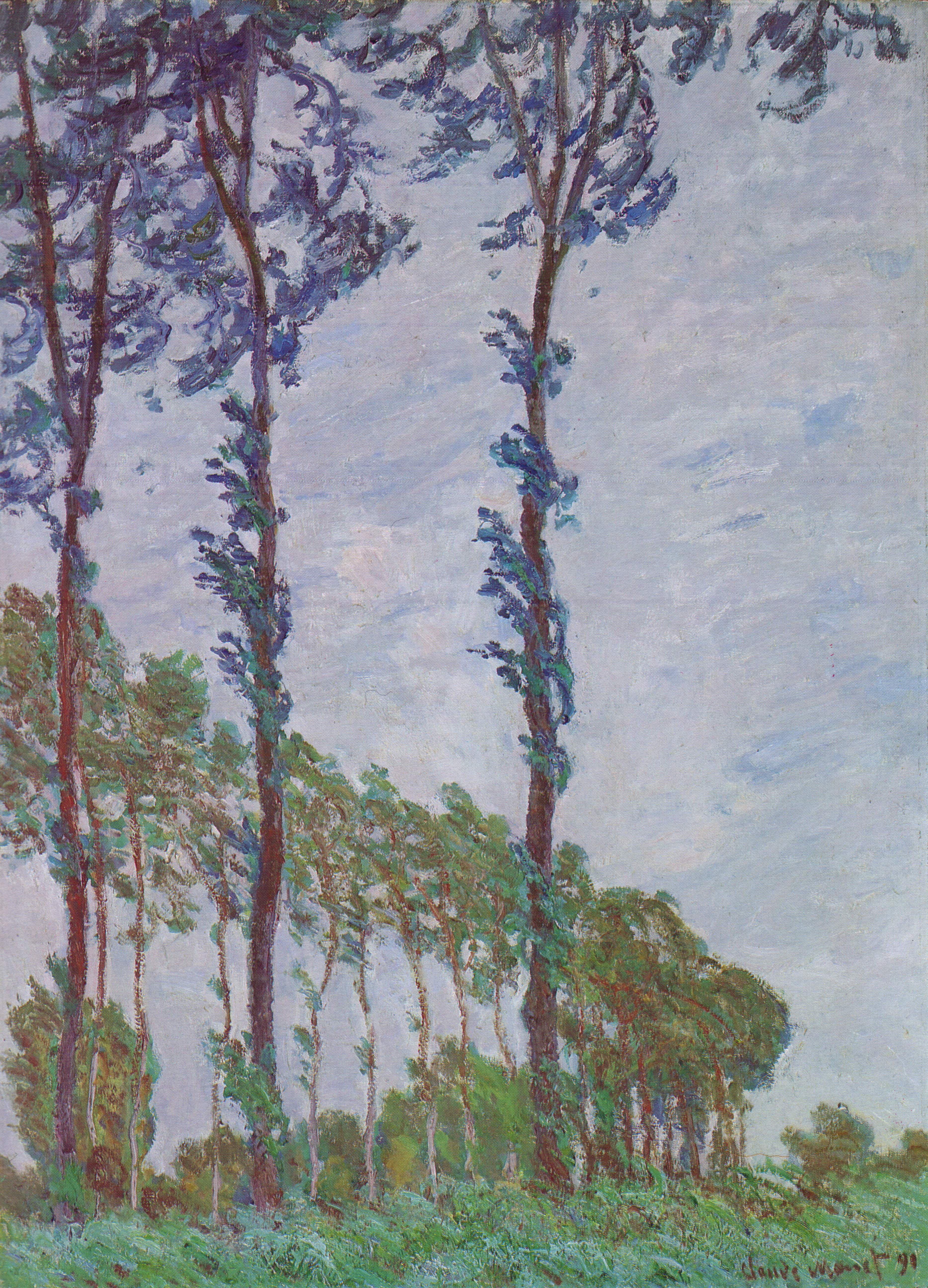
Wind Effect, Series of The Poplars
Claude Monet · 1891
Kindred works
You may also study
Three Poplars, Summer
Claude Monet · 1891
Poplars on the Epte (London)
Claude Monet · 1891
Poplars at Giverny
Claude Monet · 1887
Poplars on the Epte (Edinburgh)
Claude Monet · 1891
Wind Effect, Series of The Poplars
Claude Monet · 1891
Argenteuil
Claude Monet · c. 1872
Lavacourt under Snow
Claude Monet · c. 1878–81
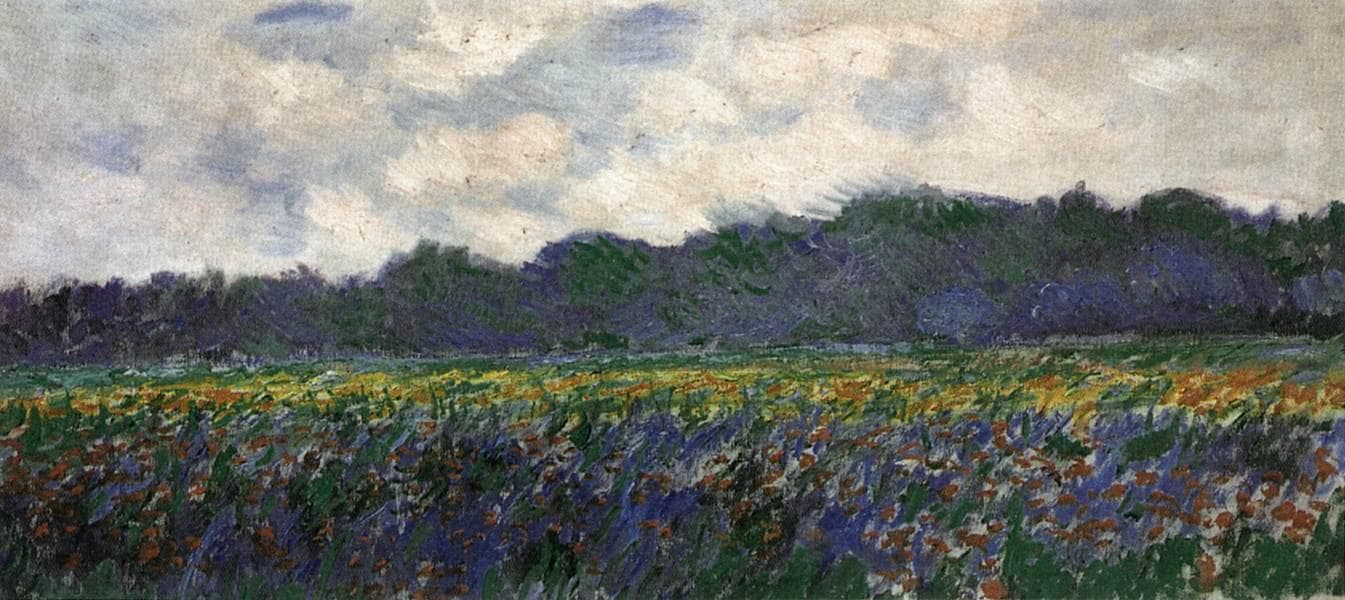
Field of Yellow Irises at Giverny
Claude Monet · 1887