Image: Musée d'Orsay, Paris · Public domain · via Wikimedia Commons
Wind Effect, Series of The Poplars
Claude Monet, 1891
Wind Effect, Series of The Poplars is an 1891 Claude Monet painting from his Poplars series: three tall trunks against a pale sky, the row behind them bent by the wind. It entered the Musée d'Orsay, Paris, in 2002.
- Artist
- Claude Monet
- Date
- 1891
- Medium
- Oil on canvas
- Dimensions
- 100 × 73.5 cm
- Collection
- Musée d'Orsay, Paris, France
- Movement
- Impressionism
- Catalogue
- Wildenstein 1302
- Nature & Landscape
Wind Effect, Series of The Poplars (Effet de vent, série des peupliers) is a painting from Claude Monet's 1891 series of poplars on the banks of the Epte, upstream from his home at Giverny. Signed and dated Claude Monet 91 at the lower right, the upright canvas measures 100 by 73.5 centimeters. It is in the Musée d'Orsay in Paris (RF 2002 30), which acquired it in 2002 through a dation, the French system that allows inheritance tax to be paid in works of art.
What you're looking at
Three tall poplars rise from the bottom of the canvas to the top, their thin trunks painted in rust-red and brown with streaks of violet. Their crowns are cut off by the frame, so we see only trunks and a few clumps of leaves clinging to them, flicked on in blue, teal and green. The leaves stream sideways from the trunks, all in the same direction: the wind is blowing from left to right.
Behind them, a row of younger poplars and bushes runs across the lower half of the picture on a long diagonal, from the left edge down toward the right. These trees are bent by the wind, their crowns leaning over to the right in light green, olive and turquoise strokes, their trunks slanting. At the bottom, a strip of bright green grass, painted in short horizontal strokes, is the riverbank. On the far right, a single round tree stands low on the horizon.
The sky takes up most of the canvas, a pale lilac-gray streaked with blue and white clouds that are themselves brushed on a diagonal, as if moving fast. The palette is cool and fresh: lilac, blue, green and rust, with no strong yellows. It is an overcast, breezy day.
The Poplars series, 1891
In the summer and autumn of 1891, straight after the Haystacks, Monet painted a line of poplars growing along the Epte near the village of Limetz, working from his flat-bottomed studio boat. When the commune put the trees up for sale for timber, he came to an arrangement with the buyer to keep them standing until he had finished. Durand-Ruel exhibited fifteen of the Poplars in Paris early in 1892.
The Musée d'Orsay notes that in this canvas Monet kept only three trees in the foreground and emphasized the diagonal of the row behind, and that the wind-stirred foliage adds to the decorative effect.
How it was painted
The upright format, unusual for a landscape, suits the height of the trees. Monet uses the vertical trunks as a structure and the diagonal row and wind-blown clouds as movement across it. The brushwork follows the forms: long vertical strokes on the trunks, quick sideways flicks in the leaves, slanting strokes in the sky. The rust of the trunks against the lilac sky and green grass is a play of complementary colors.
How this version differs
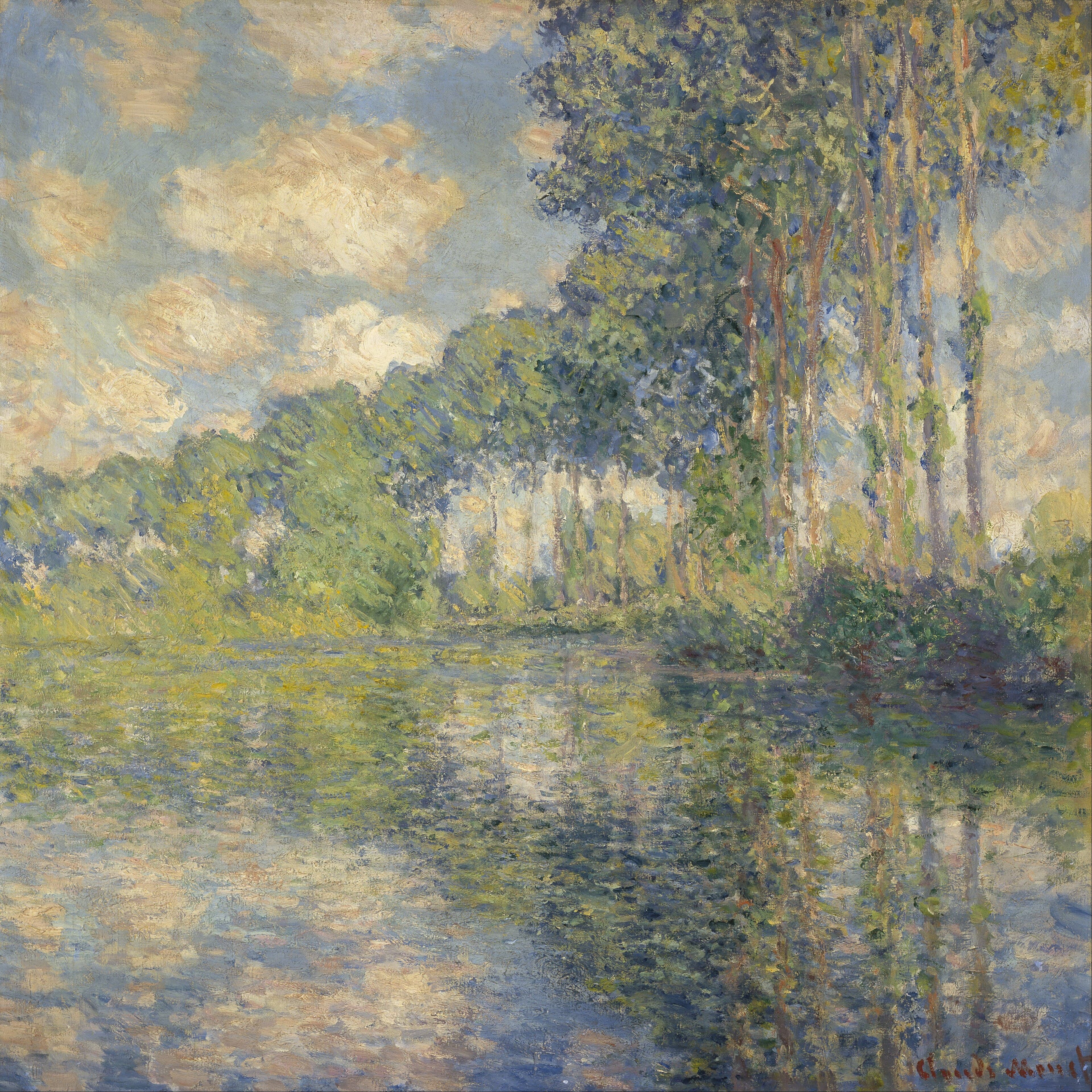
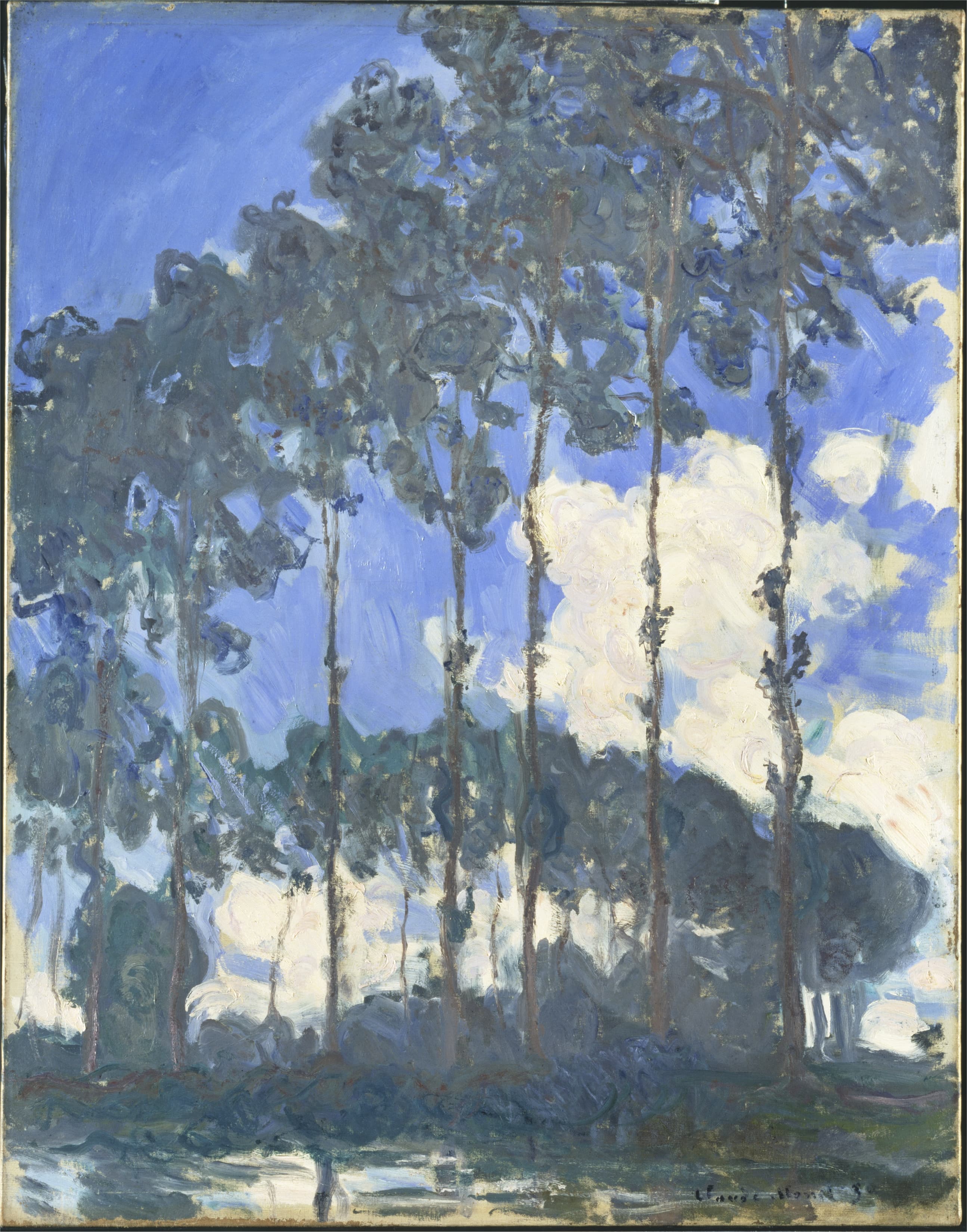
Most canvases in the series are calm. This is one of the few that make wind the subject. Compare the still, mirror-like reflections of Poplars on the Epte at Tate, or the warm autumn color of Poplars, Three Pink Trees, Autumn in Philadelphia and Poplars (Autumn). The composition, with three trunks in front and a slanting row behind, is closest to Three Poplars, Autumn Effect, but here there is no river reflection, and the crowns are thinner and torn by the wind. See the full group in the Poplars series.
Provenance and where to see it
The Orsay records that Paul Durand-Ruel acquired the painting in 1893, and that it remained in his family for a long time before passing to the French state in 2002. It was included in the 2014–15 exhibition Discovering the Impressionists: Paul Durand-Ruel and the New Painting. The painting hangs in the Musée d'Orsay in Paris, which holds one of the most important groups of Monet's work; see Monet at the Musée d'Orsay. For the countryside around his home, see Monet's Giverny.
Questions & answers
Where is Monet's Wind Effect, Series of The Poplars?
It is in the Musée d'Orsay in Paris (RF 2002 30). The French state acquired it in 2002 through a dation, accepting it in payment of inheritance tax; it had long belonged to the family of the dealer Paul Durand-Ruel.
When and where was it painted?
In 1891, on the banks of the Epte near Limetz, a few kilometers upstream from Monet's home at Giverny. It is signed and dated 'Claude Monet 91' at lower right.
What does it show?
It shows three tall poplar trunks in the foreground against a pale lilac sky, with a row of younger poplars behind them bent to the right by the wind, above a strip of green riverbank.
How many Poplars paintings did Monet make?
About two dozen, in the summer and autumn of 1891. Durand-Ruel showed fifteen of them in Paris in 1892, the first exhibition Monet devoted to a single motif.
More by the artist
Claude Monet
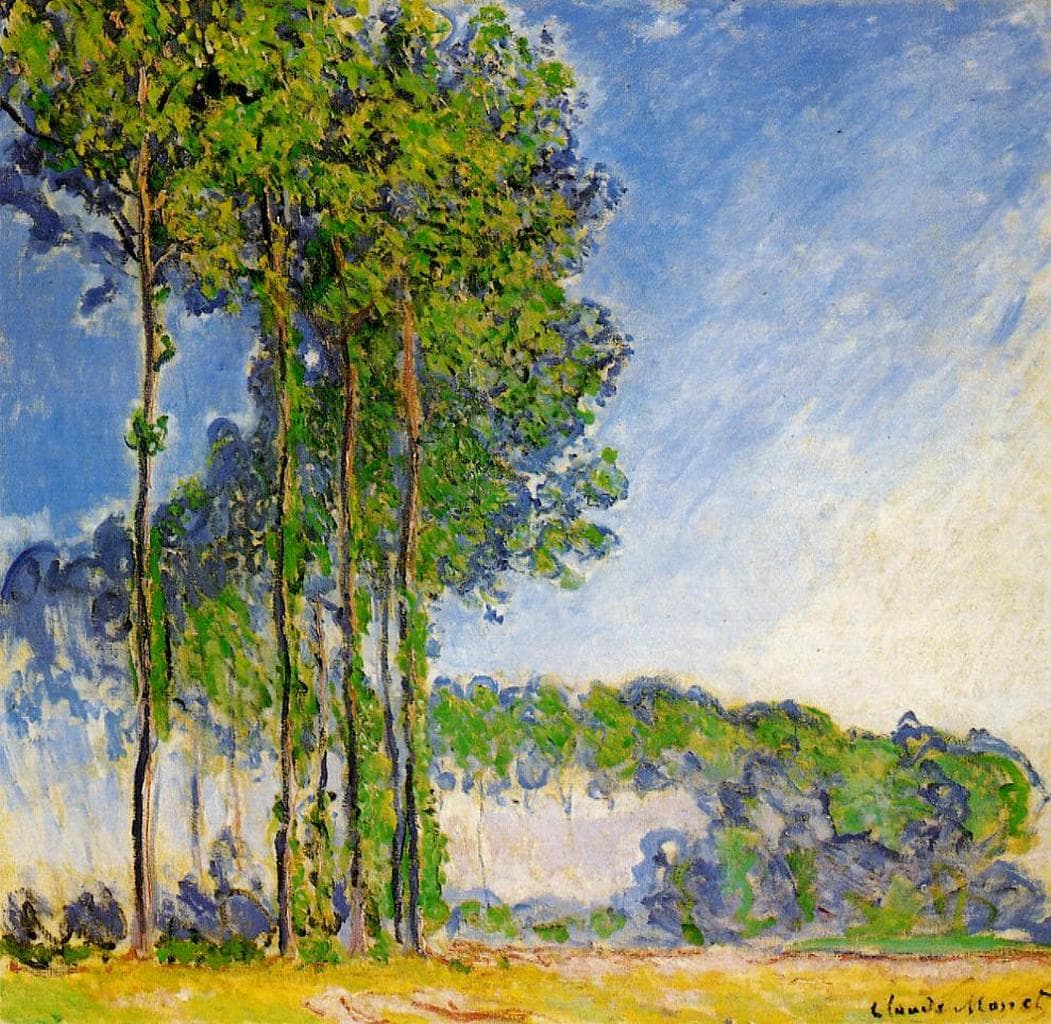
Les Peupliers
Claude Monet · 1891
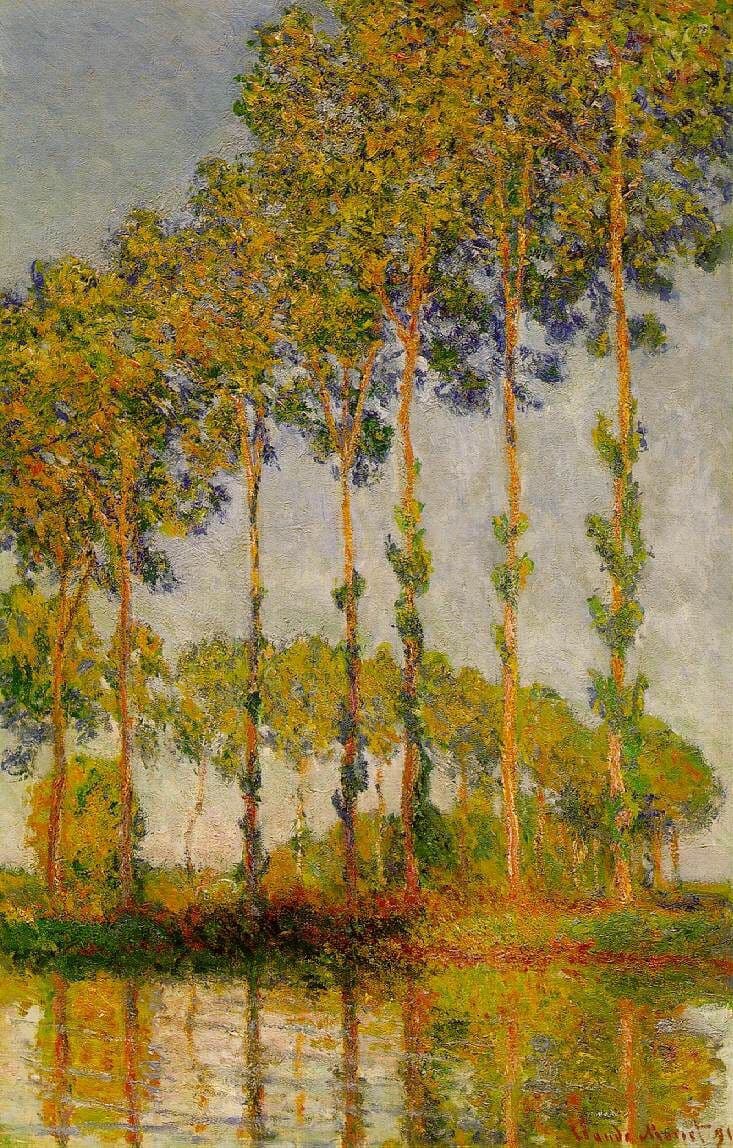
Row of Poplars in Autumn
Claude Monet · 1891
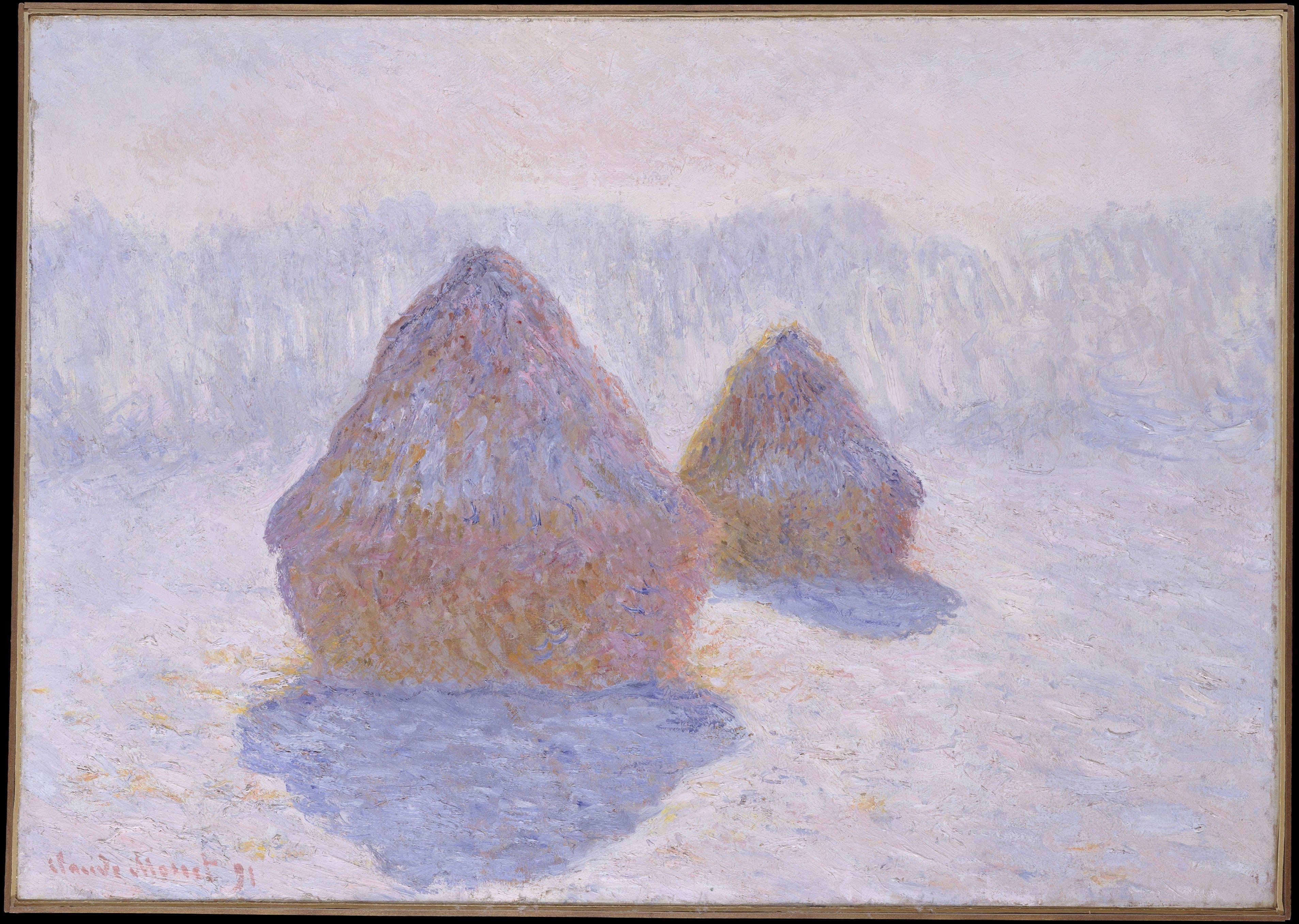
Haystacks (Effect of Snow and Sun)
Claude Monet · 1891
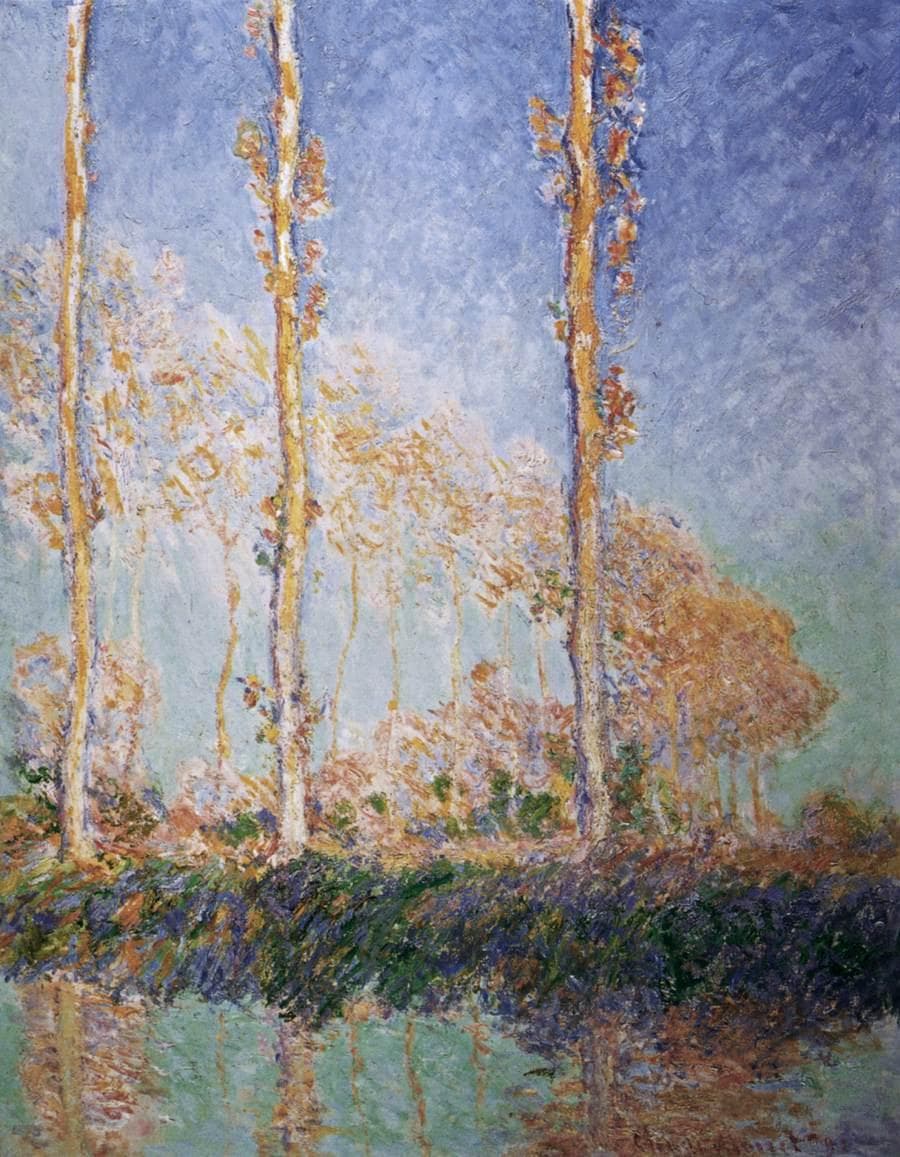
Poplars, Three Pink Trees, Autumn
Claude Monet · 1891
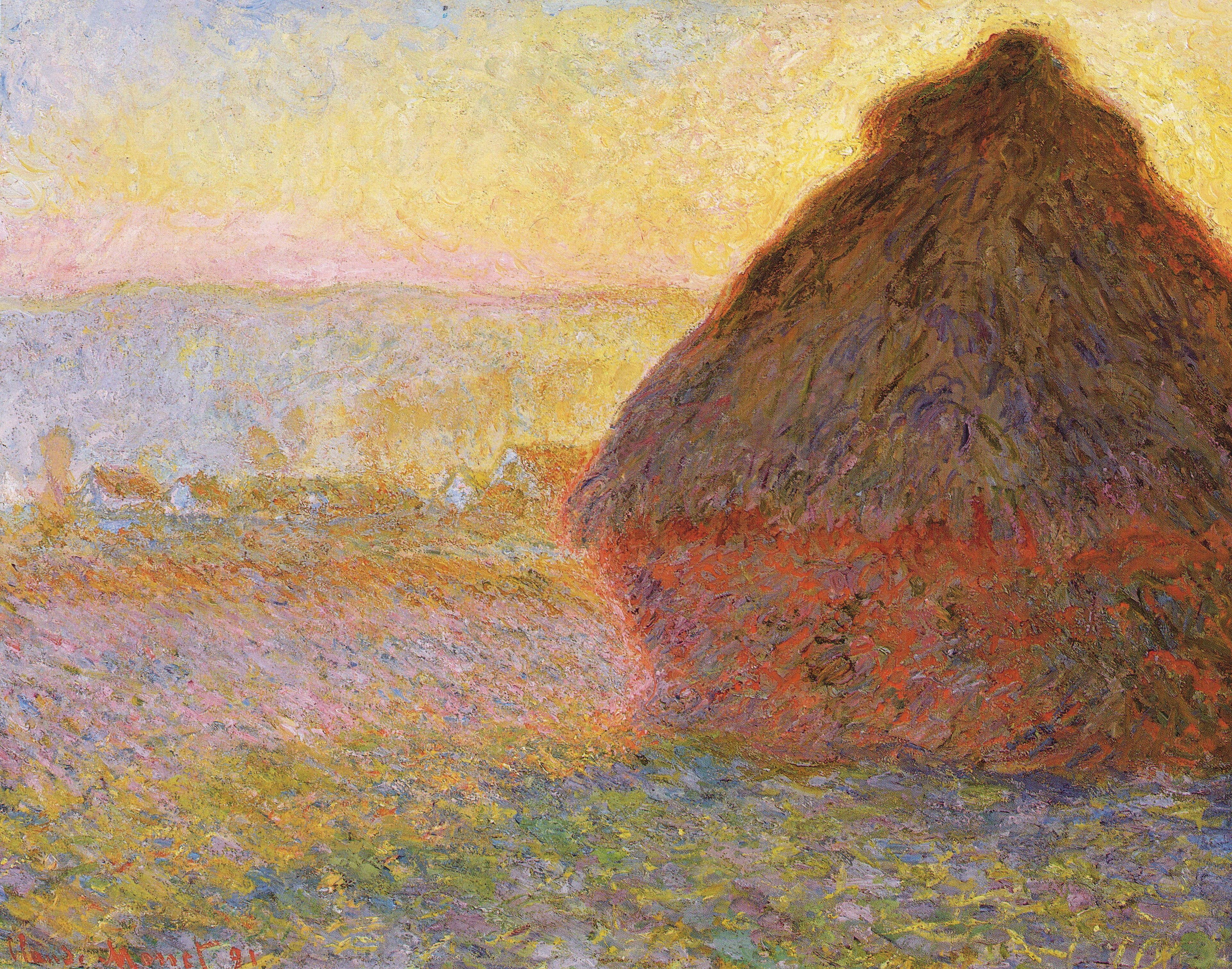
Grainstack (Sunset)
Claude Monet · 1891
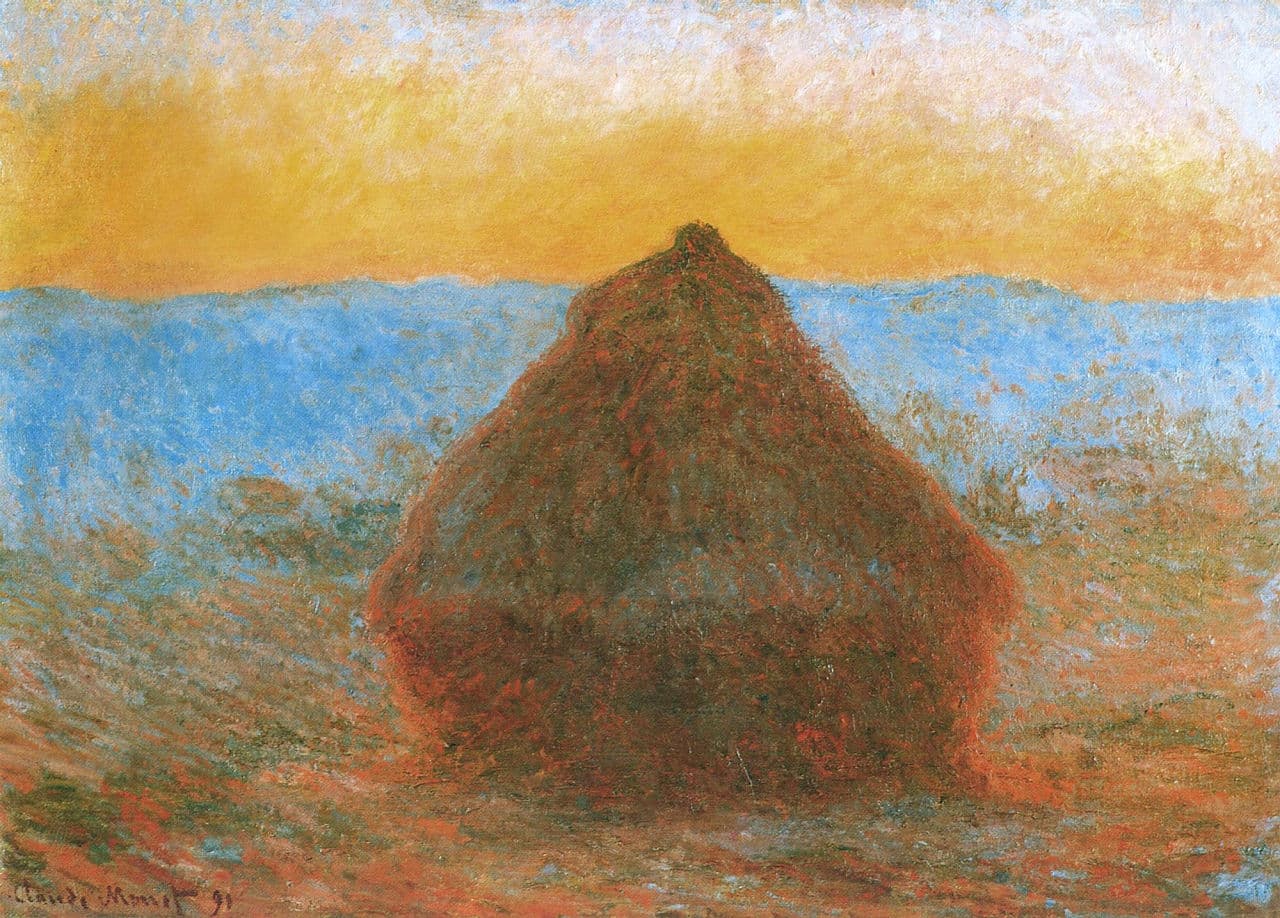
La Meule
Claude Monet · 1891
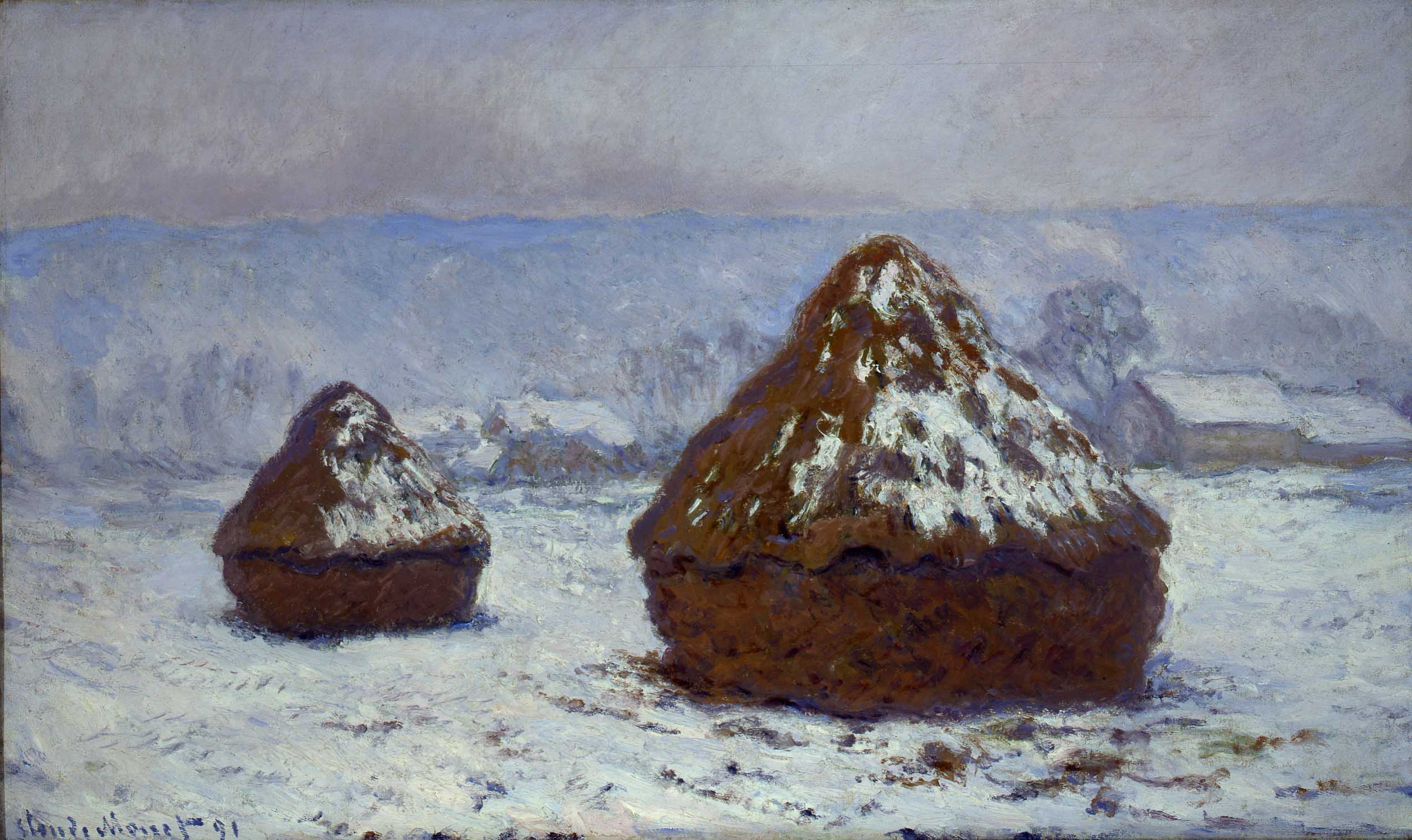
Grainstacks, Snow Effect
Claude Monet · 1891
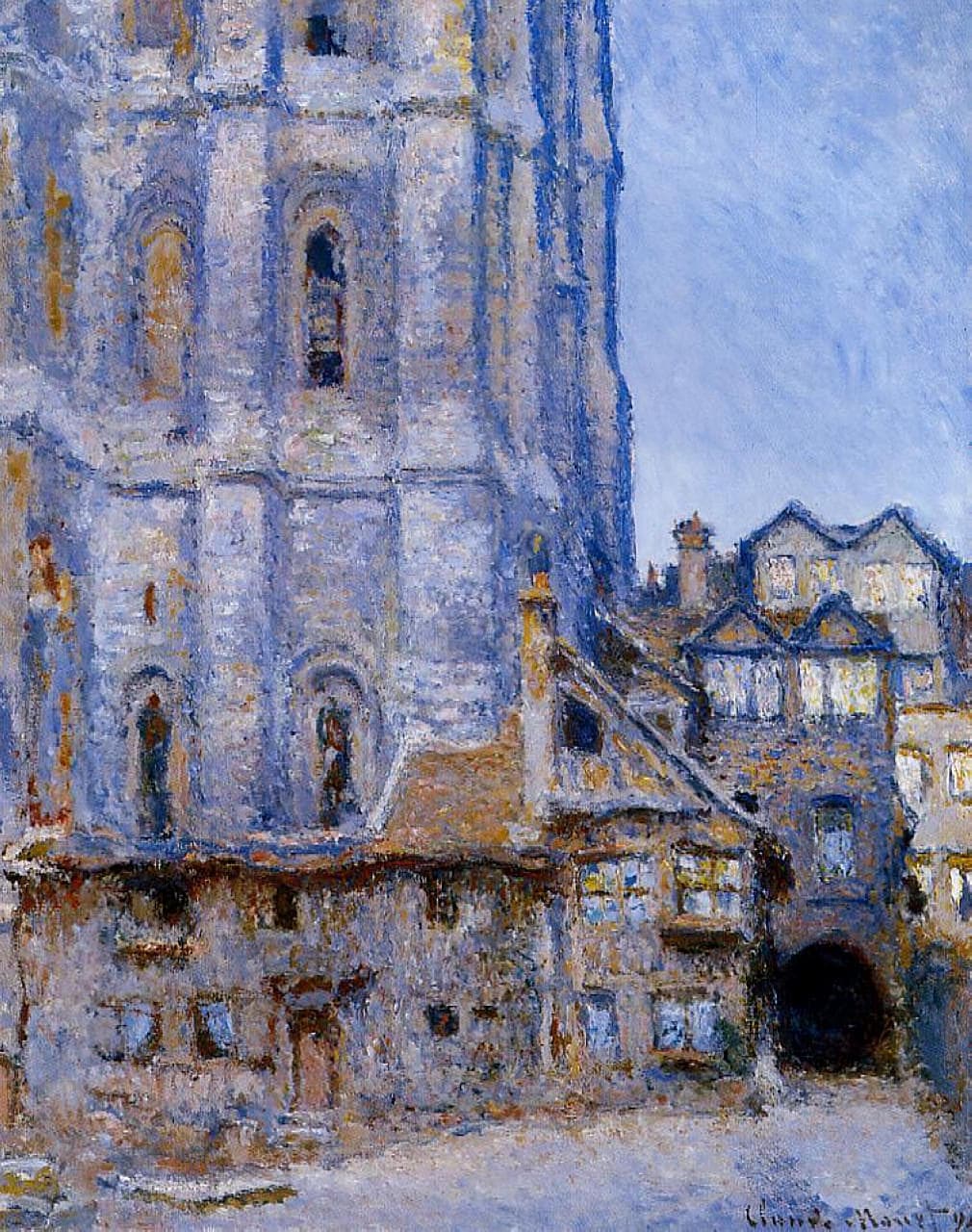
La Cour d'Albane, Rouen
Claude Monet · 1892–94
Also painted in 1891
The same year
Grainstack in Sunlight
Claude Monet · 1891
Poplars on the Epte (Edinburgh)
Claude Monet · 1891
Poplars on the Epte (London)
Claude Monet · 1891
Grainstack, Sun in the Mist
Claude Monet · 1891
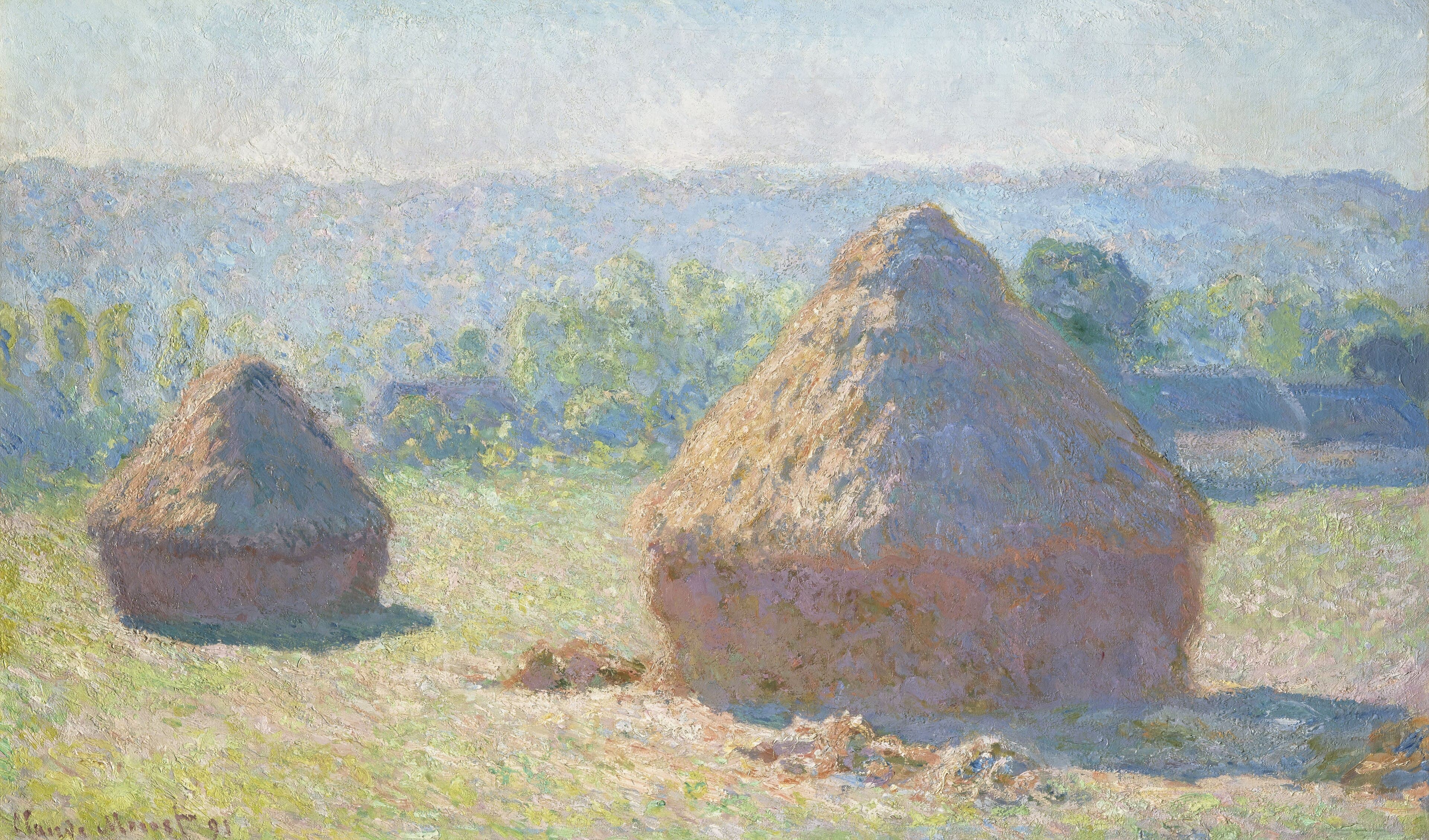
Haystacks, End of Summer
Claude Monet · 1891
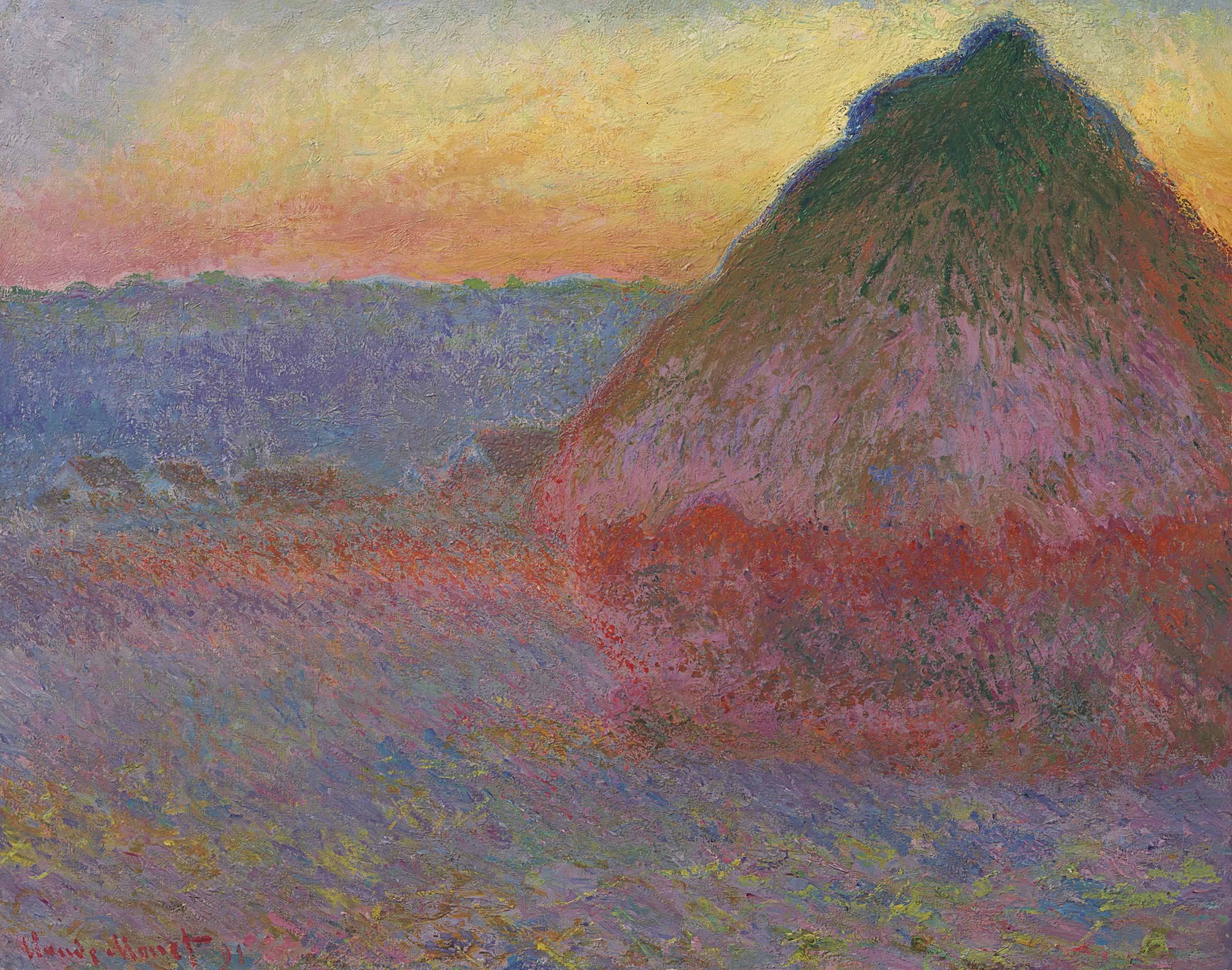
Grainstack in the Sunlight
Claude Monet · 1891
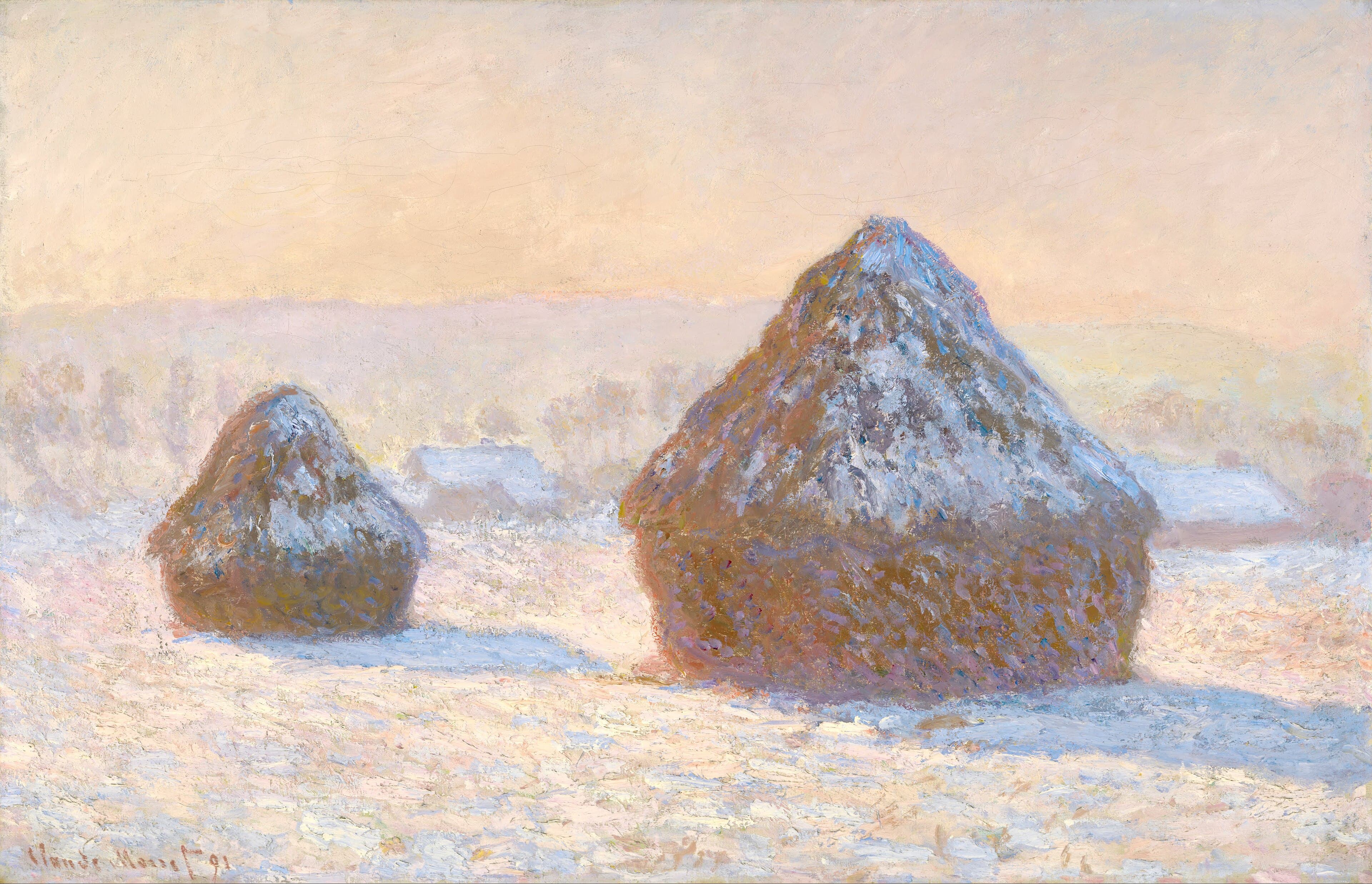
Wheatstacks, Snow Effect, Morning
Claude Monet · 1891
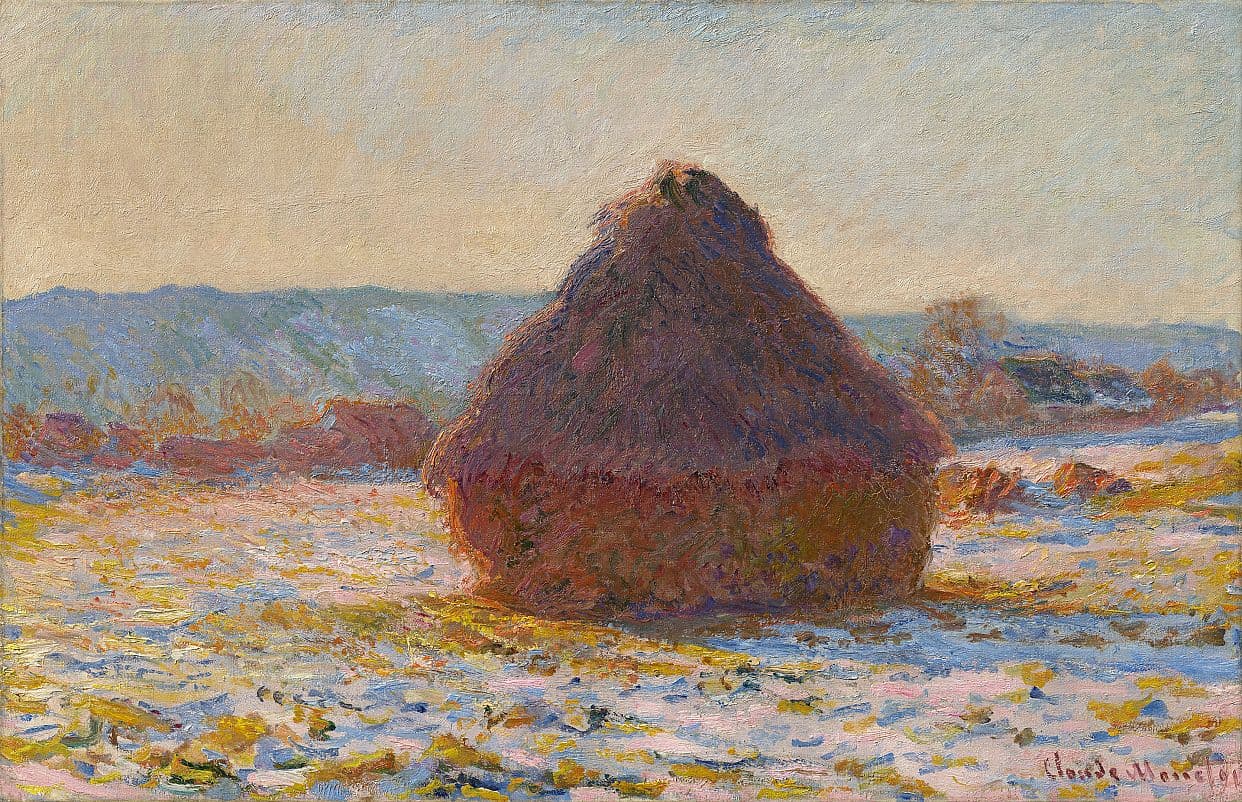
Grainstack in the Sunlight, Snow Effect
Claude Monet · 1891
Kindred works
You may also study
Poplars on the Epte (London)
Claude Monet · 1891
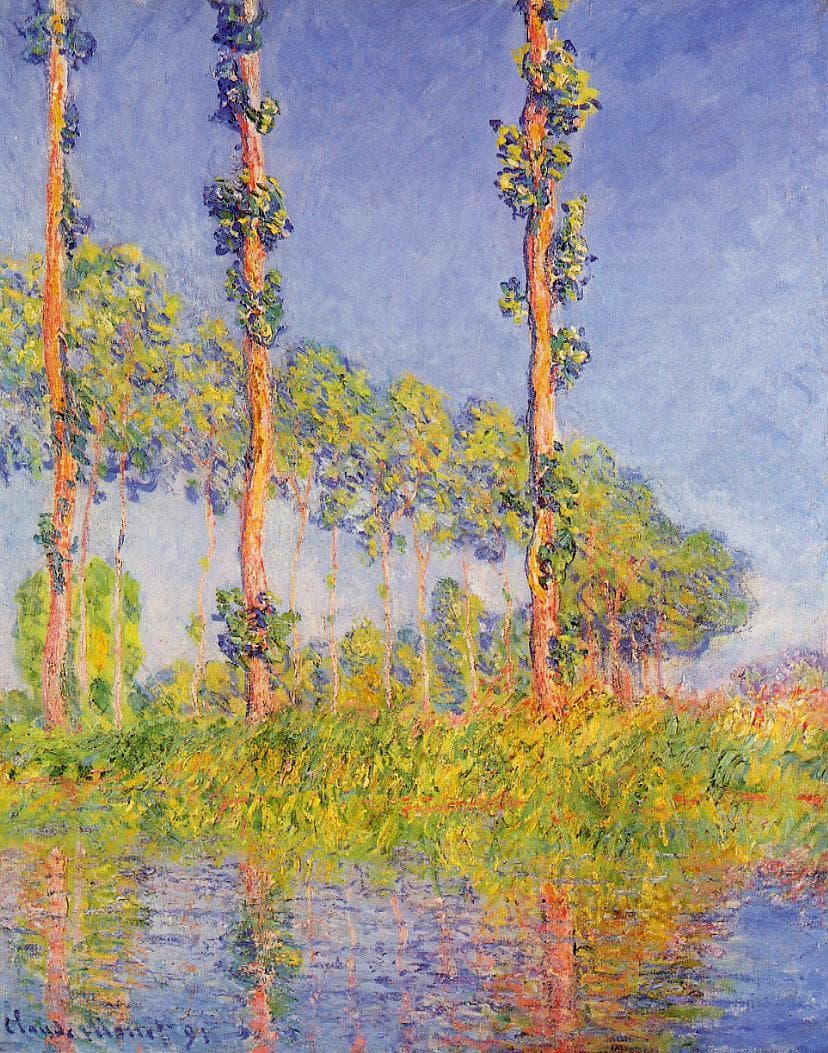
Three Poplars, Autumn Effect
Claude Monet · 1891
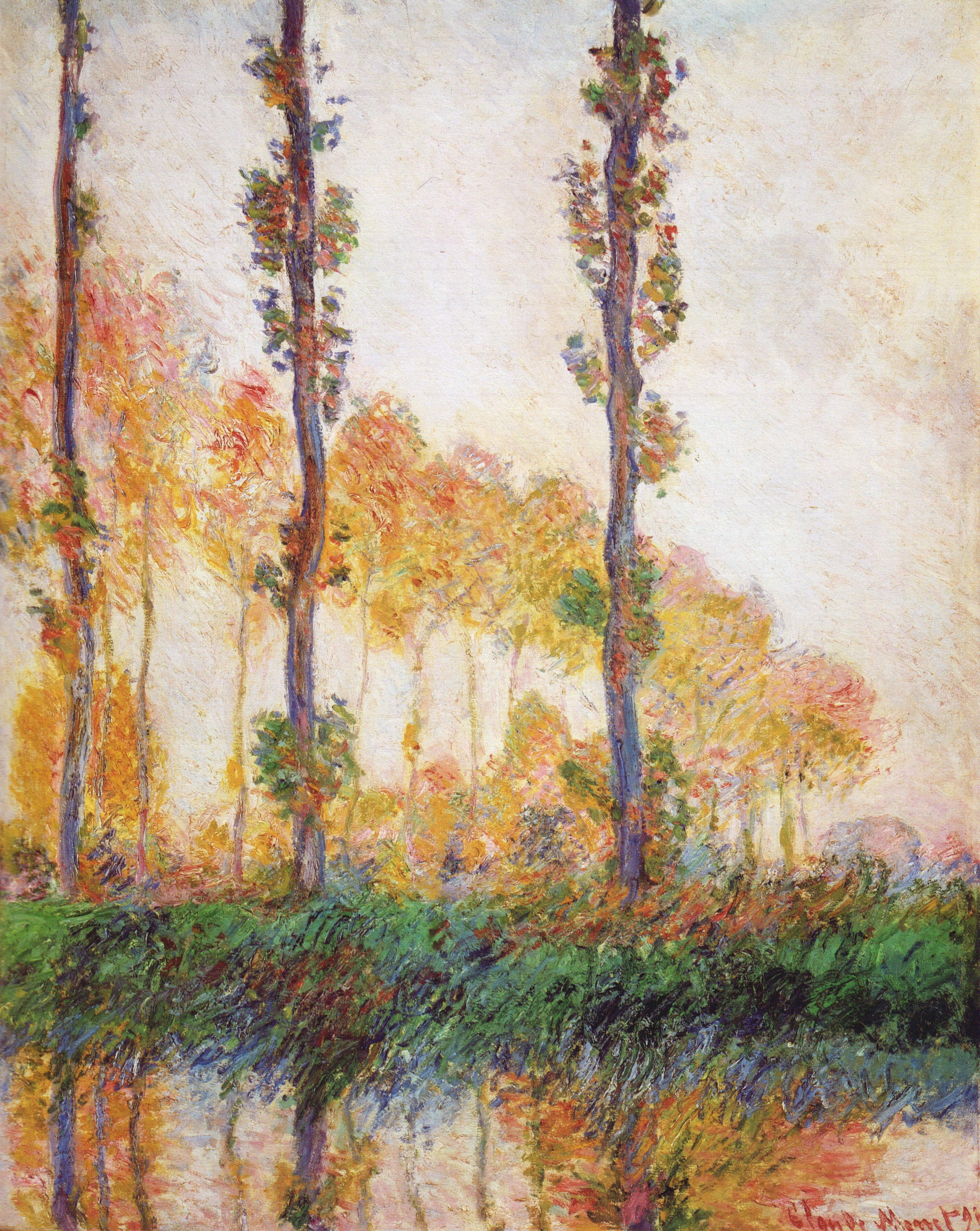
Poplars (Autumn)
Claude Monet · 1891
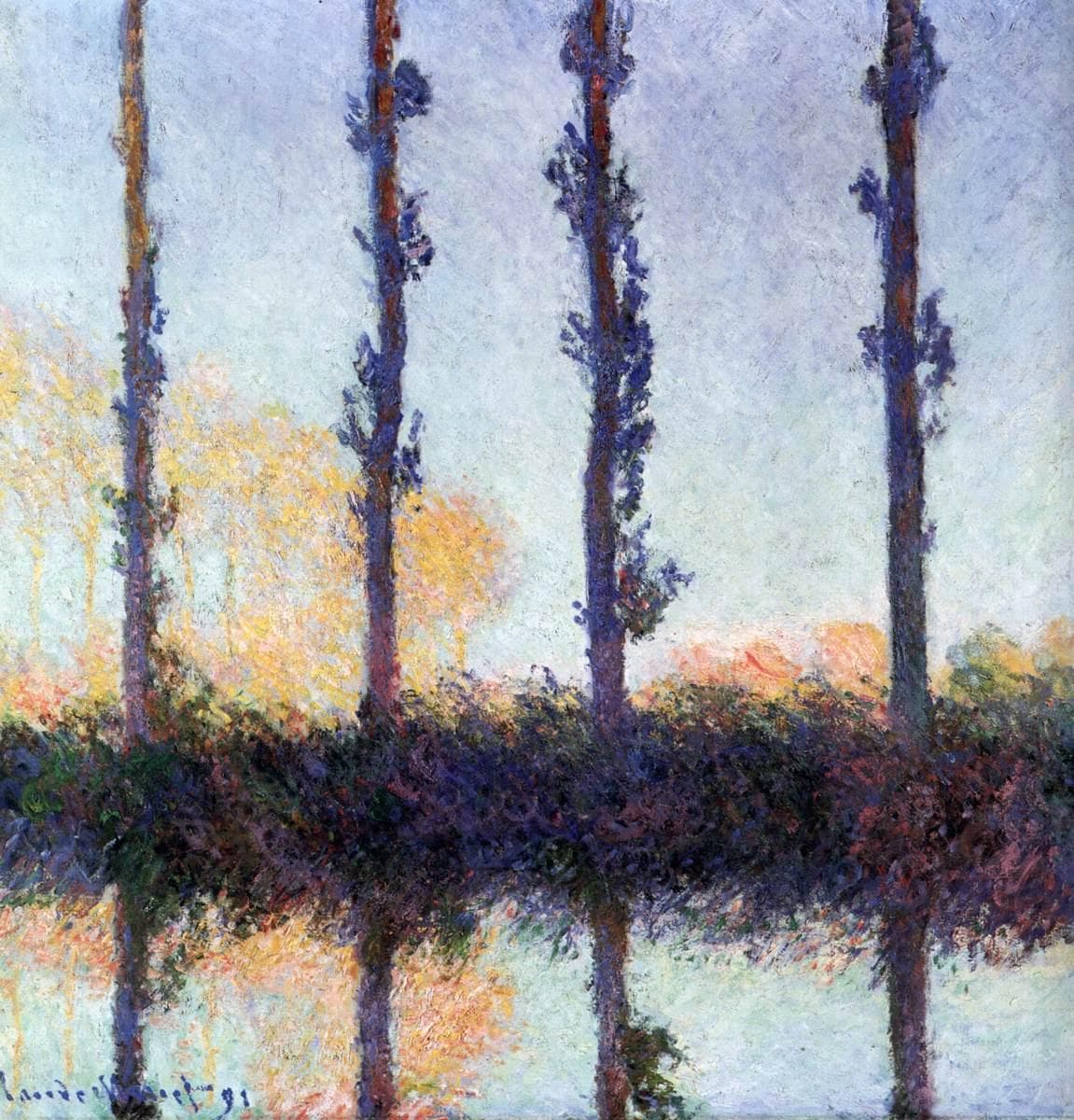
The Four Trees
Claude Monet · 1891
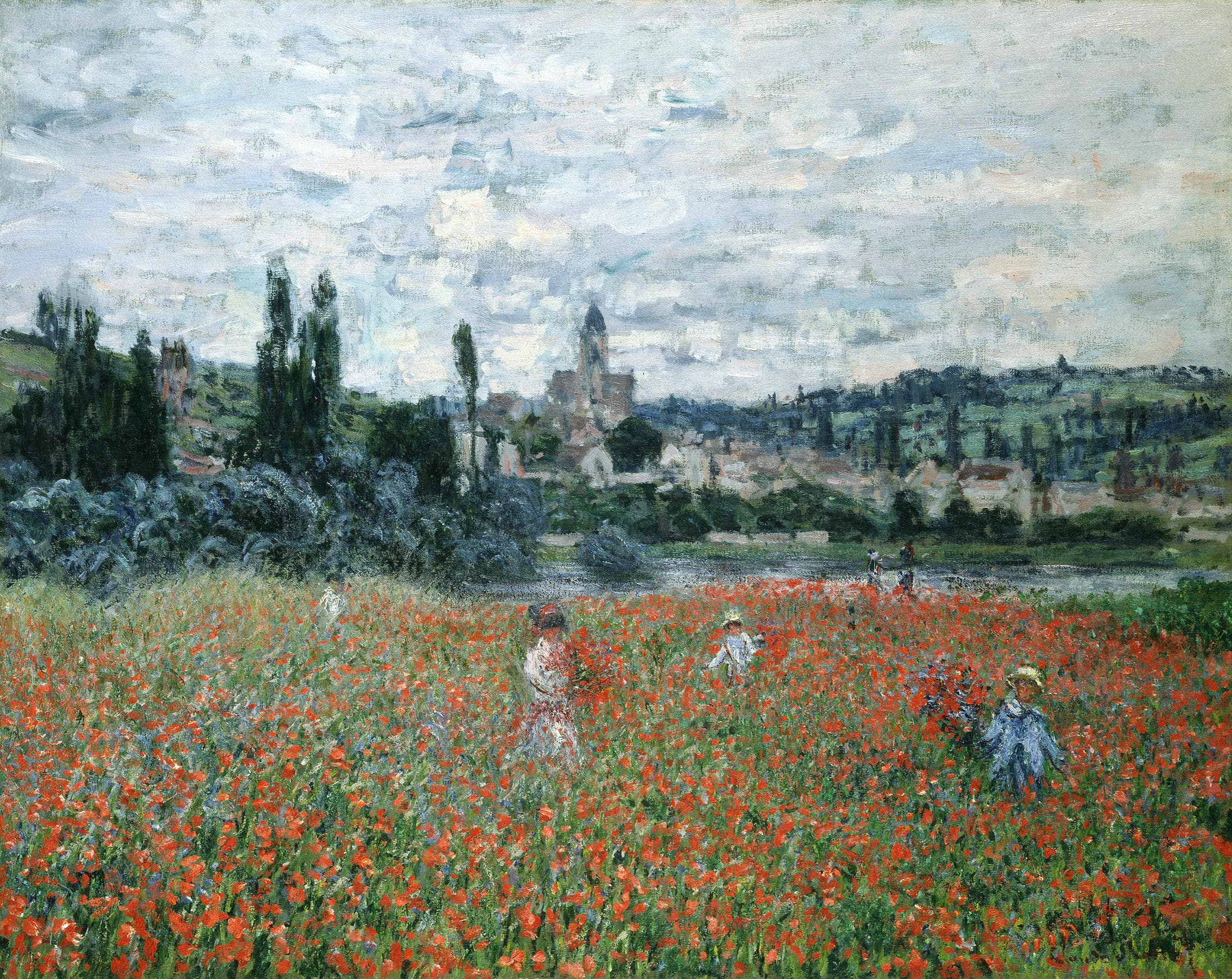
Poppy Field near Vétheuil
Claude Monet · c. 1879
Sunset on the Seine at Lavacourt, Winter Effect
Claude Monet · 1880
The Seine at Rouen
Claude Monet · 1872
Fécamp, by the Sea
Claude Monet · 1881