Image: Museum Barberini, Potsdam (Hasso Plattner Collection) · Public domain · via Wikimedia Commons
Grainstack in the Sunlight, Snow Effect
Claude Monet, 1891
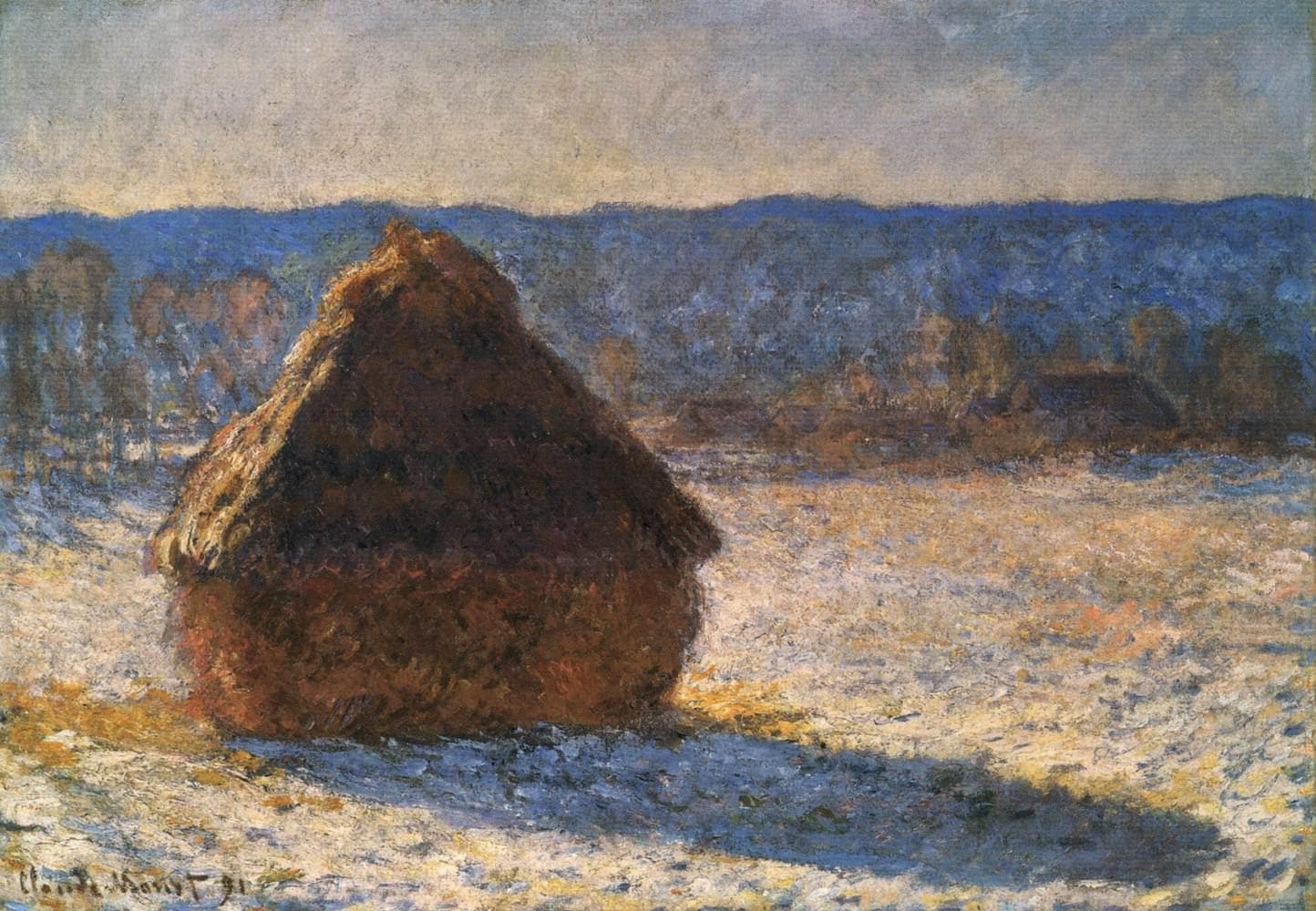
Grainstack in the Sunlight, Snow Effect is an 1891 painting by Claude Monet of a single wheat stack in a thawing, sunlit snowy field at Giverny. It belongs to the Hasso Plattner Collection at the Museum Barberini, Potsdam.
- Artist
- Claude Monet
- Date
- 1891
- Medium
- Oil on canvas
- Dimensions
- 65 × 100 cm
- Collection
- Museum Barberini (Hasso Plattner Collection), Potsdam, Germany
- Movement
- Impressionism
- Catalogue
- Wildenstein 1287
- Nature & Landscape
Grainstack in the Sunlight, Snow Effect (Meule, effet de neige, soleil) is a painting by Claude Monet, signed and dated "Claude Monet 91" at lower right. It shows one stack of wheat in the field beside his house at Giverny on a bright winter day, with thin snow lit by a low sun. The canvas measures 65 by 100 centimeters and belongs to the Hasso Plattner Collection at the Museum Barberini in Potsdam, Germany (inventory MB-Mon-27). Wildenstein lists it as number 1287.
What you're looking at
The stack stands at the center of the canvas, a wide, heavy cone with a small knot of straw at the peak. The sun is low and slightly behind it to the left, so the stack is mostly in shade, a warm, dark mass of brick red, plum and brown. Its edges glow: along the left flank and the cap, a thin line of orange shows where light passes through the straw.
The snow is thin. In the foreground it breaks into a patchwork of white, pink and pale blue, through which tufts of stubble show in bright yellow and ocher. The yellow is so strong that it reads as reflected sunlight, and the museum points to exactly this play of yellow and orange reflections on the snowy field. The stack's shadow falls toward the viewer in a soft band of blue.
Behind the stack the field runs back to a row of low red-brown farm buildings at left, and at right a cluster of roofs and a bare tree in rust and pink. A long ridge of blue hills, streaked with white, crosses the canvas. The sky is a smooth, pale peach that warms toward the horizon.
Sun on snow: what makes this version distinct
Single-stack snow pictures form a small group within the series. Compared with Boston's Grainstack (Snow Effect), which is also a lone stack in thin snow, this canvas is brighter and more broken: the snow is patchy, the stubble shows through everywhere, and the yellow of the light dominates. Compared with the Getty's Wheatstacks, Snow Effect, Morning, it trades misty softness for clarity; the hills and buildings are crisp. It feels like a day of thaw, with the sun doing work on the snow.
How it was painted
The museum's text stresses that the picture grew from open-air study and later studio reworking, the method Monet used for the whole series. The snow is laid in short, flat, separate dabs, many of them pure or nearly pure color, so that the foreground reads as a mosaic of white, blue, pink and yellow. The stack is built from longer, layered strokes that follow its form. The sky is smooth and quiet, giving the eye somewhere to rest.
Around 1890, Monet began to organize his work deliberately into coordinated groups, and the stacks were the first. He was, as the museum quotes him, indifferent to the motif itself; what interested him was the light and air around it.
Provenance and the Hasso Plattner Collection
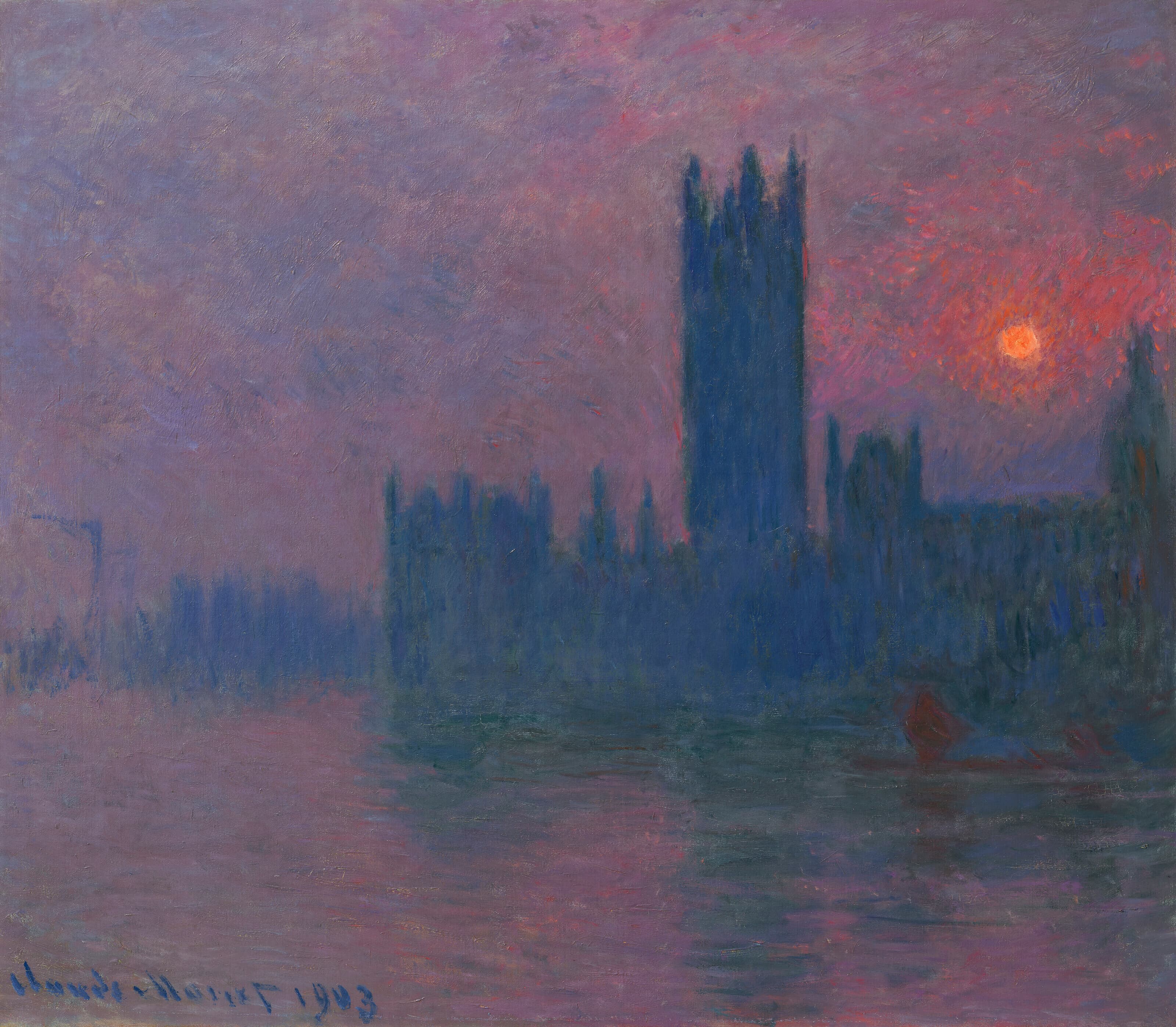
According to the museum, Monet sold the canvas to his dealer Paul Durand-Ruel on May 9, 1891, the day the stacks exhibition opened. It descended privately in France, entered the art trade in 2000 and was acquired by Hasso Plattner, the co-founder of the software company SAP. His collection of Impressionist pictures, one of the largest outside France, is shown at the Museum Barberini, which opened in Potsdam in 2017. It also includes the London picture Houses of Parliament, Sunset.
Details to look for
The knot of straw at the top of the stack is painted in a few dark strokes, the point where the stack was tied off. Around the base, the snow has melted back, and Monet paints a ring of bare, warm ground in orange and brown. At far right, behind the stack, two small piles of red-brown straw or earth echo its color across the field.
Where to see it
The painting is in the Museum Barberini in Potsdam, near Berlin, as part of the permanent display of the Hasso Plattner Collection. See our Haystacks series hub, Where to See Monet, Giverny and Claude Monet.
Questions & answers
Where is Monet's Grainstack in the Sunlight, Snow Effect?
It is in the Museum Barberini in Potsdam, Germany, as part of the Hasso Plattner Collection, inventory number MB-Mon-27. The collection is one of the largest groups of Impressionist paintings outside France and is on permanent display.
When and where was it painted?
Monet painted it in the field next to his house at Giverny during the winter of 1890–91 and dated it 1891. He sold it to Paul Durand-Ruel on May 9, 1891, the day his stacks exhibition opened in Paris.
What does the painting show?
A single wheat stack in thin, patchy snow on a sunny winter day. The low sun behind it leaves the stack dark red and plum with glowing edges, while yellow stubble and pink and blue snow fill the foreground beneath a pale peach sky.
How does it differ from other snowy grainstacks?
It is brighter and more broken than most. The snow is thin, yellow stubble shows through, and the light is clear rather than misty, so it reads as a day of thaw rather than the deep cold of the Getty or Met versions.
More by the artist
Claude Monet
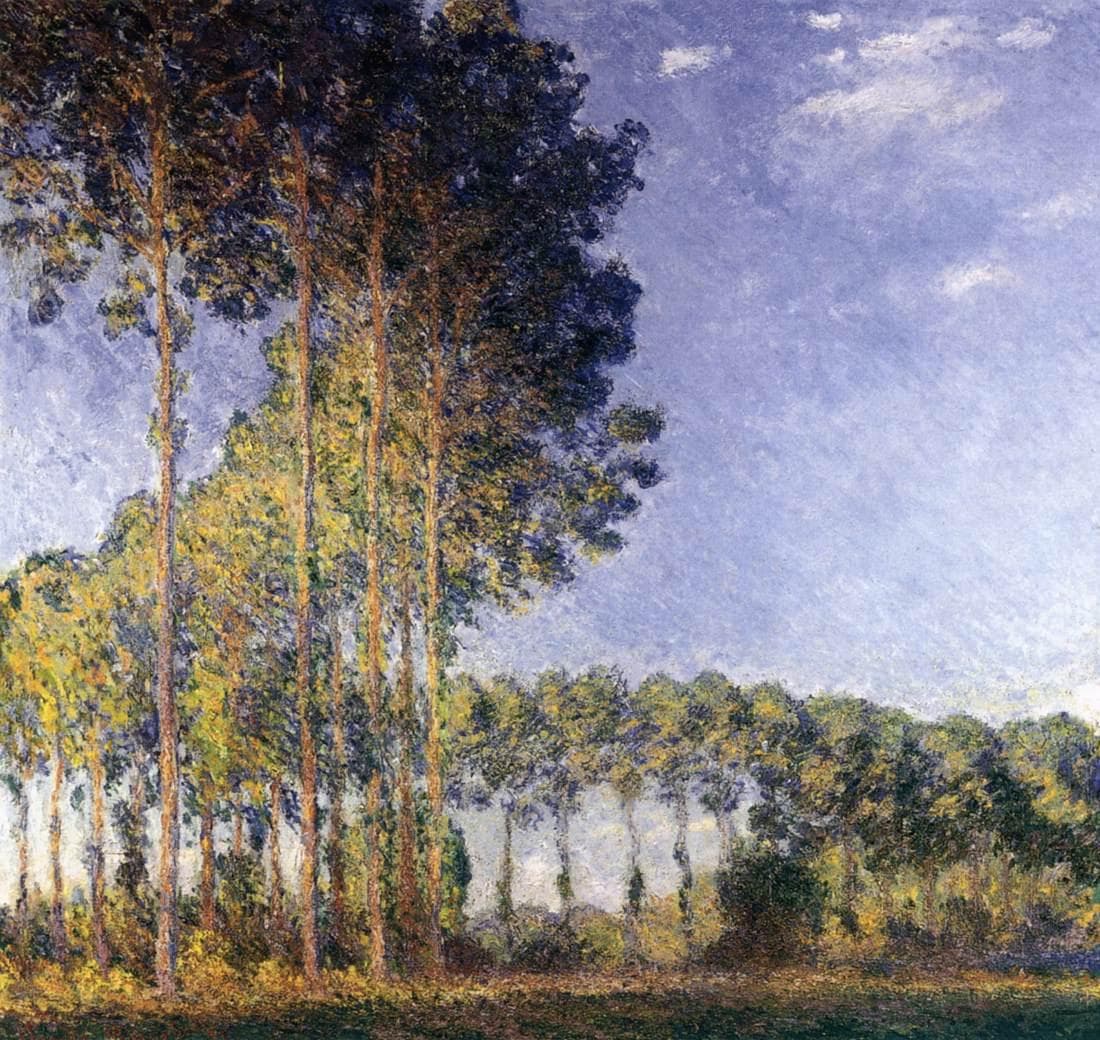
Poplars at the Banks of Epte
Claude Monet · 1891–92
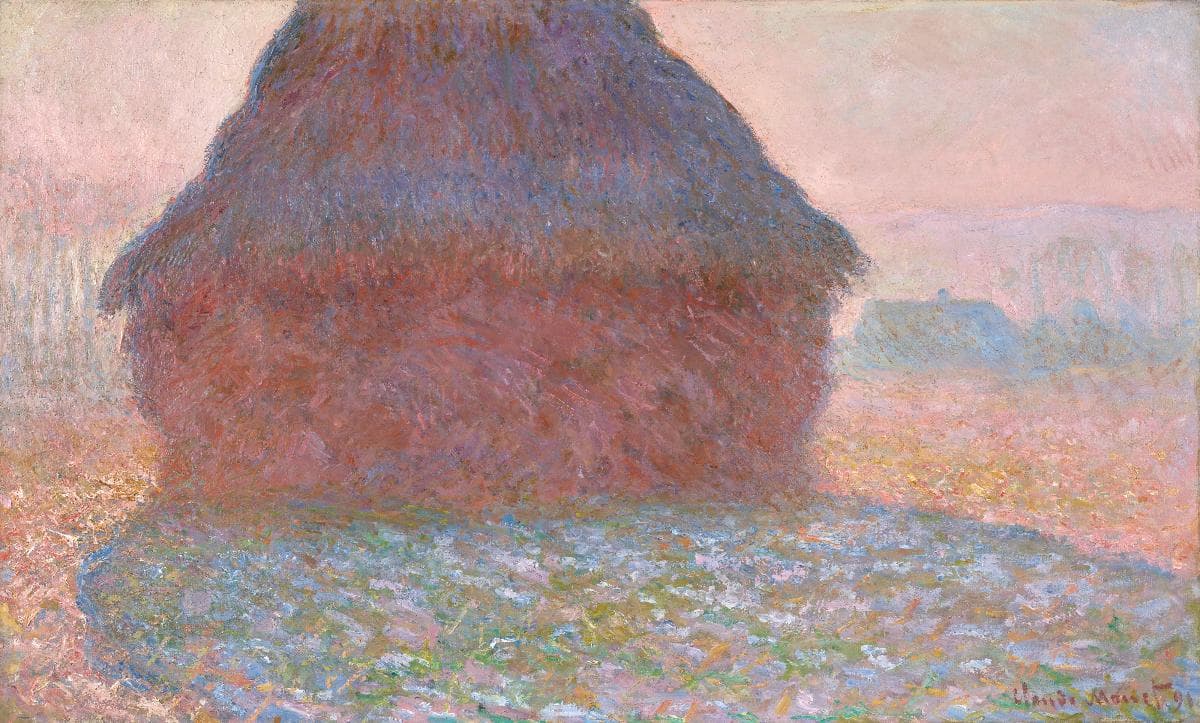
Grainstack in Sunlight
Claude Monet · 1891
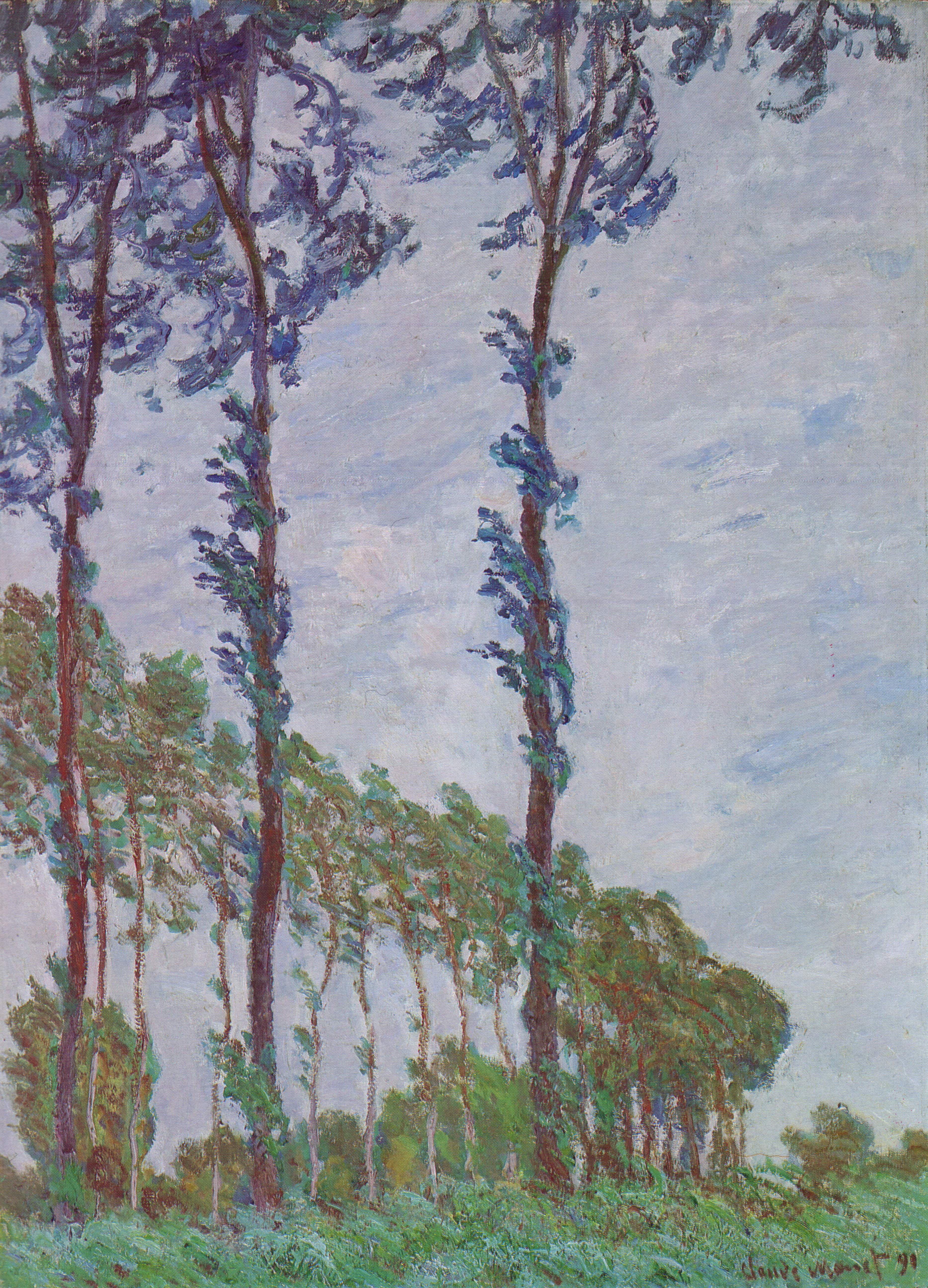
Wind Effect, Series of The Poplars
Claude Monet · 1891
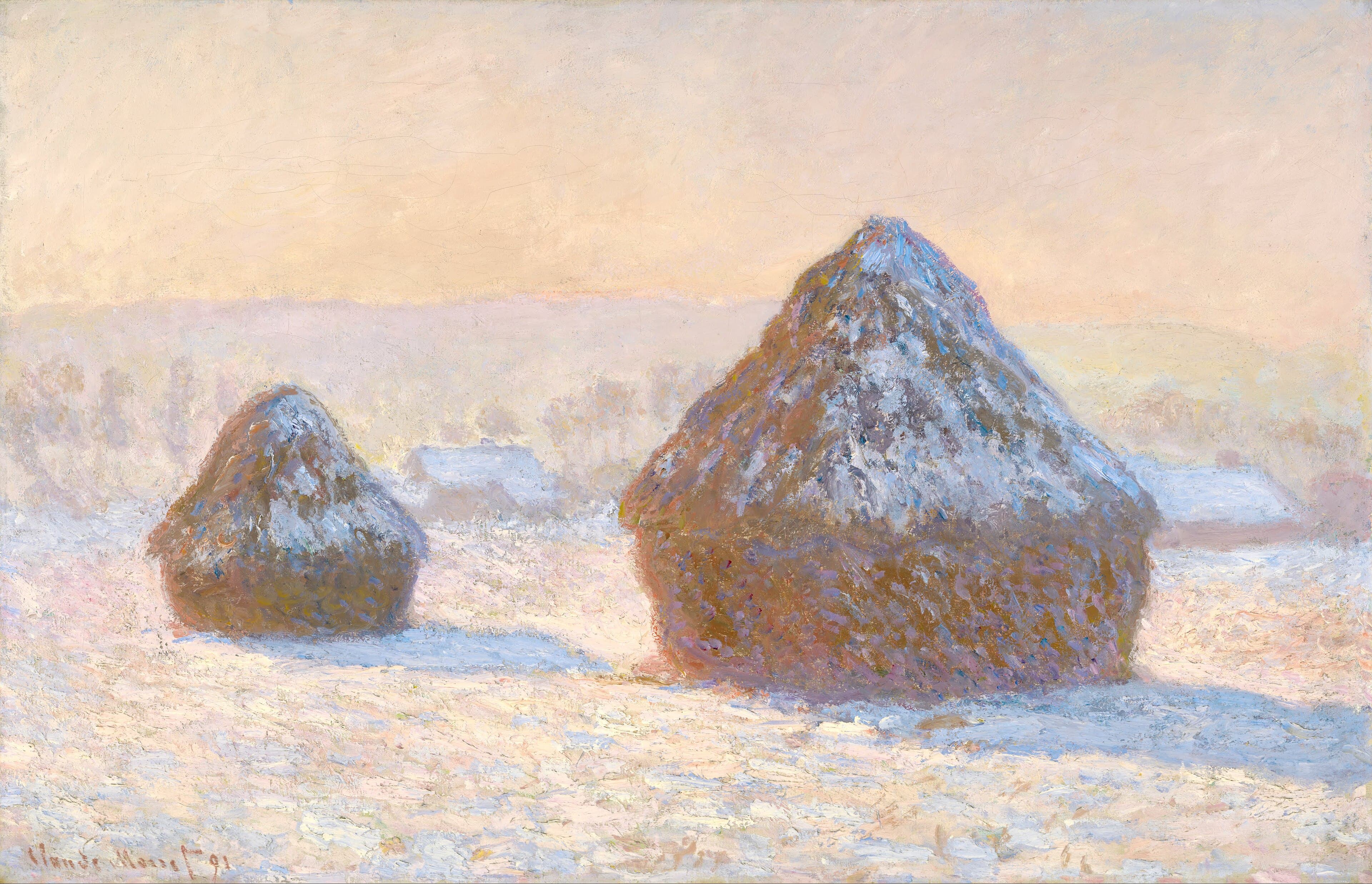
Wheatstacks, Snow Effect, Morning
Claude Monet · 1891
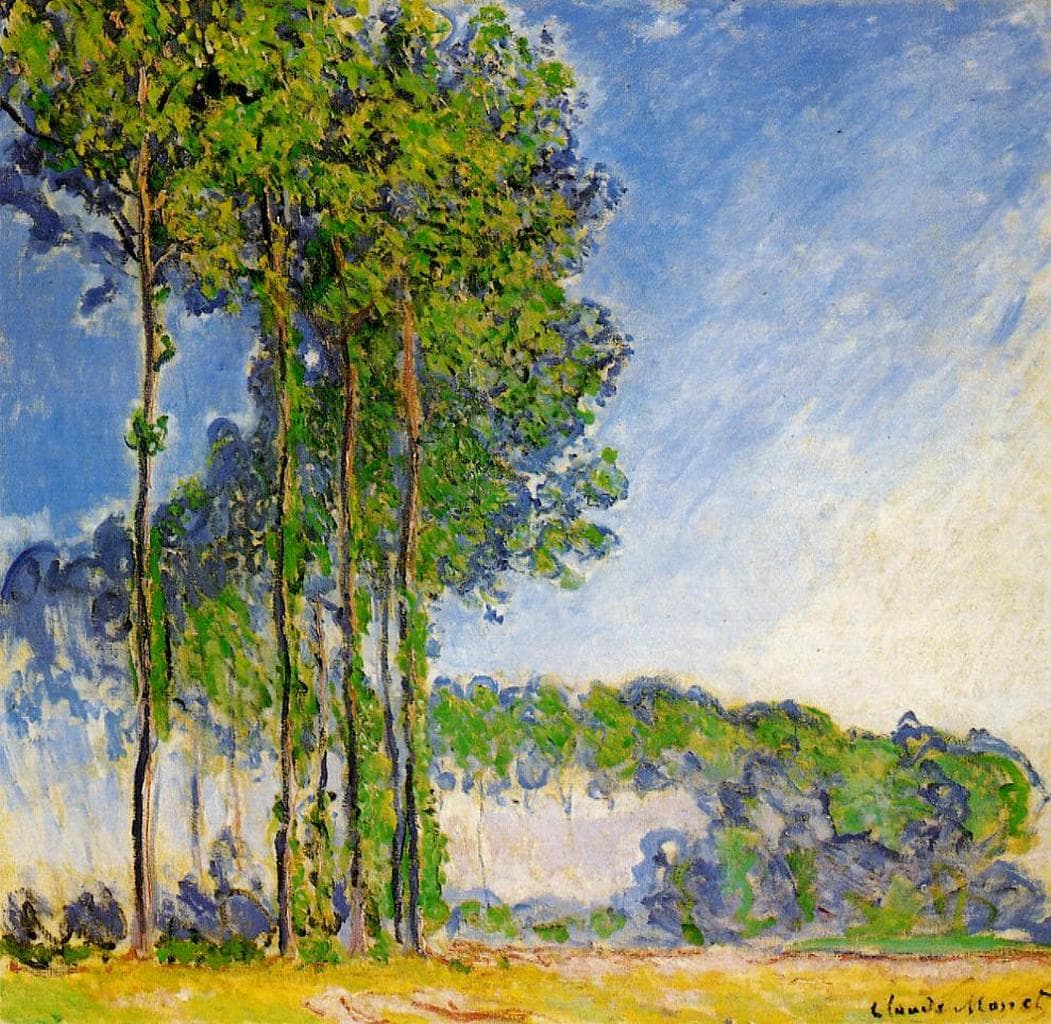
Les Peupliers
Claude Monet · 1891
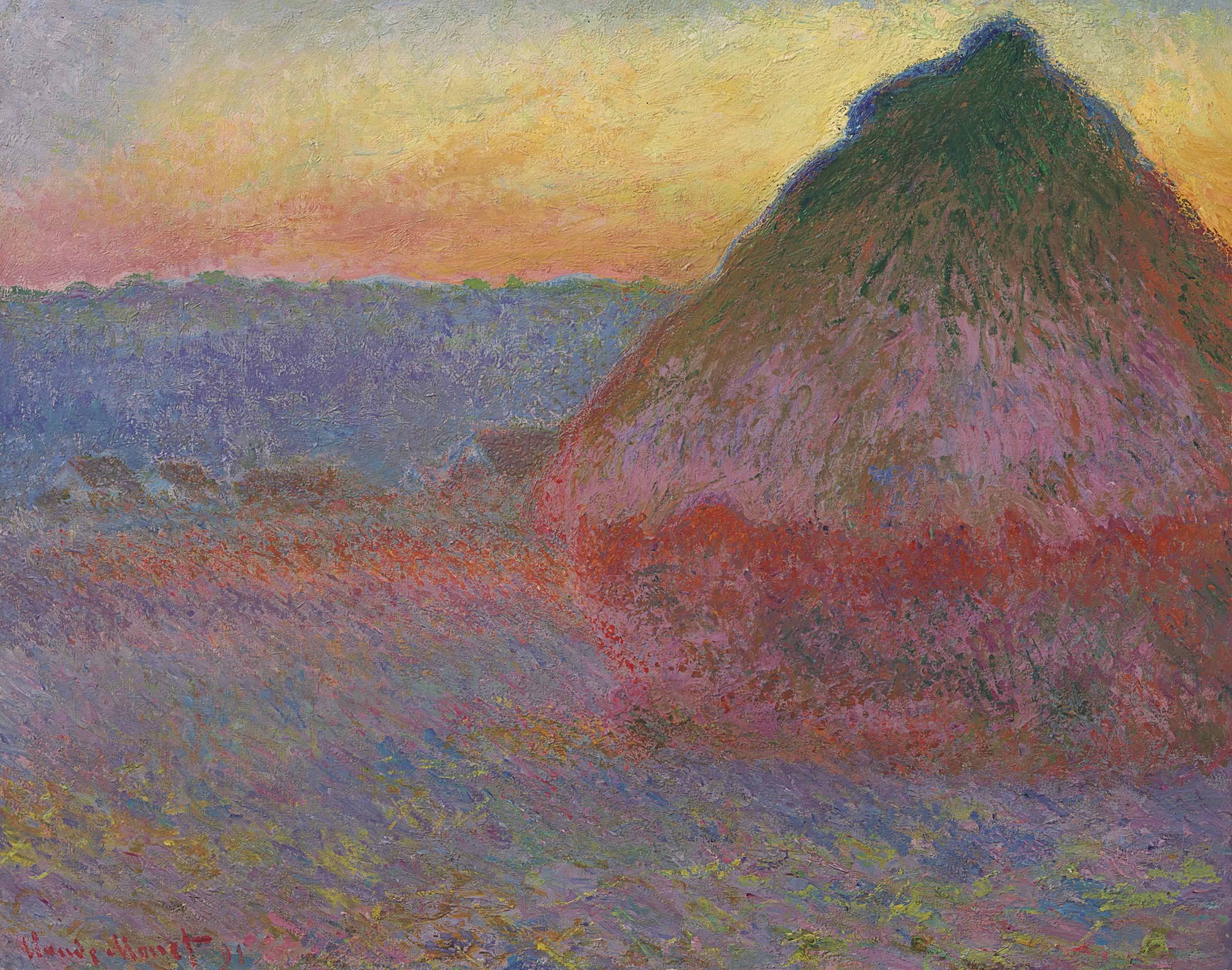
Grainstack in the Sunlight
Claude Monet · 1891
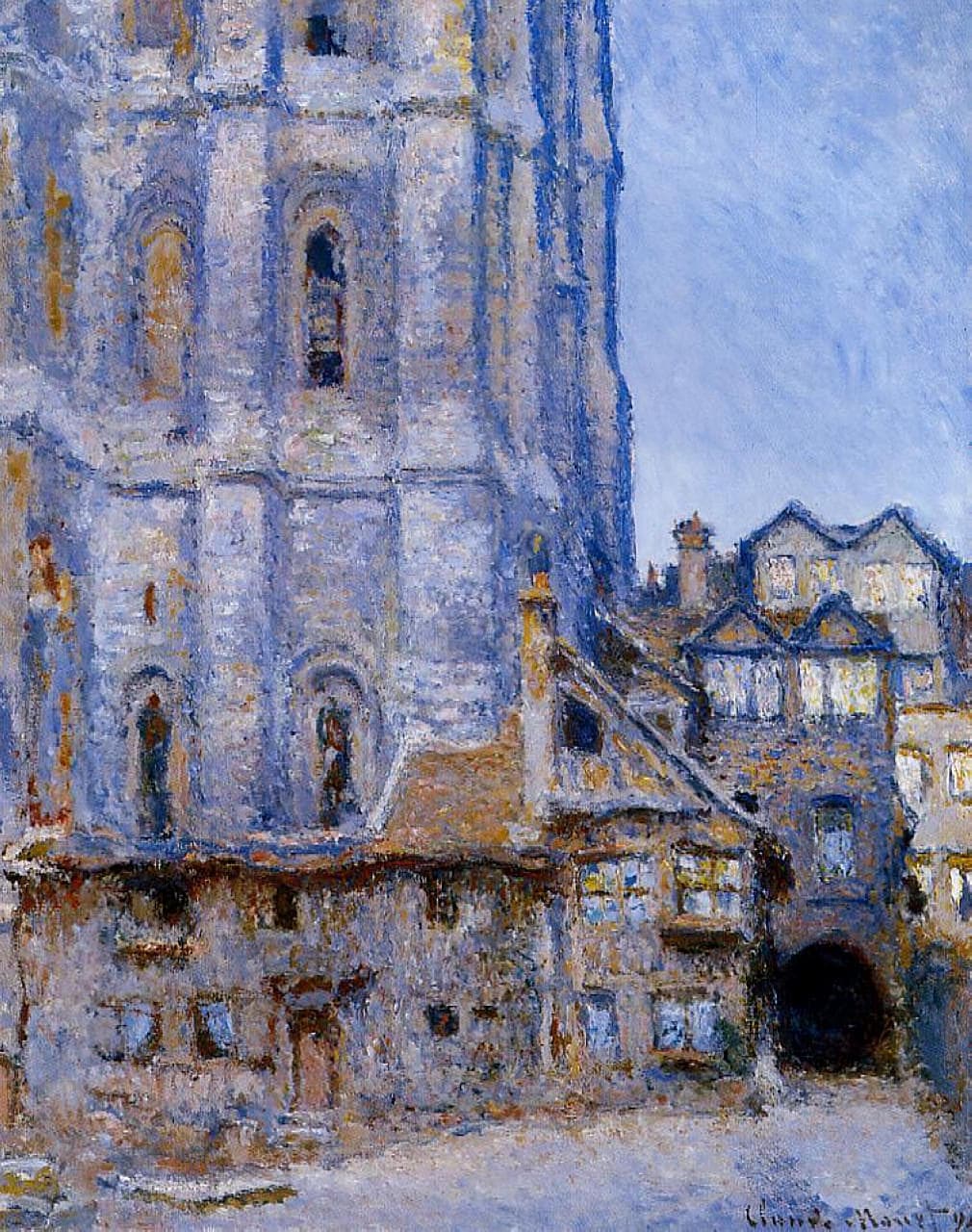
La Cour d'Albane, Rouen
Claude Monet · 1892–94
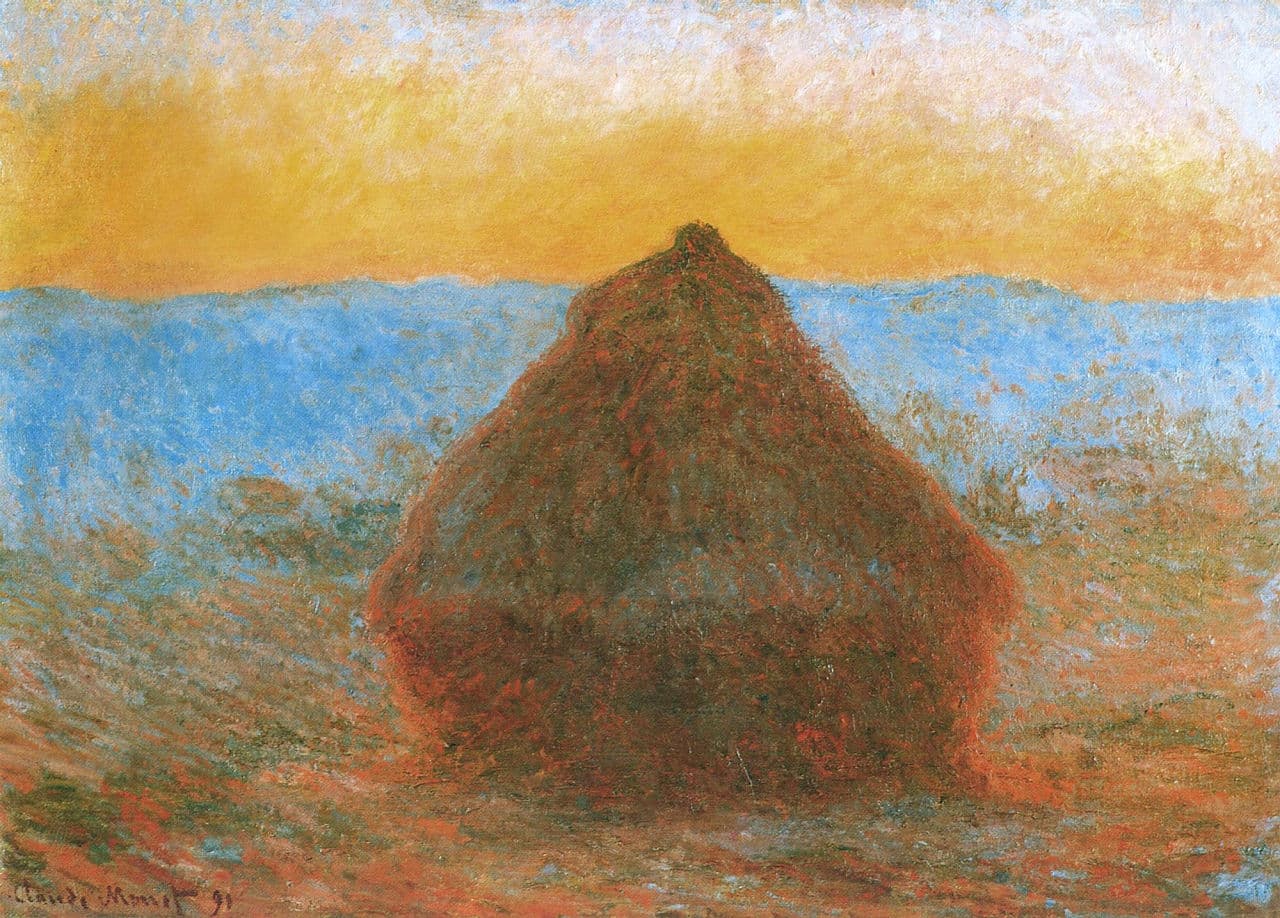
La Meule
Claude Monet · 1891
Also painted in 1891
The same year
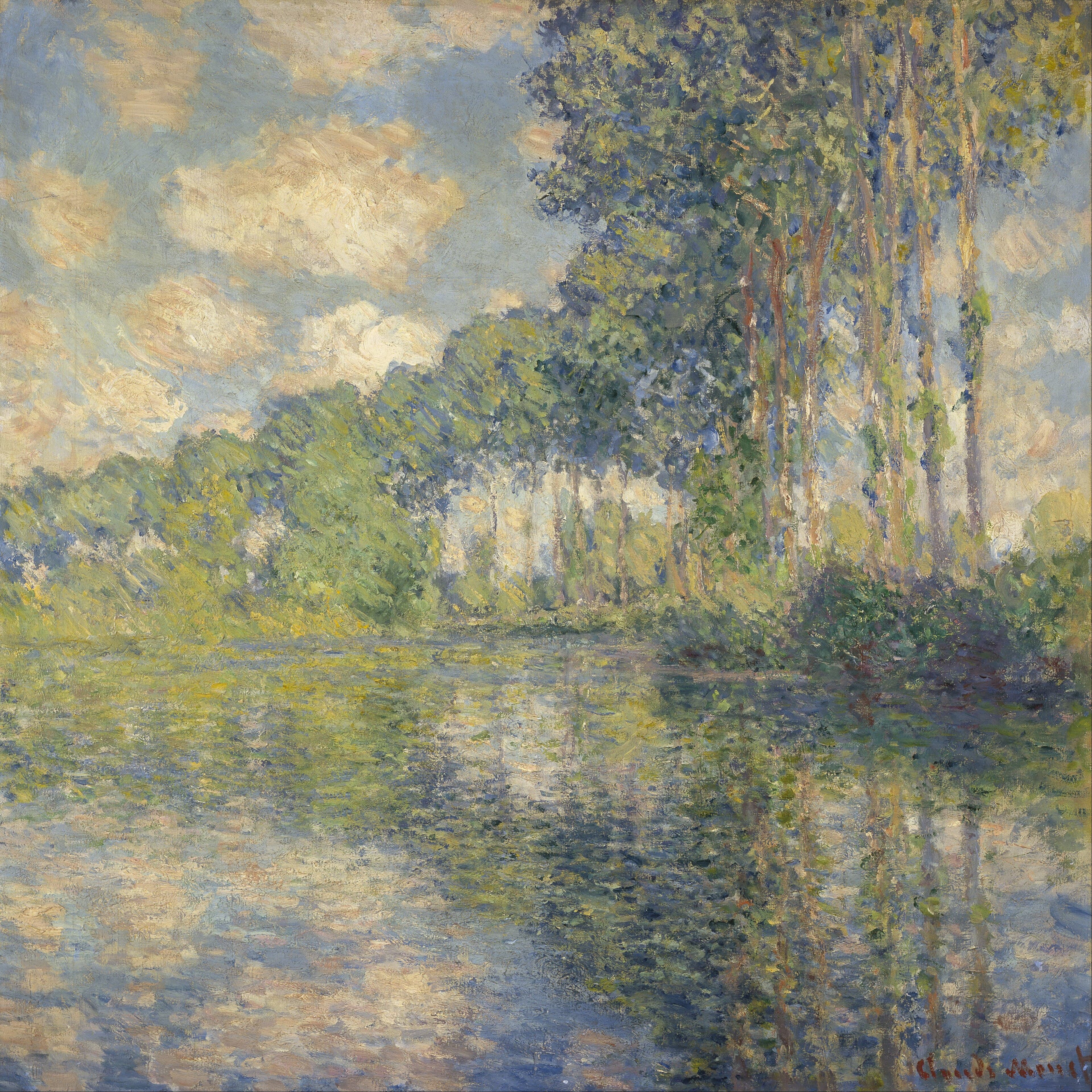
Poplars on the Epte (Edinburgh)
Claude Monet · 1891
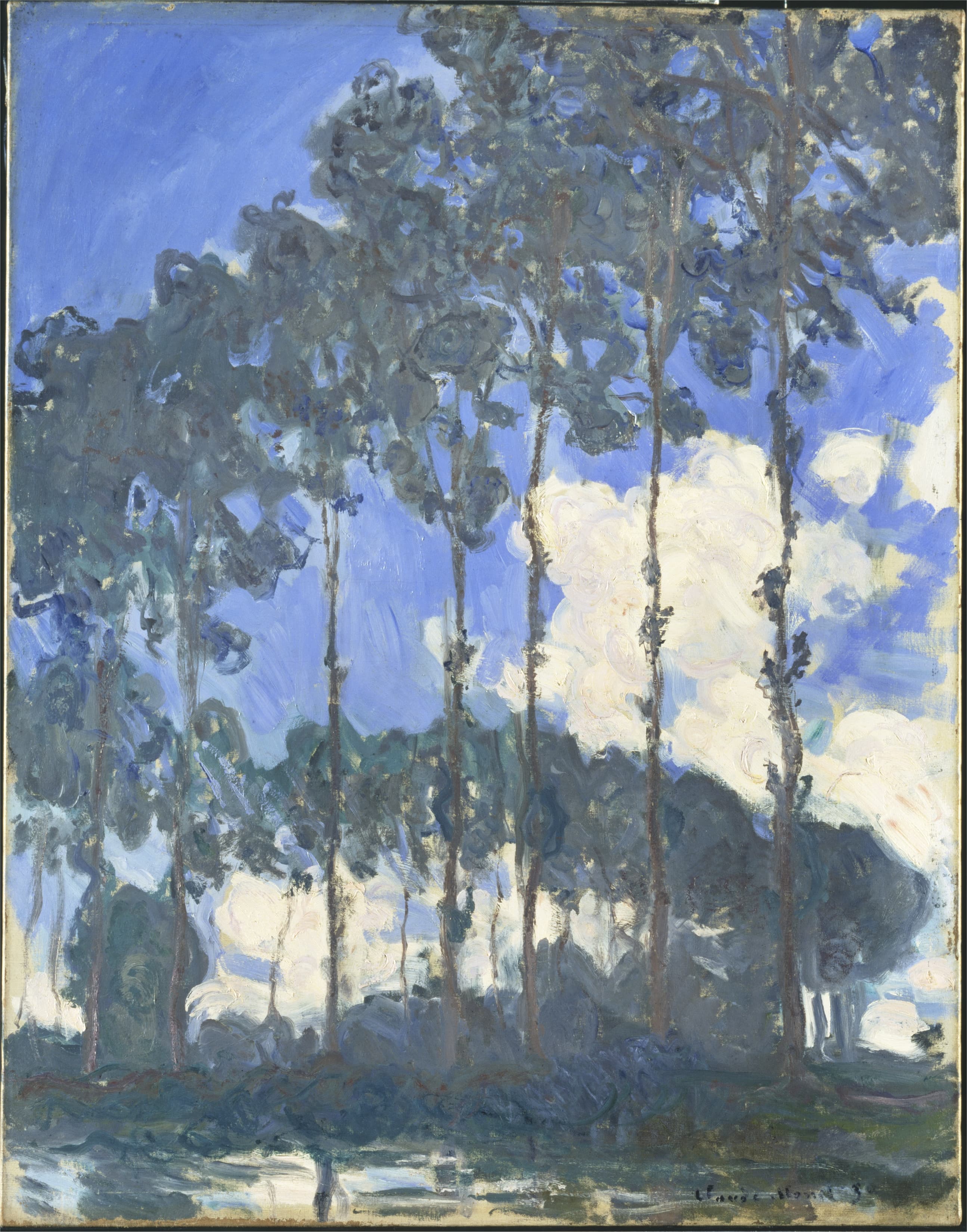
Poplars on the Epte (London)
Claude Monet · 1891
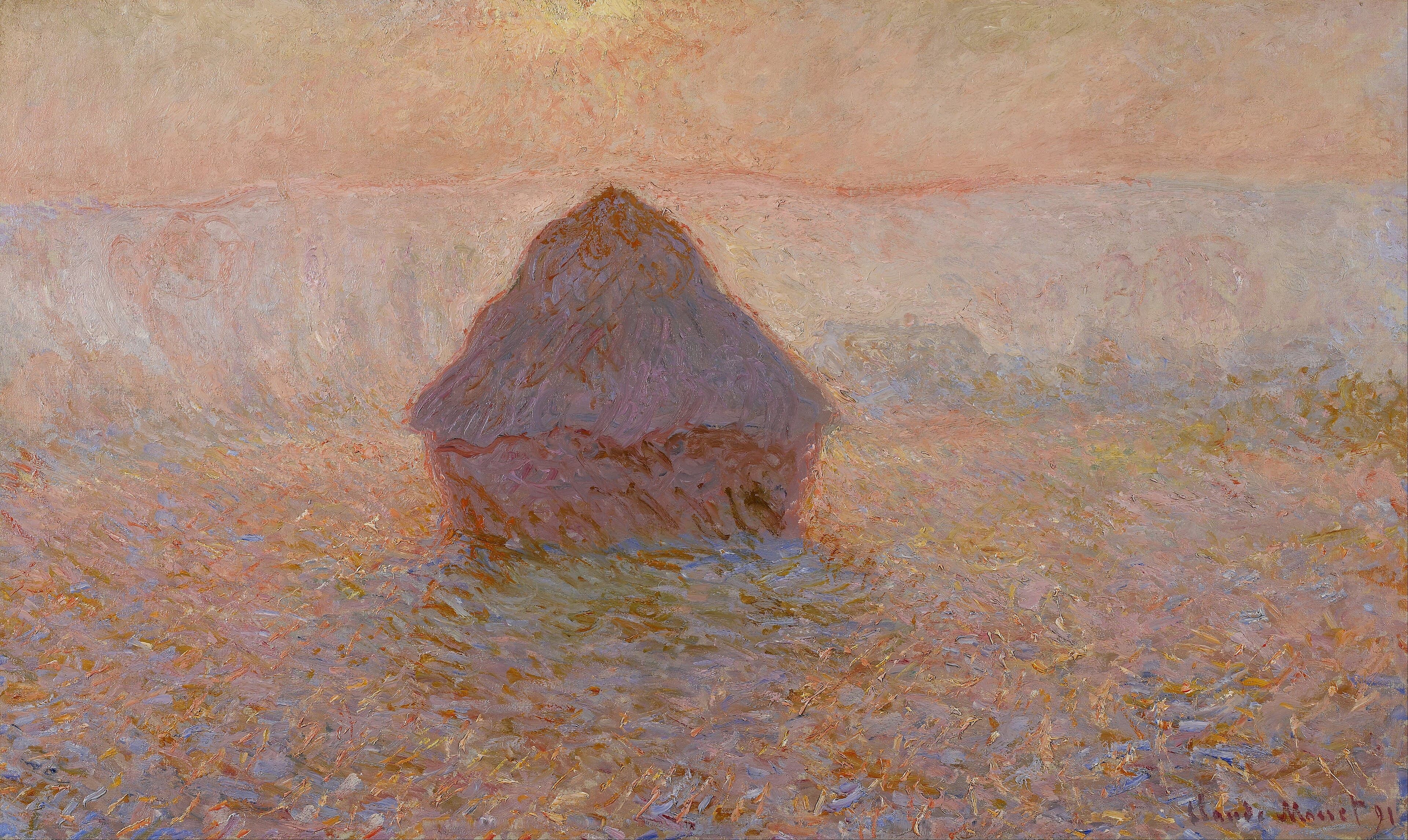
Grainstack, Sun in the Mist
Claude Monet · 1891
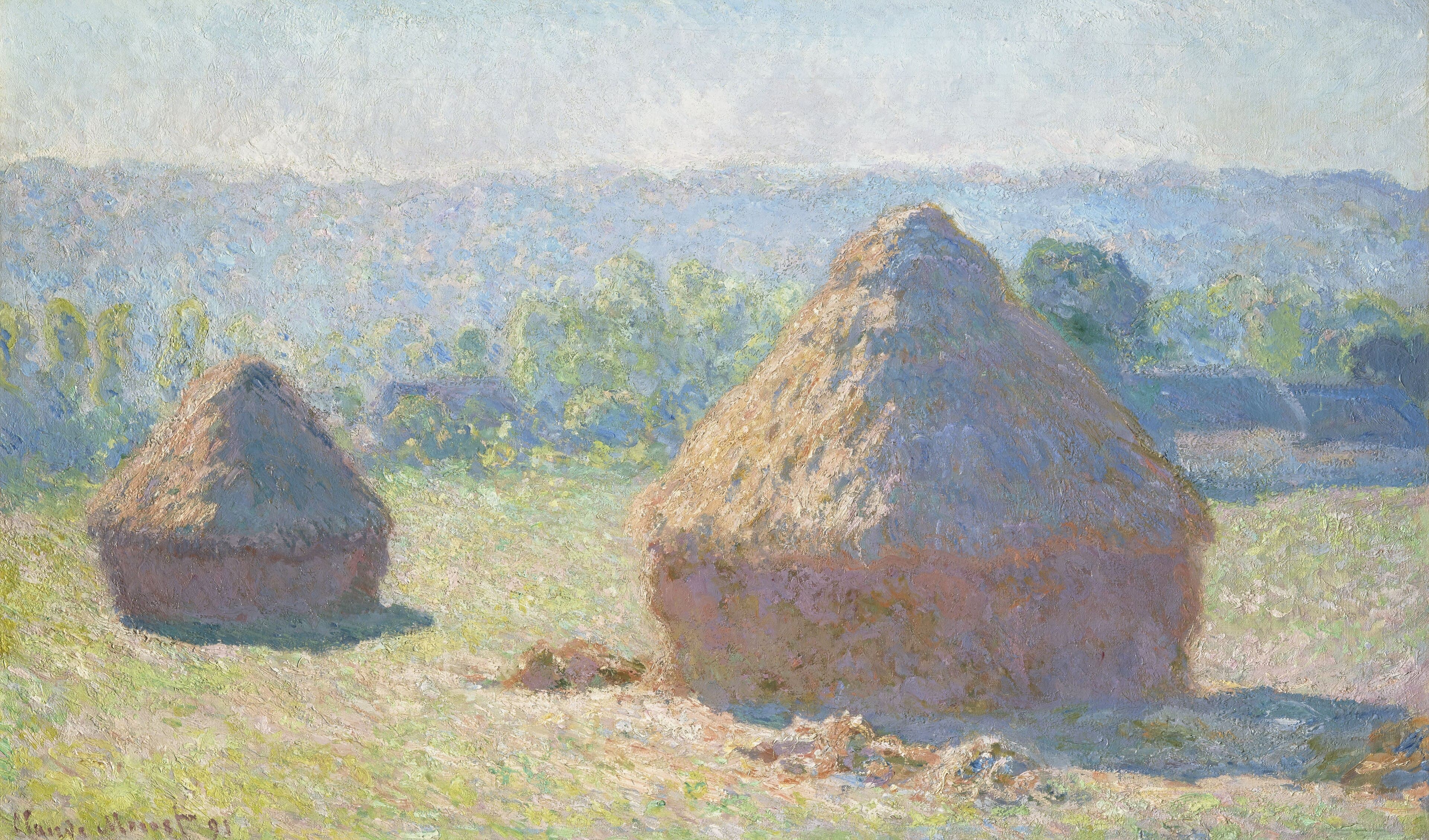
Haystacks, End of Summer
Claude Monet · 1891
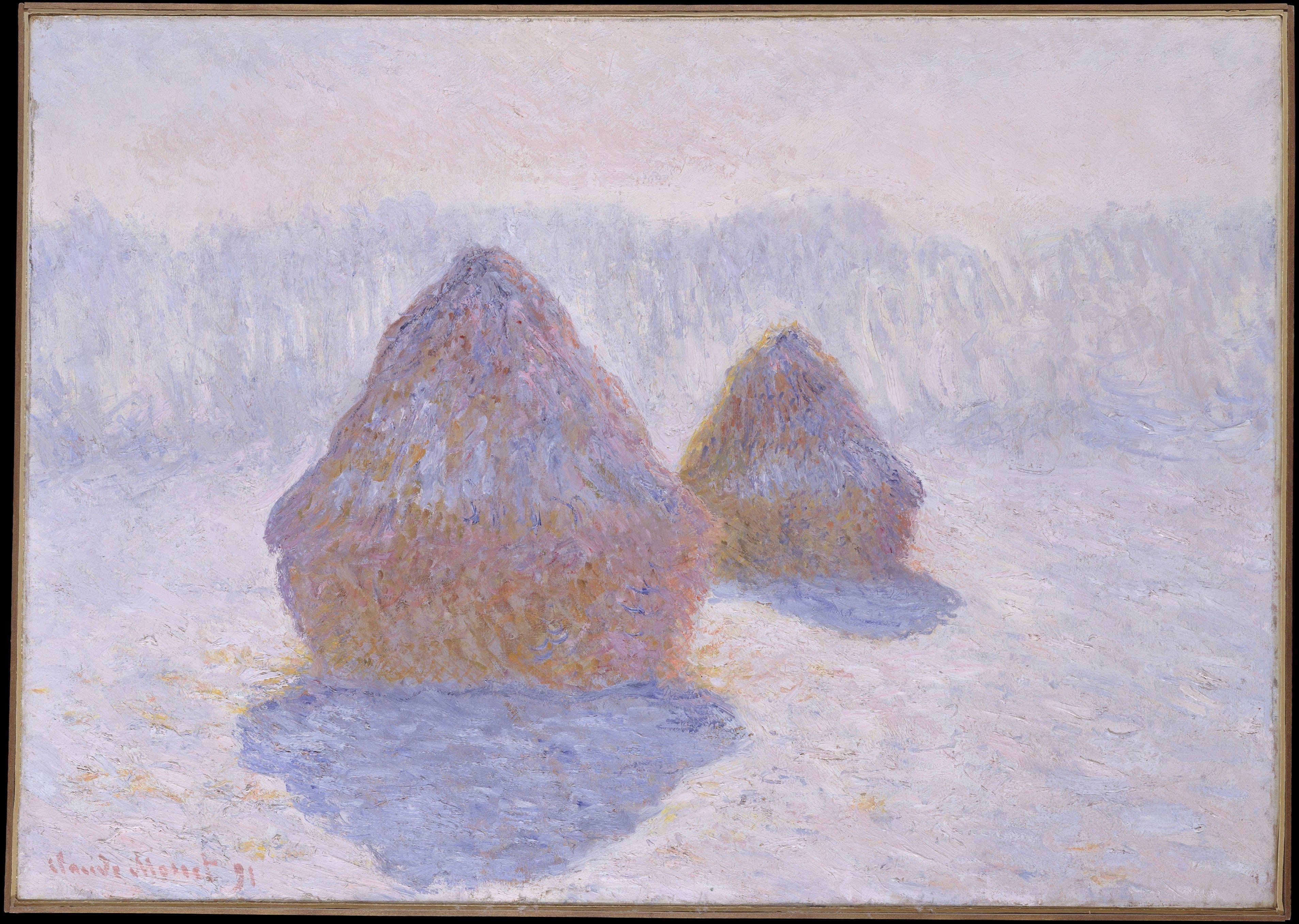
Haystacks (Effect of Snow and Sun)
Claude Monet · 1891
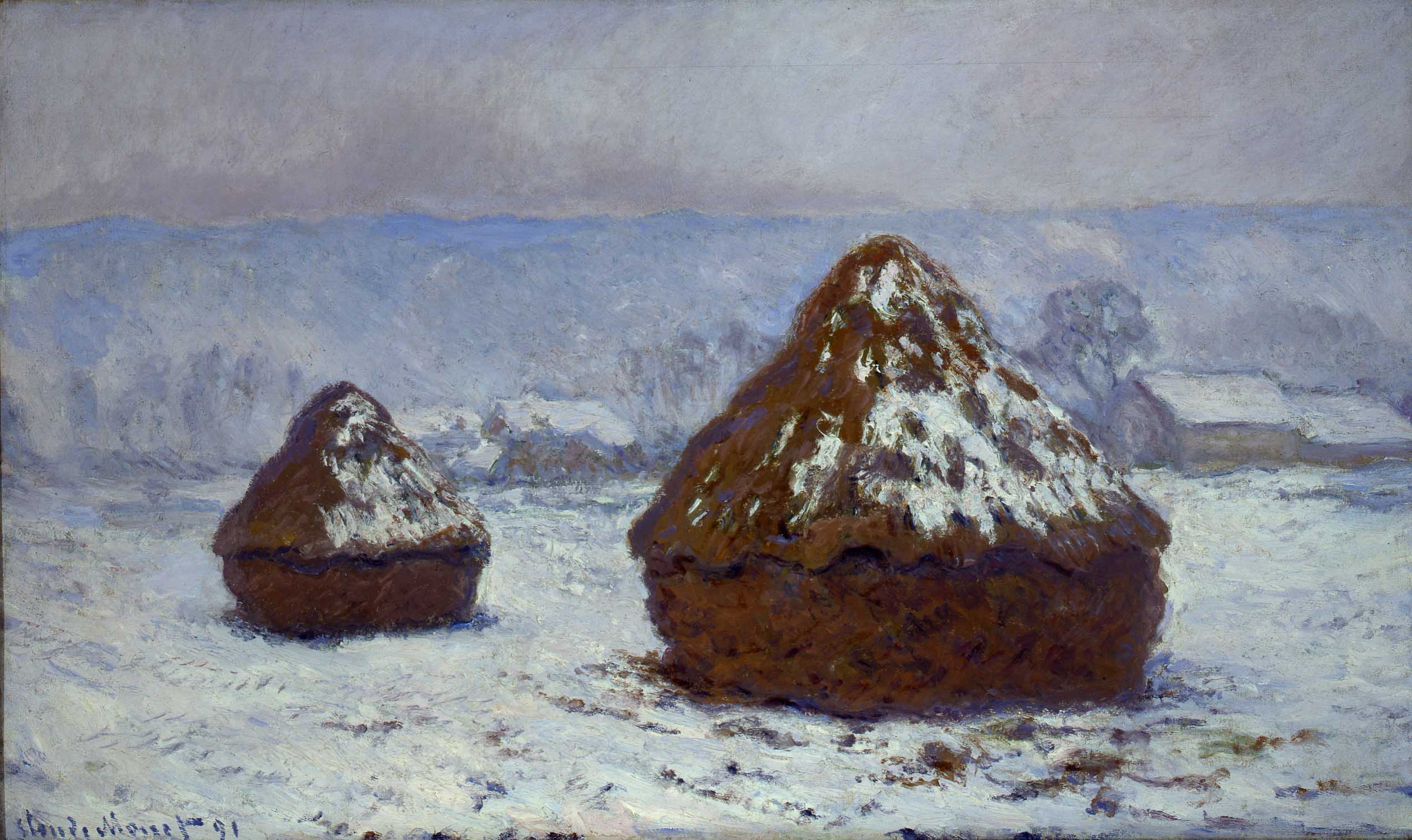
Grainstacks, Snow Effect
Claude Monet · 1891
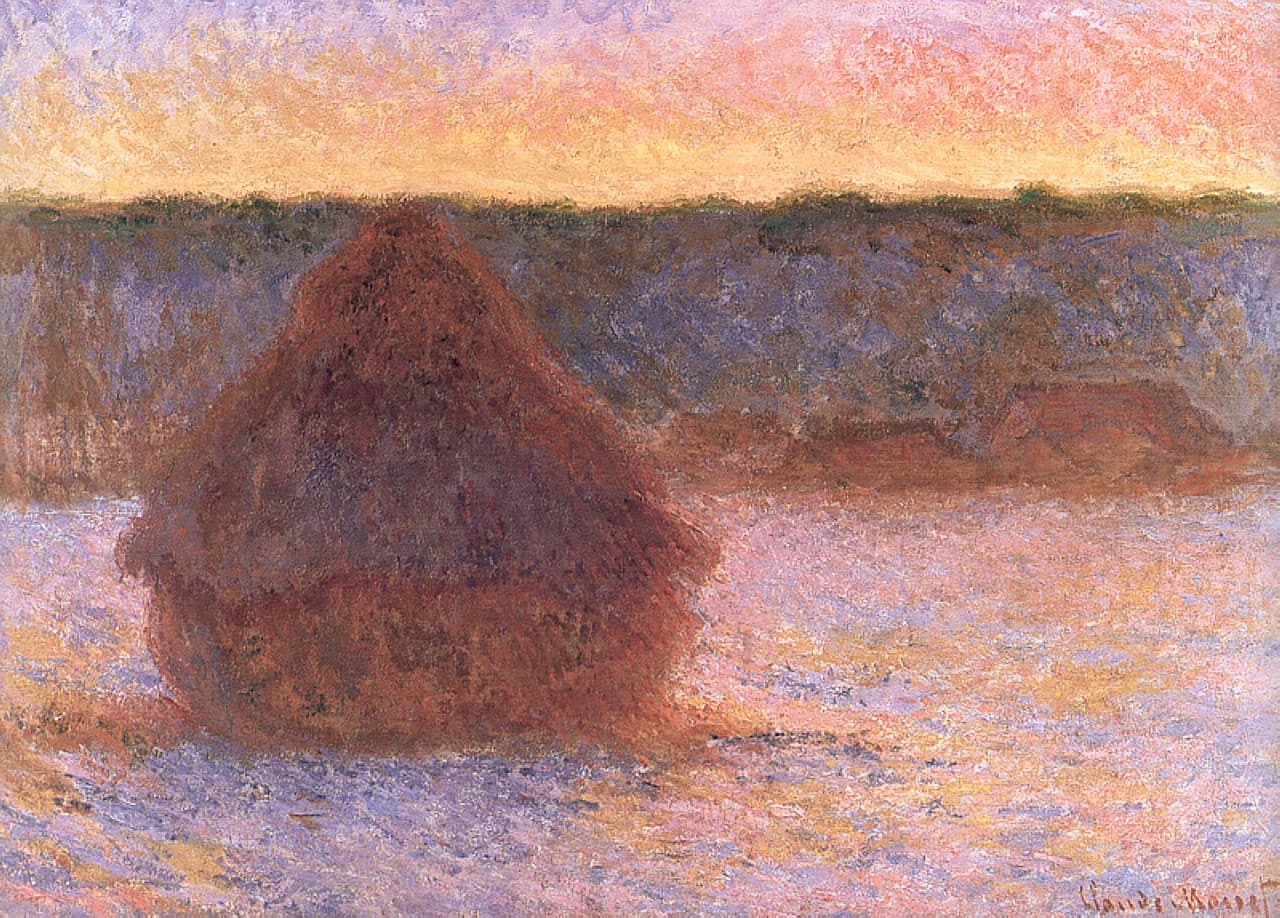
Haystacks at Sunset, Frosty Weather
Claude Monet · 1891
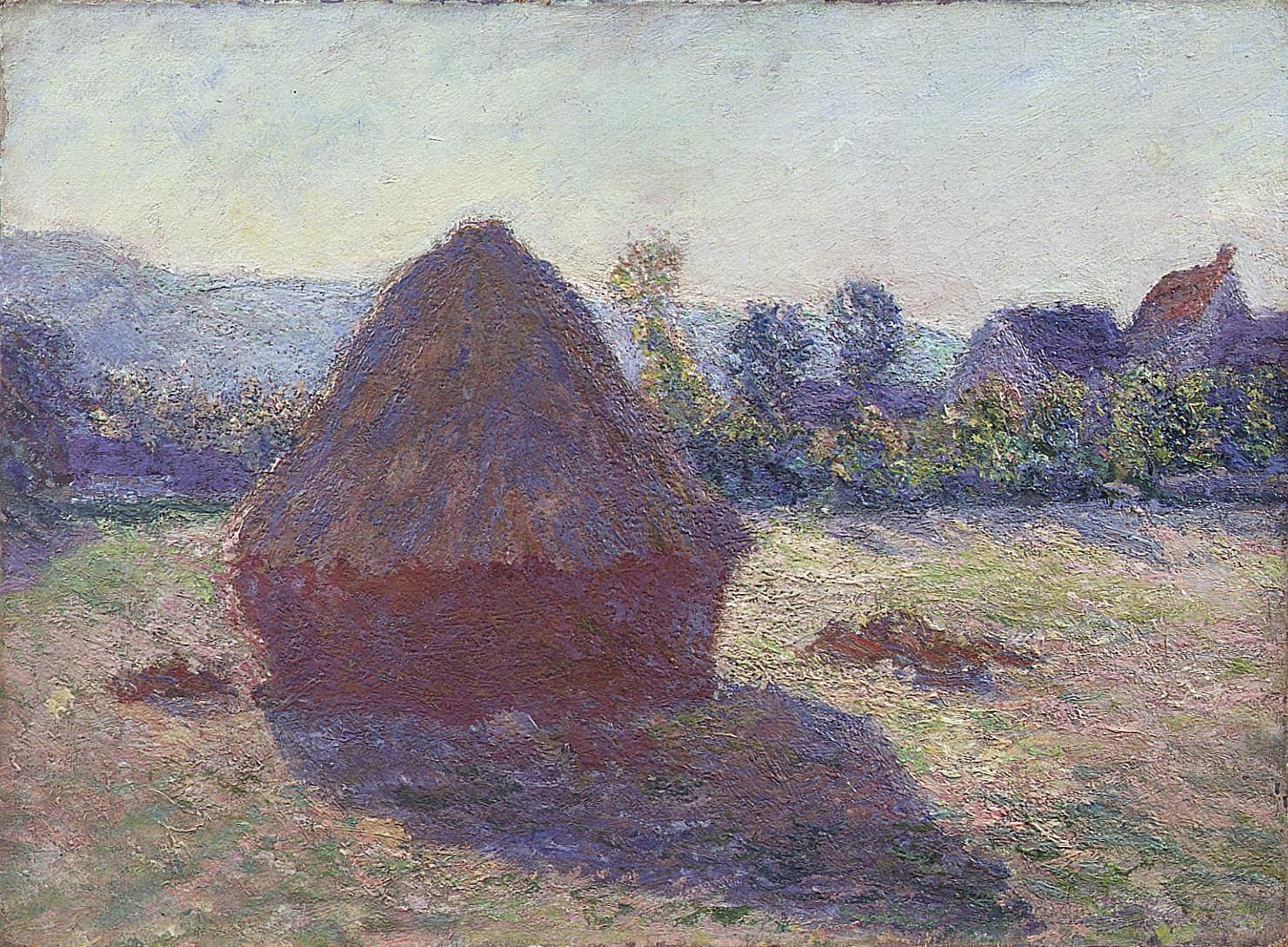
Haystack in the Evening Sun
Claude Monet · 1891
Kindred works
You may also study
Grainstack (Snow Effect)
Claude Monet · 1891
Haystacks (Effect of Snow and Sun)
Claude Monet · 1891
Grainstacks, Snow Effect
Claude Monet · 1891
Houses of Parliament, Sunset
Claude Monet · 1903
Houses on the Achterzaan
Claude Monet · 1871
Railroad Bridge, Argenteuil
Claude Monet · 1873
Road into Vétheuil in Winter
Claude Monet · 1879
Matinée sur la Seine
Claude Monet · 1897