Image: Metropolitan Museum of Art, New York (via Google Arts & Culture) · Public domain · via Wikimedia Commons
Haystacks (Effect of Snow and Sun)
Claude Monet, 1891
Haystacks (Effect of Snow and Sun) is an 1891 painting by Claude Monet of two wheat stacks in a snowy field at Giverny, their long blue shadows cast by a low winter sun. It is in the Metropolitan Museum of Art, New York, from the Havemeyer collection.
- Artist
- Claude Monet
- Date
- 1891
- Medium
- Oil on canvas
- Dimensions
- 65.4 × 92.1 cm
- Collection
- The Metropolitan Museum of Art, New York, United States
- Movement
- Impressionism
- Catalogue
- Wildenstein 1279
- Nature & Landscape
Haystacks (Effect of Snow and Sun) is a painting by Claude Monet, signed and dated "Claude Monet 91" at lower left. It shows two stacks of wheat standing in a snow-covered field near his house at Giverny, with a pale winter sun behind them throwing long blue shadows toward the viewer. The canvas, 65.4 by 92.1 centimeters, is in the Metropolitan Museum of Art in New York (accession 29.100.109), part of the great bequest of Louisine Havemeyer in 1929. Wildenstein lists it as number 1279, under the title Meules, effet d'hiver.
What you're looking at
The stacks are set unusually: the larger one at left of center, the smaller just behind it to the right, as if we were walking past them. Both are rounded, slightly squat cones. Their sunlit tops and sides are made of short strokes of pink, peach, straw-yellow and blue, so that they look powdered rather than solid.
The shadows are the real subject. The sun sits low and behind the stacks, out of sight, so each stack throws a long, soft shadow down toward us. The shadow of the larger one is a broad shape of cornflower blue and lavender that reaches almost to the bottom edge; the smaller one's is a paler violet streak. These are the darkest areas in a picture that is otherwise almost all light.
Snow covers everything else. It is painted in white mixed with pink, lilac and cream, with a few flecks of yellow stubble showing through in the foreground. Behind the stacks, where a line of poplars and a farm would normally appear, there is only a band of blurred blue-violet vertical strokes, as if the trees were seen through frozen mist. Above, the sky is a pale, even rose.
Snow and sun: what makes this version distinct
Most of the winter canvases put the stacks against a clear background of houses and hills, as in Boston's Grainstack (Snow Effect) or the Getty's Wheatstacks, Snow Effect, Morning. The Met picture dissolves the background almost completely. With the horizon gone, the stacks seem to float in a field of pink and white, held in place only by their shadows. It is one of the most nearly abstract canvases in the series.
The palette is also unusually narrow. Apart from the blue shadows, almost every color is a tint of white. Monet shows how strongly a low sun on snow can bleach a landscape, and how much color can still be found in it.
How it was painted
The winter of 1890–91 was long and cold, and Monet painted the stacks outdoors through weeks of snow and frost, working on several canvases at a time. He then refined them in his studio before showing them in May 1891. Here the paint is thick and dry, applied in small separate touches that let earlier layers show through. The background strokes are vertical, the snow strokes mostly horizontal, and the stacks' strokes follow their curves, so direction alone separates one zone from another.
The Havemeyers and the Met
Louisine and Henry Osborne Havemeyer were among the most important American collectors of Impressionism, advised by the painter Mary Cassatt. Louisine bequeathed much of their collection to the Metropolitan Museum in 1929, and this canvas came with it, along with other Monets. The Met also holds the Giverny footbridge picture Bridge over a Pond of Water Lilies and a London view, The Houses of Parliament (Effect of Fog).
Details to look for
Look closely at the snow just in front of the large stack. Monet scatters small flecks of yellow and orange there, bits of straw or stubble showing through, and they make the white around them feel colder. The two shadows are not the same blue: the nearer one is deeper and more violet, the farther one lighter, which helps push the second stack back in space.
Where to see it
The painting is in the Metropolitan Museum of Art, in the nineteenth-century European paintings galleries (Gallery 819 at the time of writing). See Monet at the Met, our Haystacks series hub, Giverny and Claude Monet.
Questions & answers
Where is Monet's Haystacks (Effect of Snow and Sun)?
It is in the Metropolitan Museum of Art in New York, accession number 29.100.109, part of the H. O. Havemeyer Collection bequeathed by Louisine Havemeyer in 1929. It hangs in the nineteenth-century European paintings galleries.
When and where was it painted?
Monet painted it in the snowy field next to his house at Giverny during the cold winter of 1890–91 and dated it 1891. He worked outdoors on several canvases at once and finished them in the studio.
Why are the shadows blue in Monet's snow paintings?
Shadows on snow are lit only by the blue sky, not the sun, so they really do look blue. Monet painted what he saw, and set these cool blue and violet shadows against the warm pink and cream of the sunlit snow.
How is the Met version different from other snowy haystacks?
Most winter versions show houses and hills behind the stacks. Here the background dissolves into blurred blue-violet strokes and a rose sky, so the two stacks seem to float in a field of pink and white, held only by their long shadows.
More by the artist
Claude Monet
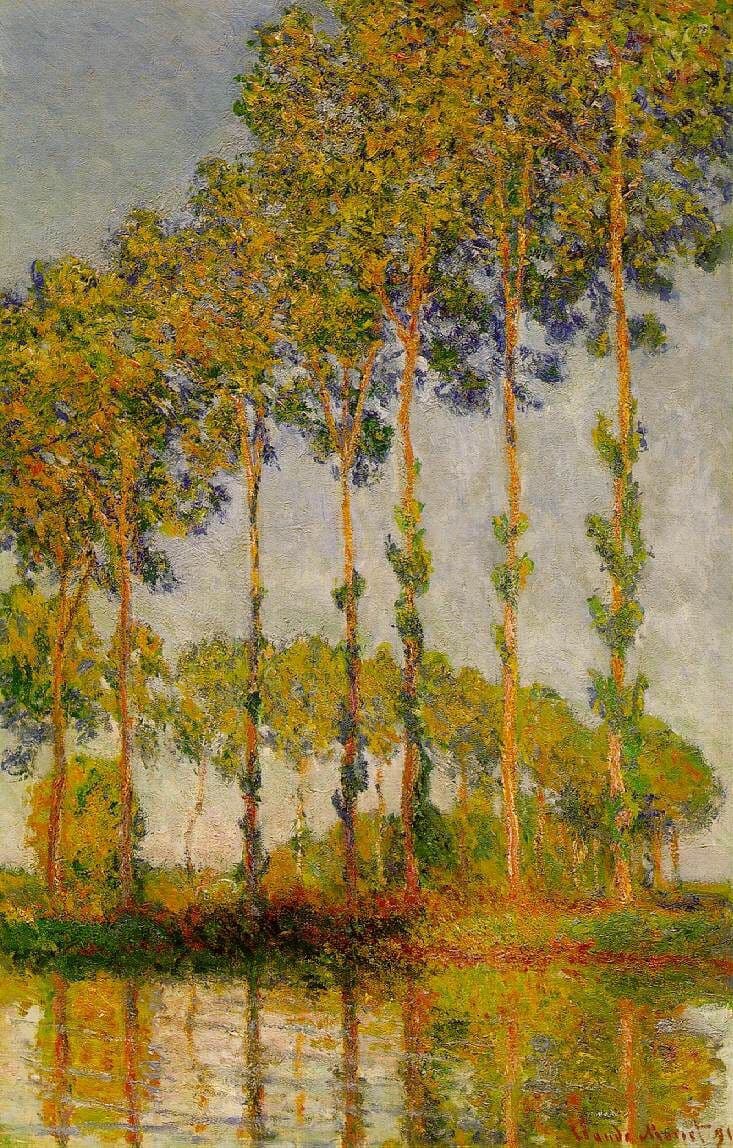
Row of Poplars in Autumn
Claude Monet · 1891
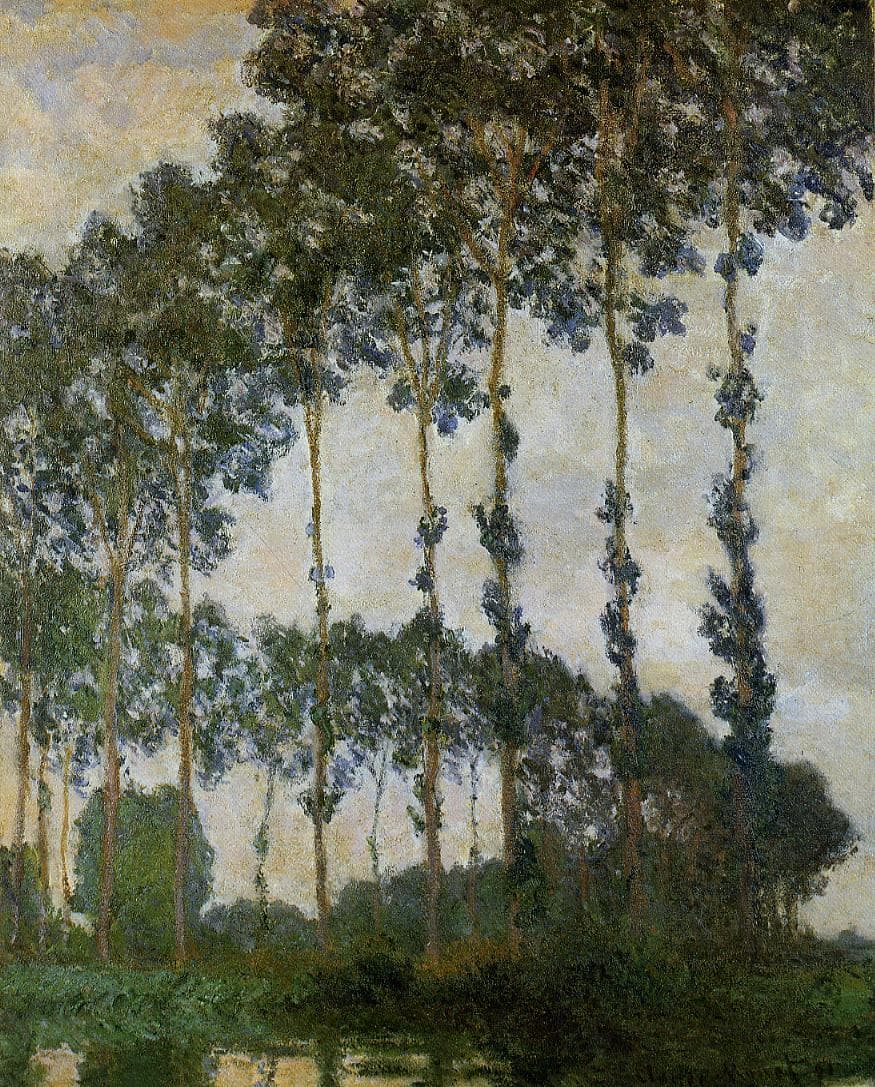
Poplars near Giverny, Overcast Weather
Claude Monet · 1891
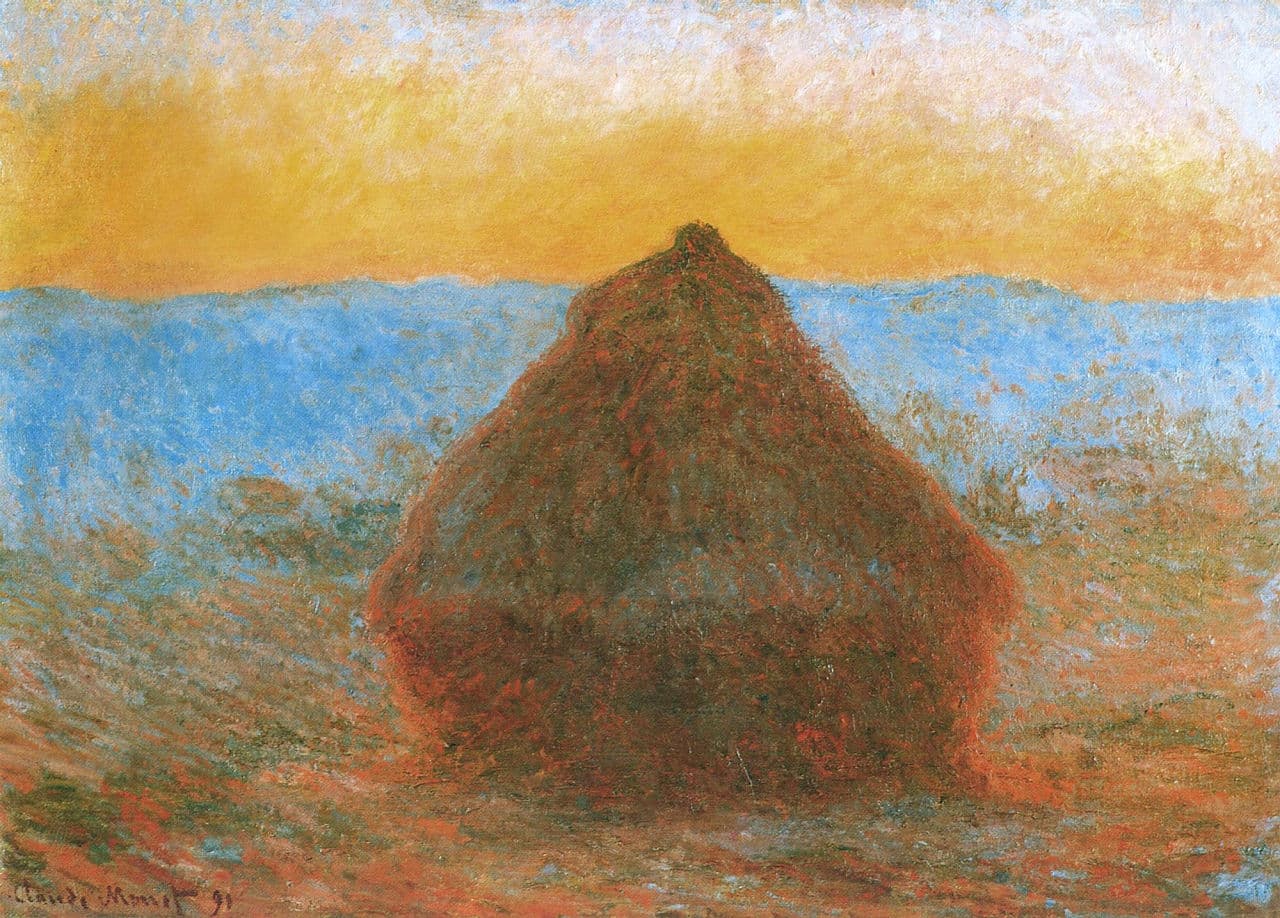
La Meule
Claude Monet · 1891
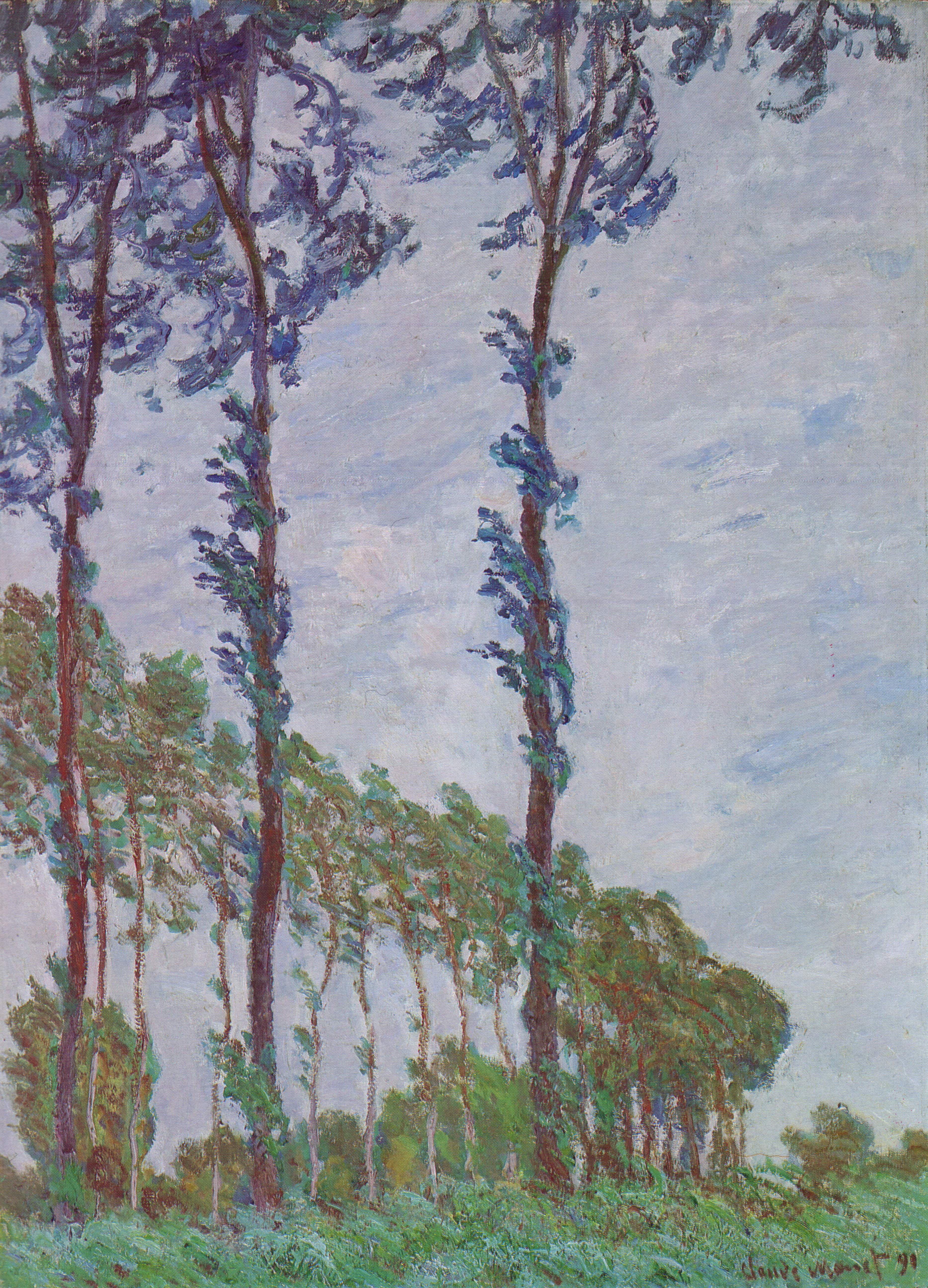
Wind Effect, Series of The Poplars
Claude Monet · 1891
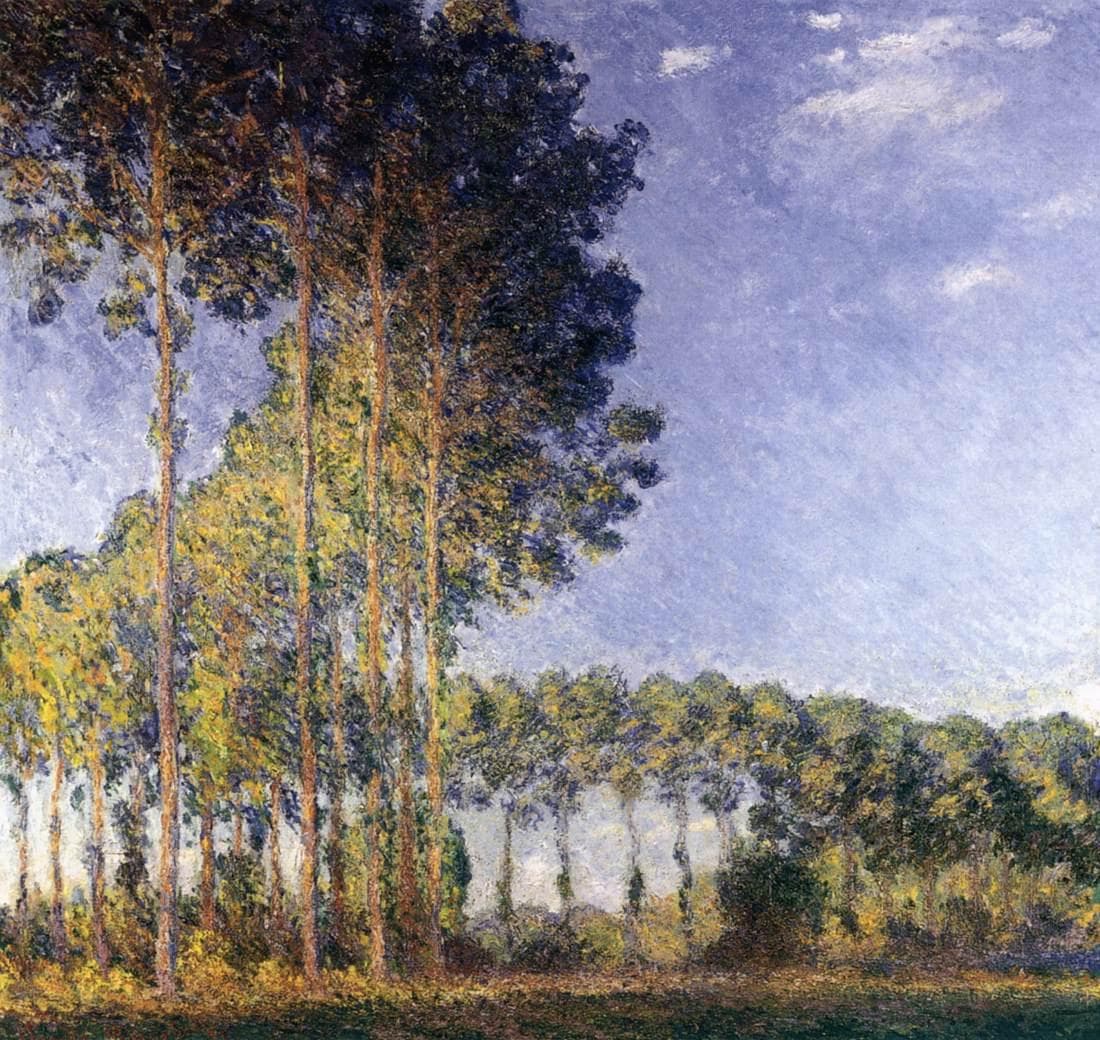
Poplars at the Banks of Epte
Claude Monet · 1891–92
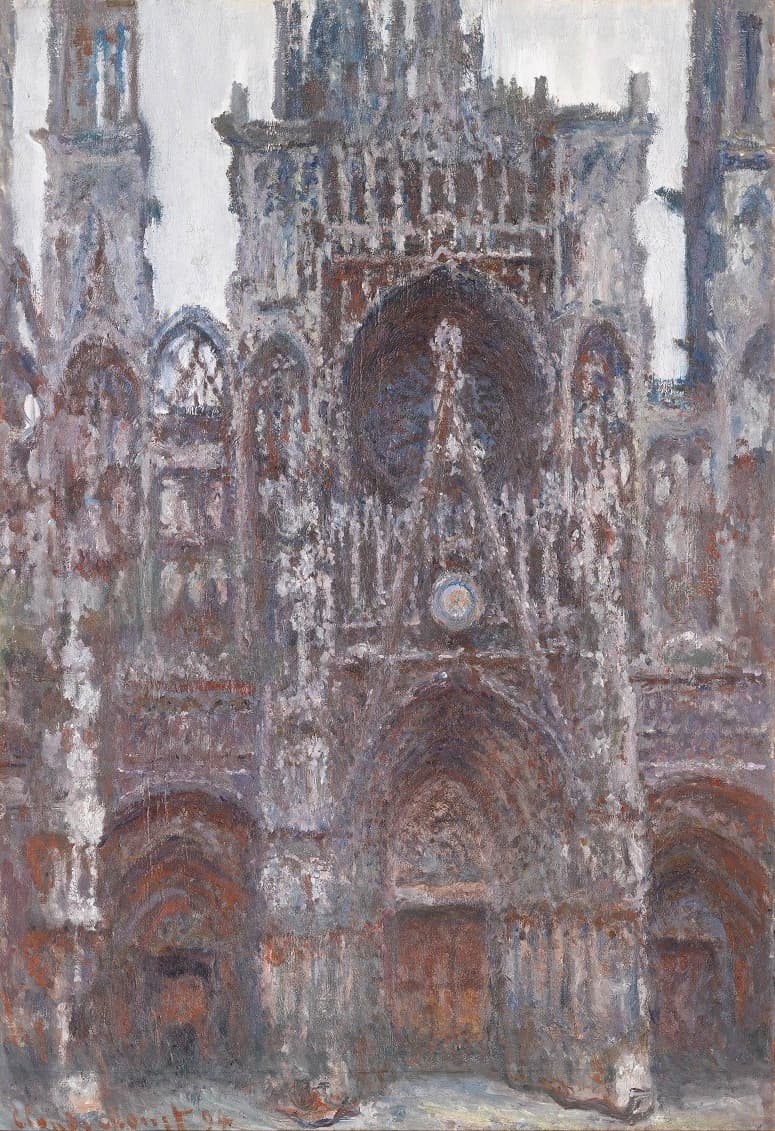
Rouen Cathedral, the Portal, Front View (Harmony in Brown)
Claude Monet · 1892–94
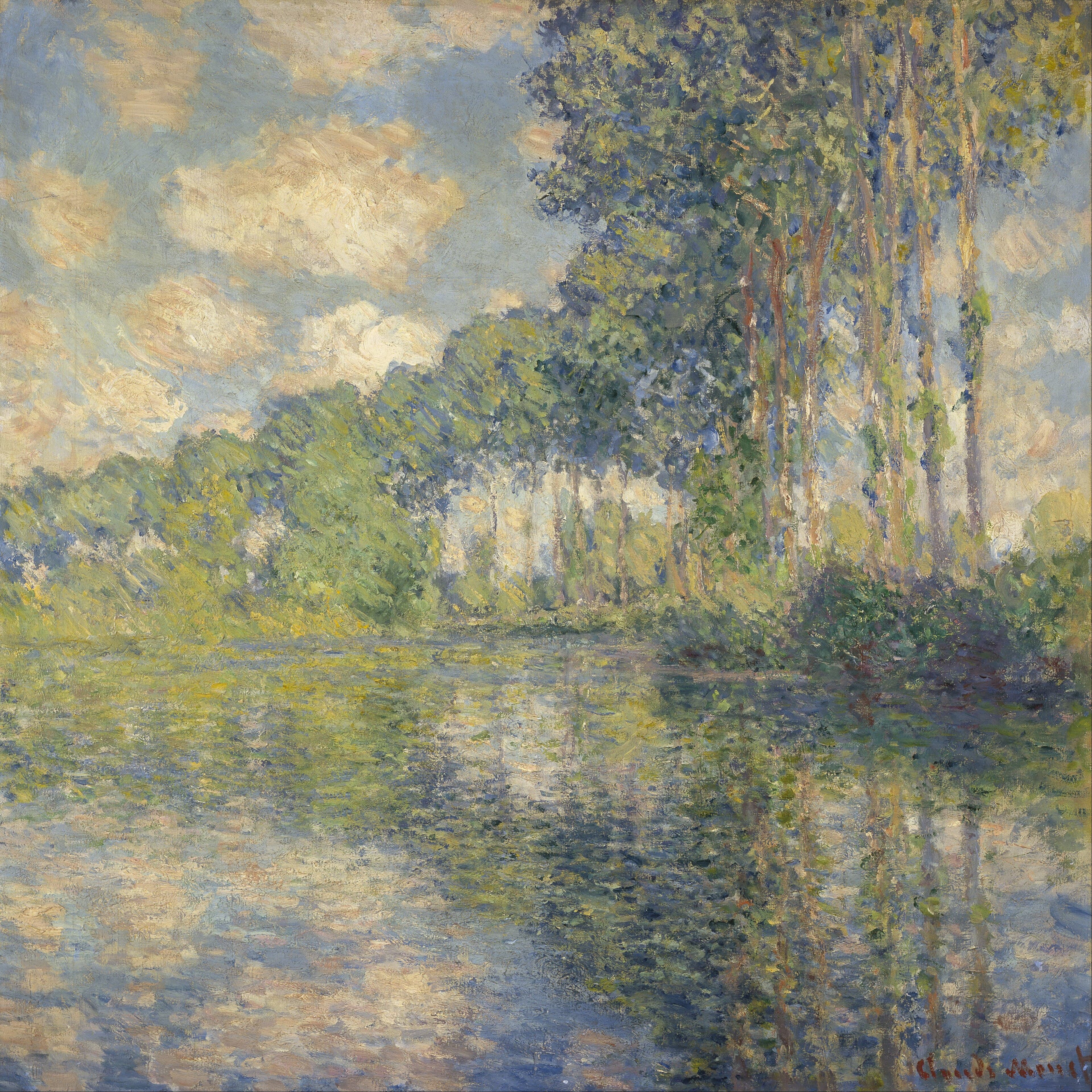
Poplars on the Epte (Edinburgh)
Claude Monet · 1891
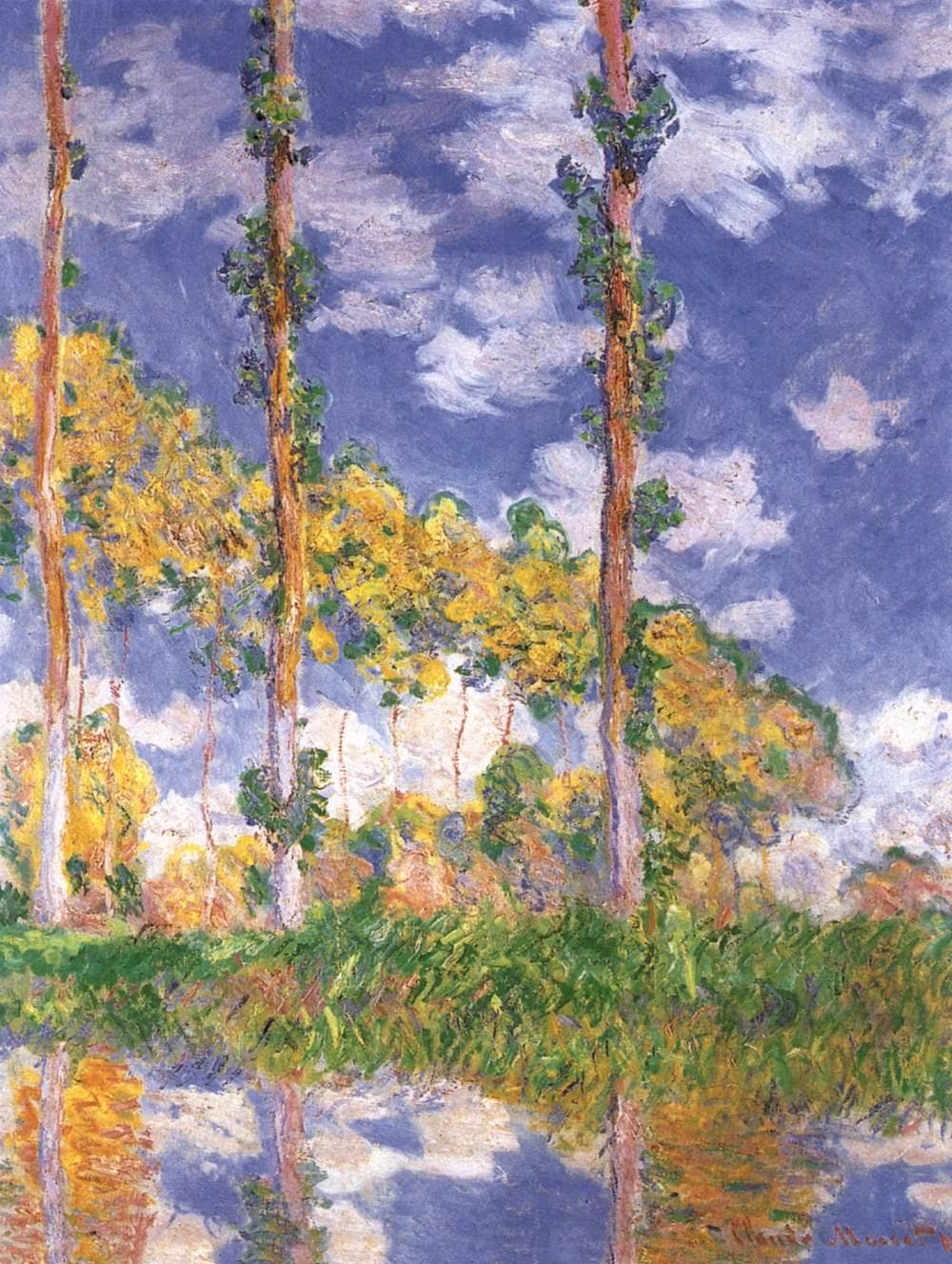
Three Poplars, Summer
Claude Monet · 1891
Also painted in 1891
The same year
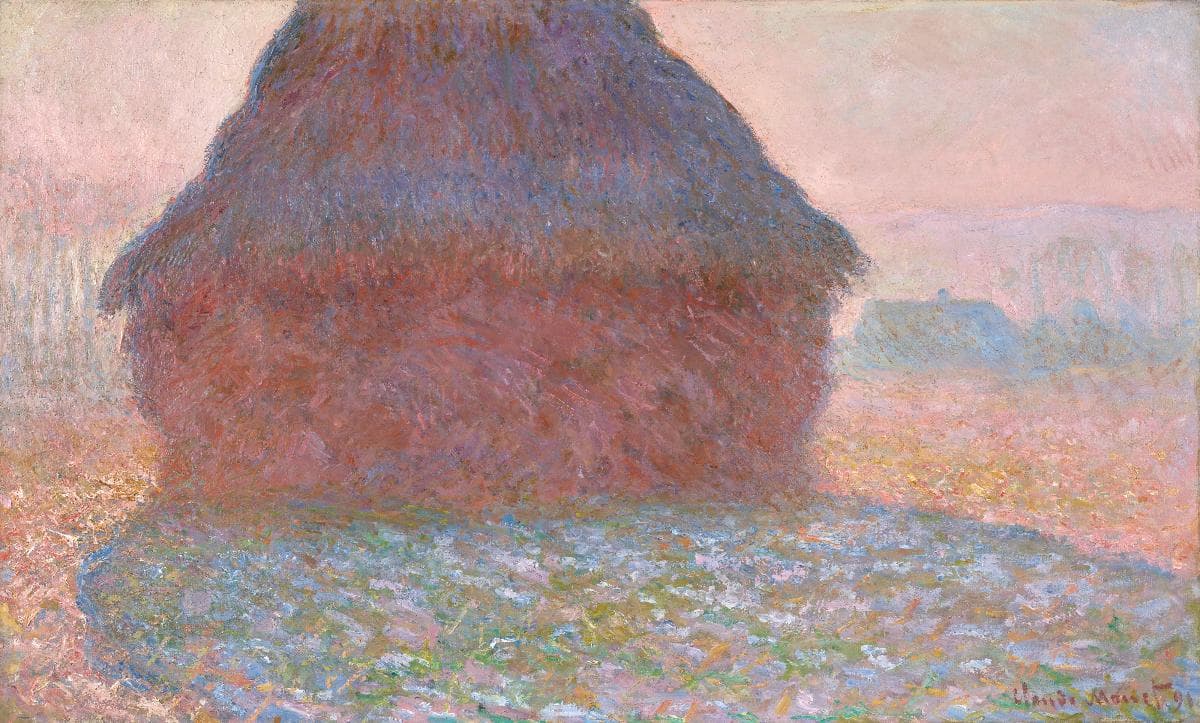
Grainstack in Sunlight
Claude Monet · 1891
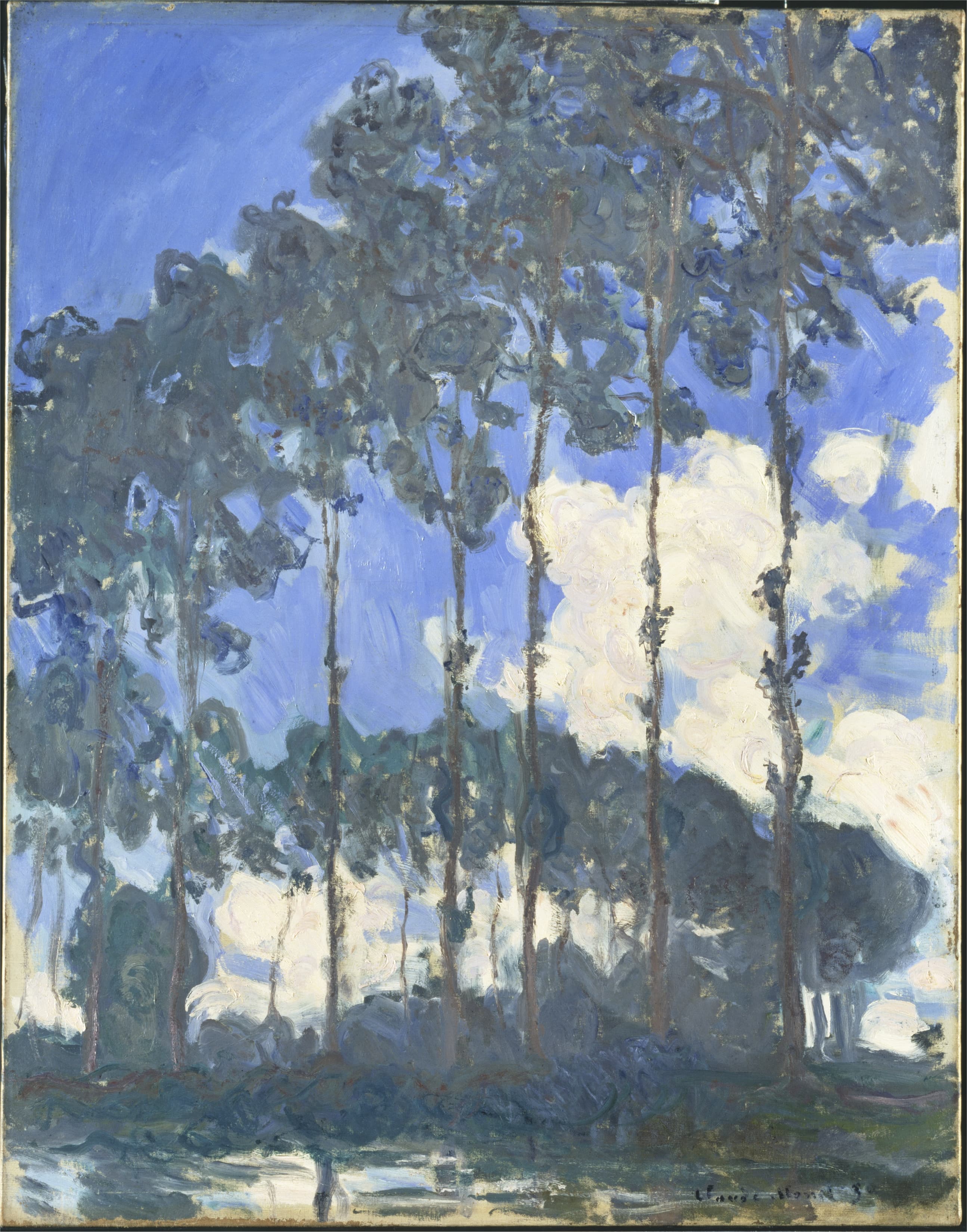
Poplars on the Epte (London)
Claude Monet · 1891
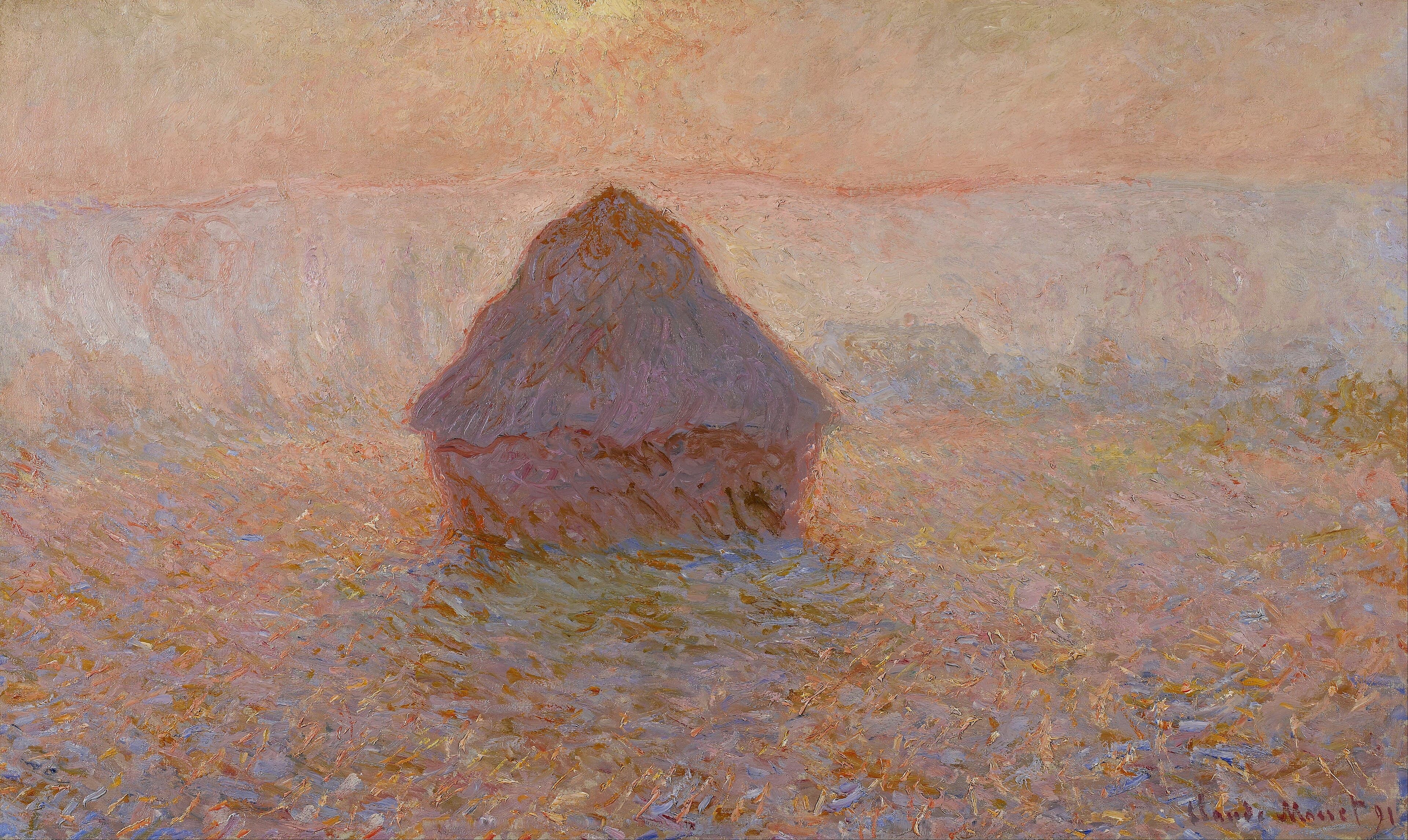
Grainstack, Sun in the Mist
Claude Monet · 1891
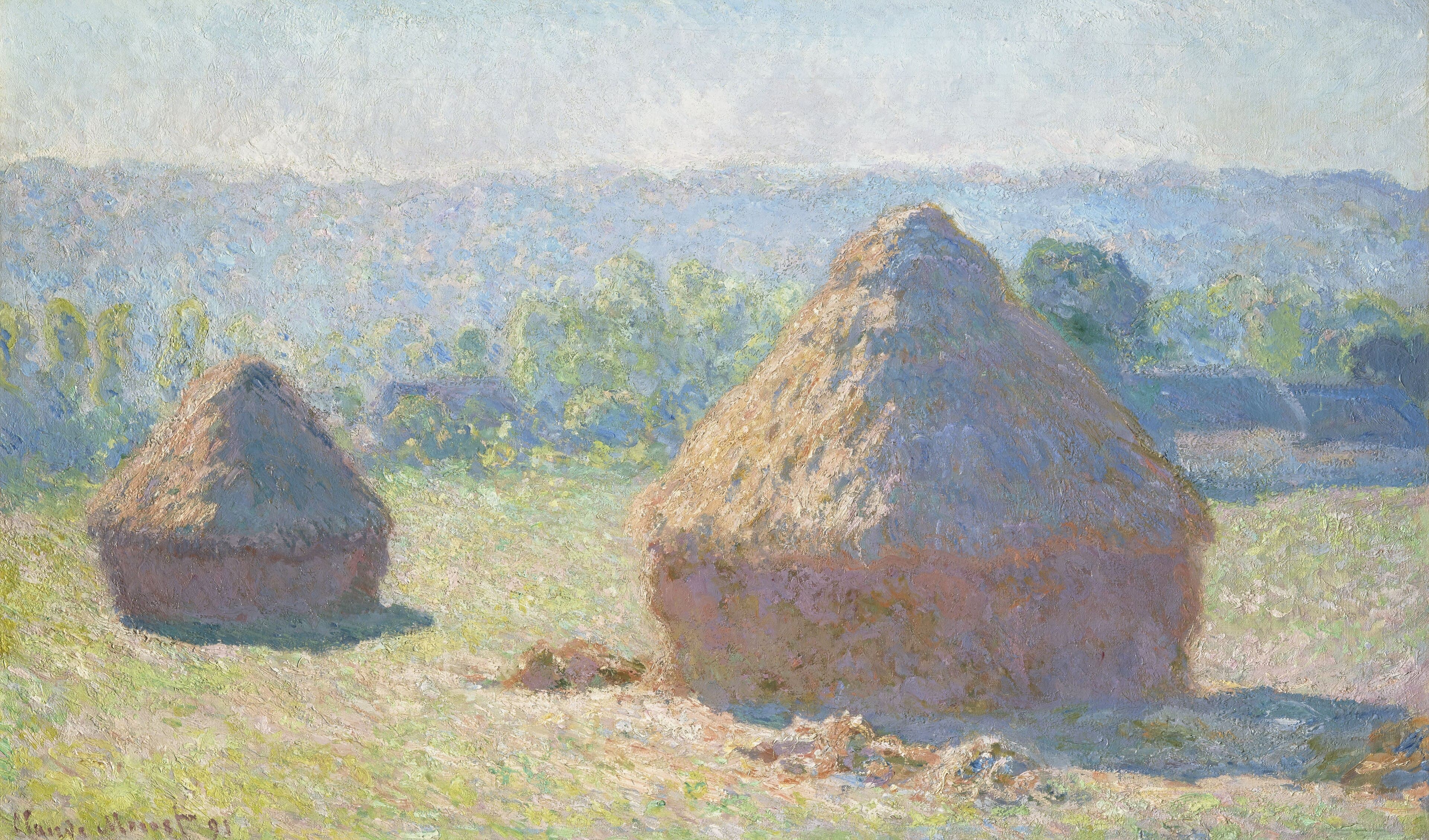
Haystacks, End of Summer
Claude Monet · 1891
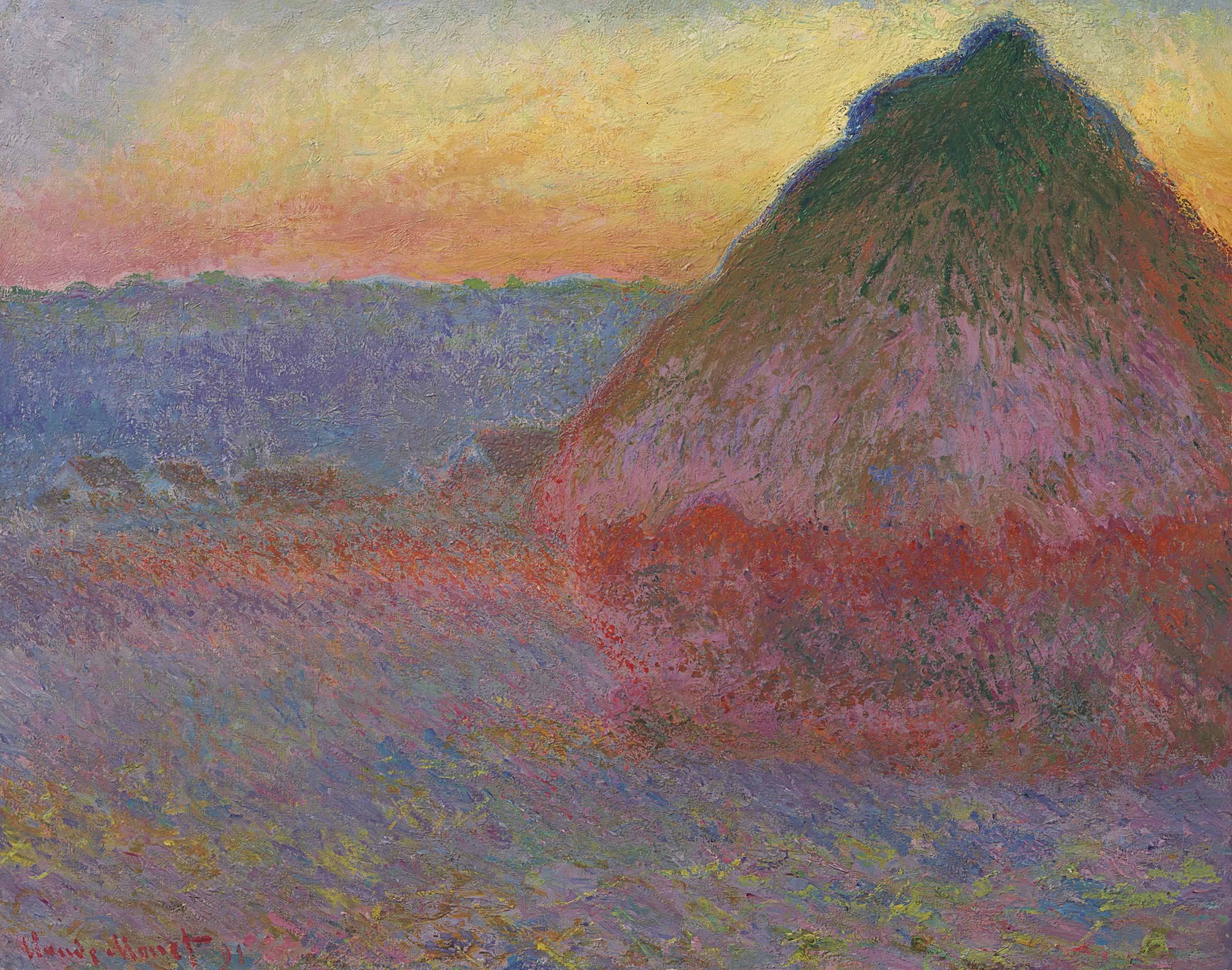
Grainstack in the Sunlight
Claude Monet · 1891
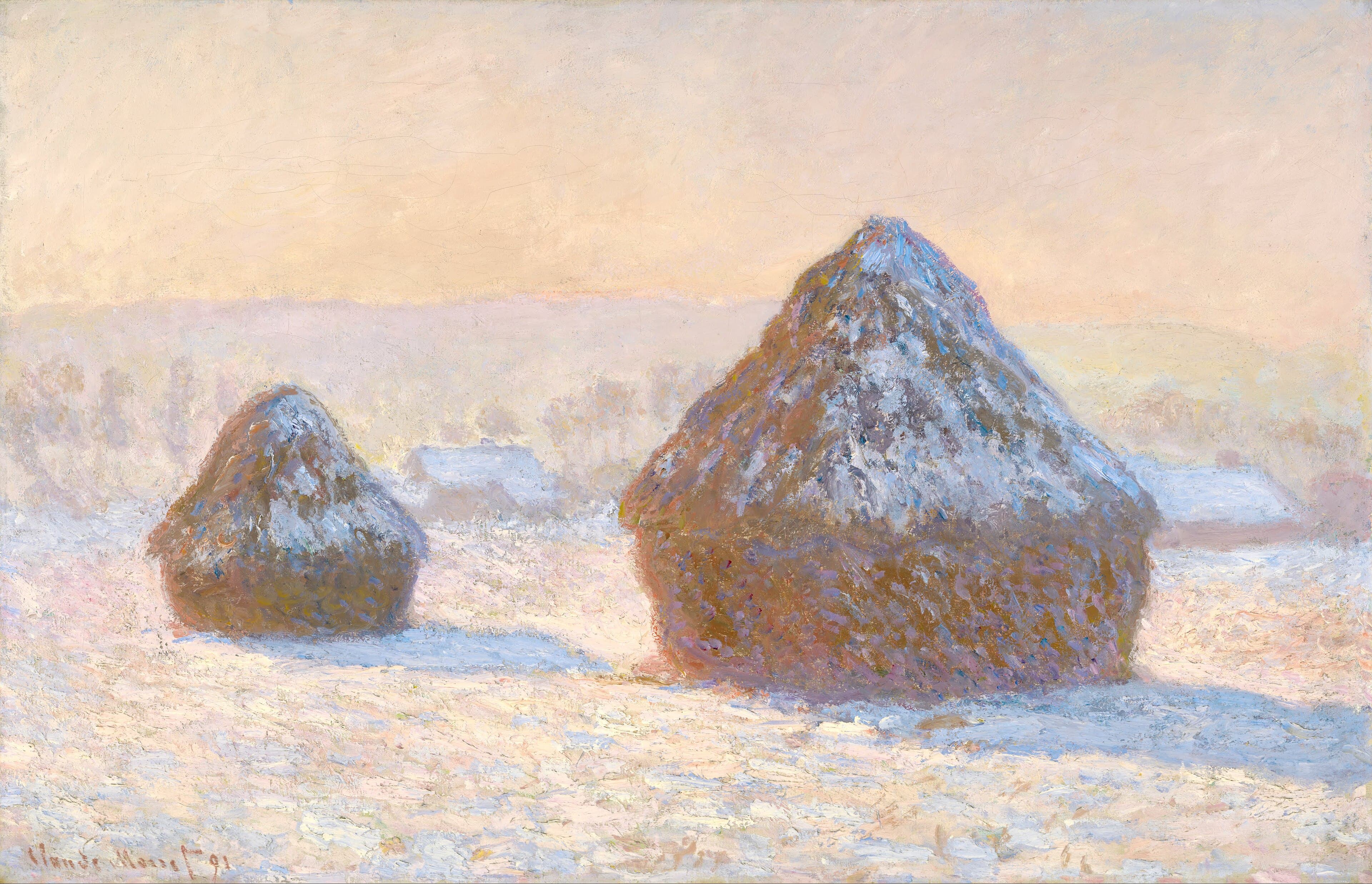
Wheatstacks, Snow Effect, Morning
Claude Monet · 1891
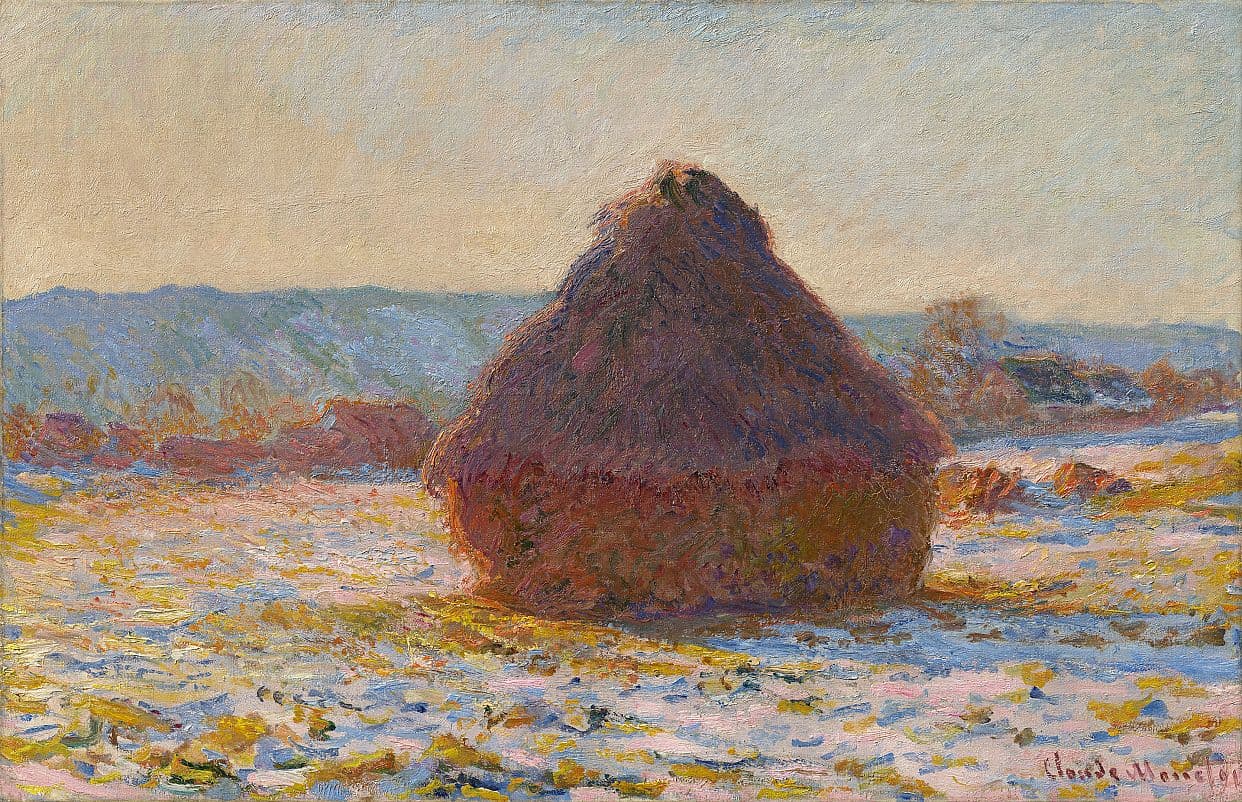
Grainstack in the Sunlight, Snow Effect
Claude Monet · 1891
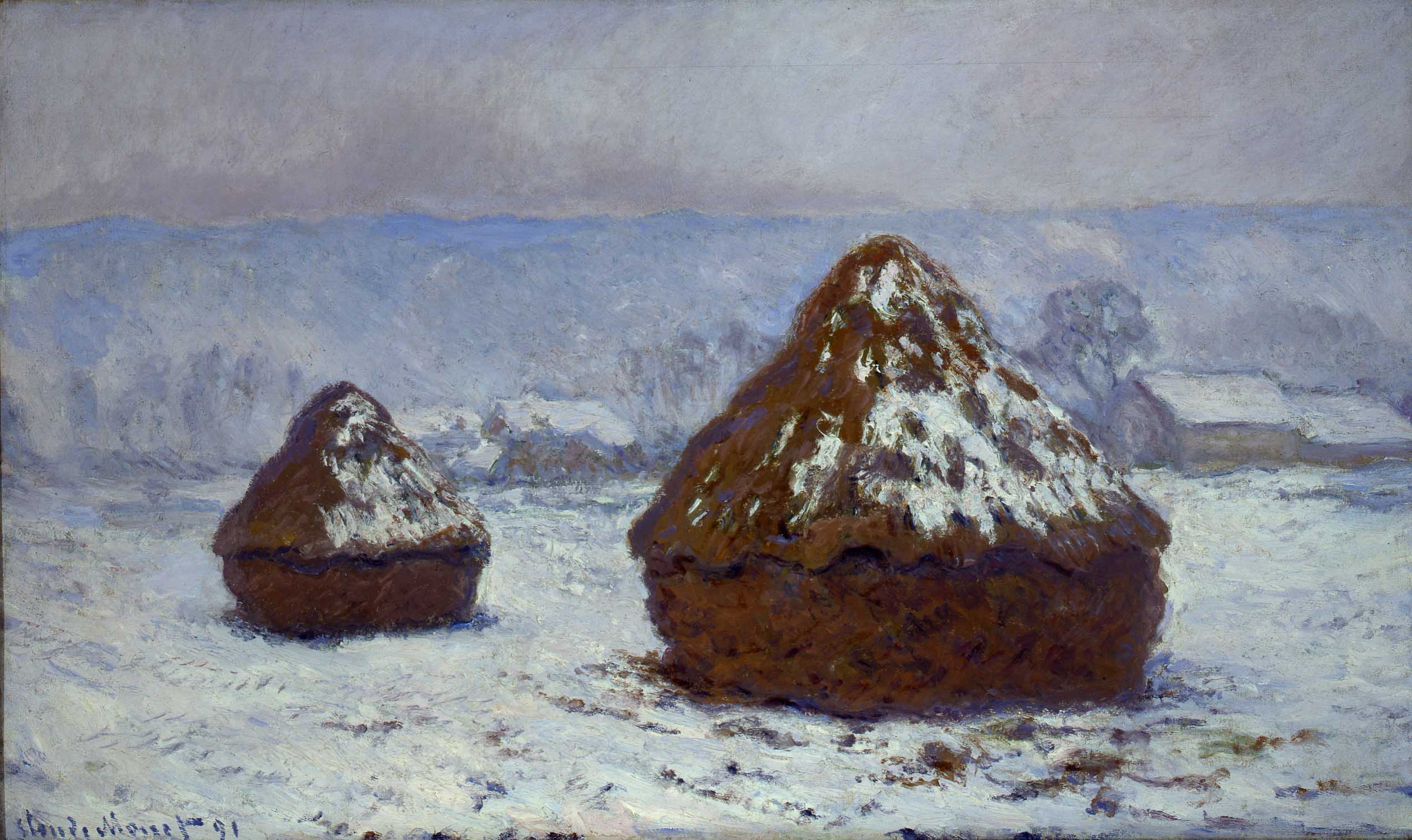
Grainstacks, Snow Effect
Claude Monet · 1891
Kindred works
You may also study
Wheatstacks, Snow Effect, Morning
Claude Monet · 1891
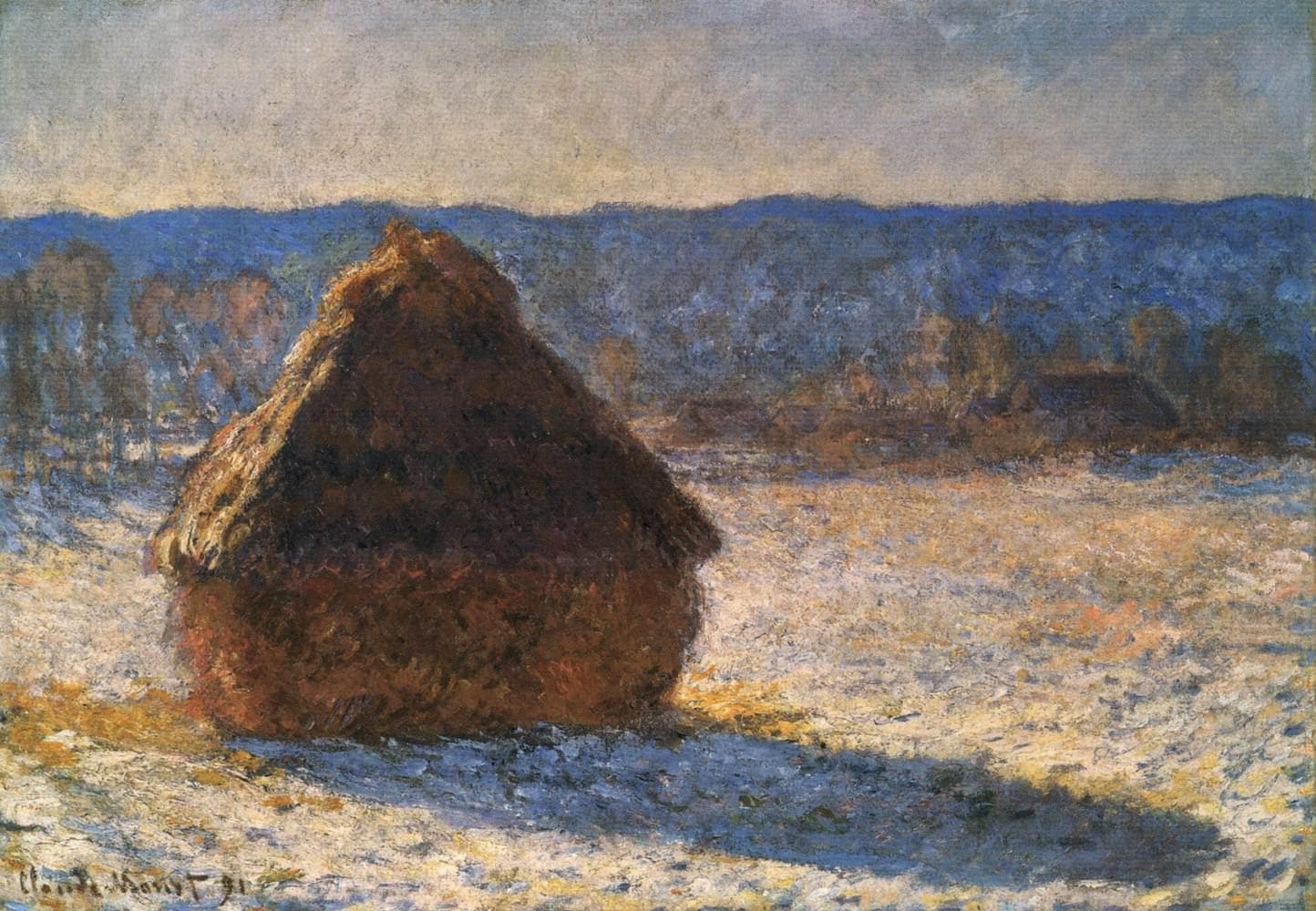
Grainstack (Snow Effect)
Claude Monet · 1891
Grainstacks, Snow Effect
Claude Monet · 1891
Grainstack in the Sunlight, Snow Effect
Claude Monet · 1891
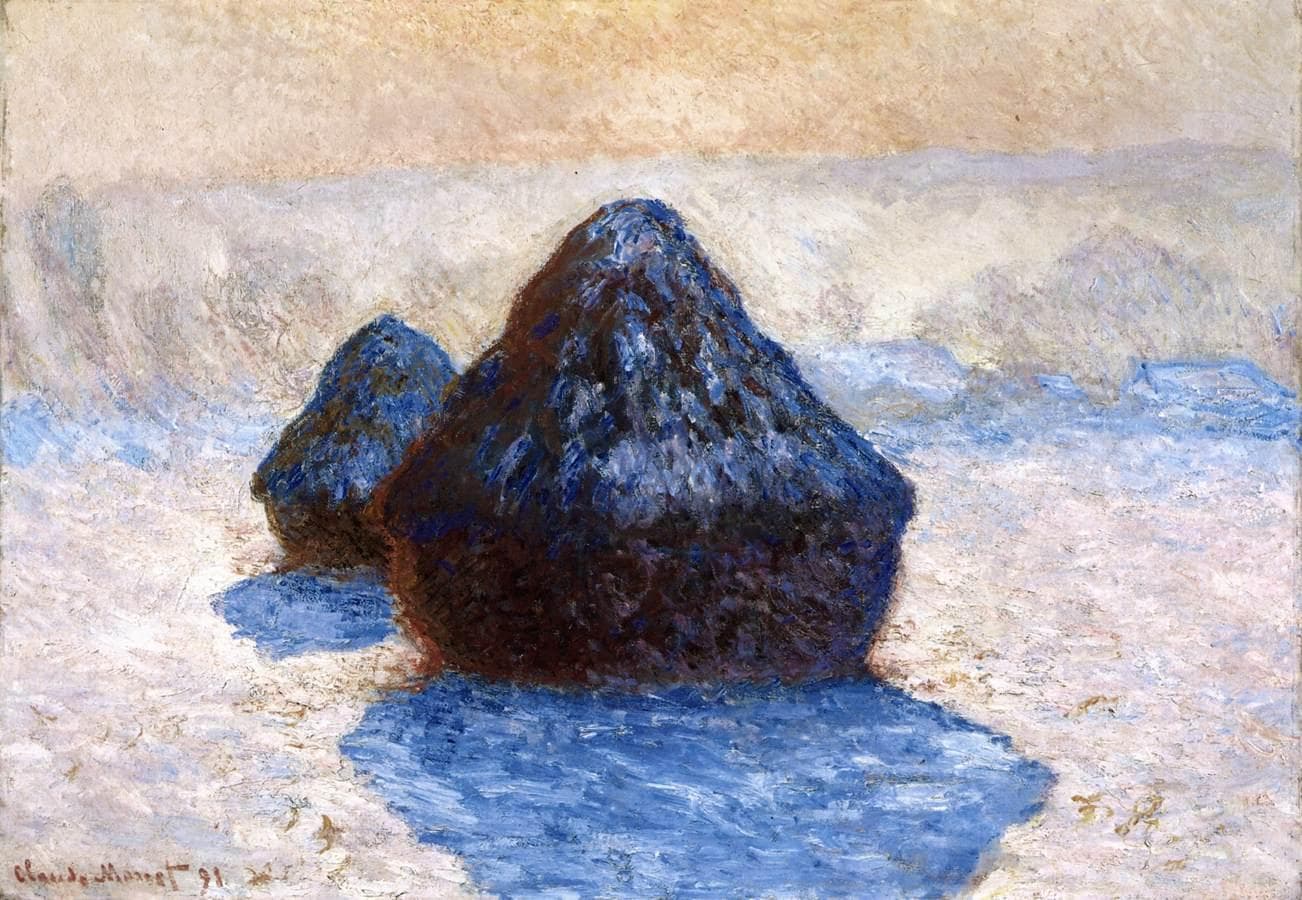
Haystacks, Snow Effect
Claude Monet · 1891
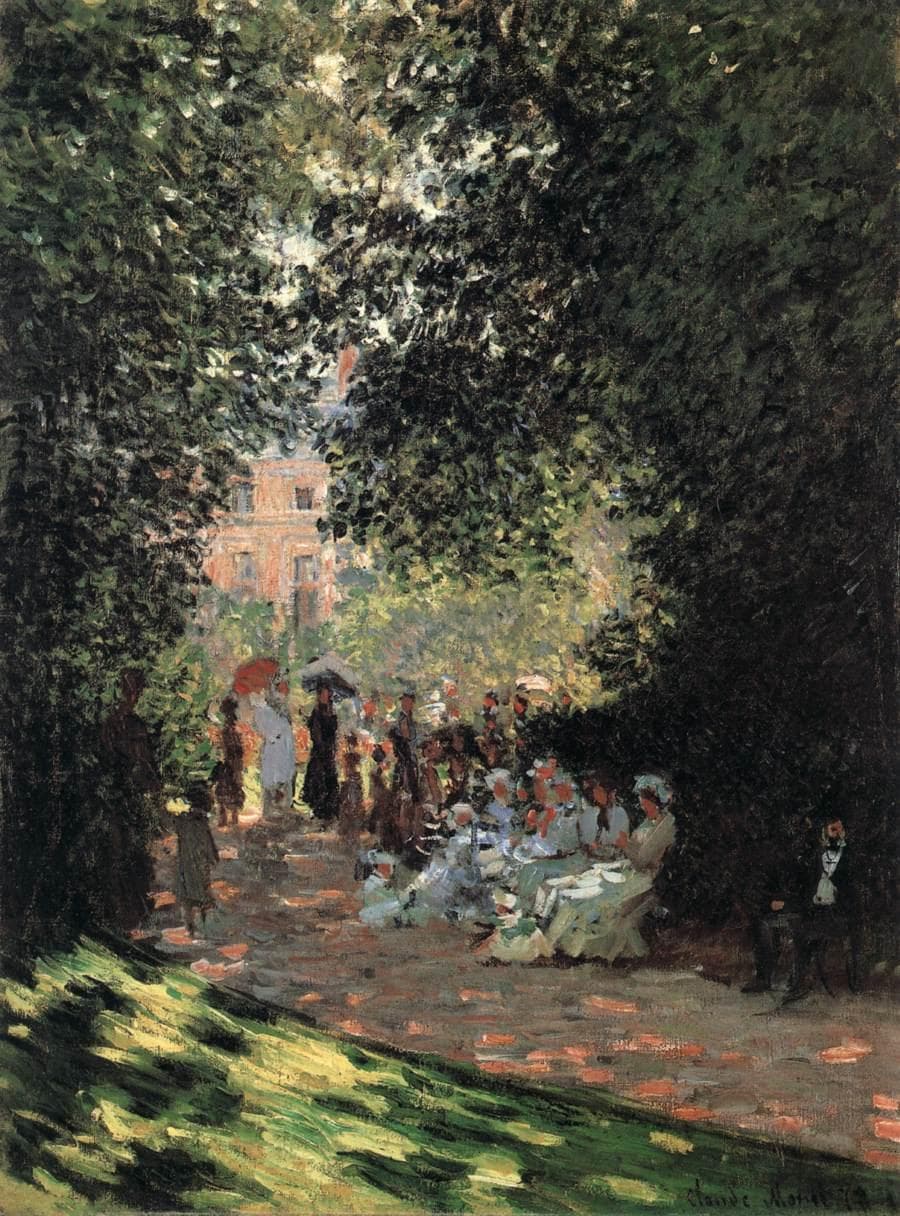
The Parc Monceau
Claude Monet · 1878
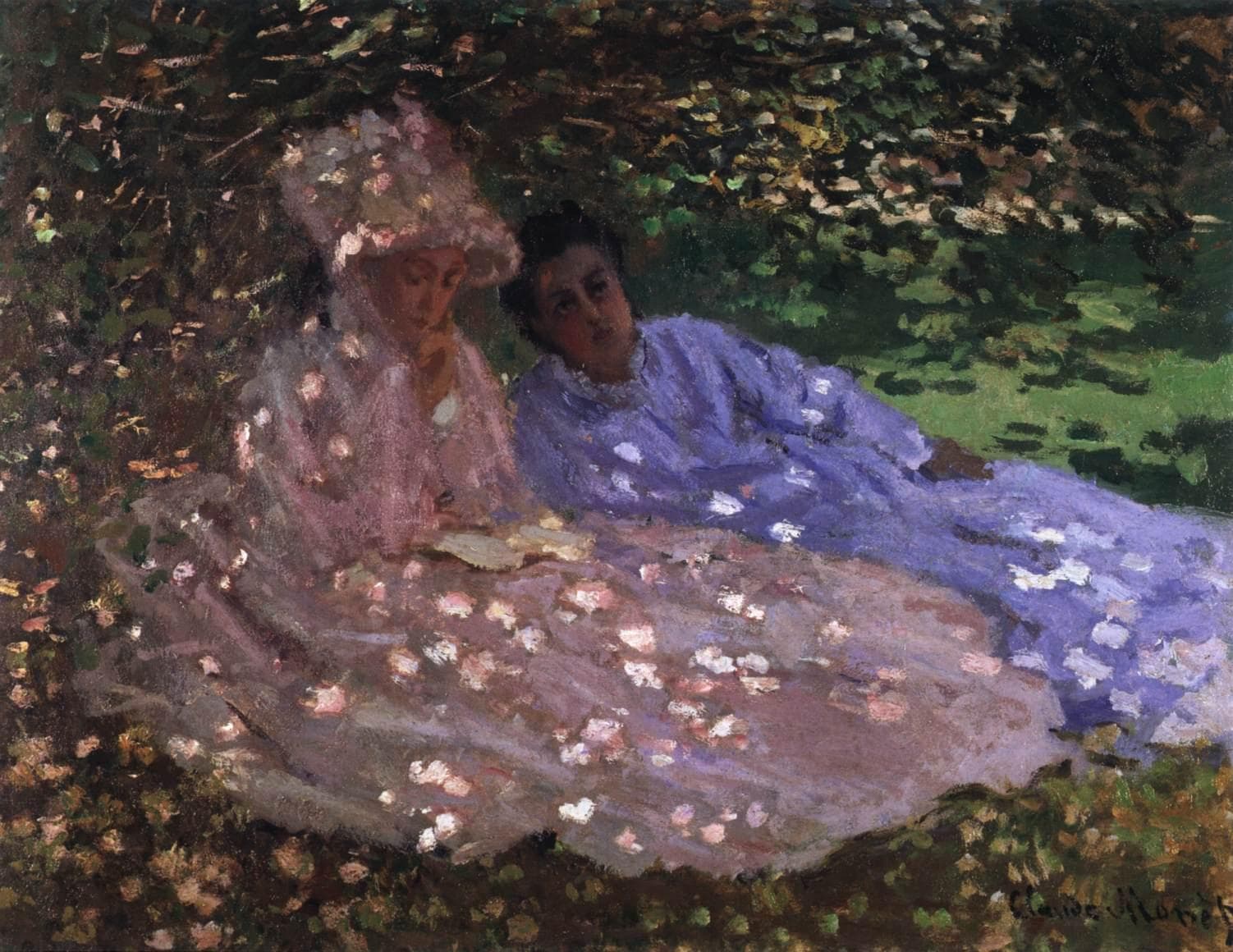
Madame Monet and a Friend in the Garden
Claude Monet · c. 1872
The Picnic
Claude Monet · 1865–66