Image: WikiArt (as stated on Commons) · Public domain · via Wikimedia Commons
La Meule
Claude Monet, 1891
La Meule is an 1891 painting by Claude Monet of a single wheat stack at Giverny silhouetted against a blazing orange sunset sky. It is in a private collection.
- Artist
- Claude Monet
- Date
- 1891
- Medium
- Oil on canvas
- Dimensions
- 65 × 92 cm
- Collection
- Private collection
- Movement
- Impressionism
- Catalogue
- Wildenstein 1285
- Nature & Landscape
La Meule (The Grainstack) is a painting by Claude Monet, signed and dated "Claude Monet 91" at lower left. It shows a single stack of wheat in the field beside his house at Giverny, seen against the sun as it sets behind a ridge of hills. The canvas measures 65 by 92 centimeters. Wildenstein's catalogue lists it as number 1285, and it is in a private collection.
What you're looking at
One stack fills the middle of the canvas, broad and slightly lopsided, with a small knot at its peak. The sun is directly behind it and low, so the stack is almost entirely in shadow: a deep, warm mass of brown, olive and red. Around its outline, Monet runs a thin, glowing rim of orange-red where light shines through the loose straw, the effect that gives the backlit stacks their characteristic halo.
The color structure is bold and simple. Across the top, a wide band of orange and yellow sky blazes above the horizon, paling to cream and lilac at the very top edge. Below it, cutting straight across the canvas, is a band of vivid blue: the hills and distant field, in shadow, painted in strokes of cobalt and turquoise. The stack sits against both, its top in the orange, its body in the blue.
The foreground field is painted in hot oranges, reds and ochers mixed with streaks of blue and green. The whole lower half of the picture seems to burn, as if the light of the sky had soaked into the ground.
A backlit sunset: what makes this version distinct
Several single-stack canvases from the winter of 1890–91 show the motif against a low sun. What sets La Meule apart is the sheer contrast of its color bands: orange against blue, set side by side with almost no transition. It is a lesson in complementary color, the hot sky and the cool shadows sharpening each other. Compare the softer, misty treatment of Mia's Grainstack, Sun in the Mist, where the stack nearly dissolves, and the frosty pinks of Haystacks at Sunset, Frosty Weather. Closer in mood is Grainstack in the Sunlight, the canvas that set a Monet auction record in 2016, though there the stack is pushed to the side and cropped.
Here, by contrast, the stack is centered and whole. It reads almost as an emblem, a dark shape held between two bands of color.
How it was painted
Monet painted these sunsets outdoors, where the effect lasted only minutes. He wrote to the critic Gustave Geffroy in October 1890 that he was trying to capture "instantaneity" and that the sun set so fast he could not keep up. He kept several canvases in the field and worked on each only while its particular light lasted, then completed them in the studio. The brushwork here is fast and open: long horizontal strokes in the sky, short vertical dabs in the blue band, and a loose, scrubbed texture in the stack.
Ownership
The canvas is in a private collection, and its recent ownership and exhibition history are not well documented in public sources. Most of the twenty-five or so canvases of the main campaign are in museums, which makes the privately held ones, like this and Grainstacks in the Sunlight, Morning Effect, rare sights.
Where to see it
La Meule is not on public view. For versions in museums, see our Haystacks series hub and Where to See Monet. The field is described in Giverny, and the artist in Claude Monet.
Questions & answers
Where is Monet's La Meule?
This version, catalogued by Wildenstein as number 1285, is in a private collection and not on public view. Several similar backlit single-stack paintings are in museums, including the Museum of Fine Arts, Boston, and the Minneapolis Institute of Art.
When and where was it painted?
Monet painted it in the field next to his house at Giverny during the winter of 1890–91 and dated it 1891. Like the rest of the series, it was begun outdoors and finished in the studio.
What does La Meule show?
A single wheat stack in silhouette against a setting sun. A band of orange and yellow sky sits above a band of vivid blue hills, the stack glows at its edges, and the foreground field burns with orange and red.
What does meule mean?
Meule is the French word for a stack of harvested grain, usually wheat, piled in a field before threshing. That is why many museums prefer "grainstack" or "stack of wheat" to the familiar English title "haystack."
More by the artist
Claude Monet
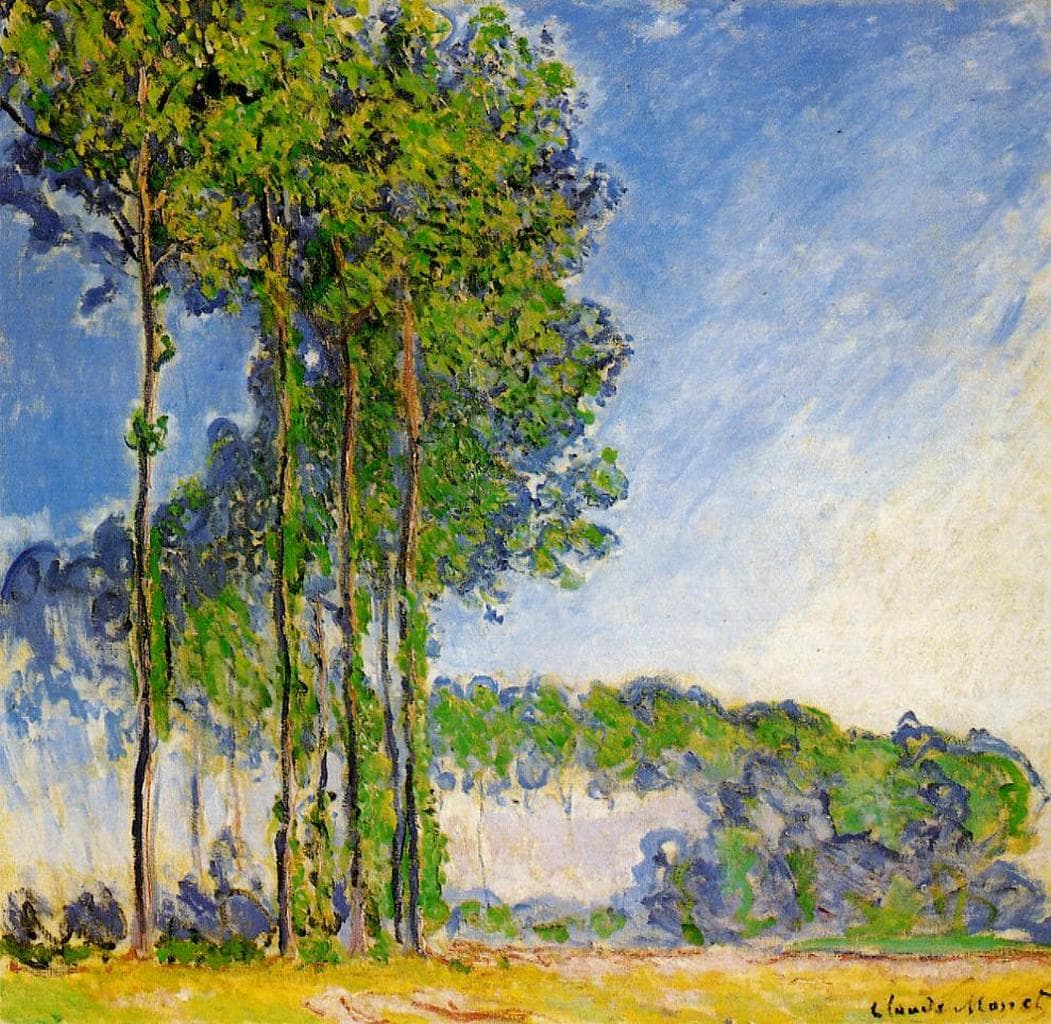
Les Peupliers
Claude Monet · 1891
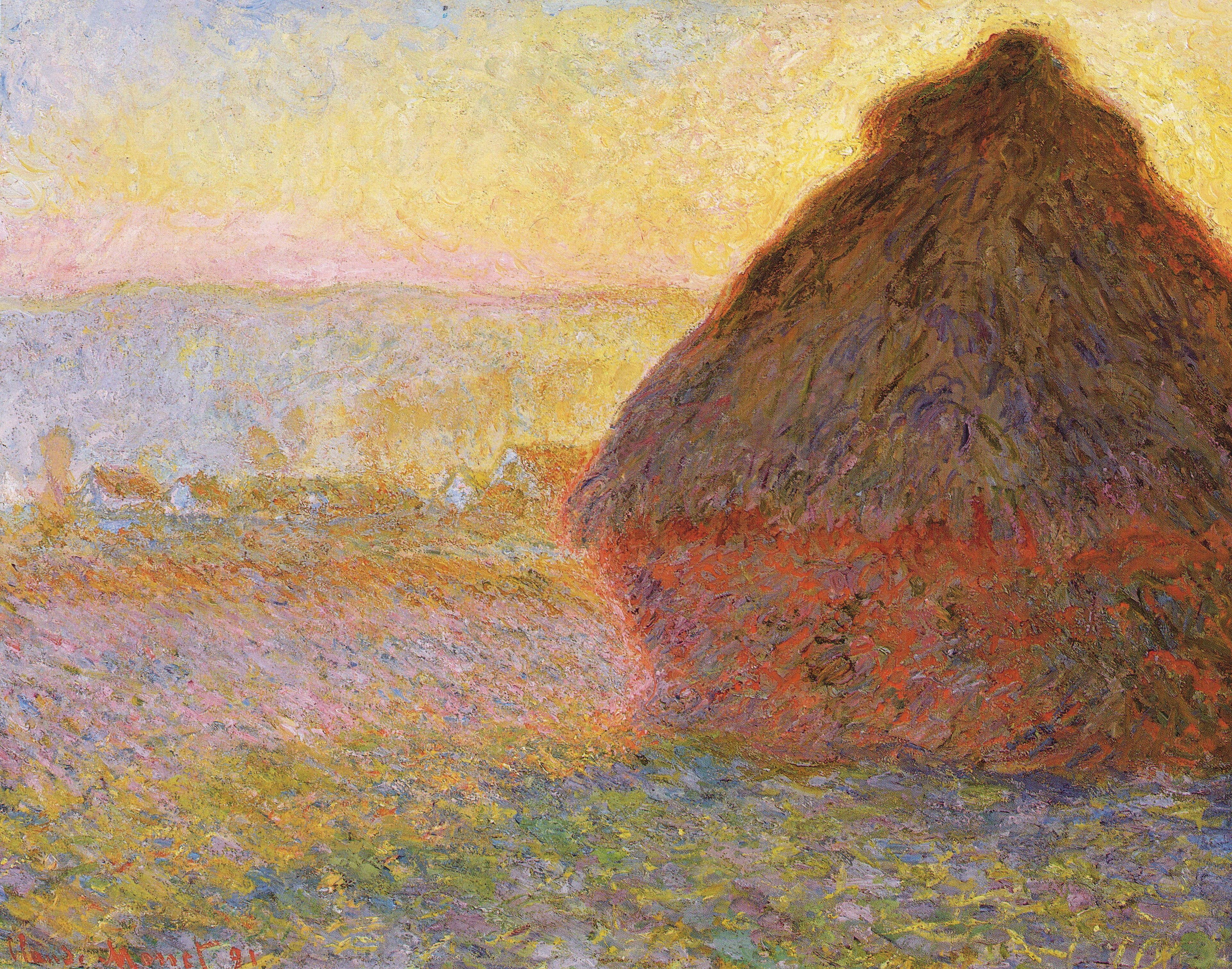
Grainstack (Sunset)
Claude Monet · 1891
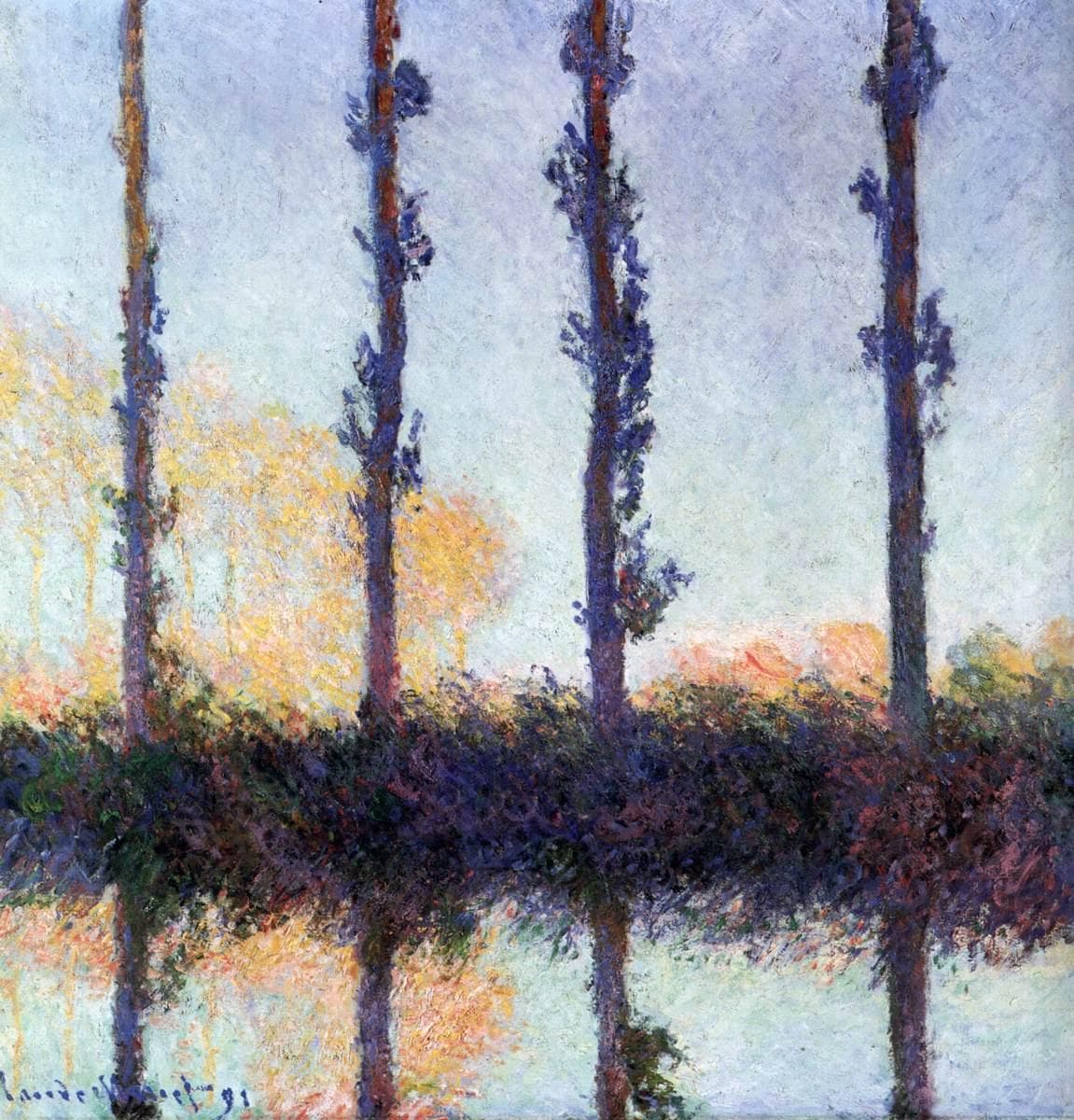
The Four Trees
Claude Monet · 1891
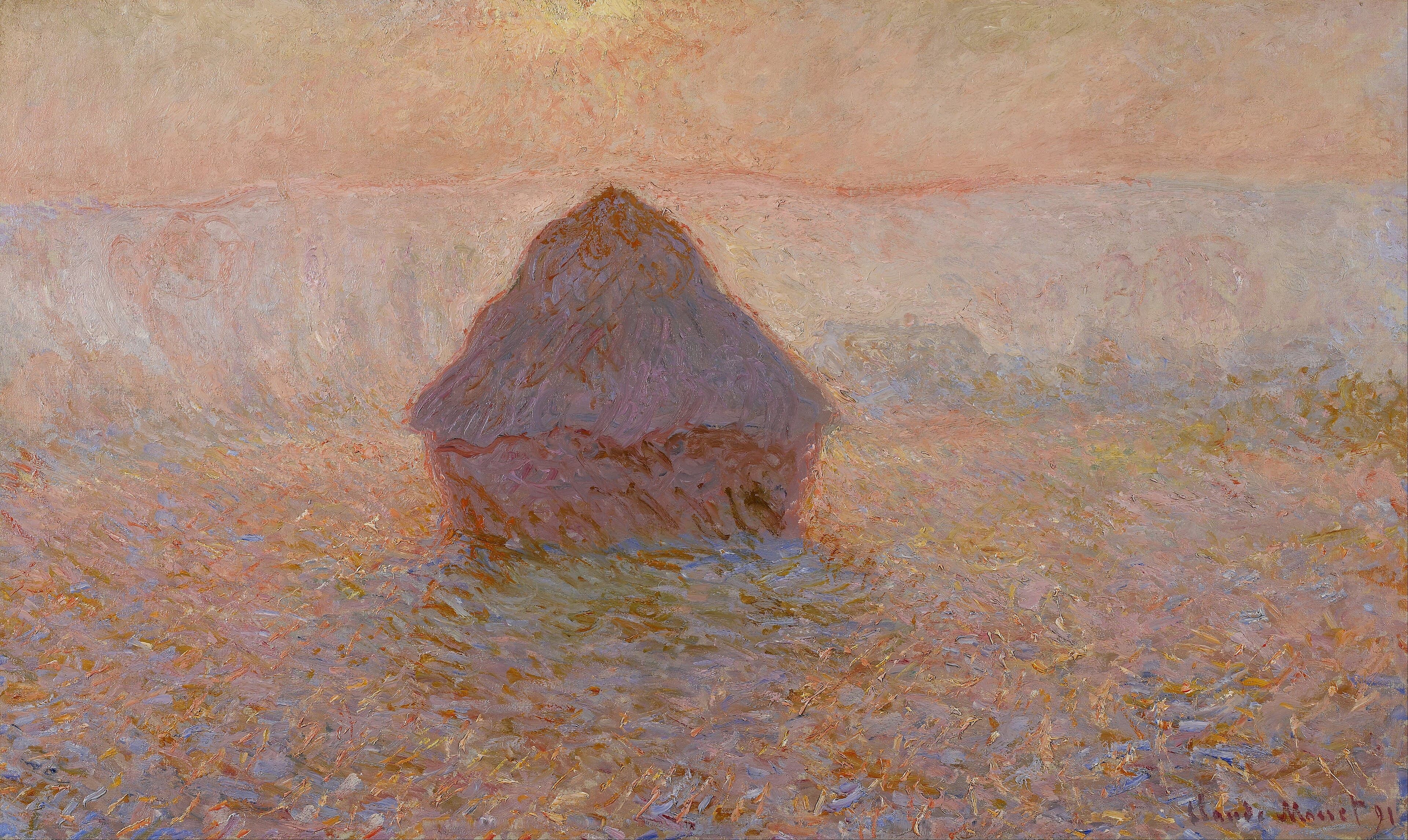
Grainstack, Sun in the Mist
Claude Monet · 1891
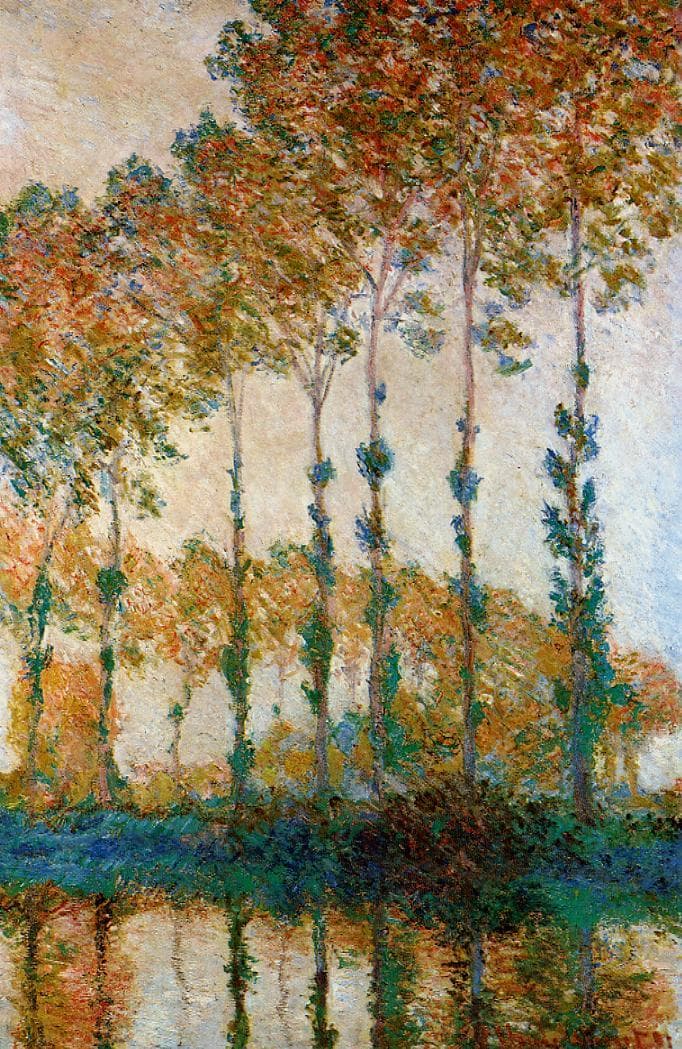
Poplars on the Banks of the Epte, Autumn
Claude Monet · 1891
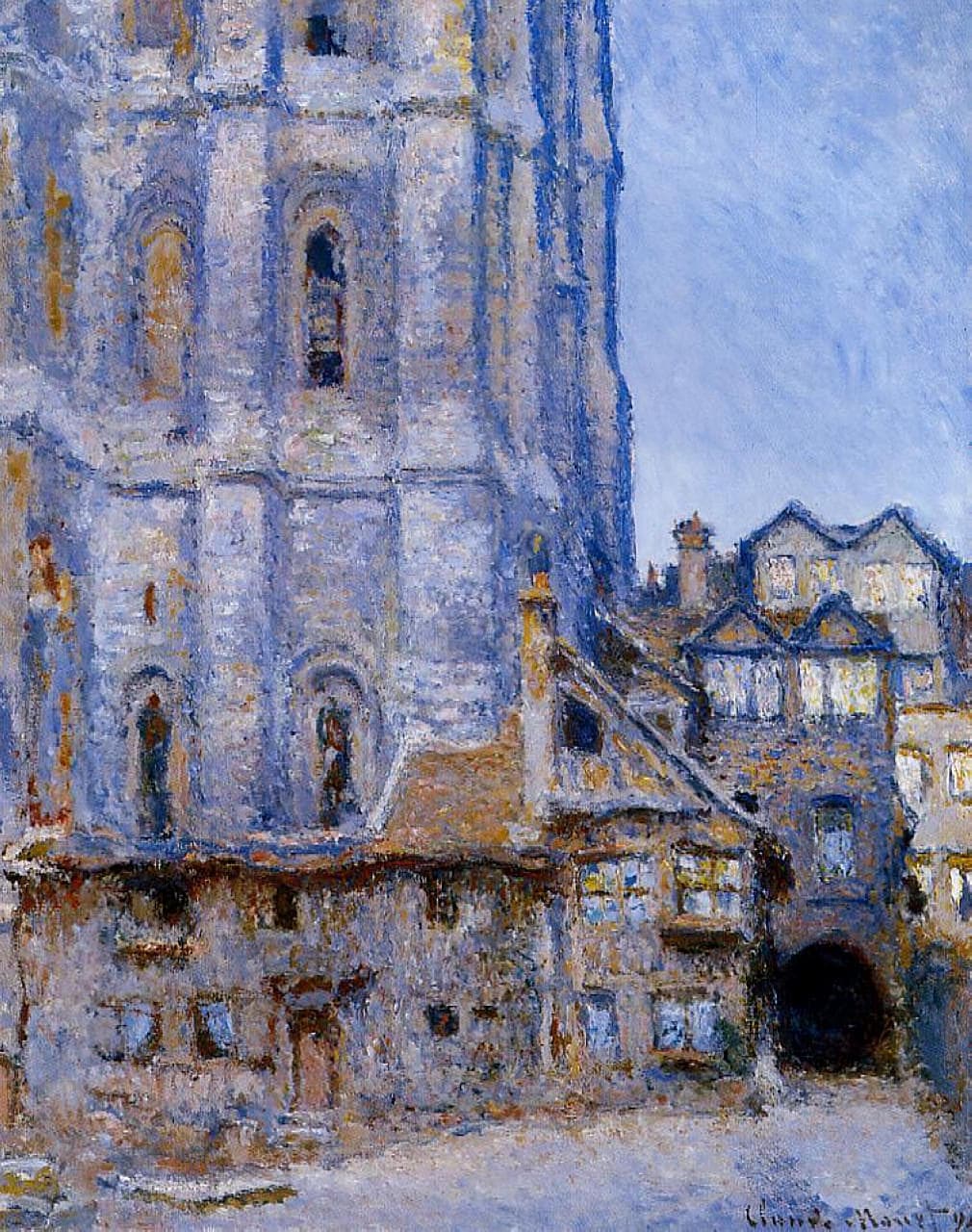
La Cour d'Albane, Rouen
Claude Monet · 1892–94
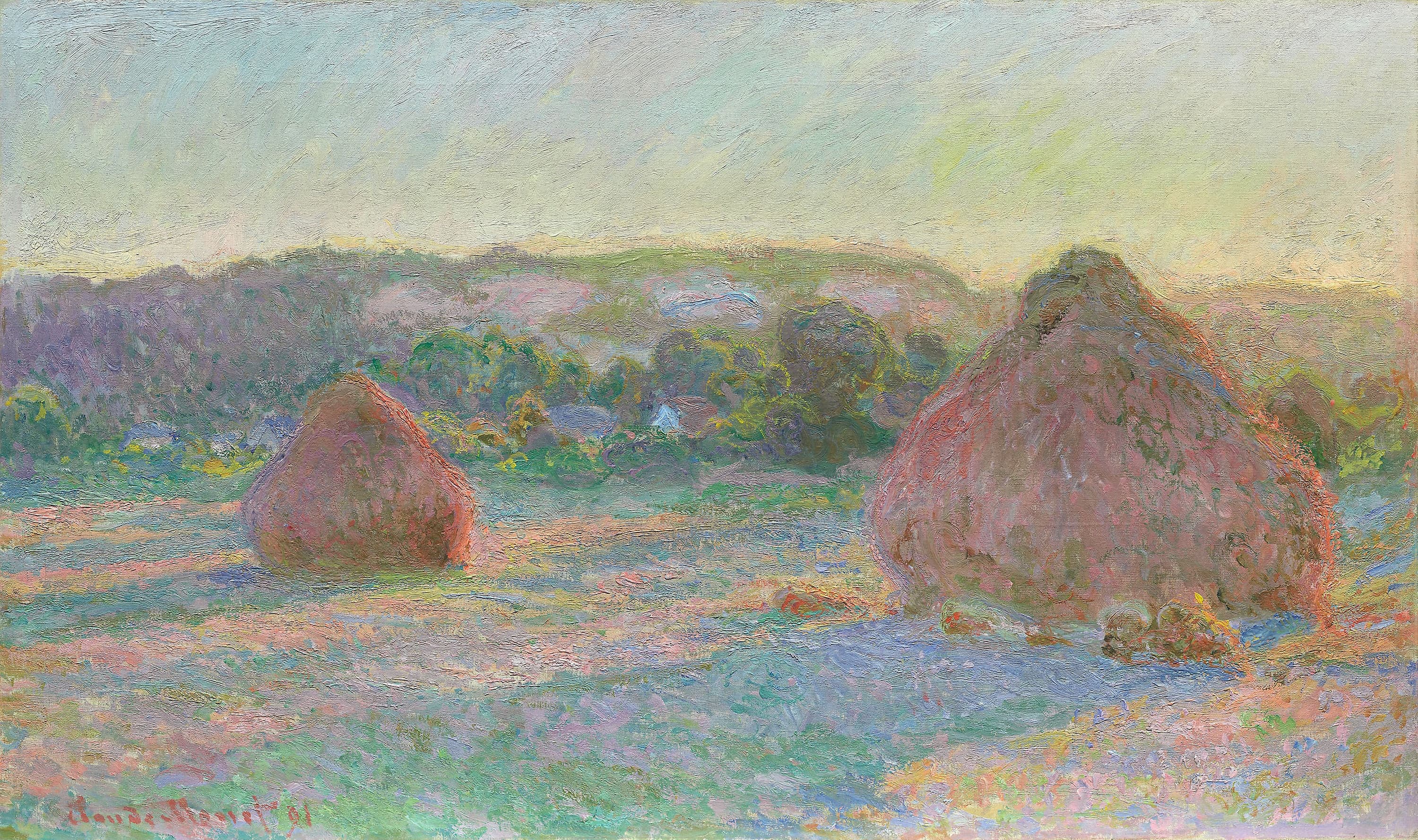
Stacks of Wheat (End of Summer)
Claude Monet · 1890–91
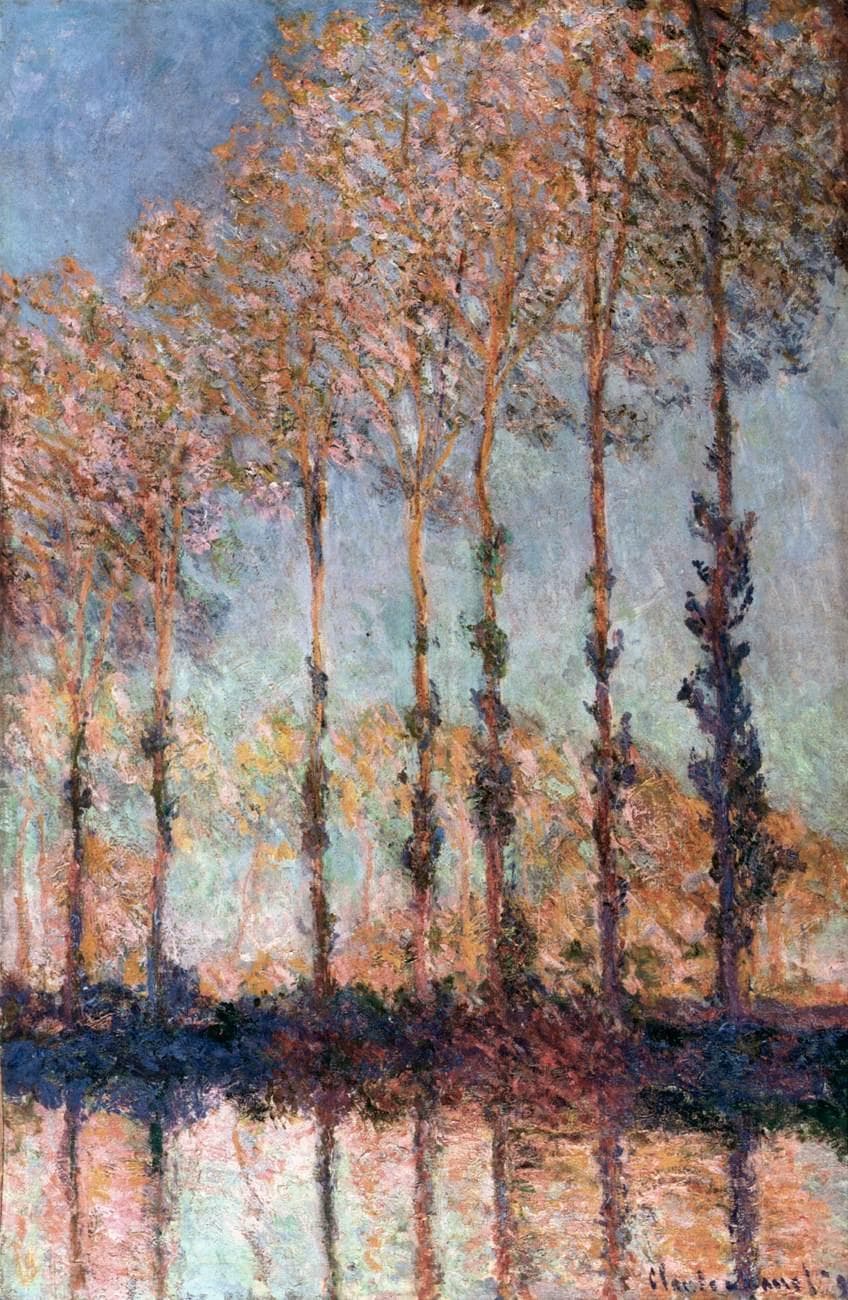
Poplars on the Banks of the River Epte
Claude Monet · 1891
Also painted in 1891
The same year
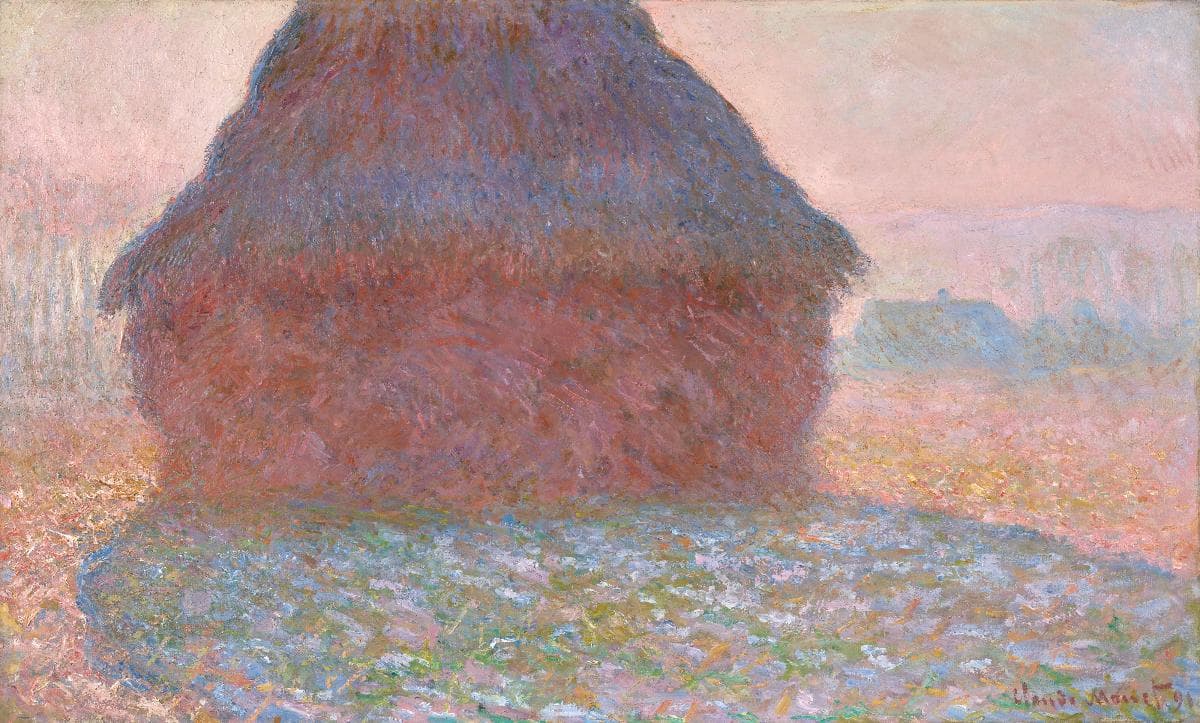
Grainstack in Sunlight
Claude Monet · 1891
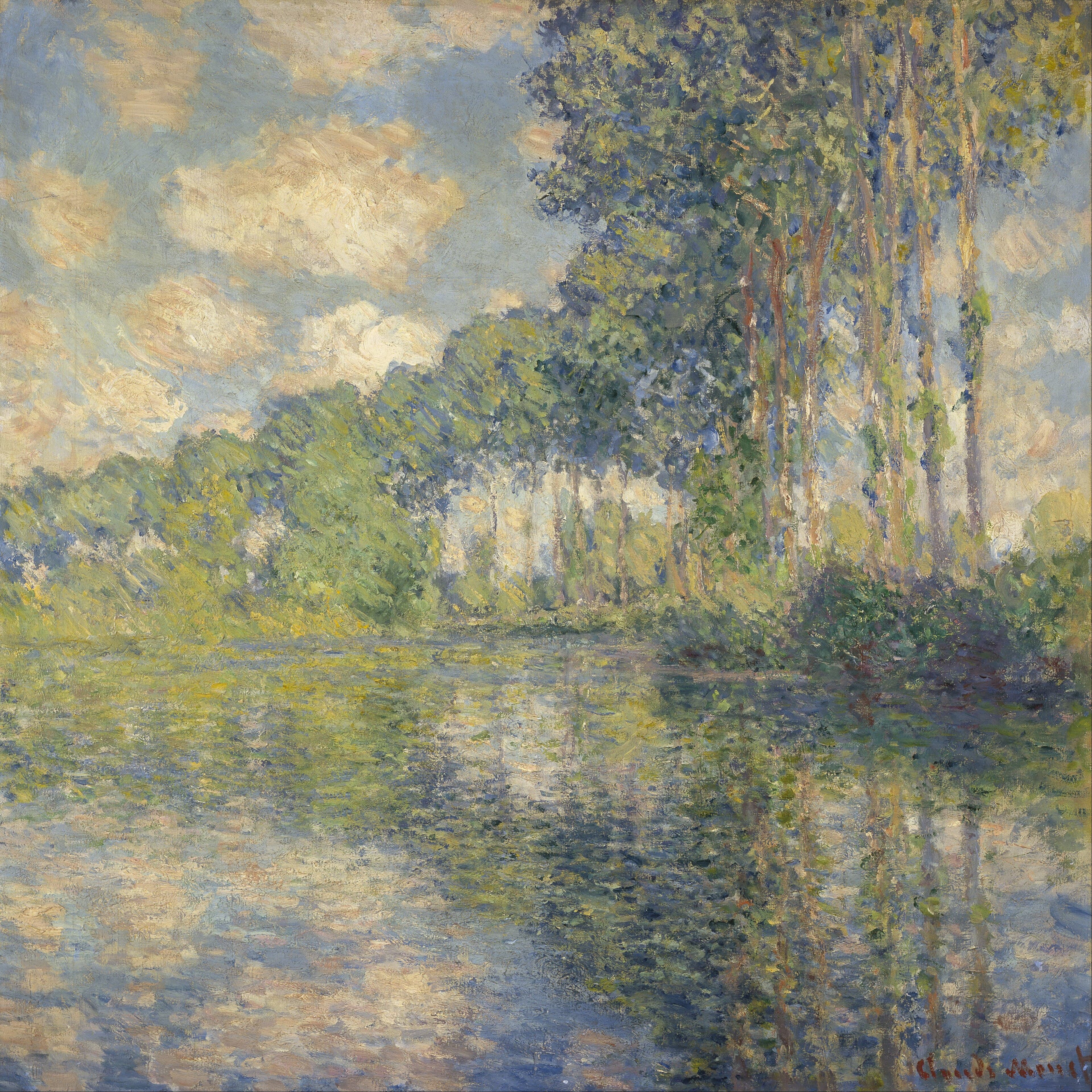
Poplars on the Epte (Edinburgh)
Claude Monet · 1891
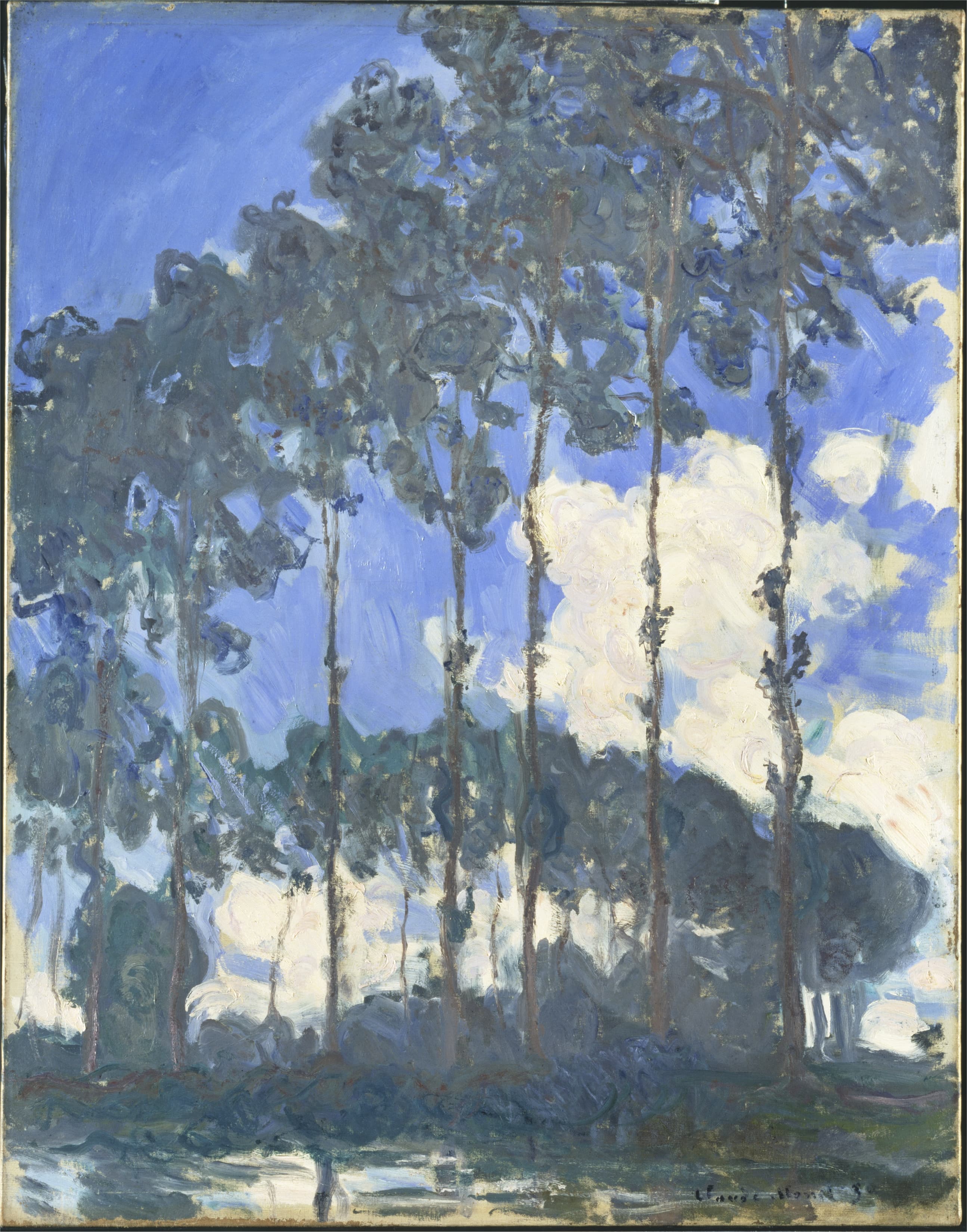
Poplars on the Epte (London)
Claude Monet · 1891
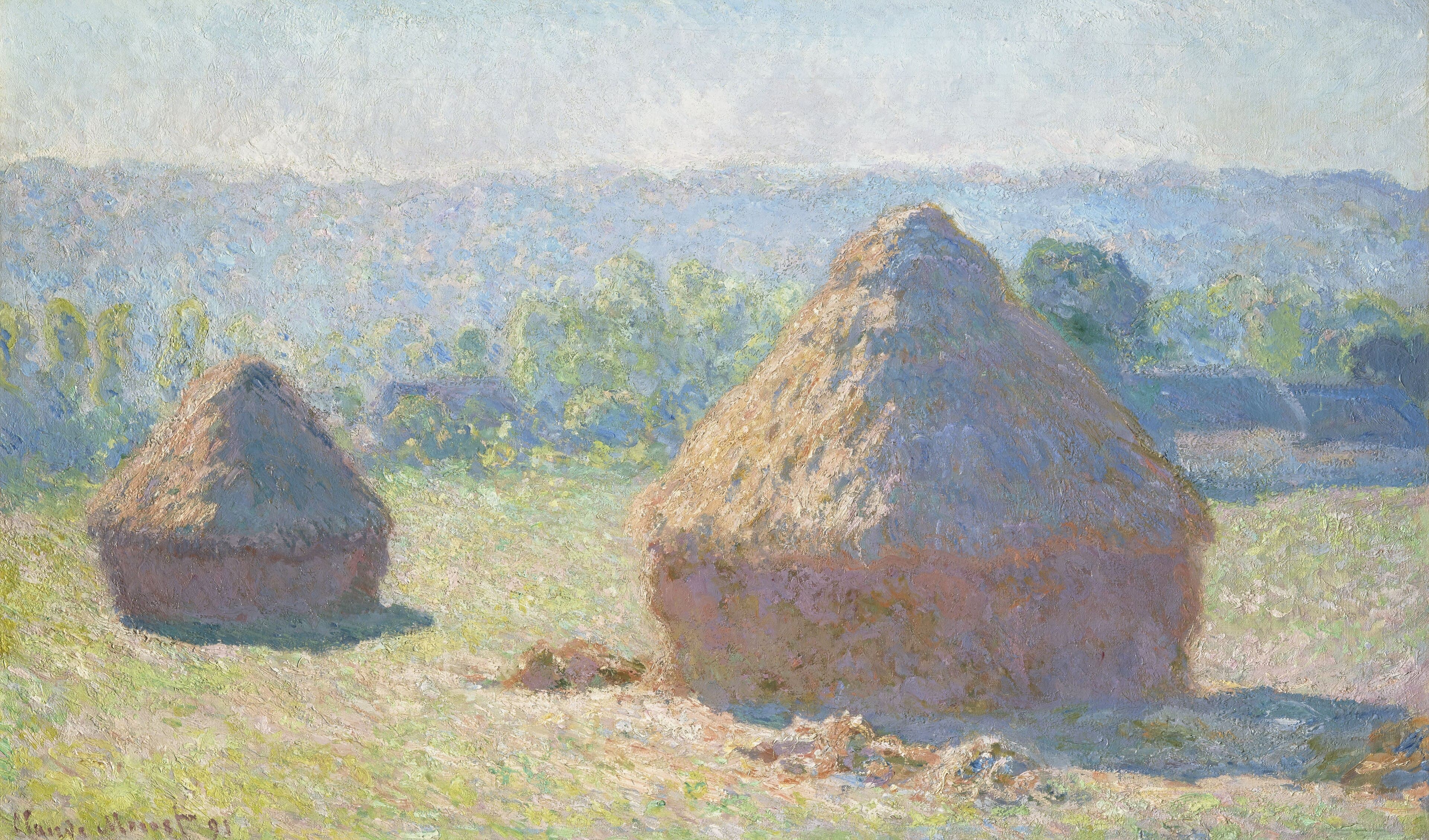
Haystacks, End of Summer
Claude Monet · 1891
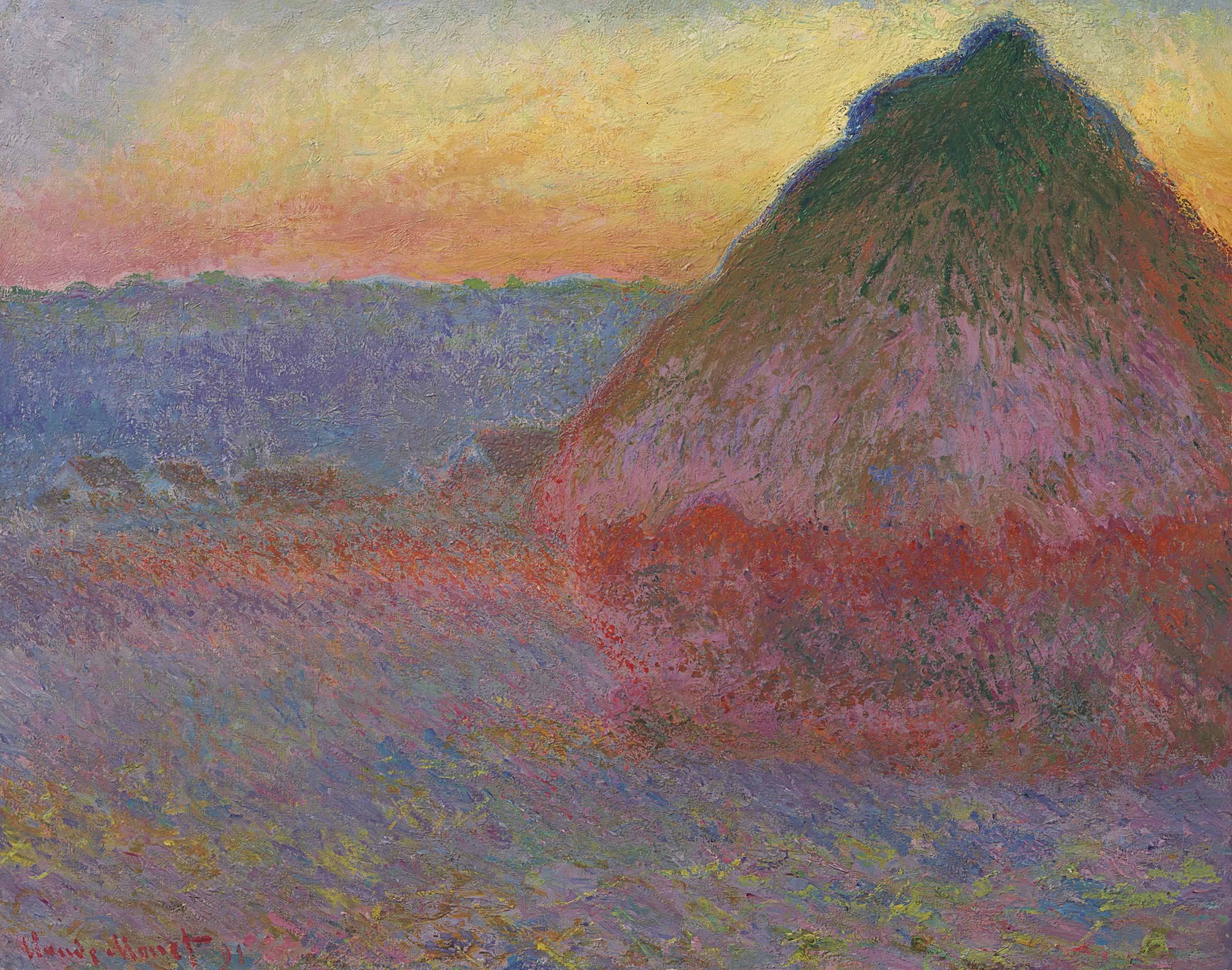
Grainstack in the Sunlight
Claude Monet · 1891
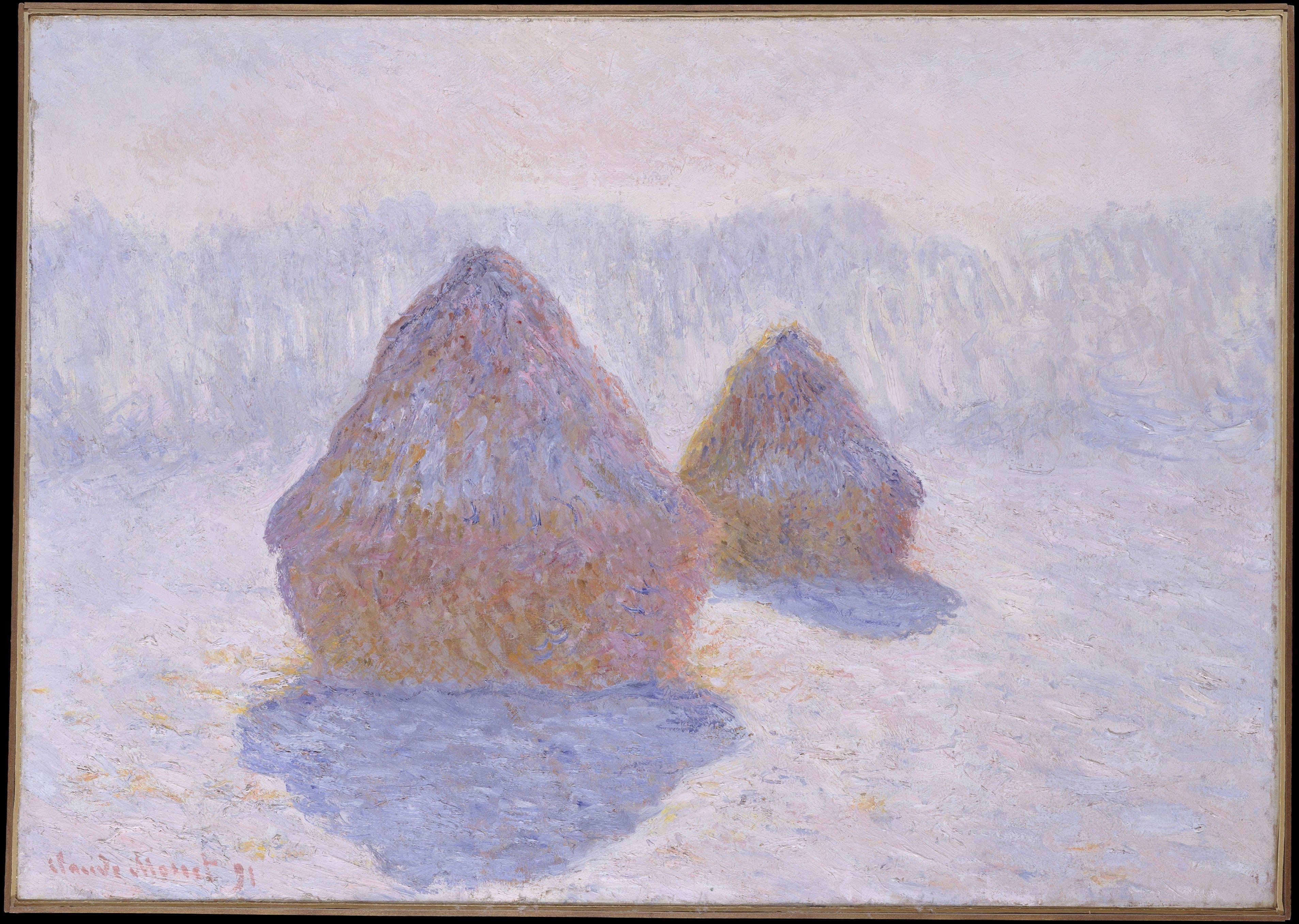
Haystacks (Effect of Snow and Sun)
Claude Monet · 1891
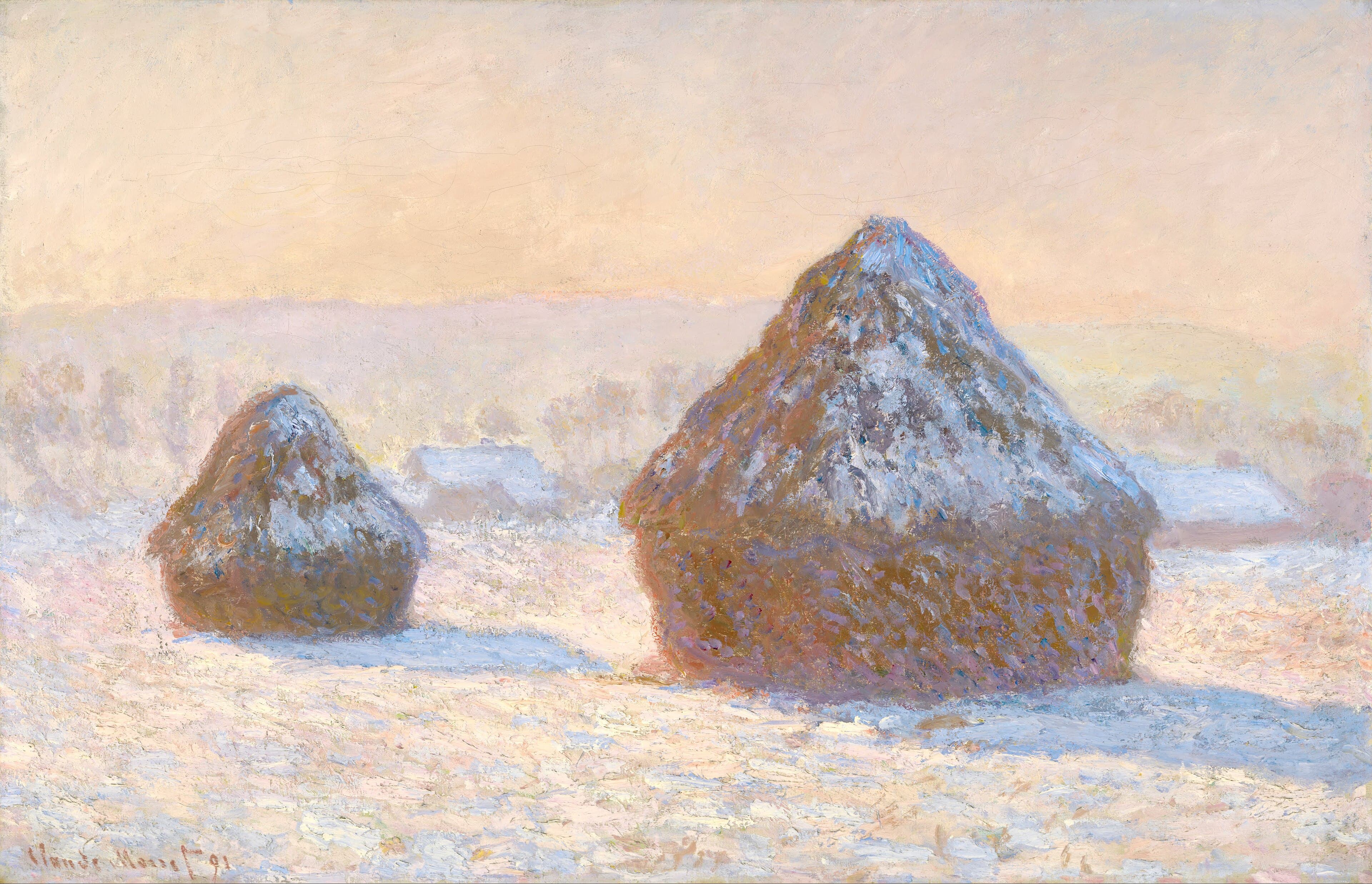
Wheatstacks, Snow Effect, Morning
Claude Monet · 1891
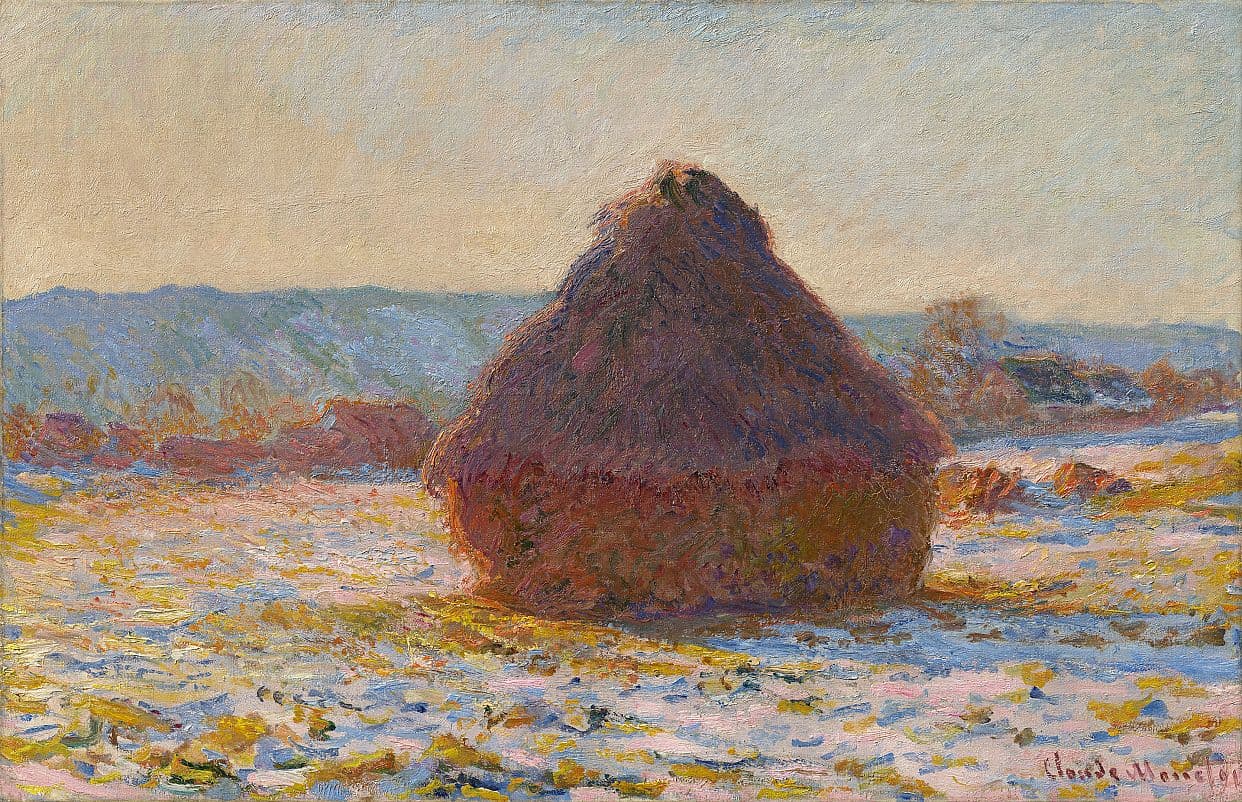
Grainstack in the Sunlight, Snow Effect
Claude Monet · 1891
Kindred works
You may also study
Grainstack in the Sunlight
Claude Monet · 1891
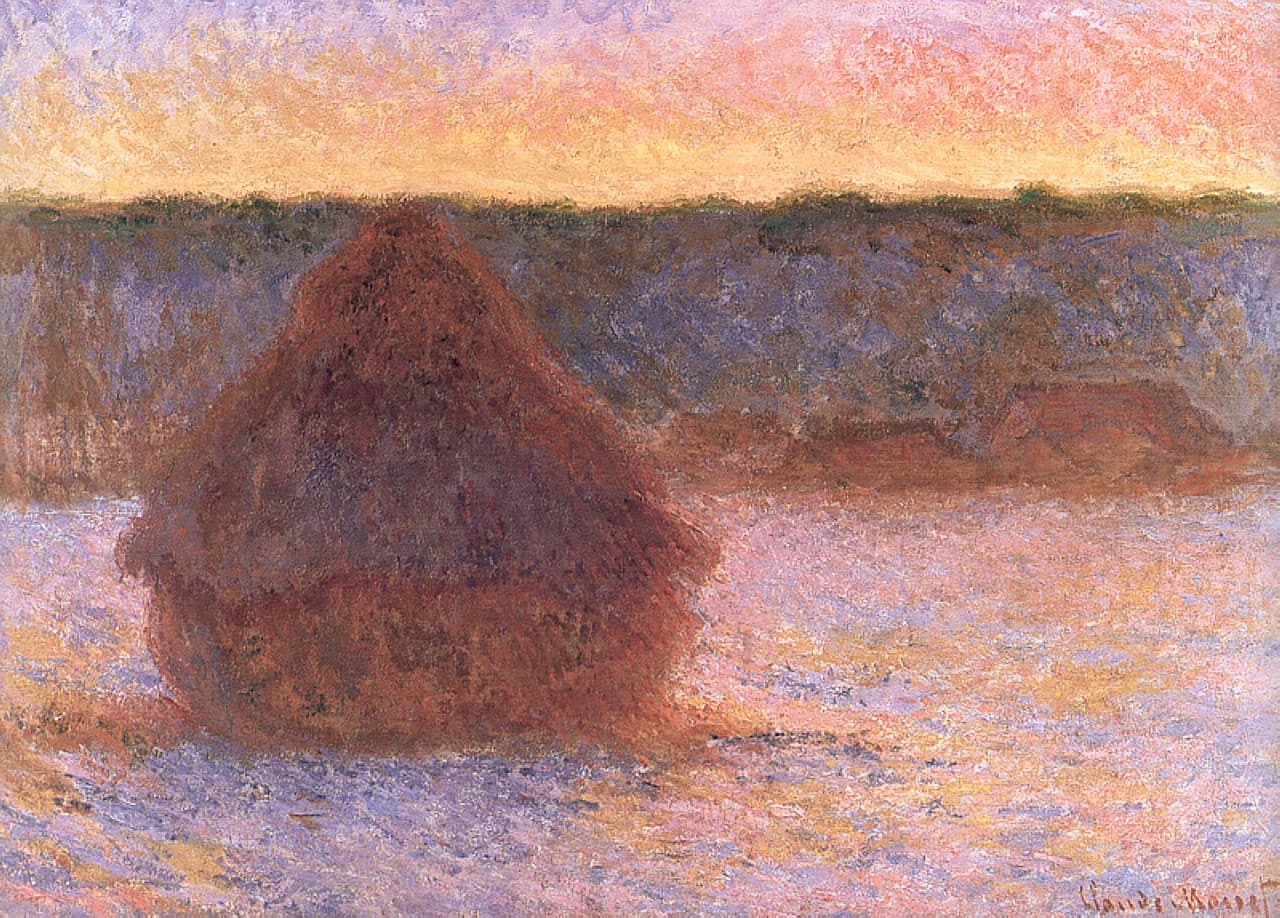
Haystacks at Sunset, Frosty Weather
Claude Monet · 1891
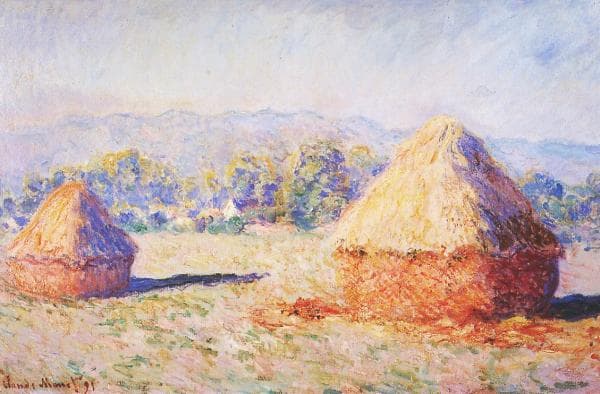
Grainstacks in the Sunlight, Morning Effect
Claude Monet · 1890
The Manneporte (Étretat)
Claude Monet · 1883
The Holy Office (Pilgrimage to the Fountain of San Isidro)
Francisco Goya · c. 1819–1823
The Rocks at Pourville, Low Tide
Claude Monet · 1882
Water Lily Pond, Green Harmony
Claude Monet · 1899
Winter Sun at Lavacourt
Claude Monet · 1879–80