Image: Gösta Serlachius Fine Arts Foundation (press photo) · Public domain · via Wikimedia Commons
Haystack in the Evening Sun
Claude Monet, 1891
Haystack in the Evening Sun is a small painting by Claude Monet, dated 1891, of a single wheat stack casting a long violet shadow near the village at Giverny. It is in the Gösta Serlachius Fine Arts Foundation, Mänttä, Finland, where a hidden signature was found in 2015.
- Artist
- Claude Monet
- Date
- 1891
- Medium
- Oil on canvas
- Dimensions
- 38.5 × 52 cm
- Collection
- Gösta Serlachius Fine Arts Foundation, Mänttä, Finland
- Movement
- Impressionism
- Nature & Landscape
Haystack in the Evening Sun is a small oil painting by Claude Monet, dated 1891, of a single stack of wheat in a meadow near the village of Giverny in late-afternoon light. It measures about 38.5 by 52 centimeters, much smaller than the canvases of the main stacks series, and belongs to the Gösta Serlachius Fine Arts Foundation in Mänttä, Finland. The foundation bought it in the 1950s, but its attribution long rested on style alone, because no signature could be seen. In 2015 researchers at the University of Jyväskylä found a signature hidden under the paint surface, which made headlines as the discovery of a "new" Monet.
What you're looking at
The stack stands left of center, a tall cone with a flattened, drum-shaped base. Its cap is a dusky mauve and brown, its base a band of deep red-violet. The sun is low and behind it to the right, so a long, soft shadow in blue-violet runs from the stack's base down toward the lower right, the most striking shape in the picture.
The field around it is a mix of pale green, yellow and pink, with two small dark mounds, perhaps heaps of cut straw, at left and right. Behind the meadow is a band of trees and bushes in yellow-green, blue and violet, and at right rise the roofs of village houses. One gable is picked out in orange-red, a bright accent against the blue of the other roofs. At far left a blue hillside slopes down into the trees.
The sky is pale, almost white, with faint touches of yellow and lilac. It is painted in a thick, lumpy texture that catches light on the surface of the canvas.
Evening sun: what makes this version distinct
The picture is closer in feeling to Monet's earlier stack paintings of the 1880s, such as Haystacks at Giverny, than to the monumental canvases of the 1891 series. The stack is not isolated against the sky but set in a lived-in landscape, with houses, trees and cut straw around it. The scale is intimate, and the view is closer to a sketch of a particular evening than to a long-meditated harmony.
What it shares with the series is the subject of light. The long violet shadow and the orange gable are the two notes that tell us the time of day. Compare the large, single-stack sunsets of the same year, Boston's Grainstack (Sunset) or Mia's Grainstack, Sun in the Mist, where the stack is seen against the sun and the background dissolves. Here we stand with the sun at our side, and the village stays sharp.
The hidden signature
The painting's history in Finland is unusual. The industrialist Gösta Serlachius built one of the most important private art collections in Finland, and his foundation acquired the Monet in the 1950s. Because the picture carried no visible signature, its status remained uncertain for decades. In 2015, scientists working at the University of Jyväskylä examined it with a hyperspectral camera, which records light beyond the visible range, and revealed a signature beneath later paint. The find gave strong support to the attribution, though the work is still less documented than the canvases in the main catalogue.
How it was painted
The small size suggests an outdoor study made quickly, perhaps in a single sitting. The brushwork is direct: short dabs in the field, vertical strokes in the trees, and a curving, rough handling on the stack. The heavy texture of the sky and the separate touches of color are typical of Monet's handling around 1890.
Where to see it
The painting is in the collection of the Gösta Serlachius Fine Arts Foundation in Mänttä, central Finland, shown at the Serlachius museums. See our Haystacks series hub, Where to See Monet, Giverny and Claude Monet.
Questions & answers
Where is Monet's Haystack in the Evening Sun?
It belongs to the Gösta Serlachius Fine Arts Foundation in Mänttä, Finland, and is shown at the Serlachius museums. The foundation acquired it in the 1950s. It is one of the very few paintings by Monet in a Finnish collection.
How was the hidden Monet signature found?
In 2015, researchers at the University of Jyväskylä examined the painting with a hyperspectral camera, which records light beyond what the eye can see. It revealed a signature hidden beneath the paint surface, supporting the attribution to Monet.
When was it painted?
The foundation dates it to 1891, the year Monet exhibited his stacks series. Its small size and the village setting relate it to his more informal stack pictures of the late 1880s around Giverny.
What does the painting show?
A single wheat stack in a meadow in late-afternoon sun, casting a long violet shadow. Trees and village roofs, one gable bright orange-red, stand behind it under a pale, almost white sky.
More by the artist
Claude Monet
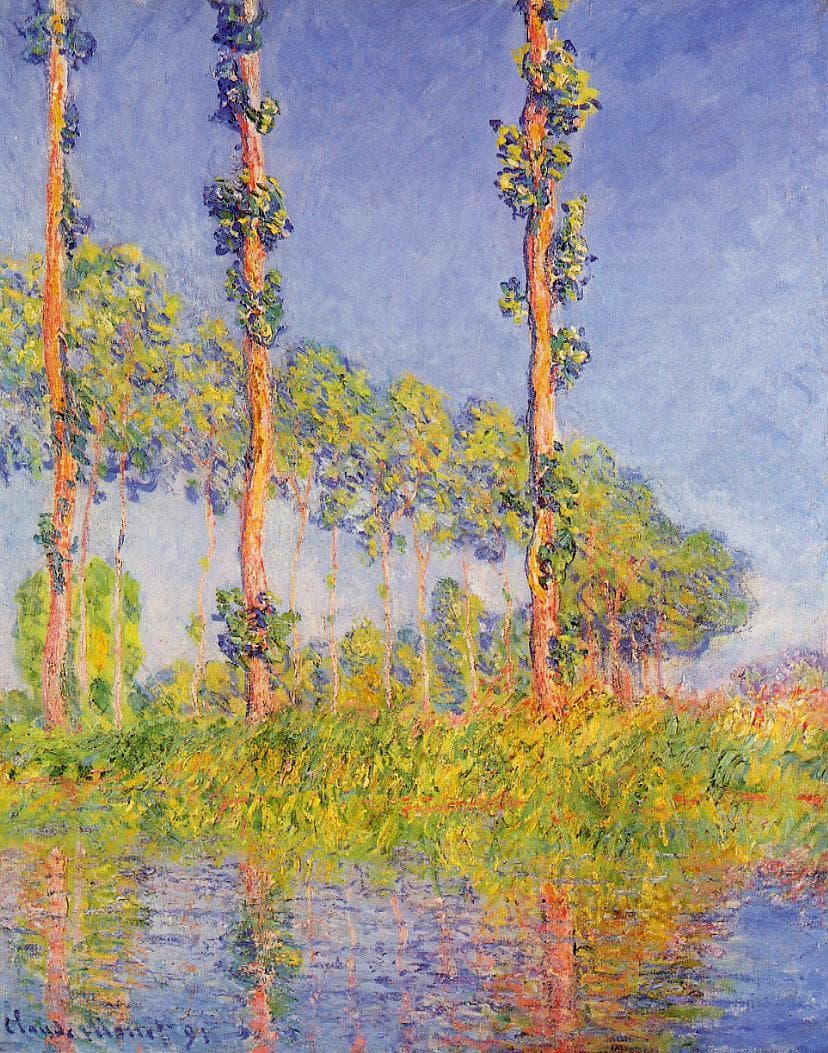
Three Poplars, Autumn Effect
Claude Monet · 1891
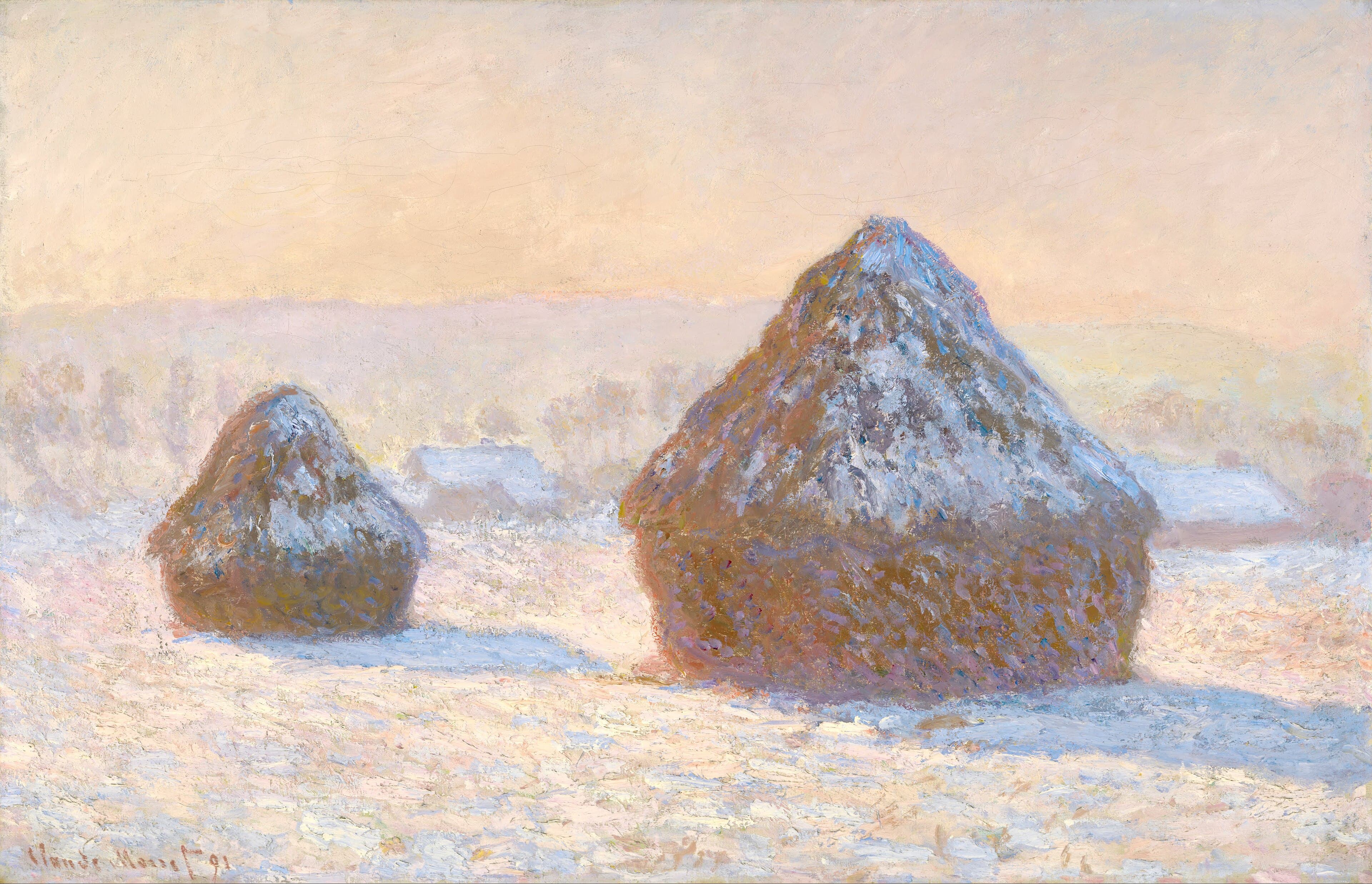
Wheatstacks, Snow Effect, Morning
Claude Monet · 1891
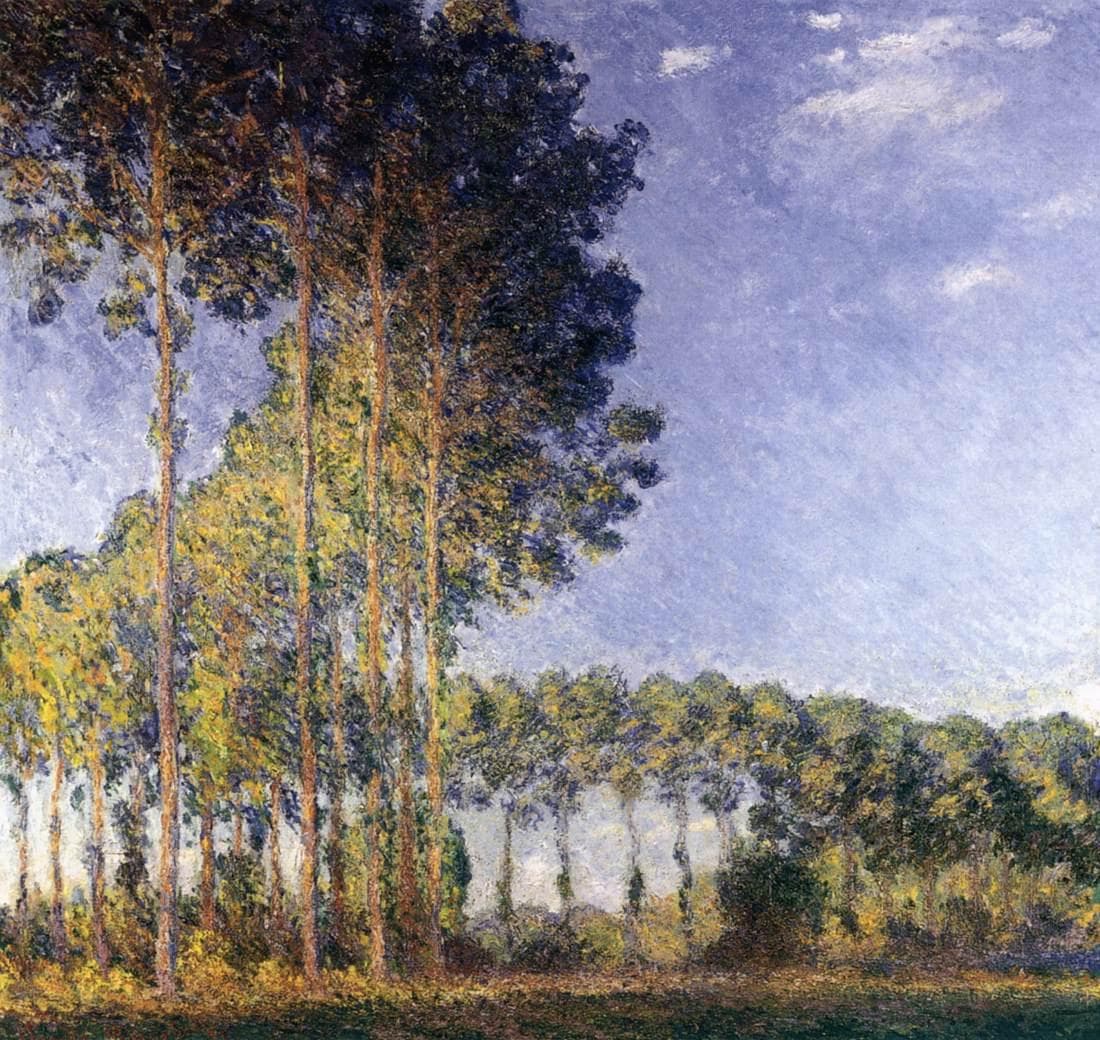
Poplars at the Banks of Epte
Claude Monet · 1891–92
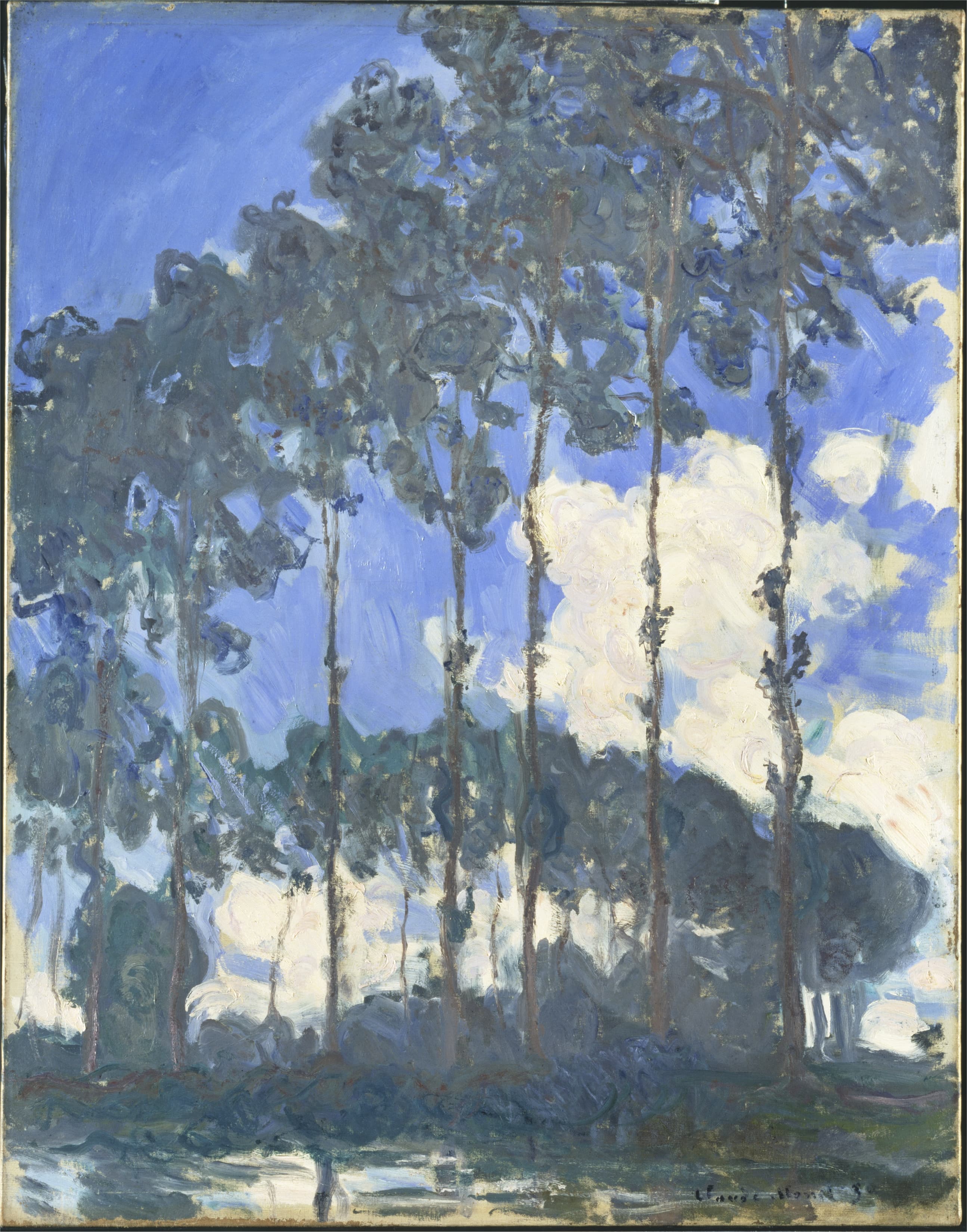
Poplars on the Epte (London)
Claude Monet · 1891
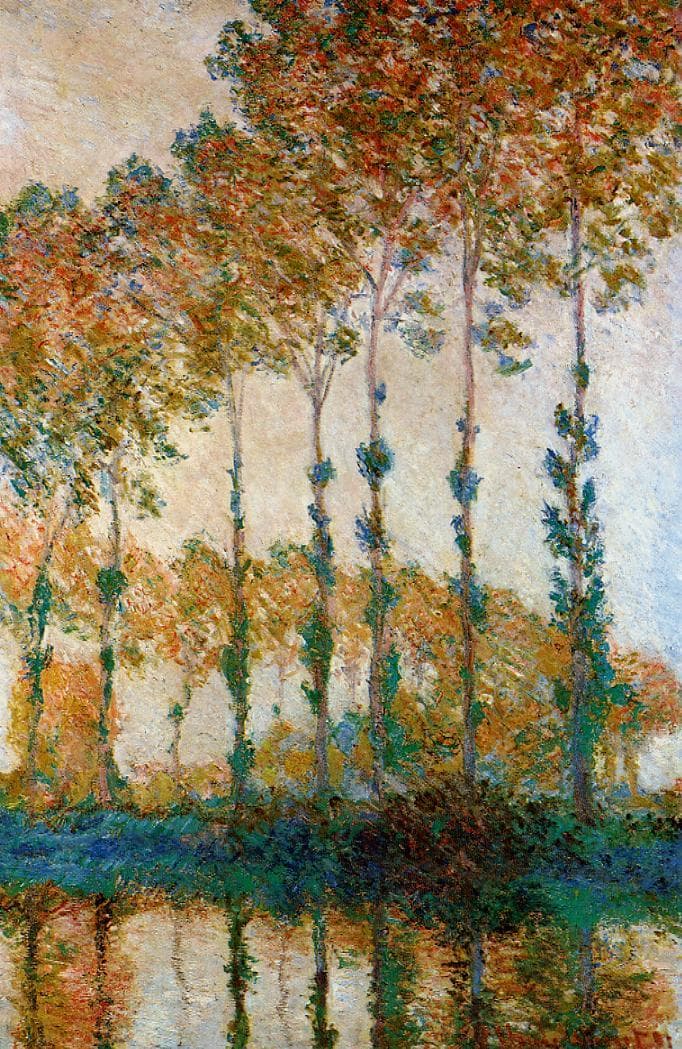
Poplars on the Banks of the Epte, Autumn
Claude Monet · 1891
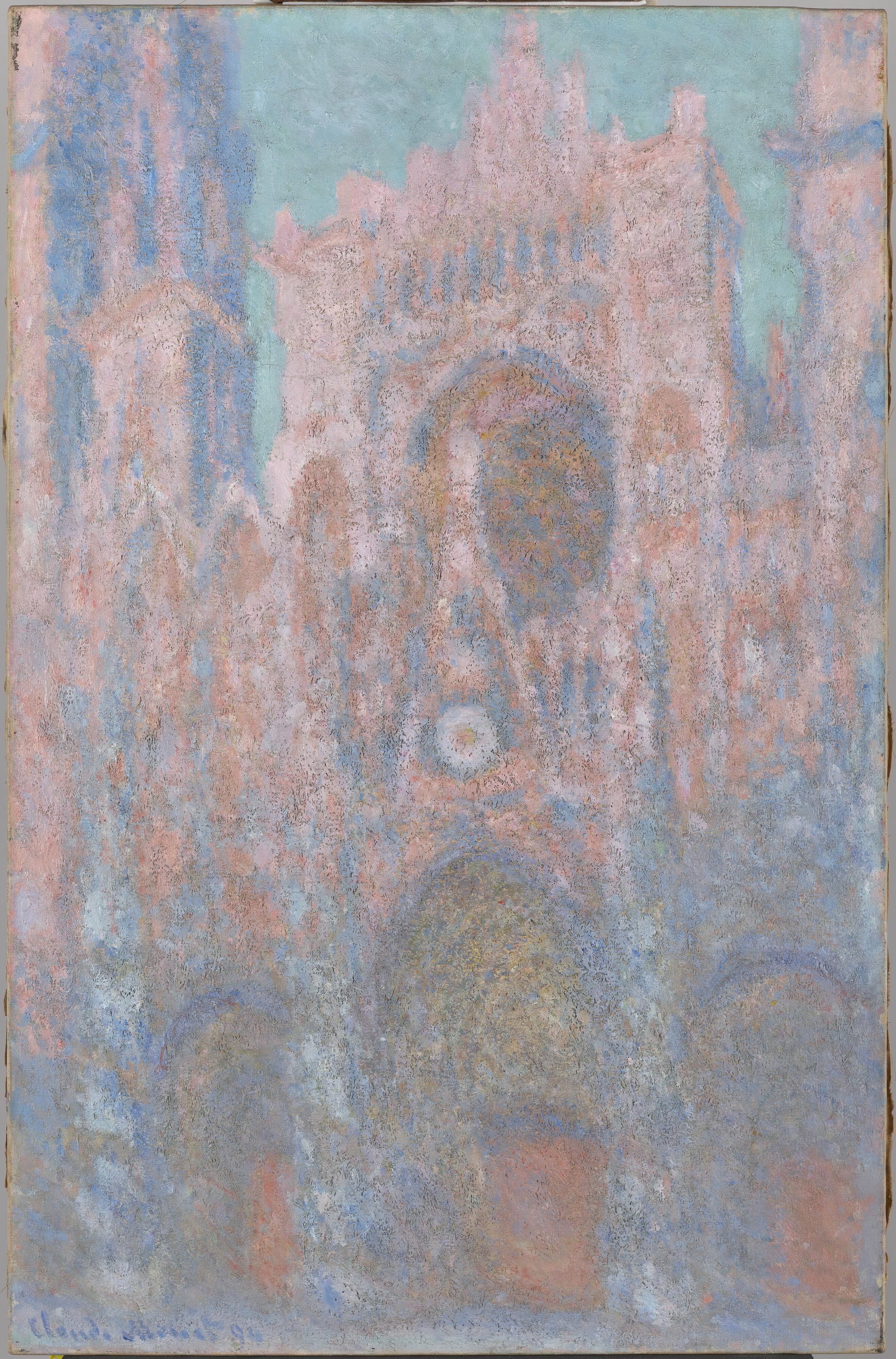
Rouen Cathedral: Setting Sun (Symphony in Pink and Grey)
Claude Monet · 1892–94
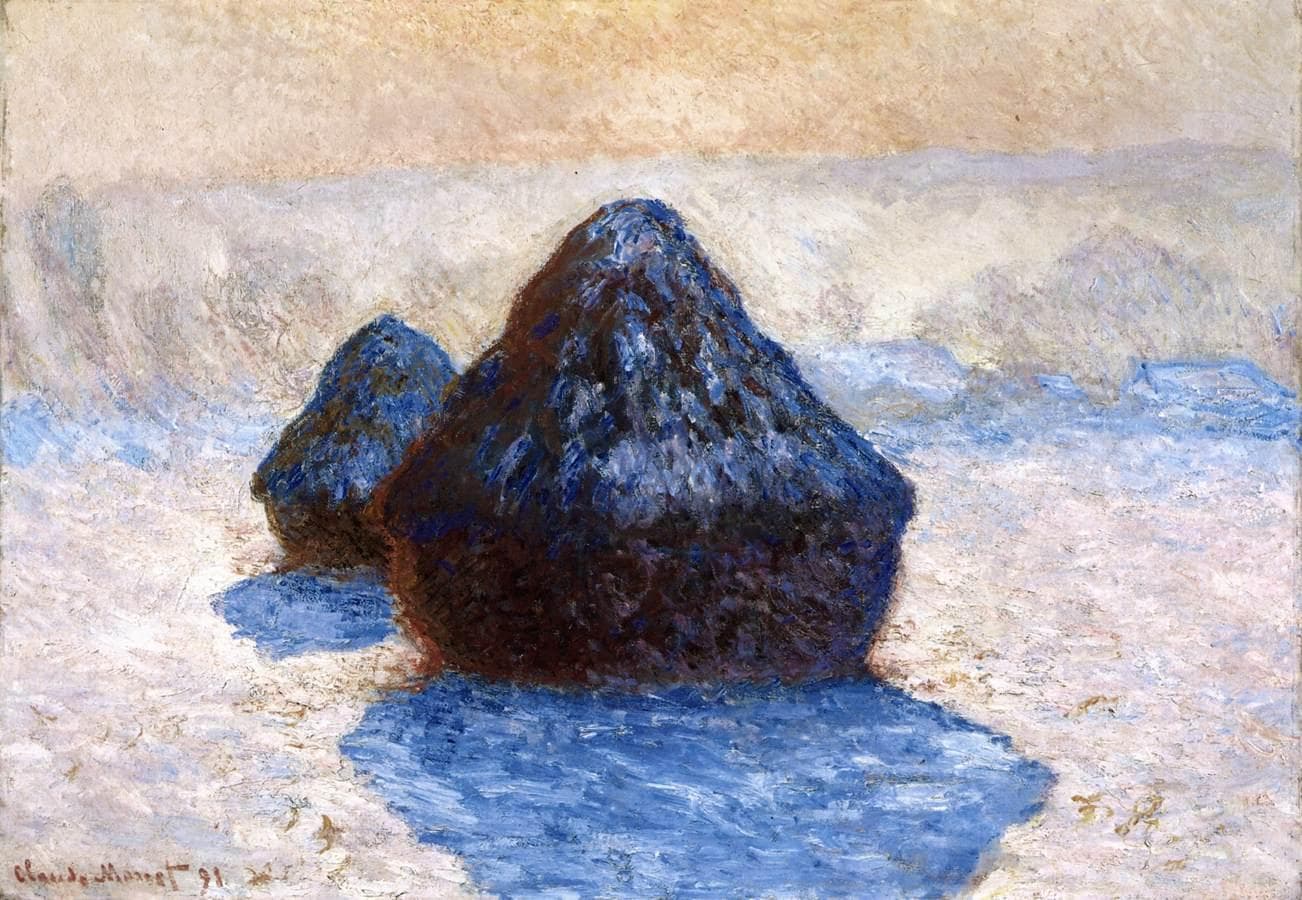
Haystacks, Snow Effect
Claude Monet · 1891
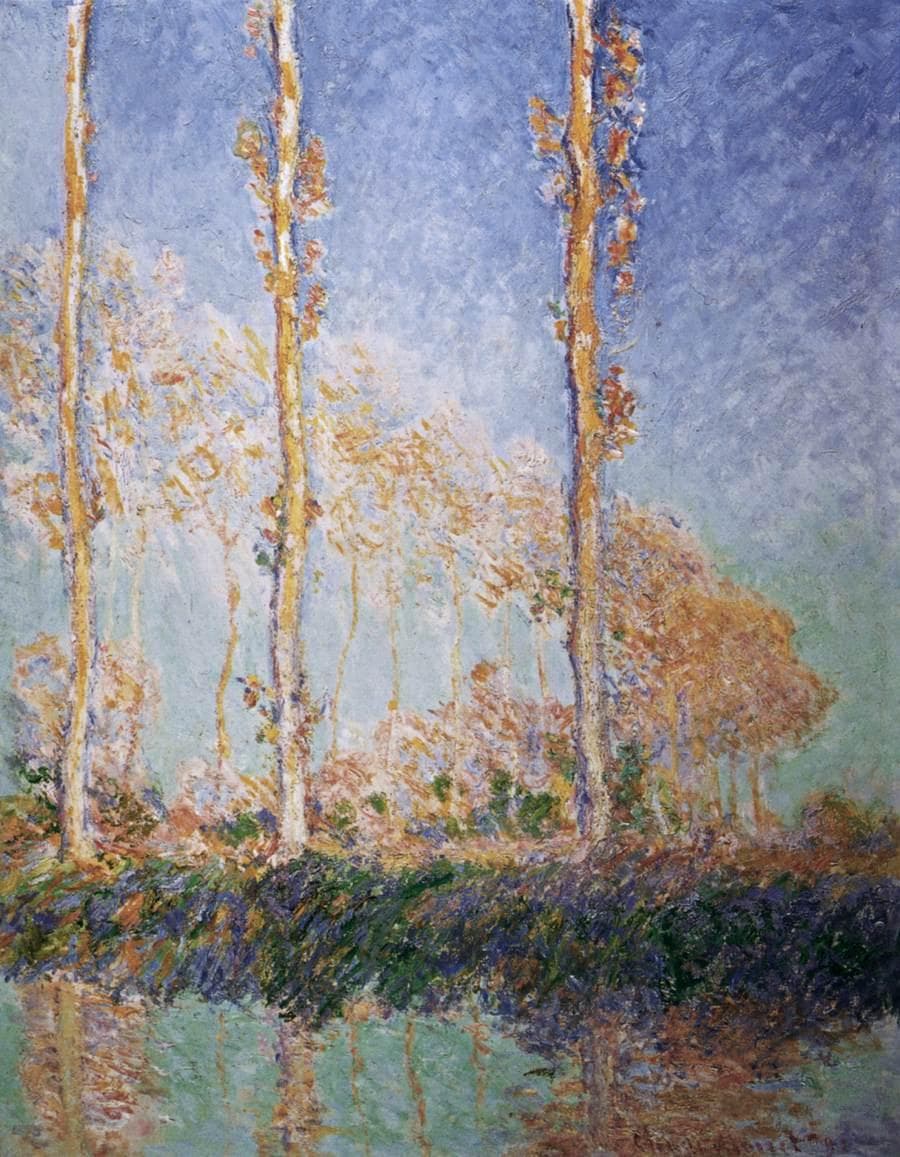
Poplars, Three Pink Trees, Autumn
Claude Monet · 1891
Also painted in 1891
The same year
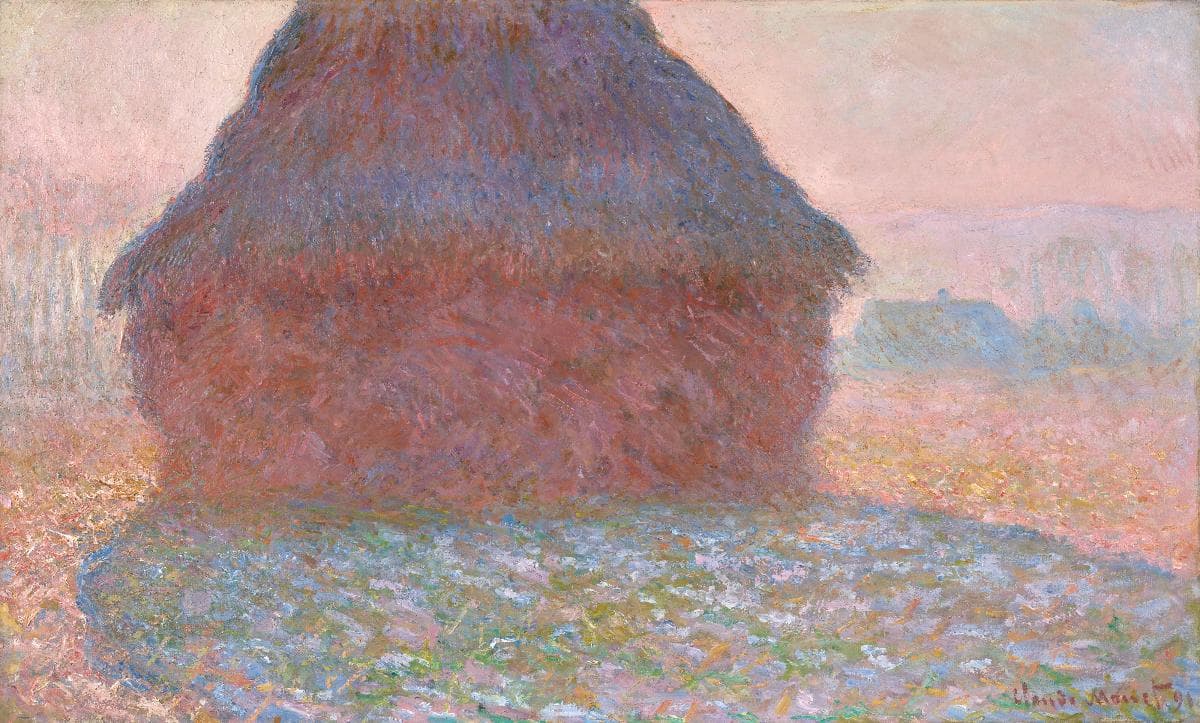
Grainstack in Sunlight
Claude Monet · 1891
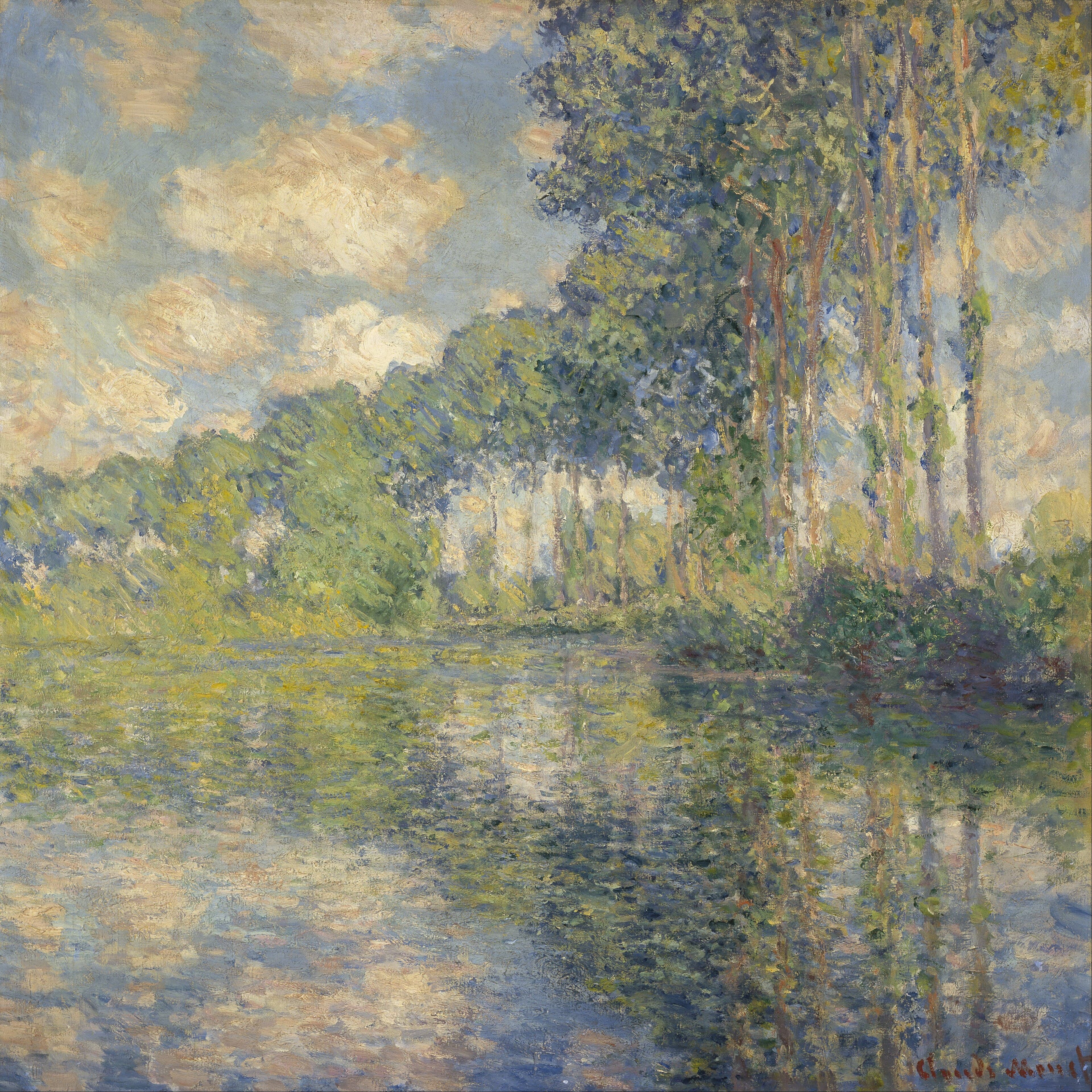
Poplars on the Epte (Edinburgh)
Claude Monet · 1891
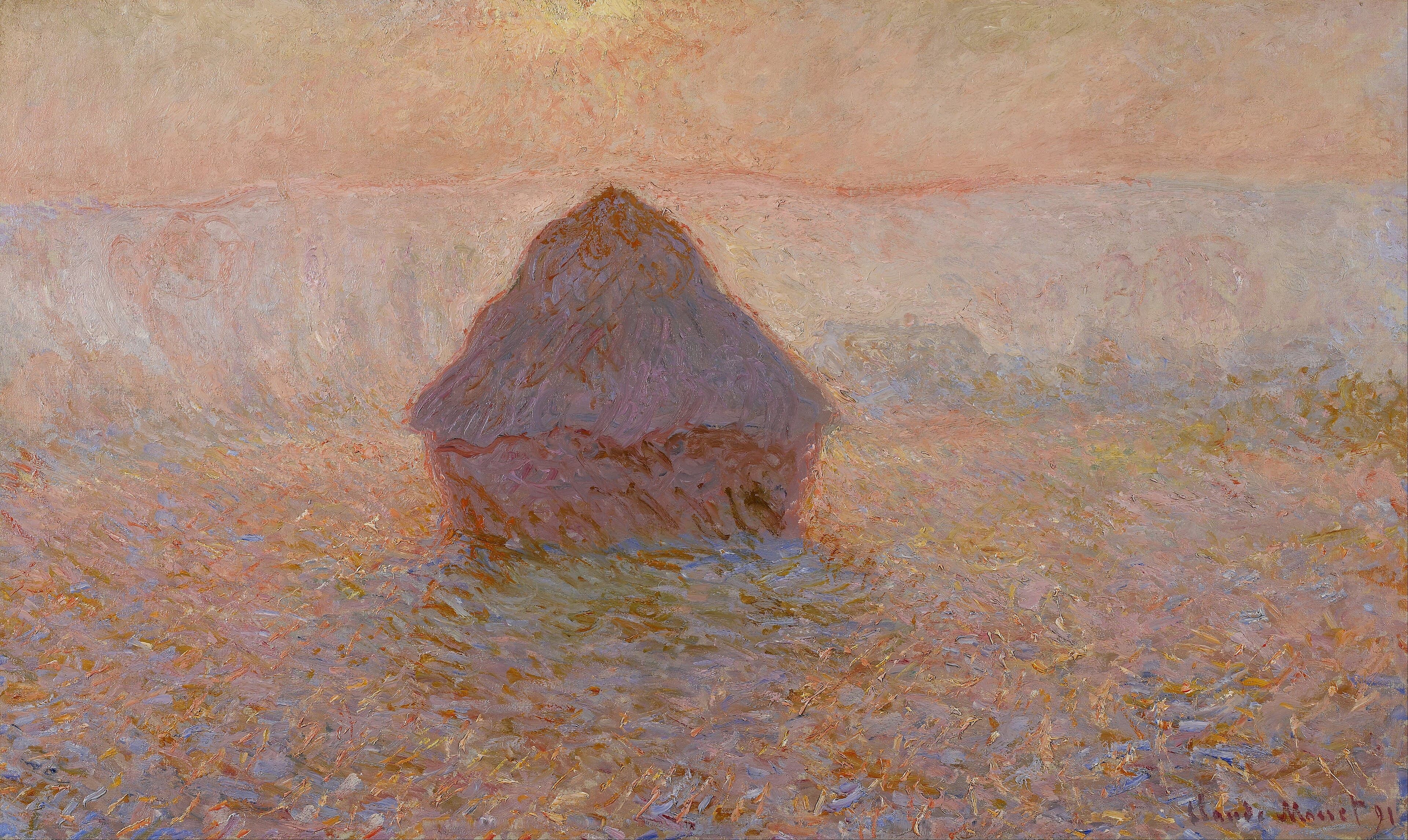
Grainstack, Sun in the Mist
Claude Monet · 1891
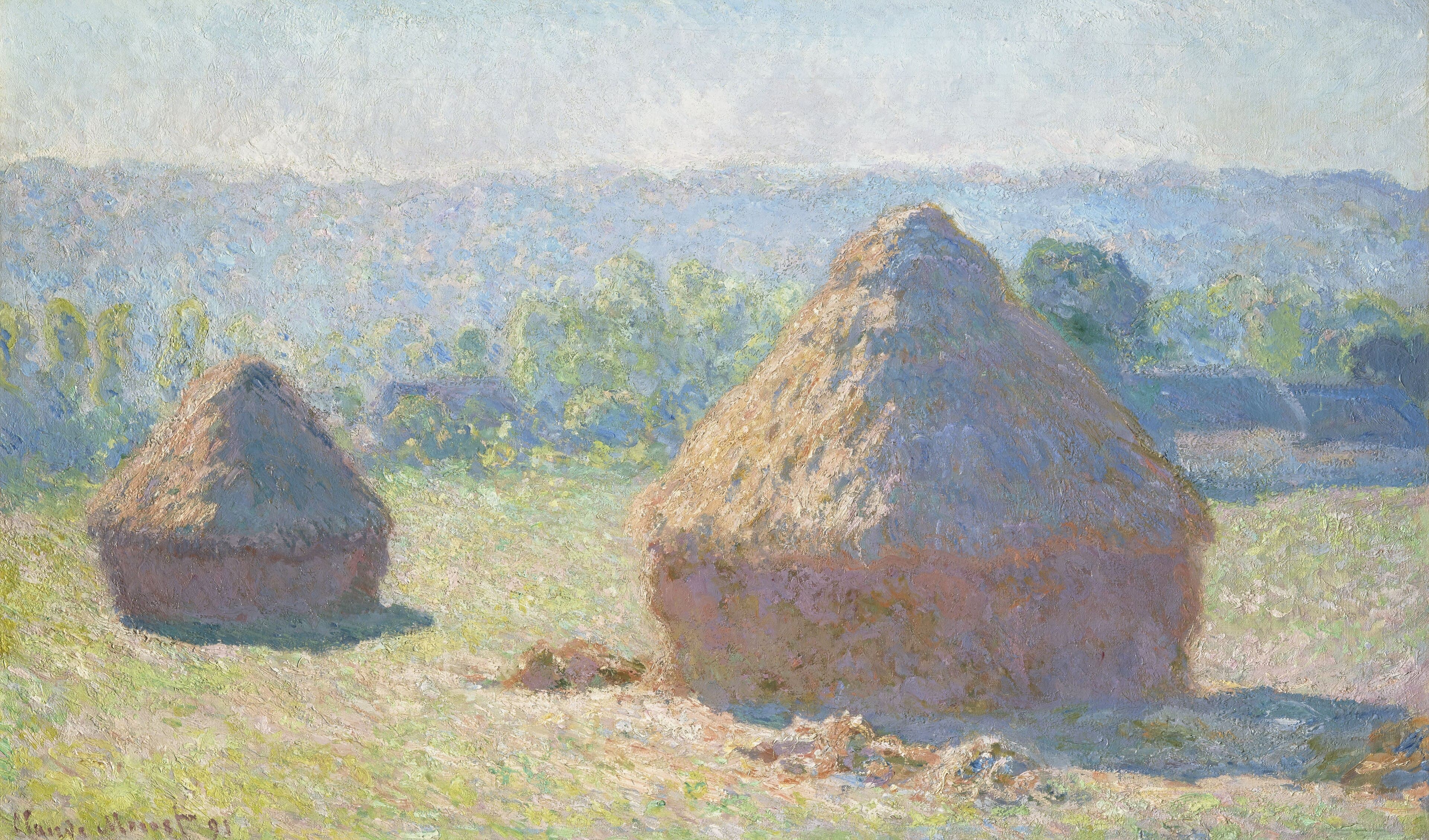
Haystacks, End of Summer
Claude Monet · 1891
Grainstack in the Sunlight
Claude Monet · 1891
Haystacks (Effect of Snow and Sun)
Claude Monet · 1891
Grainstack in the Sunlight, Snow Effect
Claude Monet · 1891
Wind Effect, Series of The Poplars
Claude Monet · 1891
Kindred works
You may also study
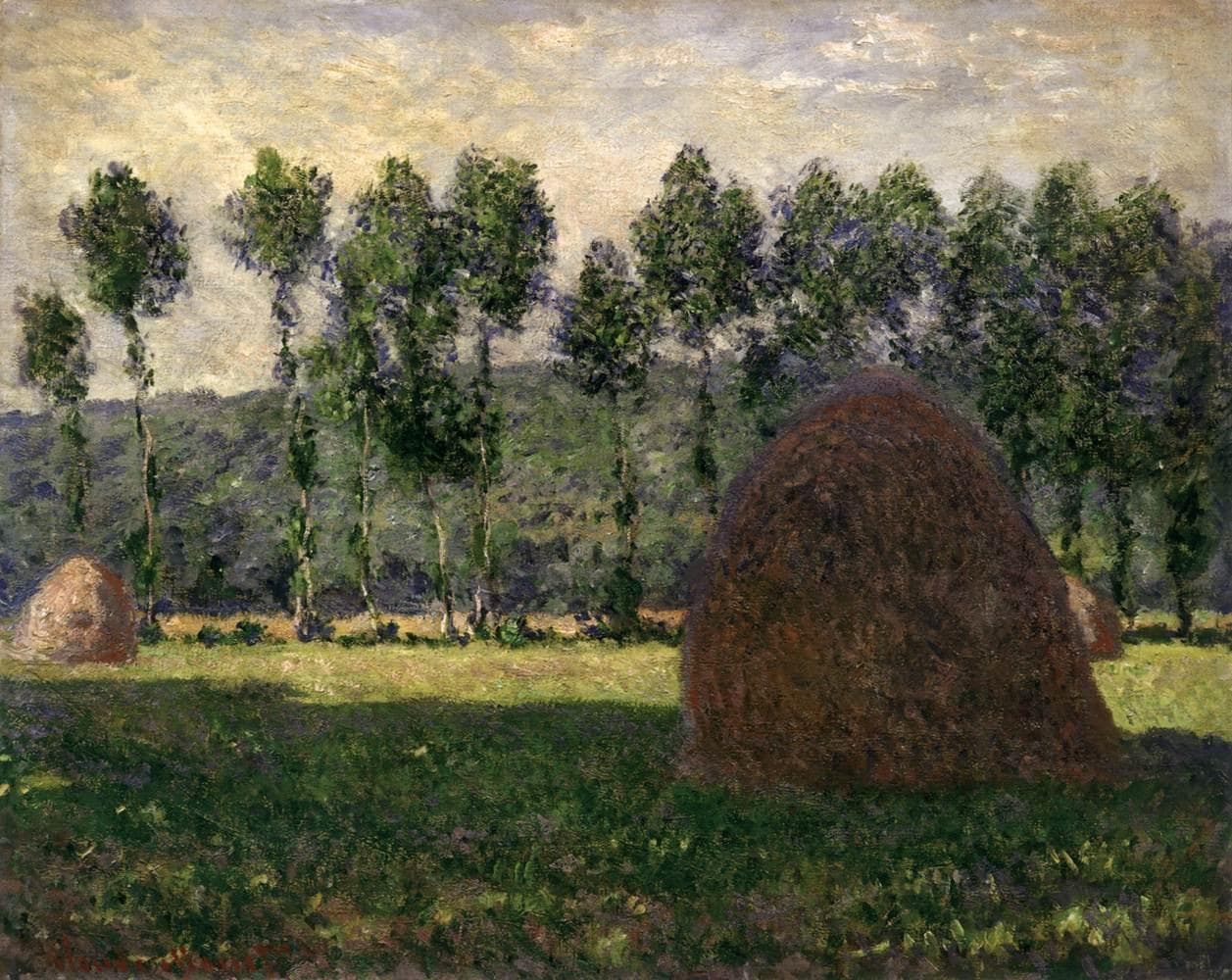
Haystack near Giverny
Claude Monet · 1884–89
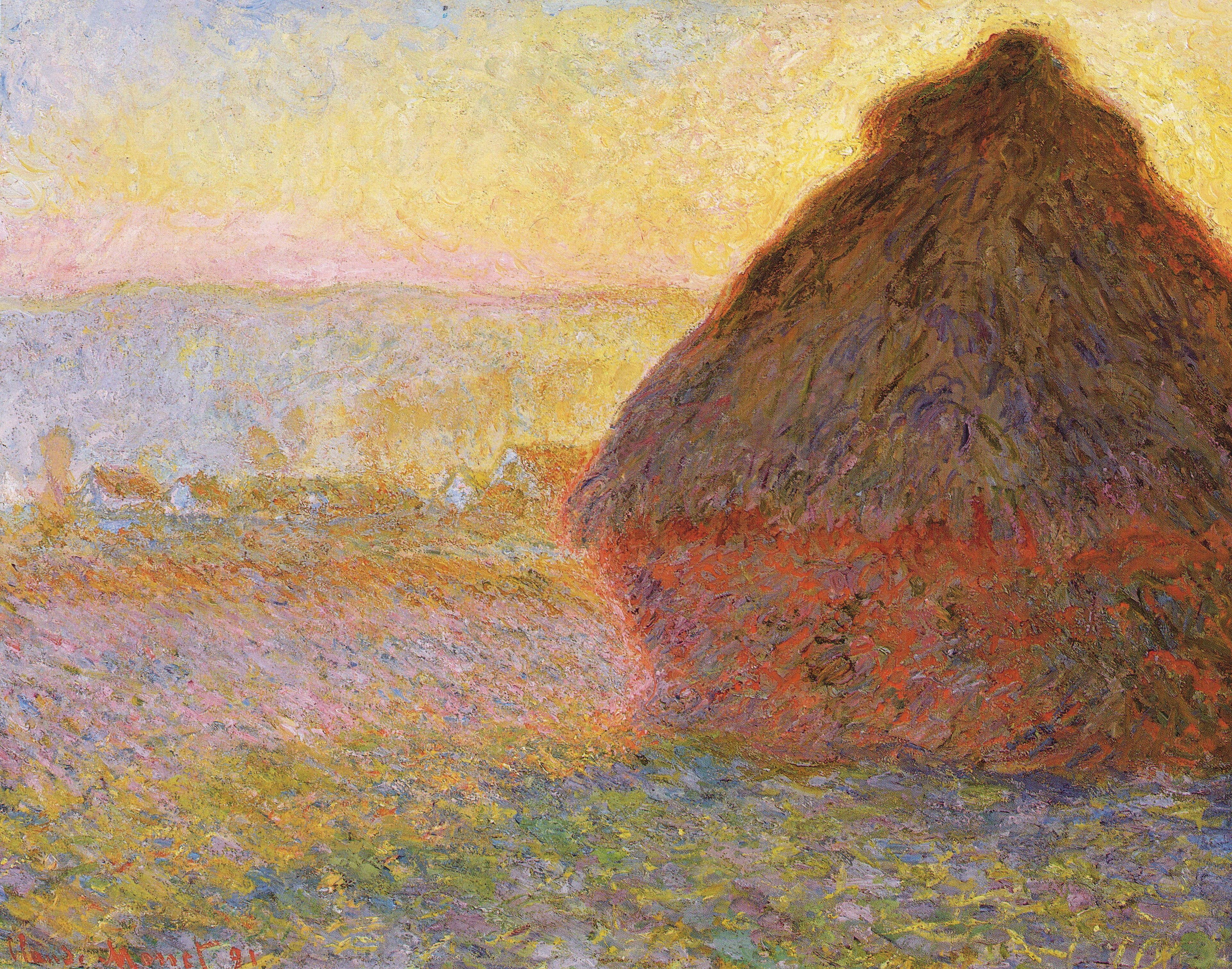
Grainstack (Sunset)
Claude Monet · 1891
Grainstack, Sun in the Mist
Claude Monet · 1891
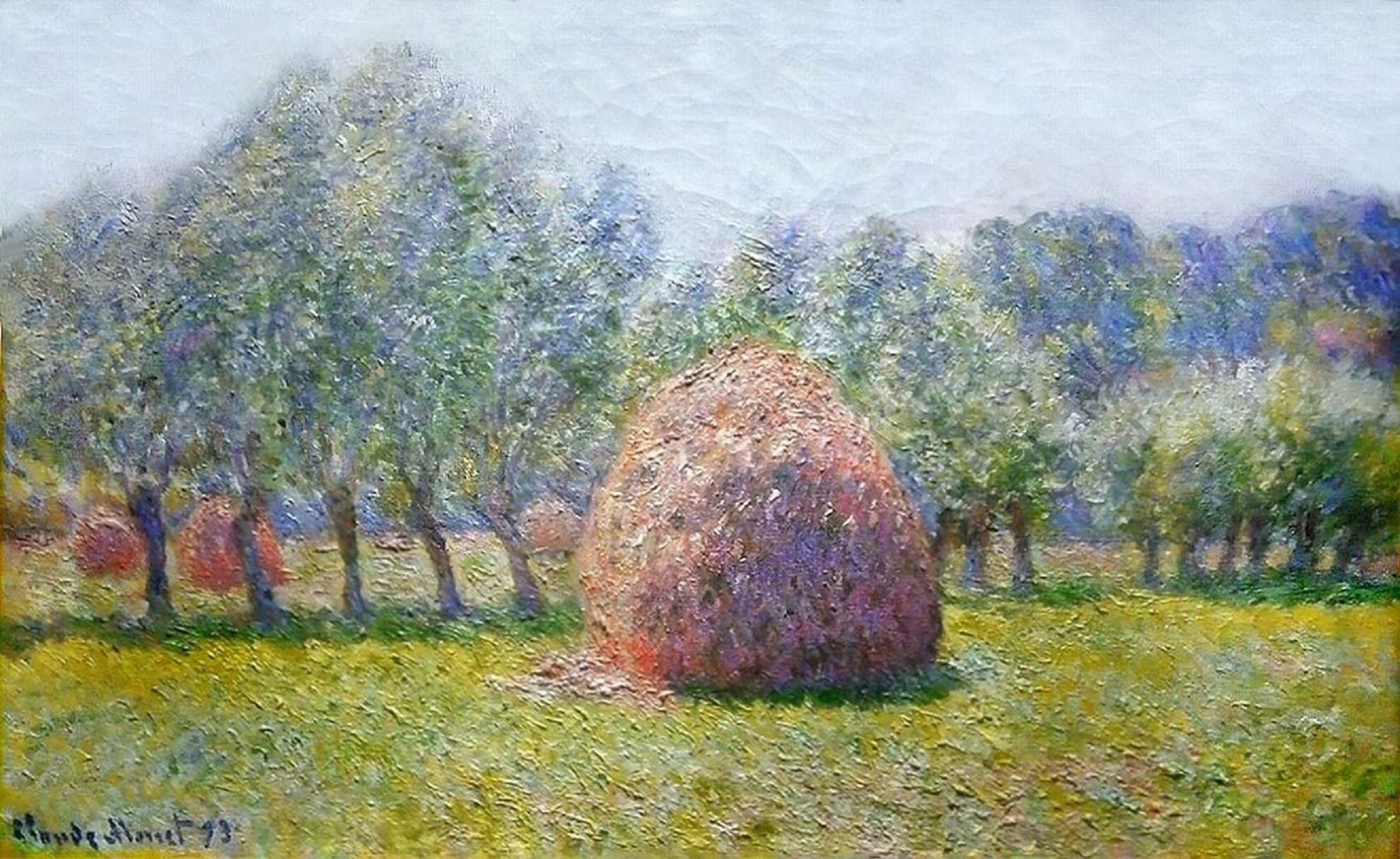
Grainstack
Claude Monet · 1893
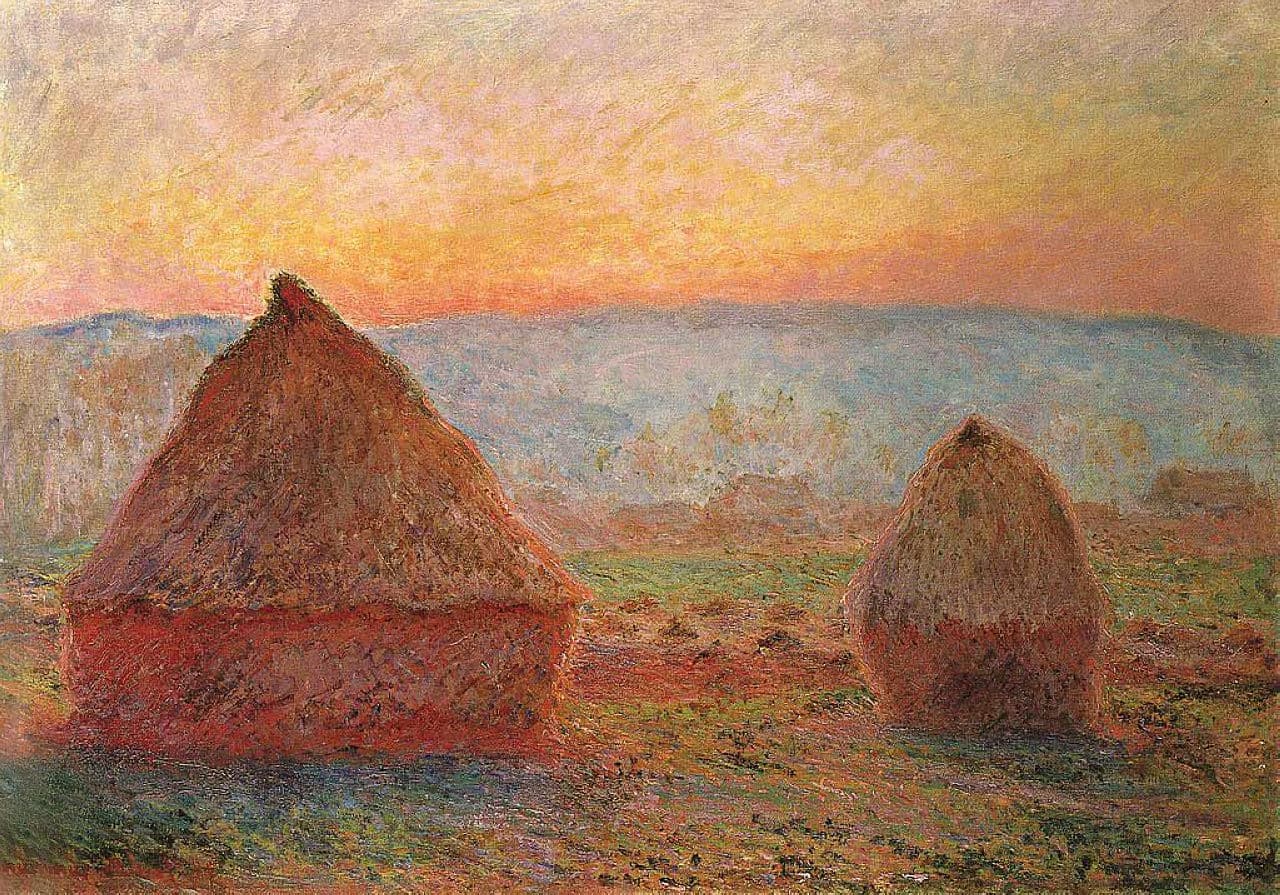
Grainstacks at Giverny, the Evening Sun
Claude Monet · 1888–89
Road into Vétheuil in Winter
Claude Monet · 1879
Almond Blossom
Vincent van Gogh · 1890
Les Tilleuls à Poissy
Claude Monet · 1882