Image: Musée d'Orsay, Paris (image via Insecula) · Public domain · via Wikimedia Commons
Impressionism
Vétheuil Church
Claude Monet, 1879
Vétheuil Church (Église de Vétheuil) is an 1879 winter painting by Claude Monet of the church tower of Vétheuil rising above snow-covered roofs and a fenced garden on the Seine. It is in the Musée d'Orsay, Paris.
- Artist
- Claude Monet
- Date
- 1879
- Medium
- Oil on canvas
- Dimensions
- 65.5 × 50.5 cm
- Collection
- Musée d'Orsay, Paris, France
- Movement
- Impressionism
- Catalogue
- Wildenstein 505
Painted at Monet at Vétheuil
What you are looking at
The picture is upright, unusual for a Monet landscape of these years. At the top left the square bell tower of Vétheuil's church rises against a pale, cold sky, capped with a steep slate spire dusted with snow. Below it, roofs, walls and the tops of bare trees are thick with white. In the middle of the canvas stands a small garden pavilion with a pointed roof and red walls, next to a blue-grey shed, behind a long dark fence of palings. Below the fence a snowy bank slopes down to the river, and the bottom of the picture is the Seine itself, dark and cold, with patches of snow or ice along its edge.
The color is the surprise. In a scene that is mostly white and grey, Monet finds the brick red of the pavilion, deep violet-blue in the fence and the shadows, and touches of rust and green in the water. The sky is not blue but a warm off-white, the color of a low winter sun behind thin cloud.
Look at how the snow is painted. On the bank it is a crust of thick, broken strokes, white mixed with lilac and yellow, laid on so heavily that it stands up from the canvas. On the roofs it is thinner and smoother. The paint itself tells you which snow is fresh and which has settled.
The little red pavilion is the picture's anchor. Placed just right of center, it is the warmest note on the canvas and the one shape with a definite outline, and the fence running across the picture behind it acts like a dark ruled line separating the village from the river. Take it away and the composition would slide into the water.
Where and when it was painted
Monet moved to Vétheuil, a village on the Seine some 60 kilometers downstream from Paris, in the late summer of 1878. He came with his wife Camille, their two sons, and Alice Hoschedé and her six children, after the bankruptcy of Alice's husband Ernest, once Monet's patron. Money was desperately short. Camille was seriously ill and died in Vétheuil on 5 September 1879; Monet painted her on her deathbed, in Camille Monet on Her Deathbed.
The church of Notre-Dame, on its hill above the river, was the landmark of the village and Monet painted it repeatedly, in summer and in snow. He often worked from his studio boat on the river, which explains the low viewpoint here, looking up from the water. The two winters he spent in Vétheuil, 1878–79 and 1879–80, were both harsh; the second ended in the great freeze and thaw of the Seine. For the village and its pictures, see Monet at Vétheuil.
How it was painted
The vertical format compresses the view into a stack of horizontal bands, river, bank, fence, roofs and sky, with the tower as the one vertical accent. Monet's touch is rapid and agitated, especially in the lower half, where short strokes in many directions keep the snow and water restless. Writers on the picture have read that agitation as grief, since it belongs to the hardest period of his life, but Monet left no statement linking the two, and the same nervous handling appears in other winter pictures of these months.
Compare the broader view of the same church across the river in The Church in Vétheuil in Winter, also in the Orsay, and the snowbound roads of Road into Vétheuil in Winter and Road to Vétheuil, Snow Effect. Across the river, the hamlet of Lavacourt appears in Lavacourt in Winter.
Ownership and where to see it
The painting belonged to the collector and dealer Max Kaganovitch and entered the French national collections in 1973 (inventory RF 1973 18). It is catalogued by Wildenstein as number 505 and hangs in the Musée d'Orsay in Paris. See Monet at the Musée d'Orsay and the Claude Monet page.
Questions & answers
Where is Monet's Vétheuil Church?
Vétheuil Church (Église de Vétheuil) is in the Musée d'Orsay in Paris (inventory RF 1973 18). It came from the collection of Max Kaganovitch and entered the French national collections in 1973. The canvas measures 65.5 by 50.5 centimeters.
When did Monet paint the church at Vétheuil?
This snowy view is dated 1879, during the two winters Monet spent at Vétheuil (1878–79 and 1879–80). He painted the church many times, in summer and winter, often from his studio boat on the Seine.
What does Vétheuil Church show?
In an upright format, the church tower and spire of Vétheuil rise above snowy roofs, a small red garden pavilion and a long dark fence, with a snow-covered bank and the cold, dark Seine in the foreground.
How many pictures of Vétheuil church did Monet paint?
He painted the church several times between 1878 and 1881, from across the river and from the water, in snow and in summer. The Orsay also has The Church in Vétheuil in Winter, a wider, horizontal view of the village under snow.
More by the artist
Claude Monet

Bridge over a Pond of Water Lilies
Claude Monet · 1899

Woman with a Parasol – Madame Monet and Her Son
Claude Monet · 1875

Sunset in Venice
Claude Monet · 1908–12

La Grenouillère
Claude Monet · 1869

Beach in Pourville
Claude Monet · 1882

Springtime
Claude Monet · 1872

Boating on the River Epte
Claude Monet · 1890

The Seine at Asnières (Hermitage)
Claude Monet · 1873
Also painted in 1879
The same year
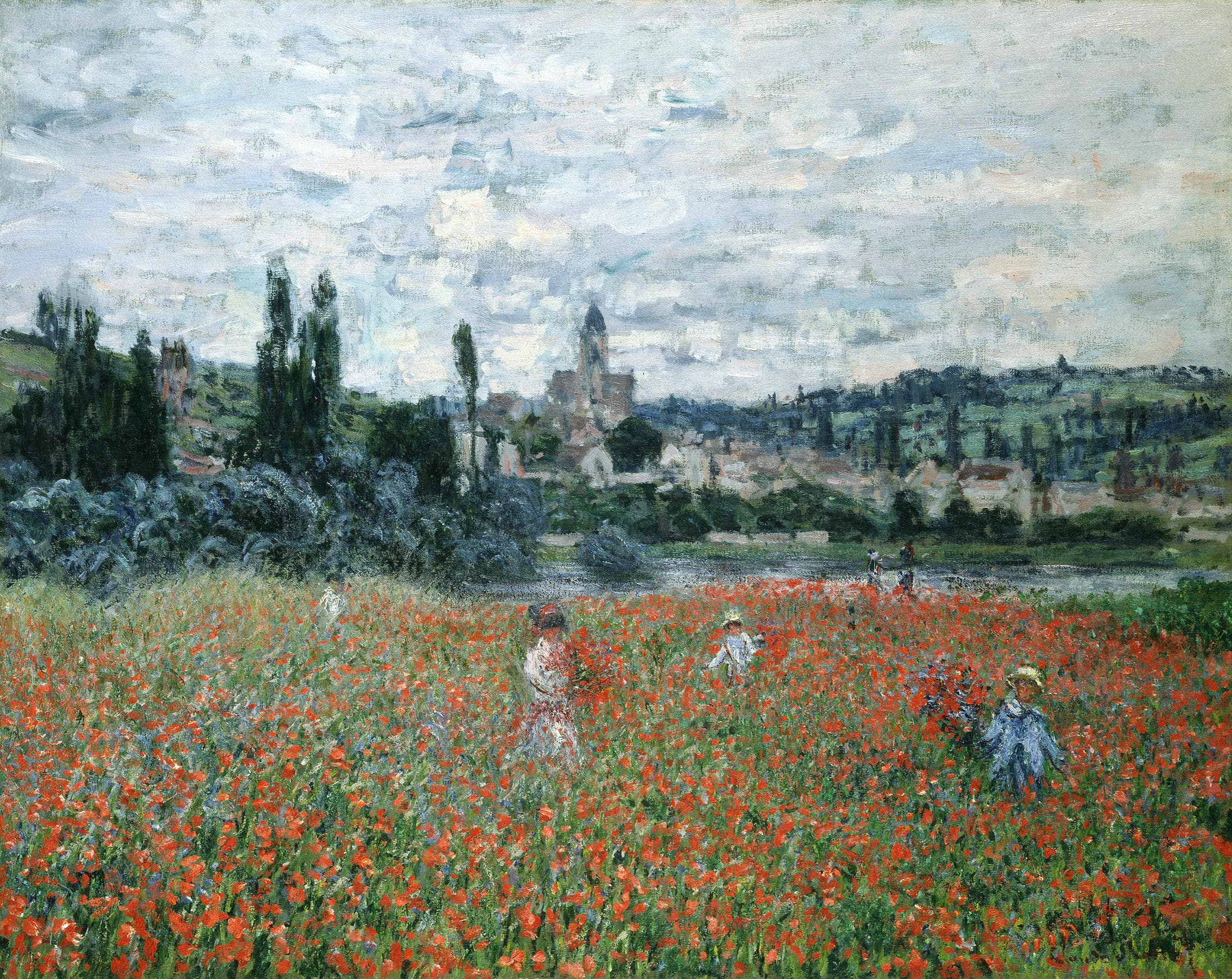
Poppy Field near Vétheuil
Claude Monet · c. 1879
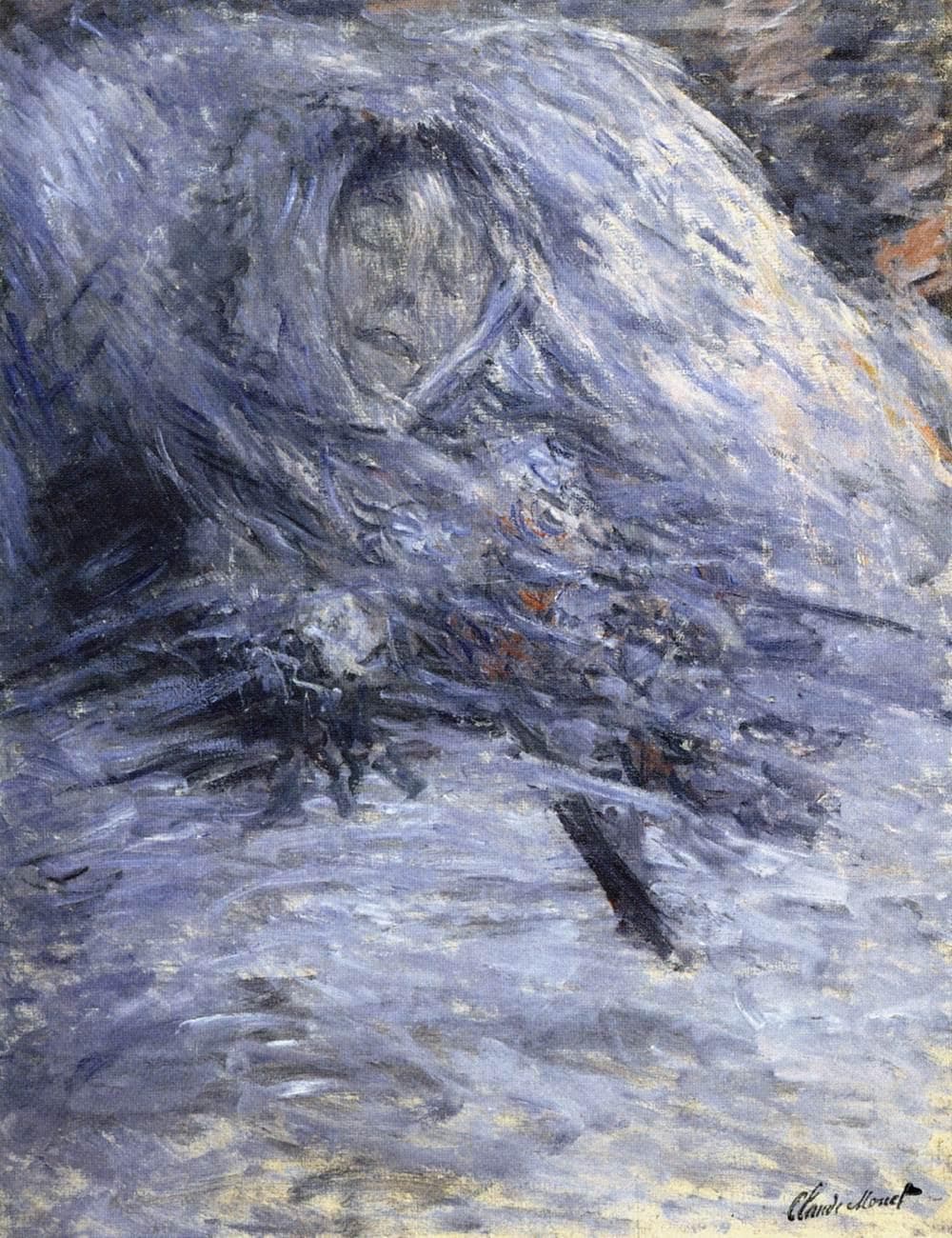
Camille Monet on Her Deathbed
Claude Monet · 1879
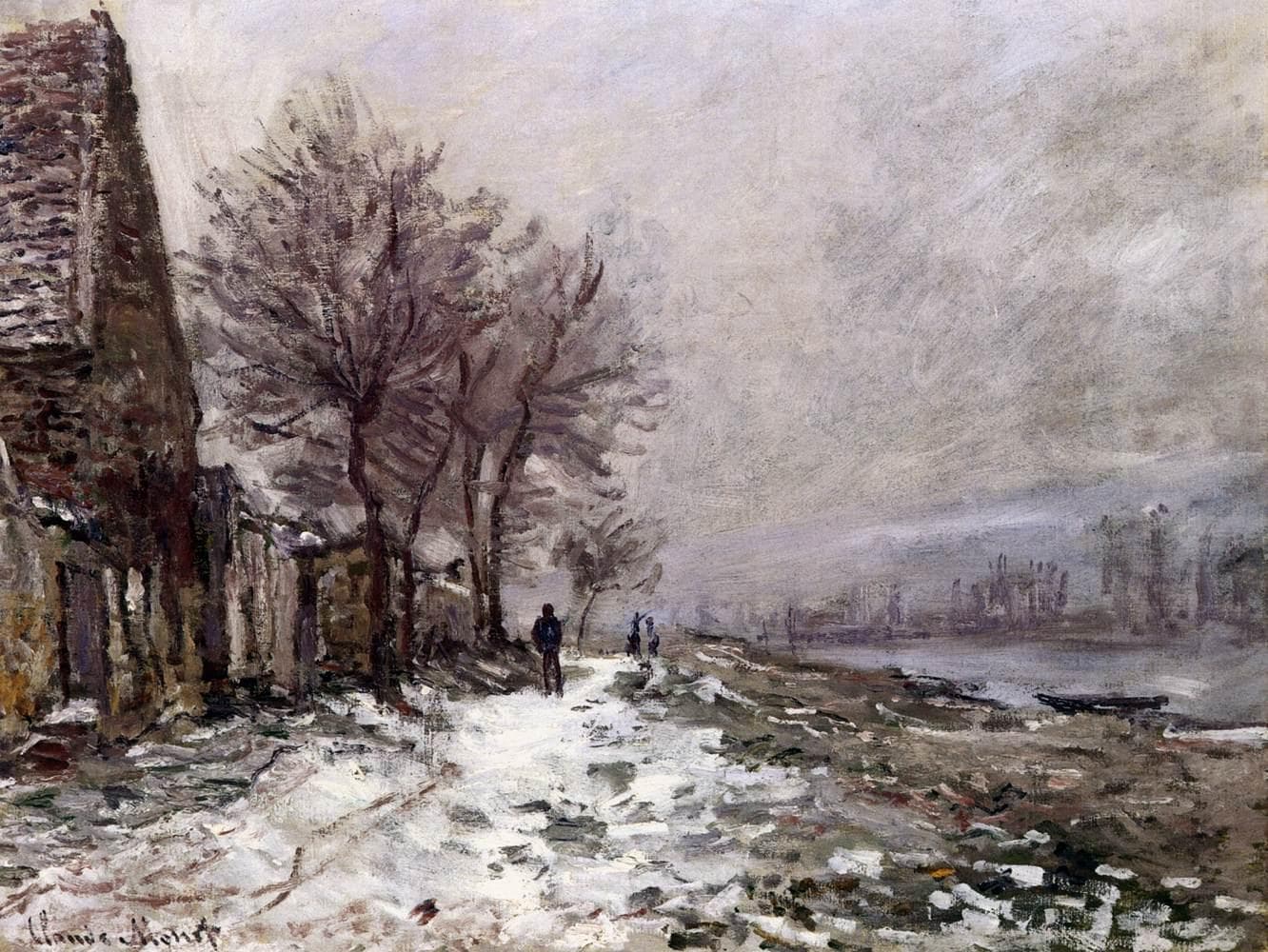
Lavacourt in Winter
Claude Monet · 1879
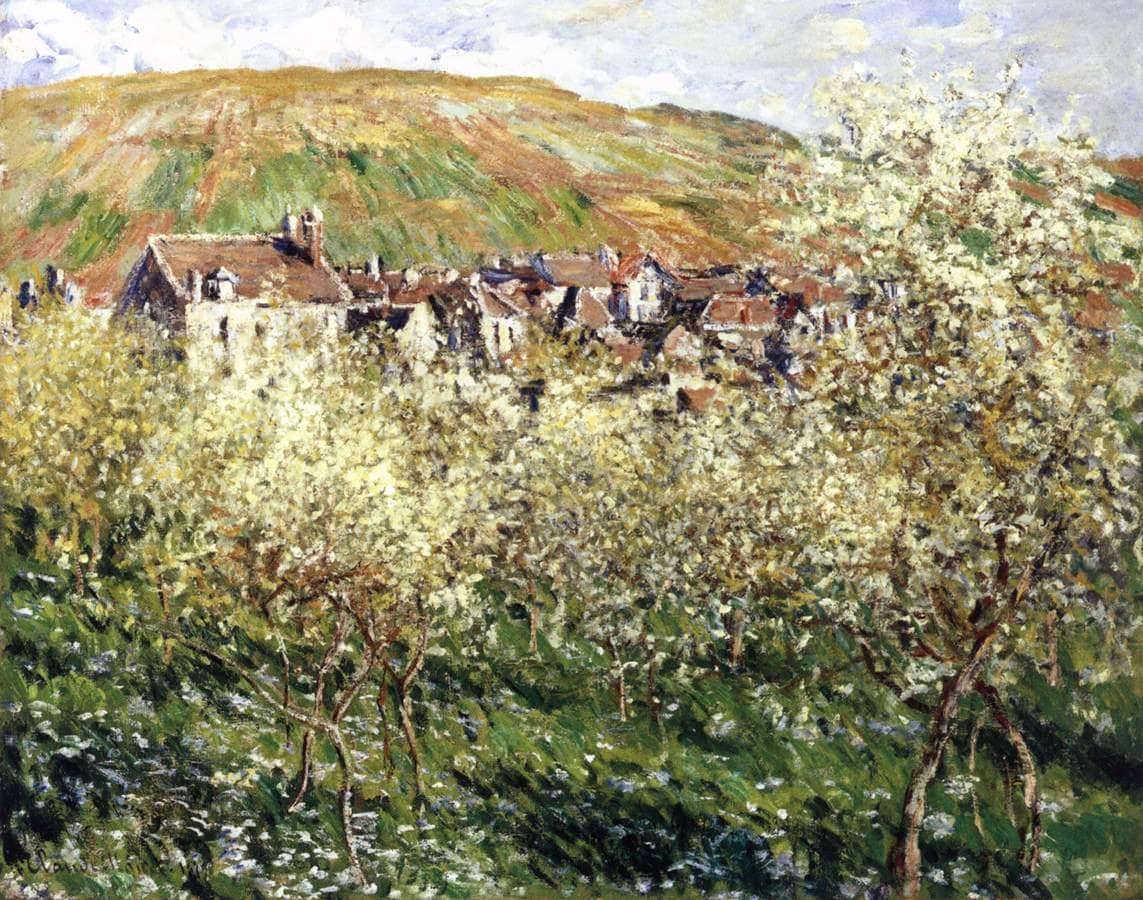
Plum Trees in Bloom
Claude Monet · 1879
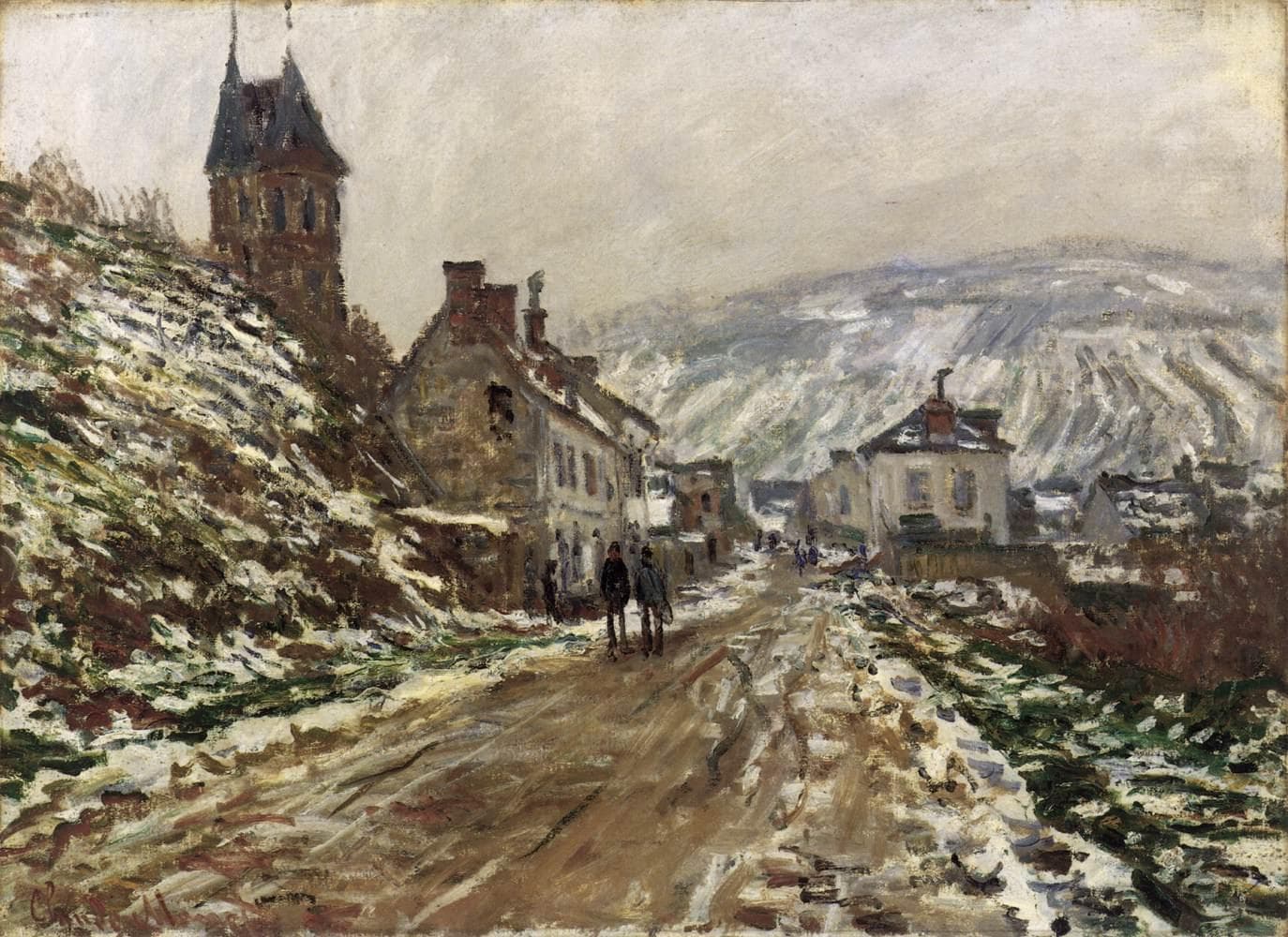
Road into Vétheuil in Winter
Claude Monet · 1879
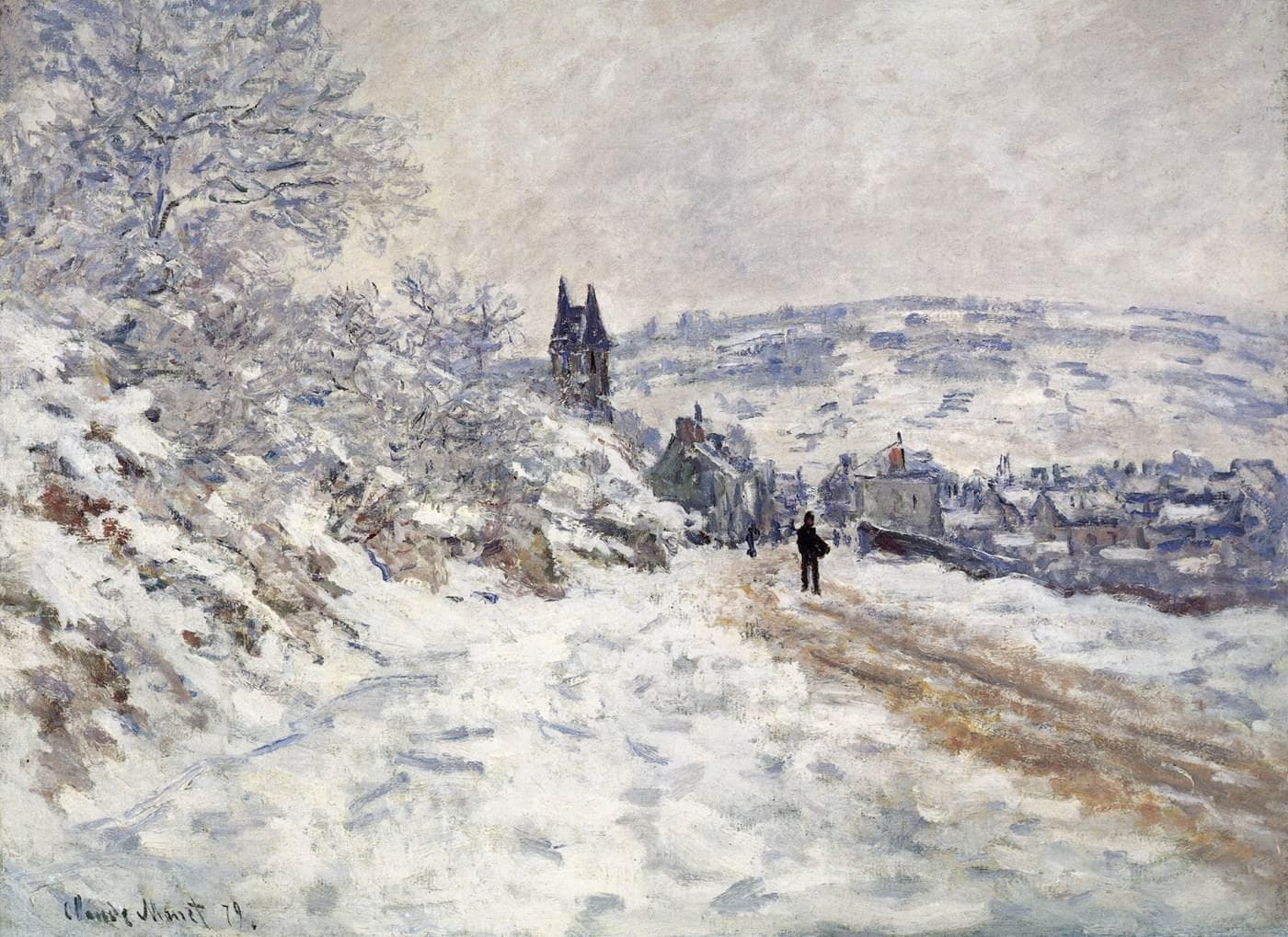
Road to Vétheuil, Snow Effect
Claude Monet · 1879
Still-Life with Apples and Grapes
Claude Monet · 1879–80
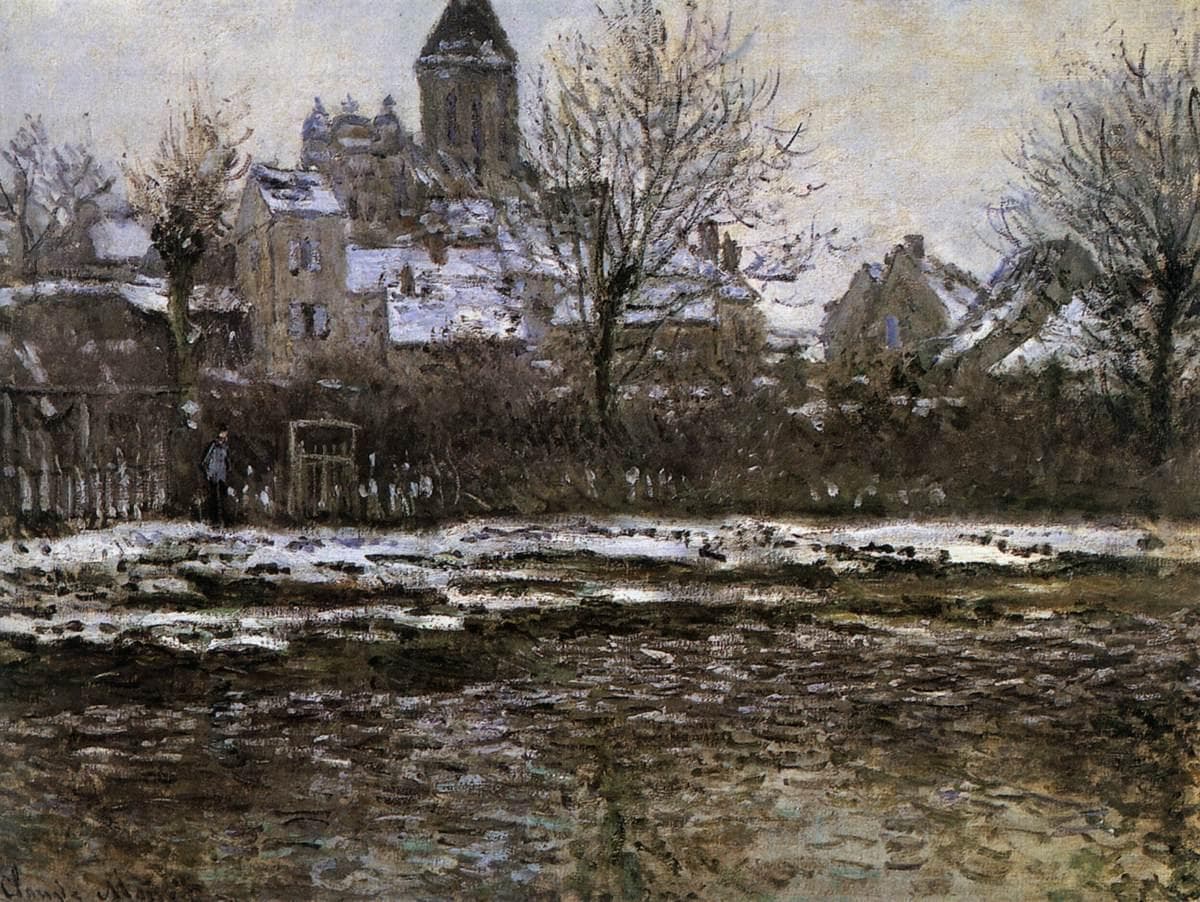
The Church in Vétheuil in Winter
Claude Monet · 1878–79
Kindred works
You may also study
The Church in Vétheuil in Winter
Claude Monet · 1878–79
Road into Vétheuil in Winter
Claude Monet · 1879
Road to Vétheuil, Snow Effect
Claude Monet · 1879
Lavacourt in Winter
Claude Monet · 1879
Camille Monet on Her Deathbed
Claude Monet · 1879

The Scream
Edvard Munch · 1893

Ophelia
John Everett Millais · 1851–52

The Great Wave off Kanagawa
Katsushika Hokusai · c. 1830–32