Image: Belvedere, Vienna · Public domain · via Wikimedia Commons
Impressionism
Anglers on the Seine at Poissy
Claude Monet, 1882
Anglers on the Seine at Poissy is an 1882 painting by Claude Monet of fishermen in flat-bottomed boats on the green, reflective Seine at Poissy, seen from the bank above. It is in the Belvedere, Vienna.
- Artist
- Claude Monet
- Date
- 1882
- Medium
- Oil on canvas
- Dimensions
- 59.8 × 81.7 cm
- Collection
- Belvedere (Österreichische Galerie Belvedere), Vienna, Austria
- Movement
- Impressionism
- Catalogue
- Wildenstein 748
Anglers on the Seine at Poissy, also known as Fishermen in Poissy, is one of the few pictures Claude Monet made of Poissy, the town on the Seine west of Paris where he lived, unhappily, from late 1881 to the spring of 1883. Looking down from the bank, we see men fishing from flat-bottomed boats on water that is almost entirely green reflection. The painting, signed and inscribed Poissy 1882 at lower right, is in the Belvedere in Vienna.
What you're looking at
There is no sky in this picture. Monet tilts his view down so that the river fills the whole canvas, and the far bank exists only as reflections: long vertical bands of olive, yellow-green and gold, the mirrored trees and poplars of the opposite shore, broken by horizontal ripples. Into this field he sets five boats at different angles. At left a man stands in a punt holding a rod over the side. Next to him, another sits in a moored boat in a straw hat. Further right floats an empty pinkish skiff, and in the foreground two men sit together in a long boat with a white interior, their lines trailing out.
At right, two more figures share a narrow boat, one standing, one sitting. In the lower left an angler stands on the bank itself, a fishing bag over his shoulder, seen almost from above. Thin poles, used to moor the boats, stick up out of the water. A strip of bright grass along the bottom right corner tells us where Monet stood. The palette is dominated by greens, olives and soft browns, with the dark clothes of the anglers as the only strong accents.
Poissy, 1881–83
After the death of his wife Camille in 1879, Monet stayed on at Vétheuil with Alice Hoschedé and their combined children. In December 1881 the household moved to the Villa Saint-Louis at Poissy, a large house on the Seine near the old bridge. The town was known for its weekend anglers, as Guy de Maupassant noted at the time, and for its prison. Monet found little there to paint. He spent much of 1882 away on the Normandy coast, at Pourville and Varengeville; see Beach in Pourville and Portrait of Père Paul. Of his handful of Poissy canvases, the best known besides this one is Les Tilleuls à Poissy. In April 1883 the family left for Giverny.
The Vétheuil years just before are covered on Monet at Vétheuil, and the wider story on Monet's life in paintings.
A detail easy to miss is the angler on the bank at lower left. He is seen almost from directly above, foreshortened to a hat and shoulders, which tells us Monet was standing on a raised bank with the river below him.
How it was painted
The high viewpoint and the absence of a horizon look forward to Monet's late pictures of his water-lily pond, where the surface of the water becomes the whole picture. Here, in 1882, it already serves as a screen on which the bank opposite is painted upside down. Monet lays the reflections in long, wet vertical strokes, then crosses them with short horizontal flicks of lighter paint for the ripples. The boats and figures are added on top in a darker, more drawn manner.
The flattened, overhead view and the scattered, cut-off boats also recall Japanese prints, which Monet collected. The effect is of a casual glance at a river on a summer afternoon, but the placement of the boats on a gentle diagonal from top left to bottom right is carefully judged.
Where to see it
The painting entered Vienna's state collections in the first half of the twentieth century and was at one stage held by the Kunsthistorisches Museum, before Vienna's nineteenth-century French paintings were brought together at the Belvedere. It now hangs in the Upper Belvedere with the museum's other Monet canvases, including The Garden Path at Giverny. For other collections, see where to see Monet's paintings.
Questions & answers
Where is Monet's Anglers on the Seine at Poissy?
It is in the Belvedere (Österreichische Galerie Belvedere) in Vienna, Austria, where it hangs with the museum's other French Impressionist paintings in the Upper Belvedere.
When and where was this painting made?
Monet painted it in 1882 on the Seine at Poissy, west of Paris, where he lived from December 1881 to April 1883. It is inscribed Poissy 1882 next to his signature.
What does Anglers on the Seine at Poissy show?
It shows several men fishing from flat-bottomed boats and from the bank, seen from above, on a river filled with green and gold reflections of the trees on the far shore. There is no sky in the picture.
Why did Monet paint so few pictures of Poissy?
He disliked the town and found few motifs there. He spent much of 1882 painting on the Normandy coast at Pourville instead, and in 1883 he moved his family to Giverny.
More by the artist
Claude Monet

Bridge over a Pond of Water Lilies
Claude Monet · 1899

Woman with a Parasol – Madame Monet and Her Son
Claude Monet · 1875

Sunset in Venice
Claude Monet · 1908–12

La Grenouillère
Claude Monet · 1869

Beach in Pourville
Claude Monet · 1882

Springtime
Claude Monet · 1872

Boating on the River Epte
Claude Monet · 1890

The Seine at Asnières (Hermitage)
Claude Monet · 1873
Also painted in 1882
The same year
Kindred works
You may also study
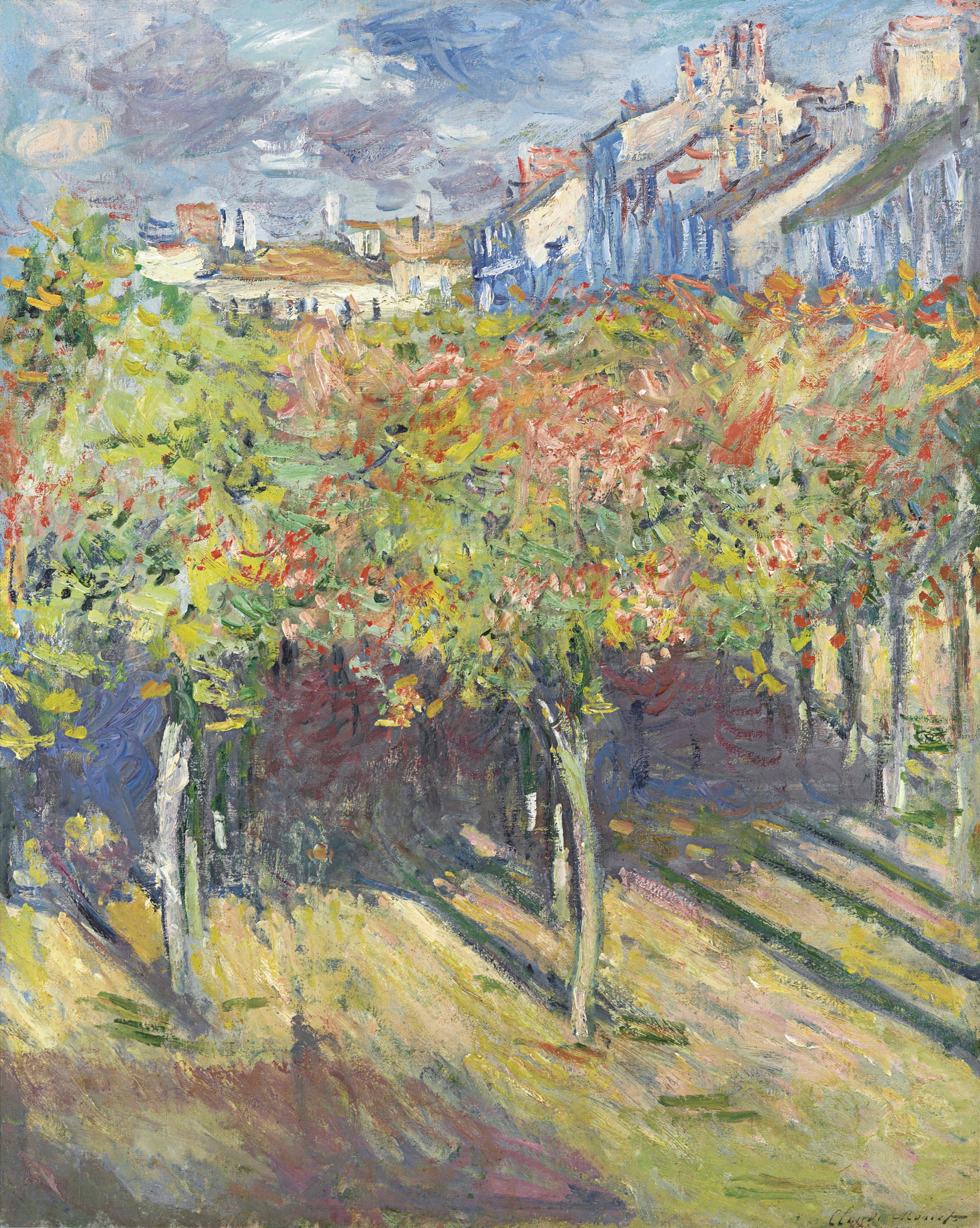
Les Tilleuls à Poissy
Claude Monet · 1882
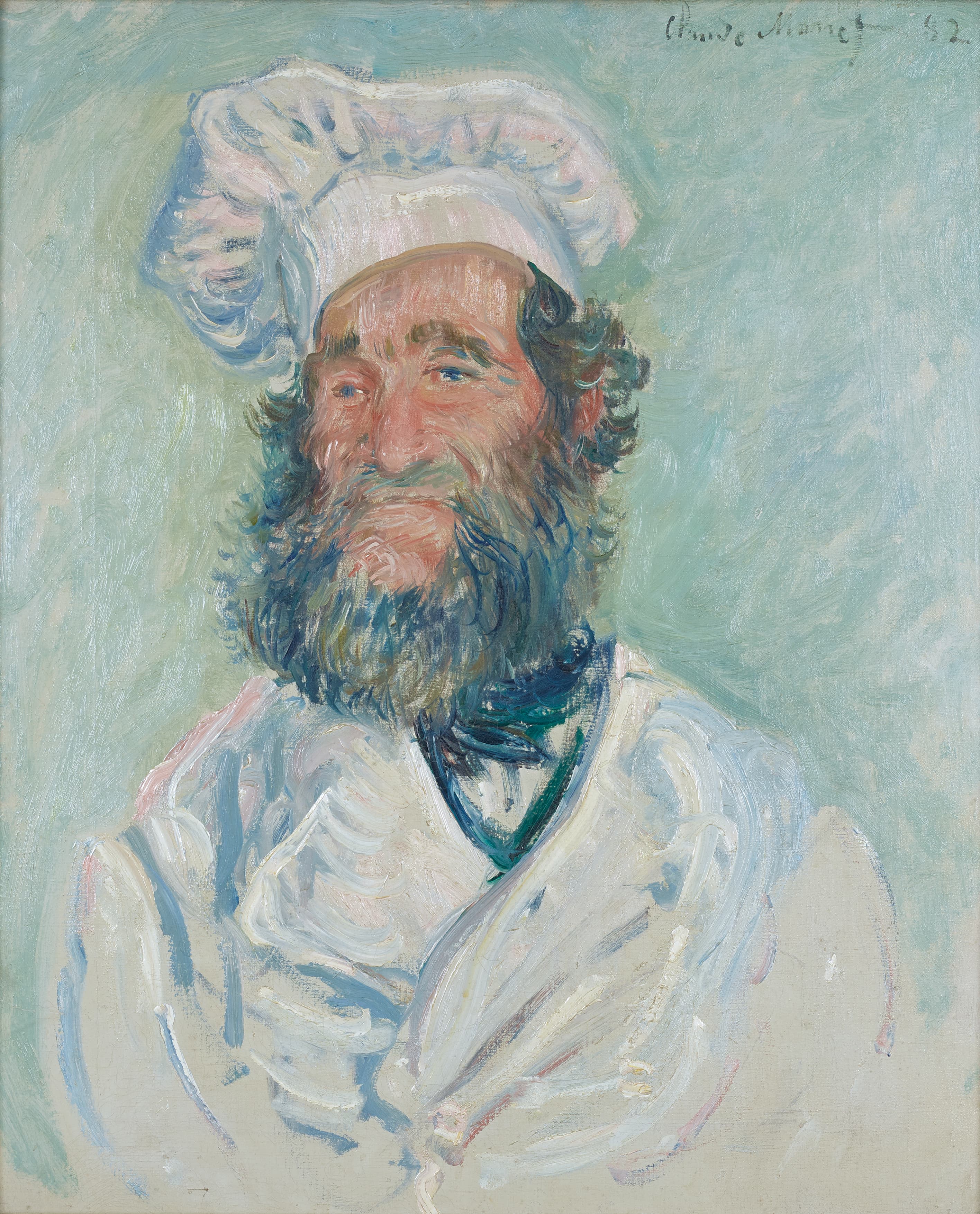
Portrait of Père Paul
Claude Monet · 1882
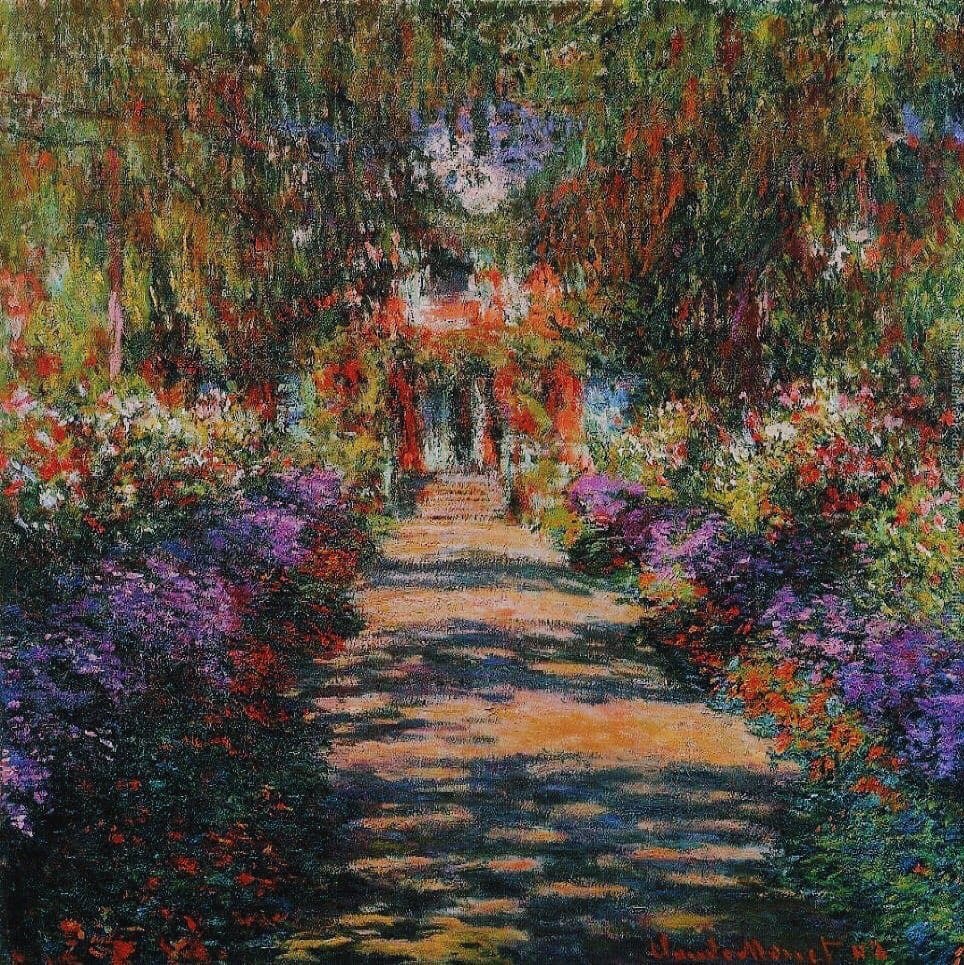
The Garden Path at Giverny
Claude Monet · 1902
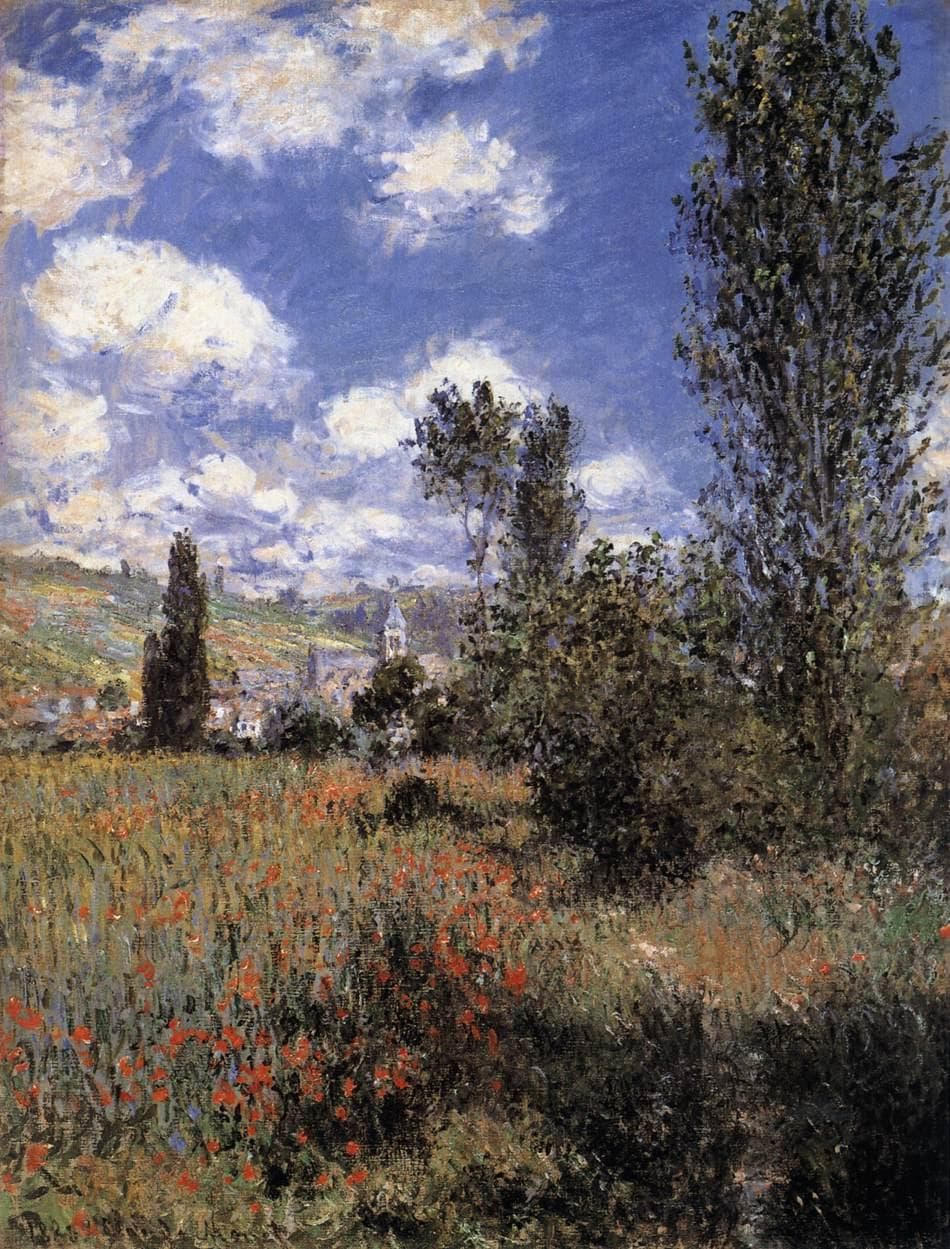
View of Vétheuil
Claude Monet · 1880

The Scream
Edvard Munch · 1893

Ophelia
John Everett Millais · 1851–52

The Great Wave off Kanagawa
Katsushika Hokusai · c. 1830–32
The Birth of Venus
Sandro Botticelli · c. 1484–1486