Impressionism
Bordighera
Claude Monet, 1884
Bordighera is an 1884 painting by Claude Monet of twisted pine trees framing the old town of Bordighera and the blue Mediterranean, on the Italian Riviera. It is in the Art Institute of Chicago.
- Artist
- Claude Monet
- Date
- 1884
- Medium
- Oil on canvas
- Dimensions
- 65 × 80.8 cm
- Collection
- Art Institute of Chicago, Chicago, United States
- Movement
- Impressionism
- Catalogue
- Wildenstein 854
Painted at Monet on the MediterraneanMore at Monet at the Art Institute of Chicago
Claude Monet's Bordighera was painted in early 1884 at the Italian seaside town of Bordighera, near the French border, during a working trip that was meant to last three weeks and stretched to nearly three months. The canvas, 65 by 80.8 centimeters and number 854 in Wildenstein's catalogue, is in the Art Institute of Chicago, which received it in 1922 with the Potter Palmer Collection.
What you are looking at
The picture is a screen of trees. Maritime pines grow out of the scrub on the hillside where Monet set up his easel, and their trunks twist and fork in snaking S-curves, painted pale pink, cream and gray where the sun strikes the bark. One trunk runs almost the whole width of the canvas, climbing from the lower left and splitting into two thin limbs at the center. The foliage, a mass of short olive, bottle-green, gold and blue strokes, fills the top half and spills down the right side.
Through the gaps the view opens in two directions. In the middle distance sits the old hill town of Bordighera, a cluster of sunlit ocher and pink buildings with a bell tower rising out of it. Behind it the Mediterranean stretches to the horizon in an intense ultramarine band, under a pale sky. The eye has to work its way through the branches to reach the town, a little like peering through a lattice. Monet signed the canvas at lower left.
How it was painted
Monet found the southern light exhausting. In a letter to the sculptor Auguste Rodin he described himself as fencing and wrestling with the sun, and he told Alice Hoschedé that he needed colors of a brightness he had never dared before. His Bordighera canvases are among the most saturated of his career. Here the blue of the sea is put down almost unmixed, and the shadows in the foliage are blue and violet rather than dark green.
The trunks are almost decorative, their rhythm closer to the Japanese prints Monet collected than to anything in his Normandy work. They also solve a problem he complained about in his letters: in a landscape of such abundant vegetation he found it hard to find a motif. By making the trees the motif and the town the background, he turns the tangle into a structure. The paint is laid in quick, separate touches everywhere, from the scrub at the bottom to the strip of sea.
The trip to Bordighera
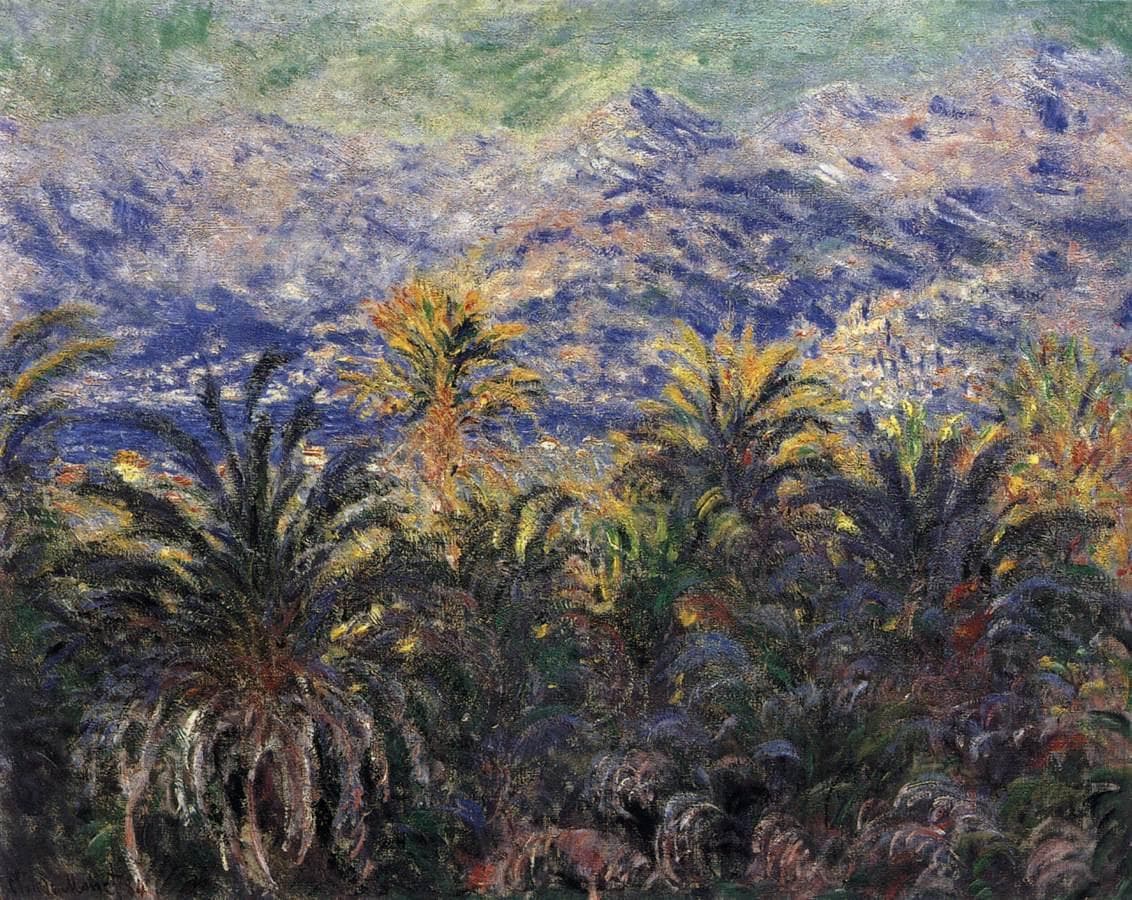
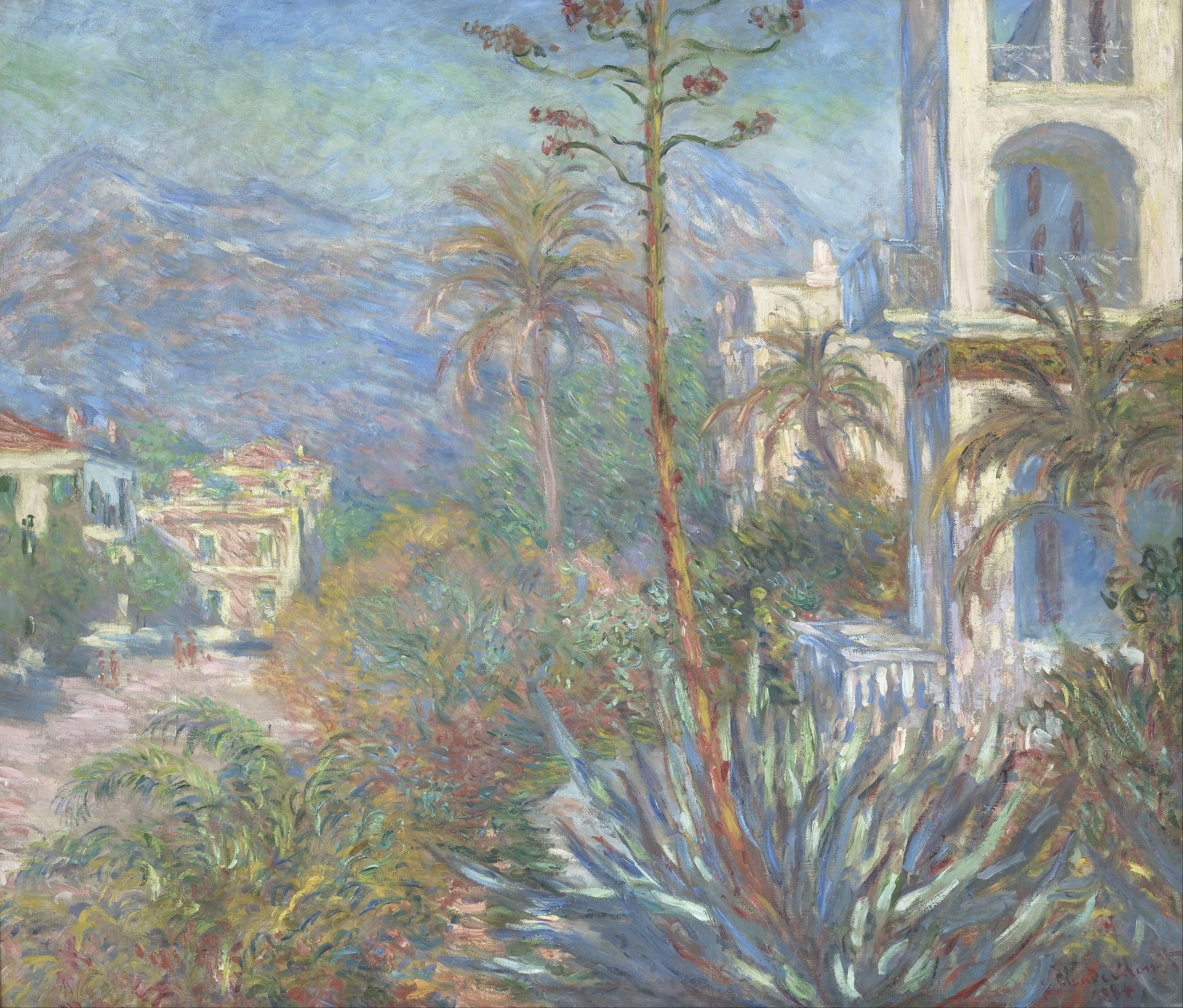
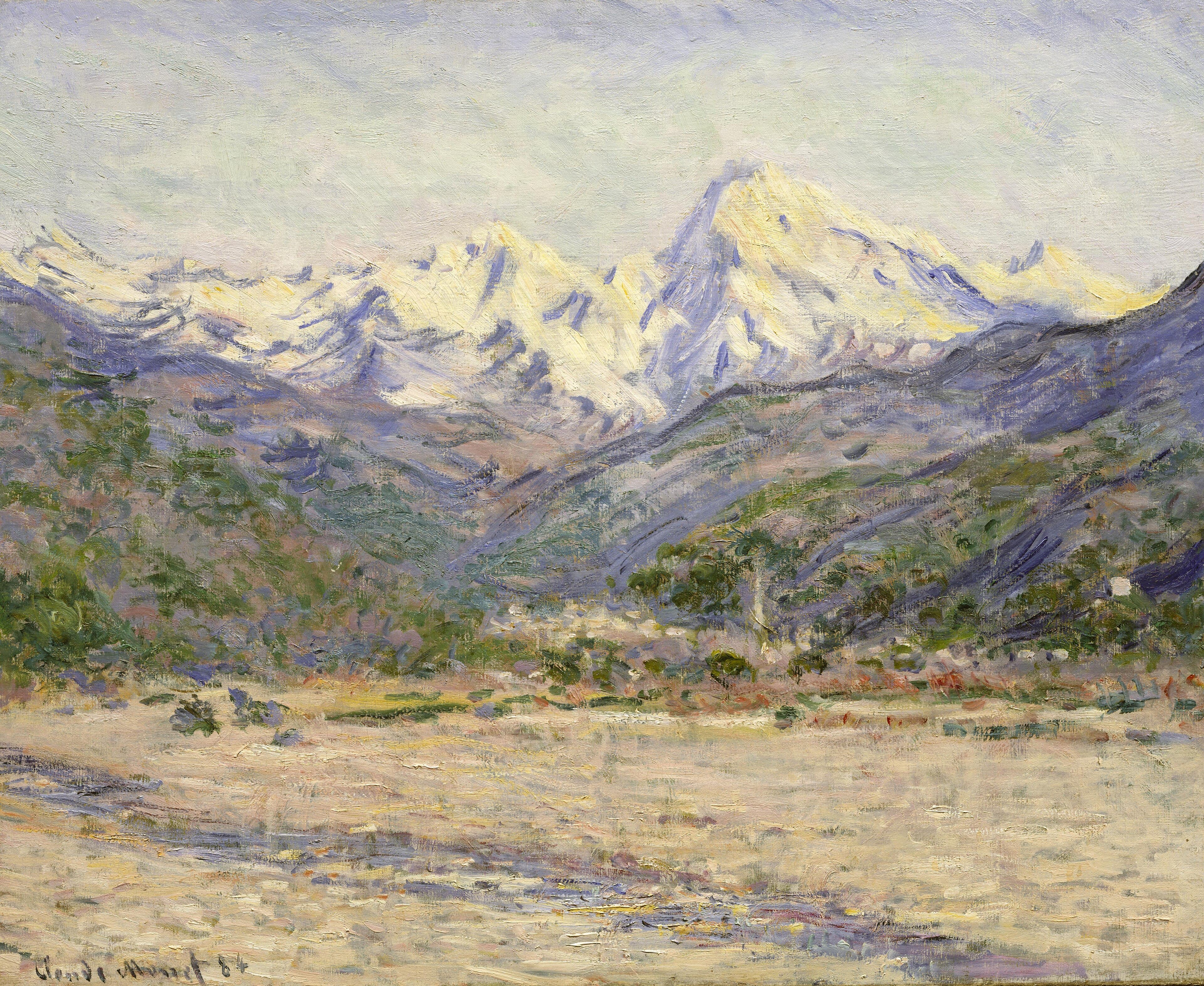
Monet first saw the Riviera in December 1883 on a short trip with Pierre-Auguste Renoir. He went back alone in January 1884, deliberately without Renoir, because he wanted to concentrate, and he stayed until April. He painted the palms, olive groves and gardens of the town, including the famous garden of the Moreno family, and walked inland to the valley of the Nervia. The results include Palm Trees at Bordighera in the Metropolitan Museum, Villas at Bordighera in the Musée d'Orsay and The Valley of the Nervia. His dealer Paul Durand-Ruel showed them in Paris, and they helped establish Monet as a painter of light in every climate.
Four years later he went south again, to Antibes, and painted the calmer, paler Antibes, now in the Courtauld. Our hub on Monet on the Mediterranean gathers both campaigns.
Why it matters
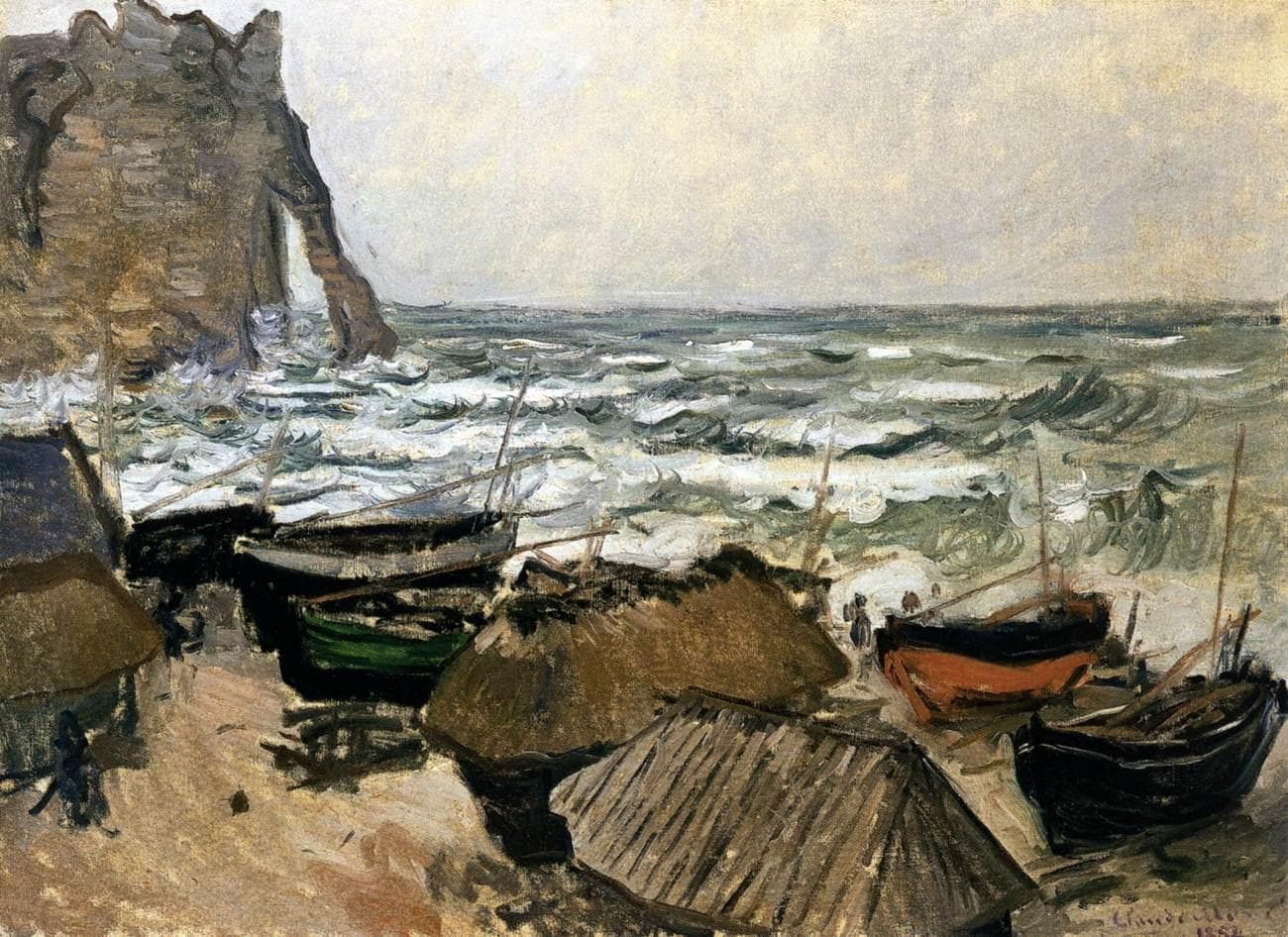
The Bordighera trip came at a turning point. Monet had settled at Giverny in 1883 and was beginning to travel in search of strong motifs: the Normandy cliffs, Belle-Île, the Riviera. Each campaign pushed his color further from what he had used at Argenteuil. The heightened palette of Bordighera fed directly into the series of the 1890s. For a sense of how different the northern coast looked in the same decade, compare Boats on the Beach at Étretat of 1885.
Where to see it
Bordighera is part of the Potter Palmer Collection at the Art Institute of Chicago. Bertha Honoré Palmer, a Chicago collector who bought heavily from Durand-Ruel in the 1890s, was one of the first great American buyers of Monet, and her gift is the reason Chicago owns so many of his pictures. It is usually on view in the Impressionist galleries. More on Claude Monet.
Questions & answers
Where is Monet's Bordighera painting?
This 1884 view of pines and the old town is in the Art Institute of Chicago, part of the Potter Palmer Collection given in 1922. Monet painted many other Bordighera canvases during the same stay; they are now spread among museums such as the Metropolitan Museum and the Musée d'Orsay, and private collections.
When and where was Bordighera painted?
Monet painted it between January and April 1884 at Bordighera, a resort town on the Italian Riviera in Liguria, about 20 kilometers from the French border at Menton. He went there alone after a short visit with Renoir the previous December.
What does Monet's Bordighera show?
Twisting maritime pines with pale pink trunks frame a view of the sunlit old town of Bordighera, with its bell tower, and the deep blue Mediterranean beyond. The trees fill the foreground like a lattice, and the town and sea are glimpsed through the gaps.
Why are the colors so bright in Monet's Bordighera?
Monet was struggling to capture the strong Mediterranean light, very different from the gray light of Normandy. He wrote that he had to use brilliant colors he had never dared before, and the almost pure blue sea and pink tree trunks reflect that experiment.
More by the artist
Claude Monet

Bridge over a Pond of Water Lilies
Claude Monet · 1899

Woman with a Parasol – Madame Monet and Her Son
Claude Monet · 1875

Sunset in Venice
Claude Monet · 1908–12

La Grenouillère
Claude Monet · 1869

Beach in Pourville
Claude Monet · 1882

Springtime
Claude Monet · 1872

Boating on the River Epte
Claude Monet · 1890

The Seine at Asnières (Hermitage)
Claude Monet · 1873
Also painted in 1884
The same year
Kindred works
You may also study
Palm Trees at Bordighera
Claude Monet · 1884
Villas at Bordighera
Claude Monet · 1884
The Valley of the Nervia
Claude Monet · 1884
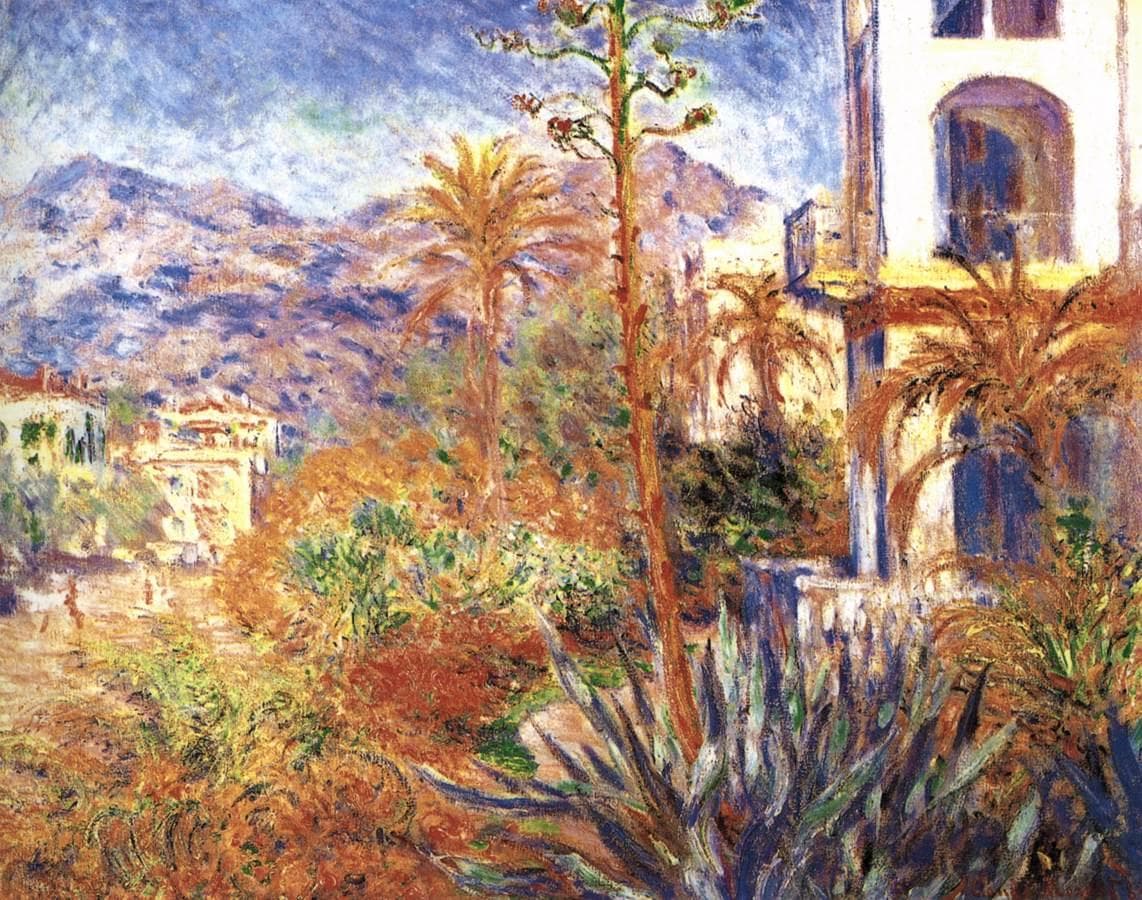
Villas in Bordighera
Claude Monet · 1884
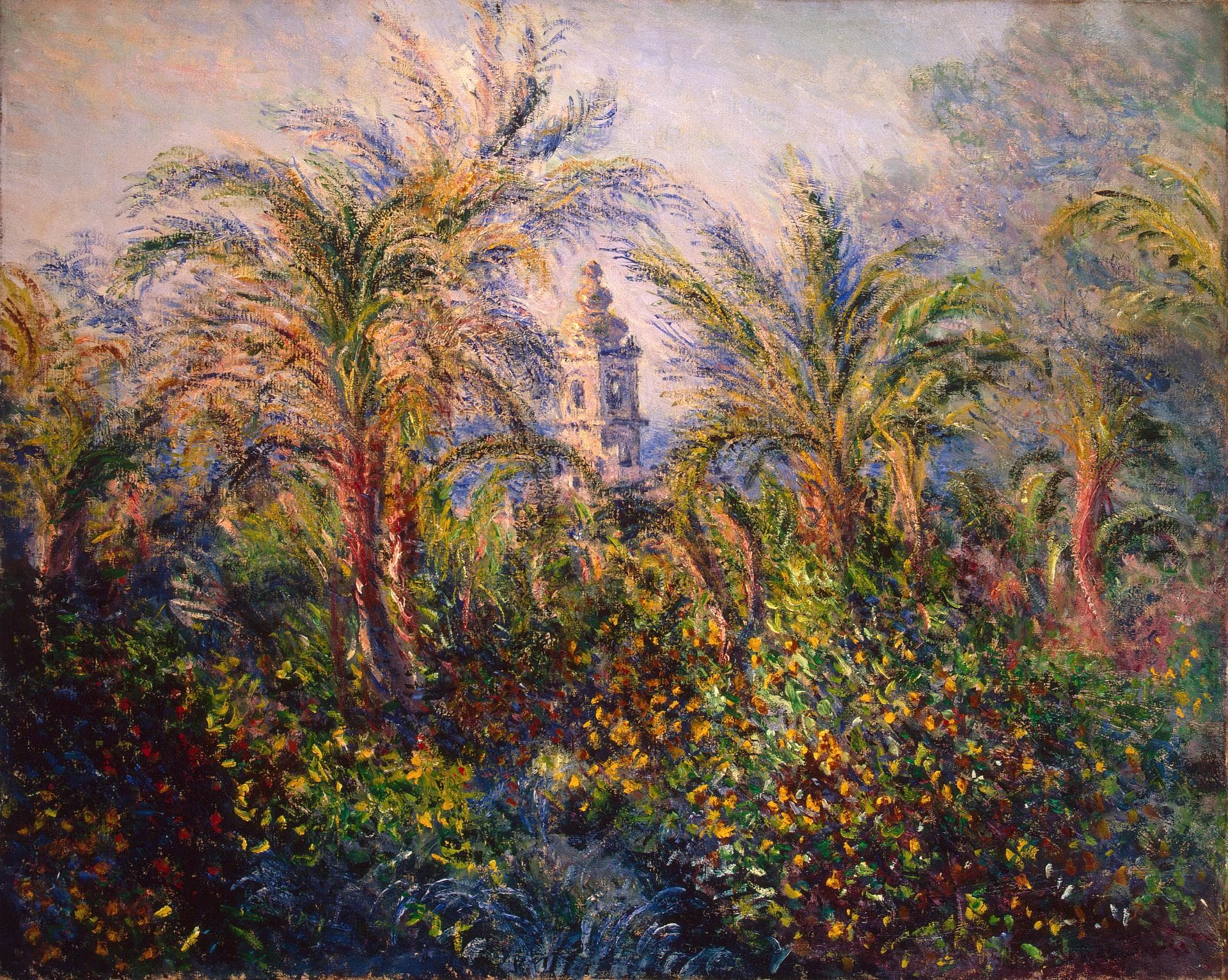
Garden at Bordighera, Impression of Morning
Claude Monet · 1884
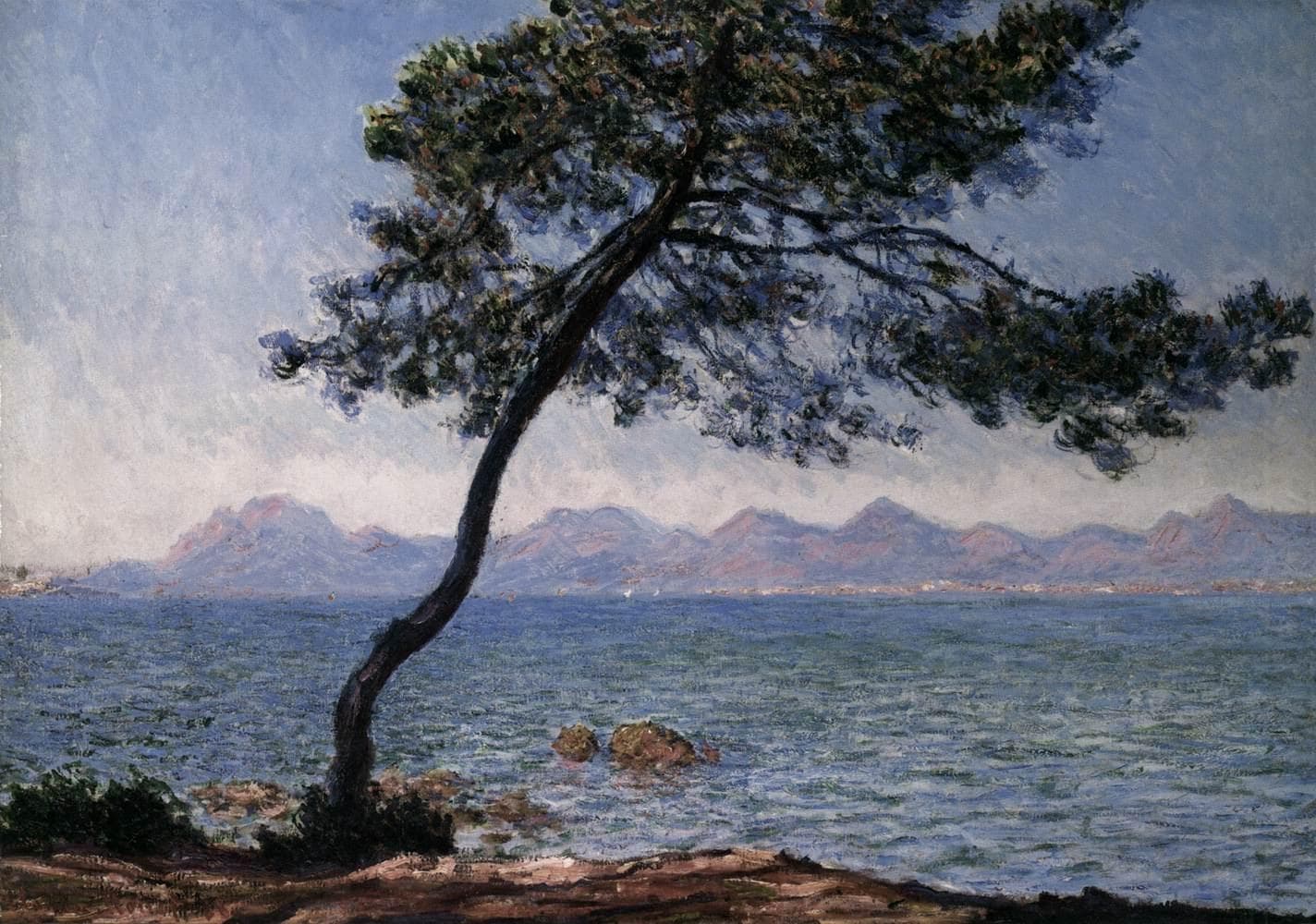
Antibes
Claude Monet · 1888

The Scream
Edvard Munch · 1893

Ophelia
John Everett Millais · 1851–52