Impressionism
Wheat Field
Claude Monet, 1881
Wheat Field is an 1881 painting by Claude Monet of a summer field of green and ripening wheat beneath a windswept sky. Long in the Cleveland Museum of Art, it is now in the Hasso Plattner Collection at the Museum Barberini, Potsdam.
- Artist
- Claude Monet
- Date
- 1881
- Medium
- Oil on canvas
- Dimensions
- 65.5 × 81 cm
- Collection
- Museum Barberini (Hasso Plattner Collection), Potsdam, Germany
- Movement
- Impressionism
- Catalogue
- Wildenstein 676
What you are looking at
A path, worn into the green wheat, runs straight from the bottom edge into the field and fades out halfway. The near wheat is young and blue-green, painted in upright strokes with a few red poppies at the lower left. Beyond it lies a broad band of ripening wheat, orange and gold, glowing in a stripe across the canvas. Further back, clumps of poplars and dark columnar trees punctuate a flat horizon, with a hint of distant hills at left. Above all of this, more than half the picture is sky: a deep blue swept by long, curving streaks of white cloud, as if a strong wind were dragging them across.
It is early summer, the weather unsettled. The light is bright but the sky is restless, and the wind seems to run through the wheat as well.
Summer 1881
In 1881 Claude Monet was still living at Vétheuil on the Seine, in the shared household with Alice Hoschedé and her children, and he painted the surrounding countryside in all seasons. This canvas is catalogued by Wildenstein as W.676 and is usually placed in that summer. Its flat, open landscape with a low horizon and an enormous sky is typical of his work in these years, before he moved to Poissy at the end of 1881 and to Giverny in 1883. The Vétheuil period is surveyed on Monet at Vétheuil.
1881 was a turning point. Durand-Ruel, recovering from his own financial troubles, began buying Monet's work steadily again, and the painter could at last afford to work without constant anxiety. The confidence shows in pictures like this, painted quickly and boldly with no figures at all.
How it was painted
The sky is the most remarkable passage. Monet paints the clouds as long, arcing strokes of white and pale blue dragged through wet darker blue, with whorls and hooks that read as wind. Nothing here is a fluffy cumulus; the sky moves.
Below, the wheat is painted in three zones. In the foreground, vertical strokes of blue-green, pale green and lilac make each stalk; in the middle band, horizontal strokes of orange and gold stand for ripening grain seen from a distance; at the horizon, the trees are dark, solid verticals. The path in the foreground is a narrow strip of ocher, which pulls the eye into the picture and then lets it go.
Notice the few red poppies at lower left: tiny, but they echo the warm band of wheat beyond. And look at the right side of the horizon, where a clump of tall trees stands apart from the rest, a dark full stop at the end of the line. The horizon sits a little below the middle of the canvas, lower than in most of his field pictures, which is what gives the sky its sweep. Seen from across a room, the picture reads as three stripes, green, gold and blue, before any detail appears. The signature, "Claude Monet," is at the lower left in dark red, followed by the date.
Monet's fields and how this one differs
Monet painted cultivated fields throughout his career, from The Plain of Sannois at Argenteuil and Fields of Bezons in the 1870s to the poppy fields near Giverny. Most are calm. This one is defined by its sky, and by the bold color bands of the wheat, almost like a flag laid across the canvas.
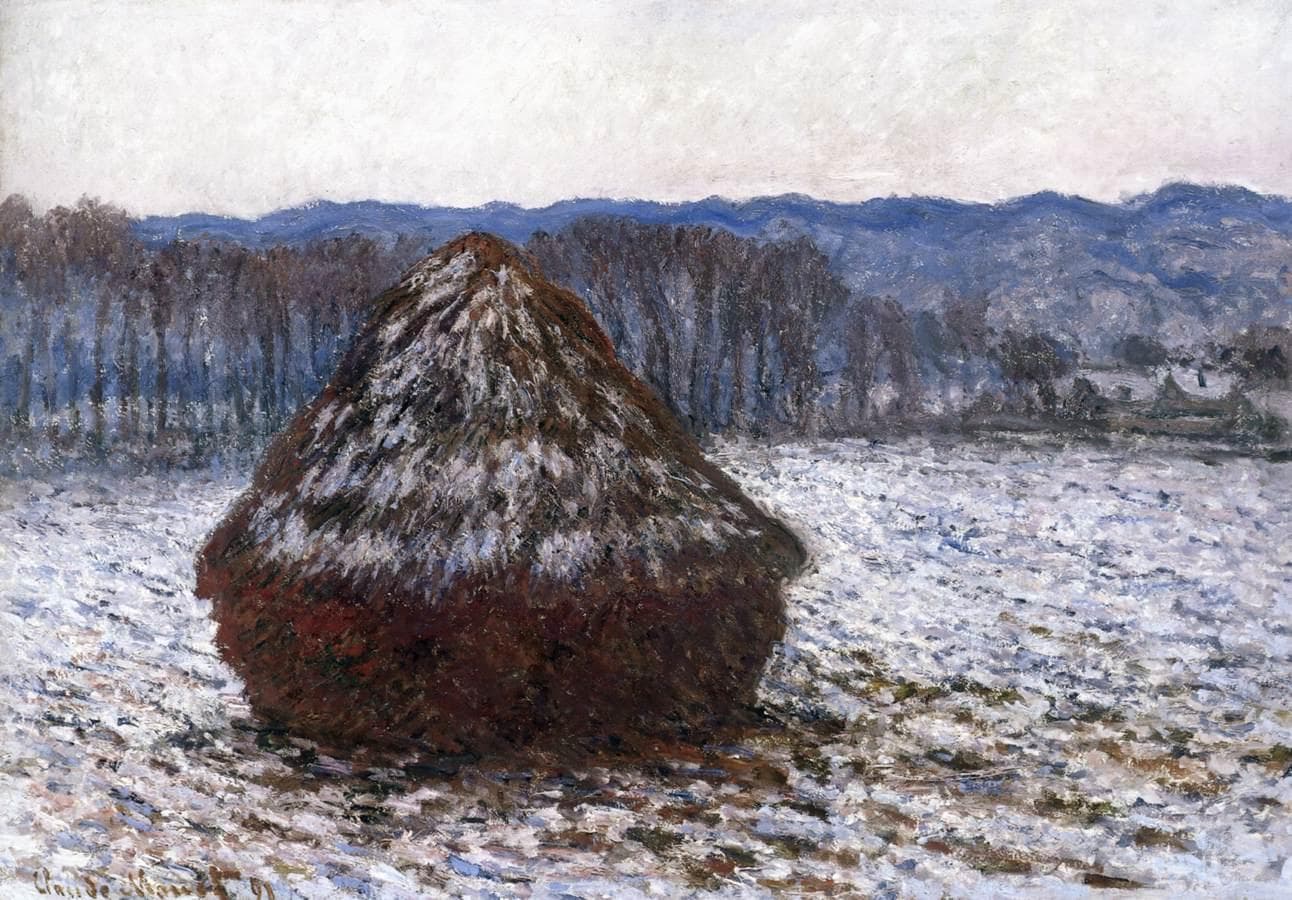
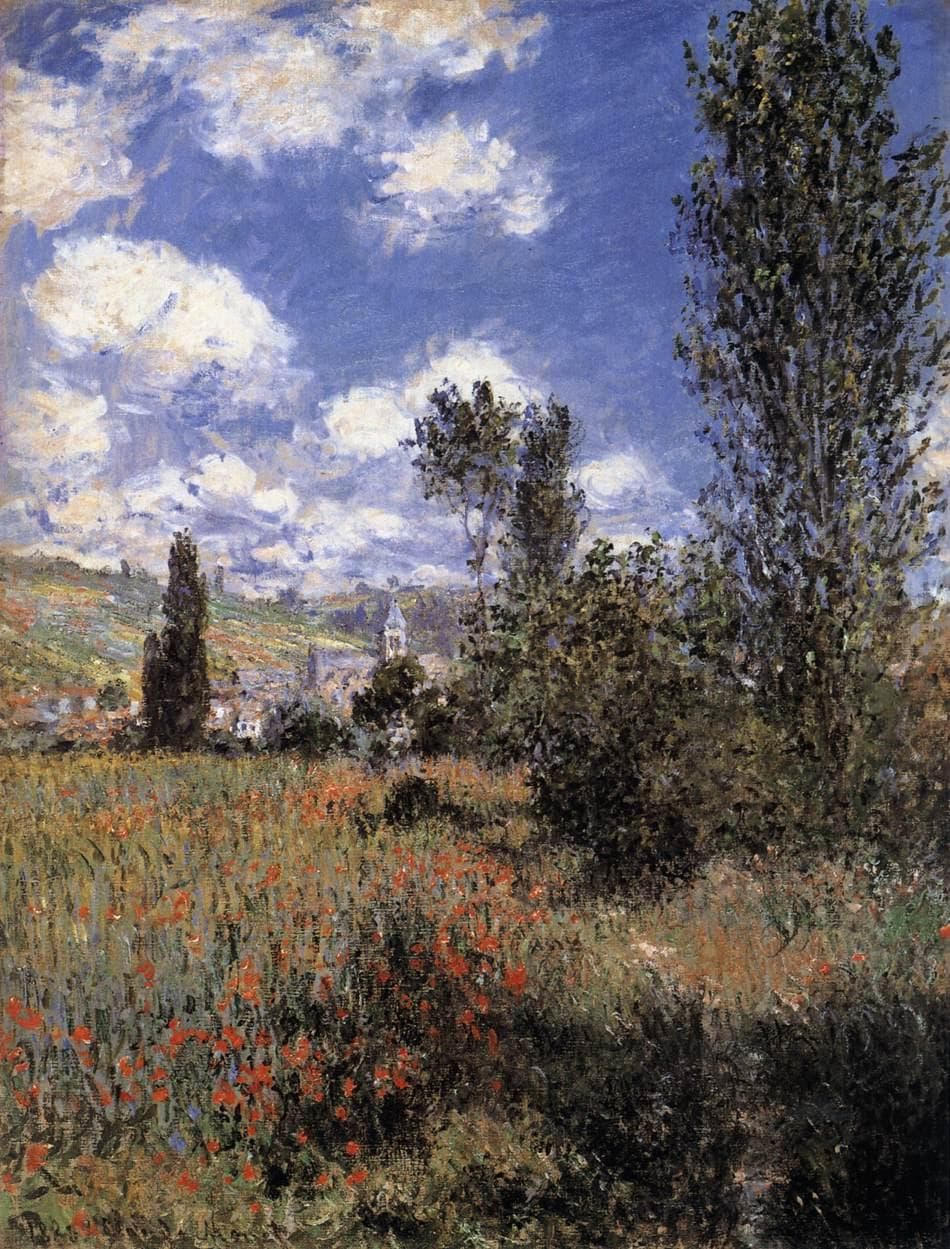
A decade later, the grain itself would become a series motif in the Haystacks, such as Stack of Wheat. Compare also the summer meadow of View of Vétheuil, painted a year earlier in the same countryside.
Provenance and where to see it
The painting belonged to the Cleveland Museum of Art from 1947 until 2012. It then entered the collection of the German businessman Hasso Plattner, and it is shown at the Museum Barberini in Potsdam, which houses his large group of Impressionist paintings. For other collections, see Where to See Monet's Paintings.
Questions & answers
Where is Monet's Wheat Field?
This 1881 canvas was in the Cleveland Museum of Art from 1947 until 2012. It is now in the Hasso Plattner Collection and shown at the Museum Barberini in Potsdam, Germany. Older sources that still place it in Cleveland are out of date.
Where did Monet paint Wheat Field?
It dates from 1881, when Monet was living at Vétheuil on the Seine, northwest of Paris, and is usually connected with the countryside around the village. He painted fields, the river and the village in every season there before moving to Poissy late in 1881.
What does the painting show?
A summer wheat field with a path running into it, young green wheat in front, a band of ripening gold behind, poplars on a flat horizon and a huge, wind-swept sky. A few red poppies at lower left are the only flowers. There are no figures.
What is special about the sky in Wheat Field?
Monet painted the clouds as long, curving streaks of white dragged across deep blue, so the sky seems to be swept by wind. It takes up more than half of the canvas and gives a flat summer field a strong sense of movement and weather.
More by the artist
Claude Monet

Bridge over a Pond of Water Lilies
Claude Monet · 1899

Woman with a Parasol – Madame Monet and Her Son
Claude Monet · 1875

Sunset in Venice
Claude Monet · 1908–12

La Grenouillère
Claude Monet · 1869

Beach in Pourville
Claude Monet · 1882

Springtime
Claude Monet · 1872

Boating on the River Epte
Claude Monet · 1890

The Seine at Asnières (Hermitage)
Claude Monet · 1873
Also painted in 1881
The same year
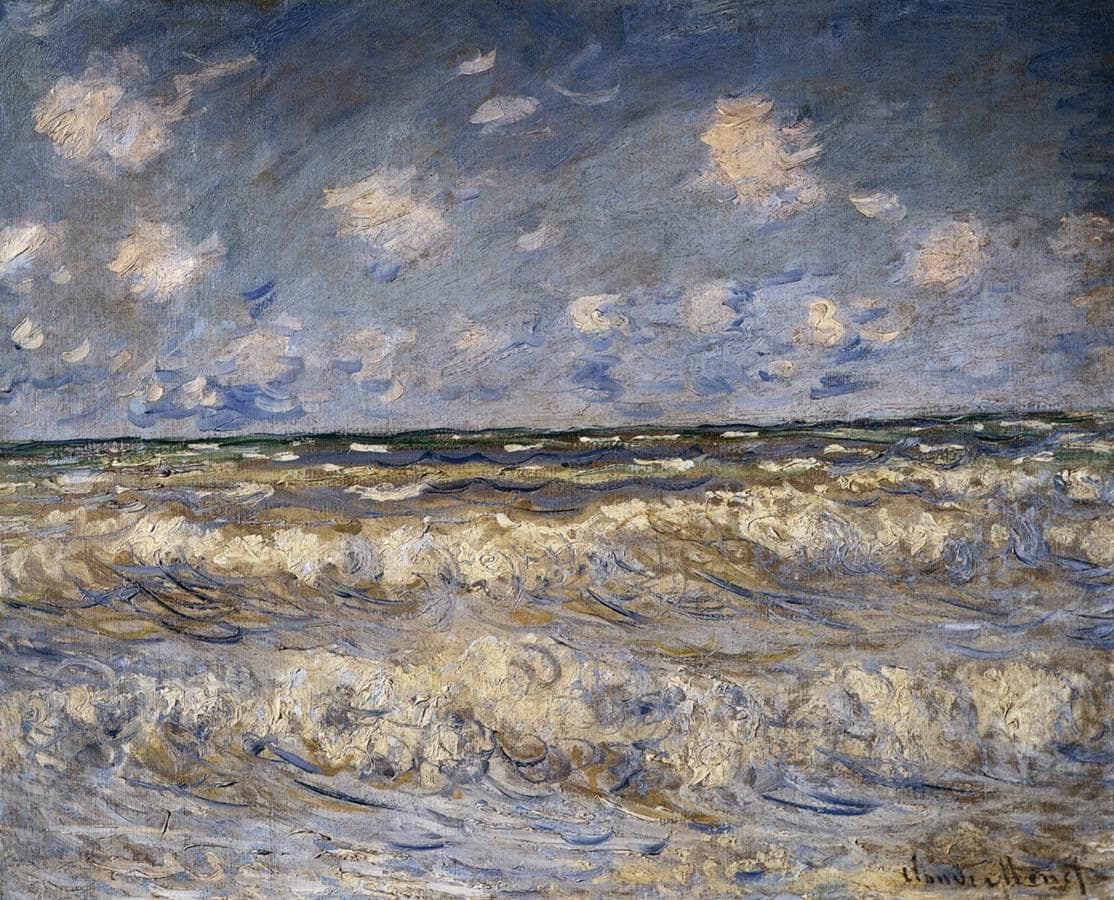
Kindred works
You may also study
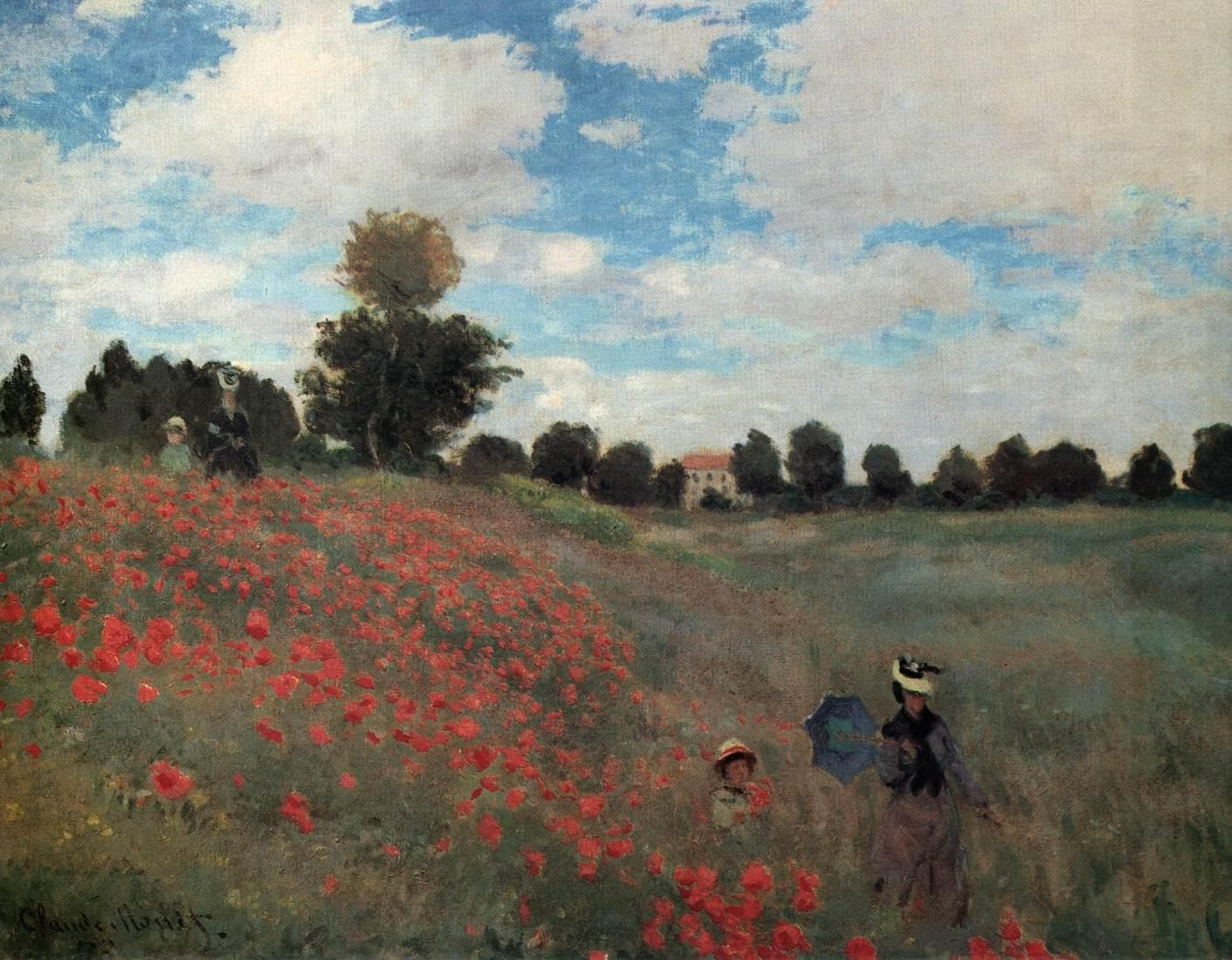
Poppy Field (Poppies at Argenteuil)
Claude Monet · 1873
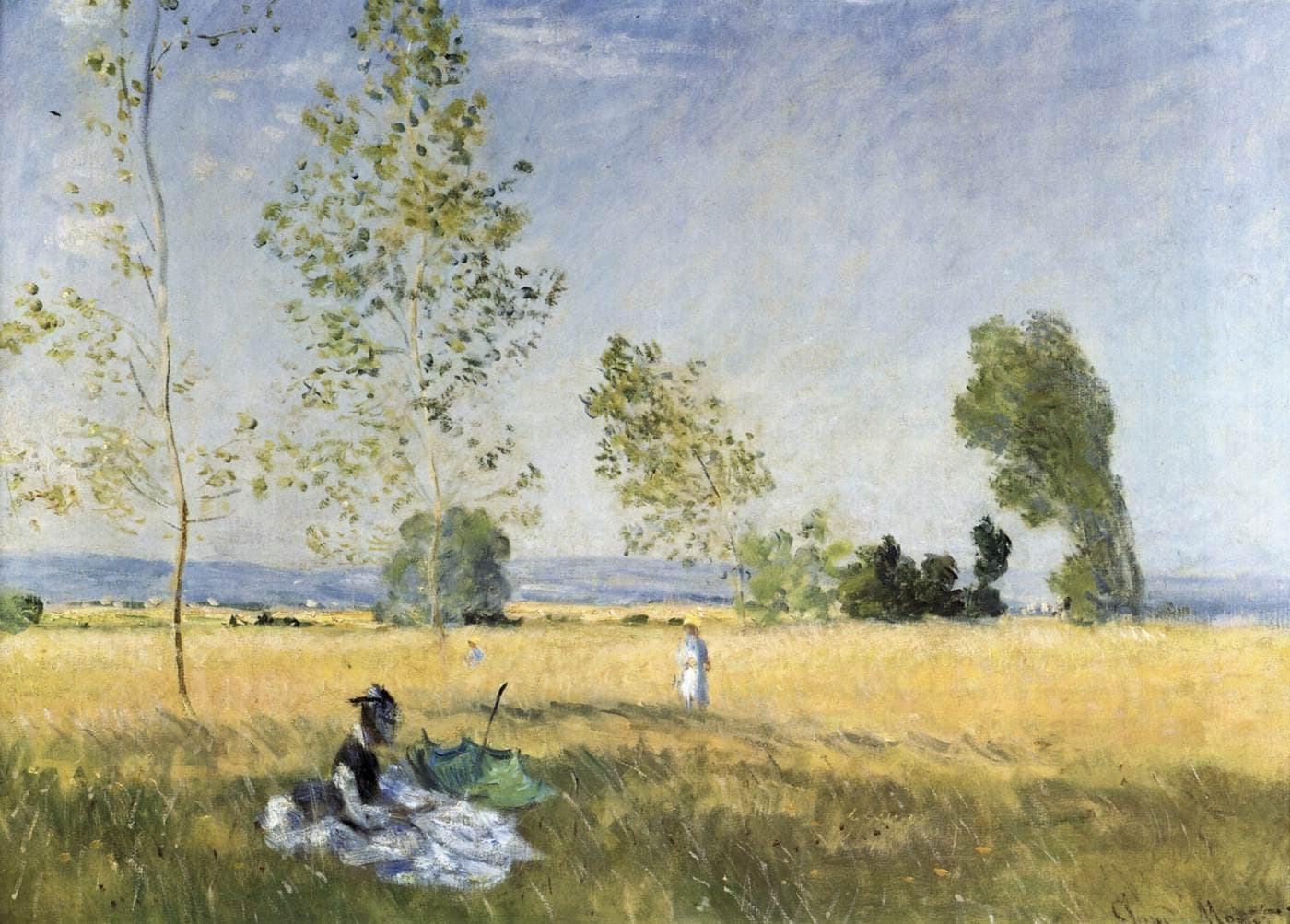
Summer (Meadow at Bezons)
Claude Monet · 1874
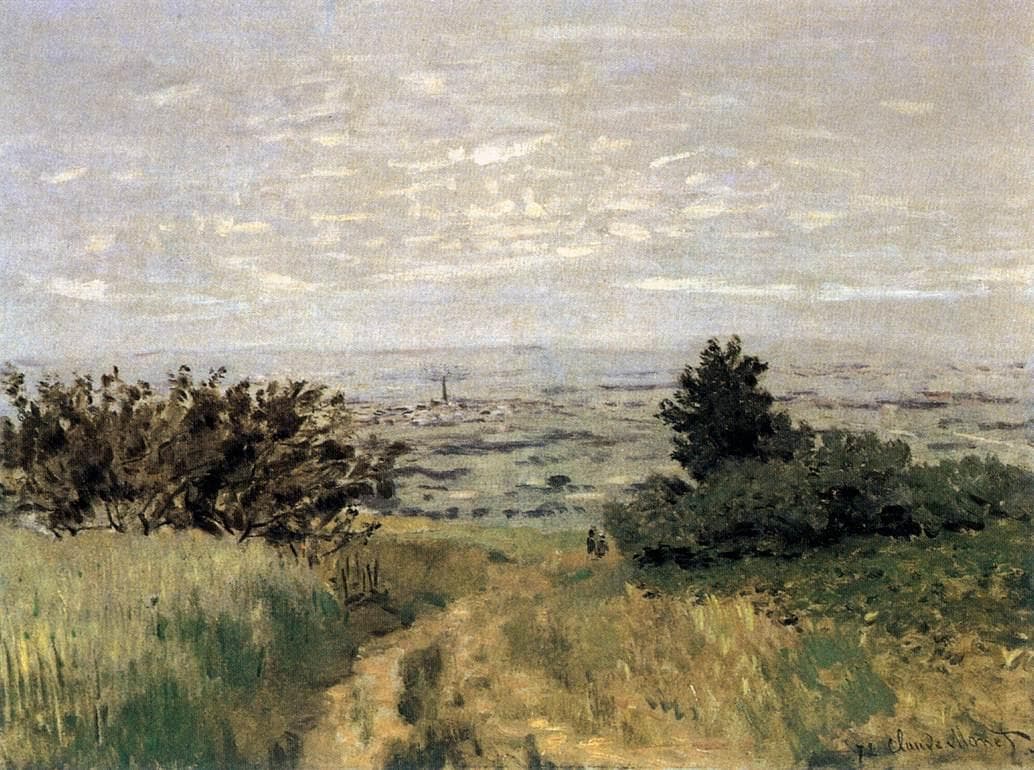
The Plain of Sannois at Argenteuil
Claude Monet · 1872
Stack of Wheat
Claude Monet · 1890–91
View of Vétheuil
Claude Monet · 1880

The Scream
Edvard Munch · 1893

Ophelia
John Everett Millais · 1851–52

The Great Wave off Kanagawa
Katsushika Hokusai · c. 1830–32