Impressionism
The Breakup of the Ice at Lavacourt
Claude Monet, 1880
The Breakup of the Ice at Lavacourt (La Débâcle) is an 1880 painting by Claude Monet of ice floes drifting on the grey Seine after the great thaw of January 1880, near Vétheuil. It is in a private collection.
- Artist
- Claude Monet
- Date
- 1880
- Medium
- Oil on canvas
- Dimensions
- 46 × 81.5 cm
- Collection
- Private collection
- Movement
- Impressionism
- Catalogue
- Wildenstein 563
Painted at Monet at Vétheuil
What you are looking at
The picture is almost colorless. A pale, milky sky fills the top half, its brushstrokes faintly visible as a grey-white weave. Across the middle runs a low line of snowy hills and, at the right, the houses and trees of a riverside village, a cluster of rust, violet and blue-grey touches in all that white, with a church tower and a few poplars rising above the roofs. Below, the Seine is open water, grey-lilac and perfectly still, mirroring the village in short vertical strokes. Across the foreground drift slabs of broken ice in long, uneven strips, white on top, edged with dark green and blue where the water laps them.
In the lower left corner Monet's signature and the date, "Claude Monet 80," are painted straight onto the ice.
Claude Monet painted the scene in the winter of 1880 on the Seine at Lavacourt, the hamlet facing Vétheuil across the river. The canvas is a long, low format, 46 by 81.5 centimeters, and is catalogued by Wildenstein as number 563. It is in a private collection; its provenance is recorded from a British collector, J. C. W. Sawbridge-Erle-Drax, in 1933.
Where and when
Monet had moved to Vétheuil, a village on the Seine about 60 kilometers downriver from Paris, in the late summer of 1878. Lavacourt lay on the opposite bank, and he painted both from the river, the fields and a boat. See Monet at Vétheuil.
In December 1879 a severe cold snap froze the Seine solid. Early in January 1880 the thaw came, and the ice broke up with a noise like gunfire; huge floes ground their way downstream, damaging boats and banks. The French word for this is débâcle, and Monet painted it more than a dozen times, in grey weather, in sun, at dawn and at sunset, from both banks.
It was a hard winter for him in every sense. His wife Camille had died the previous September, the household he shared with Alice Hoschedé and her children was in debt, and he was working largely alone. Many of the débâcle pictures share this one's emptiness: no figures, no boats, only ice, water and a distant village.
How it was painted
The palette is restricted to white, grey, lilac, a little blue and a few warm accents in the houses. Within that narrow range Monet finds a great deal of variety. The floes in the foreground are thick, flat strokes of white laid horizontally, with dark green-black lines beneath them for their submerged edges; farther back they become thin slivers. The open water between is a smooth, pale lilac, the most thinly painted passage in the picture.
The reflections of the village and the trees are short vertical strokes in the still water, the only verticals below the horizon. Notice how the long format stretches everything sideways, making the river seem broader and the cold more pervasive. The sky is barely modeled at all, a pale layer that seems to press down on the landscape. The modest size suggests Monet worked on the bank, in the open, in front of the motif.
The motif and its siblings
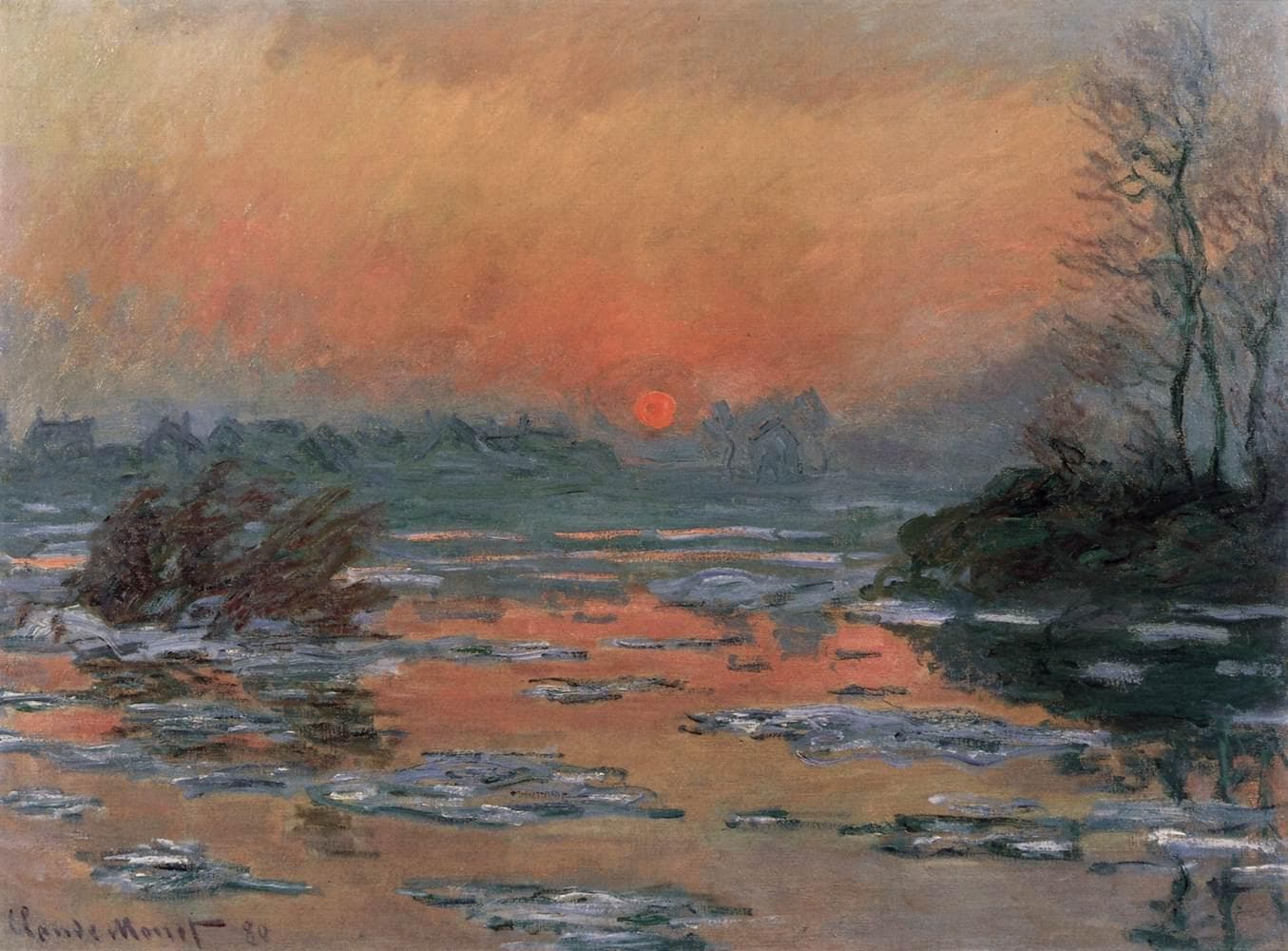
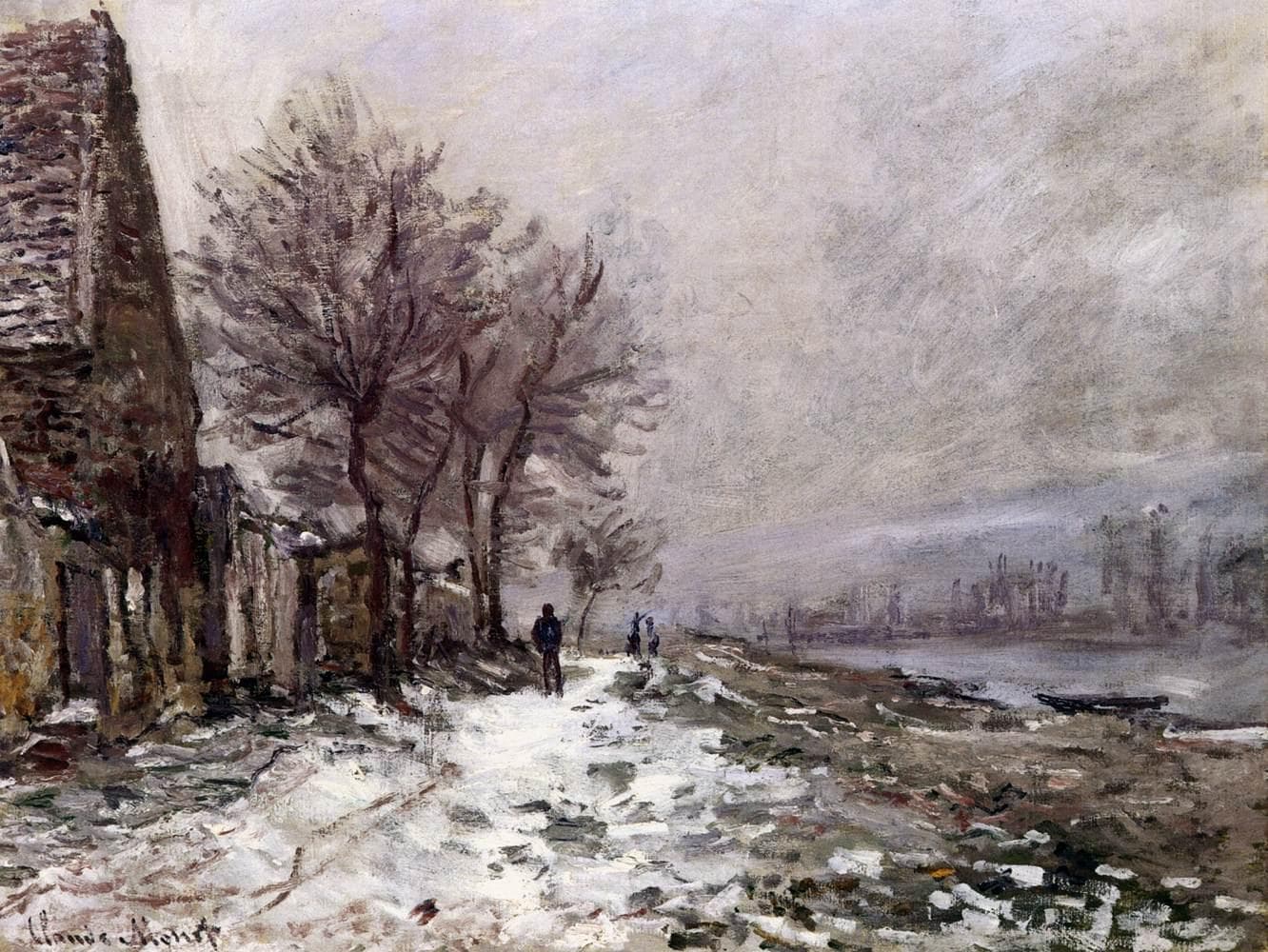
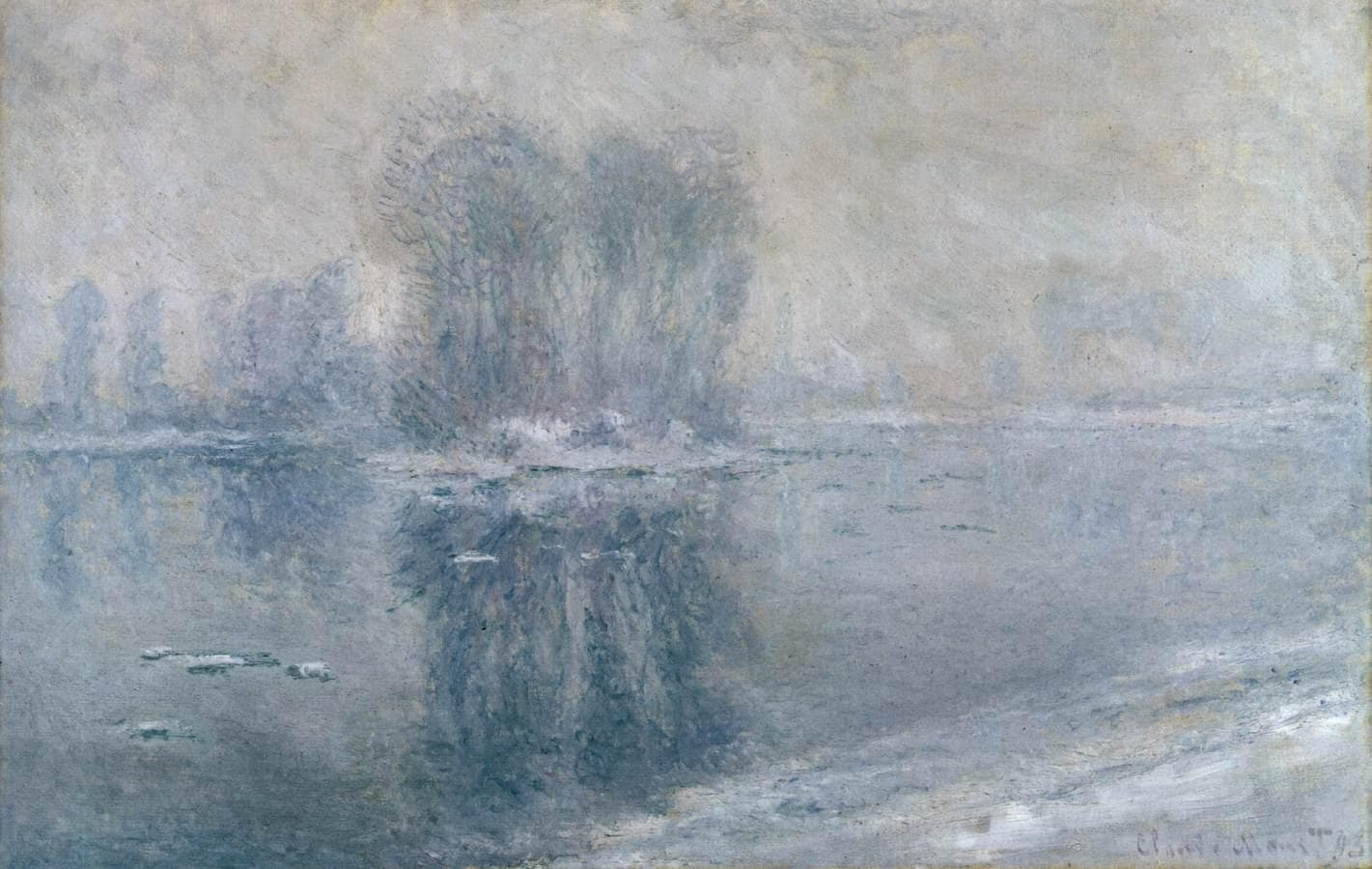
Several larger débâcle canvases are in public collections, including the University of Michigan Museum of Art in Ann Arbor and the Gulbenkian Museum in Lisbon. In the French national collections, The Breaking Up of the Ice near Vétheuil shows a similar grey day. At sunset the same ice becomes Sunset on the Seine in Winter and the large Sunset on the Seine at Lavacourt in the Petit Palais. The village under snow before the thaw appears in Lavacourt in Winter; Monet returned to drifting ice at Bennecourt in 1893 in Ice Floes.
Where to see it
This canvas is privately owned and appears only occasionally in exhibitions or sales. To see the débâcle series in person, visit the public collections above; for a guide by museum, see where to see Monet's paintings. For the artist, see Claude Monet.
Questions & answers
Where is Monet's The Breakup of the Ice at Lavacourt?
This version, signed and dated 1880 and catalogued by Wildenstein as number 563 (46 by 81.5 centimeters), is in a private collection. Other débâcle paintings from the same winter are in Ann Arbor, Lisbon, the Petit Palais in Paris and the French national collections.
When and where was it painted?
In January 1880, on the Seine at Lavacourt, the hamlet across the river from Vétheuil, where Monet lived from 1878 to 1881. He painted it after a severe freeze, when the river ice broke up and drifted downstream.
What is the débâcle in Monet's paintings?
Débâcle is the French word for the sudden breakup of river ice in a thaw. In January 1880 the frozen Seine broke up at Vétheuil, and Monet painted the floating ice more than a dozen times, in grey light, sunshine and at sunset.
Where is Lavacourt?
Lavacourt is a small hamlet on the left bank of the Seine, facing the village of Vétheuil, about 60 kilometers northwest of Paris. Monet painted it often between 1878 and 1881, including his 1880 Salon picture of the village.
More by the artist
Claude Monet

Bridge over a Pond of Water Lilies
Claude Monet · 1899

Woman with a Parasol – Madame Monet and Her Son
Claude Monet · 1875

Sunset in Venice
Claude Monet · 1908–12

La Grenouillère
Claude Monet · 1869

Beach in Pourville
Claude Monet · 1882

Springtime
Claude Monet · 1872

Boating on the River Epte
Claude Monet · 1890

The Seine at Asnières (Hermitage)
Claude Monet · 1873
Also painted in 1880
The same year
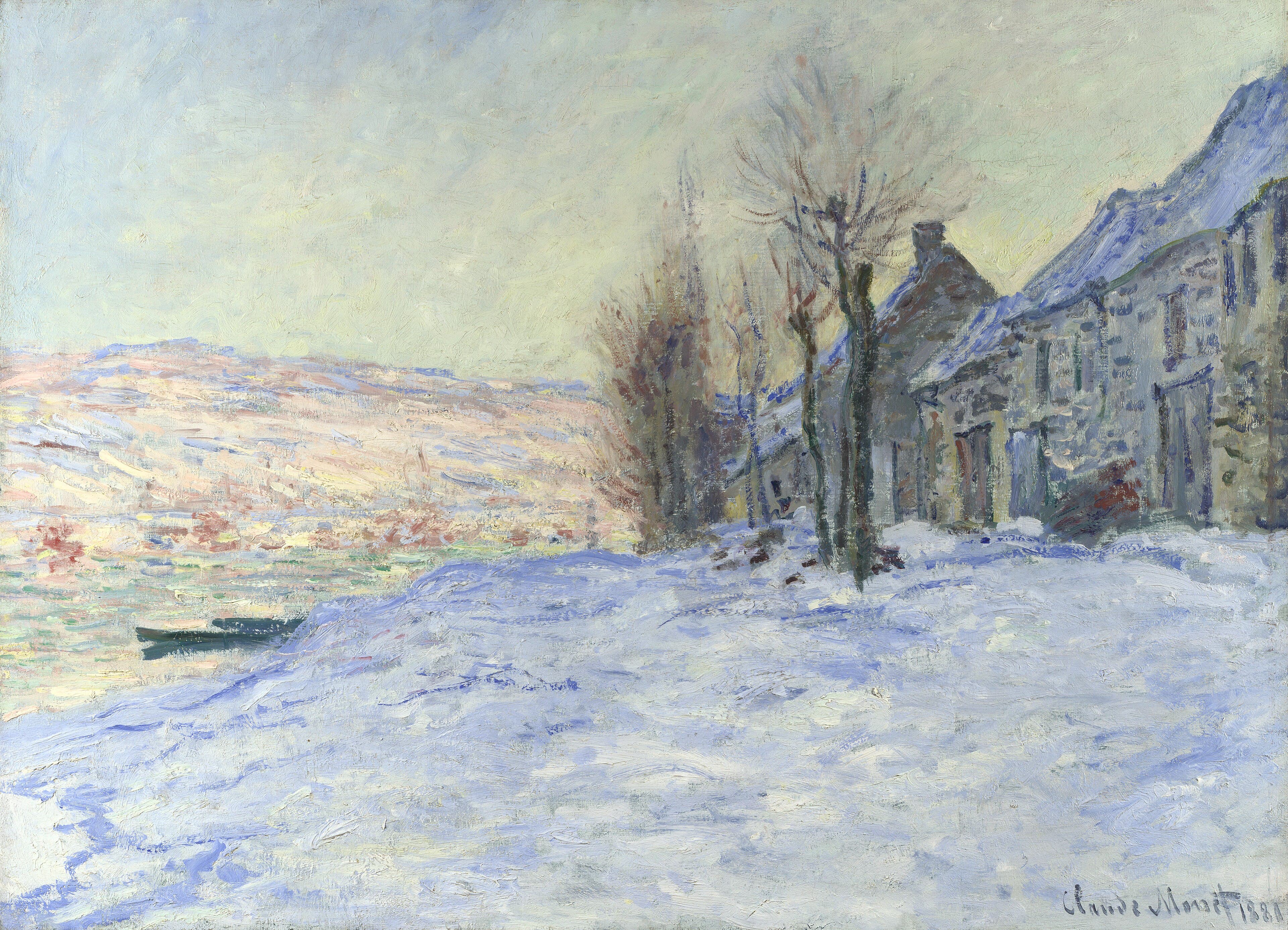
Lavacourt under Snow
Claude Monet · c. 1878–81
View of Vétheuil
Claude Monet · 1880
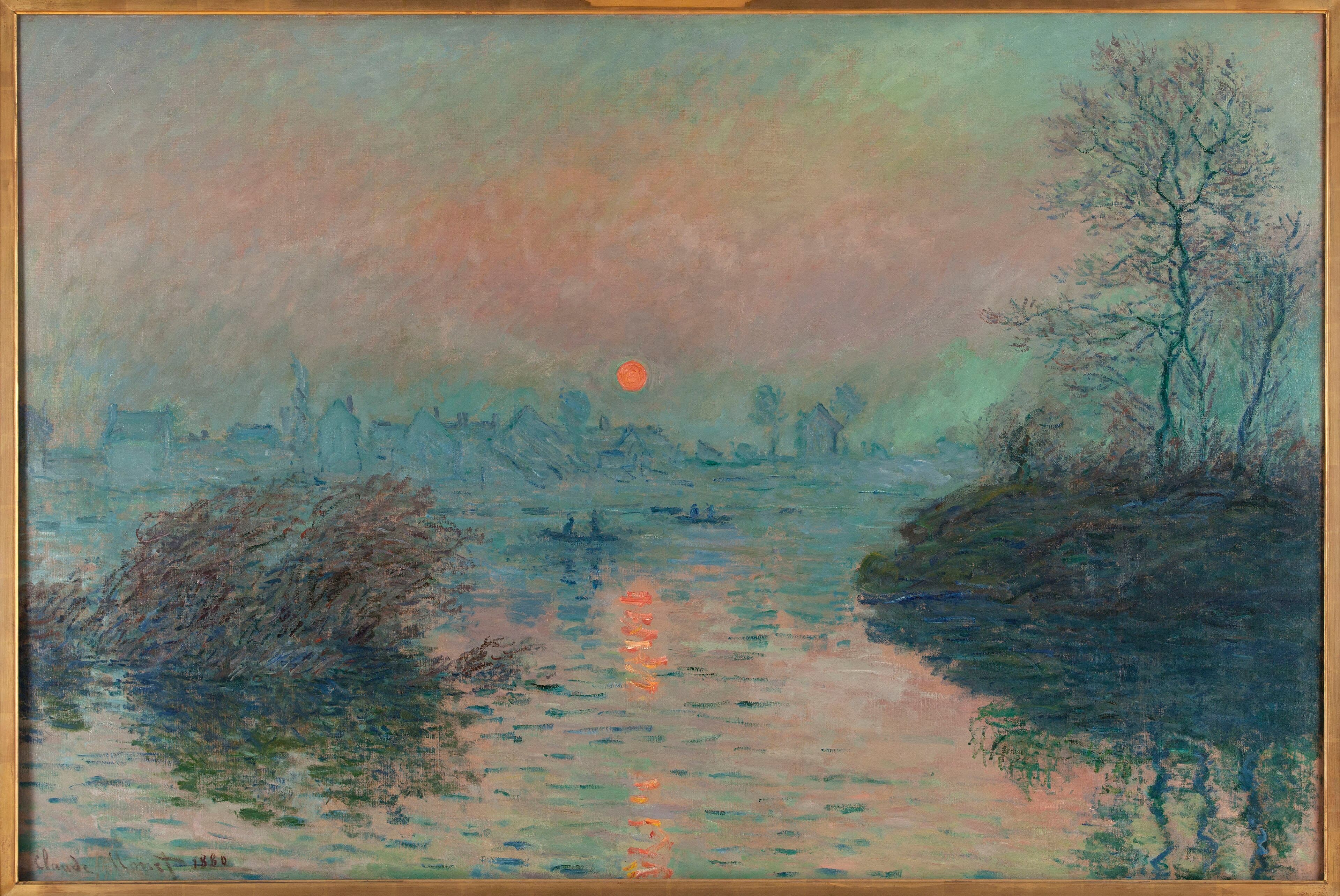
Sunset on the Seine at Lavacourt, Winter Effect
Claude Monet · 1880
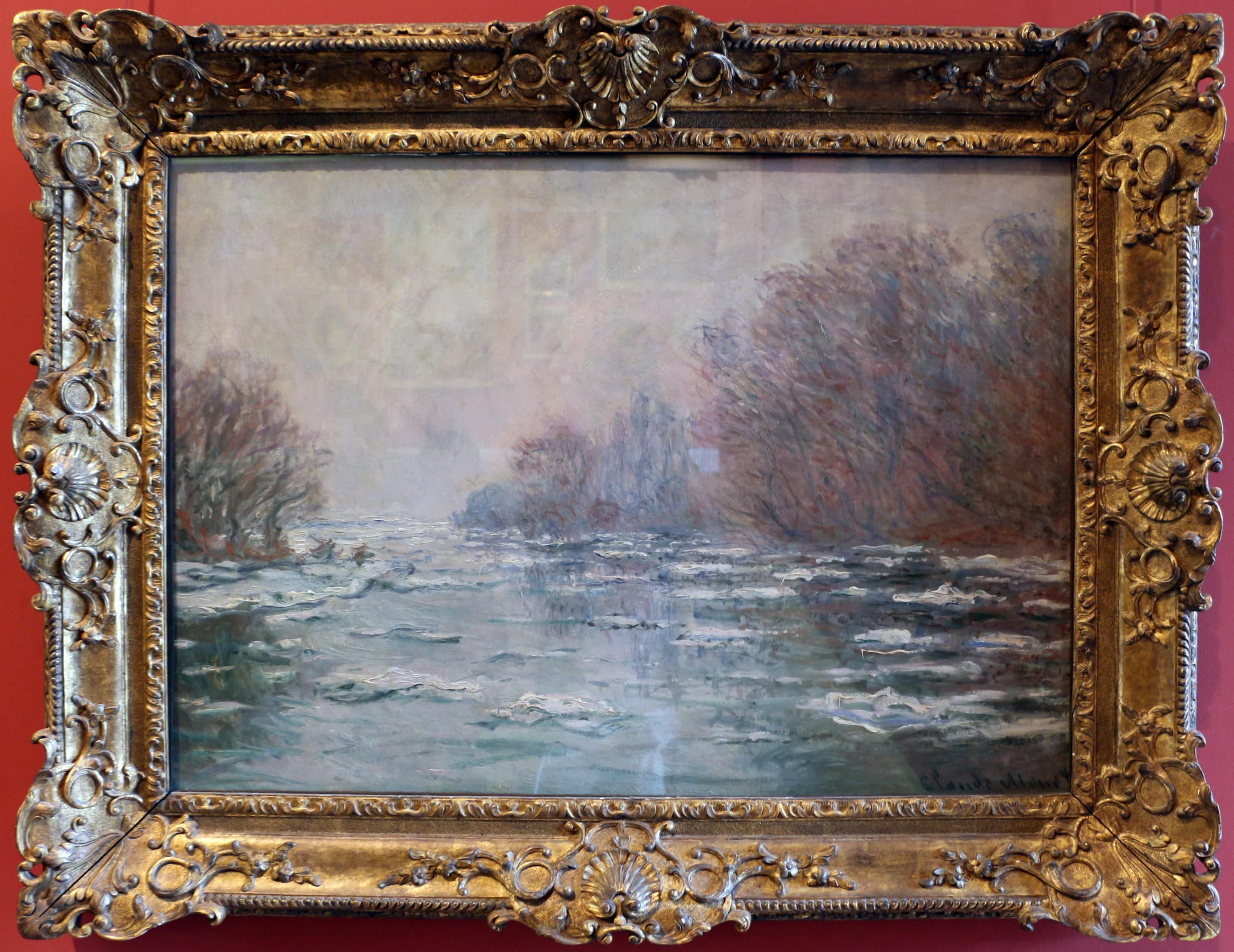
The Breaking Up of the Ice near Vétheuil
Claude Monet · c. 1880
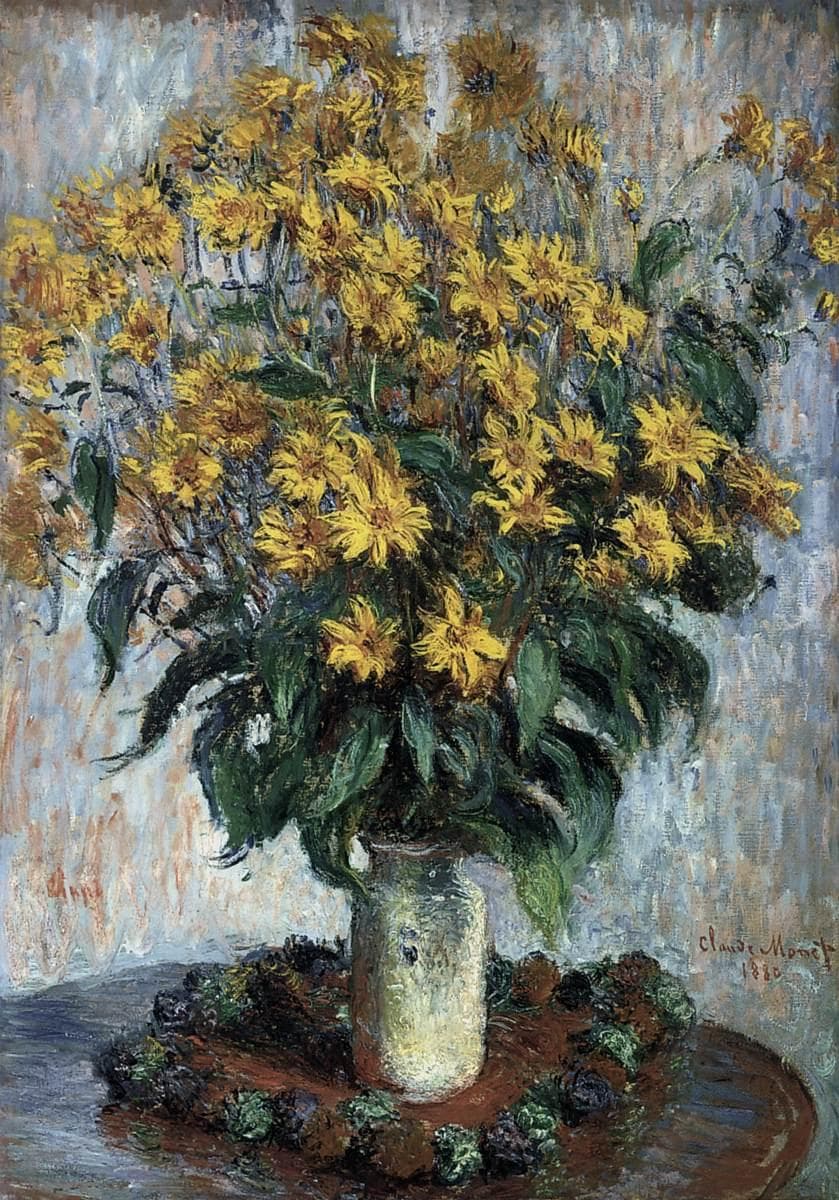
Jerusalem Artichoke Flowers
Claude Monet · 1880
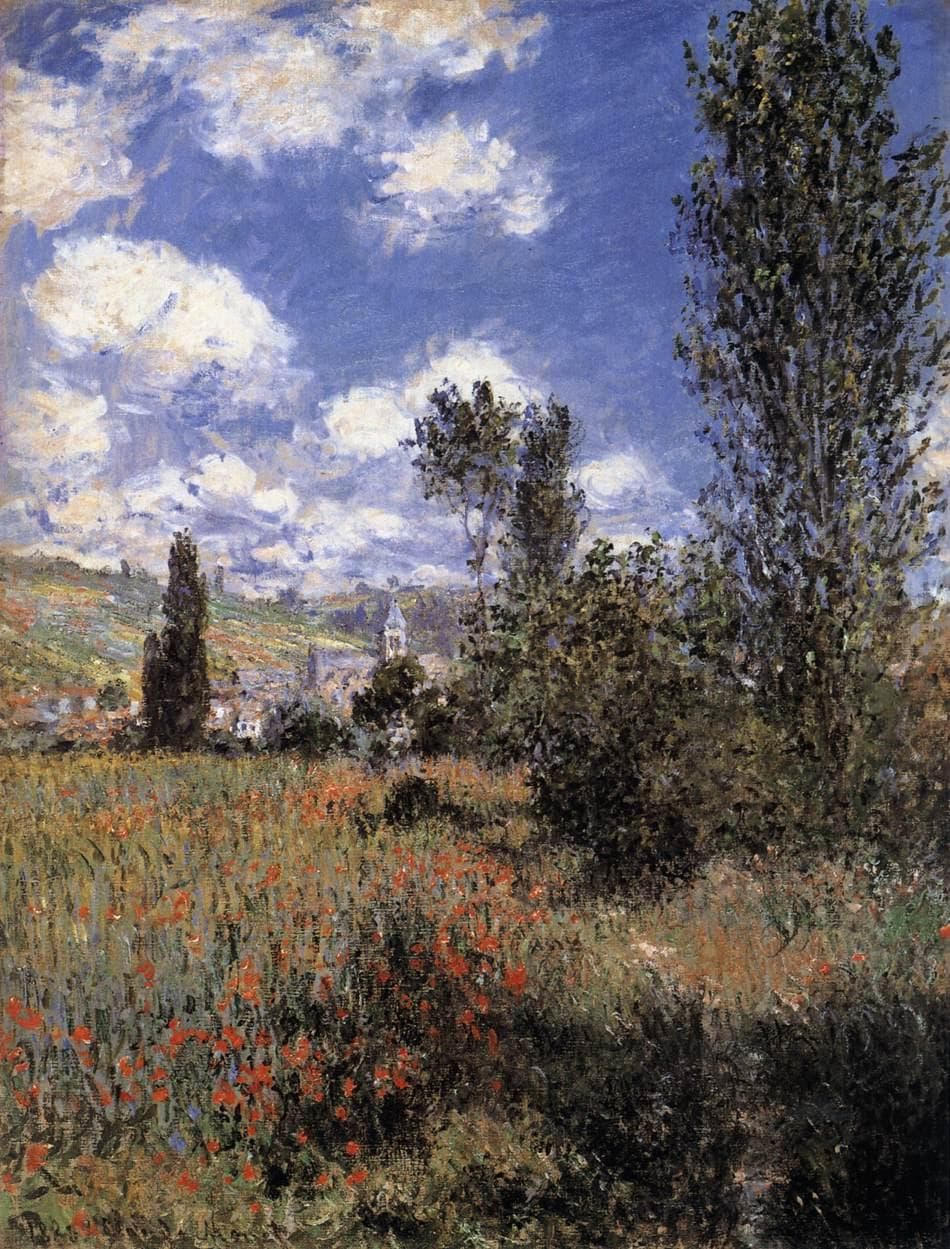
View of Vétheuil
Claude Monet · 1880
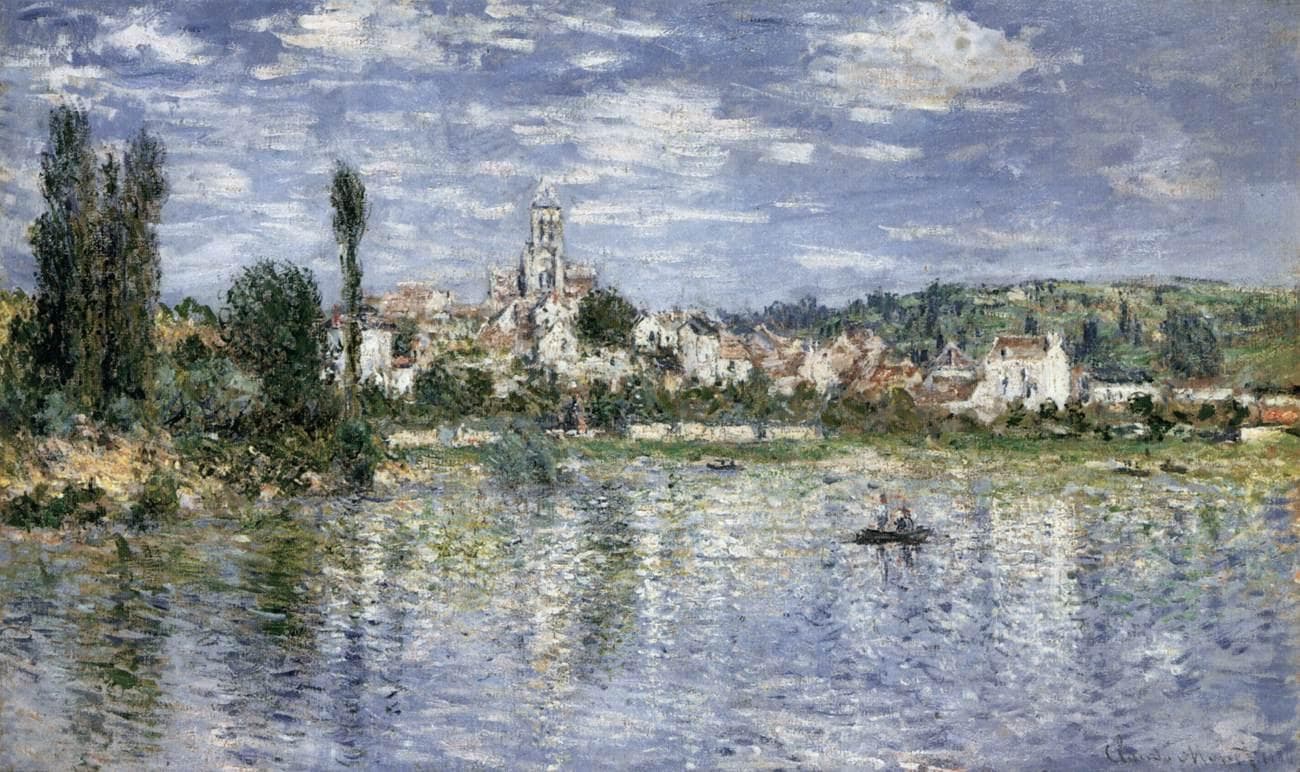
Vétheuil in Summer
Claude Monet · 1880
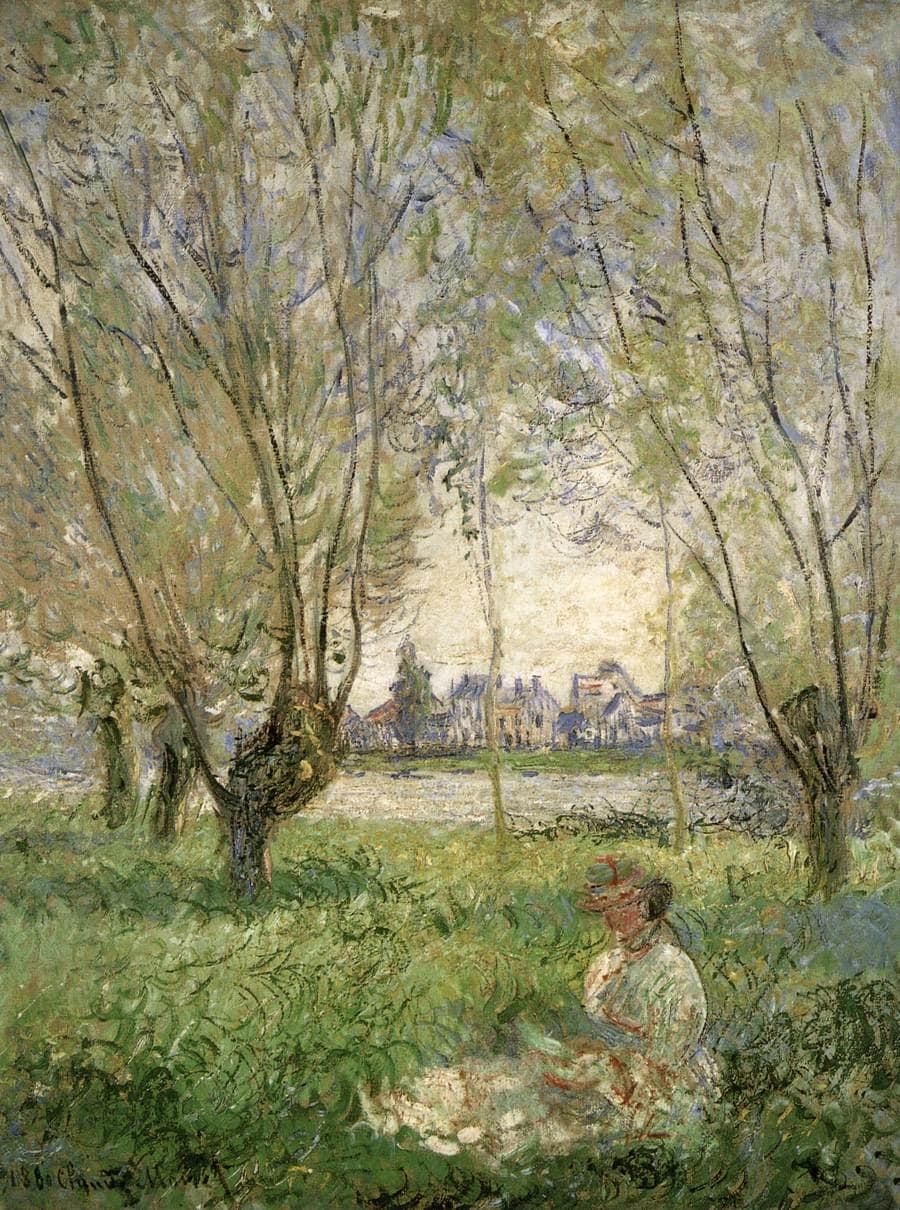
Woman Seated under the Willows
Claude Monet · 1880
Kindred works
You may also study
Sunset on the Seine in Winter
Claude Monet · 1880
The Breaking Up of the Ice near Vétheuil
Claude Monet · c. 1880
Sunset on the Seine at Lavacourt, Winter Effect
Claude Monet · 1880
Lavacourt in Winter
Claude Monet · 1879
Ice Floes
Claude Monet · 1893

The Scream
Edvard Munch · 1893

Ophelia
John Everett Millais · 1851–52

The Great Wave off Kanagawa
Katsushika Hokusai · c. 1830–32