Image: Harvard Art Museums/Fogg Museum, Gift of Mrs. Henry Lyman · CC BY-SA 4.0 · via Wikimedia Commons
Charing Cross Bridge: Fog on the Thames
Claude Monet, 1903
Charing Cross Bridge: Fog on the Thames (1903) is Claude Monet's view of the London bridge almost erased by turquoise fog, the sun a small red disc ringed in green. It is in the Harvard Art Museums (Fogg Museum), Cambridge, Massachusetts.
- Artist
- Claude Monet
- Date
- 1903
- Medium
- Oil on canvas
- Dimensions
- 73.7 × 92.4 cm
- Collection
- Harvard Art Museums / Fogg Museum, Cambridge, Massachusetts, United States
- Movement
- Impressionism
- Catalogue
- Wildenstein 1554
- The City
- Water & Sea
- Night & Dreams
Charing Cross Bridge: Fog on the Thames is one of the most atmospheric pictures Claude Monet made of London. Signed and dated 1903, it shows the railway bridge as a faint violet outline pushed to the right of the canvas, the whole river and sky drowned in a turquoise fog, and the sun hanging at upper left as a small red-pink disc ringed by a halo of green, its reflection a column of red flecks on the water. It belongs to the Harvard Art Museums (Fogg Museum, inv. 1979.329), the gift of Mrs. Henry Lyman. It was shown in Monet's 1904 exhibition of Thames views at Durand-Ruel in Paris.
What you are looking at
The canvas is about 74 by 92 cm. Almost all of it is a single cool color, a pale turquoise blue, worked in soft, feathery strokes. Unusually, the composition is not centered on the bridge. The bridge appears only in the right half of the picture, and only as a few horizontal and vertical marks in violet and blue: a deck, three piers and their reflections. At far left, a thin dark vertical may be a lamp standard or a chimney on the Embankment. Westminster has vanished.
The focal point is the sun. Monet painted it as a small, solid disc of pinkish red, surrounded by a ragged ring of dark green strokes, as if the fog were thickest around it. Below, on the water, a vertical path of red, pink and white dashes runs downward toward the viewer, the sun's reflection. In the center foreground a small dark triangular shape, a sailing barge, floats in the fog. The signature and date are at lower right.
Where and when it was painted
Monet painted the Thames from the Savoy Hotel during three visits between 1899 and 1901, spending more than seven months in London in total. From his window he looked upriver to Charing Cross Bridge and downriver to Waterloo Bridge. He worked on the canvases at Giverny until 1904. Years later, the dealer René Gimpel recorded Monet saying that he adored London because it was a mass, a whole, and so simple. Our Monet in London hub follows the project.
How it was painted
The museum describes layers of blue, green and pink laid over a cool ground, and the effect is of looking through several veils at once. Monet applied the fog in loose, overlapping strokes that blur the few structural lines. The sun and its reflection are painted with denser, warmer paint, so they come forward from the surface. The green halo around the sun is an unusual and daring choice: a complementary color that makes the red disc glow more intensely.
Ownership
According to the museum, Monet kept the canvas for many years and sold it to the dealers Bernheim-Jeune and Durand-Ruel in December 1920. It went to Durand-Ruel's New York branch in 1923 and was sold to Elizabeth Lyman (Mrs. Henry Lyman) by January 1928. She gave it to Harvard's Fogg Museum in 1979.
How this version differs
The Harvard canvas is the blue, sun-in-fog counterpart to the yellow Charing Cross Bridge, Fog in Toronto and the luminous Lyon version of the same year. Its off-center composition, with the sun at left and the bridge pushed right, has a precedent in Impression, Sunrise, where a small red sun also floats in a blue haze. It is among the most reproduced pictures of the Charing Cross Bridge series, and often stands for the series as a whole.
A sun you can look at
Only in a thick fog can the sun be looked at directly, and that is the experience this painting records. Smoke and mist reduced the sun over the Thames to a small, flat, colored disc, and Monet painted it exactly so: a solid red circle that can be stared at, with its light spilled downward onto the water. It is one of the simplest images in the series and one of the most memorable.
Where to see it
The painting is in the Harvard Art Museums on Quincy Street in Cambridge, Massachusetts, which combine the Fogg, Busch-Reisinger and Arthur M. Sackler collections. Check the online collection for current gallery display. For other collections, see where to see Monet's paintings.
Questions & answers
Where is Monet's Charing Cross Bridge: Fog on the Thames?
In the Harvard Art Museums in Cambridge, Massachusetts (Fogg Museum, inv. 1979.329), the gift of Mrs. Henry Lyman. Check the museums' online collection for whether it is currently on view.
When was it painted?
Monet began it at the Savoy Hotel in London during his visits of 1899–1901 and finished it at Giverny. It is signed and dated 1903 and was shown at Durand-Ruel's 1904 exhibition of Thames views.
What does the painting show?
Charing Cross Bridge almost dissolved in a turquoise fog, with the sun a small red disc ringed in green at upper left and its reflection a column of red flecks on the river. A small barge floats in the foreground.
Why is there a green ring around the sun?
Monet used green, the complementary color of red, to surround the sun disc, which makes the red glow more intensely. It also suggests the fog thickening around the sun's light, a common effect in London's smoky air.
More by the artist
Claude Monet
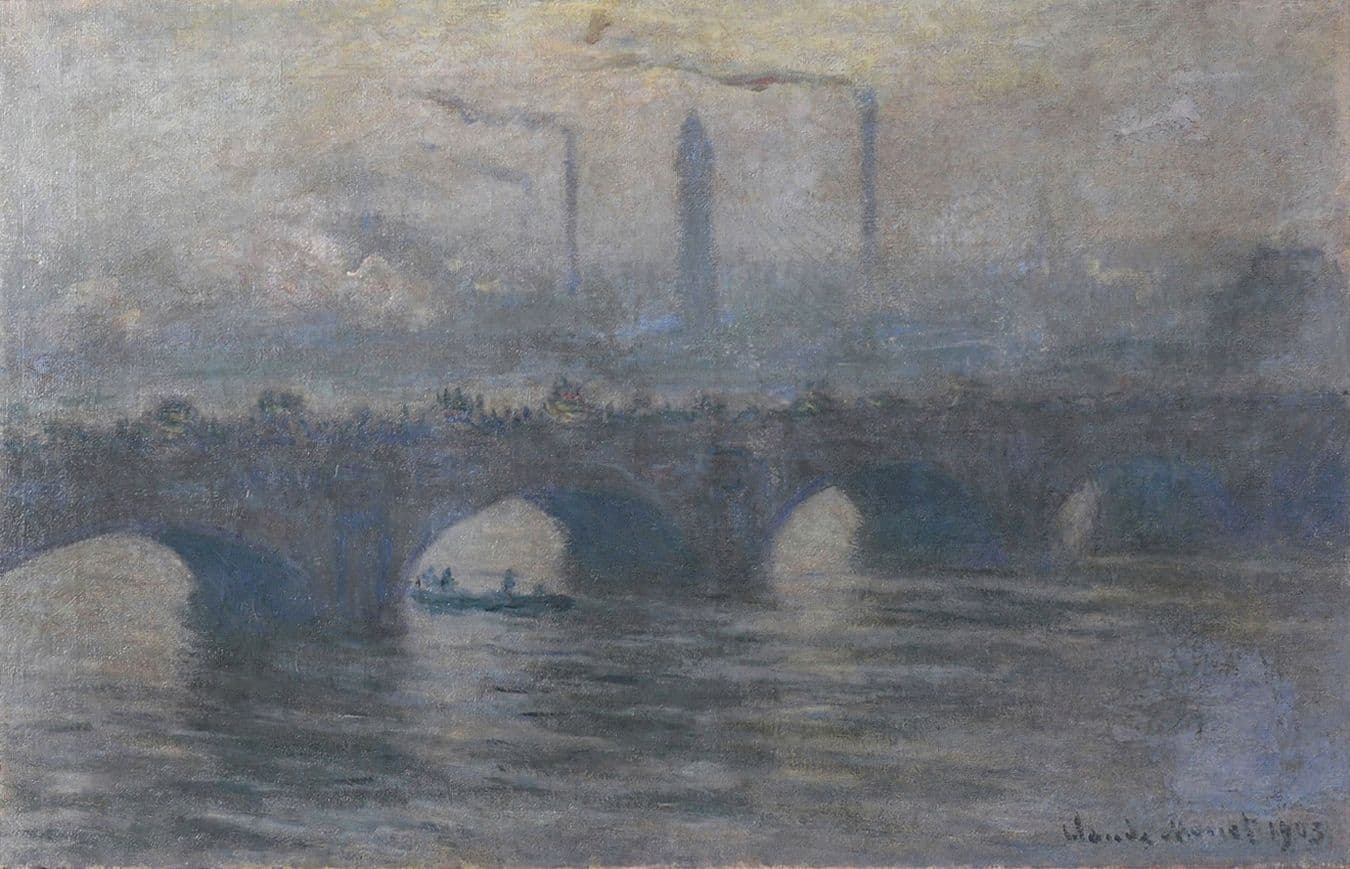
Waterloo Bridge, Gray Weather (Gurlitt Bequest)
Claude Monet · 1903
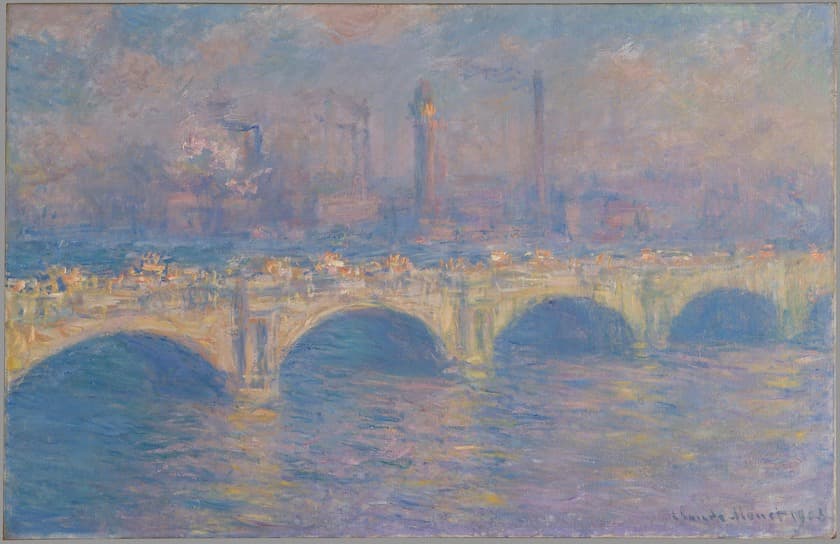
Waterloo Bridge, London
Claude Monet · 1903
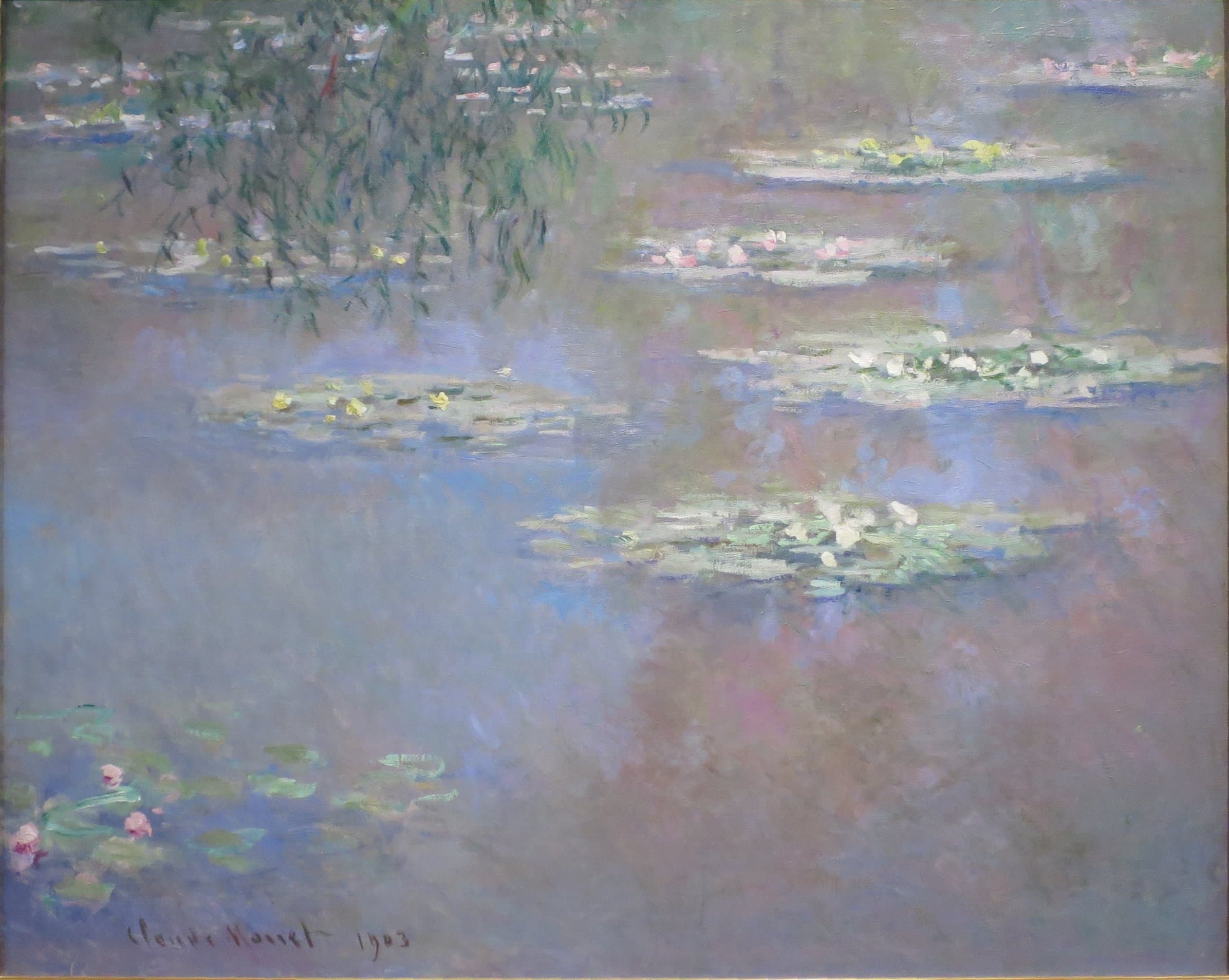
Waterlilies (1903, Dayton Art Institute)
Claude Monet · 1903
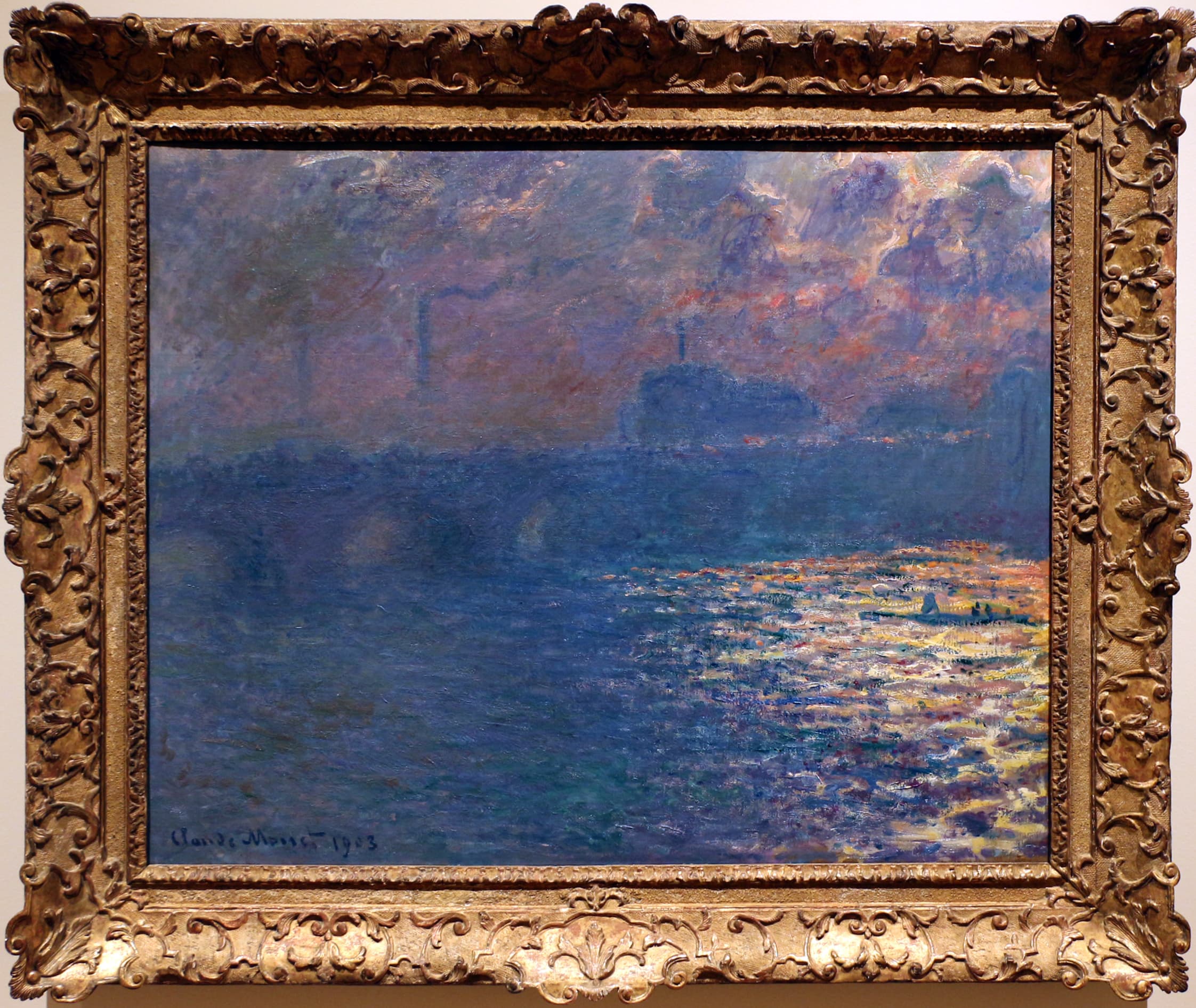
Waterloo Bridge, Sunlight Effect
Claude Monet · c. 1900 (dated 1903)
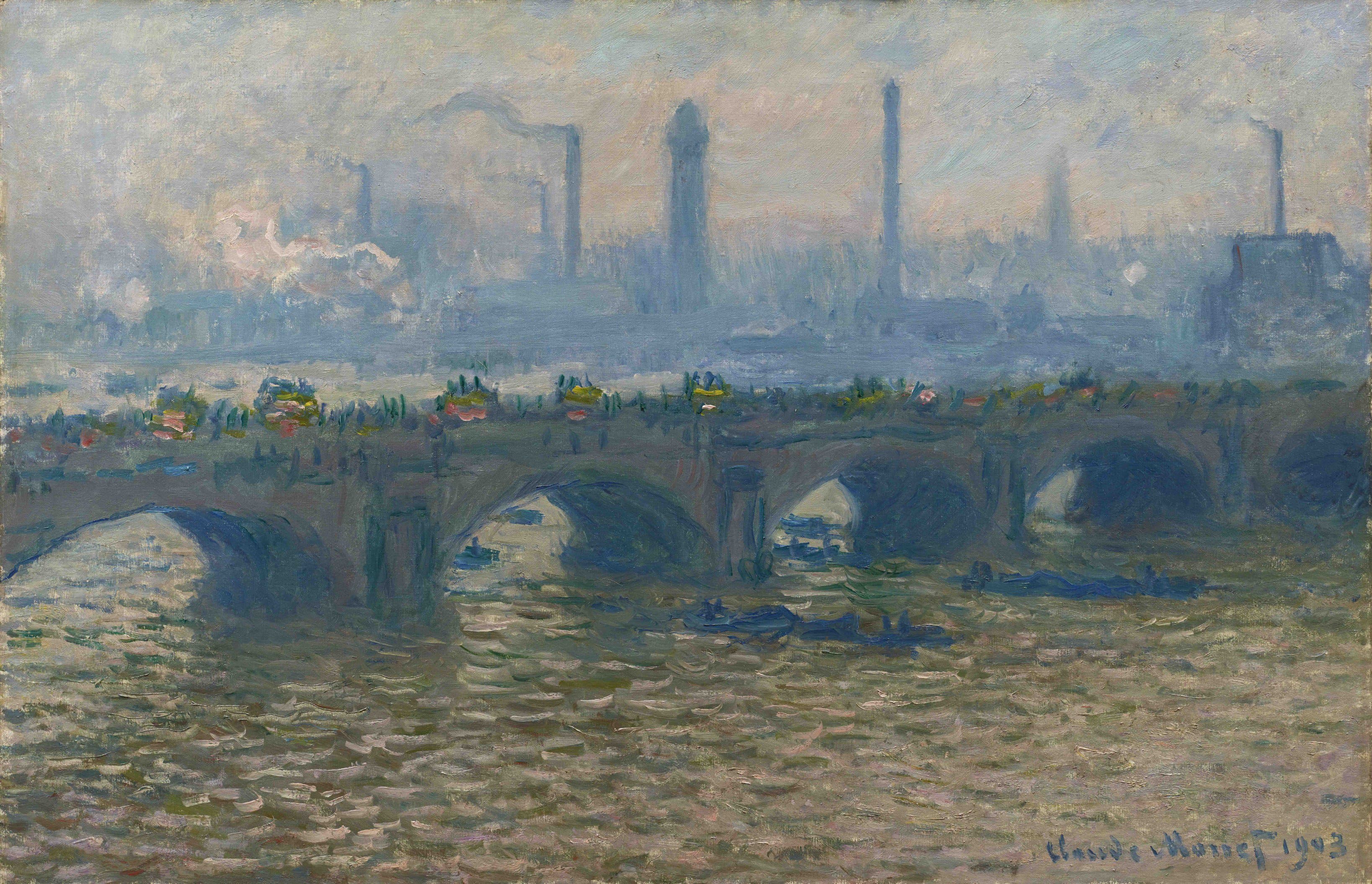
Waterloo Bridge, Gray Day (Ordrupgaard)
Claude Monet · 1903
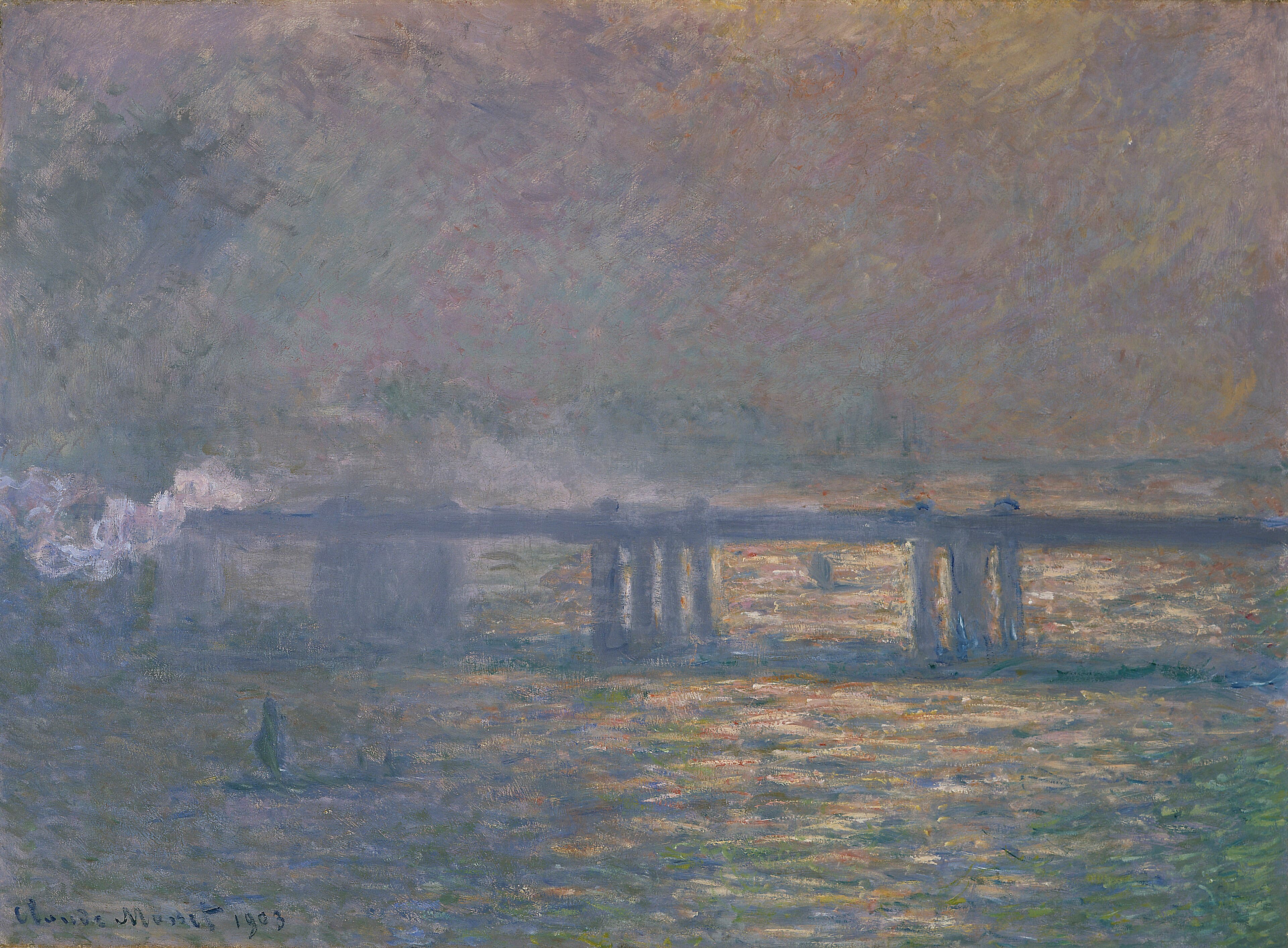
Charing Cross Bridge (Saint Louis)
Claude Monet · 1903
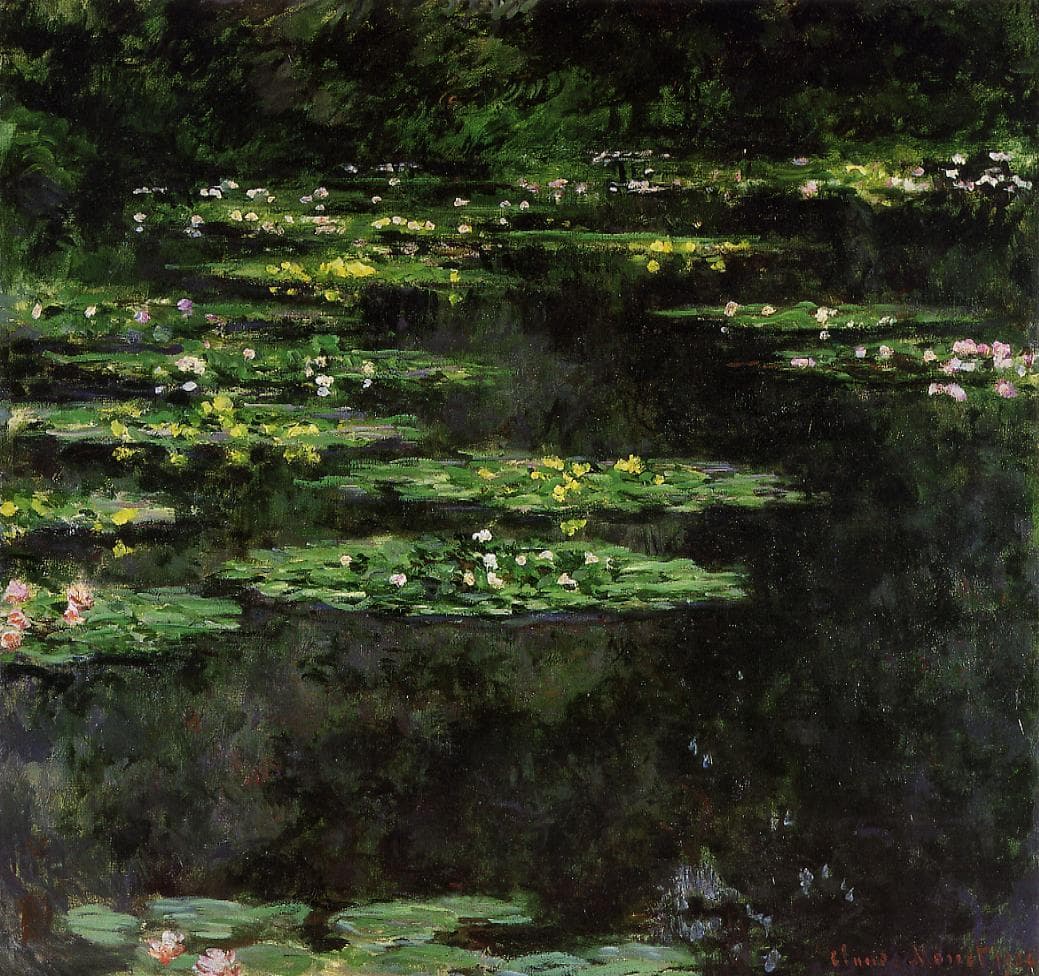
Water Lilies (1904, MuMa Le Havre)
Claude Monet · 1904
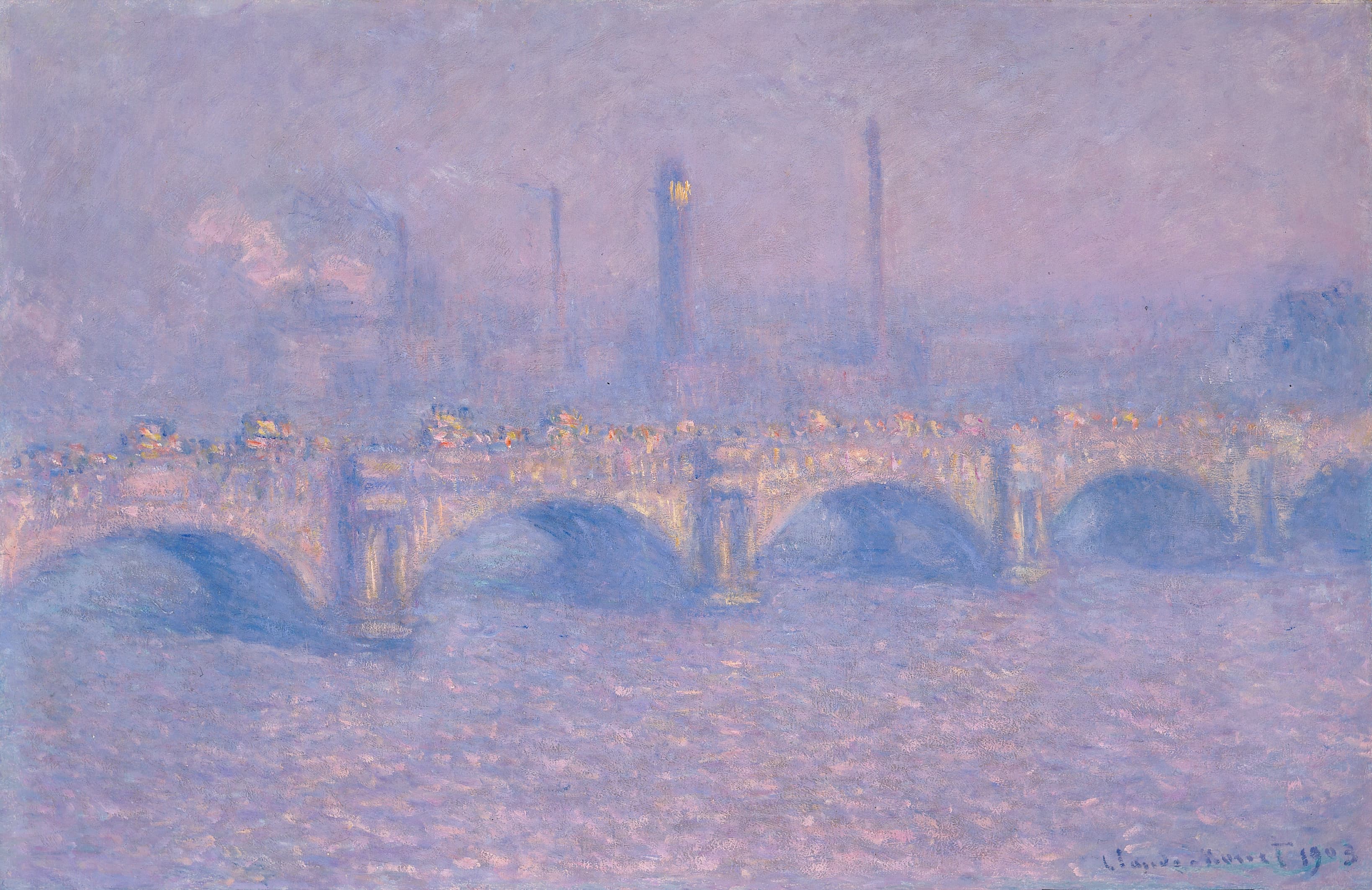
Waterloo Bridge, Veiled Sun
Claude Monet · 1903
Also painted in 1903
The same year
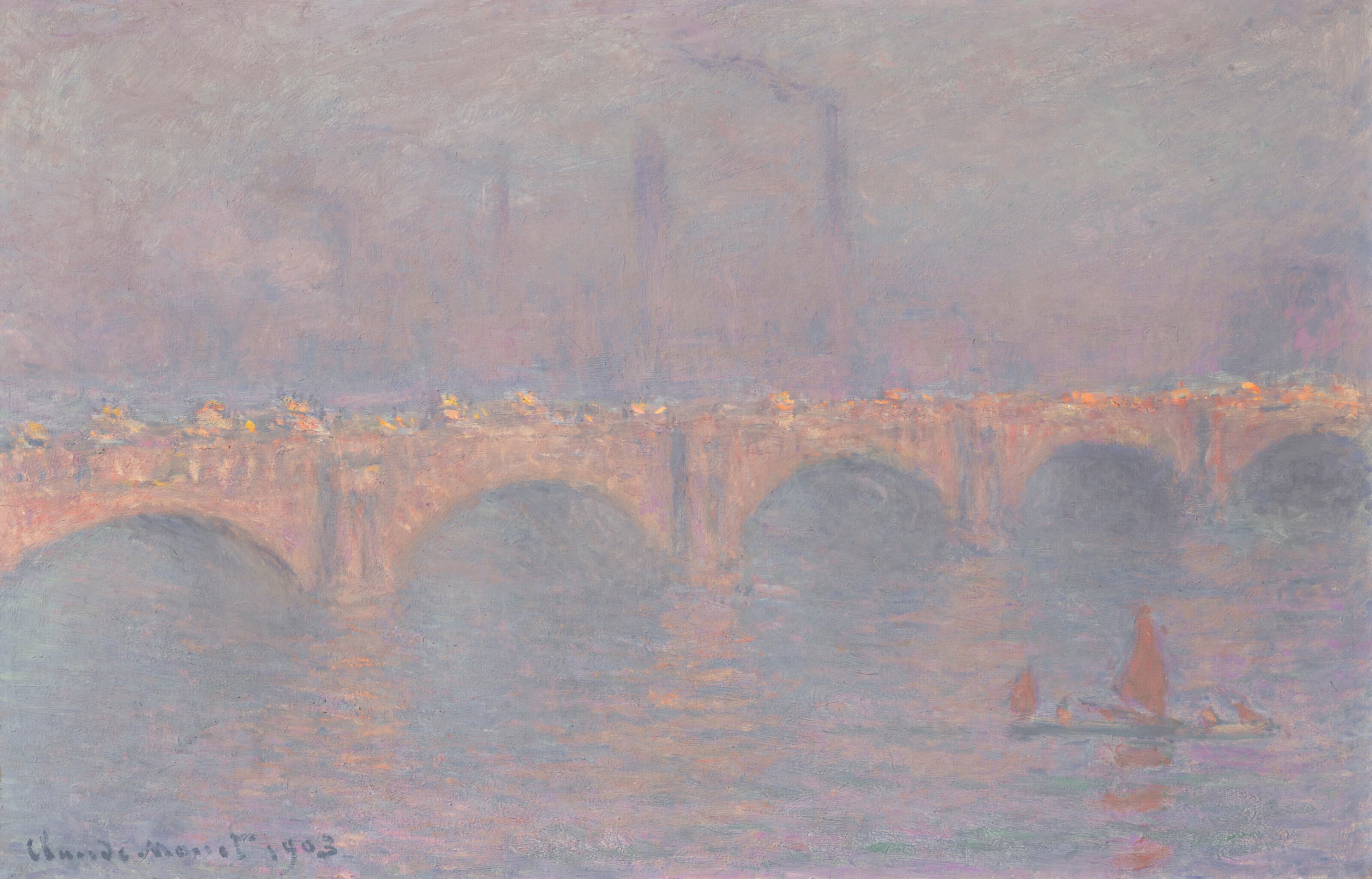
Waterloo Bridge, Hazy Sun
Claude Monet · 1903
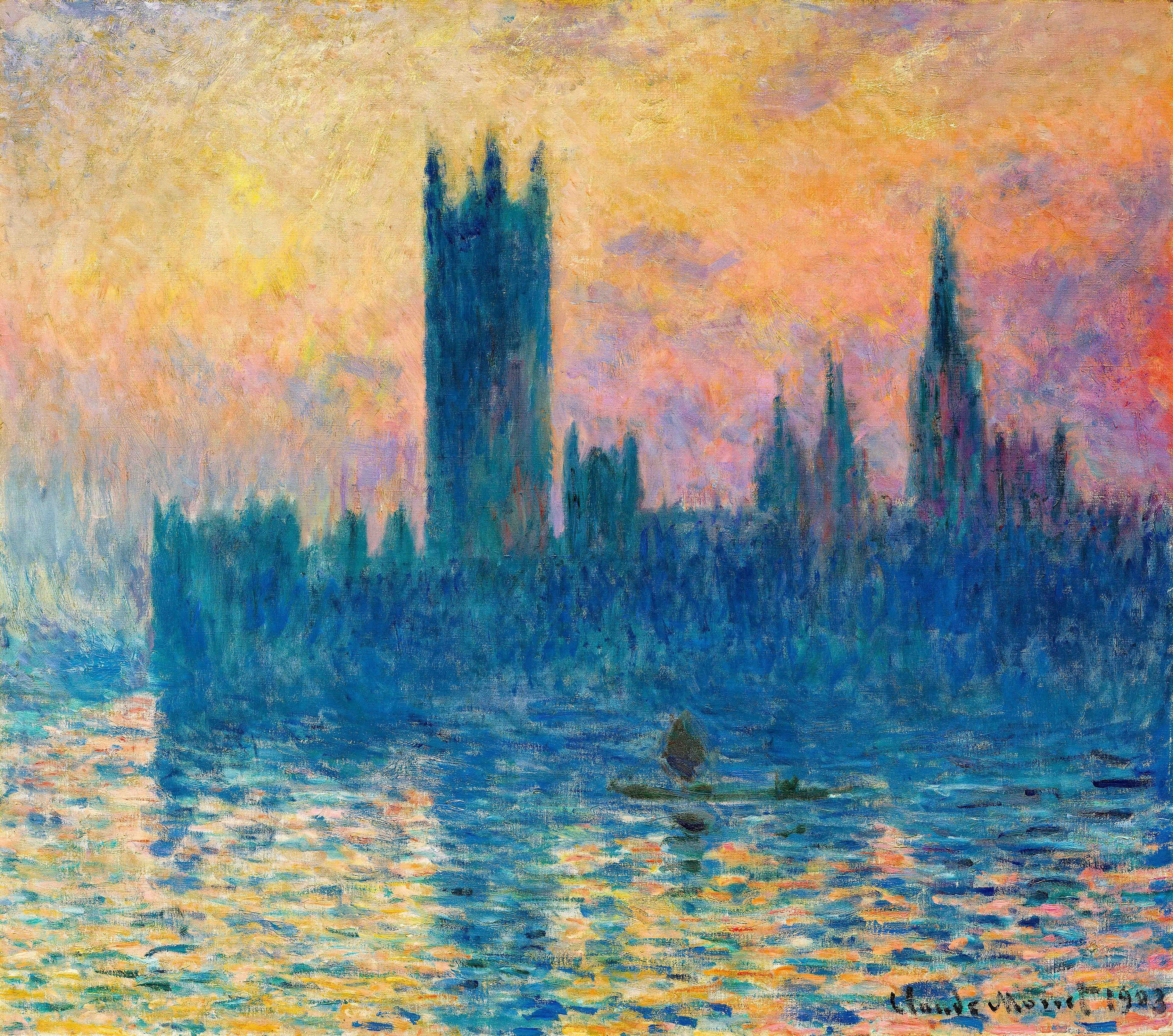
The Houses of Parliament, Sunset
Claude Monet · 1903
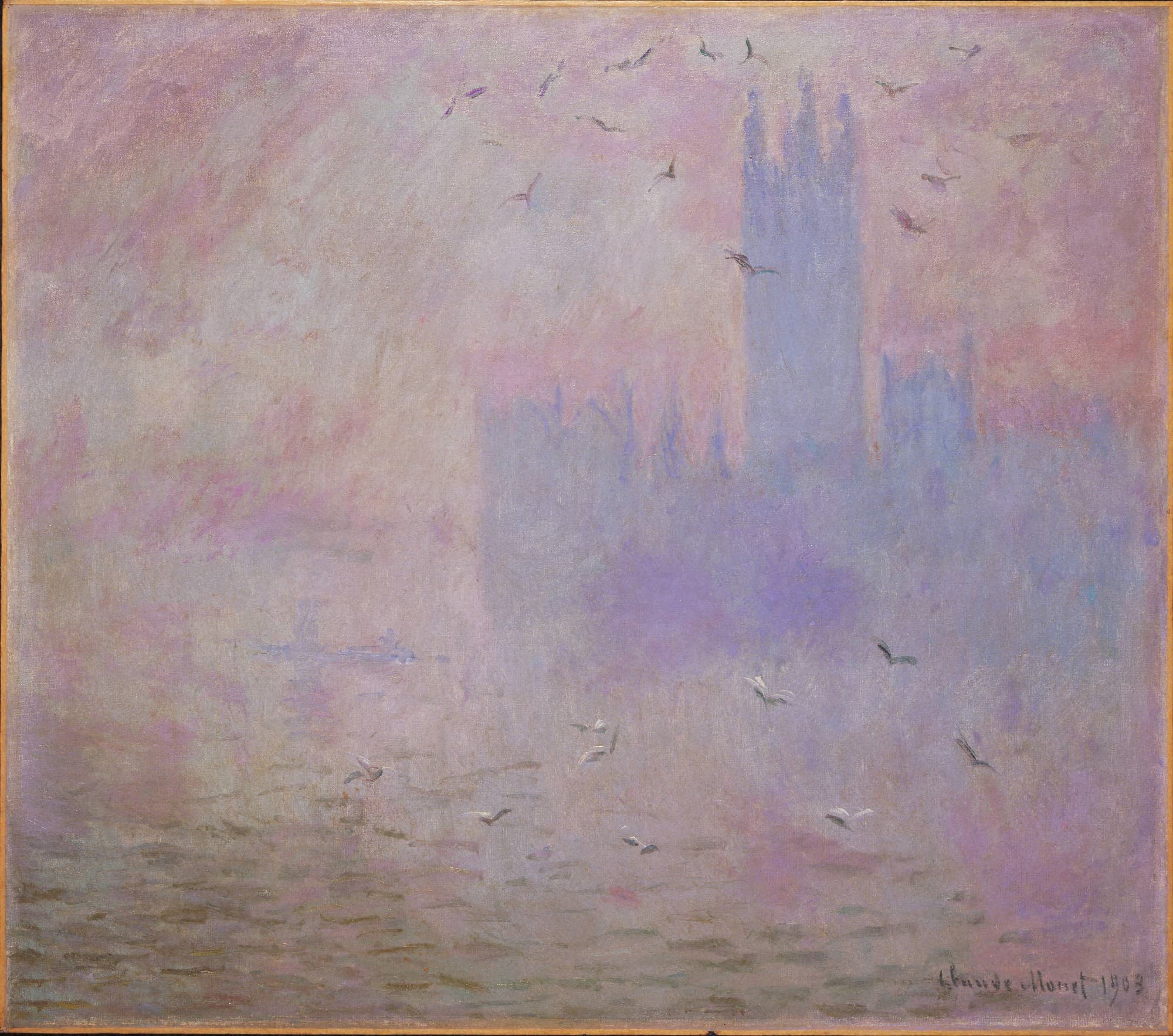
The Houses of Parliament, Seagulls
Claude Monet · 1903
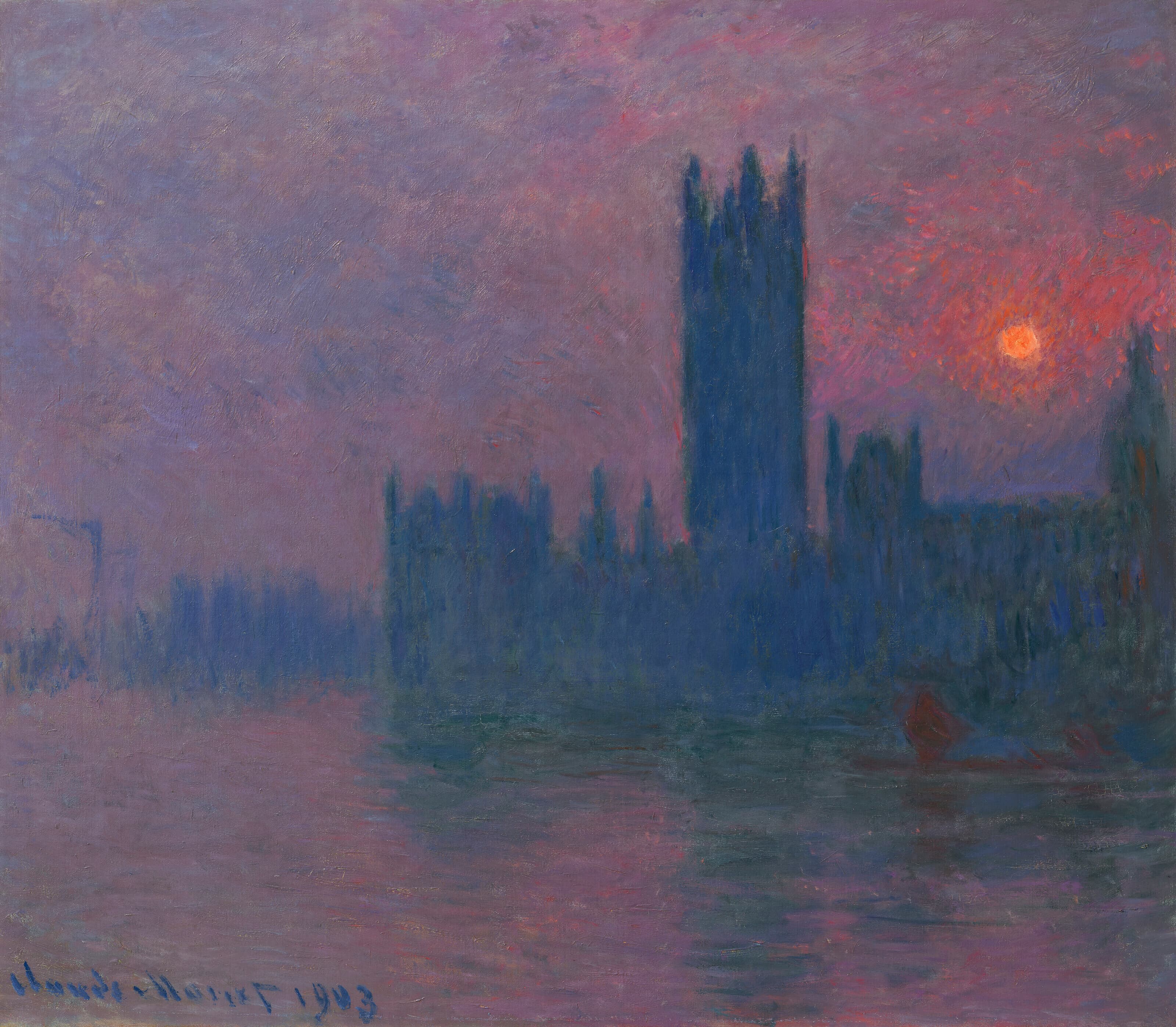
Houses of Parliament, Sunset
Claude Monet · 1903
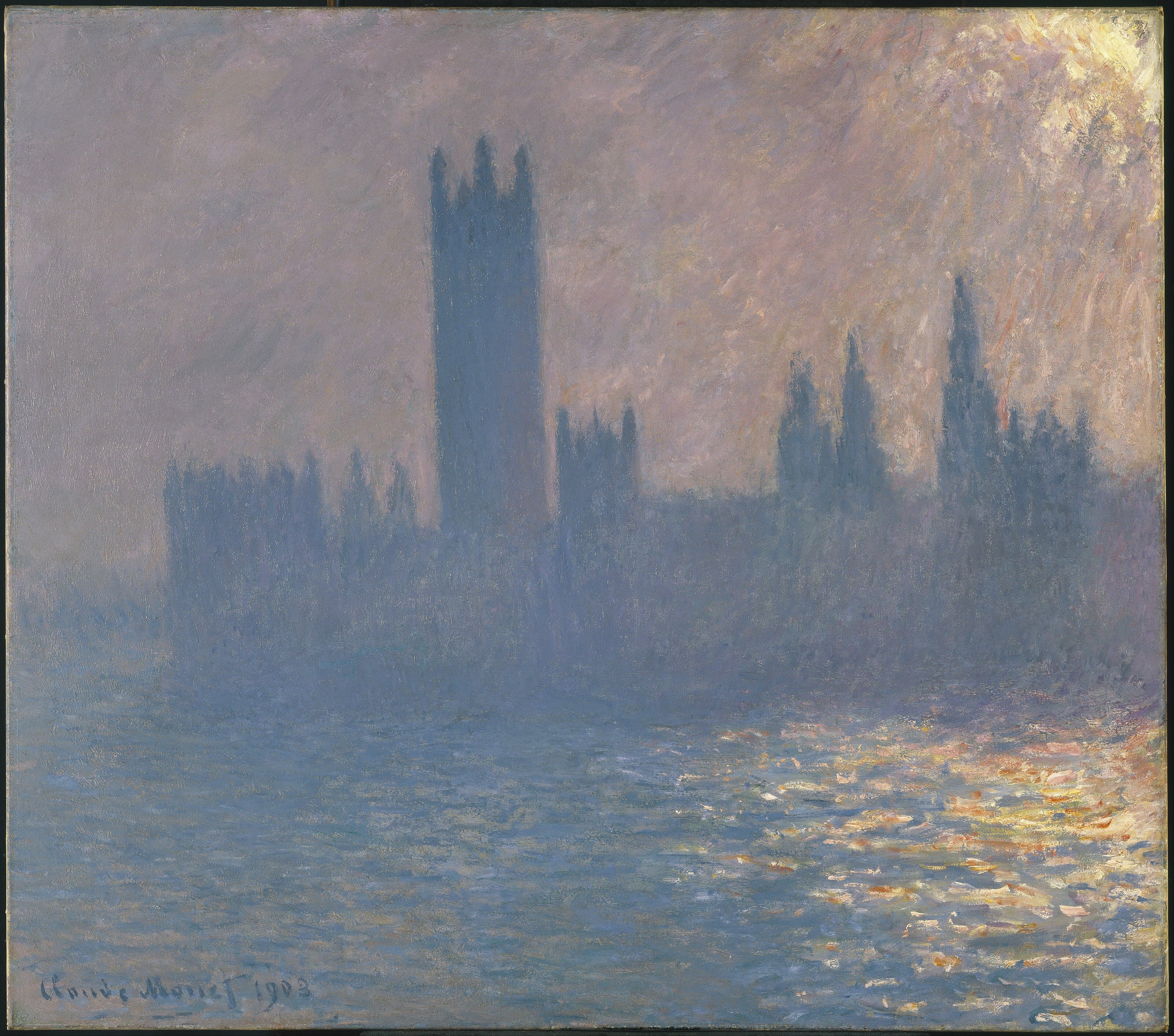
Houses of Parliament, Sunlight Effect
Claude Monet · 1903
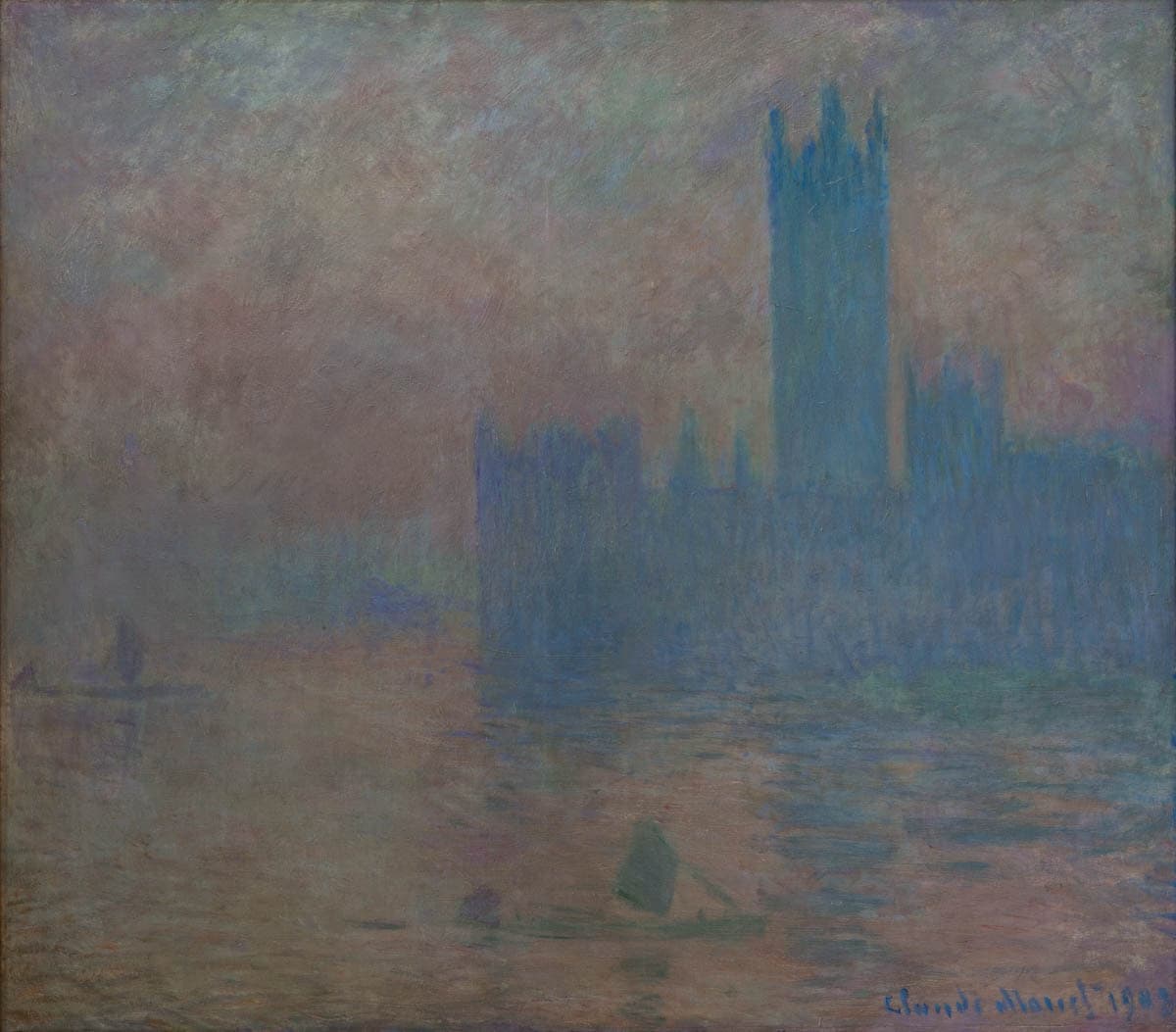
Le Parlement de Londres, effet de brouillard
Claude Monet · 1903
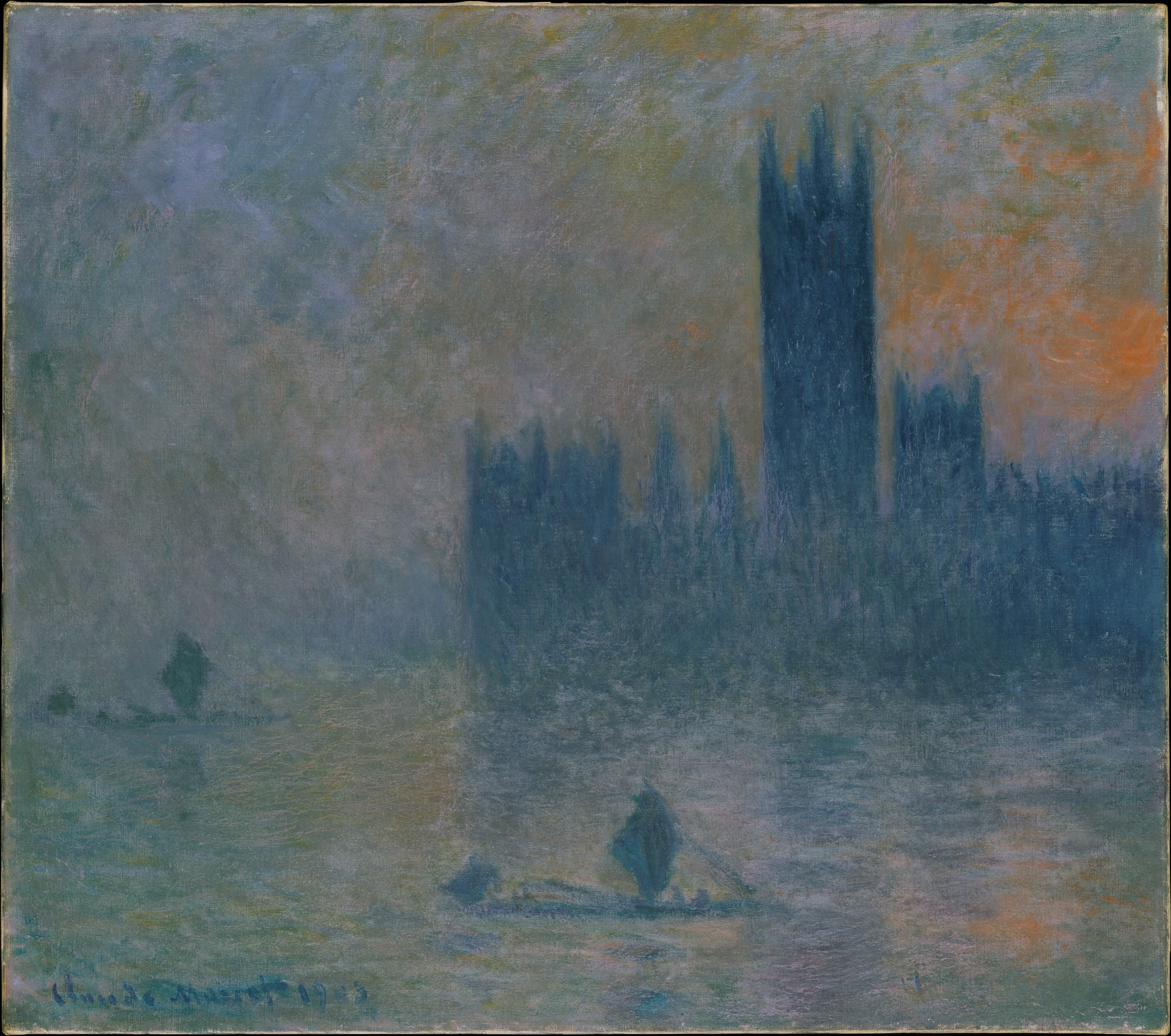
The Houses of Parliament (Effect of Fog)
Claude Monet · 1903–04
Houses of Parliament, Symphony in Blue
Claude Monet · 1903
Kindred works
You may also study
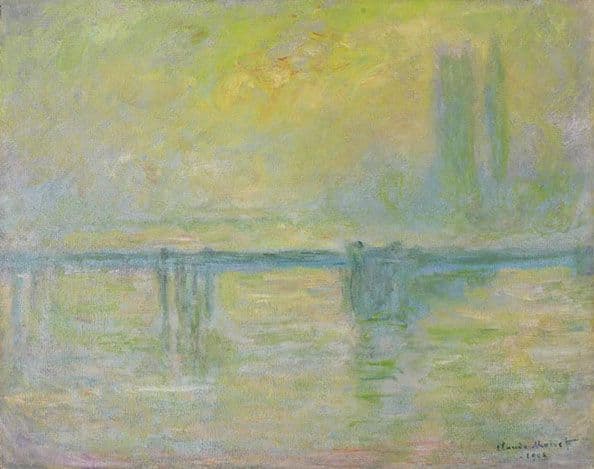
Charing Cross Bridge, Fog
Claude Monet · 1902–03
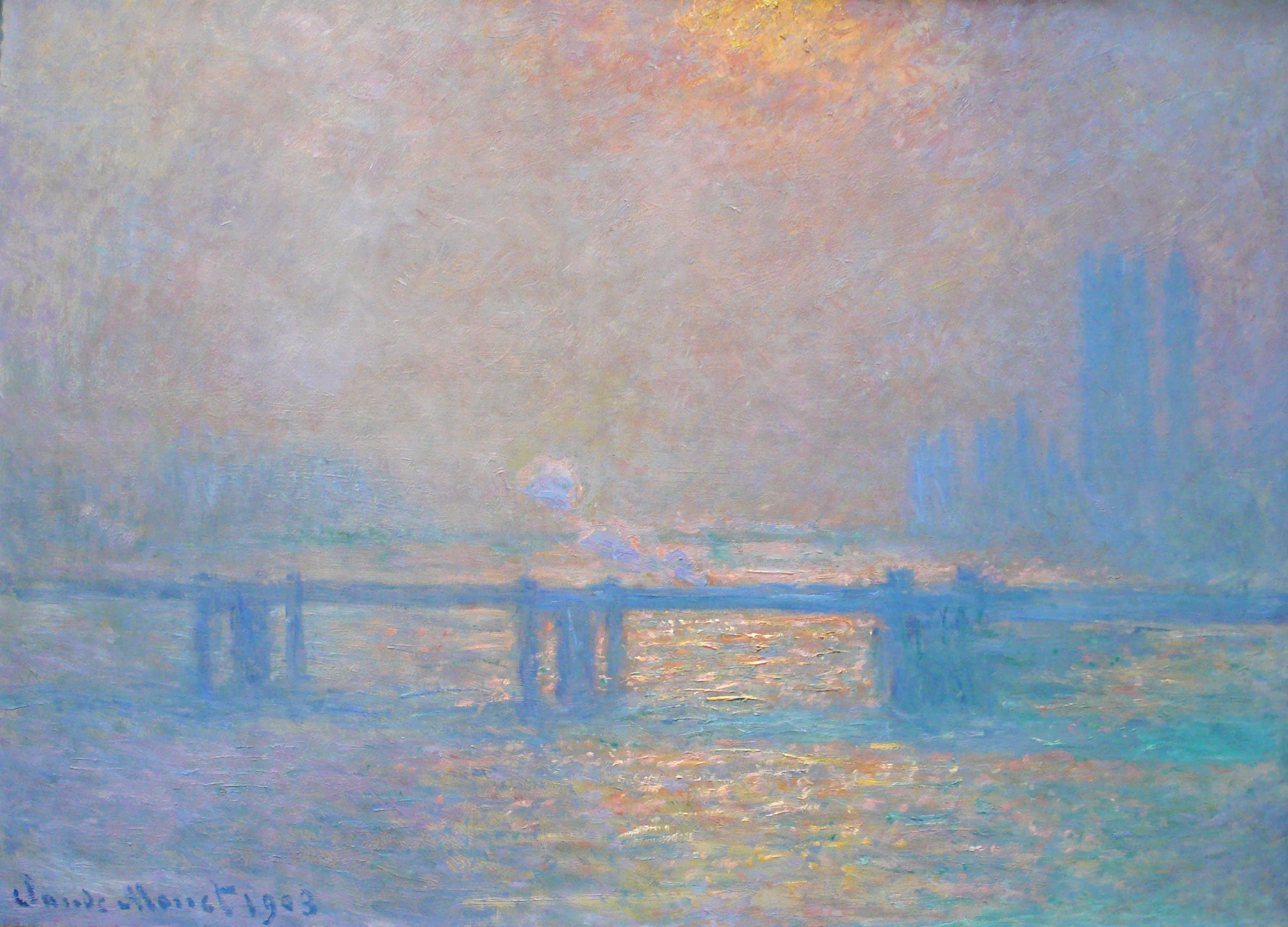
Charing Cross Bridge, The Thames
Claude Monet · 1903
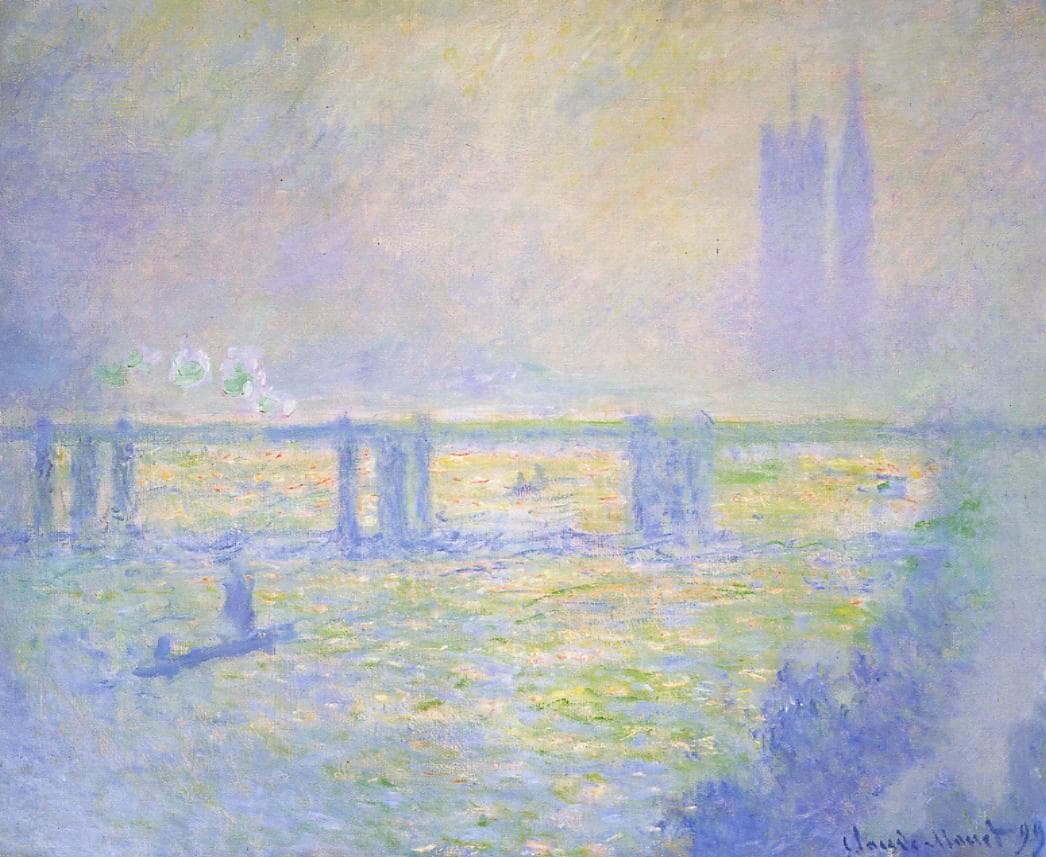
Charing Cross Bridge
Claude Monet · 1899
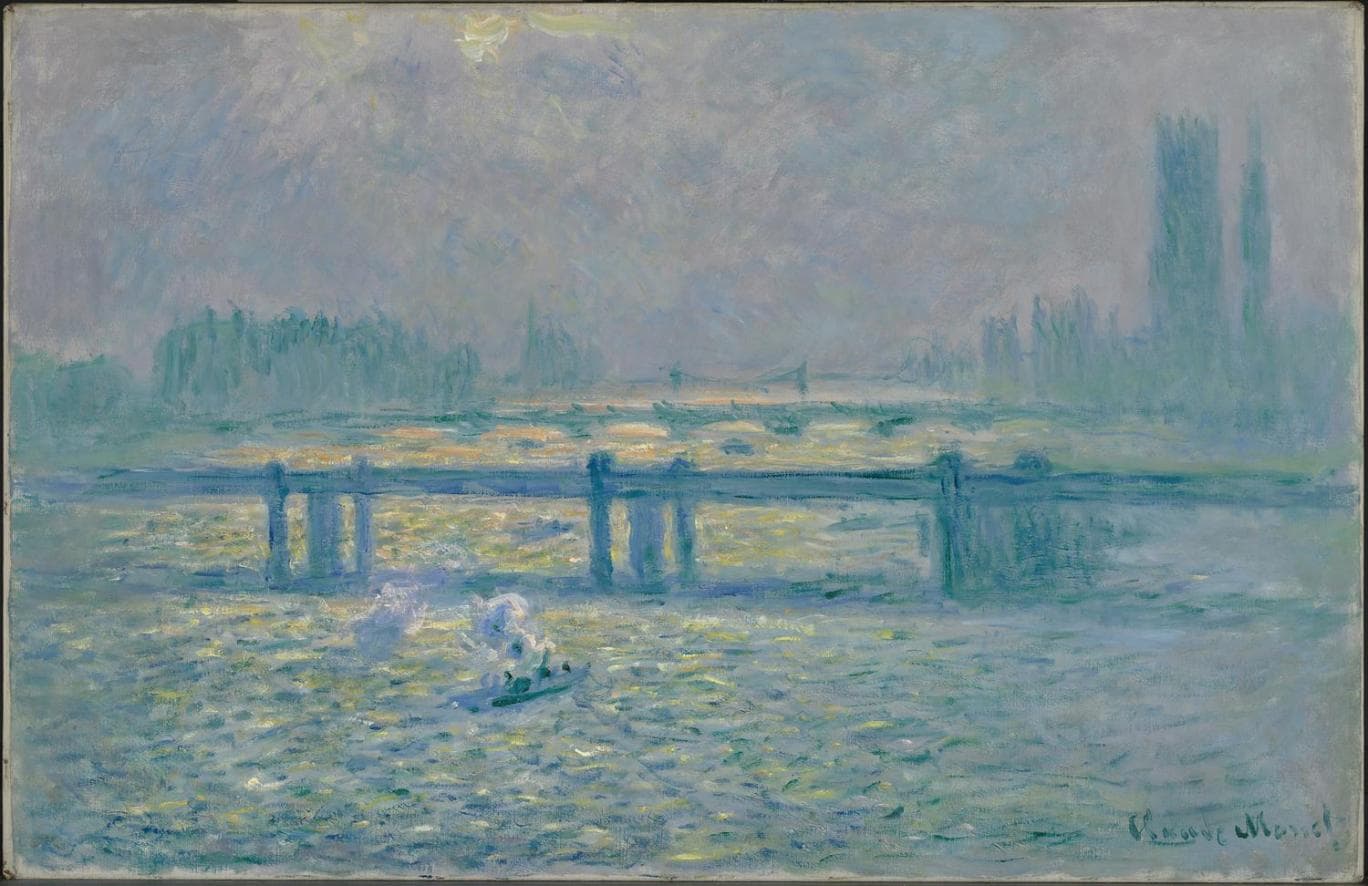
Charing Cross Bridge, Reflections on the Thames
Claude Monet · c. 1900
Waterloo Bridge, Effect of Fog
Claude Monet · 1903

Sunset in Venice
Claude Monet · 1908–12
Waterloo Bridge, London, at Dusk
Claude Monet · 1904
Charing Cross Bridge, Smoke in the Fog, Impression
Claude Monet · 1902