Image: Photo: Wikimedia Commons contributor, CC BY-SA 4.0, via Wikimedia Commons (Carnegie Museum of Art) · CC BY-SA 4.0 · via Wikimedia Commons
Waterloo Bridge, London
Claude Monet, 1903
Waterloo Bridge, London is a 1903 painting by Claude Monet of the London bridge in hazy sunshine, its parapet lit gold above blue arches. It is in the Carnegie Museum of Art, Pittsburgh, acquired in 1967 through the Scaife family.
- Artist
- Claude Monet
- Date
- 1903
- Medium
- Oil on canvas
- Dimensions
- 64.5 × 100.3 cm
- Collection
- Carnegie Museum of Art, Pittsburgh, Pennsylvania, United States
- Movement
- Impressionism
- Catalogue
- Wildenstein 1588
- The City
- Water & Sea
Waterloo Bridge, London is a Claude Monet view of Waterloo Bridge over the Thames in hazy sunshine, signed and dated 1903 and catalogued by Wildenstein as no. 1588. It belongs to the Carnegie Museum of Art in Pittsburgh, which acquired it in 1967 through the generosity of the Sarah Mellon Scaife family. Among the many versions of the motif, it is one of the most luminous.
What you're looking at
The bridge spans the width of the picture, with four full arches and part of a fifth. Unlike the fog pictures, the stonework here is clearly lit: the parapet and the faces of the piers are painted in pale yellow and cream, catching the sun, while the arches beneath are deep, cool blue, so that the bridge reads as a strong pattern of light bands and dark half-circles.
Along the top of the bridge, Monet's flickering touches of yellow, orange and white stand for the traffic crossing it. Behind, the south bank rises in lavender haze: a tall tower near the center with a spot of light on it, several chimneys, the boxy shapes of warehouses, and on the left a puff of smoke. The sky is a mix of pale violet and pink, brushed in loosely. The river below is woven from short strokes of blue, violet, pink and yellow that pick up the colors of the bridge. The signature and date are at lower right.
Where and when it was painted
Monet painted Waterloo Bridge from his room at the Savoy Hotel during three stays in London, in the autumn of 1899 and the late winters of 1900 and 1901. Facing east, he watched the bridge through the changing smoke, fog and sun of a London winter, working on many canvases at once. He took them back to Giverny unfinished and worked on them there until 1903 and 1904, when he dated most of them and sent them to Paul Durand-Ruel for exhibition. See the Waterloo Bridge series and Monet in London.
How it was painted
The surface is dense, built up over many sessions. The sunlit parapet is laid in thick, buttery strokes, while the sky is thinner and more blended. Monet keeps the color contrasts sharp, yellow against blue, to suggest the brilliance of sunlight in haze, but he keeps the values close, so the picture still feels soft rather than glaring.
How this version differs
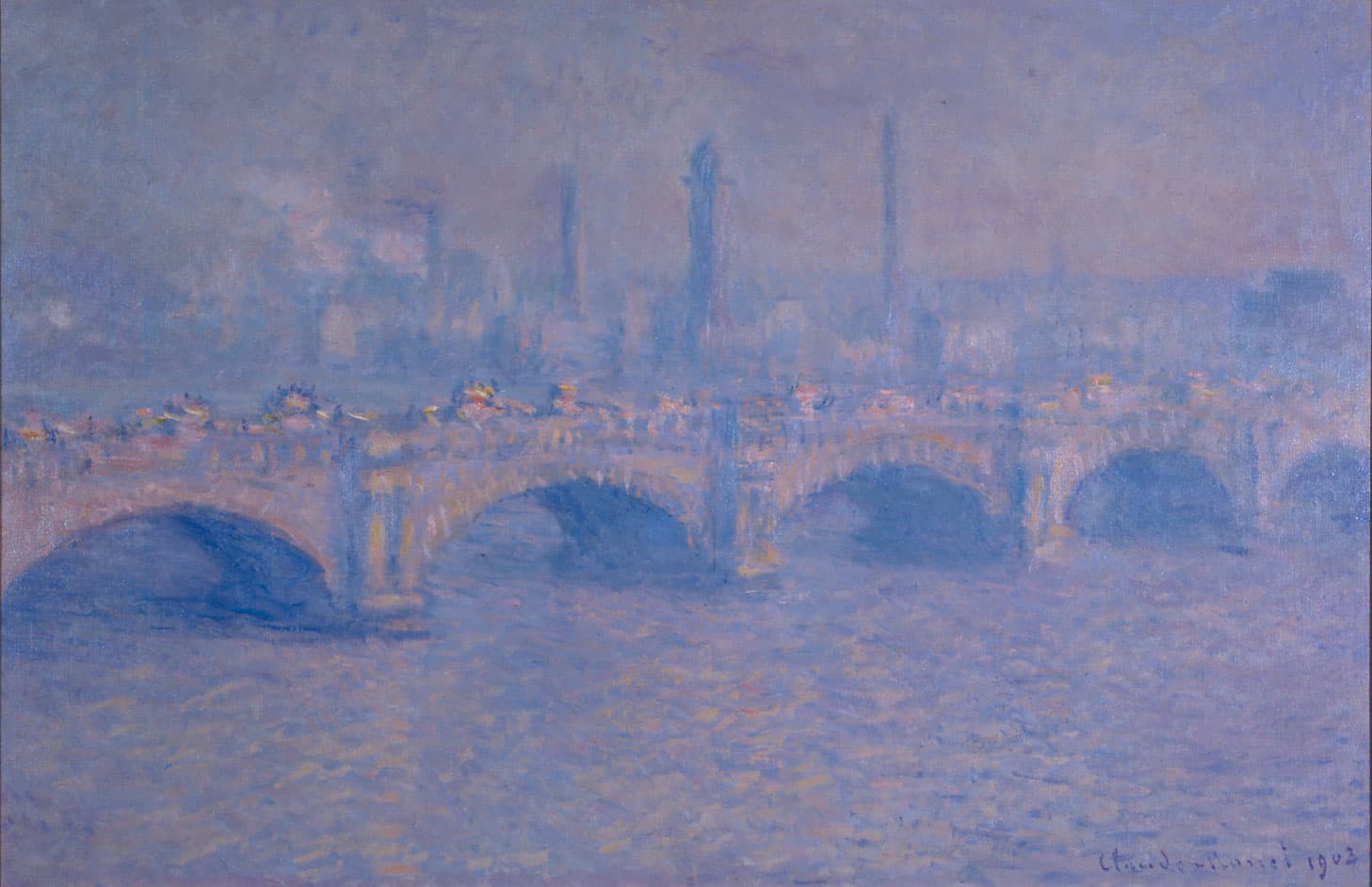
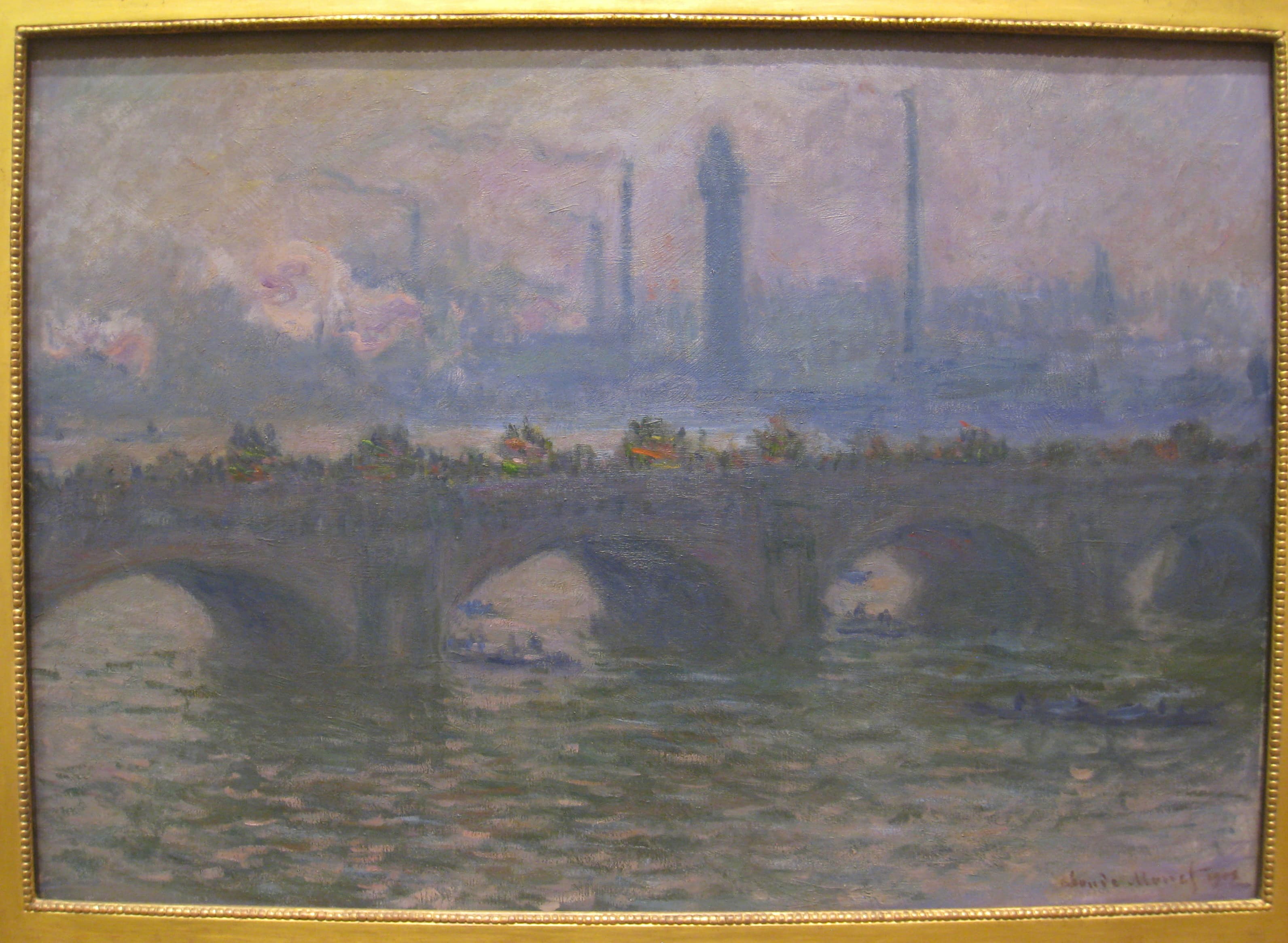
The Carnegie canvas is closest to the group of sun-effect pictures, among them Waterloo Bridge, Sunlight Effect in Chicago and the McMaster Sunlight Effect. It differs from them in how solidly lit the bridge is: in the McMaster canvas the stone is lilac and only faintly touched by light, while here the parapet is a band of gold. In Waterloo Bridge, Veiled Sun the same composition is drowned in pink haze. The Carnegie picture is one of the most legible of the series, the one where the bridge is most clearly an architectural object.
The 1904 exhibition
Monet held back the London pictures for years, refusing to let Durand-Ruel show them piecemeal. When he finally agreed, the dealer's Paris gallery opened Claude Monet: Vues de la Tamise à Londres in May 1904 with thirty-seven canvases of Charing Cross Bridge, Waterloo Bridge and the Houses of Parliament, hung as groups so that visitors could compare the same view in different light. The show was a critical and commercial success and fixed the idea of the London series as a single work in many parts. The Carnegie canvas, with its clearly lit stonework, was made to be seen that way, beside their siblings, as much as on their own.
Ownership and where to see it
According to the museum's records, the painting passed through Monet's dealers Durand-Ruel and later the New York dealer Sam Salz before Carnegie Museum of Art acquired it in 1967 (accession 67.2), with funds from the Sarah Mellon Scaife family. It is one of the museum's best-known Impressionist pictures, alongside its large Water Lilies canvas. For other Monet collections, see where to see Monet's paintings.
Questions & answers
Where is Monet's Waterloo Bridge, London?
This version is in the Carnegie Museum of Art in Pittsburgh, Pennsylvania (accession 67.2), acquired in 1967 through the generosity of the Sarah Mellon Scaife family.
When was Waterloo Bridge, London painted?
Monet began it from the Savoy Hotel in London during stays between 1899 and 1901, finished it at Giverny and dated it 1903.
What does the Carnegie Waterloo Bridge show?
It shows Waterloo Bridge in hazy sunshine, its parapet and piers lit pale yellow above deep blue arches, with traffic as flecks of color, a lavender skyline of chimneys and a tower behind, and a many-colored river below.
How many Waterloo Bridge paintings are there?
Monet made about forty-one Waterloo Bridge paintings between 1899 and 1904, now spread across museums in Europe, North America and Japan and private collections. Each records a different light or weather.
More by the artist
Claude Monet
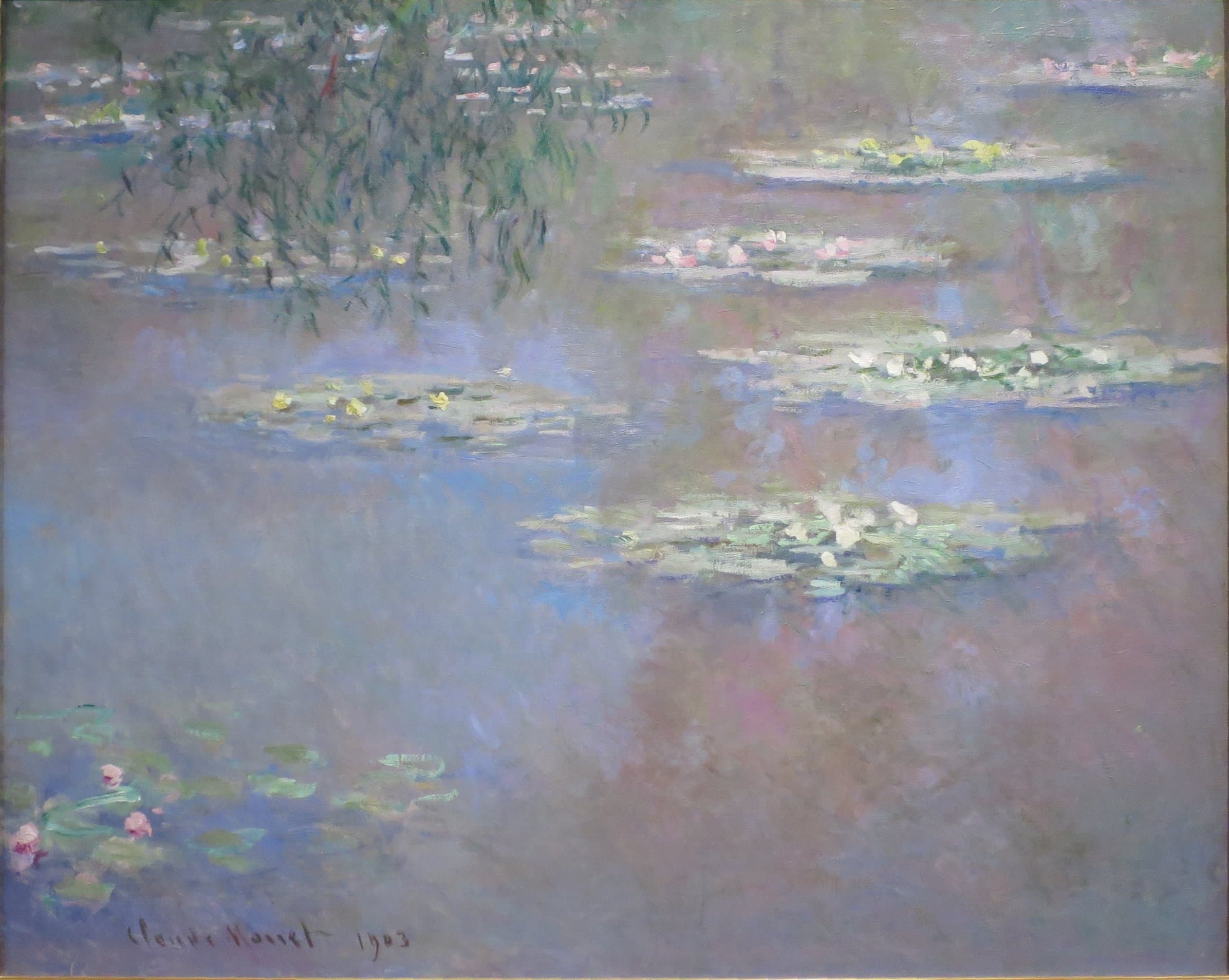
Waterlilies (1903, Dayton Art Institute)
Claude Monet · 1903
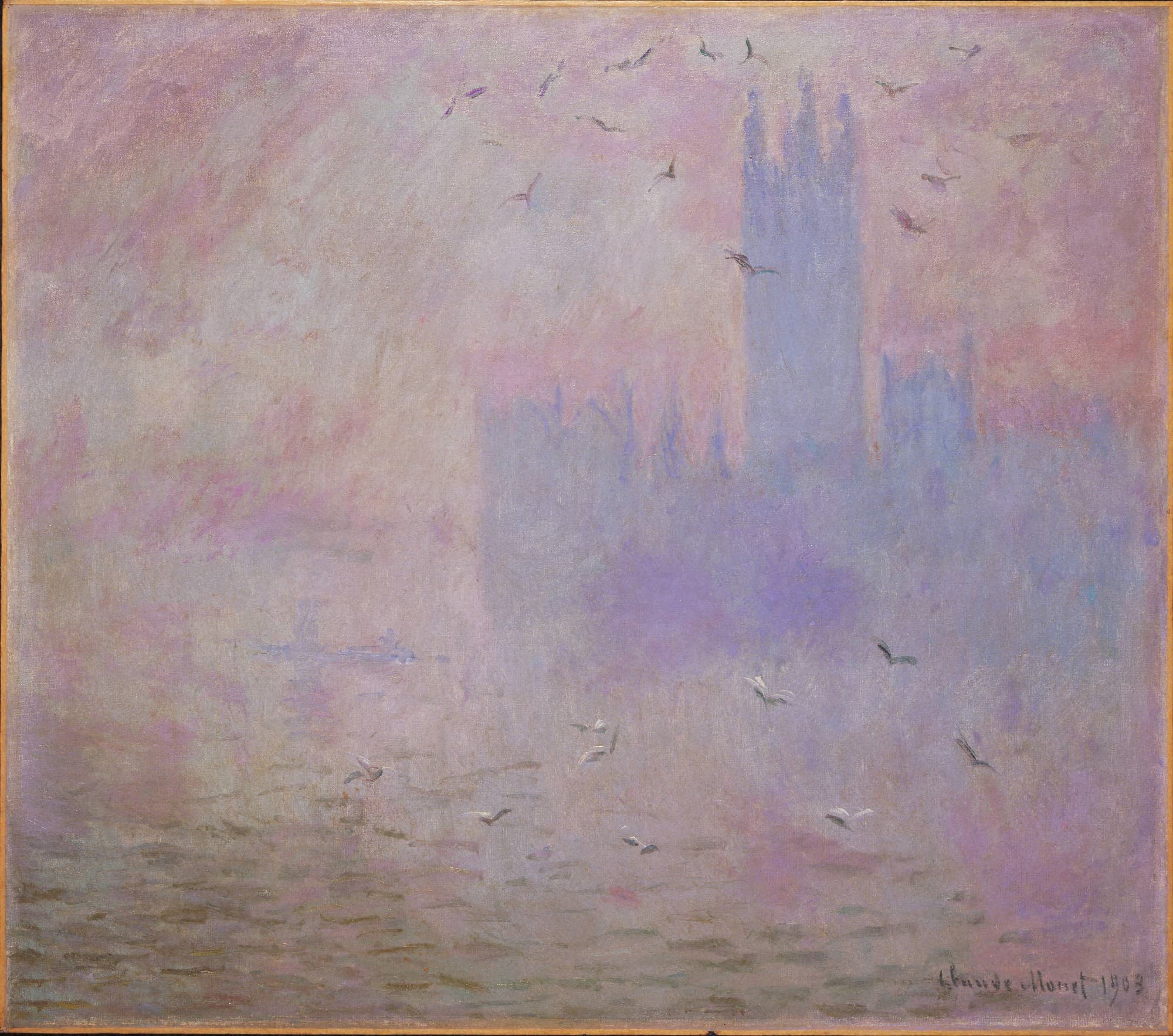
The Houses of Parliament, Seagulls
Claude Monet · 1903
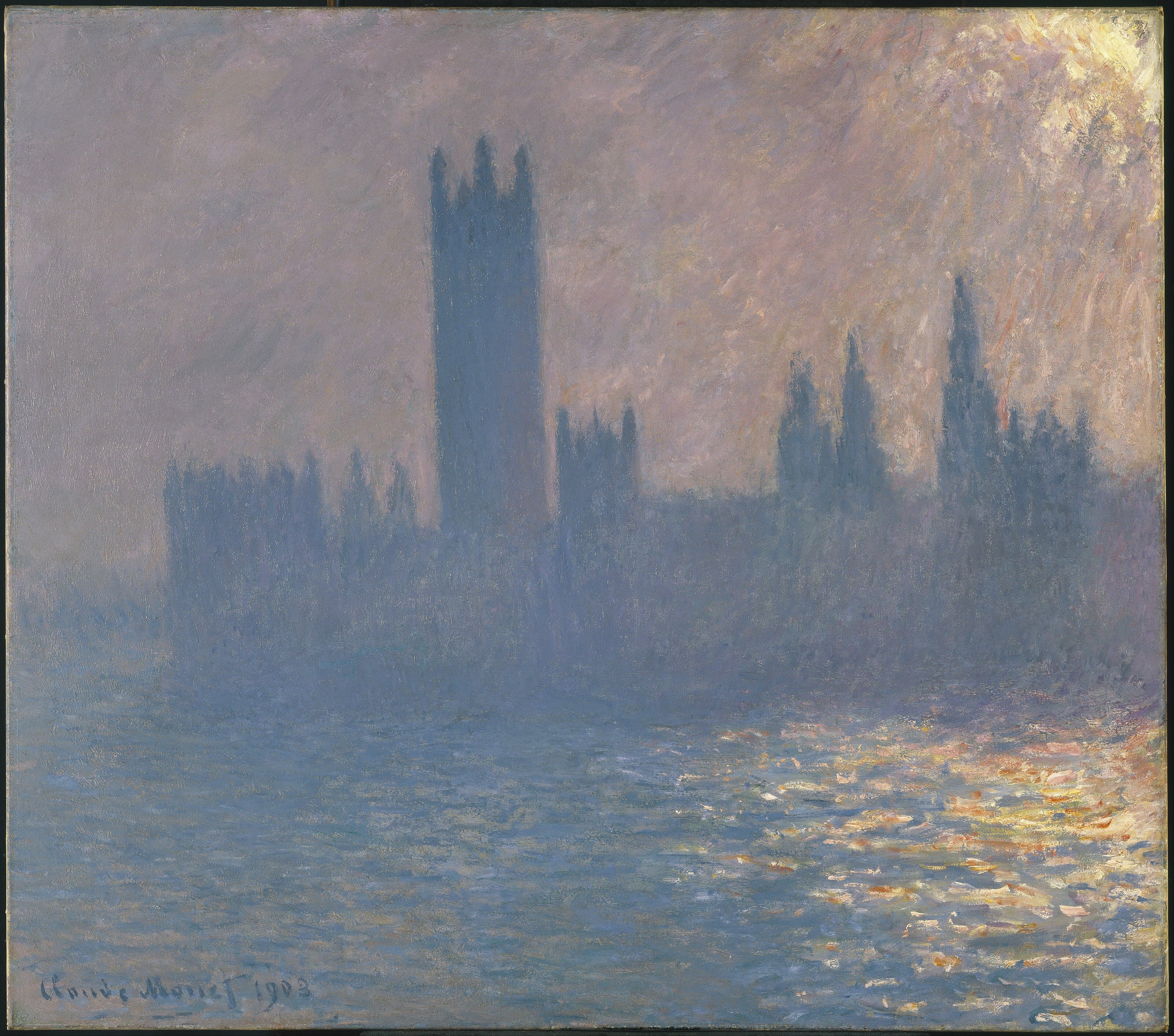
Houses of Parliament, Sunlight Effect
Claude Monet · 1903
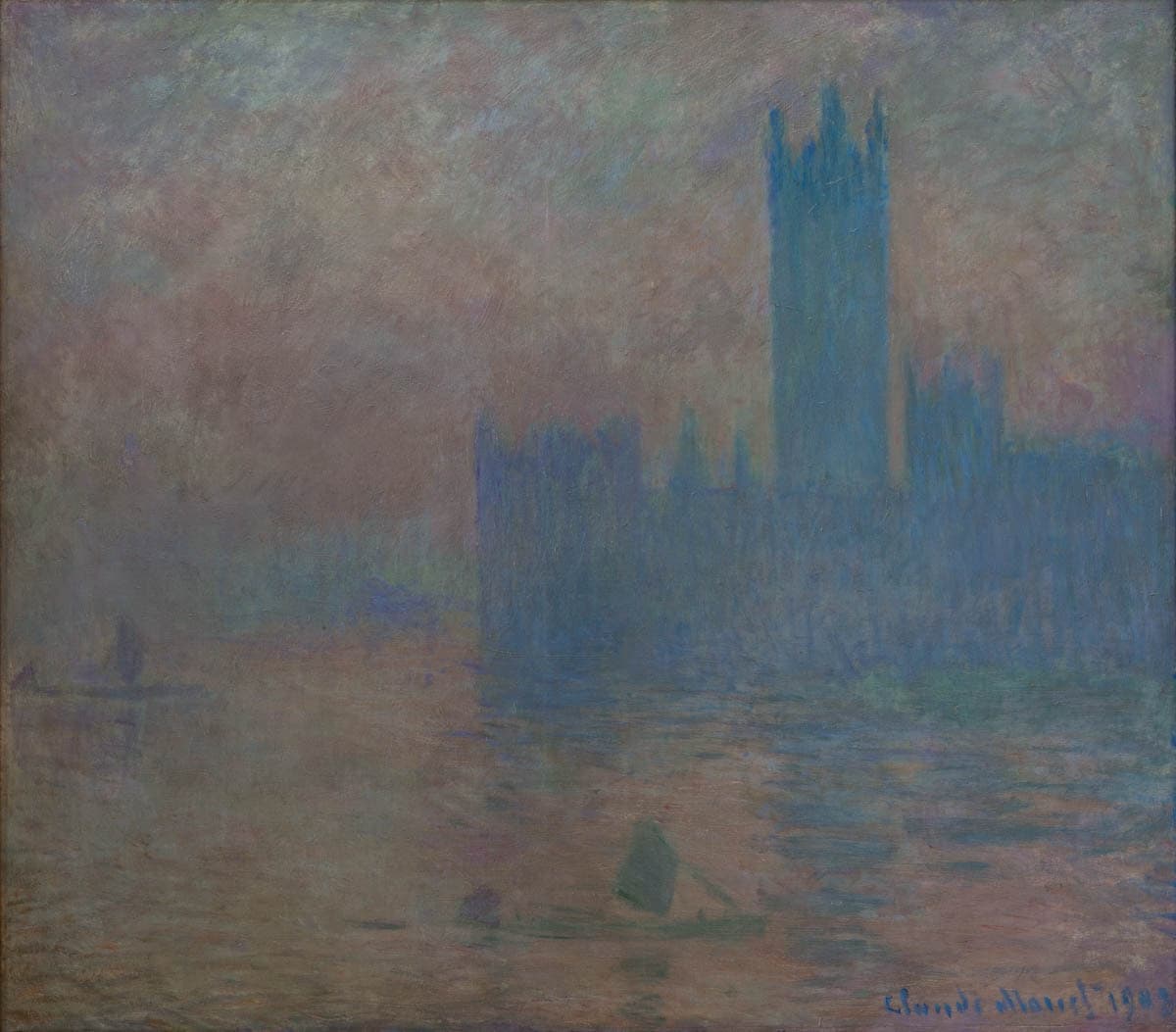
Le Parlement de Londres, effet de brouillard
Claude Monet · 1903
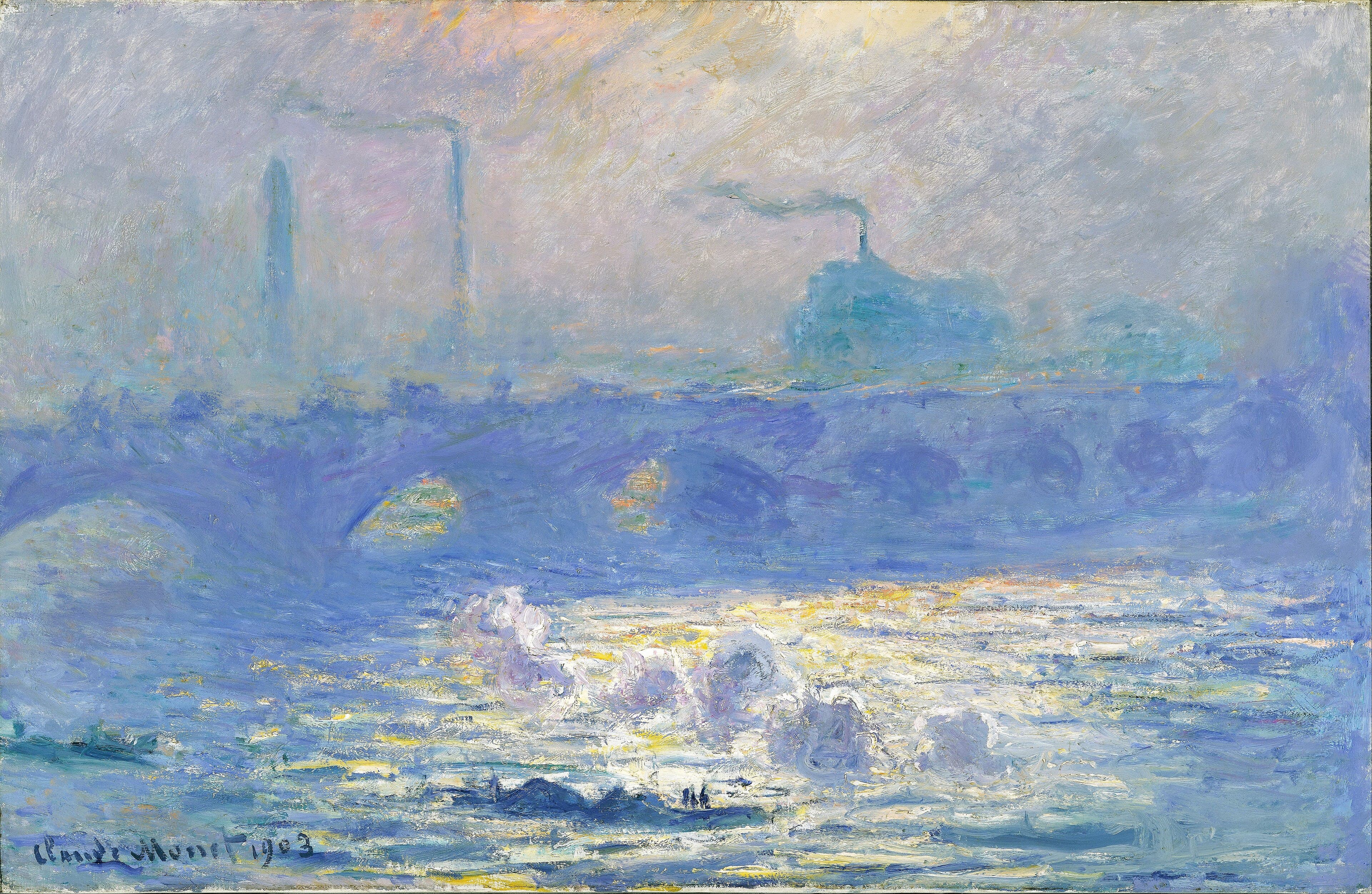
Waterloo Bridge, Sunlight Effect (Denver Art Museum)
Claude Monet · 1903
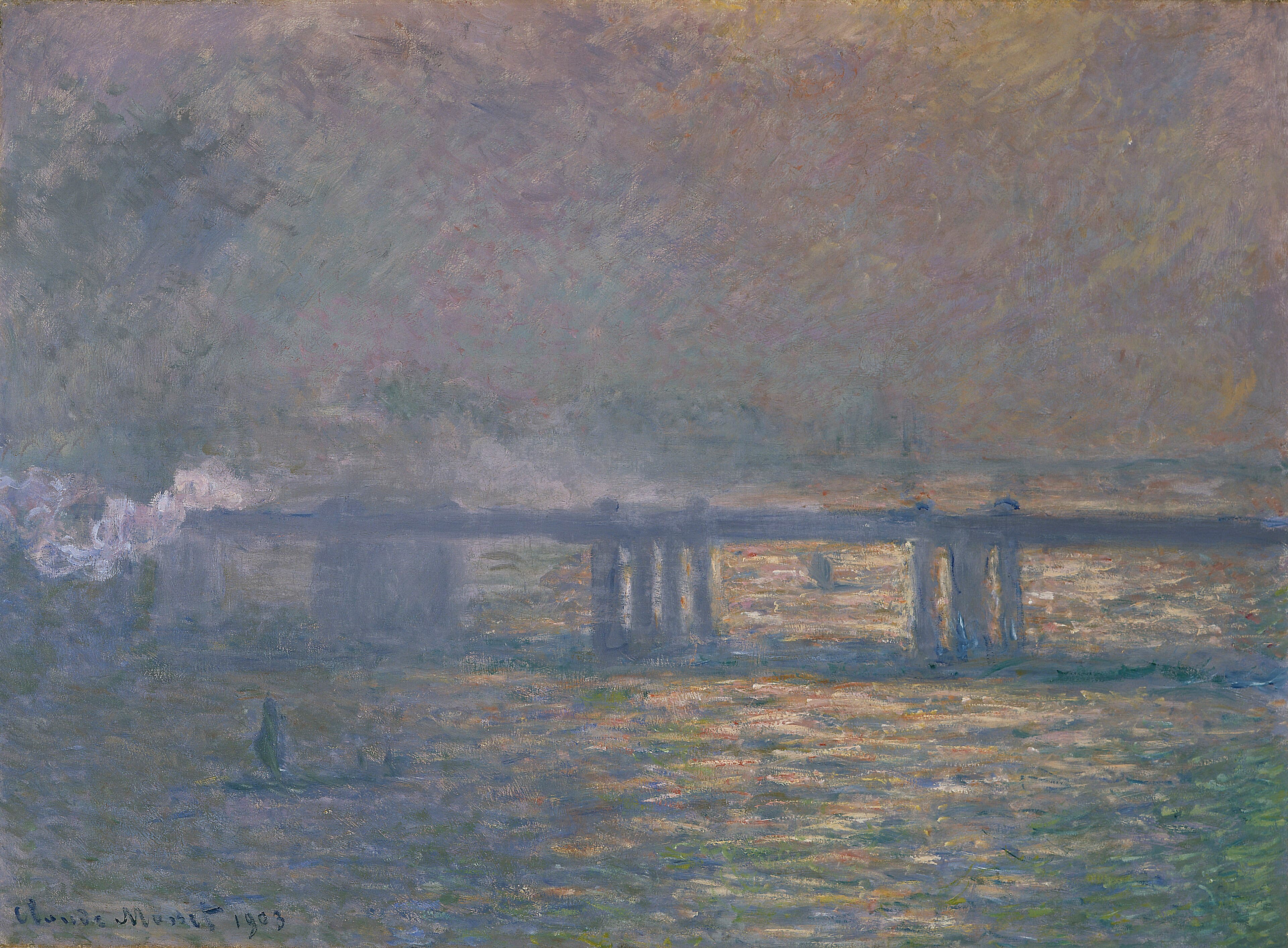
Charing Cross Bridge (Saint Louis)
Claude Monet · 1903
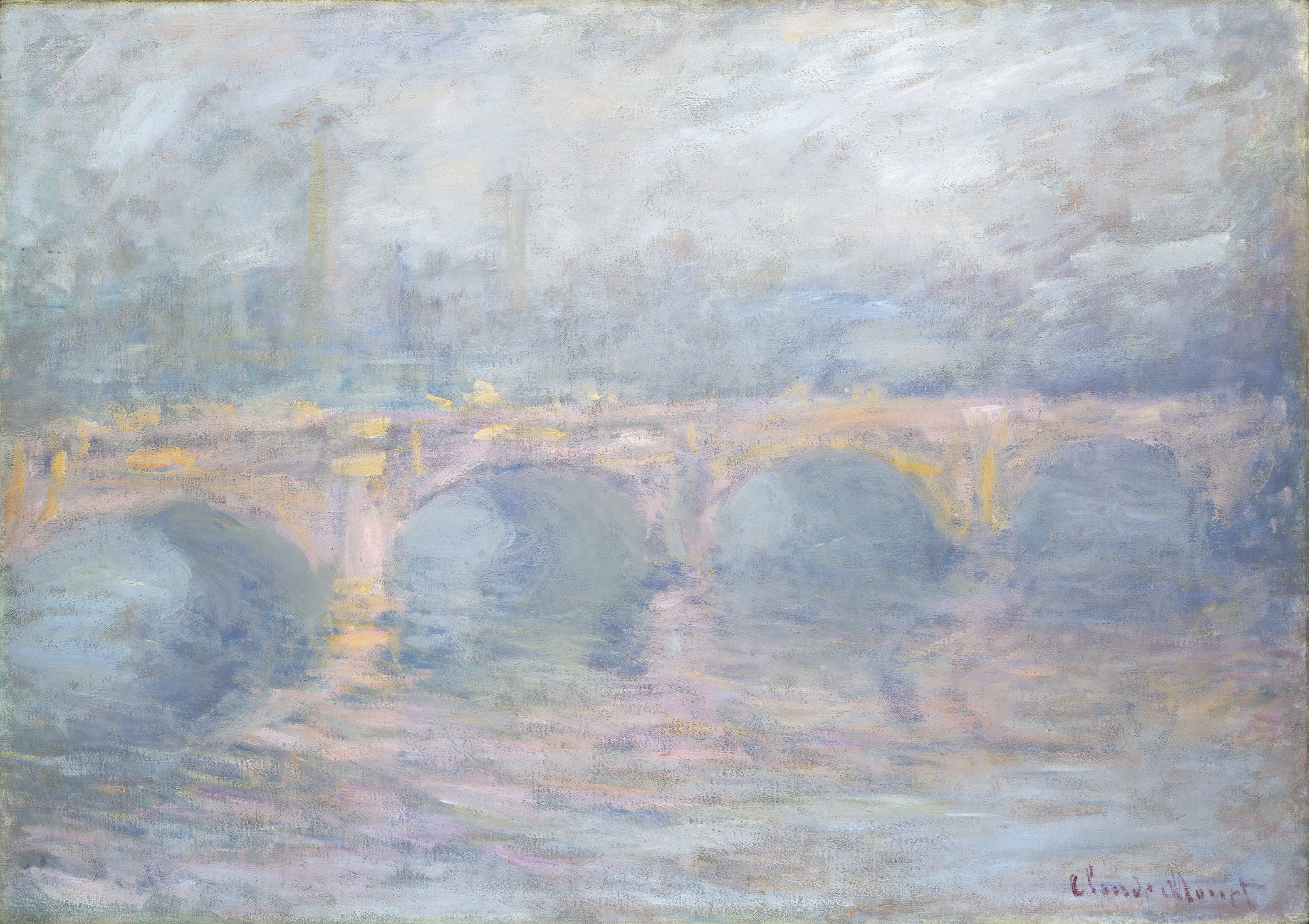
Waterloo Bridge, London, at Sunset
Claude Monet · 1904
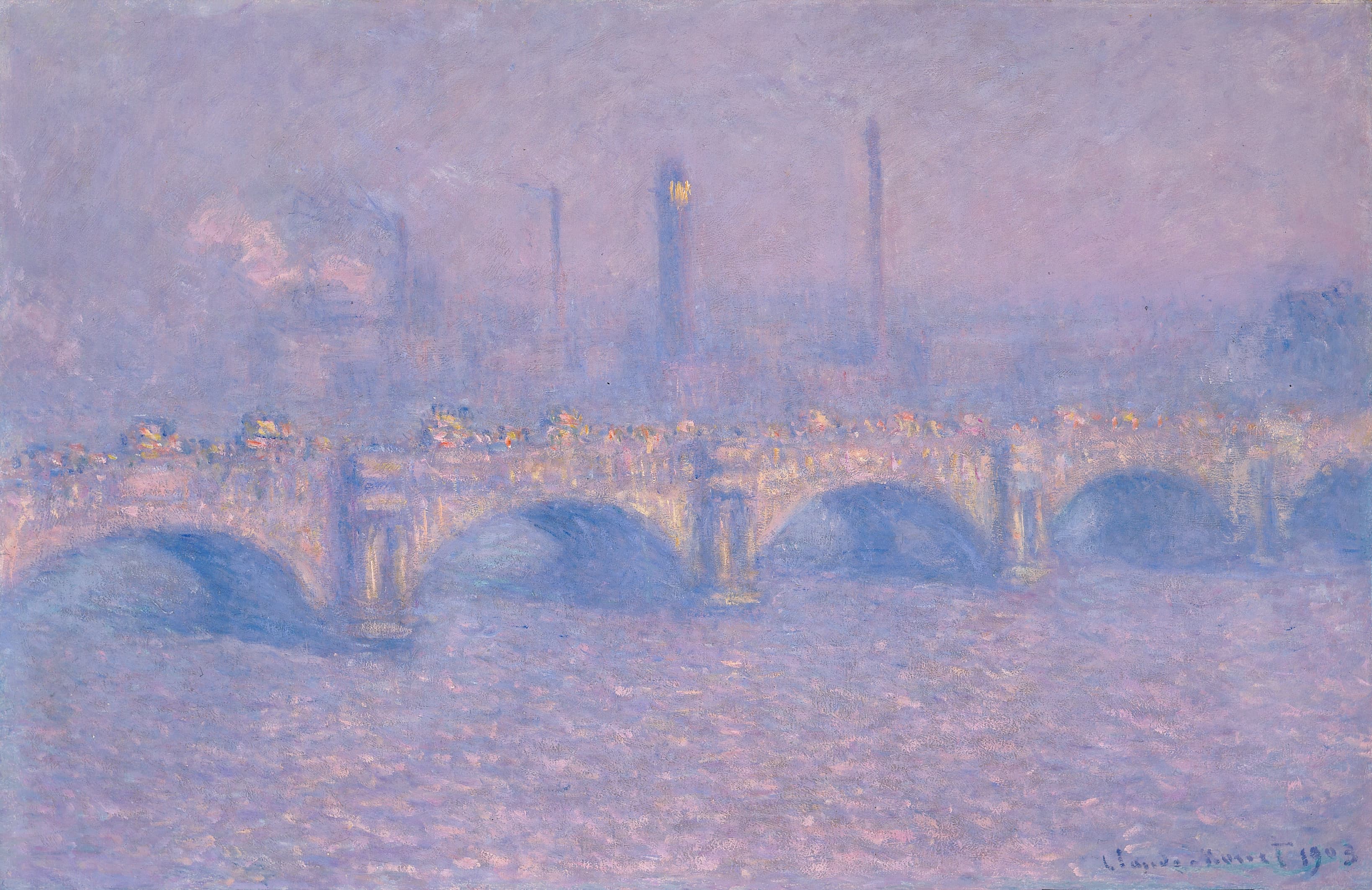
Waterloo Bridge, Veiled Sun
Claude Monet · 1903
Also painted in 1903
The same year
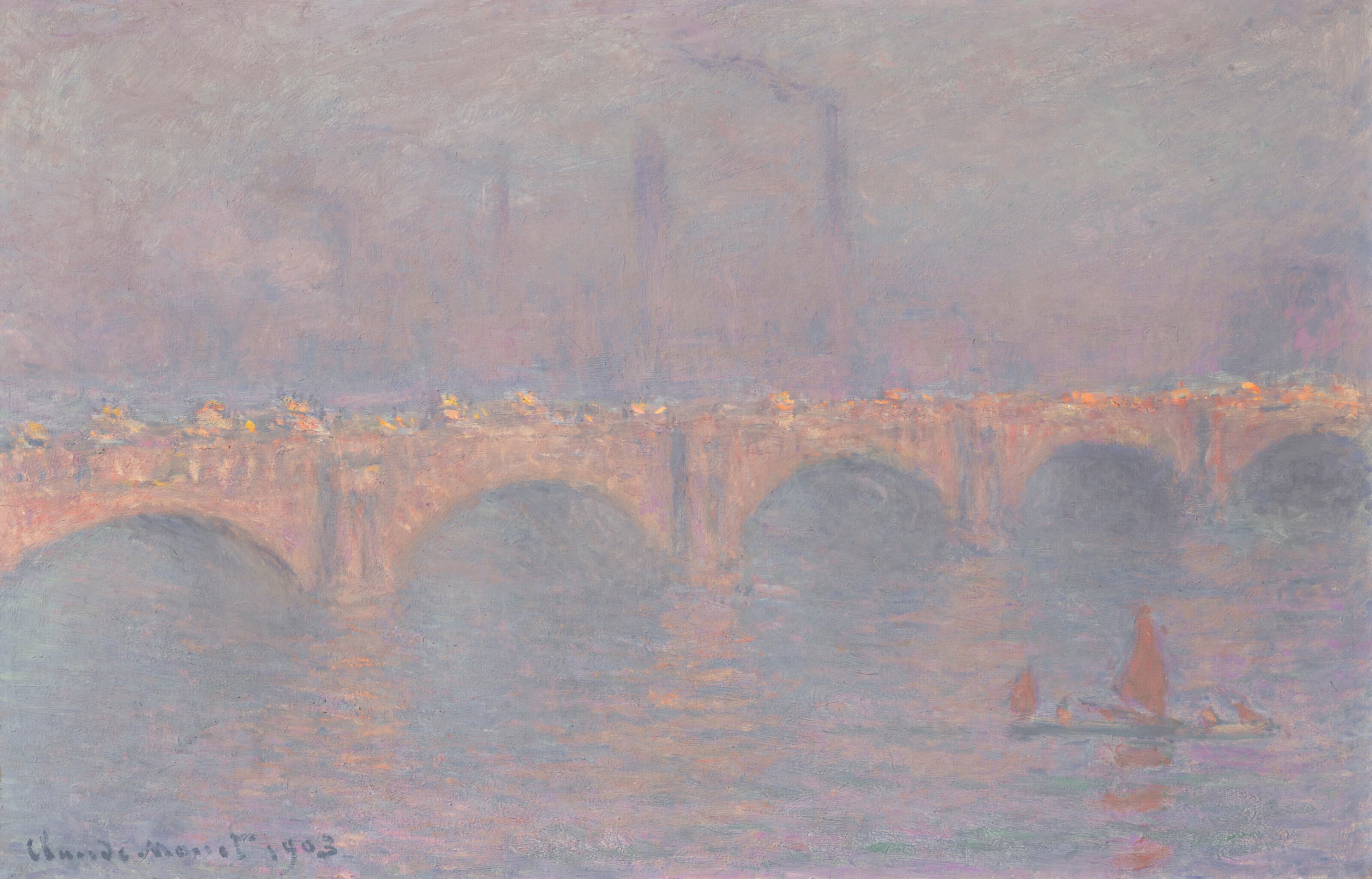
Waterloo Bridge, Hazy Sun
Claude Monet · 1903
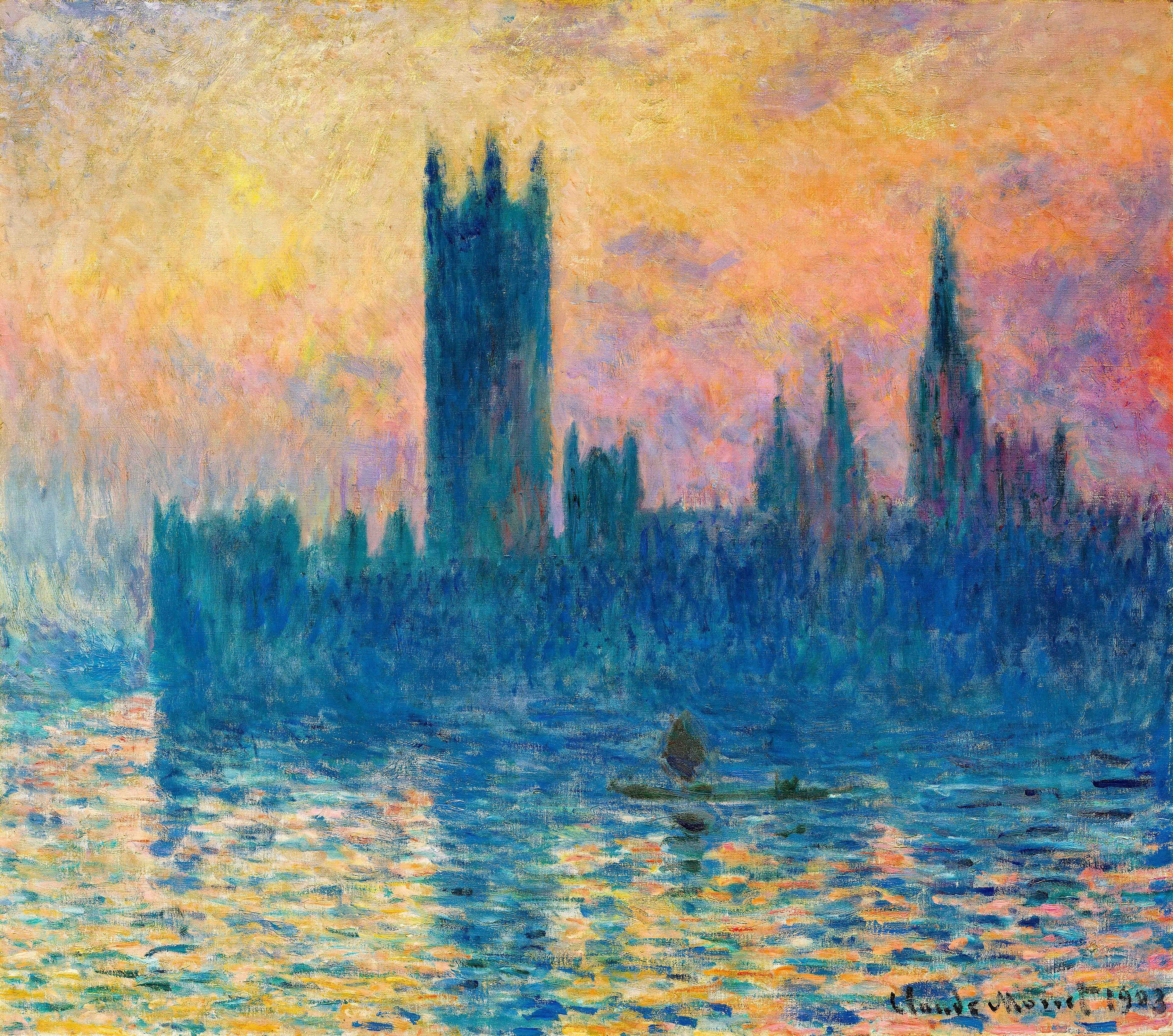
The Houses of Parliament, Sunset
Claude Monet · 1903
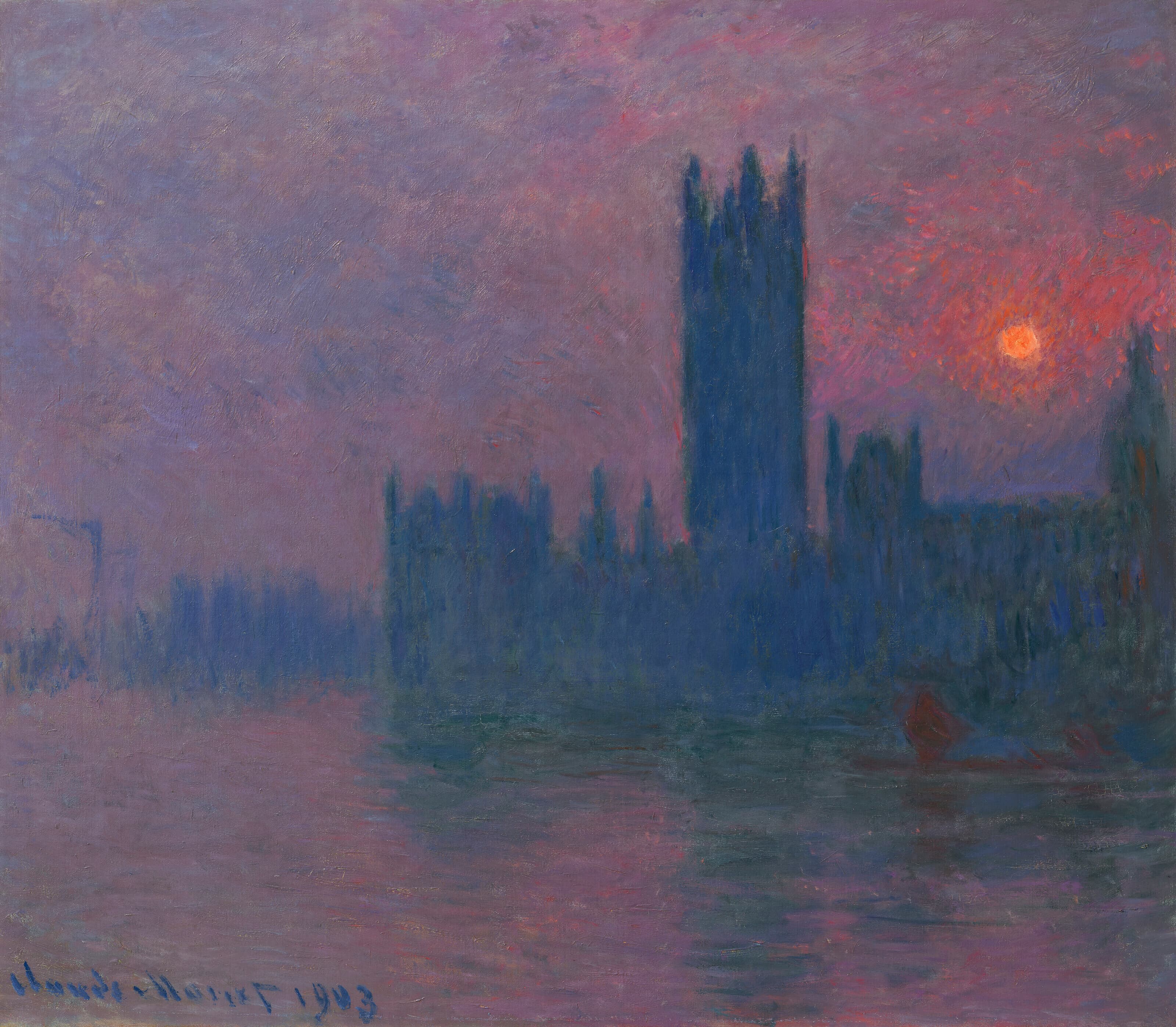
Houses of Parliament, Sunset
Claude Monet · 1903
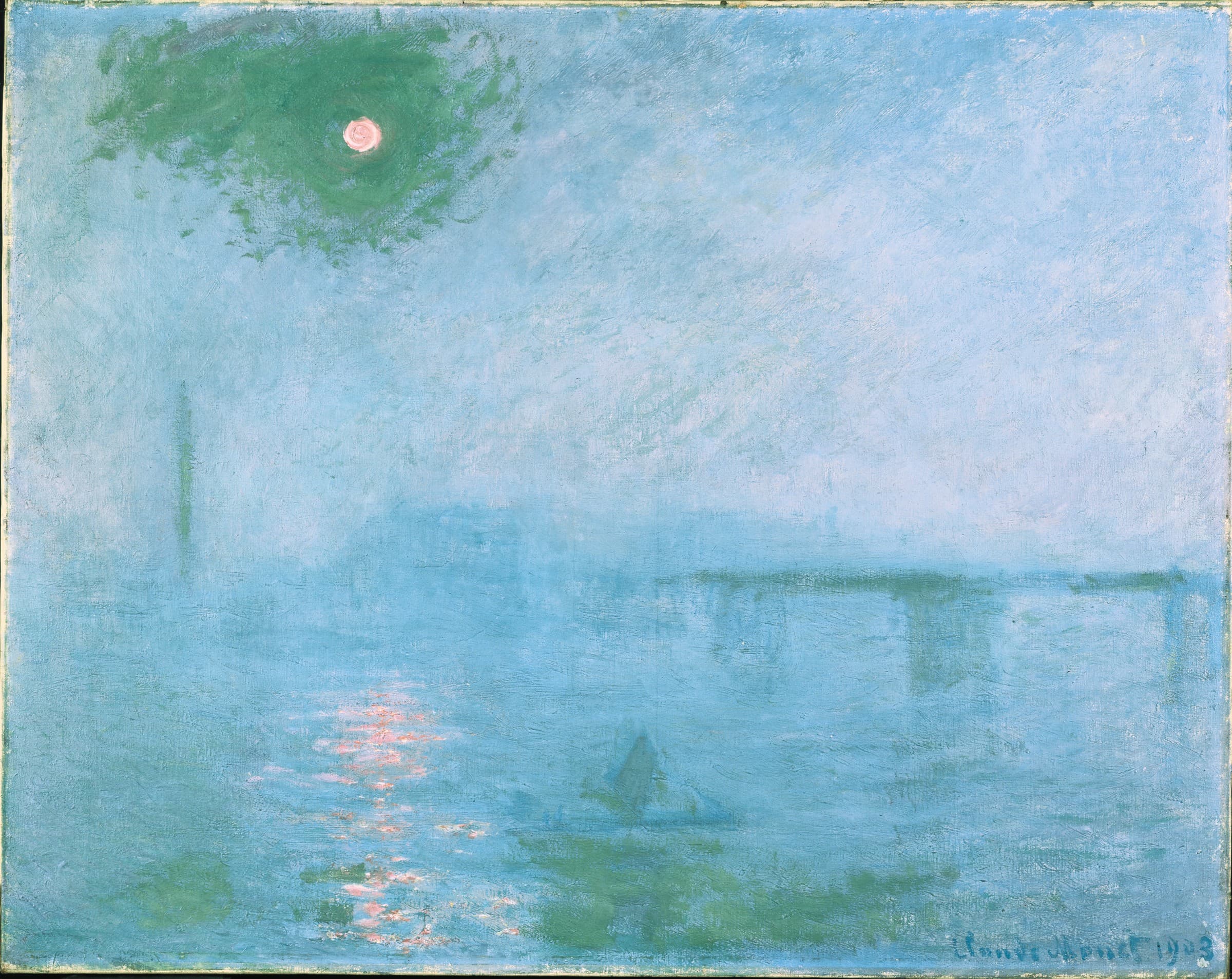
Charing Cross Bridge: Fog on the Thames
Claude Monet · 1903
The Houses of Parliament (Effect of Fog)
Claude Monet · 1903–04
Houses of Parliament, Symphony in Blue
Claude Monet · 1903
Waterloo Bridge, Gray Day
Claude Monet · 1903
Waterloo Bridge, Sunlight Effect
Claude Monet · 1903
Kindred works
You may also study
Waterloo Bridge, Sunlight Effect
Claude Monet · 1903
Waterloo Bridge, Sunlight Effect
Claude Monet · 1903
Waterloo Bridge (Worcester Art Museum)
Claude Monet · 1903
Waterloo Bridge, Hazy Sun
Claude Monet · 1903
The Grand Canal in Venice
Claude Monet · 1908
Waterloo Bridge (Kunsthaus Zürich, 1902)
Claude Monet · 1902
Waterloo Bridge, London, at Dusk
Claude Monet · 1904
The Grand Canal, Venice
Claude Monet · 1908