Image: Dayton Art Institute; photo Wikimedia Commons · Public domain · via Wikimedia Commons
Waterlilies (1903, Dayton Art Institute)
Claude Monet, 1903
Waterlilies is a 1903 painting by Claude Monet of his Giverny pond, islands of lily pads floating on water that mirrors a pink and blue sky, with willow fronds at the top. It is the Dayton Art Institute's best-known painting.
- Artist
- Claude Monet
- Date
- 1903
- Medium
- Oil on canvas
- Dimensions
- 81 × 100 cm
- Collection
- Dayton Art Institute, Dayton, Ohio, United States
- Movement
- Impressionism
- Catalogue
- Wildenstein 1657
- Nature & Landscape
- Water & Sea
Waterlilies is a 1903 canvas by Claude Monet showing the surface of his lily pond at Giverny, with the reflected sky taking up most of the picture. It is one of the earliest of the "water landscapes" he painted between 1903 and 1908, and it is in the Dayton Art Institute in Ohio (1953.11), given in 1953 by the New York collector Joseph Rubin. It is signed and dated Claude Monet 1903 at the lower left.
What you're looking at
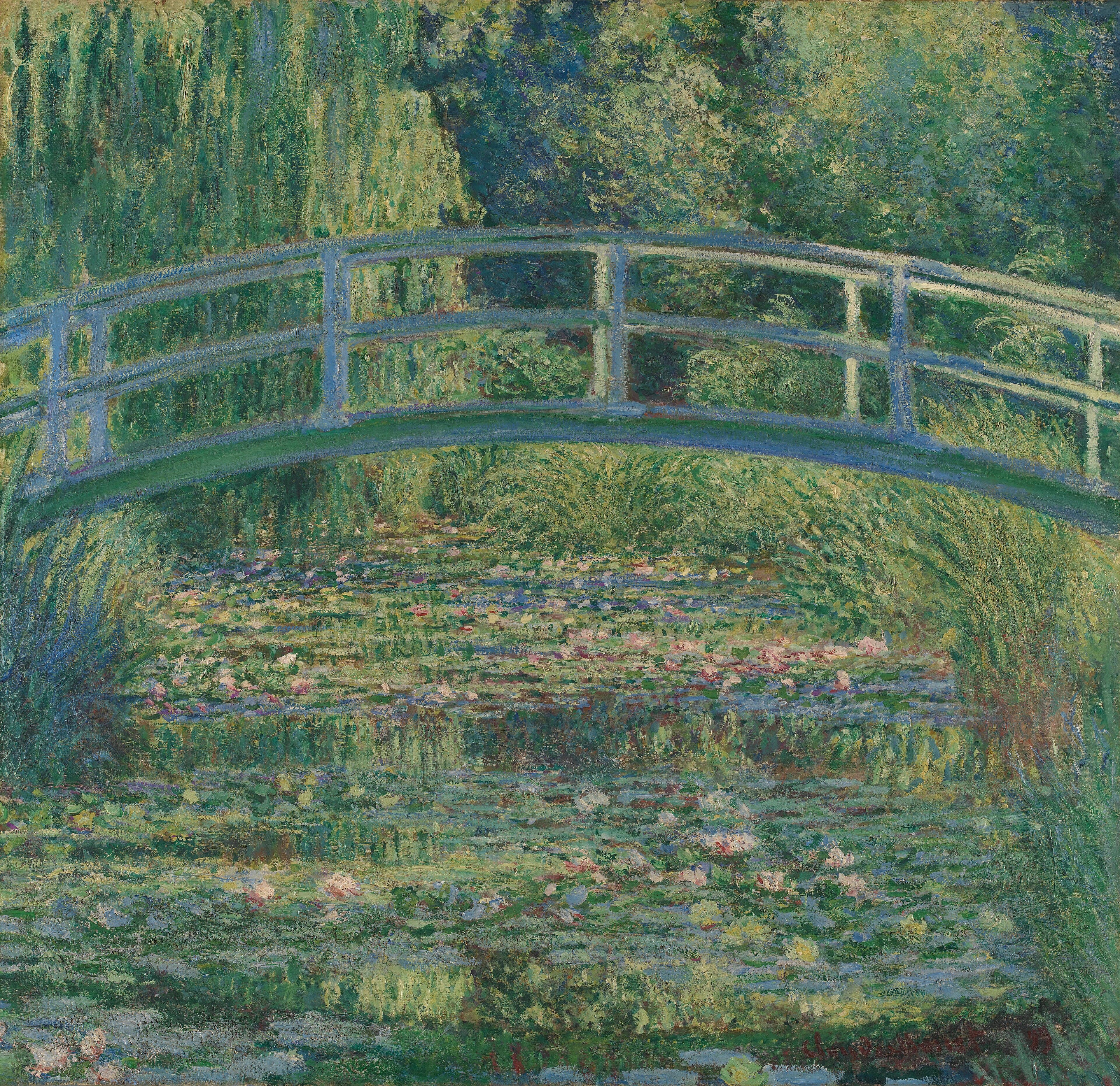
The bridge and the banks of the 1899 pictures are gone. What remains is the water, seen from a little above, and on it a series of floating islands of lily pads, each a flattened oval of green, yellow-green and cream, dotted with white and yellow blossoms. They step back in a loose zigzag from the lower center to the top of the canvas, getting smaller as they recede, which is how Monet suggests depth without a horizon.
Everything between them is reflection. Pink and mauve passages are clouds, blue and lilac ones open sky, and the soft green-gray areas, especially to the left, are the reflected trees on the bank. At the top left, real willow fronds hang down into the picture, drawn in fine strokes of green, the only element not lying on the water. At the lower left, a few pads with pink flowers sit in the foreground at the edge, close enough to show their shapes.
The effect is calm and slightly hazy, with a pale, high-key palette of rose, lavender and blue.
The pond in 1903
Monet had dug the pond in 1893 and in 1901 he obtained permission to enlarge it, giving it a broader surface and more open water. From 1903 he began a long campaign of paintings looking down at the water itself, a project he called his paysages d'eau (water landscapes). He worked on them for five years, destroyed many, and in May 1909 showed forty-eight at Durand-Ruel in Paris under the title Les Nymphéas, séries de paysages d'eau. The Dayton canvas is from the first year of that campaign, when a fringe of bank or willow still often appears at the top.
How this version differs
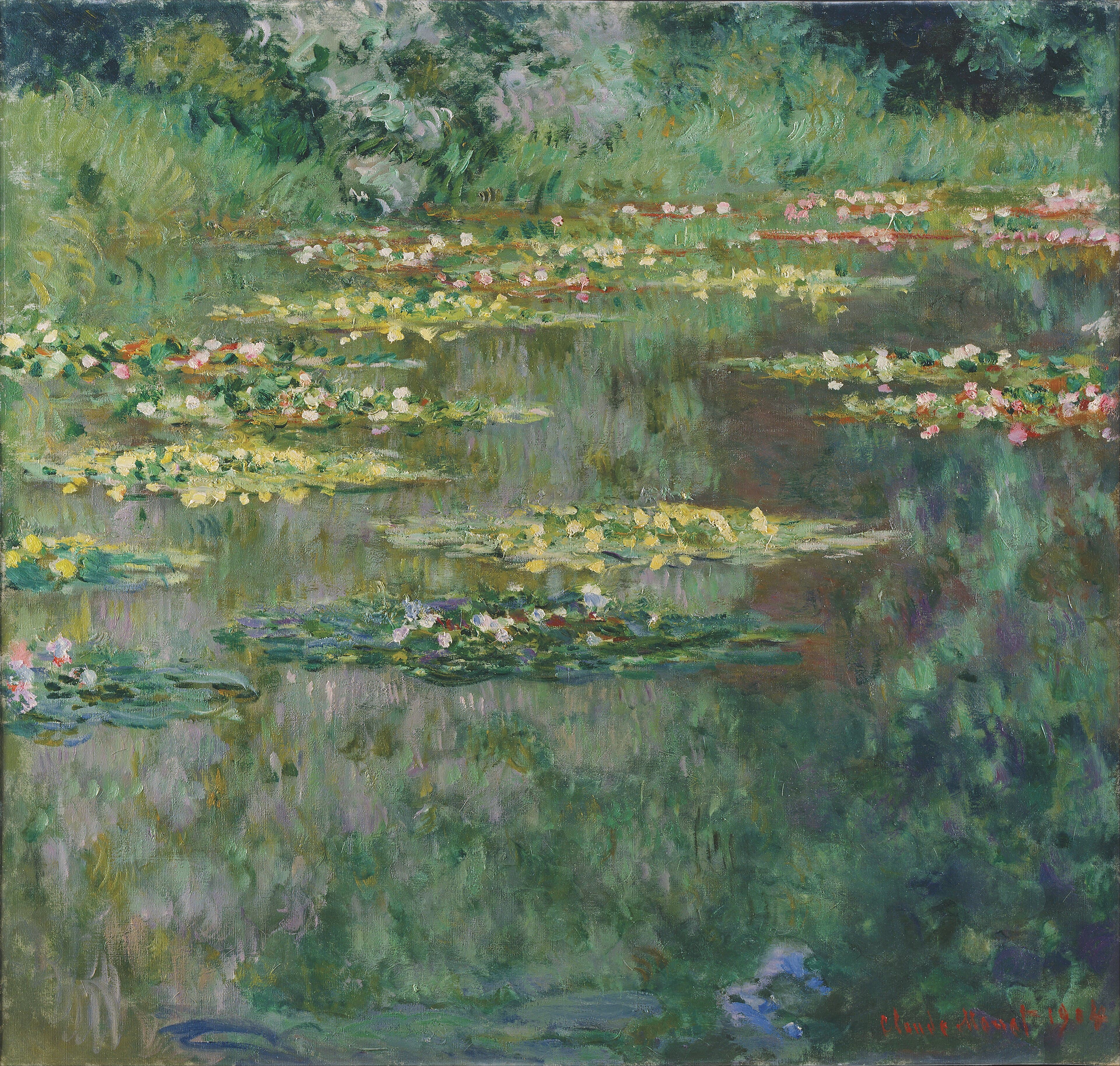
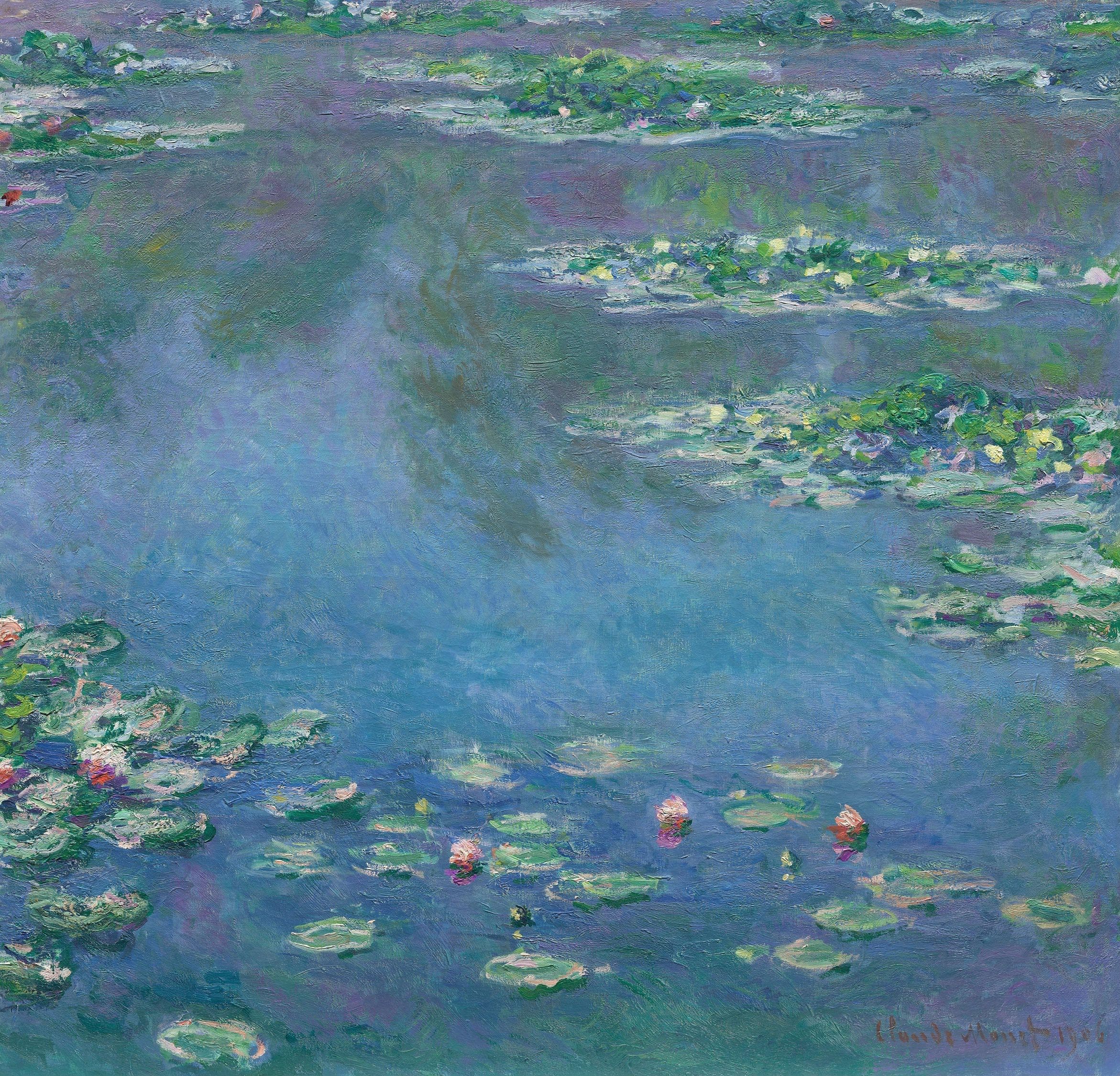
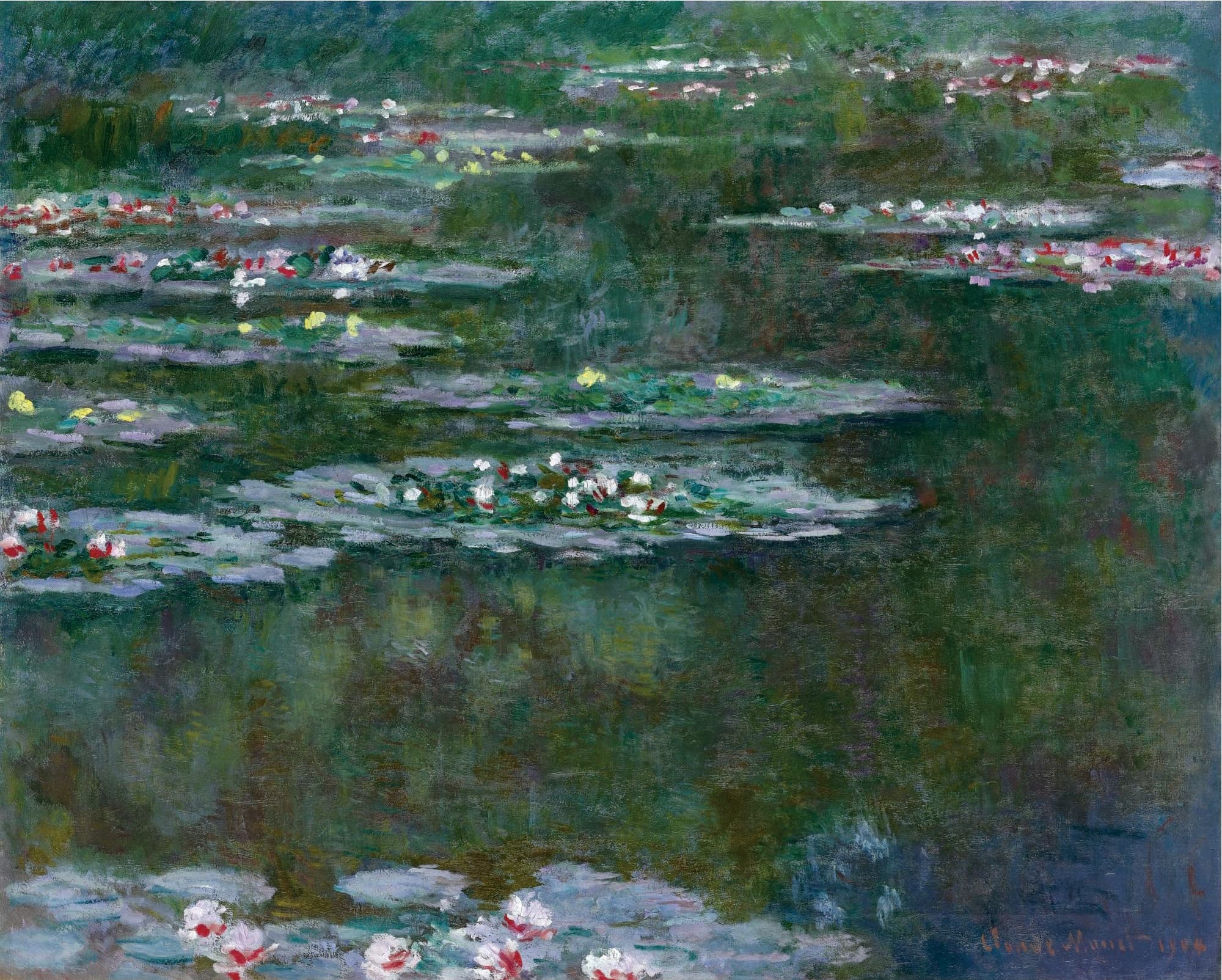
Compare it with the darker, almost nocturnal Water Lilies of 1904 in Le Havre, or the Denver Le Bassin des Nymphéas of the same year, where the far bank is still a band of foliage. Dayton's 1903 picture has already let the bank go and replaced it with willow fronds and reflected sky. By 1906, in the Chicago Water Lilies, the fronds have gone too, and the surface is entirely reflection.
How it was painted
The reflections are laid in with soft, blended strokes, often wet into wet, while the lily islands are built from crisper, horizontal dabs on top. The willow fronds are drawn in thin, downward strokes of darker green. The paint is moderately thick, smoother in the open water than in the pads.
Ownership and where to see it
The Dayton Art Institute's director in the early 1950s, Esther Seaver, approached a New York dealer and then the collector Joseph Rubin, head of the Loma Dress Corporation, asking whether he would consider giving the painting to a museum outside New York. Rubin agreed, and the canvas came to Dayton in 1953. It is one of the museum's signature works. For the whole series see Monet's Water Lilies; for the garden, Giverny; and for other places to see Monet, Where to See Monet's Paintings.
Questions & answers
Where is Monet's 1903 Waterlilies?
It is in the Dayton Art Institute in Dayton, Ohio (1953.11). The collector Joseph Rubin gave it to the museum in 1953 after its director, Esther Seaver, asked him to consider a museum outside New York.
When and where was it painted?
In 1903, at Monet's water garden in Giverny. It is signed and dated Claude Monet 1903 at the lower left, and it belongs to the first year of his 1903–08 water-landscape paintings.
What does it show?
The surface of Monet's lily pond: floating islands of pads with white and yellow flowers, set in water that reflects a pink, lilac and blue sky, with willow fronds hanging in at the top left.
How is it different from Monet's other water lilies?
It marks the moment Monet dropped the bridge and banks of the 1899 pictures. Willow fronds still frame the top; in later canvases such as Chicago's 1906 Water Lilies even they disappear.
More by the artist
Claude Monet
Waterloo Bridge: the Sun in a Fog
Claude Monet · 1903
The Houses of Parliament, Sunset
Claude Monet · 1903
Waterloo Bridge, Sunlight Effect
Claude Monet · 1903
Houses of Parliament, Sunset
Claude Monet · 1903
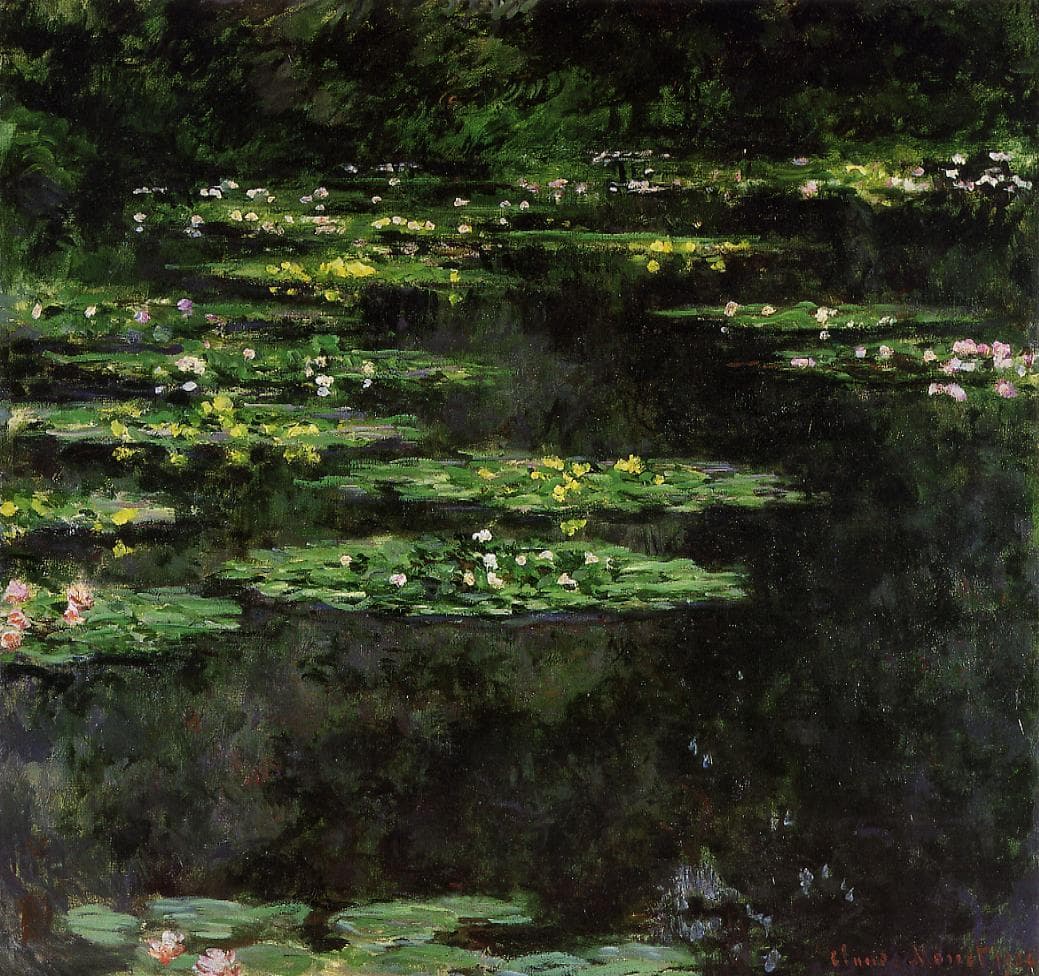
Water Lilies (1904, MuMa Le Havre)
Claude Monet · 1904
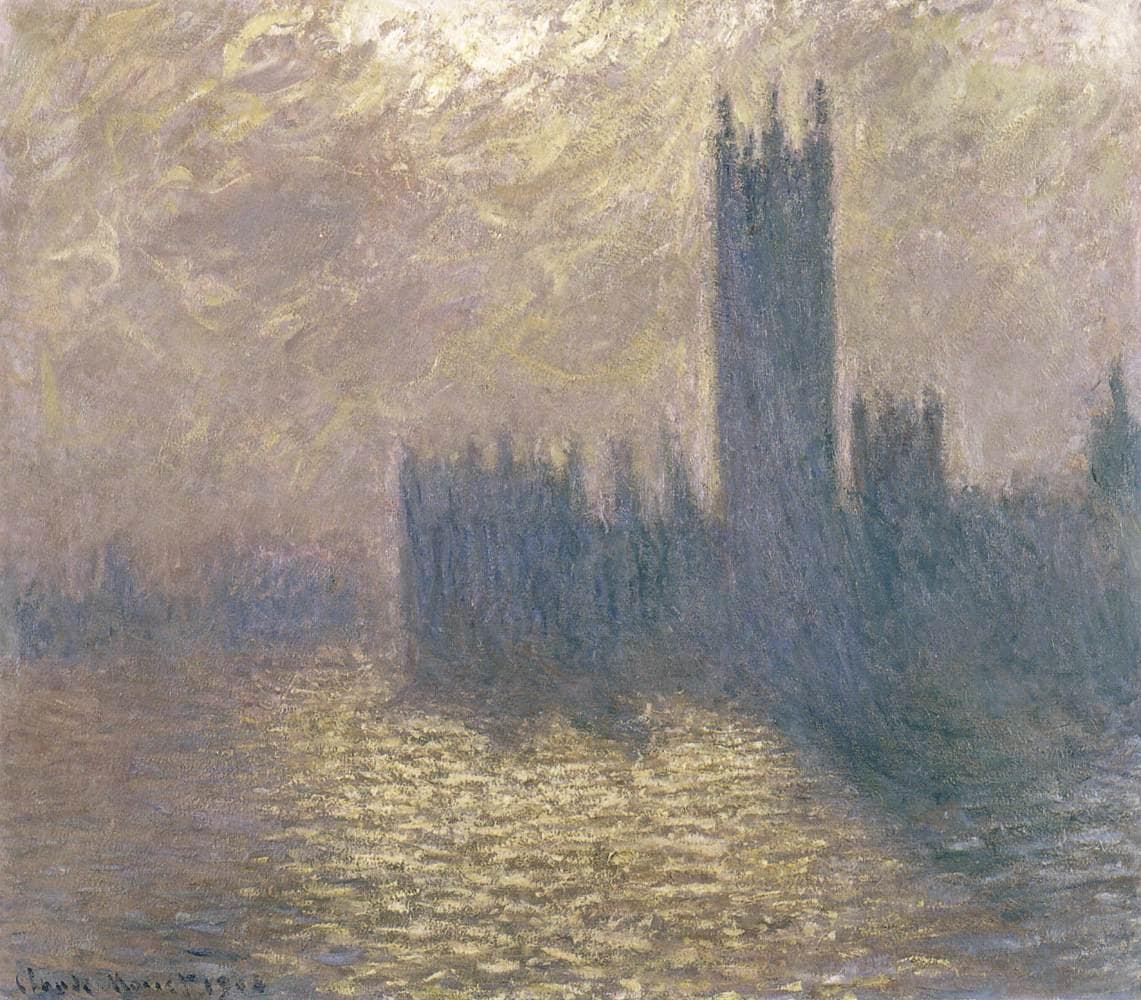
The Houses of Parliament, London
Claude Monet · 1904
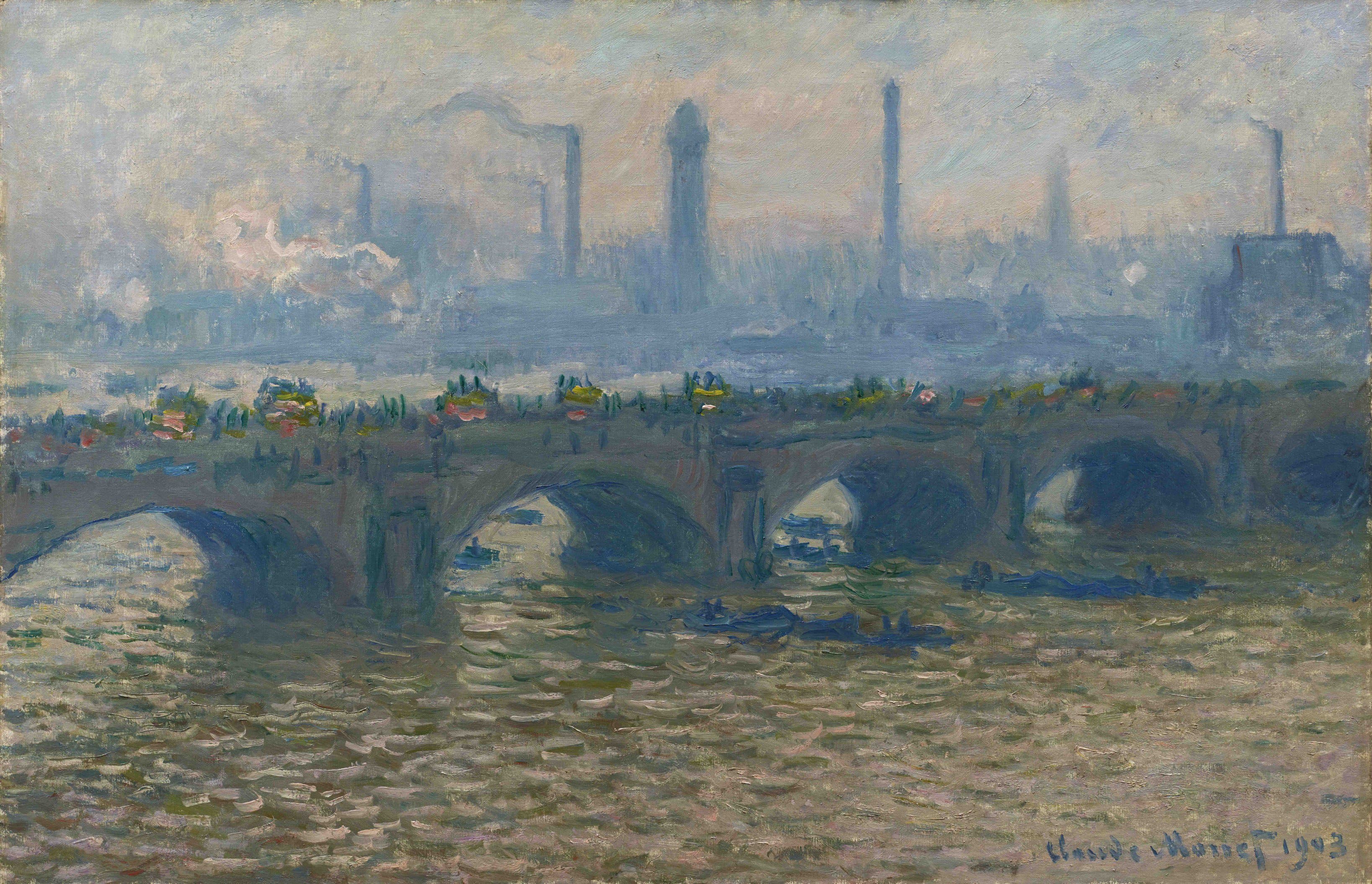
Waterloo Bridge, Gray Day (Ordrupgaard)
Claude Monet · 1903
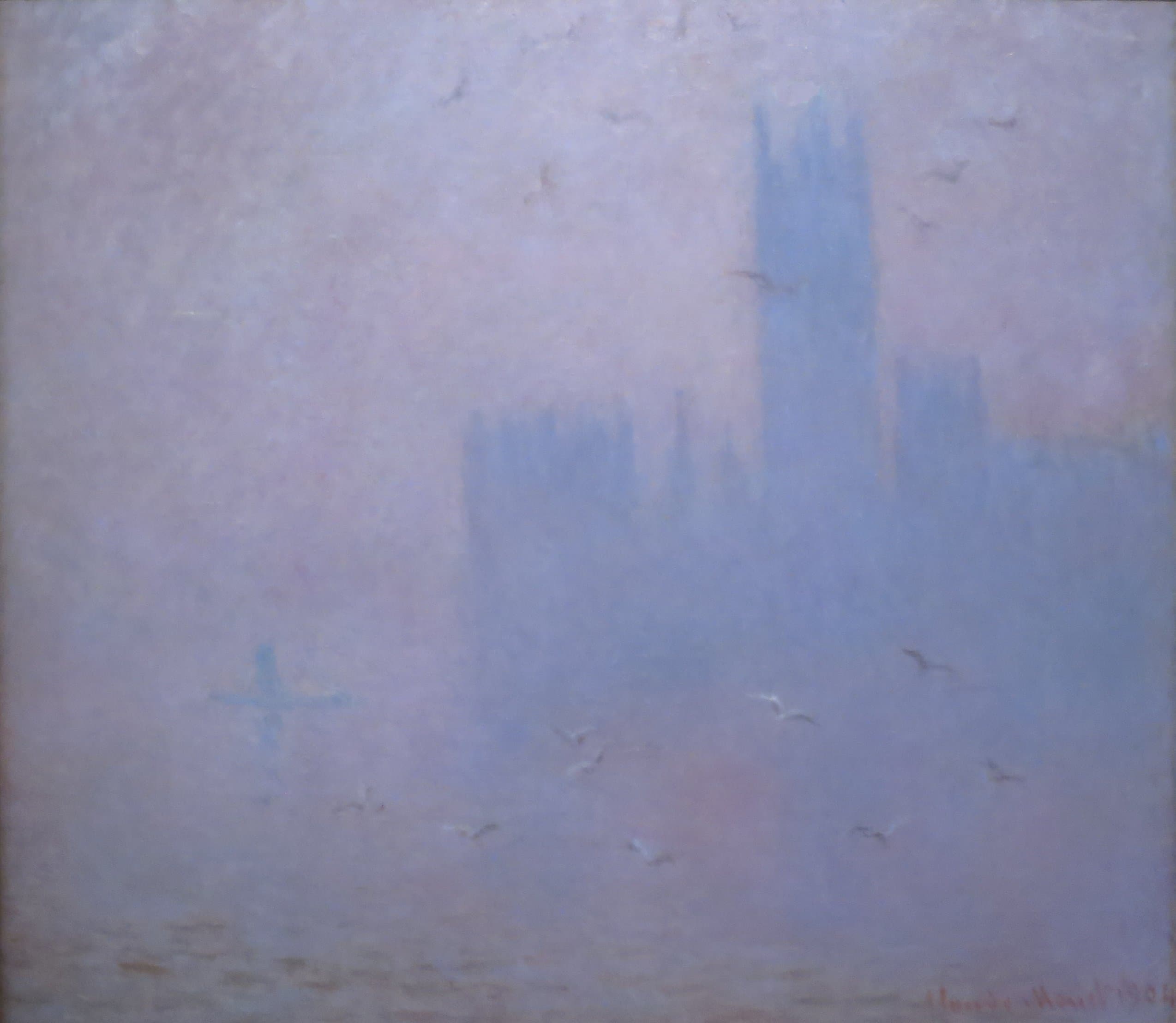
Seagulls, the River Thames and the Houses of Parliament
Claude Monet · 1904
Also painted in 1903
The same year
Waterloo Bridge, Hazy Sun
Claude Monet · 1903
The Houses of Parliament, Seagulls
Claude Monet · 1903
Charing Cross Bridge: Fog on the Thames
Claude Monet · 1903
Houses of Parliament, Sunlight Effect
Claude Monet · 1903
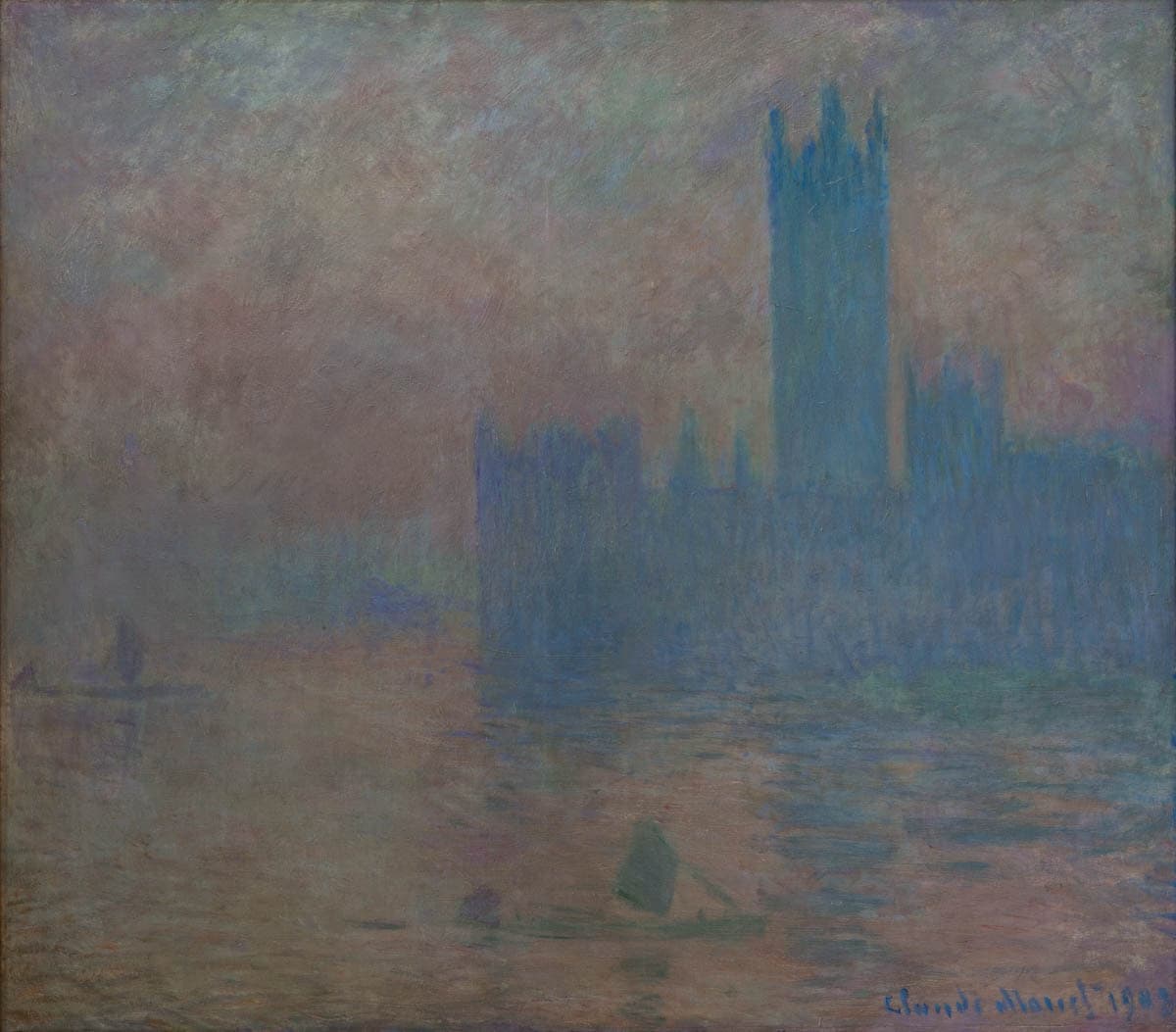
Le Parlement de Londres, effet de brouillard
Claude Monet · 1903
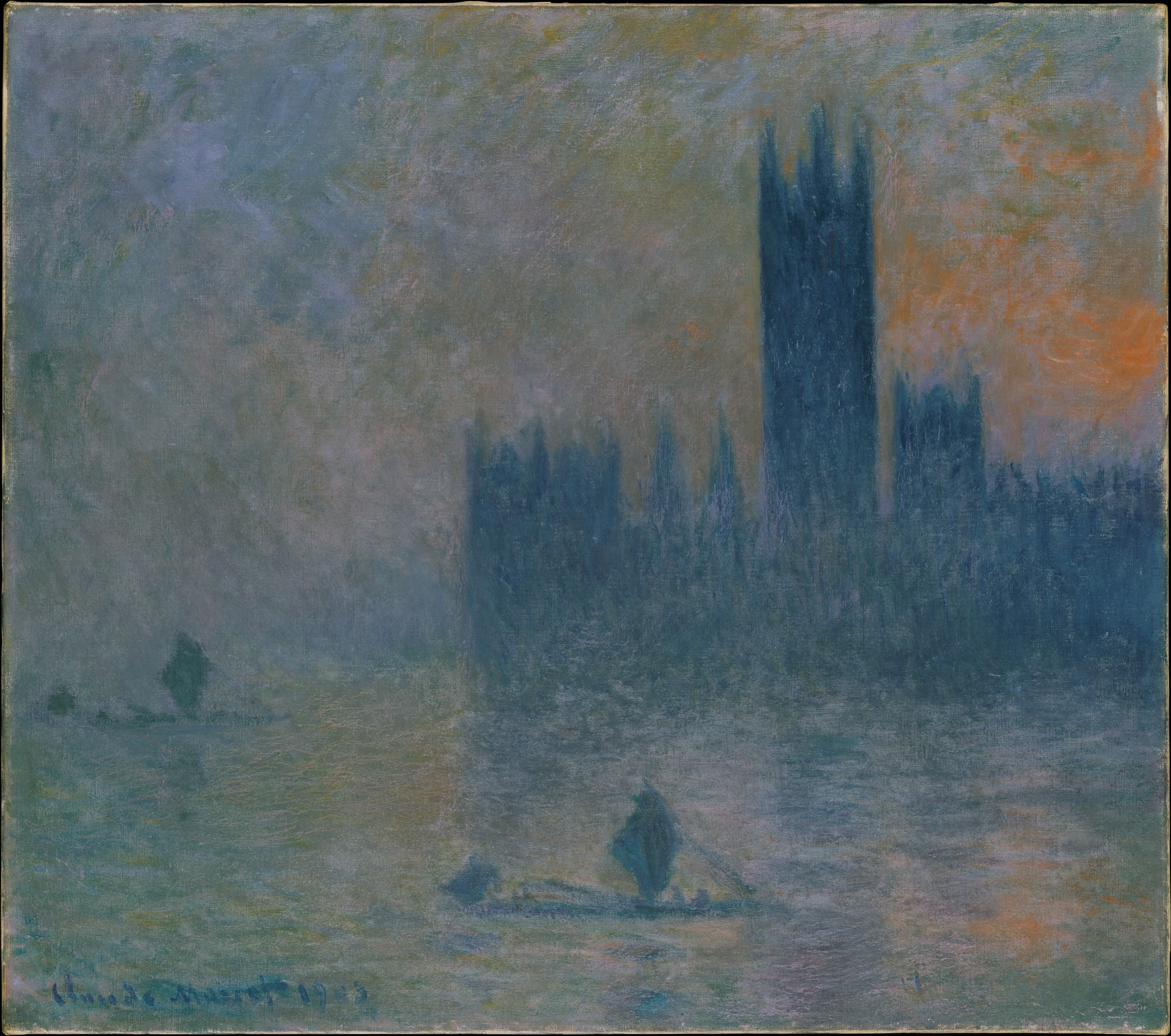
The Houses of Parliament (Effect of Fog)
Claude Monet · 1903–04
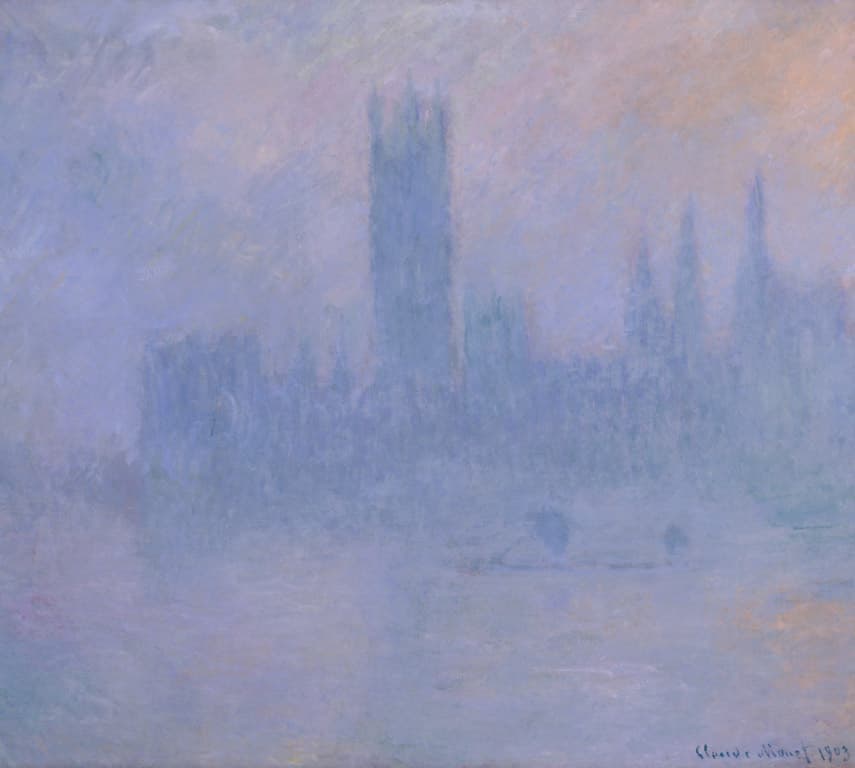
Houses of Parliament, Symphony in Blue
Claude Monet · 1903
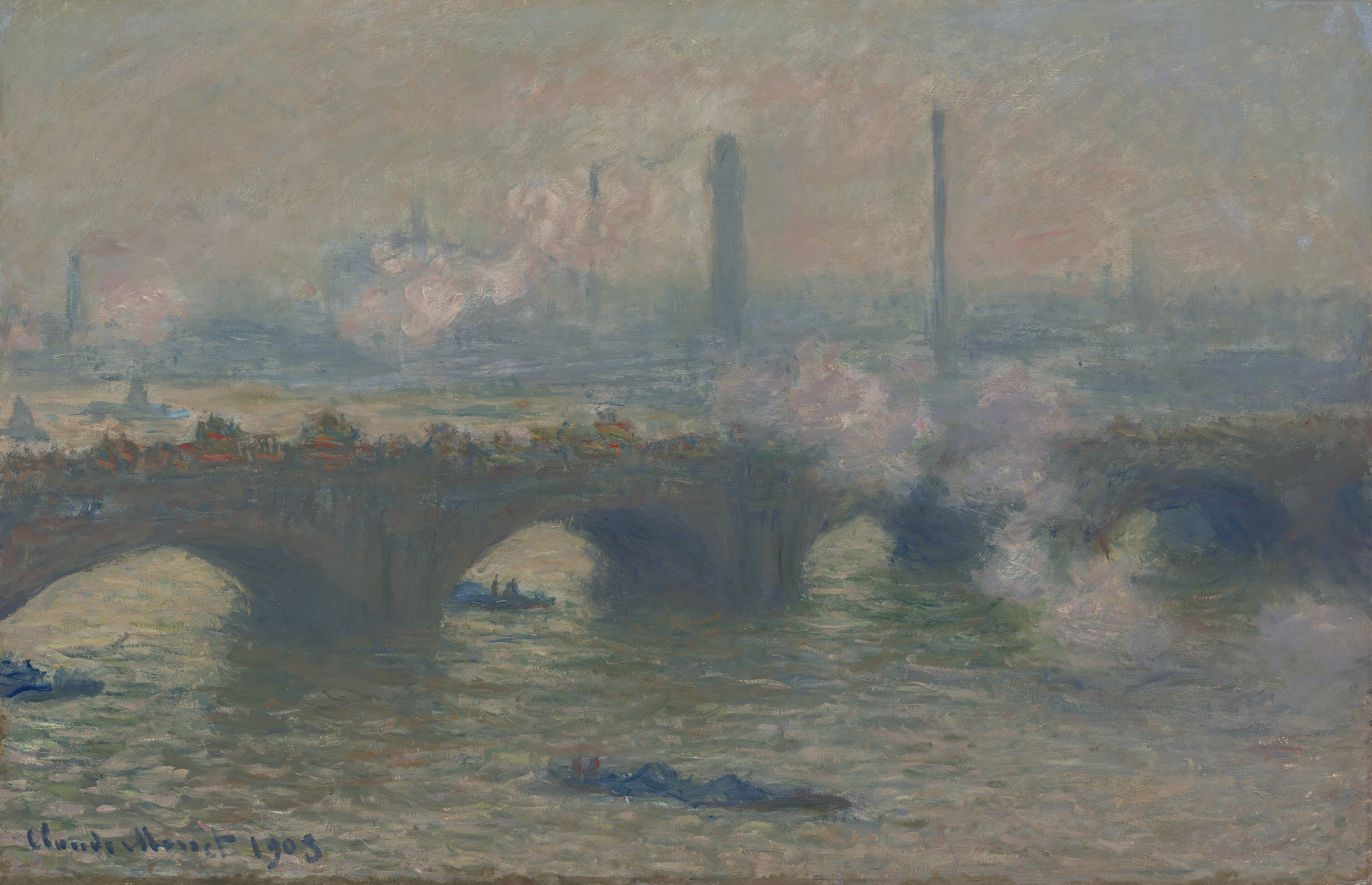
Waterloo Bridge, Gray Day
Claude Monet · 1903
Kindred works
You may also study
Le Bassin des Nymphéas (Denver)
Claude Monet · 1904
Water Lilies (1906, Art Institute of Chicago)
Claude Monet · 1906
Water Lilies (1904)
Claude Monet · 1904
The Water-Lily Pond (National Gallery, London)
Claude Monet · 1899
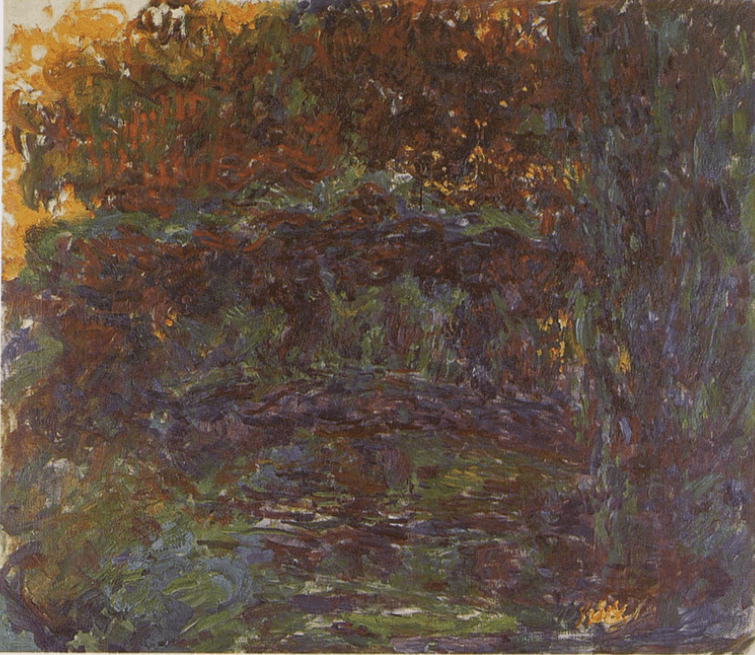
The Japanese Bridge
Claude Monet · 1918–24
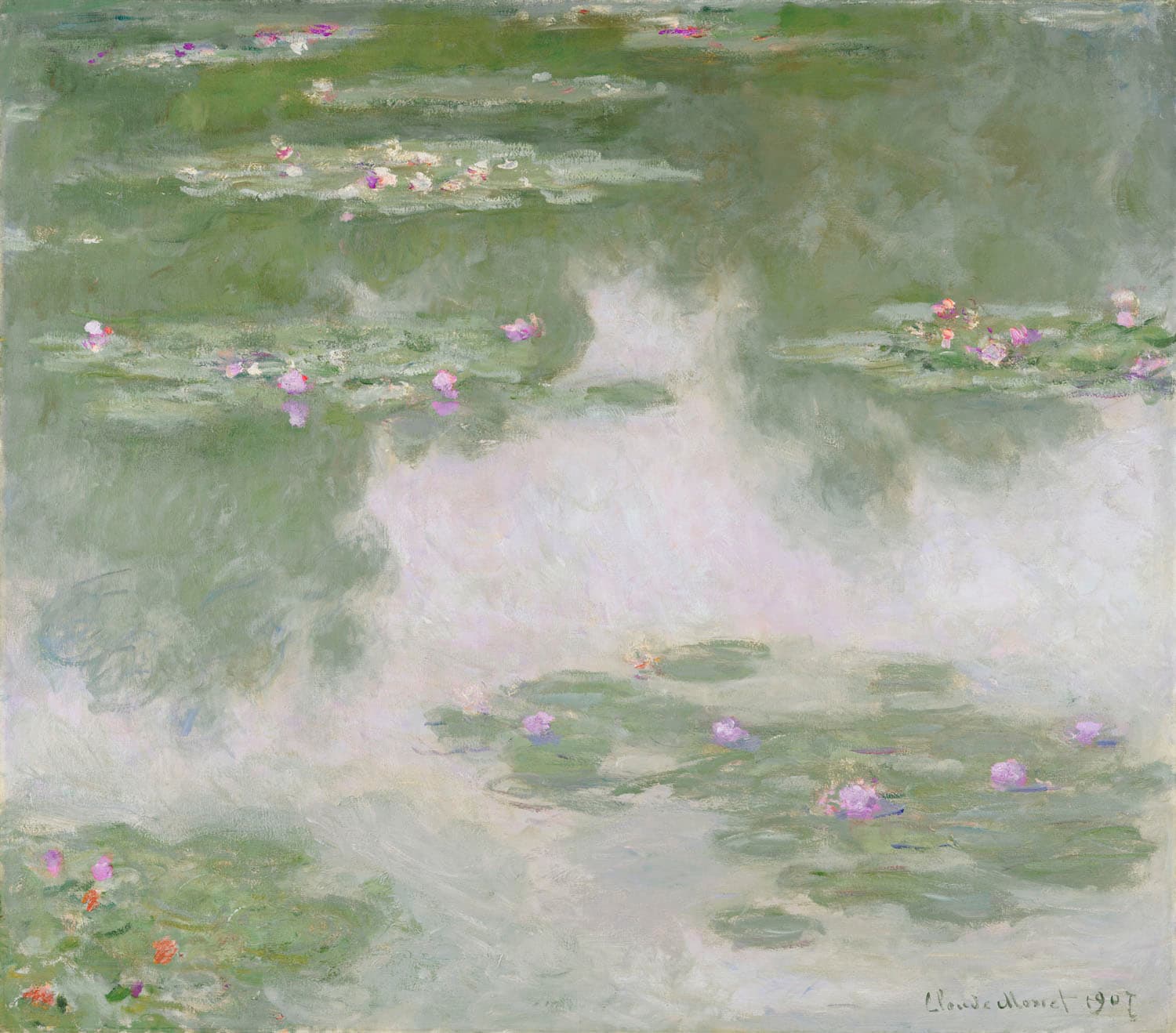
Nymphéas (Water Lilies), 1907 (Wadsworth Atheneum)
Claude Monet · 1907
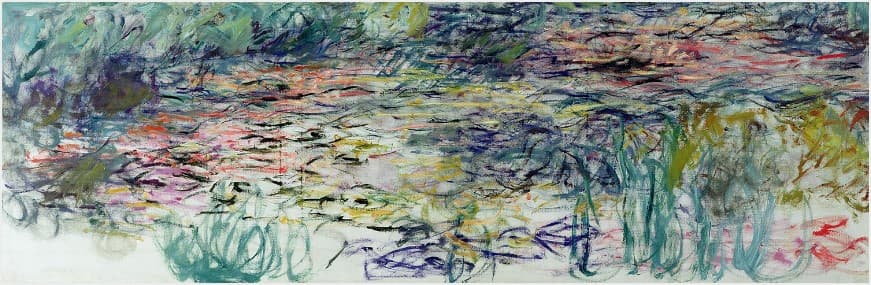
Nymphéas (Musée Marmottan Monet, 1917–19)
Claude Monet · 1917–19
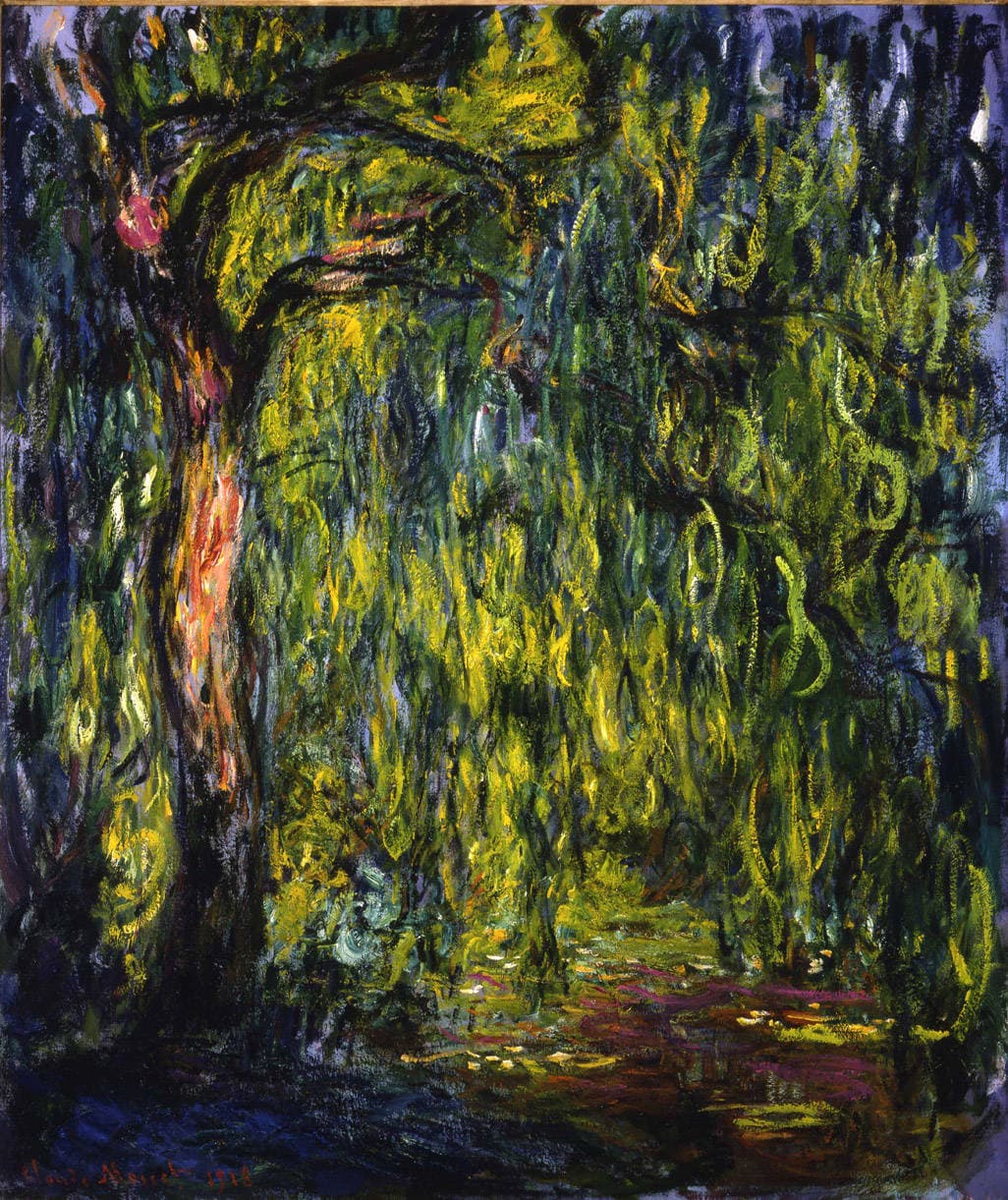
Weeping Willow (Columbus)
Claude Monet · 1918