Image: MuMa – Musée d'art moderne André Malraux, Le Havre · CC BY-SA 4.0 · via Wikimedia Commons
Le Parlement de Londres, effet de brouillard
Claude Monet, 1903
Le Parlement de Londres, effet de brouillard is a 1903 painting by Claude Monet of Westminster in a rose-brown fog with boats on the Thames. It is in the MuMa museum in Le Havre, Monet's hometown, which acquired it from the artist in 1910.
- Artist
- Claude Monet
- Date
- 1903
- Medium
- Oil on canvas
- Dimensions
- 81 × 92 cm
- Collection
- MuMa – Musée d'art moderne André Malraux, Le Havre, France
- Movement
- Impressionism
- Catalogue
- Wildenstein 1608
- The City
- Water & Sea
- Architecture & Ruins
Le Parlement de Londres, effet de brouillard (The Houses of Parliament, London, Effect of Fog) is a painting by Claude Monet signed and dated "Claude Monet 1903" at lower right. It shows the Palace of Westminster as a blue silhouette in a warm, rose-brown fog over the Thames, with sailing barges on the river. The canvas measures 81 by 92 centimeters and is in the MuMa, the Musée d'art moderne André Malraux in Le Havre (inventory A 487). Wildenstein lists it as number 1608. Its history is special: the city of Le Havre, where Monet grew up, bought it from him in 1910.
What you're looking at
The palace stands in the right half of the canvas. Its great tower rises just right of center, painted in turquoise and blue, with a smaller tower to its right and a long block of buildings dissolving into fog at left. The building is clearer than in many fog versions; its edges are soft but its shape is firm.
The fog is warm. Instead of the grays and blues of most fog pictures, Monet paints the sky in rose, brown, mauve and dull gold, laid on in loose, scrubbed strokes. The effect is of a heavy, smoky London afternoon, the sun somewhere behind the haze.
On the river, the same warm colors are broken by horizontal strokes of blue and lilac. Two boats emerge from the fog: a small sailing barge at left in the distance, and a larger barge with a dark sail in the lower center, its towline slanting into the water. The museum's records list the subject as London, the Thames and sailing boats.
Warm fog: what makes this version distinct
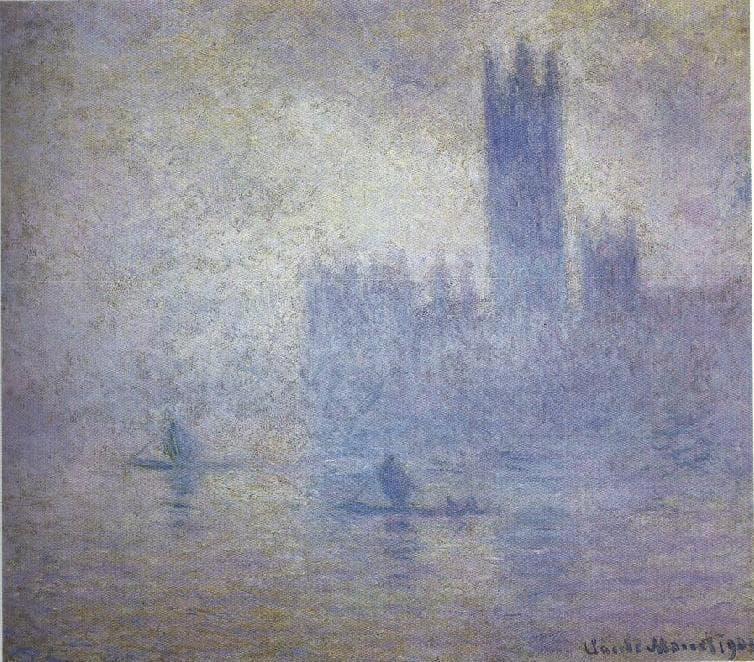
The canvas is a close relative of the Met's The Houses of Parliament (Effect of Fog). Both show the palace at right, the boats in the same positions and the same general fog. But the Met version is greenish-gray with a single orange glow, while Le Havre's is warm throughout, the whole canvas tinted rose and brown. Side by side, they show how Monet varied a single composition by changing only the color of the air.
Compared with the pale, almost white fogs of Houses of Parliament, Effect of Fog in St. Petersburg, Florida, or the High Museum's lavender Symphony in Blue, this is one of the densest and most somber versions.
How it was painted
Monet painted the Parliament from St Thomas' Hospital, across the river from Westminster, during his London trips of 1900 and 1901, and finished the canvases at Giverny in 1903–04. In 1904 Durand-Ruel showed thirty-seven of his Thames views in Paris; the museum describes the series as being about light and the atmospheric changes around the city's monuments rather than the buildings themselves, and links it to Turner and to Whistler's nocturnes. Here the violet and purple-blue washes are thin and layered, with the canvas weave showing through in the fog.
Le Havre and Monet
Monet spent his childhood in Le Havre, where he met Eugène Boudin and began painting outdoors, and where he painted Impression, Sunrise in 1872. The museum's history records that in 1910 the city acquired this canvas directly from Monet, along with a view of the cliffs at Varengeville and a water-lily painting, for a modest sum. The MuMa, a modernist glass building on the harbor front, now holds one of the largest Impressionist collections in France outside Paris, including many works by Boudin. Monet's Channel coast is covered in Étretat and the Normandy Coast.
Details to look for
The signature and date at lower right are written in blue, the same color as the palace, so they link the bottom of the canvas to the building above. Look at the left edge of the palace, where a band of blue-violet runs down into the water, the reflection of the lower buildings. The small barge at left is barely more than a few dark strokes, yet it sets the distance.
Where to see it
The painting is in the MuMa in Le Havre, in the permanent collection galleries. See our Houses of Parliament series hub, Monet in London, Where to See Monet and Claude Monet.
Questions & answers
Where is Monet's Le Parlement de Londres, effet de brouillard?
It is in the MuMa (Musée d'art moderne André Malraux) in Le Havre, France, inventory number A 487. The city of Le Havre, where Monet grew up, acquired it from the artist in 1910, together with two other paintings.
When was it painted?
Monet signed and dated it 1903. He worked on the Parliament series from St Thomas' Hospital in London in 1900–01 and finished the canvases at Giverny before showing them in Paris in 1904.
What does the painting show?
The Houses of Parliament as a blue silhouette in a warm rose-brown fog, with two sailing barges on the Thames: one small in the distance at left, one larger in the foreground trailing a towline.
How is it different from the Met's version?
The layout, boats and fog are nearly identical, but the Met's version is greenish-gray with an orange glow at right, while the Le Havre canvas is warm throughout, tinted rose, mauve and brown.
More by the artist
Claude Monet
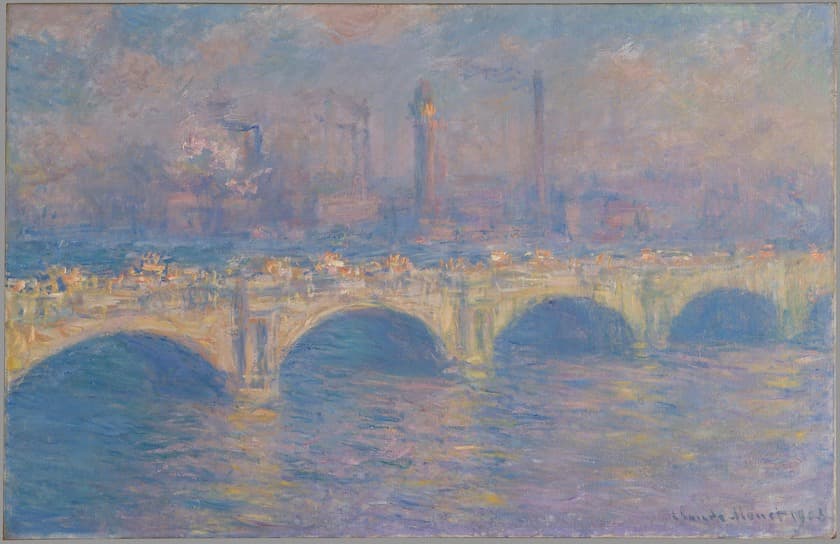
Waterloo Bridge, London
Claude Monet · 1903
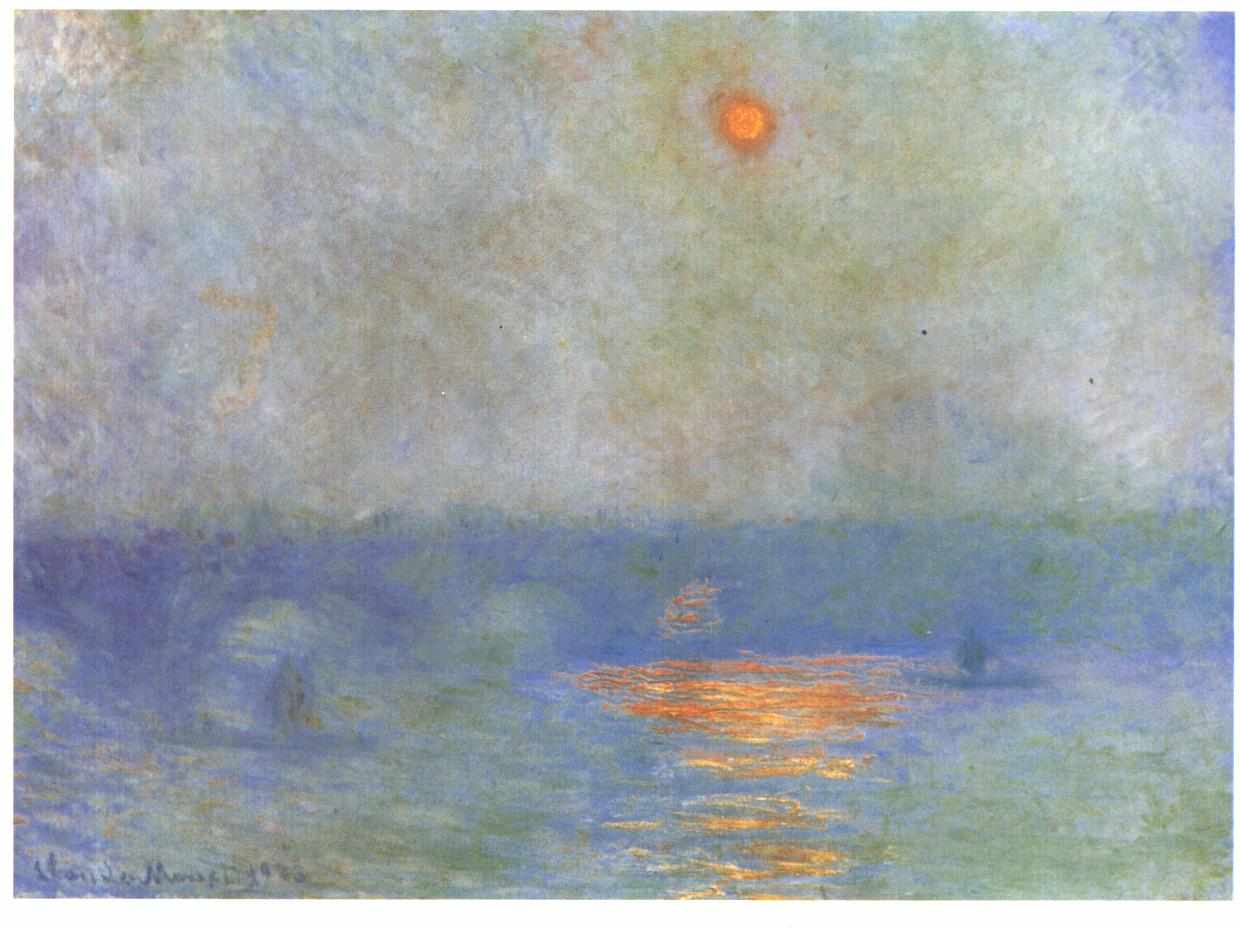
Waterloo Bridge: the Sun in a Fog
Claude Monet · 1903
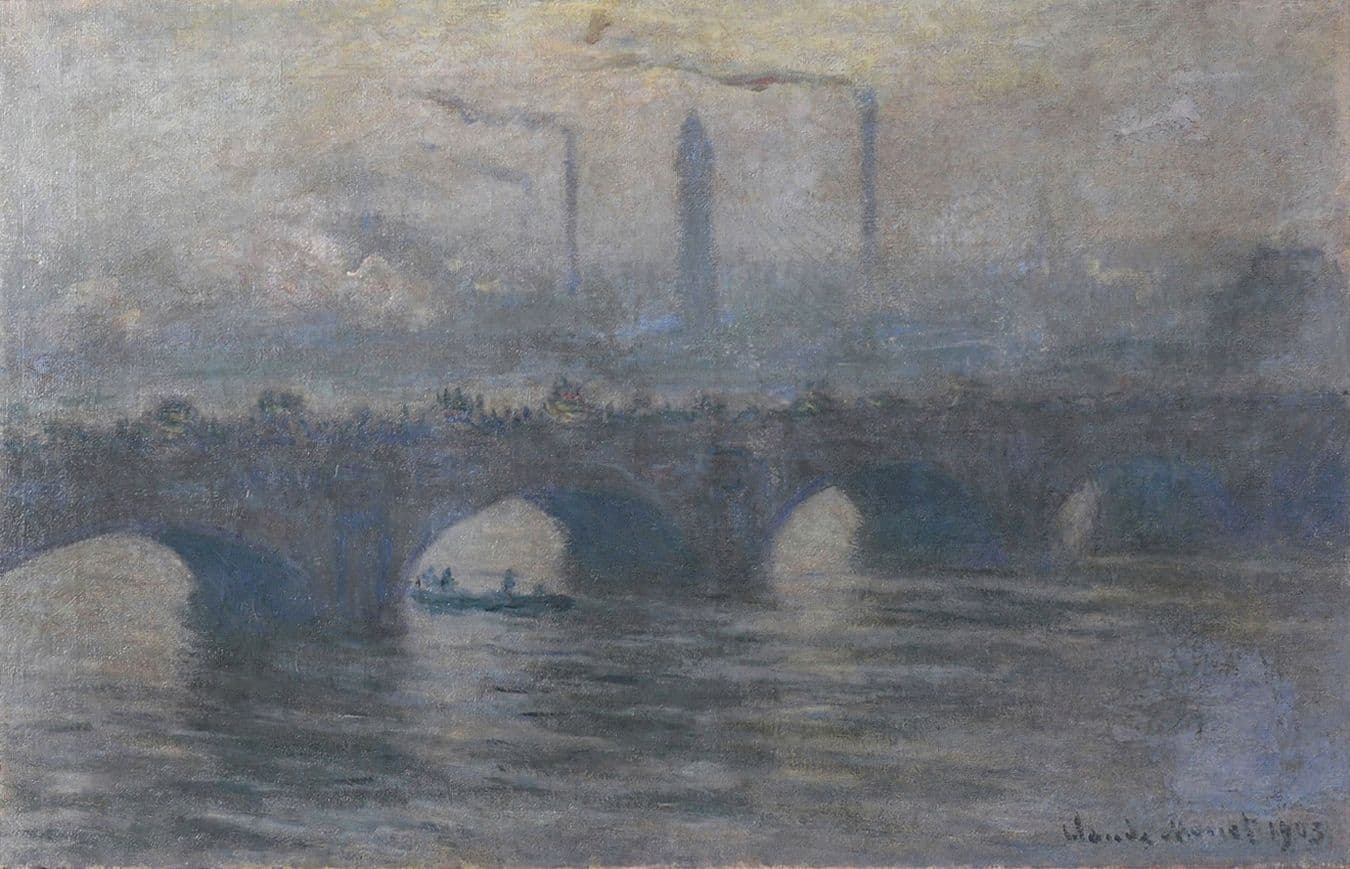
Waterloo Bridge, Gray Weather (Gurlitt Bequest)
Claude Monet · 1903
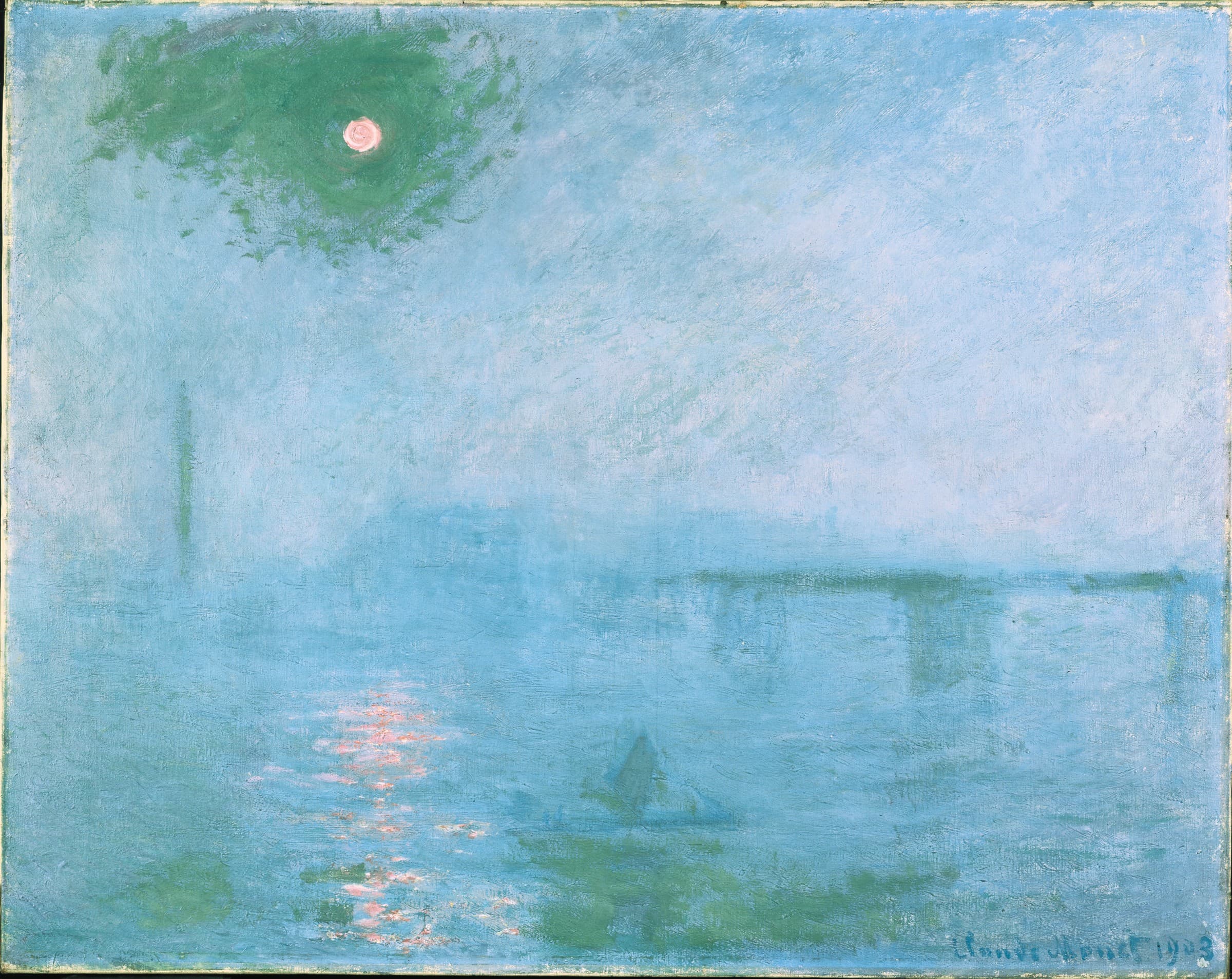
Charing Cross Bridge: Fog on the Thames
Claude Monet · 1903
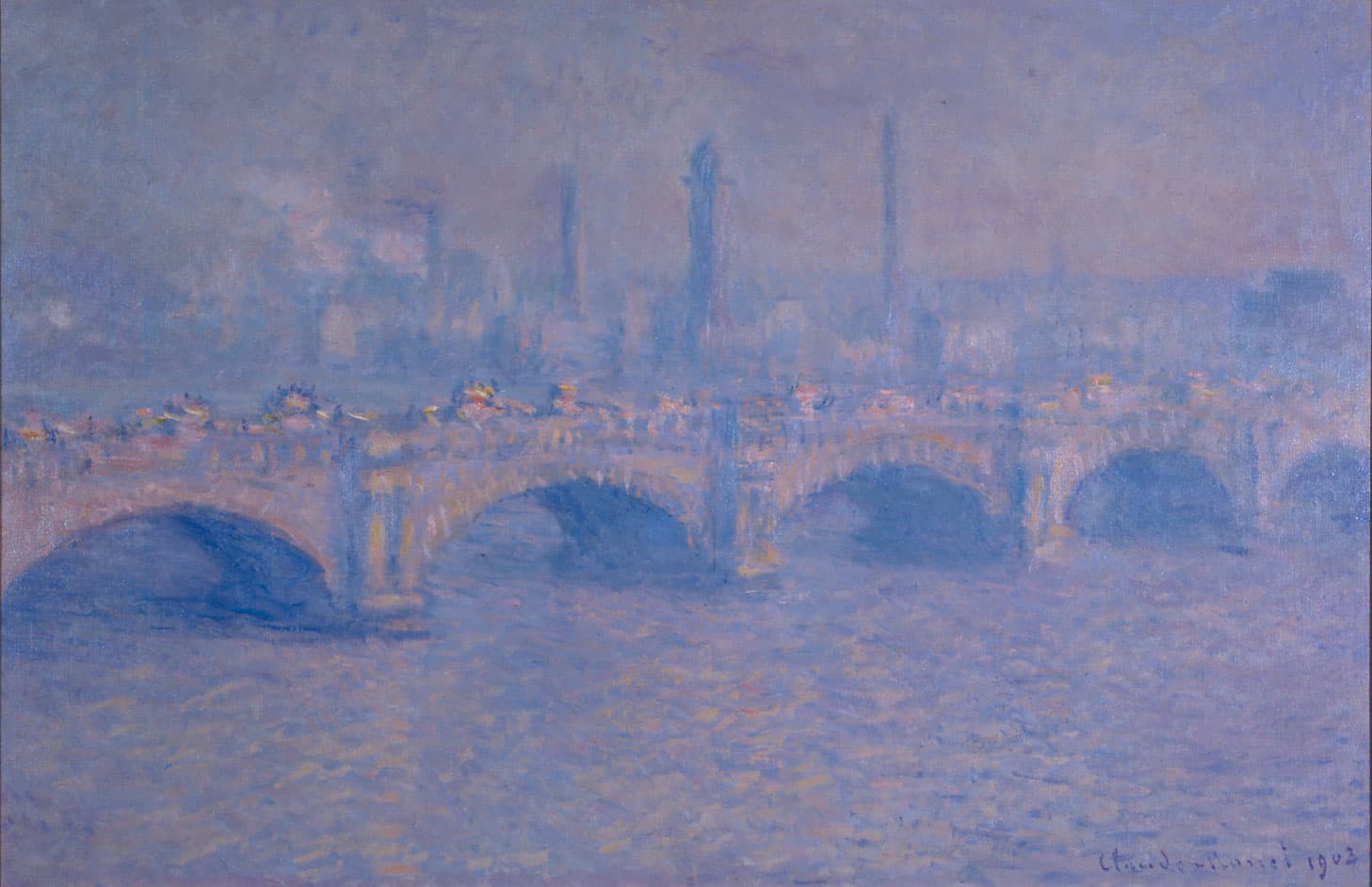
Waterloo Bridge, Sunlight Effect
Claude Monet · 1903
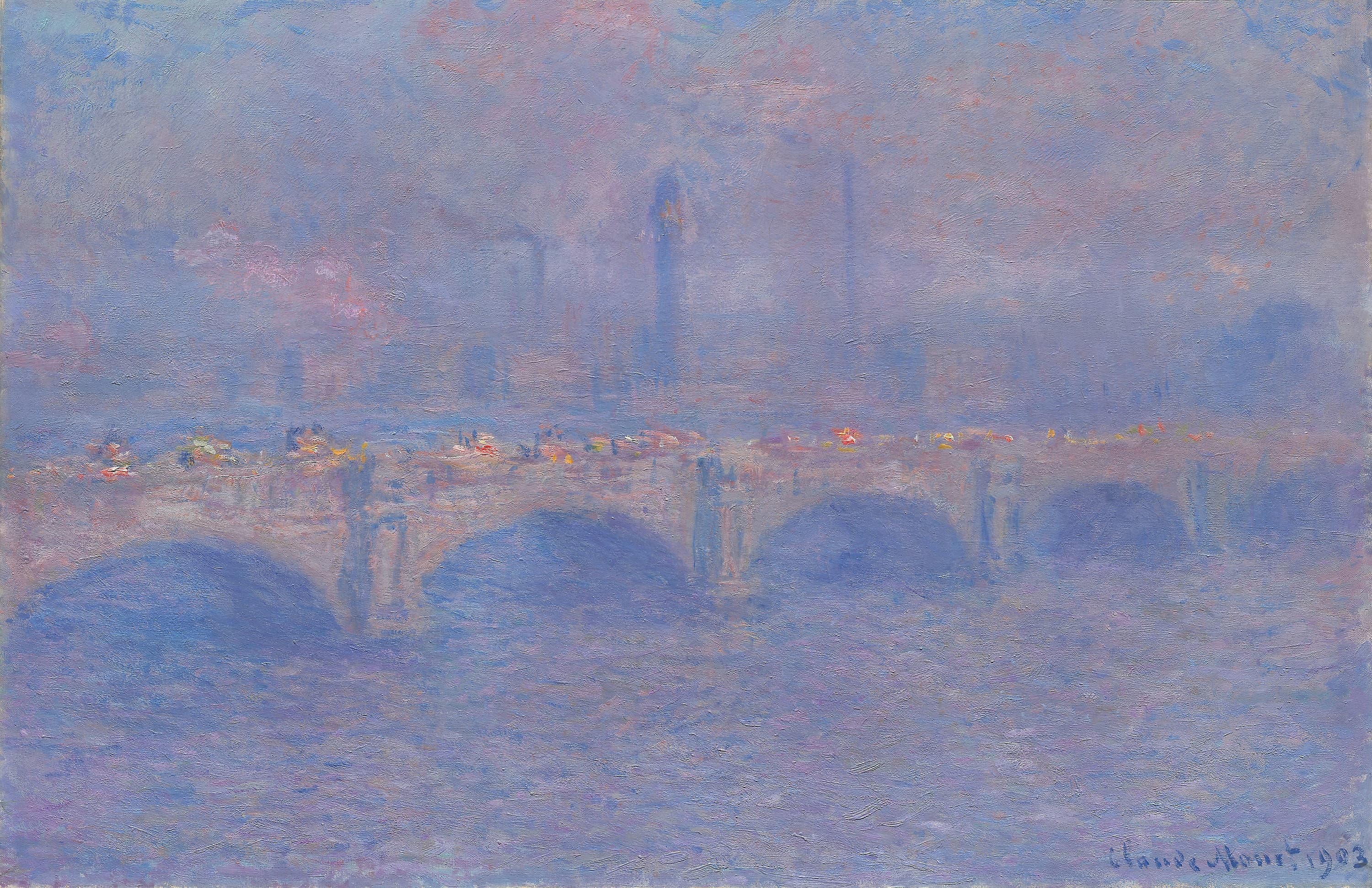
Waterloo Bridge, Sunlight Effect
Claude Monet · 1903
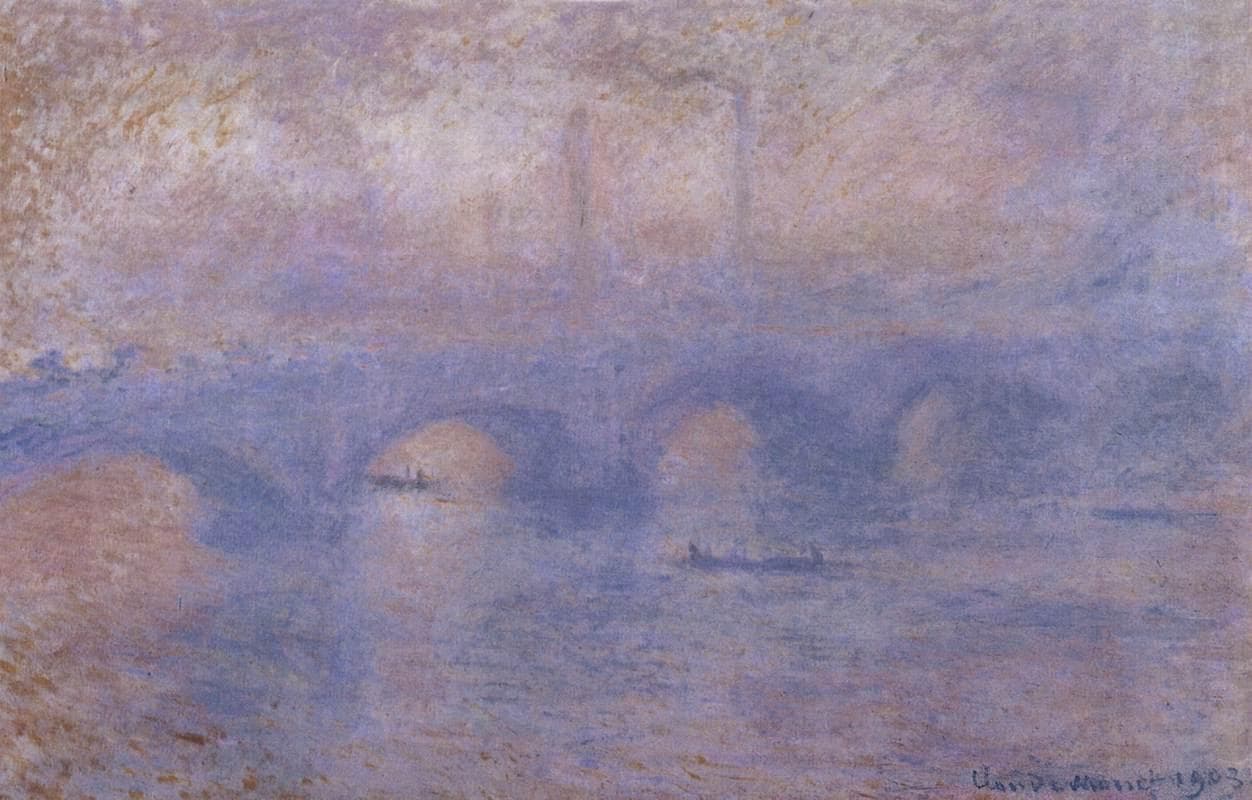
Waterloo Bridge, Effect of Fog
Claude Monet · 1903
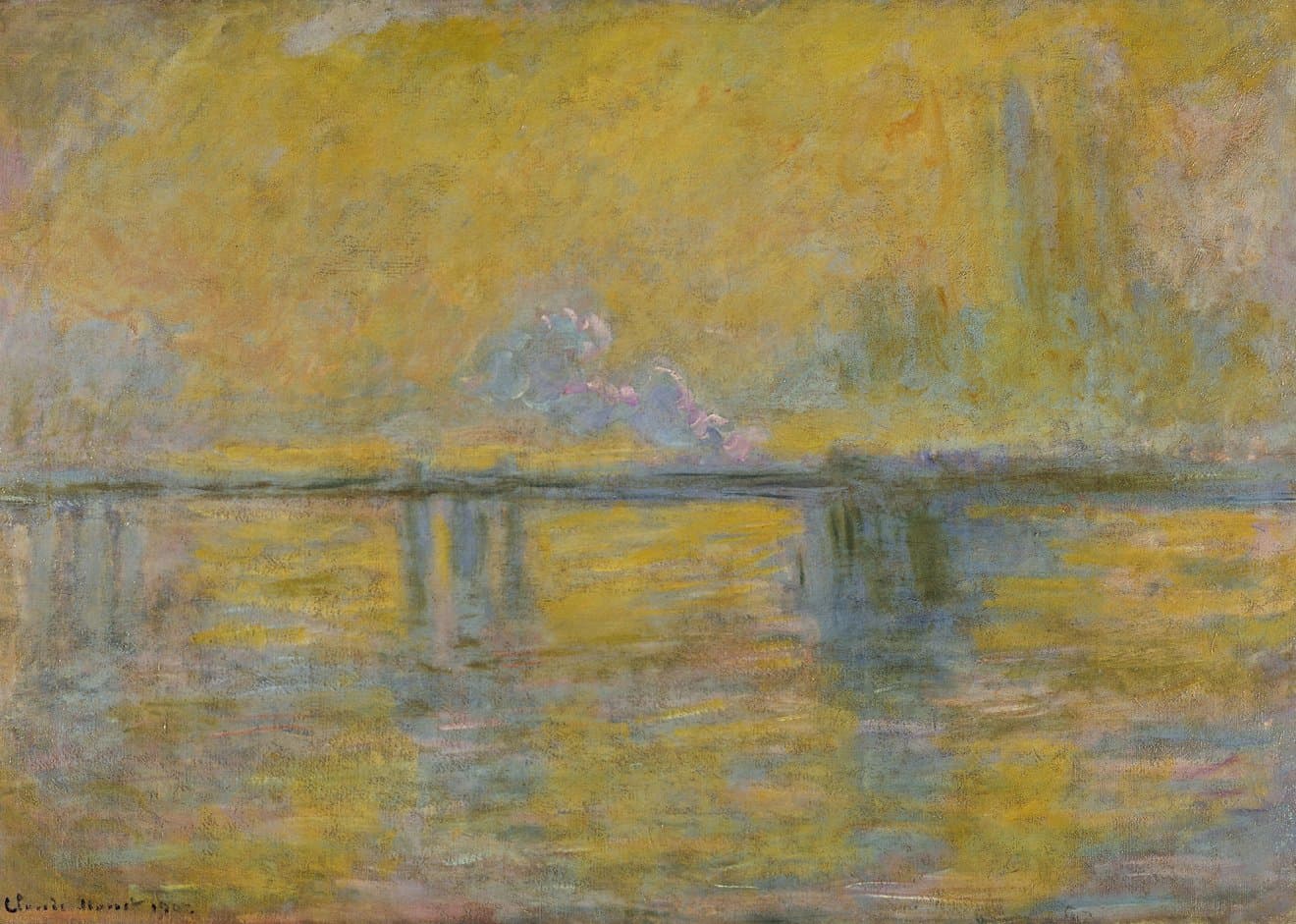
Charing Cross Bridge (Chartwell)
Claude Monet · 1899–1902 (dated 1902)
Also painted in 1903
The same year
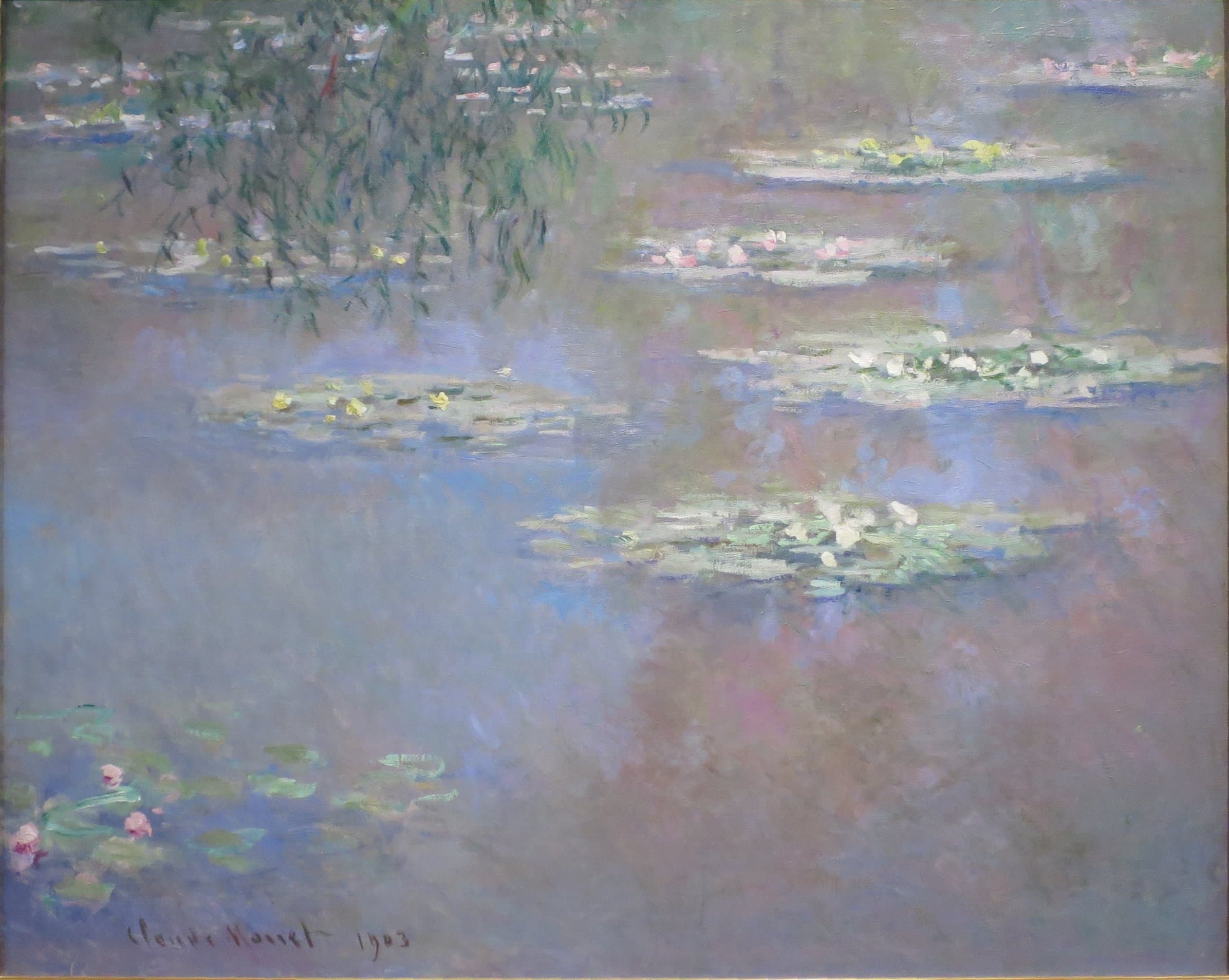
Waterlilies (1903, Dayton Art Institute)
Claude Monet · 1903
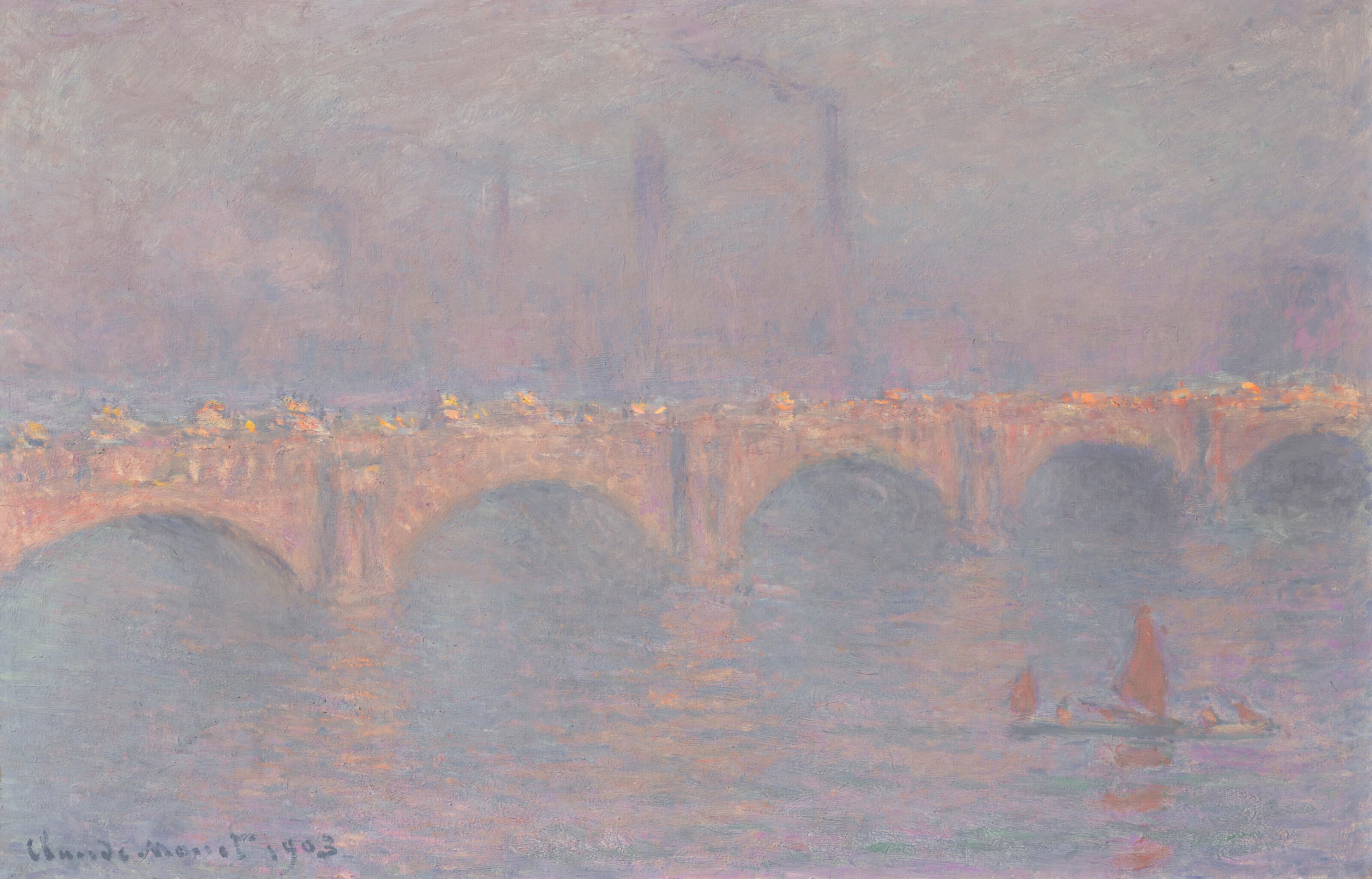
Waterloo Bridge, Hazy Sun
Claude Monet · 1903
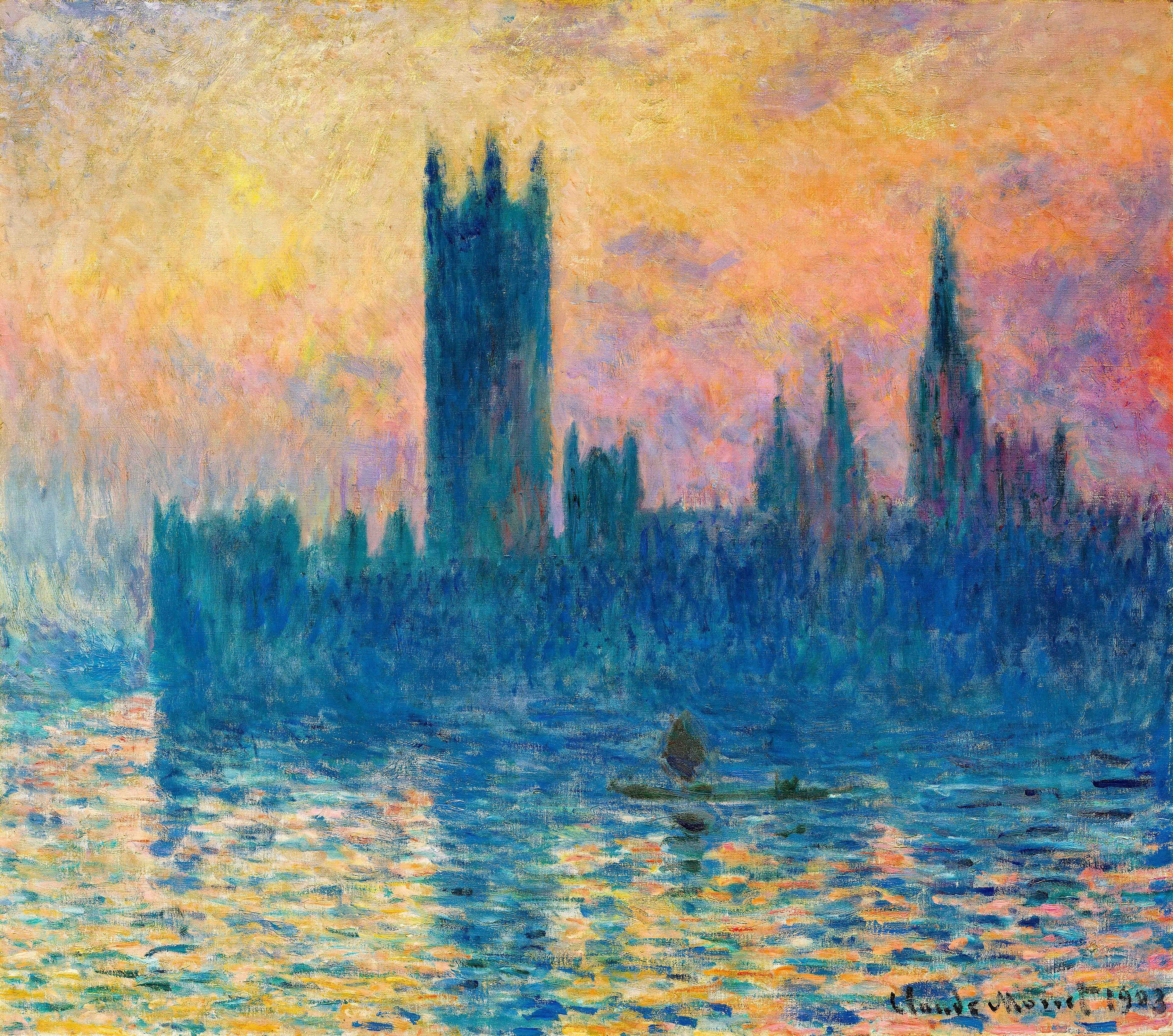
The Houses of Parliament, Sunset
Claude Monet · 1903
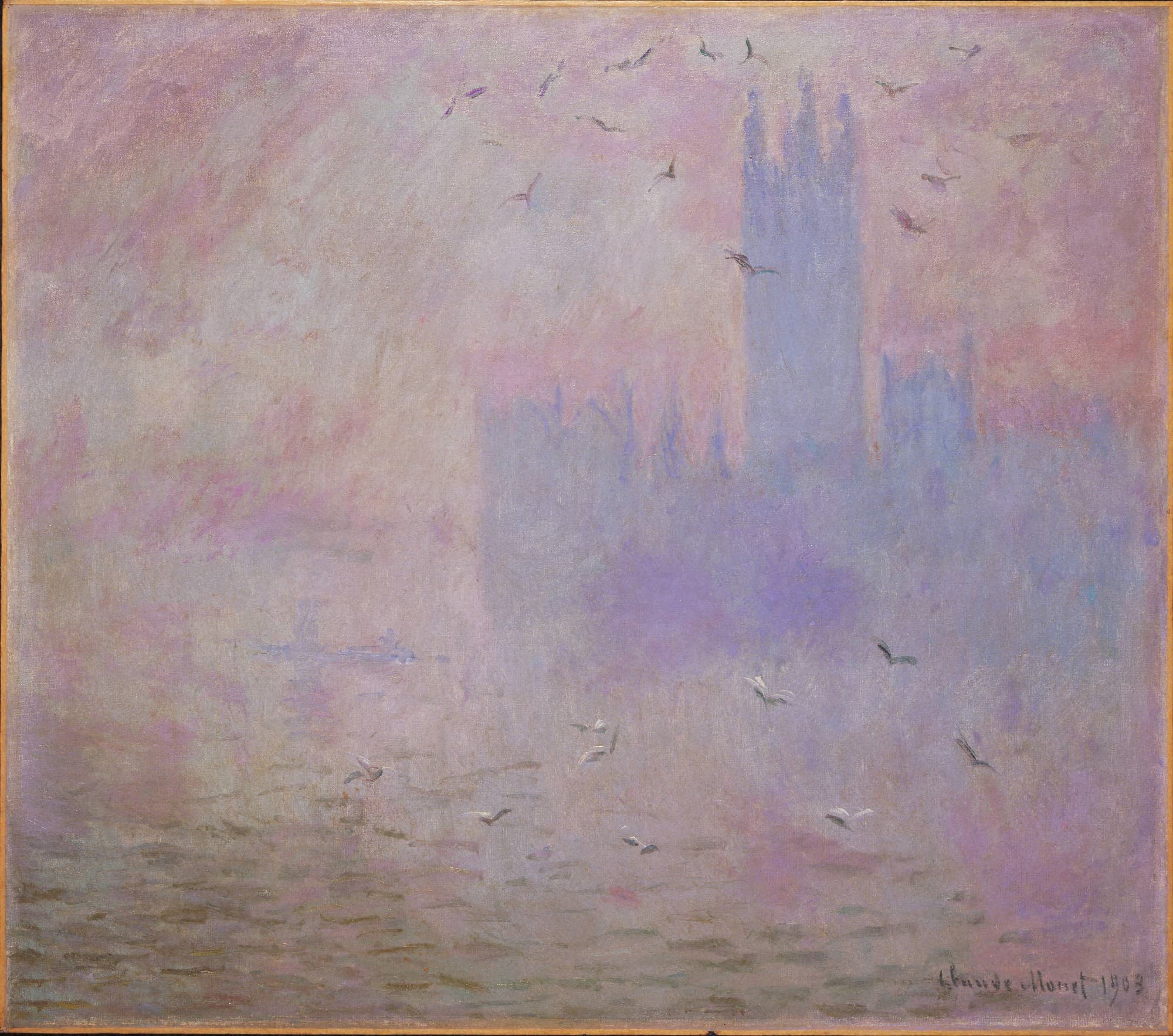
The Houses of Parliament, Seagulls
Claude Monet · 1903
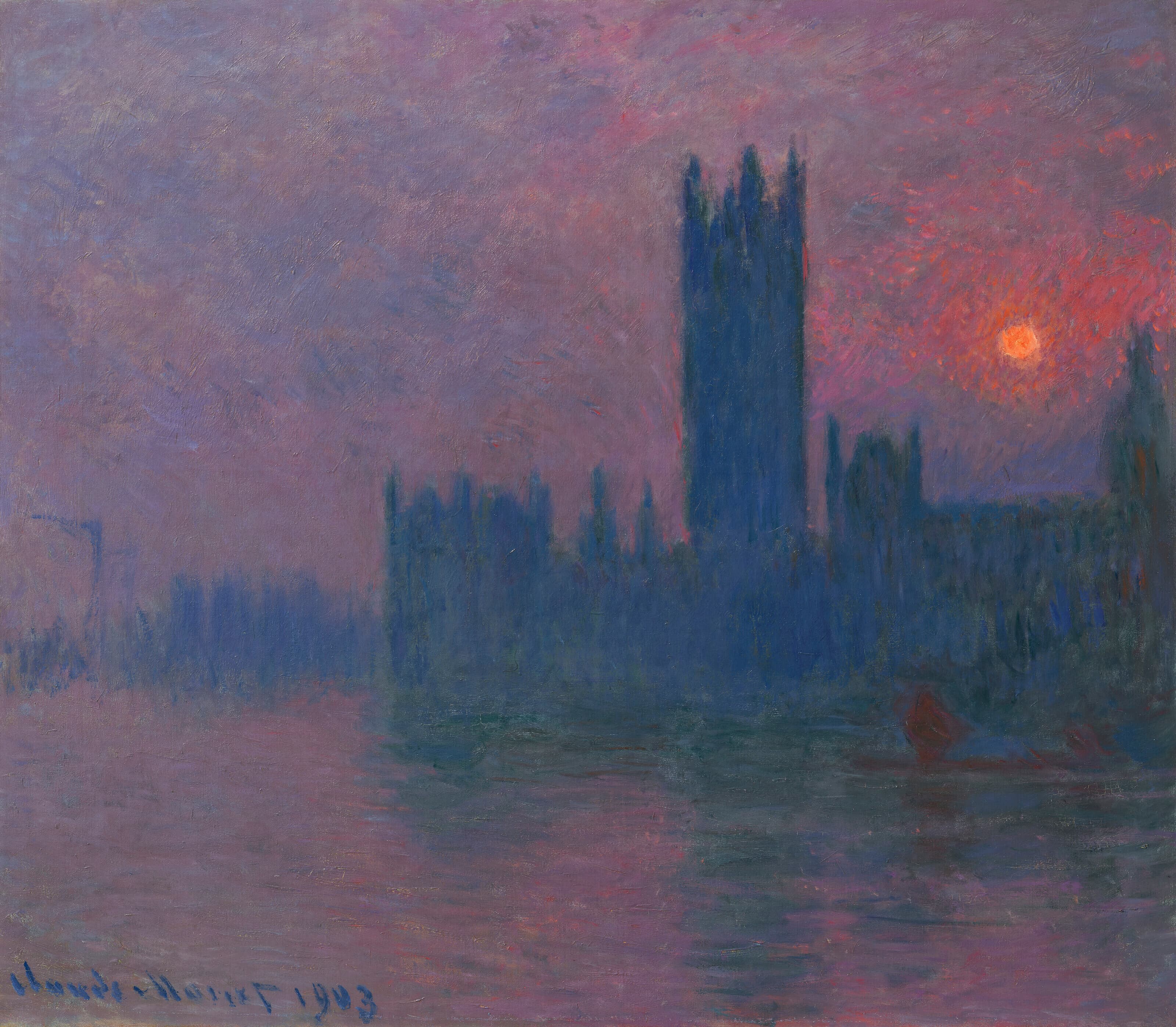
Houses of Parliament, Sunset
Claude Monet · 1903
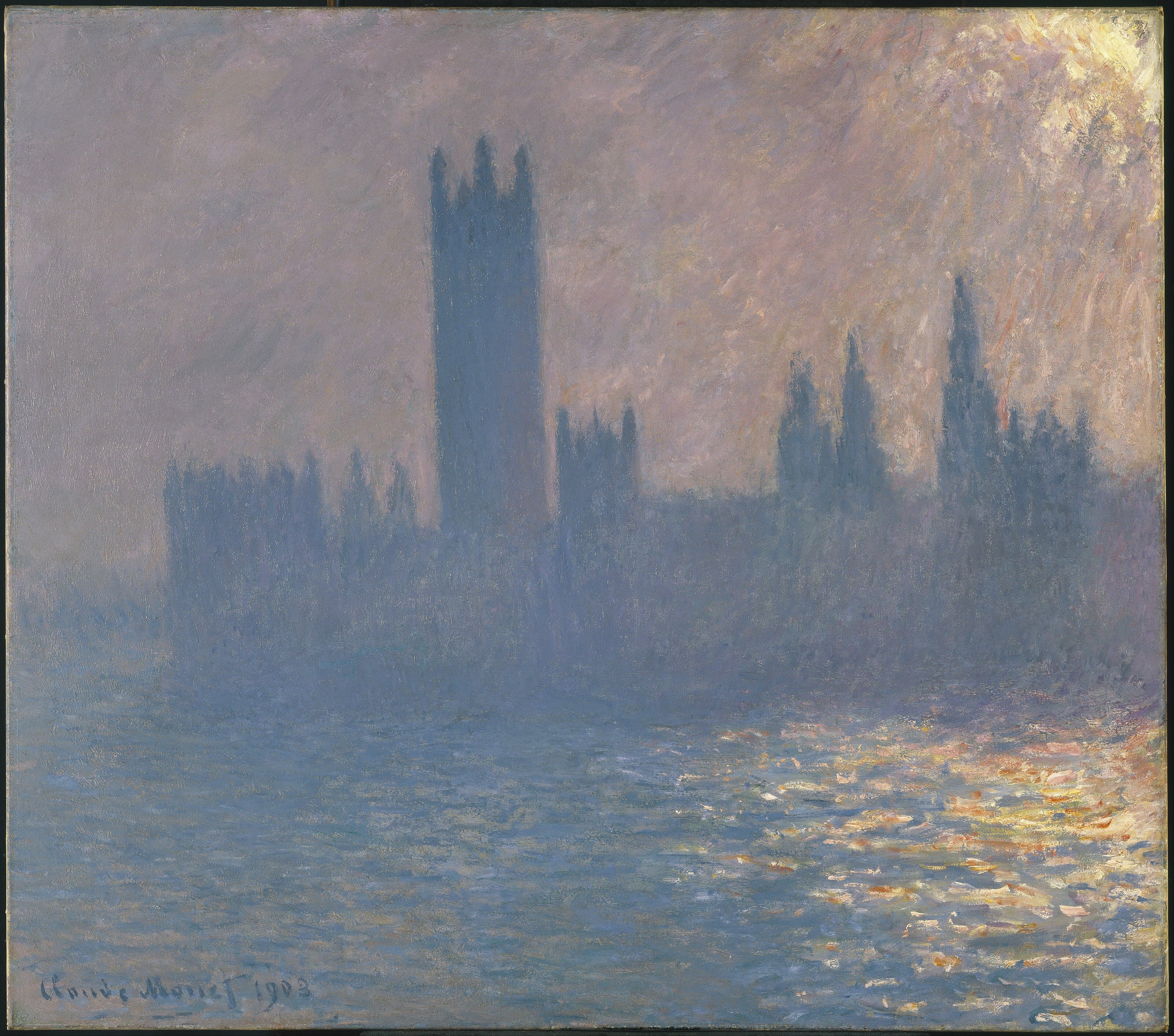
Houses of Parliament, Sunlight Effect
Claude Monet · 1903
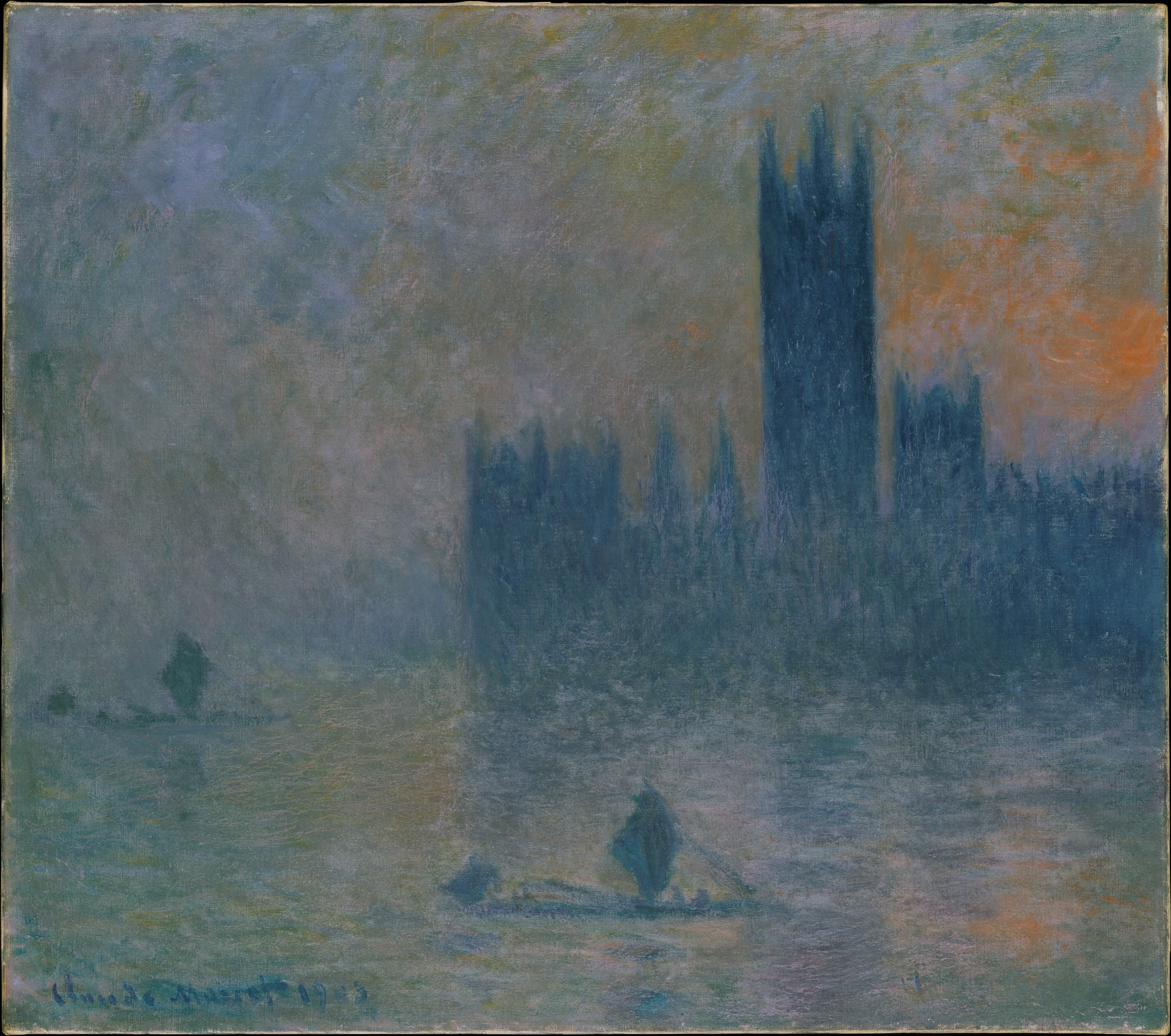
The Houses of Parliament (Effect of Fog)
Claude Monet · 1903–04
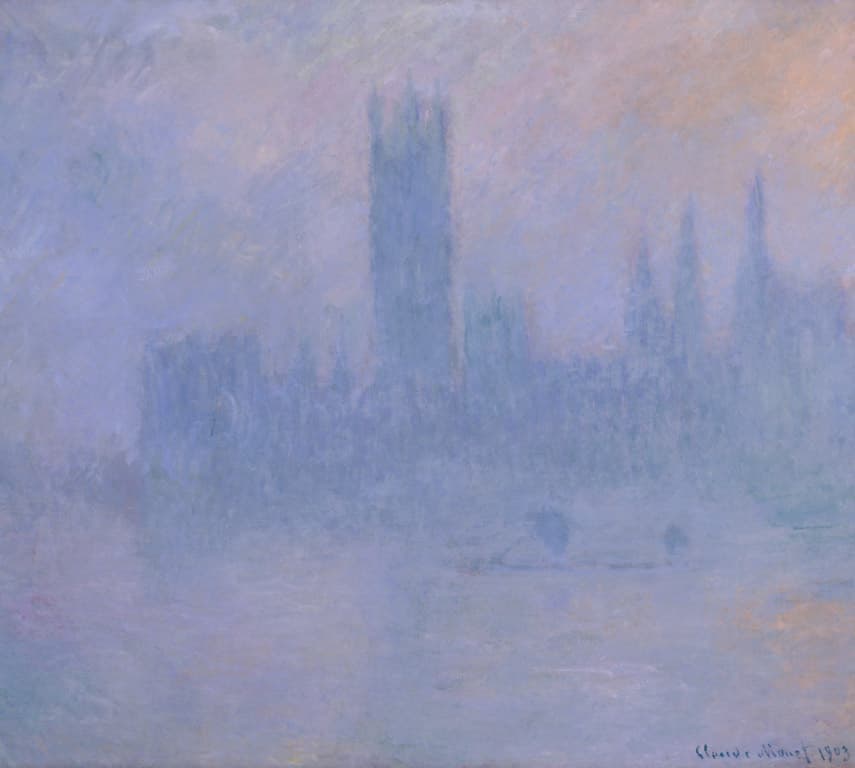
Houses of Parliament, Symphony in Blue
Claude Monet · 1903
Kindred works
You may also study
The Houses of Parliament (Effect of Fog)
Claude Monet · 1903–04
Houses of Parliament, Effect of Fog
Claude Monet · 1904
Houses of Parliament, Symphony in Blue
Claude Monet · 1903
The Houses of Parliament in London
Claude Monet · 1904
The Houses of Parliament, London
Claude Monet · 1904
The Doge's Palace Seen from San Giorgio Maggiore (Zürich)
Claude Monet · 1908
Venice, Palazzo Dario
Claude Monet · 1908
Le Parlement, soleil couchant
Claude Monet · 1902–03