Image: National Gallery of Art; reproduction via Wikimedia Commons · Public domain · via Wikimedia Commons
Waterloo Bridge, London, at Dusk
Claude Monet, 1904
Waterloo Bridge, London, at Dusk is a 1904 painting by Claude Monet in which the bridge almost vanishes into a green-gray evening haze. It is in the National Gallery of Art, Washington, D.C., a gift of Paul and Bunny Mellon.
- Artist
- Claude Monet
- Date
- 1904
- Medium
- Oil on canvas
- Dimensions
- 65.7 × 101.6 cm
- Collection
- National Gallery of Art, Washington, D.C., United States
- Movement
- Impressionism
- Catalogue
- Wildenstein 1564
- The City
- Water & Sea
- Night & Dreams
Waterloo Bridge, London, at Dusk is one of Claude Monet's late views of Waterloo Bridge over the Thames, dated 1904 and catalogued by Wildenstein as no. 1564. It is in the National Gallery of Art in Washington, D.C., part of the Collection of Mr. and Mrs. Paul Mellon, given in 1983. Of all the Waterloo Bridge pictures it is among the closest to pure atmosphere: at first glance the bridge is hard to see at all.
What you're looking at
The canvas is filled with one soft, cool color, a pale sage green mixed with gray, lilac and milky white. Only after a moment does the structure emerge. Across the middle runs the bridge, a faint violet band, its four or five arches marked by rounded shapes of slightly lighter green where the dying light comes through. Above it the south bank is a few vertical smudges: two thin chimneys, the right one a darker gray-green, and a tall shape at the left that could be a tower.
A few tiny touches of orange and red sit along the parapet: lamps being lit, or the lights of traffic as evening falls. They are the only warm notes in the picture. The river below is painted in the same green-gray as the sky, with faint horizontal strokes and pale reflections of the arches. The signature, without a date, is at lower right.
Where and when it was painted
Monet painted Waterloo Bridge from his room at the Savoy Hotel during stays in London in 1899, 1900 and 1901, watching it through fog, smoke, sun and dusk. The canvases came back to Giverny unfinished, and he spent the next years bringing them to completion, often away from the motif, with the series as a whole in mind. The 1904 date places this picture among the last he finished, around the time Paul Durand-Ruel exhibited the London views in Paris. See the Waterloo Bridge series and Monet in London.
How it was painted
The paint is thin and evenly distributed, in small overlapping strokes that keep the surface uniform. Monet avoids almost all contrast of light and dark; the arches are distinguished from the stone only by a slight shift in temperature, from violet to green. This near-monochrome treatment is one of the most radical in the London series and anticipates the enveloping, single-key surfaces of his later Water Lilies.
How this version differs
The National Gallery of Art owns three Waterloo Bridge paintings, and they make a striking set of contrasts. In Waterloo Bridge, Gray Day the bridge is solid and the palette cold and gray. In Waterloo Bridge, London, at Sunset the stone glows pink and apricot. The dusk picture removes almost everything but the haze. It can also be compared with Waterloo Bridge, Effect of Fog in the Hermitage, where the bridge is likewise dissolved but in violet rather than green.
Monet and the London fog
Monet said more than once that it was the fog that drew him back to London. In later conversation he put it bluntly: "Without the fog, London would not be a beautiful city." His letters from the Savoy to Alice Hoschedé complain as often about clear days as about bad ones, because sun and wind blew away the haze he needed. The dusk picture is the purest expression of that taste. Here the fog is not a veil over the subject; it is the subject, and the bridge is only the thing that gives it shape.
Ownership and where to see it
According to the National Gallery of Art, Paul Mellon and his wife Rachel "Bunny" Lambert Mellon bought the painting in November 1960 and gave it to the museum in 1983 (accession 1983.1.27). It is shown in the French galleries of the West Building with other Monet canvases. For other collections, see where to see Monet's paintings.
Questions & answers
Where is Waterloo Bridge, London, at Dusk?
It is in the National Gallery of Art in Washington, D.C. (accession 1983.1.27), part of the Collection of Mr. and Mrs. Paul Mellon, who bought it in 1960 and gave it to the museum in 1983.
When was it painted?
Monet began it from the Savoy Hotel in London between 1899 and 1901 and finished it at Giverny. The museum dates it 1904, making it one of the last Waterloo Bridge pictures he completed.
What does Waterloo Bridge at Dusk show?
It shows Waterloo Bridge almost dissolved into a green-gray evening haze, with only the shapes of its arches, two chimneys, and a few points of orange light along the parapet as the lamps come on.
How many Waterloo Bridge paintings does the National Gallery of Art have?
Three: Waterloo Bridge, Gray Day (1903), Waterloo Bridge, London, at Dusk (1904) and Waterloo Bridge, London, at Sunset (1904). Together they show the same view in very different light.
More by the artist
Claude Monet
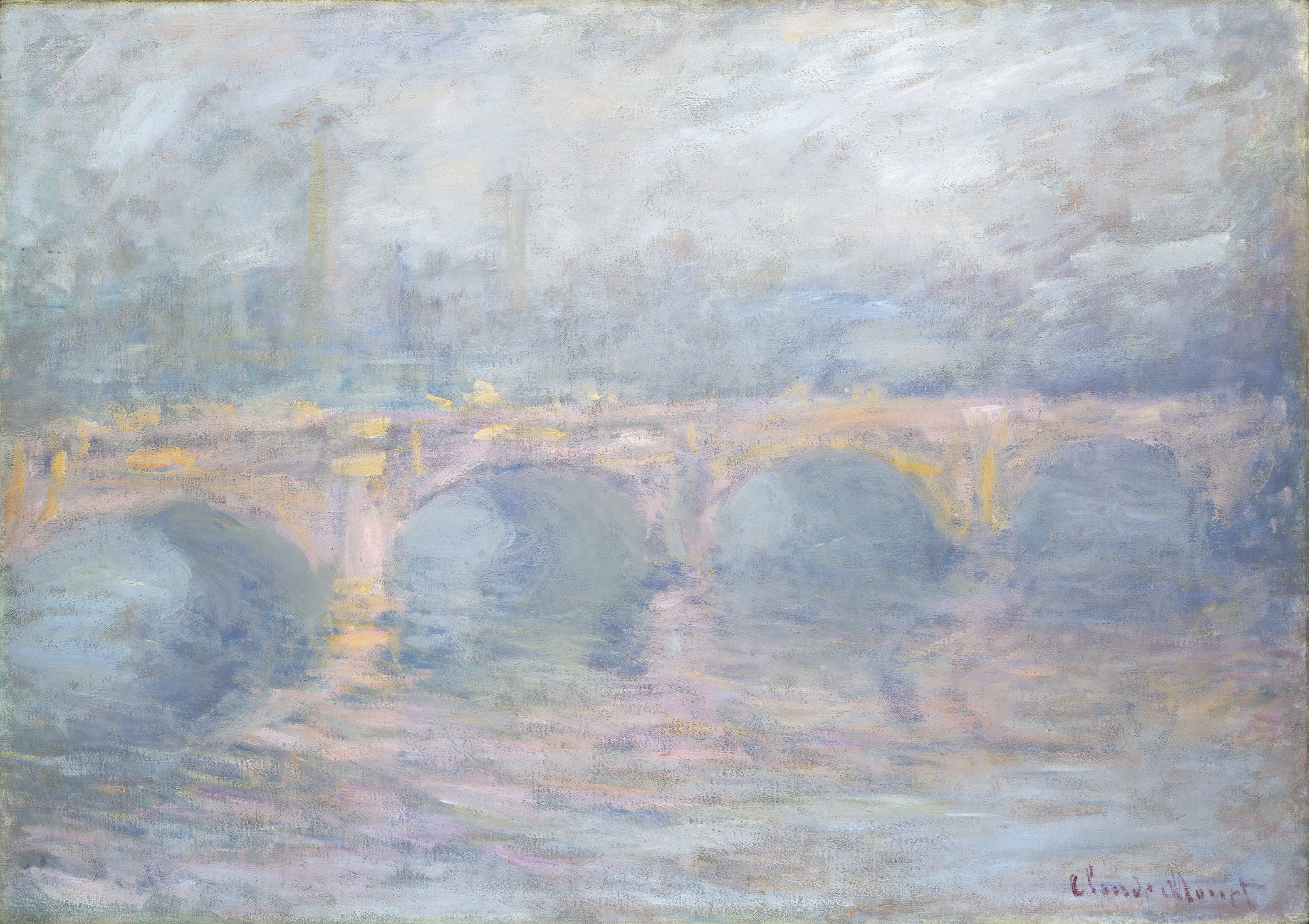
Waterloo Bridge, London, at Sunset
Claude Monet · 1904
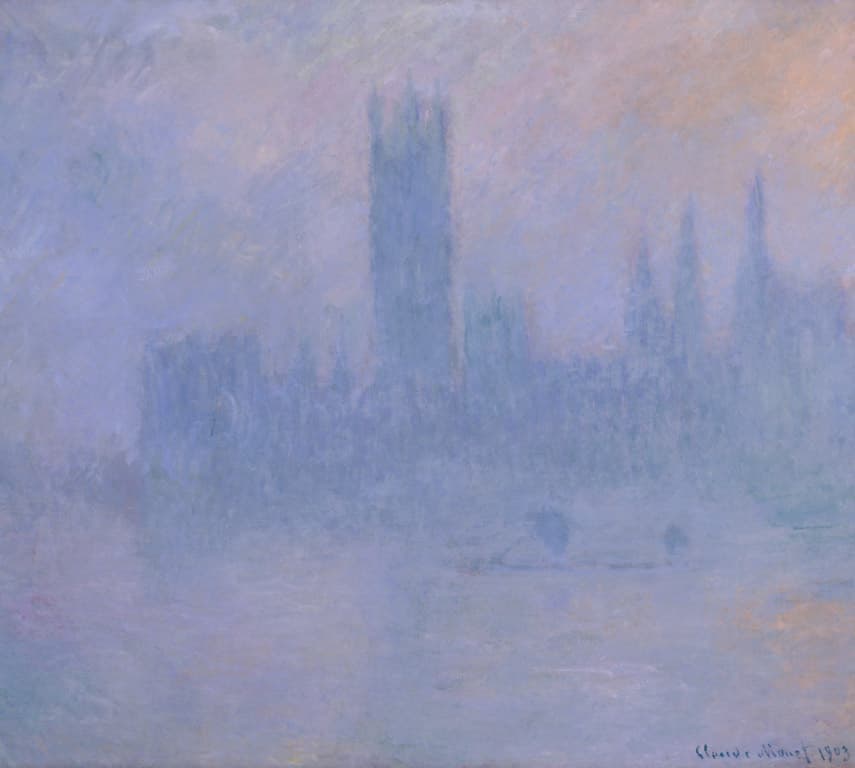
Houses of Parliament, Symphony in Blue
Claude Monet · 1903
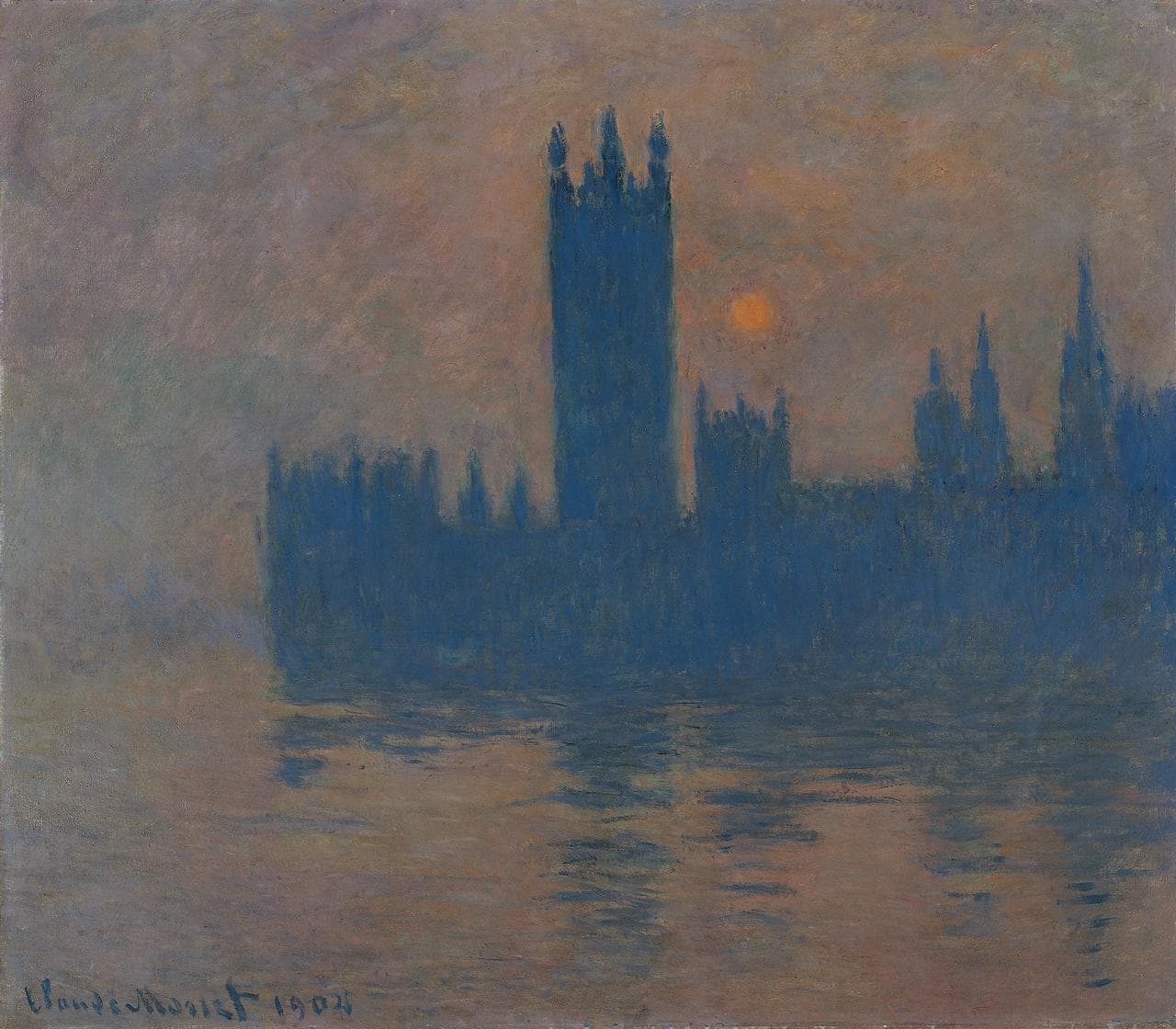
Le Parlement, coucher de soleil
Claude Monet · 1904
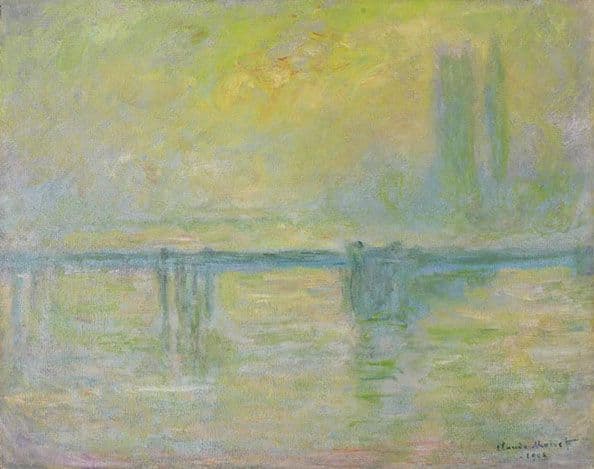
Charing Cross Bridge, Fog
Claude Monet · 1902–03
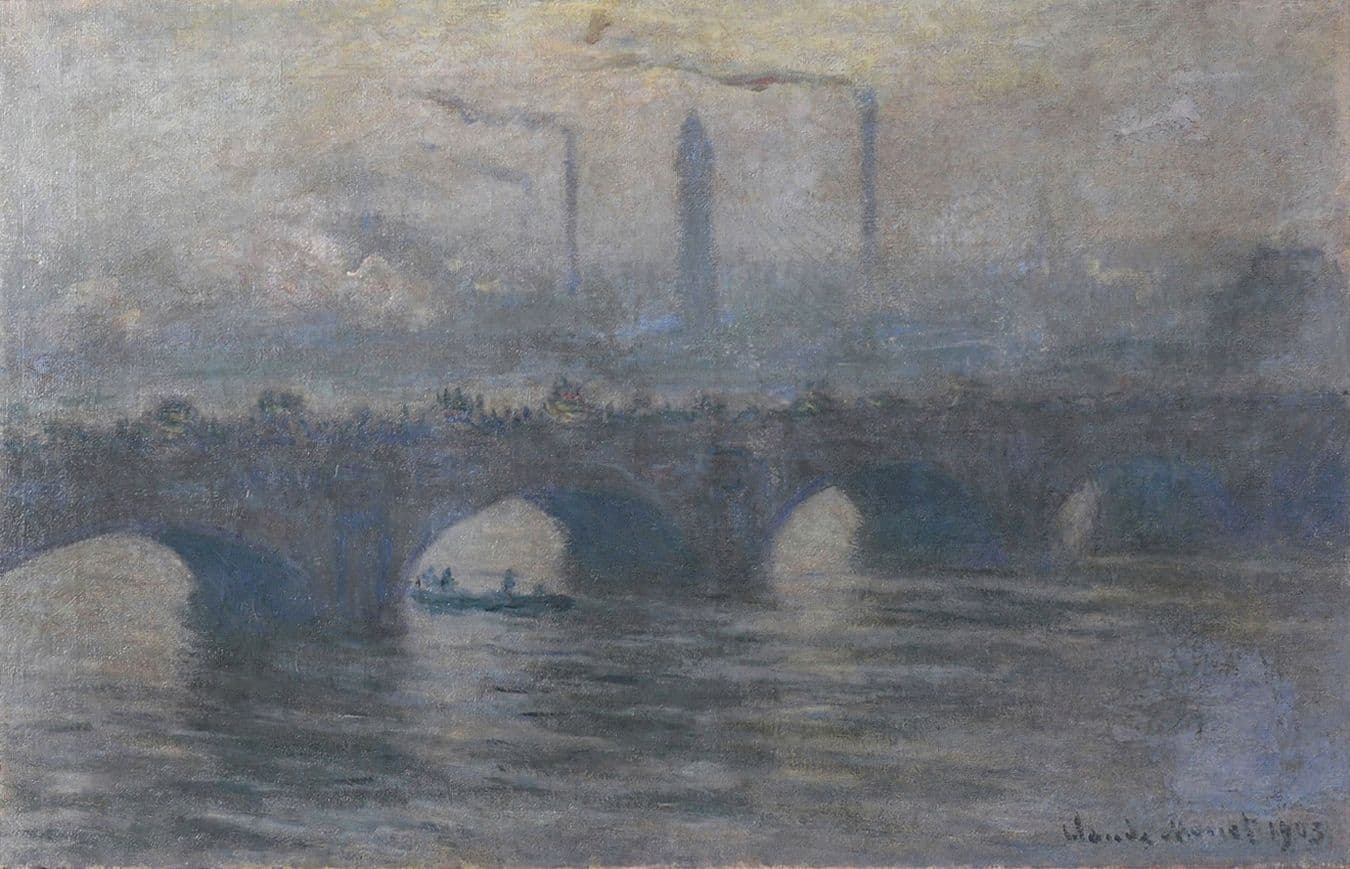
Waterloo Bridge, Gray Weather (Gurlitt Bequest)
Claude Monet · 1903
Le pont de Waterloo
Claude Monet · 1903
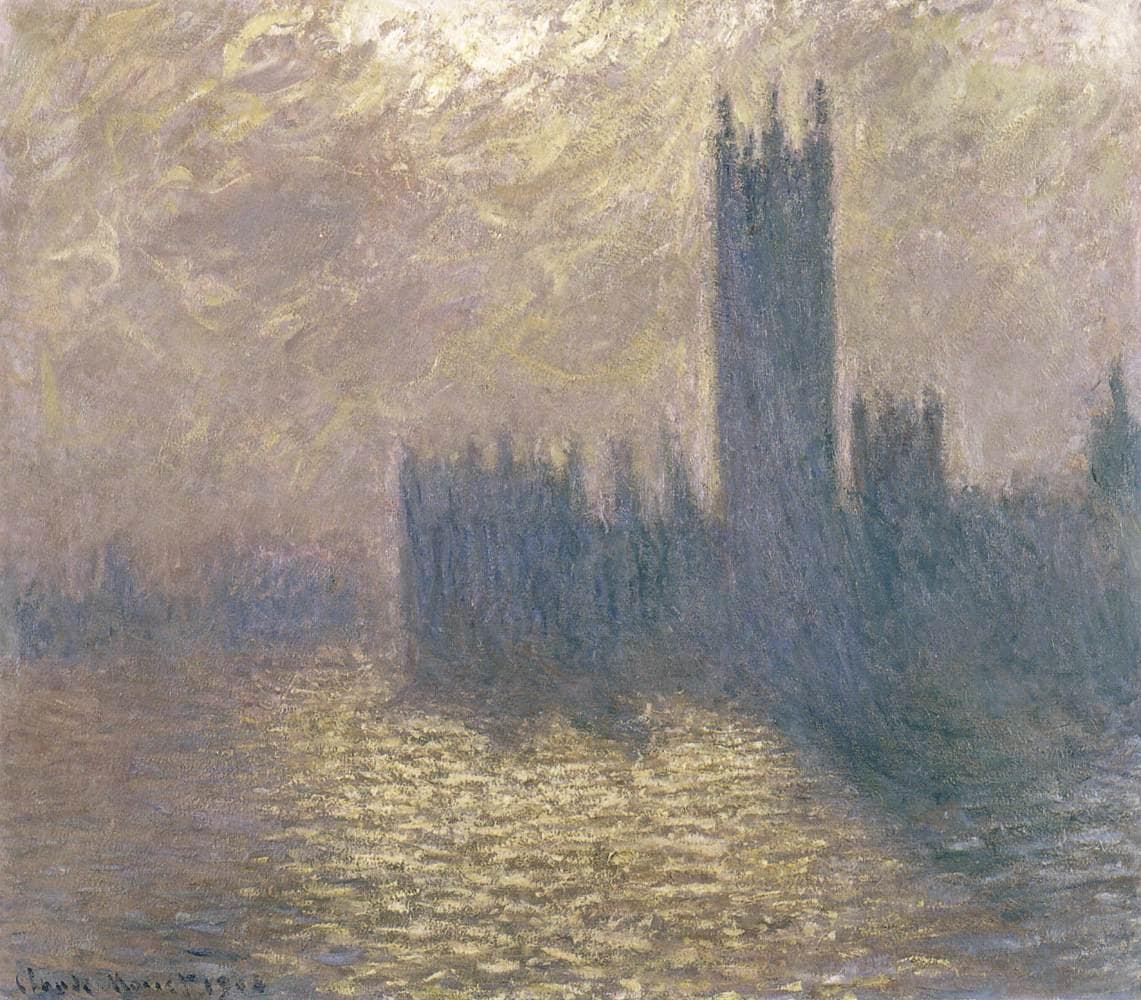
The Houses of Parliament, London
Claude Monet · 1904
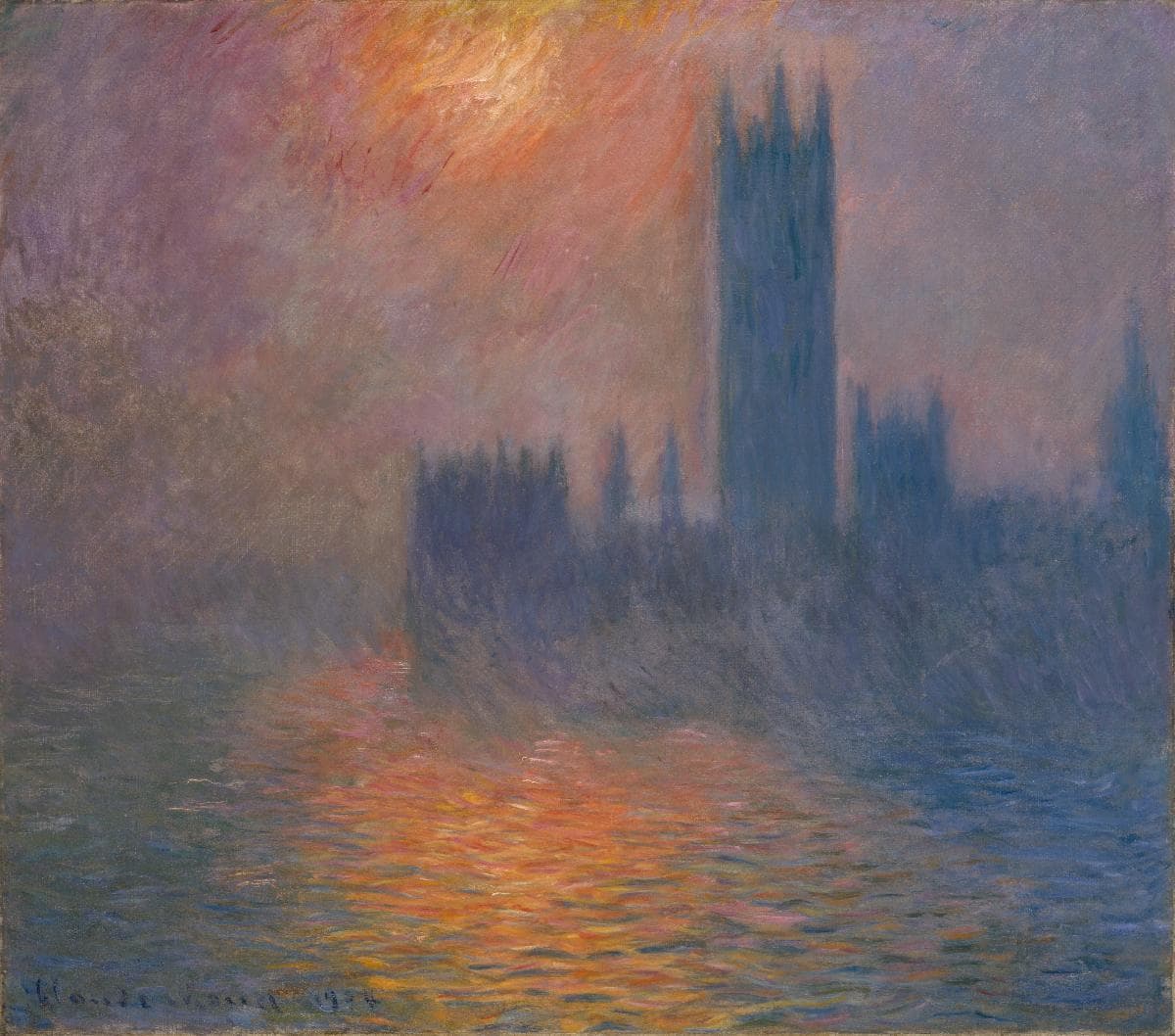
Houses of Parliament, Sunset
Claude Monet · 1904
Also painted in 1904
The same year
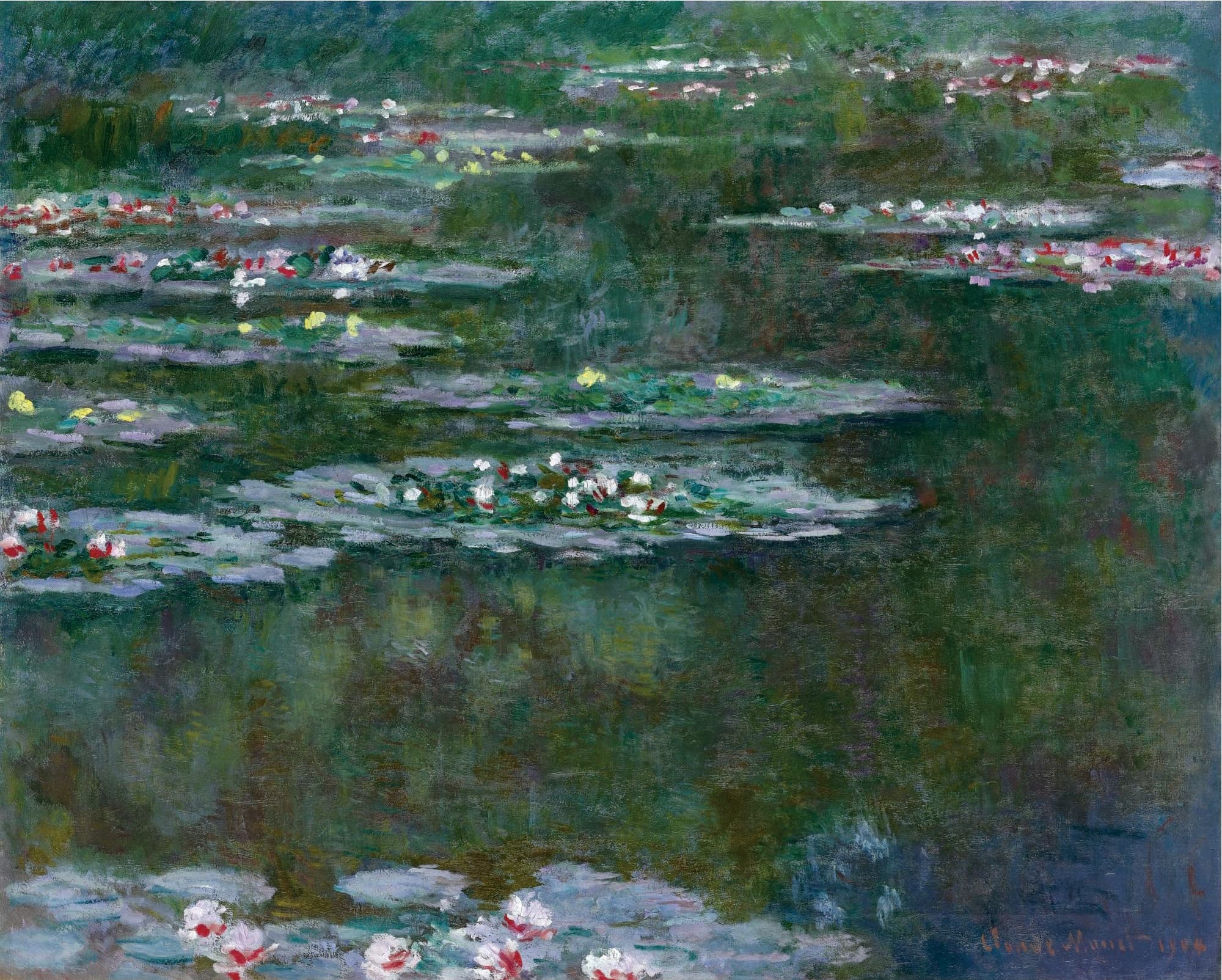
Water Lilies (1904)
Claude Monet · 1904
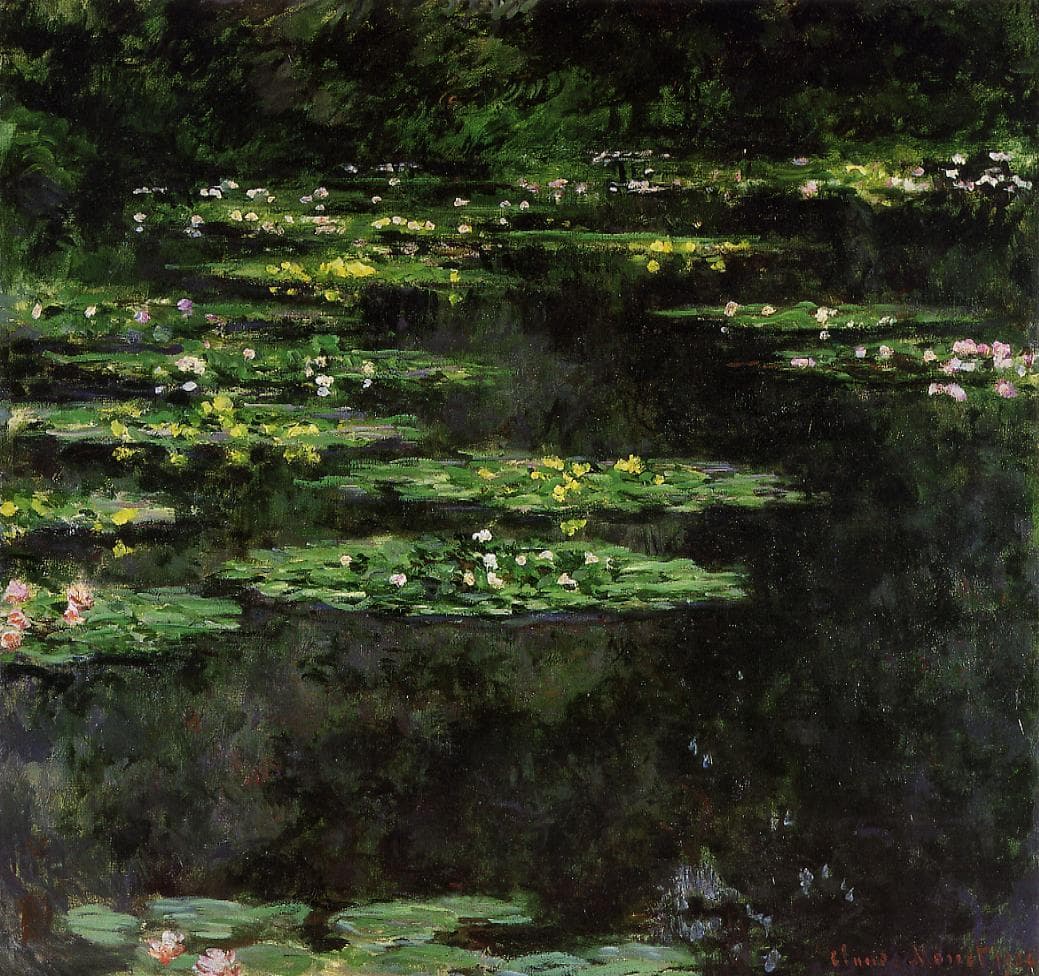
Water Lilies (1904, MuMa Le Havre)
Claude Monet · 1904
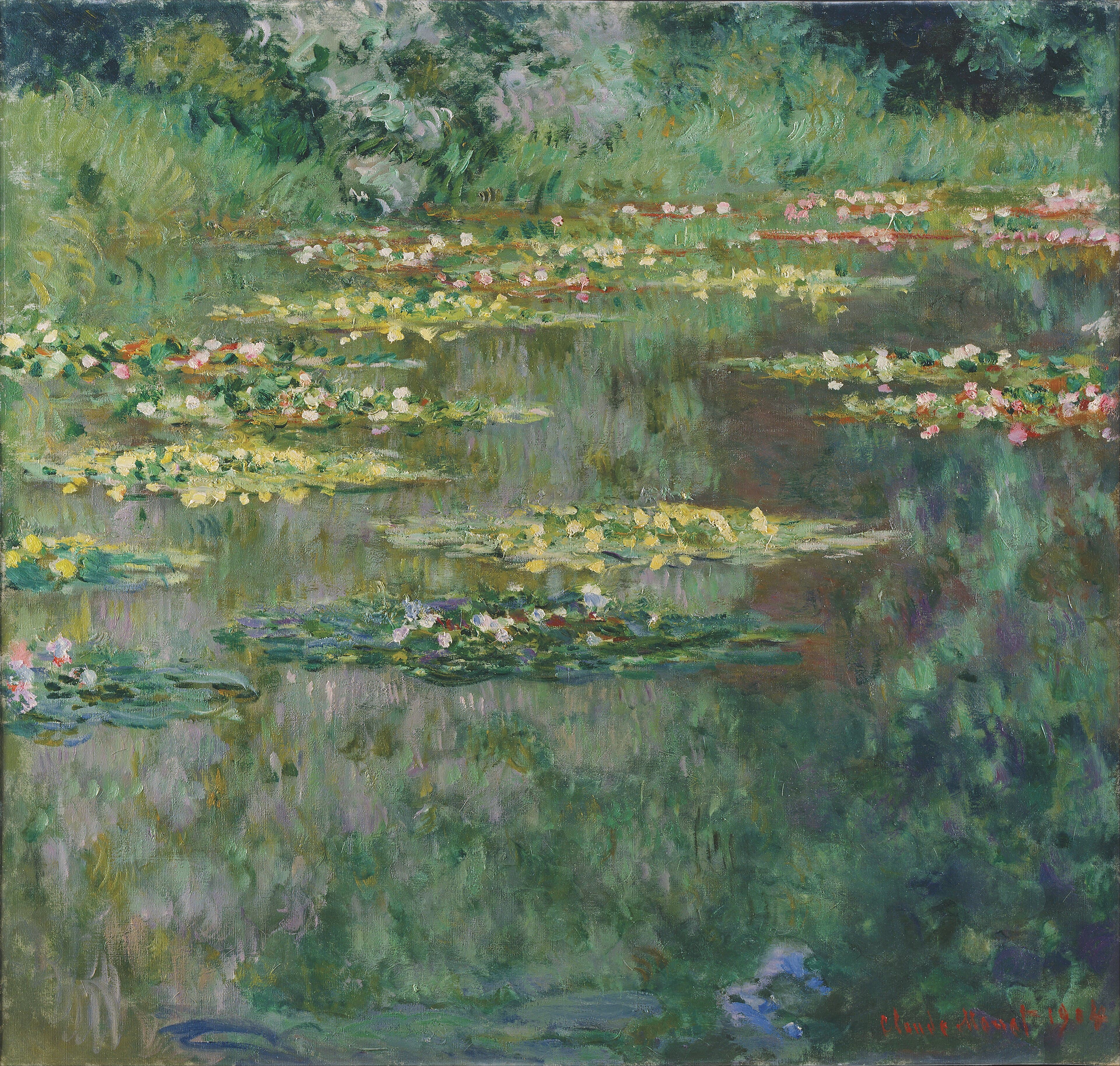
Le Bassin des Nymphéas (Denver)
Claude Monet · 1904
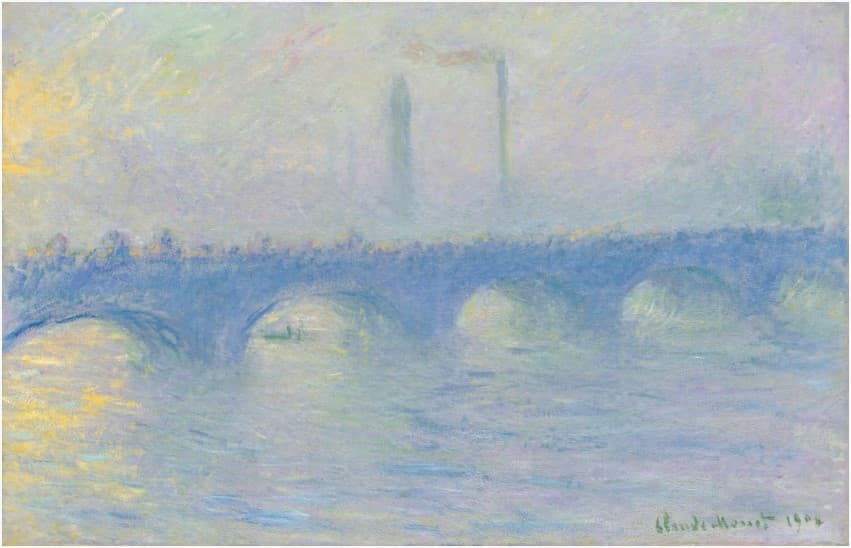
Waterloo Bridge, effet de brume
Claude Monet · 1904
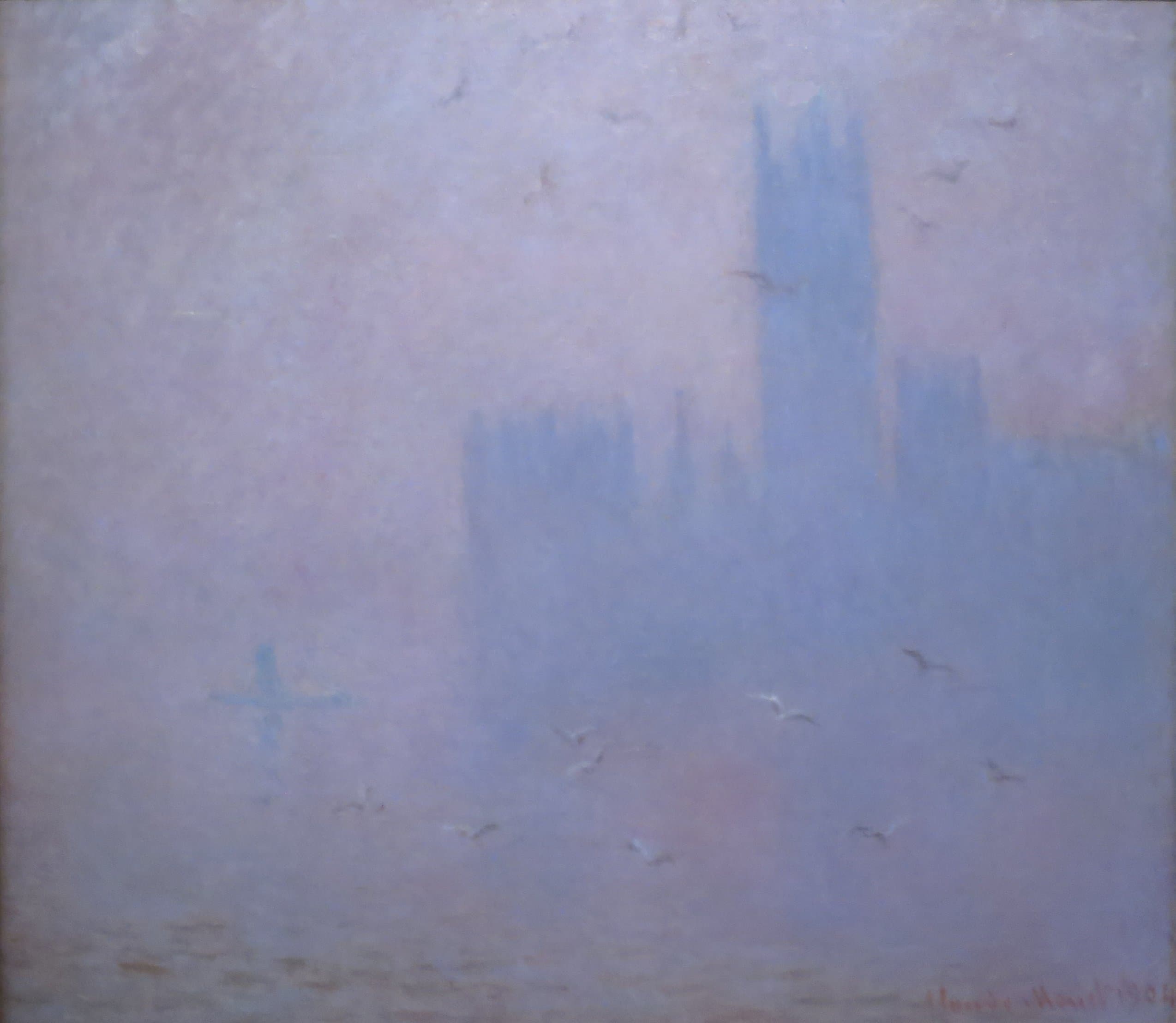
Seagulls, the River Thames and the Houses of Parliament
Claude Monet · 1904
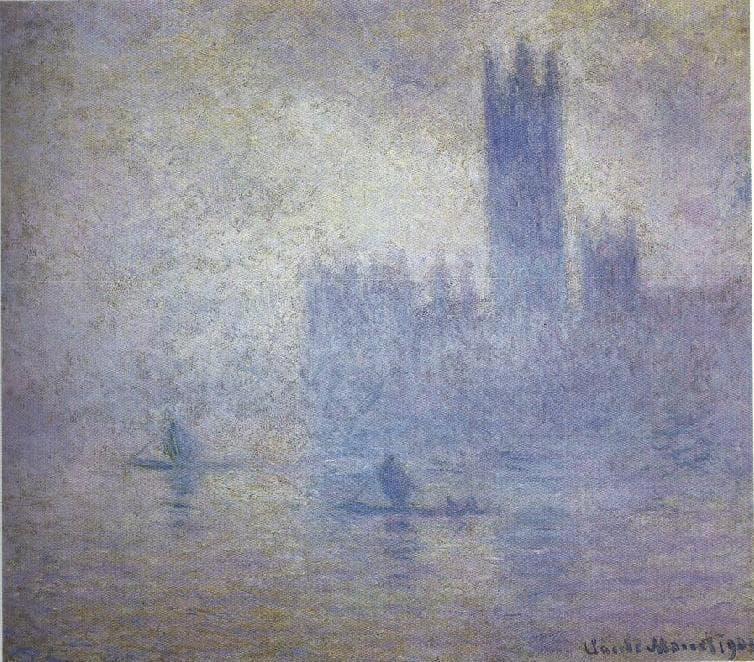
Houses of Parliament, Effect of Fog
Claude Monet · 1904
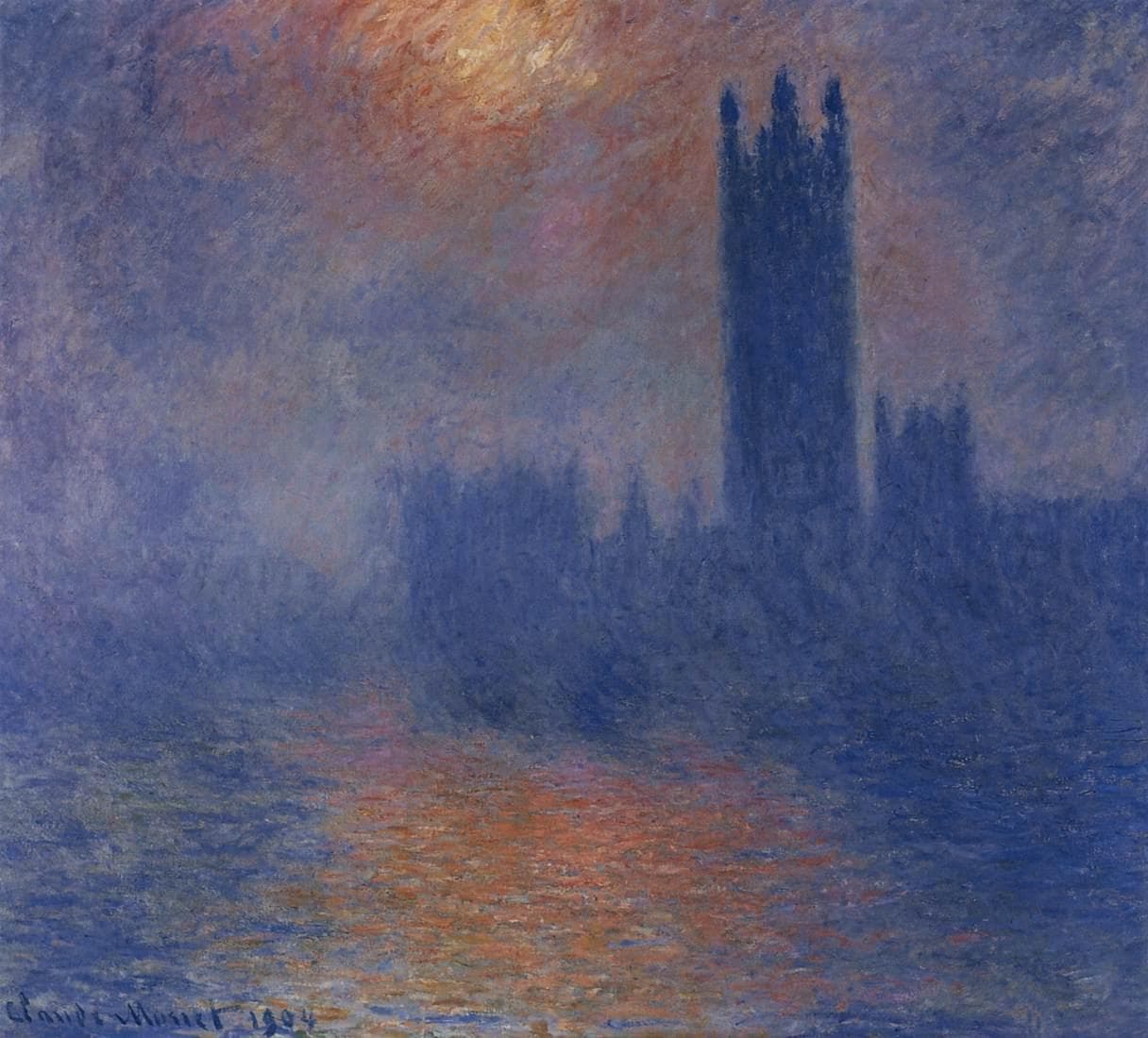
The Houses of Parliament in London
Claude Monet · 1904
Kindred works
You may also study
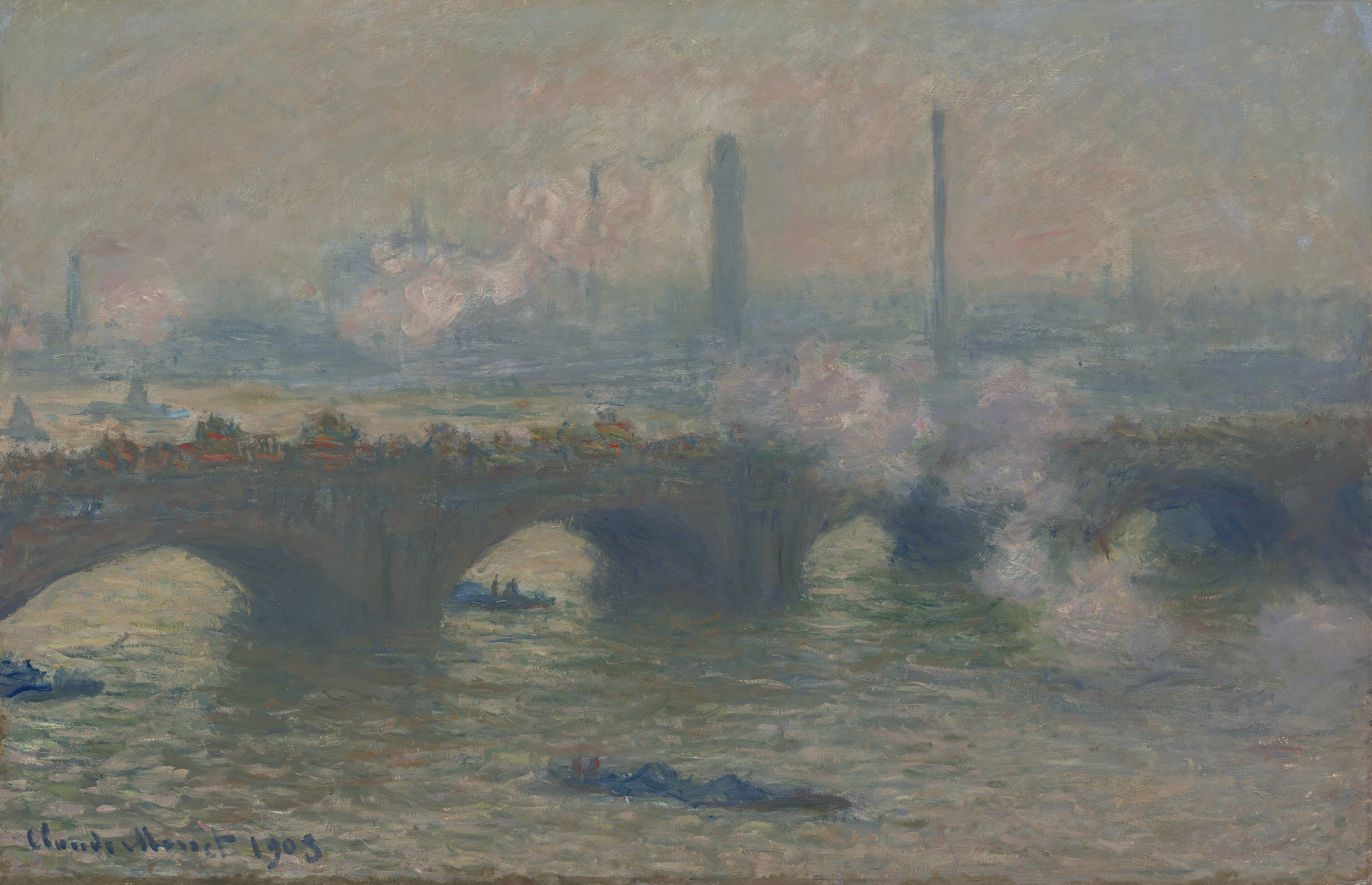
Waterloo Bridge, Gray Day
Claude Monet · 1903
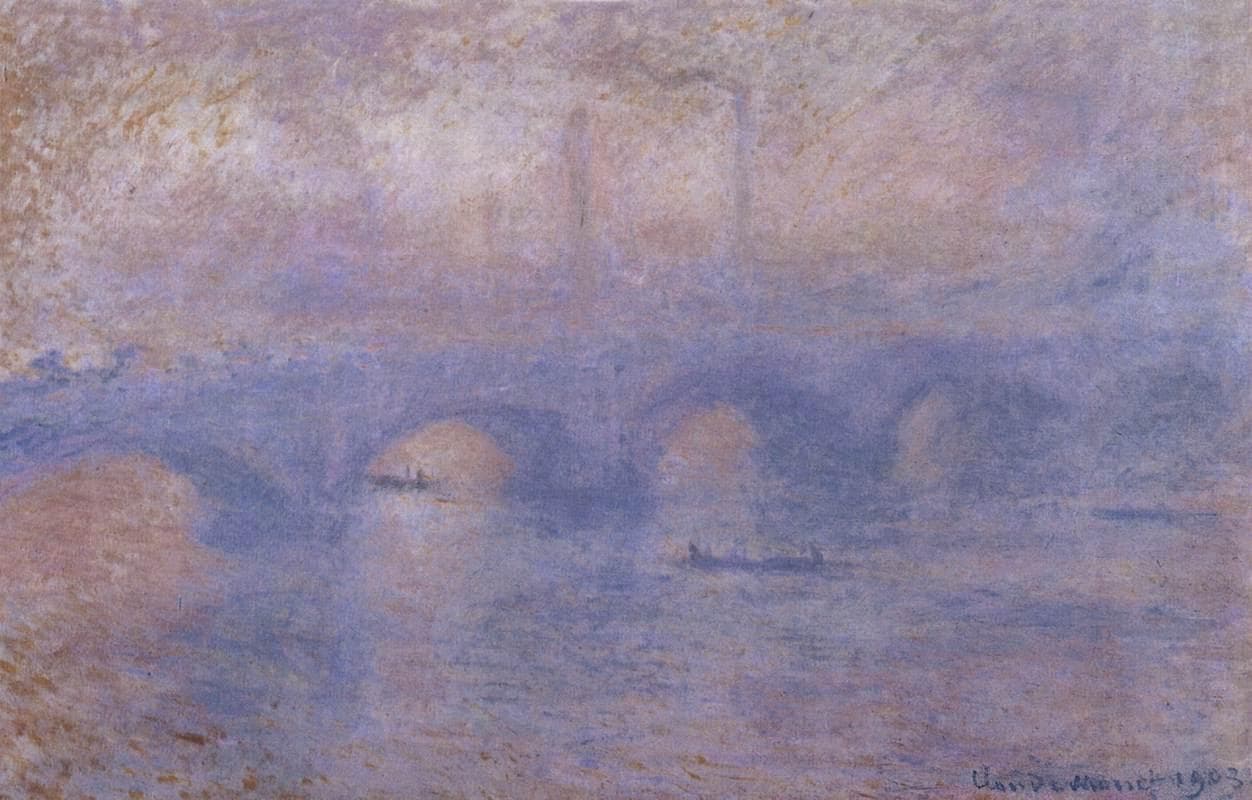
Waterloo Bridge, Effect of Fog
Claude Monet · 1903
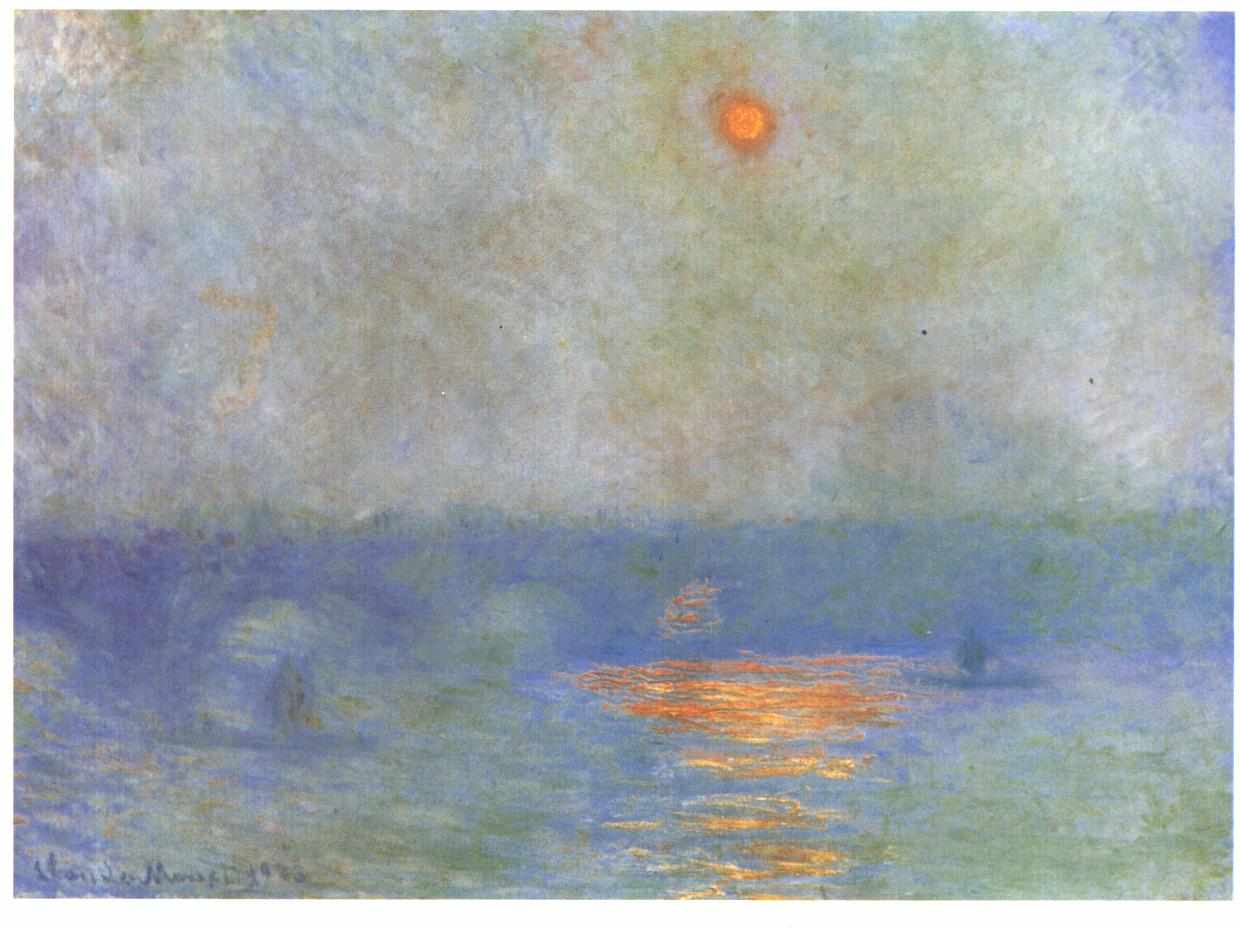
Waterloo Bridge: the Sun in a Fog
Claude Monet · 1903
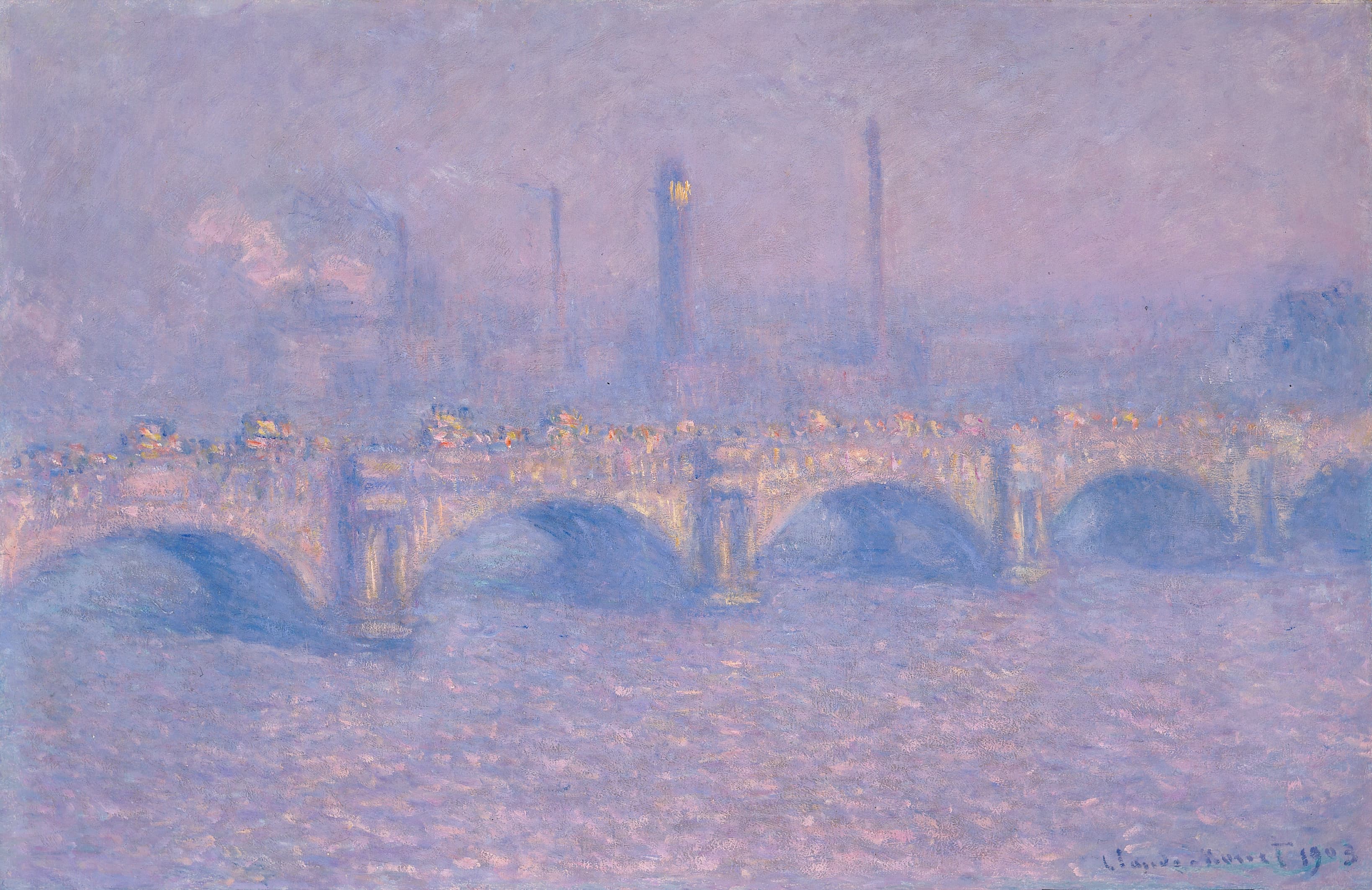
Waterloo Bridge, Veiled Sun
Claude Monet · 1903
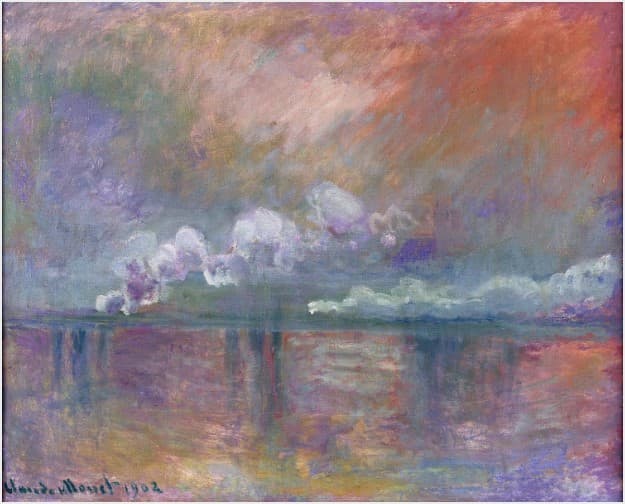
Charing Cross Bridge, Smoke in the Fog, Impression
Claude Monet · 1902
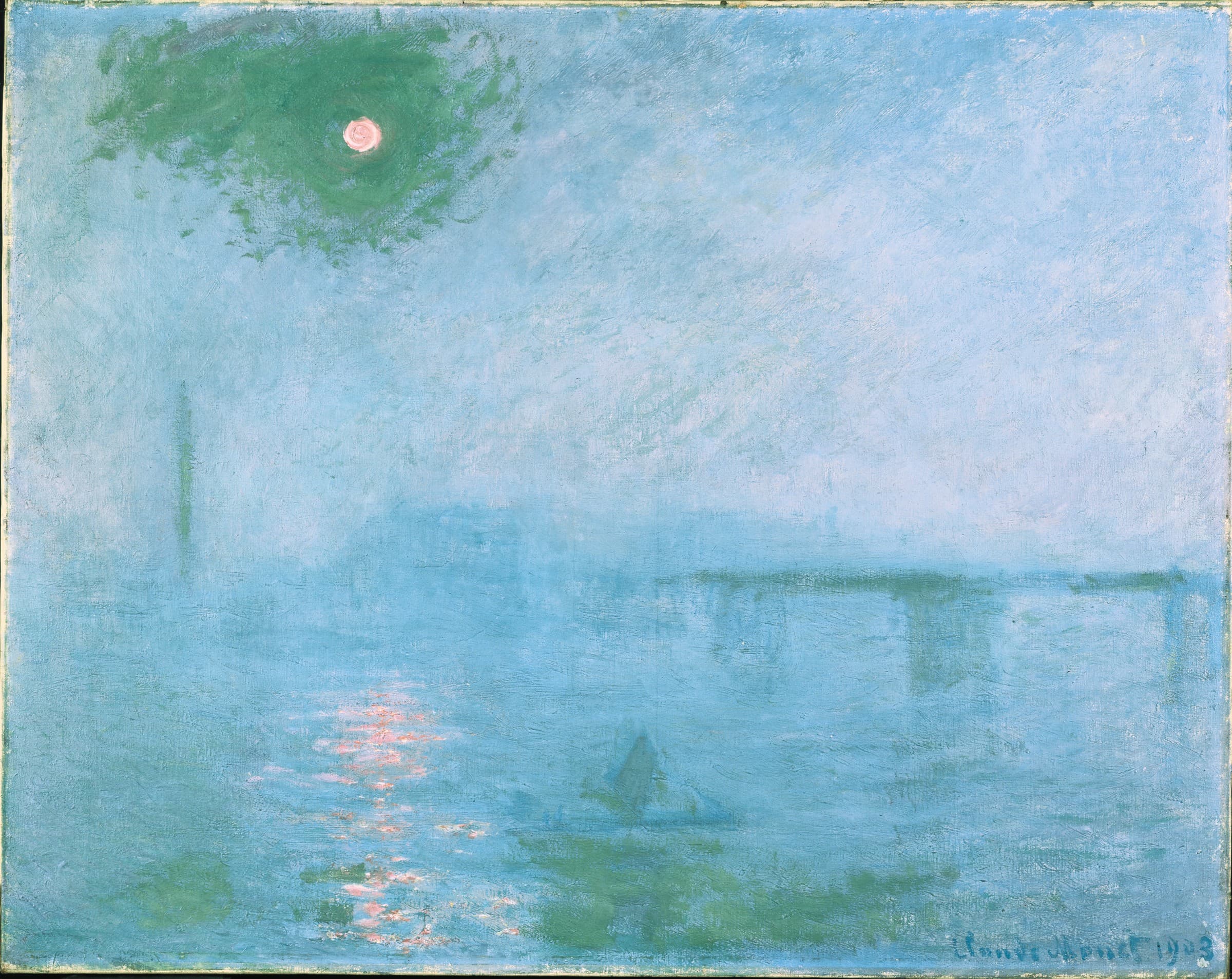
Charing Cross Bridge: Fog on the Thames
Claude Monet · 1903

Sunset in Venice
Claude Monet · 1908–12
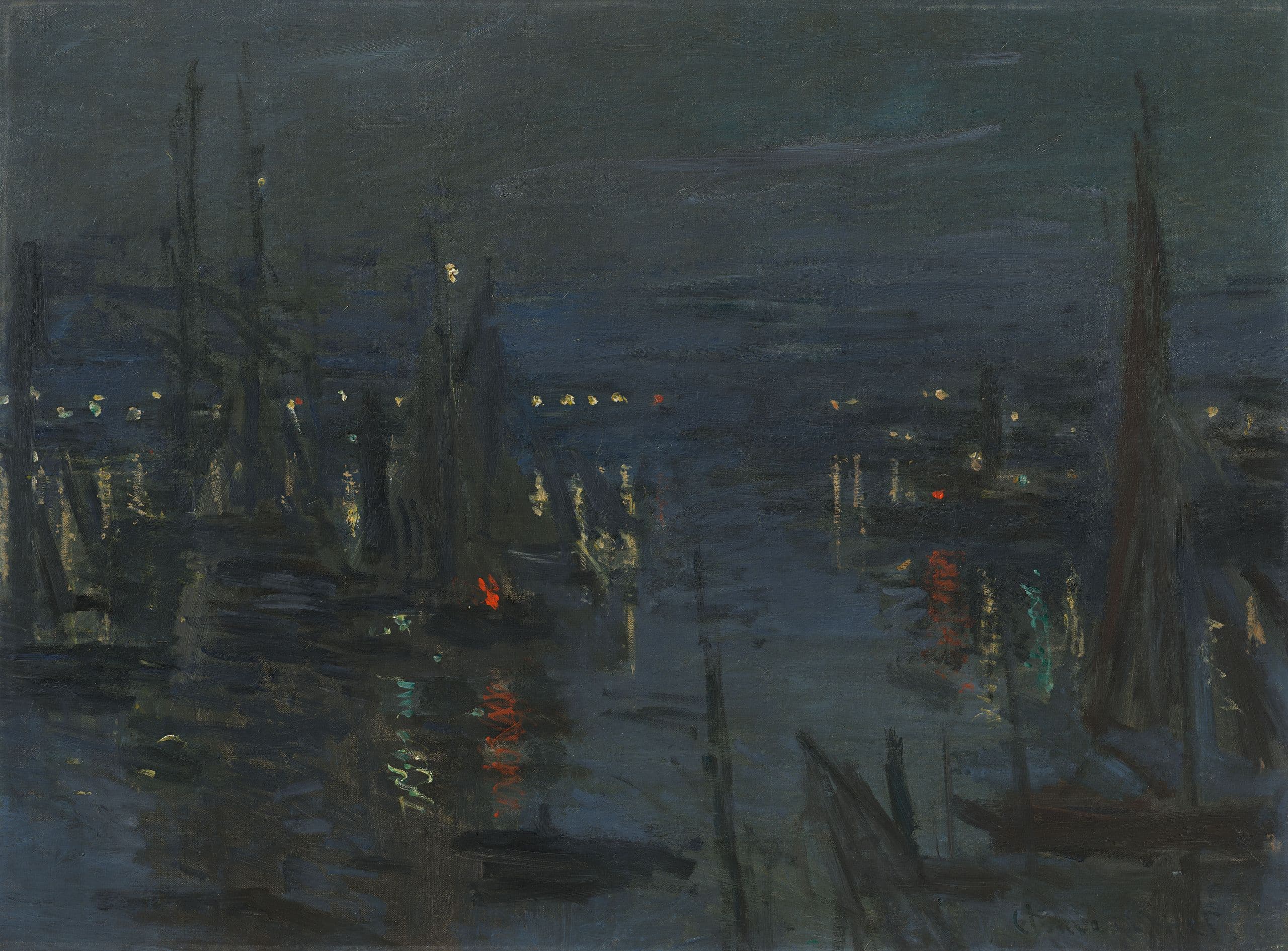
The Port of Le Havre, Night Effect
Claude Monet · 1872