Impressionism
Road to Vétheuil, Snow Effect
Claude Monet, 1879
Road to Vétheuil, Snow Effect is an 1879 painting by Claude Monet of a deep-snow road curving down toward the village of Vétheuil and its church. It measures 61 × 81.5 cm (Wildenstein 508) and is in the Museum of Fine Arts, St. Petersburg, Florida.
- Artist
- Claude Monet
- Date
- 1879
- Medium
- Oil on canvas
- Dimensions
- 61 × 81.5 cm
- Collection
- Museum of Fine Arts, St. Petersburg, St. Petersburg, Florida, United States
- Movement
- Impressionism
- Catalogue
- Wildenstein 508
Painted at Monet at Vétheuil
What you are looking at
We stand on a road high on the slope above the village, the snow under our feet trampled into soft furrows. The road runs down and to the right in a long diagonal, its wheel tracks marked in pale ocher and brown, and a single dark figure walks along it toward the houses. At left a steep bank rises under a thick coat of snow, with patches of rust-colored earth showing through, topped by bushes and a tree whose branches are loaded white. In the middle distance the dark, twin-pinnacled tower of the church of Vétheuil pokes up above the roofs, and to the right the village spreads out in a cluster of snow-capped houses with red-brown chimneys. Beyond, the far side of the Seine valley rises in a long, faintly streaked white slope under a pearly sky.
This is a painting almost entirely in whites. Monet builds the snow from cream, pale violet, blue and grey, with touches of pink, and lets the brushstrokes follow the forms: curved for the drifts on the bank, long and straight along the road, and short, choppy and horizontal in the foreground. The dark figure and the church tower are the only strong accents, and they are placed on almost the same vertical, so the eye moves from one to the other. The signature and the date '79 appear at lower left.
Look at the snow-laden tree at upper left. Monet paints it in thick white and lilac with blue shadows underneath each branch, so that it seems to sag under its load against the grey sky.
The winter of 1879–80
The date places the picture at the end of 1879, at the start of one of the coldest winters of the century in northern France. Monet had moved to Vétheuil in 1878. His wife Camille died there in September 1879, leaving him with two young sons, and he was living with Alice Hoschedé and her children in a crowded house on the edge of the village. He turned to painting the transformed landscape around him: the village and its roads, and soon the Seine, which froze solid and then broke up spectacularly in January 1880.
This view is the most fully snowbound of his pictures of the approaches to the village. Compare it with Road into Vétheuil in Winter in Gothenburg, where the snow has thawed to mud and the church tower looms close at left.
How it was painted
The canvas is a standard landscape size, about 61 by 81 centimeters. Monet seems to have worked directly in front of the motif, laying the light tones first and adding the darks of tower, figure and chimneys last. The palette is restrained, but within the whites the color varies constantly: warm where the light strikes, cool in the shadows, and almost pink near the horizon. Where the road dips out of sight behind the bank, the village begins; the picture is arranged so that we take the same path as the walker, down from the open slope into the shelter of the houses.
Winter at Vétheuil
That winter produced some of Monet's most austere pictures: The Church in Vétheuil in Winter, Lavacourt in Winter and the ice paintings of The Breakup of the Ice at Lavacourt. Together they show him working through a hard season with the subjects nearest to hand.
Meaning
It is tempting to read grief into the silent white landscape and the lone walker, and some writers have. Claude Monet left no such statement, and his letters from that winter are mostly about money and the cold. What the painting shows is an intense looking at light on snow, the subject he had first tackled at Honfleur a dozen years earlier, in pictures such as Road by Saint-Siméon Farm in Winter.
Where to see it
The painting belongs to the Museum of Fine Arts in St. Petersburg, Florida, not to be confused with any museum in Russia. For other museums, see where to see Monet's paintings.
Questions & answers
Where is Monet's Road to Vétheuil, Snow Effect?
The painting is in the Museum of Fine Arts in St. Petersburg, Florida, in the United States. It is often mistakenly placed in St. Petersburg, Russia. Painted in 1879, it measures 61 by 81.5 centimeters and is catalogued as Wildenstein 508.
When did Monet paint Road to Vétheuil, Snow Effect?
It is dated 1879 and was painted at the start of the severe winter of 1879–80, a few months after the death of his wife Camille. That winter Monet painted the snowbound village and then the frozen Seine and the breakup of its ice.
What is the building in the middle of the painting?
The dark tower with pointed pinnacles is the church of Notre-Dame in Vétheuil, which stands on a rise above the village. It appears in many of Monet's Vétheuil paintings and works here as a landmark showing where the snowy road leads.
Did Monet paint other views of the road into Vétheuil?
Yes. Road into Vétheuil in Winter, in the Gothenburg Museum of Art, shows a road into the village during a thaw, with the church tower close at left. Monet painted the village and its approaches several times in the winter of 1879–80.
More by the artist
Claude Monet

Bridge over a Pond of Water Lilies
Claude Monet · 1899

Woman with a Parasol – Madame Monet and Her Son
Claude Monet · 1875

Sunset in Venice
Claude Monet · 1908–12

La Grenouillère
Claude Monet · 1869

Beach in Pourville
Claude Monet · 1882

Springtime
Claude Monet · 1872

Boating on the River Epte
Claude Monet · 1890

The Seine at Asnières (Hermitage)
Claude Monet · 1873
Also painted in 1879
The same year
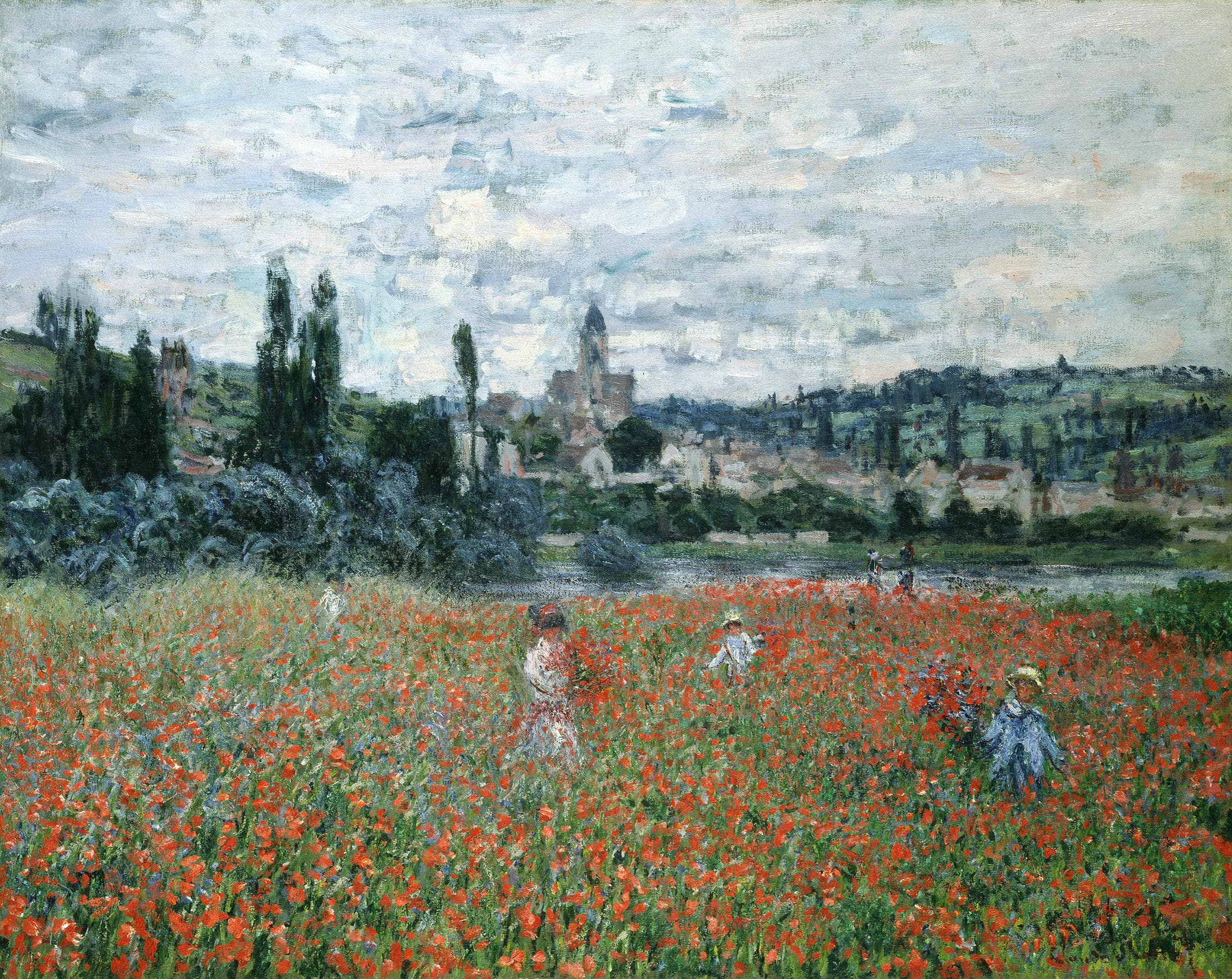
Poppy Field near Vétheuil
Claude Monet · c. 1879
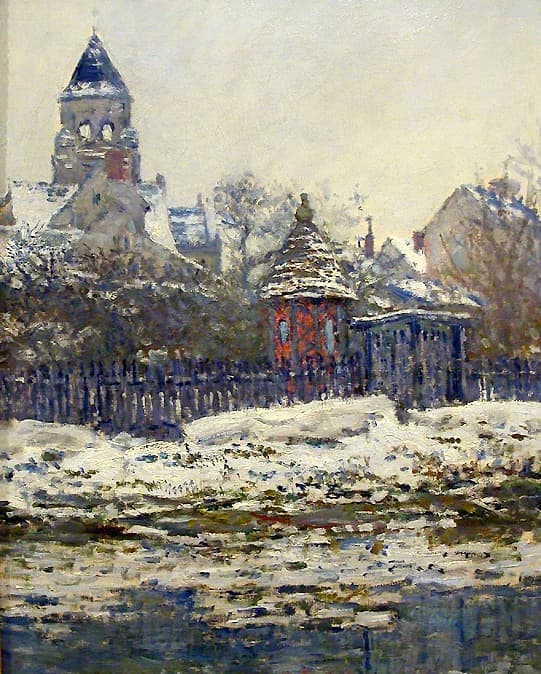
Vétheuil Church
Claude Monet · 1879
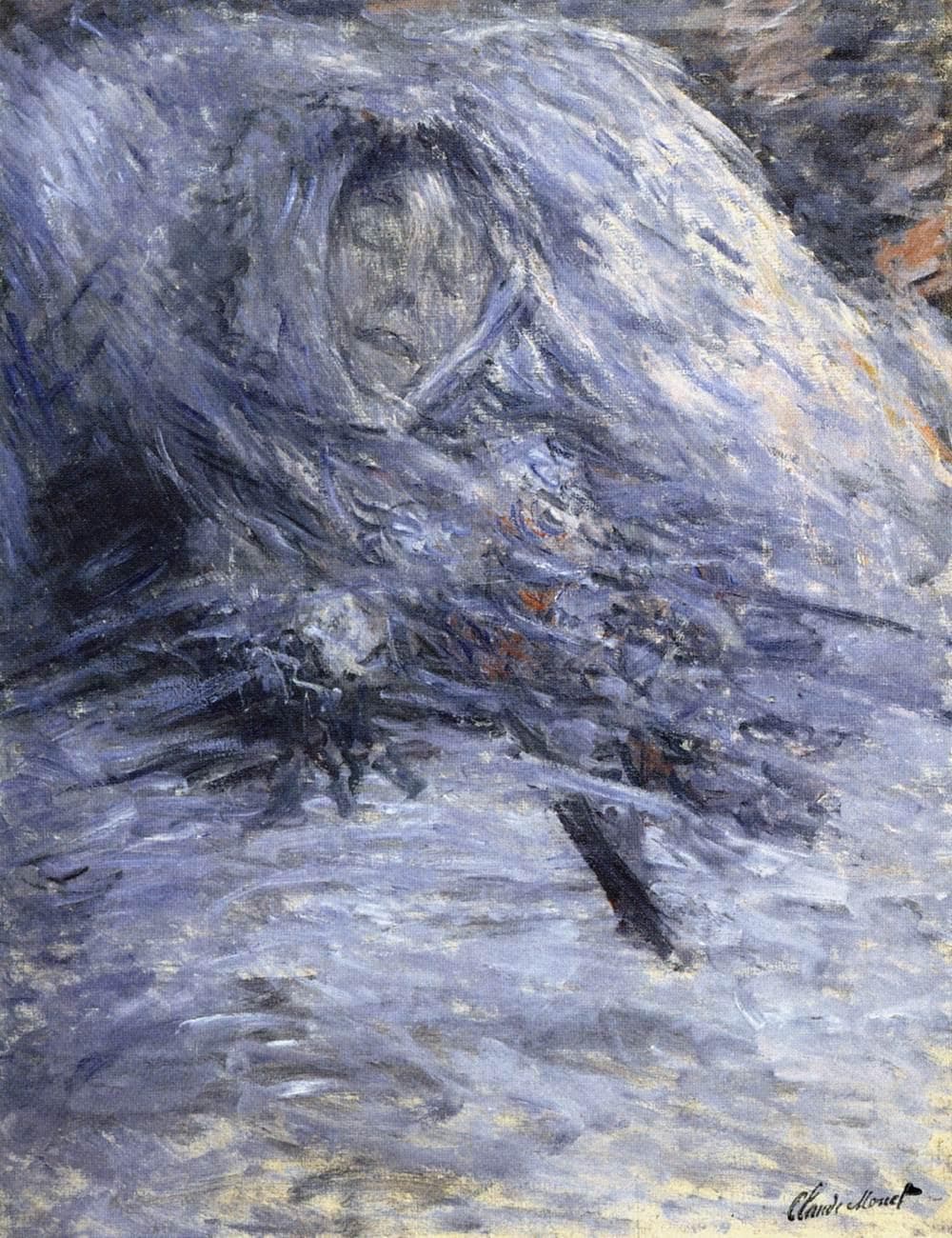
Camille Monet on Her Deathbed
Claude Monet · 1879
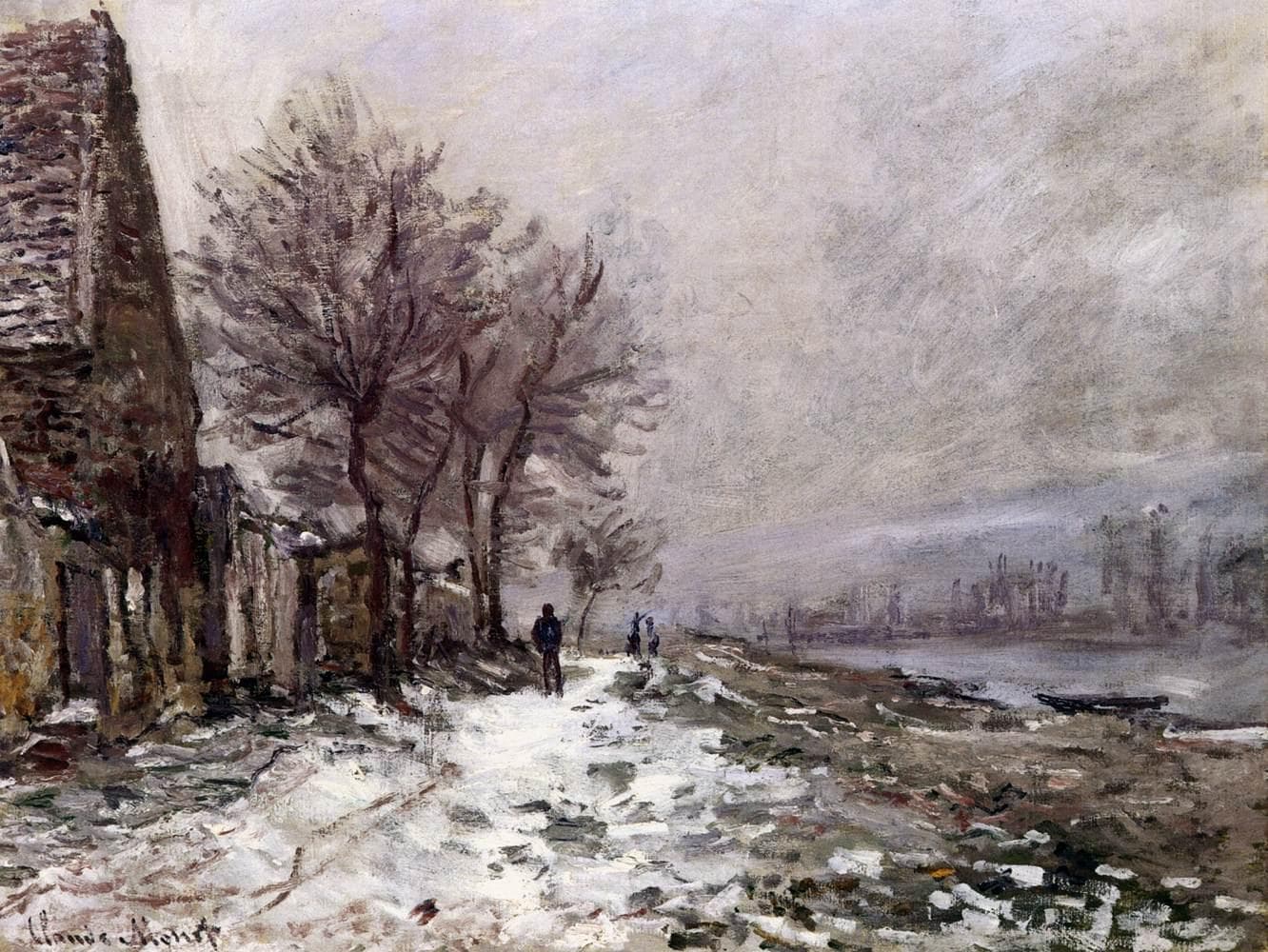
Lavacourt in Winter
Claude Monet · 1879
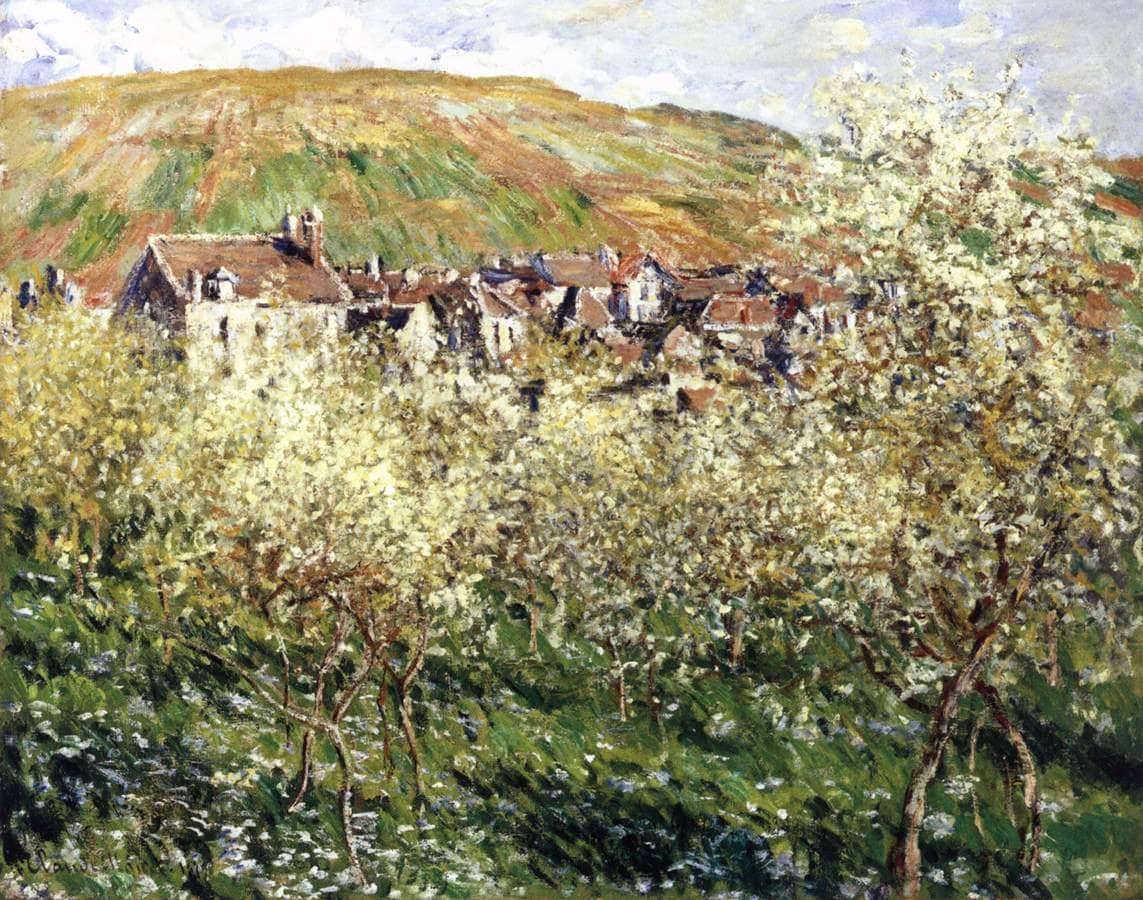
Plum Trees in Bloom
Claude Monet · 1879
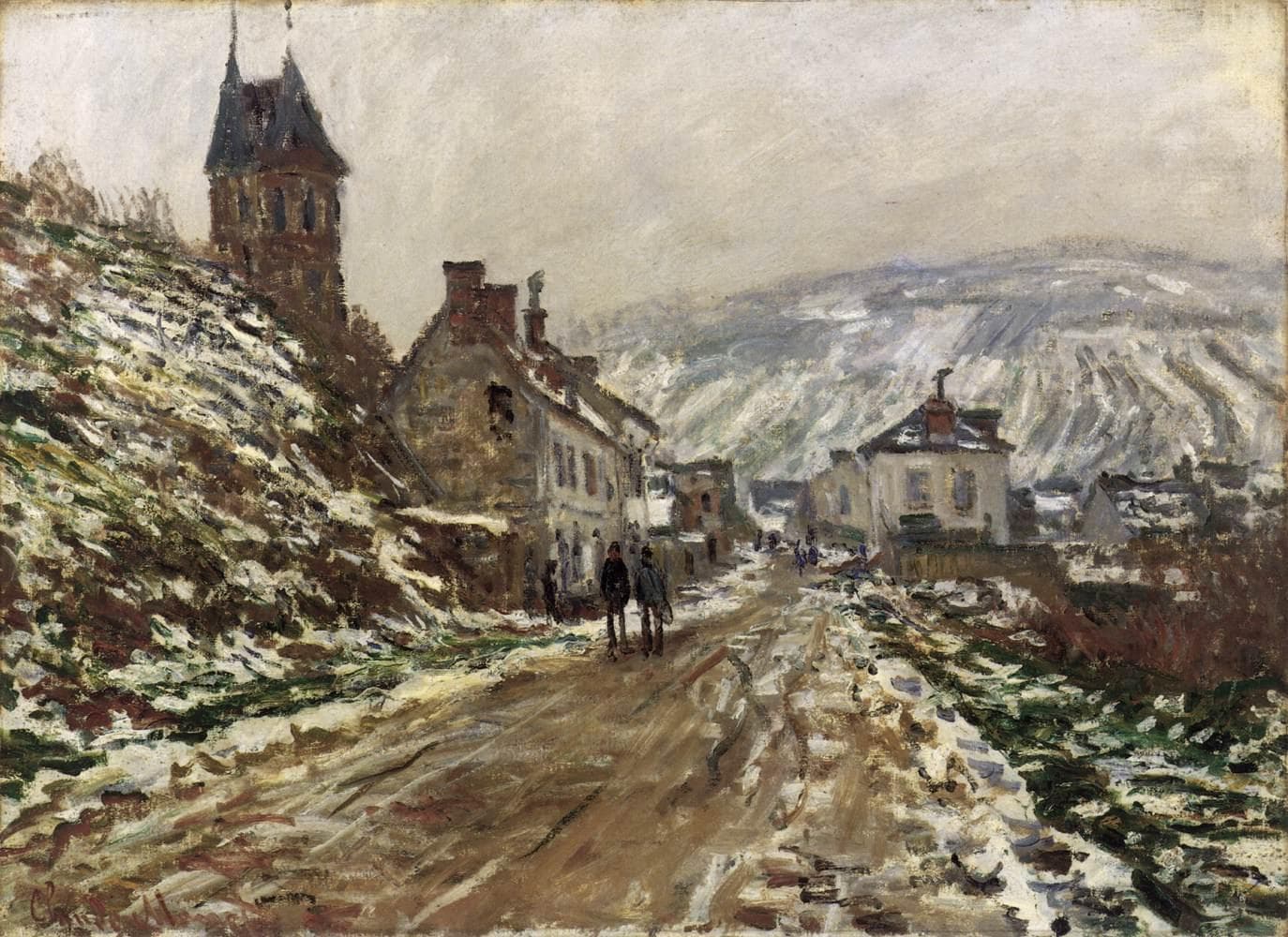
Road into Vétheuil in Winter
Claude Monet · 1879
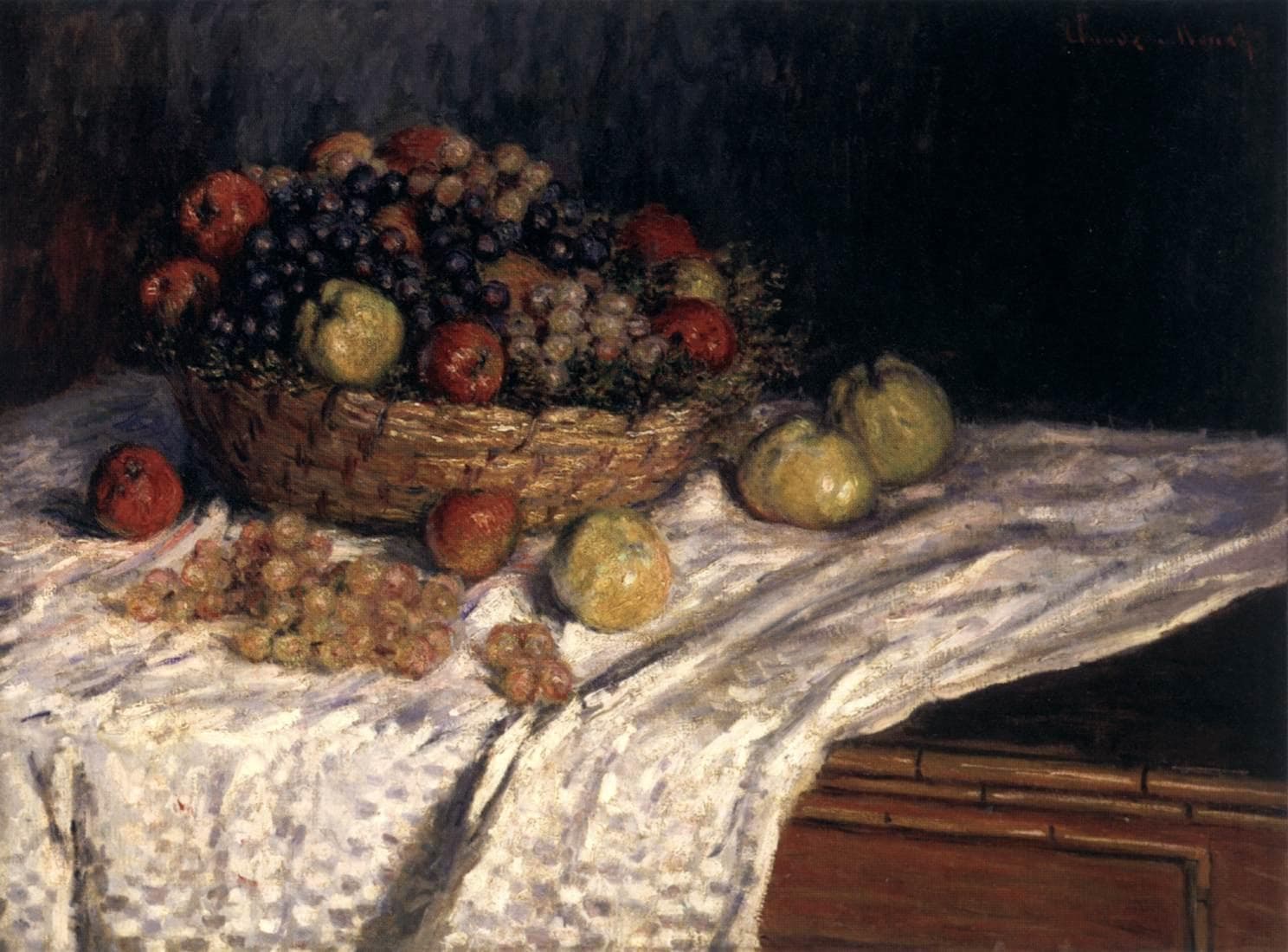
Still-Life with Apples and Grapes
Claude Monet · 1879–80
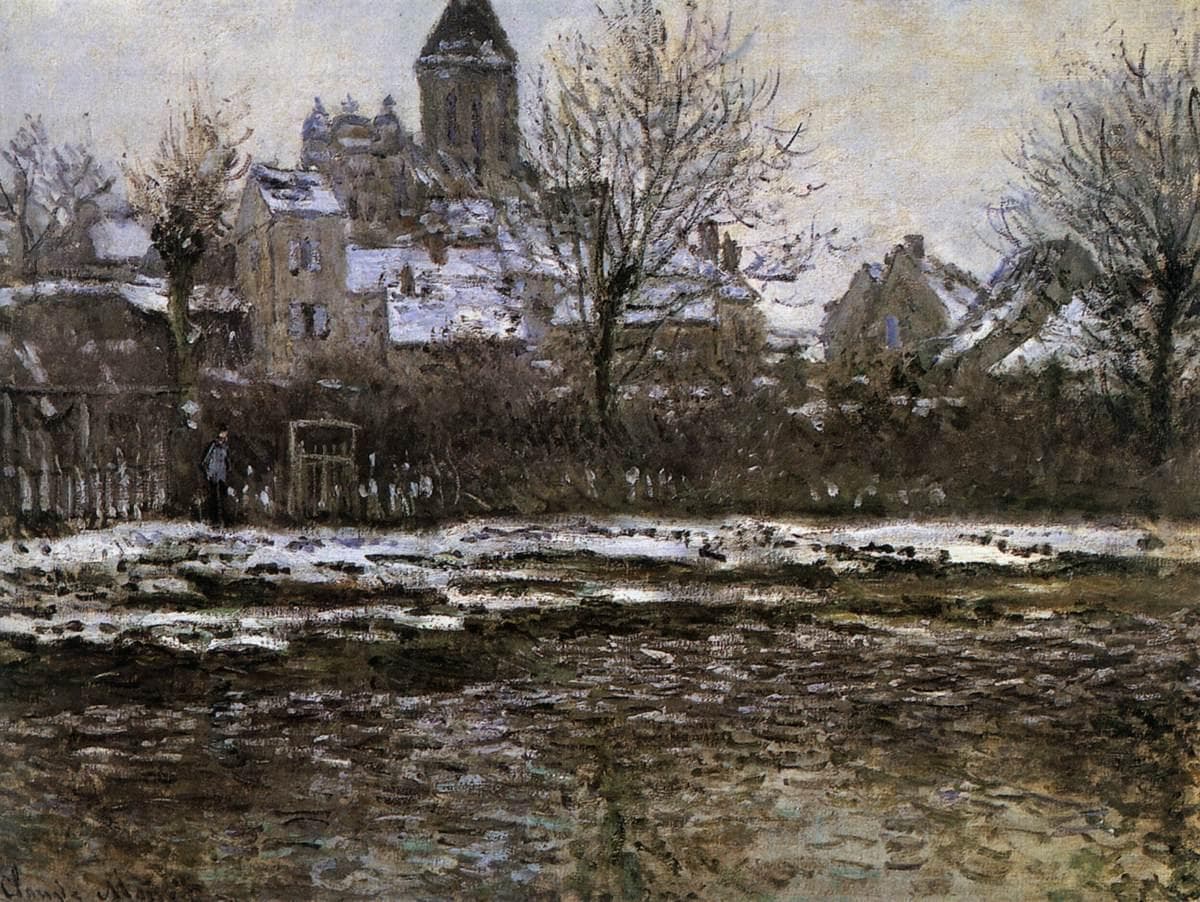
The Church in Vétheuil in Winter
Claude Monet · 1878–79
Kindred works
You may also study
Road into Vétheuil in Winter
Claude Monet · 1879
The Church in Vétheuil in Winter
Claude Monet · 1878–79
Lavacourt in Winter
Claude Monet · 1879
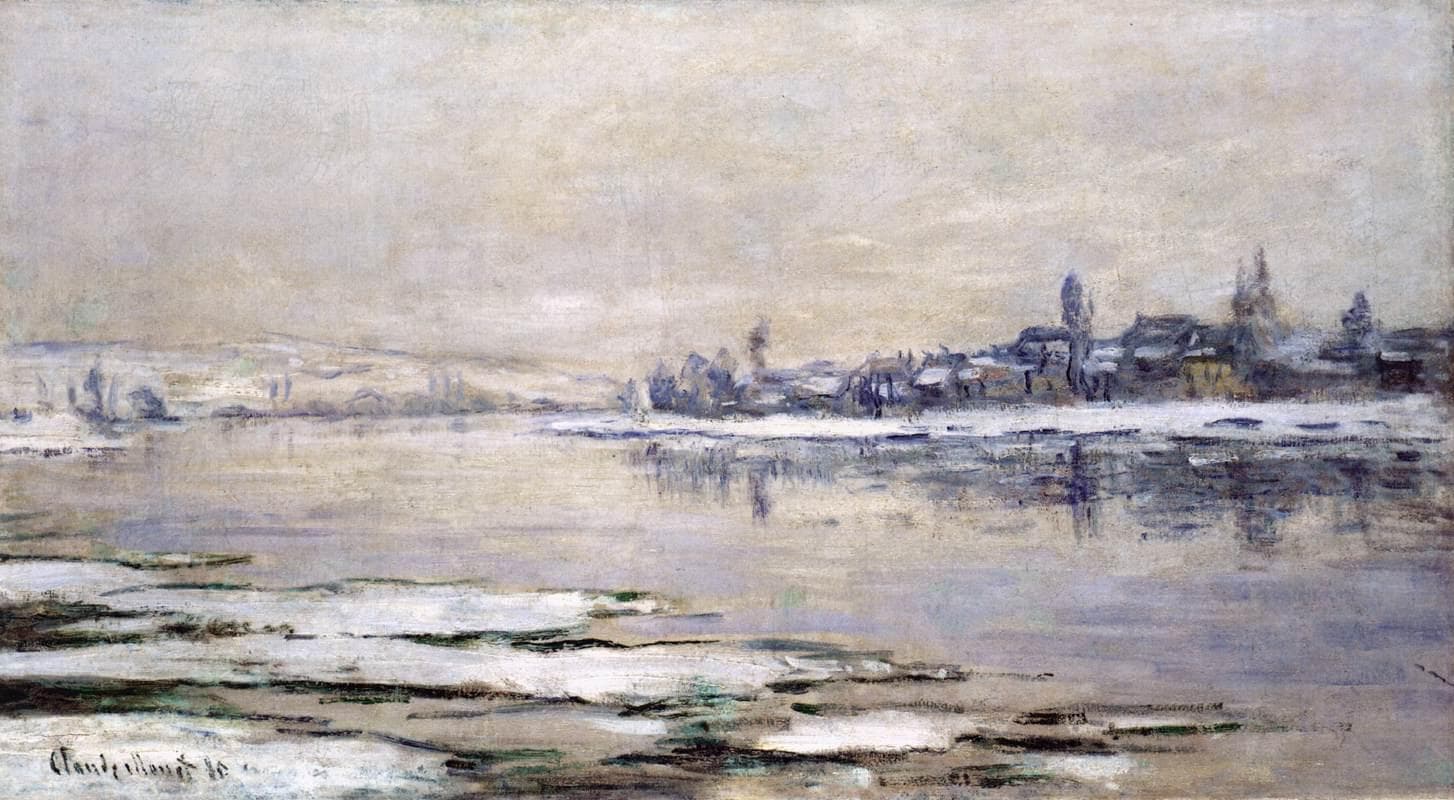
The Breakup of the Ice at Lavacourt
Claude Monet · 1880
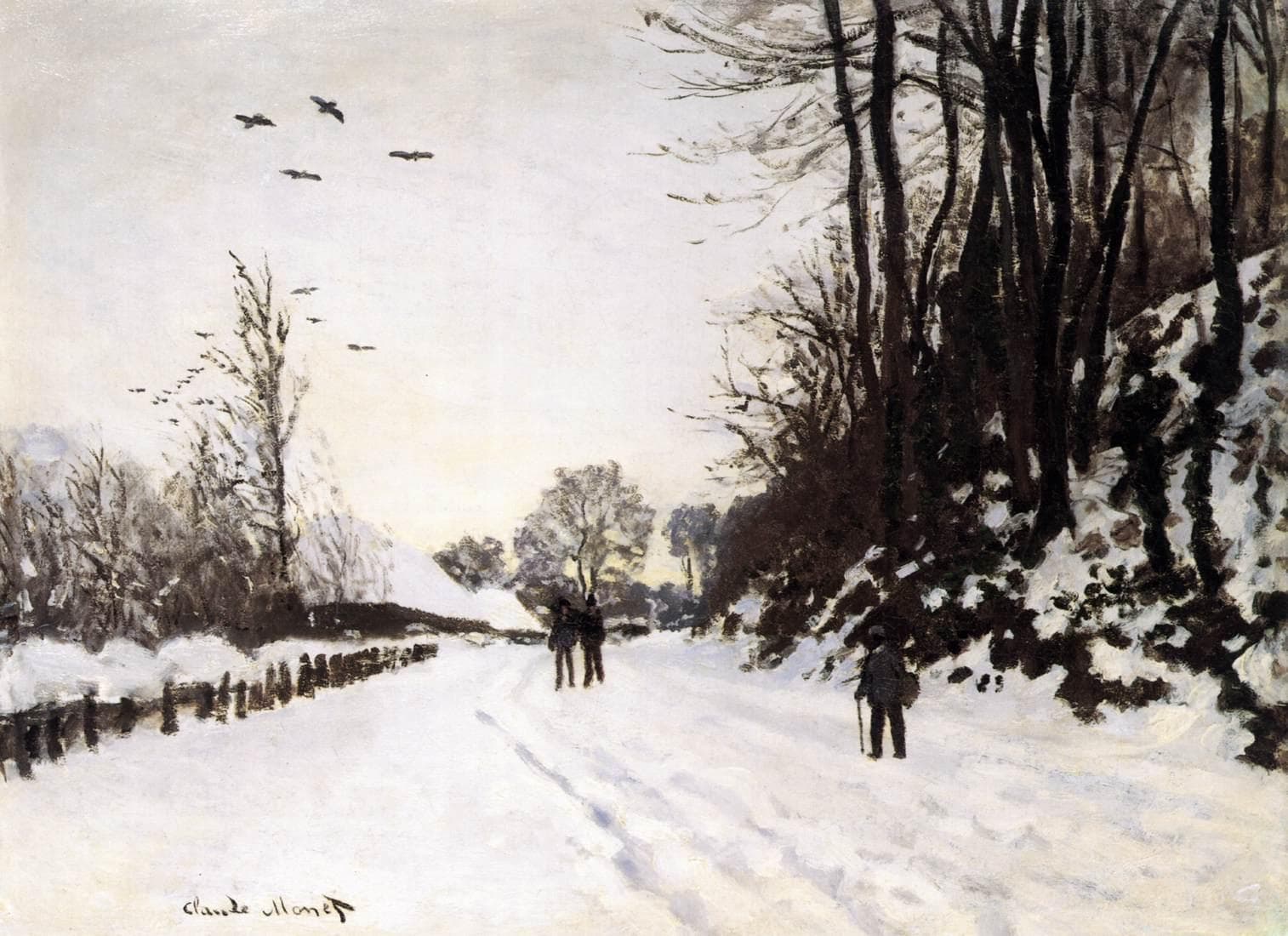
Road by Saint-Siméon Farm in Winter
Claude Monet · 1867

The Scream
Edvard Munch · 1893

Ophelia
John Everett Millais · 1851–52

The Great Wave off Kanagawa
Katsushika Hokusai · c. 1830–32