Impressionism
The Church in Vétheuil in Winter
Claude Monet, 1878–79
The Church in Vétheuil in Winter (Effet de neige à Vétheuil, also L'Église de Vétheuil, neige) is a painting of 1878–79 by Claude Monet of the village church above snowy roofs. It is in the Musée d'Orsay, Paris.
- Artist
- Claude Monet
- Date
- 1878–79
- Medium
- Oil on canvas
- Dimensions
- 52.5 × 71 cm
- Collection
- Musée d'Orsay, Paris, France
- Movement
- Impressionism
- Catalogue
- Wildenstein 506
Painted at Monet at VétheuilMore at Monet at the Musée d'Orsay
What you are looking at
The square tower of a Gothic church rises over a cluster of village roofs, white with snow. Below the tower the church's pinnacled east end shows between the houses, and in front of them bare trees reach up with tangled, wiry branches, one pollarded willow at left with a thick knotted head. A wooden fence and a small gate run along the bank in the middle distance, and beside the gate stands a single small figure in dark clothes.
A strip of snowy ground crosses the canvas just below the middle. Under it, the lower half of the picture is water or wet, half-thawed ground, dark olive and brown, broken by horizontal strokes of grey, white and ochre where patches of snow and reflected sky float on the surface. The sky above is a flat, pale grey-white. Monet signed the canvas at lower left.
Claude Monet painted this view of Vétheuil in the winter of 1878–79, a few months after he moved to the village. The Musée d'Orsay, which owns it, catalogues it as Effet de neige à Vétheuil, also known as L'Église de Vétheuil, neige. It measures 52.5 by 71 centimeters and is number 506 in Wildenstein's catalogue.
Where and when
Vétheuil is a village on a bend of the Seine about 60 kilometers northwest of Paris. Monet moved there in the late summer of 1878, desperate for cheaper living. He shared a rented house with his wife Camille, who was seriously ill after the birth of their second son, Michel, in March, their two boys, and Alice Hoschedé and her six children, whose husband Ernest had gone bankrupt. The church of Notre-Dame, on its rise above the village, dominated every view, and Monet painted it from the river, from the fields and from the streets in all seasons. See Monet at Vétheuil.
This is one of the first winter views. Gustave Caillebotte, the painter and collector who supported his friends by buying their work, bought it from Monet in January 1879 for 200 francs, and it was shown at the fourth Impressionist exhibition that spring. The season ended in grief: Camille died at Vétheuil on 5 September 1879.
How it was painted
The picture is divided into two almost equal halves, village above, water below, with the snowy bank as a bright seam between them. Look at how differently Monet treats them. The roofs and church are painted in small, crisp touches of white and grey, with the walls in muted ochre and violet. The trees are drawn with quick, dark lines that thin out into a haze of twigs. The foreground, by contrast, is laid in long, dragged horizontals, thick and heavy, with patches of reflected snow floating in it.
The colors are muted, a range of browns, greys and whites. That restraint suits the subject, a raw day in a poor winter, and it makes the small warm notes, the ochre of a wall, the rust in the willow, count for more. The small figure by the gate gives the scale and, with it, a sense of how cold and empty the morning is.
The motif and its siblings
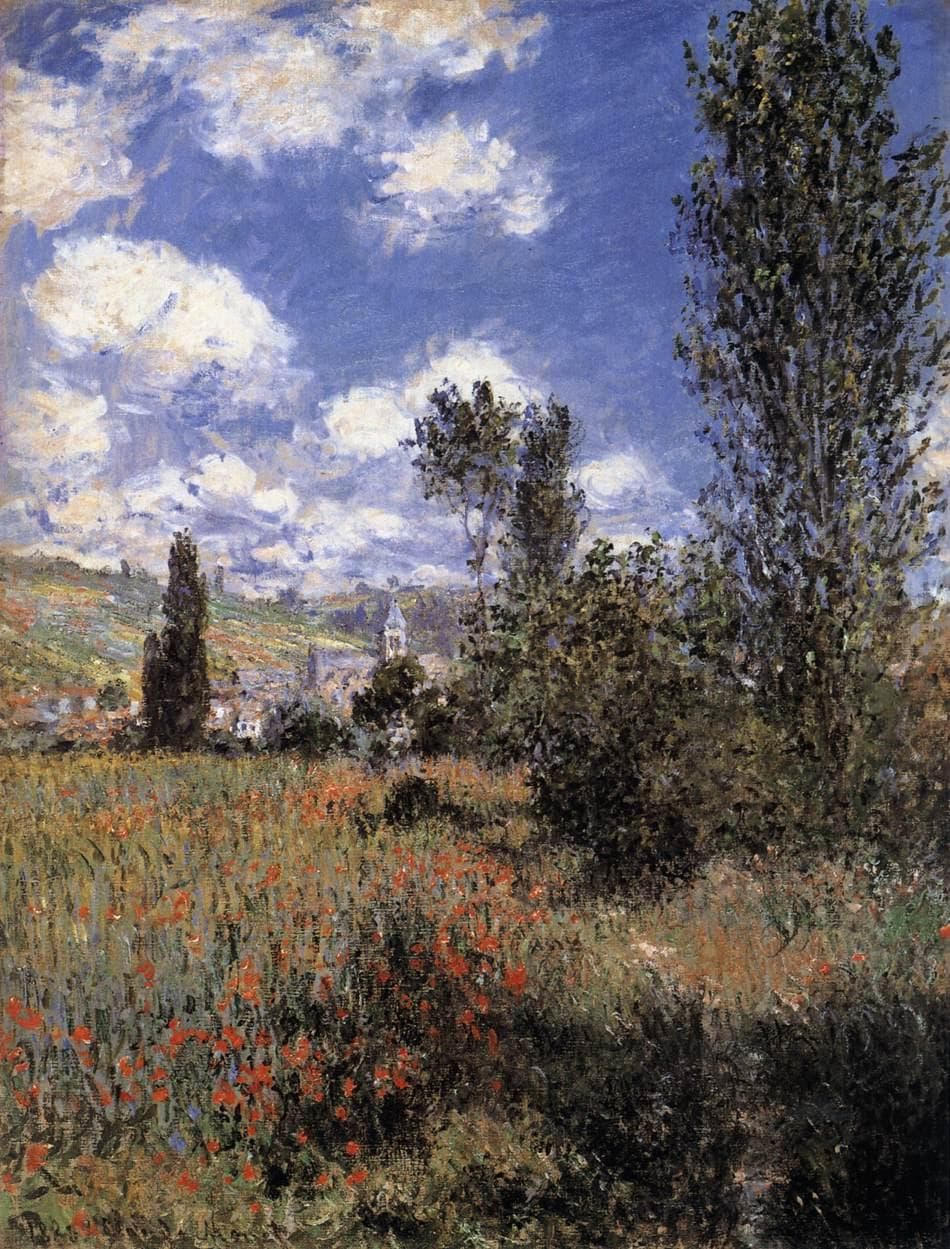
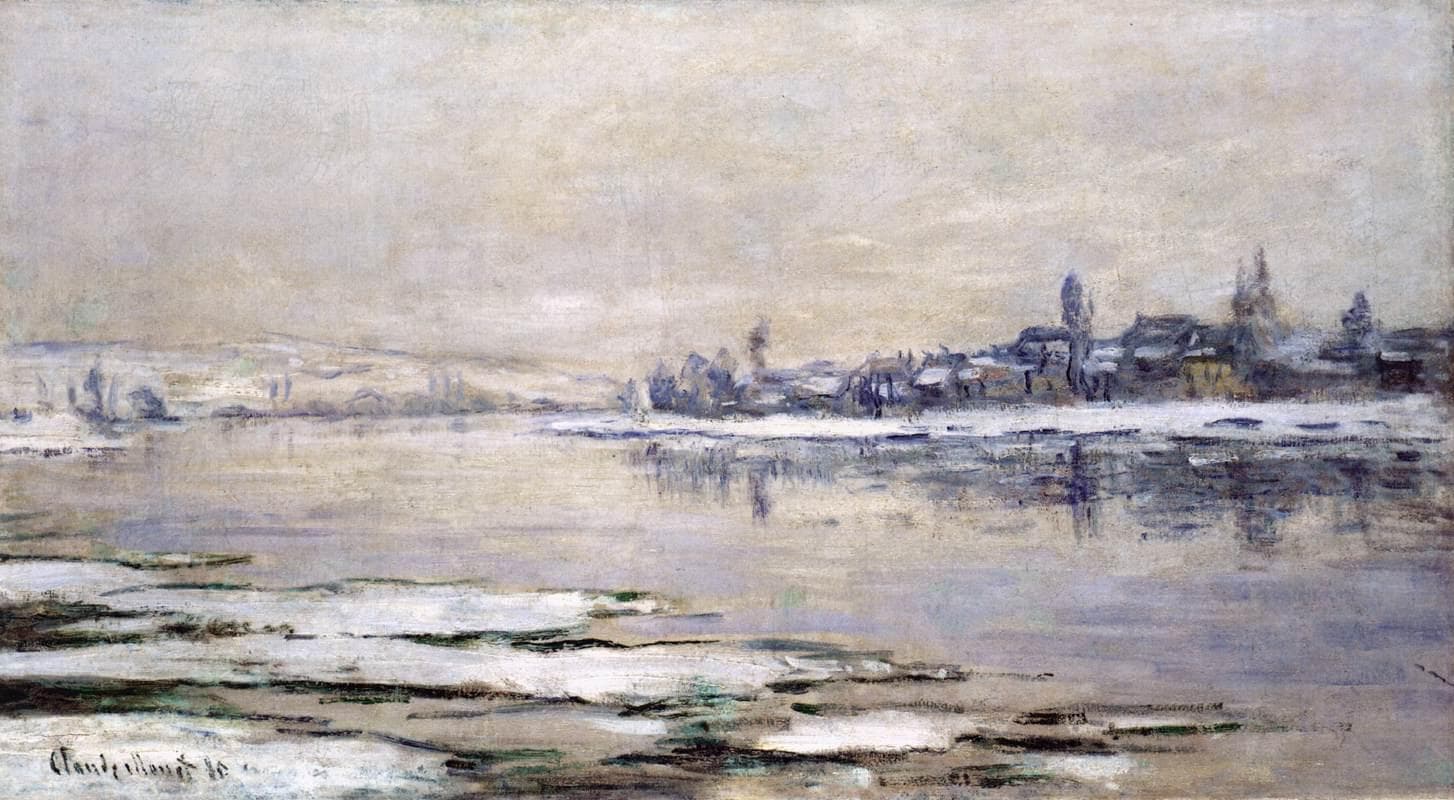
Monet painted Vétheuil's church across the water, from the road and close up, through all the seasons of 1878–81. Compare Vétheuil Church, also in the Orsay; the snowy approaches in Road into Vétheuil in Winter in Gothenburg and Road to Vétheuil, Snow Effect; and the summer panoramas such as View of Vétheuil. The following winter brought the great freeze and the débâcle pictures, among them The Breakup of the Ice at Lavacourt.
Where to see it
The painting is in the Musée d'Orsay, Paris, which received it with the Caillebotte bequest in 1896; it passed through the Musée du Luxembourg and the Louvre before reaching the Orsay in 1986. See Monet at the Musée d'Orsay, and for the artist, Claude Monet.
Questions & answers
Where is Monet's The Church in Vétheuil in Winter?
It is in the Musée d'Orsay in Paris, catalogued as Effet de neige à Vétheuil (also L'Église de Vétheuil, neige). The canvas, 52.5 by 71 centimeters (Wildenstein 506), came to the French state with Gustave Caillebotte's bequest in 1896.
When and where was it painted?
In the winter of 1878–79 at Vétheuil, a village on the Seine about 60 kilometers northwest of Paris, where Monet had moved that summer. Caillebotte bought it from him in January 1879, and it was shown at the fourth Impressionist exhibition that year.
What does the painting show?
The tower and east end of Vétheuil's Gothic church rising above snow-covered village roofs and bare trees, a fence and gate with a small figure on a snowy bank, and dark, half-frozen water or wet ground in the foreground under a grey sky.
How many times did Monet paint the church at Vétheuil?
Many times between 1878 and 1881, from across the river, from the roads into the village and in close-up views, in snow, spring and summer. The church appears in most of his Vétheuil landscapes.
More by the artist
Claude Monet

Bridge over a Pond of Water Lilies
Claude Monet · 1899

Woman with a Parasol – Madame Monet and Her Son
Claude Monet · 1875

Sunset in Venice
Claude Monet · 1908–12

La Grenouillère
Claude Monet · 1869

Beach in Pourville
Claude Monet · 1882

Springtime
Claude Monet · 1872

Boating on the River Epte
Claude Monet · 1890

The Seine at Asnières (Hermitage)
Claude Monet · 1873
Also painted in 1879
The same year
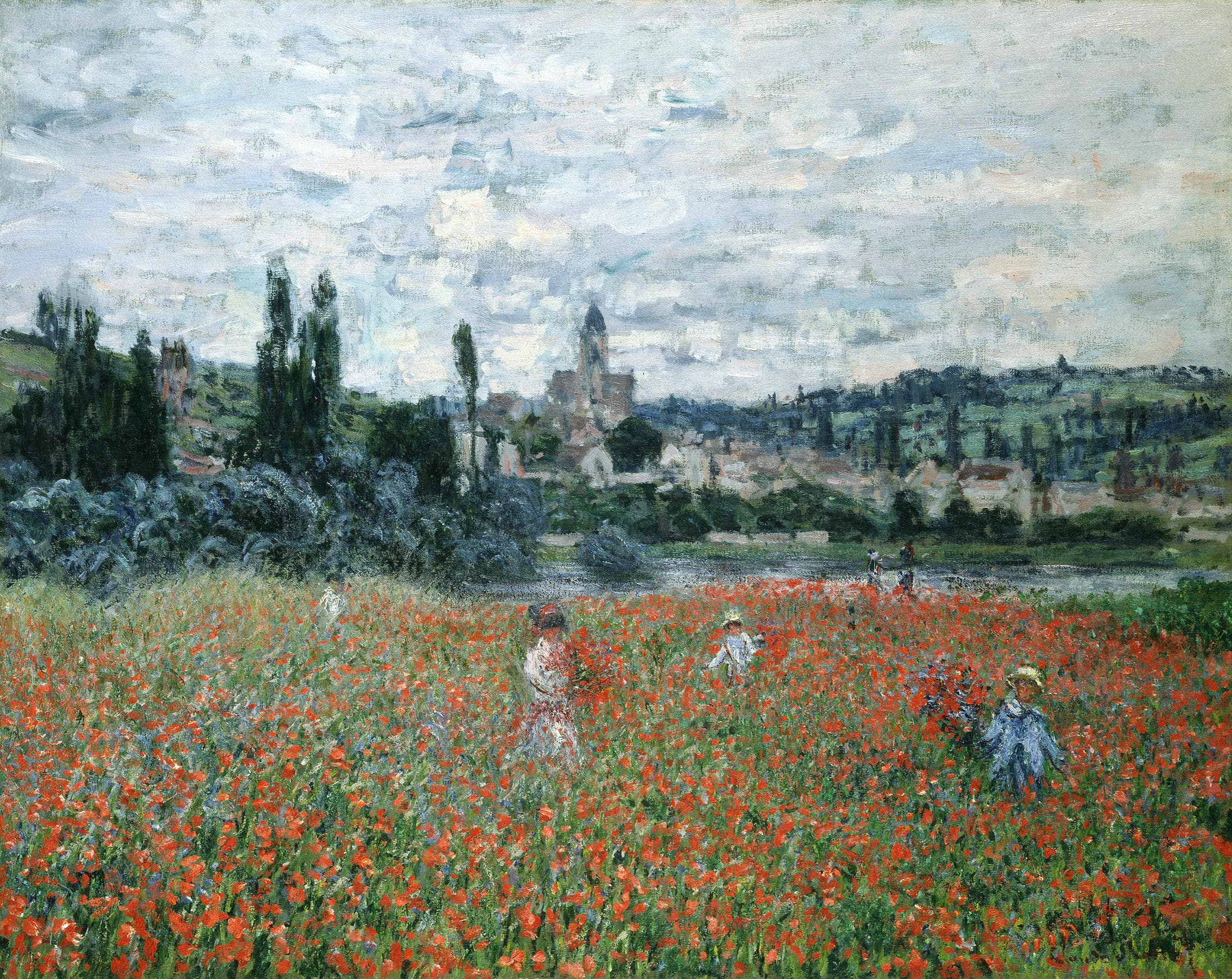
Poppy Field near Vétheuil
Claude Monet · c. 1879
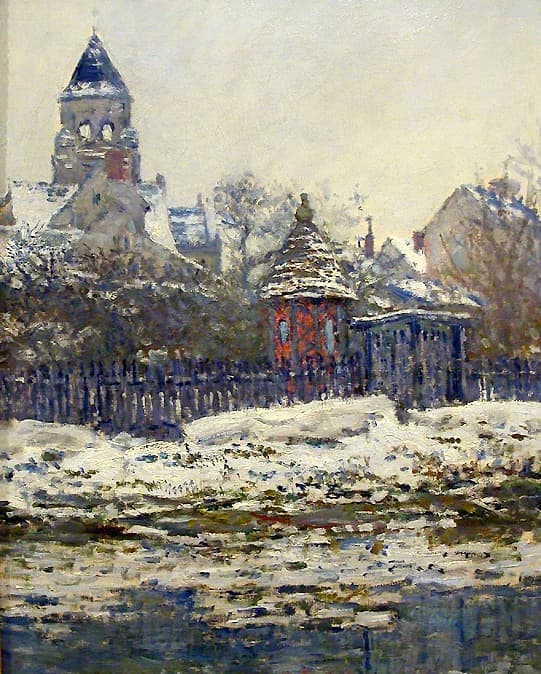
Vétheuil Church
Claude Monet · 1879
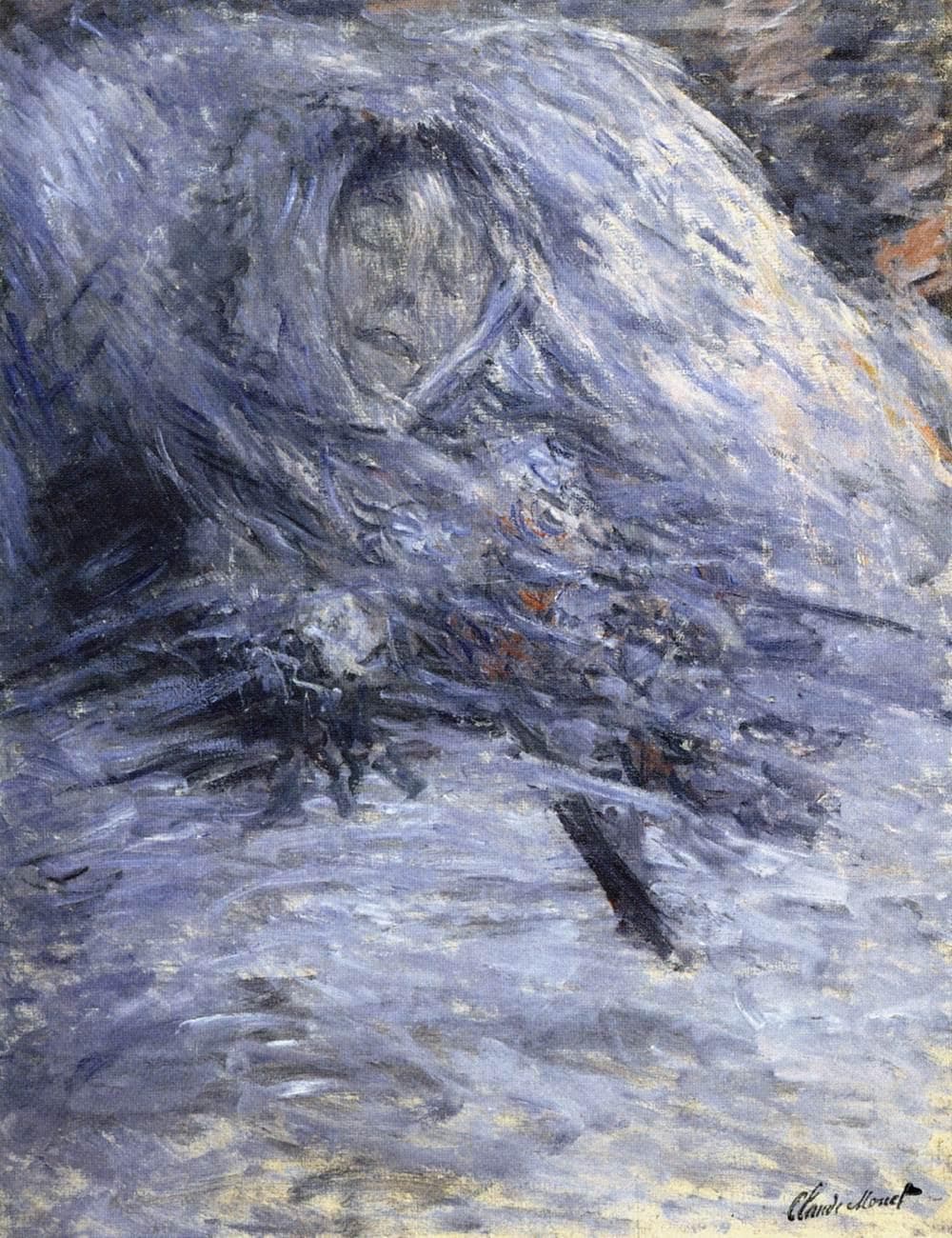
Camille Monet on Her Deathbed
Claude Monet · 1879
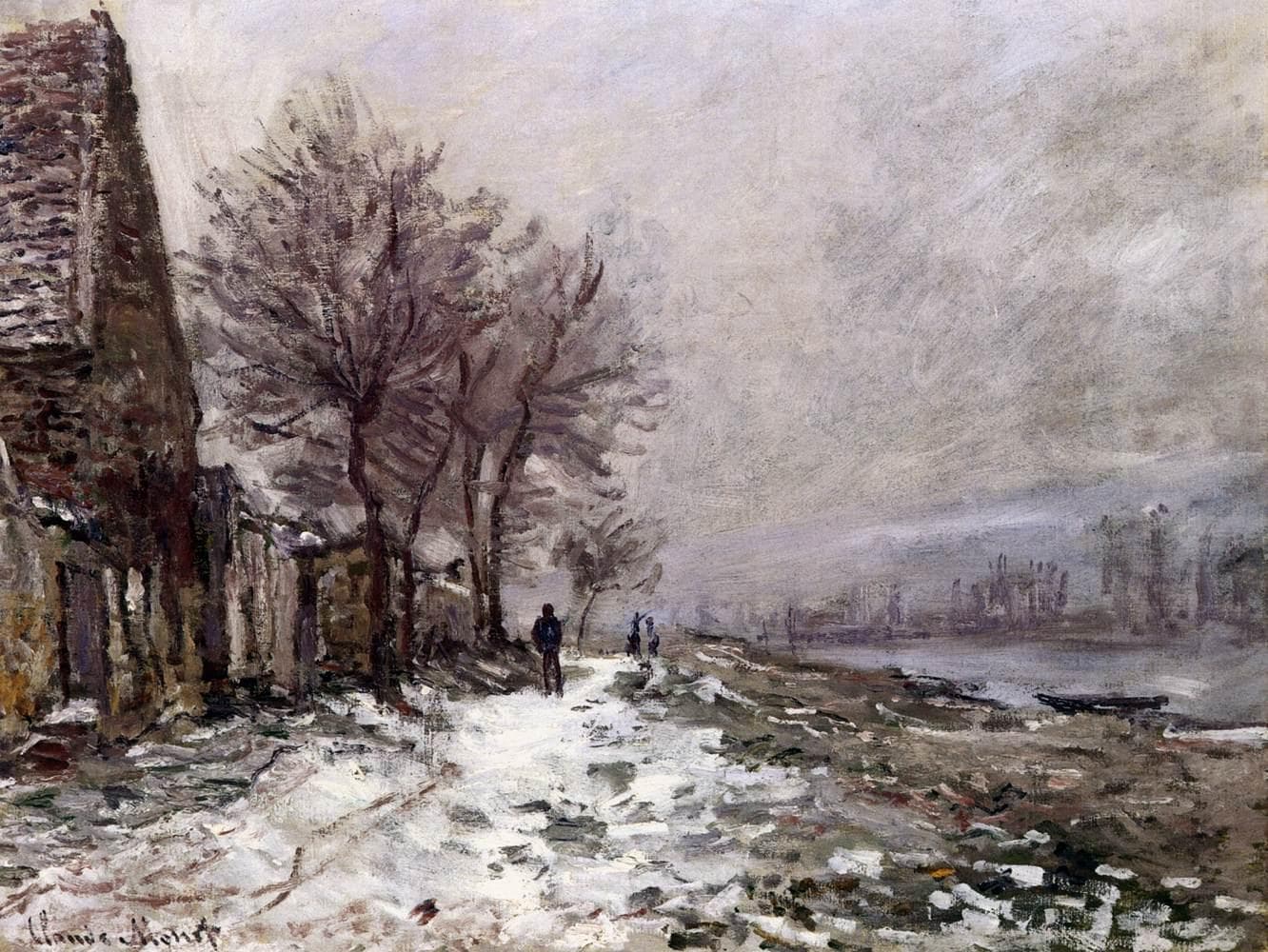
Lavacourt in Winter
Claude Monet · 1879
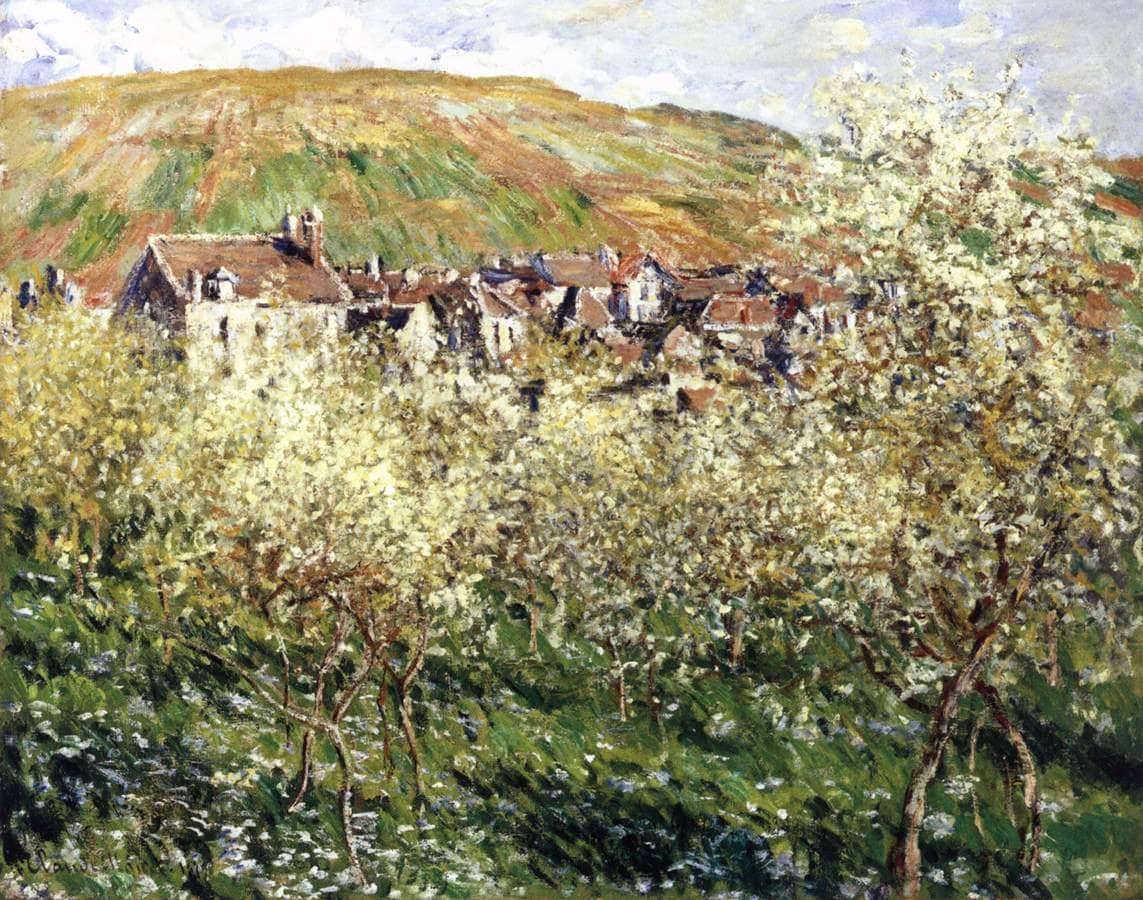
Plum Trees in Bloom
Claude Monet · 1879
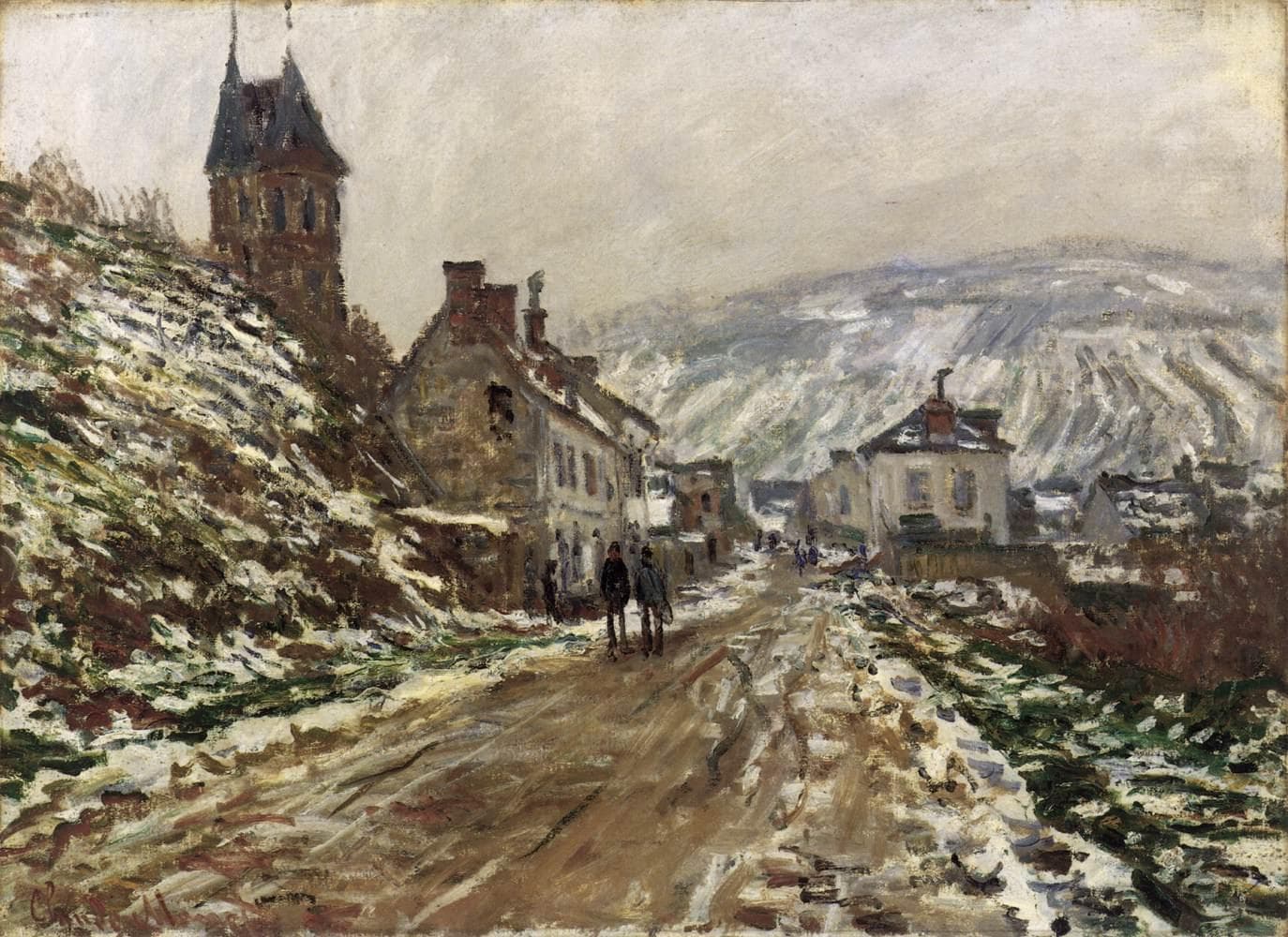
Road into Vétheuil in Winter
Claude Monet · 1879
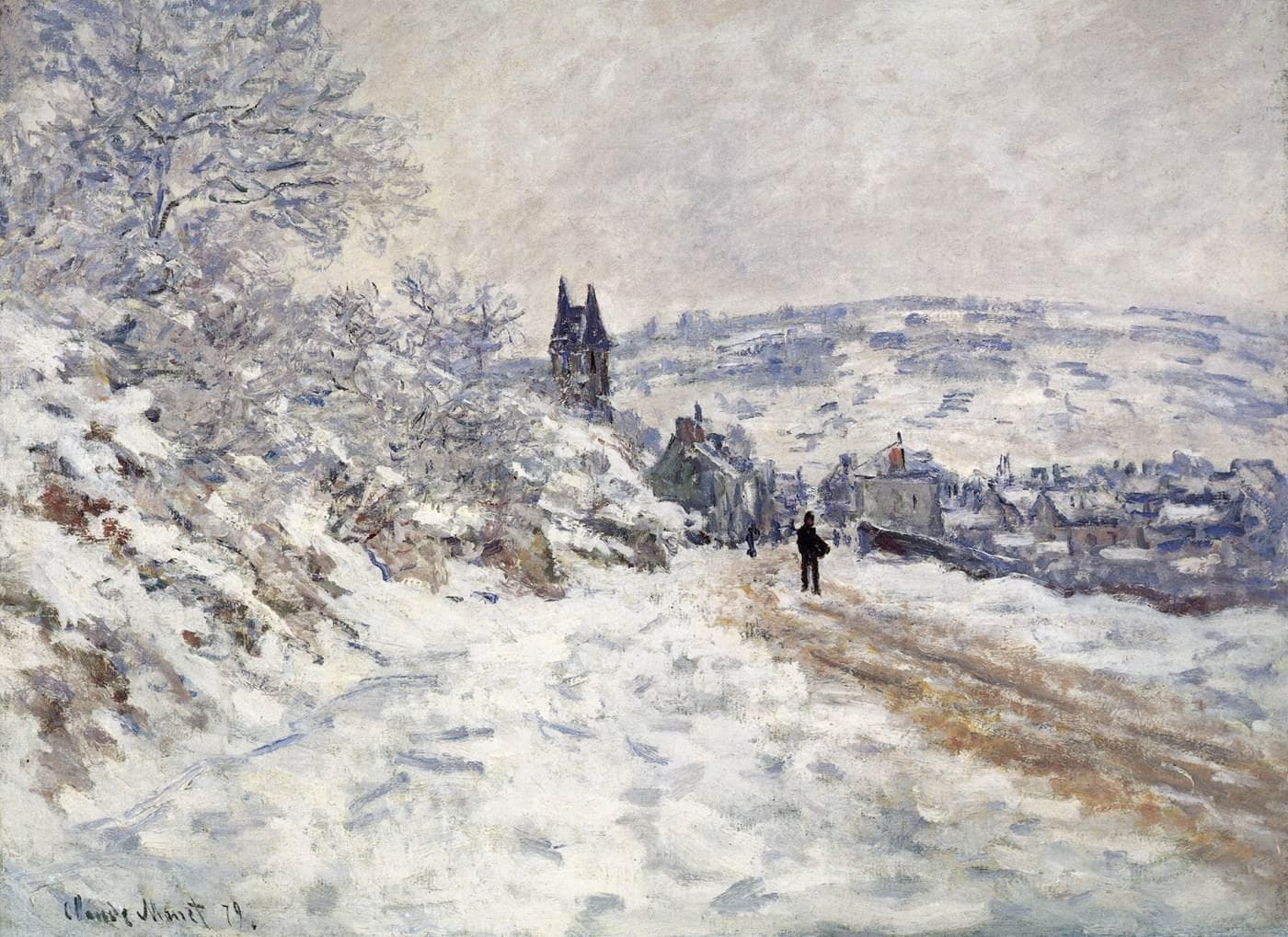
Road to Vétheuil, Snow Effect
Claude Monet · 1879
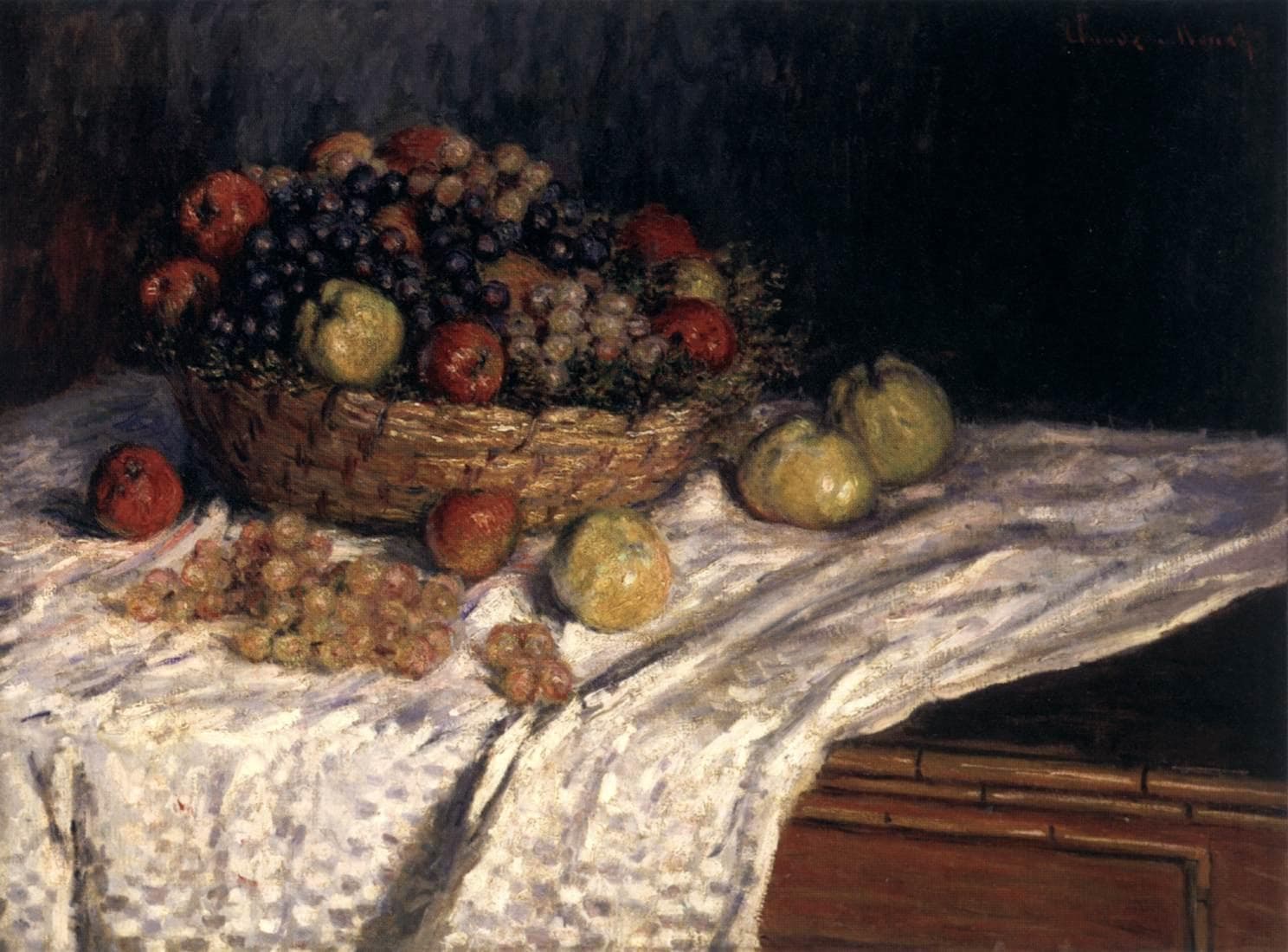
Still-Life with Apples and Grapes
Claude Monet · 1879–80
Kindred works
You may also study
Vétheuil Church
Claude Monet · 1879
Road into Vétheuil in Winter
Claude Monet · 1879
Road to Vétheuil, Snow Effect
Claude Monet · 1879
View of Vétheuil
Claude Monet · 1880
The Breakup of the Ice at Lavacourt
Claude Monet · 1880

The Scream
Edvard Munch · 1893

Ophelia
John Everett Millais · 1851–52

The Great Wave off Kanagawa
Katsushika Hokusai · c. 1830–32