Impressionism
Plum Trees in Bloom
Claude Monet, 1879
Plum Trees in Bloom is an 1879 painting by Claude Monet of an orchard in white blossom below the roofs of Vétheuil, the Seine village where he lived. The canvas, 64.5 × 81 cm, is in the Museum of Fine Arts, Budapest.
- Artist
- Claude Monet
- Date
- 1879
- Medium
- Oil on canvas
- Dimensions
- 64.5 × 81 cm
- Collection
- Museum of Fine Arts (Szépművészeti Múzeum), Budapest, Hungary
- Movement
- Impressionism
- Catalogue
- Wildenstein W 520
Painted at Monet at Vétheuil
Plum Trees in Bloom (also called Flowering Plum Trees or Vétheuil, Flowering Plum Trees) is an 1879 painting by Claude Monet of an orchard in white blossom below the roofs of Vétheuil, the Seine village where he lived from 1878 to 1881. The canvas, 64.5 × 81 cm, is in the Museum of Fine Arts (Szépművészeti Múzeum) in Budapest (inv. 266.B), and is number 520 in Wildenstein's catalogue.
What you are looking at
The picture is stacked in three bands. At the top, a hillside of fields rises steeply to a soft ridge, laid in with long diagonal strokes of green, ocher, rose and pale yellow that follow the slope. Above it, a sliver of sky in blue and cream, with loose clouds.
In the middle band, half buried in blossom, the village: a large house at left with a steep brown roof and paired chimneys, then a jumble of smaller roofs in brick red and rust stepping off to the right. Monet does not draw them so much as block them in, a few strokes of roof, a dark patch for a window, a pale patch for a sunlit wall.
The lower two-thirds of the canvas belong to the orchard. Young plum trees stand at irregular intervals in tall grass, their thin trunks leaning in different directions. Their crowns are not shapes at all but clouds of thick, short dabs of white, cream and pale yellow-green. At the right edge a taller tree rises almost to the top of the canvas, its blossom breaking over the hillside, with a forked dark trunk at the bottom right.
How it was painted
The grass is the most energetic part of the picture. Monet lays it in with long, slanting strokes of blue-green, emerald and yellow-green, flecked everywhere with white, perhaps fallen petals or spring flowers, so the whole ground seems to ripple in the wind. The direction of these strokes changes across the canvas, which keeps the eye moving.
The blossom, by contrast, is built up in impasto, short loaded touches that sit on top of the surface and catch real light. The few dark branches are drawn last, in thin lines of brown and purple, to hold the clouds of white in place. There is almost no hard shadow anywhere: this is the diffuse light of a bright, slightly hazy spring day.
A signature appears at lower left. The painting has the directness of work done outdoors, in front of the motif, as most of Monet's Vétheuil landscapes were.
Vétheuil, spring 1879
Monet moved to Vétheuil, a village on a loop of the Seine northwest of Paris, in 1878. He shared a house with his wife Camille, their sons Jean and Michel, and Alice Hoschedé with her six children, after the bankruptcy of Alice's husband Ernest, once Monet's patron. Money was very short, and Camille was seriously ill after Michel's birth in March 1878. She died at Vétheuil on 5 September 1879, the subject of Camille Monet on Her Deathbed.
The spring of that year is therefore poignant in hindsight. Monet painted the village and its surroundings in every season: in snow in Road into Vétheuil in Winter, in summer in Poppy Field near Vétheuil, and two years later in his own sunflower garden in The Artist's Garden at Vétheuil.
What does it mean?
There is no hidden symbolism to decode. Monet was after the particular light of an April day, when white blossom glows against green and nothing casts a sharp shadow. Paintings like this were also commercial: flowering orchards sold, and he badly needed sales. Yet the handling is anything but routine, and the hillside, simplified into broad planes of color, looks ahead to the way he would later reduce landscape to fields of color.
Blossoming trees became a recurring motif for Claude Monet; at Giverny he returned to it in pictures such as Spring (1886).
Where to see it
The painting is in the Museum of Fine Arts (Szépművészeti Múzeum) in Budapest, which also owns Three Fishing Boats (1885). For other collections, see where to see Monet's paintings.
Questions & answers
Where is Monet's Plum Trees in Bloom?
It belongs to the Museum of Fine Arts (Szépművészeti Múzeum) in Budapest, Hungary, inventory number 266.B. The canvas measures 64.5 × 81 cm and is number 520 in Wildenstein's catalogue of Monet's work. The museum also owns other Monets, including Three Fishing Boats of 1885.
When and where was Plum Trees in Bloom painted?
In the spring of 1879, in the orchards just below Vétheuil, a village on the Seine northwest of Paris where Monet lived from 1878 to 1881. The roofs and chimneys of the village show through the trees, with the steep hillside of fields rising behind them.
What does Plum Trees in Bloom show?
An orchard of young plum trees in full white blossom, standing in wind-stirred grass, with the roofs of Vétheuil half hidden behind them and a hillside above. The subject is the light of a spring day: thick dabs of white for the blossom, long slanting strokes for the grass, almost no hard shadow.
What was happening in Monet's life in 1879?
It was one of the hardest years of his life. Monet was deeply in debt and sharing a house at Vétheuil with the Hoschedé family, and his wife Camille was gravely ill. She died there on 5 September 1879, only months after he painted the orchards in bloom.
More by the artist
Claude Monet

Bridge over a Pond of Water Lilies
Claude Monet · 1899

Woman with a Parasol – Madame Monet and Her Son
Claude Monet · 1875

Sunset in Venice
Claude Monet · 1908–12

La Grenouillère
Claude Monet · 1869

Beach in Pourville
Claude Monet · 1882

Springtime
Claude Monet · 1872

Boating on the River Epte
Claude Monet · 1890

The Seine at Asnières (Hermitage)
Claude Monet · 1873
Also painted in 1879
The same year
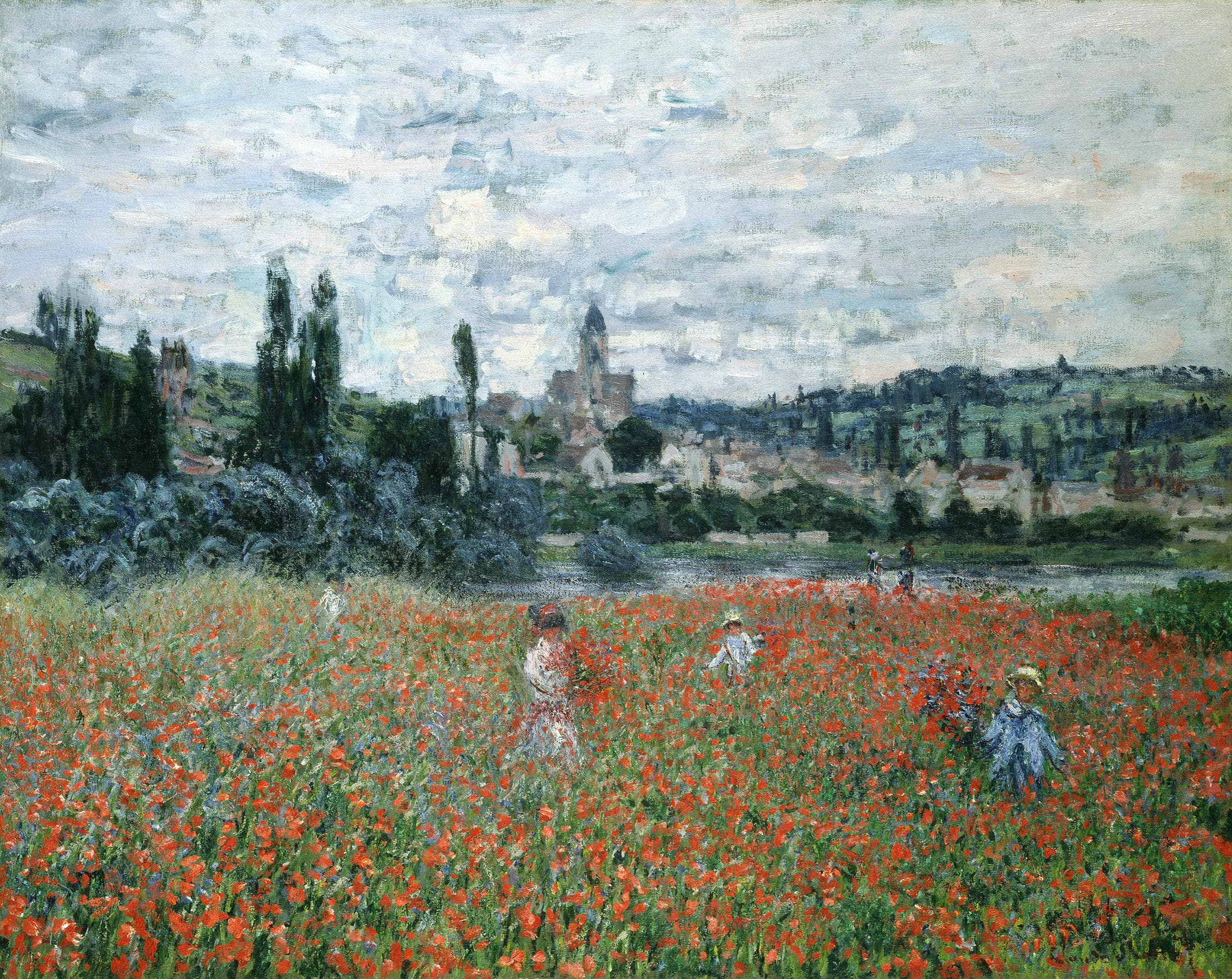
Poppy Field near Vétheuil
Claude Monet · c. 1879
Vétheuil Church
Claude Monet · 1879
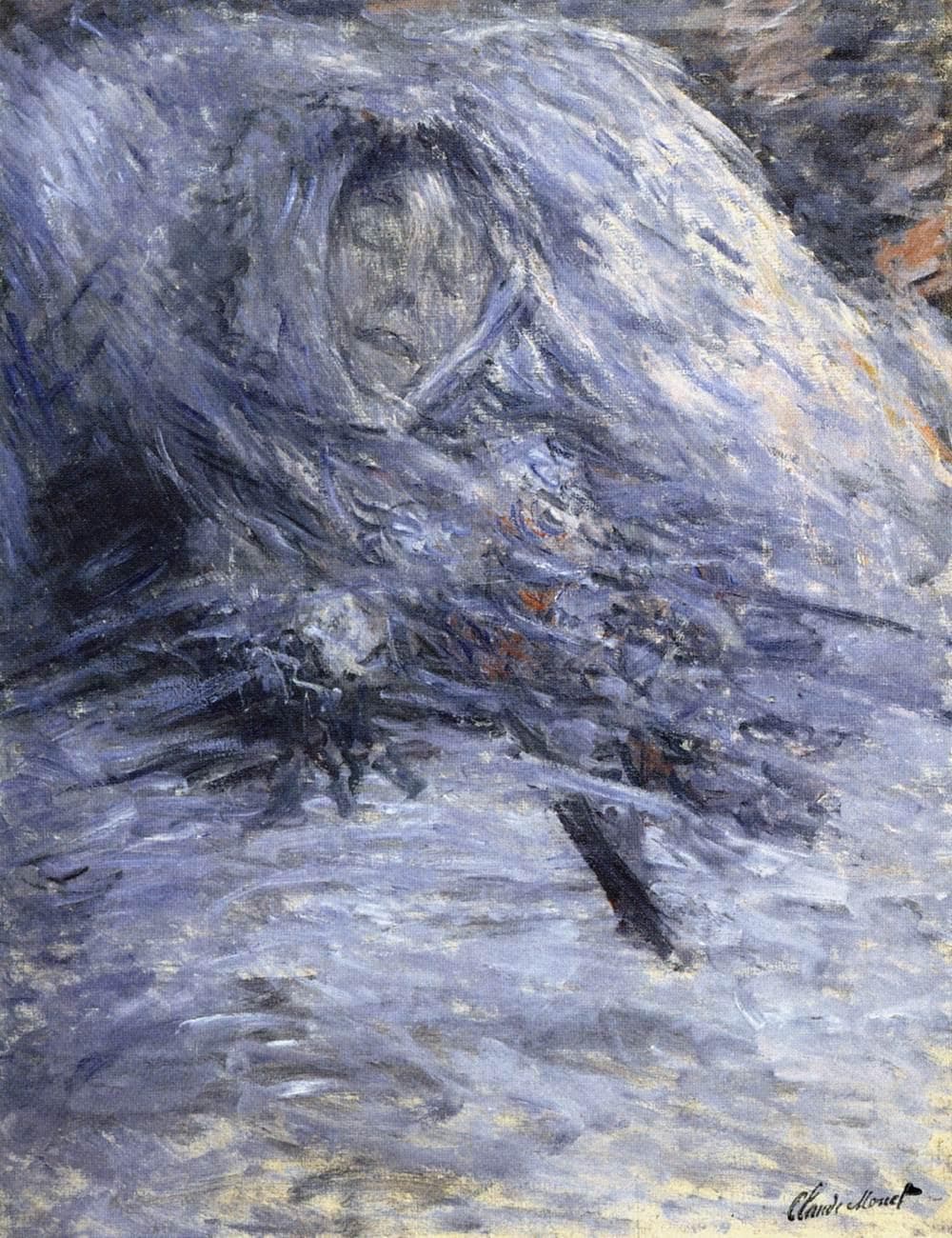
Camille Monet on Her Deathbed
Claude Monet · 1879
Lavacourt in Winter
Claude Monet · 1879
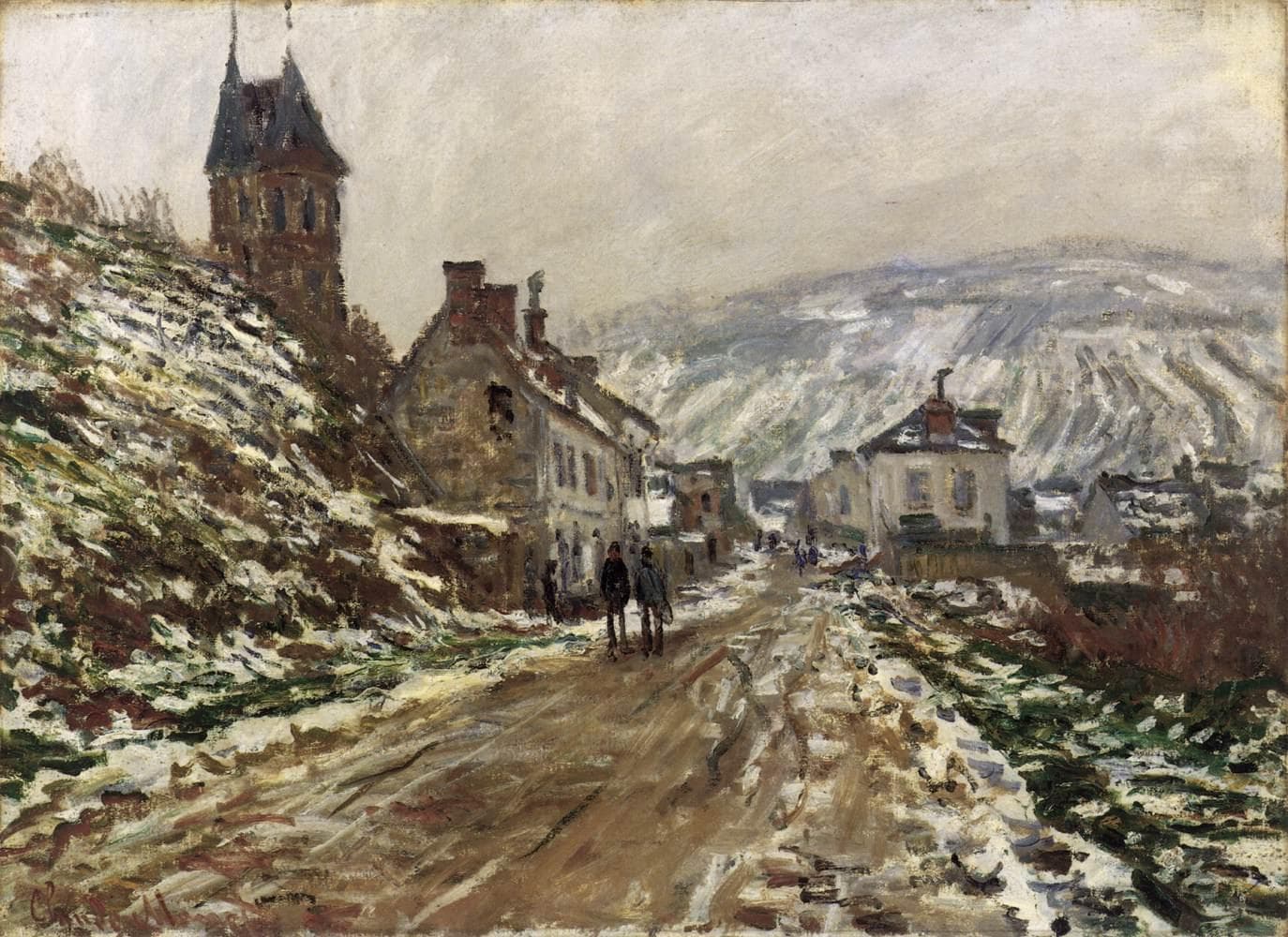
Road into Vétheuil in Winter
Claude Monet · 1879
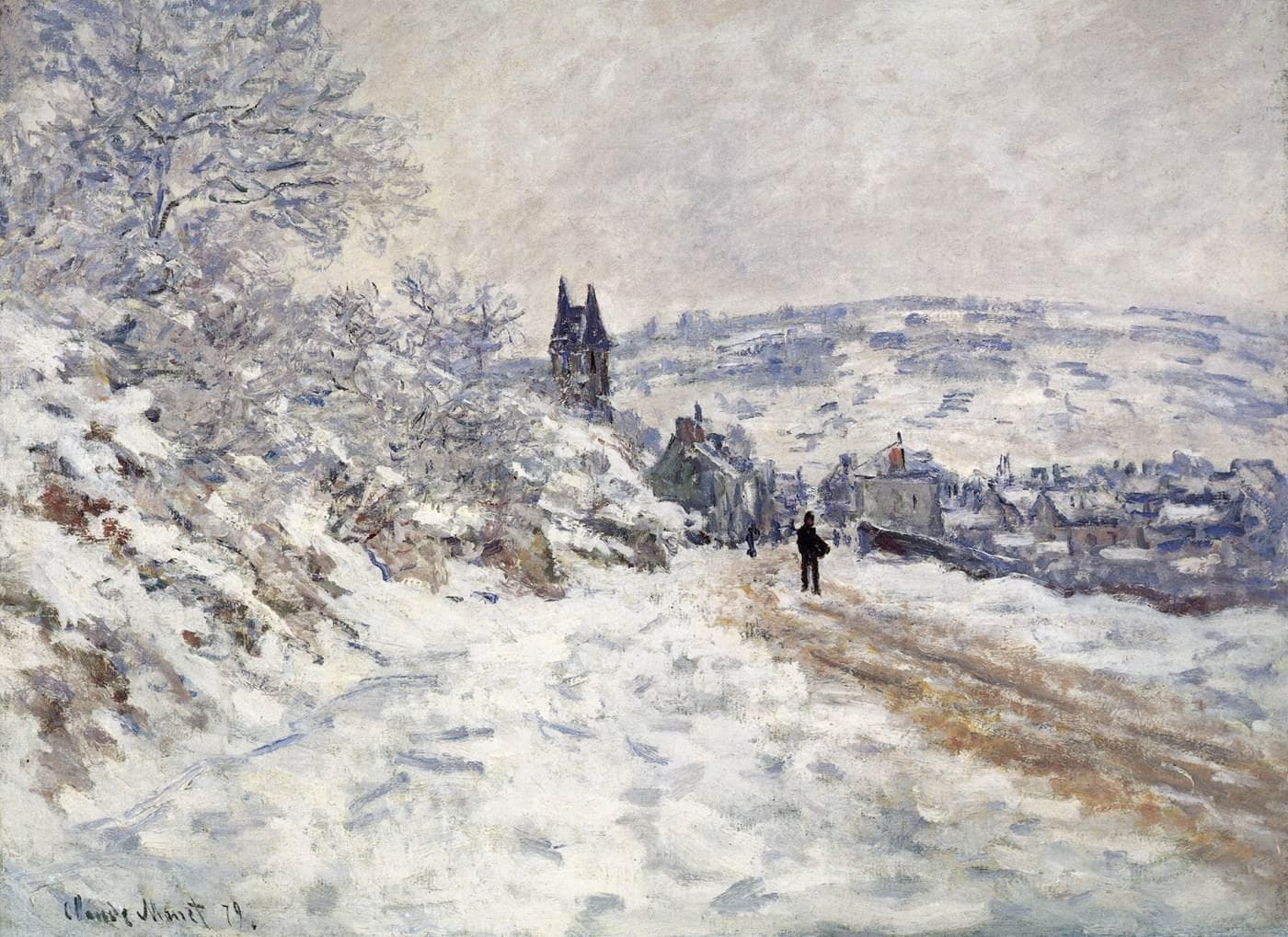
Road to Vétheuil, Snow Effect
Claude Monet · 1879
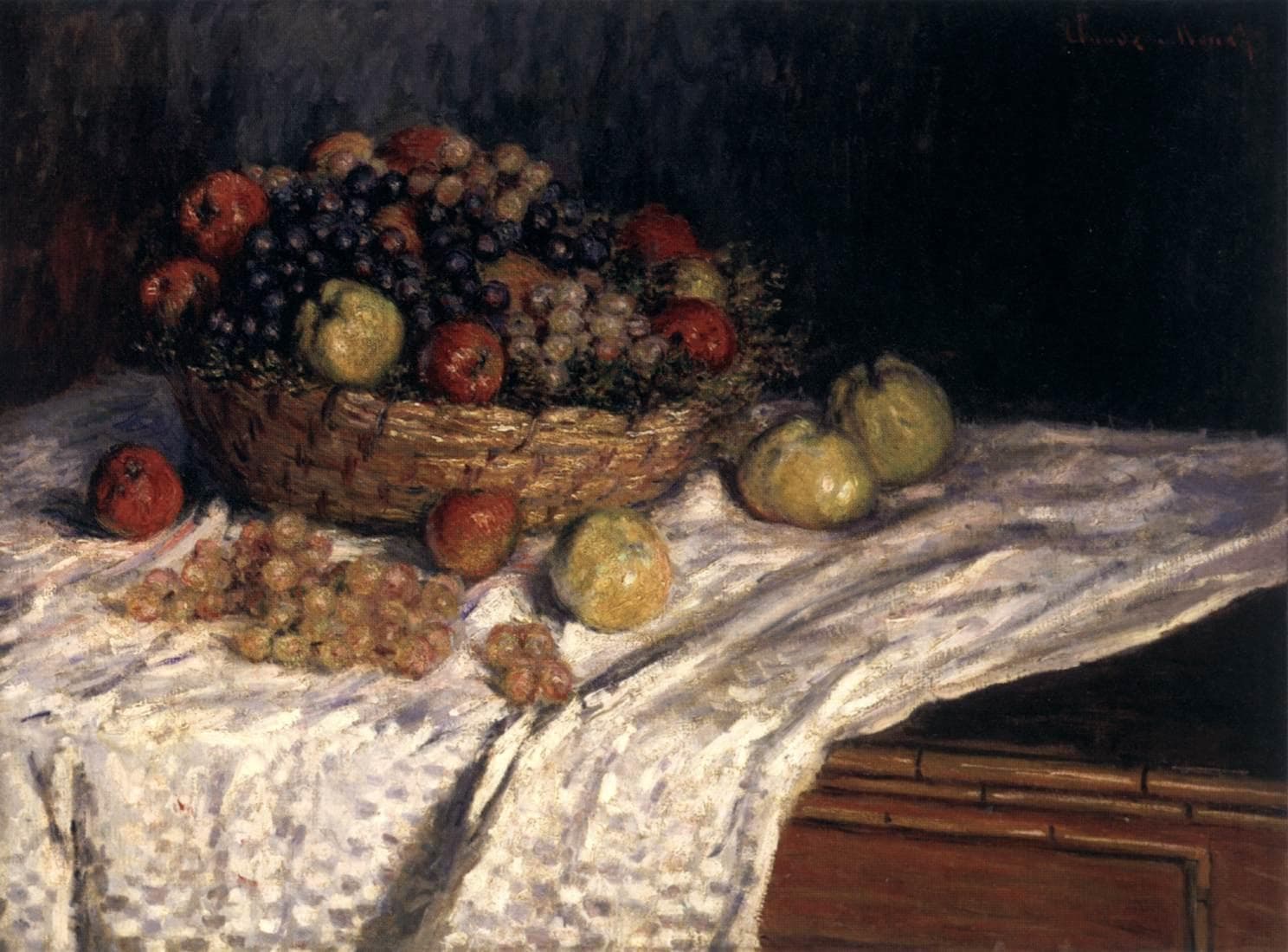
Still-Life with Apples and Grapes
Claude Monet · 1879–80
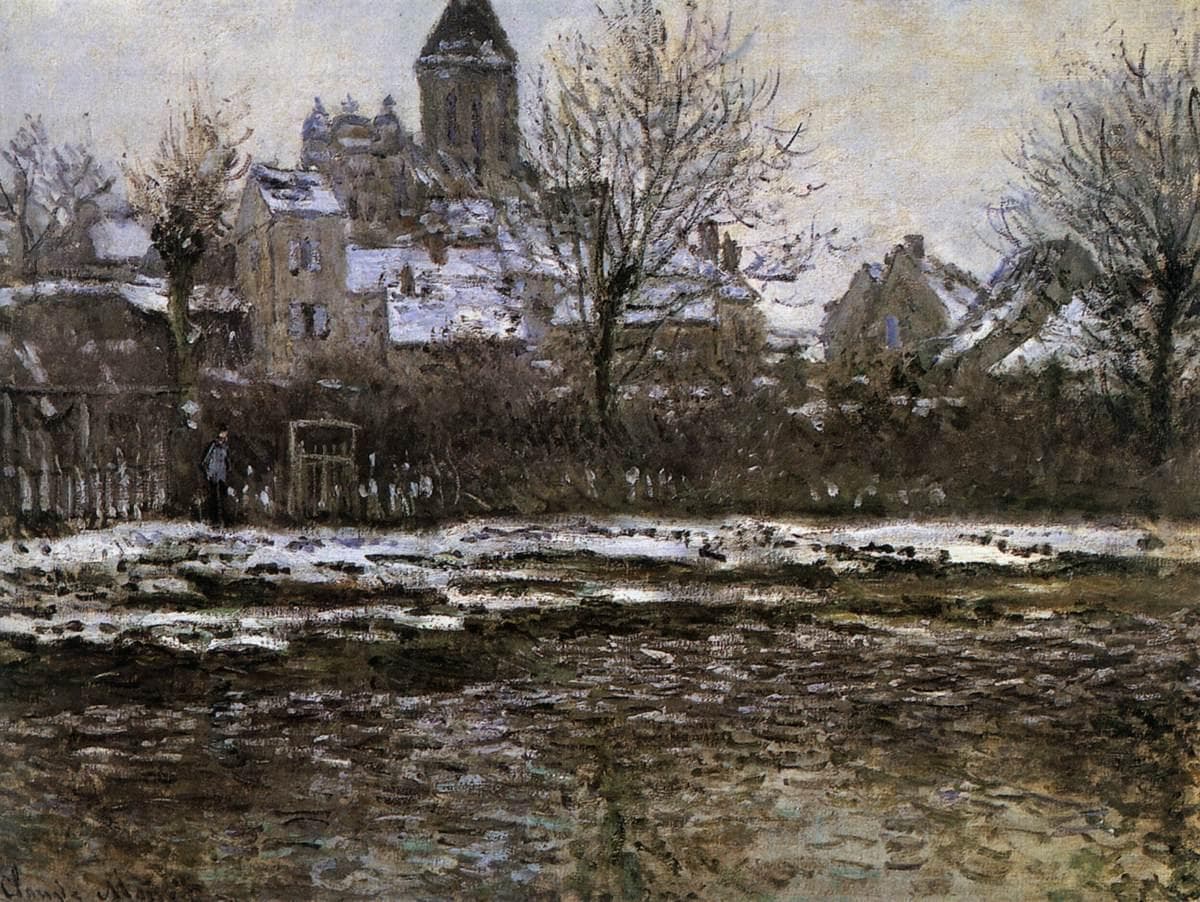
The Church in Vétheuil in Winter
Claude Monet · 1878–79
Kindred works
You may also study
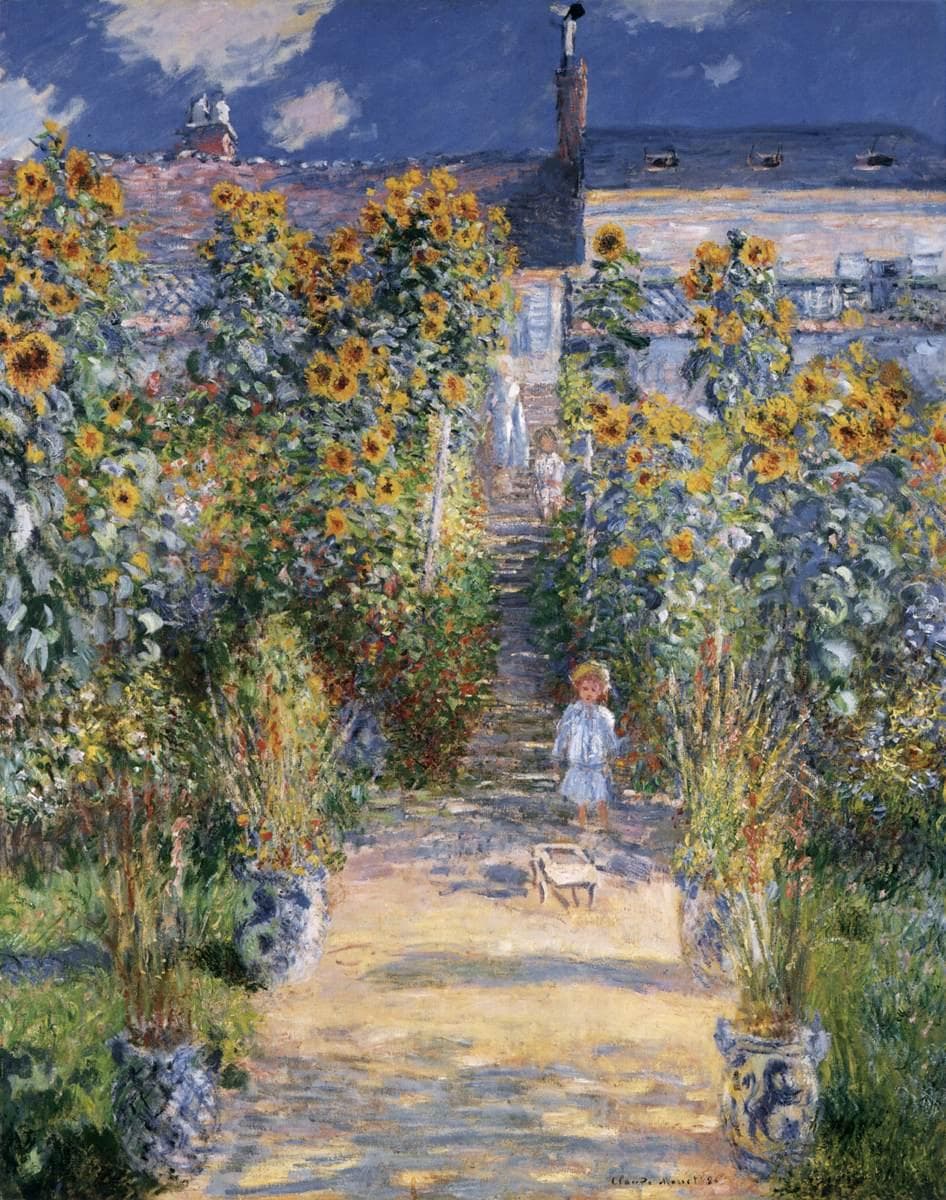
The Artist's Garden at Vétheuil
Claude Monet · 1881
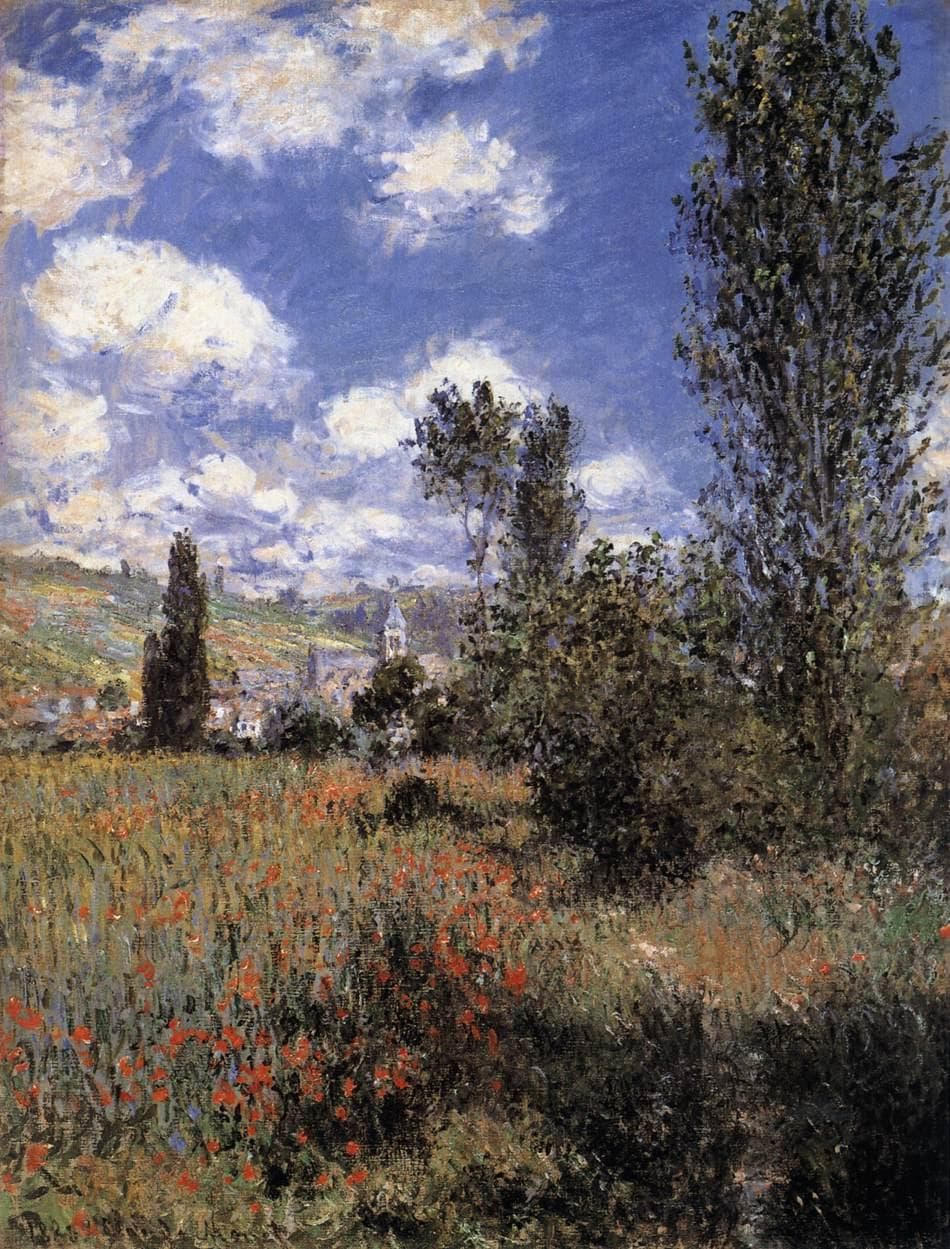
View of Vétheuil
Claude Monet · 1880
Road into Vétheuil in Winter
Claude Monet · 1879
Poppy Field near Vétheuil
Claude Monet · c. 1879
Camille Monet on Her Deathbed
Claude Monet · 1879
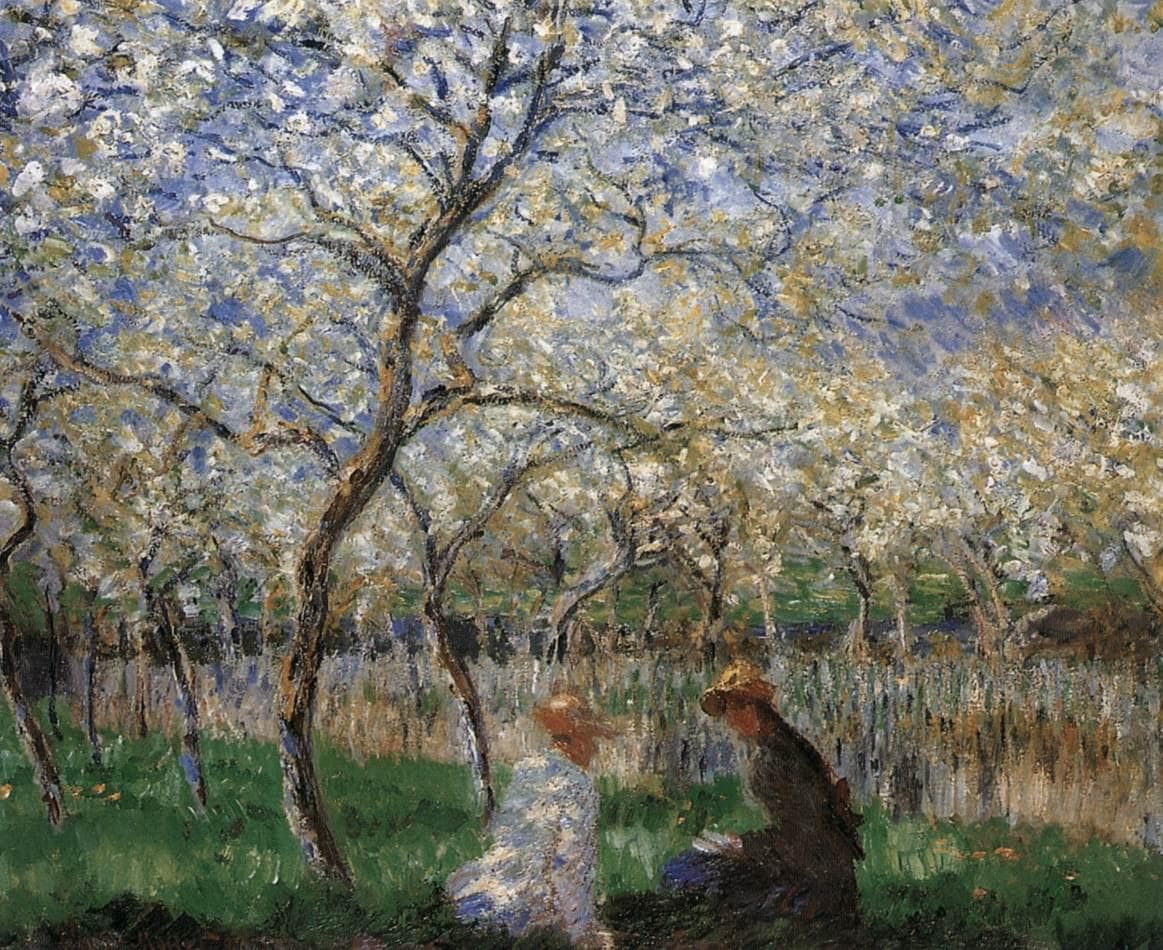
Spring
Claude Monet · 1886

The Scream
Edvard Munch · 1893

Ophelia
John Everett Millais · 1851–52