Baroque
The Vision of Constantine
Gian Lorenzo Bernini, 1654–70
The Vision of Constantine is Gian Lorenzo Bernini's marble equestrian statue of Emperor Constantine seeing the cross in the sky, begun in 1654 and unveiled in 1670 at the foot of the Scala Regia in the Vatican.
- Artist
- Gian Lorenzo Bernini
- Date
- 1654–70
- Medium
- Marble, with stucco drapery
- Collection
- St. Peter's Basilica, foot of the Scala Regia, Vatican City, Vatican City
- Movement
- Baroque
The Vision of Constantine is a marble equestrian statue by Gian Lorenzo Bernini showing the Roman emperor Constantine at the moment he saw a sign of the cross in the sky before his victory at the Milvian Bridge in AD 312. Commissioned in 1654 and unveiled in 1670, it stands at the foot of the Scala Regia, the ceremonial staircase linking St. Peter's Basilica with the Apostolic Palace in Vatican City. It can be seen from the north end of the basilica's portico.
The story
According to the church historian Eusebius, who claimed to have heard it from Constantine himself, the emperor and his army saw a cross of light in the sky above the sun, with the words "In this sign, conquer" (in Latin, In hoc signo vinces). That night Christ appeared to him in a dream and told him to use the sign as a standard. Constantine went on to defeat his rival Maxentius at the Milvian Bridge outside Rome, and soon afterward ended the persecution of Christians. He was baptized only on his deathbed, but later Christian tradition remembered him as the first Christian emperor.
What you are looking at
Bernini shows the instant of revelation. Constantine sits astride a rearing white horse, both rider and animal thrown backward in surprise. The emperor's head is tilted up and back, his eyes fixed on something above and in front of him, his lips parted. His right hand is pressed flat against his chest, a gesture of awe and inner conversion. His cloak billows in great sculpted folds around him.
The horse's head turns sharply, its eyes wide, its mane carved into deep, wind-tossed curls. Bernini made it as startled as its rider, and the strong diagonal of the rearing body carries the eye up toward the light.
Behind the statue hangs an enormous curtain, swept back as if blown by the same wind. This drapery is made of stucco, painted to resemble a rich, patterned fabric. The detail most visitors miss is the light. Bernini placed the statue so that daylight from a hidden window falls on it from above, as though from the vision itself, while the marble below sits in shadow. The image on this page shows that light raking across Constantine's upturned face.
How it was made
Pope Innocent X commissioned the statue in 1654, originally intended for St. Peter's itself. Work stalled after the pope's death in 1655. Under Alexander VII, Bernini rebuilt the Scala Regia in the 1660s, using false perspective to make a narrow, irregular staircase seem grand, and the statue was redirected to the landing at its base. It was finally unveiled in 1670, under Pope Clement X.
Placing a horse and rider in a shallow niche-like space against a wall was a challenge. Bernini's solution was the curtain: by turning the background into a dramatic backdrop, he gave the group a stage and filled the space without needing a larger block of marble.
Meaning and interpretation
The statue is political as well as devotional. Constantine was the emperor who brought the church out of persecution and, according to medieval tradition, gave the popes authority in Rome. Placing him at the threshold between the basilica and the papal palace made a clear statement about the relationship between secular power and the church: the emperor kneels, in effect, before a higher light.
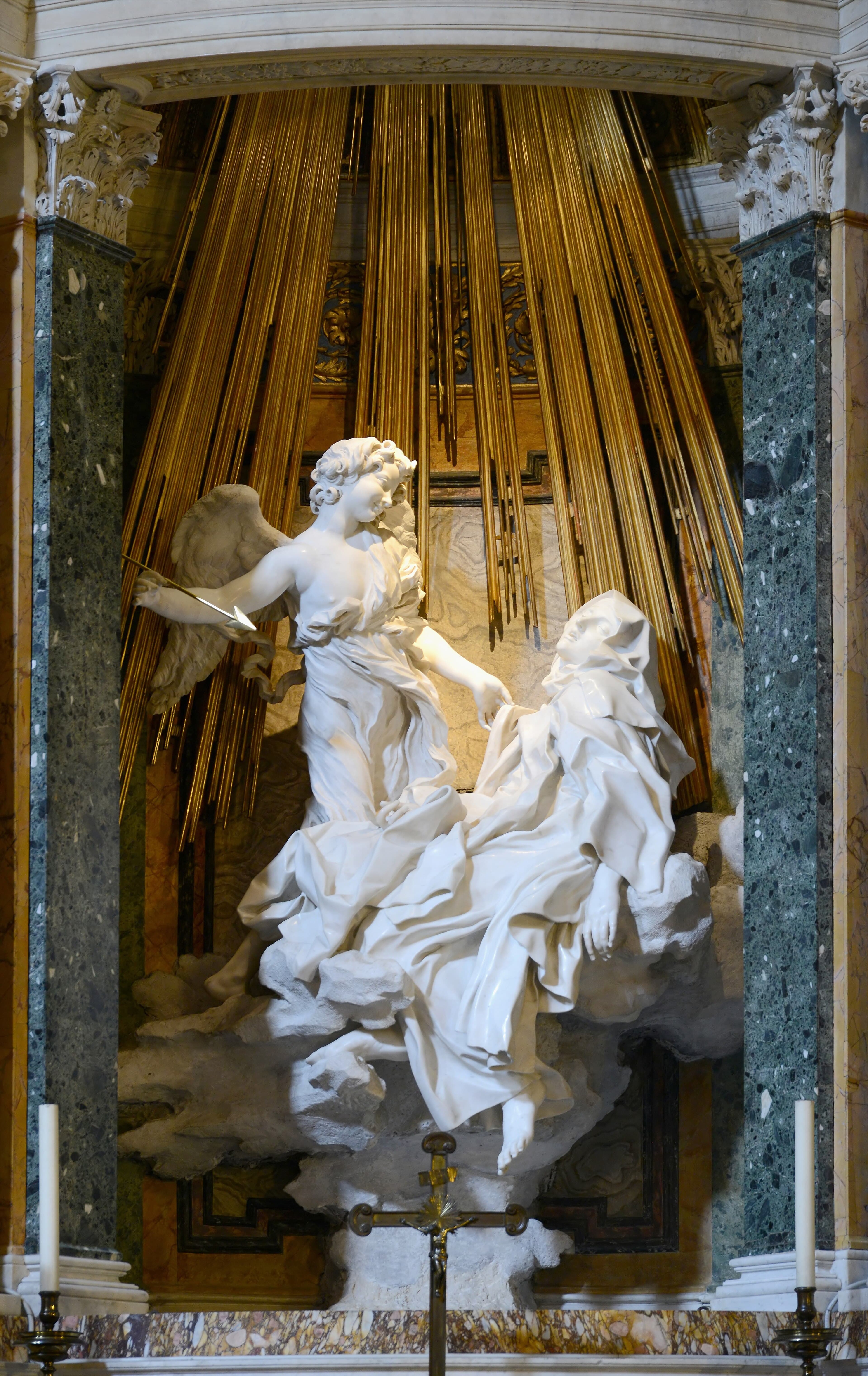
It is also a manifesto for Bernini's art. The sculpture uses marble, stucco, architecture and real light together to stage a single moment of revelation, the same theatrical synthesis he achieved in the Ecstasy of Saint Teresa.
Reception
The statue was criticized when it was unveiled. Some found the horse too animated, the emperor not dignified enough, and the whole too unconventional for an imperial monument. Bernini's equestrian statue of Louis XIV, made in the same period, met an even worse fate: the French court disliked it and had it reworked as a figure of the ancient hero Marcus Curtius. Later critics have been kinder, recognizing the Constantine as one of the boldest equestrian sculptures of the Baroque. A matching equestrian statue of Charlemagne by Agostino Cornacchini was installed at the opposite end of the portico in 1725.
Seeing it from the portico
Because the statue sits at an angle to the portico, most visitors see it as Bernini intended: suddenly, framed by an archway, from below and at a distance. The horse appears to burst out of the wall toward the basilica, and the curtain seems to have just been swept aside to reveal it. The effect is closer to a scene glimpsed on a stage than to a monument one walks around, and it mirrors the subject itself, a vision that appears without warning.
Where to see it
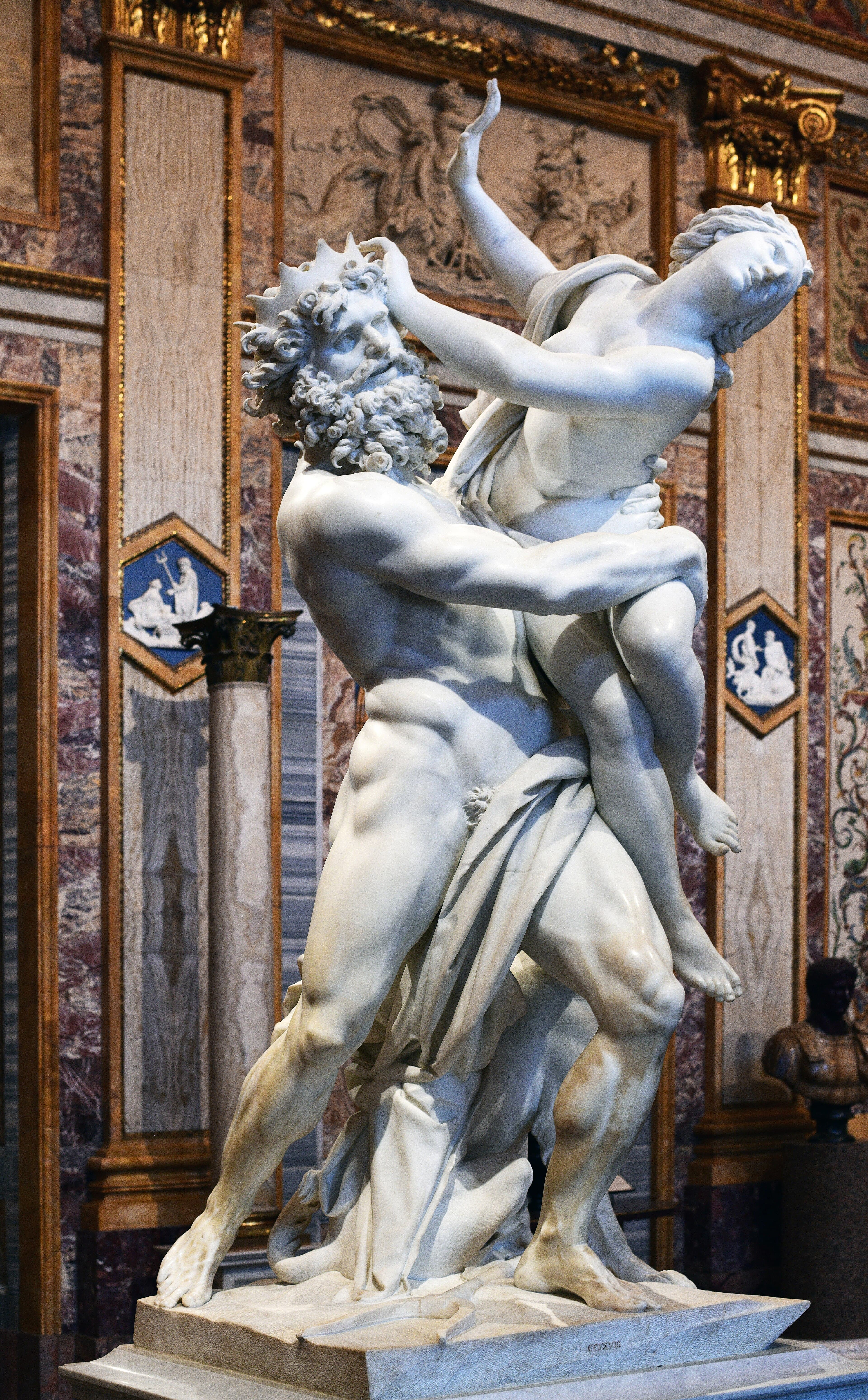
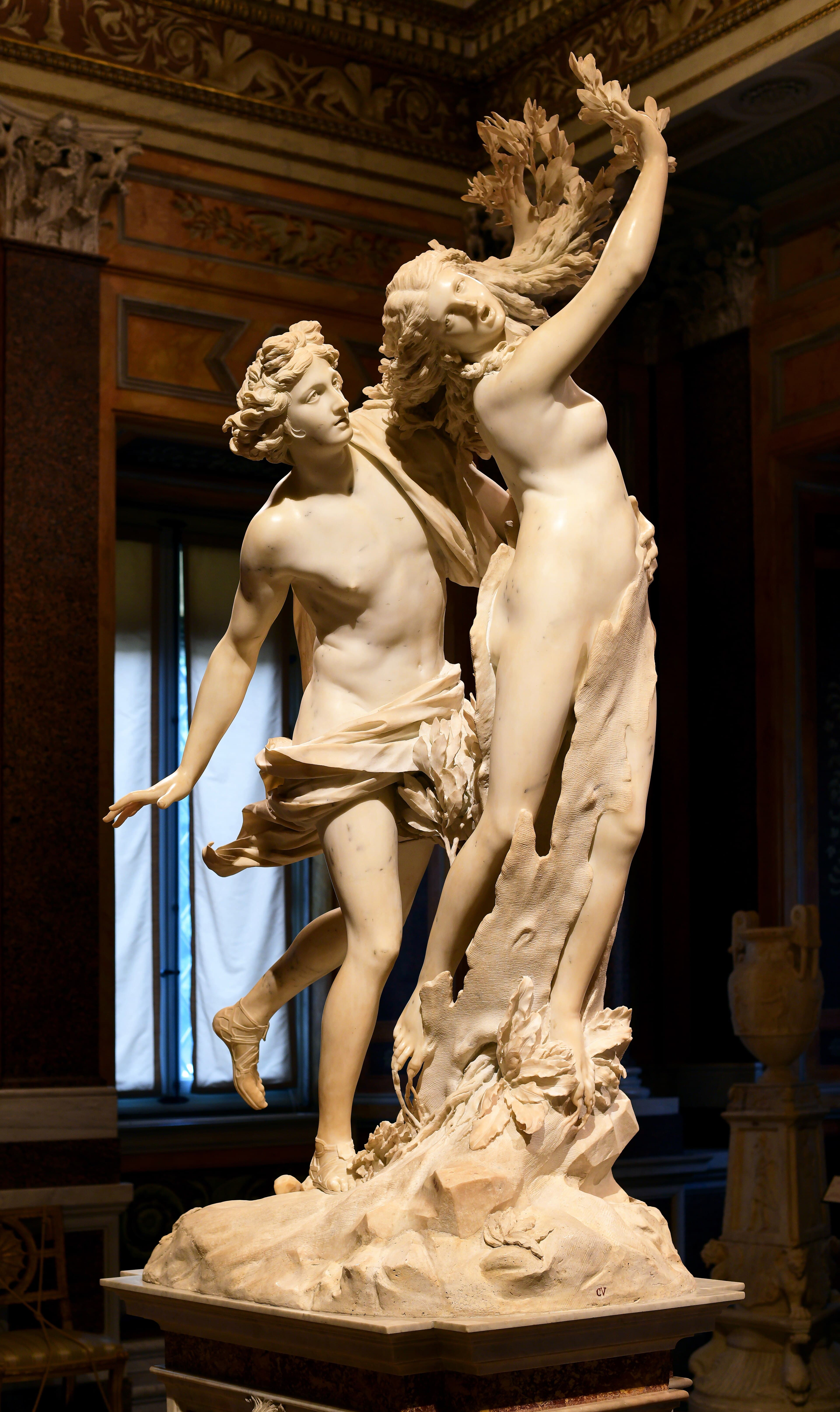
The statue is at the foot of the Scala Regia, off the portico of St. Peter's Basilica. Visitors can usually glimpse it from the north end of the portico, behind a gate, rather than walking up to it. For more Bernini in the catalogue, see Apollo and Daphne, The Rape of Proserpina and our guide to Baroque art.
Questions & answers
Where is Bernini's statue of Constantine?
It stands at the foot of the Scala Regia, the grand staircase connecting St. Peter's Basilica with the Apostolic Palace in Vatican City. Visitors usually see it from the northern end of the basilica's portico, through a gate, rather than up close.
What does The Vision of Constantine depict?
It shows Emperor Constantine on a rearing horse at the moment he saw a cross in the sky before the Battle of the Milvian Bridge in AD 312. The vision came with the words In hoc signo vinces, In this sign, conquer.
When did Bernini make The Vision of Constantine?
Pope Innocent X commissioned it in 1654. Work was interrupted after his death, resumed under Alexander VII when Bernini rebuilt the Scala Regia in the 1660s, and the statue was unveiled in 1670 under Clement X. It took sixteen years in all.
What is the curtain behind Bernini's Constantine made of?
The billowing curtain is stucco, painted to look like a patterned fabric. Bernini used it as a theatrical backdrop that fills the space behind the horse and rider and catches the light from a hidden window, making the vision feel like an event on a stage.
More by the artist
Gian Lorenzo Bernini
Kindred works
You may also study
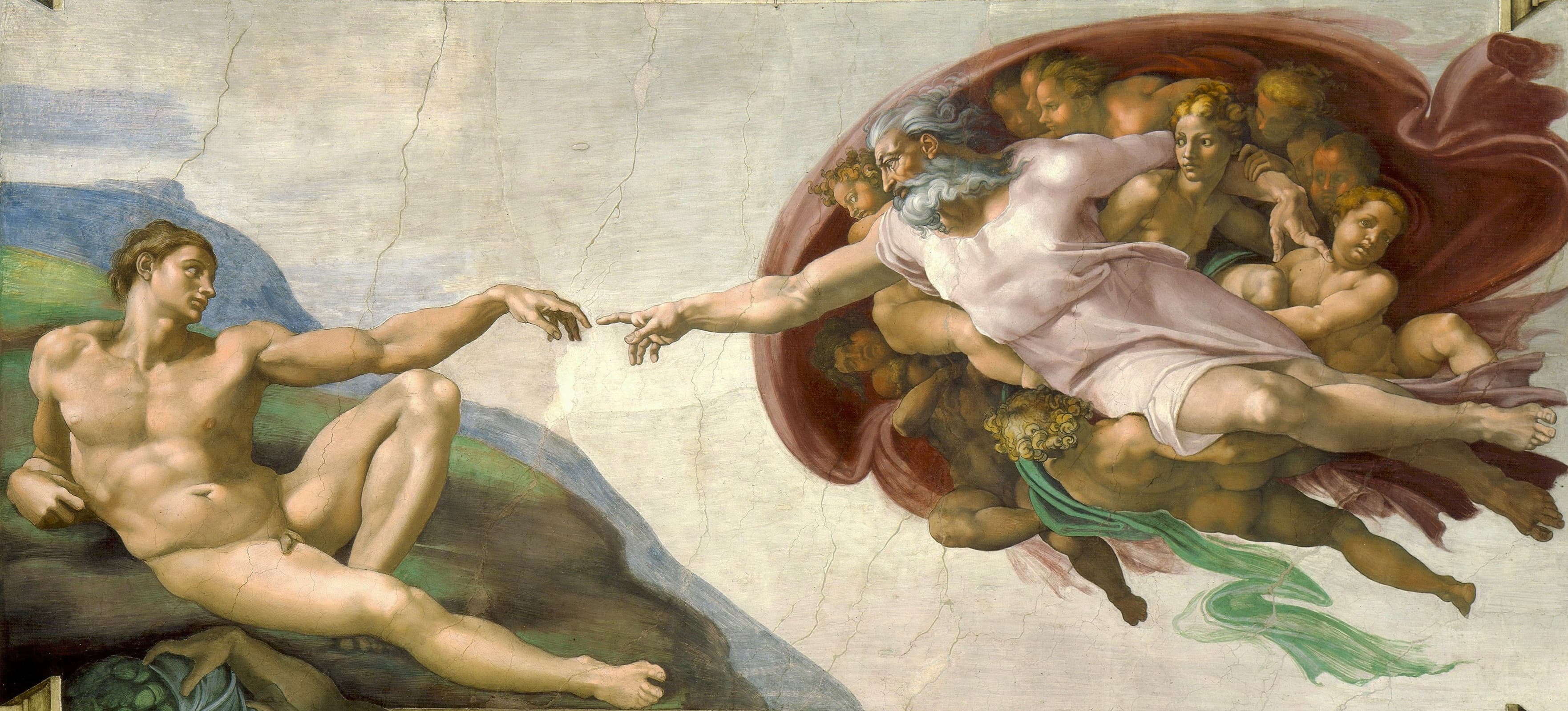
The Creation of Adam
Michelangelo · c. 1511–12
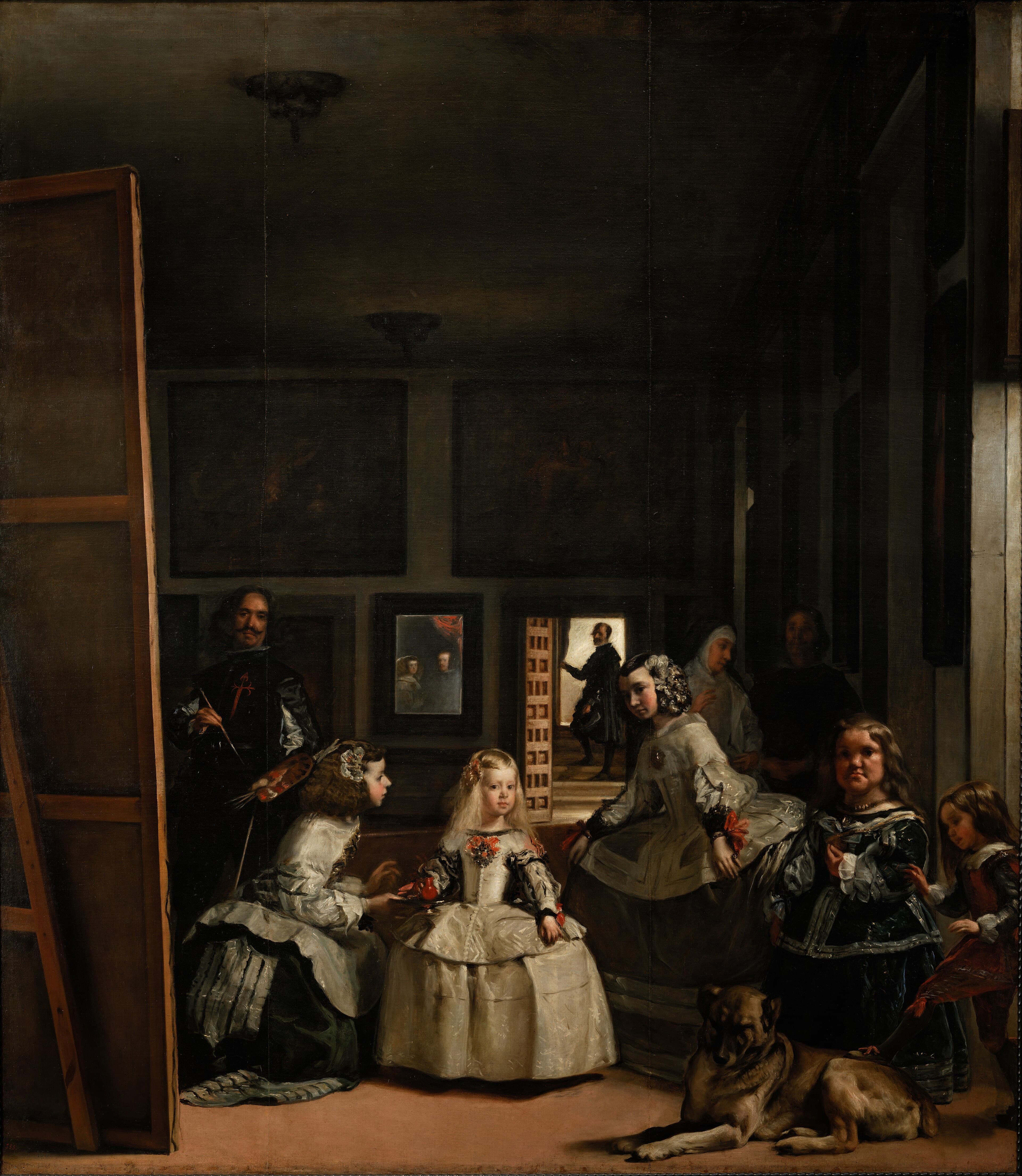
Las Meninas
Diego Velázquez · 1656
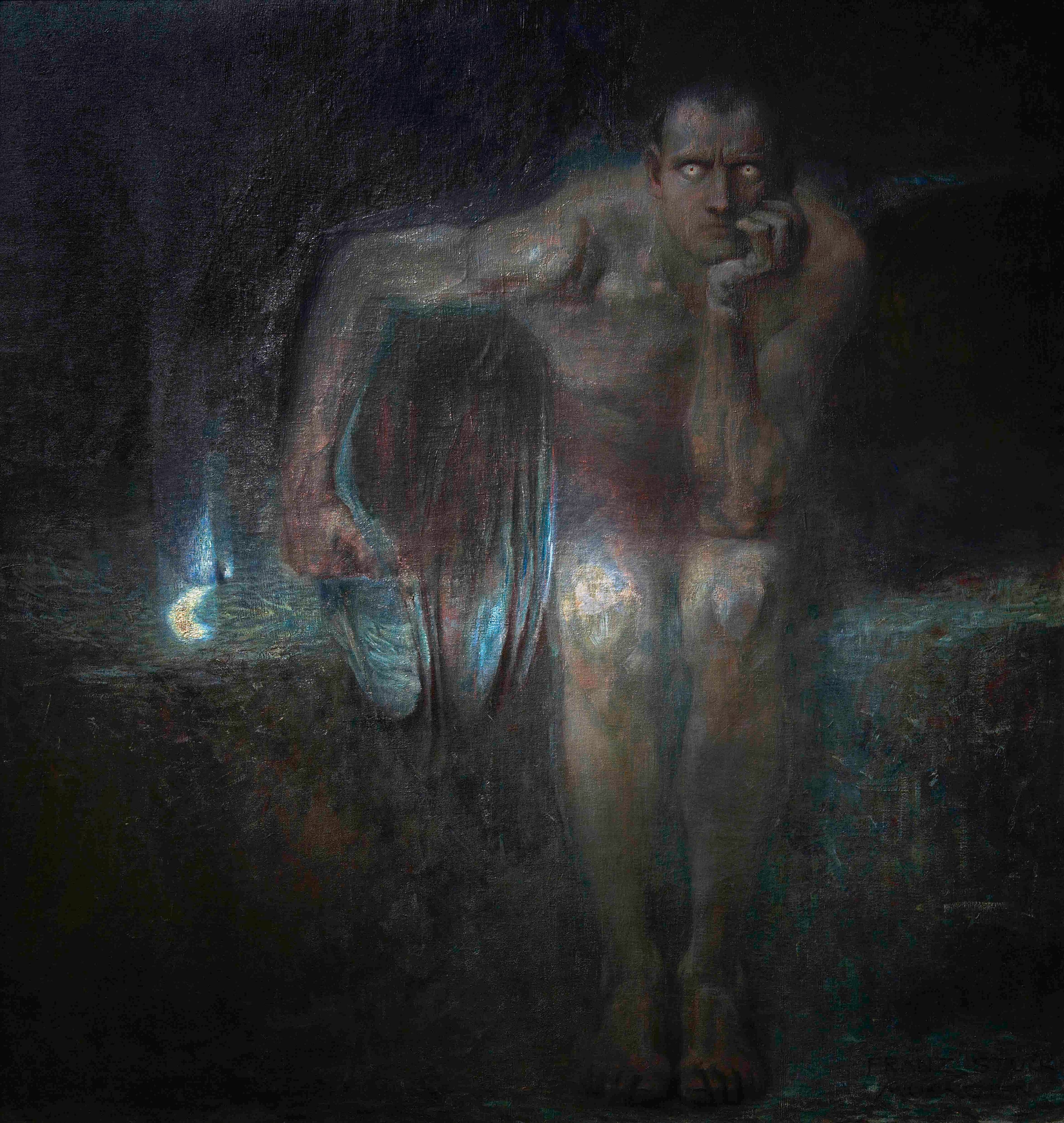
Lucifer
Franz von Stuck · 1890
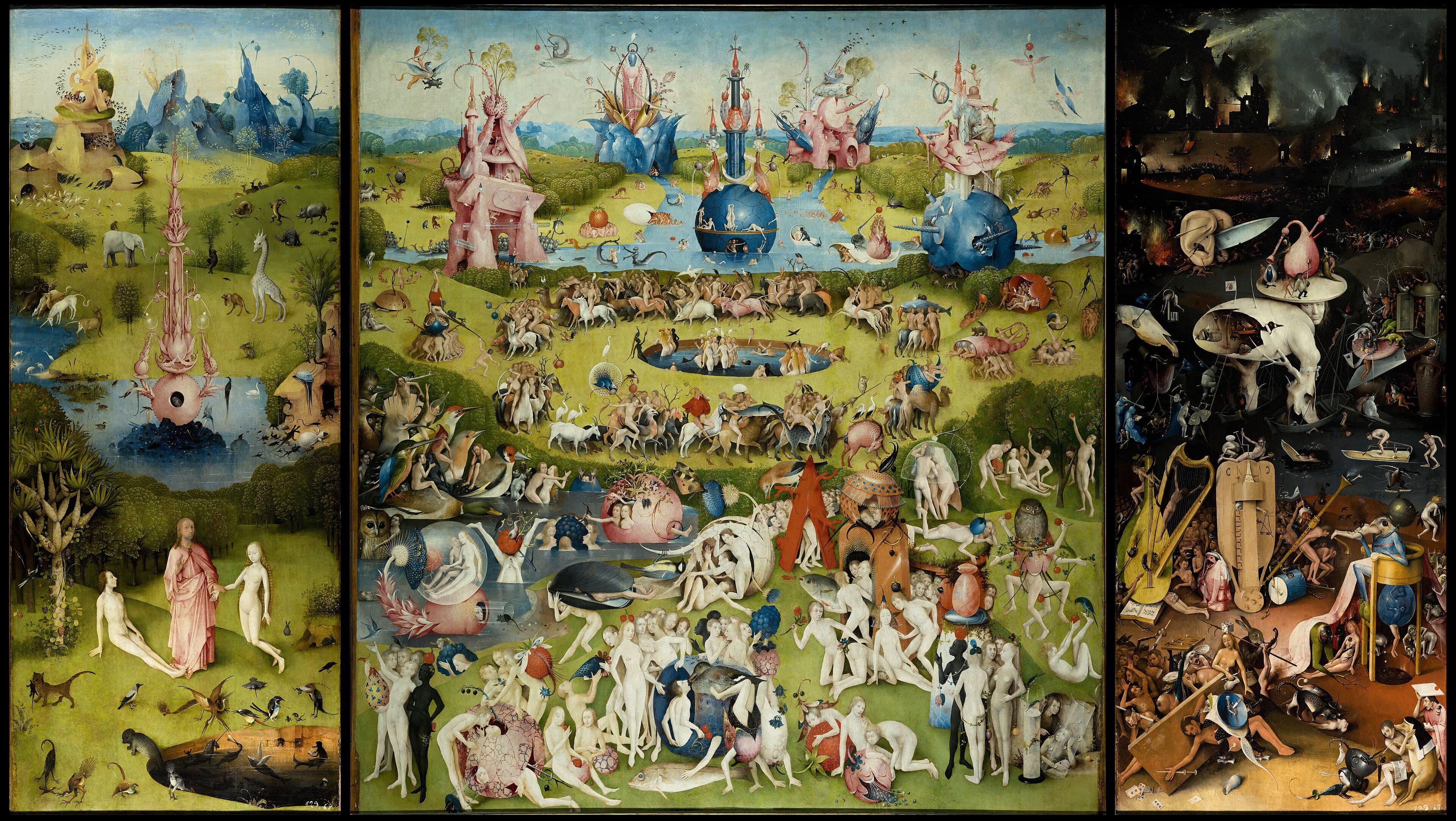
The Garden of Earthly Delights
Hieronymus Bosch · c. 1490–1510
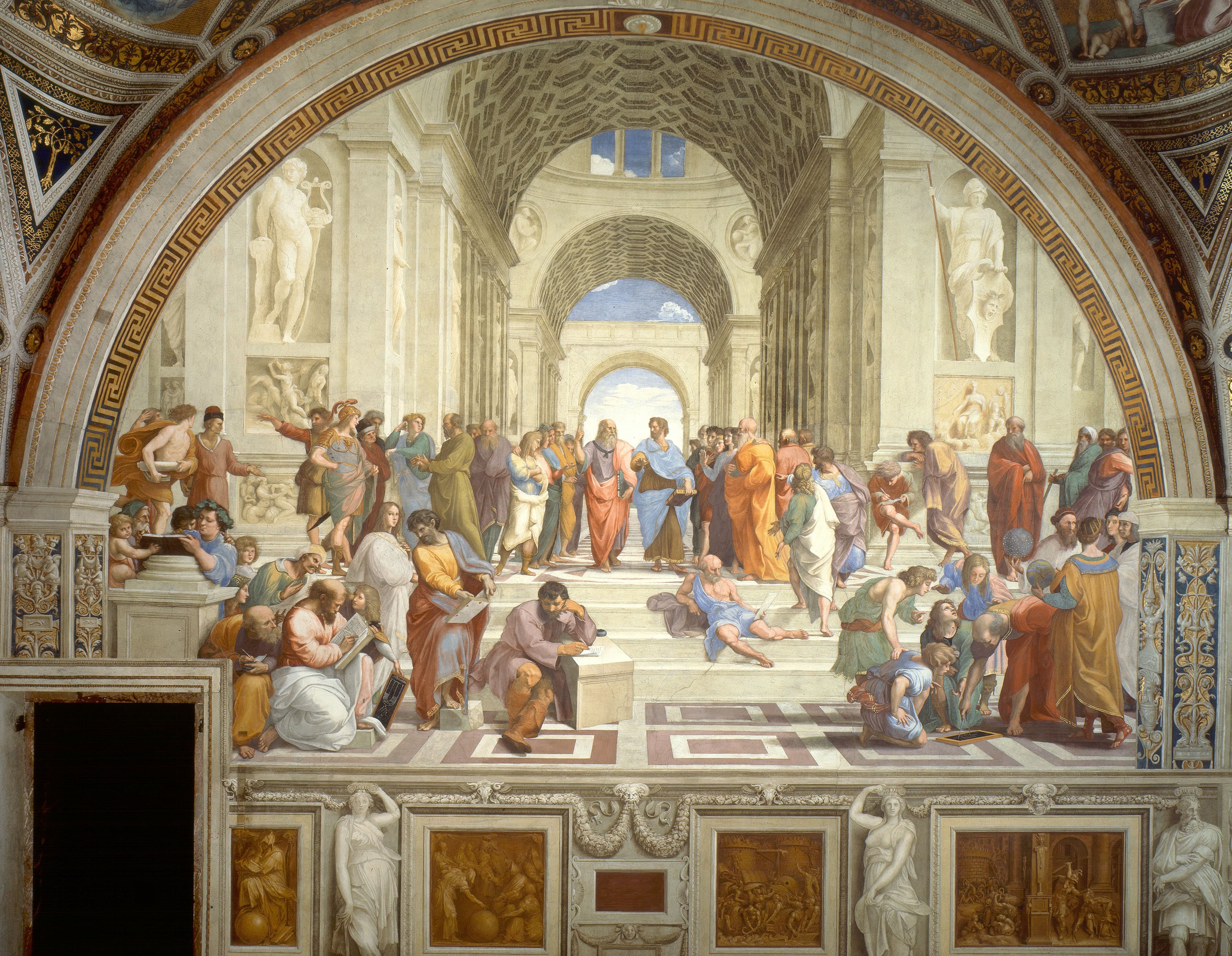
The School of Athens
Raphael · 1509–1511
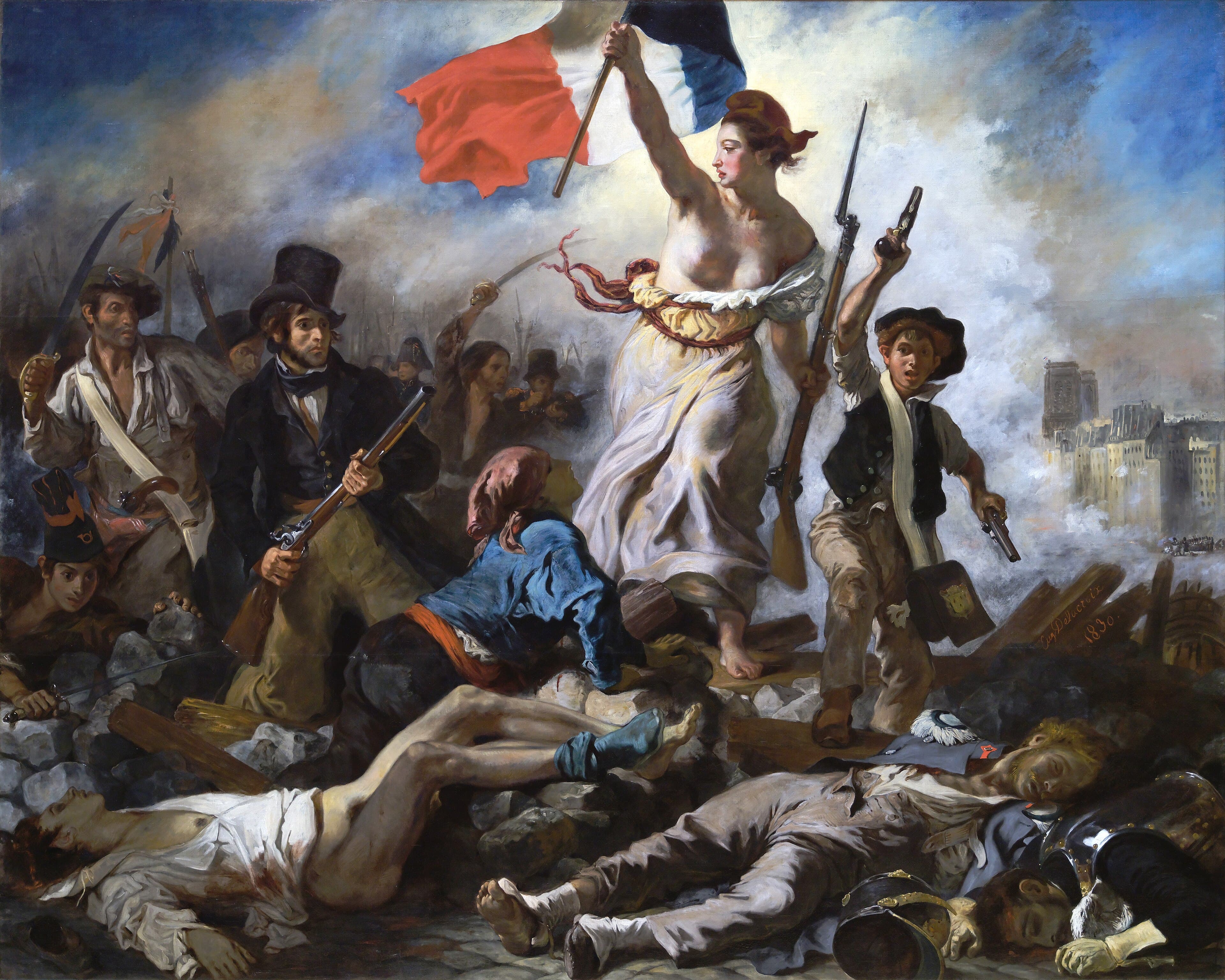
Liberty Leading the People
Eugène Delacroix · 1830
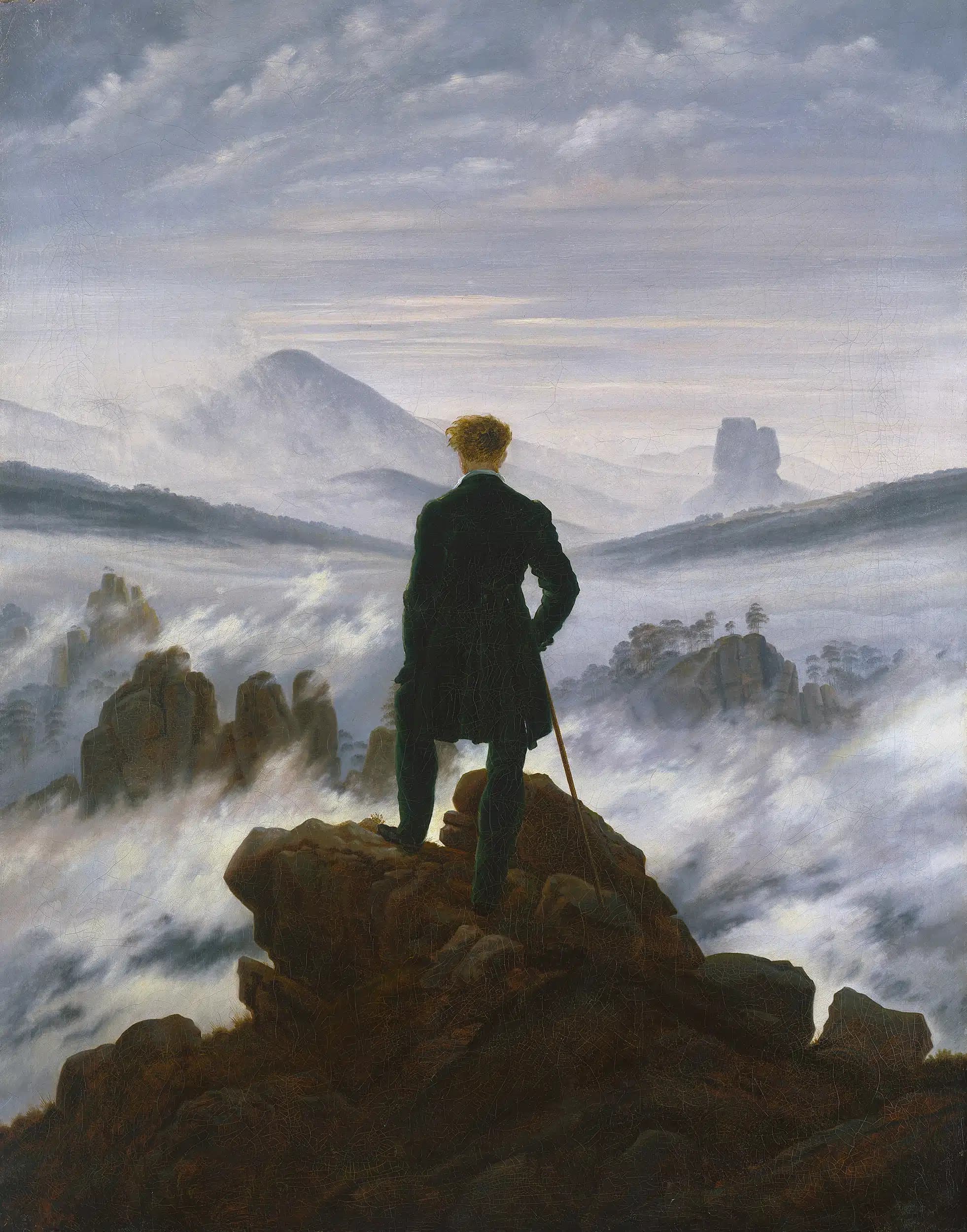
Wanderer above the Sea of Fog
Caspar David Friedrich · c. 1817
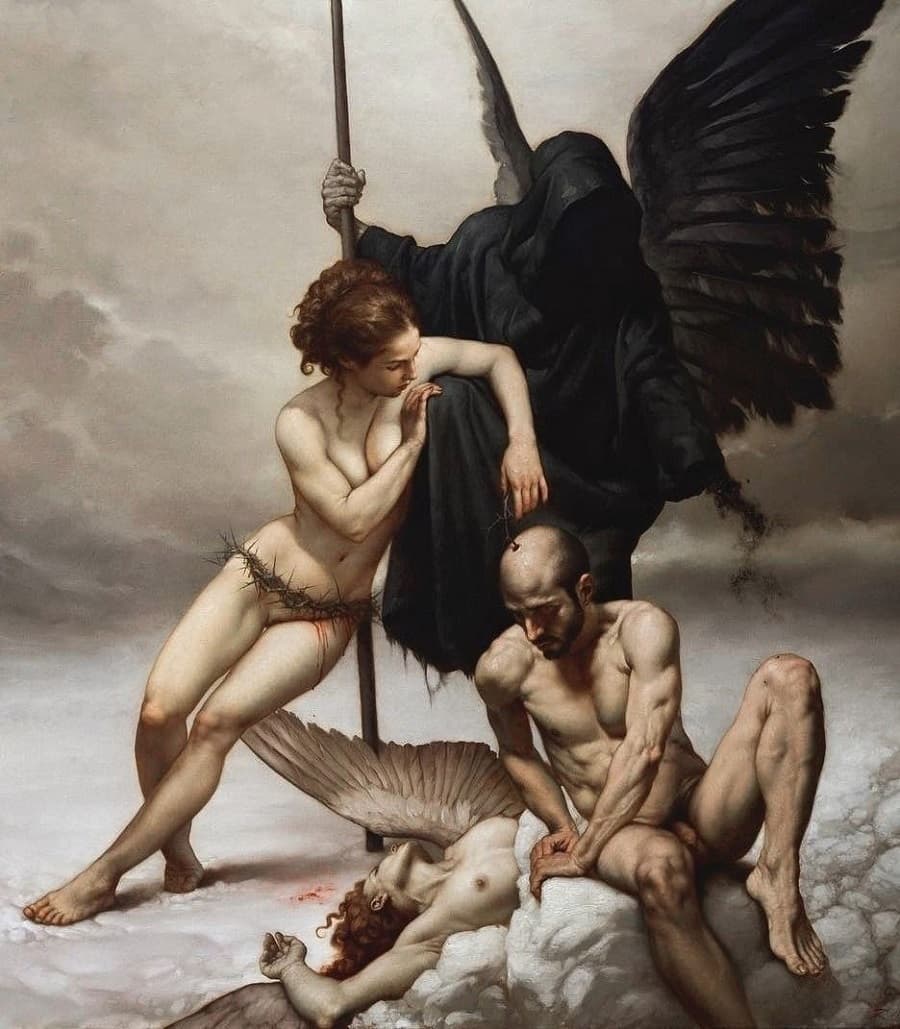
The Angel, the Death, and the Devil
Roberto Ferri · 2018