Rococo
Modesty (La Pudicizia)
Antonio Corradini, 1752
La Pudicizia (Modesty) is Antonio Corradini's veiled marble woman in the Cappella Sansevero, Naples, completed in 1752 as a memorial to the mother of Prince Raimondo di Sangro. The thin veil seems transparent over her body.
- Artist
- Antonio Corradini
- Date
- 1752
- Medium
- Marble
- Collection
- Cappella Sansevero, Naples, Italy
- Movement
- Rococo
La Pudicizia, usually translated as Modesty and sometimes as Chastity or Veiled Truth, is a marble statue by the Venetian sculptor Antonio Corradini in the Cappella Sansevero in Naples. Completed in 1752, the year of the sculptor's death, it is a funerary monument to Cecilia Gaetani dell'Aquila d'Aragona, mother of Raimondo di Sangro, Prince of Sansevero, who died when her son was still an infant. Our catalogue has a fuller page on the same statue as Statue of Chastity.
What you are looking at
A young woman stands with her weight on one leg, her head slightly turned and lowered. She is covered from head to thigh by a single veil so fine that it seems to cling to her skin: we see the shape of her eyes, nose and lips through it, the line of her collarbones, her breasts and navel. Below the hips, the veil is gathered into a garland of roses that wraps around her body and falls in heavy folds.
Her left hand rests on a broken stone tablet, or stele, beside her, its top edge cracked off. In the photograph, the shine of the polished marble and the soft shadows of the folds make the veil seem almost wet.
How it was made
The veiled figure was Corradini's specialty, and he had carved several before coming to Naples, including a Veiled Woman in Venice. The effect is a trick of carving: the body is modeled first in full, and the "veil" is created by thin raised ridges and edges that follow the forms, with the surface beneath polished to read as skin. The illusion depends on the contrast between crisp folds and smooth flesh.
Meaning
Each statue in the chapel embodies a virtue and commemorates a member of the di Sangro family. Modesty, or chastity, was the virtue assigned to the prince's mother. The broken tablet refers to her early death, a life cut short. The veil itself is also read as a symbol of wisdom and truth hidden from the eyes of the uninitiated, in keeping with Raimondo di Sangro's interests in alchemy and Freemasonry; that reading comes from later interpreters rather than any statement by the patron. The base carries a relief of Christ appearing to Mary Magdalene, the Noli me tangere ("do not touch me").
Where to see it
The statue stands in the Cappella Sansevero (Museo Cappella Sansevero) in Naples, close to Giuseppe Sanmartino's Veiled Christ, completed the following year after Corradini's death. For more marble virtuosity, see Canova's The Three Graces and our famous sculptures collection.
Questions & answers
Where is La Pudicizia by Corradini?
It stands in the Cappella Sansevero in Naples, a private family chapel of the princes of Sansevero that is now a museum. The statue is a memorial to Cecilia Gaetani, mother of Prince Raimondo di Sangro, and was completed in 1752.
How did Corradini carve a transparent veil in marble?
He carved the body in full and then cut fine, raised folds and edges over it that follow its forms, polishing the surfaces between them so they read as skin. The contrast between crisp folds and smooth flesh creates the illusion of a thin, clinging veil.
What does La Pudicizia mean?
Pudicizia means modesty or chastity, the virtue assigned to the prince's mother in the chapel's program. The broken tablet beside her alludes to her early death. Later writers also read the veil as a symbol of hidden truth, linked to the patron's esoteric interests.
Kindred works
You may also study
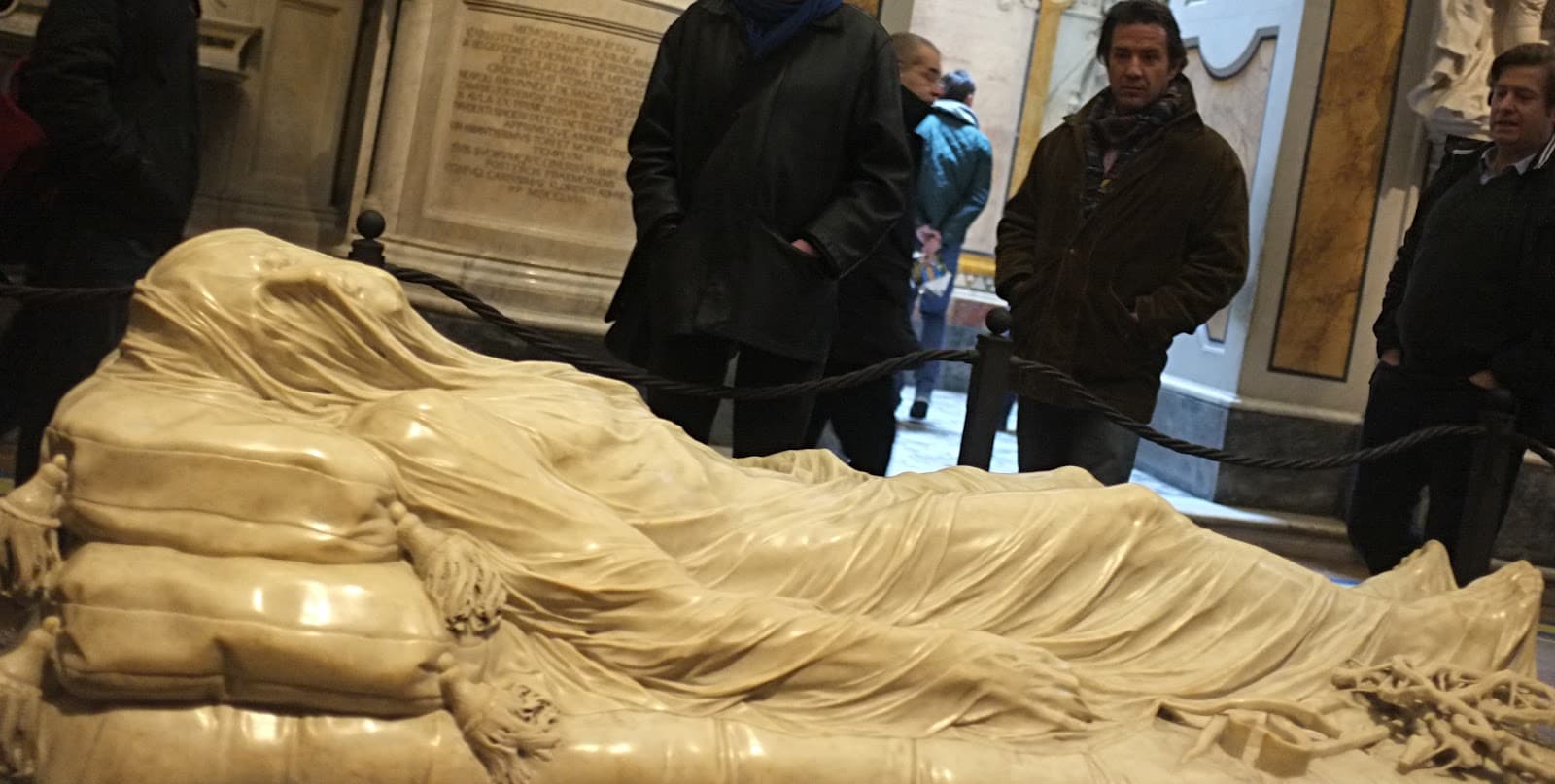
Veiled Christ
Giuseppe Sanmartino · 1753
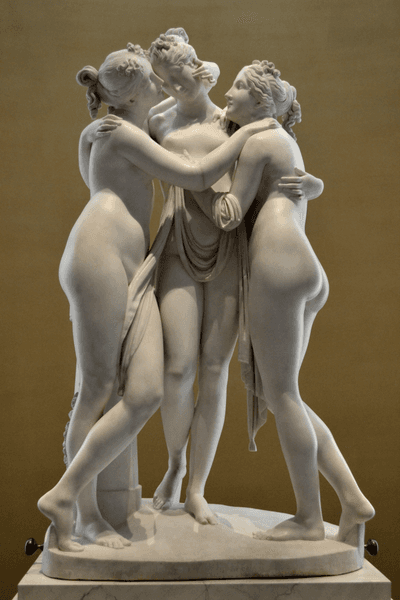
The Three Graces
Antonio Canova · 1814–17
Psyche Revived by Cupid's Kiss
Antonio Canova · 1787–1793

Venus de Milo
Alexandros of Antioch · c. 150–125 BC

The Scream
Edvard Munch · 1893

Saturn Devouring His Son
Francisco Goya · c. 1819–1823
The Creation of Adam
Michelangelo · c. 1511–12

Ophelia
John Everett Millais · 1851–52