
Collection
Greek Statues: The Famous Sculptures of Ancient Greece
Marble gods, bronze athletes and the painted statues we now see as white: a guide to Greek sculpture and its long afterlife.
Greek statues are the sculptures made in ancient Greece and the Greek world between about 650 and 30 BC, in marble, bronze, and gold and ivory, and they set the model for the human figure in Western art. The most famous include the Venus de Milo and the Winged Victory of Samothrace in the Louvre, the Laocoön group in the Vatican, the Parthenon sculptures, the Discobolus and the Riace bronzes.
Two facts surprise most visitors. Many "Greek statues" in museums are Roman marble copies of lost Greek bronzes. And almost all of them were originally painted, in skin tones, red lips and patterned clothing. This guide follows Greek sculpture from its stiff beginnings to the drama of the Hellenistic age, then shows how later sculptors kept the Greek myths in marble.
01
Venus de Milo
Alexandros of Antioch · c. 150–125 BC
The Venus de Milo is an ancient Greek marble statue of a goddess, almost certainly Aphrodite, carved around 150–125 BC and probably the work of Alexandros of Antioch. Found on the island of Milos in 1820 without its arms, it has been in the Louvre in Paris since 1821.
02
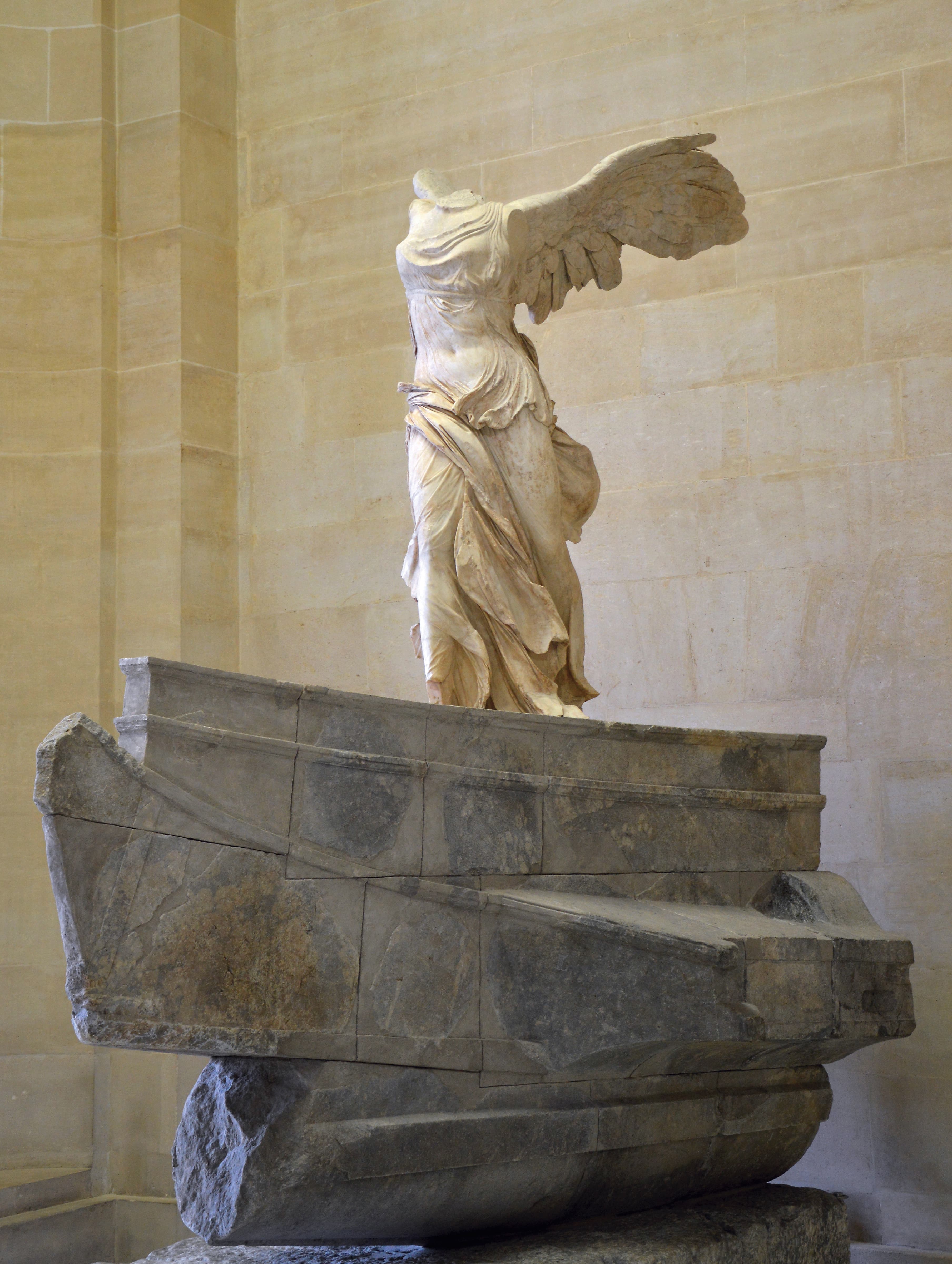
Winged Victory of Samothrace
Artist Unknown · c. 200–190 BC
The Winged Victory of Samothrace is a Hellenistic marble statue of Nike, the Greek goddess of victory, landing on the prow of a warship, carved around 200–190 BC. Found on Samothrace in 1863, it stands at the top of the Daru staircase in the Louvre.
03
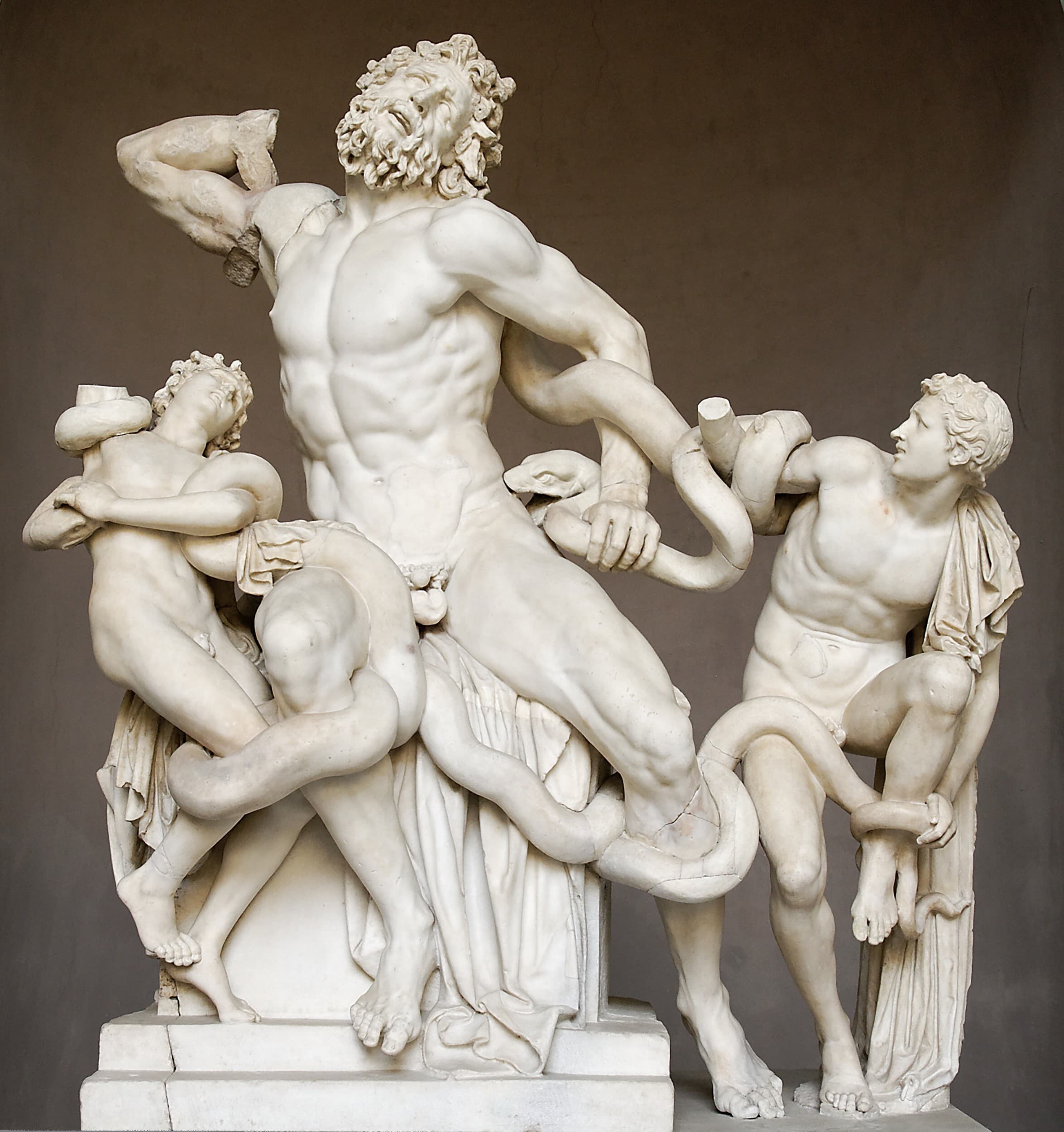
Laocoön and His Sons
Agesander of Rhodes & Athenodoros of Rhodes & Polydorus of Rhodes · c. 200 BC – AD 70 (date debated); excavated 1506
Laocoön and His Sons, often simply called the Laocoon, is the ancient marble group of the Trojan priest and his two sons crushed by sea serpents, attributed by Pliny to Agesander, Athenodoros and Polydorus of Rhodes. Dug up in Rome in 1506, it is in the Vatican Museums.
04
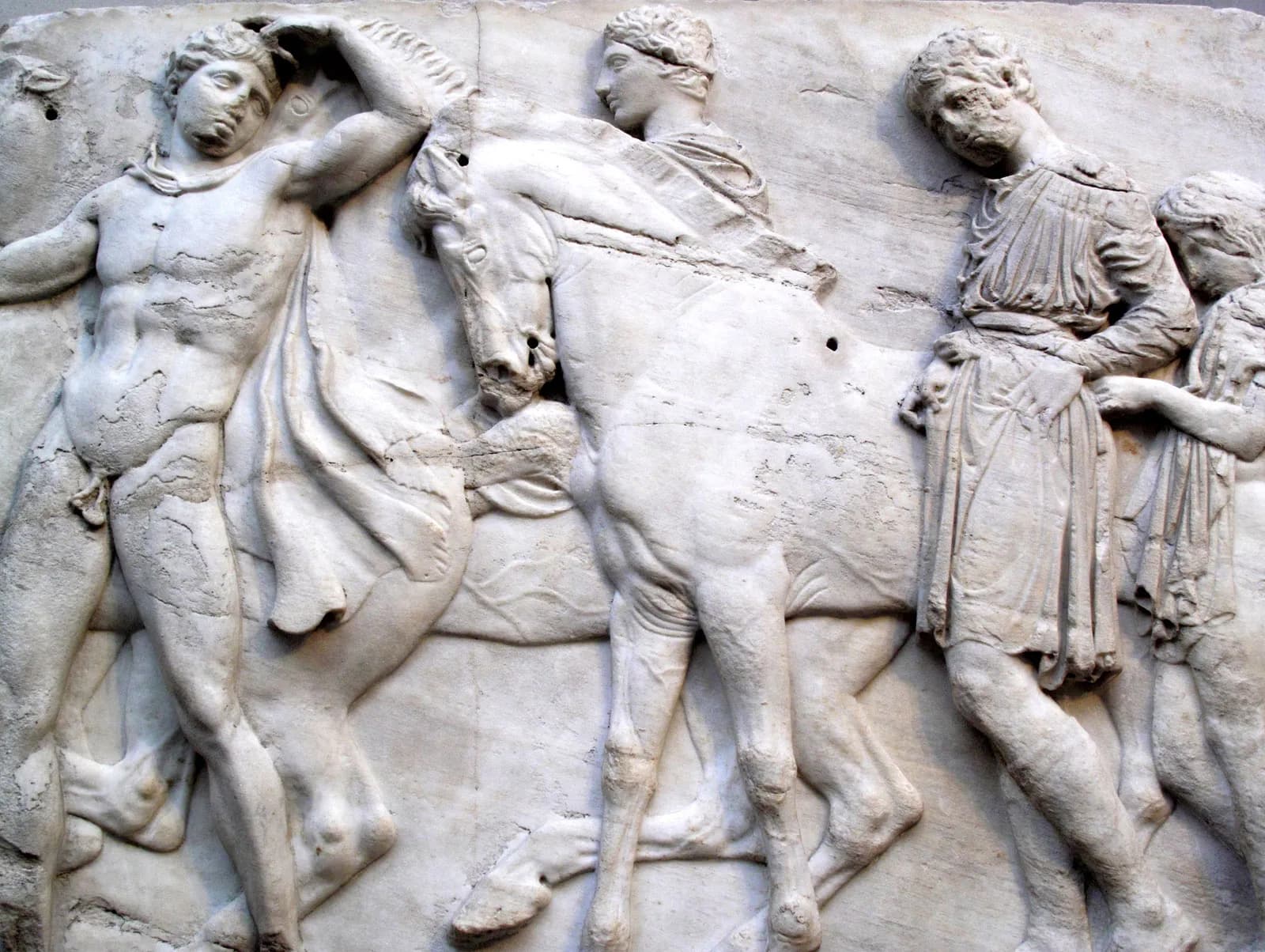
Parthenon Frieze
Phidias · c. 443–437 BC
The Parthenon Frieze is a marble relief band, about 160 meters long, carved c. 443–437 BC for the Parthenon in Athens under the direction of Phidias. Most of it is now divided between the British Museum in London and the Acropolis Museum in Athens.
05
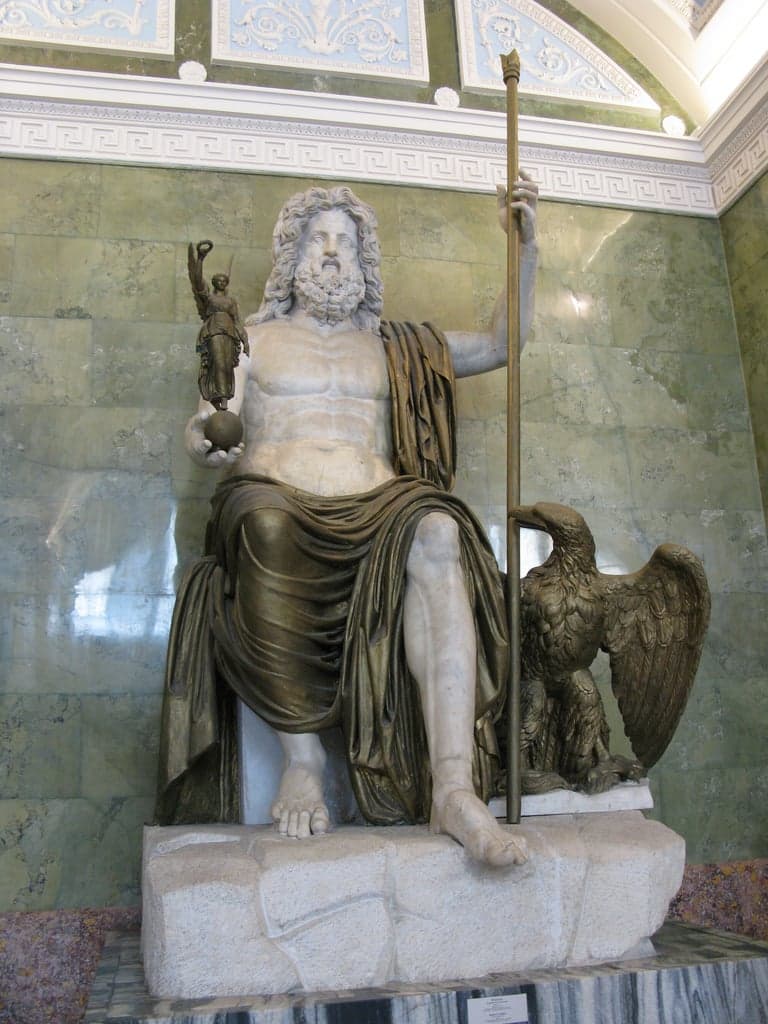
Seated Zeus (Statue of Jupiter, Hermitage)
Artist Unknown & Phidias · Late 1st century AD (after Phidias's Zeus, c. 435 BC)
This colossal seated Jupiter in the Hermitage, 3.47 m high, is a Roman statue of the late 1st century AD modeled on Phidias's lost gold-and-ivory Statue of Zeus at Olympia, one of the Seven Wonders of the ancient world.
06
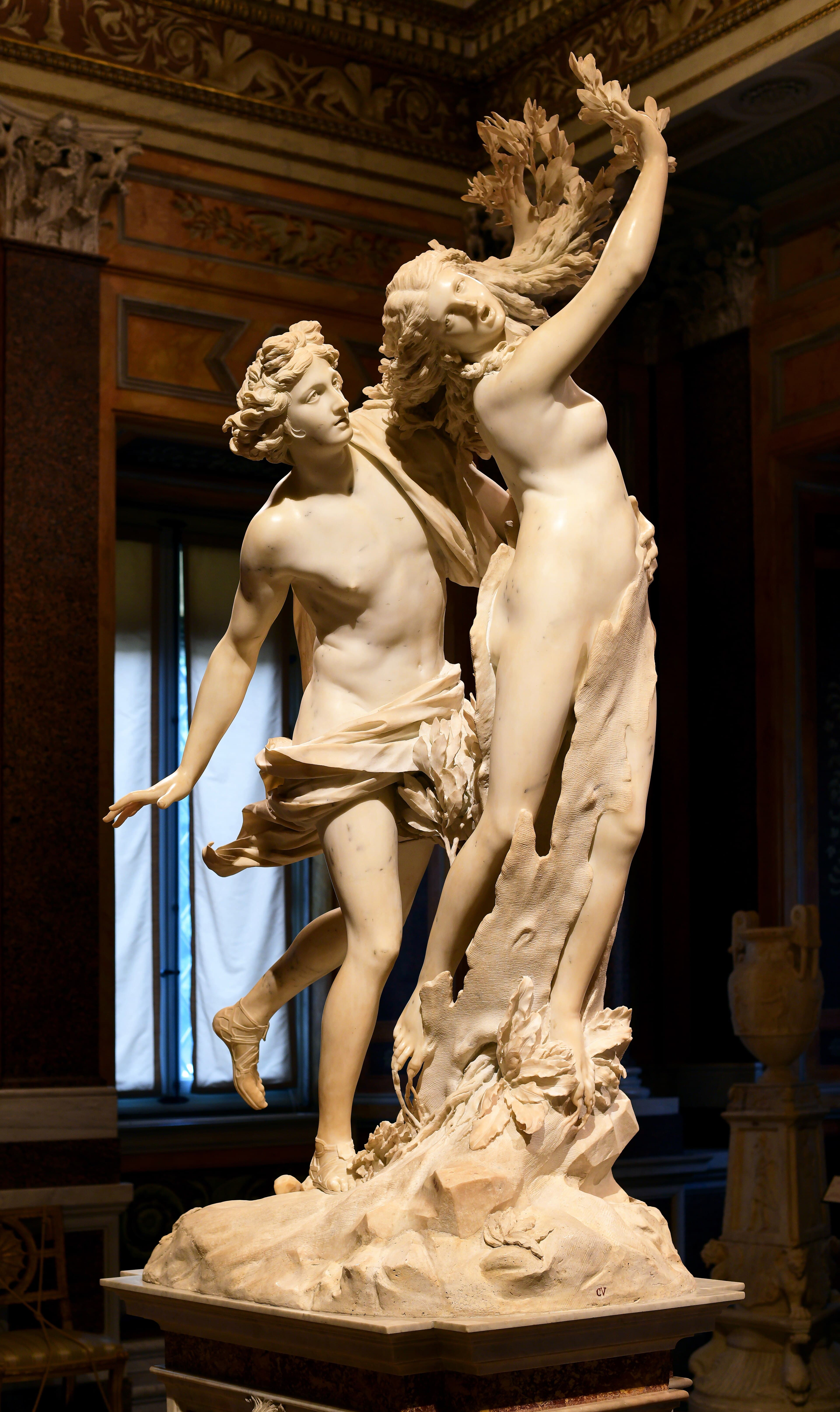
Apollo and Daphne
Gian Lorenzo Bernini · 1622–1625
Apollo and Daphne is a life-size marble sculpture by Gian Lorenzo Bernini, carved in 1622–1625, showing the nymph Daphne turning into a laurel tree as the god Apollo catches her. It is in the Galleria Borghese in Rome.
07
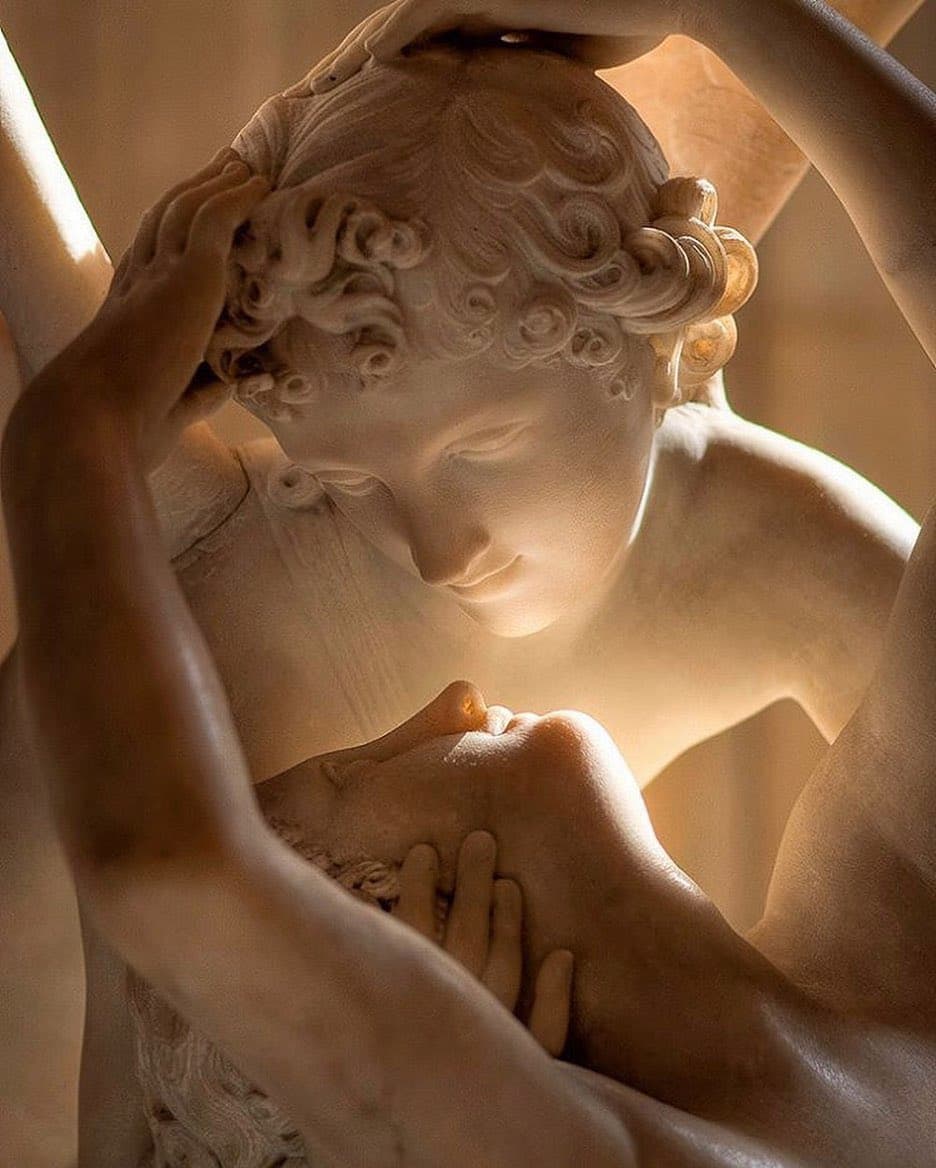
Psyche Revived by Cupid's Kiss
Antonio Canova · 1787–1793
Psyche Revived by Cupid's Kiss is a marble group by Antonio Canova, carved 1787–1793, showing Cupid lifting the unconscious Psyche to wake her with a kiss. The first version is in the Louvre, Paris; a second is in the Hermitage.
08
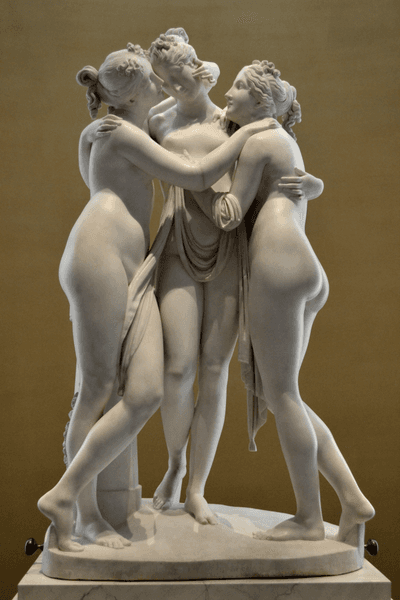
The Three Graces
Antonio Canova · 1814–17
The Three Graces is a marble group by Antonio Canova of Zeus's daughters in an embrace. This 1814–17 version, made for the Duke of Bedford, is jointly owned by the V&A and National Galleries of Scotland; the first is in the Hermitage.
09
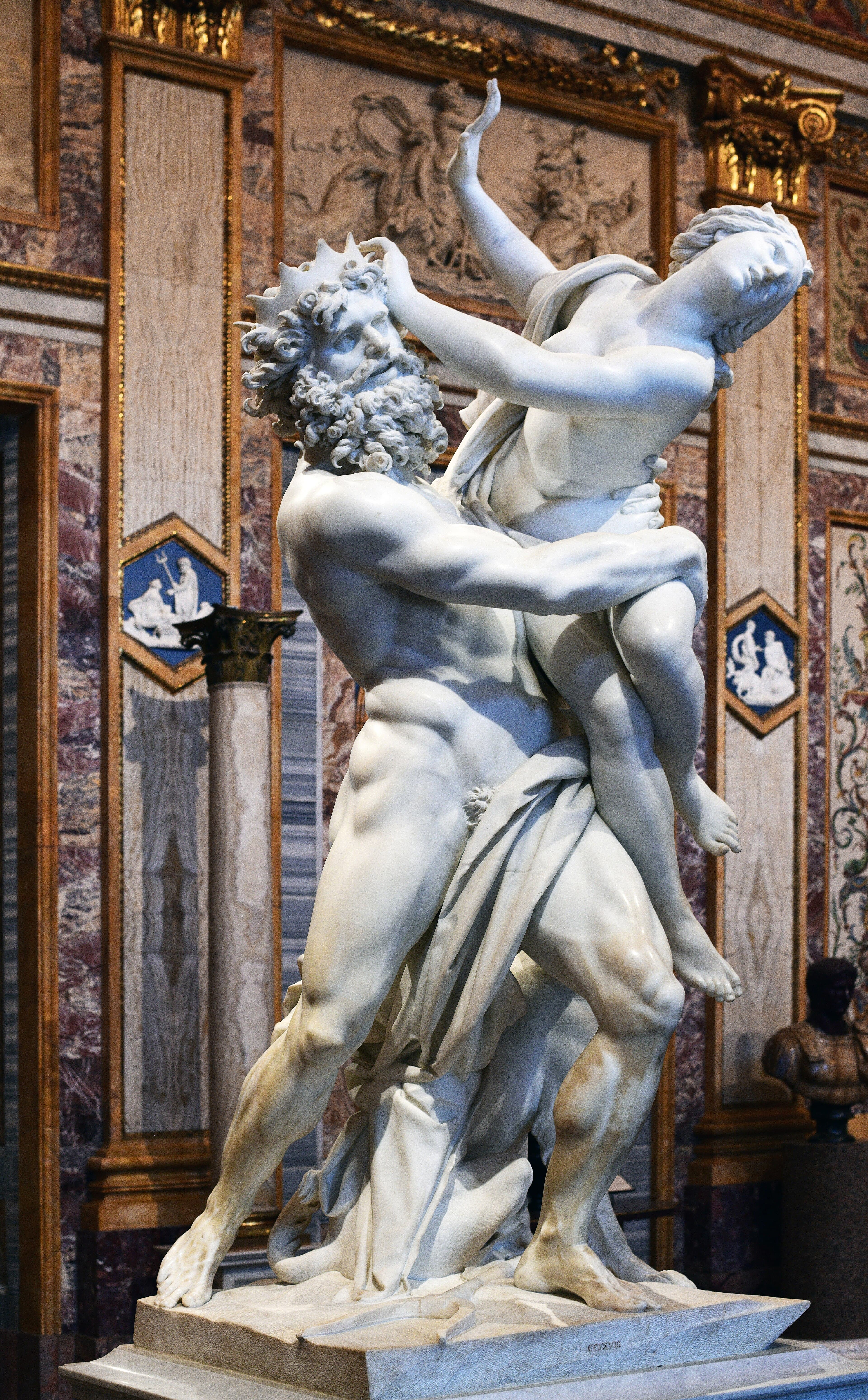
The Rape of Proserpina
Gian Lorenzo Bernini · 1621–1622
The Rape of Proserpina is a marble group by Gian Lorenzo Bernini, carved in 1621–1622 when he was 23, showing Pluto, god of the underworld, seizing Proserpina. It is in the Galleria Borghese in Rome; the title means abduction.
10
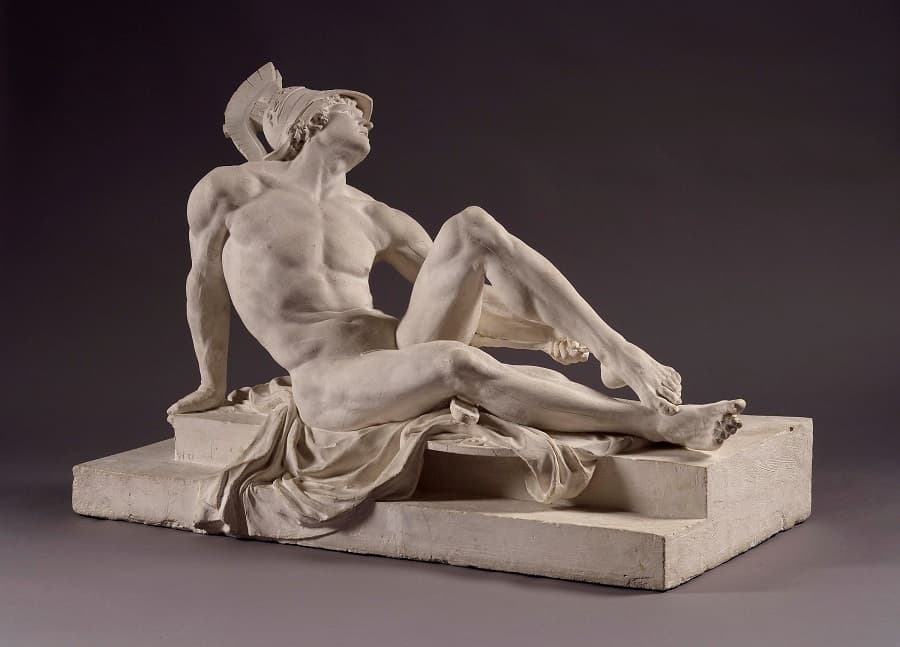
Dying Achilles
Jean-Baptiste Giraud · c. 1788–89
Dying Achilles (Achille mourant) is a Neoclassical sculpture by the French sculptor Jean-Baptiste Giraud of the Greek hero reclining, mortally wounded in the heel. Dated about 1788–89, it is associated with the Musée Granet in Aix-en-Provence.
11
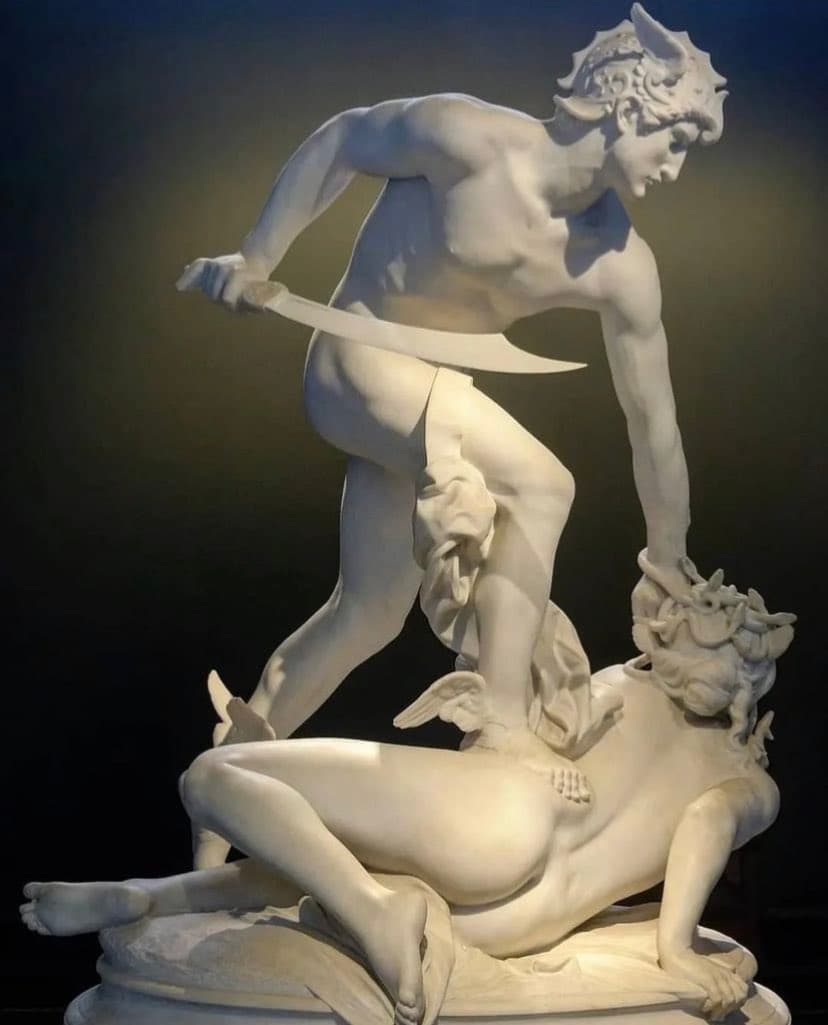
Perseus and the Gorgon
Laurent Marqueste · 1875–1903 (series); marbles 1890 and 1903
Perseus and the Gorgon is a marble group by the French sculptor Laurent Marqueste showing the hero about to behead Medusa. Marqueste reworked it from 1875 to 1903; marble versions are in the Musée des Beaux-Arts de Lyon (1890) and the Ny Carlsberg Glyptotek, Copenhagen (1903).
12
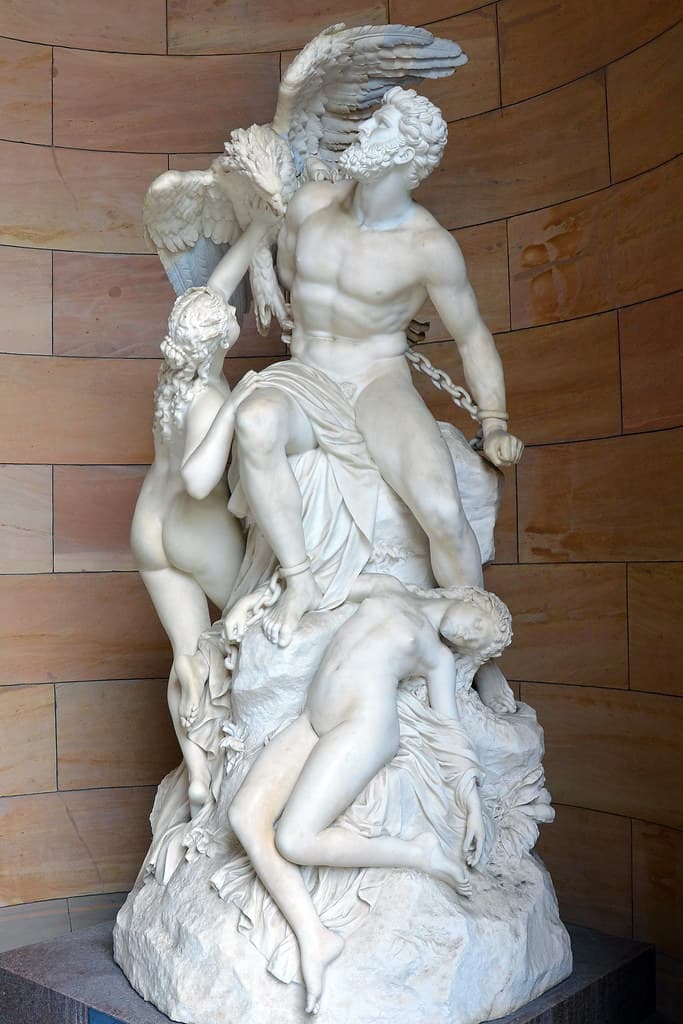
Prometheus Bound and the Oceanids
Eduard Müller · 1872–79
Prometheus Bound and the Oceanids is a marble group by the German sculptor Eduard Müller, completed in 1879, showing the chained Titan Prometheus with the sea nymphs who mourn him. Carved from a single block, it belongs to the Alte Nationalgalerie in Berlin.
13
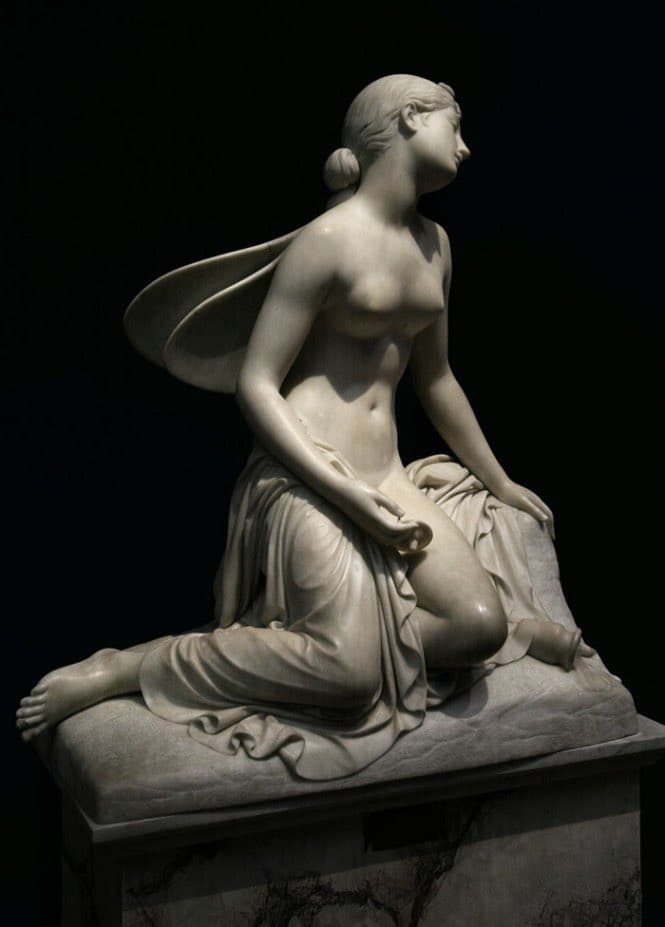
Psyche in a Faint
Pietro Tenerani · composition c. 1822
Psyche in a Faint (Psiche svenuta) is a marble by the Italian sculptor Pietro Tenerani, showing Psyche sinking to the ground after opening Proserpina's casket of beauty. Devised around 1822, it survives in several versions; one is in Rome's Galleria Nazionale d'Arte Moderna.
14
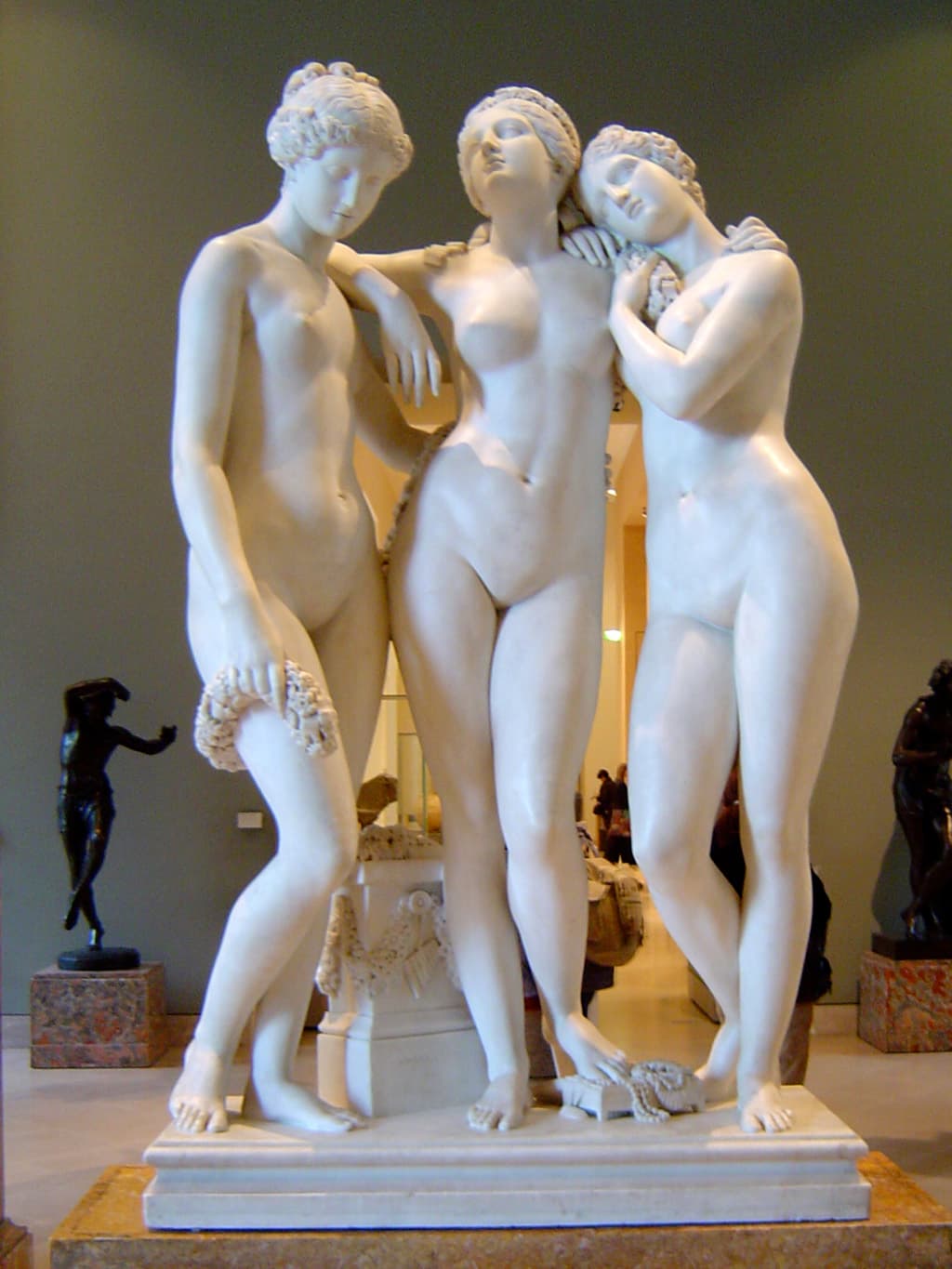
The Three Graces
James Pradier · 1831
Les Trois Grâces is a life-size marble group by the Geneva-born sculptor James (Jean-Jacques) Pradier, shown at the Paris Salon of 1831 and bought for the French crown that year. It is now in the Musée du Louvre in Paris.
15
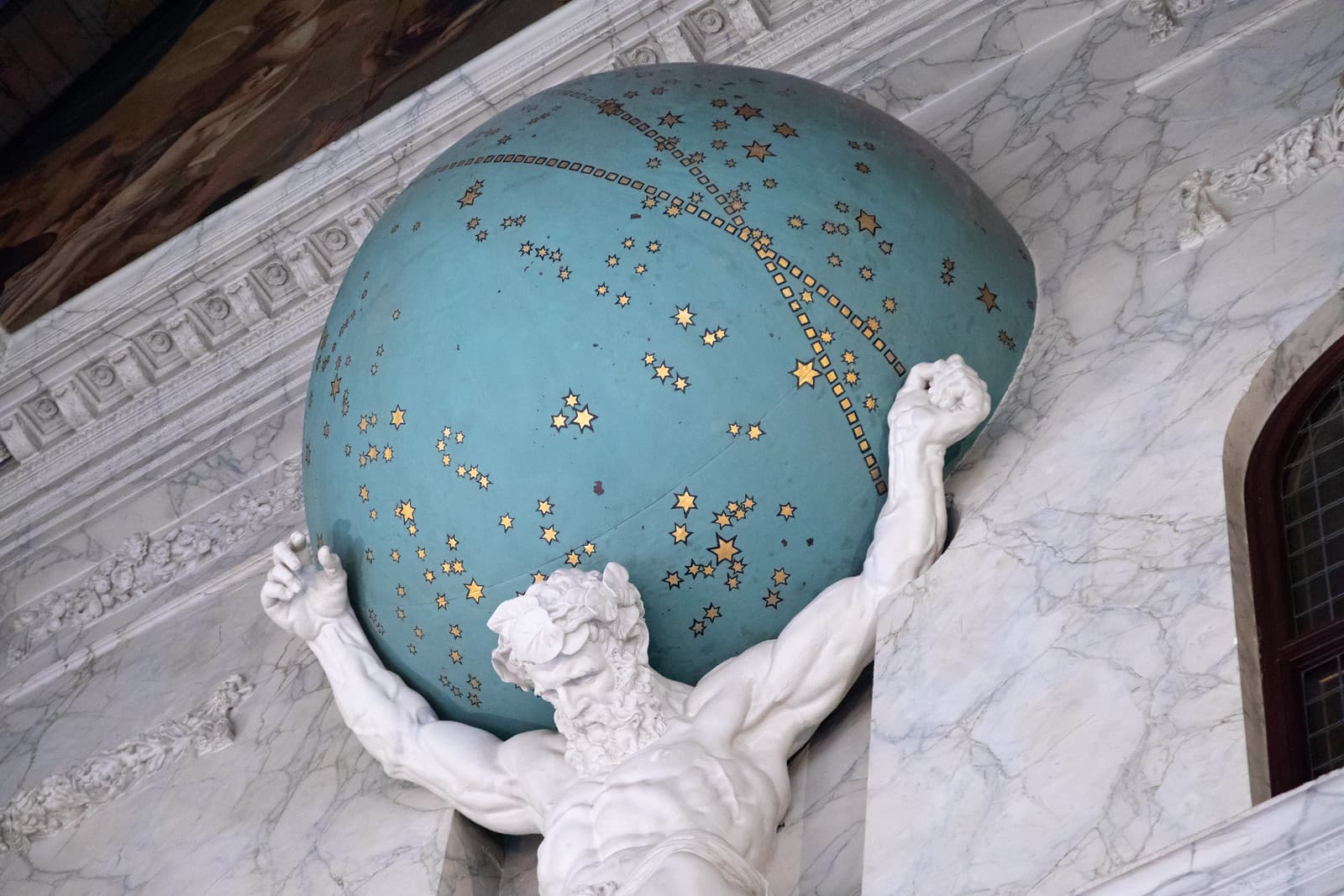
Atlas, Royal Palace Amsterdam
Artus Quellinus & Jacob van Campen & Daniël Stalpaert · c. 1662–63
The Atlas statue at the Royal Palace on Dam Square, Amsterdam, was designed by Artus Quellinus: a bronze cast in 1663 stands on the rear roof, and its full-size white model, carrying a starry celestial globe, is inside the Burgerzaal.
Archaic: the kouros and kore (c. 650–480 BC)
The first large Greek stone statues were the kouroi, standing nude young men, and korai, clothed young women. Influenced by Egyptian sculpture, a kouros stands frontally with fists clenched and the left foot forward, smiling the faint "Archaic smile". They served as grave markers and offerings to the gods. The New York Kouros in the Metropolitan Museum and the Peplos Kore in the Acropolis Museum in Athens are classic examples, the latter still showing traces of its painted dress.
Early Classical: the body comes alive (c. 480–450 BC)
Around 480 BC, sculptors broke the frontal pose. The Kritios Boy in the Acropolis Museum shifts his weight onto one leg, so his hips and shoulders tilt, the pose later called contrapposto.
Bronze, cast in pieces by the lost-wax method, let sculptors stretch limbs into open space. The Charioteer of Delphi (c. 470 BC), the Artemision Bronze of Zeus or Poseidon hurling a missing weapon (c. 460 BC, National Archaeological Museum, Athens) and the two Riace Bronzes, warriors pulled from the sea off Calabria in 1972, are rare bronze survivors. Most ancient bronzes were melted down for their metal.
The Riace warriors show what was lost. They are over two meters tall, with copper lips and nipples, silver teeth in one of them, and eyes of inlaid stone and glass, details that no marble copy preserves.
High Classical: Phidias, Polykleitos and the Parthenon (c. 450–400 BC)
This is the age of the ideal. Myron's Discobolus (Discus Thrower) caught an athlete at the instant before release; it survives only in Roman marble copies, the best in Rome and the British Museum. Polykleitos wrote a treatise, the Canon, on perfect proportion and illustrated it with the Doryphoros (Spear Bearer).
Phidias directed the sculpture of the Parthenon in Athens, built between 447 and 432 BC. The Parthenon frieze, about 160 meters of carved marble that ran around the inner building, is traditionally read as the Panathenaic procession in honor of Athena. Roughly half of it is in the British Museum, removed by agents of Lord Elgin in the early 1800s, and most of the rest is in the Acropolis Museum; Greece has long asked for the reunification of the marbles. Phidias's greatest works, the gold and ivory Athena Parthenos and the Statue of Zeus at Olympia, one of the Seven Wonders of the Ancient World, are lost and known only from descriptions, coins and small copies.
Late Classical: Praxiteles and Lysippos (c. 400–323 BC)
In the fourth century, the gods relaxed. Praxiteles made the Aphrodite of Knidos, the first monumental female nude in Greek art, so famous that the city of Knidos reputedly refused to sell it to pay off its debts. The Hermes and the Infant Dionysus at Olympia, often attributed to him, shows the soft modeling and S-curve that defined the period. Lysippos, court sculptor to Alexander the Great, made figures slimmer, with smaller heads, and designed them to be seen from every side.
Hellenistic: drama and emotion (323–31 BC)
After Alexander's conquests, Greek sculpture spread from Egypt to Afghanistan and became more theatrical, with new subjects: old age, children, drunkenness, defeated enemies and private emotion.
The Winged Victory of Samothrace (c. 200–190 BC) lands on the prow of a warship, her wet drapery whipped against her body by the wind; she now stands at the top of the Daru staircase in the Louvre. The Venus de Milo (c. 150–125 BC), found by a farmer on the island of Milos in 1820, is attributed from a lost inscription to Alexandros of Antioch. The Dying Gaul, a Roman copy of a Pergamene bronze, gives a defeated enemy real dignity.
The Laocoön and His Sons, in the Vatican, shows the Trojan priest and his sons crushed by sea serpents. Pliny the Elder credited it to three sculptors from Rhodes. Scholars still disagree on whether the marble found in Rome in 1506 is a Hellenistic original or a Roman copy.
Were Greek statues white?
No. Greek sculptors and painters worked together. Marble statues were painted with mineral pigments, skin in warm tones, eyes and lips colored, garments patterned in red, blue and gold, and bronzes had copper lips and inlaid stone or glass eyes. The paint wore away over centuries of burial and weather, and Renaissance and Neoclassical artists, seeing only white stone, built an ideal of pure white marble that the Greeks never held. Ultraviolet light and microscopic analysis have since recovered traces of the original color on many works, and reconstructions such as those in the traveling exhibition Gods in Color show how bright they once were.
Why are noses and arms missing?
Projecting parts break first when a statue falls or is buried: noses, arms, fingers and genitals. Some damage was also deliberate. Early Christians and later iconoclasts sometimes defaced pagan images, especially faces, to "disable" them. The missing arms of the Venus de Milo have never been found, and reconstructions of what she held, an apple, a mirror, a shield, remain guesses.
How to look at a Greek statue
Start with the feet and the weight. Whether a figure stands squarely on both legs or shifts onto one tells you, more reliably than anything else, roughly when it was made. Then look at the eyes: empty eye sockets usually mean inlays of stone or glass have fallen out. Finally, check the label for the words "Roman copy after", which tell you that you are looking at a later version of a lost Greek original.
The afterlife of Greek statues
From the Renaissance onward, sculptors returned to Greek myths and Greek ideals of the body. Bernini's Apollo and Daphne and The Rape of Proserpina, Canova's Psyche Revived by Cupid's Kiss and The Three Graces and many nineteenth-century marbles in this collection, such as Jean-Baptiste Giraud's Dying Achilles and Laurent Marqueste's Perseus and the Gorgon, are not Greek but are unthinkable without Greek models. They appear in the list after the ancient works. For the stories behind them, see Greek Mythology in Art and our wider list of famous sculptures.
Questions & answers
What is the most famous Greek statue?
The Venus de Milo, a marble Aphrodite of about 150–125 BC in the Louvre, is usually considered the most famous Greek statue. The Winged Victory of Samothrace, also in the Louvre, and the Laocoön group in the Vatican Museums are close behind.
Were Greek statues originally painted?
Yes. Greek marble statues were painted with mineral pigments: skin tones, colored eyes and lips, and patterned clothing. The paint wore away over time, which is why they look white today. Scientific analysis has found traces of color on many surviving works.
Are Greek statues in museums Roman copies?
Many are. Most famous Greek statues were bronze, and nearly all bronzes were melted down. What survives of works like the Discobolus or the Doryphoros are Roman marble copies. The Venus de Milo, the Winged Victory and the Parthenon sculptures are Greek originals.
Why do Greek statues have small genitals?
In Greek culture a small, modest penis signaled self-control, youth and reason, while large genitals were associated with satyrs, foolishness and lust. Heroes and gods were therefore shown with small genitals, a convention that comic writers like Aristophanes also refer to.
Where can I see Greek statues?
The Acropolis Museum and National Archaeological Museum in Athens, the Louvre in Paris, the British Museum in London, the Vatican Museums and Palazzo Massimo in Rome, the Museo Nazionale in Reggio Calabria and the Archaeological Museum of Olympia hold the major collections.