Image: Photo by Shonagon, Musée du Louvre · CC0 · via Wikimedia Commons
Hellenistic
Winged Victory of Samothrace
Artist Unknown, c. 200–190 BC
The Winged Victory of Samothrace is a Hellenistic marble statue of Nike, the Greek goddess of victory, landing on the prow of a warship, carved around 200–190 BC. Found on Samothrace in 1863, it stands at the top of the Daru staircase in the Louvre.
- Artist
- Artist Unknown
- Date
- c. 200–190 BC
- Medium
- Parian marble (figure); gray Lartos marble (ship's prow)
- Dimensions
- Figure 244 cm high
- Collection
- Musée du Louvre, Paris, France
- Movement
- Hellenistic
What you are looking at
A winged woman has just alighted on the prow of a ship. Her body pushes forward into the wind; her right leg steps out, her left trails behind, and her great wings sweep back and up. A thin, wet-looking dress clings to her stomach and breasts and whips in deep folds between her legs, while a heavier mantle slips from her hips and streams out behind. Her head and arms are gone, but the motion is so complete that most viewers barely notice.
Walk around her. From the front she rises in a single upward thrust. From the side, the diagonal of her body against the wings makes her look as if she is still landing. The sculptor has carved the drapery in two weights: fine, rippling folds where the wind presses the cloth to the body, and deep, shadowy troughs where it billows free. It is one of the great studies of wind in stone.
Who is she?
She is Nike, the personification of victory in Greek religion, often shown descending from the sky to crown the winner of a battle or contest. Her right arm was probably raised, perhaps to crown or salute; fragments of her right hand, found later, are displayed near the statue. The ship beneath her, carved separately in gray marble, is a warship's prow, which ties the monument to a naval victory.
Where was the Winged Victory of Samothrace found?
In 1863 Charles Champoiseau, the French vice-consul at Adrianople, excavated on the island of Samothrace in the northern Aegean, at the Sanctuary of the Great Gods, a site of mystery cults. He found the torso and many fragments of the figure and sent them to Paris. The gray marble blocks of the ship were identified and shipped later, in the 1870s and 1880s, after Austrian archaeologists explored the site. Excavations established that the statue stood in a niche on a hillside above the sanctuary's theater, probably in a basin of water, so that the ship seemed to float.
Who made it, and when?
The sculptor is unknown. The figure is carved in white marble from the island of Paros, and the ship from a gray marble quarried at Lartos on Rhodes. That Rhodian connection has led many scholars to link the monument to a naval victory of Rhodes in the early second century BC, which would date it around 200–190 BC. An earlier theory connected it to Demetrius Poliorcetes, a Macedonian king whose coins show a Nike on a prow, but most scholars now prefer the later date. The bold movement and theatrical drapery fit the Hellenistic period, the age after Alexander the Great, when Greek sculpture turned toward drama and emotion, as in Laocoön and His Sons.
What does it mean?
As a monument, it was a thank-offering: a victorious city or commander dedicating an image of divine victory at a sanctuary famous among sailors. As a sculpture, it fixes a moment of arrival, the instant when victory descends. Since its rediscovery it has come to stand for triumph itself, and for the beauty of the incomplete; its missing head makes it impersonal, a force rather than a woman.
Reception and legacy
The statue was reassembled in Paris and installed at the head of the Louvre's Daru staircase in the 1880s, where it has stood almost continuously since (it was evacuated during the Second World War). The Futurist Filippo Tommaso Marinetti famously declared in 1909 that a roaring racing car was more beautiful than the Victory of Samothrace, which only confirmed its status. Casts stand in museums and on campuses worldwide, its silhouette echoes through trophies and emblems, and it is central to Greek statues and famous sculptures in any account. In the Louvre, compare it with the calm of the Venus de Milo.
Details most viewers miss
- The back. The right side and back of the figure are less finished than the front and left. The sculptor knew how the statue would be seen in its niche and saved effort where no one would look.
- The right hand. A hand with open fingers, found on Samothrace in 1950, is displayed in a case near the statue. It probably belonged to the Victory, raised in greeting rather than holding a crown.
- The two marbles. The white figure and the gray ship came from different islands, so color itself separates the goddess from the human vessel she lands on.
Where to see the Winged Victory of Samothrace
She stands at the top of the Daru staircase in the Denon wing of the Musée du Louvre in Paris, lit from above and seen from below as you climb, which is the best way to approach her. A restoration completed in 2014 cleaned the marble and reassembled the ship with its missing pieces.
Questions & answers
Where is the Winged Victory of Samothrace?
It is in the Musée du Louvre in Paris, at the top of the Daru staircase in the Denon wing. It has stood there, apart from wartime evacuation, since the 1880s, and was restored in 2013–14.
Who made the Winged Victory of Samothrace?
The sculptor is unknown. Because the ship's prow is carved from marble quarried on Rhodes, many scholars think it celebrated a Rhodian naval victory around 200–190 BC, but no inscription naming the artist survives.
Why does the Winged Victory have no head?
The head and arms were never found. The statue fell and broke in antiquity, and excavators recovered the body and many fragments in 1863, including later pieces of the right hand, but not the head.
What does the Winged Victory of Samothrace represent?
It represents Nike, the Greek goddess of victory, landing on the prow of a warship. It was an offering of thanks for a naval victory, dedicated at the Sanctuary of the Great Gods on Samothrace.
How tall is the Winged Victory of Samothrace?
The figure itself is about 2.44 meters tall. Standing on its ship's prow and base, the whole monument rises more than five meters at the head of the Louvre's staircase.
More by the artist
Artist Unknown
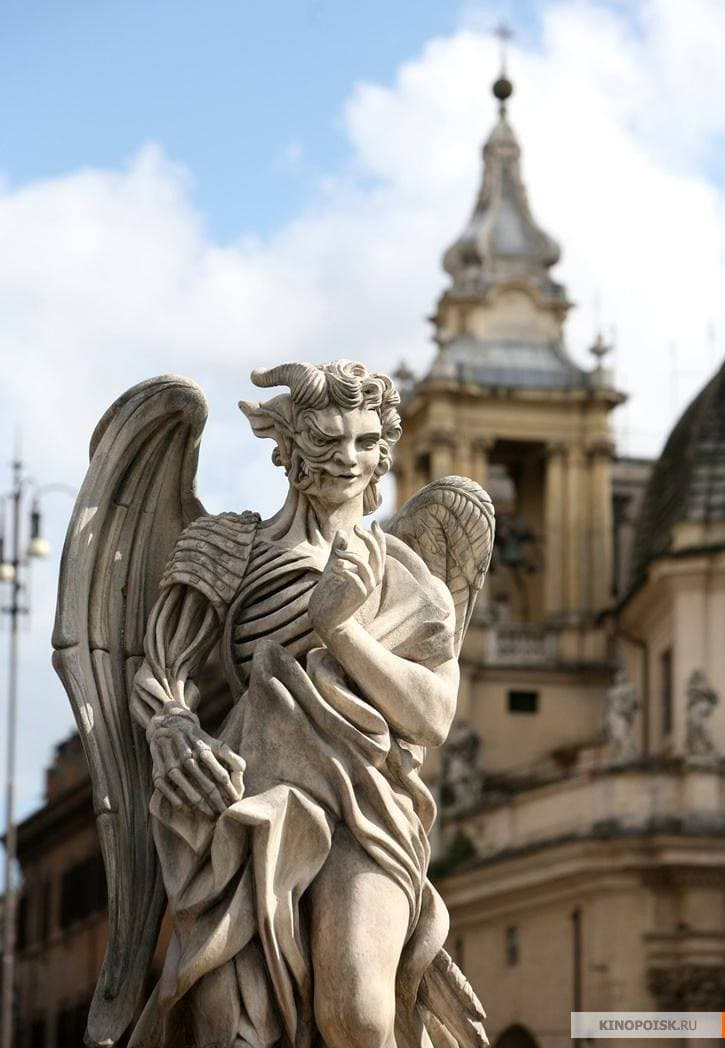
Angels and Demons – The Movie Prop
Artist Unknown & Gian Lorenzo Bernini · 2008
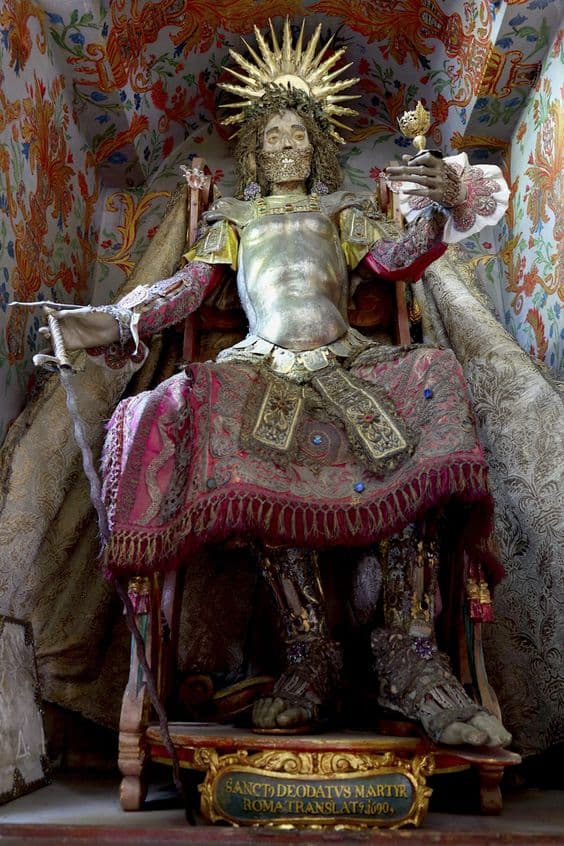
Bejeweled Skeleton of Saint Deodatus
Artist Unknown & Paul Koudounaris · Translated from Rome 1690
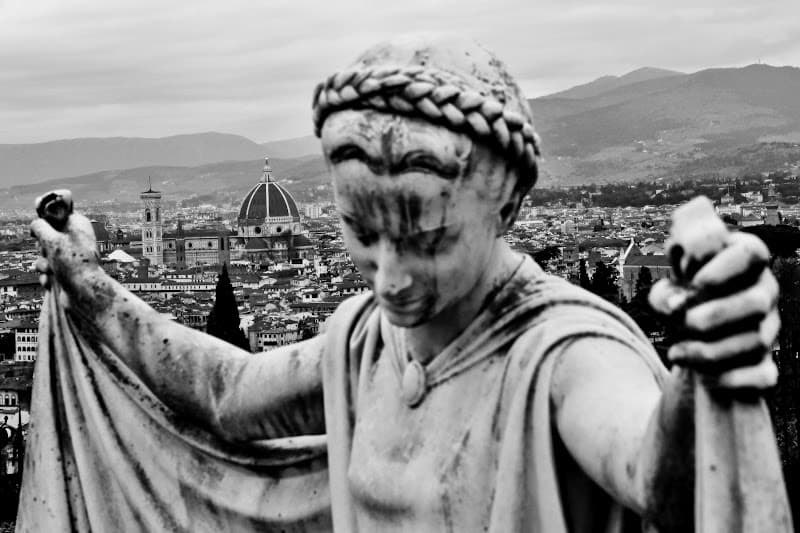
Tombstone of Silvia Marini nei De Rogati
Artist Unknown · After 1947

Sock and Buskin
Artist Unknown
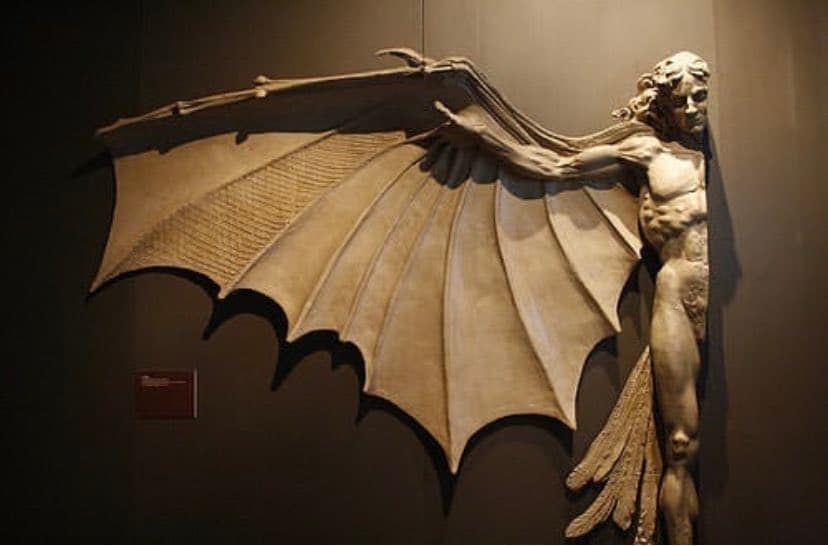
Artificial Wings
Artist Unknown · c. 2008
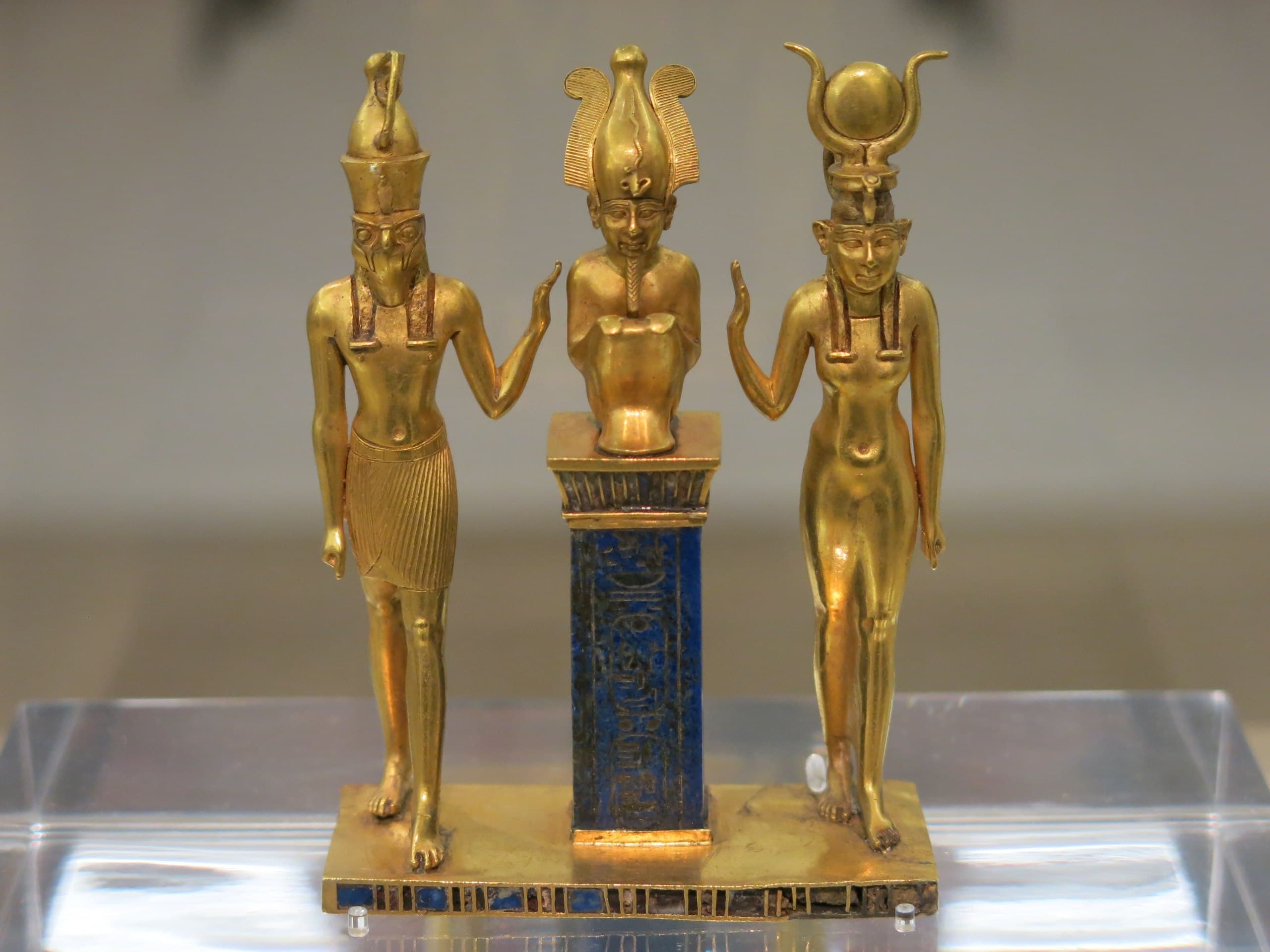
Triad of Osorkon II: Osiris, Isis and Horus
Artist Unknown · c. 874–850 BC (reign of Osorkon II)
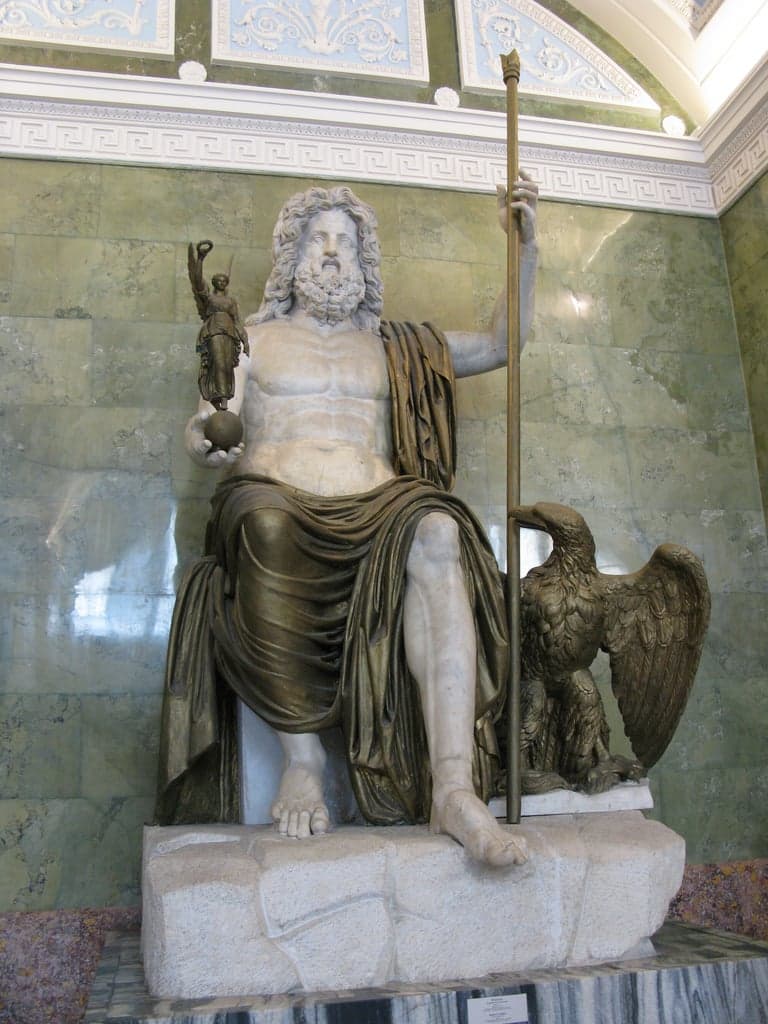
Seated Zeus (Statue of Jupiter, Hermitage)
Artist Unknown & Phidias · Late 1st century AD (after Phidias's Zeus, c. 435 BC)
Kindred works
You may also study

Venus de Milo
Alexandros of Antioch · c. 150–125 BC
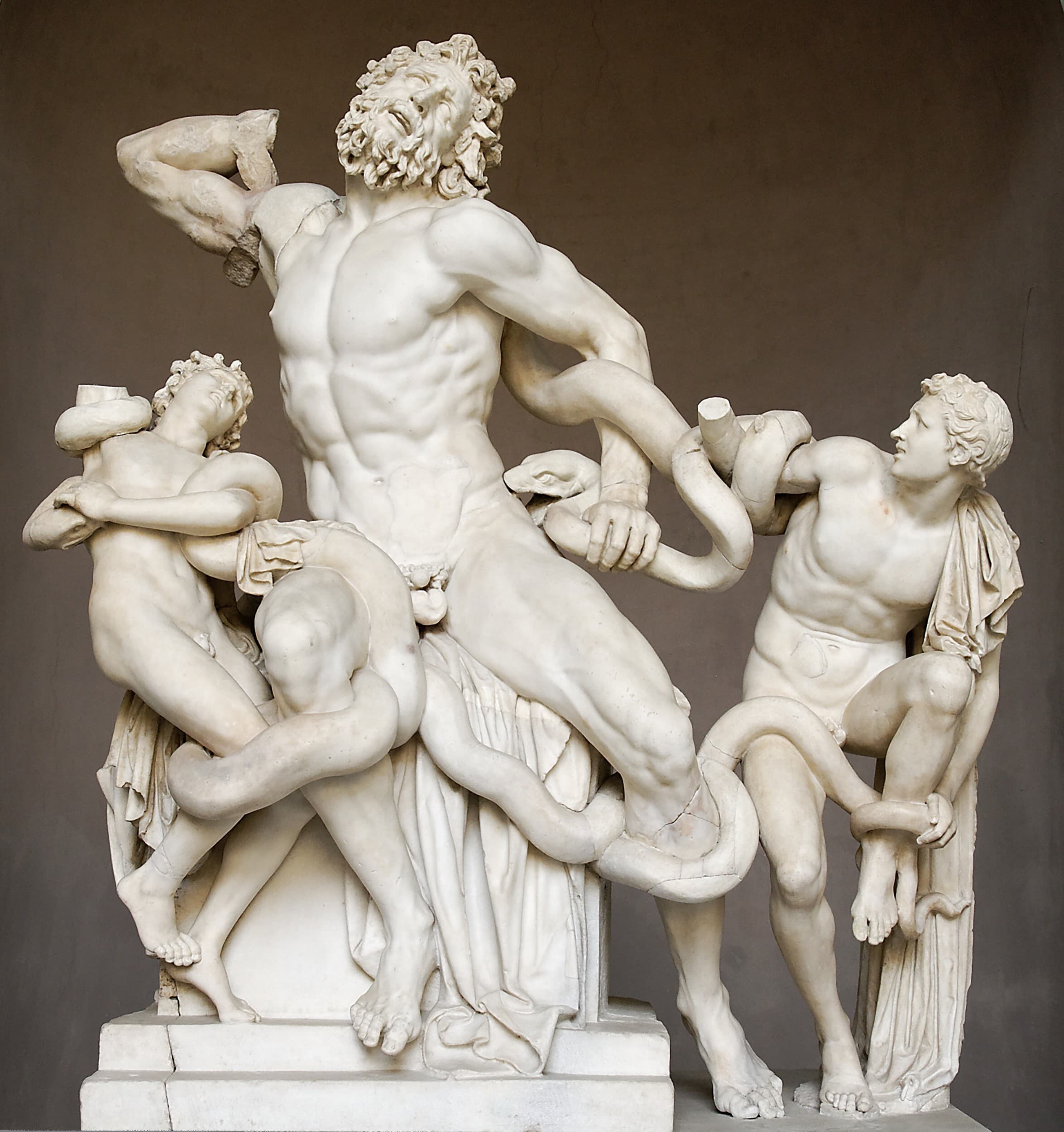
Laocoön and His Sons
Agesander of Rhodes & Athenodoros of Rhodes & Polydorus of Rhodes · c. 200 BC – AD 70 (date debated); excavated 1506
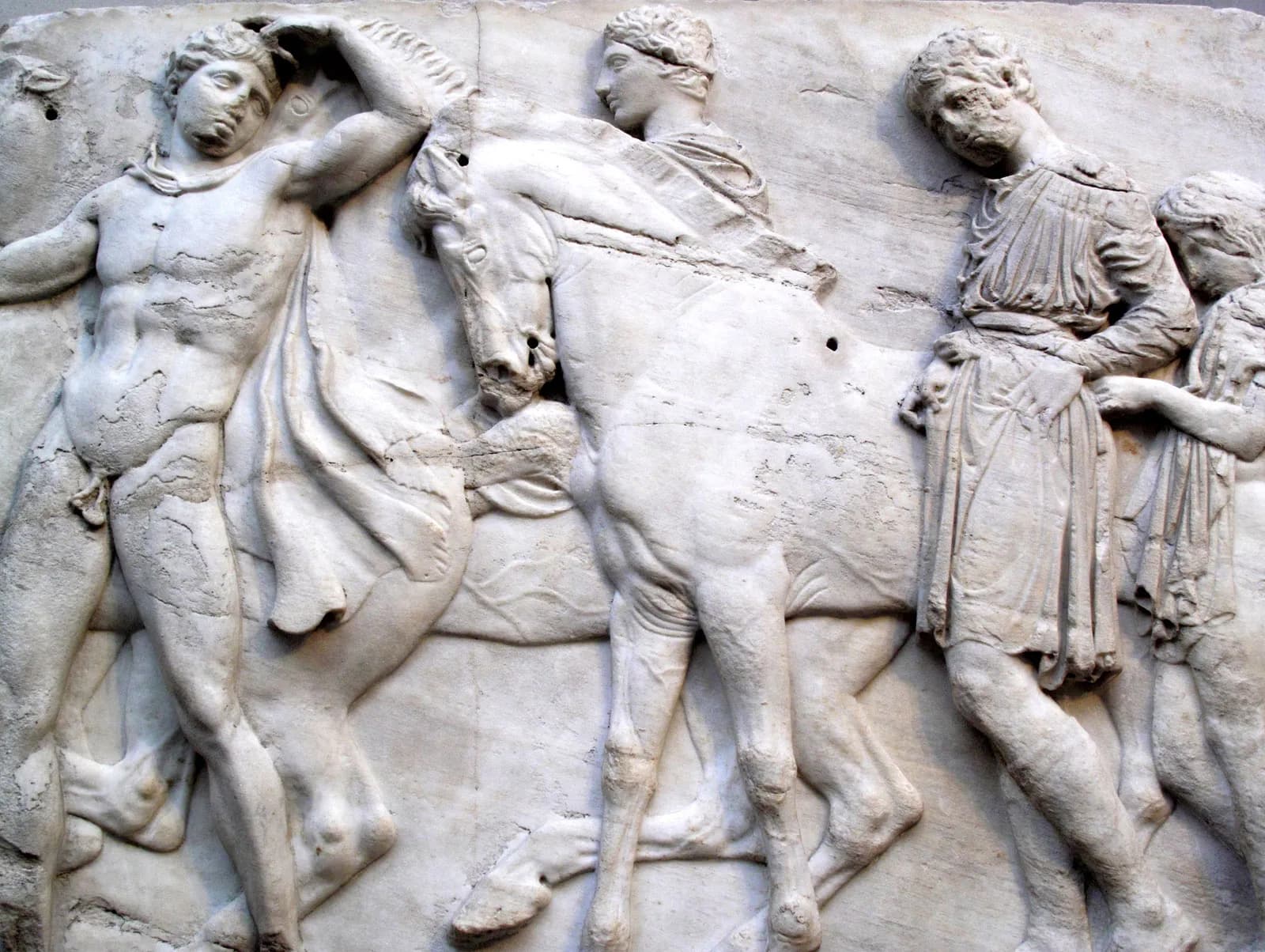
Parthenon Frieze
Phidias · c. 443–437 BC
Liberty Leading the People
Eugène Delacroix · 1830

Bridge over a Pond of Water Lilies
Claude Monet · 1899

Nymphs Dancing to Pan's Flute
Joseph Tomanek

The Thinker
Auguste Rodin · Modeled 1880–82; enlarged 1902–03; this cast 1904

Saturn Devouring His Son
Francisco Goya · c. 1819–1823