Classical Greek (High Classical)
Parthenon Frieze
Phidias, c. 443–437 BC
The Parthenon Frieze is a marble relief band, about 160 meters long, carved c. 443–437 BC for the Parthenon in Athens under the direction of Phidias. Most of it is now divided between the British Museum in London and the Acropolis Museum in Athens.
- Artist
- Phidias
- Date
- c. 443–437 BC
- Medium
- Pentelic marble, low relief
- Dimensions
- c. 160 m long × 1 m high (originally)
- Collection
- British Museum and Acropolis Museum, London / Athens, United Kingdom / Greece
- Movement
- Classical Greek (High Classical)
What you are looking at
The section shown here comes from the cavalcade, the long stretch of the frieze given over to horses and the young men who ride and handle them. At left a nude youth, his cloak slipping off one shoulder, lifts his right hand to his head, a gesture often read as fixing a wreath or tying back the hair. Beside him a horse turns its head back toward its handler, and an older bearded man in a short belted tunic stands quietly with his weight on one leg. The figures overlap three and four deep, yet the stone they are cut from is astonishingly shallow: the deepest carving on the frieze is only a few centimeters.
How it was made and where it sat
The frieze ran around the top of the outer wall of the cella, the temple's inner chamber, about 12 meters above the ground and inside the outer colonnade. Visitors saw it in steep, broken glimpses between the columns. The sculptors compensated by cutting the upper part of the relief slightly deeper than the lower, so that heads and shoulders would read from below. Paint and attached bronze details, now lost, once picked out reins, bridles and wreaths; small drill holes in the marble mark where some of them were fixed.
Ancient sources put Phidias in charge of the sculpture of Pericles' building program. He cannot have carved some 160 meters of relief himself, and scholars generally see a single designer's plan executed by a large team, whose hands can be distinguished slab by slab.
What does the Parthenon Frieze show?
The traditional reading, going back to the 18th-century antiquarians James Stuart and Nicholas Revett, is that the frieze shows the Panathenaic procession, held in honor of Athena. On the west side riders prepare; along the north and south they ride, followed by chariots, elders, musicians and sacrificial animals; on the east, above the entrance, seated gods watch as a folded cloth, usually identified as Athena's new peplos, is handled at the center. Some 378 human figures and over 200 animals appear in all.
The reading is not settled. Joan Breton Connelly has argued that the east frieze shows a mythical sacrifice by King Erechtheus, and others see the riders as Athenians who died at Marathon. What nobody disputes is the novelty: a temple frieze that shows not myth alone but the citizens of Athens themselves.
Where is the Parthenon Frieze today?
About half the surviving frieze was removed between 1801 and 1812 by agents of Lord Elgin and is in the Greek sculpture galleries of the British Museum. Most of the remainder is in the Acropolis Museum in Athens, displayed at the same orientation as the temple, with casts filling the gaps; a few fragments are in the Louvre and elsewhere. Greece has long requested the return of the London pieces, and the dispute remains open.
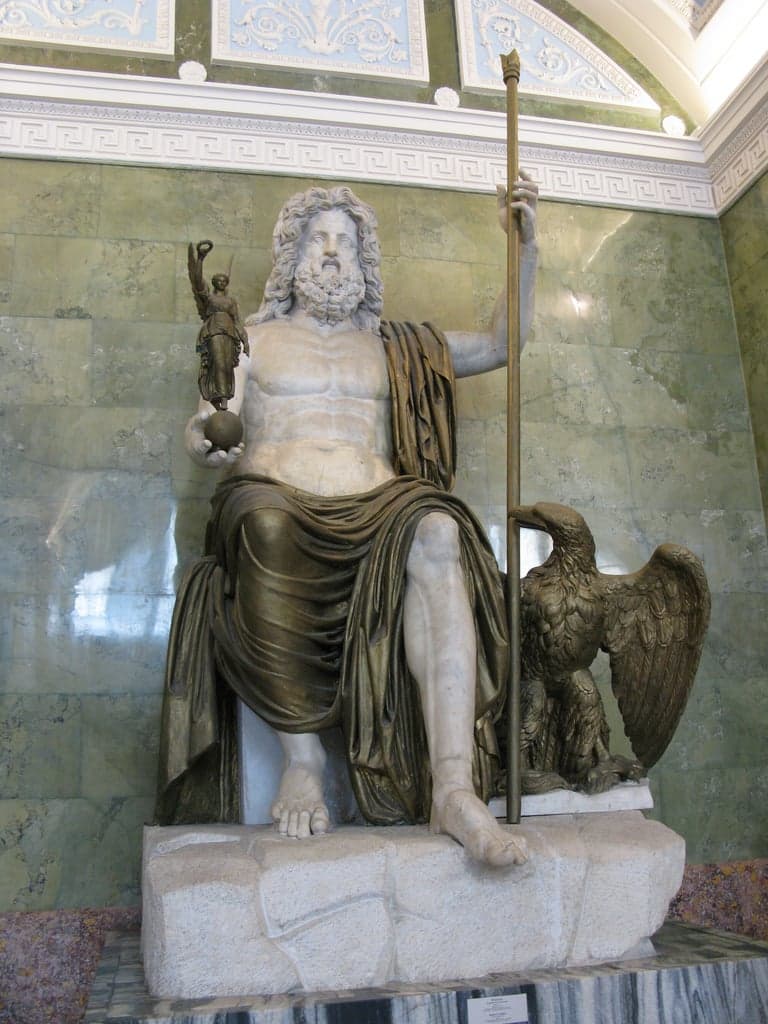
Inside the temple stood Phidias's gold-and-ivory Athena Parthenos, now lost. For his other great commission, the colossal Zeus at Olympia, see Seated Zeus, and for more ancient and later carving, our guide to famous sculptures.
Questions & answers
Where is the Parthenon Frieze now?
The surviving frieze is split mainly between the British Museum in London, which holds roughly half of what remains, and the Acropolis Museum in Athens, which displays its slabs alongside casts of the London pieces. A few fragments are in the Louvre and other museums. Greece continues to request the return of the British Museum sections.
Did Phidias carve the Parthenon Frieze himself?
Not single-handedly. Ancient writers say Phidias oversaw the sculpture of the Parthenon, and the frieze is usually credited to his design. Carving roughly 160 meters of relief in a few years required a large workshop, and specialists can distinguish different sculptors' hands from slab to slab.
What does the Parthenon Frieze depict?
Most scholars read it as the Panathenaic procession in honor of Athena: horsemen, chariots, musicians, sacrificial animals and, on the east side, seated gods and the handing over of a folded cloth. Alternative readings see a mythical sacrifice from Athens' legendary past or a memorial to the dead of Marathon.
More by the artist
Phidias
Kindred works
You may also study
Statue of David
Michelangelo · 1501–04

Venus de Milo
Alexandros of Antioch · c. 150–125 BC

Nymphs Dancing to Pan's Flute
Joseph Tomanek

Saturn Devouring His Son
Francisco Goya · c. 1819–1823
The Creation of Adam
Michelangelo · c. 1511–12
Las Meninas
Diego Velázquez · 1656
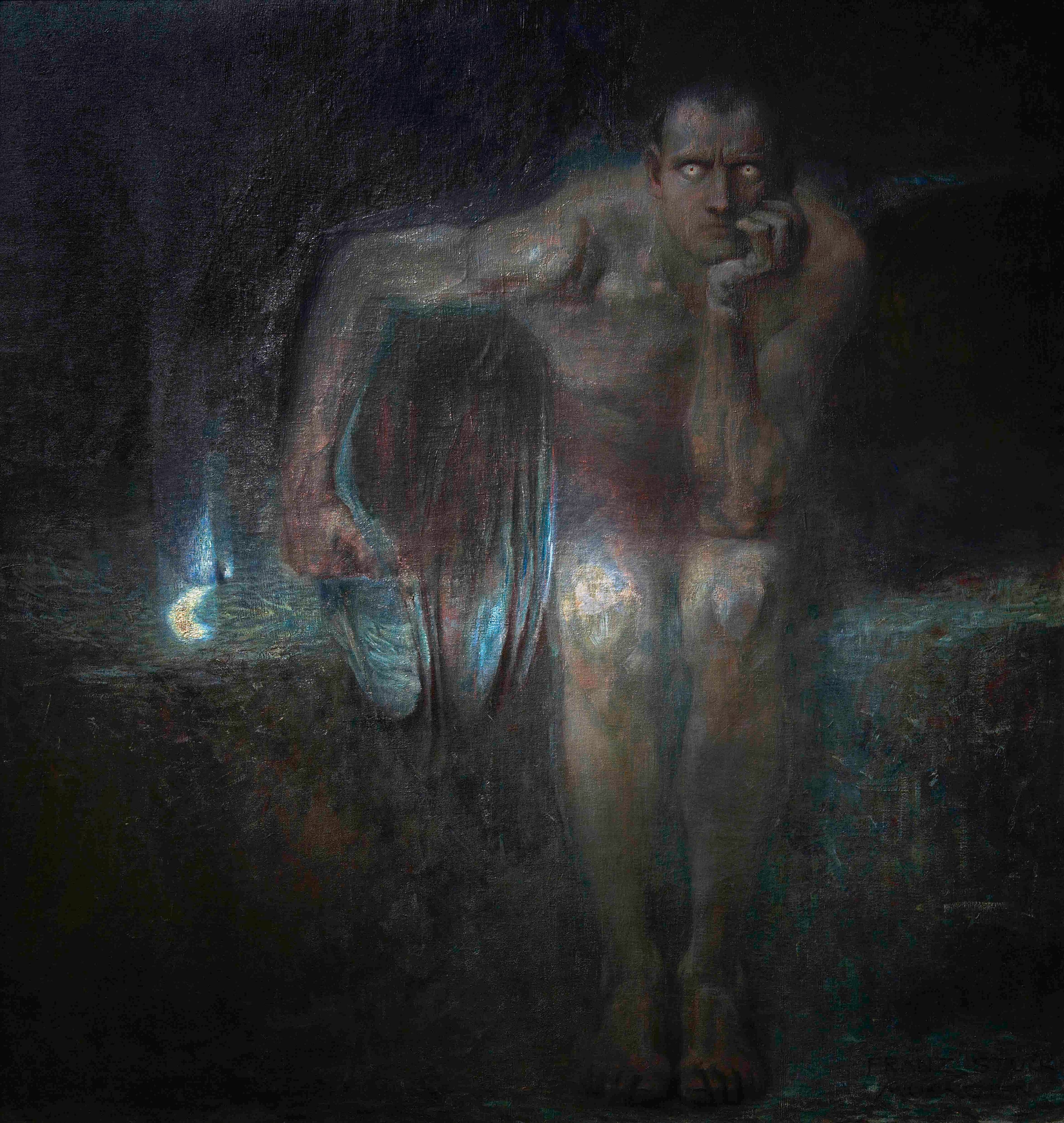
Lucifer
Franz von Stuck · 1890
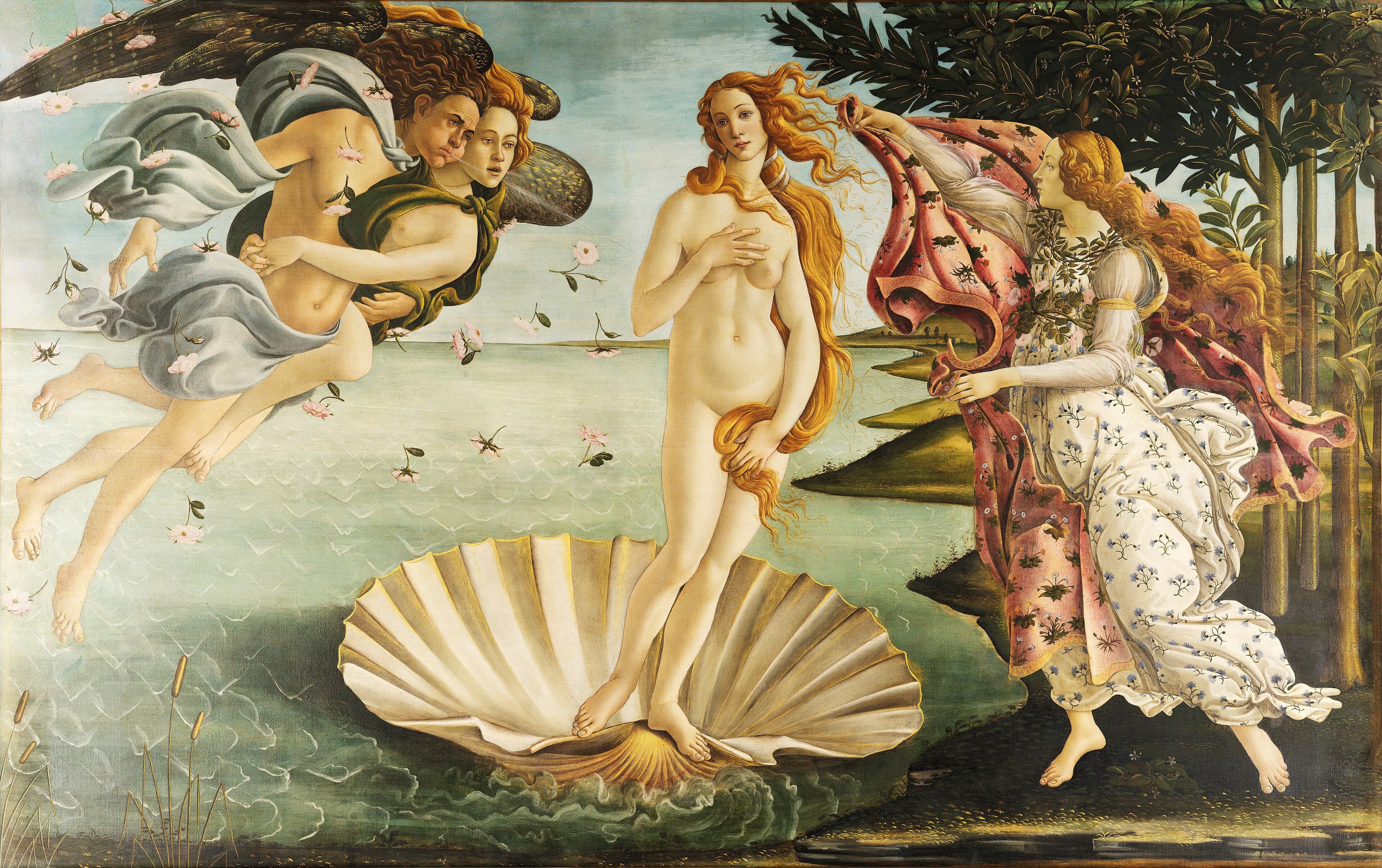
The Birth of Venus
Sandro Botticelli · c. 1484–1486