Italian Symbolism
Humanity Against Evil
Gaetano Cellini, 1906–08
Humanity Against Evil (L'umanità contro il male) is a marble sculpture by the Italian sculptor Gaetano Cellini, modeled around 1906 and carved by 1908. A muscular nude man crouches over a rough mass of stone, gripping it with clawed hands as if wrestling it down.
- Artist
- Gaetano Cellini
- Date
- 1906–08
- Medium
- Marble
- Collection
- Italy
- Movement
- Italian Symbolism
L'umanità contro il male (Humanity Against Evil) is the best-known work of Gaetano Cellini, an Italian sculptor born in Ravenna who trained there and then worked in Turin, in the studio of Pietro Canonica, before establishing his own career in the early 1900s. Accounts of the sculpture date the first, plaster version to about 1906 and the marble to 1908. Its current location has not been confirmed in published museum records we could check.
What you're looking at
The sculpture is carved as two contrasting textures from a single block. On top, a nude man crouches on all fours, his body polished smooth. His head is bowed so low that we see only the crown and the back of the neck; his shoulders are hunched and his arms drive down on either side. Each hand ends in tensed, hooked fingers that dig into the surface beneath him, the knuckles and tendons sharply defined.
Below him, the stone is left rough and churning, worked with a claw chisel into swirling ridges and hollows that read as rock, water or something organic and alive. This lower mass is the "evil" of the title: not a demon with a face, but a shapeless, heaving force that the human figure struggles to hold down.
The power of the piece lies in its angle of attack. The figure is not standing heroically over a defeated enemy; he is pressed flat against it, his whole weight committed, his face hidden. It is a struggle still in progress, and the outcome is not shown.
Technique and tradition
The contrast between highly finished flesh and raw, unfinished stone owes a great deal to Auguste Rodin, whose figures emerging from rough blocks transformed European sculpture in the 1880s and 1890s; compare The Thinker and The Eternal Idol. It also looks back to Michelangelo's unfinished Prisoners, in which bodies seem to fight their way out of the marble. Cellini combines that language with the allegorical ambition of Italian Symbolism around 1900, when sculptors often personified abstract forces such as Humanity, Labor or Evil.
Meaning
The title makes the allegory explicit. Humanity is shown not as triumphant but as engaged in constant effort against a force that has no clear form. Read in the context of its time, a decade of strikes, emigration and political violence in Italy, the sculpture can be seen as a statement of moral struggle rather than victory. Cellini left no detailed account of his intentions.
See also Famous Sculptures.
Questions & answers
Who made Humanity Against Evil?
The sculpture L'umanità contro il male is by Gaetano Cellini, an Italian sculptor born in Ravenna who worked in Turin, where he trained in the studio of Pietro Canonica. Accounts date the plaster model to about 1906 and the finished marble to 1908.
What does Humanity Against Evil show?
A muscular nude man crouches on all fours, head bowed, gripping a rough, churning mass of stone with clawed hands. The polished figure stands for humanity; the unfinished, heaving stone beneath him stands for evil, a formless force he is struggling to hold down.
Where is Humanity Against Evil today?
We have not been able to confirm the sculpture's current location in published museum catalogues. Photographs show the marble displayed indoors in a gallery setting, which suggests an Italian public collection, but the institution should be verified before planning a visit.
Kindred works
You may also study

The Thinker
Auguste Rodin · Modeled 1880–82; enlarged 1902–03; this cast 1904
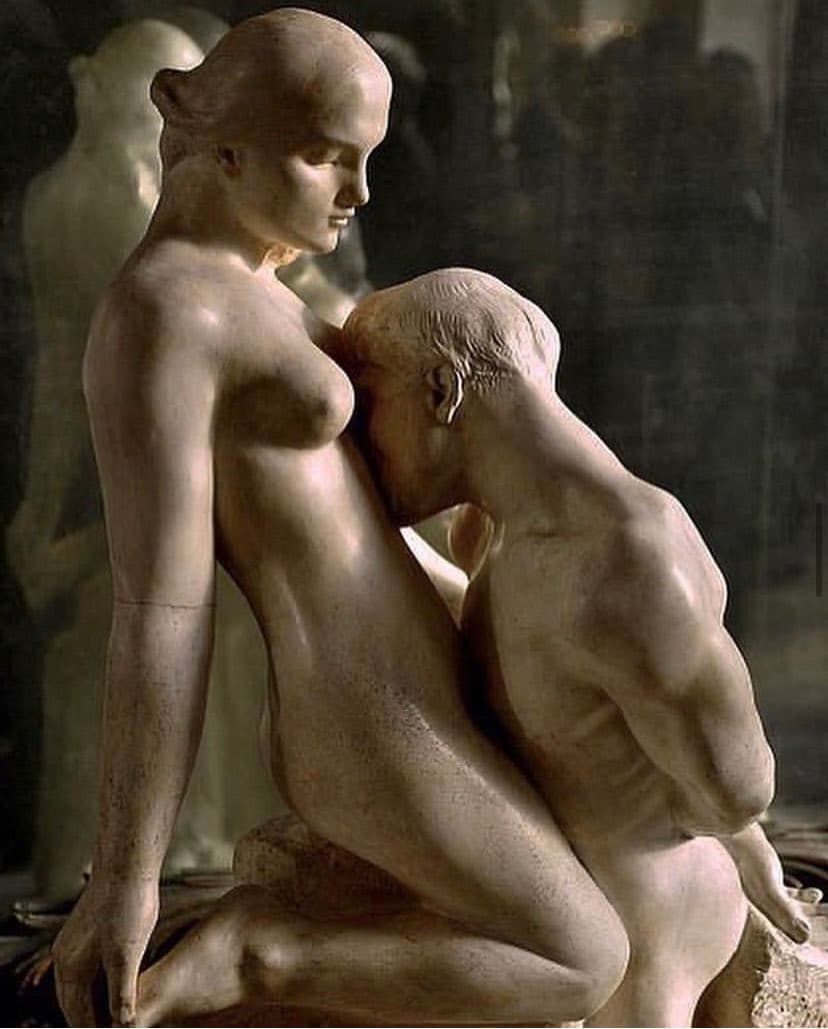
The Eternal Idol
Auguste Rodin · c. 1889 (first marble 1893)
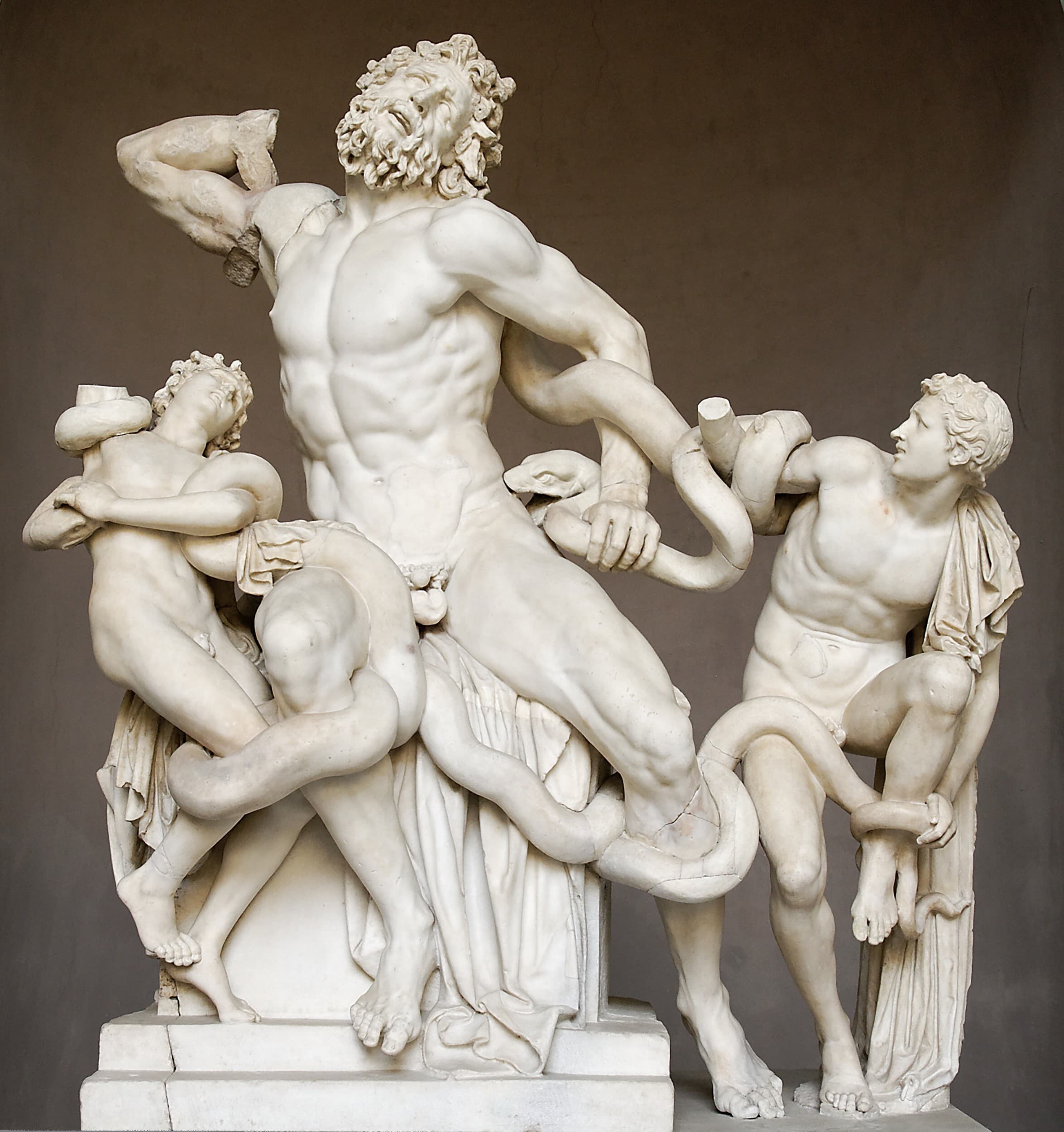
Laocoön and His Sons
Agesander of Rhodes & Athenodoros of Rhodes & Polydorus of Rhodes · c. 200 BC – AD 70 (date debated); excavated 1506
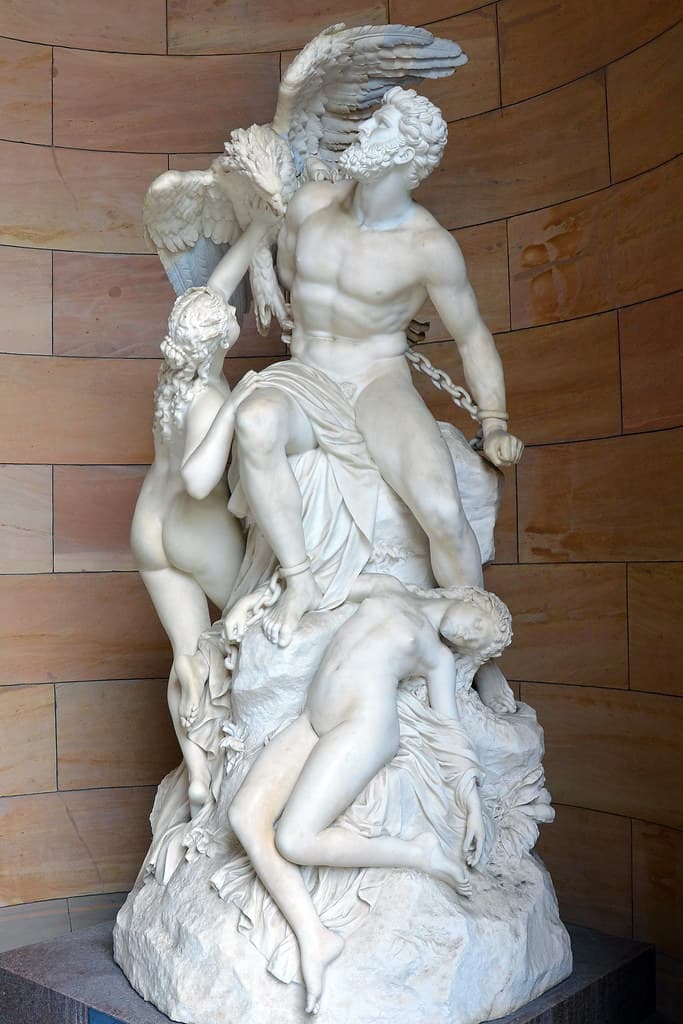
Prometheus Bound and the Oceanids
Eduard Müller · 1872–79
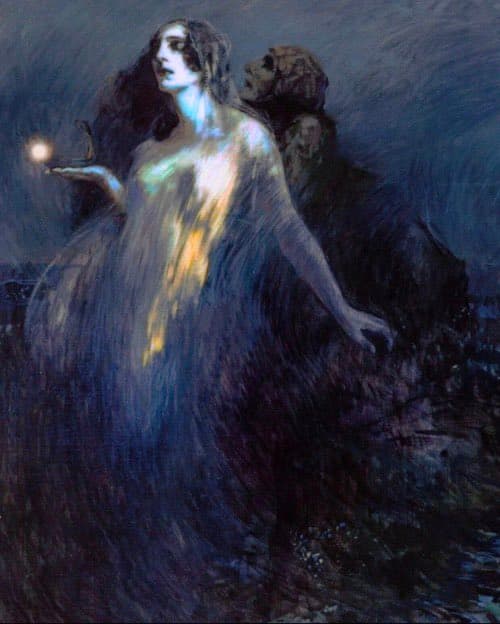
Verso la Luce
Cipriano Mannucci

Venus de Milo
Alexandros of Antioch · c. 150–125 BC

Nymphs Dancing to Pan's Flute
Joseph Tomanek

Saturn Devouring His Son
Francisco Goya · c. 1819–1823