Image: Photo by Architas, Galleria Borghese, Rome · CC BY-SA 4.0 · via Wikimedia Commons
Baroque
The Rape of Proserpina
Gian Lorenzo Bernini, 1621–1622
The Rape of Proserpina is a marble group by Gian Lorenzo Bernini, carved in 1621–1622 when he was 23, showing Pluto, god of the underworld, seizing Proserpina. It is in the Galleria Borghese in Rome; the title means abduction.
- Artist
- Gian Lorenzo Bernini
- Date
- 1621–1622
- Medium
- Carrara marble
- Dimensions
- 225 cm high
- Collection
- Galleria Borghese, Rome, Italy
- Movement
- Baroque
What you are looking at
A powerful bearded man strides forward, lifting a struggling young woman off the ground. She pushes against his head with her left hand, shoving his face away and wrinkling the skin of his cheek; her right arm flings up to the sky. Her mouth is open, and a tear runs down her cheek. At his feet, the three-headed dog Cerberus snarls in three directions.
The most famous detail is where his hand meets her body. Pluto's fingers press into the flesh of Proserpina's thigh, and the marble dents around them as if it were soft skin. It is one of the great illusions in sculpture: hard Carrara stone made to look yielding and warm. Compare the textures. His beard and hair are deeply drilled and curled, her skin is polished smooth, and his muscles are carved with a hardness that sets off her softness.
The myth of Proserpina
In Roman myth, retold by Ovid in the Metamorphoses (Book V), Proserpina (Persephone in Greek) was the daughter of Ceres, goddess of the harvest. While she gathered flowers in a meadow in Sicily, Pluto, ruler of the underworld, burst out of the earth in his chariot, seized her and carried her down to his kingdom. Ceres searched the earth for her daughter, and in her grief the crops failed. A compromise was reached: Proserpina would spend part of each year with Pluto below and the rest with her mother above. Her yearly return explained the cycle of the seasons.
Bernini identifies the characters through their attributes. Pluto wears a crown and carries a two-pronged scepter (the bident). Cerberus, guardian of the underworld, shows we are already at its threshold.
What does "rape" mean in the title?
The title comes from the Latin raptus, meaning seizure or abduction, and the Italian title Ratto di Proserpina means the same. For that reason the work is often called The Abduction of Proserpina today. The myth is nonetheless a story of violence: a young woman taken by force, and Bernini shows her fear and resistance frankly.
How Bernini made it
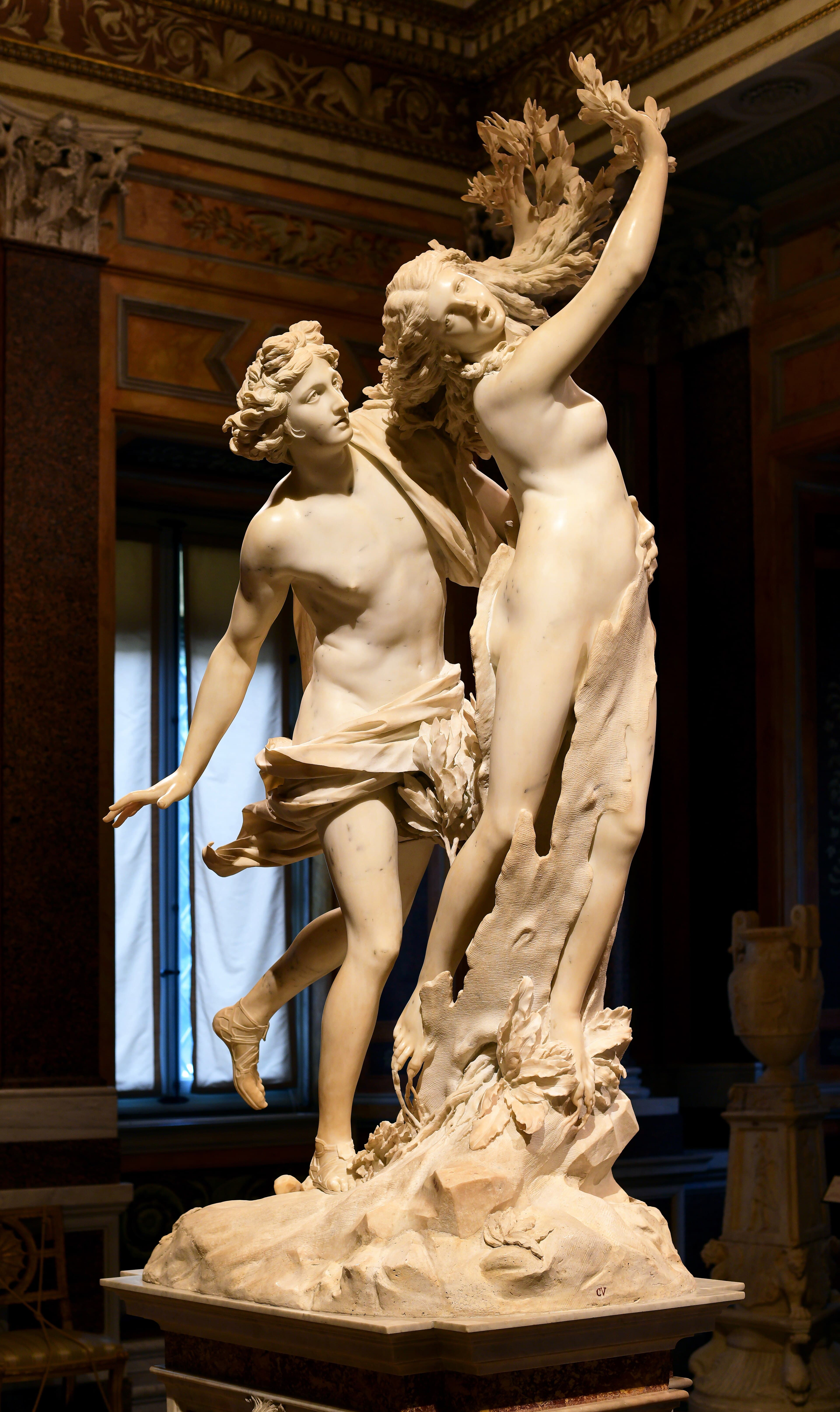
Bernini (1598–1680) was about 23 when he carved the group for Cardinal Scipione Borghese, the most important patron of his youth. The design is built to be seen from several angles. From the left you see Pluto's stride and capture; from the front, the struggle and her cry; from the right, Proserpina's escape upward and her tear. A viewer walking round it experiences the story as it unfolds, a method Bernini perfected soon afterward in Apollo and Daphne.
Soon after it was finished, in 1622, Cardinal Borghese gave the sculpture as a gift to Cardinal Ludovico Ludovisi, nephew of the new pope, Gregory XV, a diplomatic gesture. It stayed in the Villa Ludovisi for nearly three centuries and returned to the Galleria Borghese only in 1908, when the Italian state bought it.
What does The Rape of Proserpina mean?
The group can be read on several levels:
- A myth of the seasons. Proserpina's descent and return explain winter and spring.
- A display of virtuosity. For a young sculptor, it was a demonstration that marble could rival painting in rendering flesh, tears and hair.
- A story of power and violence. Modern viewers see clearly what the myth describes: a god's abduction of a young woman, and her resistance. The sculpture does not soften that.
These readings can coexist. Bernini's patrons admired the illusion; today the same illusion makes the violence feel real.
Reception and legacy
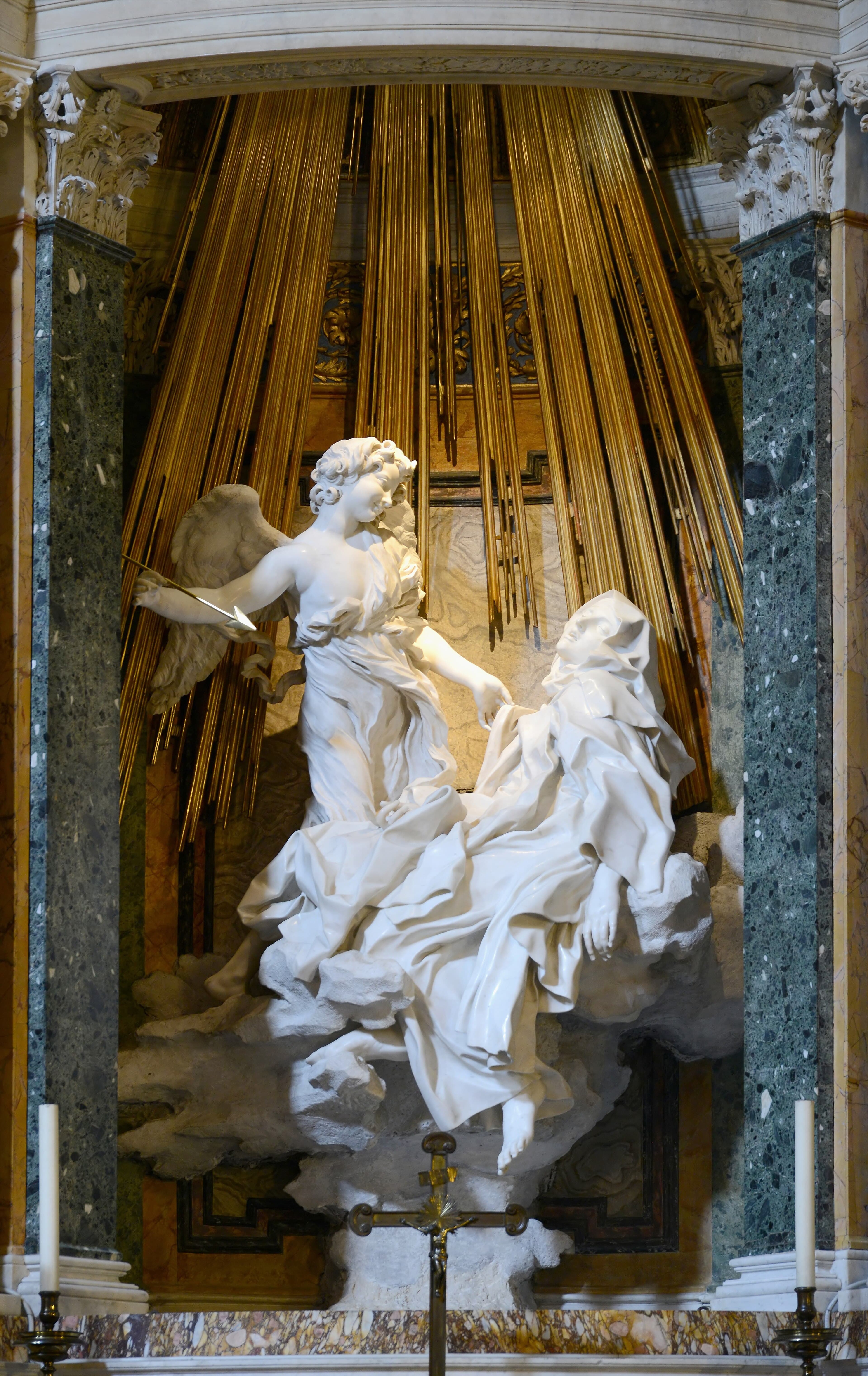
The sculpture made Bernini's reputation and remains one of the most admired works of the Baroque. Close-up photographs of Pluto's hand on Proserpina's thigh circulate widely as the definitive example of marble made to look soft. Compare Giambologna's earlier spiraling group Abduction of a Sabine Woman in Florence, which Bernini clearly knew, and his mature religious work Ecstasy of Saint Teresa.
Details most viewers miss
- The tear. A single carved tear runs down Proserpina's cheek, visible from the right side.
- Pluto's skin. Where her hand pushes his face away, his cheek and eyelid wrinkle under the pressure.
- Cerberus. Each of the dog's three heads looks in a different direction, guarding every approach to the underworld.
- The hair. Proserpina's hair streams back in fine, deeply undercut strands, showing the wind of Pluto's rush.
- The base. The rocky ground under Pluto's feet is carved roughly, so the polished bodies above seem to rise out of raw stone, a contrast Bernini used again in his later groups.
Where to see The Rape of Proserpina
The sculpture is in the Galleria Borghese in Rome, in the Room of the Emperors (Sala degli Imperatori), surrounded by busts of Roman emperors. Visits are by timed, pre-booked ticket. Stand close and to the left to see the hand pressing into the thigh, then walk round to the right to see the tear.
Questions & answers
Where is The Rape of Proserpina?
It is in the Galleria Borghese in Rome, in the Room of the Emperors. It was given to Cardinal Ludovisi in 1622 and returned to the Borghese collection only in 1908, when the Italian state purchased it. Visits require a pre-booked timed ticket.
What does the rape of Proserpina mean?
Here 'rape' translates the Latin raptus, meaning abduction. The sculpture shows Pluto, god of the underworld, seizing Proserpina to take her below. In myth her yearly return to her mother Ceres explains the cycle of the seasons.
How old was Bernini when he made The Rape of Proserpina?
He was about 23. He carved it in 1621–1622 for Cardinal Scipione Borghese, early in a career that made him the leading sculptor and architect of Baroque Rome.
How did Bernini make marble look like skin?
He carved Pluto's fingers sinking into Proserpina's thigh, with the surrounding marble shaped as if dented, and polished her skin smooth against his deeply drilled hair and hard muscles. The contrast of surfaces creates the illusion of soft flesh.
What is the dog in The Rape of Proserpina?
It is Cerberus, the three-headed dog that guards the entrance to the underworld. His presence shows that Pluto is about to carry Proserpina down to his kingdom.
More by the artist
Gian Lorenzo Bernini
Kindred works
You may also study
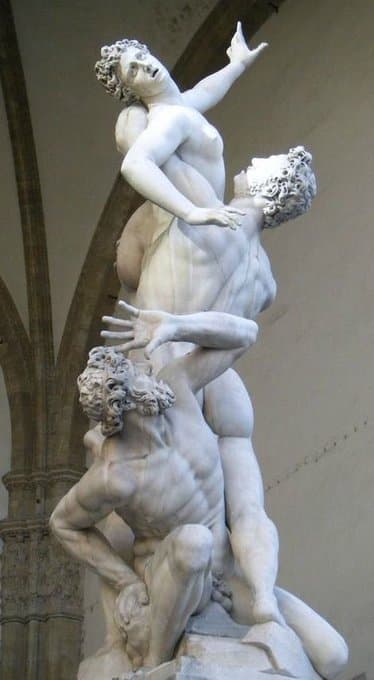
Abduction of a Sabine Woman
Giambologna · 1579–83
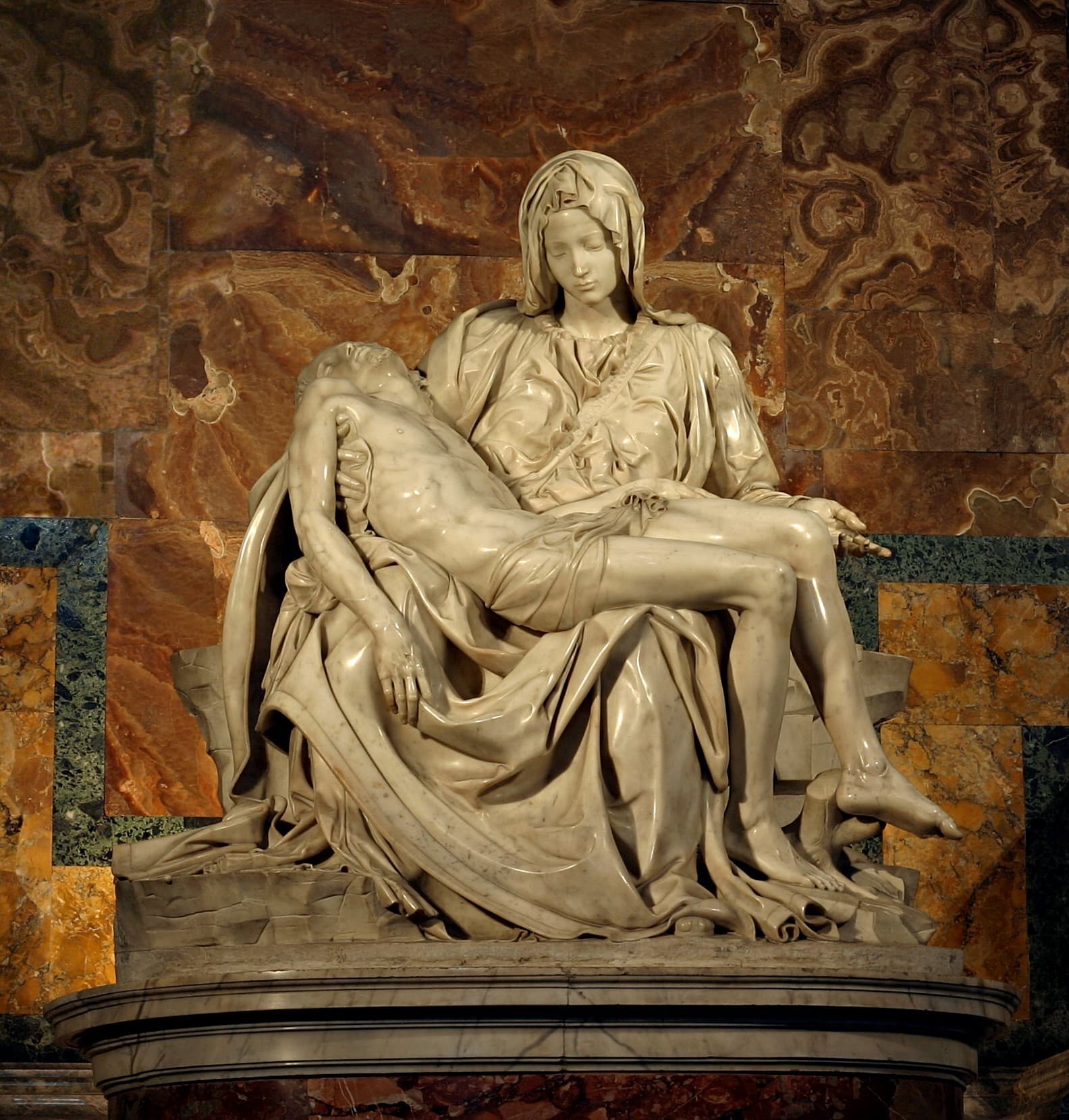
Pietà
Michelangelo · 1498–1499

Venus de Milo
Alexandros of Antioch · c. 150–125 BC

Nymphs Dancing to Pan's Flute
Joseph Tomanek

The Thinker
Auguste Rodin · Modeled 1880–82; enlarged 1902–03; this cast 1904

Saturn Devouring His Son
Francisco Goya · c. 1819–1823
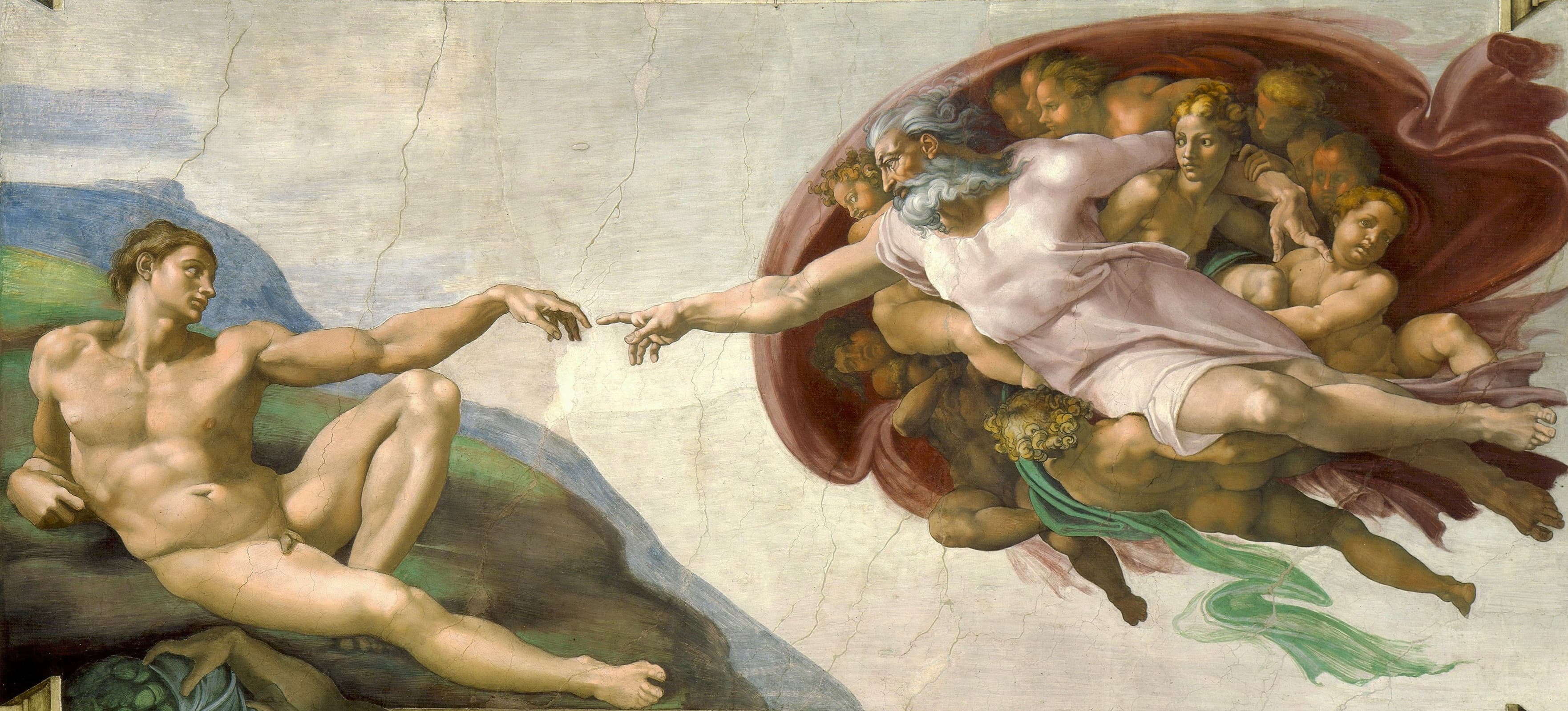
The Creation of Adam
Michelangelo · c. 1511–12

Ophelia
John Everett Millais · 1851–52