Image: Photo by Architas, Galleria Borghese, Rome · CC BY-SA 4.0 · via Wikimedia Commons
Baroque
Apollo and Daphne
Gian Lorenzo Bernini, 1622–1625
Apollo and Daphne is a life-size marble sculpture by Gian Lorenzo Bernini, carved in 1622–1625, showing the nymph Daphne turning into a laurel tree as the god Apollo catches her. It is in the Galleria Borghese in Rome.
- Artist
- Gian Lorenzo Bernini
- Date
- 1622–1625
- Medium
- Marble
- Dimensions
- 243 cm high
- Collection
- Galleria Borghese, Rome, Italy
- Movement
- Baroque
What you are looking at
A young god, running, has just reached the woman he is chasing. His left hand touches her hip; his cloak flies out behind him, and his right leg is still lifted in mid-stride. She is twisting away from him, arms flung up, mouth open in a cry. And at the very moment he touches her, she is changing. Bark climbs over her legs and wraps her hips. Her toes are sprouting roots into the ground. From her raised fingers and her streaming hair burst thin, translucent laurel leaves.
Walk slowly around the group. From one side you see a chase; from another, the bark closing over Daphne's body like armor, Apollo's hand landing on wood instead of skin. The marble is carved so thin in the leaves and fingertips that light passes through it. Few sculptures make stone do so many different things at once: skin, hair, cloth, bark, root and leaf.
The story from Ovid
Bernini's source was the Roman poet Ovid's Metamorphoses (Book I). Apollo, proud of having killed the monstrous serpent Python, mocked Cupid's small bow. In revenge Cupid shot two arrows: a golden one into Apollo, to make him fall in love, and a leaden one into the nymph Daphne, daughter of the river god Peneus, to make her flee all love. Apollo chased her through the woods. Exhausted, Daphne begged her father to destroy the beauty that had brought this on her, and she was transformed into a laurel tree. Apollo, still loving her, made the laurel his sacred plant, its leaves the crowns of poets and victors.
Bernini chose the single moment in Ovid's poem where both endings meet: the instant of capture and of escape.
How Bernini made it
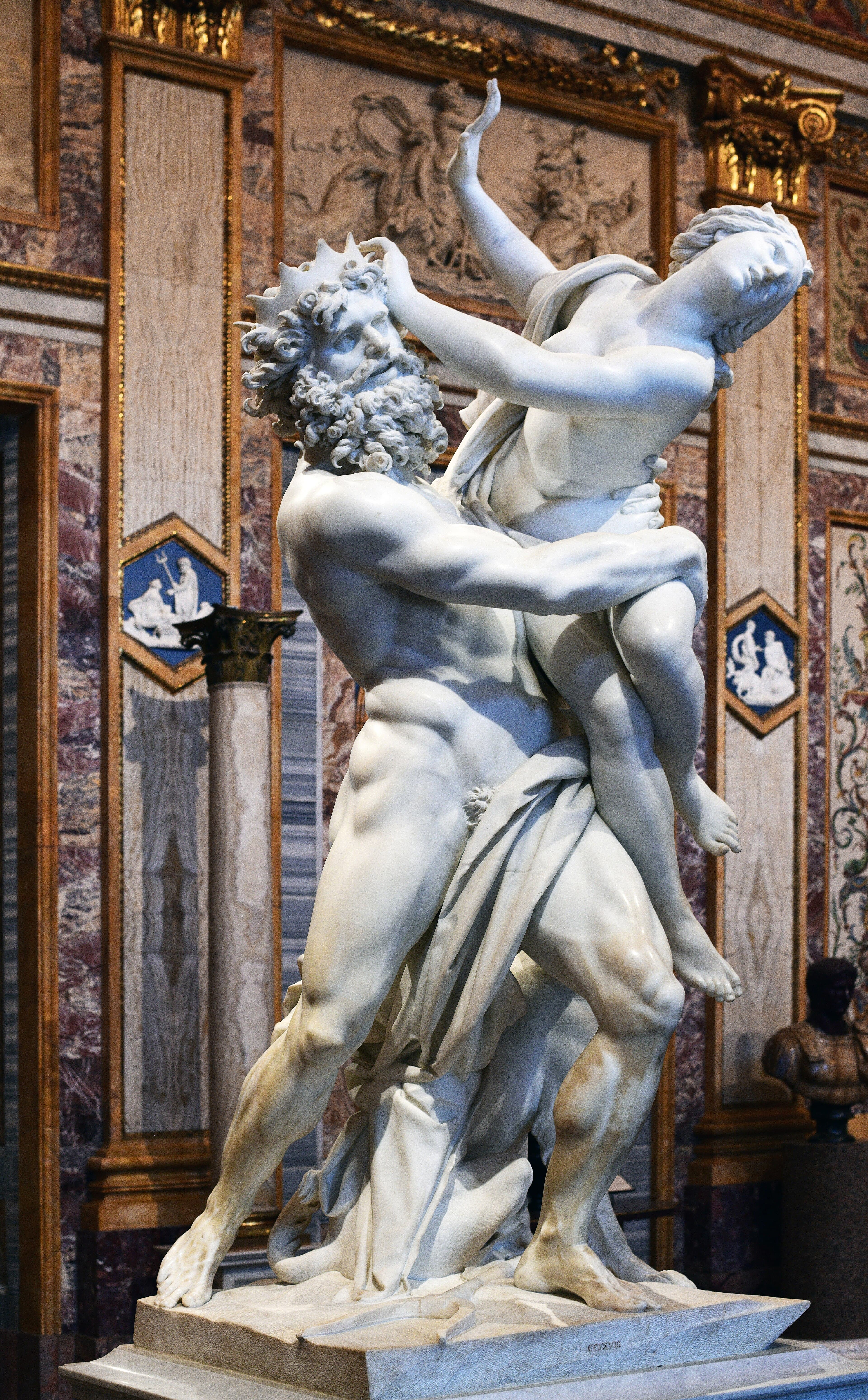
Bernini (1598–1680) was in his early twenties and already the favorite sculptor of Cardinal Scipione Borghese, nephew of Pope Paul V and one of the great collectors of the age. Apollo and Daphne was the last of a series of large marble groups he carved for the cardinal's villa, after The Rape of Proserpina and the David.
The figure of Apollo is based on the most admired ancient statue in Rome, the Apollo Belvedere in the Vatican, which Bernini turned from a standing pose into a running one. The most delicate passages, the roots, branches and leaves, were carved with the help of Bernini's assistant Giuliano Finelli, a specialist in fine detail. The work used drills, rasps and abrasives to achieve different surfaces, from the polished skin to the rough texture of bark.
What does Apollo and Daphne mean?
The group was made for a cardinal, and a moral was added to excuse the display of a pagan love chase in a churchman's house. Cardinal Maffeo Barberini, the future Pope Urban VIII, composed a Latin couplet that was carved on the base. In translation: whoever, in love, pursues the joys of fleeting beauty fills his hands with leaves, or plucks bitter berries. Pleasure that is chased is lost at the moment it is grasped.
Other readings come from Ovid himself. The story explains the laurel as the emblem of poetry and fame: art and glory born of a desire that cannot be fulfilled. Some modern viewers also read it as a story of pursuit and refusal, with Daphne's transformation as her only escape from unwanted desire.
Reception and legacy
Visitors were astonished from the start. The sculpture was originally placed against a wall, so that a visitor entering the room saw Apollo's back first and then, walking round, discovered Daphne's transformation as a story in time. It now stands in the center of the room, so it can be seen from every side.
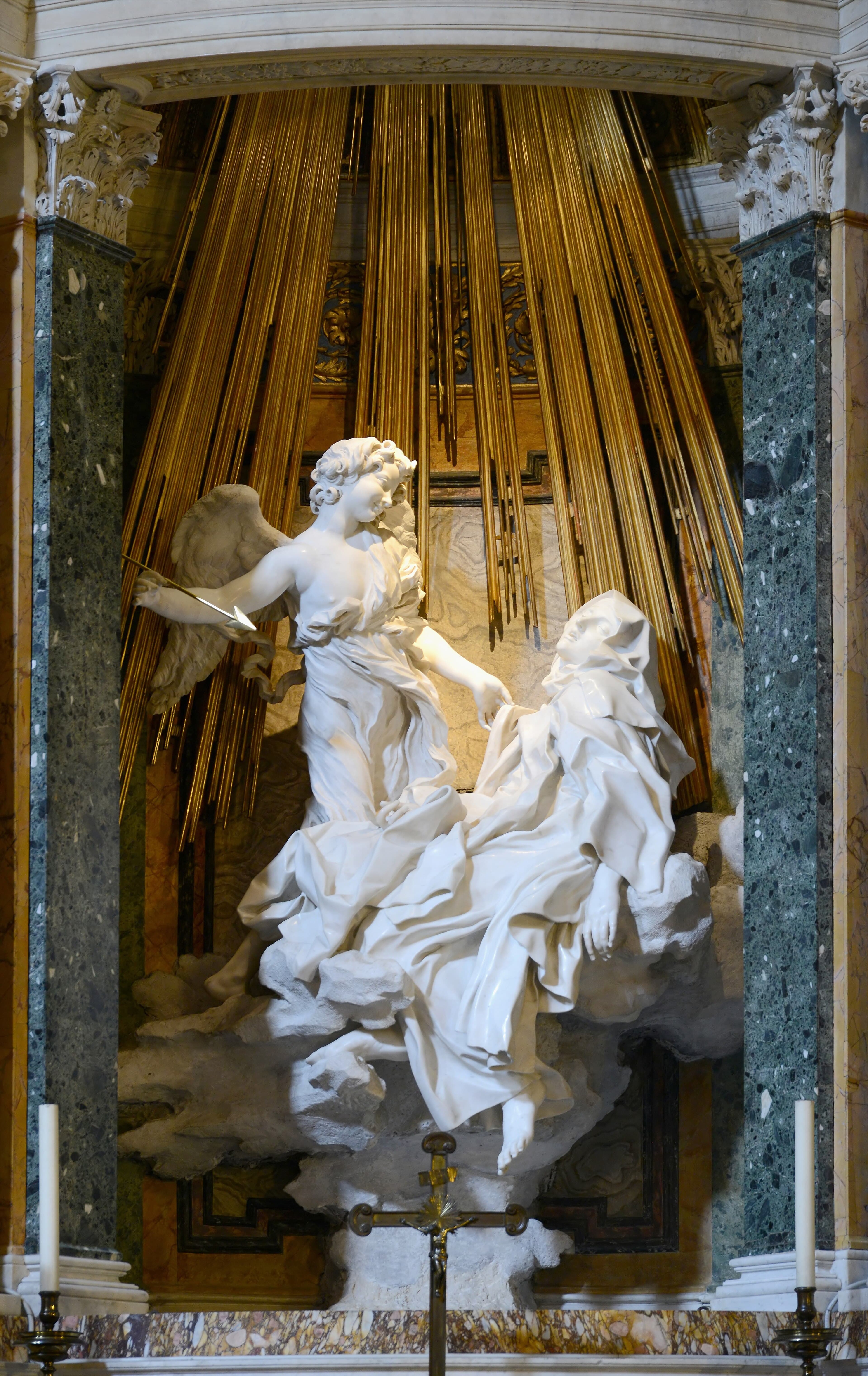
It became the model for Baroque sculpture's ambition to capture motion and emotion in marble, and Bernini's later religious masterpiece, the Ecstasy of Saint Teresa, builds on what he learned here. Compare Antonio Canova's cooler, neoclassical treatment of love and myth in Psyche Revived by Cupid's Kiss, and see more in famous sculptures and Greek mythology in art.
Details most viewers miss
- The toes. Look down at Daphne's feet: her toes are already lengthening into roots that dig into the rock.
- The bark's edge. The bark rises up her body at different heights on each side, closing over her hip just where Apollo's hand lands.
- Apollo's quiver. He still carries his quiver on his back, the archer who mocked Cupid's skill now struck by Cupid's arrow.
- Daphne's face. Her expression is one of fright, not yet of relief; Bernini catches the moment before she understands she has escaped.
Where to see Apollo and Daphne
The sculpture is in the Galleria Borghese in Rome, in the room named after it, in the villa for which it was carved. The museum admits visitors in timed slots of about two hours and requires advance booking. Try to see the group from the angle of the doorway first, as Bernini's early visitors did, then walk around it.
Questions & answers
Where is Apollo and Daphne by Bernini?
It is in the Galleria Borghese in Rome, in the villa of Cardinal Scipione Borghese for whom it was carved between 1622 and 1625. Entry is by timed ticket booked in advance.
What is the story of Apollo and Daphne?
In Ovid's Metamorphoses, Cupid shoots Apollo with a golden arrow of love and the nymph Daphne with a leaden arrow of refusal. Apollo chases her, and as he catches her, her father, a river god, turns her into a laurel tree.
What does Apollo and Daphne mean?
A Latin couplet on its base, written by the future Pope Urban VIII, reads it as a moral: those who chase fleeting pleasure end with only leaves or bitter berries. It also explains the laurel as the emblem of poetry and glory.
How long did it take Bernini to make Apollo and Daphne?
Bernini carved it between 1622 and 1625, pausing to work on other commissions. His assistant Giuliano Finelli helped with the finest details, such as the roots and leaves.
How tall is Apollo and Daphne?
The marble group is about 243 cm tall, slightly larger than life, which makes the delicacy of the carved leaves and fingers even more striking in person.
More by the artist
Gian Lorenzo Bernini
Kindred works
You may also study
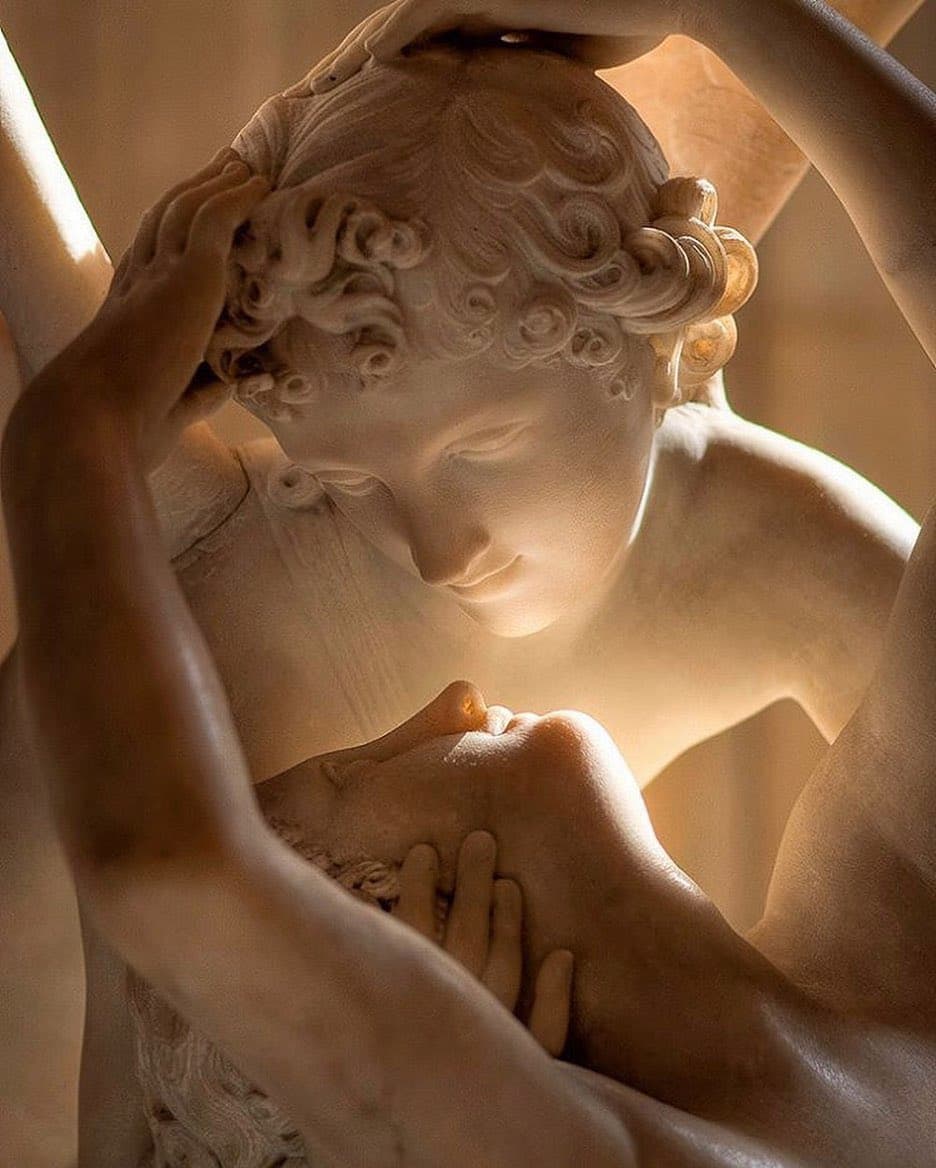
Psyche Revived by Cupid's Kiss
Antonio Canova · 1787–1793
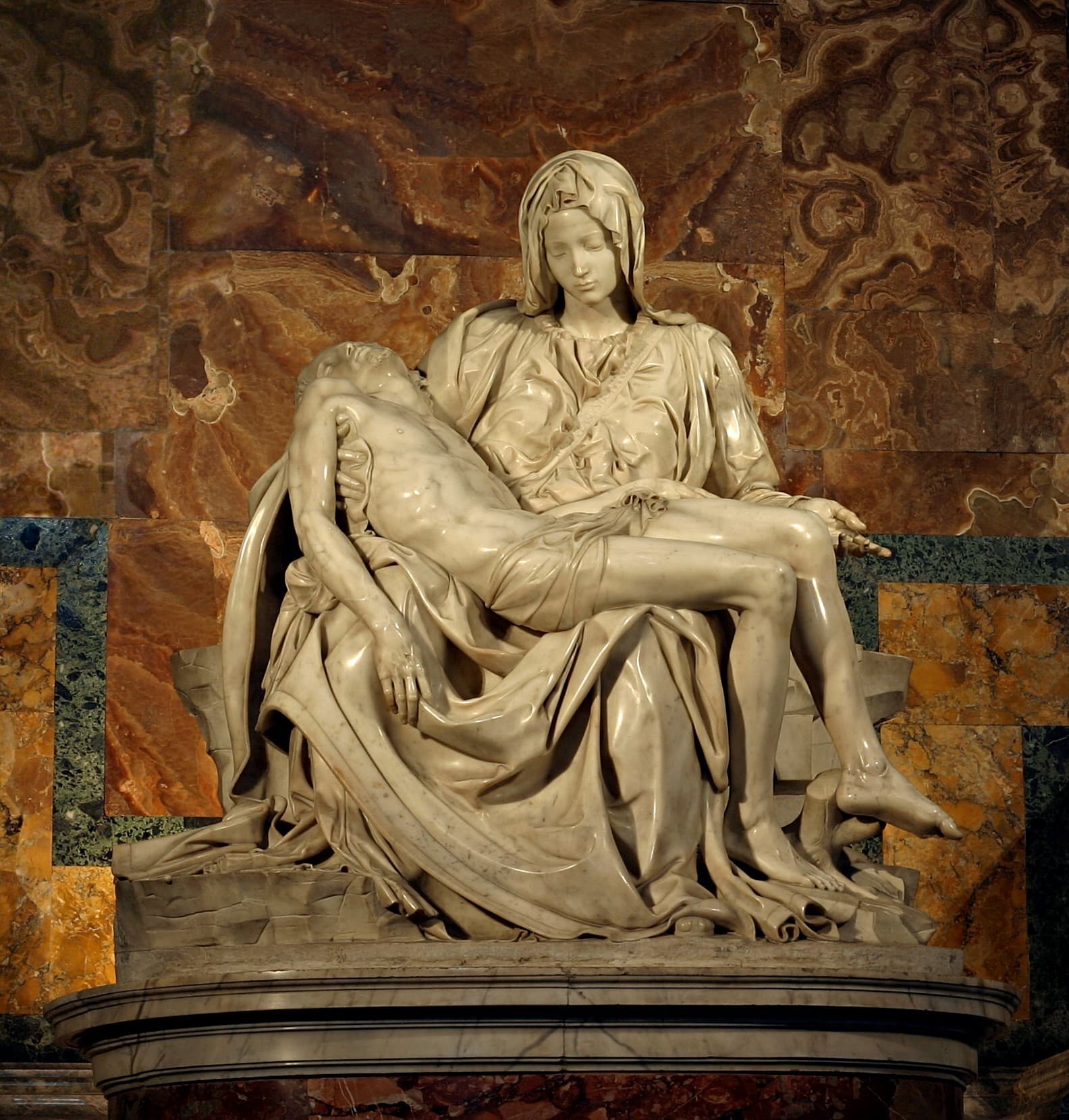
Pietà
Michelangelo · 1498–1499

Bridge over a Pond of Water Lilies
Claude Monet · 1899

Venus de Milo
Alexandros of Antioch · c. 150–125 BC

Nymphs Dancing to Pan's Flute
Joseph Tomanek

The Scream
Edvard Munch · 1893

The Thinker
Auguste Rodin · Modeled 1880–82; enlarged 1902–03; this cast 1904

Saturn Devouring His Son
Francisco Goya · c. 1819–1823