Image: Photo by Alvesgaspar, Santa Maria della Vittoria, Rome · CC BY-SA 4.0 · via Wikimedia Commons
Baroque
Ecstasy of Saint Teresa
Gian Lorenzo Bernini, 1647–1652
The Ecstasy of Saint Teresa is Gian Lorenzo Bernini's marble altarpiece of the Spanish mystic pierced by an angel's arrow, carved in 1647–1652 for the Cornaro Chapel. It is still in place in Santa Maria della Vittoria in Rome.
- Artist
- Gian Lorenzo Bernini
- Date
- 1647–1652
- Medium
- Marble and gilded bronze, in a chapel of colored marbles
- Dimensions
- Life-size figures
- Collection
- Cornaro Chapel, Santa Maria della Vittoria, Rome, Italy
- Movement
- Baroque
What you are looking at
A woman in a heavy nun's habit lies back on a cloud, her head tipped, eyes half closed, mouth open. Her left hand hangs limp; her bare left foot dangles over the cloud's edge. Above her a smiling angel, light as air in a thin, rippling tunic, gently lifts the edge of her robe with one hand and holds a golden arrow in the other, aimed at her heart. Behind them, rays of gilded bronze stream down from above, catching real daylight from a window hidden in the chapel's vault.
Bernini sets two kinds of marble movement against each other. Teresa's habit is a chaos of deep, crumpled folds, as if her body is convulsing inside it; the angel's drapery is fine and fluttering, like flame. The cloud they float on, carved from the same white stone, seems to hang without support in its niche.
The vision Bernini carved
Teresa of Ávila (1515–1582) was a Spanish Carmelite nun, reformer and mystic, canonized in 1622. In her autobiography she described a vision in which an angel appeared beside her:
I saw in his hand a long spear of gold, and at the iron's point there seemed to be a little fire. He appeared to me to be thrusting it at times into my heart... The pain was so great that it made me moan; and yet so surpassing was the sweetness of this excessive pain that I could not wish to be rid of it.
This experience, called the transverberation (piercing) of her heart, is exactly the moment Bernini shows: the angel has drawn the arrow back, between one thrust and the next. Teresa is not dying but overwhelmed.
The whole chapel is the artwork
The sculpture is only the center of a larger design. Bernini (1598–1680) conceived the entire Cornaro Chapel, in the left transept of the church, as a single theatrical work combining architecture, sculpture, painting and light. The patron, the Venetian Cardinal Federico Cornaro, appears with seven members of his family, past and present, carved in relief on the side walls. They sit in what look like theater boxes, talking, reading and leaning forward, as if they were watching a performance. The vault above is painted with clouds and angels; the floor has inlaid marble skeletons rising from their tombs.
We are the audience, too. The niche is framed like a stage, with columns and a broken pediment, and the hidden window behind floods the group with a yellowish light that changes through the day.
What does the Ecstasy of Saint Teresa mean?
For Bernini and his patron, it was a devotional image of divine love: the soul pierced and filled by God, a central theme of Counter-Reformation spirituality, which used the senses to move the faithful. Teresa's own writing used the language of bodily feeling to describe spiritual experience, and Bernini translated it faithfully into stone.
That frankness has made the sculpture the most debated religious image of the Baroque. In the eighteenth century the French traveler Charles de Brosses quipped that if this was divine love, he knew it well. Modern writers, including the psychoanalyst Jacques Lacan, have read the expression as erotic. Art historians generally stress that Bernini was a devout Catholic who attended daily Mass, and that the overlap between mystical and physical language was part of Teresa's tradition, not a hidden joke. Both readings depend on the same fact: Bernini made spiritual experience visible as bodily experience.
Reception and legacy
Bernini was proud of the chapel; his son reported that he called it the least bad work he had ever made. It has become the defining example of Baroque art's fusion of the arts into a single spectacle, the bel composto. It also reached a new audience through Dan Brown's novel Angels & Demons, which uses the chapel as a clue.
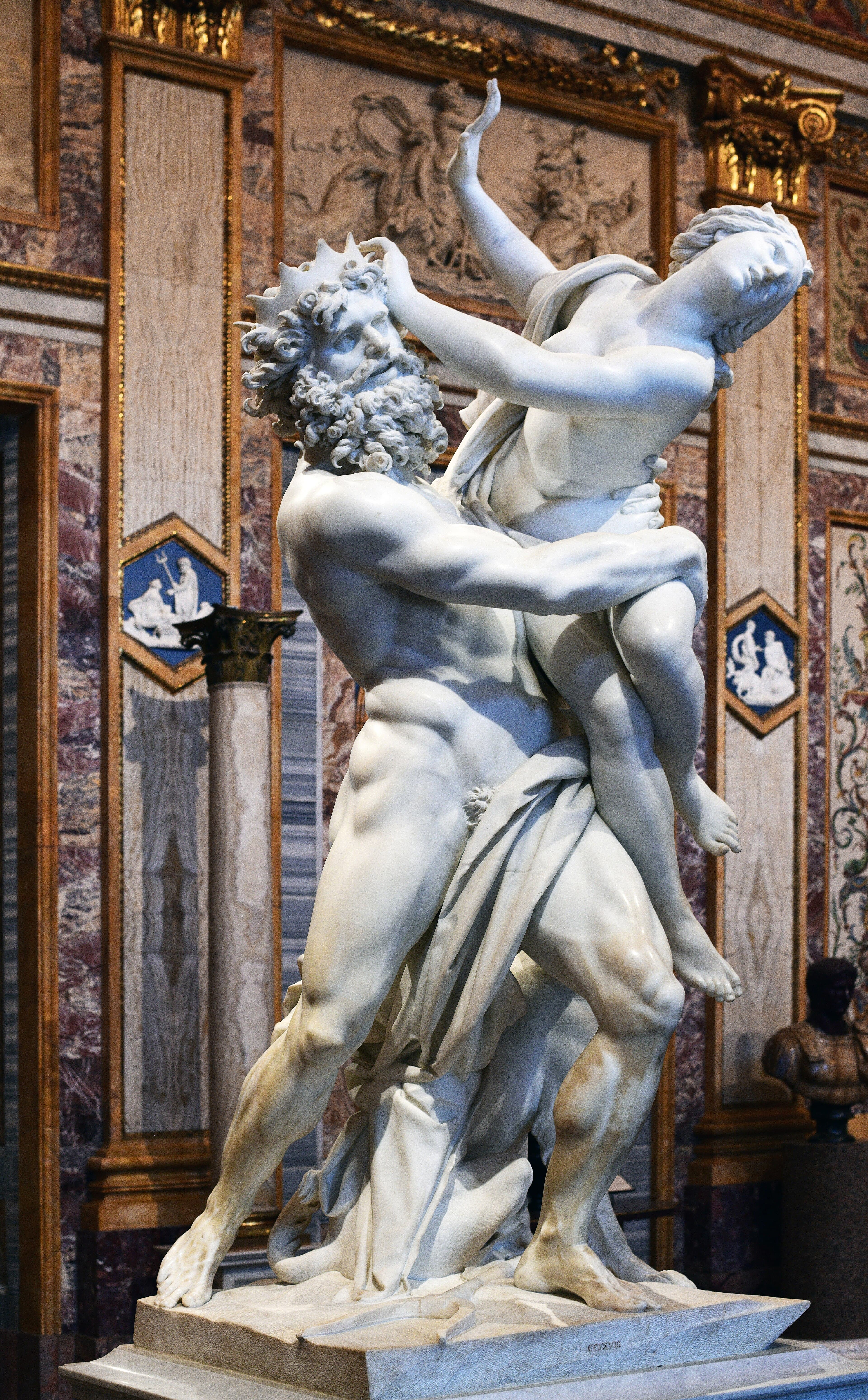
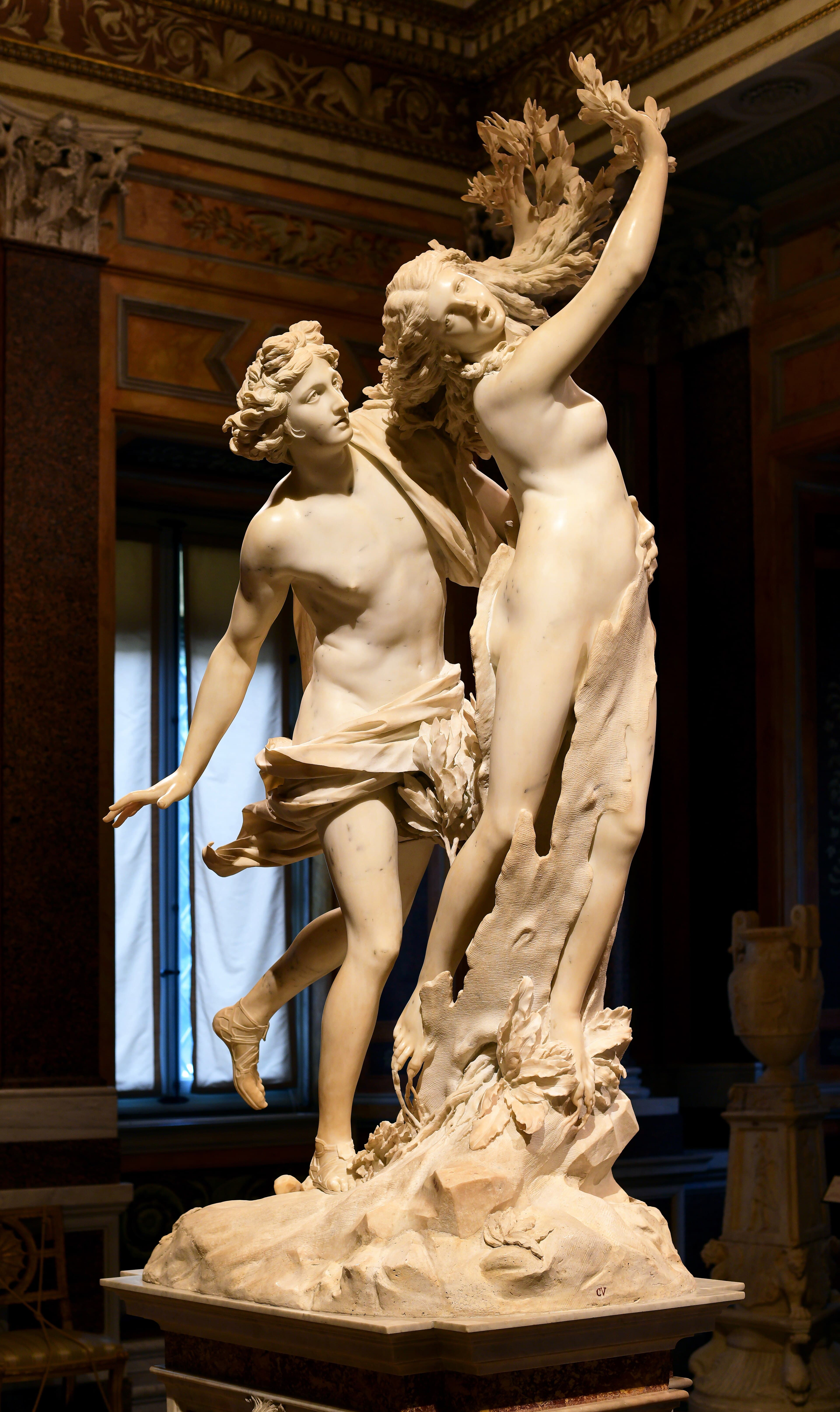
See how Bernini's handling of marble developed from his early secular groups for Cardinal Scipione Borghese, Apollo and Daphne and The Rape of Proserpina, to this religious work, and compare the later virtuosity of Giuseppe Sanmartino's Veiled Christ. More of the artist's work is gathered on our Bernini page.
Details most viewers miss
- The feet. Teresa's bare foot hangs limp over the cloud, while the angel's foot barely touches it, a quiet contrast between the earthbound saint and the weightless visitor.
- The floor. Two inlaid marble skeletons appear to rise from beneath the chapel floor, praying, a reminder that this is a funerary chapel.
- The hands. Teresa's left hand dangles open and relaxed, which tells you more about her state than her face.
- The Cornaro relatives. One relief figure on the side wall looks at a book, another argues, another leans to see better: Bernini made the audience as varied as a real one.
Where to see the Ecstasy of Saint Teresa
The sculpture is in its original setting, the Cornaro Chapel of Santa Maria della Vittoria, a small church on Via XX Settembre in Rome, near the Termini station. It is an active church, so check visiting hours and avoid services. Visit in daylight: the effect of the hidden window depends on the sun, and a coin-operated light is sometimes the only alternative on dark days.
Questions & answers
Where is the Ecstasy of Saint Teresa?
It is in Rome, in its original setting: the Cornaro Chapel in the left transept of the church of Santa Maria della Vittoria, on Via XX Settembre. It is an active church, so visits fit around services.
What does the Ecstasy of Saint Teresa depict?
It shows a vision described by the Spanish mystic Teresa of Ávila, in which an angel pierced her heart with a golden spear tipped with fire, causing pain and overwhelming sweetness. The episode is known as the transverberation.
Is the Ecstasy of Saint Teresa erotic?
Many viewers since the eighteenth century have read Teresa's expression as erotic. Art historians note that Teresa herself described spiritual union in bodily terms and that Bernini was deeply devout. The sculpture makes mystical experience physical, which allows both readings.
Who commissioned the Ecstasy of Saint Teresa?
The Venetian Cardinal Federico Cornaro commissioned it as his family's funerary chapel. He and seven relatives appear carved on the side walls, seated in theater-like boxes as if watching the vision.
How is the Ecstasy of Saint Teresa lit?
Bernini hid a window in the vault above the niche. Daylight falls through it onto the white marble and the gilded bronze rays behind the figures, so the scene appears lit from heaven.
More by the artist
Gian Lorenzo Bernini
Kindred works
You may also study
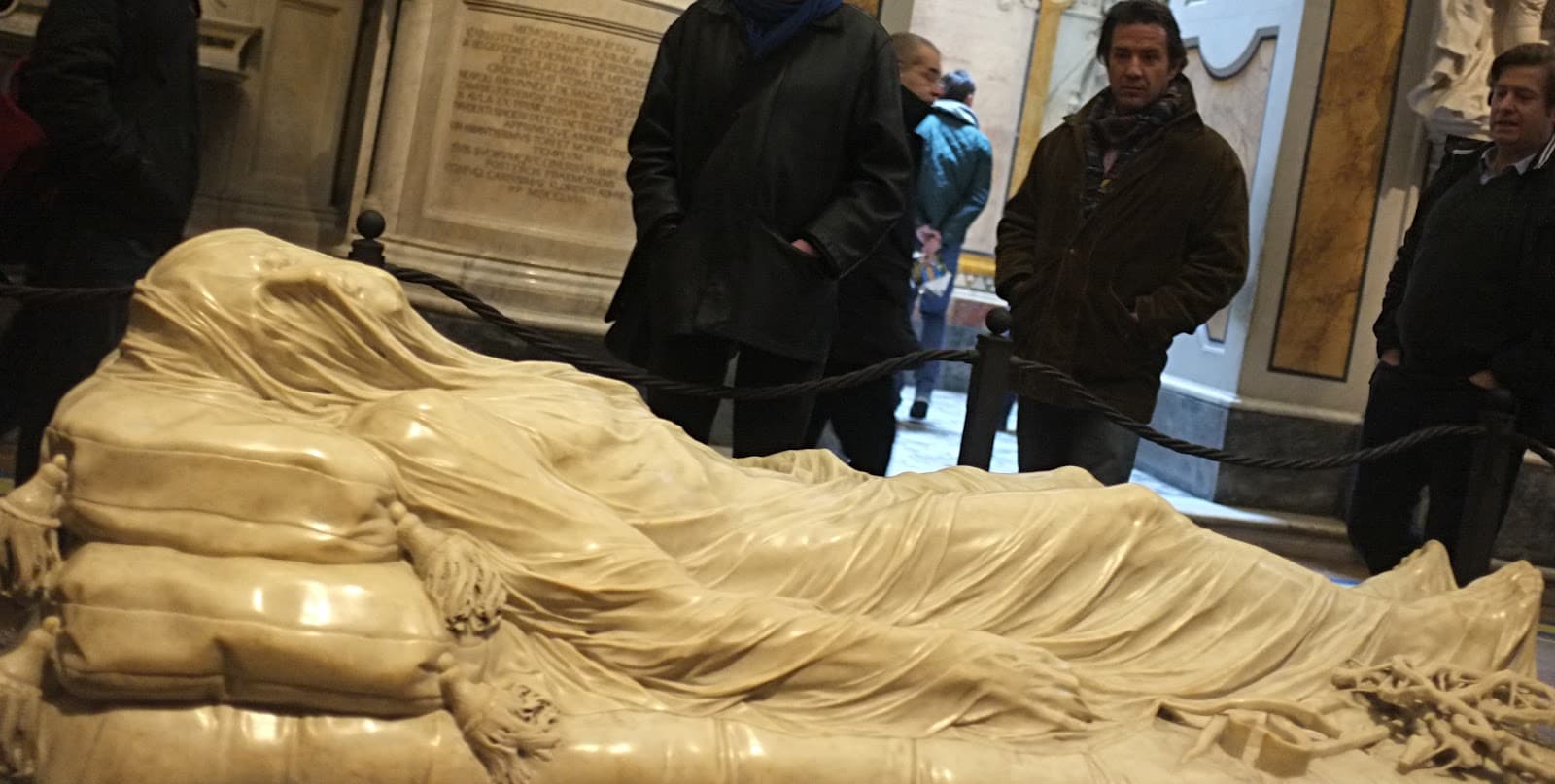
Veiled Christ
Giuseppe Sanmartino · 1753
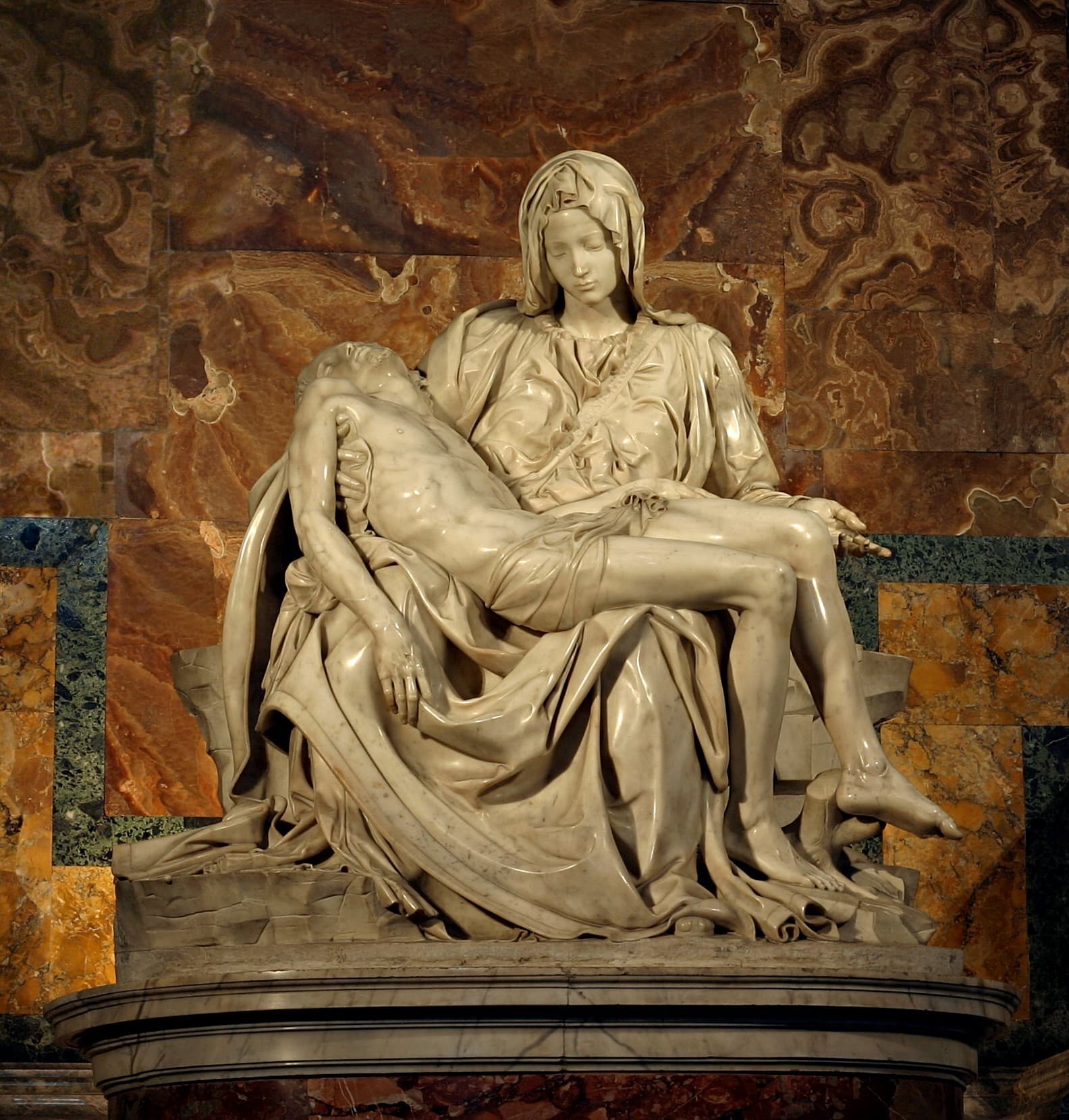
Pietà
Michelangelo · 1498–1499

Venus de Milo
Alexandros of Antioch · c. 150–125 BC
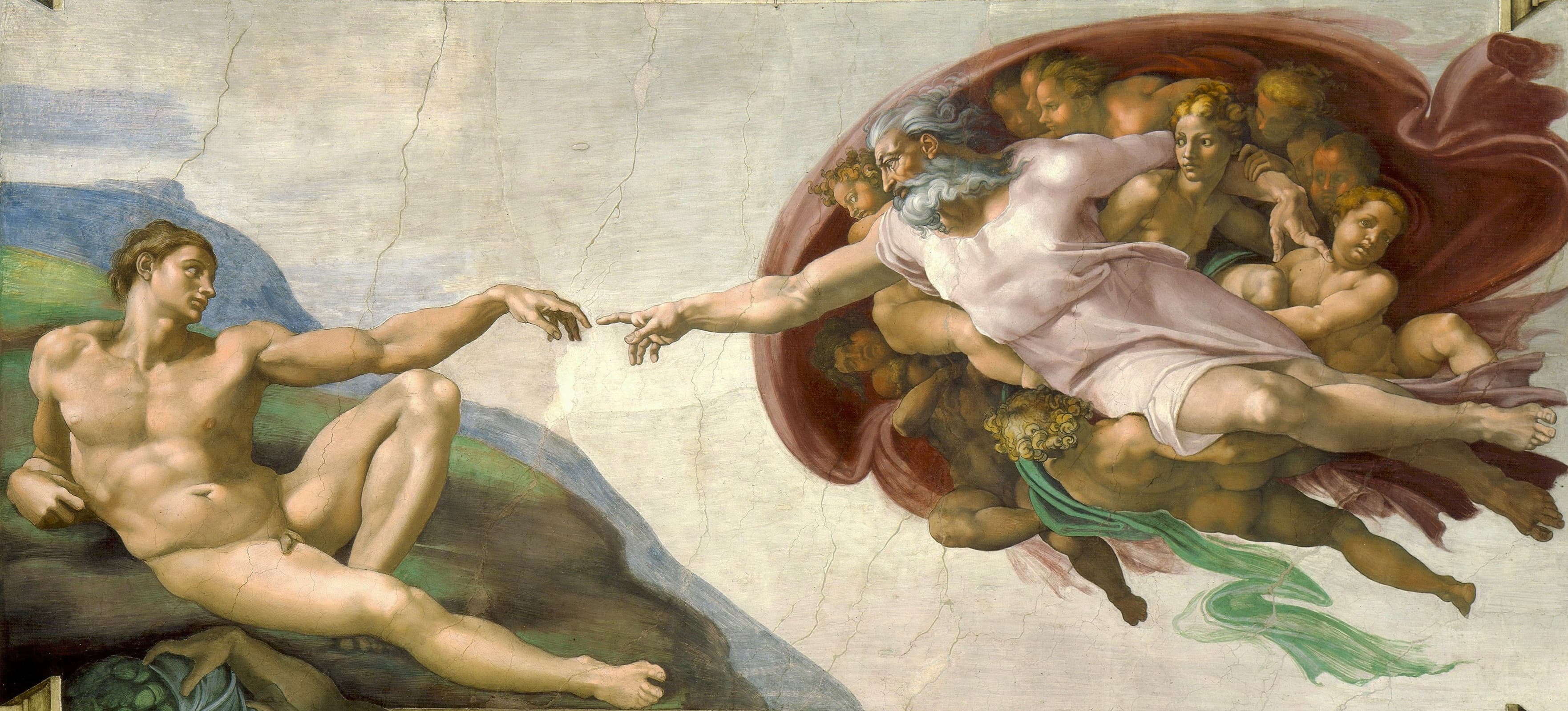
The Creation of Adam
Michelangelo · c. 1511–12

Ophelia
John Everett Millais · 1851–52

Woman with a Parasol – Madame Monet and Her Son
Claude Monet · 1875
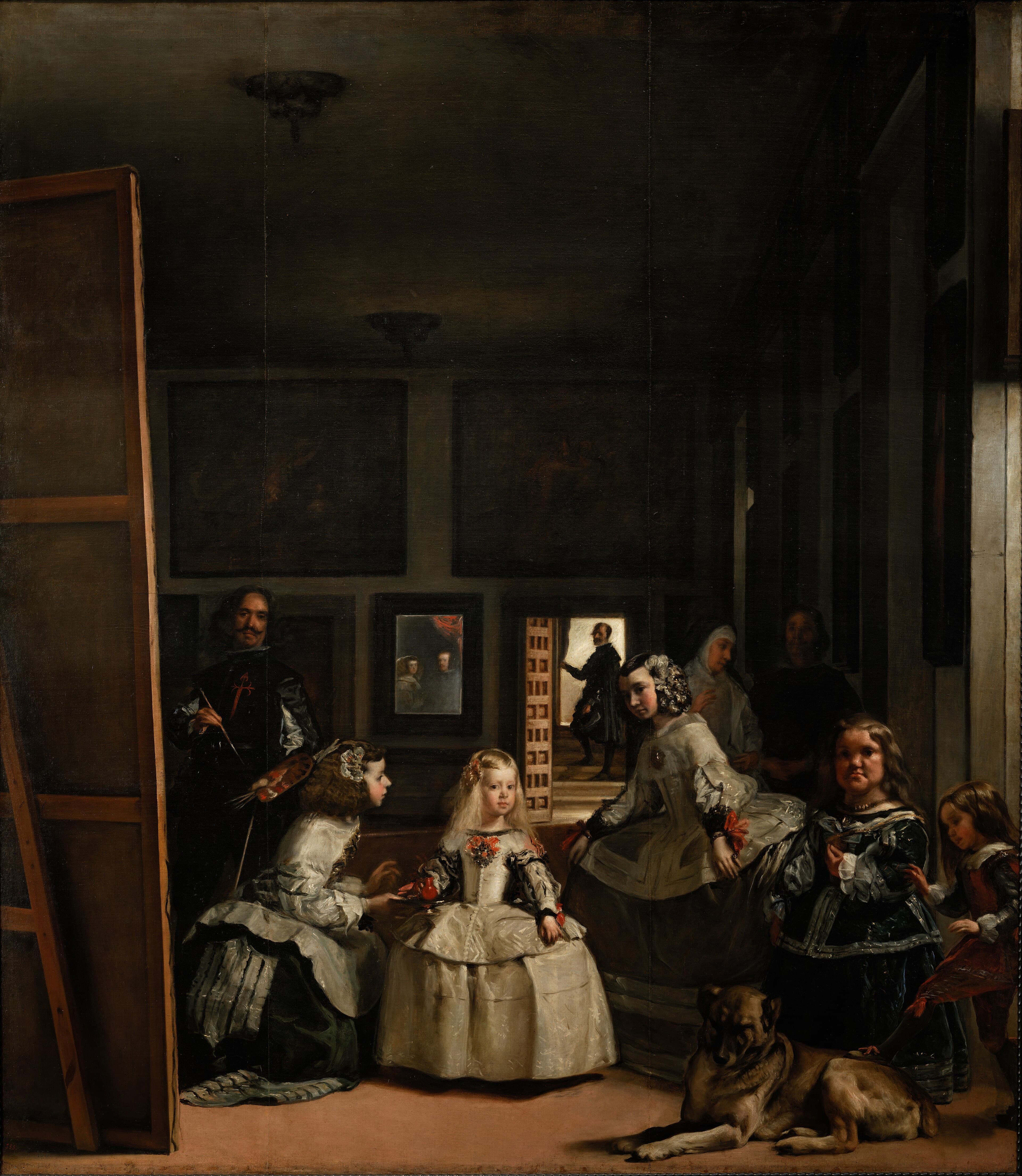
Las Meninas
Diego Velázquez · 1656
Lucifer
Franz von Stuck · 1890