Mannerism
Abduction of a Sabine Woman
Giambologna, 1579–83
Abduction of a Sabine Woman is a marble group by Giambologna, carved 1579–83 from a single block, showing a young man lifting a woman over a crouching older man. It stands in the Loggia dei Lanzi, Florence.
- Artist
- Giambologna
- Date
- 1579–83
- Medium
- Marble
- Dimensions
- 410 cm (height)
- Collection
- Loggia dei Lanzi, Florence, Italy
- Movement
- Mannerism
Giambologna's Abduction of a Sabine Woman (Ratto delle Sabine) is a 4.1-meter marble group carved between 1579 and 1583 and set up in the Loggia dei Lanzi on Florence's Piazza della Signoria, where it still stands. It was cut from a single block of white marble, said to be the largest ever brought to Florence.
What you are looking at
Three nude figures spiral upward in one continuous movement. At the bottom an older man crouches, one arm raised in a gesture of shock or defense, his face twisted toward the figures above. Over him strides a powerful young man who has seized a woman and hoists her high against his shoulder. She twists away from him, her body arching, one arm flung up toward the sky and her mouth open in a cry.
There is no single main view. As you walk around the group, the figures turn and their relationships change: the woman's raised hand, the young man's straining back and the old man's upturned face appear and disappear in sequence. This upward corkscrew composition, the figura serpentinata, was the ideal of late Renaissance sculpture, and Giambologna pushed it further than anyone before him.
A title added later
Giambologna, a Flemish-born sculptor who spent his career in Florence, did not make the work for a particular story. He conceived it as a display of skill, three ages and two sexes intertwined, to show the Medici what he could do with marble. Only after it was finished was a subject attached; according to contemporary accounts, the scholar Vincenzo Borghini suggested the Roman legend of the Sabine women, carried off by Romulus's men to populate the new city. A bronze relief on the base illustrates that story, and the base carries the sculptor's signature and the date 1582.
Context
The group was placed in the Loggia in 1582–83, next to Benvenuto Cellini's Perseus, under the patronage of Grand Duke Francesco I de' Medici. Giambologna's full-size plaster model is in the Galleria dell'Accademia in Florence, and a smaller bronze of an earlier two-figure version is in the Metropolitan Museum of Art. Bernini's Rape of Proserpina in Rome, carved about forty years later, takes up the same theme of struggle and turning movement.
Where to see it
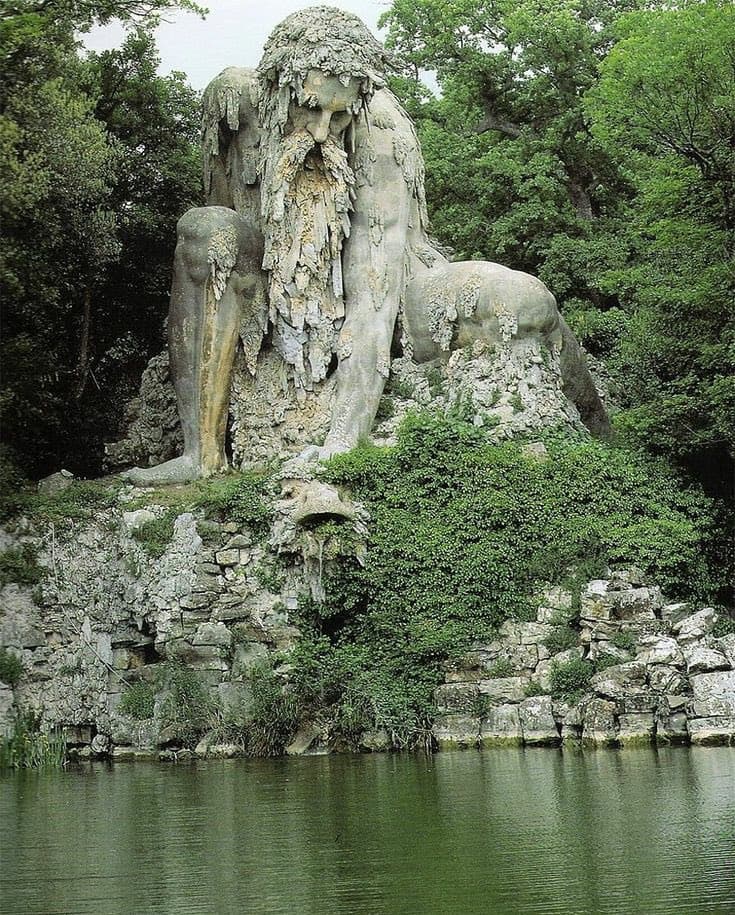
The marble stands outdoors, free to view, under the arches of the Loggia dei Lanzi. Giambologna's other monumental work, the Apennine Colossus, is near Florence at Pratolino. See also Giambologna and famous sculptures.
Questions & answers
Where is Giambologna's Abduction of a Sabine Woman?
The original marble stands in the Loggia dei Lanzi on the Piazza della Signoria in Florence, where it was installed in 1582–83. It is outdoors and free to see. Giambologna's full-size plaster model is displayed in the Galleria dell'Accademia in Florence.
What is the story of the Sabine women?
In Roman legend, the first Romans under Romulus lacked wives, so they invited the neighboring Sabines to a festival and carried off their young women. The title was attached to Giambologna's group only after it was carved; the sculptor's real aim was a virtuoso composition of three figures.
Why is the Abduction of a Sabine Woman famous?
It was the first large marble group designed to be seen fully in the round, with no single main view. Its three figures spiral upward in a figura serpentinata, and it was carved from one enormous block, a technical feat that made Giambologna the leading sculptor in late 16th-century Europe.
More by the artist
Giambologna
Kindred works
You may also study
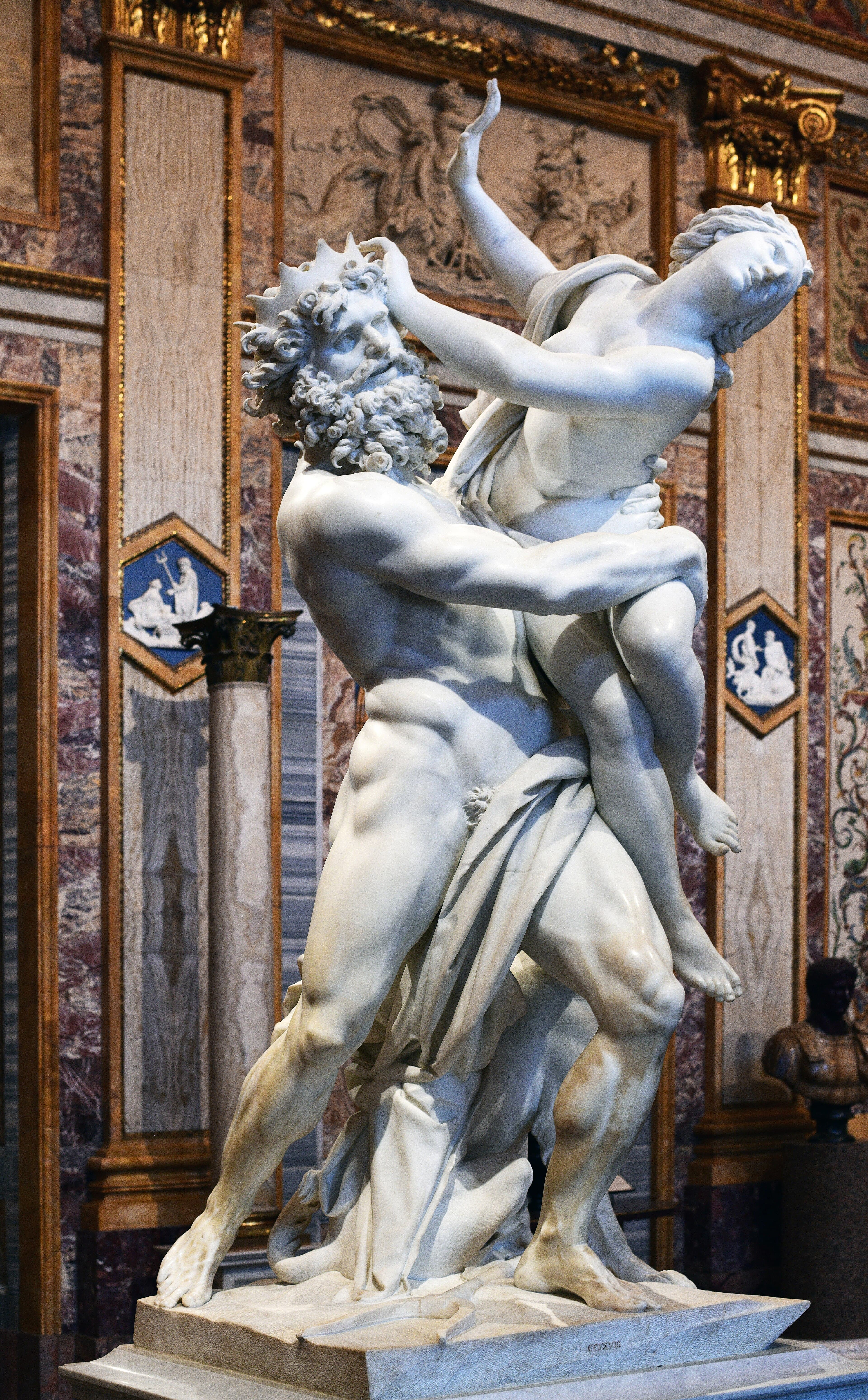
The Rape of Proserpina
Gian Lorenzo Bernini · 1621–1622
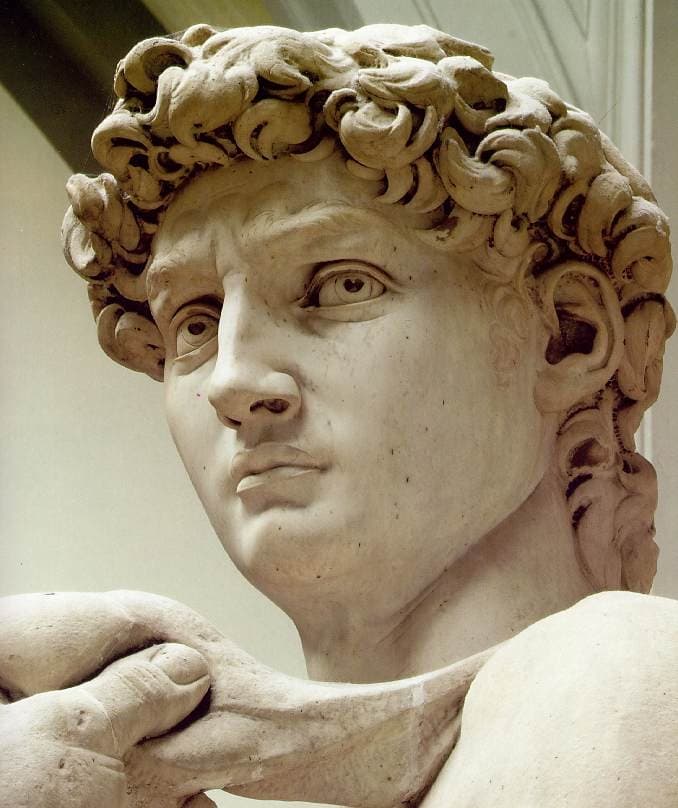
Statue of David
Michelangelo · 1501–04
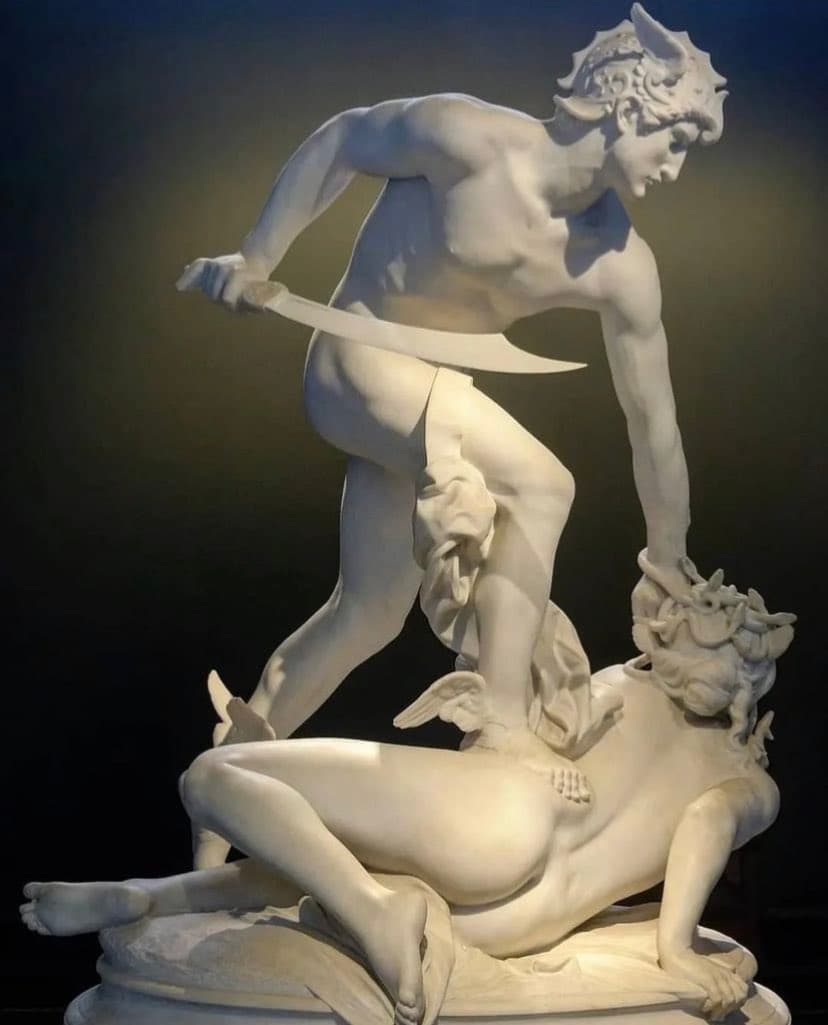
Perseus and the Gorgon
Laurent Marqueste · 1875–1903 (series); marbles 1890 and 1903

Venus de Milo
Alexandros of Antioch · c. 150–125 BC

Nymphs Dancing to Pan's Flute
Joseph Tomanek

The Thinker
Auguste Rodin · Modeled 1880–82; enlarged 1902–03; this cast 1904

Saturn Devouring His Son
Francisco Goya · c. 1819–1823
The Creation of Adam
Michelangelo · c. 1511–12