Late Baroque
Oceanus, Trevi Fountain
Pietro Bracci & Nicola Salvi & Giuseppe Pannini, 1732–62
The central statue of the Trevi Fountain in Rome is Oceanus, carved by Pietro Bracci and installed in 1762. The fountain was designed by Nicola Salvi, begun in 1732 and completed after his death by Giuseppe Pannini; it is the largest Baroque fountain in the city.
- Artist
- Pietro Bracci & Nicola Salvi & Giuseppe Pannini
- Date
- 1732–62
- Medium
- Travertine and marble
- Dimensions
- Fountain 26.3 m high × 49.15 m wide
- Collection
- Piazza di Trevi, Rome, Italy
- Movement
- Late Baroque
The great figure at the center of the Trevi Fountain is Oceanus, the Titan of the world-encircling sea, carved by the Roman sculptor Pietro Bracci. He stands in a triumphal arch at the heart of the fountain, which was designed by the architect Nicola Salvi, begun in 1732 under Pope Clement XII, and finished by Giuseppe Pannini in 1762, eleven years after Salvi's death. The whole ensemble, 26.3 meters high and 49.15 meters wide, is built against the side of the Palazzo Poli and is the largest Baroque fountain in Rome, and by most accounts in the world.
Who are the statues on the Trevi Fountain?
Oceanus (center). Bracci's colossal figure strides forward on a giant shell-shaped chariot, his drapery swept back by the wind. He is bearded and bare-chested, with thick, tousled hair, and one arm reaches down and outward over the water in a gesture of command. He was long misidentified as Neptune, but the figure represents Oceanus, the personification of all the waters.
Tritons and sea horses. Below him, two tritons guide two winged sea horses (hippocamps) out of the rocks. One horse rears wildly while the other is calm, an allegory of the changing moods of the sea; the contrast is the liveliest passage in the whole fountain.
Abundance and Salubrity (side niches). To the left, Abundance tips water from an urn; to the right, Salubrity (Health) holds a cup from which a snake drinks. Both are by Filippo della Valle. They allude to the purity and plenty of the water the fountain delivers.
The reliefs above. Two panels tell the story of the aqueduct. On the left, by Andrea Bergondi, the general Agrippa approves the plans for the Aqua Virgo; on the right, by Giovanni Battista Grossi, a young girl shows thirsty Roman soldiers the spring, the legend that gave the "Virgin" water its name. Above them stand four statues personifying the seasons and their gifts, and at the top the coat of arms of Pope Clement XII, supported by figures of Fame.
What you're looking at
The photograph shows Oceanus close-up in his niche, framed by the fountain's Corinthian columns and the coffered half-dome above, with part of the inscription naming Clement XII running along the top. Look at how Bracci carved the drapery: it billows out behind the shoulder like a sail, deeply undercut so that it throws strong shadows, and falls in heavy folds across the hips. One foot is planted firmly; the other steps forward onto the rock, giving the figure a sense of advancing out of the arch toward us. The rock beneath is carved to look raw and natural, with shell forms and plants, so that sculpture and stone merge into a single, theatrical landscape. Most visitors miss that the white of the statues is marble, set against a structure of creamy travertine quarried near Tivoli.
Who built the Trevi Fountain?
The fountain marks the end point of the Aqua Virgo, an aqueduct built by Agrippa in 19 BC and later restored by the popes as the Acqua Vergine. Earlier, simpler fountains stood on the spot, and in 1629 Pope Urban VIII asked Gian Lorenzo Bernini for designs, which were never carried out. In 1730 Clement XII held a competition. The Florentine Alessandro Galilei won, but after protests in Rome the commission went to the Roman Nicola Salvi, and work began in 1732.
Salvi died in 1751 with the project half finished. Giuseppe Pannini, son of the painter Giovanni Paolo Panini, completed the architecture, and several sculptors executed the figures: Pietro Bracci (Oceanus, tritons and horses), Filippo della Valle (Abundance and Salubrity), and Andrea Bergondi and Giovanni Battista Grossi (the reliefs). The fountain was inaugurated by Pope Clement XIII on 22 May 1762.
Meaning
The theme is the taming of water. Oceanus commands, the tritons wrestle the sea horses, and the water itself pours over carved rock as though nature were being shaped into architecture before our eyes. The fountain is also political: it celebrates papal power as the provider of clean water to the city, renewing the achievements of ancient Rome.
Coins, films and restoration
Tradition says that a coin thrown over the left shoulder with the right hand guarantees a return to Rome. About 3,000 euros are tossed in each day; the money is collected and given to the Catholic charity Caritas. The fountain famously appears in Roman Holiday (1953), Three Coins in the Fountain (1954) and Federico Fellini's La Dolce Vita (1960), where Anita Ekberg wades into the basin.
The fountain was thoroughly restored in 2014–15 with sponsorship from the fashion house Fendi, and cleaned again in late 2024. Since February 2026, non-residents need a small paid ticket to approach the basin during the day; after 10 p.m. access is free.
Related works
For other Roman Baroque sculpture, see Bernini's Ratto di Proserpina and Apollo and Daphne, and The Vision of Constantine. For gods and Titans in stone, see Apennine Colossus by Giambologna and Famous Sculptures.
Questions & answers
Who is the statue in the middle of the Trevi Fountain?
The central figure is Oceanus, the Titan who personifies the sea, carved by Pietro Bracci and installed by 1762. He stands on a shell chariot drawn by two sea horses guided by tritons. He is often mistaken for Neptune, but the fountain's program identifies him as Oceanus.
Who built the Trevi Fountain?
The architect Nicola Salvi designed it after a competition held by Pope Clement XII, and work began in 1732. Salvi died in 1751, and Giuseppe Pannini completed it in 1762. Pietro Bracci carved Oceanus, Filippo della Valle the side statues, and Andrea Bergondi and Giovanni Battista Grossi the reliefs.
What do the statues on the Trevi Fountain represent?
Oceanus commands the waters at the center, with tritons taming one wild and one calm sea horse to show the sea's moods. The side niches hold Abundance and Salubrity (Health), symbols of the water's plenty and purity. Reliefs above show Agrippa approving the aqueduct and a girl revealing the spring to Roman soldiers.
How big is the Trevi Fountain?
The fountain is 26.3 meters (86 feet) high and 49.15 meters (161 feet) wide, built against the side of the Palazzo Poli. It is the largest Baroque fountain in Rome and one of the most visited sights in the city.
Kindred works
You may also study
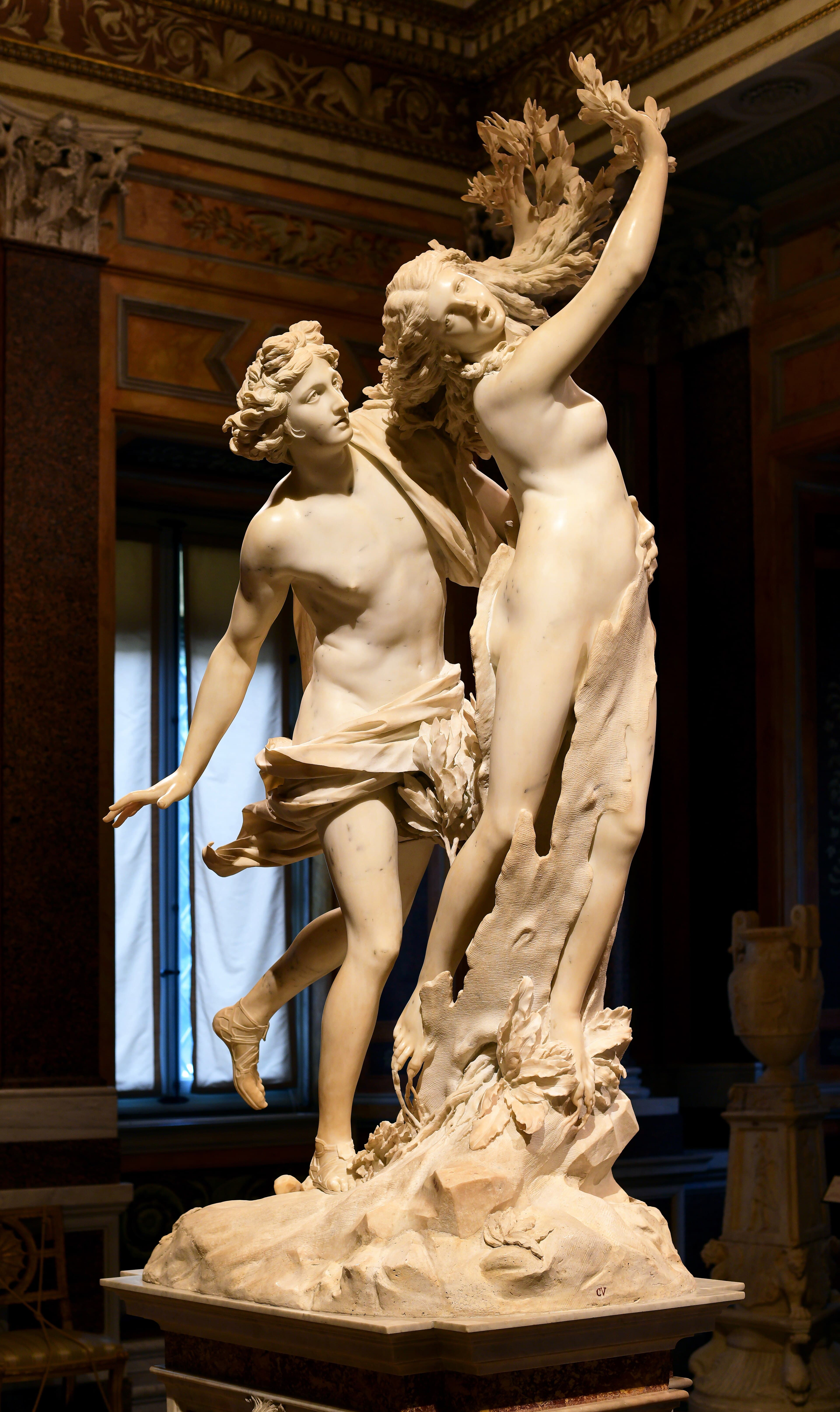
Apollo and Daphne
Gian Lorenzo Bernini · 1622–1625
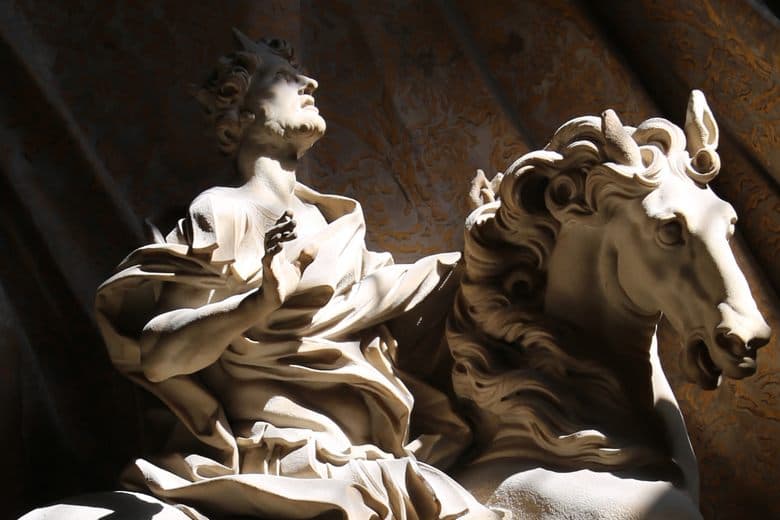
The Vision of Constantine
Gian Lorenzo Bernini · 1654–70
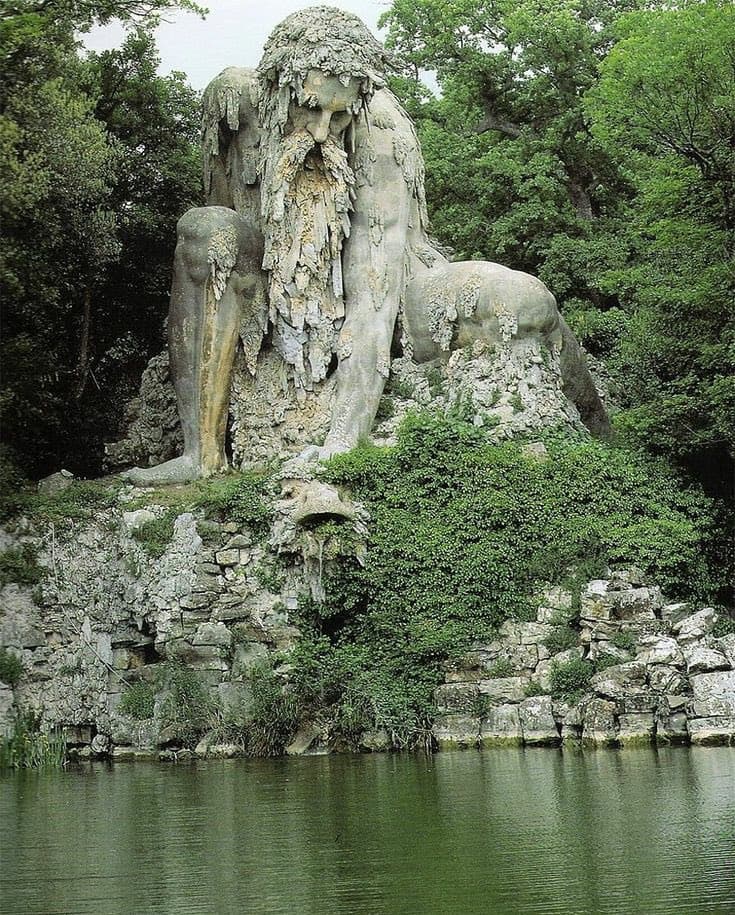
Apennine Colossus
Giambologna · c. 1579–80
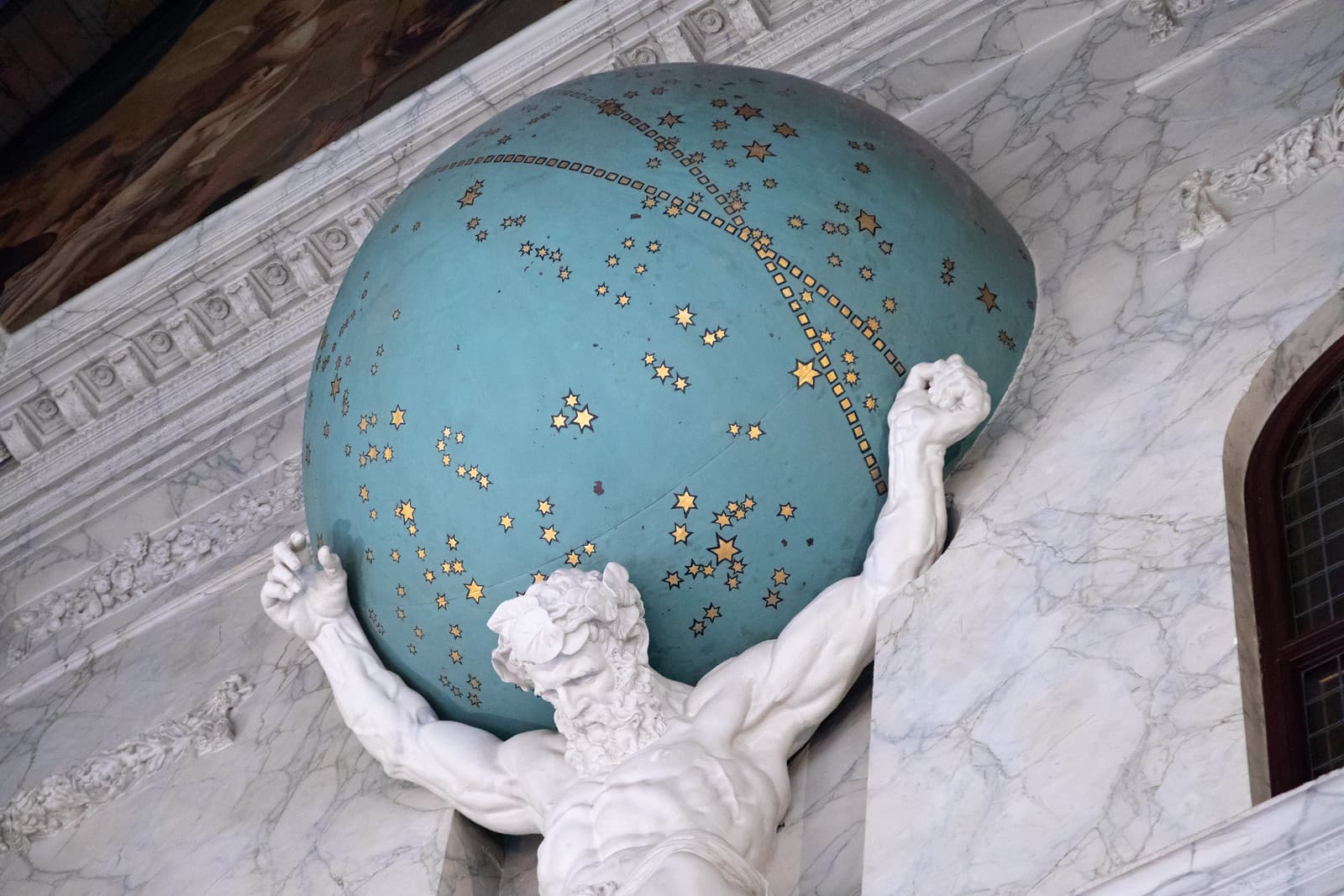
Atlas, Royal Palace Amsterdam
Artus Quellinus & Jacob van Campen & Daniël Stalpaert · c. 1662–63

Bridge over a Pond of Water Lilies
Claude Monet · 1899

Venus de Milo
Alexandros of Antioch · c. 150–125 BC

Nymphs Dancing to Pan's Flute
Joseph Tomanek

Saturn Devouring His Son
Francisco Goya · c. 1819–1823