Image: Photo by Stanislav Traykov, St. Peter's Basilica · CC BY 2.5 · via Wikimedia Commons
High Renaissance
Pietà
Michelangelo, 1498–1499
The Pietà, Michelangelo's marble of the Virgin Mary holding the dead Christ across her lap, was carved in 1498–1499 when he was in his early twenties. It is his only signed work and stands in St. Peter's Basilica in Vatican City.
- Artist
- Michelangelo
- Date
- 1498–1499
- Medium
- Carrara marble
- Dimensions
- 174 × 195 cm
- Collection
- St. Peter's Basilica, Vatican City, Vatican City
- Movement
- High Renaissance
What you are looking at
A young woman sits on a rock, her body wrapped in a great mass of drapery, holding her dead son across her knees. Christ lies limp, his head fallen back over her right arm, his right arm hanging down, his legs bent over her lap. Her right hand holds him under the arm without touching his skin directly; her left hand is open, palm up, in a gesture that seems to say: look.
Michelangelo solved a problem that had defeated other sculptors: how to place a grown man's body on a woman's lap without making the group awkward. His answer is a pyramid. Mary's head is its peak, her spreading robes its broad base, and Christ's body lies across it on a gentle diagonal. To make that possible, Mary is much larger than her son; if she stood up, she would be far taller. The folds of her dress hide the difference so well that most visitors never notice.
Pietà, Michelangelo and the signature on the sash
Running diagonally across Mary's chest is a strap, and on it Michelangelo carved, in Latin capitals, MICHAELA[N]GELUS BONAROTUS FLORENTIN[US] FACIEBA[T]: "Michelangelo Buonarroti, Florentine, was making this." It is the only work he ever signed. The sixteenth-century biographer Giorgio Vasari tells the story behind it: Michelangelo overheard visitors attributing the sculpture to another artist, Cristoforo Solari, and returned at night to carve his name. The story may be embroidered, but the signature is real, and the imperfect tense, faciebat, follows ancient Greek artists who used it to suggest a work never truly finished.
Who commissioned the Pietà?
The French cardinal Jean de Bilhères-Lagraulas, ambassador of King Charles VIII in Rome, commissioned it as a monument for his own tomb. The contract, signed in August 1498, promised that it would be the most beautiful work in marble in Rome, one no living master could better. It was installed in the chapel of Santa Petronilla, a late antique mausoleum attached to Old St. Peter's, and later moved into the new basilica. Michelangelo (1475–1564) was twenty-three when he started. He had chosen the block himself in the quarries of Carrara.
The subject, the Virgin mourning the dead Christ, was a northern European devotional image, the Vesperbild, which was popular in France and Germany. Michelangelo transformed it from a raw image of grief into a calm, classical one.
Why does Mary look so young?
Mary appears younger than her thirty-three-year-old son. Michelangelo's friend and biographer Ascanio Condivi recorded his explanation: chaste women keep their freshness much longer than others, and the Virgin, who never had an impure desire, would preserve her youth. A theological reading adds that Mary is also an image of the Church, and of the young mother at Bethlehem, so that the birth and death of Christ are held in one figure.
What does the Pietà mean?
Pietà means "pity" or "compassion" in Italian. The sculpture invites the viewer to share Mary's sorrow and to contemplate Christ's sacrifice. Yet there are almost no signs of violence. The wounds in Christ's hands and side are small, his body is idealized like a classical nude, and Mary's face is composed. The grief is in her gesture and in the weight of the body, not in tears. This combination of Christian subject and classical beauty is the essence of the High Renaissance, and it made the young Michelangelo famous almost overnight.
Damage and protection
On 21 May 1972, a man named Laszlo Toth attacked the sculpture with a hammer, striking it about fifteen times. He broke off Mary's left arm at the elbow, shattered her nose and damaged an eyelid. Vatican restorers reassembled it using the original fragments wherever possible. Since then it has been displayed behind a screen of bulletproof glass, which keeps visitors several meters away. Earlier, in 1964, the sculpture had traveled to New York for the World's Fair, the only time it has left the Vatican in modern times.
Reception and legacy
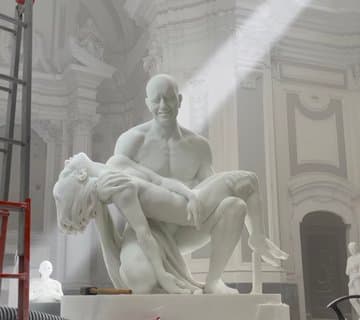
The Pietà established Michelangelo before he carved the David or painted the Sistine Chapel ceiling. He returned to the theme in old age with very different, unfinished works, including the Florentine Pietà and the Rondanini Pietà in Milan. Its composition has been quoted endlessly; see Jago's contemporary reinterpretation Pietà, Max Ginsburg's War Pieta and the sculptural virtuosity of Veiled Christ. More of the artist's work is on our Michelangelo page.
Where to see the Pietà
The Pietà is in the first chapel on the right as you enter St. Peter's Basilica in Vatican City. Entry to the basilica is free, but queues can be long. Because the glass screen keeps viewers at a distance, bring binoculars or a zoom lens to see the signature on the sash and the detail of the hands.
Questions & answers
Where is Michelangelo's Pietà?
It is in St. Peter's Basilica in Vatican City, in the first chapel on the right of the entrance. Since a hammer attack in 1972 it has been shown behind bulletproof glass. Entry to the basilica is free.
Why is Michelangelo's Pietà famous?
It is a technically daring, classically beautiful image of the Virgin holding the dead Christ, carved when Michelangelo was in his early twenties. It made his reputation, and it is the only work he ever signed.
Why does Mary look so young in the Pietà?
According to his biographer Condivi, Michelangelo said that chaste women keep their youth longer, and the Virgin would preserve hers. Mary's youth also links Christ's death with his birth and presents her as an image of the Church.
What happened to the Pietà in 1972?
On 21 May 1972 Laszlo Toth struck it about fifteen times with a hammer, breaking Mary's arm and damaging her face. It was carefully restored with the original fragments and placed behind protective glass.
Where is Michelangelo's signature on the Pietà?
It is carved on the sash across Mary's chest: MICHAELA[N]GELUS BONAROTUS FLORENTIN[US] FACIEBA[T]. Vasari wrote that Michelangelo added it after hearing the work credited to another sculptor.
More by the artist
Michelangelo
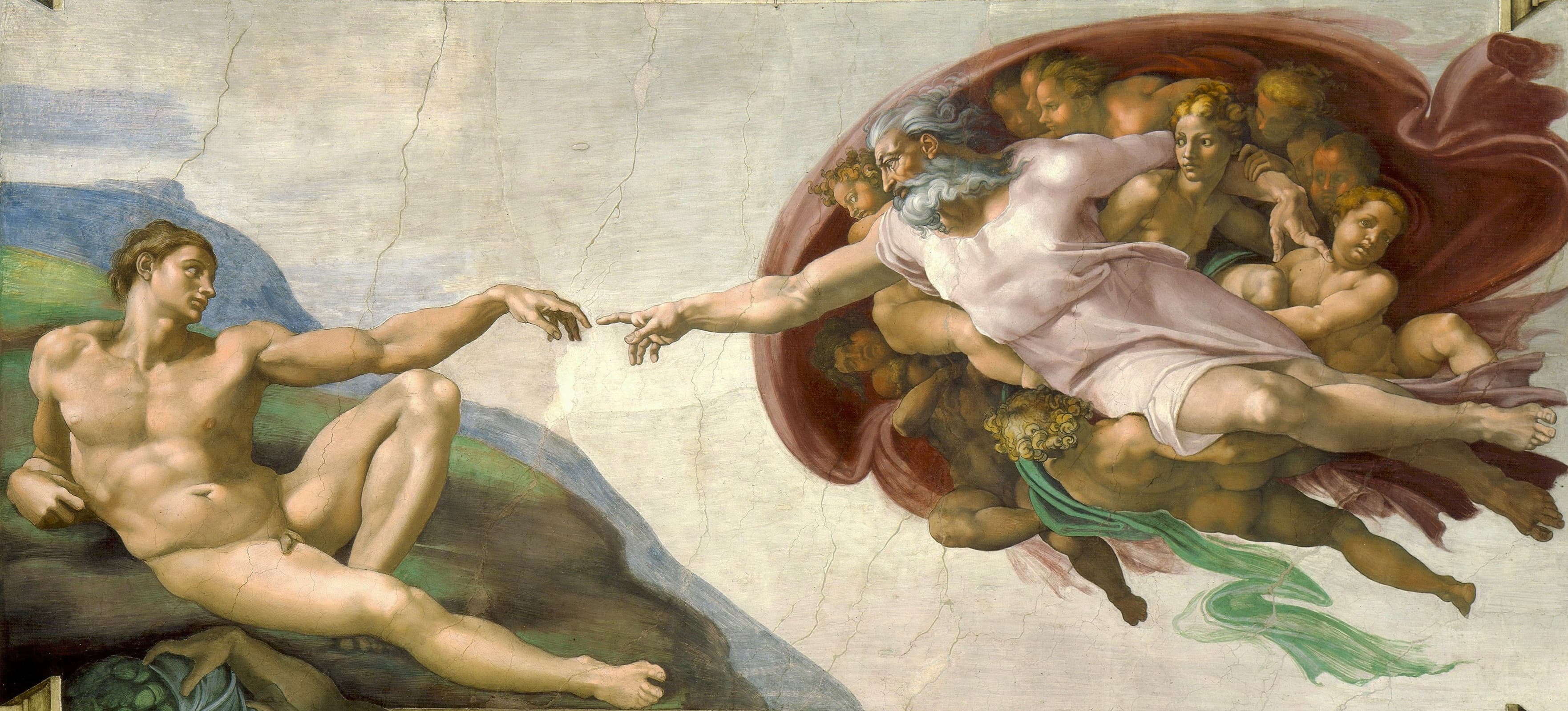
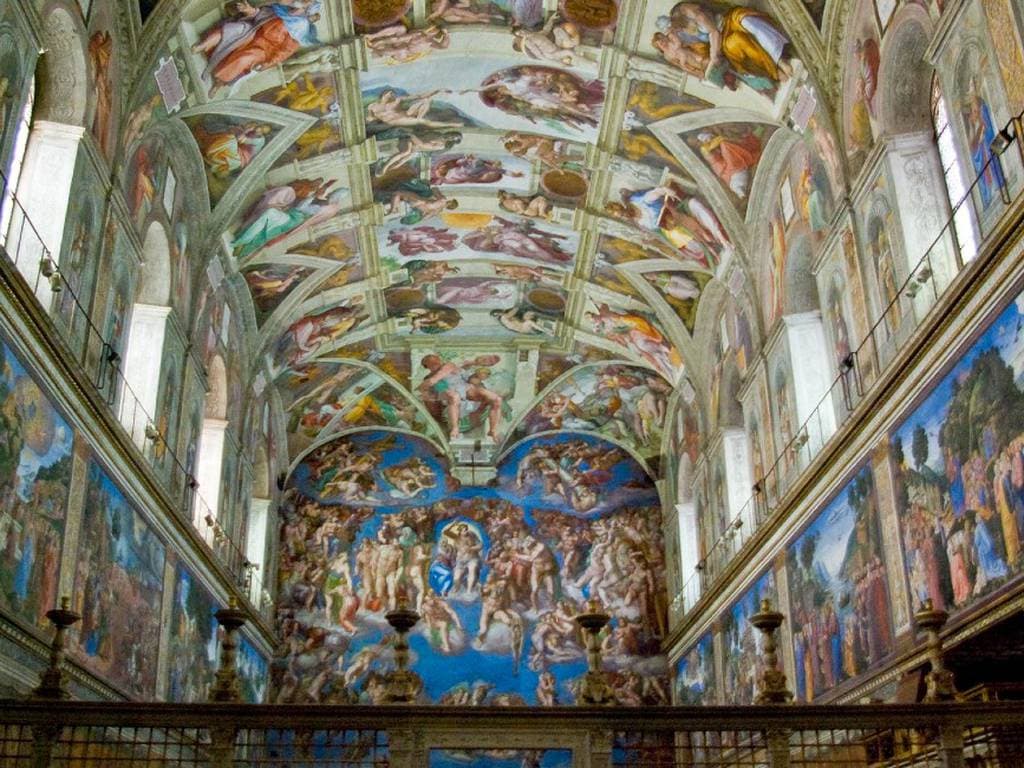
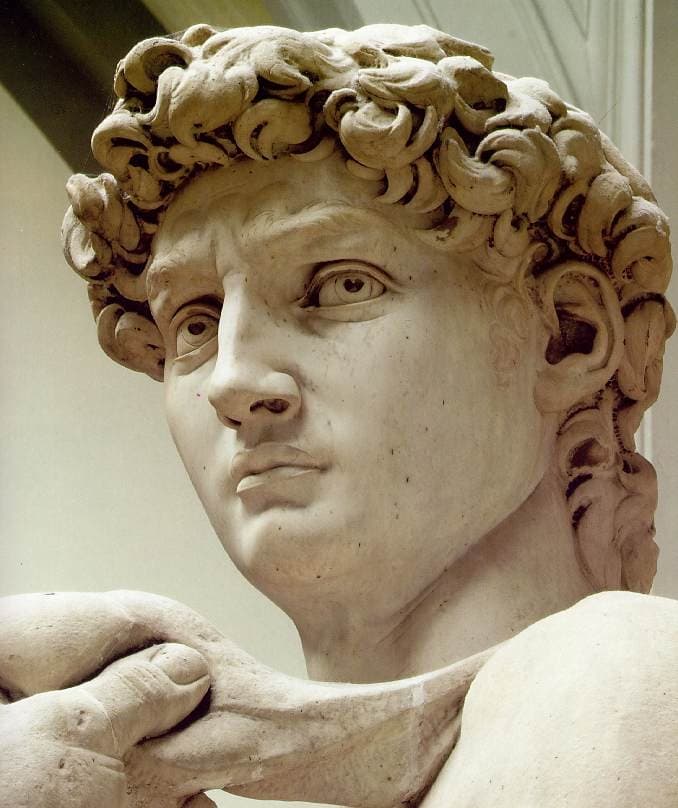
Kindred works
You may also study
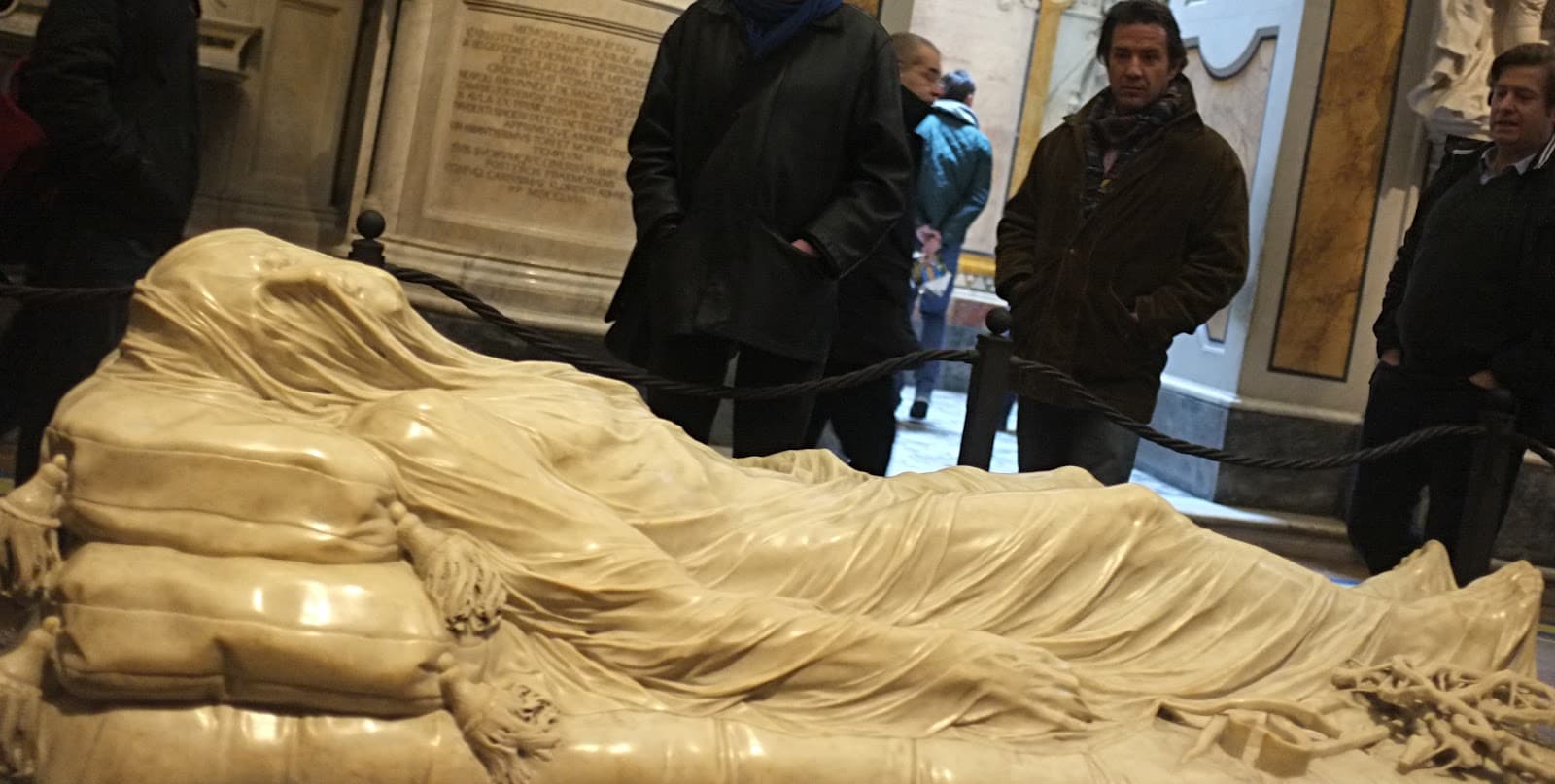
Veiled Christ
Giuseppe Sanmartino · 1753
Pietà (Jago)
Jago (Jacopo Cardillo) · 2020–21
Ecstasy of Saint Teresa
Gian Lorenzo Bernini · 1647–1652

Venus de Milo
Alexandros of Antioch · c. 150–125 BC

Nymphs Dancing to Pan's Flute
Joseph Tomanek

The Scream
Edvard Munch · 1893

The Thinker
Auguste Rodin · Modeled 1880–82; enlarged 1902–03; this cast 1904

Saturn Devouring His Son
Francisco Goya · c. 1819–1823