Image: Photo: David Sivyer (Flickr), CC BY-SA 2.0 · CC BY-SA 2.0 · via Wikimedia Commons
Late Baroque
Veiled Christ
Giuseppe Sanmartino, 1753
The Veiled Christ (Cristo velato) is Giuseppe Sanmartino's 1753 marble of the dead Christ lying on a mattress under a shroud so thin it seems transparent. Carved from a single block, it lies at the center of the Cappella Sansevero in Naples.
- Artist
- Giuseppe Sanmartino
- Date
- 1753
- Medium
- Marble
- Dimensions
- 50 × 80 × 180 cm
- Collection
- Cappella Sansevero, Naples, Italy
- Movement
- Late Baroque
What you are looking at
A life-size figure of the dead Christ lies on a marble mattress, his head propped on two tasseled cushions. A thin cloth covers him from head to foot. Through it you can read everything underneath: the closed eyes and sunken cheeks, the open mouth, the ribs, the knees, the folds of the loincloth beneath, even the swollen vein at the temple. The veil clings to the face as if wet, then falls away in heavy, crumpled folds at the edges of the mattress and around the feet.
The veil and the body are not two materials. They are one block of white marble, carved so that the cloth seems to float a fraction of a millimeter above the skin. The illusion is strongest at the face, where the fabric lies so close that it almost becomes a death mask.
Look at the feet and hands, where the veil stops short or thins out: the wounds of the nails are visible. And at the foot of the mattress, Sanmartino has carved the instruments of the Passion, the objects of the crucifixion: the crown of thorns, a pair of pincers and the nails. They lie loose, as if just set down.
How Sanmartino made it
The sculpture was commissioned by Raimondo di Sangro, seventh Prince of Sansevero, a soldier, inventor and scholar who was rebuilding his family's funerary chapel in the center of Naples. He first gave the commission to the Venetian sculptor Antonio Corradini, a specialist in veiled figures, who made a terracotta model but died in 1752. The job passed to Giuseppe Sanmartino (1720–1793), a young Neapolitan sculptor, who adapted Corradini's design and finished the marble in 1753. The contract specified a statue of Christ in death covered by a transparent shroud carved from the same block, and that is exactly what Sanmartino delivered.
Veiled sculpture was a recognized showpiece of virtuosity in the 18th century, and Corradini's own La Pudicizia (Modesty), a veiled woman, stands in the same chapel, made for di Sangro's mother's tomb. Sanmartino's achievement is to push the effect further than anyone had: his veil does not only cover a body, it shows us a corpse.
The alchemy legend
The illusion was so convincing that a legend grew up around it. Raimondo di Sangro was known as an alchemist and experimenter, and visitors whispered that he had laid a real cloth over a marble figure and turned it to stone by a secret chemical process. There is no evidence for this, and the surviving contract and the carving itself show that the veil is sculpted. But the story is still told in Naples, and it is part of the chapel's eerie reputation, together with the prince's two "anatomical machines", human skeletons with their circulatory systems preserved, in the crypt below.
The Veiled Christ is not alone in the chapel. Around it stand other allegorical marbles made for the di Sangro family tombs, including Francesco Queirolo's Disillusion (Il Disinganno), a man struggling free of a net carved in marble, another feat of virtuoso carving.
What does the Veiled Christ mean?
The sculpture is a devotional image of Christ's body after the crucifixion, laid out like a corpse before burial. It asks the viewer to meditate on his suffering and death, a central practice of Catholic devotion. The veil makes this meditation more intimate. It hides and reveals at once: we are allowed to see the dead body clearly, but at one remove, as one might look at someone loved under a sheet.
The veil also has a theological edge. In Christian thought, the death of Christ tore the veil of the Temple and revealed what had been hidden. A body that shows through its shroud may hint at that revelation, and at the resurrection to come. These readings come from the devotional tradition rather than from any statement by Sanmartino or di Sangro.
Reception and legacy
The Veiled Christ was admired from the start and made Sanmartino's career. The great Neoclassical sculptor Antonio Canova, who knew a good deal about making marble look soft (see his Psyche Revived by Cupid's Kiss), is said to have declared that he would give ten years of his life to have made it. It is one of the most visited works of art in Naples and appears on almost every list of famous sculptures. It also belongs in the long tradition of the dead Christ in art, alongside Michelangelo's Pietà.
Where is the Veiled Christ today?
The Veiled Christ lies in the center of the nave of the Cappella Sansevero, Via Francesco de Sanctis, in Naples' historic center, where it has been since it was finished. The chapel is now a private museum with timed tickets, and photography inside is not permitted, which is why good photographs of the sculpture are rare. The bozzetto attributed to Corradini is in the Museo Nazionale di San Martino in Naples.
Questions & answers
Where is the Veiled Christ?
The Veiled Christ is in the Cappella Sansevero in the historic center of Naples, Italy, where it has lain in the middle of the nave since 1753. The chapel is a private museum with timed-entry tickets, and photography is not allowed inside.
Who made the Veiled Christ?
The Neapolitan sculptor Giuseppe Sanmartino carved it in 1753 for Prince Raimondo di Sangro. The commission was first given to Antonio Corradini, who made a terracotta model but died in 1752, and Sanmartino adapted his design.
Is the veil on the Veiled Christ real fabric?
No. Body and veil are carved from a single block of marble. A legend claims the prince, an amateur alchemist, turned a real cloth to stone by a secret process, but there is no evidence for it, and the original contract asked for a shroud carved from the same stone.
What objects are at the feet of the Veiled Christ?
Sanmartino carved the instruments of the Passion at the foot of the mattress: the crown of thorns, pincers and nails used at the crucifixion. They invite the viewer to meditate on Christ's suffering.
Kindred works
You may also study
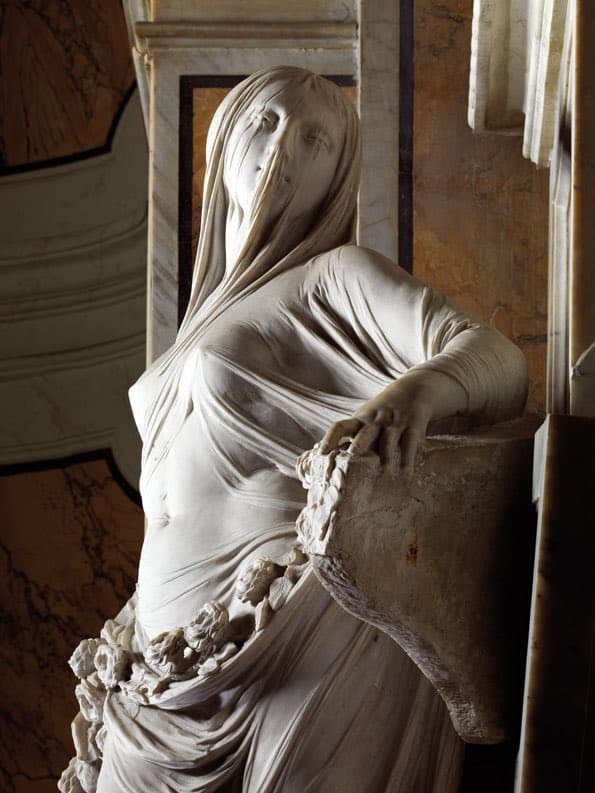
Modesty (La Pudicizia)
Antonio Corradini · 1752
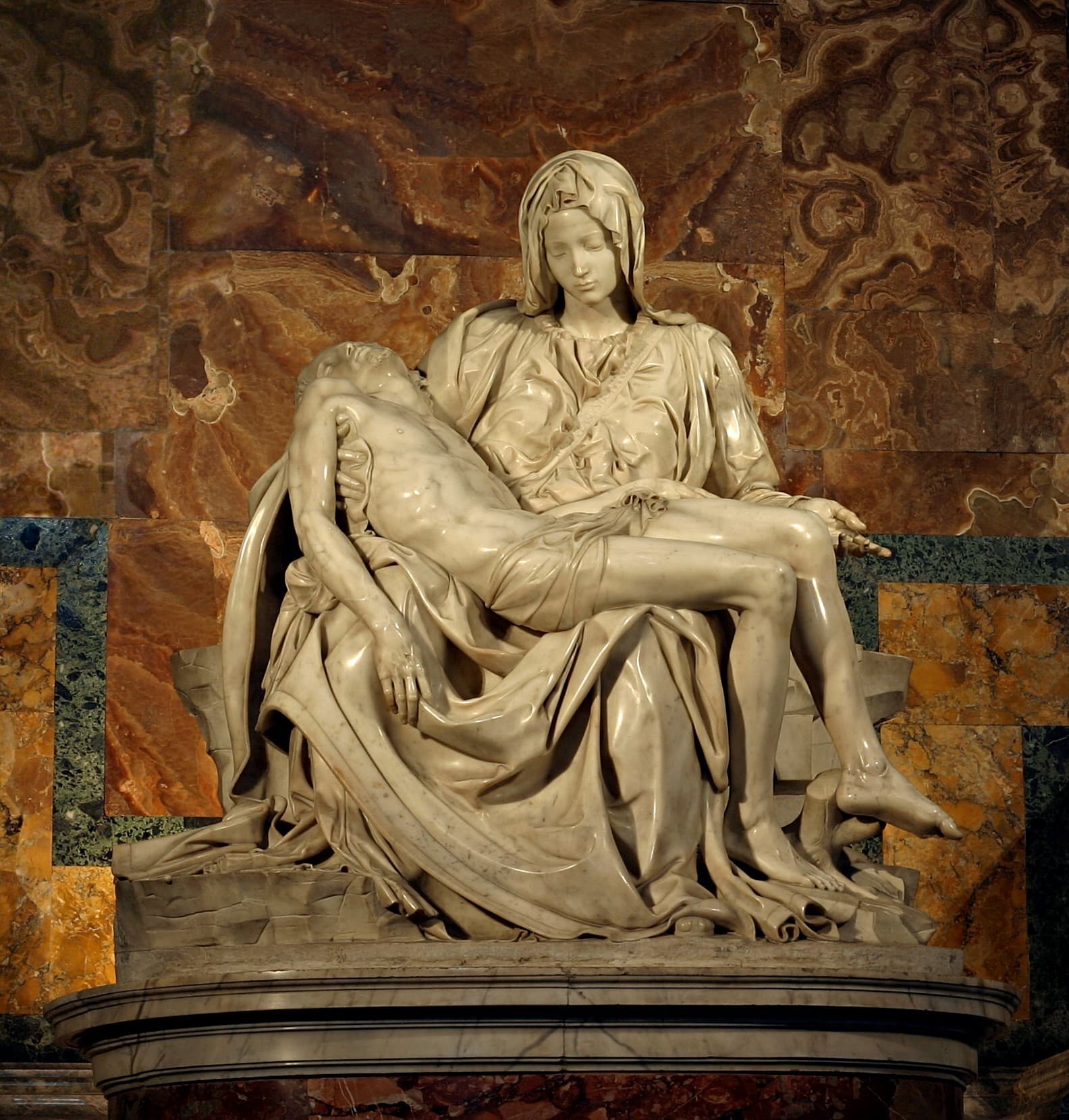
Pietà
Michelangelo · 1498–1499
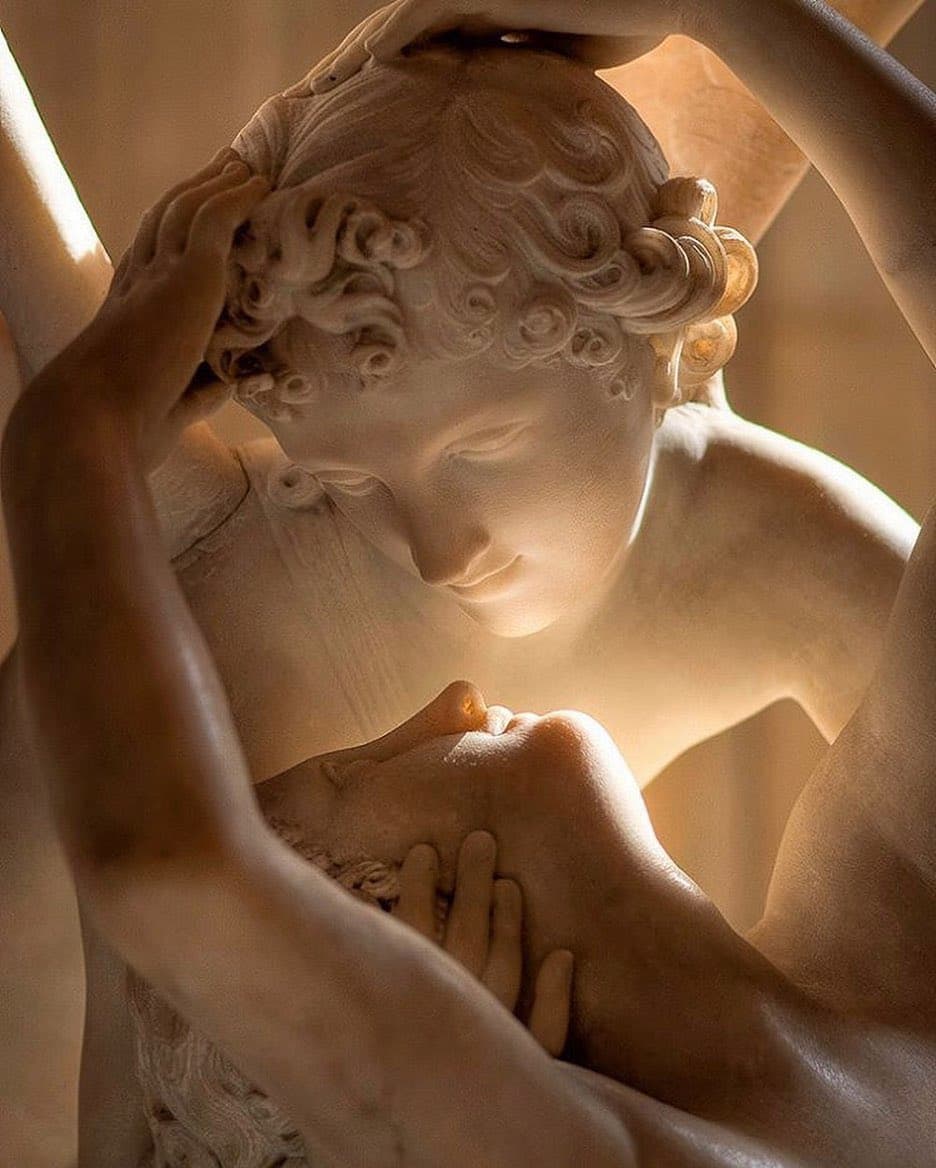
Psyche Revived by Cupid's Kiss
Antonio Canova · 1787–1793
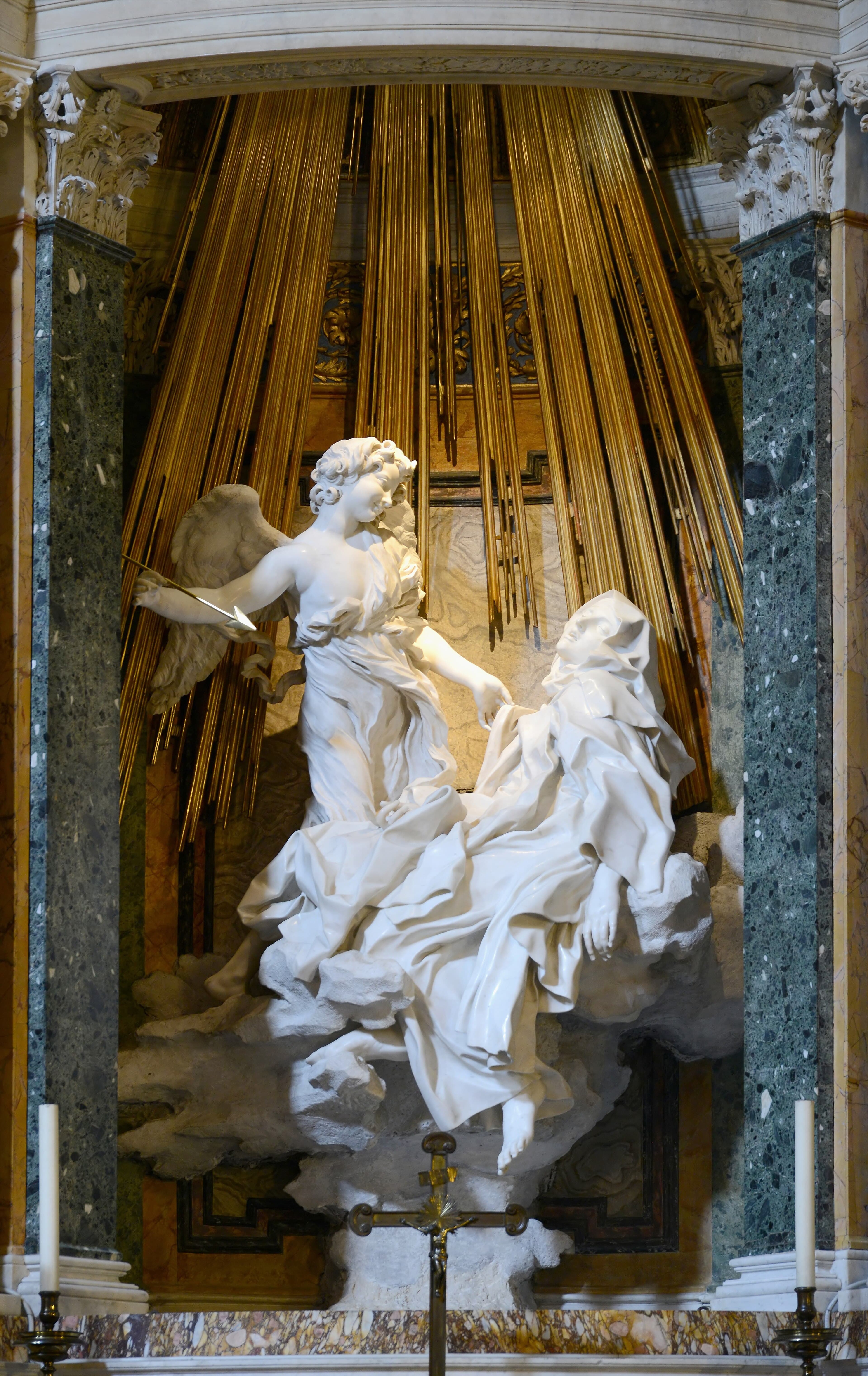
Ecstasy of Saint Teresa
Gian Lorenzo Bernini · 1647–1652

The Scream
Edvard Munch · 1893

Saturn Devouring His Son
Francisco Goya · c. 1819–1823
The Creation of Adam
Michelangelo · c. 1511–12

Ophelia
John Everett Millais · 1851–52