Image: Museum of Fine Arts, St. Petersburg, Florida (scan via ibiblio, as stated on Commons) · Public domain · via Wikimedia Commons
Houses of Parliament, Effect of Fog
Claude Monet, 1904
Houses of Parliament, Effect of Fog (Le Parlement, effet de brouillard) is a 1904 painting by Claude Monet of Westminster almost vanishing in pale, pearly fog over the Thames. It is in the Museum of Fine Arts, St. Petersburg, Florida.
- Artist
- Claude Monet
- Date
- 1904
- Medium
- Oil on canvas
- Collection
- Museum of Fine Arts, St. Petersburg, St. Petersburg, Florida, United States
- Movement
- Impressionism
- Catalogue
- Wildenstein 1611
- The City
- Water & Sea
- Architecture & Ruins
Houses of Parliament, Effect of Fog (Le Parlement, effet de brouillard) is a painting by Claude Monet signed and dated "Claude Monet 1904" at lower right. It shows the Palace of Westminster almost vanishing in a pale, pearly fog over the Thames, with a few boats faint on the water. It is in the Museum of Fine Arts, St. Petersburg, Florida, where it is one of the highlights of the collection. Wildenstein lists it as number 1611.
What you're looking at
This is the palest of the Parliament canvases. The building stands at upper right: the great square tower is a soft violet-blue shape, the lower buildings and spires to its right are barely darker than the air. Toward the left, the palace fades out completely into the fog.
The fog is painted in white, cream, pale yellow, lilac and silver-blue, laid in short, crisscrossing strokes that cover the whole canvas. Near the top, warmer cream and yellow suggest the sun somewhere above the haze. The water below is nearly the same color as the sky, separated from it only by a faint change in the direction of the strokes.
Two boats give the picture its scale. At left, a small sailing boat shows as a pale triangle; at center, a darker barge with a sail and figures moves across the river, its reflection a short smudge of blue. The signature is at lower right, blue on cream.
Pale fog: what makes this version distinct
Monet's fogs range widely in color. The Met's The Houses of Parliament (Effect of Fog) is greenish-gray with an orange glow; Le Havre's Le Parlement de Londres, effet de brouillard is rose-brown and smoky. The St. Petersburg canvas goes the other way, toward white. The palace is barely there, and the canvas reads as an even veil of light with a building just showing through it.
Its closest relatives are the High Museum's lavender Houses of Parliament, Symphony in Blue and the Pushkin Museum's Seagulls, the River Thames and the Houses of Parliament, also dated 1904 and painted in the same pale, milky key. Dated 1904, this is among the last canvases Monet completed for the series.
How it was painted
Monet painted the Parliament from St Thomas' Hospital, opposite Westminster, during trips to London in 1900 and 1901, and finished the canvases at Giverny, working on them until shortly before the opening of his Thames exhibition at Durand-Ruel in May 1904. In a picture as pale as this, the work is all in fine adjustments of tone. The paint is laid in thin, dry, overlapping strokes so that tiny differences of warm and cool, rather than outlines, define the building.
Ownership
The Museum of Fine Arts, St. Petersburg, founded by Margaret Acheson Stuart, opened in 1965 and holds the painting as a highlight of its European collection. Details of its earlier ownership are not well documented in public sources.
Details to look for
The two boats are painted differently: the small sail at left is pale, almost white, while the barge at center is darker and shows a figure. That contrast in tone places one far off and one near. Look also at the top of the great tower, which is the darkest part of the palace, the one point where the building holds out against the fog.
Where to see it
The painting is in the Museum of Fine Arts, St. Petersburg, on Tampa Bay in Florida. See our Houses of Parliament series hub, Monet in London, Where to See Monet and Claude Monet.
Questions & answers
Where is Monet's Houses of Parliament, Effect of Fog?
This version, dated 1904, is in the Museum of Fine Arts, St. Petersburg, Florida, where it is a highlight of the European collection. Other fog versions are in the Metropolitan Museum of Art, the High Museum of Art and the MuMa in Le Havre.
When was it painted?
Monet signed and dated it 1904. He began the Parliament series from St Thomas' Hospital in London in 1900–01 and worked on the canvases at Giverny until his Thames exhibition opened in Paris in May 1904.
What does the painting show?
The Houses of Parliament almost vanishing in pale, pearly fog over the Thames. Only the great tower and a few spires show as soft violet shapes, with two boats faint on the water below.
How is it different from other foggy Parliament paintings?
It is the palest. Where other fog versions are green, rose-brown or lavender, this one pushes the fog toward white and cream, so the building barely shows through an even veil of light.
More by the artist
Claude Monet
Houses of Parliament, Sunset
Claude Monet · 1904
Waterloo Bridge, effet de brume
Claude Monet · 1904
The Houses of Parliament, London
Claude Monet · 1904
Water Lilies (1904)
Claude Monet · 1904
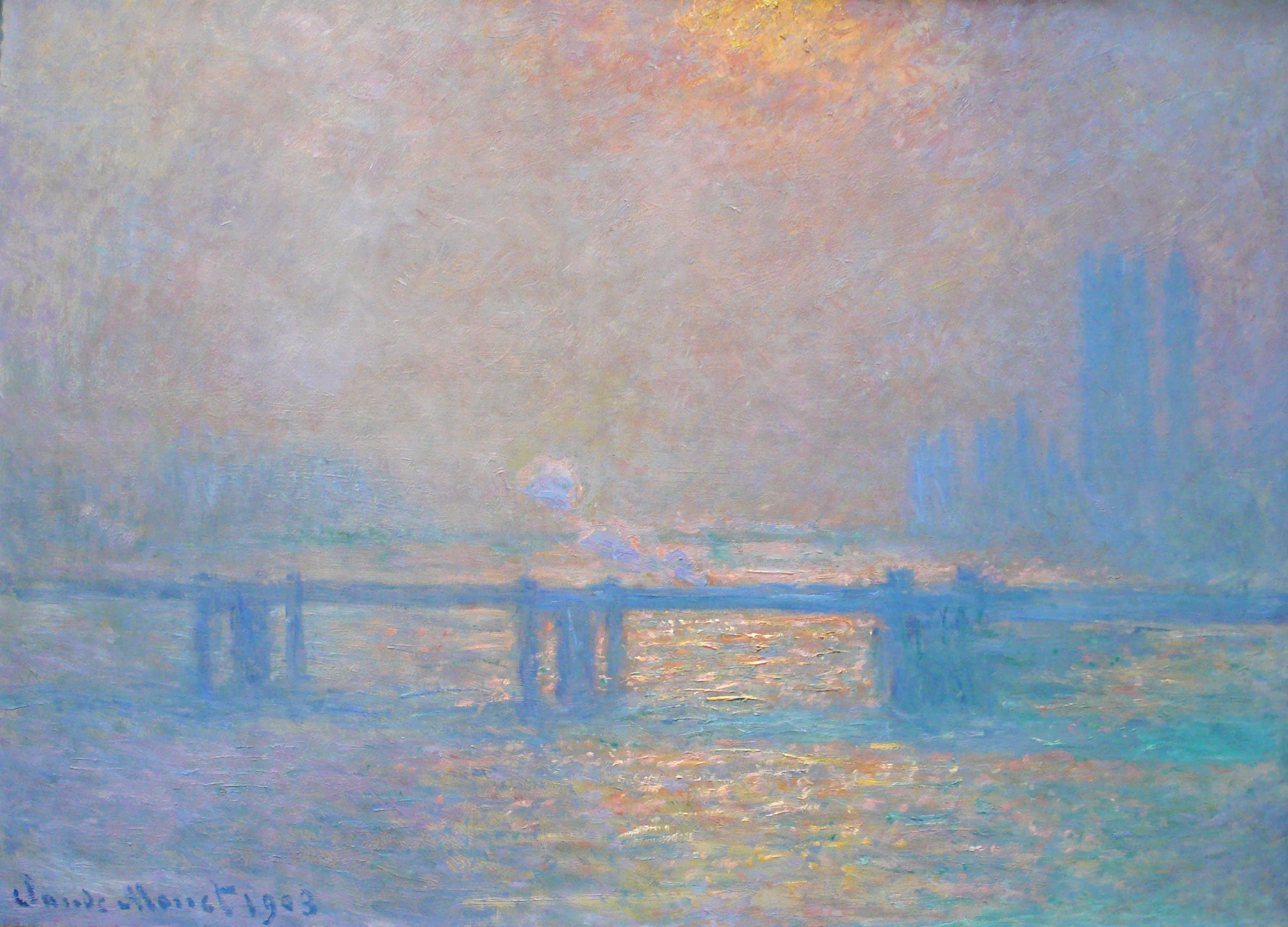
Charing Cross Bridge, The Thames
Claude Monet · 1903
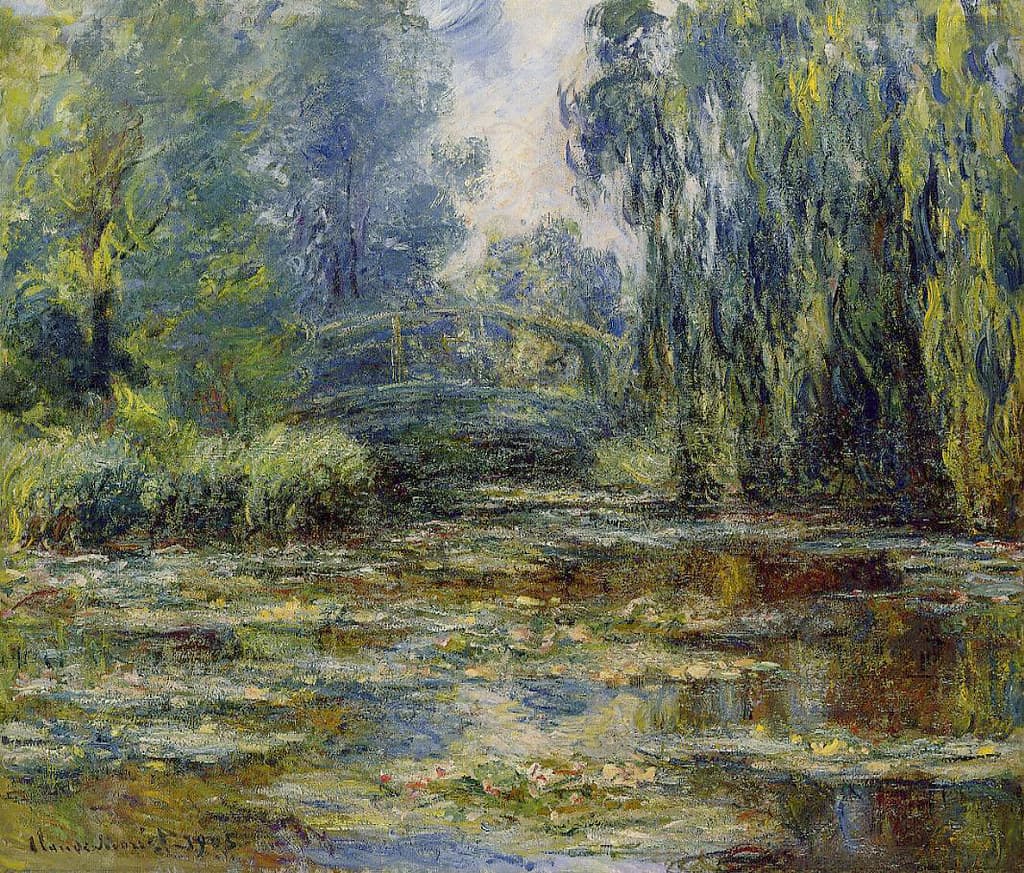
The Water-Lily Pond and Bridge
Claude Monet · 1905
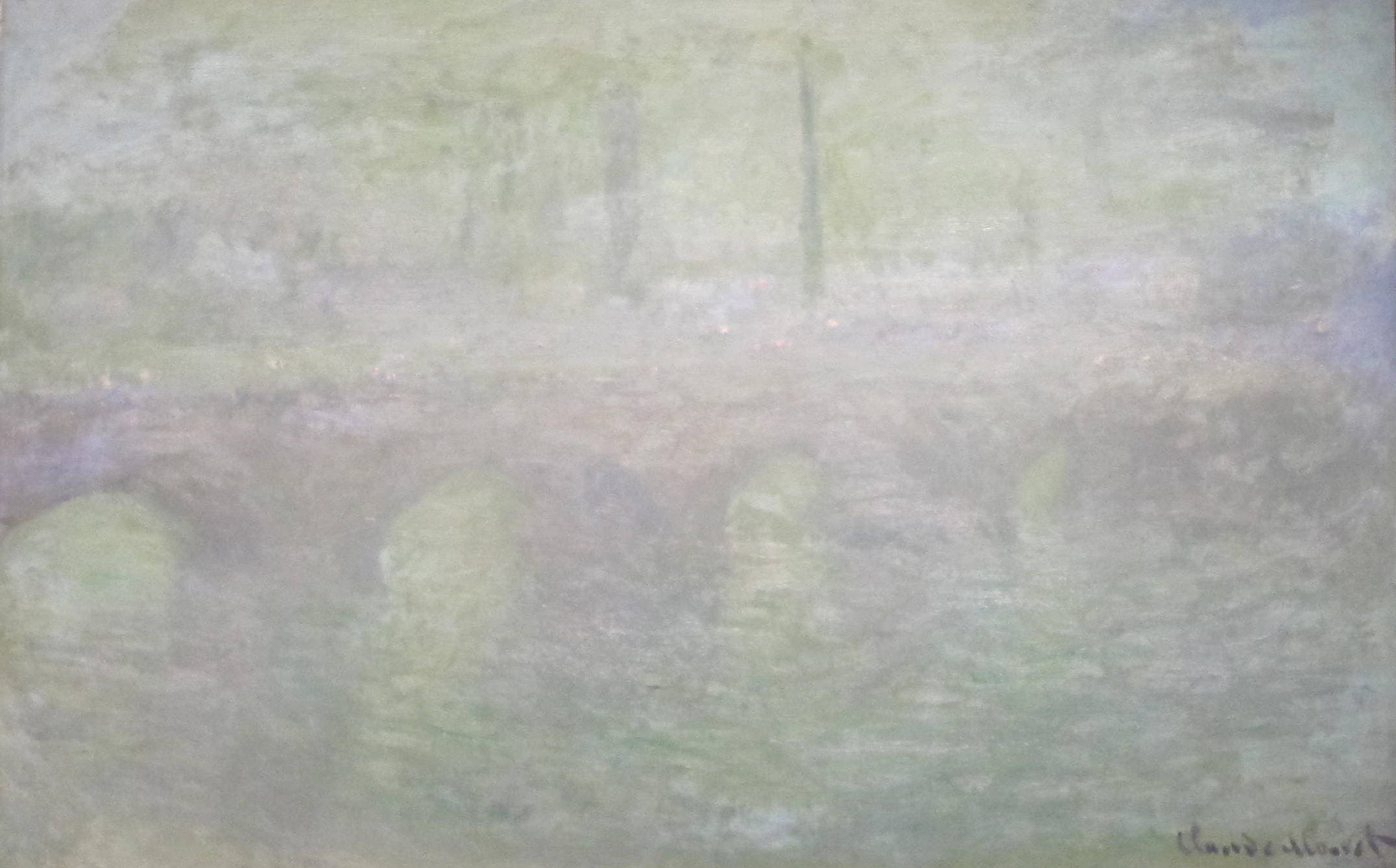
Waterloo Bridge, London, at Dusk
Claude Monet · 1904
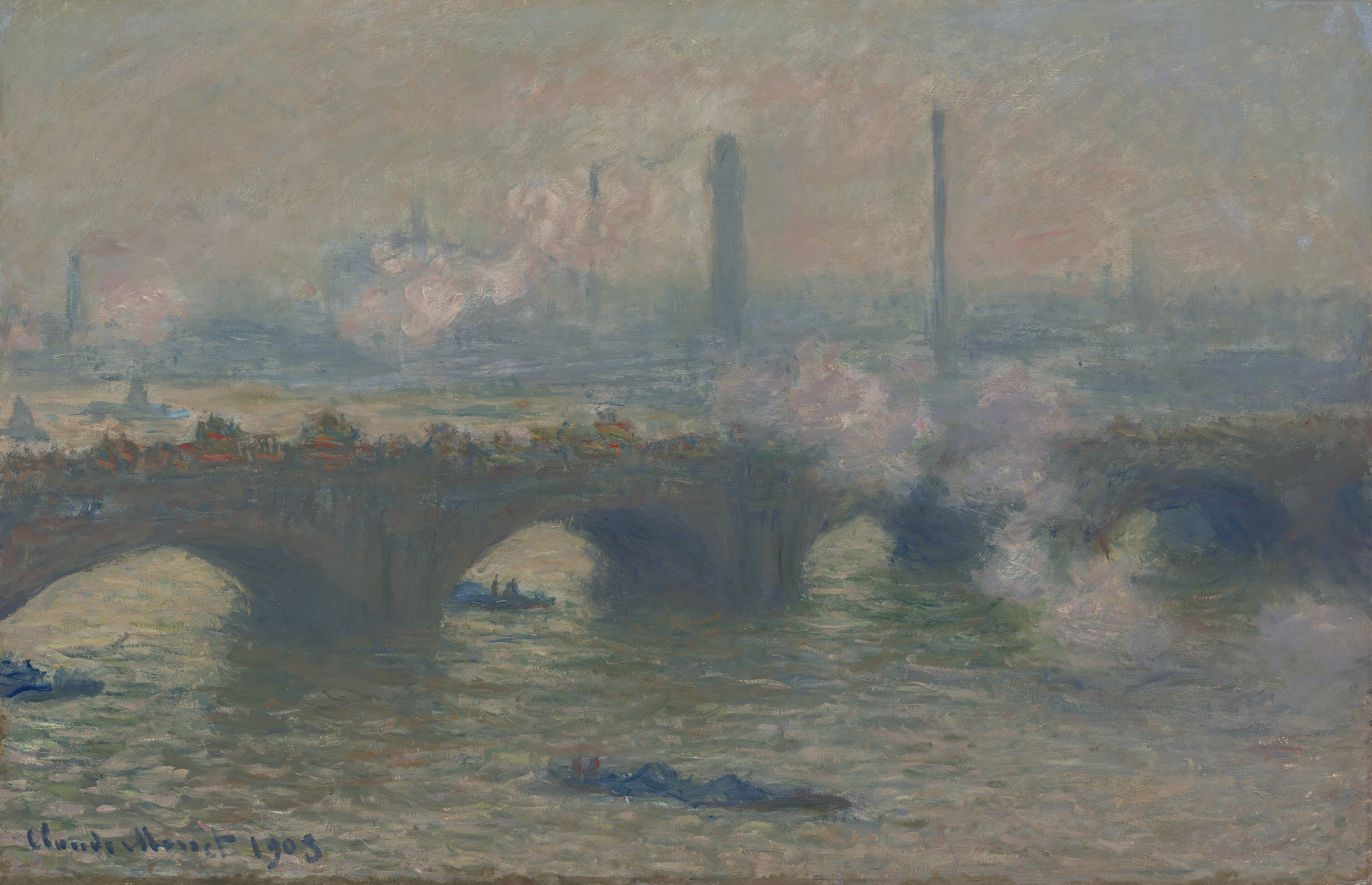
Waterloo Bridge, Gray Day
Claude Monet · 1903
Also painted in 1904
The same year
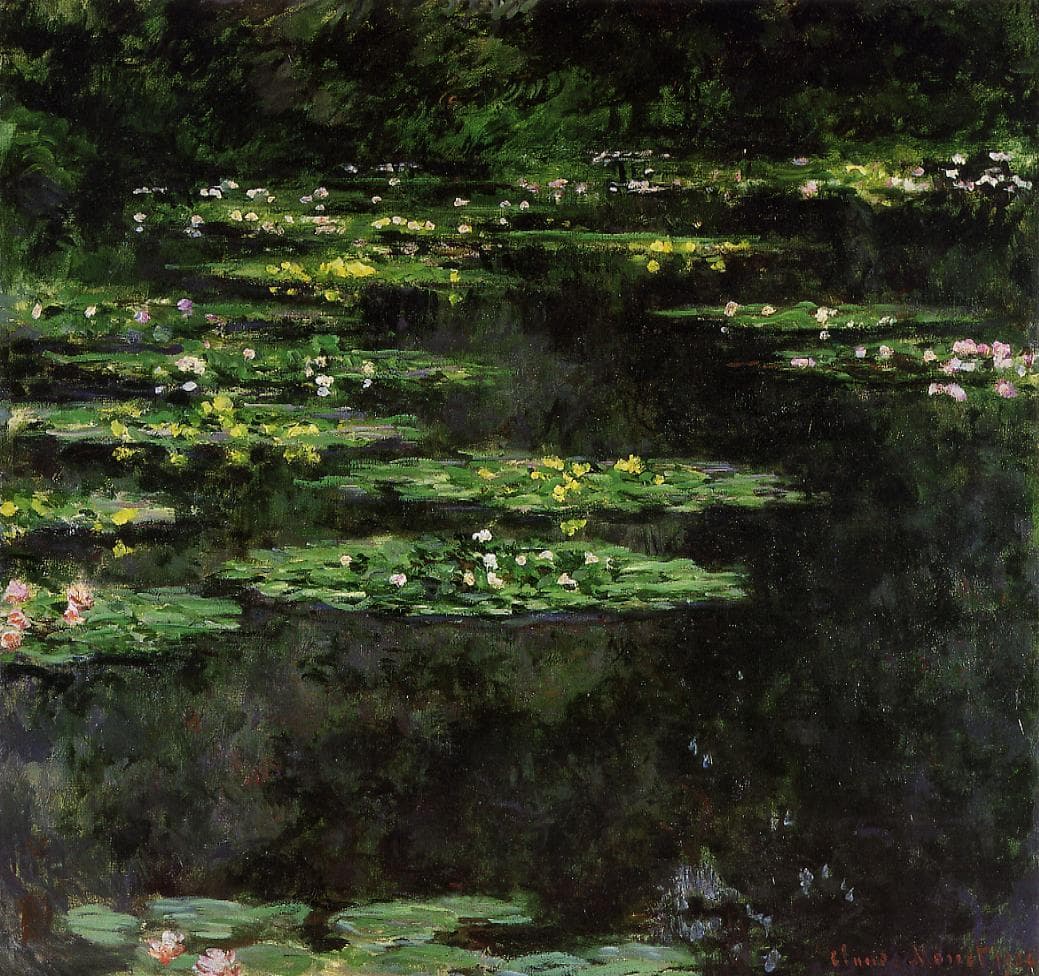
Water Lilies (1904, MuMa Le Havre)
Claude Monet · 1904
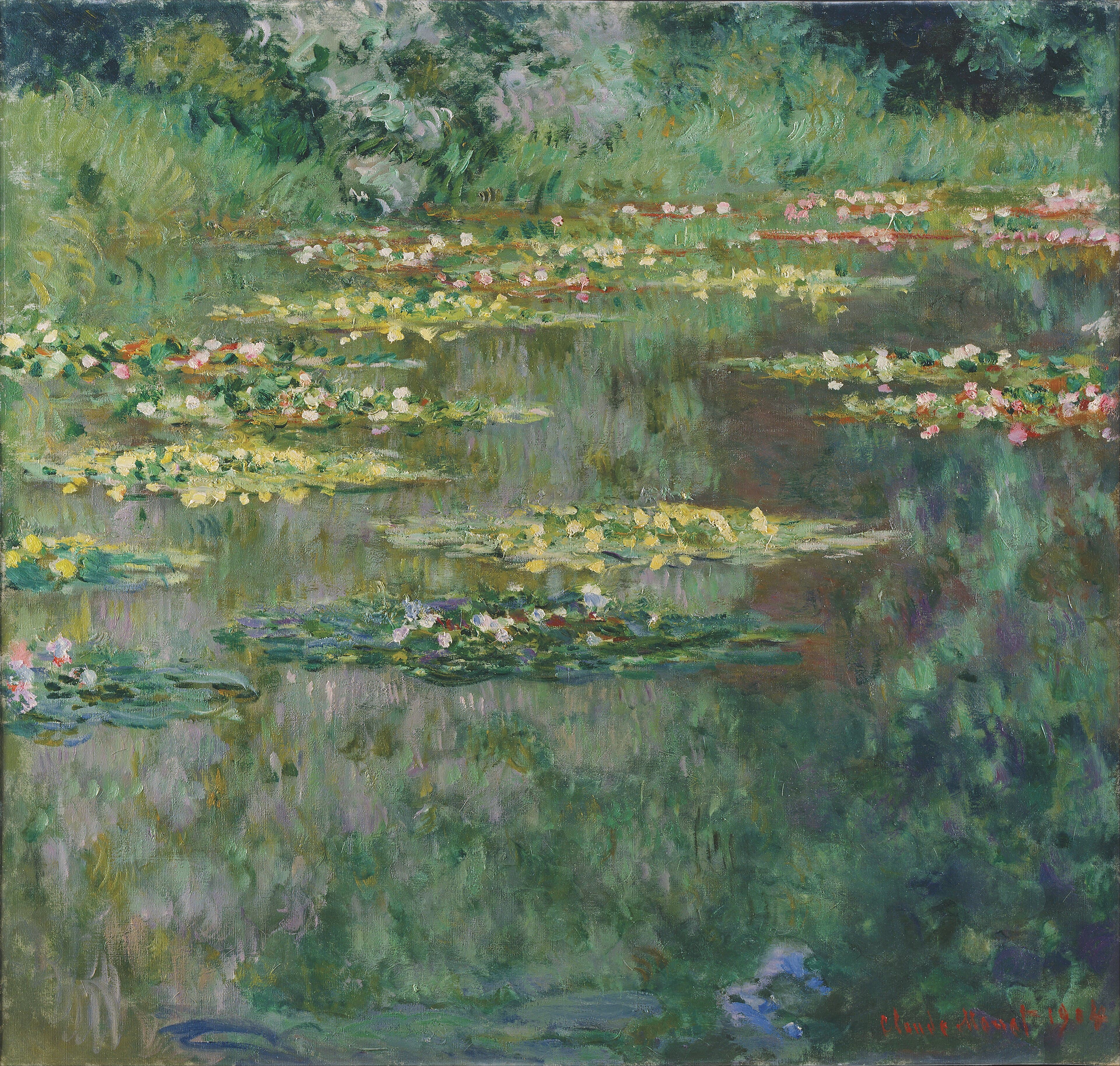
Le Bassin des Nymphéas (Denver)
Claude Monet · 1904
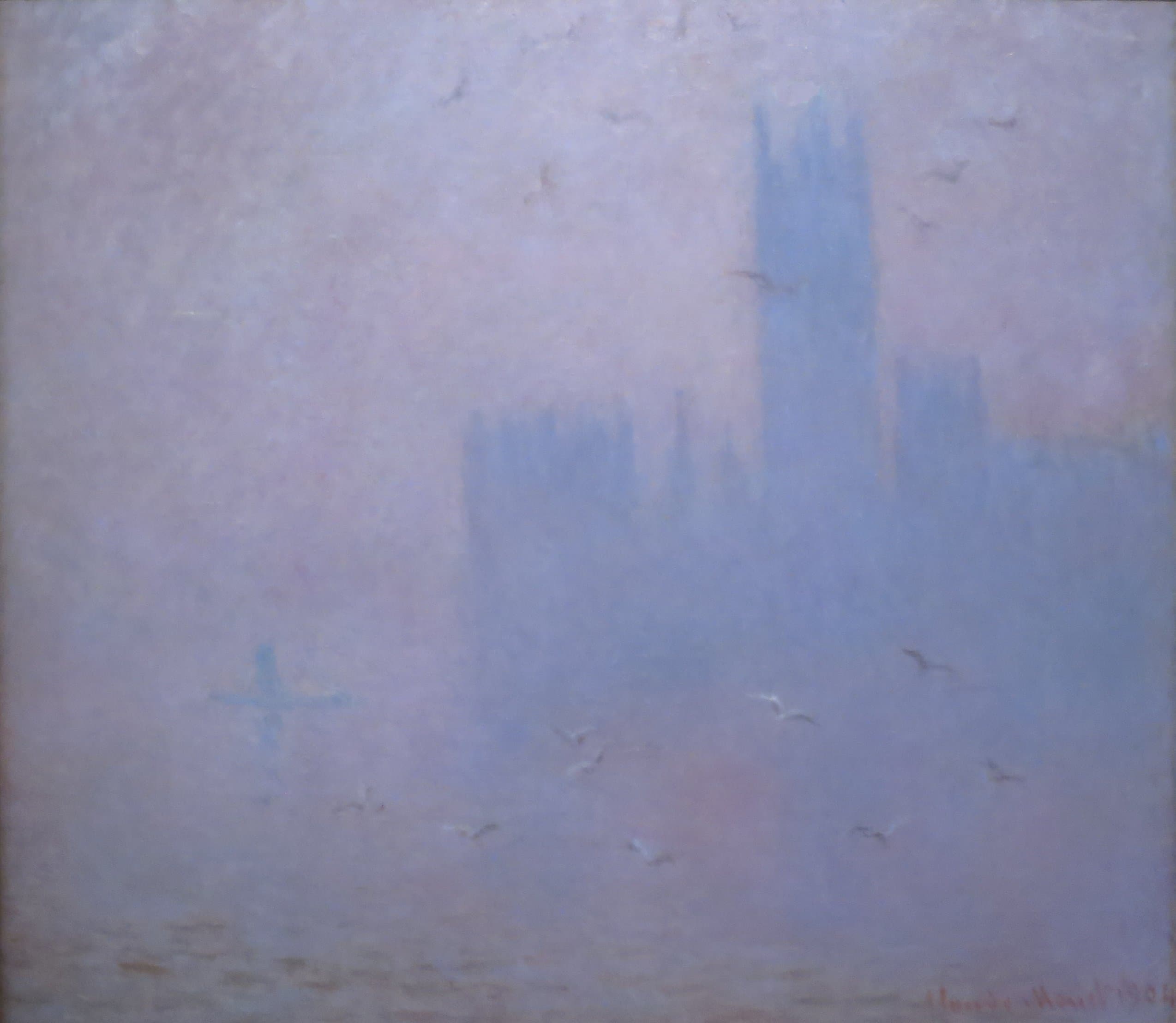
Seagulls, the River Thames and the Houses of Parliament
Claude Monet · 1904
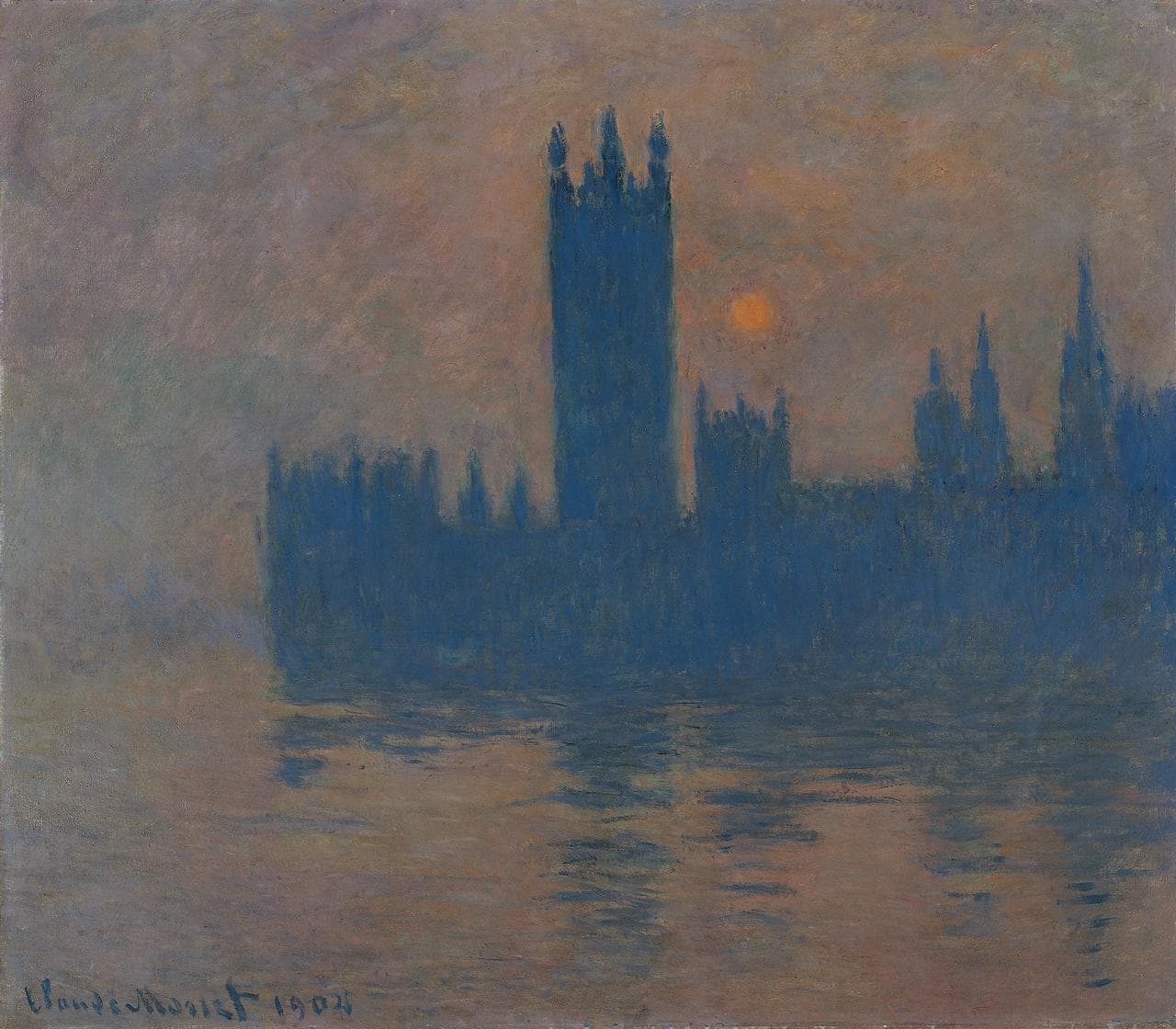
Le Parlement, coucher de soleil
Claude Monet · 1904
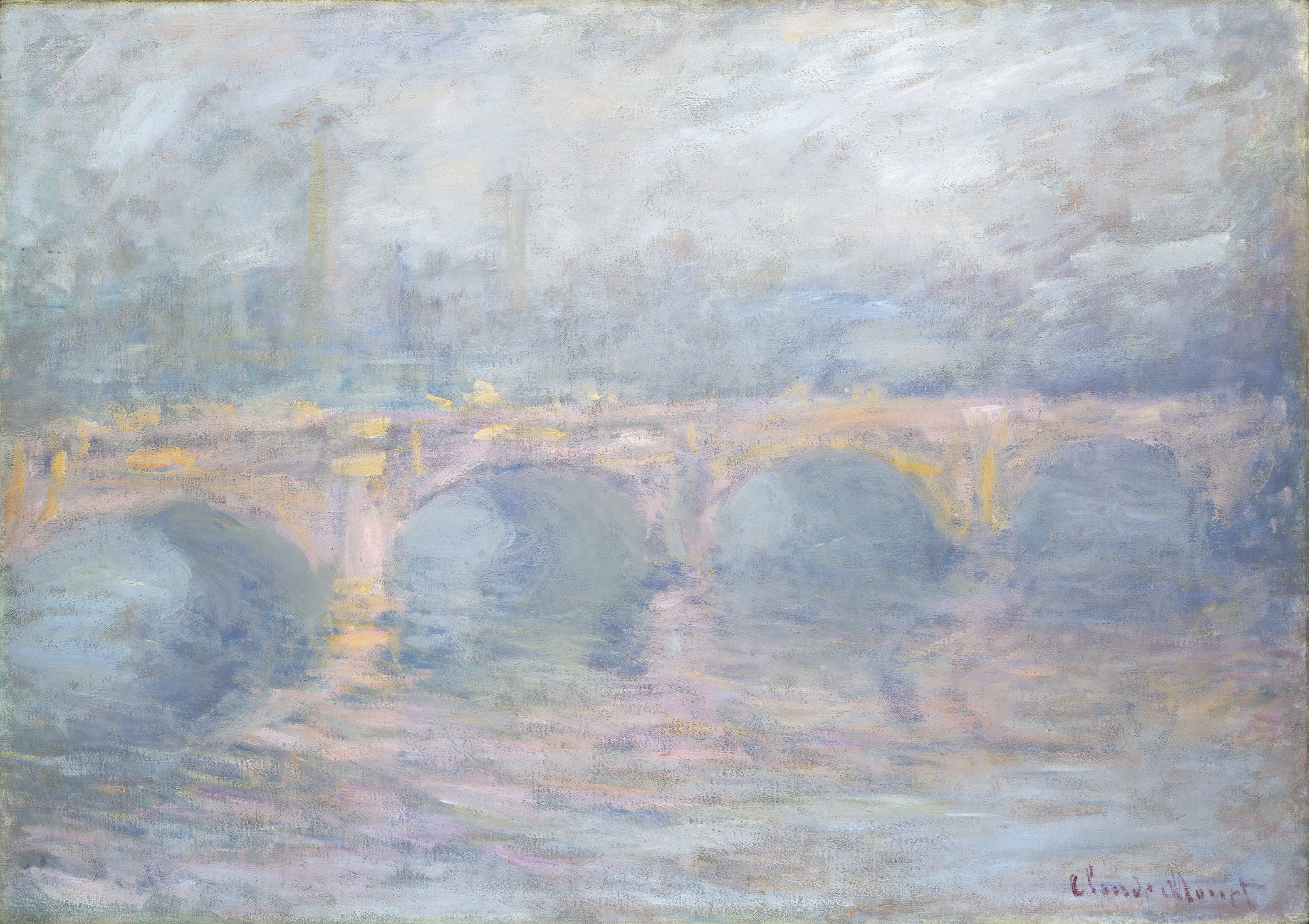
Waterloo Bridge, London, at Sunset
Claude Monet · 1904
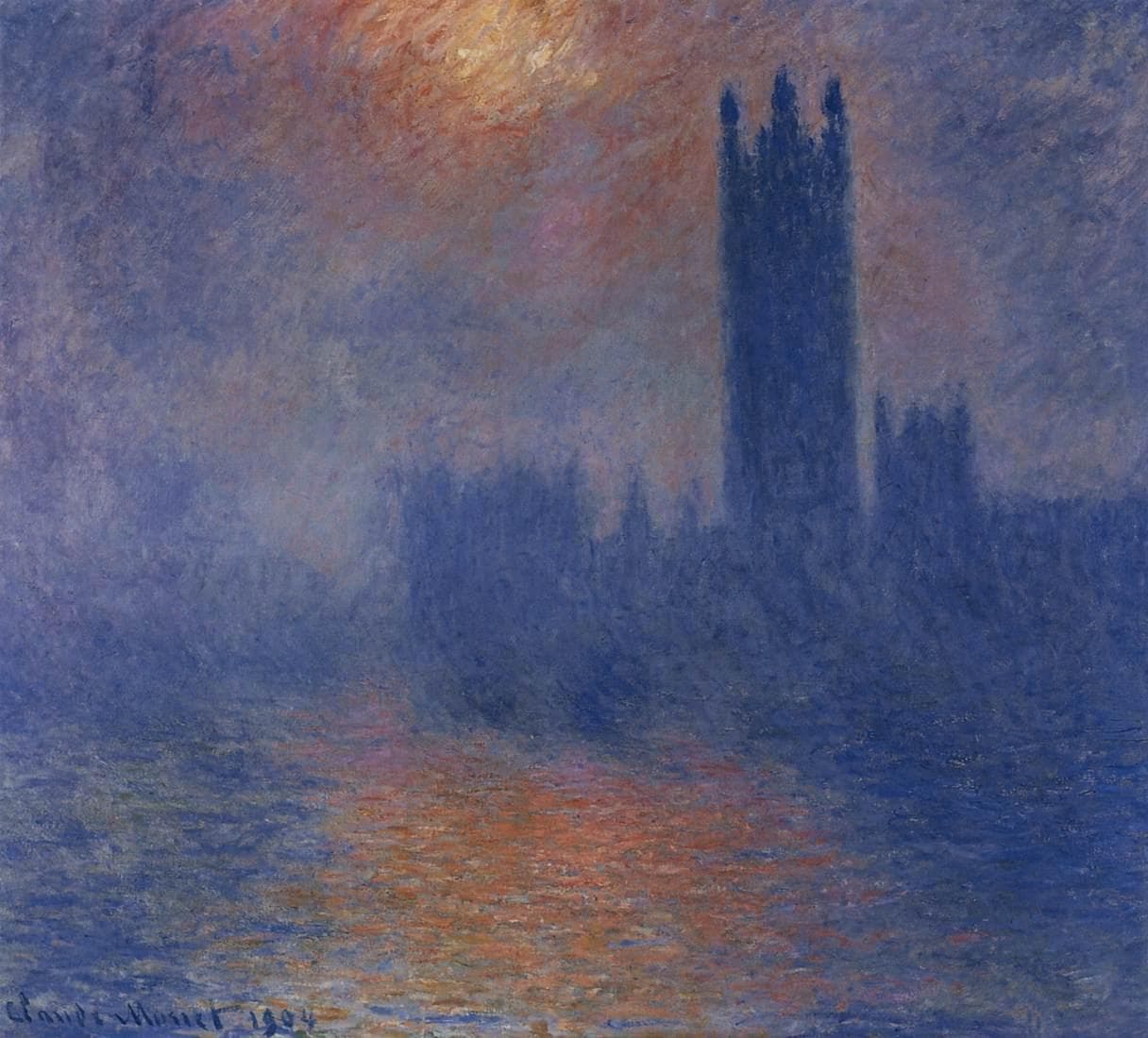
The Houses of Parliament in London
Claude Monet · 1904
Kindred works
You may also study
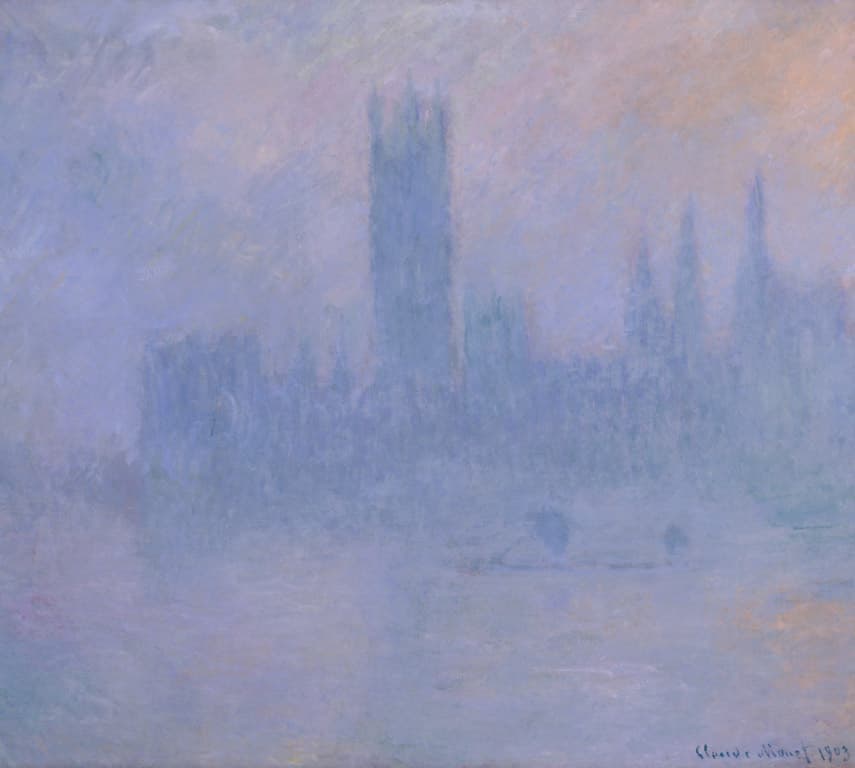
Houses of Parliament, Symphony in Blue
Claude Monet · 1903
Seagulls, the River Thames and the Houses of Parliament
Claude Monet · 1904
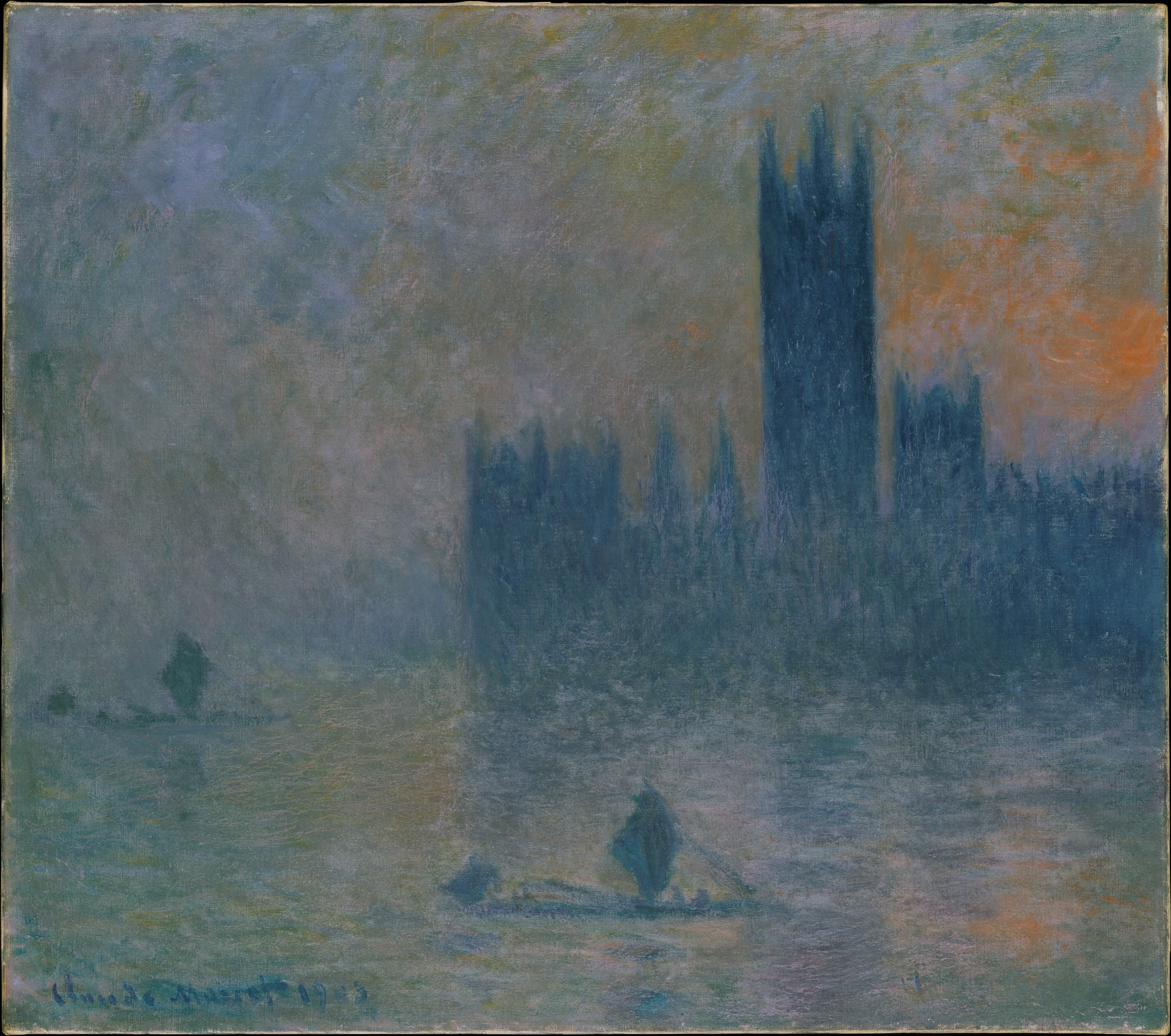
The Houses of Parliament (Effect of Fog)
Claude Monet · 1903–04
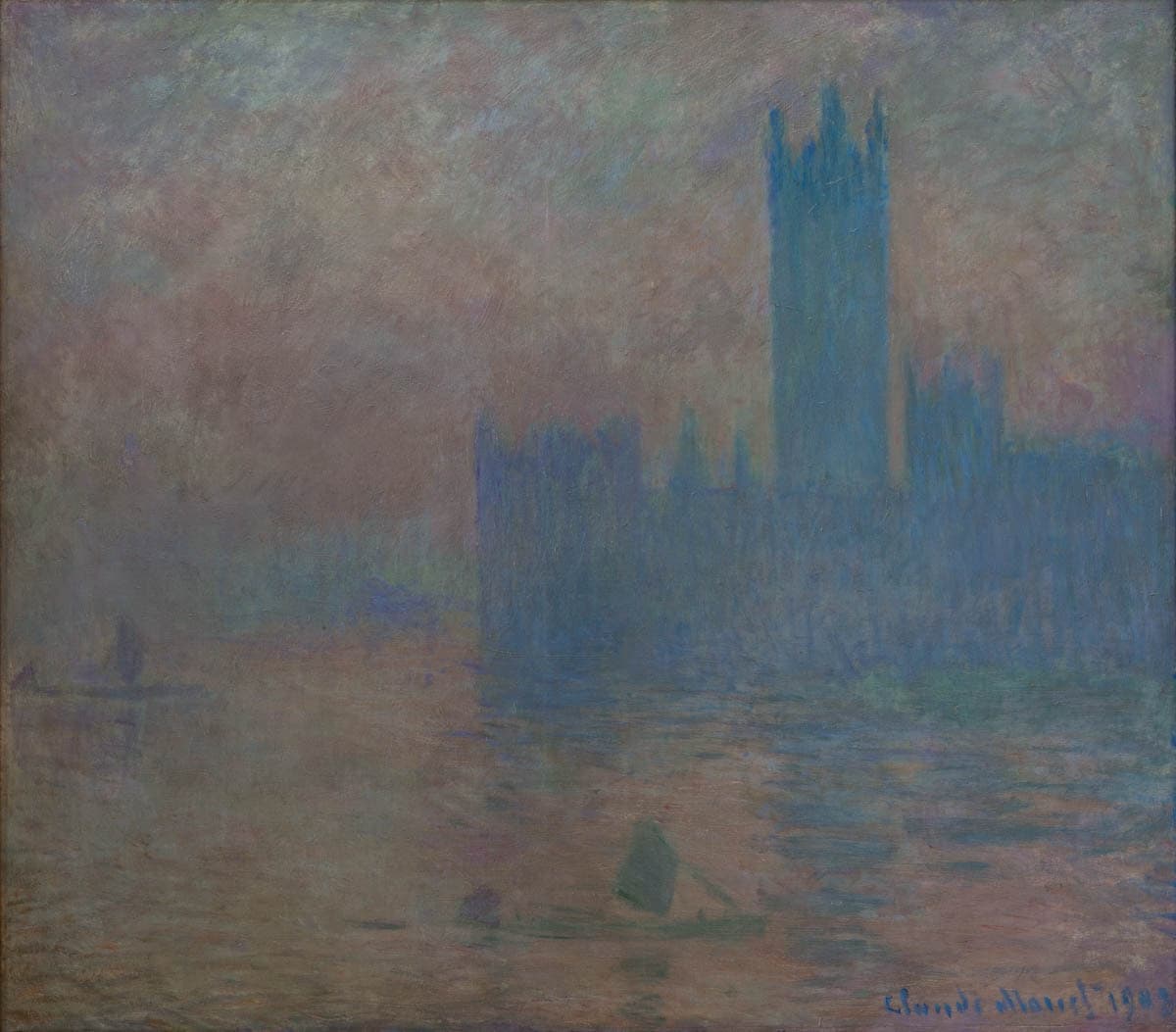
Le Parlement de Londres, effet de brouillard
Claude Monet · 1903
The Houses of Parliament in London
Claude Monet · 1904
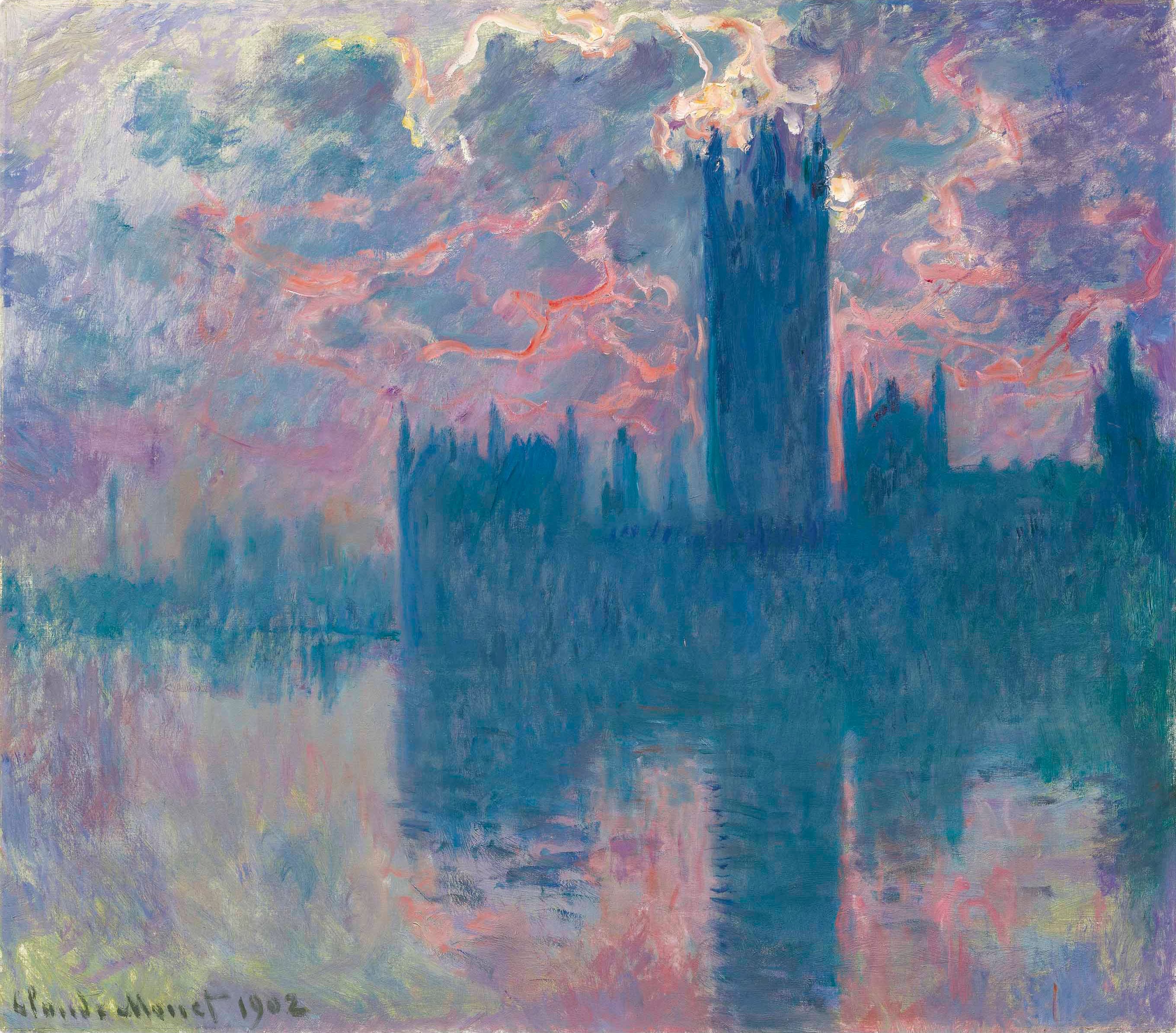
Le Parlement, soleil couchant
Claude Monet · 1902–03
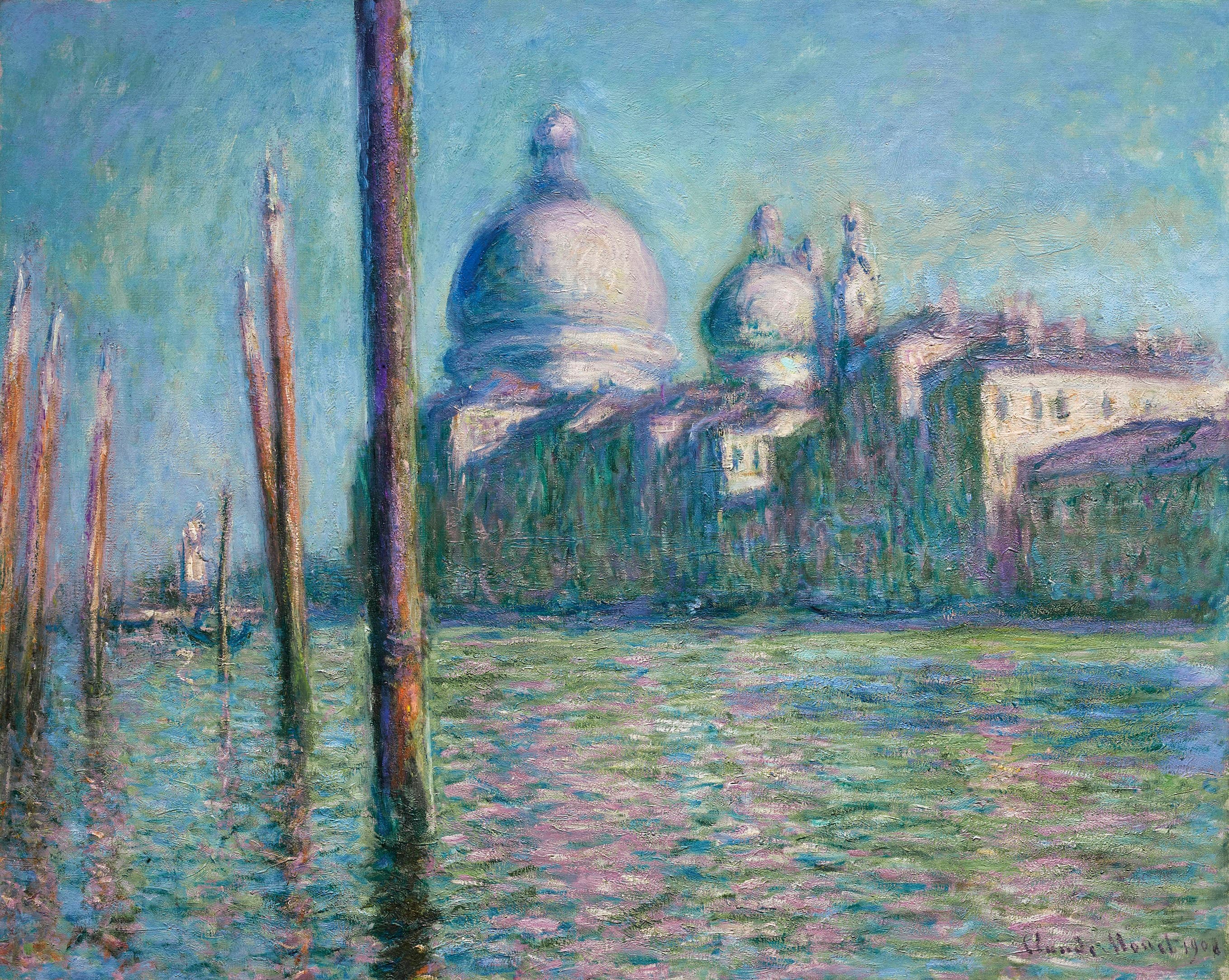
The Grand Canal, Venice
Claude Monet · 1908
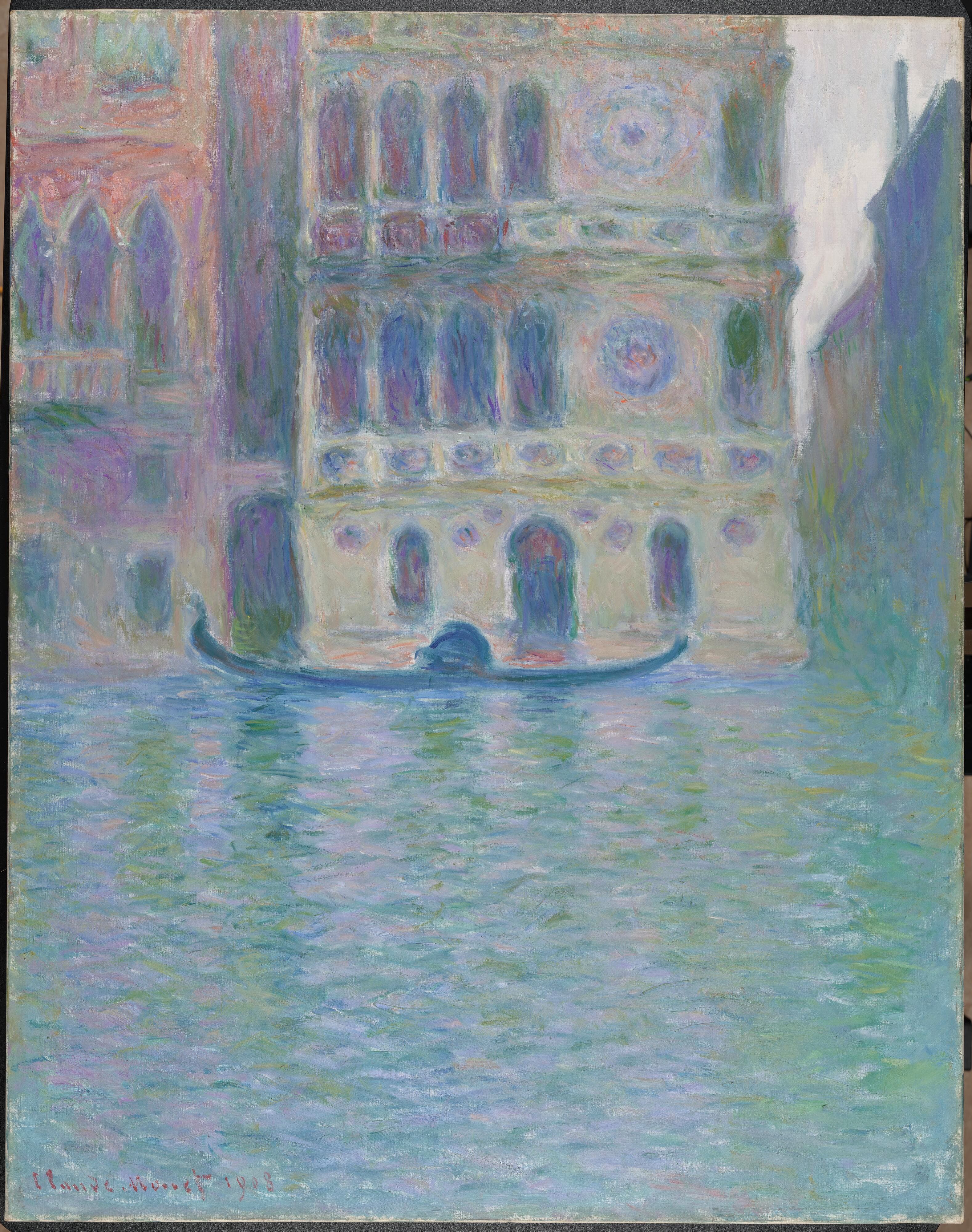
The Palazzo Dario
Claude Monet · 1908