Image: National Gallery of Art; reproduction via Wikimedia Commons · Public domain · via Wikimedia Commons
Waterloo Bridge, London, at Sunset
Claude Monet, 1904
Waterloo Bridge, London, at Sunset is a 1904 painting by Claude Monet in which the stone arches glow pink and apricot over the Thames. It is in the National Gallery of Art, Washington, D.C., from the Paul Mellon collection.
- Artist
- Claude Monet
- Date
- 1904
- Medium
- Oil on canvas
- Dimensions
- 65.5 × 92.7 cm
- Collection
- National Gallery of Art, Washington, D.C., United States
- Movement
- Impressionism
- Catalogue
- Wildenstein 1583
- The City
- Water & Sea
Waterloo Bridge, London, at Sunset (Waterloo Bridge, effet rose) is a Claude Monet painting of Waterloo Bridge in London in the warm light of late afternoon, dated 1904 and catalogued by Wildenstein as no. 1583. It is in the National Gallery of Art in Washington, D.C., part of the Collection of Mr. and Mrs. Paul Mellon, and it is one of the few Waterloo Bridge pictures in which the bridge itself, rather than the air around it, catches the light.
What you're looking at
The bridge crosses the canvas just below the middle, and its masonry is lit. Along the parapet, the piers and the edges of the arches, Monet lays thick strokes of pale yellow, apricot and pink, as if the sun were striking the stone from the viewer's side. The four arches beneath are filled with soft blue-gray shadow, their reflections spilling down into the water in long, wavering shapes.
Above, the south bank is only a suggestion: a tall tower on the left, a few chimneys and buildings dissolved in a pale blue and white sky streaked with broad, loose strokes. The water below is a mix of lilac, pink, pale green and white, with yellow glints under the arches where the light reflects off the stone. The whole picture is high in key and soft, almost pastel. The signature is in red at lower right.
The National Gallery's own description singles out the arches, painted in cotton-candy pink and pale apricot, and the broad, visible brushwork.
Where and when it was painted
Monet began the Waterloo Bridge pictures from the Savoy Hotel during his London stays of 1899, 1900 and 1901. The bridge lay downstream to the east, so in the morning it was backlit and dark. Late in the day the low western sun came from behind the painter and fell full on the bridge, turning the gray granite pink. That reversal of the light is what separates this canvas from the morning fog and sun effects that dominate the series. He finished the picture at Giverny, where he dated it 1904. See the Waterloo Bridge series and Monet in London.
How it was painted
The sky is unusually loose, with long, sweeping diagonal strokes that leave the underlayers visible, while the bridge is built up in thicker, more opaque paint. Monet uses pure pale yellow sparingly, only on the lit edges, so that it reads as light rather than color. At about 65 by 93 centimeters the canvas is a little narrower than most of the series.
How this version differs
Set beside its two companions in Washington, the picture is the warmest. Waterloo Bridge, Gray Day is cool and overcast, and Waterloo Bridge, London, at Dusk dissolves the bridge into green-gray haze. Here the bridge is clearly drawn and glowing. The closest relatives elsewhere are the bright versions such as Waterloo Bridge, London, Sun Effect in the Bührle collection, though there the sun is ahead of the painter, not behind.
Why the light matters
Most of the Waterloo Bridge canvases are contre-jour, painted against the light, with the bridge dark and the sky bright. That is what gives them their silhouetted, dreamlike quality. The sunset canvas turns this round, and the result is a different kind of picture: the forms are clearer, the colors warmer and the mood almost cheerful. Seeing it next to the dusk version in the same museum is one of the best ways to understand how completely Monet let light, not subject, decide what a painting would be.
Ownership and where to see it
The National Gallery's provenance records that Monet sold the painting only in December 1920, to Durand-Ruel and Bernheim-Jeune in Paris, so it stayed with him at Giverny for more than fifteen years after he dated it. It passed through Durand-Ruel, New York, and the dealer Sam Salz before Paul and Bunny Mellon bought it in November 1960. They gave it to the museum in 1983 (accession 1983.1.28). It is shown in the West Building with other works by Monet. For other collections, see where to see Monet's paintings.
Questions & answers
Where is Waterloo Bridge, London, at Sunset?
It is in the National Gallery of Art in Washington, D.C. (accession 1983.1.28), part of the Collection of Mr. and Mrs. Paul Mellon, given in 1983. It is usually on view in the West Building.
When was it painted?
Monet began it from the Savoy Hotel in London during stays between 1899 and 1901 and finished it at Giverny, dating it 1904. He kept it until 1920, when he sold it to Durand-Ruel and Bernheim-Jeune.
What does Waterloo Bridge at Sunset show?
It shows the stone arches of Waterloo Bridge lit pink, apricot and pale yellow by the low sun, with blue-gray shadows under the arches, a pale sky, and the reflections of the bridge wavering in the Thames.
Why is the bridge pink in this version?
Monet looked east at the bridge from the Savoy. In the morning it was backlit and dark; in late afternoon the setting sun shone from behind him onto the stone, giving it the warm pink color he recorded here.
More by the artist
Claude Monet
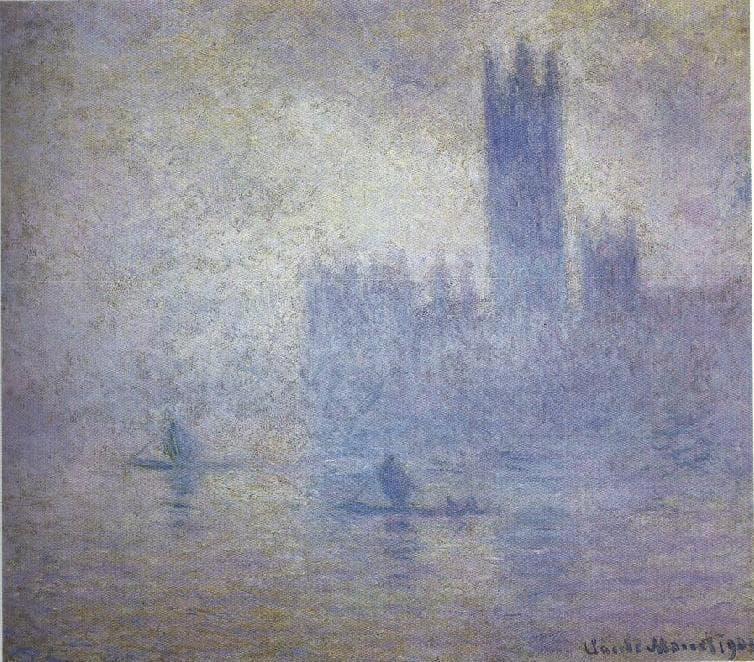
Houses of Parliament, Effect of Fog
Claude Monet · 1904
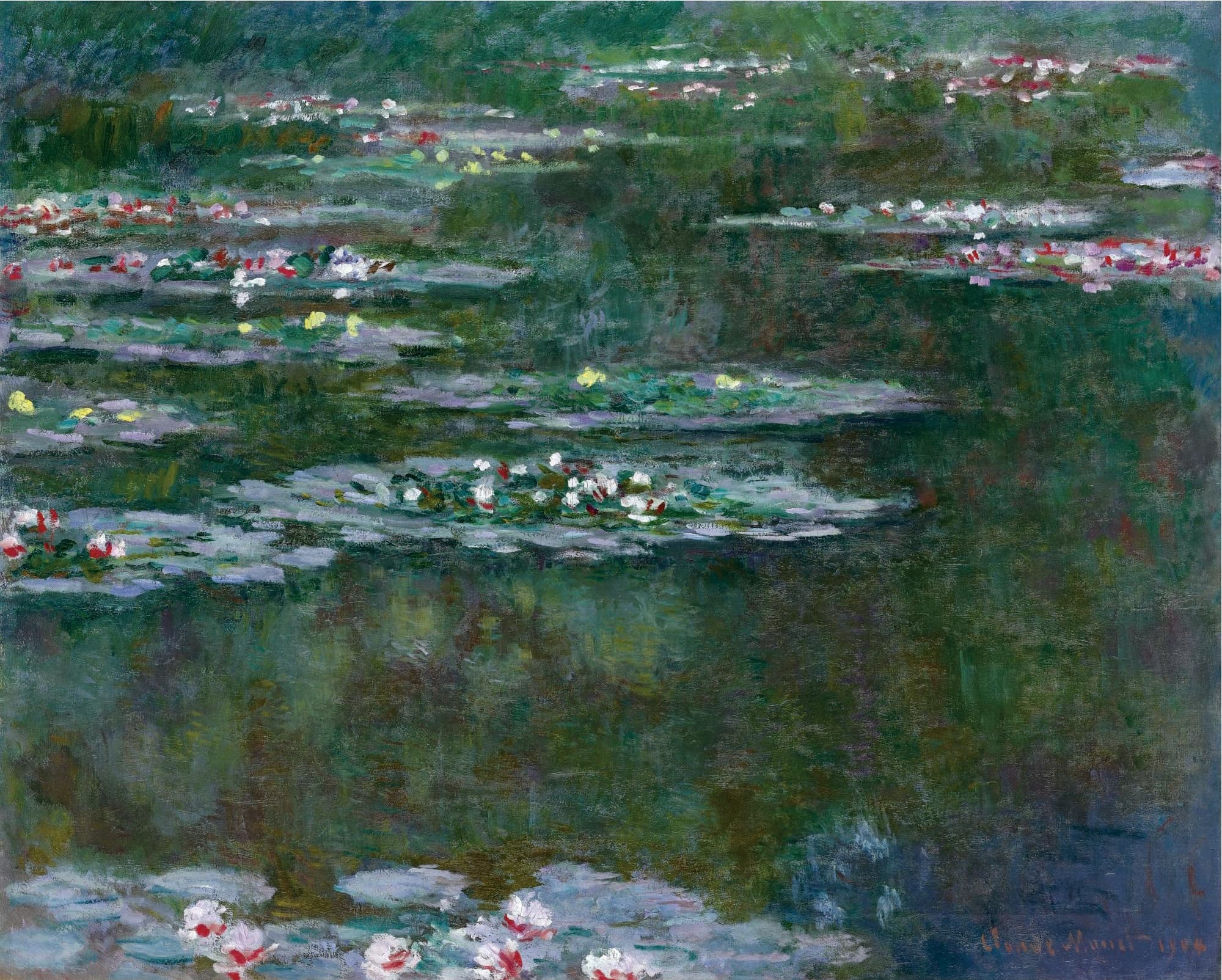
Water Lilies (1904)
Claude Monet · 1904
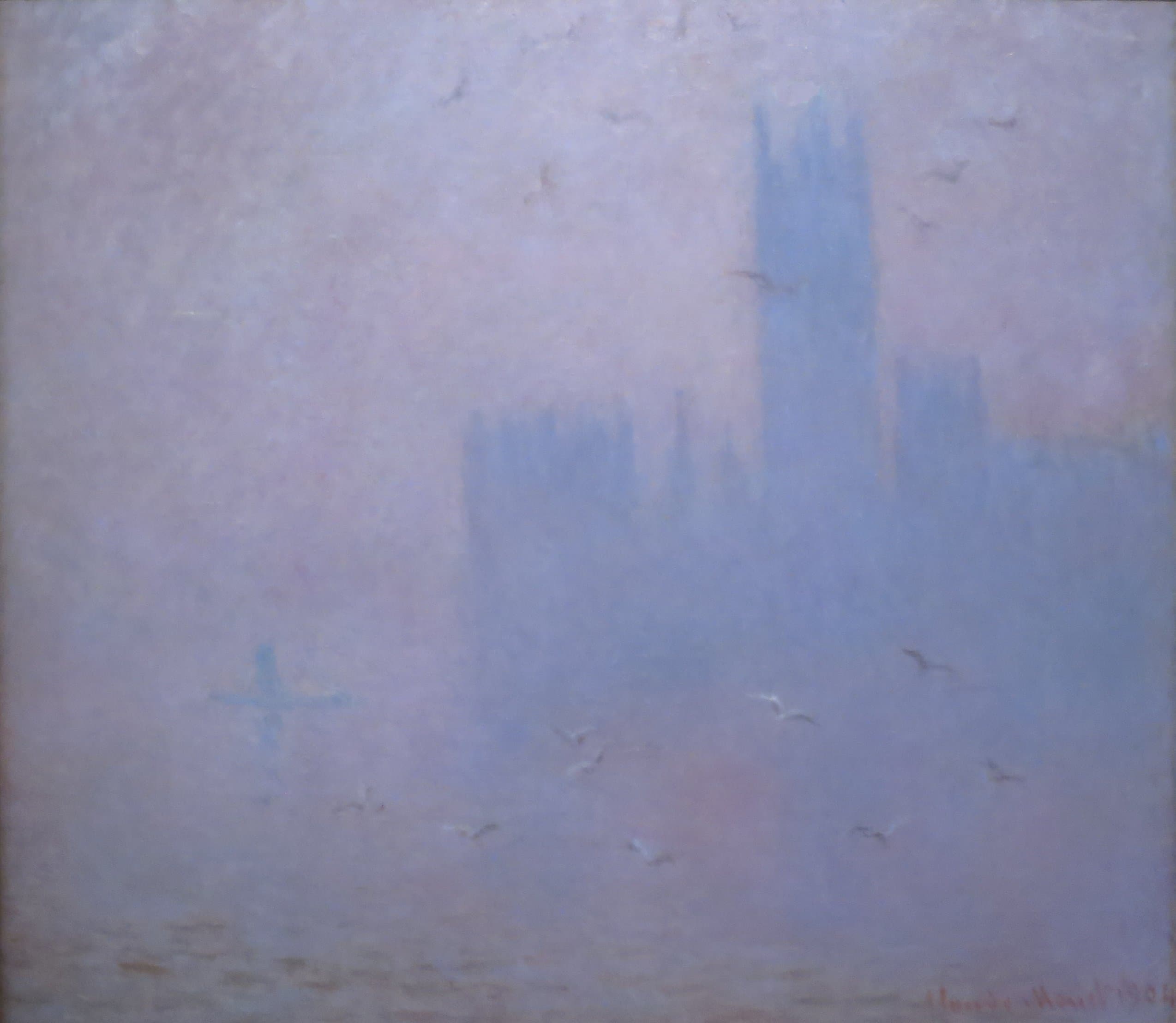
Seagulls, the River Thames and the Houses of Parliament
Claude Monet · 1904
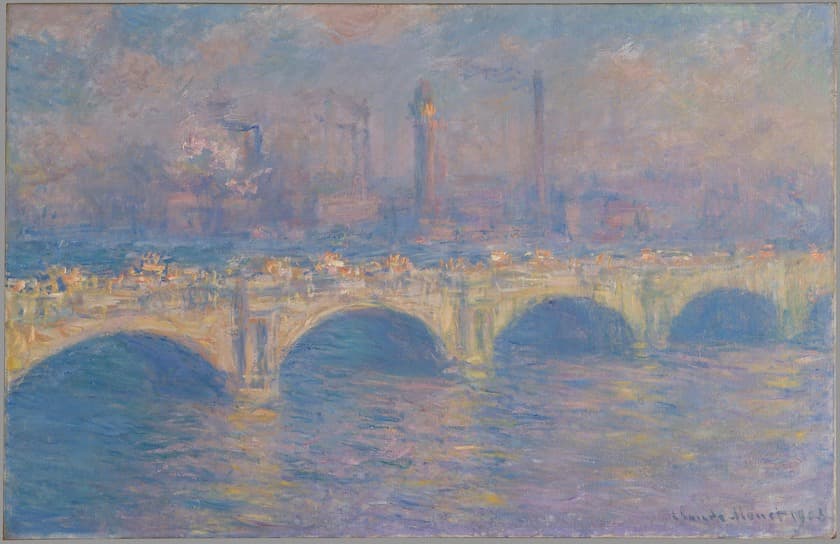
Waterloo Bridge, London
Claude Monet · 1903
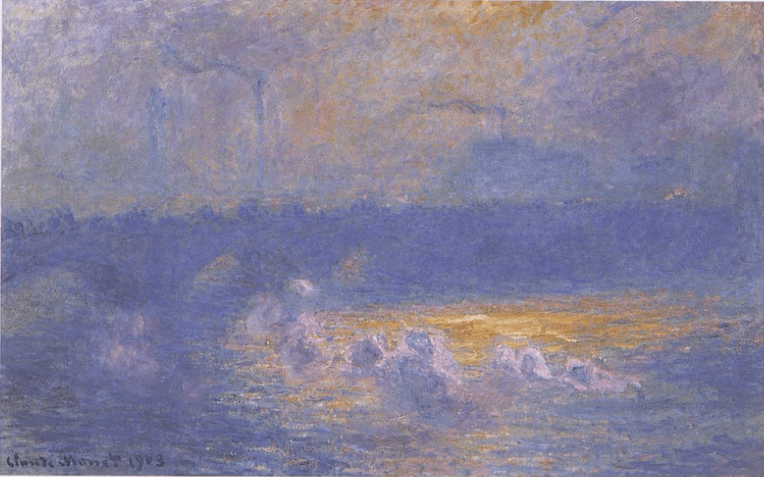
Waterloo Bridge, Sunlight Effect with Smoke
Claude Monet · 1903
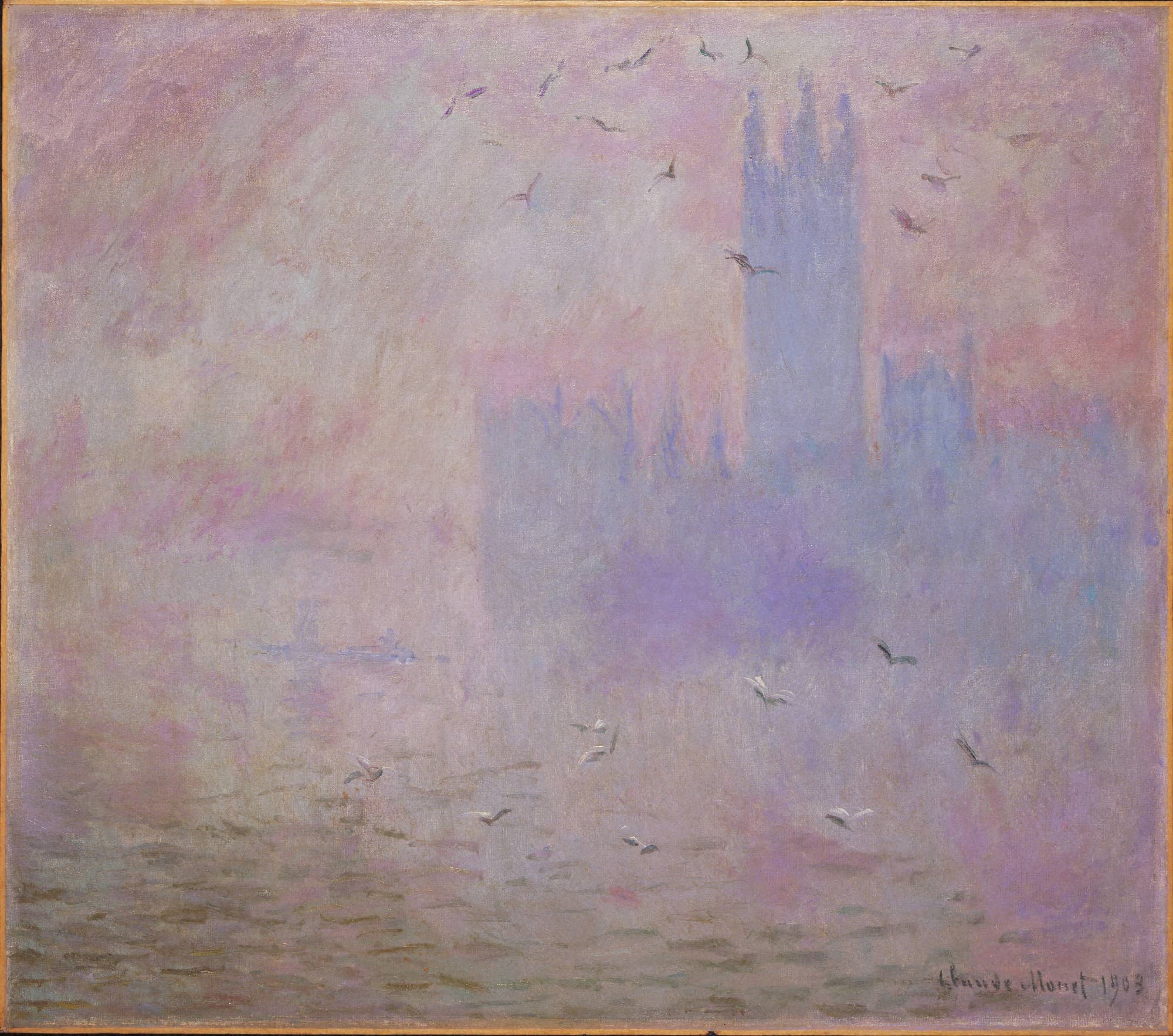
The Houses of Parliament, Seagulls
Claude Monet · 1903
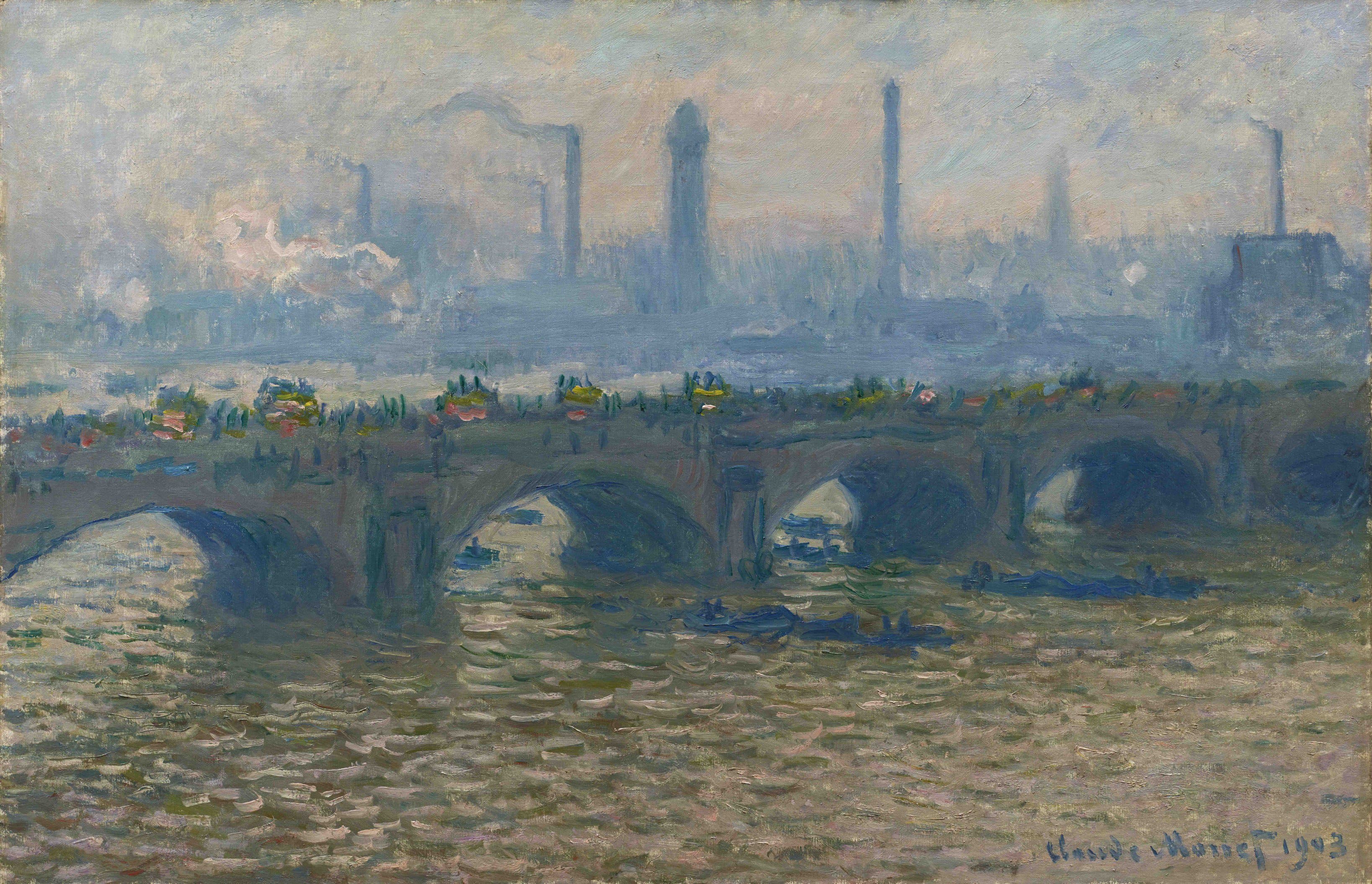
Waterloo Bridge, Gray Day (Ordrupgaard)
Claude Monet · 1903
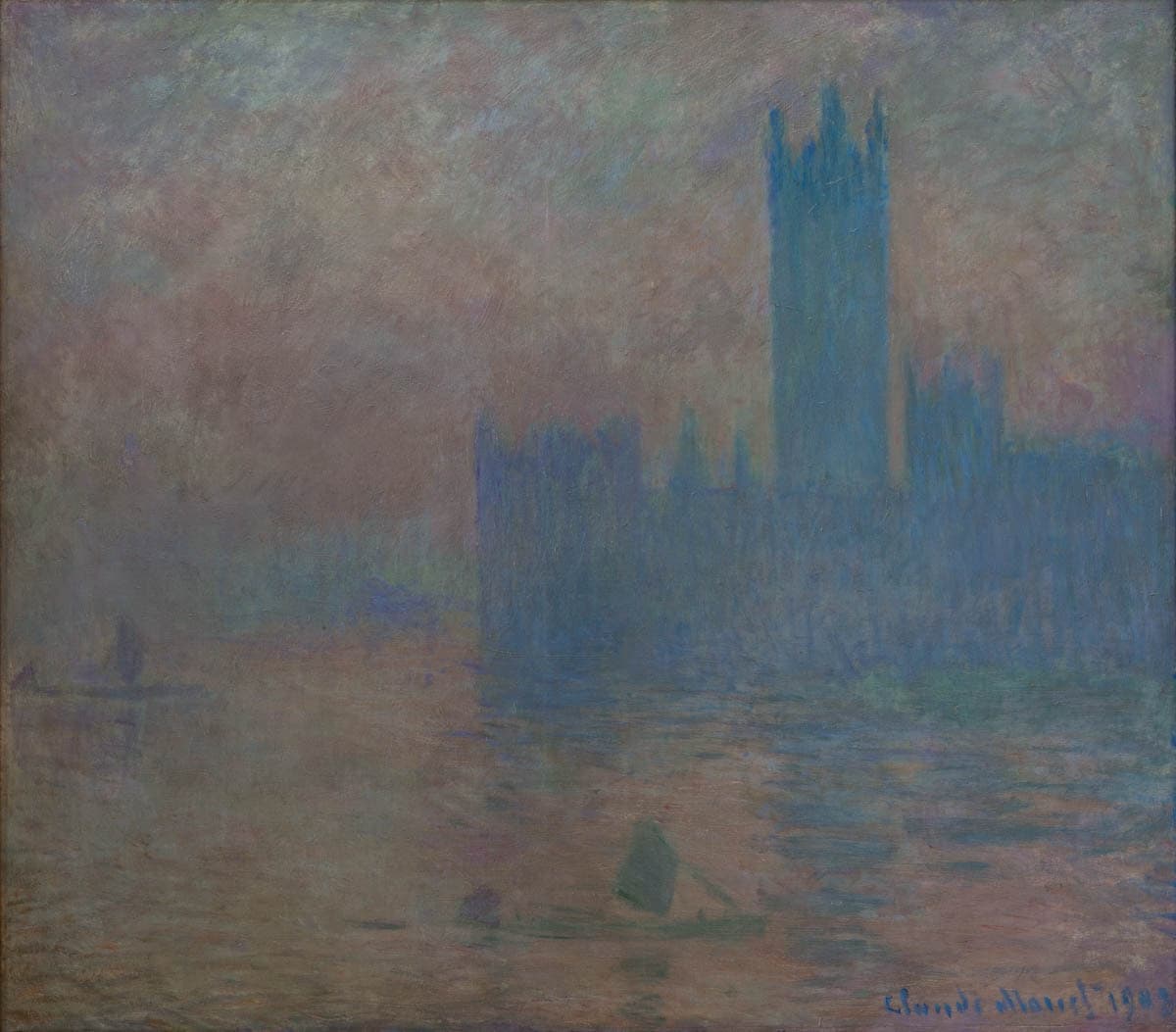
Le Parlement de Londres, effet de brouillard
Claude Monet · 1903
Also painted in 1904
The same year
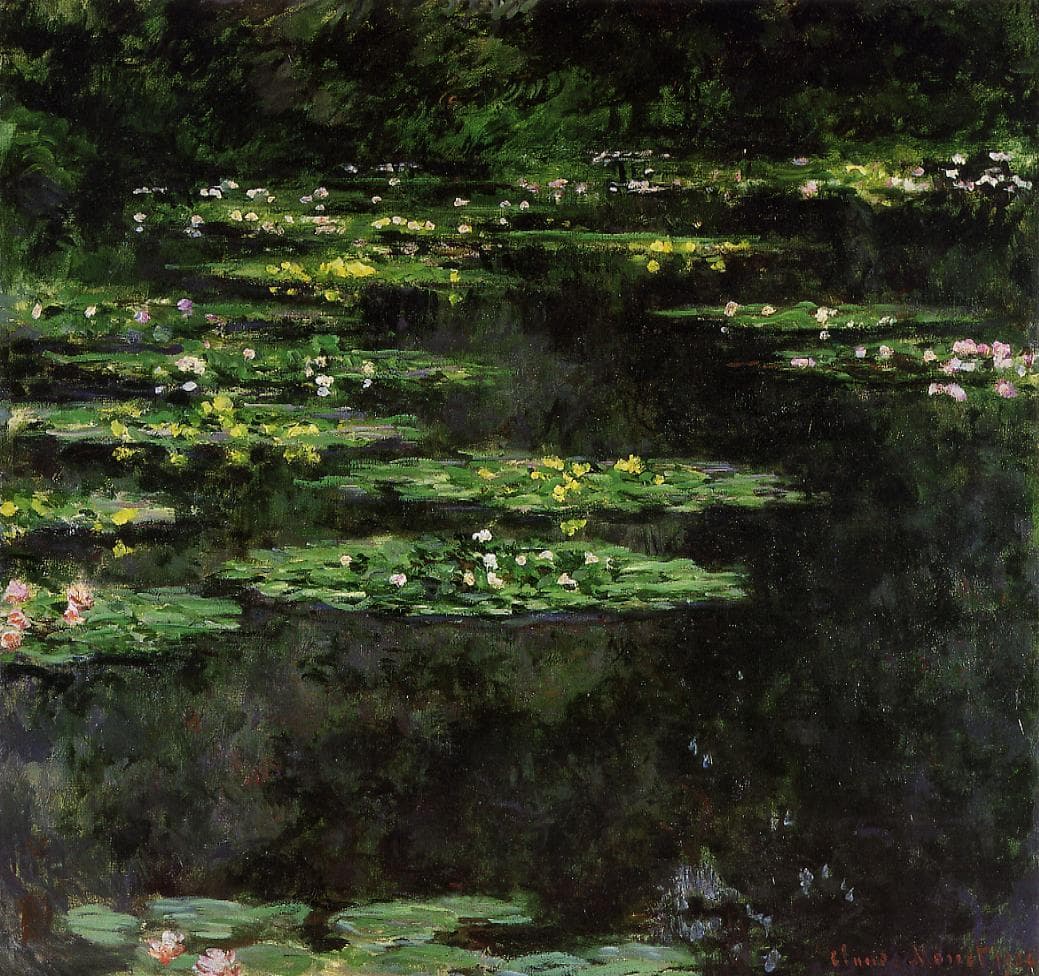
Water Lilies (1904, MuMa Le Havre)
Claude Monet · 1904
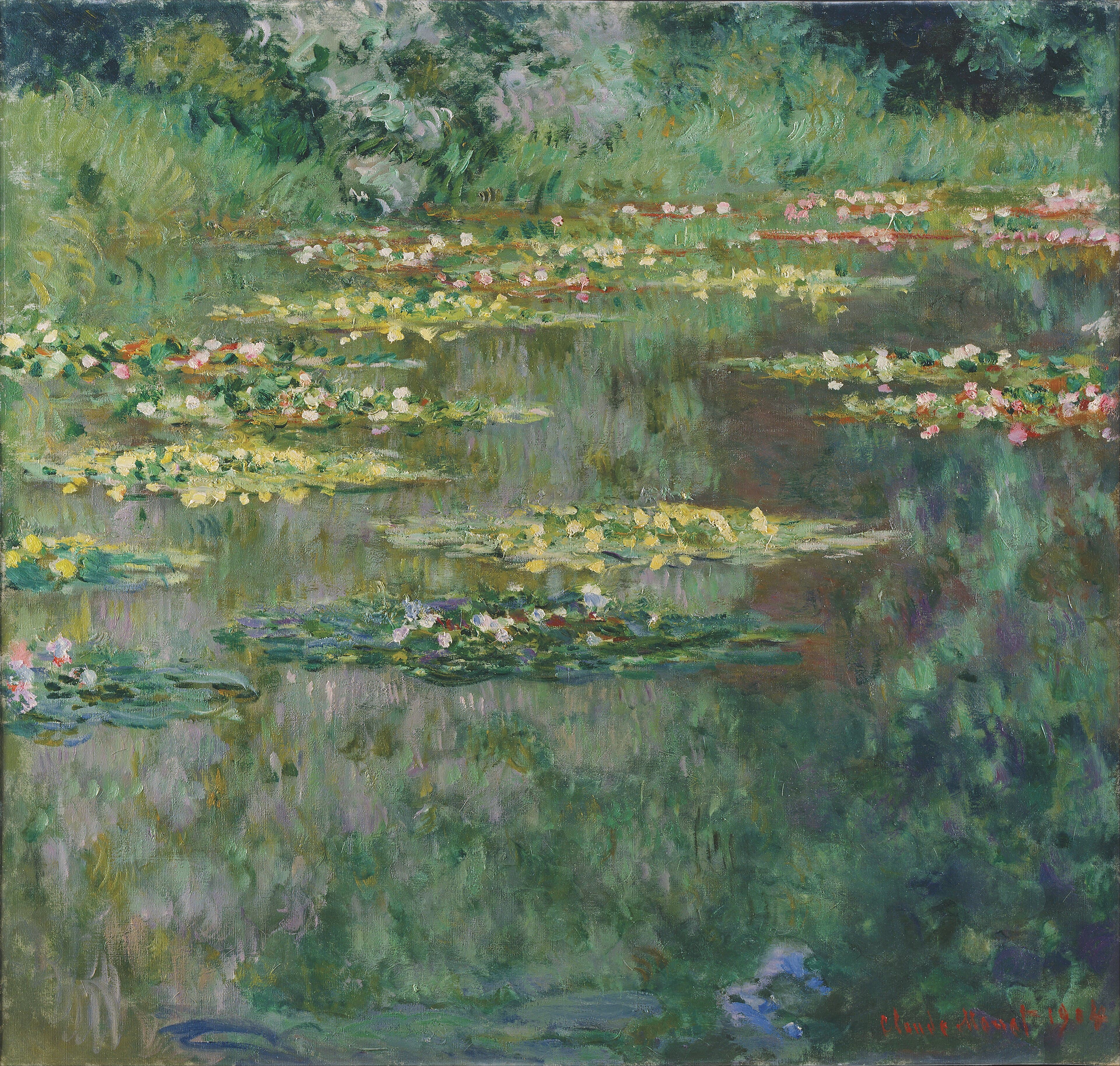
Le Bassin des Nymphéas (Denver)
Claude Monet · 1904
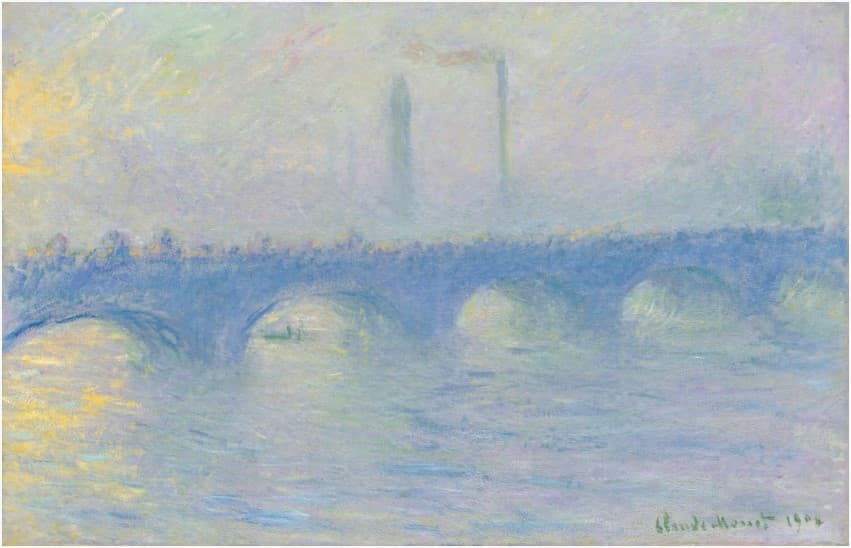
Waterloo Bridge, effet de brume
Claude Monet · 1904
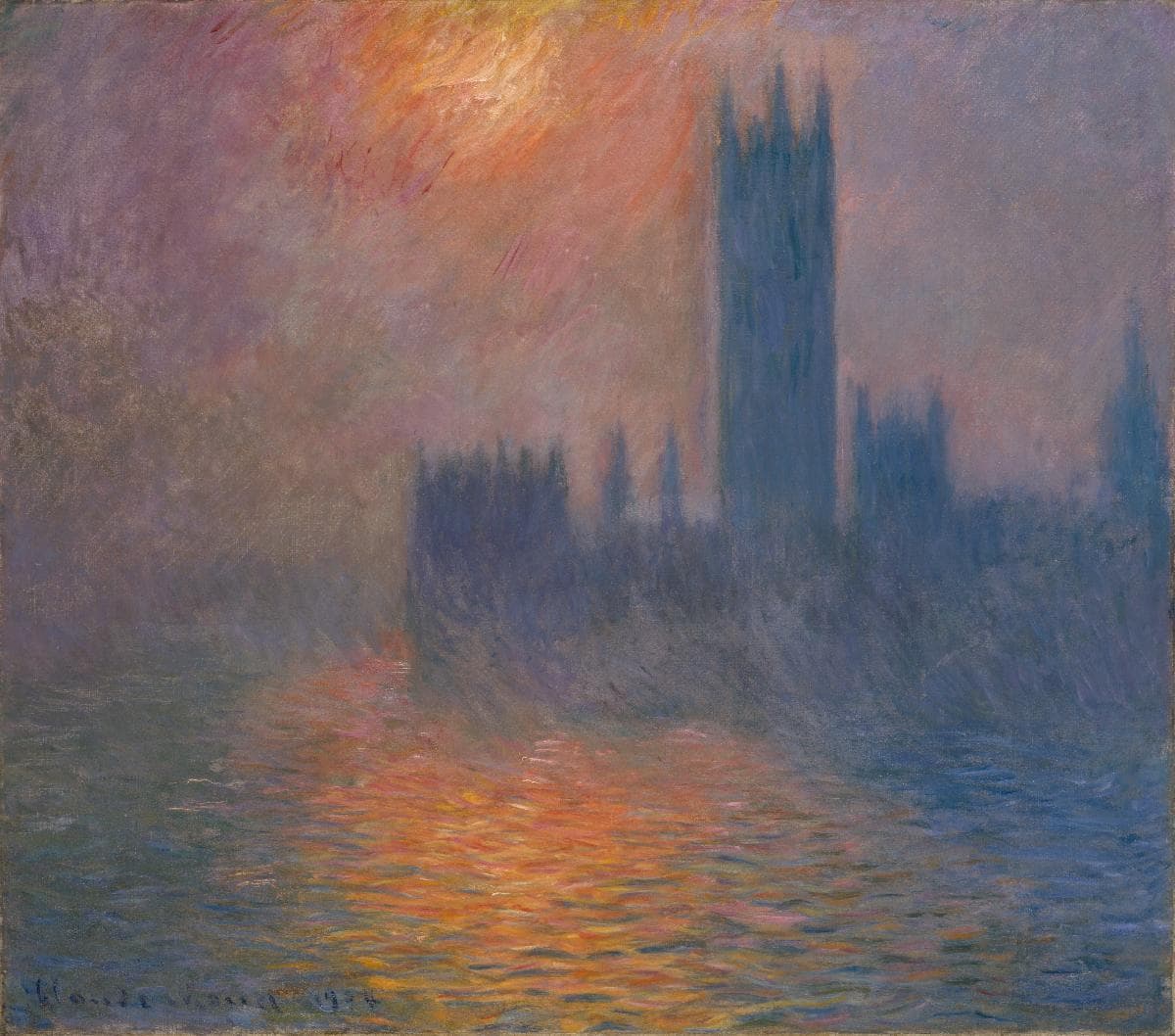
Houses of Parliament, Sunset
Claude Monet · 1904
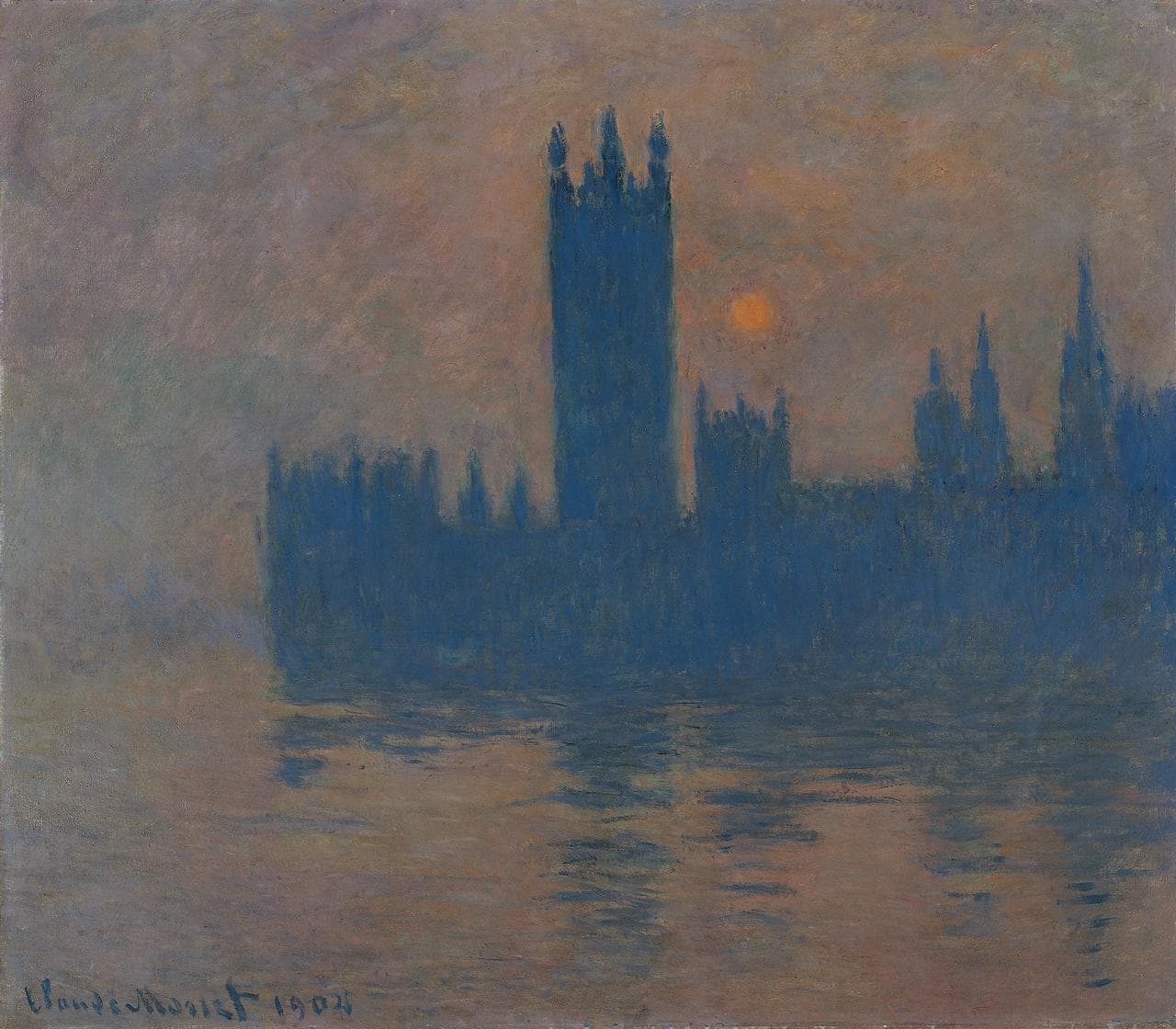
Le Parlement, coucher de soleil
Claude Monet · 1904
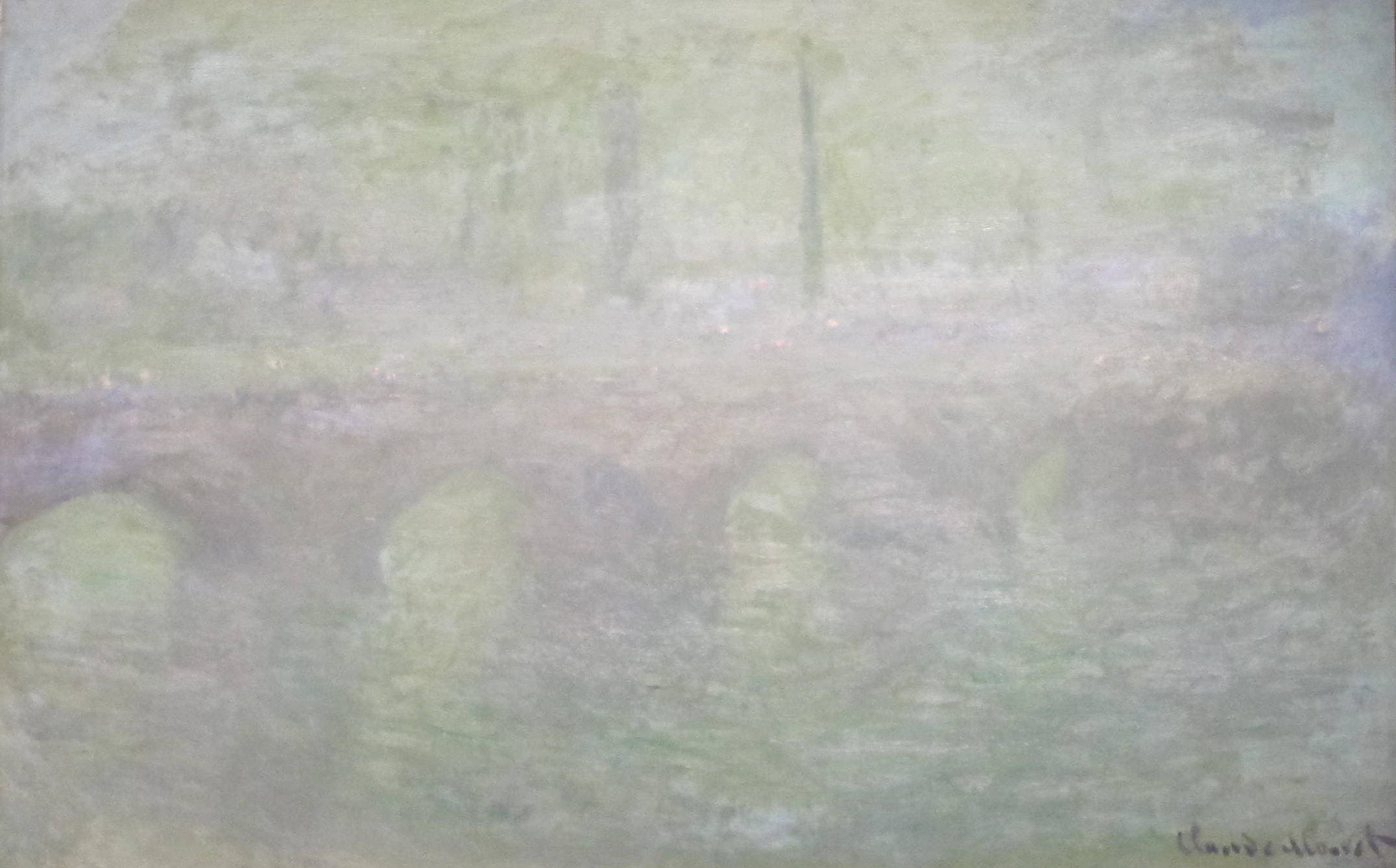
Waterloo Bridge, London, at Dusk
Claude Monet · 1904
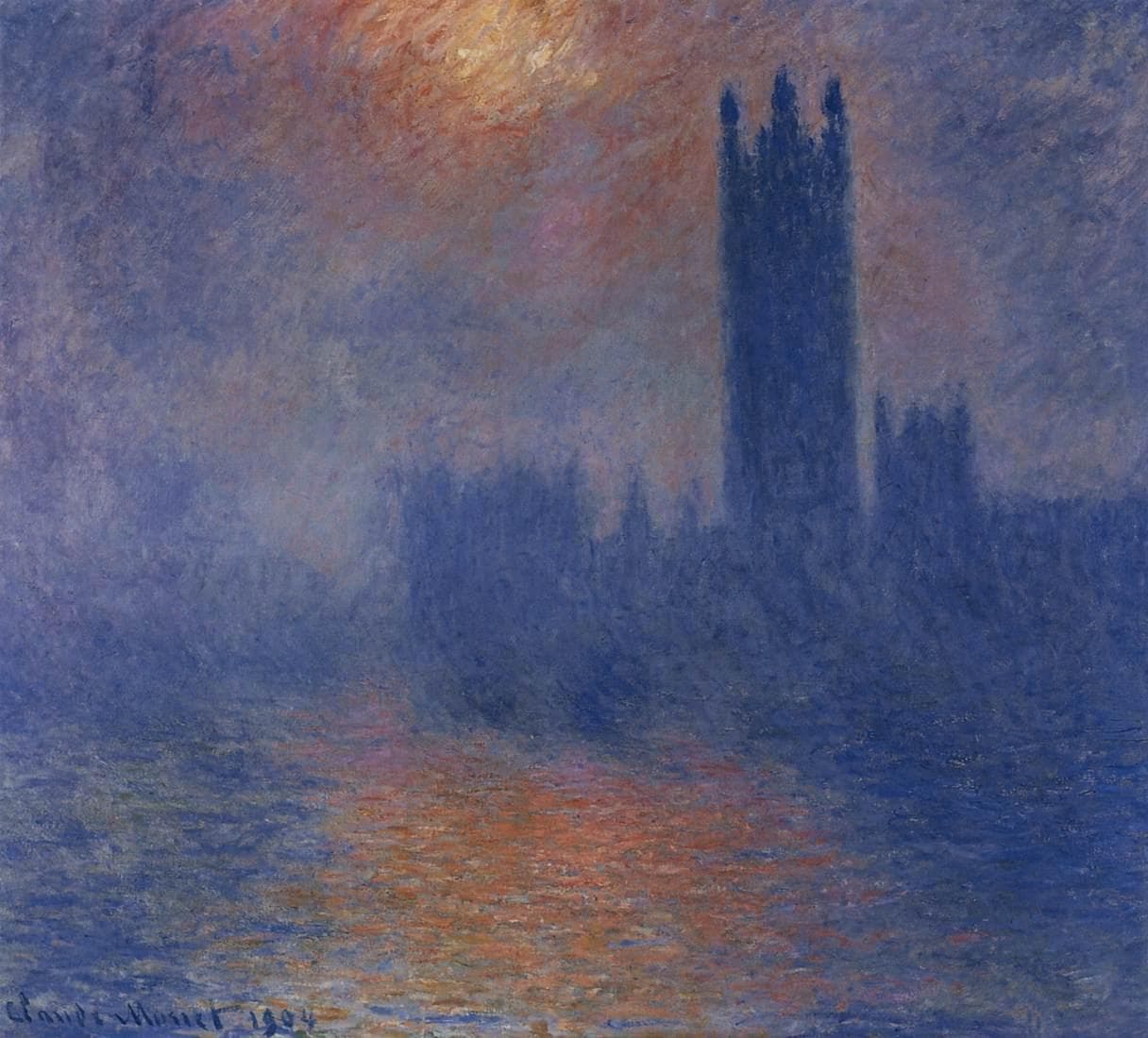
The Houses of Parliament in London
Claude Monet · 1904
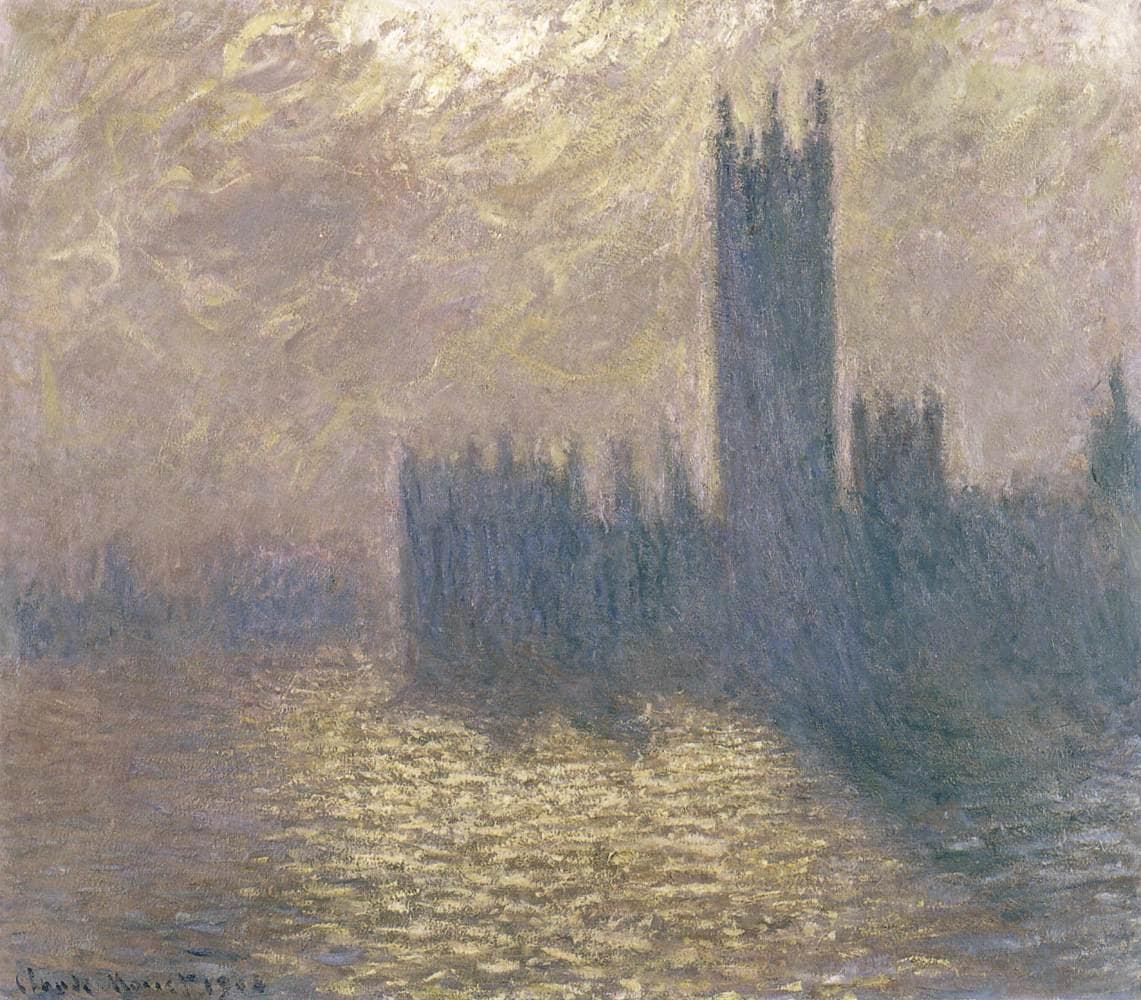
The Houses of Parliament, London
Claude Monet · 1904
Kindred works
You may also study
Waterloo Bridge, London, at Dusk
Claude Monet · 1904
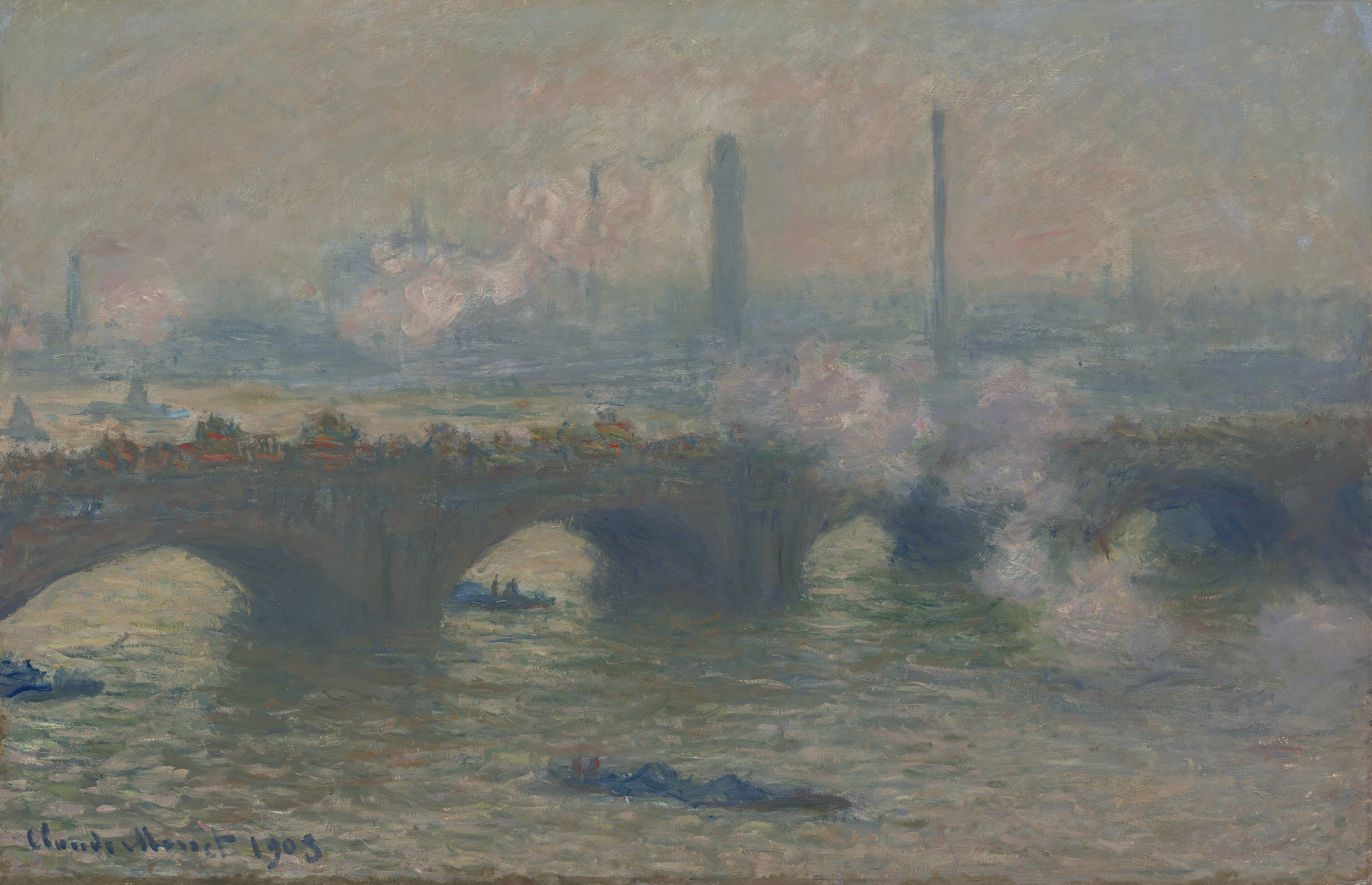
Waterloo Bridge, Gray Day
Claude Monet · 1903
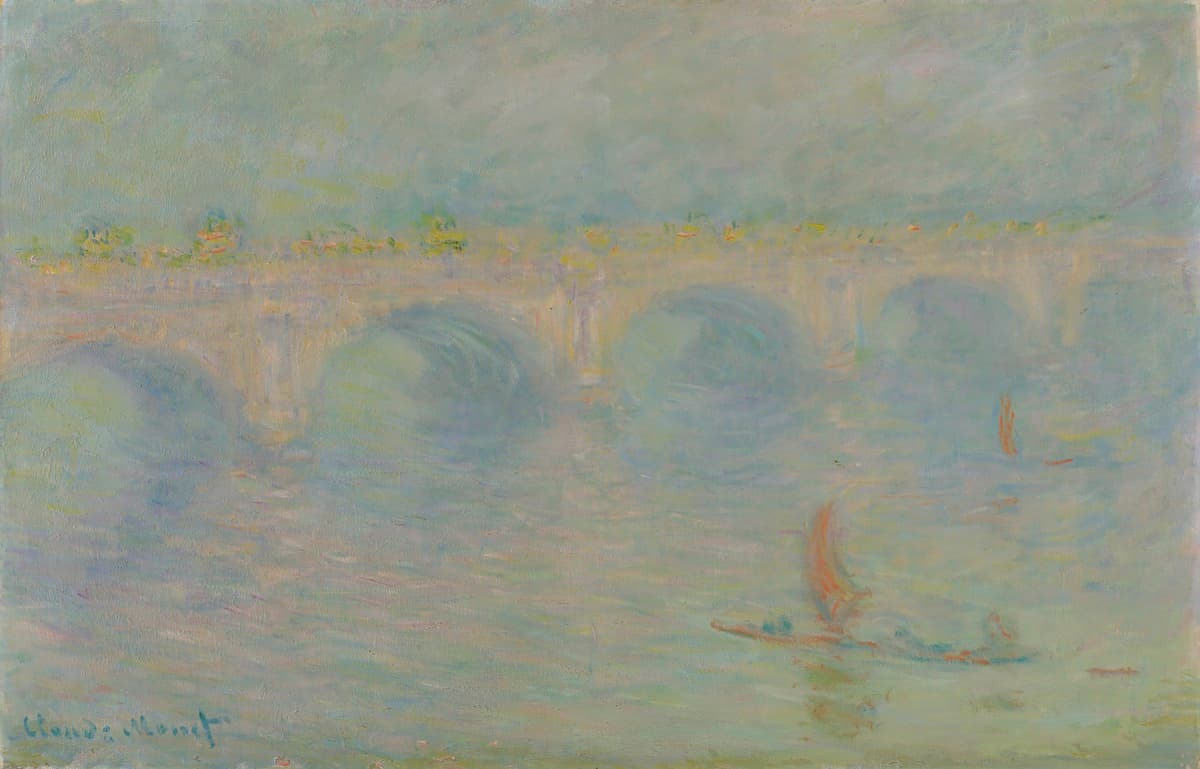
Waterloo Bridge, London, Sun Effect
Claude Monet · 1899–1901
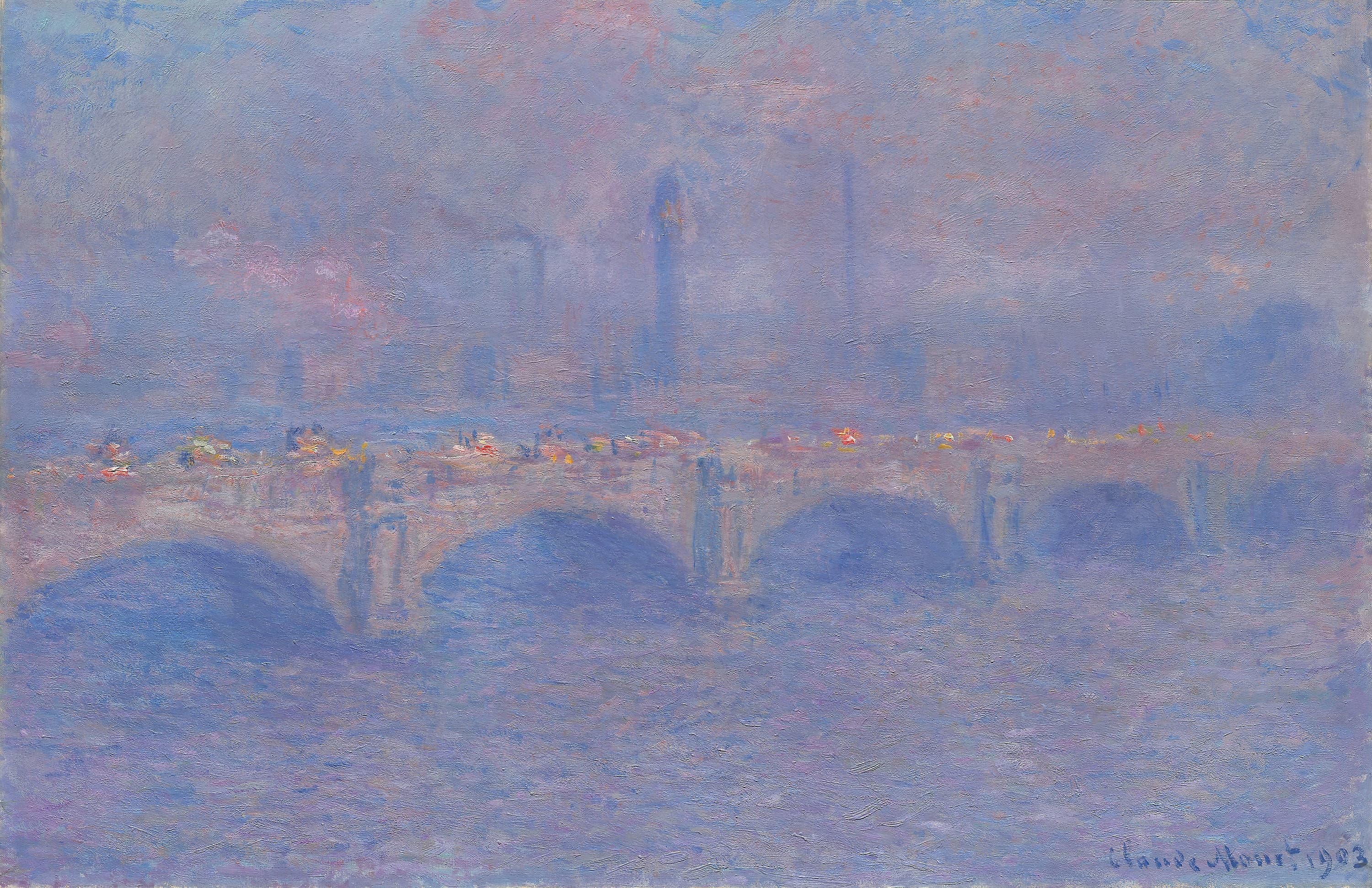
Waterloo Bridge, Sunlight Effect
Claude Monet · 1903
Waterloo Bridge, effet de brume
Claude Monet · 1904
The Church of San Giorgio Maggiore, Venice
Claude Monet · 1908
Le Palais Dario
Claude Monet · 1908
Waterloo Bridge (Kerry Stokes Collection)
Claude Monet · 1899–1901