Image: National Gallery of Art, Washington, Chester Dale Collection · CC0 · via Wikimedia Commons
Waterloo Bridge, Gray Day
Claude Monet, 1903
Waterloo Bridge, Gray Day is a 1903 Claude Monet painting of the bridge on a dull day, steam billowing over the Thames and chimneys rising through brown-grey haze. It is in the National Gallery of Art, Washington (Chester Dale Collection).
- Artist
- Claude Monet
- Date
- 1903
- Medium
- Oil on canvas
- Dimensions
- 65.1 × 100 cm
- Collection
- National Gallery of Art, Washington, D.C., United States
- Movement
- Impressionism
- Catalogue
- Wildenstein 1569
- The City
- Water & Sea
Waterloo Bridge, Gray Day is one of Claude Monet's views of the Thames from the Savoy Hotel, signed and dated 1903 at lower left. It measures 65.1 × 100 cm and is number 1569 in the Wildenstein catalogue raisonné. It came to the National Gallery of Art in Washington in 1963 with the Chester Dale Collection (1963.10.183), the great bequest of Impressionist and modern French painting from the New York collector Chester Dale.
What you're looking at
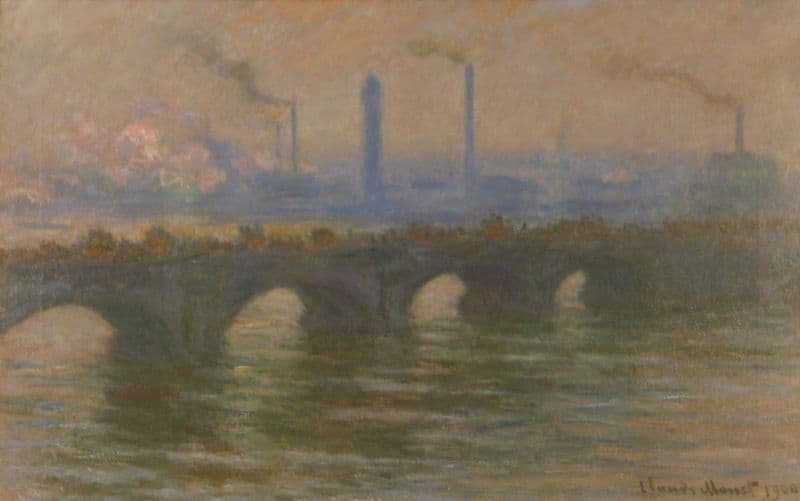
The bridge crosses the canvas firmly, in a band of dark slate and grey-green. Its arches are clear, each opening onto the lighter water beyond, and along the deck a row of rust and ochre touches marks the traffic. At the right end, white and pink clouds of steam billow up over the parapet and down toward the water, as if a steamer had just passed under.
Beyond the bridge, the south bank is a hazy line of buildings, with the tall chimneys and the shot tower rising into a sky of muted rose-beige and grey. Puffs of pink-white smoke at the left echo the steam at the right.
The river below is greenish-grey, painted in short horizontal strokes, with a dark tug and barges at the left and center. The whole scene is muted and warm-grey, with no direct sunlight but a sense of daylight filtered through smoke.
This version is distinct for its density of incident: boats, steam, smoke and traffic. It is one of the busiest and most documentary of the series, a portrait of the working Thames.
Where and when it was painted
Monet painted Waterloo Bridge from his room at the Savoy each morning during his London stays of 1899–1901. Gray days were common, and he painted many canvases on them, valuing the way smoke and soft light flattened the city into tone. He dated this one 1903, after reworking it at Giverny for the 1904 exhibition at Durand-Ruel.
How it was painted
The bridge and chimneys are laid in with relatively firm strokes; the steam and smoke are softer, swirling touches of white tinted with pink. The river is a mosaic of short dashes in grey-green and ochre. The restrained palette and visible structure show Monet's attention to tone rather than color contrast.
How this version differs
In the Waterloo Bridge series, the closest companions are the Ordrupgaard Waterloo Bridge, Gray Day, similar but brighter in its traffic, and the Art Institute of Chicago's cooler Waterloo Bridge, Gray Weather of 1900. The National Gallery of Art also owns Waterloo Bridge, London, at Dusk and Waterloo Bridge, London, at Sunset, so three times of day can be compared in one museum.
A detail to look for
Near the left edge, a low, dark tug sits on the water, with a smaller dark shape beside it, and in the center a long, low barge lies across the river. These working boats are painted in deep blue-black, the darkest color in the picture, and they give the gray day its weight. Above, a bright plume of steam at the right end of the bridge suggests another vessel passing beneath. The Thames was then one of the busiest working rivers in the world, crowded with tugs, lighters and barges serving the docks and riverside factories, and this canvas records that traffic with unusual clarity.
Where to see it
The National Gallery of Art in Washington, free to visit, has one of the largest Monet collections in the United States, much of it from the Chester Dale and Mellon gifts. For Claude Monet's London campaign, see Monet in London; for other museums, where to see Monet's paintings.
Chester Dale, a New York financier, built one of the great American collections of French painting between the 1920s and 1950s. He bequeathed it to the National Gallery of Art on his death in 1962, with the condition that it not be lent; the gallery received it in 1963, and this canvas has been part of it since.
Questions & answers
Where is Waterloo Bridge, Gray Day?
It is in the National Gallery of Art in Washington, D.C. (1963.10.183), part of the Chester Dale Collection that came to the museum in 1963. Admission to the National Gallery is free.
When was it painted?
It is signed and dated 1903. Monet painted the view from the Savoy Hotel during his London stays of 1899–1901 and finished it at Giverny before exhibiting the Thames series in Paris in 1904.
What does the painting show?
Waterloo Bridge on a dull day, with steam billowing over its right end, chimneys and the shot tower of the south bank in hazy grey-pink light, and tugs and barges on the Thames.
Does the National Gallery of Art have other Waterloo Bridge paintings?
Yes. It also owns Waterloo Bridge, London, at Dusk and Waterloo Bridge, London, at Sunset, both of 1904, so visitors can compare different times of day.
More by the artist
Claude Monet
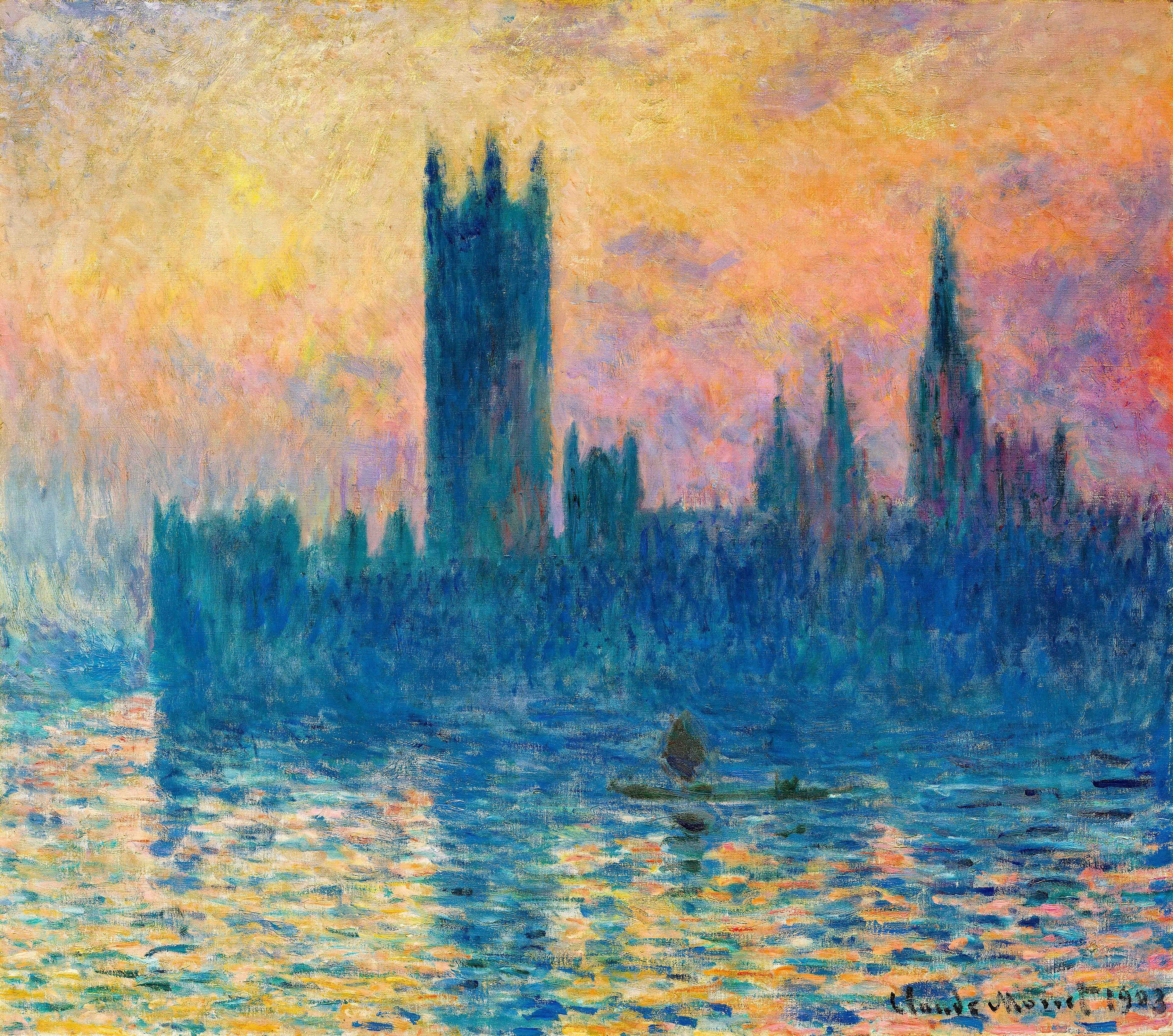
The Houses of Parliament, Sunset
Claude Monet · 1903
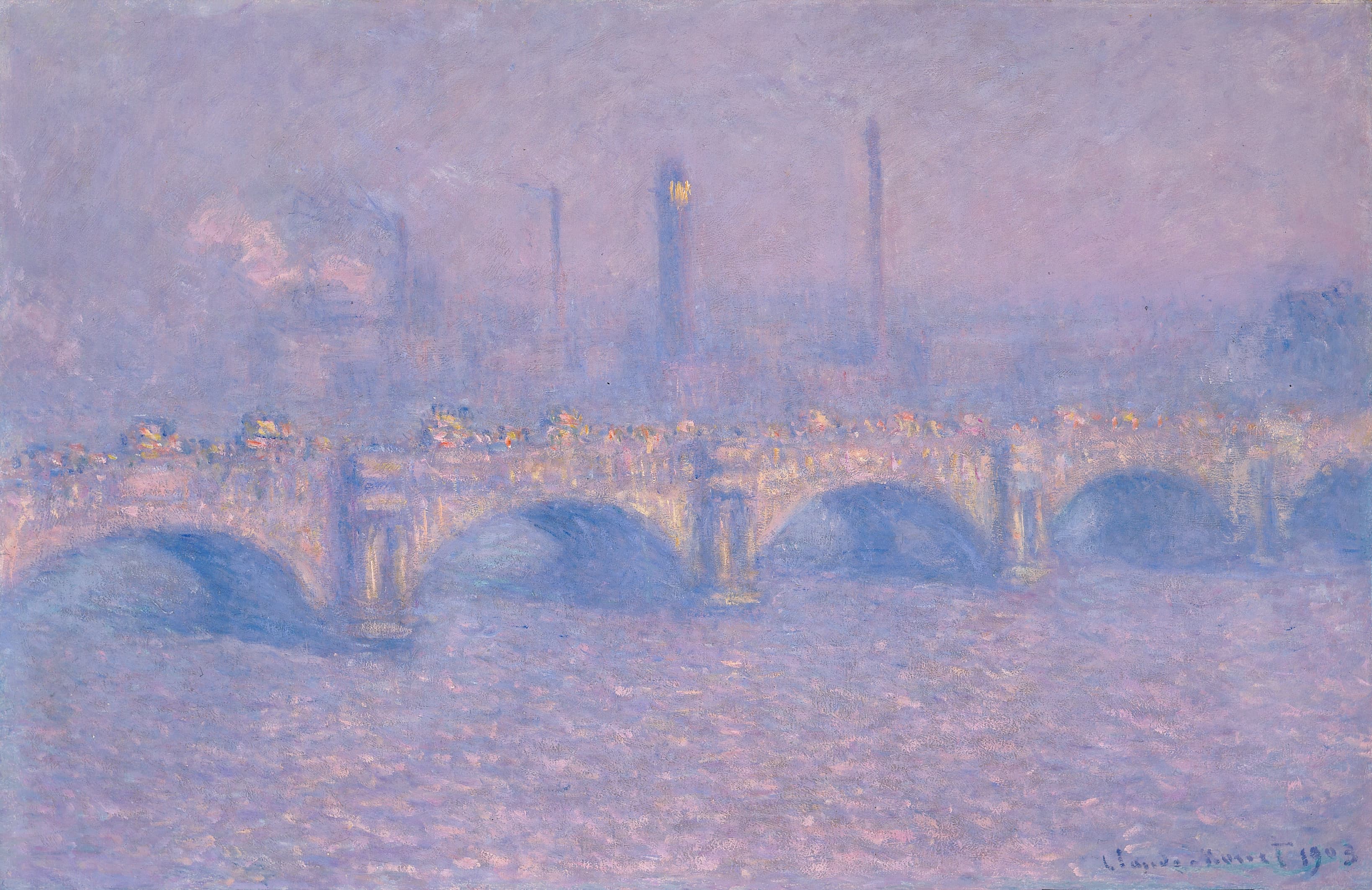
Waterloo Bridge, Veiled Sun
Claude Monet · 1903
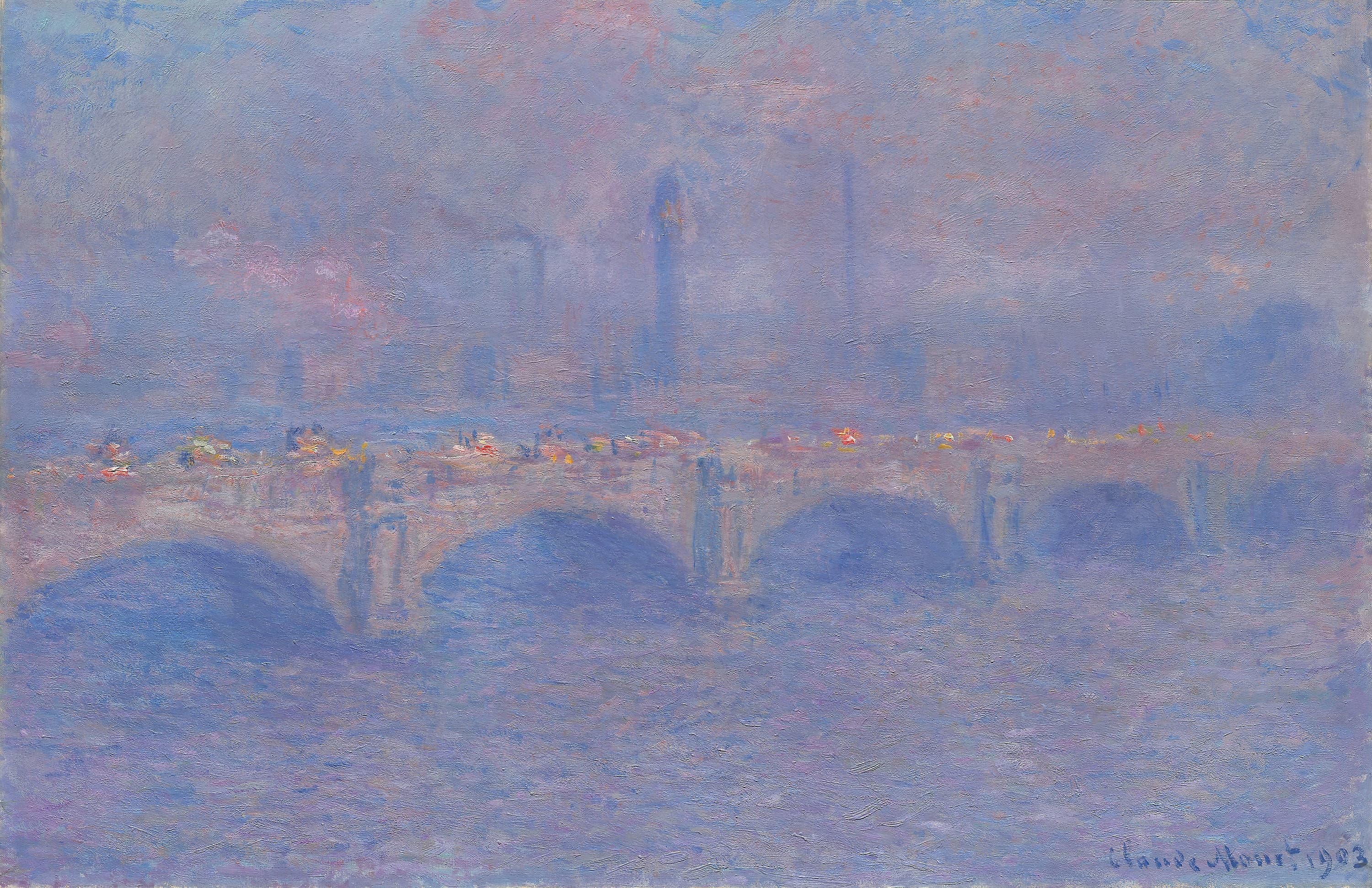
Waterloo Bridge, Sunlight Effect
Claude Monet · 1903
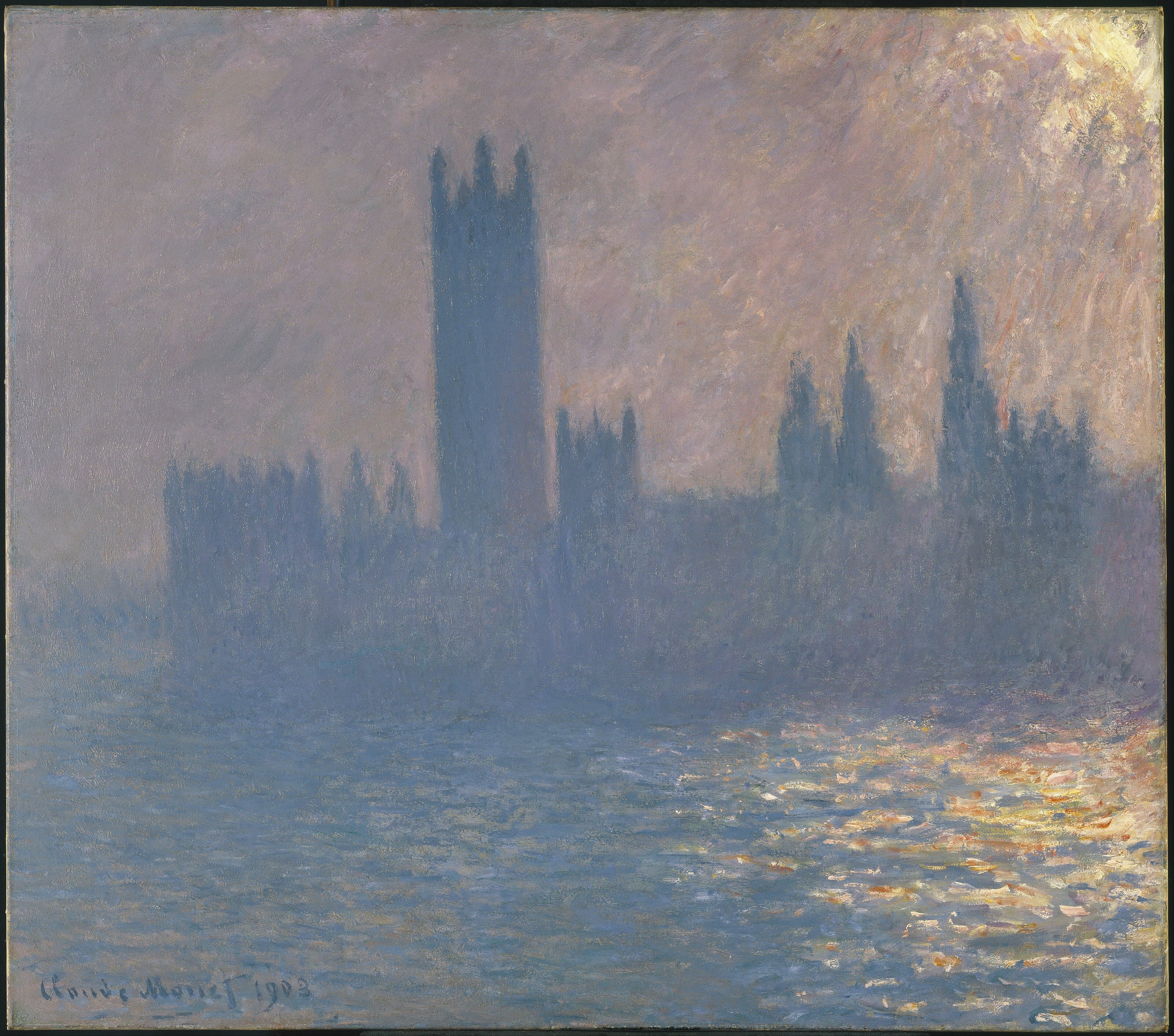
Houses of Parliament, Sunlight Effect
Claude Monet · 1903
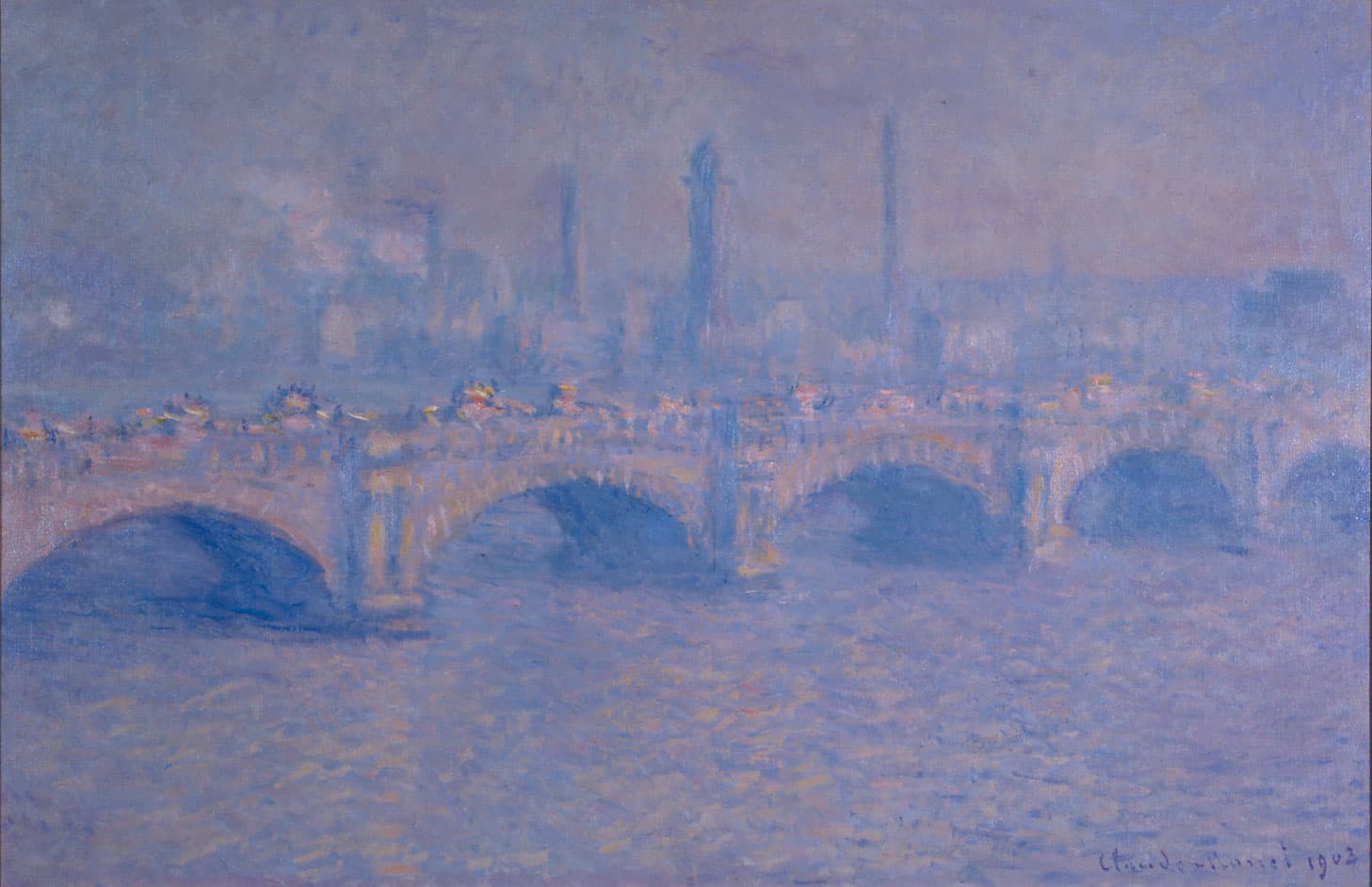
Waterloo Bridge, Sunlight Effect
Claude Monet · 1903
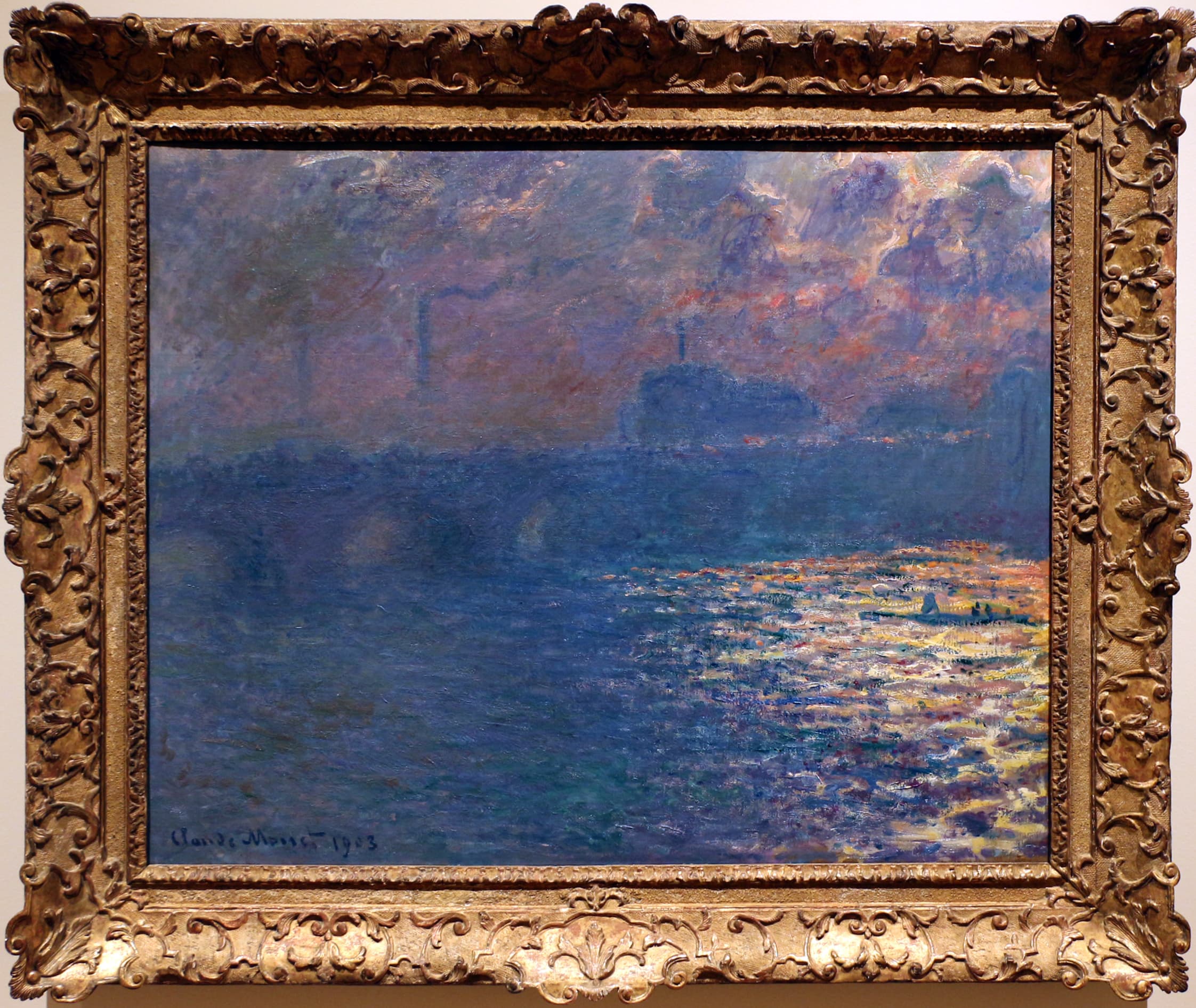
Waterloo Bridge, Sunlight Effect
Claude Monet · c. 1900 (dated 1903)
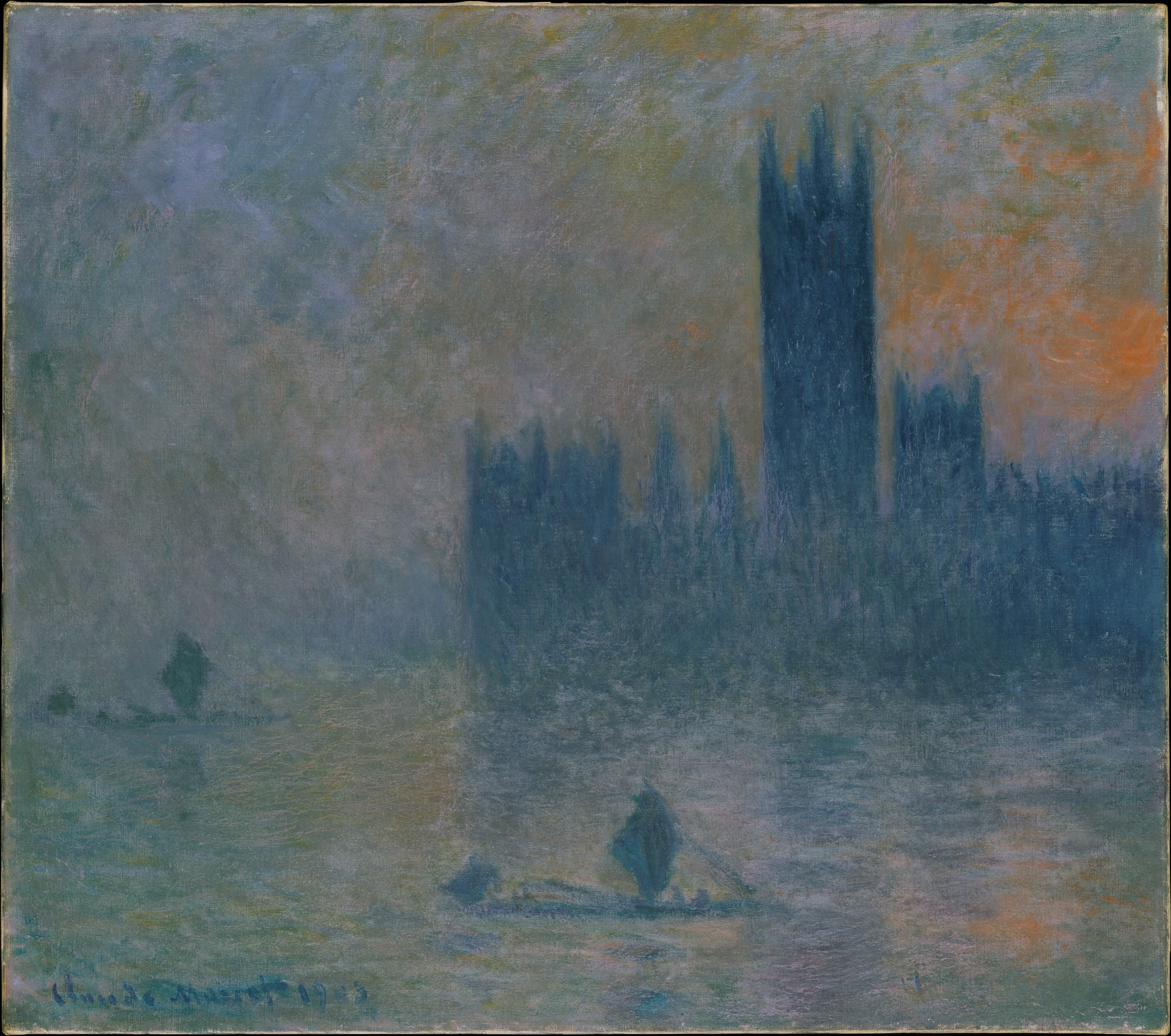
The Houses of Parliament (Effect of Fog)
Claude Monet · 1903–04
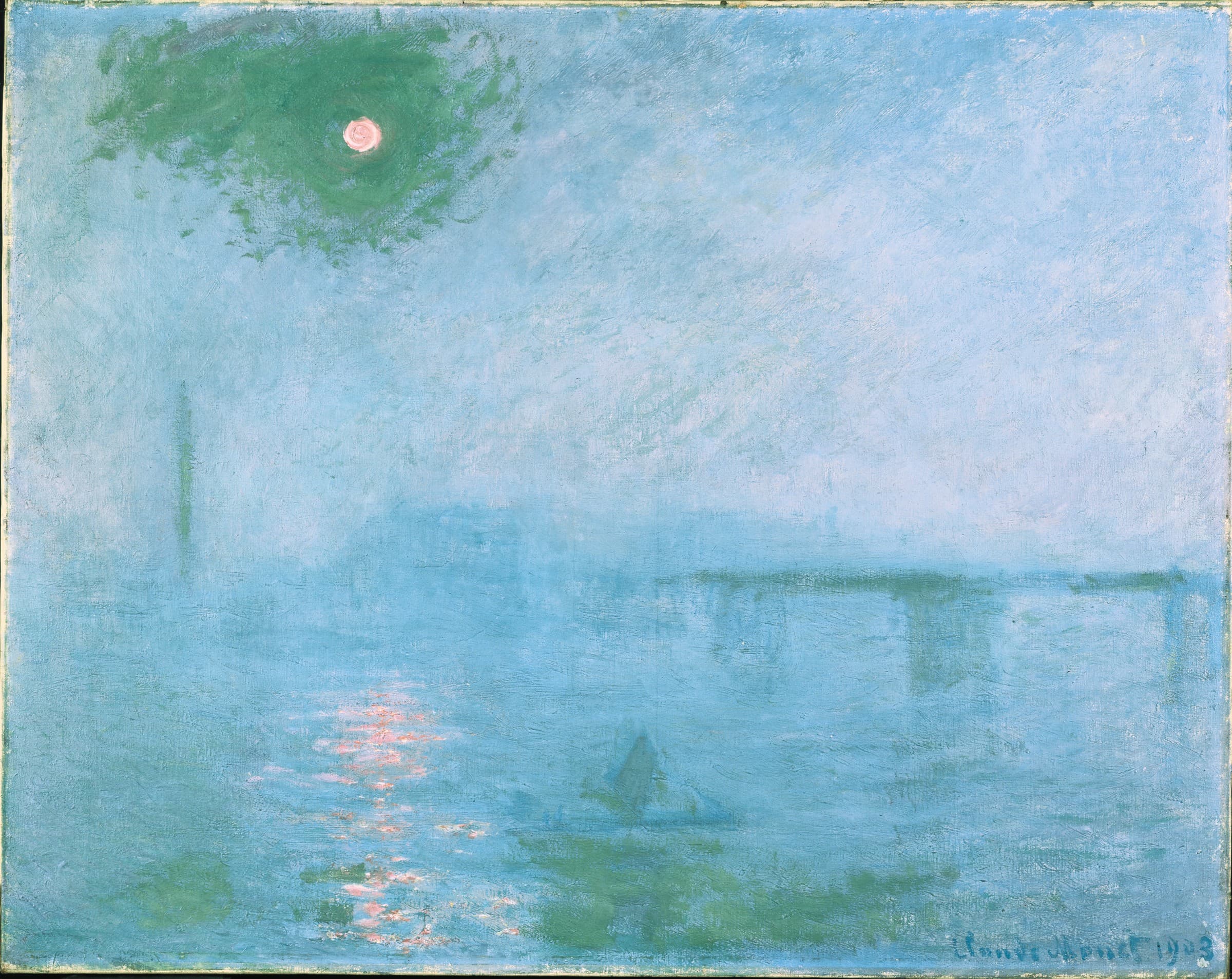
Charing Cross Bridge: Fog on the Thames
Claude Monet · 1903
Also painted in 1903
The same year
Waterlilies (1903, Dayton Art Institute)
Claude Monet · 1903
Waterloo Bridge, Hazy Sun
Claude Monet · 1903
The Houses of Parliament, Seagulls
Claude Monet · 1903
Houses of Parliament, Sunset
Claude Monet · 1903
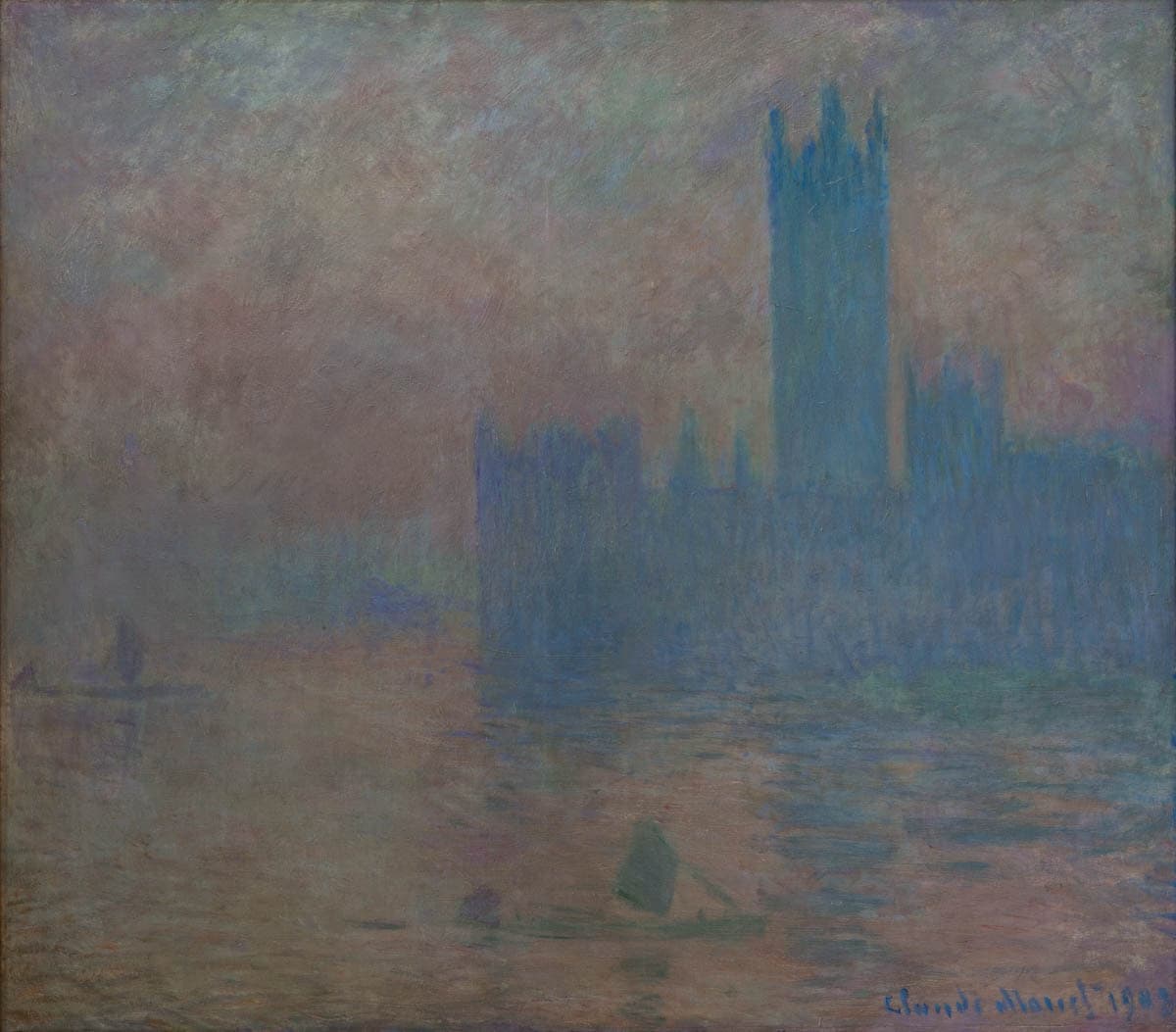
Le Parlement de Londres, effet de brouillard
Claude Monet · 1903
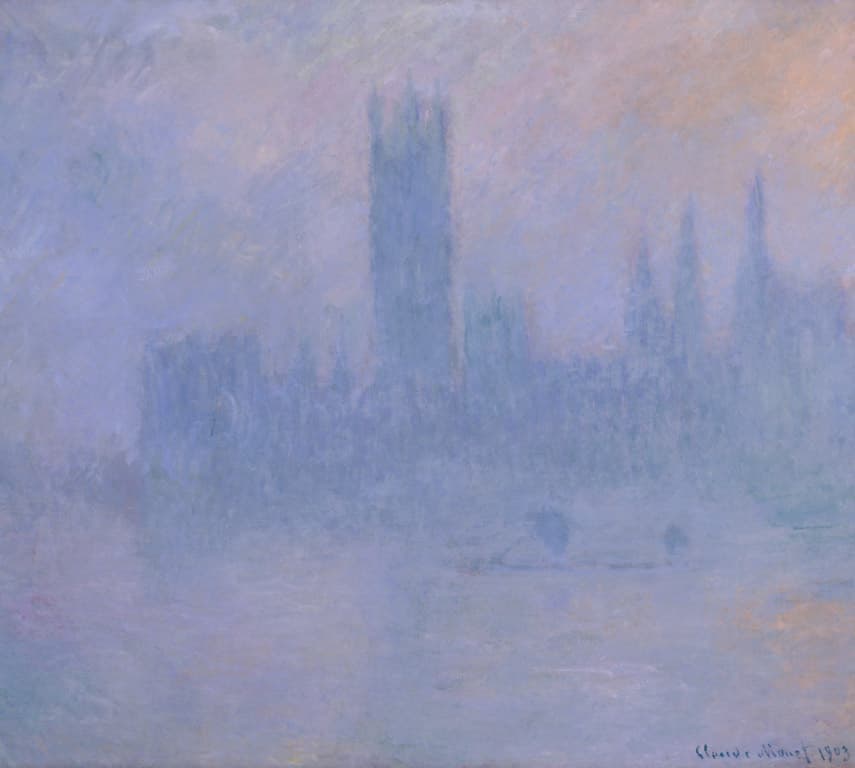
Houses of Parliament, Symphony in Blue
Claude Monet · 1903
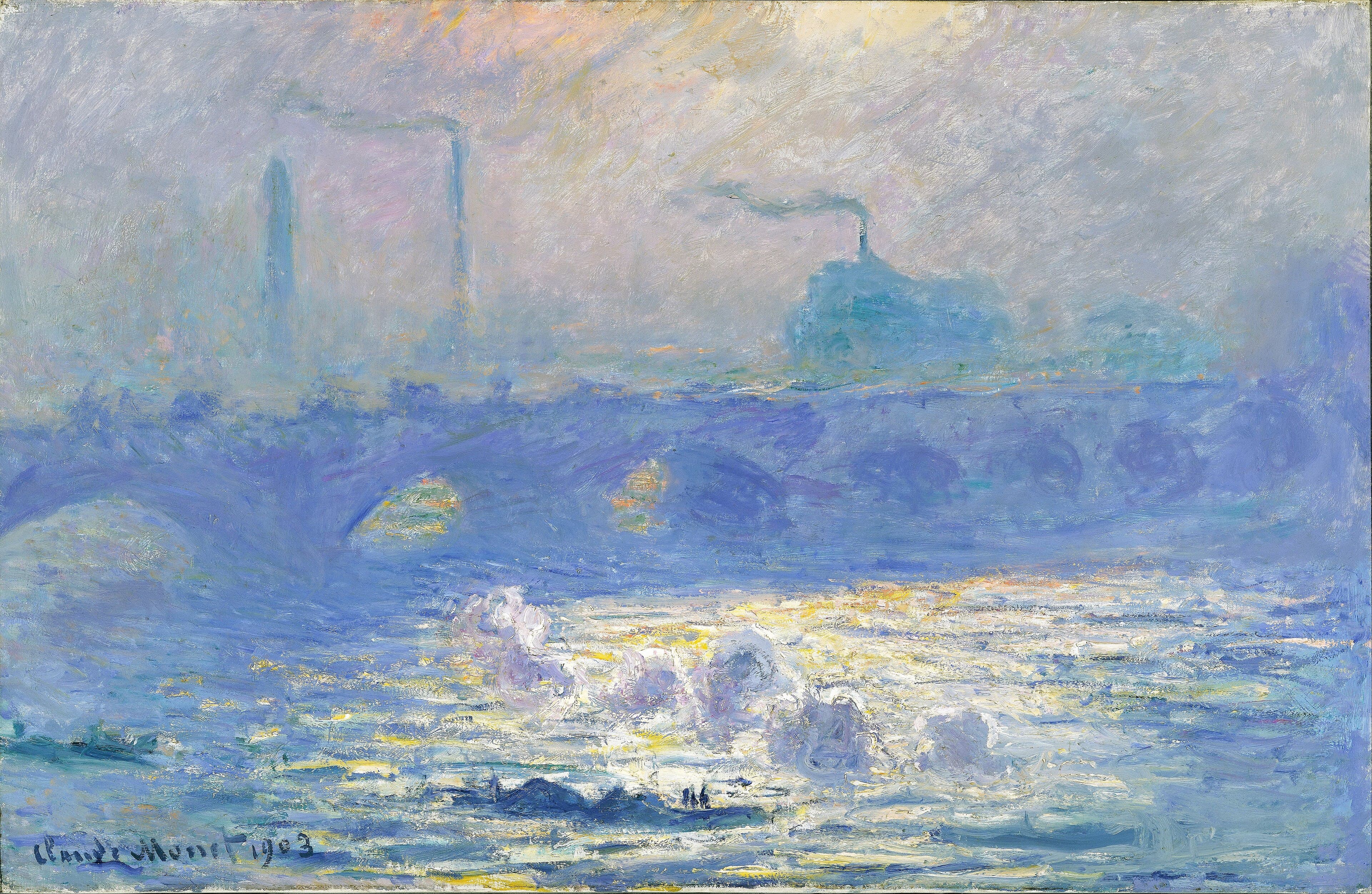
Waterloo Bridge, Sunlight Effect (Denver Art Museum)
Claude Monet · 1903
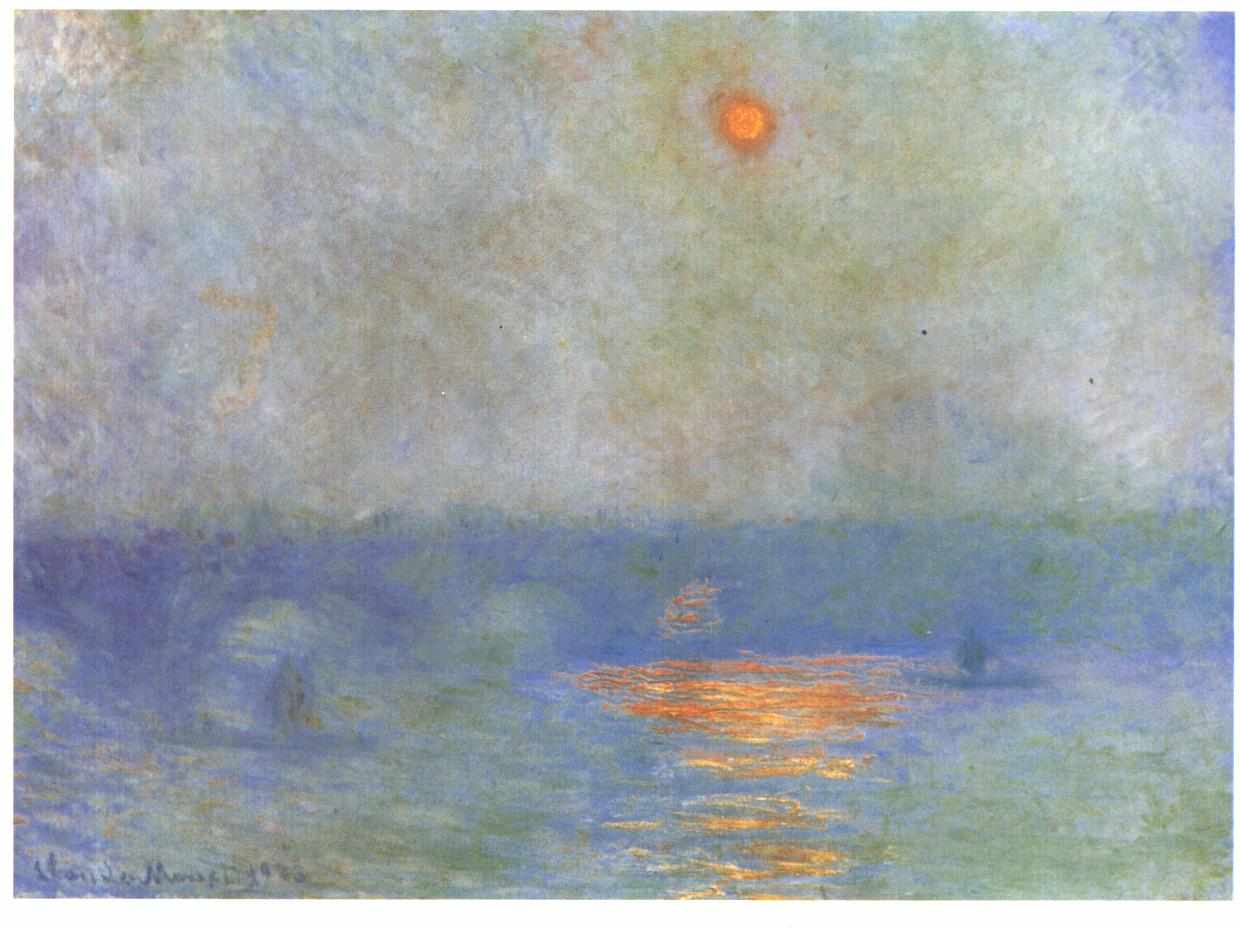
Waterloo Bridge: the Sun in a Fog
Claude Monet · 1903
Kindred works
You may also study
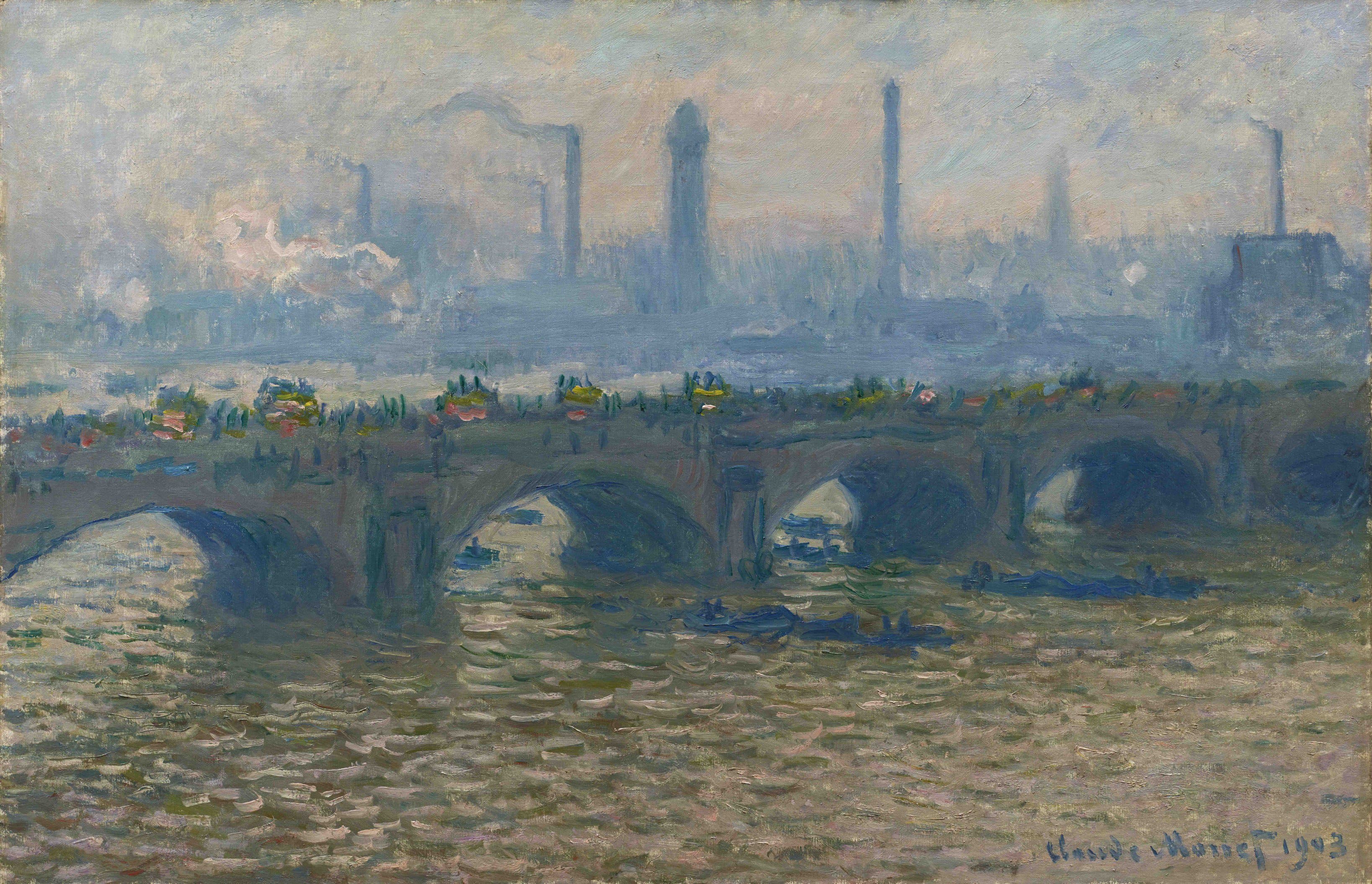
Waterloo Bridge, Gray Day (Ordrupgaard)
Claude Monet · 1903
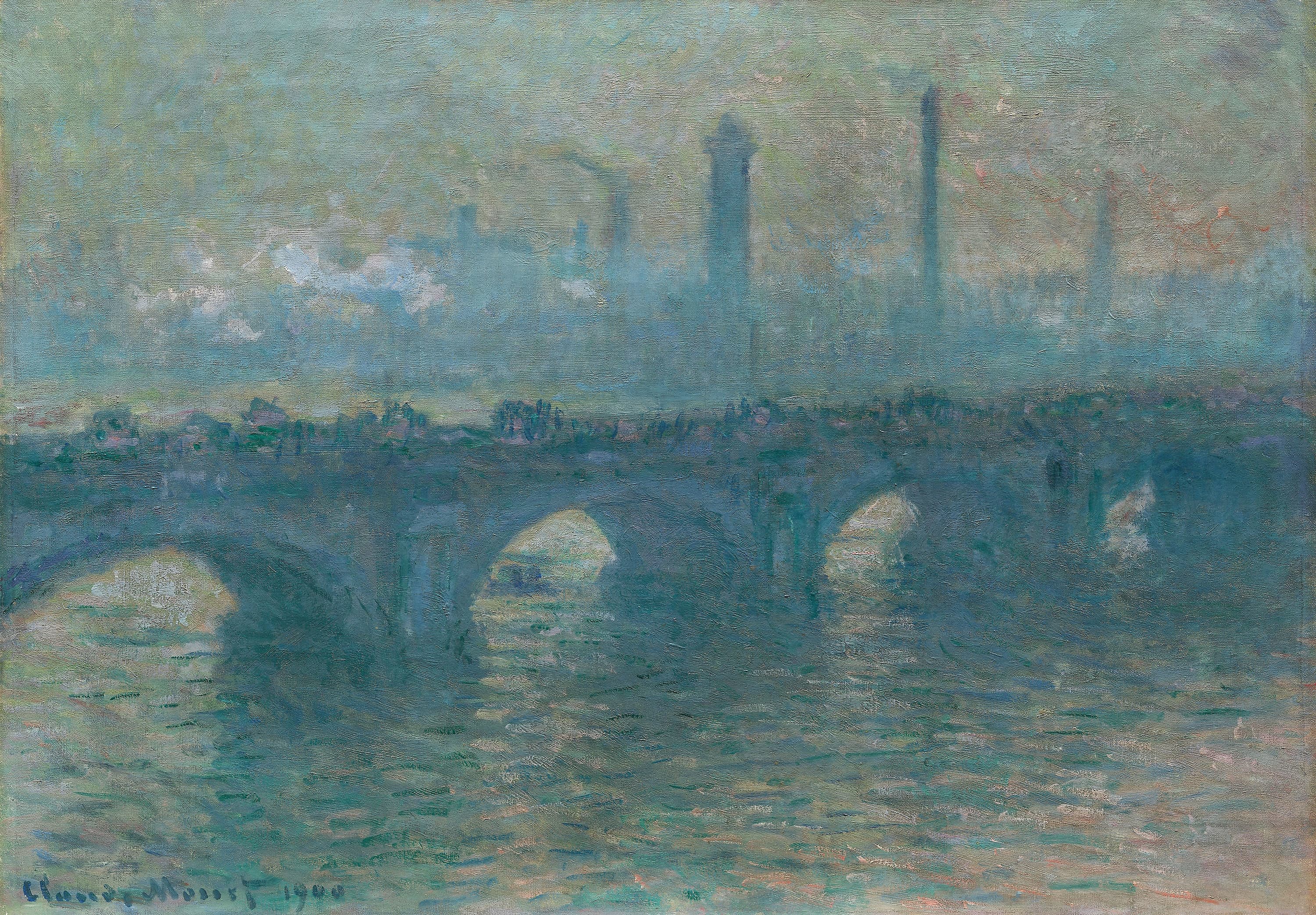
Waterloo Bridge, Gray Weather
Claude Monet · 1900
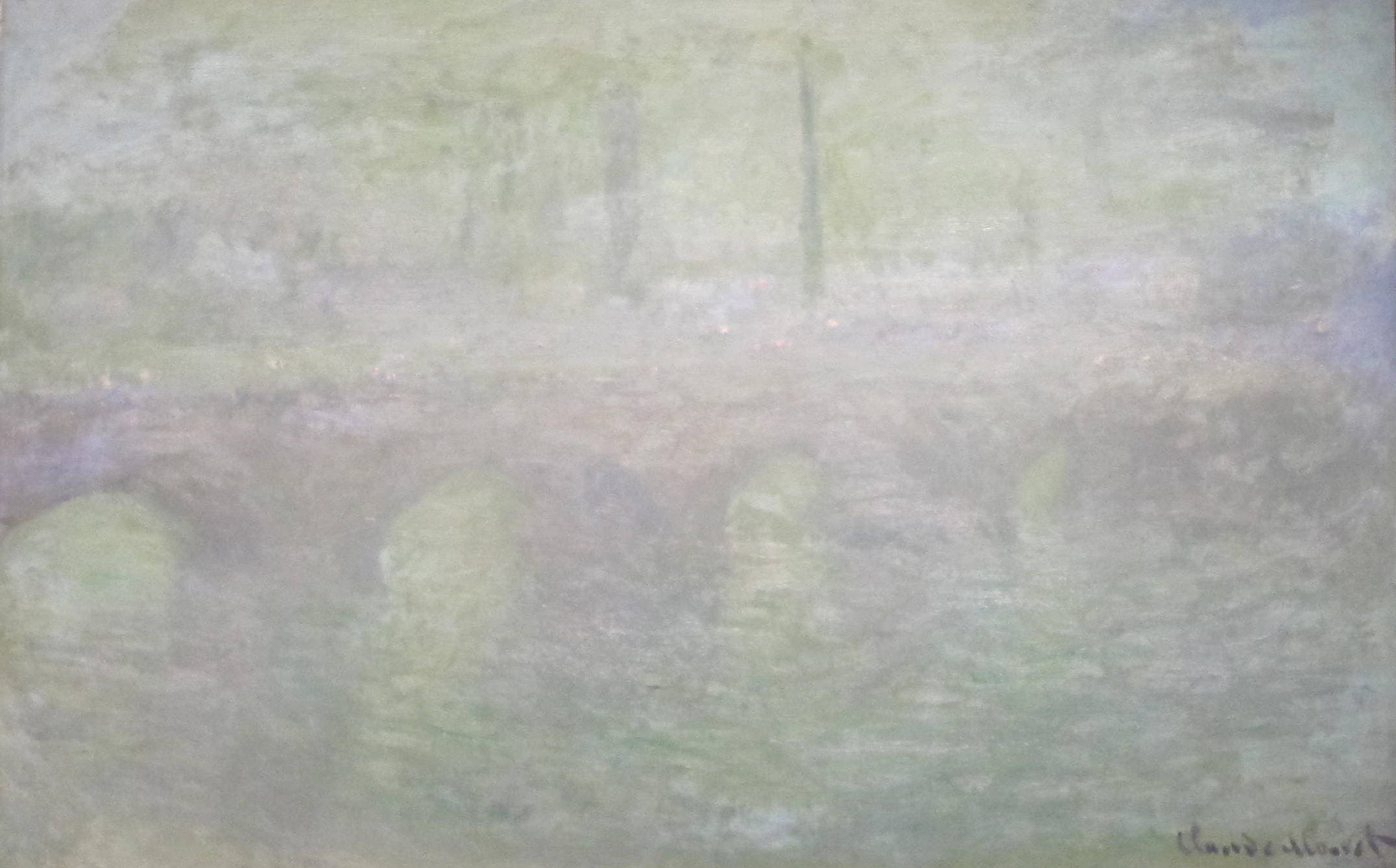
Waterloo Bridge, London, at Dusk
Claude Monet · 1904
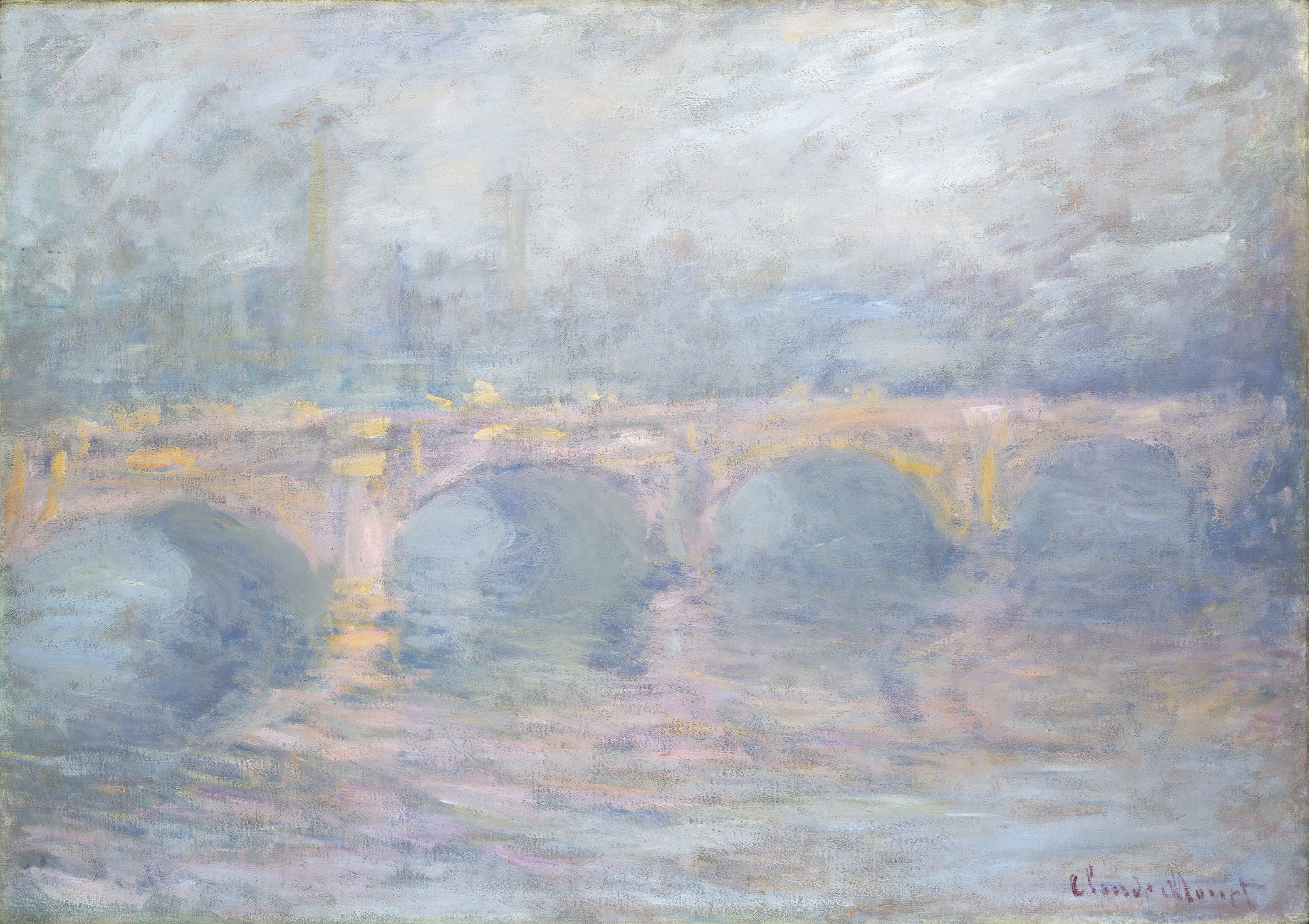
Waterloo Bridge, London, at Sunset
Claude Monet · 1904
Waterloo Bridge, Overcast Weather
Claude Monet · 1900
Palazzo Da Mula Morosini
Claude Monet · 1908
The Doge's Palace Seen from San Giorgio Maggiore (Zürich)
Claude Monet · 1908
Houses of Parliament, Effect of Fog
Claude Monet · 1904