Impressionism
The Palazzo Ducale Seen from San Giorgio Maggiore
Claude Monet, 1908
The Palazzo Ducale Seen from San Giorgio Maggiore is a 1908 Venice painting by Claude Monet, looking across the lagoon from the island of San Giorgio to the pink Doge's Palace. The Met's version (65.4 × 92.7 cm) is one of six he painted of this view.
- Artist
- Claude Monet
- Date
- 1908
- Medium
- Oil on canvas
- Dimensions
- 65.4 × 92.7 cm
- Collection
- The Metropolitan Museum of Art, New York, United States
- Movement
- Impressionism
- Catalogue
- Wildenstein 1755
Painted at Monet in VeniceMore at Monet at the Met
What you are looking at
Across a wide stretch of rippling blue water, the Doge's Palace glows in the afternoon light. Its long façade, with the open arcades below and the pink-and-white patterned wall above, is reduced to a soft block of rose and cream, flecked with darker touches for the windows. To its left, the slender campanile of St. Mark's rises out of a haze of pink and gold; to the right, the buildings of the Riva degli Schiavoni run away in a low line of pale facades toward the edge of the canvas. Above it all, the sky is a veil of pale turquoise, lilac and yellow, painted in small, broken strokes that merge with the vapor rising from the lagoon.
The water fills almost half the picture. It is built from thousands of short horizontal dabs of blue, violet, green and pink, so that it shimmers and seems to move. Across the bottom of the canvas runs a dark, flat band of deep blue-violet: the edge of the stone quay of San Giorgio Maggiore, where Monet set up his easel. This dark wedge in the foreground pushes the palace back and makes the light across the water look even brighter. Monet signed and dated the canvas at lower right.
Monet is not describing Venice's famous Gothic architecture in detail. He is painting the light that wraps it: what he called the enveloppe, the atmosphere between him and his subject, which in Venice is thick with moisture and reflected color.
How Monet painted it
Monet came to Venice for the first time in October 1908, at the age of sixty-eight, with his wife Alice. They stayed first at the Palazzo Barbaro on the Grand Canal as guests of an American friend of John Singer Sargent, and then at the Hotel Britannia. He had resisted the trip for years, believing Venice too beautiful and too often painted to be painted again, but once there he worked intensely until early December.
Each day he followed a strict schedule, moving between motifs as the light changed. According to Alice's letters, he set up on the island of San Giorgio Maggiore in the morning to paint the view across the Bacino di San Marco to the Doge's Palace. Of this particular view, six versions are known, catalogued by Daniel Wildenstein as W1751–1756. Besides the Met's canvas, versions are in the Solomon R. Guggenheim Museum in New York, the Kunsthaus Zürich, the Brooklyn Museum and private collections. Monet took the canvases home unfinished and worked on them at Giverny for several years.
The six versions are close in composition but were painted under different weather and at different moments, so the colors of the palace, the sky and the lagoon shift from one canvas to the next, cooler in some and warmer in others. Seen together, they work like the Rouen Cathedral façades of the 1890s: one fixed building used as a screen on which to record changing light. That serial logic is why the Venice pictures should be judged as a group as much as individually.
San Giorgio Maggiore at Dusk: a related view
From the opposite direction, looking from the Doge's Palace side toward the island, Monet painted the church of San Giorgio Maggiore itself, most famously in San Giorgio Maggiore at Dusk (1908–12), now in the National Museum Cardiff. That painting, catalogued here as Sunset in Venice, shows the church's dark silhouette against a blazing orange and blue sky. The Met's picture is its counterpart: the view Monet saw when he turned around on San Giorgio and looked back toward St. Mark's.
Meaning and context
The Venice paintings were Monet's last major campaign away from Giverny. After 1908 he rarely traveled, concentrating on his water garden and the vast Water Lilies. Alice fell ill soon after their return and died in May 1911, and the long work of finishing the Venice canvases at Giverny was overshadowed by grief. When twenty-nine Venice canvases were finally shown at the Bernheim-Jeune gallery in Paris in May–June 1912, they were acclaimed. The painter Paul Signac wrote to Monet that he considered them the highest expression of his art.
Critics have long read the series as a meeting between Monet's late, dissolving style and the city that had inspired Turner, Canaletto and Whistler. In Monet's Venice, stone becomes light and the city seems to float.
Where to see it
This version belongs to The Metropolitan Museum of Art, New York, the gift of Mr. and Mrs. Charles S. McVeigh in 1959; it is not always on view. For other Venice paintings in our catalogue, see The Grand Canal in Venice, Palazzo Contarini and Gondola in Venice.
Questions & answers
Where is Monet's San Giorgio Maggiore at Dusk?
San Giorgio Maggiore at Dusk, the view of the church against a sunset sky, is in National Museum Cardiff in Wales. It is a different painting from this one, which looks the other way, from San Giorgio across the lagoon to the Doge's Palace.
Where is The Palazzo Ducale Seen from San Giorgio Maggiore?
Monet painted six versions. The one catalogued here is in The Metropolitan Museum of Art in New York (65.4 × 92.7 cm), given in 1959. Others are in the Guggenheim Museum, the Kunsthaus Zürich, the Brooklyn Museum and private collections.
When did Monet go to Venice?
Monet visited Venice only once, from October to December 1908, with his wife Alice. He painted about thirty-seven canvases there and finished them at Giverny; twenty-nine were exhibited in Paris in 1912.
Where did Monet stand to paint the Doge's Palace?
He set up his easel on the quay of the island of San Giorgio Maggiore, across the Bacino di San Marco. The dark band across the bottom of the painting is the edge of that quay.
More by the artist
Claude Monet

Bridge over a Pond of Water Lilies
Claude Monet · 1899

Woman with a Parasol – Madame Monet and Her Son
Claude Monet · 1875

Sunset in Venice
Claude Monet · 1908–12

La Grenouillère
Claude Monet · 1869

Beach in Pourville
Claude Monet · 1882

Springtime
Claude Monet · 1872

Boating on the River Epte
Claude Monet · 1890

The Seine at Asnières (Hermitage)
Claude Monet · 1873
Also painted in 1908
The same year
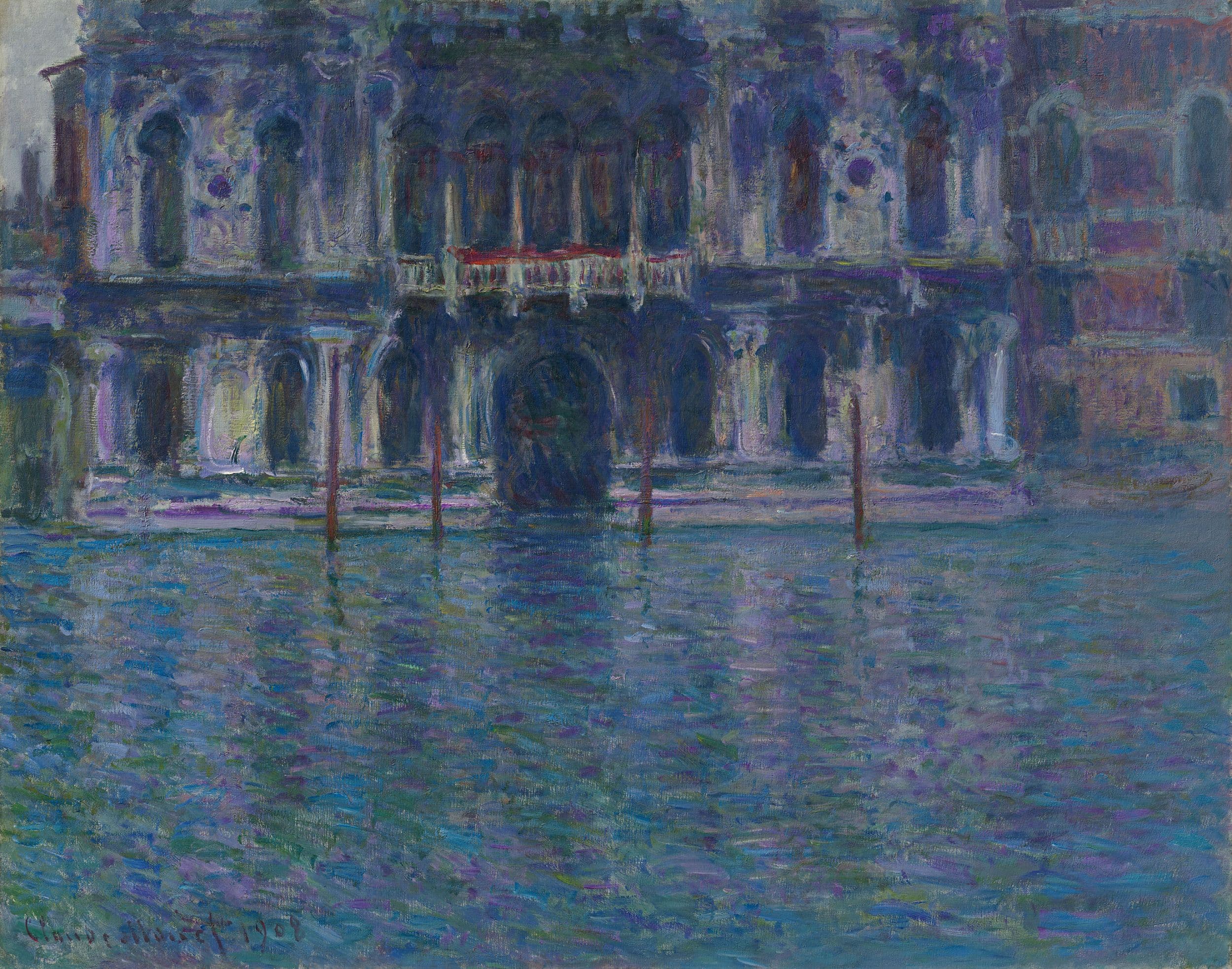
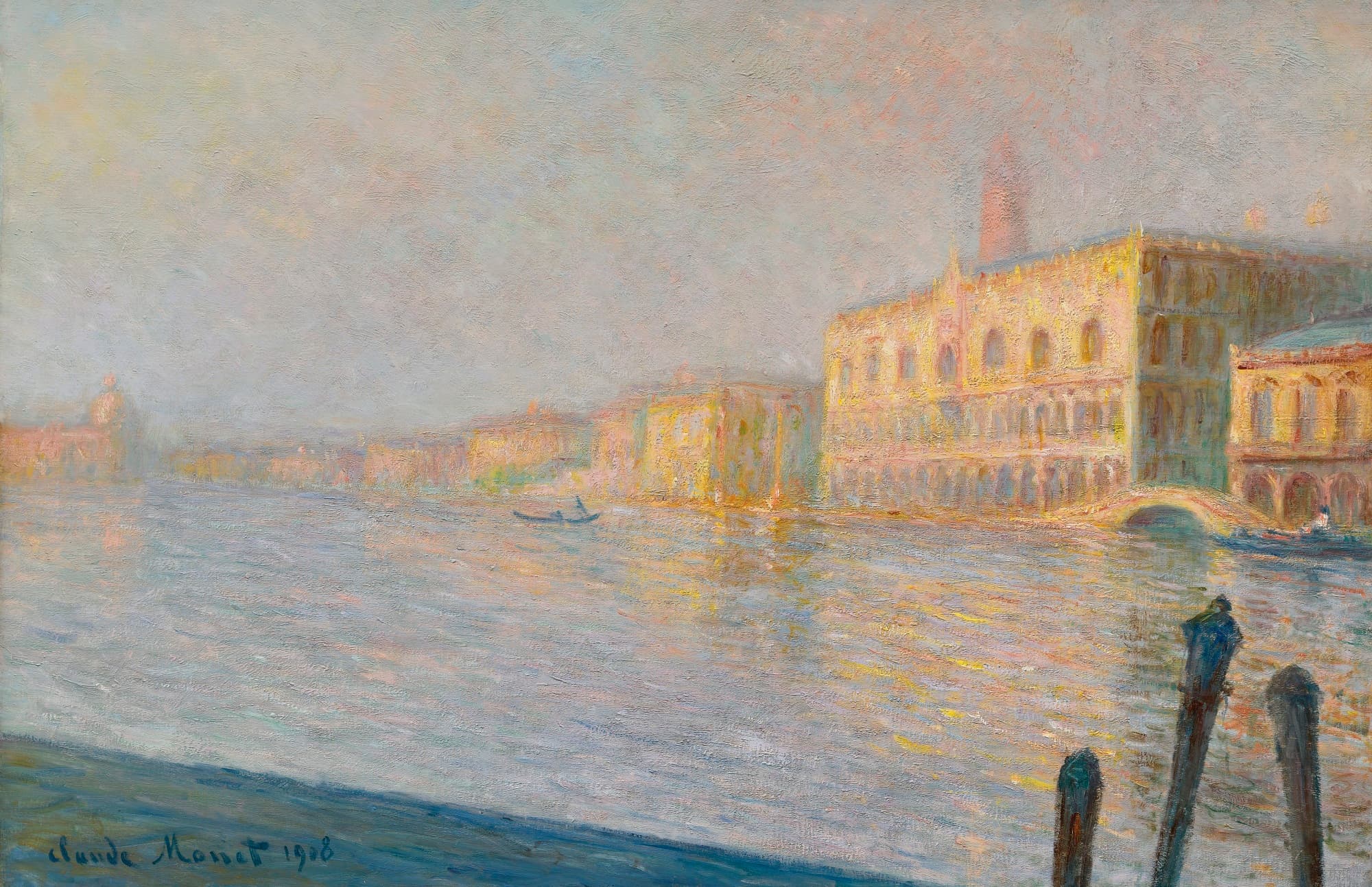
Kindred works
You may also study
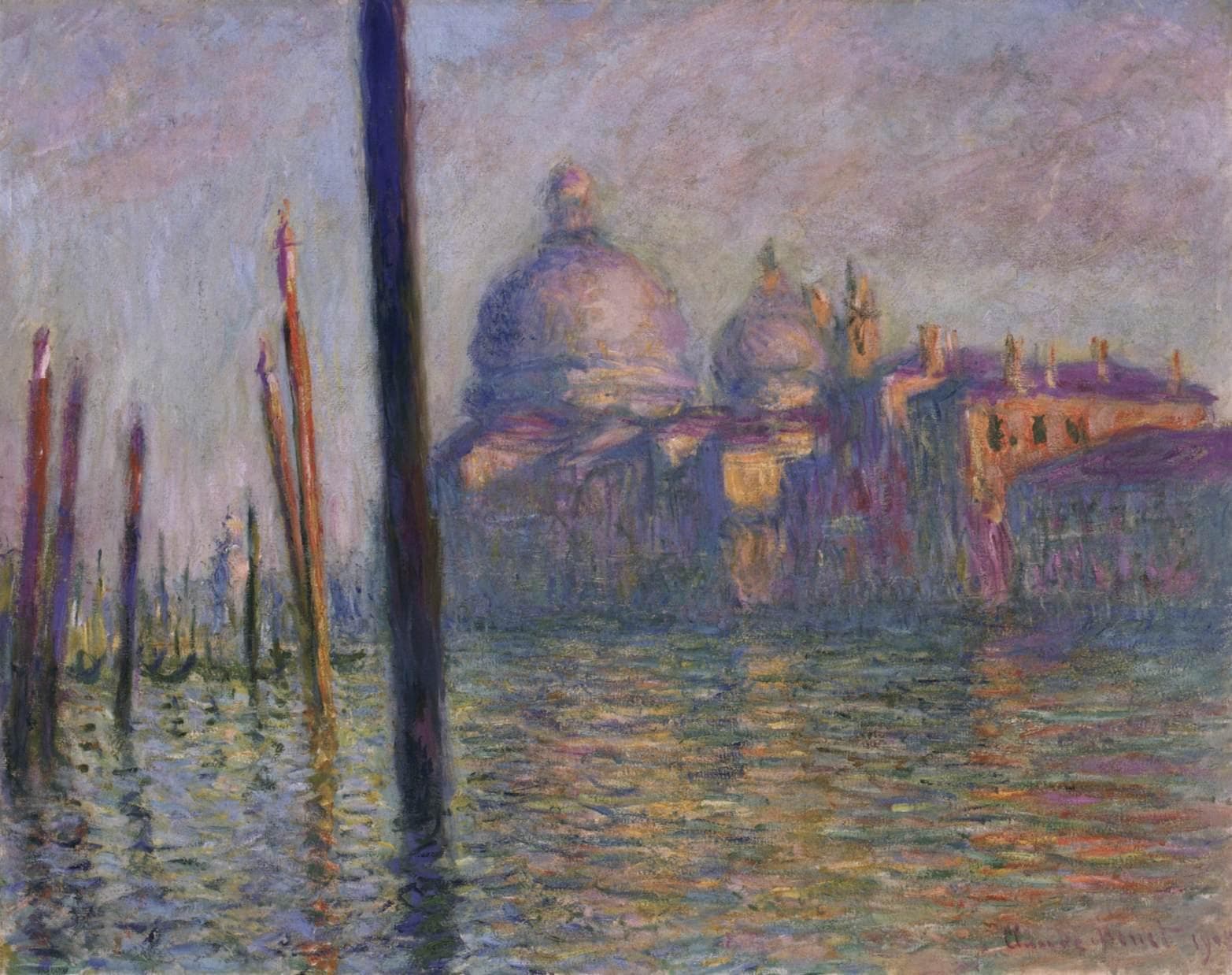
The Grand Canal in Venice
Claude Monet · 1908
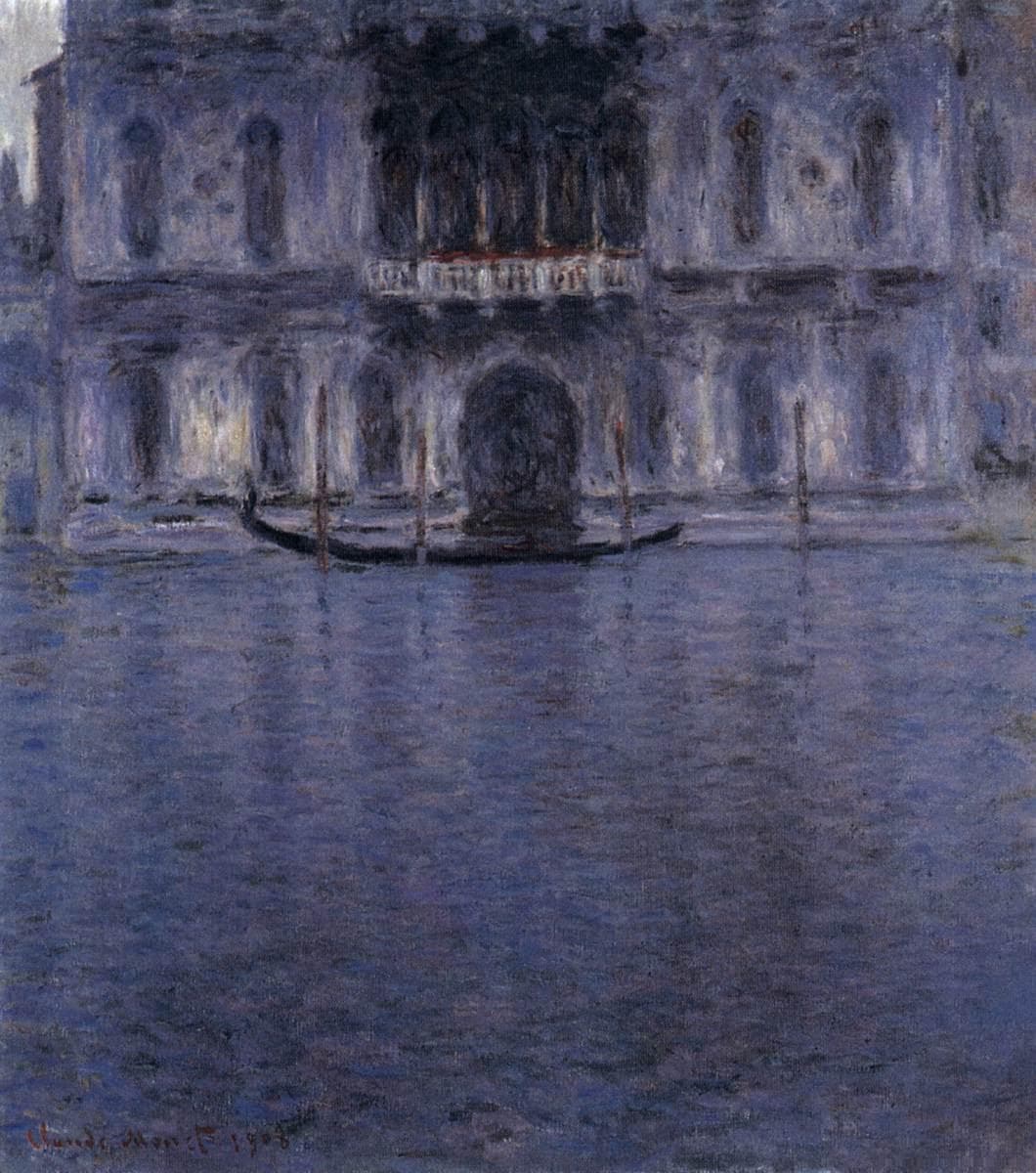
Palazzo Contarini
Claude Monet · 1908
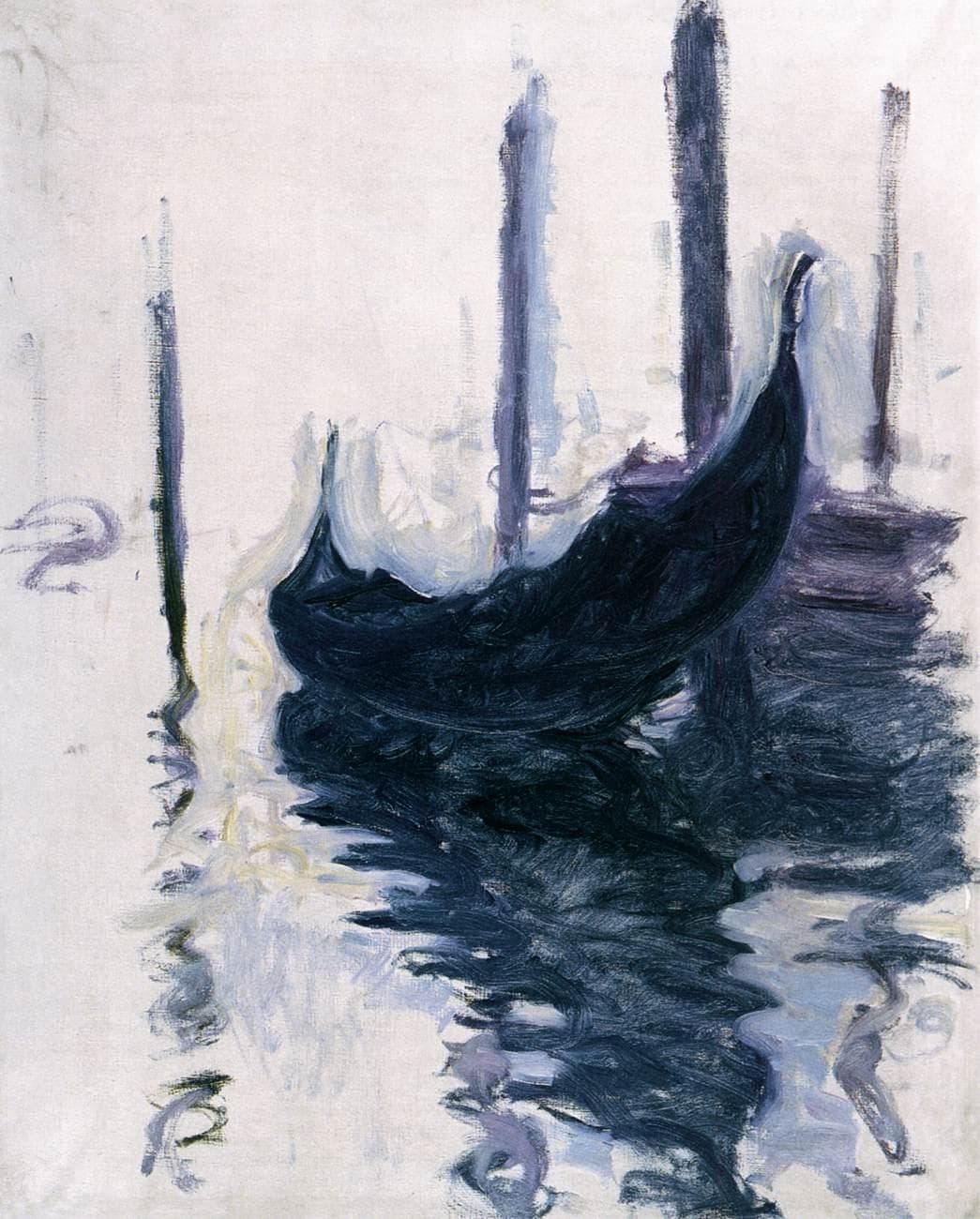
Gondola in Venice
Claude Monet · 1908
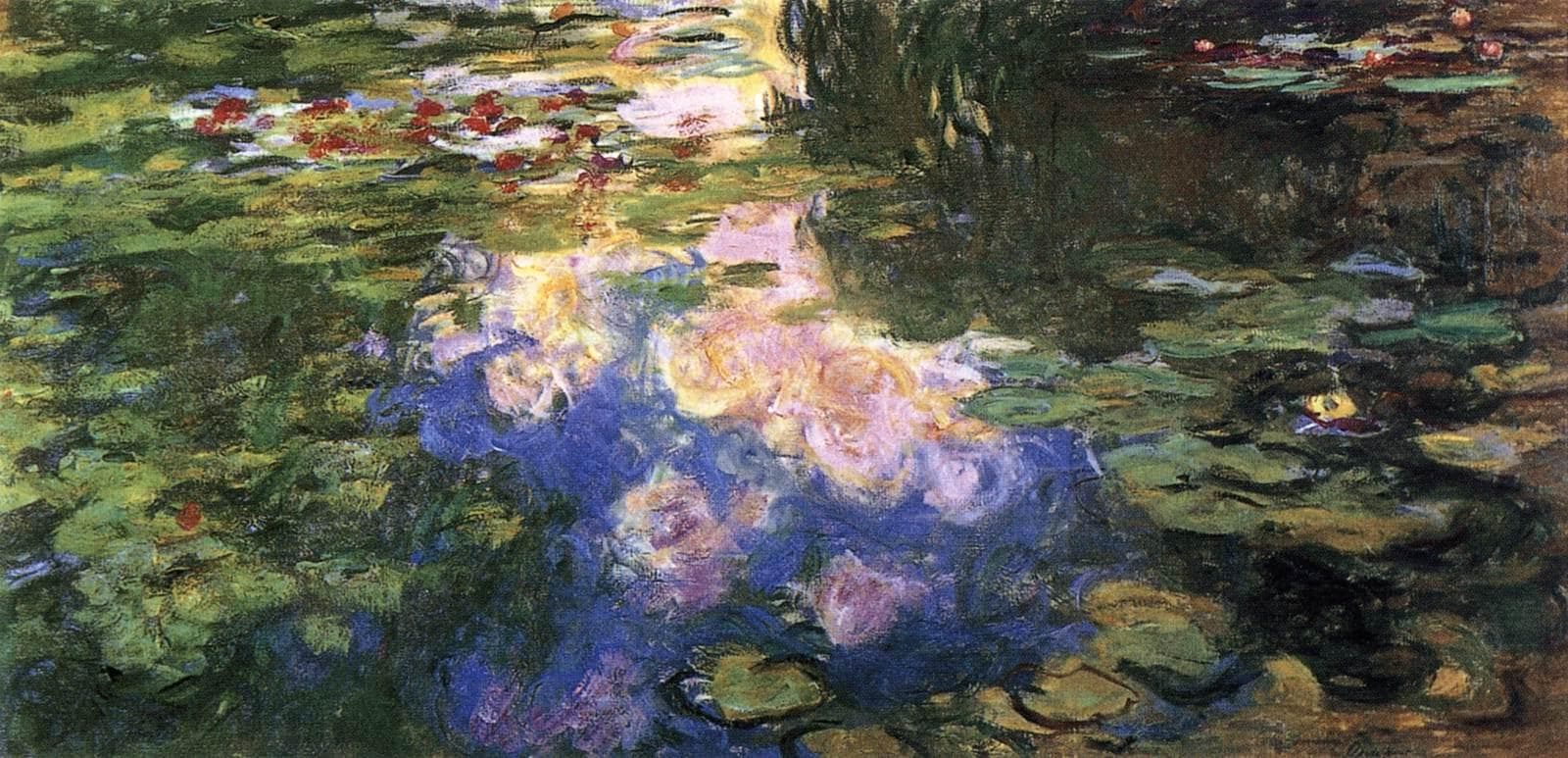
Water-Lily Pond (Le Bassin aux nymphéas), 1917–19
Claude Monet · 1917–19

Ophelia
John Everett Millais · 1851–52

The Great Wave off Kanagawa
Katsushika Hokusai · c. 1830–32
The Birth of Venus
Sandro Botticelli · c. 1484–1486
The School of Athens
Raphael · 1509–1511