Image: Fondation Jean et Suzanne Planque, Musée Granet, Aix-en-Provence; via Wikimedia Commons · Public domain · via Wikimedia Commons
Impressionism
Leicester Square, by Night
Claude Monet, 1901
Leicester Square, by Night is a painting by Claude Monet of London's entertainment district glowing with lights in the dark, made in 1901. It belongs to the Jean and Suzanne Planque Foundation and hangs in the Musée Granet, Aix-en-Provence.
- Artist
- Claude Monet
- Date
- 1901
- Medium
- Oil on canvas
- Dimensions
- 80.5 × 64.8 cm
- Collection
- Musée Granet (Jean and Suzanne Planque Foundation), Aix-en-Provence, France
- Movement
- Impressionism
- Catalogue
- Wildenstein 1615
Painted at Monet in London
What you are looking at
At first it is hard to see anything but color. The canvas is dark, a deep violet-gray, and across it flare streaks and blobs of orange, red, yellow and green. Look longer and the scene emerges: the lit facades of buildings on the left, their windows and signs blazing orange and red; a few white and green globes of light hanging in the upper left, street lamps or electric arc lights; and below, a dense mass of vertical strokes in dark red, ochre, green and violet that reads as a crowd, or the trees and railings of the square.
There is no sky to speak of, only the dark, smoky air above the glow. The edges of the canvas are left rough and unfinished. Monet signed the picture at lower right.
Where and when it was painted
Monet spent three long working stays in London between 1899 and 1901, painting the Thames from his room at the Savoy Hotel and from St Thomas' Hospital opposite Parliament. These campaigns produced the famous series of Waterloo Bridge, Charing Cross Bridge and the Houses of Parliament.
In early 1901, on his last stay, he also painted a small group of night views of Leicester Square, the heart of London's theater and music-hall district, from an upper window overlooking the square. They are unlike anything else in his work: the only pictures in which he took on the electric light and crowds of a modern city at night. See Monet in London for the whole London period.
How it was painted
Monet used the same approach as in the fog pictures of the Thames, but in reverse. On the river, a pale veil of mist swallowed solid forms; here, darkness swallows the buildings, and only the light sources survive. He paints the lights as dabs of almost pure color, orange, yellow, white, green, and lets them bleed into the surrounding dark with soft, smeared edges, as lights do in smoky air.
The lower half of the picture is built from short vertical strokes in many colors, laid thickly and quickly. They suggest the crowd and the foliage of the square without describing either. The canvas was probably left unfinished: the margins are bare, and the paint is thin in places. Monet seems to have treated the Leicester Square canvases as experiments, and he did not include them in the 1904 Paris exhibition of his Thames views at Durand-Ruel's gallery.
Leicester Square was then lined with theaters and music halls, notably the Alhambra and the Empire, whose illuminated facades and signs would have been the brightest things in the square at night. Monet shows them not as buildings but as sources of light, which is what a viewer at a window would have seen through the London smoke.
That unfinished quality is part of their appeal today. With its dark ground and flaring color, the picture looks forward to the late, near-abstract work of Monet's Giverny years, and further still to the painting of the twentieth century.
Related works
The fog and light of the Thames pictures are the obvious comparison: Waterloo Bridge, Effect of Fog in the Hermitage and The Houses of Parliament, London in Lille. The much earlier The Thames below Westminster of 1871 shows how far Monet's view of London had moved in thirty years.
Ownership
The painting belonged to the Swiss collector and dealer Jean Planque, who formed a remarkable collection of modern art. After his death the Jean and Suzanne Planque Foundation deposited the collection on long-term loan with the Musée Granet in Aix-en-Provence, where it is shown in the Granet XXe galleries. The painting was lent to the exhibition Peindre la nuit at the Centre Pompidou-Metz in 2018–19.
Where to see it
Leicester Square, by Night is displayed with the Planque Collection at the Musée Granet in Aix-en-Provence, in the Chapelle des Pénitents blancs. For other collections, see where to see Monet's paintings.
Questions & answers
Where is Monet's Leicester Square, by Night?
It belongs to the Jean and Suzanne Planque Foundation and is on long-term deposit at the Musée Granet in Aix-en-Provence, France, where the Planque Collection is shown in the Granet XXe galleries.
When was Leicester Square, by Night painted?
Monet painted it in early 1901, during his third and last working stay in London, when he also continued his Thames series of Waterloo Bridge, Charing Cross Bridge and the Houses of Parliament.
What does the painting show?
London's Leicester Square at night, seen from an upper window: the lit facades and lamps of the theater district flare in orange, red, yellow and green against a dark, smoky sky, with the crowd below suggested in vertical strokes.
Did Monet paint other night scenes?
Very few. The small group of Leicester Square canvases of 1901 is his main body of night city painting. Most of his nocturnal effects are dusk or sunset scenes rather than electric-lit streets.
More by the artist
Claude Monet

Bridge over a Pond of Water Lilies
Claude Monet · 1899

Woman with a Parasol – Madame Monet and Her Son
Claude Monet · 1875

Sunset in Venice
Claude Monet · 1908–12

La Grenouillère
Claude Monet · 1869

Beach in Pourville
Claude Monet · 1882

Springtime
Claude Monet · 1872

Boating on the River Epte
Claude Monet · 1890

The Seine at Asnières (Hermitage)
Claude Monet · 1873
Kindred works
You may also study
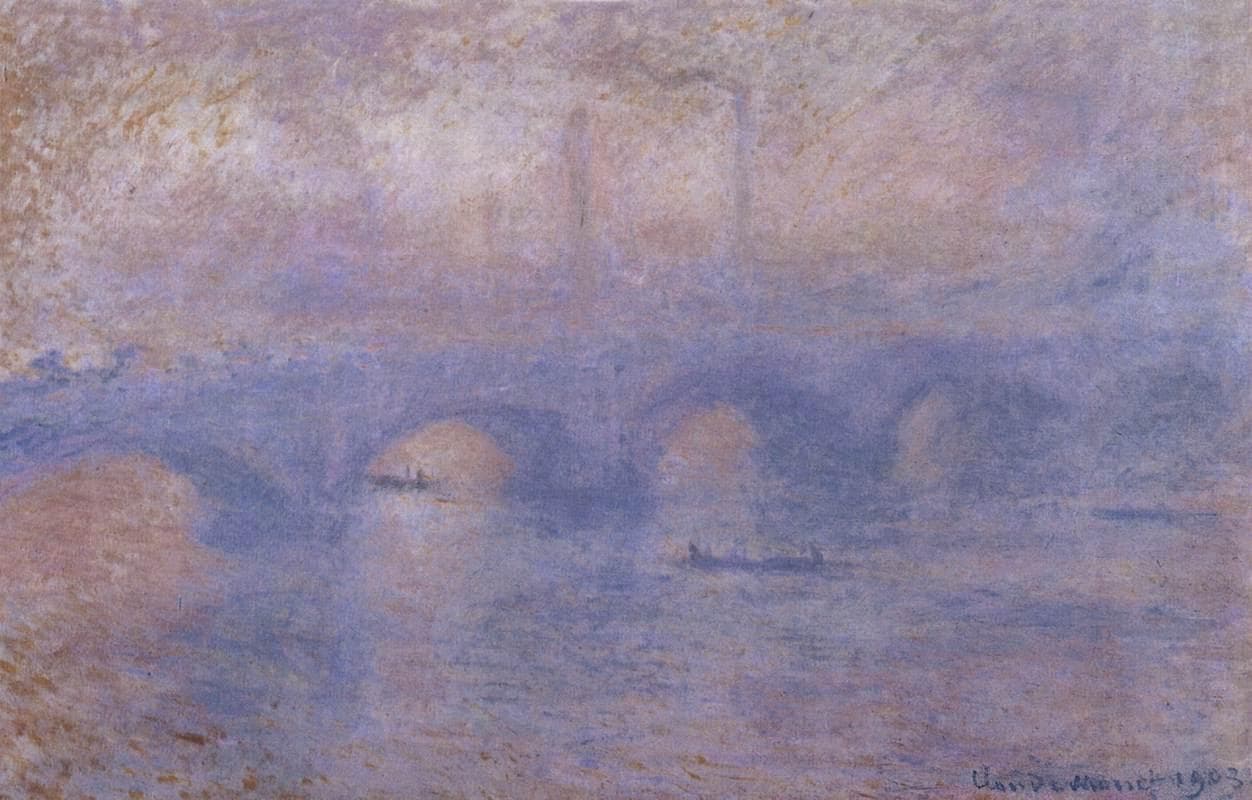
Waterloo Bridge, Effect of Fog
Claude Monet · 1903
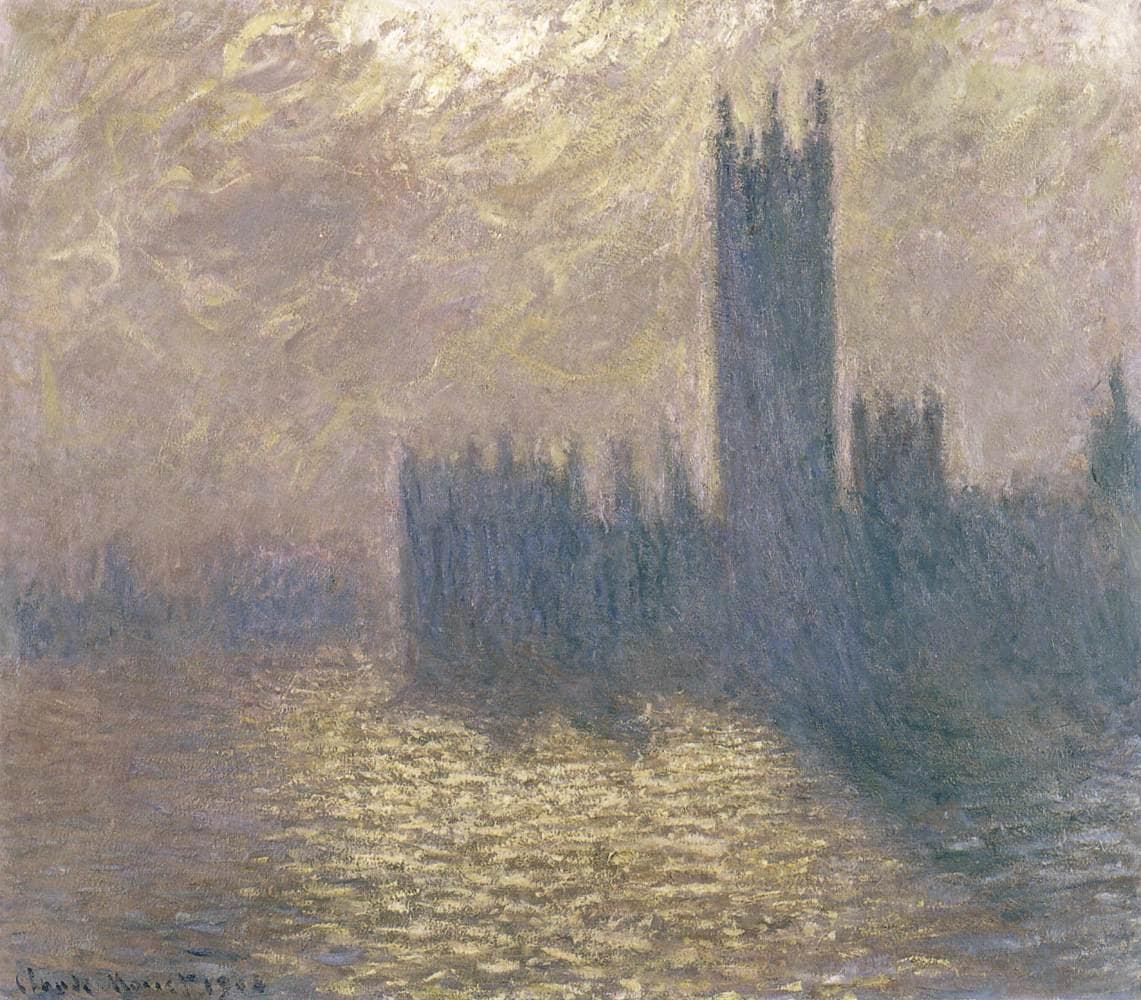
The Houses of Parliament, London
Claude Monet · 1904
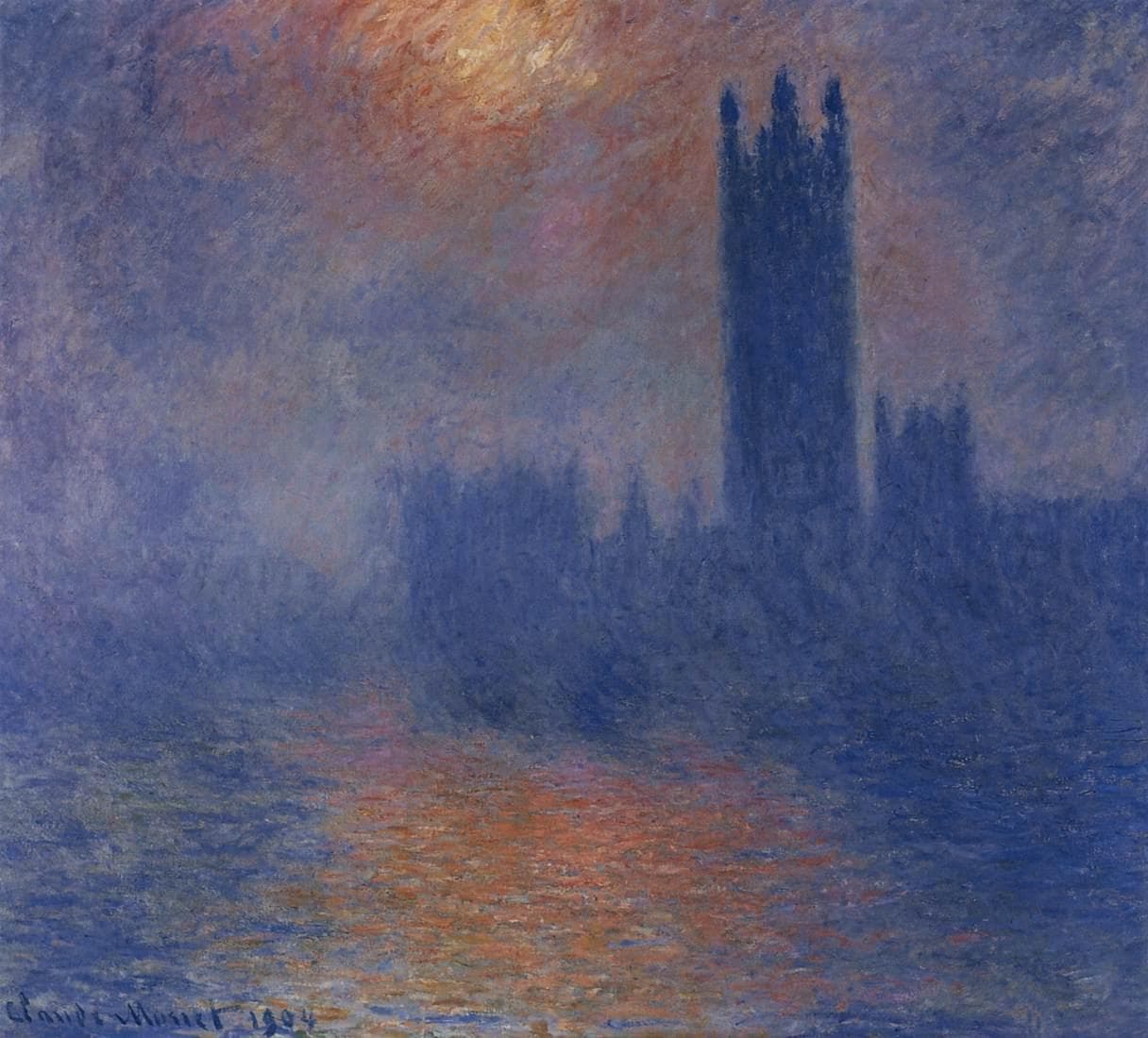
The Houses of Parliament in London
Claude Monet · 1904
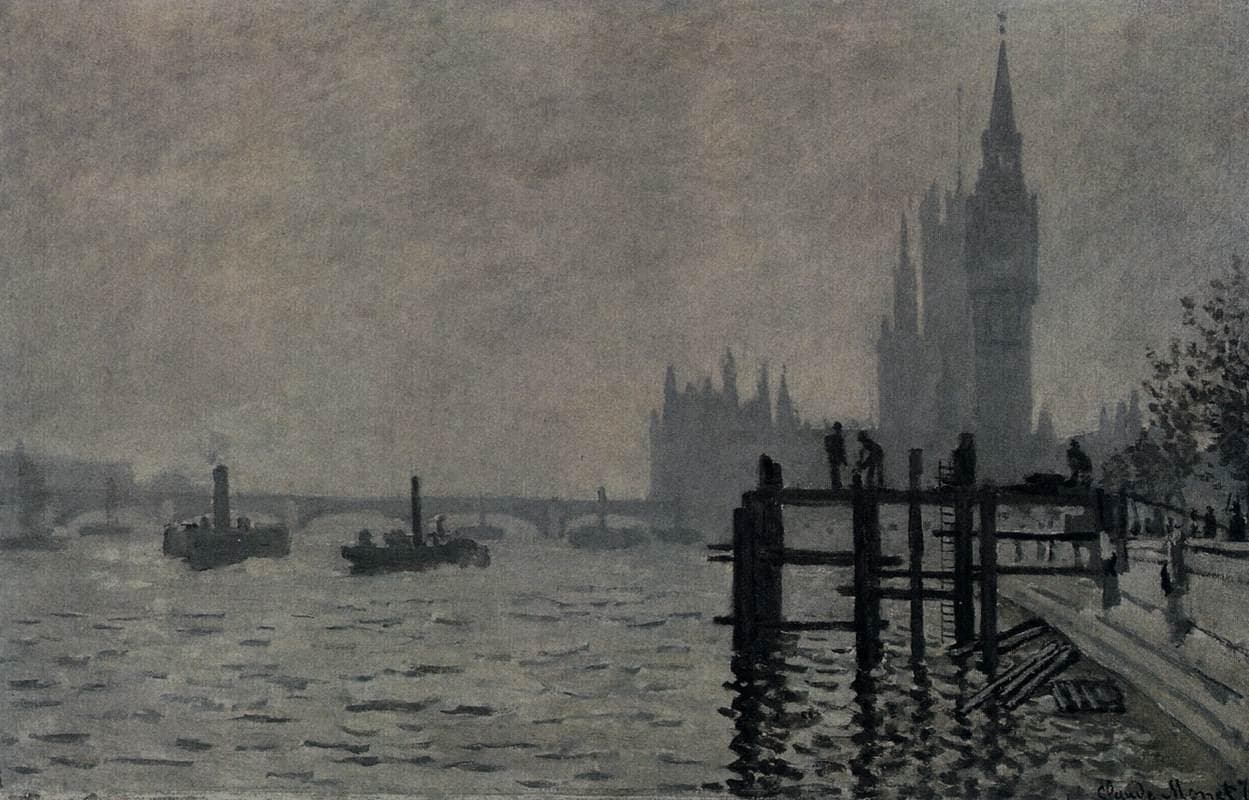
The Thames below Westminster
Claude Monet · c. 1871

Nymphs Dancing to Pan's Flute
Joseph Tomanek

The Scream
Edvard Munch · 1893
Lucifer
Franz von Stuck · 1890
The Garden of Earthly Delights
Hieronymus Bosch · c. 1490–1510