Image: Murauchi Art Museum, Tokyo · Public domain · via Wikimedia Commons
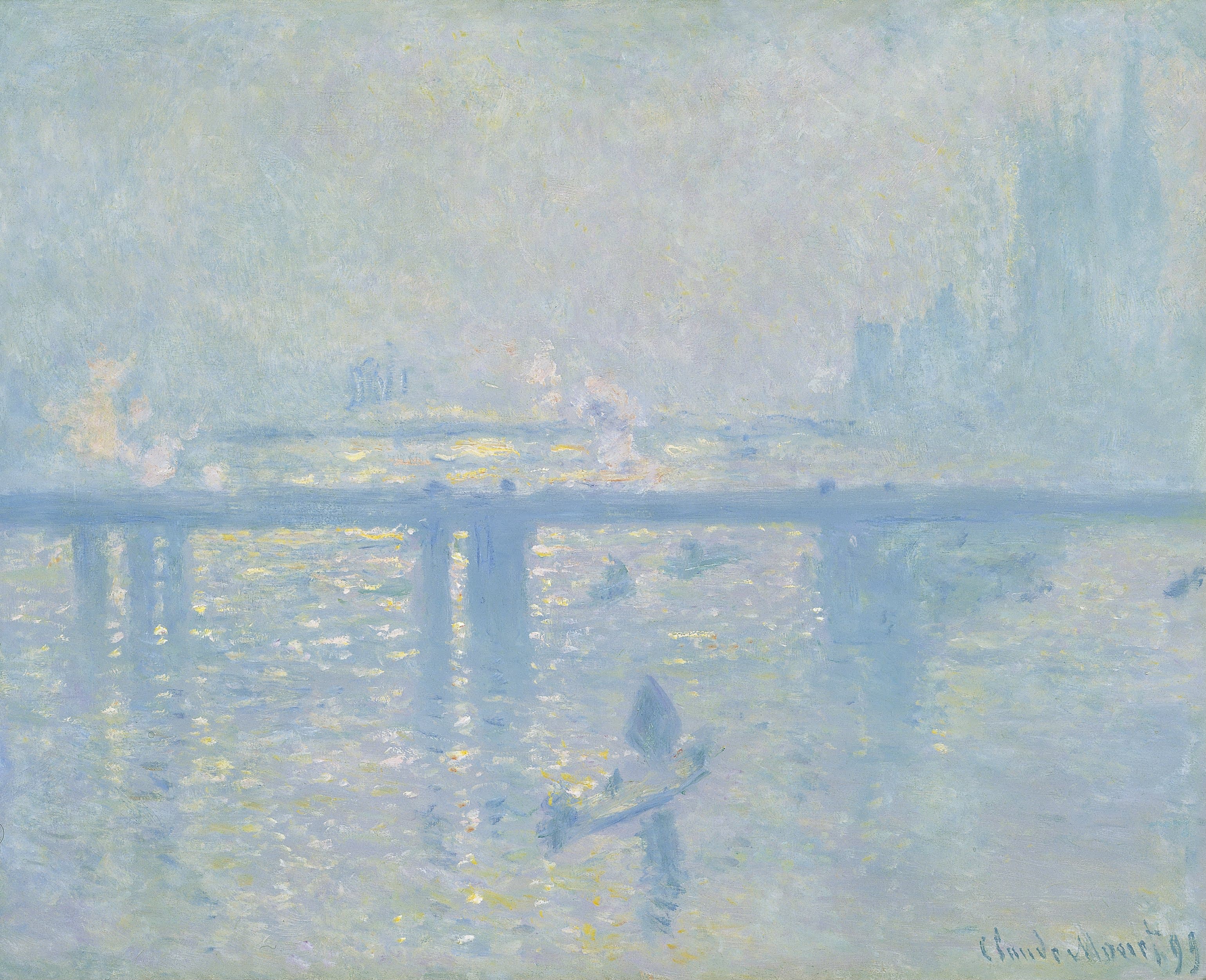
Charing Cross Bridge
Claude Monet, c. 1899
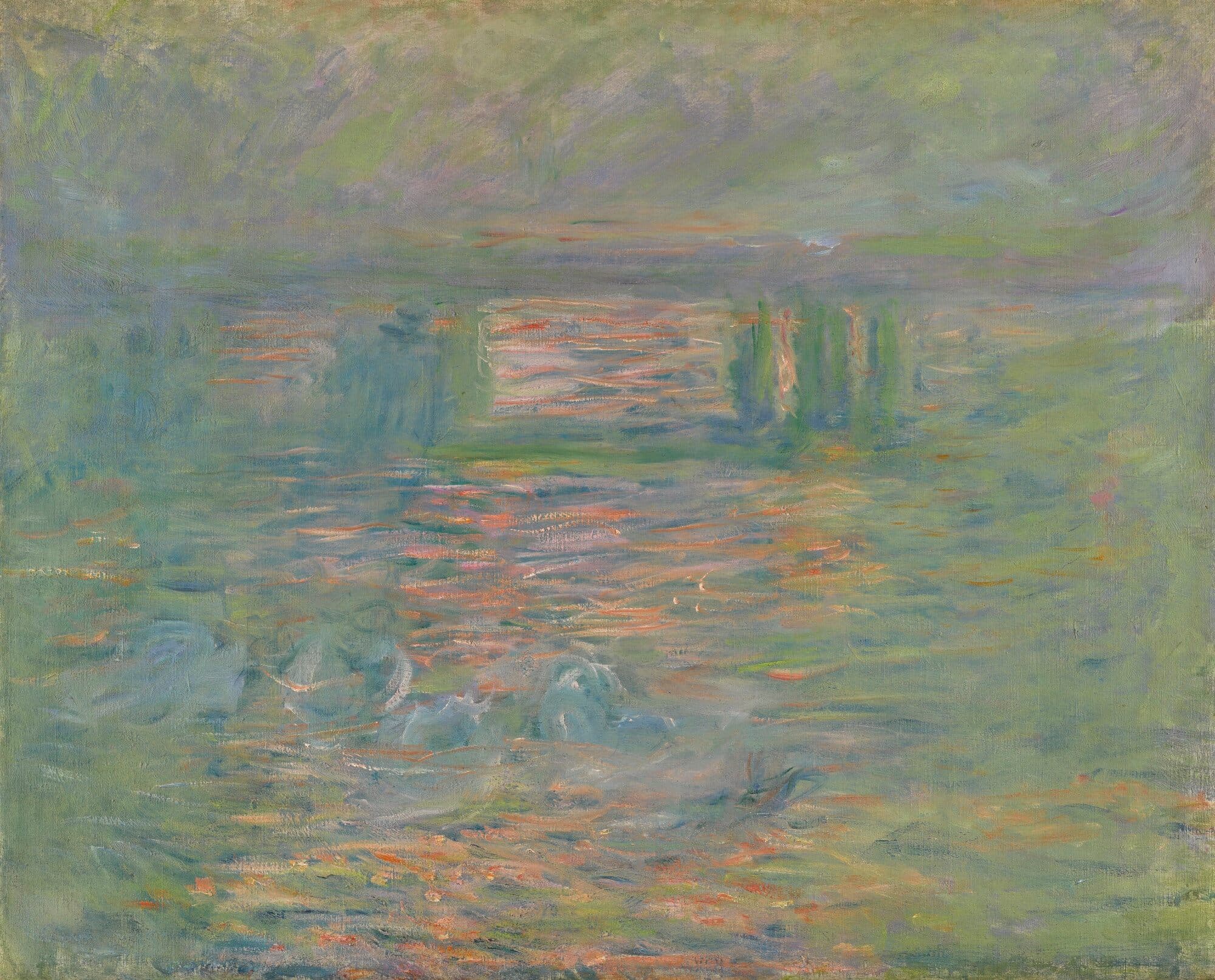
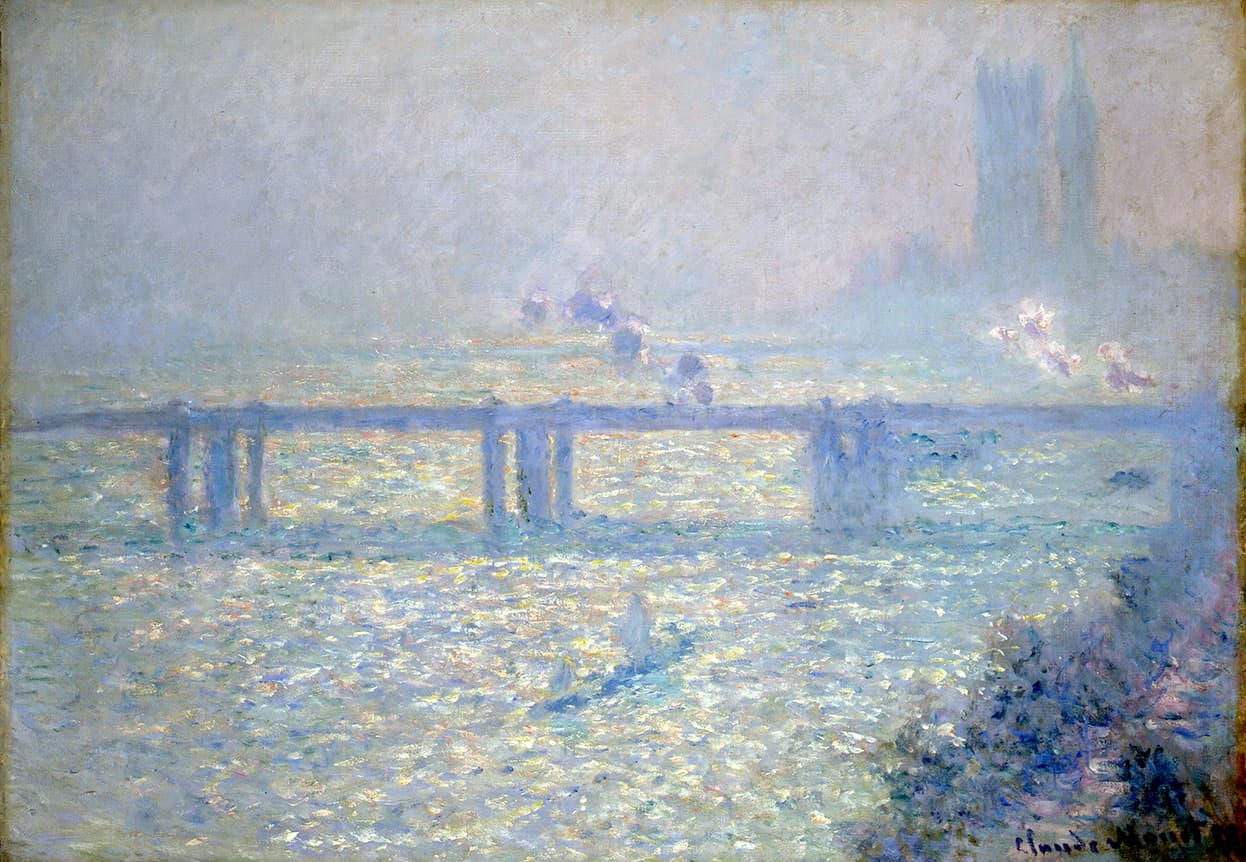
Charing Cross Bridge (c. 1899) is a hazy green-gold view of the Thames by Claude Monet, with the bridge and Parliament dissolving in mist, painted from the Savoy Hotel in London. It is in the Murauchi Art Museum, Hachiōji, Tokyo.
- Artist
- Claude Monet
- Date
- c. 1899
- Medium
- Oil on canvas
- Dimensions
- 65 × 92 cm
- Collection
- Murauchi Art Museum, Hachiōji, Tokyo, Japan
- Movement
- Impressionism
- Catalogue
- Wildenstein 1523
- The City
- Water & Sea
Charing Cross Bridge in the Murauchi Art Museum is a canvas Claude Monet painted around 1899 from his window at the Savoy Hotel in London. It is one of the greenest pictures of the motif: a yellow-green mist fills the sky and river, the bridge is a faint blue line, and the Houses of Parliament rise at right in a pale blue cloud. The canvas is signed at lower right and dated, by Wikidata and the museum, to about 1899. It belongs to the Murauchi Art Museum in Hachiōji, western Tokyo.
What you are looking at
This is a wide canvas, about 65 by 92 cm, and Monet uses the extra width to stretch the bridge right across the picture. It sits higher than in some versions, roughly a third of the way down from the middle, and is made of a thin blue horizontal with three sets of piers below, each echoed by a soft blue reflection.
The color is unusual. The upper sky is a warm ocher-green, cooling to a pale yellow-green near the horizon. On the right, around the towers of Westminster, Monet painted a distinct patch of cool blue, as if a bank of fog had settled around Parliament while the rest of the river stayed in sun. The towers themselves, the Victoria Tower and the clock tower, are light blue shapes inside that cloud. Left of center, above the bridge, a small burst of white and pale pink marks the steam of a train. The river is a fine weave of green, yellow and lilac strokes, and at lower right a darker green mass suggests the trees of the Embankment.
Where and when it was painted
Monet came to London in autumn 1899 and lodged at the Savoy, on the north bank of the Thames between Charing Cross and Waterloo. From the upper floors he could see upstream across the railway bridge to Westminster, and downstream to Waterloo Bridge. He returned in the winter and spring of 1900 and 1901, painting dozens of canvases at once, and finished many at Giverny before showing 37 Thames views at Durand-Ruel's gallery in Paris in 1904. Our Monet in London hub follows the whole project.
How it was painted
The surface is worked in fine, directional strokes, mostly diagonal in the sky and horizontal on the water, built up over a light ground. Monet avoids any strong dark: even the trees at lower right are mid-toned. The bridge is rendered with a few dragged lines, and the towers are reserved in a slightly cooler color rather than drawn. This is the "colored atmosphere" approach of his series painting, where the motif matters less than the tinted air between painter and subject.
The green cast is worth noticing. London's coal-smoke fogs could take on yellow, brown or green tints, and contemporaries described them in exactly these terms. Monet's choice here may record such a fog, or may be a harmony he developed when reworking the canvas.
How this version differs
Compare it with the cool Thyssen-Bornemisza version or the rosy Menard Art Museum canvas, both from 1899, and the Murauchi picture stands apart for its green-gold tonality and the cloud of blue that isolates Parliament. Its wider format matches the Shelburne Museum version, which shows the same view in brighter sun. See every canvas in our Charing Cross Bridge series page.
Collecting Monet in Japan
Japanese collectors were among Monet's most devoted admirers from the 1910s onward, and several visited him at Giverny, where the artist's love of Japanese prints and his Japanese footbridge made a natural bond. As a result, Japan today holds an unusually large number of his paintings, including several Charing Cross Bridge canvases. Alongside this Murauchi picture, versions are in the Menard Art Museum near Nagoya and the National Museum of Western Art in Tokyo, which makes it possible to compare different moods of the same motif within a single country.
Where to see it
The Murauchi Art Museum in Hachiōji, Tokyo, is a private museum built around a collection of nineteenth-century French painting, with works by Monet, Corot and the Barbizon painters. Opening times and display can change, so check before visiting. For other Monet holdings worldwide, see where to see Monet's paintings.
Questions & answers
Where is this Charing Cross Bridge by Monet?
It is in the Murauchi Art Museum in Hachiōji, in western Tokyo, a private museum built around a collection of nineteenth-century French painting. Check the museum's current opening times and display before visiting.
When was it painted?
Around 1899, when Monet first painted the Thames from the Savoy Hotel in London. Like most of the London pictures, it may have been reworked at Giverny before Monet released it.
What does the painting show?
Charing Cross railway bridge crossing the Thames in a yellow-green mist. Steam from a train rises left of center, and on the right the towers of the Houses of Parliament are wrapped in a cooler blue cloud of fog.
Why does the painting look green?
London's coal-smoke fogs could tint the light yellow, brown or green, and Monet tried to record each effect on a separate canvas. The green-gold harmony here gives this version a character unlike the pink, blue or yellow pictures of the same view.
More by the artist
Claude Monet
Water Lilies and Japanese Bridge
Claude Monet · 1899
The Japanese Bridge or The Lily Pond
Claude Monet · 1900
Charing Cross Bridge (private collection, c. 1900)
Claude Monet · c. 1899–1901
Charing Cross Bridge
Claude Monet · 1899
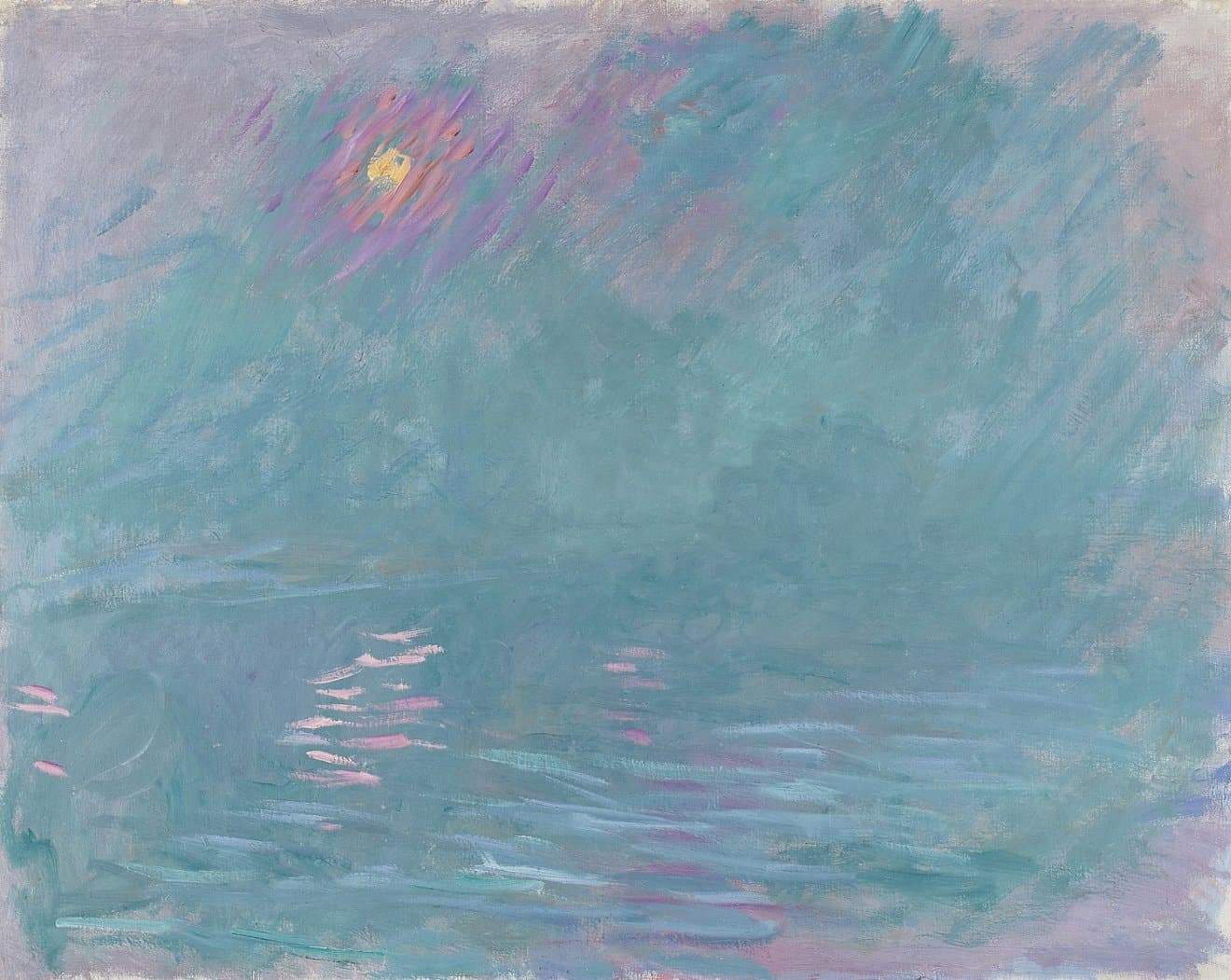
Waterloo Bridge (Kerry Stokes Collection)
Claude Monet · 1899–1901
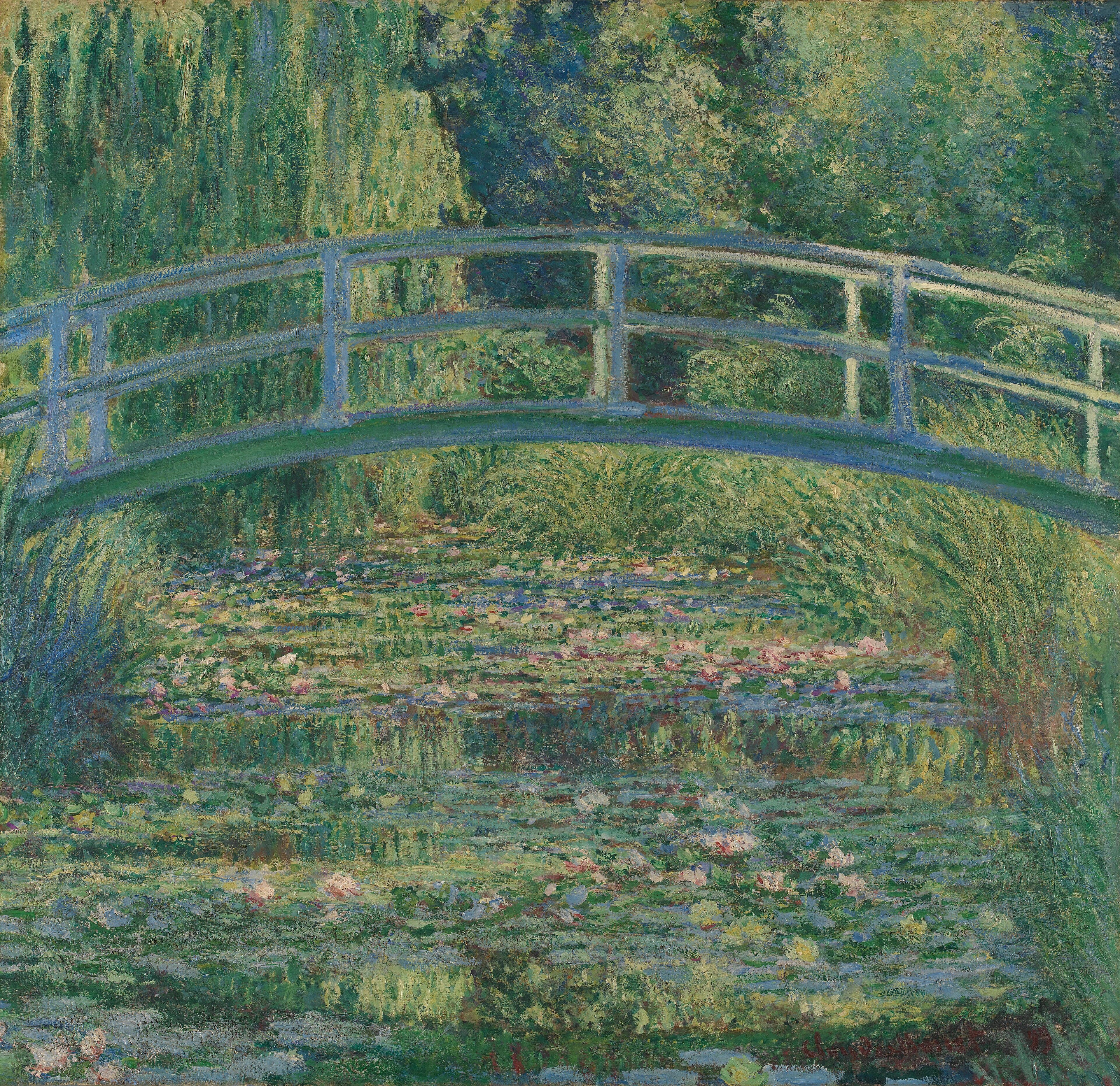
The Water-Lily Pond (National Gallery, London)
Claude Monet · 1899
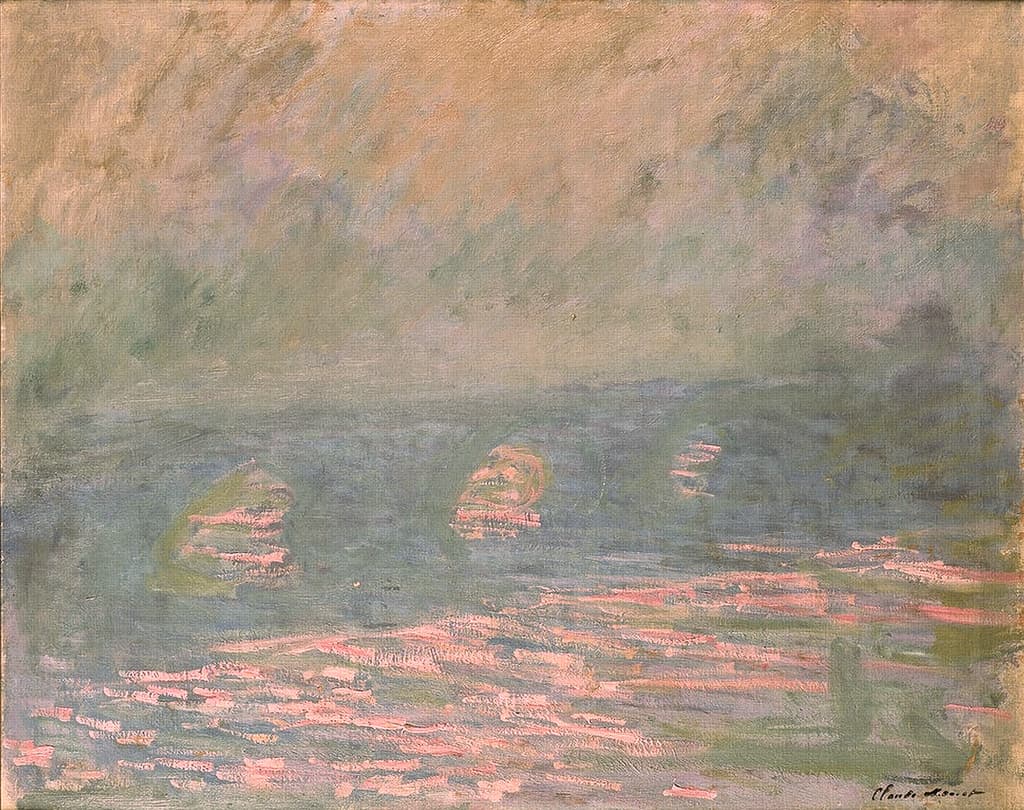
Waterloo Bridge (Matsushita Museum of Art)
Claude Monet · 1899–1901
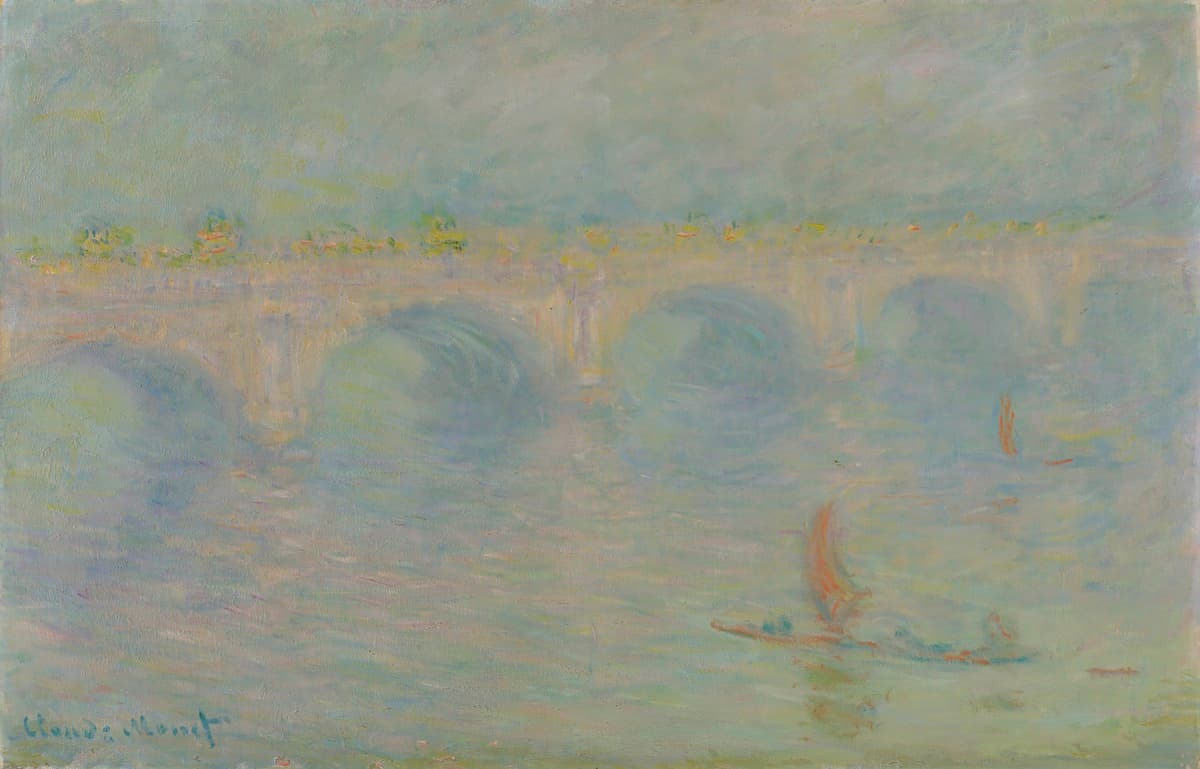
Waterloo Bridge, London, Sun Effect
Claude Monet · 1899–1901
Also painted in 1899
The same year

Bridge over a Pond of Water Lilies
Claude Monet · 1899
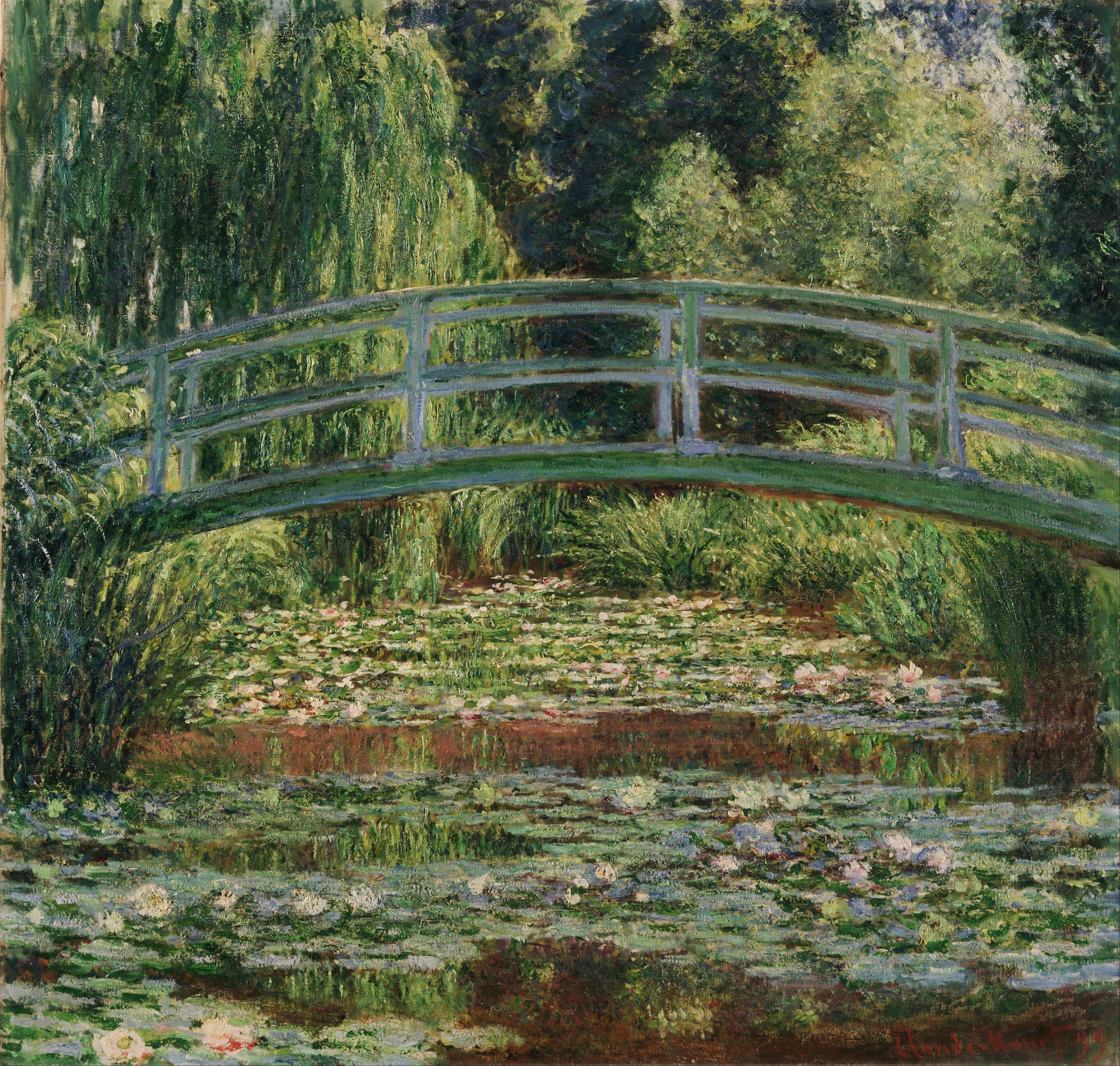
The Japanese Footbridge and the Water Lily Pool, Giverny
Claude Monet · 1899
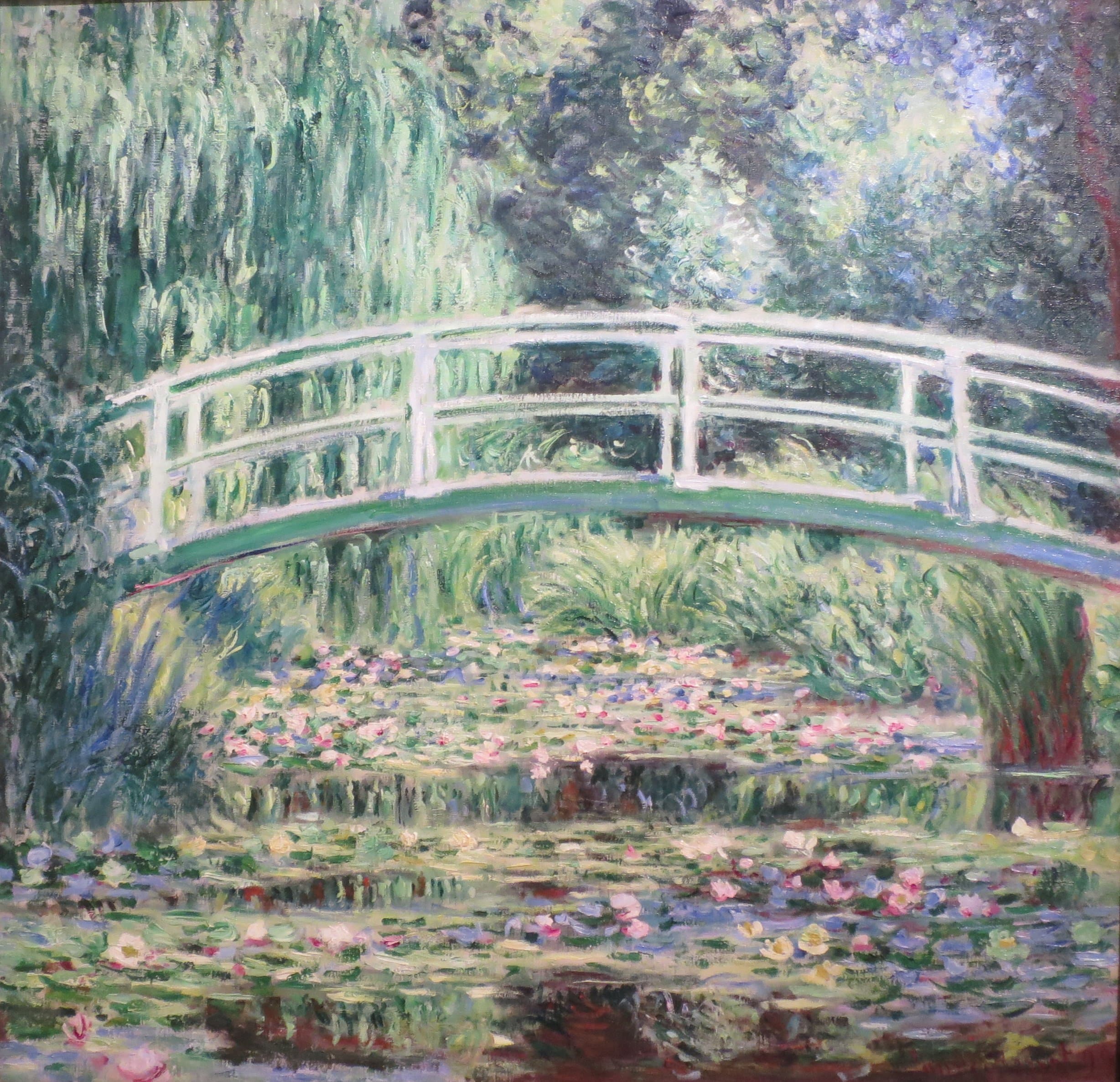
White Water Lilies
Claude Monet · 1899
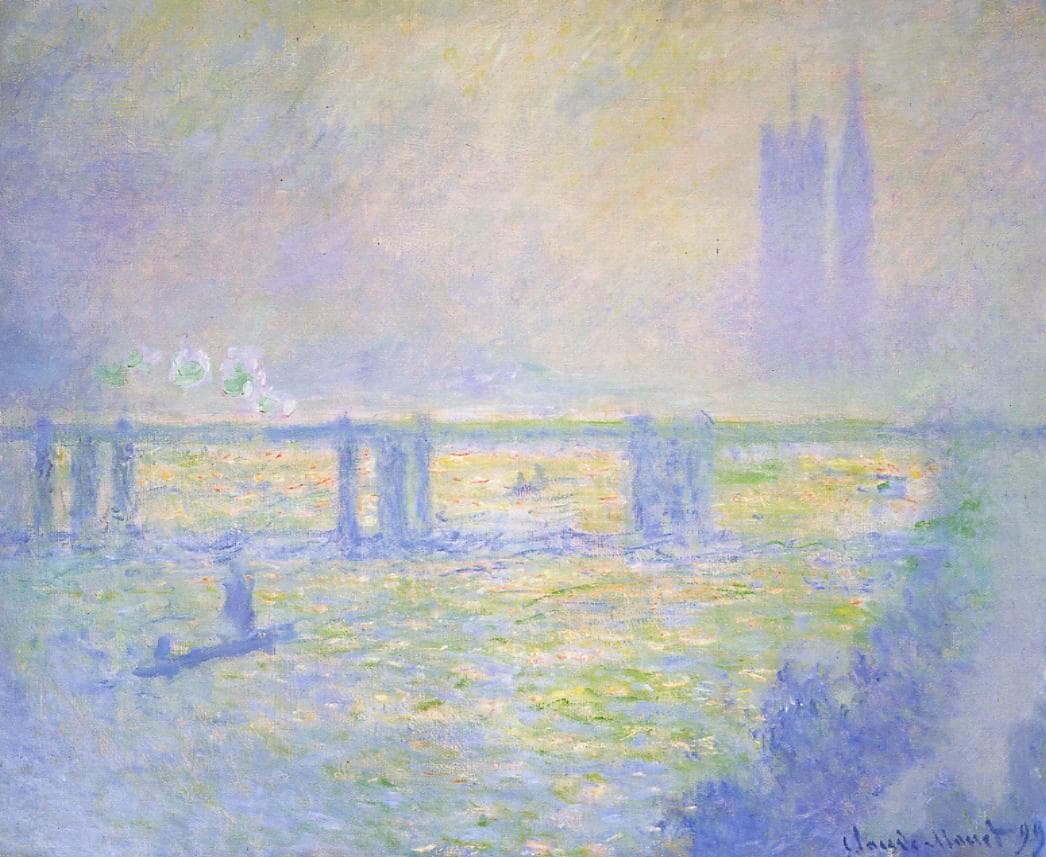
Charing Cross Bridge
Claude Monet · 1899
Charing Cross Bridge
Claude Monet · 1899
Charing Cross Bridge (Shelburne Museum)
Claude Monet · 1899
The Japanese Footbridge
Claude Monet · 1899
Water Lily Pond, Green Harmony
Claude Monet · 1899
Kindred works
You may also study
Charing Cross Bridge
Claude Monet · 1899
Charing Cross Bridge (Shelburne Museum)
Claude Monet · 1899
Charing Cross Bridge
Claude Monet · 1899
Waterloo Bridge, Effect of Fog
Claude Monet · 1903
View of a Port
Claude Monet · 1871
The Port of Le Havre, Night Effect
Claude Monet · 1872
Waterloo Bridge in London
Claude Monet · 1902
Waterloo Bridge, Sunlight Effect (Denver Art Museum)
Claude Monet · 1903