Image: Museum Barberini, Potsdam; photo Wikimedia Commons · CC BY-SA 4.0 · via Wikimedia Commons
Water Lilies (1914–17, Museum Barberini)
Claude Monet, 1914–17
Water Lilies (Seerosen) is a large square canvas of 1914–17 by Claude Monet of his Giverny pond in deep blue-green, with vertical reflections and blue-outlined pads. It belonged to Michel Monet and is now in the Museum Barberini, Potsdam.
- Artist
- Claude Monet
- Date
- 1914–17
- Medium
- Oil on canvas
- Dimensions
- 200 × 200 cm
- Collection
- Museum Barberini (Hasso Plattner Collection), Potsdam, Germany
- Movement
- Impressionism
- Catalogue
- Wildenstein 1803
- Nature & Landscape
- Water & Sea
Water Lilies (Seerosen, Nymphéas) is a large late canvas by Claude Monet, painted at Giverny between 1914 and 1917, now in the Museum Barberini in Potsdam (MB-Mon-33). It is square, two meters on each side, and it carries the stamped signature applied to works left in Monet's studio at his death. It is part of the Hasso Plattner Collection of Impressionist paintings shown at the Barberini.
What you're looking at
The canvas is a single field of dark water. Its ground is a deep blue-green, and through it fall long vertical strokes of green, olive and dark blue: the reflections of willows and reeds on the bank, seen upside down, which give the whole surface a downward pull. Across these verticals Monet sets the horizontal shapes of lily pads, outlined in blue and violet and filled with pale blue-green, drifting in a loose band down the left side, a cluster in the right center and a scattering at the bottom.
There are few flowers. At the top, a group of white, violet and pale yellow lilies sits in a band of brighter pads. In the right center, a single yellow-white bloom glows among dark leaves, the brightest point in the picture. At the lower right, the water opens into a pool of deeper blue and violet, the reflection of open sky. In places, especially along the right edge, the canvas is left unpainted or only thinly covered, a sign that this was a working canvas rather than a finished, exhibited picture.
The effect is enveloping and somber, more like looking into the pond than at it.
The late pond
After the death of his wife Alice in 1911 and of his elder son Jean in 1914, and with his sight clouded by cataracts, Monet returned to the lily pond in 1914 with a new ambition: a cycle of enormous decorative panels that would surround the viewer with water. In 1915 he built a large new studio at Giverny to paint them. Alongside the panels, which went to the Musée de l'Orangerie in Paris in 1927, he painted dozens of big canvases of the pond, studies and independent pictures, most of which stayed in the studio, unsigned, until his death in 1926. This canvas, square and two meters across, is the scale of those studio works: big enough to fill the field of vision, small enough to be moved and compared.
How this version differs
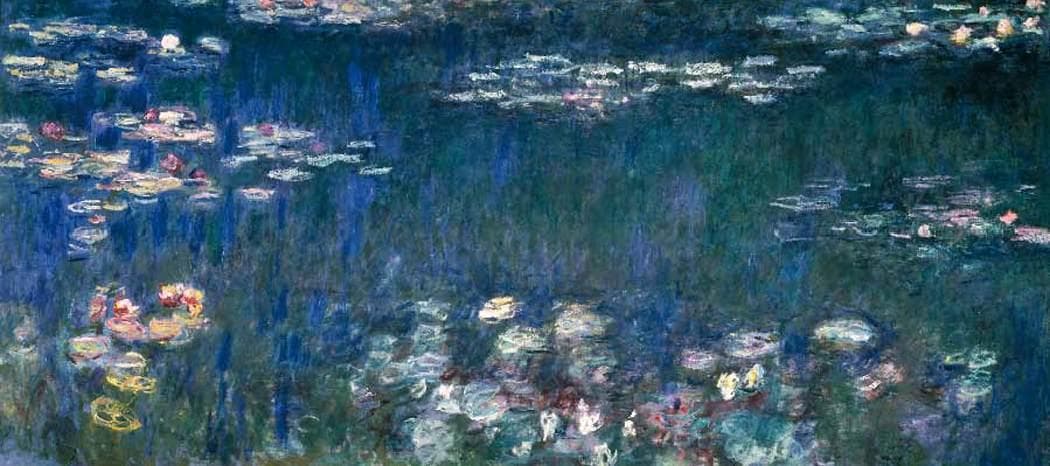
Compared with the National Gallery of Australia's Nymphéas, a lighter canvas with a strip of bank and clearly drawn pads, the Barberini picture is darker, more vertical in its rhythm and more unfinished. It belongs to the same campaign as the vast canvases of those years, such as the Museum of Modern Art's three-panel Water Lilies, begun in 1914. Portland's Waterlilies of 1914–15 shows the same years in a brighter key, with white and salmon flowers. The completed Orangerie panels, such as Green Reflections, develop exactly this play of vertical reflection and horizontal pad on a monumental scale.
How it was painted
The reflections are dragged down in long, loaded strokes, wet into wet, with blue, green and violet interwoven. The pads are drawn quickly with a loaded brush, their outlines in a darker blue, their centers in paler paint. The flowers are a few thick touches. The bare canvas at the edges shows the speed and directness of the work.
Ownership and where to see it
The painting passed at Monet's death to his son Michel Monet. It later belonged to private owners, including the Basel collector Walter Schiess from 1982; it was offered at Sotheby's in December 1991 and not sold, and returned to the market in 2001. It has since joined the Hasso Plattner Collection and has appeared in the Barberini's exhibitions Impressionism: The Art of Landscape (2017) and Monet: Places (2020). For the series see Monet's Water Lilies; for the garden, Giverny; for other places to see Monet, Where to See Monet's Paintings.
Questions & answers
Where is this Monet Water Lilies of 1914–17?
It is in the Museum Barberini in Potsdam, near Berlin (MB-Mon-33), part of the Hasso Plattner Collection of Impressionist paintings, which is one of the largest groups of Monets outside France.
When was it painted?
Between 1914 and 1917, at Giverny, when Monet was working toward his huge decorative water-lily panels. It stayed in his studio and carries the stamped signature applied after his death.
What does it show?
A two-meter square of dark blue-green water with long vertical reflections of willows and reeds, lily pads outlined in blue, a few white and yellow flowers and a pool of reflected blue sky at lower right.
Who owned it before the Barberini?
Monet's son Michel inherited it. It later passed to private collectors, including Walter Schiess of Basel from 1982; it was offered unsuccessfully at Sotheby's in 1991 and returned to the market in 2001.
More by the artist
Claude Monet
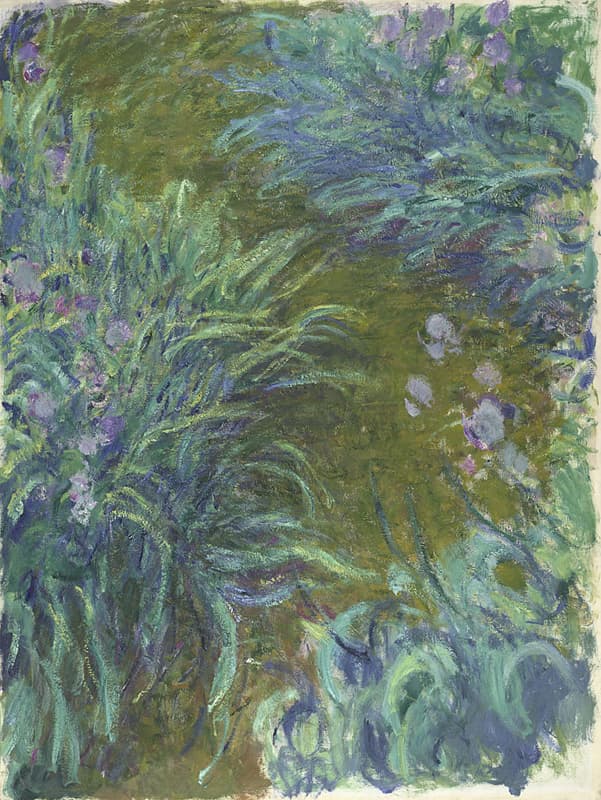
Irises
Claude Monet · c. 1914–17
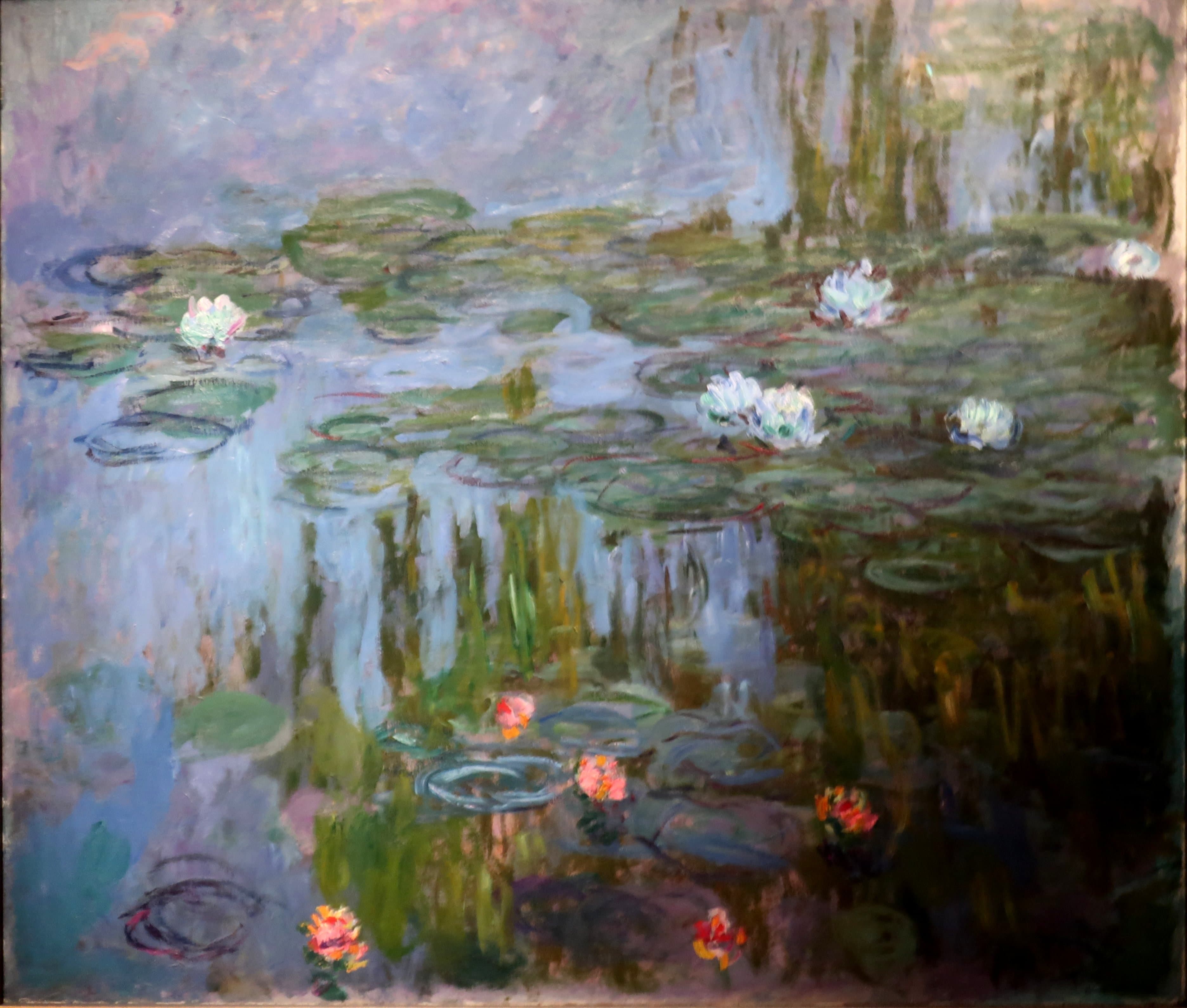
Waterlilies (c. 1914–15, Portland Art Museum)
Claude Monet · c. 1914–15
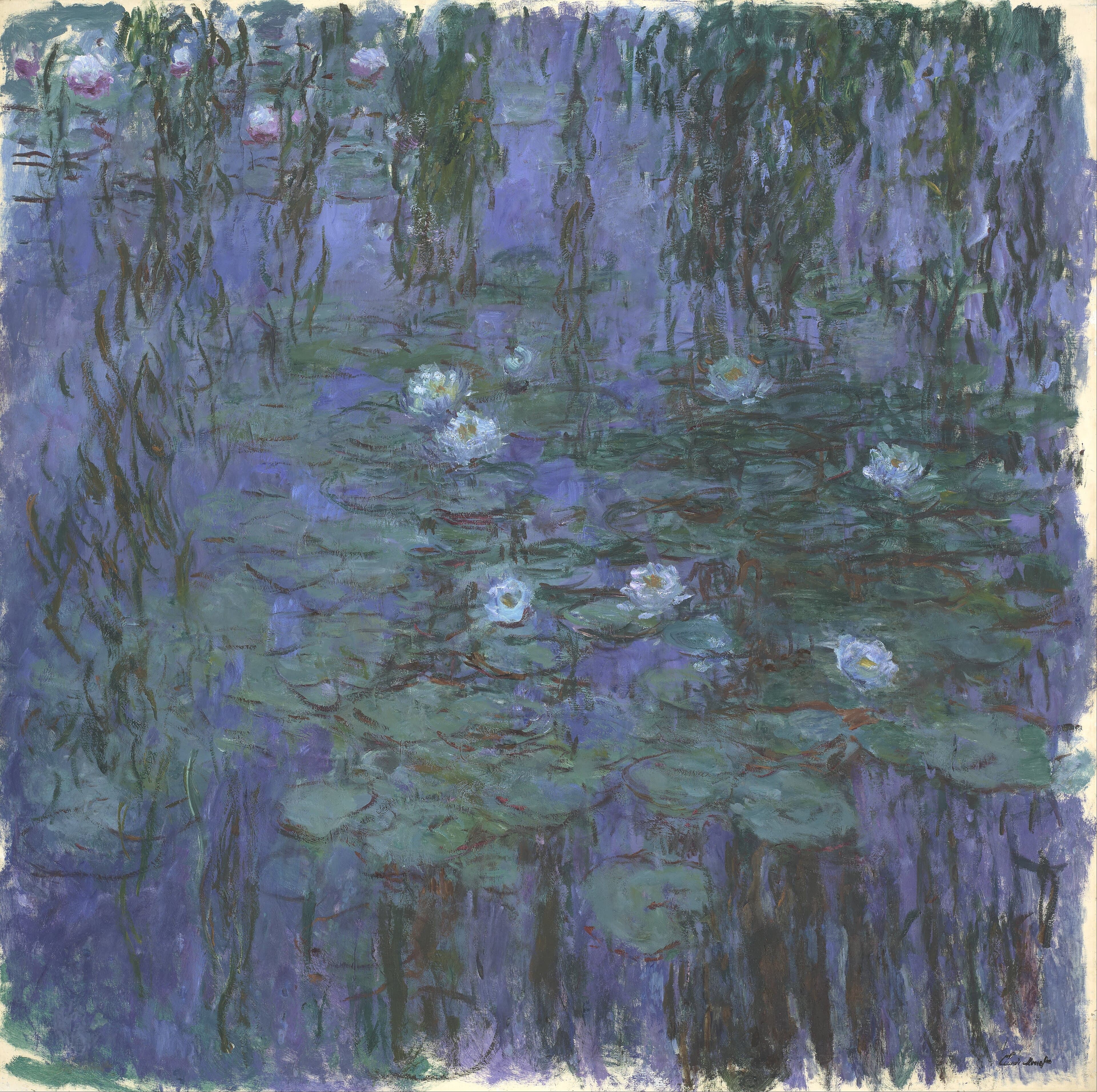
Blue Water Lilies
Claude Monet · 1916–19
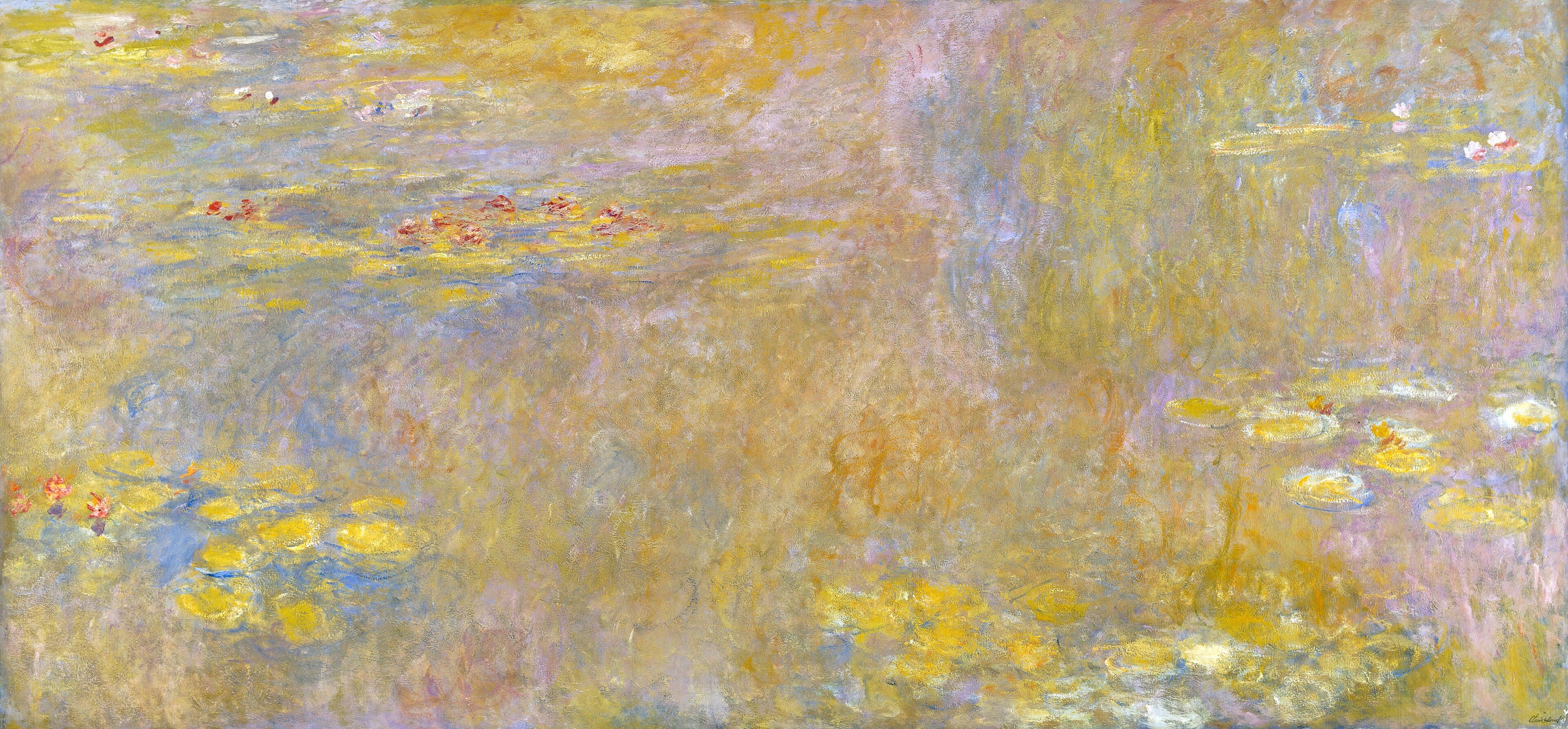
Water-Lilies
Claude Monet · after 1916

Water Lilies (MoMA triptych)
Claude Monet · 1914–26
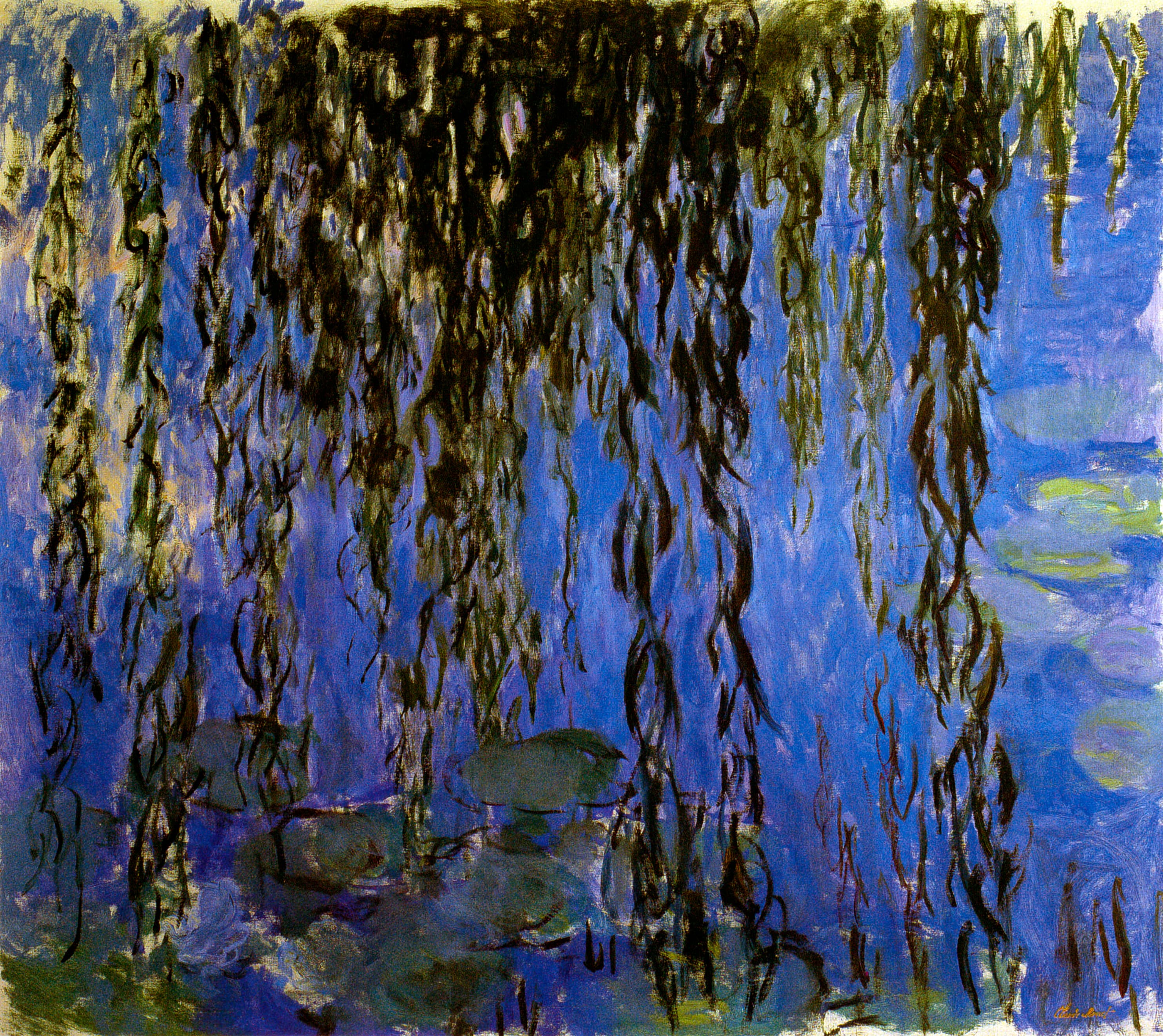
Water Lilies with Willow Branches
Claude Monet · c. 1916–17
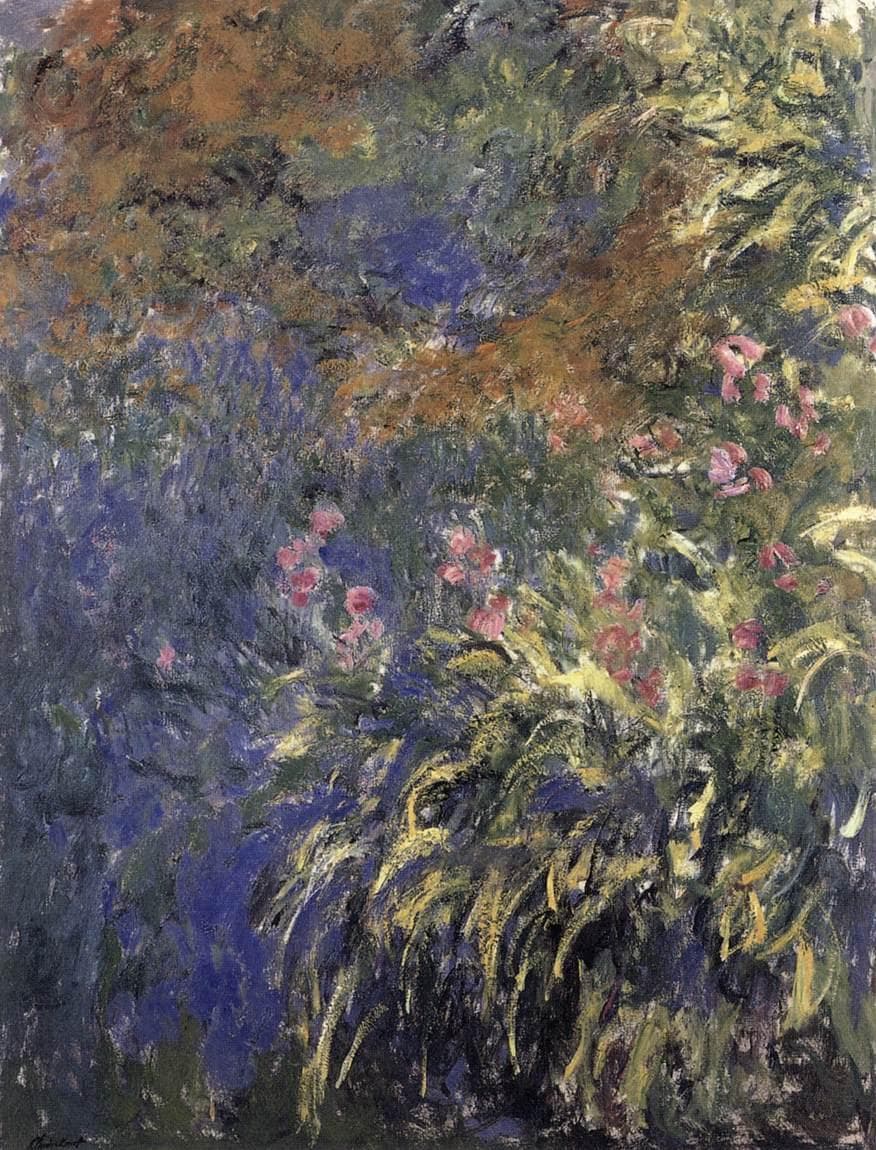
Irises by the Pond
Claude Monet · c. 1914–17
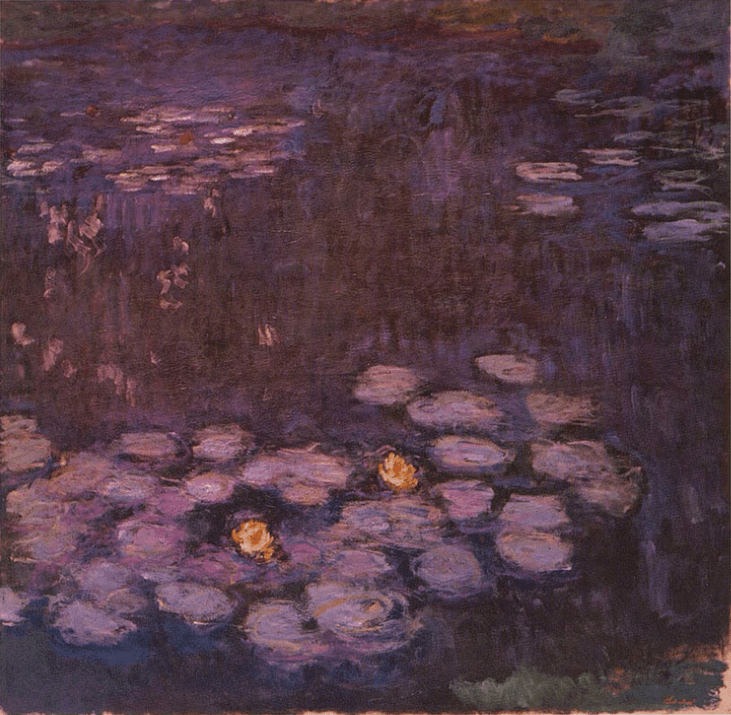
Water Lilies (Asahi Group Oyamazaki Villa Museum)
Claude Monet · c. 1914–17
Also painted in 1914
The same year
Kindred works
You may also study

Nymphéas [Waterlilies] (National Gallery of Australia)
Claude Monet · c. 1914–17
Water Lilies: Green Reflections
Claude Monet · 1914–26
Water Lilies (Nymphéas), 1915 (Gunma)
Claude Monet · 1915
The Water-Lily Pond and Bridge
Claude Monet · 1905
The Japanese Bridge
Claude Monet · 1918–24
Japanese Bridge
Claude Monet · 1918–19
Le pont japonais
Claude Monet · 1918–24
Nymphéas (Oyamazaki Villa Museum)
Claude Monet · 1908