Image: Wikimedia Commons (Flickr) · Public domain · via Wikimedia Commons
Water Lilies with Willow Branches
Claude Monet, c. 1916–17
Nymphéas avec rameaux de saule (Water Lilies with Willow Branches) is a 160 × 180 cm canvas Claude Monet painted at Giverny around 1917: dark willow fronds hanging over intense blue water. It is on deposit at the Musée des impressionnismes Giverny.
- Artist
- Claude Monet
- Date
- c. 1916–17
- Medium
- Oil on canvas
- Dimensions
- 160 × 180 cm
- Collection
- Musée des impressionnismes Giverny, Giverny, France
- Movement
- Impressionism
- Catalogue
- Wildenstein 1851
- Nature & Landscape
- Water & Sea
Nymphéas avec rameaux de saule (Water Lilies with Willow Branches) is a late canvas by Claude Monet, painted at Giverny around 1916–17 and catalogued by Wildenstein as number 1851. It measures 160 × 180 cm. According to Wikidata it belongs to the Lycée Claude-Monet, the Paris secondary school named after the painter, and it is on deposit at the Musée des impressionnismes Giverny, a few hundred meters from the pond it shows (inventory MDIG D 2021.1.1, the "D" marking a deposit received in 2021).
What you're looking at
This is one of the most graphic of Monet's pond pictures. From the top edge, a dense curtain of willow fronds drops into the picture, painted in long, wavering strokes of near-black green, olive and brown. They hang almost the full height of the canvas, thickening at the top where the branches are densest and thinning into single threads near the bottom.
Behind them, and through them, the water is a saturated ultramarine and cobalt blue, brushed in loose horizontal and diagonal strokes with touches of violet and white. It is the reflected sky, and it is the brightest thing in the picture. Lily pads are almost incidental: a few dark, rounded shapes in the lower center and a group of pale green-yellow pads at the right edge, faintly lit.
The fronds are ambiguous. Some seem to hang in front of the water, real branches between the painter and the pond; others clearly continue as reflections. Monet does not resolve which is which, and that uncertainty, between air and water, is the subject.
Where and when it was painted
From 1914 Monet devoted most of his energy to the large water-lily decorations that were eventually installed in the Musée de l'Orangerie in Paris. The willow fronds reflected in blue water became one of the principal motifs of the Orangerie rooms, and canvases like this one, large but not mural-scale, allowed him to test how dark and how dense the willows could be against a strong blue.
How it was painted
The fronds are painted wet into wet, in single loaded strokes that wobble as they descend, so each one has the slight irregularity of a real hanging branch. The blue water was laid in first and then partly painted over, and in places the strokes of willow drag blue up with them. A signature stamp appears at lower right. The contrast of dark against bright is unusually strong for Monet, closer to a drawing in ink than to his earlier Impressionist touch.
How this version differs
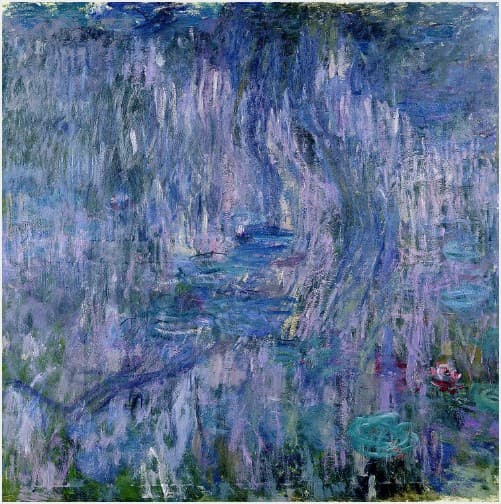
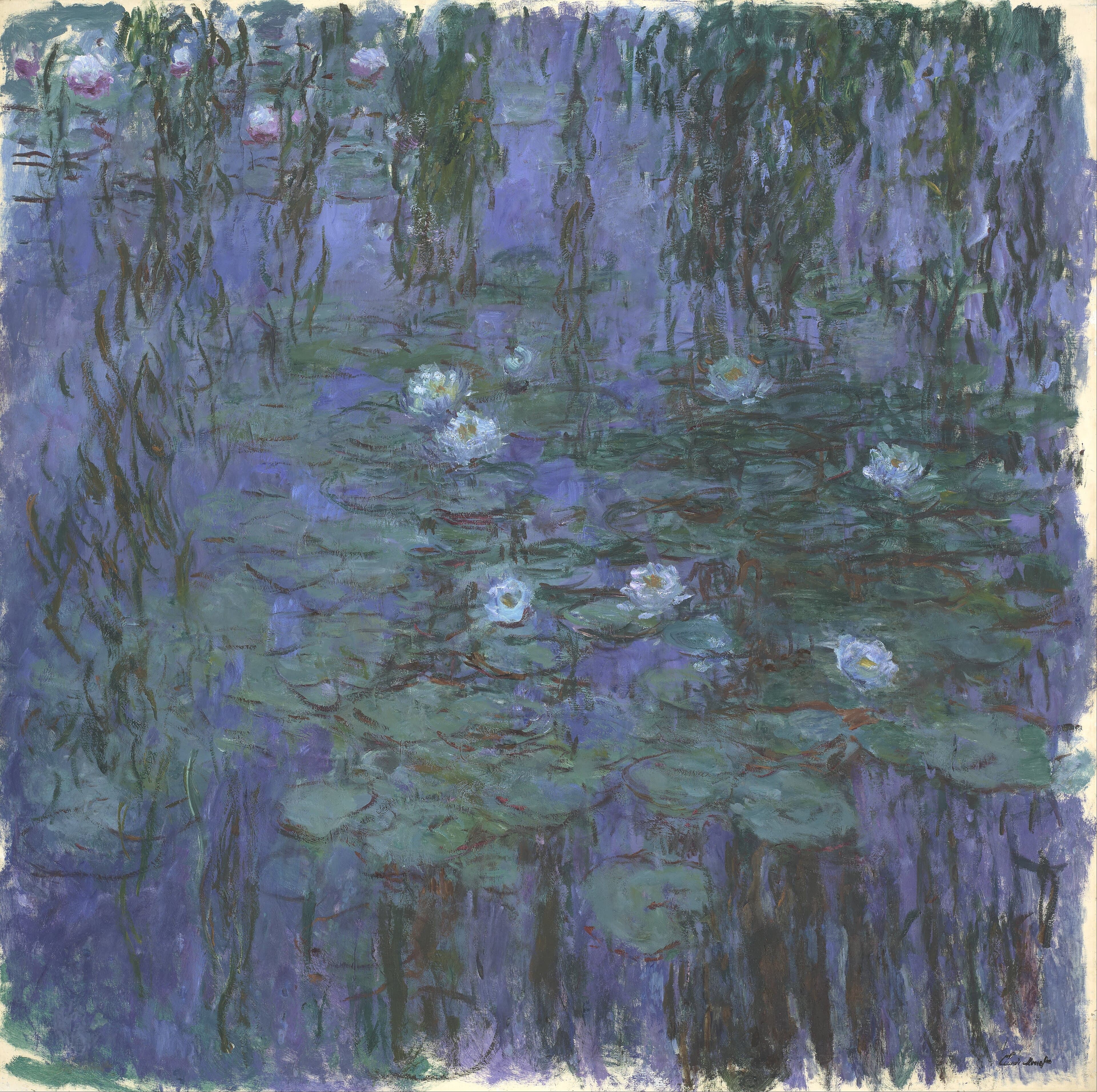
In the Water Lilies series, the willow appears in many keys. In the Orsay's Blue Water Lilies the fronds are softer and the lilies more prominent; in the Marmottan's Water-Lilies, Reflection of a Weeping Willow they dissolve into a lilac haze. Here they are at their darkest and most insistent, and the lilies retreat to the margins. The closest relative is the Marmottan's Nymphéas (1916–19), with willow strands crossing a violet pond.
A detail to look for
Near the right edge, about halfway down, the blue water suddenly lightens into a soft, yellow-green patch where three or four lily pads catch the light. It is the only place on the canvas where the sun seems to reach the surface directly. Everywhere else the fronds intervene. Monet often placed one such clearing in an otherwise dense composition, a small window that tells the eye where the light comes from. Here it also balances the dark weight of the willows at upper left, so that the picture tilts gently from shadow to light. It is worth seeking out in person, because reproductions tend to flatten the difference between the bright blue and the greener light.
Where to see it
The Musée des impressionnismes Giverny, on the rue Claude Monet, shows works by Monet and the painters who gathered around him in the village, and a visit can be combined with Monet's house and garden. See Giverny: Monet's House and Garden and where to see Monet's paintings; for the artist, see Claude Monet.
Questions & answers
Where is Monet's Nymphéas avec rameaux de saule?
It is at the Musée des impressionnismes Giverny, on deposit since 2021 (inventory MDIG D 2021.1.1). According to Wikidata the painting belongs to the Lycée Claude-Monet in Paris. The museum is a short walk from Monet's garden.
When was it painted?
Monet painted it at Giverny around 1916–17, during the years he worked on the water-lily decorations for the Orangerie. It is number 1851 in the Wildenstein catalogue raisonné.
What does the painting show?
Dark willow fronds hang from the top of the canvas over bright blue water that reflects the sky. A few lily pads float at the bottom and right edge. The fronds hover between real branches and reflections.
Is this painting part of the Orangerie Water Lilies?
No. It is a separate canvas, much smaller than the Orangerie panels, but it explores the same motif of willow fronds reflected in blue water that Monet used throughout the final decorations.
More by the artist
Claude Monet
Self-Portrait (1917)
Claude Monet · 1917
Water-Lilies, Reflection of a Weeping Willow
Claude Monet · 1916–19
Blue Water Lilies
Claude Monet · 1916–19
Water Lilies (Agapanthus)
Claude Monet · c. 1915–26
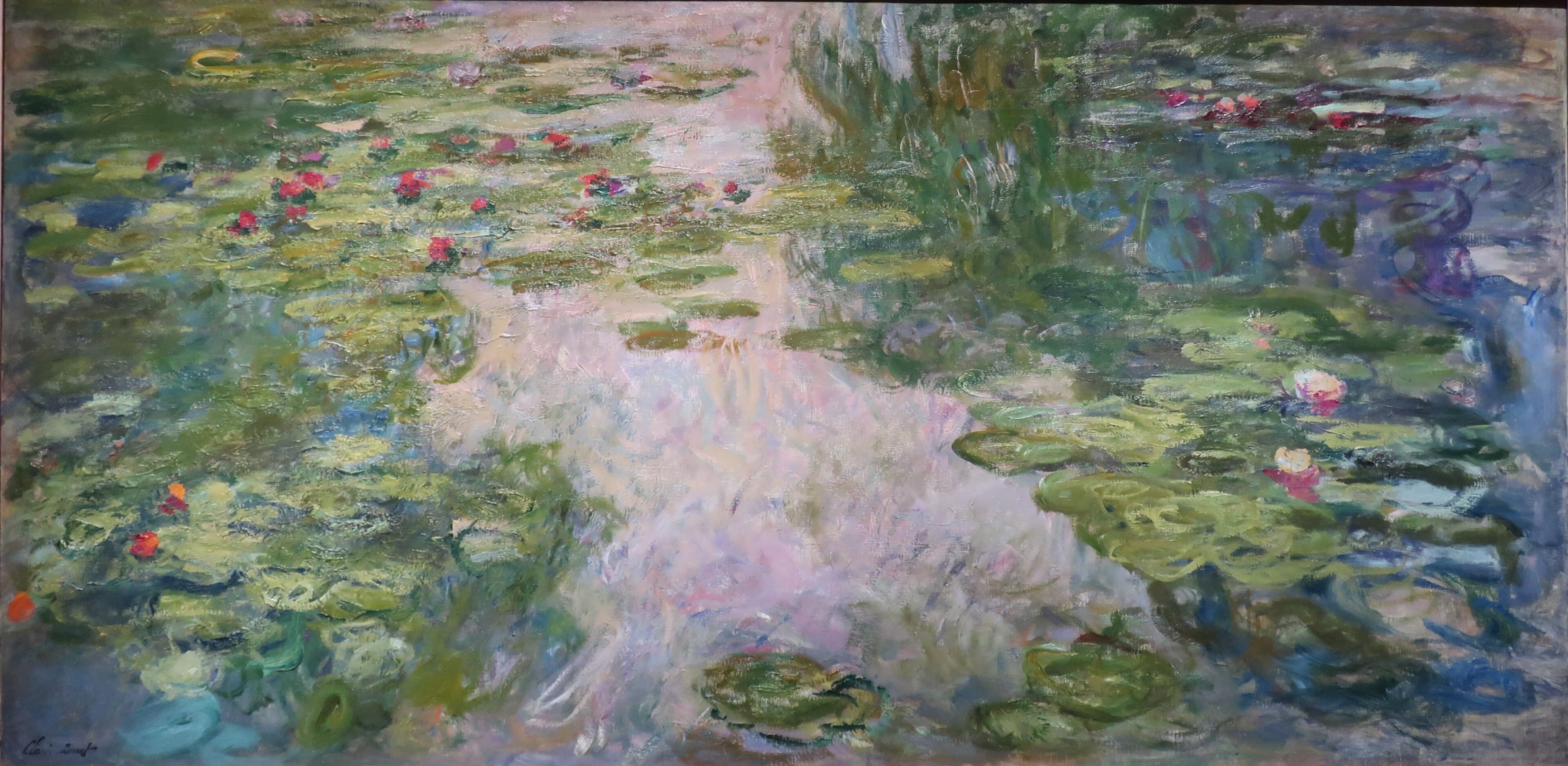
Water Lilies (Honolulu Museum of Art)
Claude Monet · 1917–19
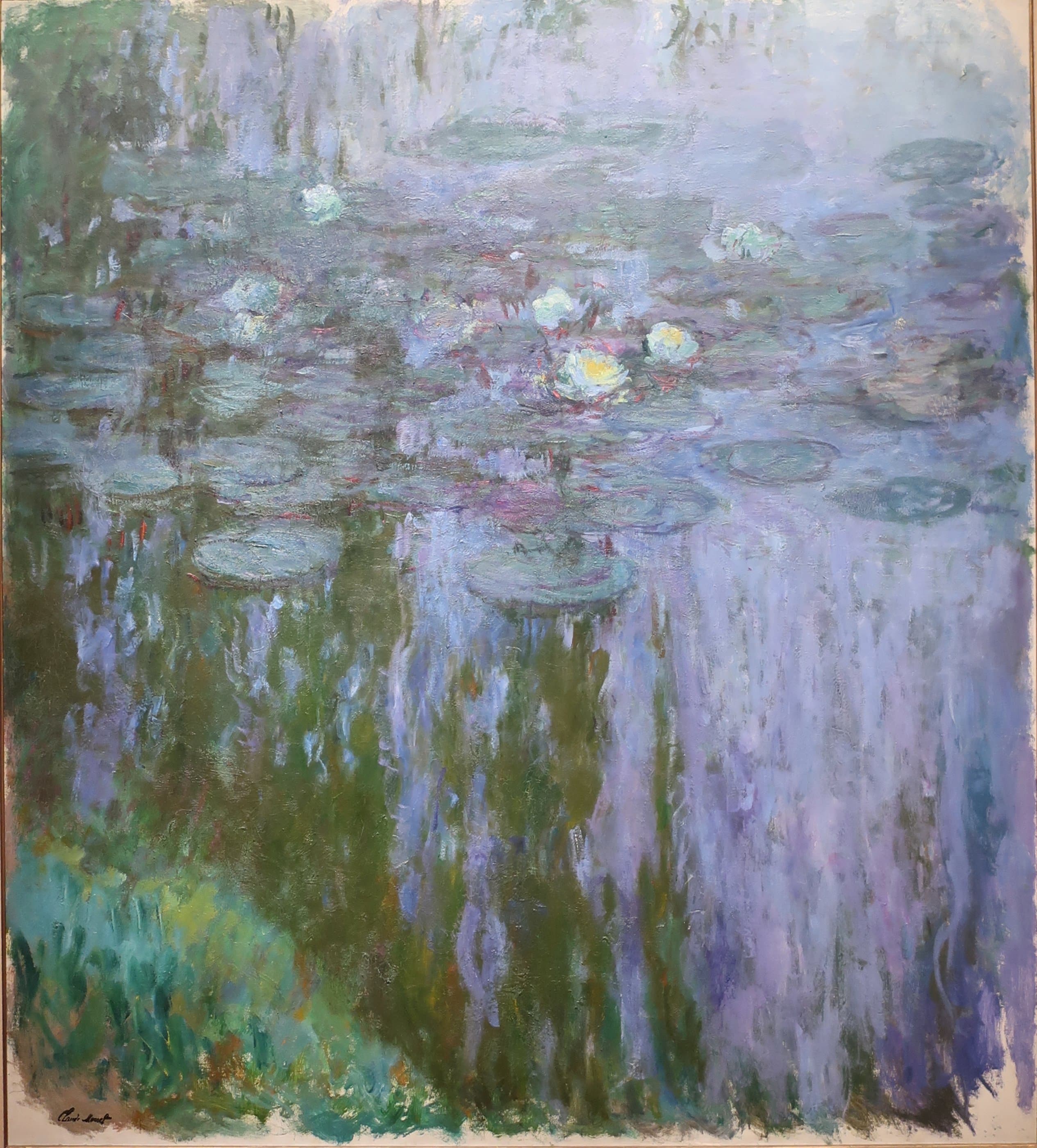
Nymphéas (Musée Marmottan Monet, 1916–19, inv. 5119)
Claude Monet · 1916–19
Corner of the Water-Lily Pond
Claude Monet · 1918
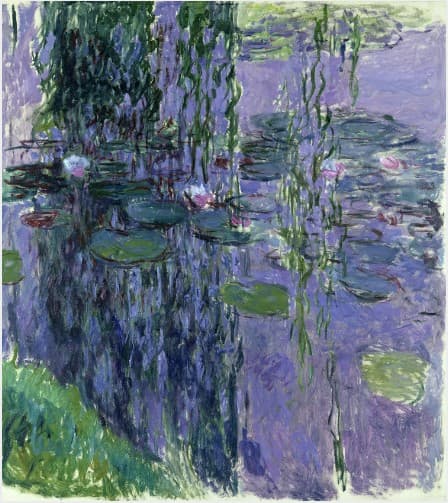
Nymphéas (Musée Marmottan Monet, 1916–19)
Claude Monet · 1916–19
Also painted in 1917
The same year
Kindred works
You may also study
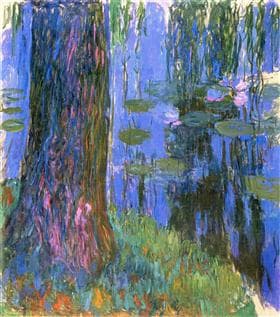
Weeping Willow and the Water-Lily Pond
Claude Monet · c. 1916–19
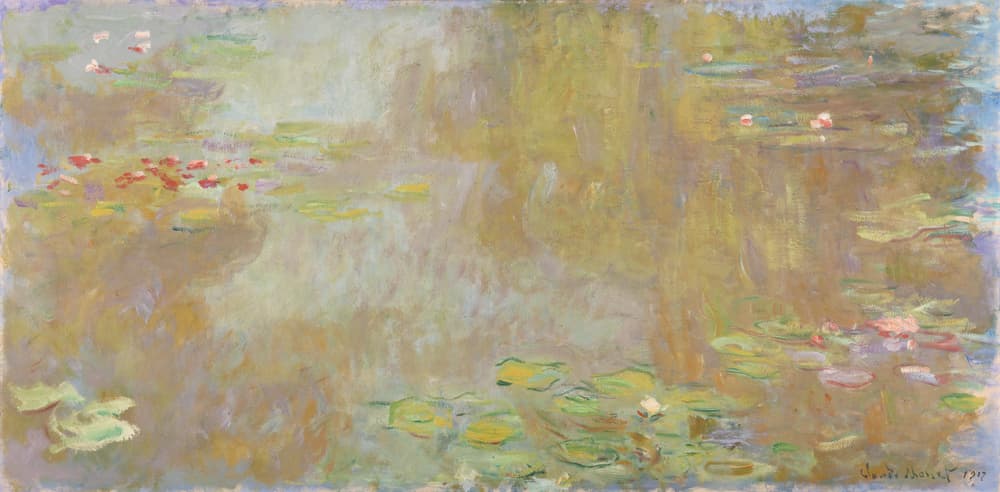
Water Lilies in Giverny
Claude Monet · 1917
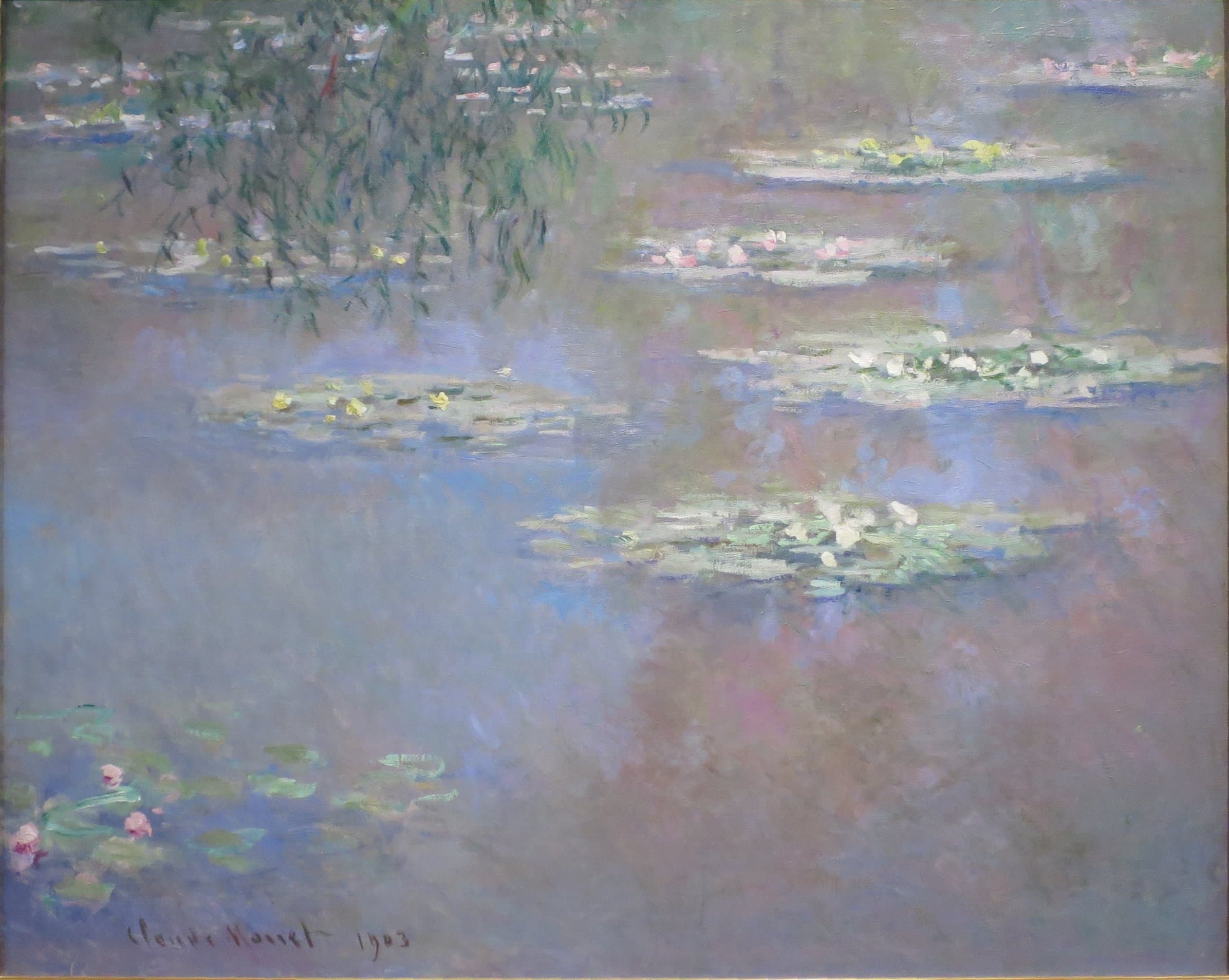
Waterlilies (1903, Dayton Art Institute)
Claude Monet · 1903
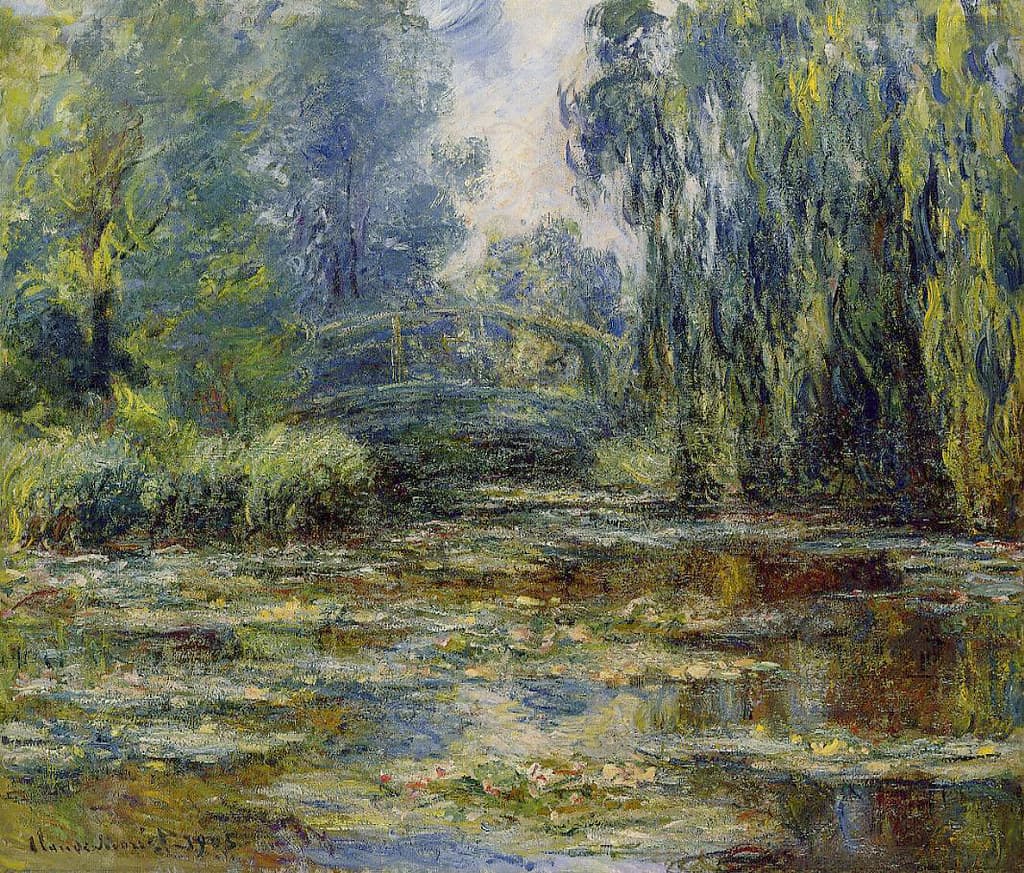
The Water-Lily Pond and Bridge
Claude Monet · 1905
Nymphéas (Oyamazaki Villa Museum)
Claude Monet · 1908
The Japanese Bridge over the Water-Lily Pond in Giverny
Claude Monet · 1920–24
The Japanese Bridge
Claude Monet · c. 1923–25
The Japanese Bridge
Claude Monet · c. 1919–24