Image: Sotheby's · Public domain · via Wikimedia Commons
Iris
Claude Monet, c. 1924–25
Iris is a large late painting of c. 1924–25 by Claude Monet of yellow and purple irises on the edge of his water-lily pond at Giverny, with clouds reflected in the water behind. Long in the Schlumberger collection in Paris, it was offered at Sotheby's Paris in October 2026.
- Artist
- Claude Monet
- Date
- c. 1924–25
- Medium
- Oil on canvas
- Dimensions
- 159.6 × 180 cm
- Collection
- Private collection (Schlumberger collection; offered at Sotheby's Paris, October 2026)
- Movement
- Impressionism
- Catalogue
- Wildenstein 1838
- Nature & Landscape
- Water & Sea
Claude Monet's Iris is one of the last pictures of his garden, painted around 1924–25 when he was in his mid-eighties. Tall iris leaves and yellow and purple flowers rise along the edge of the water-lily pond at Giverny, and behind them the surface of the pond glows with reflected sky and clouds. The canvas is large, 159.6 by 180 centimeters, and catalogued by Wildenstein as number 1838. It stayed in Monet's studio until his death, passed to his son Michel, and was sold through the Paris dealer Katia Granoff to the Schlumberger family, who kept it for decades. In October 2026 it was offered at Sotheby's in Paris as a highlight of the sale La Collection Schlumberger. Le Temps retrouvé, with an estimate of €22–30 million.
What you are looking at
The lower half and the whole left side of the canvas are a thicket of iris leaves: long, sword-like strokes of emerald, turquoise, blue and olive, some upright, some arching and crossing. Among them the flowers appear as twisting, ruffled blots of yellow and gold, the largest just left of center and another at lower right, with a few smaller pink and purple blooms at the left edge. In the lower right, some of the leaves and flowers turn pale, almost white and gray, as if caught in strong light.
The upper right of the picture is the pond. It is not painted as water but as what the water reflects: a broad field of pale blue, lilac and white, broken into swirling, curling strokes that read as clouds drifting across the surface. At the top left, the blue deepens toward violet and a few yellow-green stalks cut across it.
The contrast is the point: dense, dark, vertical growth on one side, open, pale, swirling light on the other, with the yellow irises standing at the boundary between them.
Where and when
Monet planted irises around the pond and in the flower garden at Giverny from the 1890s, and they recur in his late work, from the National Gallery's Irises of about 1914–17 to the iris passages of the Water Lilies. In 1923 he had cataract surgery, and in his last years he was finishing the great Water Lilies panels for the Musée de l'Orangerie while also painting smaller (though still large) canvases of the garden. Iris belongs to this final period, when his color became more intense and his brushwork broader and freer.
How this version differs
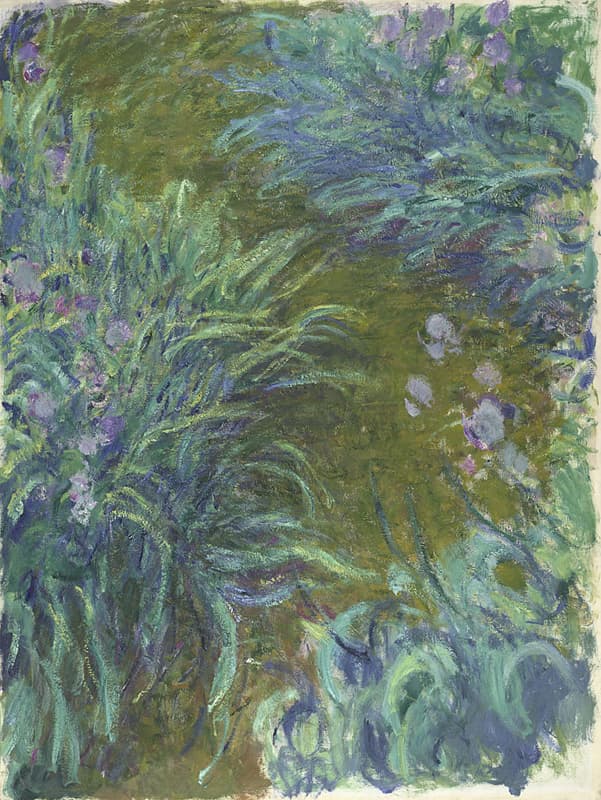
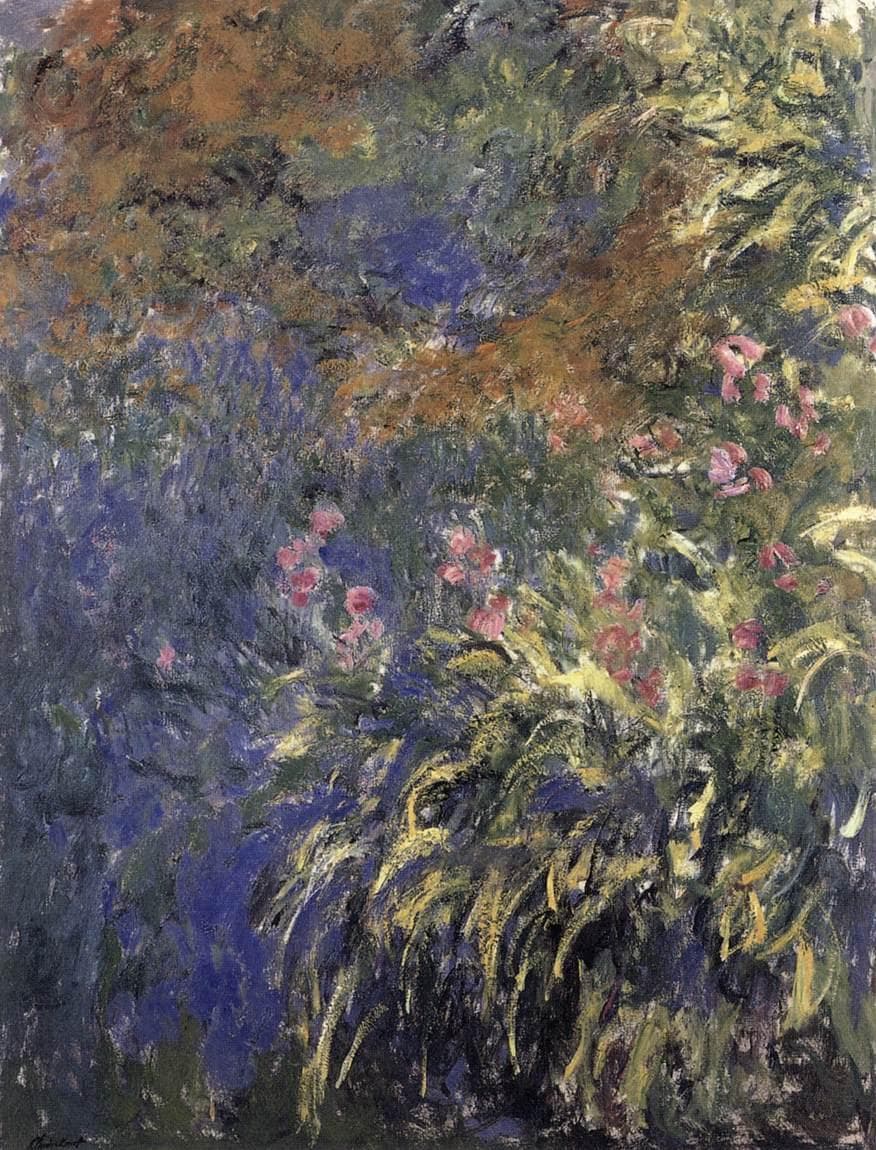
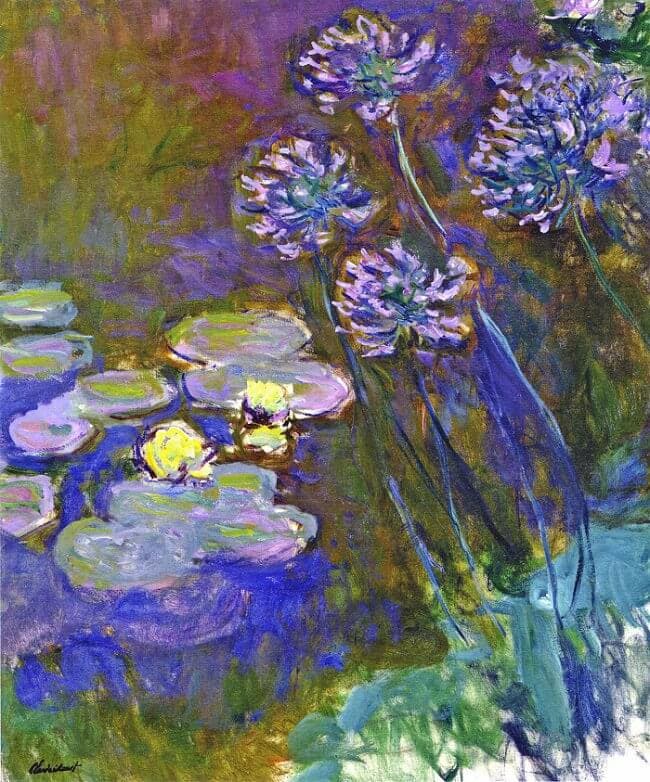
The National Gallery's Irises looks down at a path between flower beds, with no water. The Virginia Museum of Fine Arts' Irises by the Pond crowds leaves and blooms along the water's edge. The Schlumberger Iris combines the flowers and the reflected sky in a single, nearly square composition, so that it reads as a meeting of the two subjects that occupied Monet's last decade: the garden and the pond. Its yellow irises, rather than the more usual purple, give it an unusually warm, bright accent. Compare also the Marmottan's Water Lilies and Agapanthus, where blue flowers lean over the pond in the same way.
How it was painted
The paint is thick and fluid, applied with a large brush in long, sweeping strokes for the leaves and tight, circling ones for the reflected clouds. Parts of the canvas are densely worked; others, at the edges, are thinner. The work bears Monet's studio stamp at lower right rather than a signature, which tells you he never released it for sale. Wildenstein's catalogue illustrates it in an earlier, "first" state, suggesting its appearance has changed since it was first photographed.
For the garden as a whole, see Giverny: Monet's House and Garden.
Ownership and where to see it
The painting is in private hands. Its October 2026 sale at Sotheby's Paris was its first appearance on the market since it entered the Schlumberger collection. For Monet's late garden paintings on public view, see Where to See Monet's Paintings and Claude Monet.
Questions & answers
Where is Monet's Iris (c. 1924–25)?
It is in private hands. It belonged for decades to the Schlumberger collection in Paris and was offered at Sotheby's Paris on October 22, 2026, in the sale La Collection Schlumberger. Le Temps retrouvé, with an estimate of €22–30 million.
When did Monet paint Iris?
Monet painted it around 1924–25 at Giverny, in the last years of his life, while he was also finishing the great Water Lilies panels for the Musée de l'Orangerie. It stayed in his studio until his death in 1926.
What does Monet's Iris show?
It shows a thicket of iris leaves with yellow and a few purple flowers on the edge of the water-lily pond at Giverny, with the pond's surface behind them full of reflected blue sky and swirling white clouds.
Who owned Monet's Iris?
After Monet's death it passed to his son Michel Monet. The Paris dealer Katia Granoff sold it to the Schlumberger family, who owned it until it was offered at Sotheby's Paris in October 2026.
More by the artist
Claude Monet
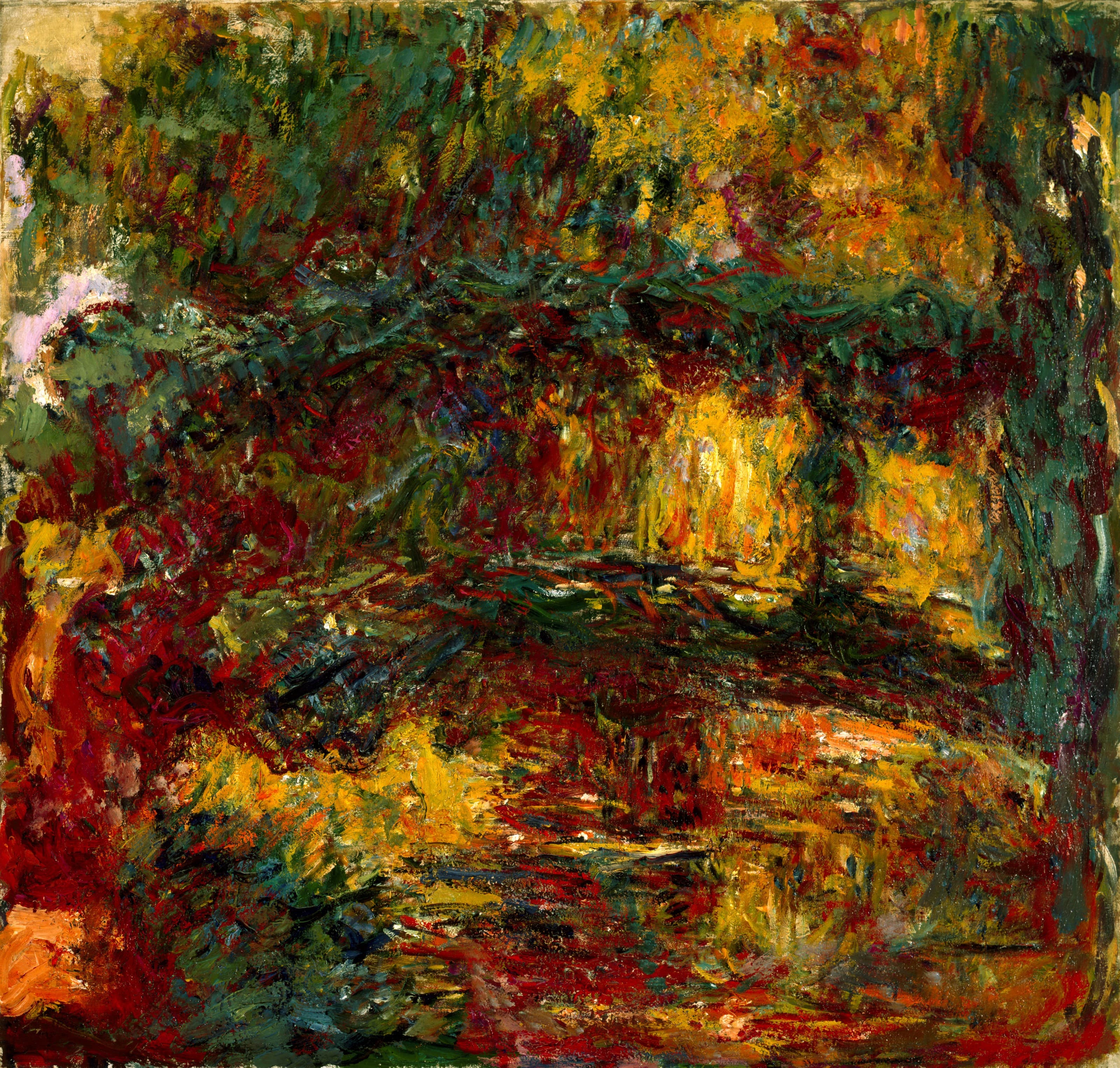
The Japanese Footbridge, Giverny
Claude Monet · c. 1922
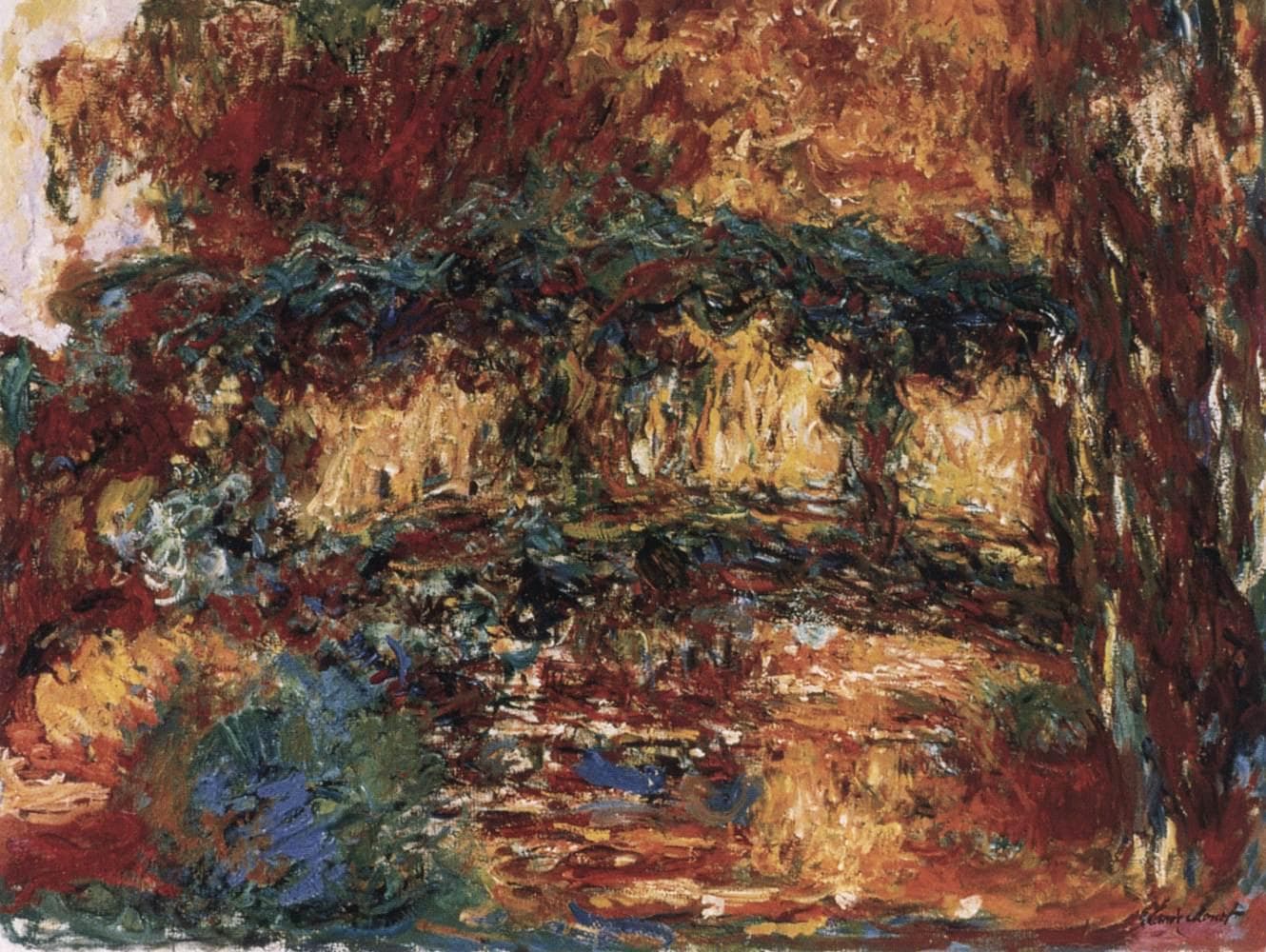
The Japanese Bridge
Claude Monet · c. 1923–25
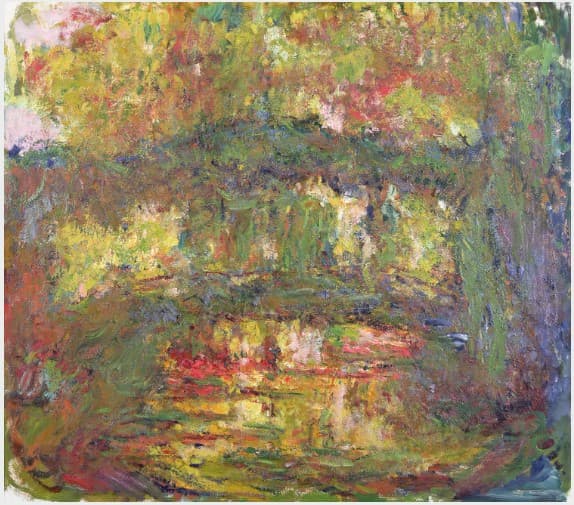
Le pont japonais
Claude Monet · 1918–24
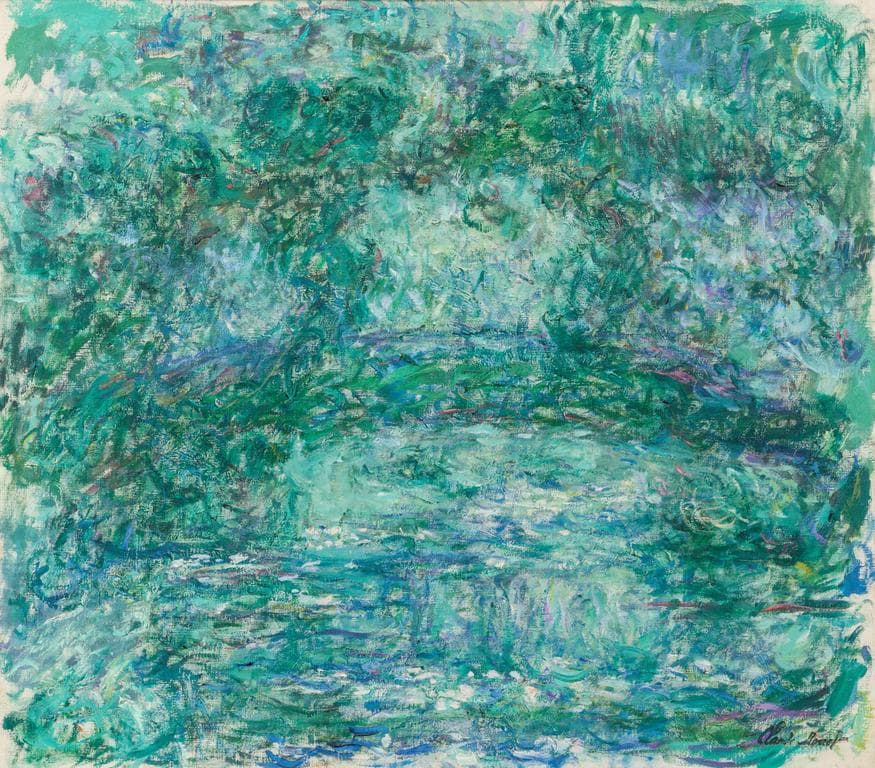
Le pont japonais (Japanese Bridge)
Claude Monet · 1918–24
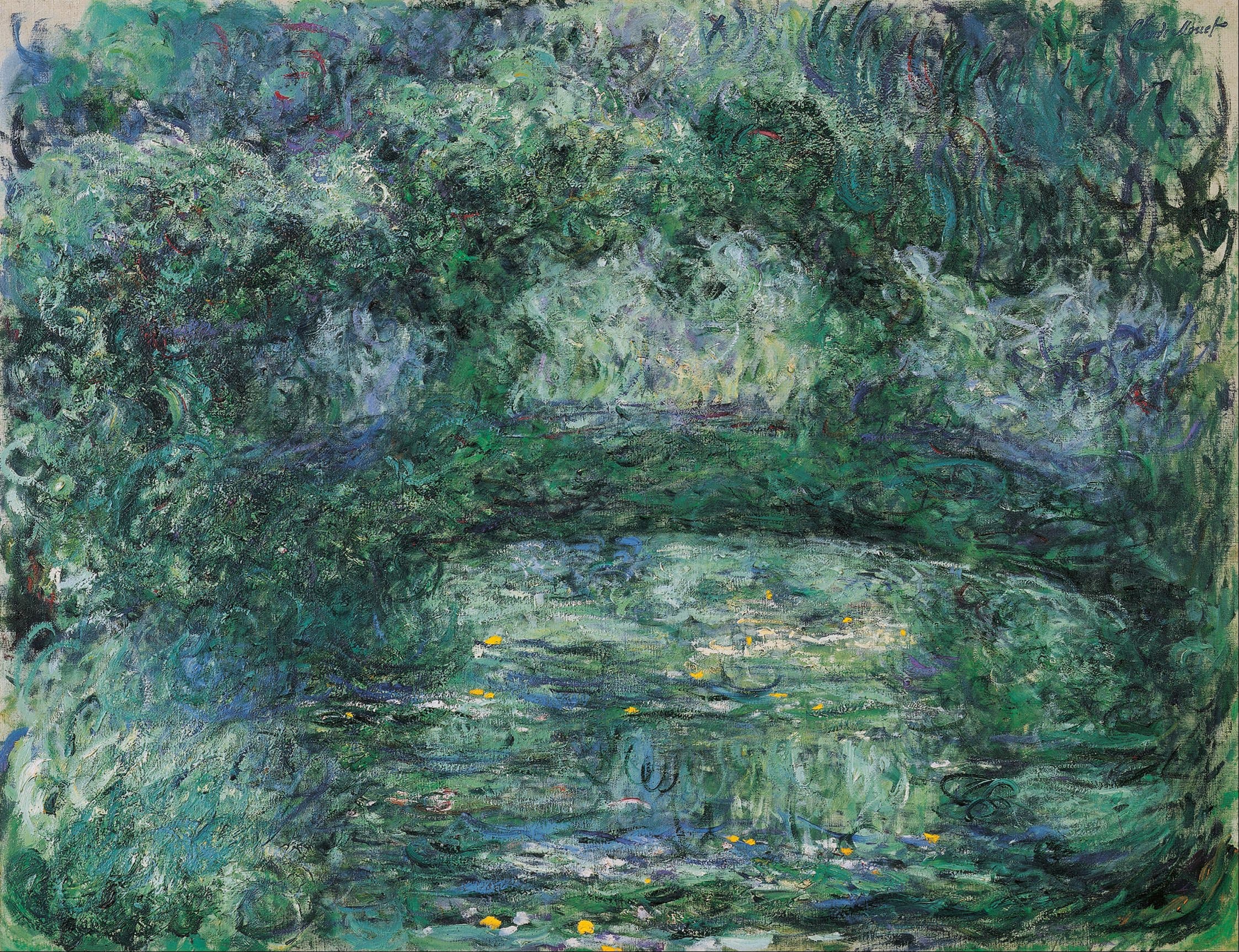
The Japanese Bridge
Claude Monet · 1918–24
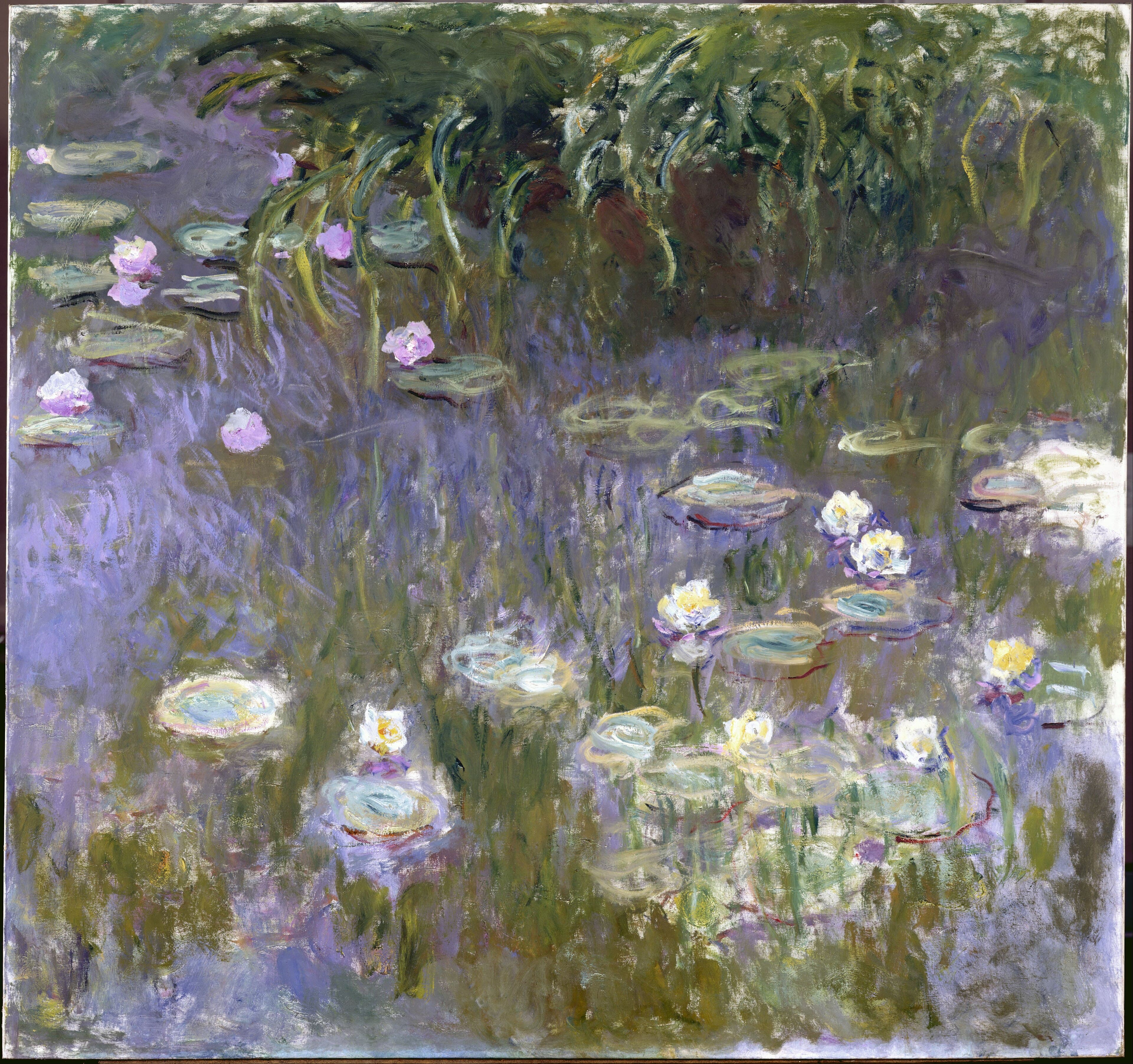
Water Lilies (Toledo Museum of Art)
Claude Monet · c. 1922
Japanese Bridge
Claude Monet · 1918–19
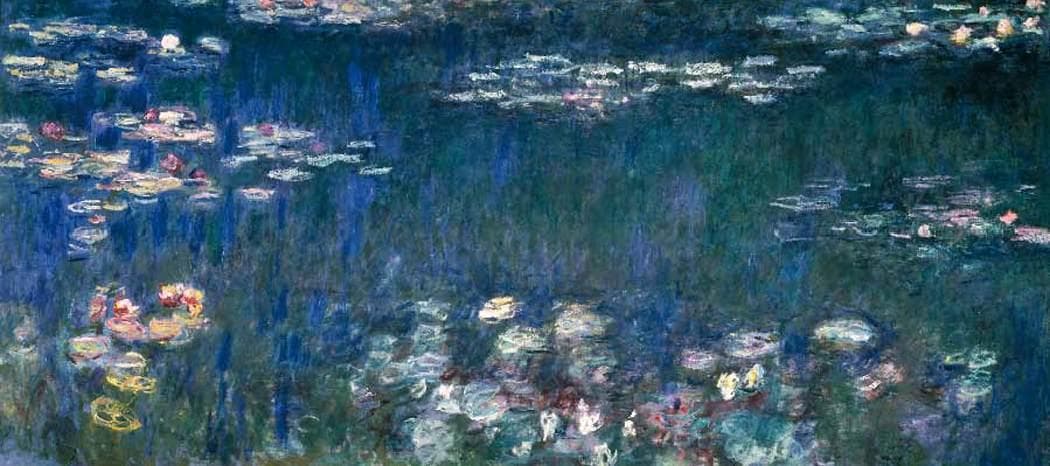
Water Lilies: Green Reflections
Claude Monet · 1914–26
Kindred works
You may also study
Irises
Claude Monet · c. 1914–17
Irises by the Pond
Claude Monet · c. 1914–17
Water Lilies and Agapanthus
Claude Monet · 1914–17
Water Lilies (Agapanthus)
Claude Monet · c. 1915–26

The Water Lilies: The Clouds
Claude Monet · c. 1914–26
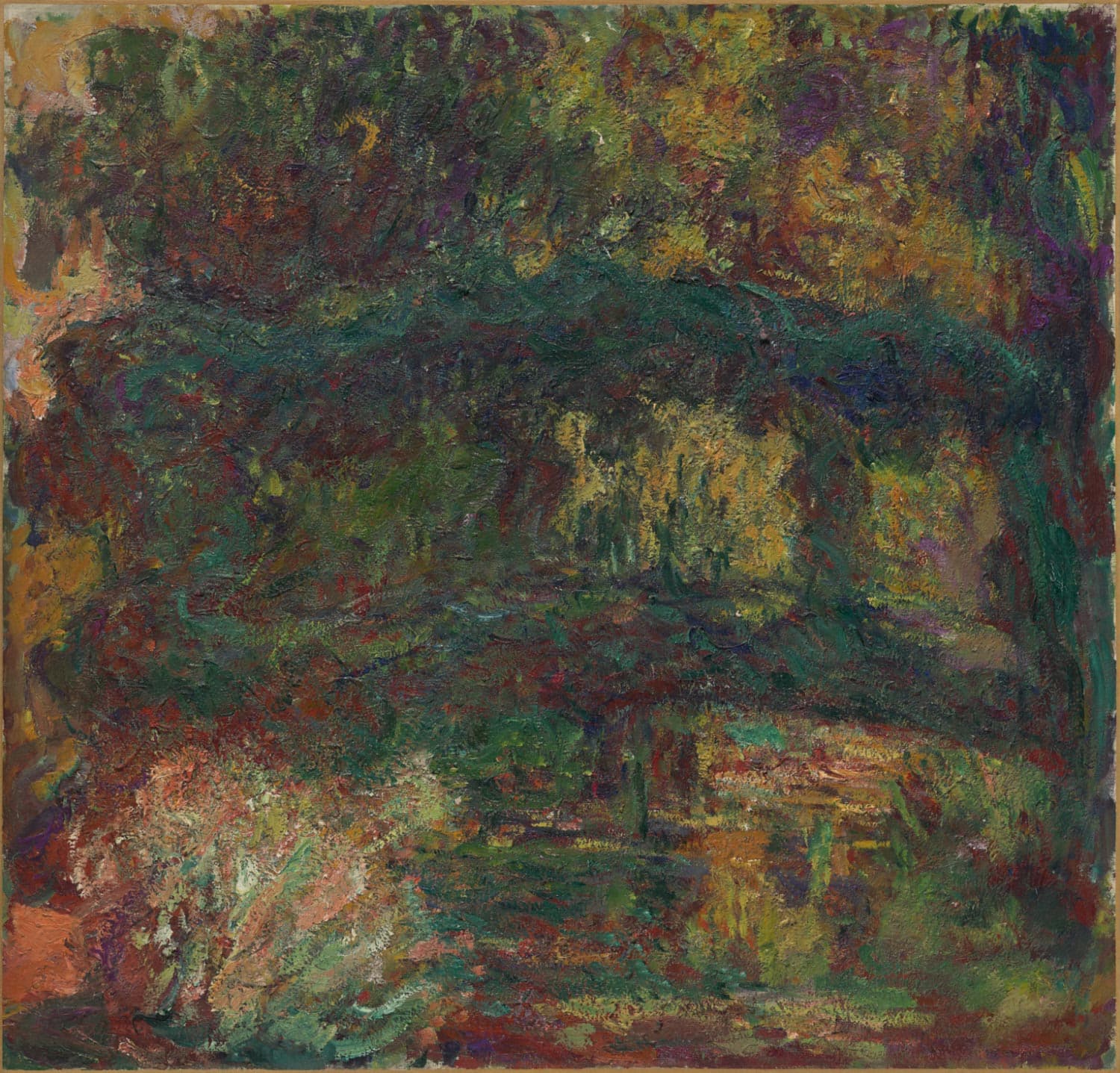
Nymphéas, Japanese Bridge
Claude Monet · 1918–26
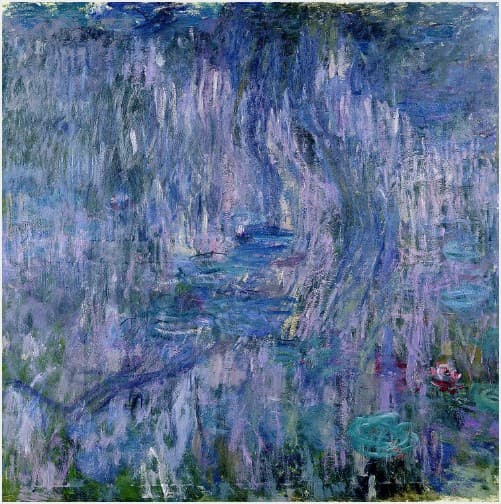
Water-Lilies, Reflection of a Weeping Willow
Claude Monet · 1916–19
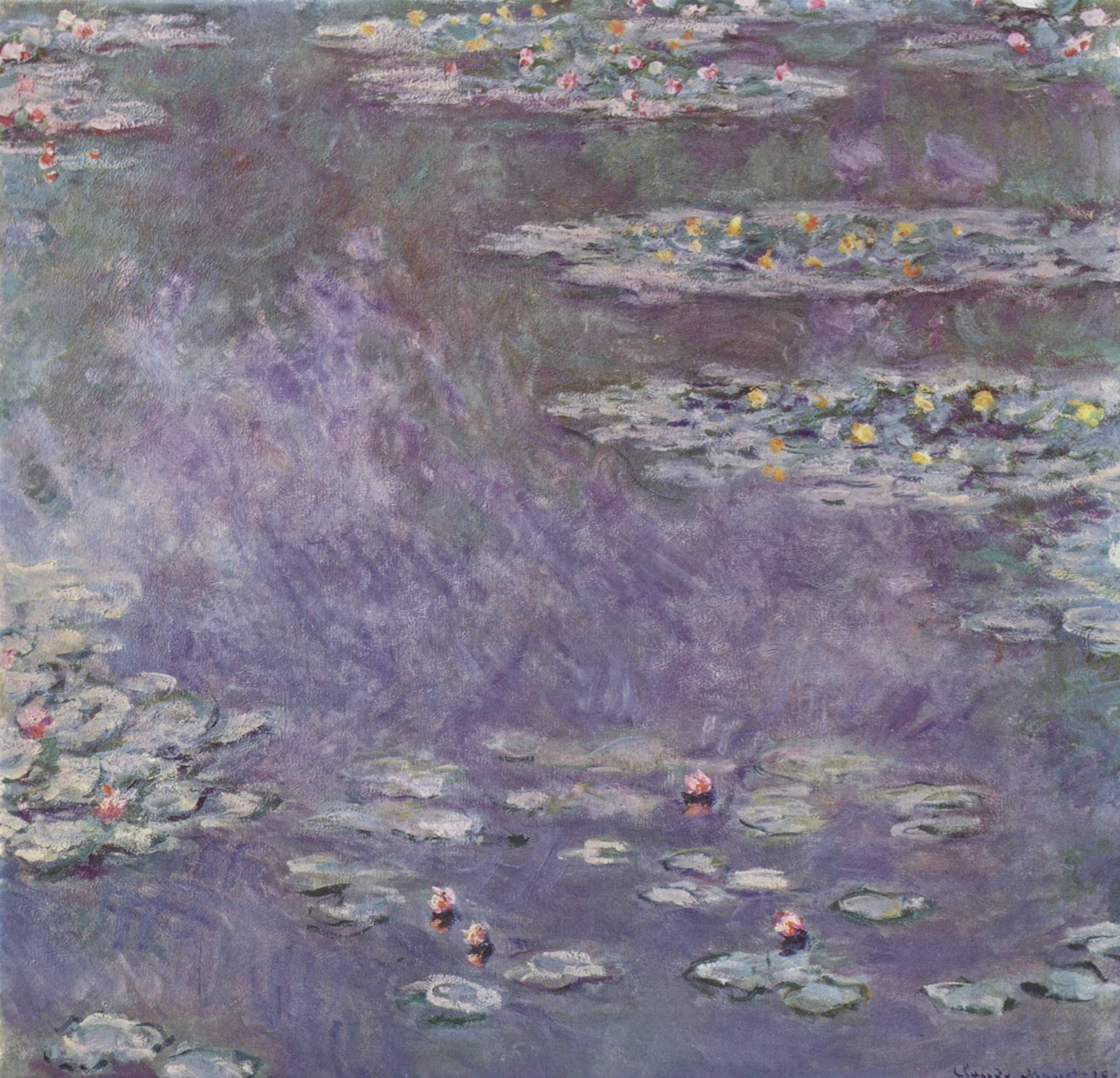
Nymphéas (Oyamazaki Villa Museum)
Claude Monet · 1908