Image: Cleveland Museum of Art (Open Access, CC0) · Public domain · via Wikimedia Commons
Water Lilies (Agapanthus)
Claude Monet, c. 1915–26
Water Lilies (Agapanthus) is a huge canvas of about 1915–26 by Claude Monet, over four meters wide, showing his lily pond as an endless violet and green surface. One panel of the Agapanthus triptych, it is in the Cleveland Museum of Art.
- Artist
- Claude Monet
- Date
- c. 1915–26
- Medium
- Oil on canvas
- Dimensions
- 201.3 × 425.6 cm
- Collection
- Cleveland Museum of Art, Cleveland, United States
- Movement
- Impressionism
- Catalogue
- Wildenstein 1975
- Nature & Landscape
- Water & Sea
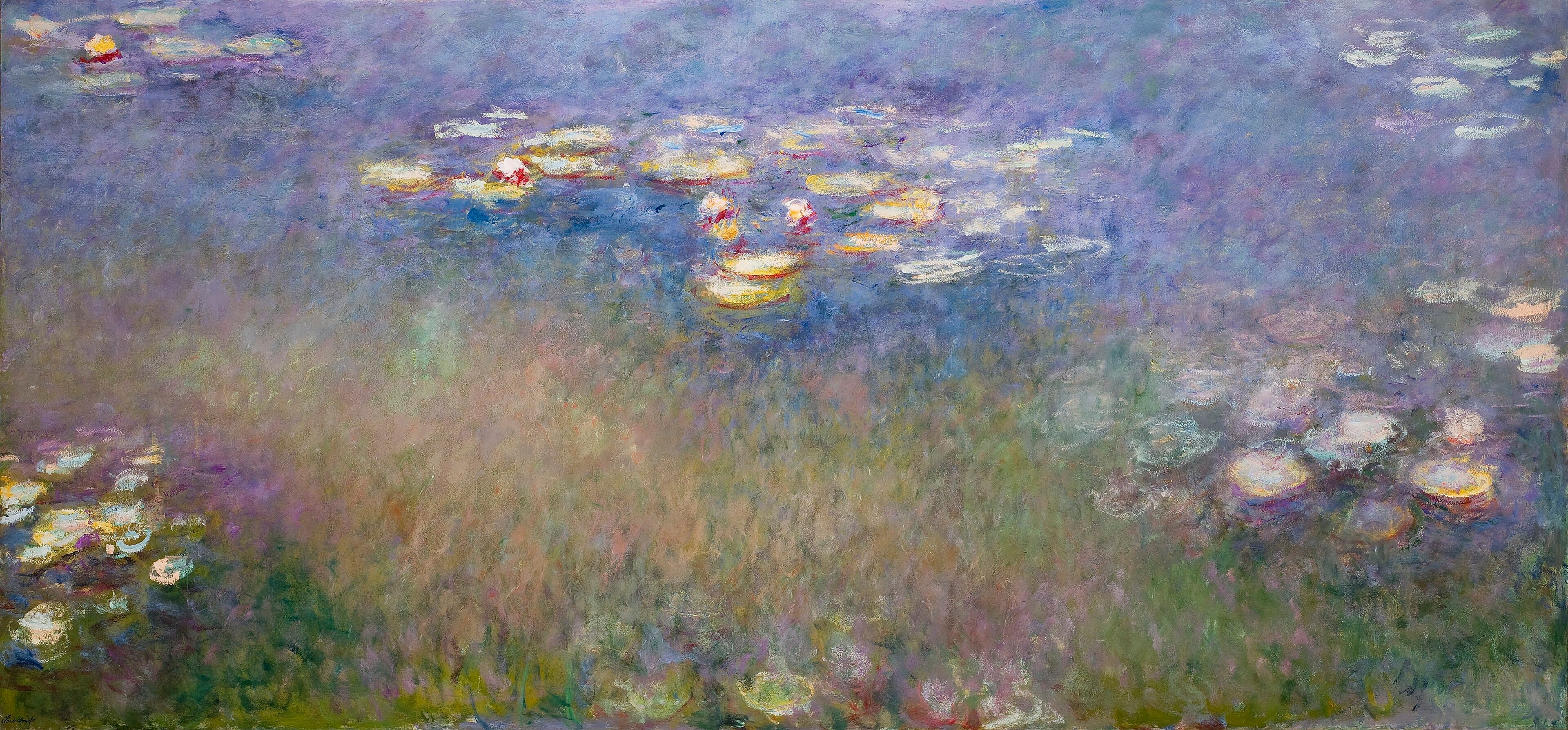
Water Lilies (Agapanthus) is one of the monumental canvases Claude Monet painted at Giverny in the last decade of his life, about 1915–26. It is 201.3 centimeters high and 425.6 wide, and it is in the Cleveland Museum of Art (John L. Severance Fund and an anonymous gift, 1960.81). It forms one panel of the three-part composition known as the Agapanthus triptych; the other two are in the Saint Louis Art Museum and the Nelson-Atkins Museum of Art in Kansas City.
What you're looking at
The canvas is a long horizontal band of water, without banks, bridge or horizon. Its ground is a soft, layered field of violet, lavender and blue, with darker passages of green and blue-black rising from the bottom edge: the reflections of plants on the bank, painted in long, upward strokes like grass. The Cleveland Museum describes how the picture concentrates on sunlight passing into and reflecting off the shimmering surface.
Lily pads drift across this field in loose groups. At the top center, a large island of pads in pale green, cream and yellow floats horizontally. To the left, smaller groups of pale pads are scattered down the canvas. At the far right, a cluster of pads near the bottom carries a few flowers, white and one orange-red, the brightest notes in the whole picture. Elsewhere the water is open, and the eye moves across it as across a landscape.
Standing in front of it, the width fills the field of vision. That is the point, as the museum notes: by leaving out the banks and horizon, and stretching the format sideways, Monet suggests a surface without end.
The late pond and the triptych
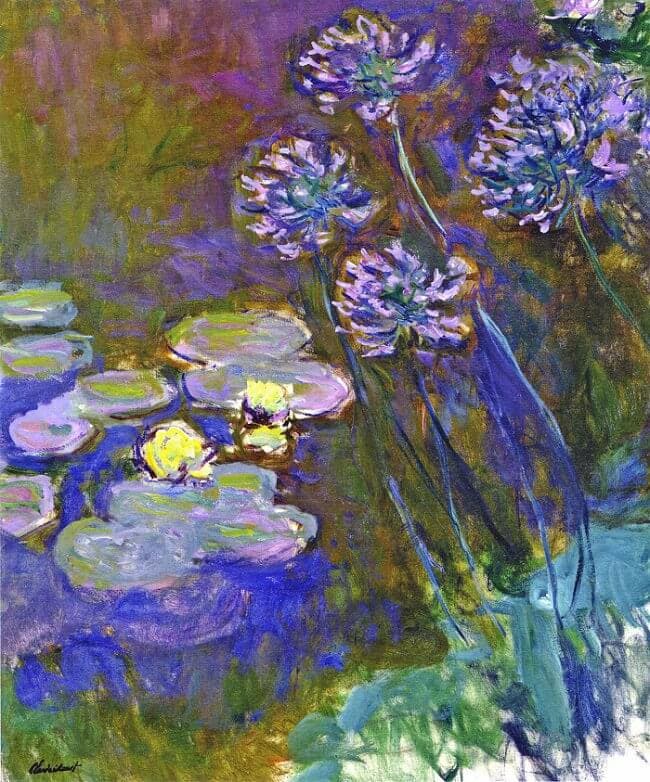
After the death of his wife Alice in 1911 and of his elder son Jean in 1914, and with his sight clouded by cataracts, Monet returned to the lily pond in 1914 with a new ambition: a cycle of enormous decorative panels that would surround the viewer with water. In 1915 he built a large new studio at Giverny to paint them. Alongside the panels, which went to the Musée de l'Orangerie in Paris in 1927, he painted dozens of big canvases of the pond, studies and independent pictures, most of which stayed in the studio, unsigned, until his death in 1926. The title Agapanthus comes from the African lilies that Monet first painted along one side of the composition, as in the smaller Marmottan study Water Lilies and Agapanthus. In the finished panels he painted the flowers out, leaving only the pond. The three panels were not part of the gift to the state and remained at Giverny after his death.
How this version differs
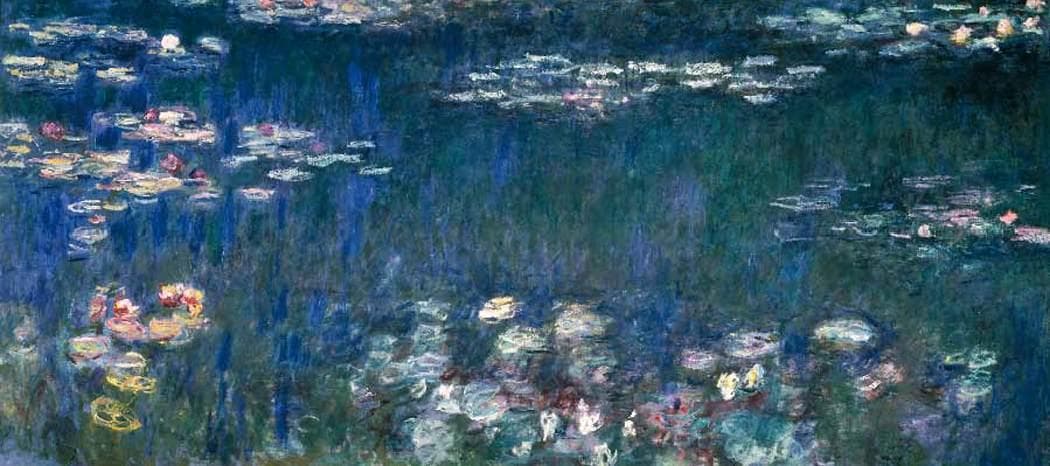
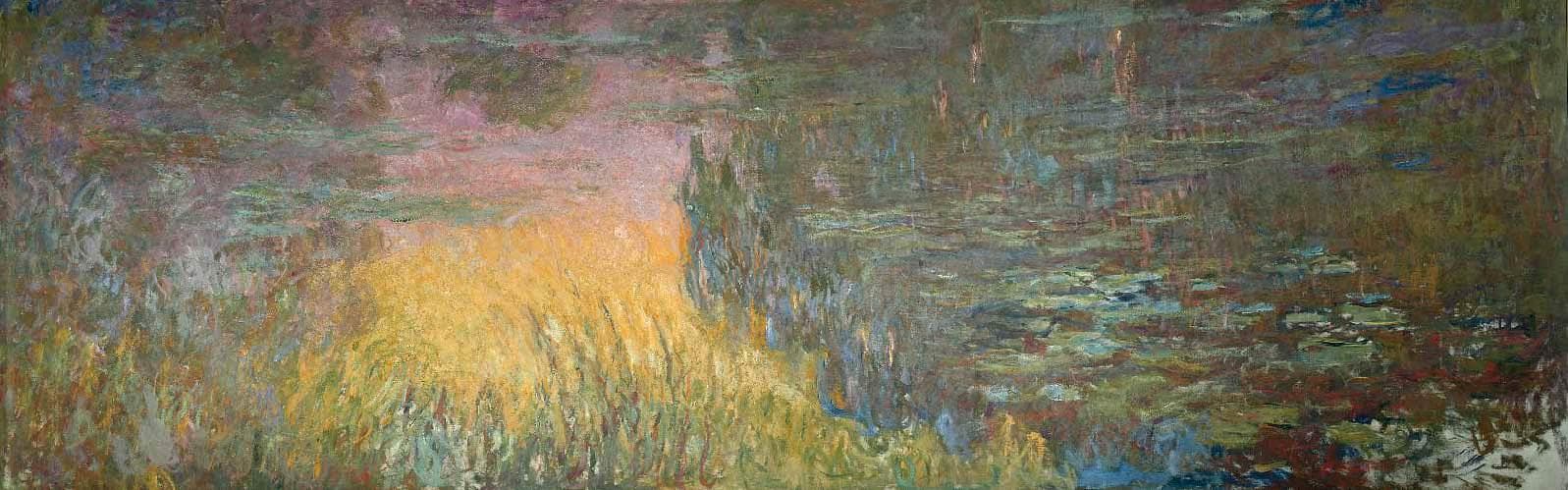
Cleveland's panel is one third of a continuous composition; the Saint Louis panel and the Kansas City panel continue the same surface to either side. Compared with the Orangerie panels, such as Green Reflections or Setting Sun, which are installed in curving oval rooms, the Agapanthus panels were dispersed and are usually seen alone. Compared with the smaller late canvases in Portland, Waterlilies, or Potsdam, Water Lilies, the handling is softer and more veiled, with layer after layer of violet scumbled over the surface.
How it was painted
The surface is built from many thin layers, dry paint dragged over dry, so that colors glimmer through one another. The pads are painted thickly and flatly, in pale, opaque colors that sit on top of the veil of water. The grassy reflections along the bottom are long, upward strokes of green and blue. The scale required Monet to work standing, with large brushes, in the new studio. Each panel is close in size to the three panels of the Museum of Modern Art's Water Lilies.
Ownership and where to see it
After Monet's death the panels stayed in the studio with his son Michel. In the 1950s, as interest in late Monet revived alongside American abstract painting, the Paris dealer Katia Granoff acquired many of the large canvases. Cleveland's panel passed through Knoedler in New York and came to the museum in 1960. The three panels have been reunited only occasionally, including at the Nelson-Atkins in 2011 and at the Fondation Louis Vuitton in Paris in 2022–23. For the series see Monet's Water Lilies; for the garden, Giverny; for the Orangerie panels, the Orangerie; for Monet elsewhere, Where to See Monet's Paintings.
Questions & answers
Where is Monet's Water Lilies (Agapanthus)?
It is in the Cleveland Museum of Art in Ohio (1960.81), bought in 1960 with the John L. Severance Fund and an anonymous gift. It is usually on view in the museum's Impressionist galleries.
What is the Agapanthus triptych?
A three-panel water-lily composition, each panel about two by four meters, painted about 1915–26. The panels are now in Cleveland, the Saint Louis Art Museum and the Nelson-Atkins Museum in Kansas City.
Why is it called Agapanthus?
Monet first painted blue agapanthus (African lilies) along one edge of the composition. He later painted them out, so the finished panels show only the pond, but the name stayed.
When was it painted?
About 1915–26, in the large studio Monet built at Giverny in 1915 for his decorative water-lily cycle. It remained in the studio until after his death in 1926.
More by the artist
Claude Monet
Irises
Claude Monet · c. 1914–17
Nymphéas en fleur
Claude Monet · c. 1914–17

Nymphéas [Waterlilies] (National Gallery of Australia)
Claude Monet · c. 1914–17
Nymphéas (Water Lilies)
Claude Monet · c. 1914–1919
Self-Portrait (1917)
Claude Monet · 1917
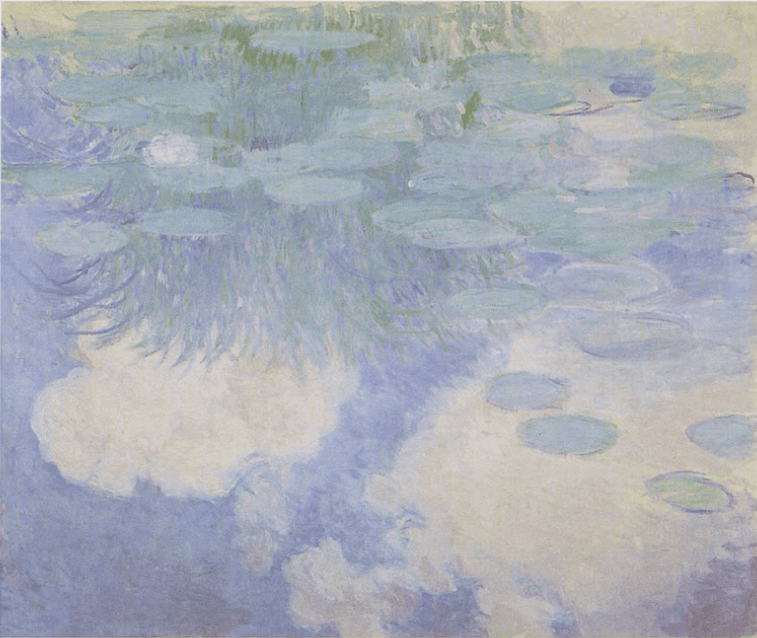
Nymphéas (1915, Musée Marmottan Monet)
Claude Monet · 1915

Water Lilies (MoMA triptych)
Claude Monet · 1914–26
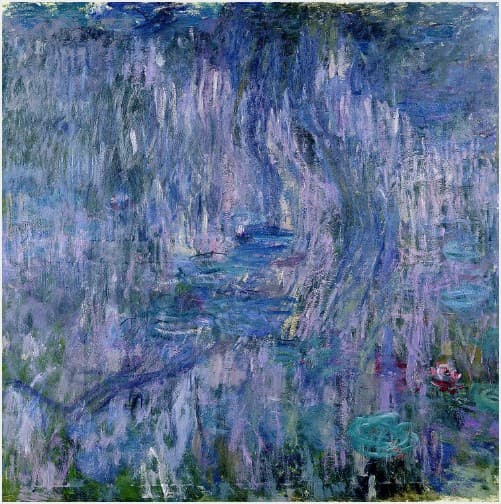
Water-Lilies, Reflection of a Weeping Willow
Claude Monet · 1916–19
Also painted in 1915
The same year
Kindred works
You may also study
Water Lilies and Agapanthus
Claude Monet · 1914–17
Water Lilies (Saint Louis Art Museum)
Claude Monet · c. 1915–26
Water Lilies: Green Reflections
Claude Monet · 1914–26
Water Lilies: Setting Sun
Claude Monet · 1914–26
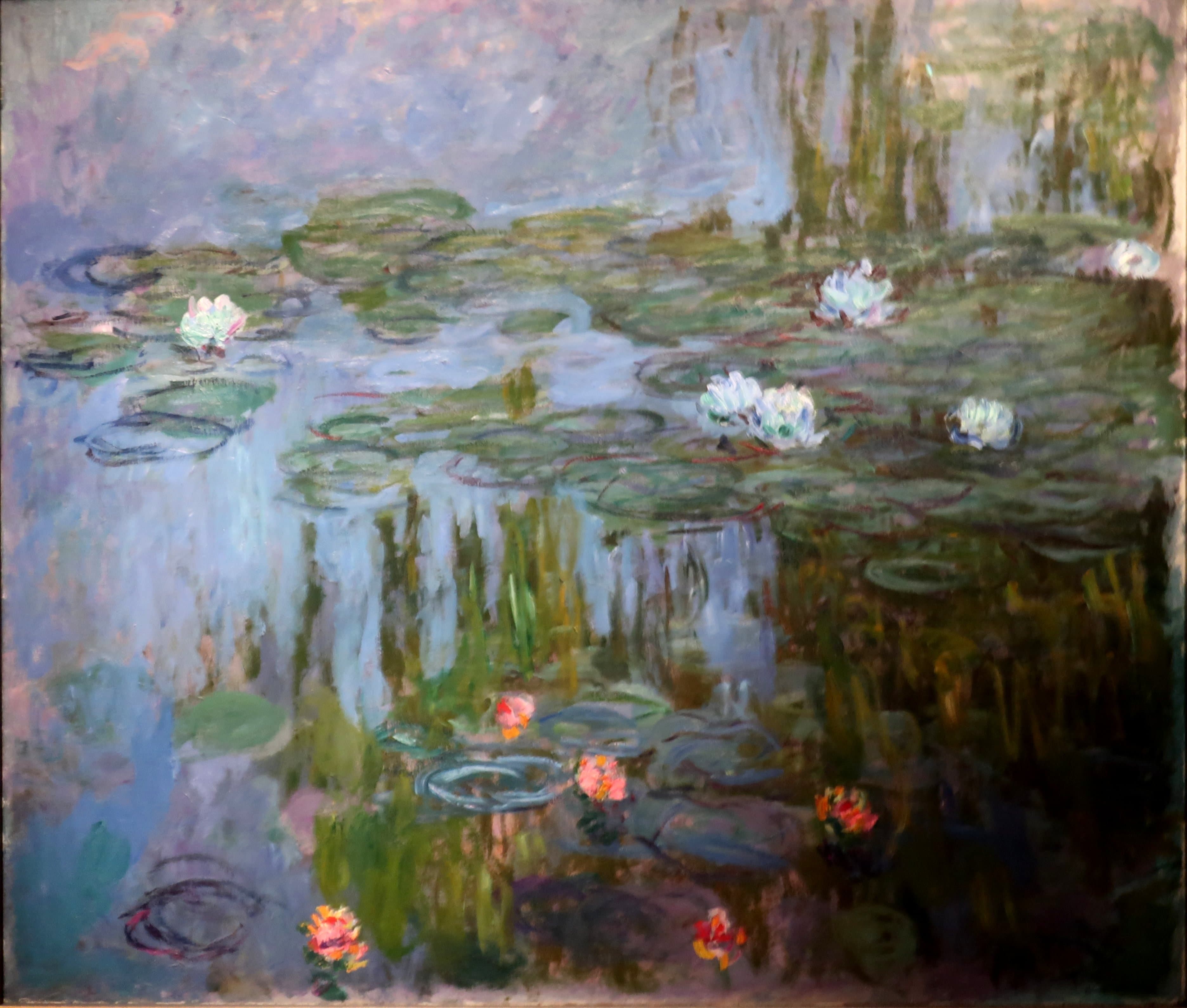
Waterlilies (c. 1914–15, Portland Art Museum)
Claude Monet · c. 1914–15
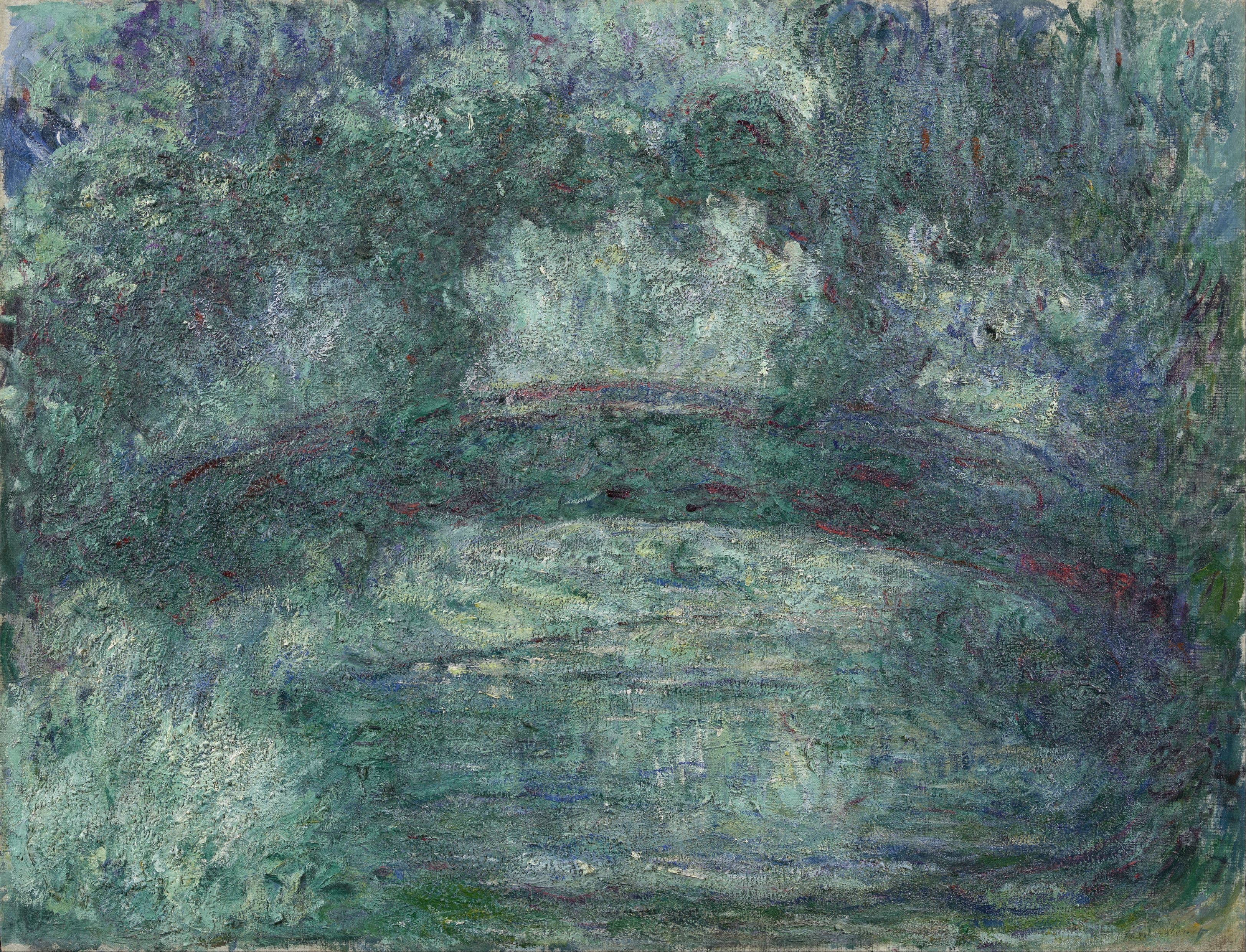
The Japanese Bridge
Claude Monet · 1919–24
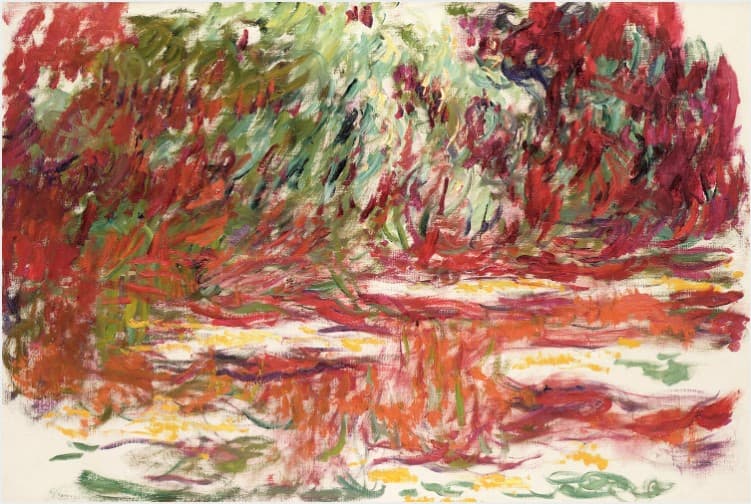
Water-Lily Pond (Bassin aux nymphéas, 1918–19)
Claude Monet · 1918–19
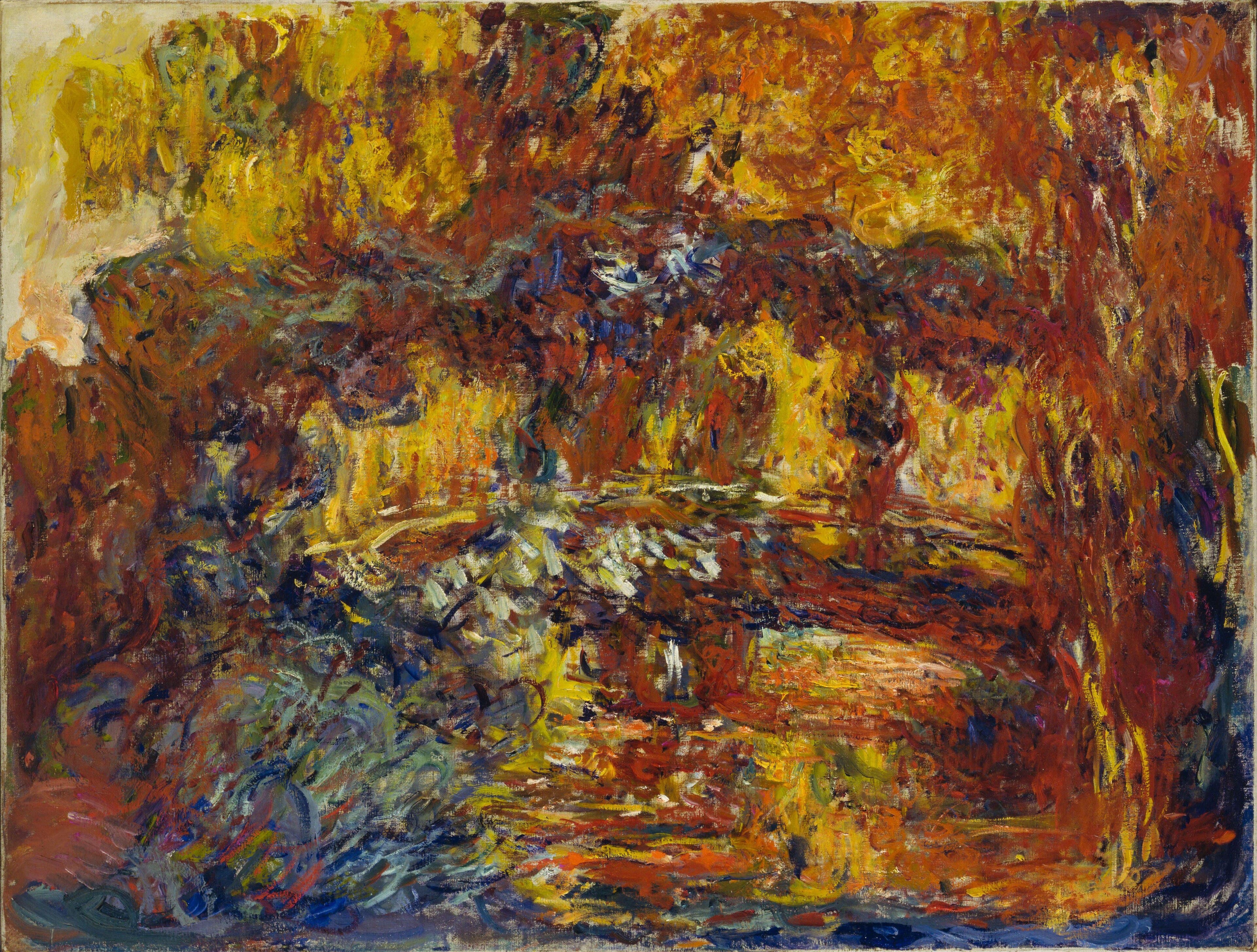
The Japanese Footbridge (MoMA)
Claude Monet · c. 1920–22