Image: Musée Marmottan Monet, Paris (photograph via Wikimedia Commons) · Public domain · via Wikimedia Commons
Nymphéas (Musée Marmottan Monet, 1916–19, inv. 5119)
Claude Monet, 1916–19
This Nymphéas is a two-meter-high canvas Claude Monet painted at Giverny in 1916–19: white-and-yellow lilies on blue-grey pads above a lilac cascade of willow reflection and a green bank. It is in the Musée Marmottan Monet, Paris.
- Artist
- Claude Monet
- Date
- 1916–19
- Medium
- Oil on canvas
- Dimensions
- 200 × 180 cm
- Collection
- Musée Marmottan Monet, Paris, France
- Movement
- Impressionism
- Catalogue
- Wildenstein 1855
- Nature & Landscape
- Water & Sea
This Nymphéas (Water Lilies) is a tall canvas, 200 × 180 cm, that Claude Monet painted of his pond at Giverny between 1916 and 1919. It bears the studio stamp signature at lower left and came to the Musée Marmottan Monet in Paris with the bequest of Michel Monet in 1966 (inv. 5119). It is number 1855 in the Wildenstein catalogue raisonné.
What you're looking at
The upper half of the canvas is a calm field of lily pads. Painted as flat, rounded shapes in blue-grey, slate and soft green, they recede toward the top edge, where they become smaller and paler. Six or seven flowers open among them: white petals with yellow centers, and one larger bloom just right of center that catches the most light. A thin violet haze hangs over the top edge, the reflection of foliage above.
The lower half changes key. On the right, a cascade of lilac, violet and pale blue strokes pours downward, the reflection of a weeping willow on the bank. On the left, the water darkens into deep green, and at the bottom left corner a slope of brighter green and turquoise grass marks the edge of the pond.
What makes this version distinct is that clear division between a lit, legible upper zone of pads and flowers and a lower zone of reflection and shadow. The light feels like soft daylight, with no strong sun, the colors cool and silvery.
Where and when it was painted
This canvas is one of a set of tall, near-square pictures, all 200 × 180 cm, that Monet painted during the war years while preparing his decorative cycle. He had built a new studio at Giverny in 1915 to work on large formats, and he painted motifs from the pond over and over, varying the balance of lilies, willow and bank. The Marmottan owns several from this group.
How it was painted
The pads are laid in with broad, rounded strokes, two or three tones each, so they seem to tilt. The willow reflection on the right is built from long, wavering verticals in lilac and blue, layered loosely so that darker water shows between them. The grass in the corner is painted in thick, quick strokes of green and turquoise, the most saturated color in the picture. The flowers are thick touches of white and yellow, laid last.
How this version differs
Its closest sibling is the Marmottan's Nymphéas (1916–19), identical in size, where a dark willow fills the left side and the water turns violet. In Water-Lilies, Reflection of a Weeping Willow the willow cascade takes over the whole square. Here the lilies are still clearly the subject, and the reflection is kept to the lower right, making it one of the most balanced canvases of the group. The Orsay's Blue Water Lilies is a cooler variation on the same idea. All belong to the Water Lilies series.
A detail to look for
The flower just right of center, the largest on the canvas, has a yellow heart surrounded by white petals, but look closely and the white is not white: it is built from strokes of cream, lilac and pale green. Monet rarely used pure white for his lilies in these years. Instead he let the surrounding colors seep into the petals, so the flower seems to belong to the water. Compare the small blossoms near the top edge, which are no more than a few touches of cream on blue-grey. In a museum setting, standing a meter or so away, the big flower is the point where the whole canvas comes into focus.
Where to see it
The Musée Marmottan Monet shows its Monet collection, the largest group of late canvases by Claude Monet anywhere, in a dedicated gallery; works rotate and travel. For the garden at Giverny, see Giverny: Monet's House and Garden.
Questions & answers
Where is this Monet Nymphéas?
It is in the Musée Marmottan Monet in Paris (inventory 5119). It came to the museum in 1966 with the bequest of Michel Monet, the painter's son, which gave the Marmottan most of the late canvases still in the family.
When was it painted?
The Marmottan dates it to 1916–19. Monet painted it at Giverny during the years he worked on the water-lily decorations now in the Musée de l'Orangerie. It is Wildenstein number 1855.
What does the painting show?
It shows white and yellow lilies on blue-grey pads across the top half of the pond, with a lilac cascade of weeping-willow reflection at lower right and a green grassy bank in the bottom left corner.
How does it differ from other Marmottan water lilies?
It keeps the lilies clearly visible and confines the willow reflection to the lower right, balancing flowers, reflection and bank. Other canvases of the same size are dominated by willows or dissolve into lilac haze.
More by the artist
Claude Monet
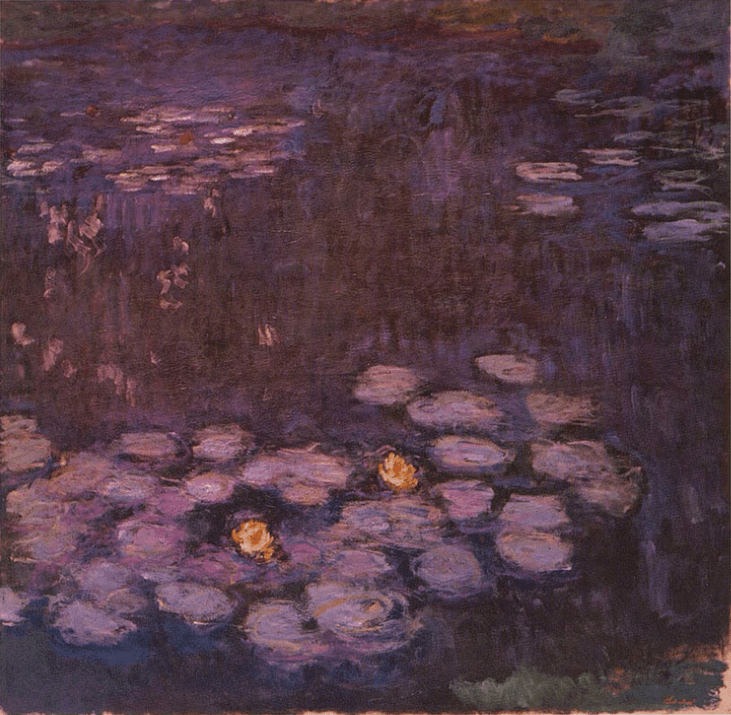
Water Lilies (Asahi Group Oyamazaki Villa Museum)
Claude Monet · c. 1914–17
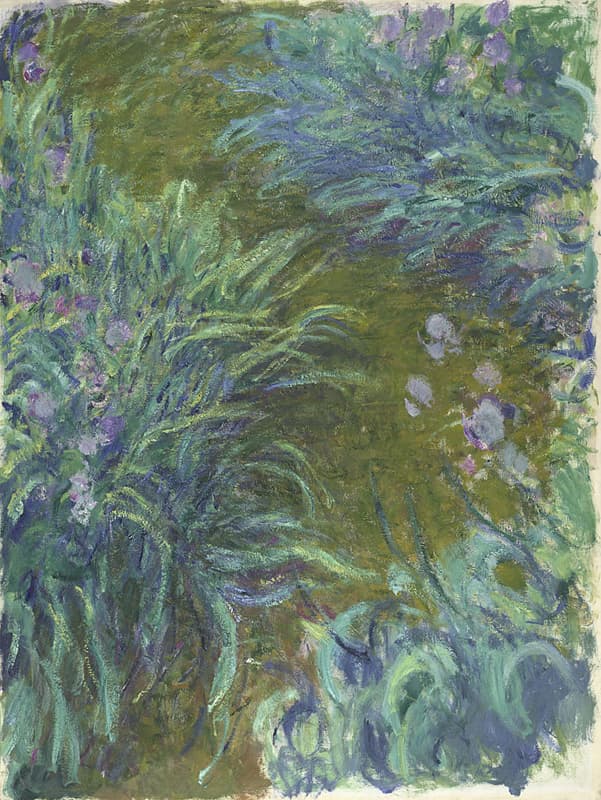
Irises
Claude Monet · c. 1914–17
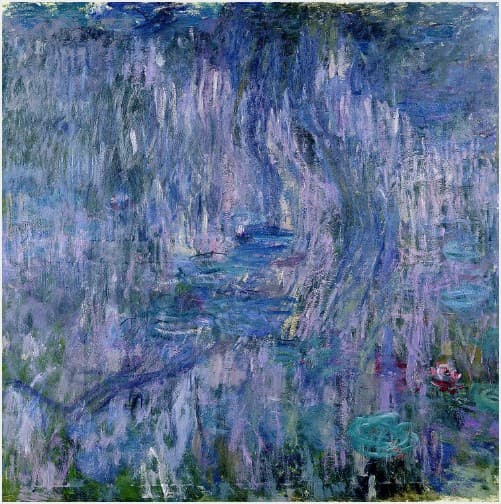
Water-Lilies, Reflection of a Weeping Willow
Claude Monet · 1916–19
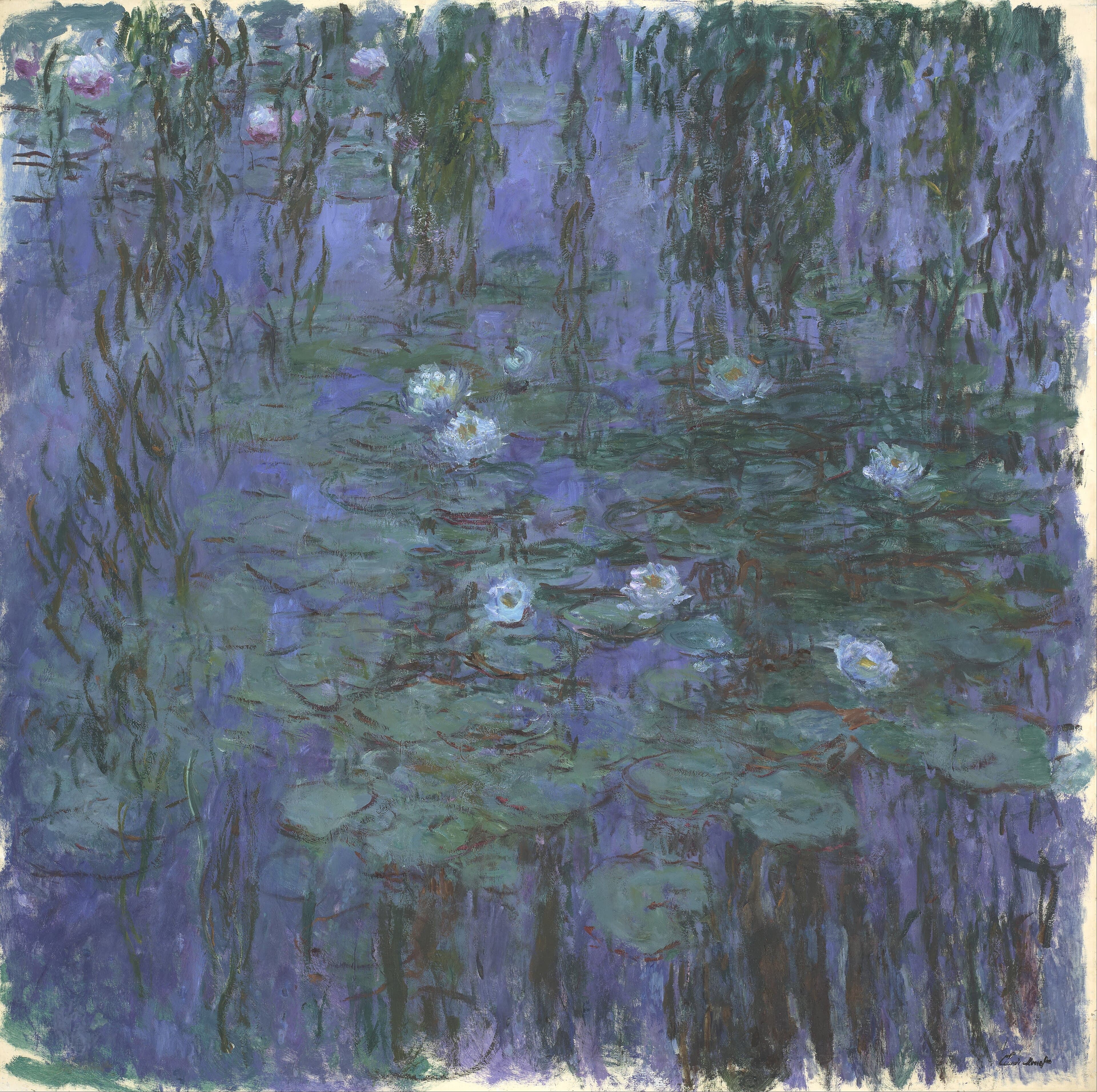
Blue Water Lilies
Claude Monet · 1916–19
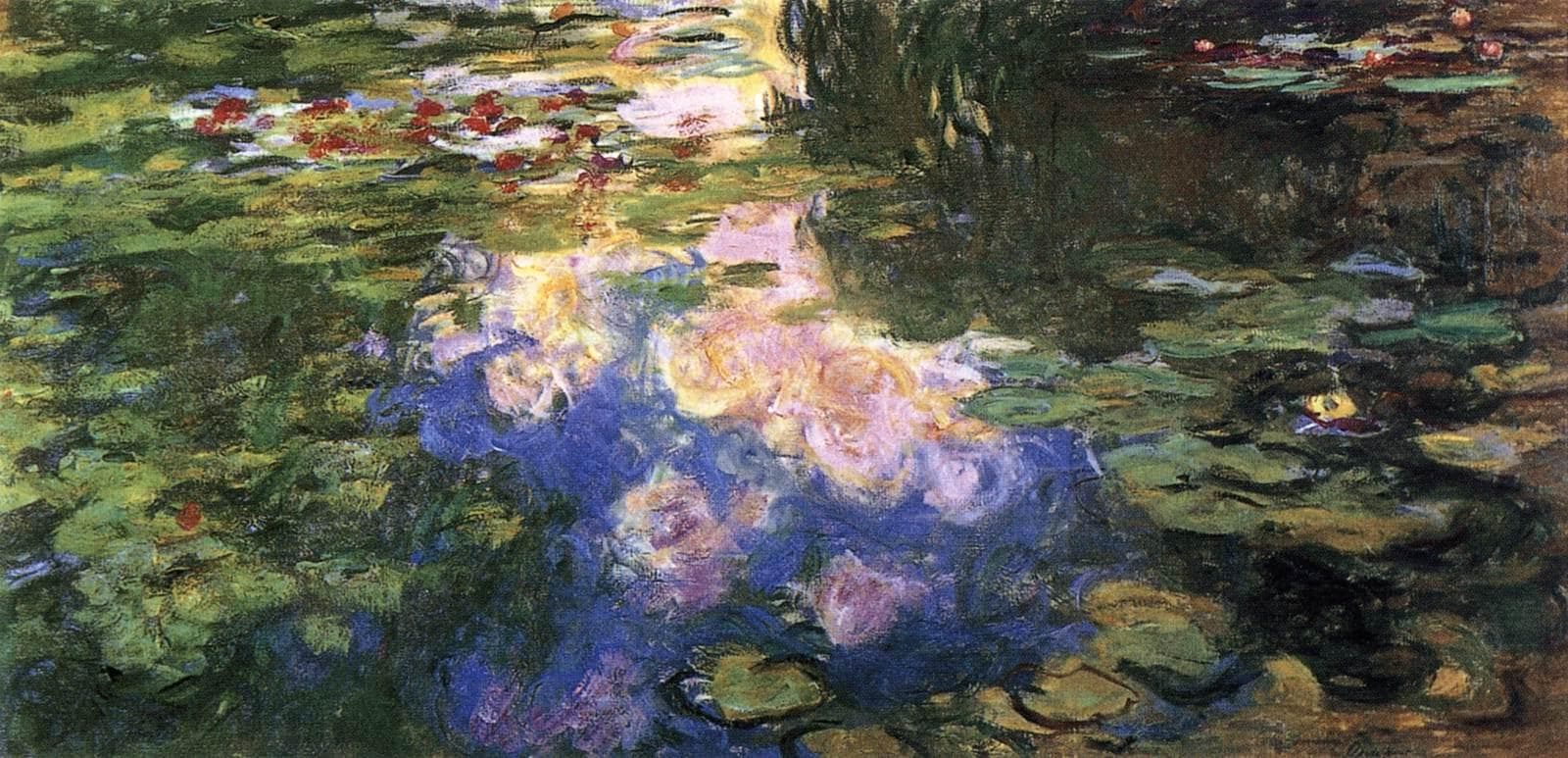
Water-Lily Pond (Le Bassin aux nymphéas), 1917–19
Claude Monet · 1917–19
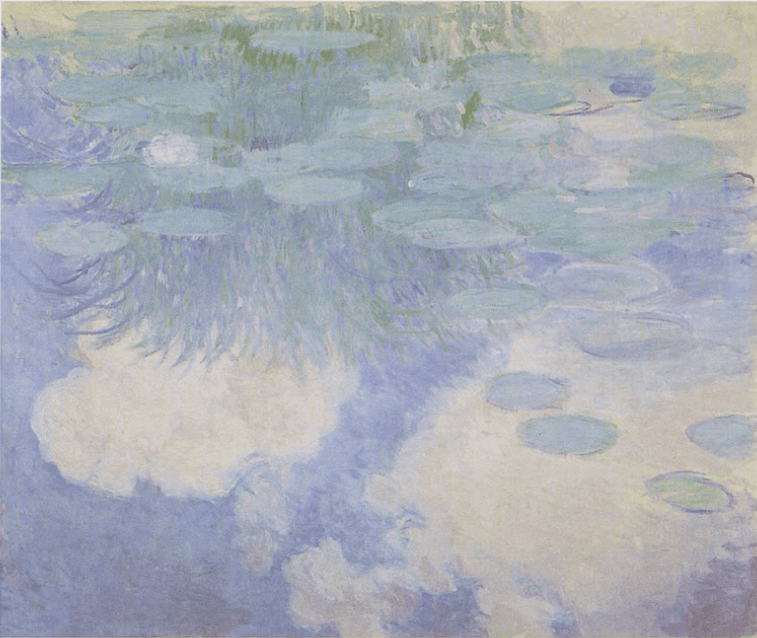
Nymphéas (1915, Musée Marmottan Monet)
Claude Monet · 1915
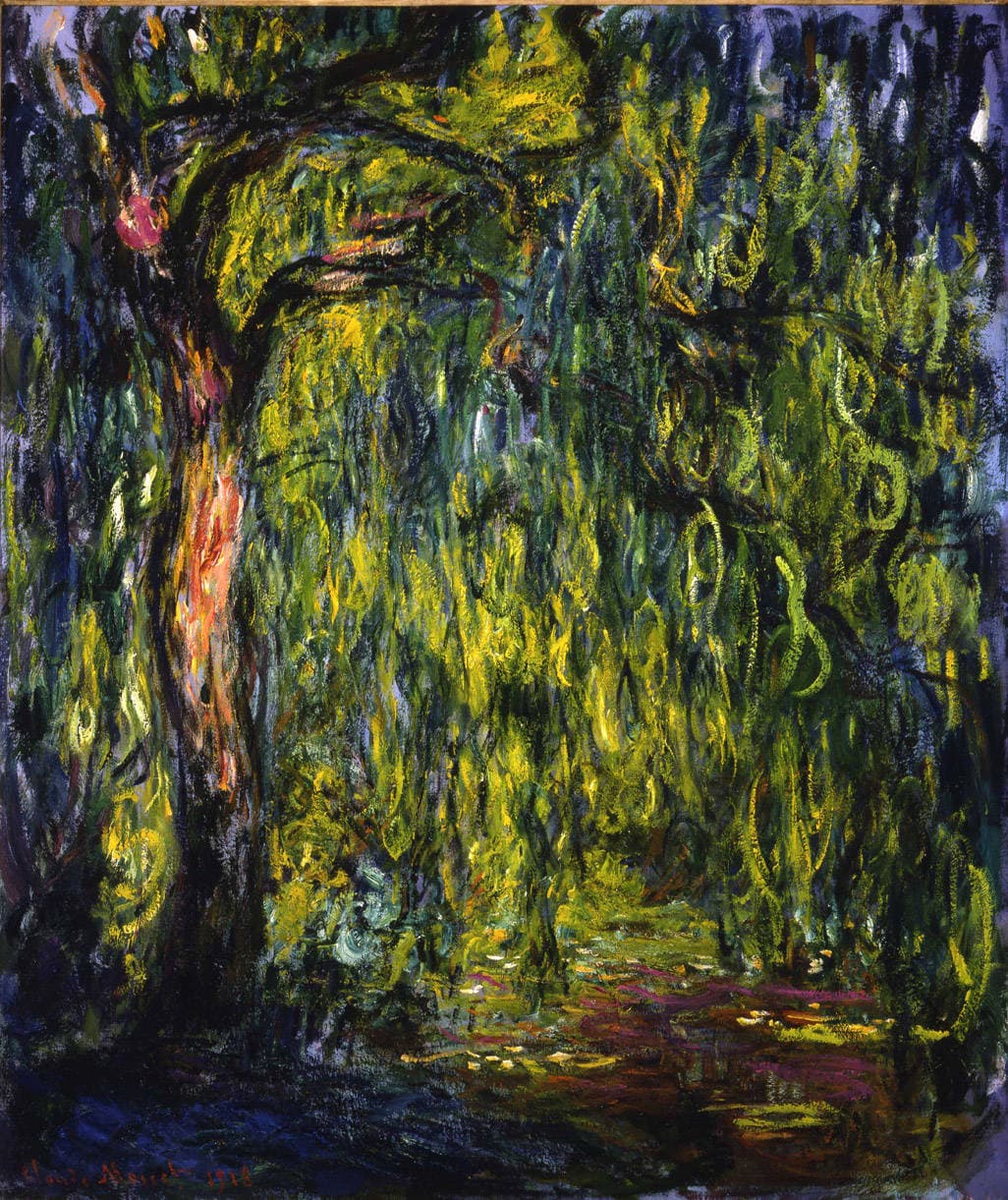
Weeping Willow (Columbus)
Claude Monet · 1918
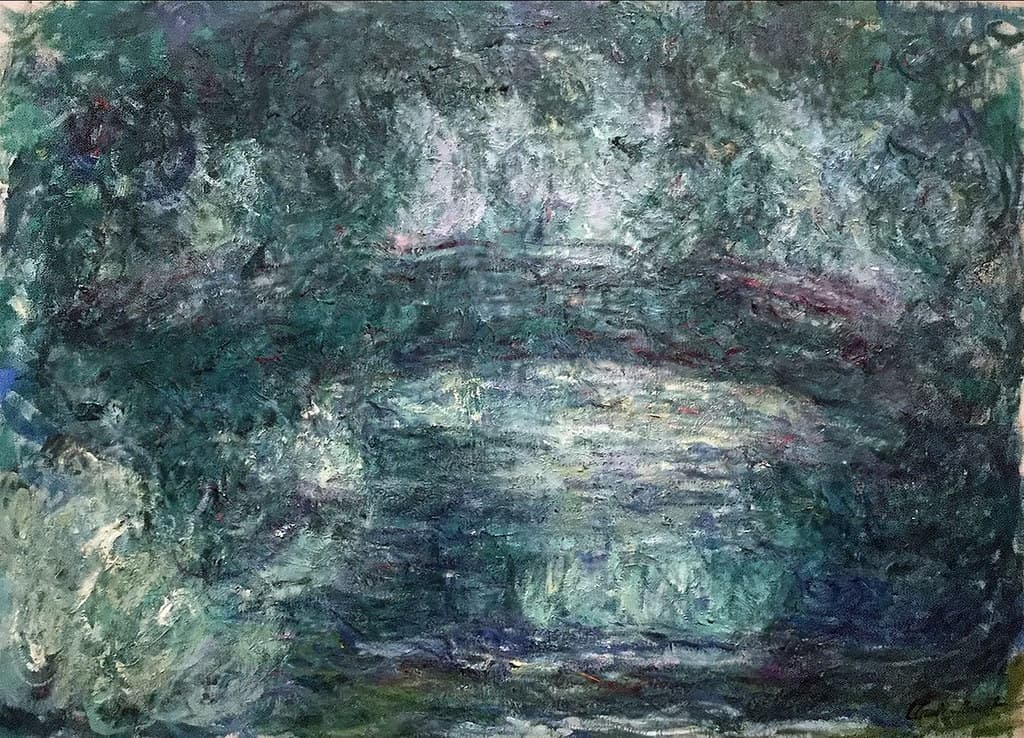
Japanese Bridge
Claude Monet · 1918–19
Also painted in 1916
The same year
Kindred works
You may also study
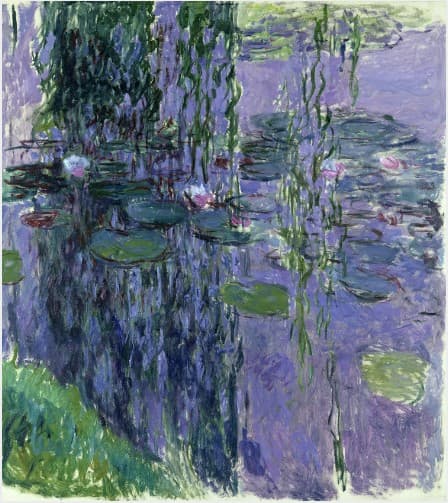
Nymphéas (Musée Marmottan Monet, 1916–19)
Claude Monet · 1916–19
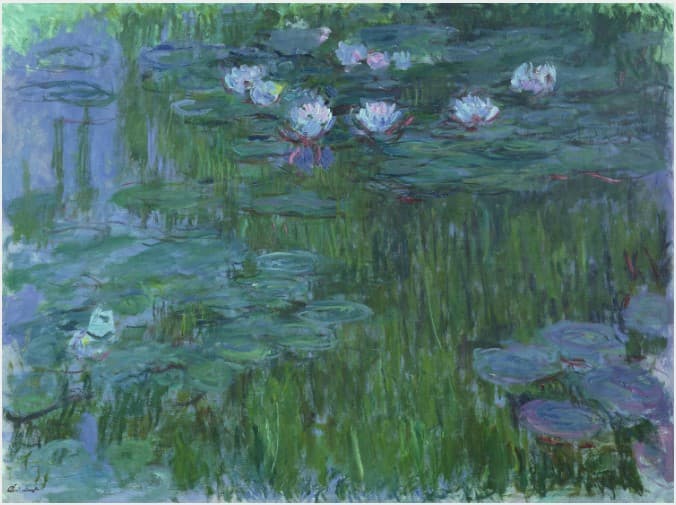
Nymphéas (Musée Marmottan Monet, 1914–17)
Claude Monet · 1914–17
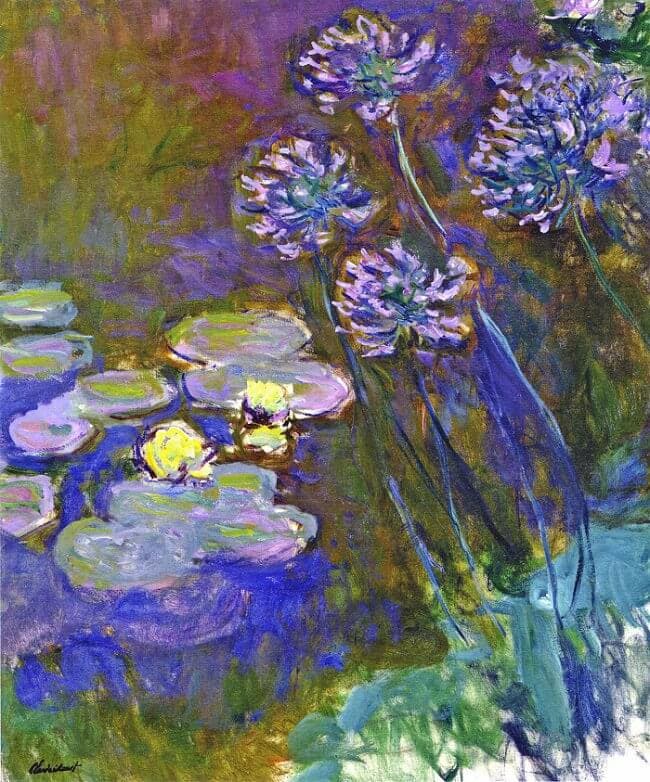
Water Lilies and Agapanthus
Claude Monet · 1914–17
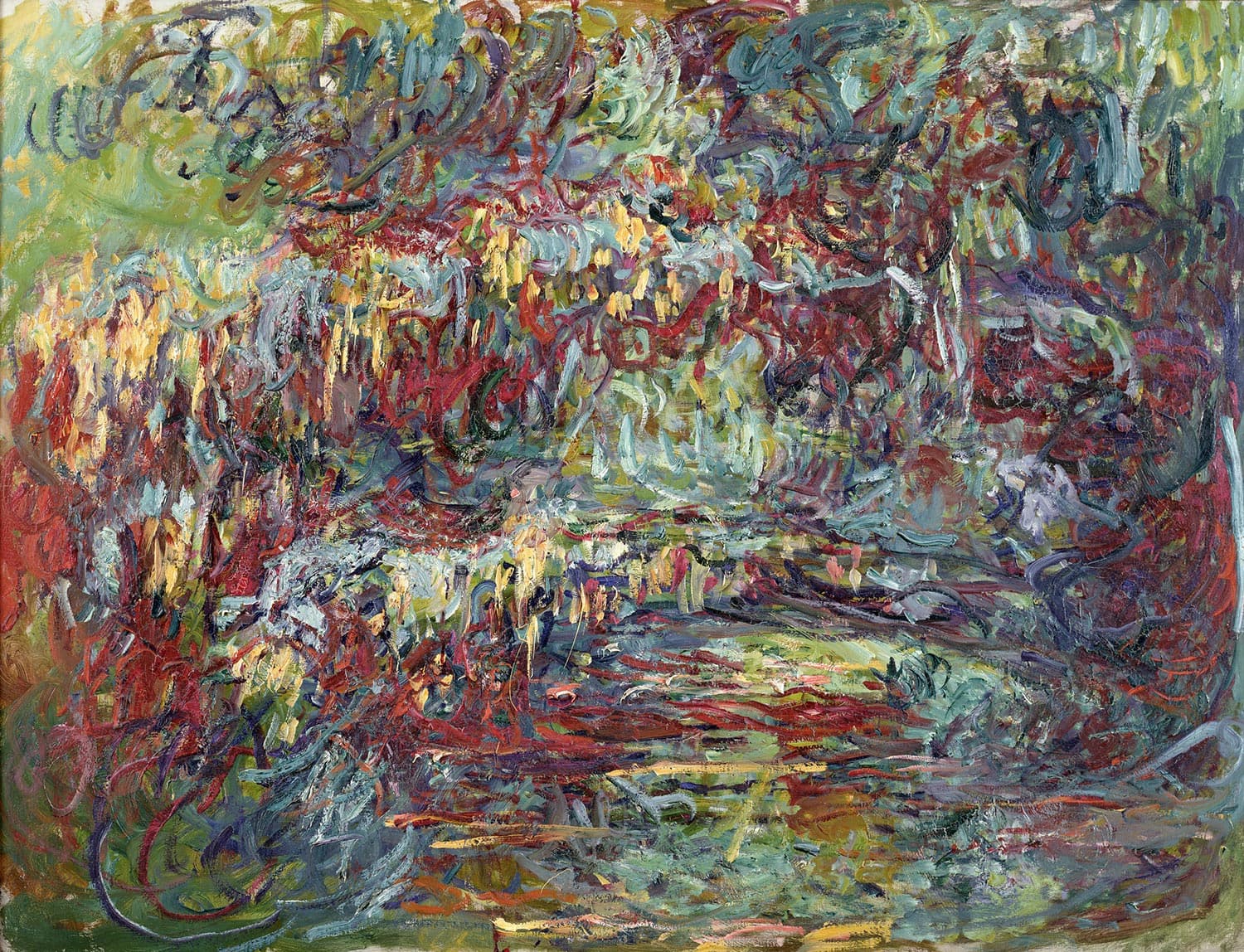
Le Pont japonais
Claude Monet · 1918–24
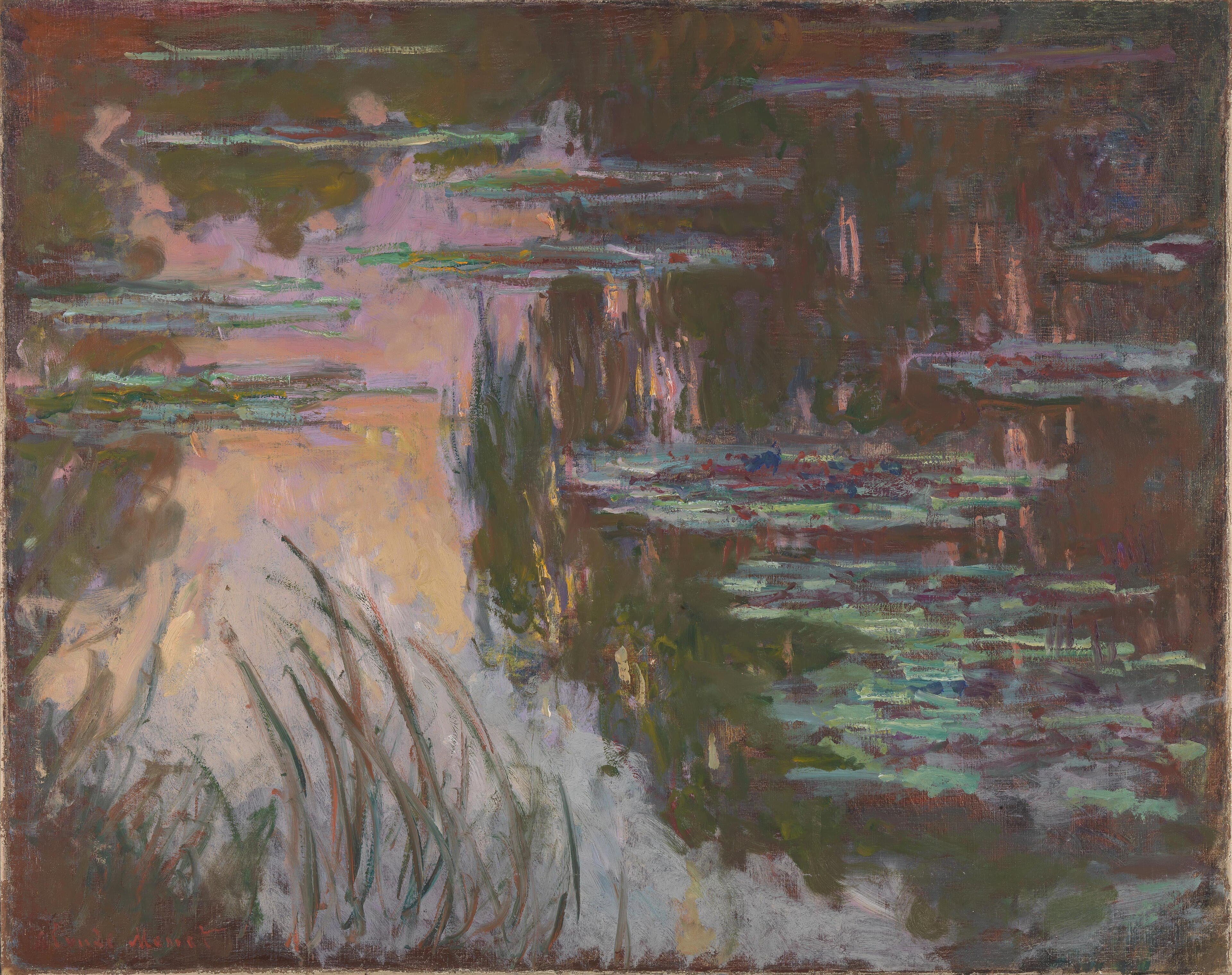
Water-Lilies, Setting Sun (National Gallery, London)
Claude Monet · c. 1907
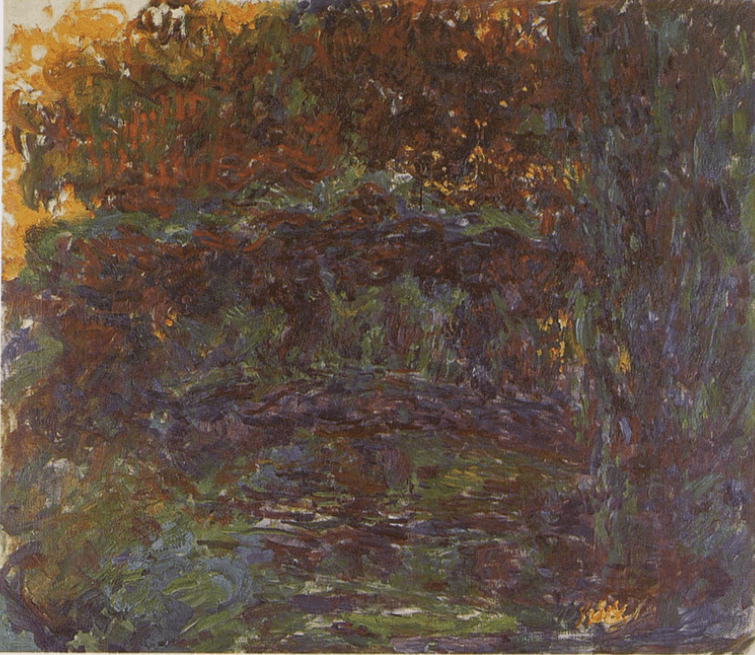
The Japanese Bridge
Claude Monet · 1918–24
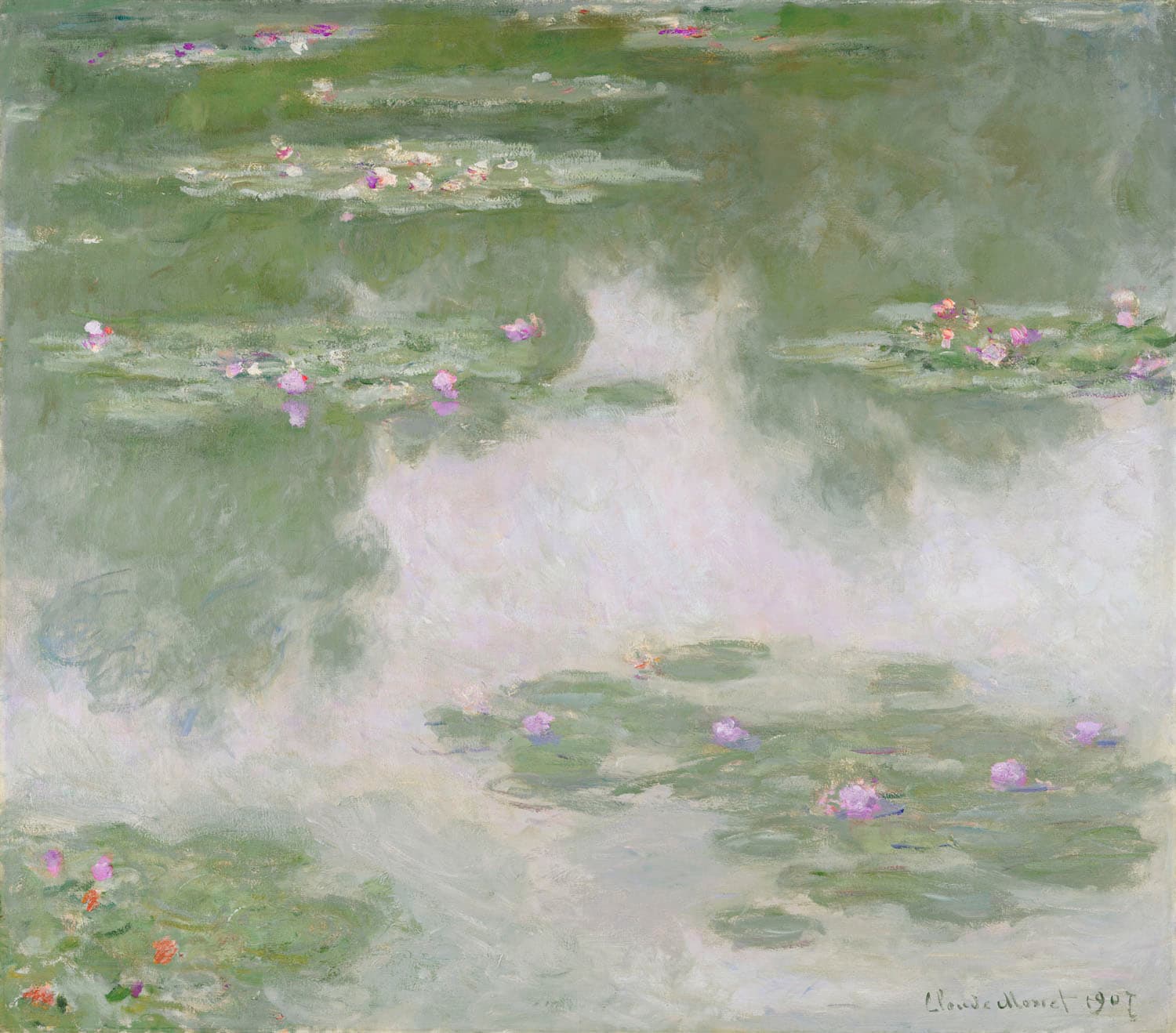
Nymphéas (Water Lilies), 1907 (Wadsworth Atheneum)
Claude Monet · 1907
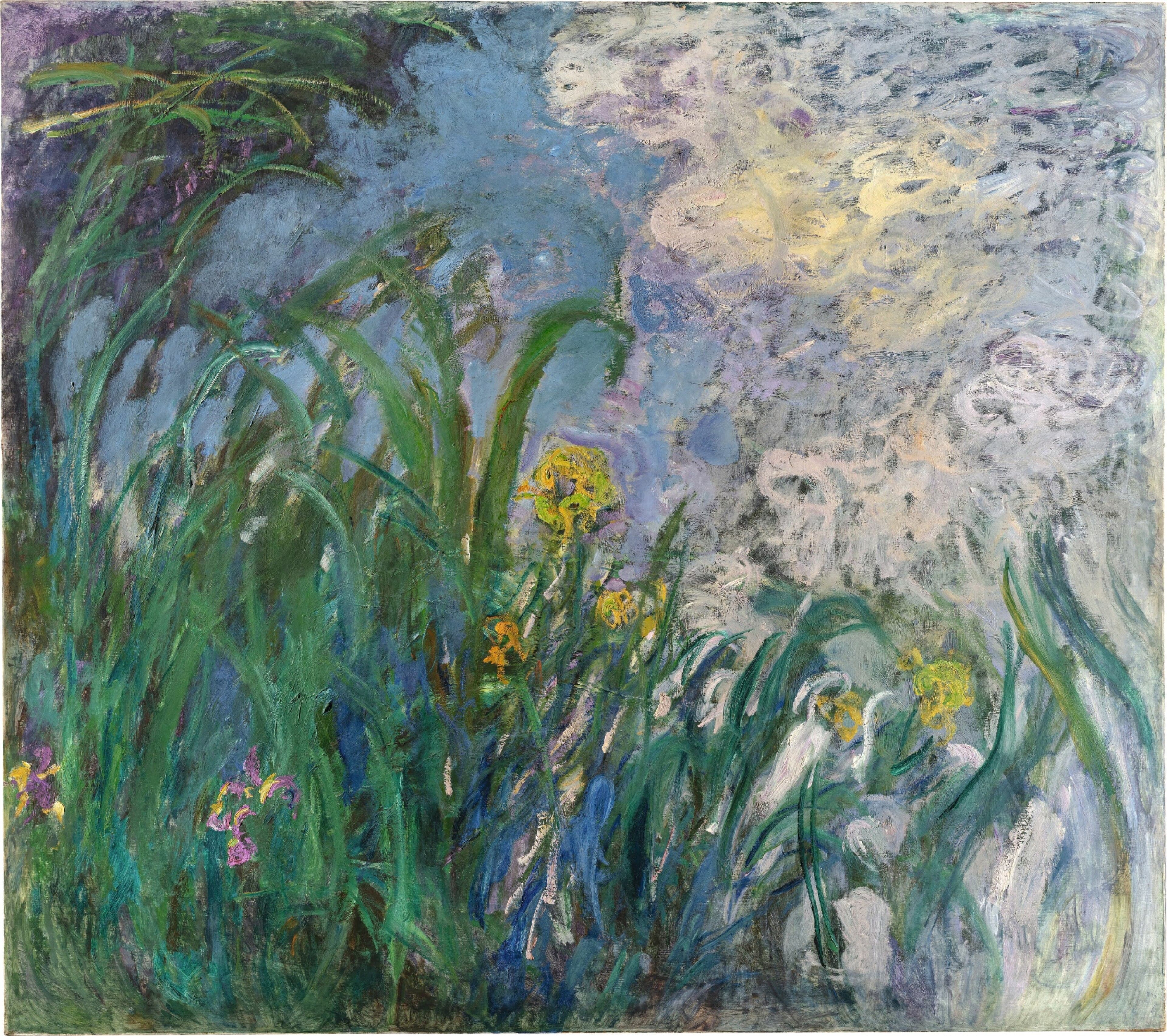
Iris
Claude Monet · c. 1924–25