Image: Asahi Group Oyamazaki Villa Museum of Art; image The Yorck Project / Wikimedia Commons · Public domain · via Wikimedia Commons
Nymphéas (Oyamazaki Villa Museum)
Claude Monet, 1908
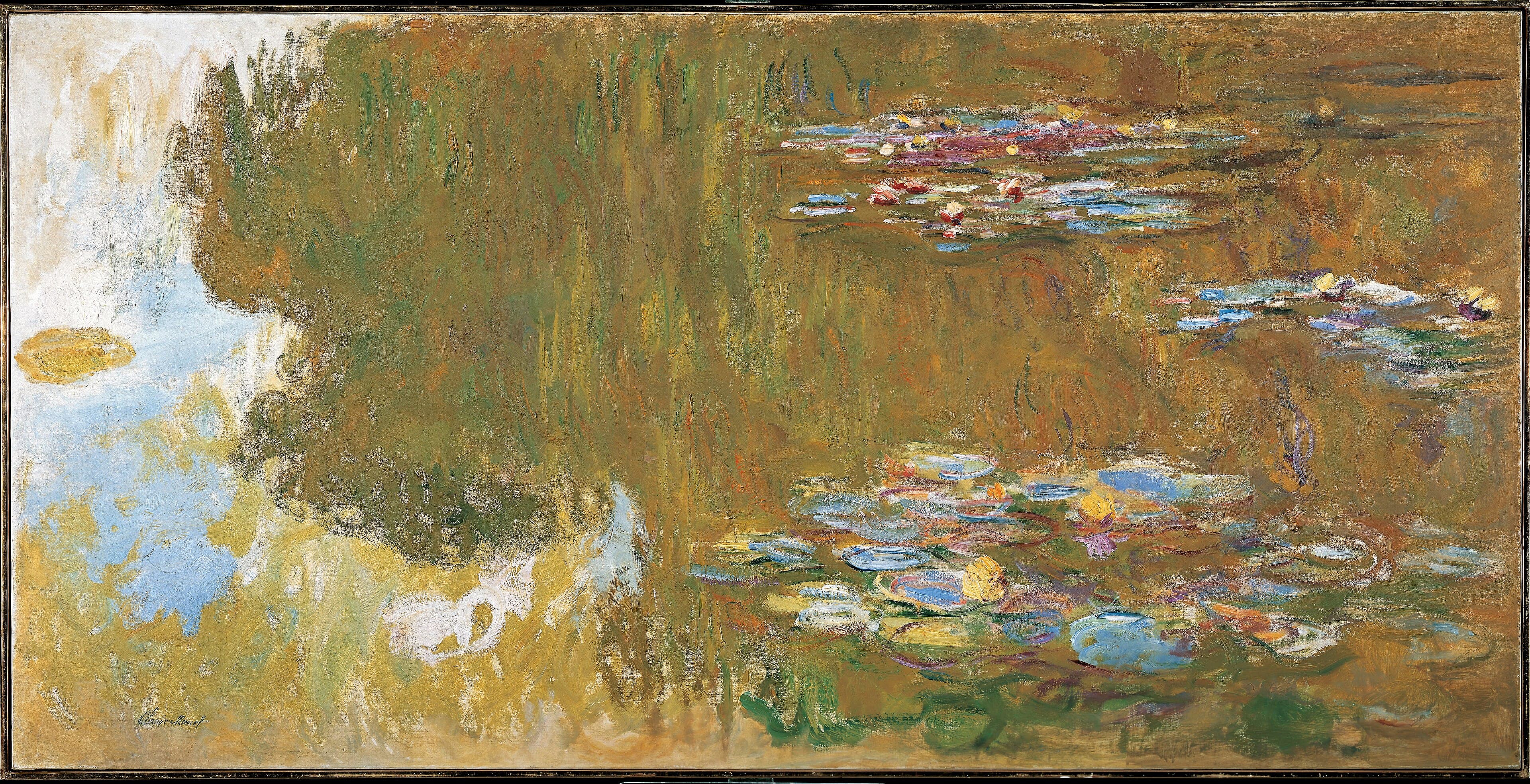
Nymphéas (Water Lilies) is a painting by Claude Monet, dated 1908, of his Giverny pond with a sweeping violet reflection crossed by islands of yellow- and pink-flowered pads. It is in the Asahi Group Oyamazaki Villa Museum of Art near Kyoto.
- Artist
- Claude Monet
- Date
- 1908
- Medium
- Oil on canvas
- Dimensions
- 90 × 92 cm
- Collection
- Asahi Group Oyamazaki Villa Museum of Art, Oyamazaki, Kyoto Prefecture, Japan
- Movement
- Impressionism
- Catalogue
- Wildenstein 1690
- Nature & Landscape
- Water & Sea
Nymphéas is a canvas by Claude Monet of the surface of his lily pond at Giverny, dated 1908 and catalogued as W. 1690 by Wildenstein. Nearly square, 90 by 92 centimeters, it is in the Asahi Group Oyamazaki Villa Museum of Art, near Kyoto, which owns several of Monet's water-lily paintings. Its distinctive feature is a great diagonal sweep of violet across the water.
What you're looking at
A broad band of violet, mauve and lilac runs from the upper left toward the lower center, the reflection of trees and sky in shadow, painted with long, scumbled strokes that look almost like a brush dragged through mist. On either side, the water is lighter, a gray-blue and pale lavender.
Across this surface float islands of lily pads in staggered bands. At the top, a long island carries pink and red flowers. In the upper right, two wider islands are dotted with bright yellow flowers, the warmest notes in the picture, and some pink ones. At the left edge, a cluster of pale pads with pink blossoms. And in the lower half, a scattered group of gray-green pads, outlined in darker strokes, carries a handful of pink-red buds. The signature is at the lower right.
The picture combines the bands of lily islands typical of 1904–06 with the soft, dissolved reflections of 1907–08. The violet diagonal is what holds it together and sets it apart.
The pond and the series
Monet dug his lily pond in 1893 and enlarged it in 1901–02. From 1903 he painted its surface in a long campaign he called the paysages d'eau. In May 1909 Durand-Ruel showed forty-eight canvases from that campaign, dated 1903 to 1908. Wildenstein's catalogue numbers in the 1690s fall among the canvases of 1907, so the 1908 date may reflect when the painting was finished or signed rather than begun.
How this version differs
Compared with the Tokyo Fuji Art Museum's Water Lilies of 1908, a pale vertical haze, or the bright blue Vernon tondo, Nymphéas, the Oyamazaki canvas is darker and more strongly colored, and its composition is built on a diagonal rather than a central vertical. The Wadsworth's Nymphéas of 1907 has similar bands of pads but in silvery green; here the dominant color is violet, and the yellow flowers stand out against it as complementaries.
How it was painted
The violet reflection is laid in with dry, broad strokes, layered so that blue, pink and gray show through each other. The pads are painted as flat ellipses with dark outlines, crisper than the water around them. The yellow flowers are thick single touches, the most heavily loaded paint on the canvas.
One detail rewards close looking. In the lower half, the gray-green pads are not filled in evenly: many are drawn as open rings or partial outlines, with the violet water showing through their centers. Monet uses the same economy for the buds, a single stroke of pink with a darker dot beside it. From a distance these become floating leaves; up close they are almost calligraphy, and they show how far he had moved from the solid, carefully modeled pads of his first lily paintings of 1897–98.
Where to see it
The Asahi Group Oyamazaki Villa Museum of Art opened in 1996 in a Taisho-era Western-style villa built for the businessman Shotaro Kaga, on a hillside between Kyoto and Osaka. The architect Tadao Ando added a semi-underground gallery, often called the "Underground Jewel Box," where the museum's Monet water lilies are shown. For the series see Monet's Water Lilies; for the garden, Giverny; for other collections of Monet, Where to See Monet's Paintings.
Questions & answers
Where is this Monet Nymphéas?
It is in the Asahi Group Oyamazaki Villa Museum of Art in Oyamazaki, Kyoto Prefecture, Japan. The museum shows its Monet water lilies in a semi-underground gallery designed by Tadao Ando.
When was it painted?
It is dated 1908 and catalogued as W. 1690. It belongs to Monet's 1903–08 water landscapes painted at Giverny; its catalogue number places it among the canvases of 1907, so it may have been begun then.
What does it show?
The surface of Monet's lily pond, crossed by a broad diagonal of violet reflection, with islands of pads carrying yellow, pink and red flowers and a scattering of gray-green pads below.
How is it different from other water lilies of 1907–08?
It is darker and more strongly colored than the pale Tokyo Fuji canvas or the blue Vernon tondo, and its composition rests on a violet diagonal, against which the yellow flowers stand out.
More by the artist
Claude Monet
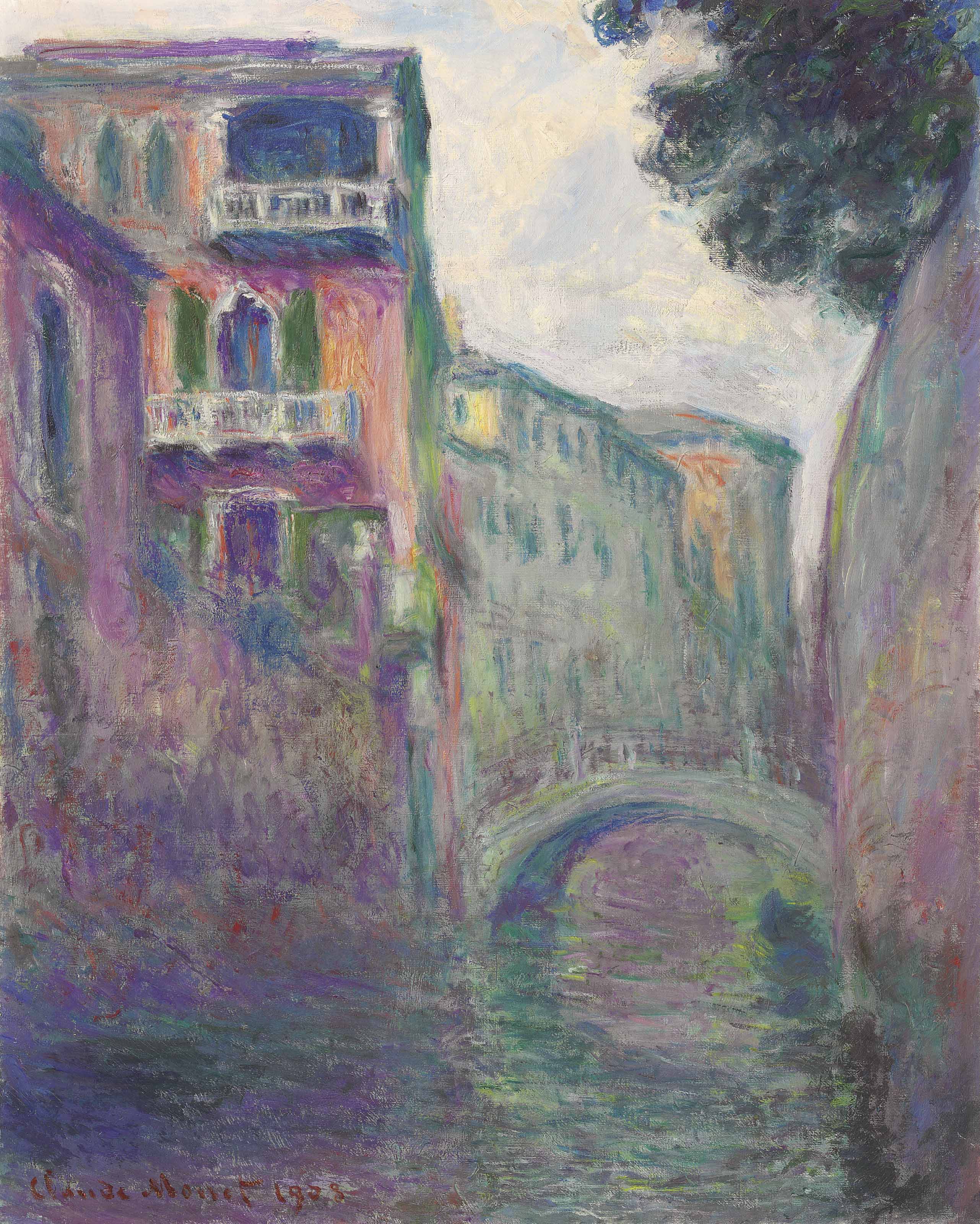
The Rio della Salute
Claude Monet · 1908
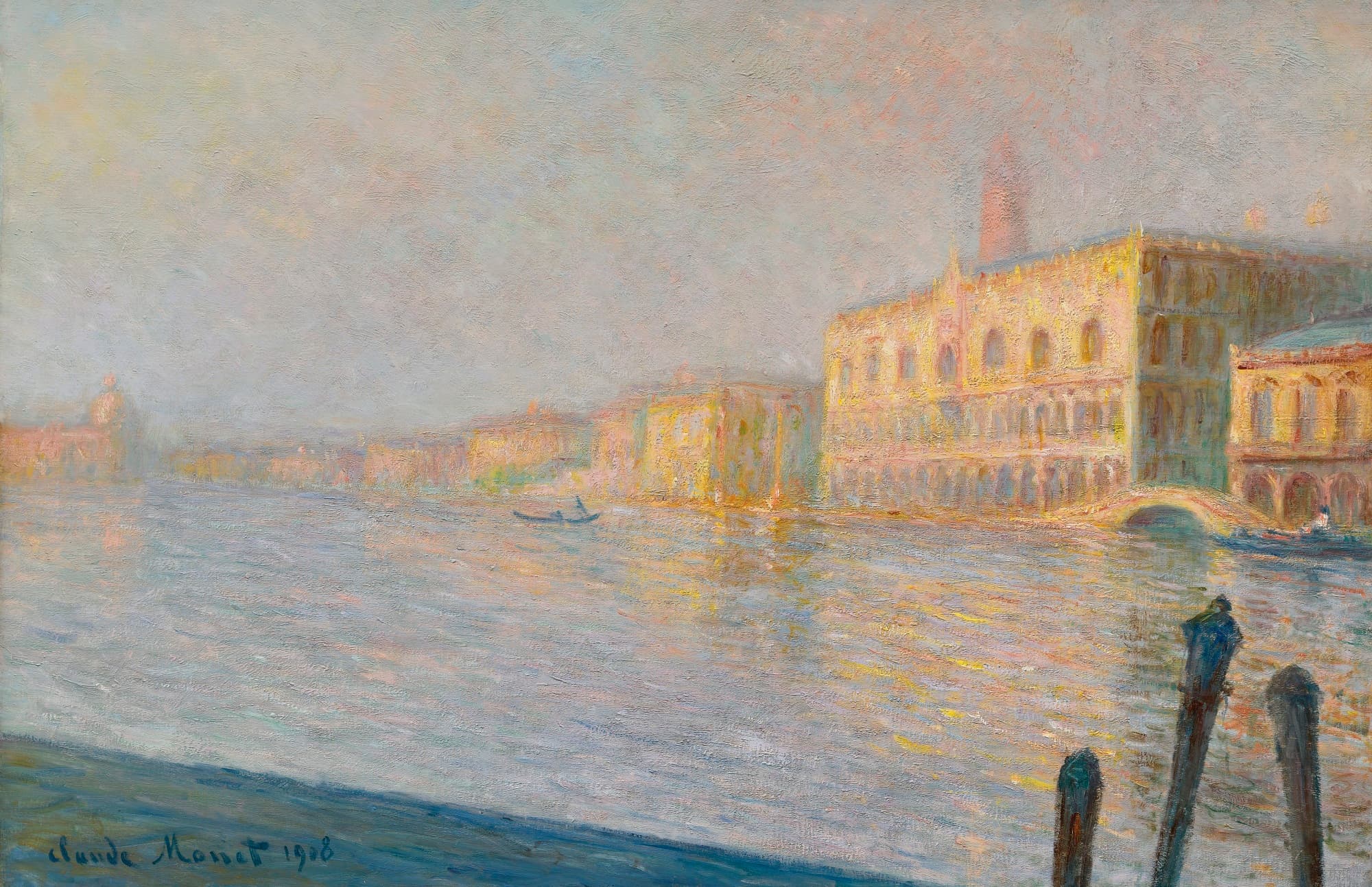
The Palazzo Ducale (Le Palais Ducal), 1908
Claude Monet · 1908
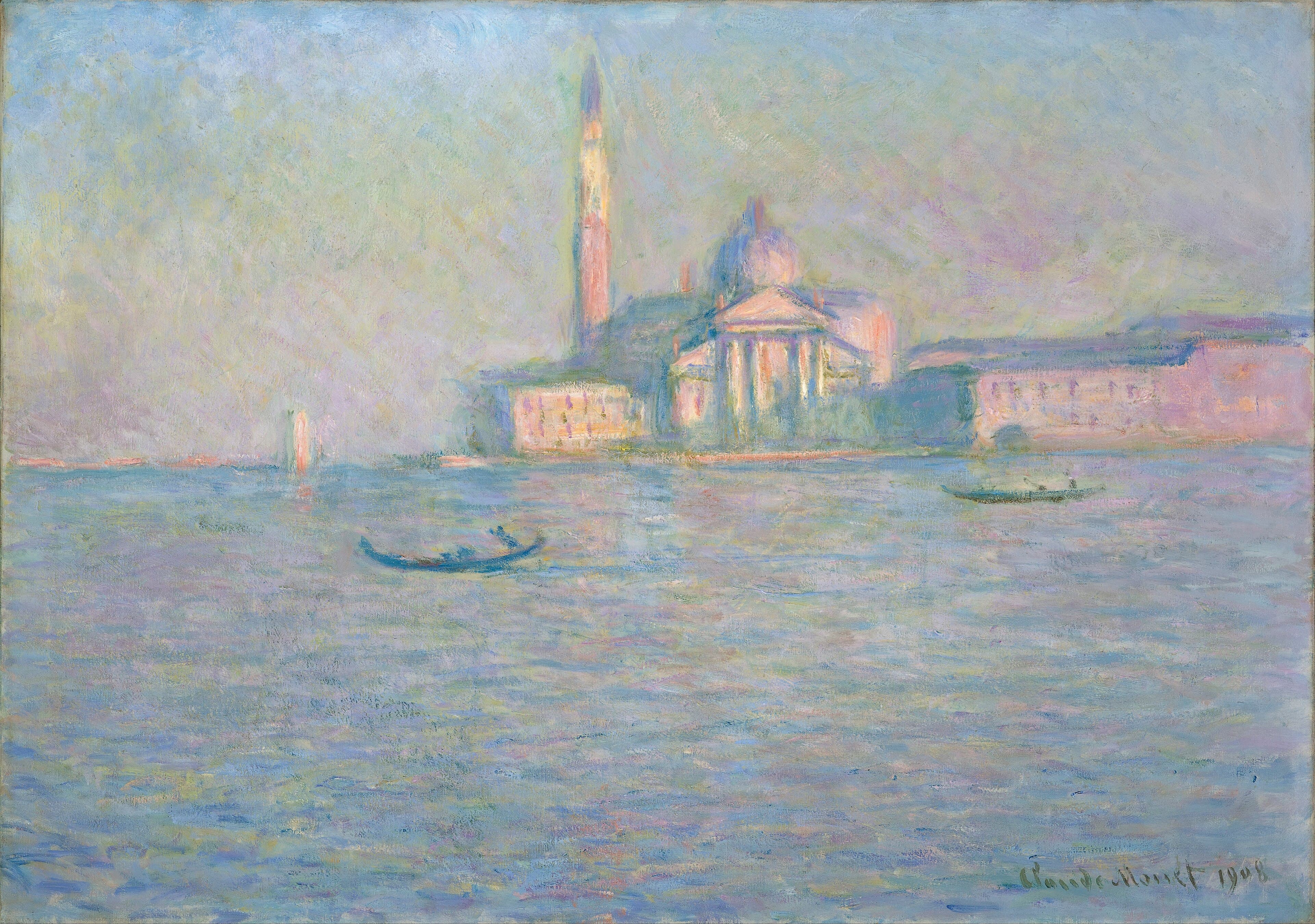
The Church of San Giorgio Maggiore, Venice
Claude Monet · 1908
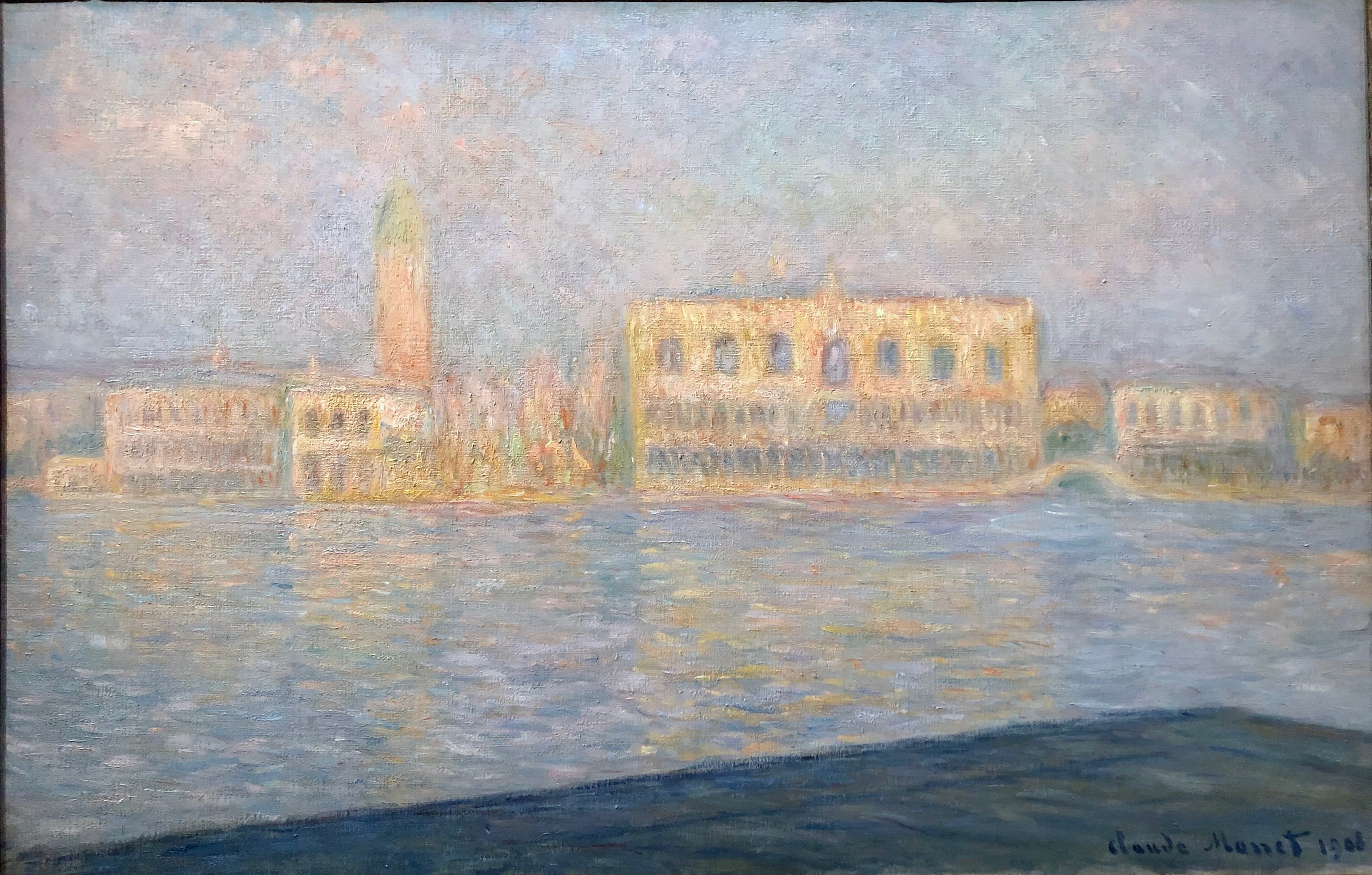
The Palazzo Ducale, Seen from San Giorgio Maggiore (Guggenheim)
Claude Monet · 1908
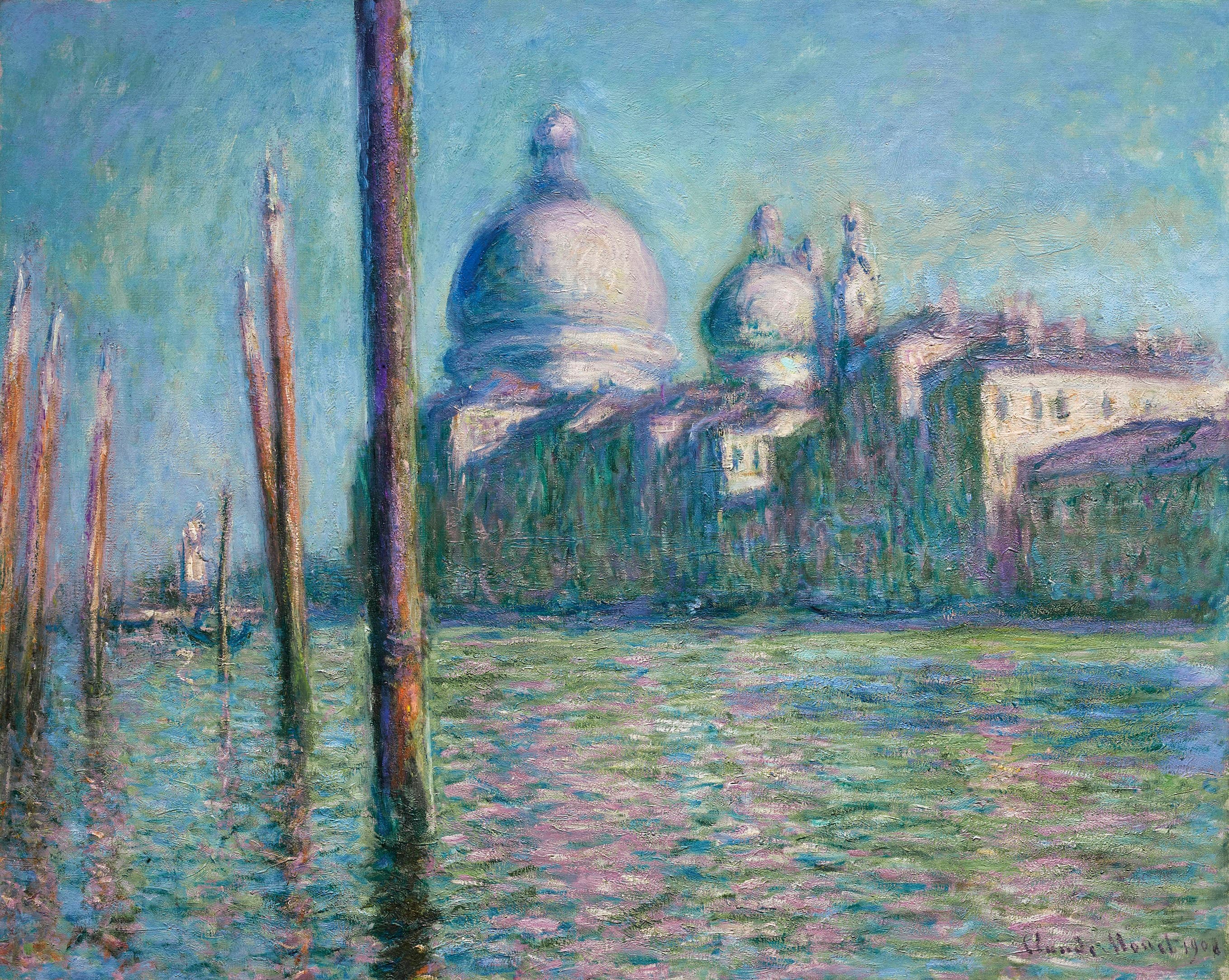
The Grand Canal, Venice
Claude Monet · 1908
Palazzo Da Mula Morosini
Claude Monet · 1908
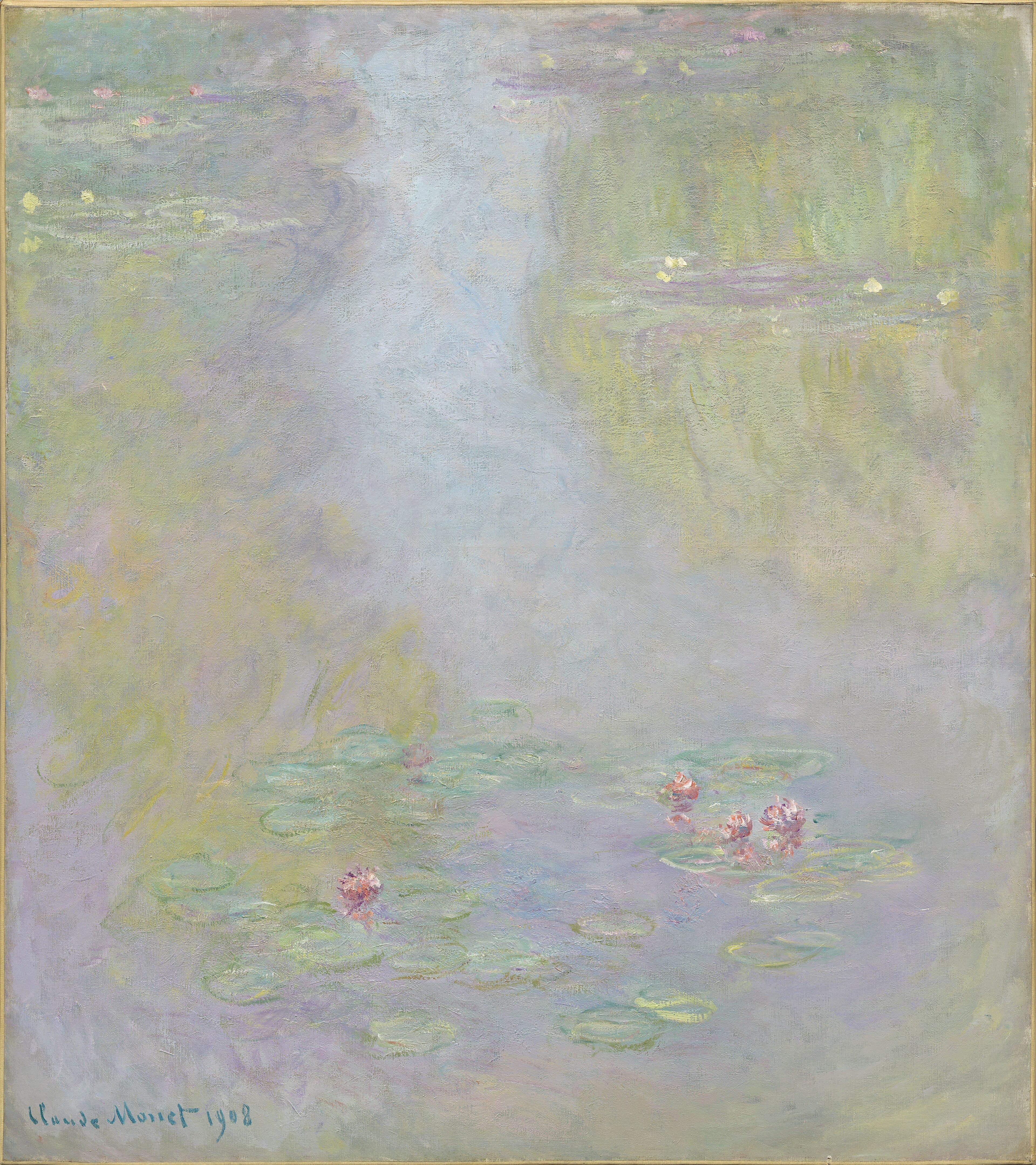
Water Lilies (1908, Tokyo Fuji Art Museum)
Claude Monet · 1908
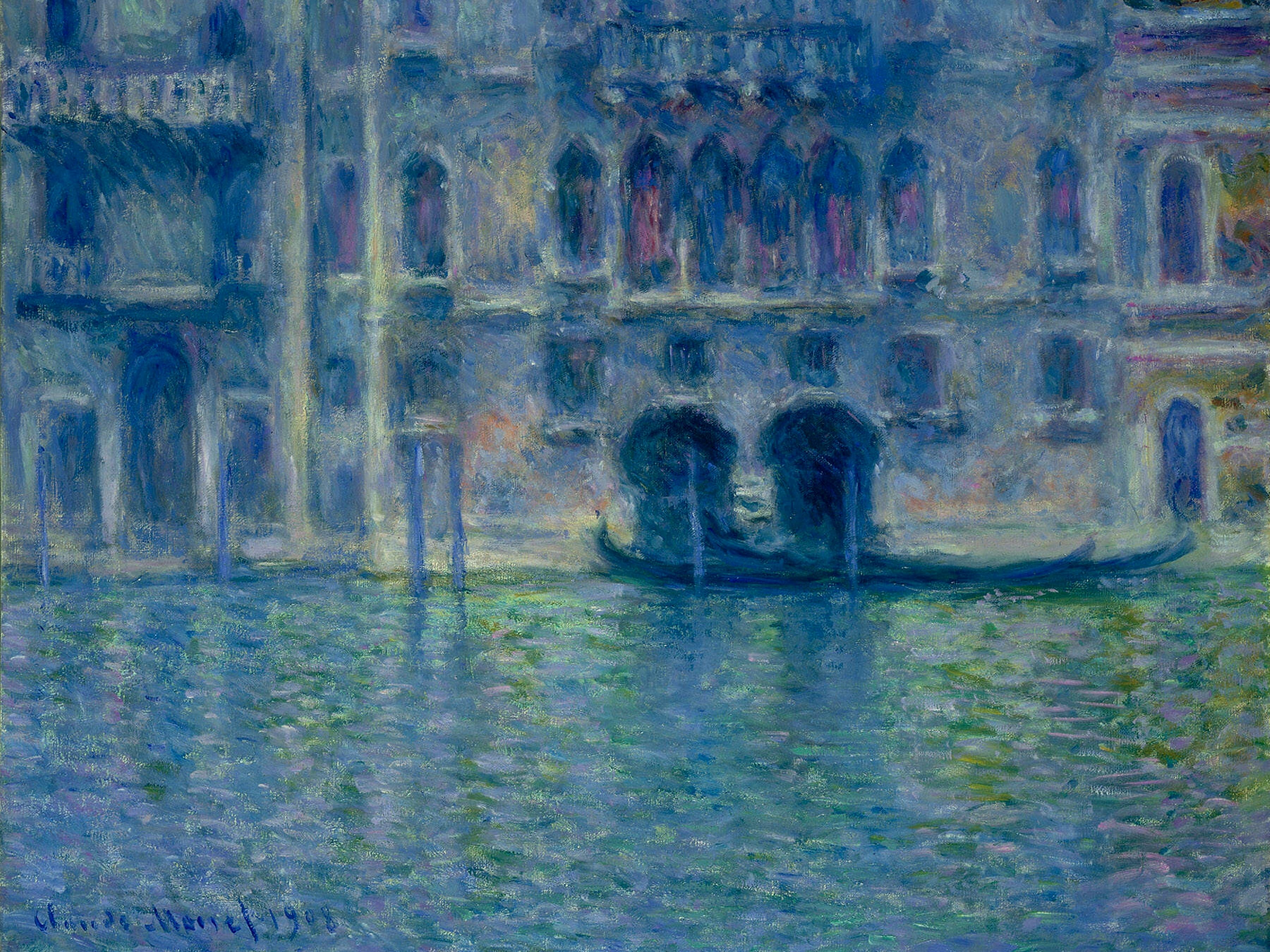
Palazzo da Mula, Venice
Claude Monet · 1908
Also painted in 1908
The same year

Sunset in Venice
Claude Monet · 1908–12
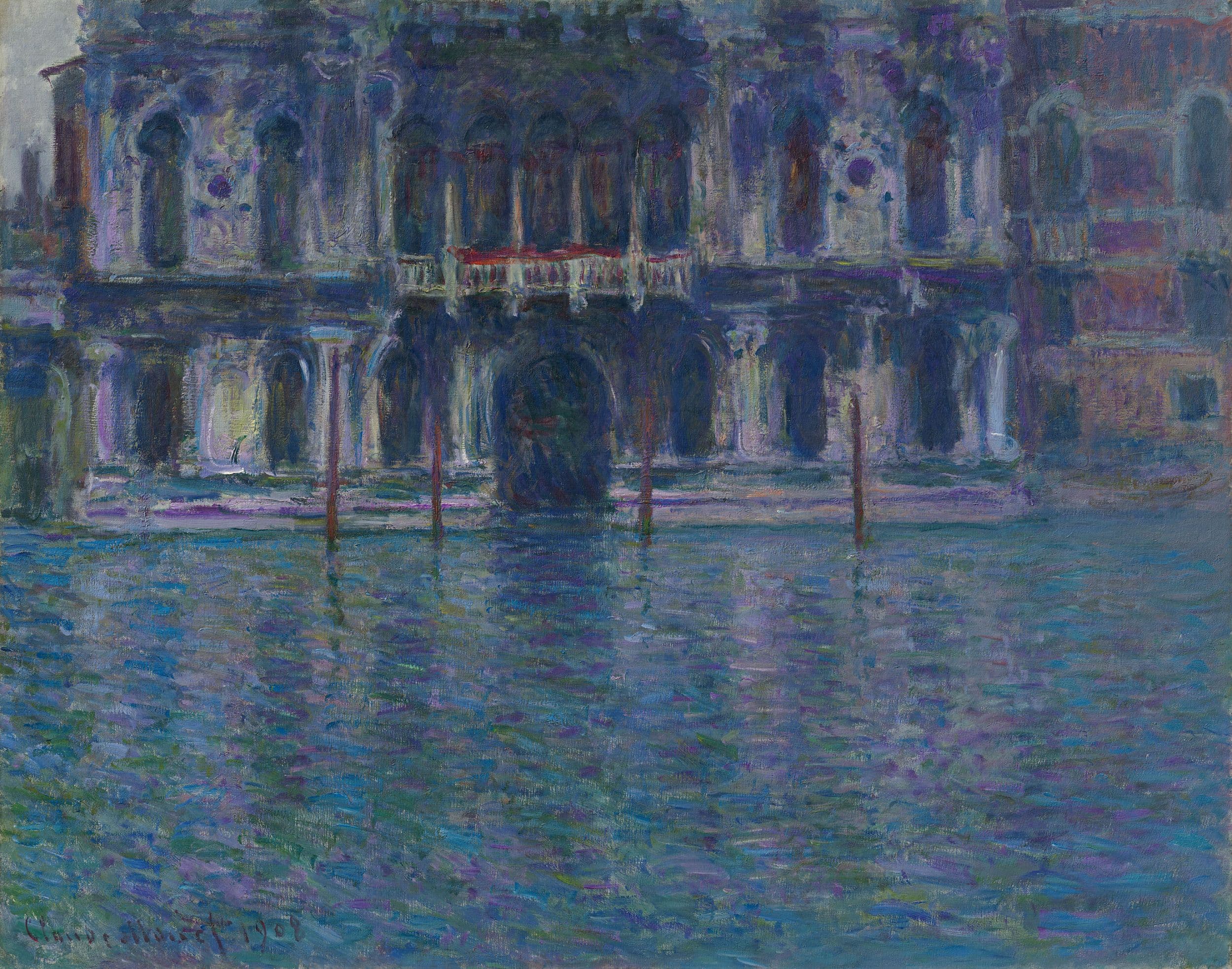
Le Palais Contarini (Potsdam)
Claude Monet · 1908
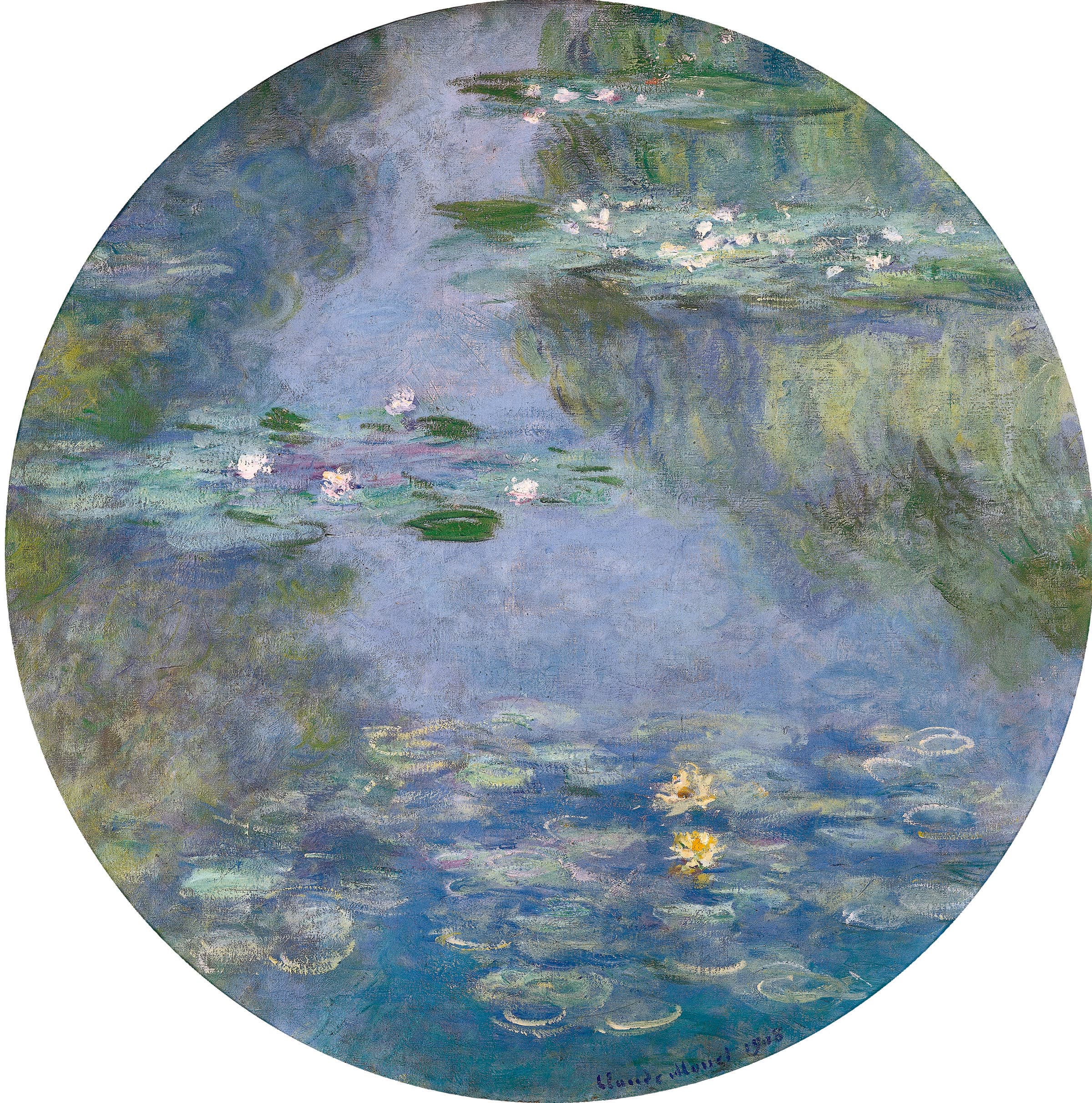
Nymphéas (1908 tondo, Vernon)
Claude Monet · 1908
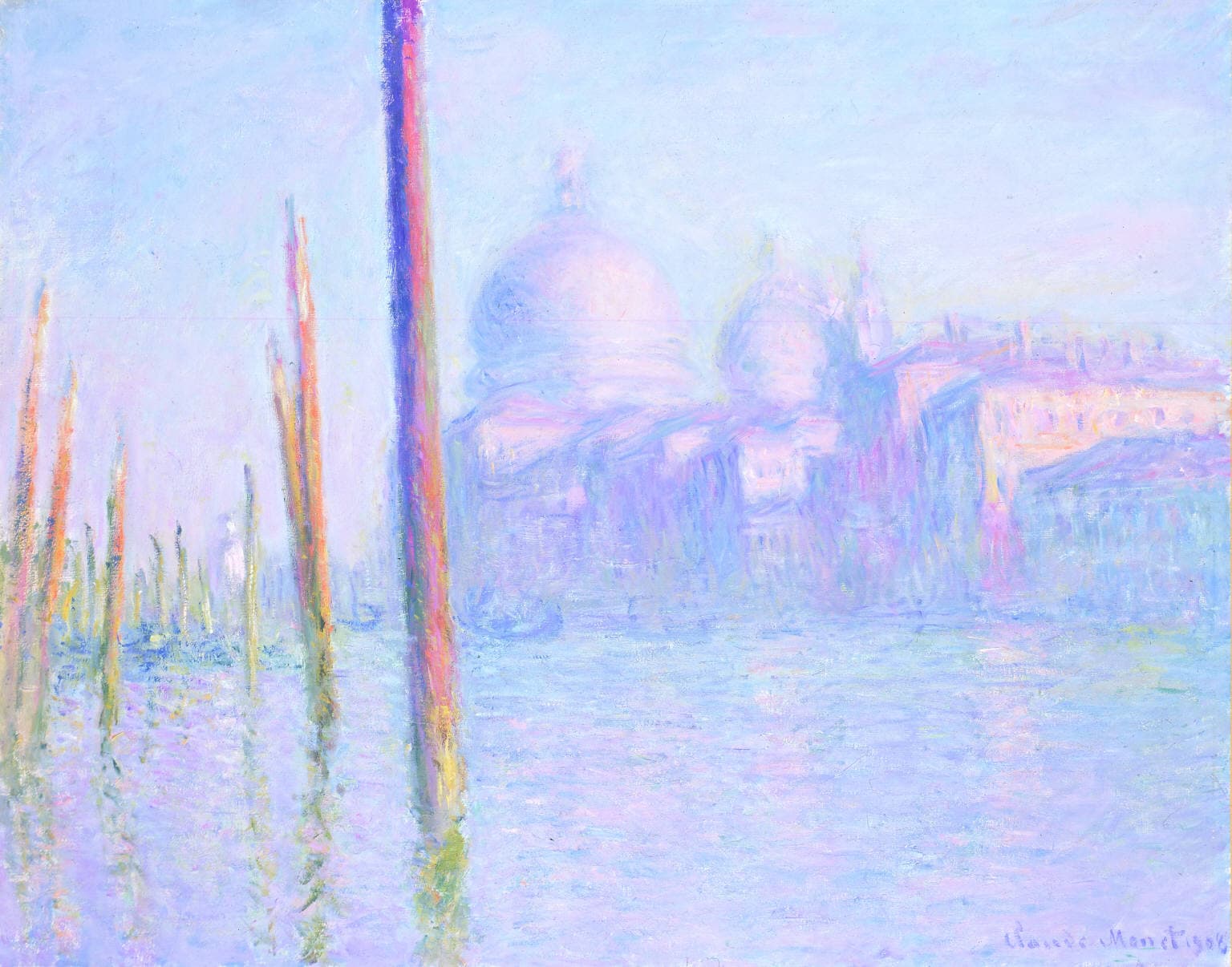
The Grand Canal, Venice
Claude Monet · 1908
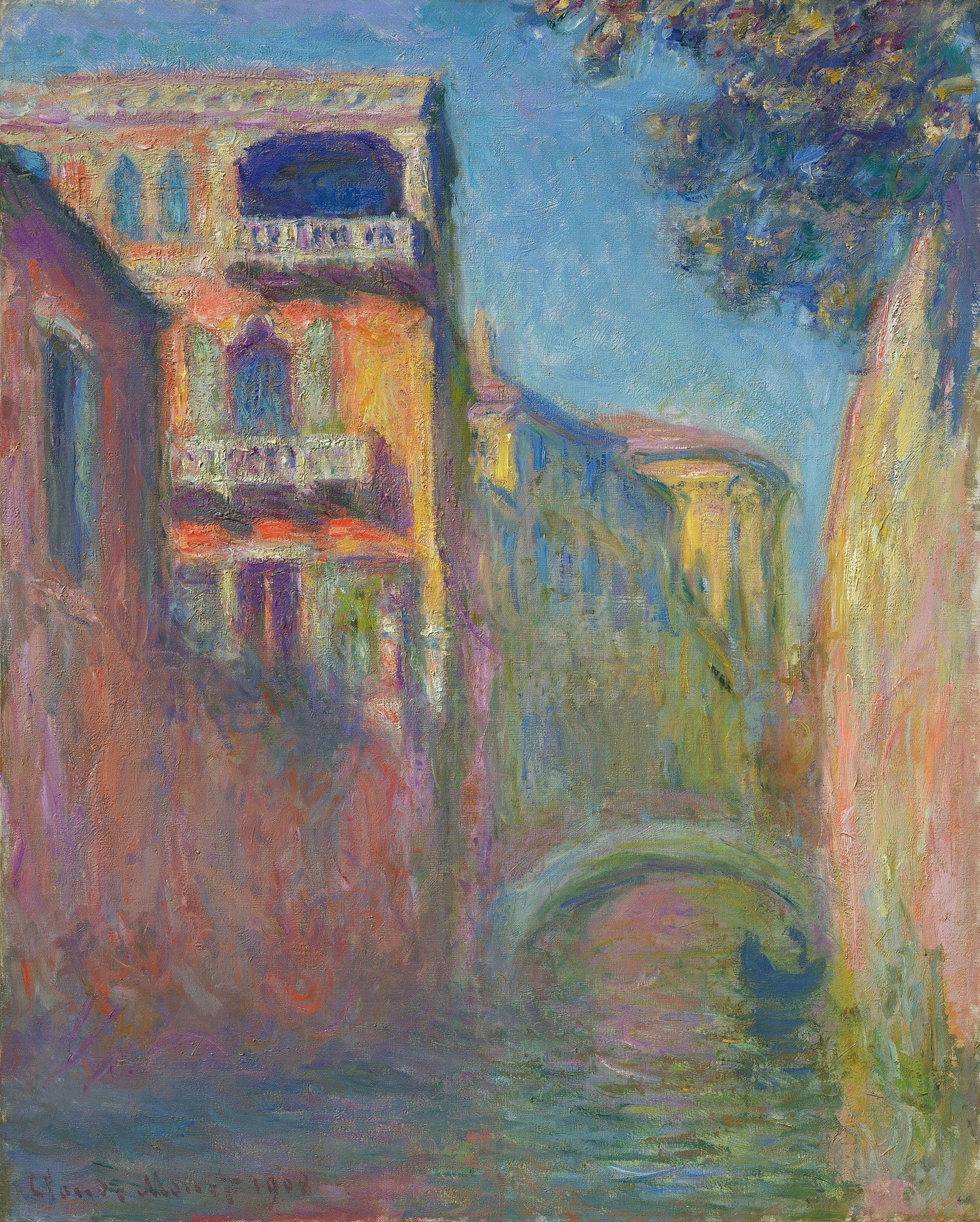
The Rio della Salute
Claude Monet · 1908
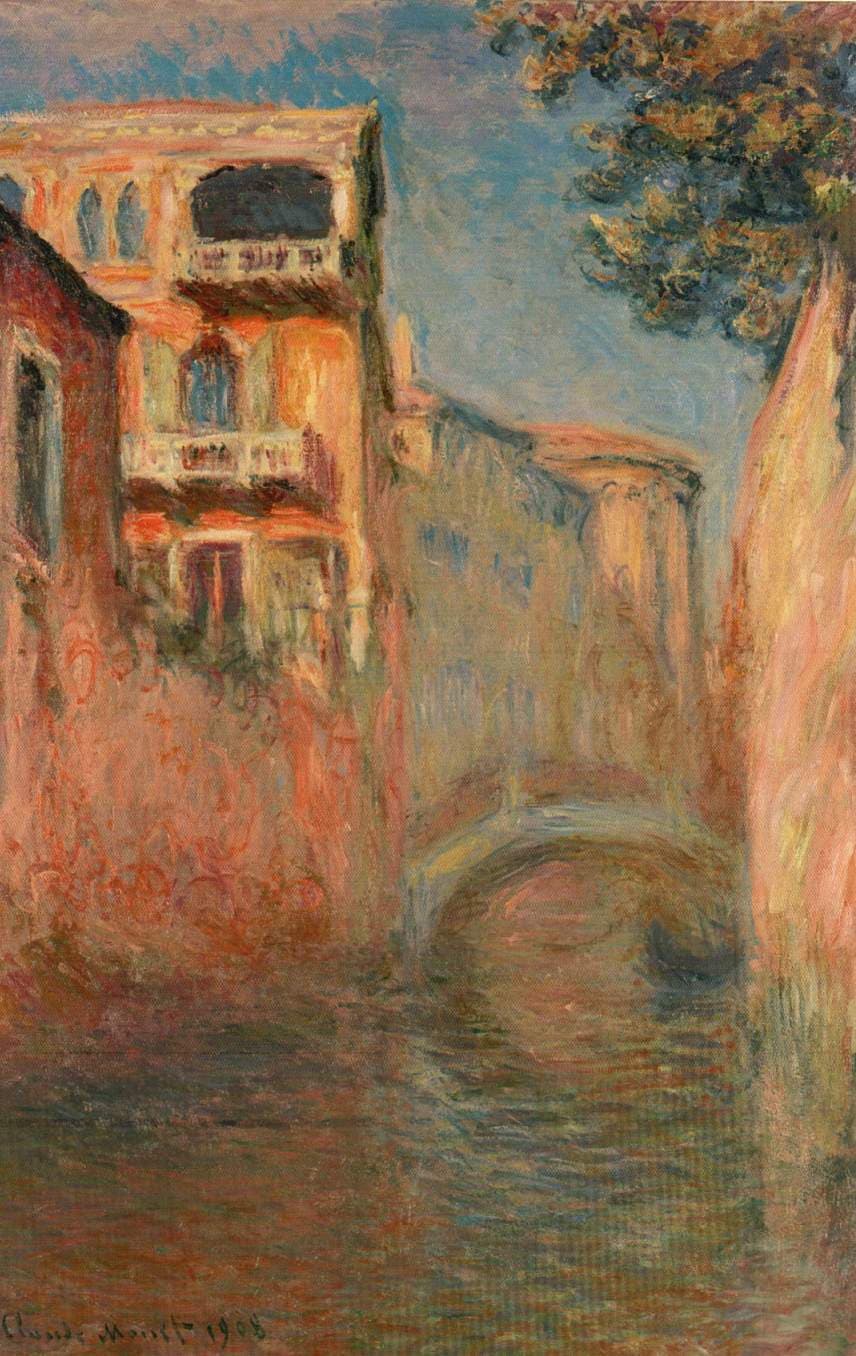
The Rio della Salute
Claude Monet · 1908
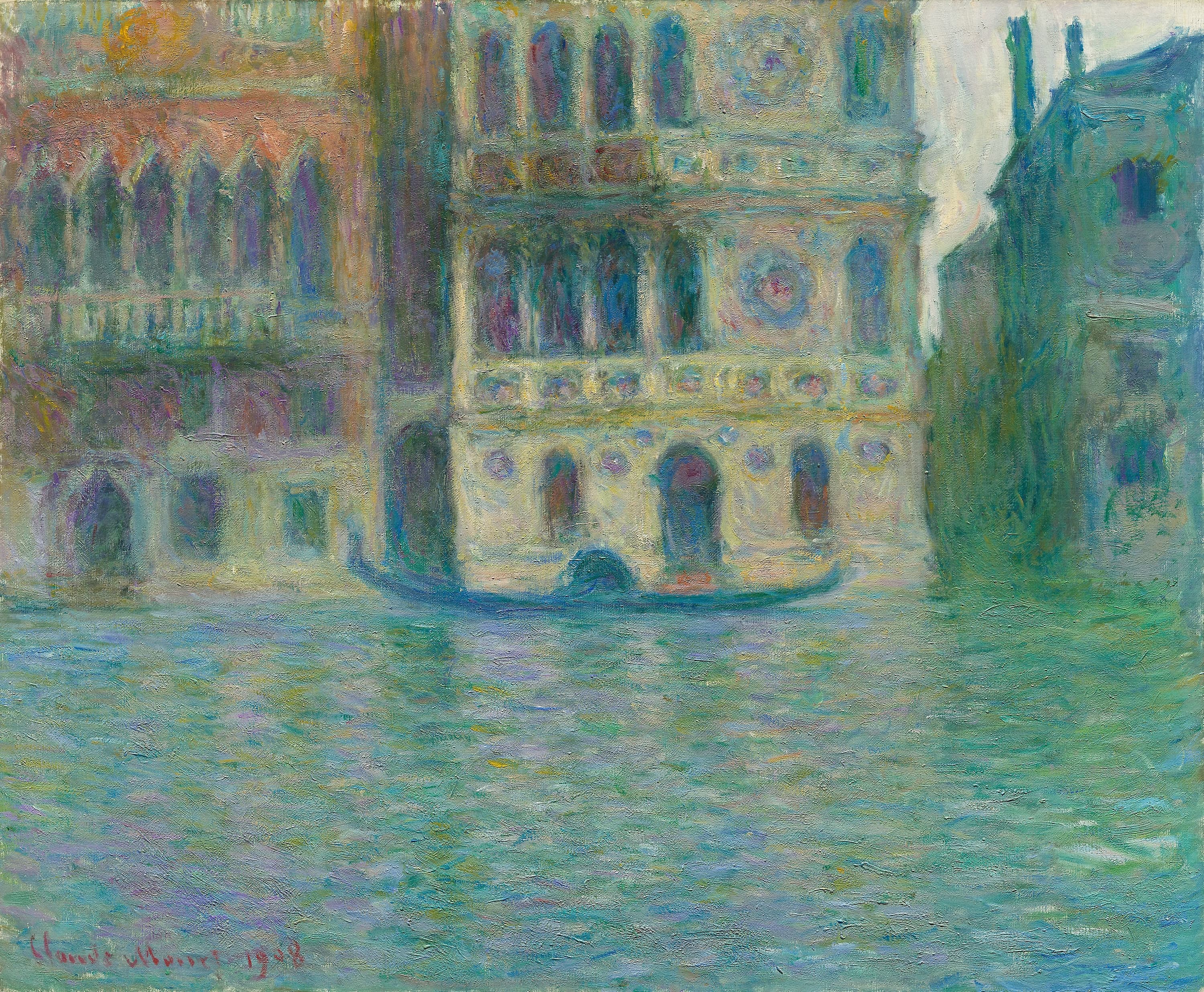
Venice, Palazzo Dario
Claude Monet · 1908
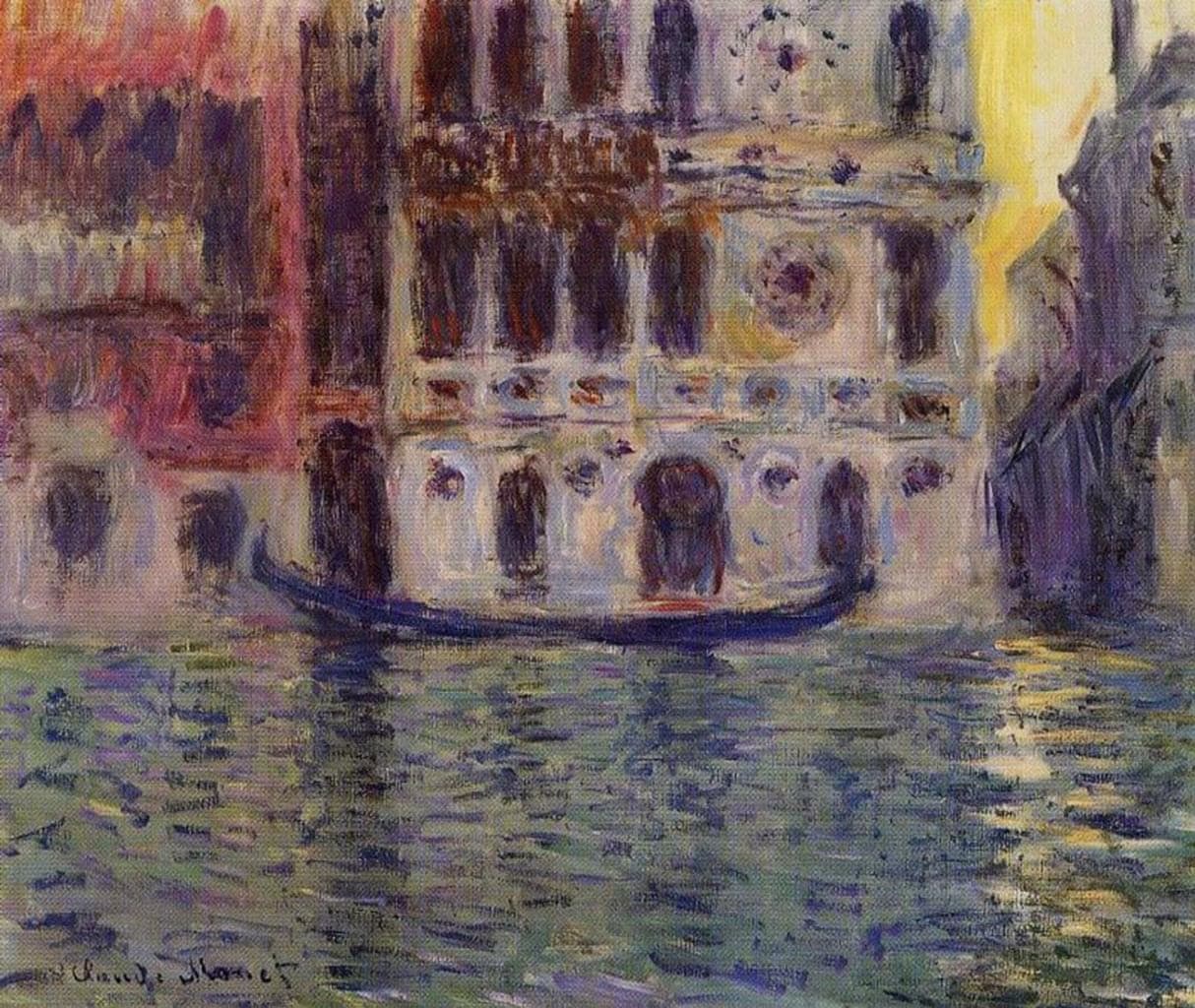
Le Palais Dario
Claude Monet · 1908
Kindred works
You may also study
Nymphéas (1908 tondo, Vernon)
Claude Monet · 1908
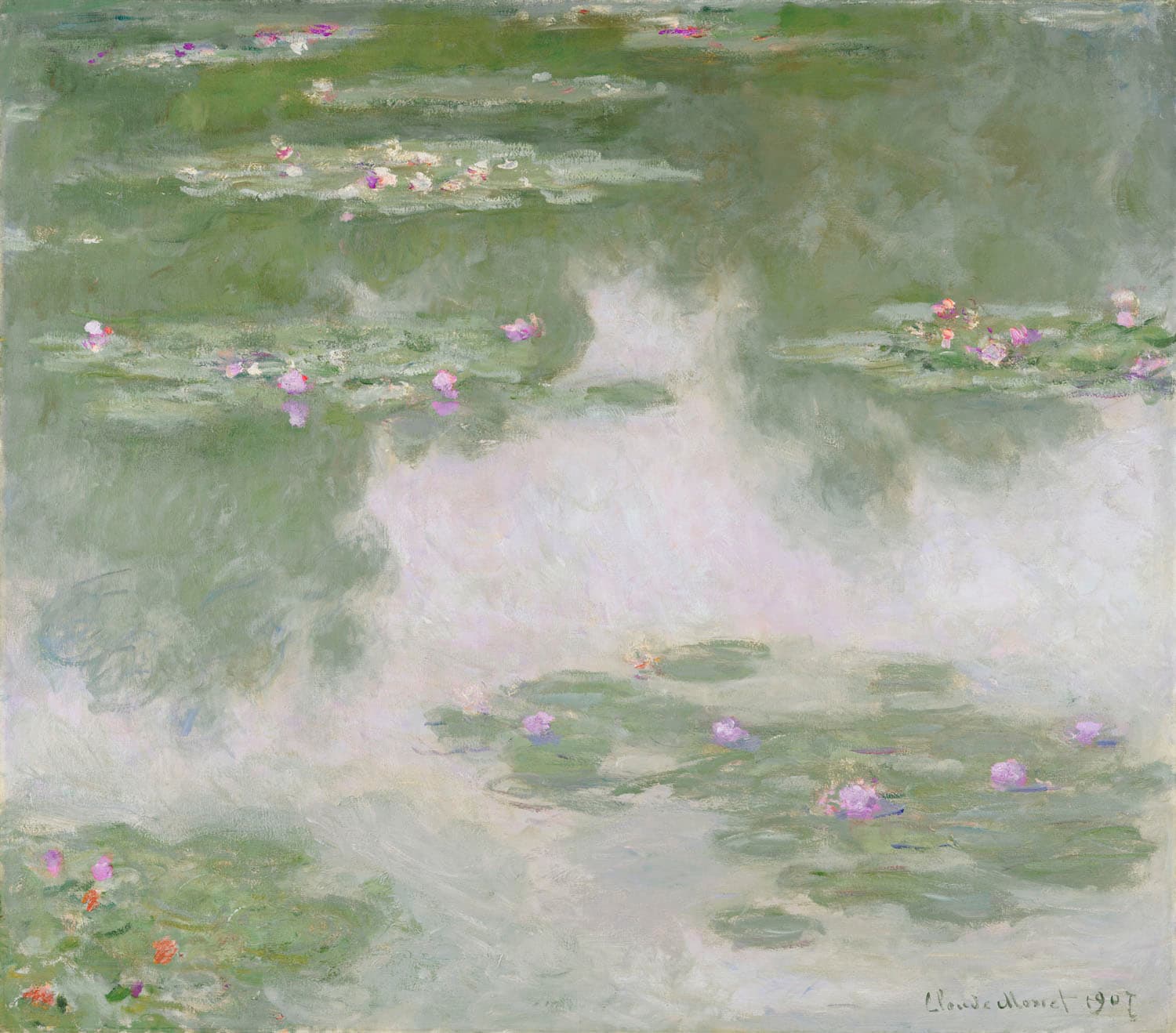
Nymphéas (Water Lilies), 1907 (Wadsworth Atheneum)
Claude Monet · 1907
Water Lilies (1907, Pola Museum of Art)
Claude Monet · 1907
Water Lilies (Asahi Group Oyamazaki Villa Museum)
Claude Monet · c. 1914–17
The Japanese Footbridge, Giverny
Claude Monet · c. 1922
Water Lilies in Giverny
Claude Monet · 1917
The Water Lily Pond (Albertina)
Claude Monet · 1917–19

The Water Lilies: The Clouds
Claude Monet · c. 1914–26